



Abstract
It has been reported that pinewood residue/recycled high density polyethylene composites with 40 wt% of wood were attacked by termites native to the Yucatan Peninsula (Nasutitermes nigriceps). Thus, this article gives account of how effective environmentally friendly borates are (i.e. borax and zinc borate) to protect this kind of composites. Before biotic exposure, composites’ samples were subjected to 1000 and 2000 h of accelerated weathering, using a ultraviolet-type accelerated tester equipped with UVA-340 fluorescent lamps and respectively impregnated with 1, 2, and 3% aqueous solutions of both borates, following the ASTM D 1413 standard test method as reference. A reduction in the treated samples’ weight loss was observed, which indicated that they increased their resistance to termite attack. No weight losses occurred when the solutions with 3% of both borates were respectively used. Additionally, scanning electron microscopy revealed that these solutions did not damage the composites’ surface. The results show that both borates experimented with have the potential to be used as termiticides for wood–plastic composites without damaging the environment.
Introduction
Although termites are excellent decomposers of dead wood and other sources of cellulose, they become a serious problem when they attack dwellings and crops. From over 2800 described species of termites, about 185 are considered to be pests, which cause significant losses to annual and perennial crops and damage wooden components in buildings; for example, wood–plastic composites (WPCs), especially in the semiarid and subhumid tropics. 1,2 Although exterior nonstructural building products made of WPCs, such as decking, fencing, and siding are widely used in North America, there are concerns about their durability due to the influence of abiotic and biotic factors related to the type of applications given to them. 3,4 In this respect, we previously reported 5,6 that a recycled high-density polyethylene (HDPE)-based WPC obtained by compression molding was susceptible to termite attack (i.e. its mechanical properties and surface quality were affected) once accelerated weathering (AW) produced cracks over the surface of samples containing 40 wt% of pinewood residues, leaving wood exposed to the environment and termites’ mandibles. To protect wooden structures against this kind of insects, effective procedures have been developed; for instance, physical (toxic and nontoxic barriers and treatments), chemical (termiticides), and biological (botanical termiticides) methods. Among them, chemical treatments are the most important, successful, and widely used to reduce termite infestation. This kind of agents are often applied as washes or rinses or incorporated into a material to protect it in service. Although successful, the effects of the excessive use of these chemicals are of concern as they create problems for human health and the environment. 1,2,7 For this reason, preservatives like chromated copper arsenates have been banned by the US Environmental Protection Agency for residential uses since the year 2003. 8 Thus, considerable attention has been focused on using and developing environmentally friendly preservatives instead of the traditional compounds containing heavy metals. Boron wood preservatives, which are widely recognized and accepted to be effective and of low toxicity for the environment, are a good example of this kind of substances. Borates provide protection against all forms of wood-destroying organisms, including decay fungi (such as wet and dry rot), wood-boring beetles (such as the common furniture beetle, the house longhorn beetle, and powder post beetles) and termites, including dry wood and subterranean termites. 9 From this group of preservatives, borax (BX) and boric acid are the most widely used due to their heat stability, low vapor pressure, and noninteraction with wood . 10 However, other compounds like zinc borate (ZB) and disodium octaborate tetrahydrate have shown to be very toxic to termites and decay fungi and are also often used to prevent decay in a very efficient way. 11,12 Termite resistance of wood treated with different compounds has been widely studied 2,13 –15 ; however, much of the work regarding the protection of WPCs against biological attack is proprietary; thus, not much literature is available. Therefore, the aim of this study was to evaluate the termite resistance of WPCs made of pinewood residues and recycled HDPE obtained by compression molding. Samples previously exposed to 0, 1000, and 2000 h of AW were impregnated with ZB and BX aqueous solutions at varying concentrations (1%, 2%, and 3%), and subjected to the attack of termites of the species Nasutitermes nigriceps, native to the Yucatan Peninsula. Our results indicate that 3% BX or ZB concentration protected WPCs containing 40 wt% of wood since no weight losses were registered after insect attack. Scanning electron microscopy (SEM) micrographs showed that at 3% biocide concentration, no apparent damages were observed.
Experimental
Raw materials
Pinewood residues collected from Maderas Bajce (Merida, Mexico) were screened in a Tyler nest of sieves with a W.S. Tyler RO-TAP sieve shaker (model RX-29; Mentor, Ohio, USA). Residues retained on mesh 40 were used as filler (0.50 > particle size > 0.42 mm). Injection-grade recycled HDPE with a melt flow index (MFI) of 4.56 g/10 min from Recuperadora de Plásticos Hernández (Merida, Mexico) was used as the polymer matrix. The originally flake-shaped HDPE was ground with a Brabender granulating machine (model TI 880804, Germany) fitted with a screen plate drilled with holes 1 mm in diameter. Maleic anhydride-grafted HDPE (Polybond 3009, MFI = 0.5 g/min at 190°C, density = 950 kg/m3 at 23°C, and melting point = 127°C, maleic anhydride content was 1 wt%.) supplied by Brenntag Mexico, S.A. de C.V. was used as coupling agent (CA). A blend of fatty acid esters (TPW 113 from Struktol Co. of America, dropping point = 67–77°C, specific gravity = 1.005) was used as a processing aid (PA). Both CA and PA were ground with the instrument previously described.
Biocides
BX (B4Na2O7 10H2O) from Sigma-Aldrich (St Louis, Missouri, USA) and ZB (Zn3BO6) from Sigma-Aldrich (UK) were experimented with to evaluate their effectiveness as termiticides. Aqueous solutions of BX and ZB in distilled water (DW) at concentrations of 1%, 2%, and 3% w/w were used to treat WPCs samples before termite exposure.
Termites
Higher termites (species N. nigriceps) collected from nests situated in the mangrove forest of Ría Celestún in Yucatan, Mexico (20°51′52.1″ N; 90°22′58.7″W) were used as biotic degradation agent. Insects were characterized by Dr Reginaldo Constantino (University of Brasilia, Department of Zoology, Brasilia, DF, Brazil).
WPCs preparation
The HDPE, pinewood, and additives were premixed using a horizontal mixer with a helical agitator (Intertécnica Co., model ML-5, Mexico City, Mexico) and dried in a convection oven (Fisher Scientific, Pittsburgh, Pennsylvania, USA) at 105°C for 24 h before extrusion. Two different pinewood–HDPE blends with 40 wt% of wood were prepared. One blend contained a 3 wt% of PA added with respect to wood content, and the other one had a 3 wt% of PA and 5 wt% of CA, also added with respect to wood content. The composites were prepared by extrusion compounding in a conical twin-screw extruder (Brabender EP1-V5501). The blends were extruded using a 4 cm long extrusion die (2 mm in internal diameter) fitted to the extruder to obtain rods approximately 3 mm in diameter that were pelleted with a Brabender laboratory pelletizer machine (type 12-72-000). During extrusion, the screw speed was 50 rpm, and the barrel and die temperatures were set at 140°C. Table 1 summarizes relevant details of the composites obtained.
Formulations of WPCs based on pinewood residues and recycled HDPE.
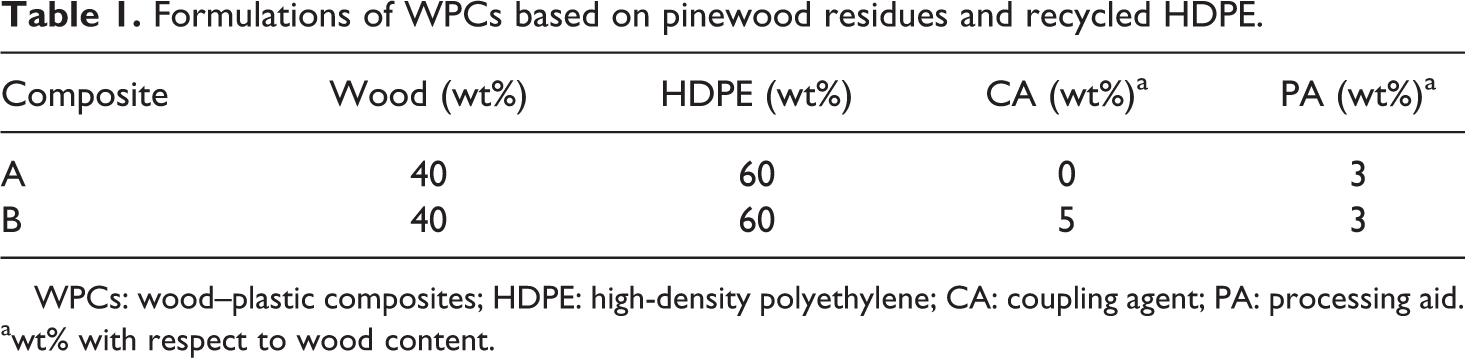
WPCs: wood–plastic composites; HDPE: high-density polyethylene; CA: coupling agent; PA: processing aid.
awt% with respect to wood content.
Samples preparation
Test specimens were obtained from both types of composites by means of compression molding. Pellets were hot-pressed using a Carver automatic hydraulic press (model 3819, Wabash, Indiana, USA) at 140°C for 5 min with a compression force of about 26,690 N (6000 lbf) to produce flat plaques 3 mm in thickness from which the samples were cut. The specimens’ dimensions were 3.2× 10 × 12.7 mm3.
Accelerated weathering
Samples of both composites were subjected to AW during 0, 1000, and 2000 h using an Atlas ultraviolet condensation (UV-CON) tester (Moussy Le Neuf, France). Cycles of UV-condensation with 4 h of UV light irradiation at 60°C with UVA-340 type fluorescent lamps, followed by 4 h of condensation using deionized water at 50°C were employed considering ASTM D 4329 method as reference. 16 Before exposure, all samples, 10 replicates per composite, were conditioned (at 105°C for 24 h) according to the ASTM D 618 standard method. 17
WPCs borates treatment
Samples of the composites previously exposed to AW were used to run the tests. The specimens were conditioned at 22 ± 1°C and 35 ± 2% relative humidity and treated with DW and different concentrations of BX and ZB, considering ASMT D 1413 standard as reference.
18
The treating solutions were prepared the same day that the impregnation process took place. Samples were subjected to vacuum at 450 mm Hg for 25 min using a vacuum pump (Edwards, Sanborn, New York, USA). At the end of the holding period, vacuum was broken and specimens were covered with sufficient solution during 30 min. Samples were weighed before treatment to obtain their initial weight (T1). Then, a second weight (T2) was calculated, which corresponds to T1 plus the amount in grams of the treating solution absorbed (G). Afterward, the samples were kept under open laboratory room conditions for 72 h before being conditioned at 22 ± 1°C and 35 ± 2% relative humidity during 21 days as indicated in the standard procedure. Once the conditioning process ended, the weight of the test samples plus the remaining preservative after conditioning and before exposure to termites were obtained (T3). Finally, the weight of the test samples after termite resistance tests and after final conditioning was registered (T4). The amount of preservative absorbed by the samples, that is, the retention, as kilograms per cubic meter (kg/m3) was calculated using the following equation.
where
G = grams of treating solution absorbed by the samples,
C = grams of preservative in 100 g of treating solution, and
V = volume of the test specimen (in cubic centimeter).
Finally, the weight loss % due to termite attack was calculated using T3 and T4 according to the following equation.
Termites resistance test
Previously aged and nonaged samples treated only with DW (control samples), and aqueous solutions of BX and ZB were exposed to termite attack considering ASTM D 3345 standard test method as reference. 18 Samples were exposed to termite attack during 30 days using glass containers (40 × 20 × 30 cm3) sealed with adhesive tape. Containers were kept at a temperature ranging from 25.5°C to 27.7°C during the experiment. The samples were placed on a layer of damp sand around a termites’ nest to supply water to the insects. The percentage of water added was calculated according to the previously mentioned test method. Once the tests were finished, the nests were destroyed, and termites were collected and weighed. An average of 20 g of termites were collected from each glass container. Additional containers with sand and water, but without samples, were used as controls to evaluate the termites’ vigor. Termite mortality was determined according to ASTM D 3345 standard test method. 19
Scanning electron microscopy
Morphological analysis was performed on the samples’ surfaces using SEM. The WPCs specimens were cut into small sections (6 × 6 mm2) with a razor blade and then were mounted on stubs and gold coated with a sputter coater (Denton Vacuum Desk II). The samples were examined with a JEOL JSM-6360 low-vacuum electron microscope (Tokyo, Japan) at a working distance of approximately 10 mm, using a voltage of 10 kV, and a magnification of 100×. Sections of the previously treated and nontreated, weathered samples exposed to 0 and 30 days of termite attack were analyzed.
Statistics
Weight losses were analyzed using a statistical software (Graphpad Software, Inc., San Diego, California, USA). The normally distributed data are shown as the mean plus or minus standard deviation. Ordinary one-way analysis of variance was performed. Dunnett’s multiple comparison post-test was used for the determination of statistical significance, which was defined as a value of p < 0.01.
Results and discussion
Termite mortality
The containers used as controls showed virtually complete survival after 1 week, which indicates that vigorous termites were used according to ASTM D 3345 standard. 19 On the other hand, termite mortality assessment based on a visual inspection of the containers with samples previously impregnated with biocides revealed that after 3 weeks, 100% mortality occurred. This result contrasts with that reported in a previous work, 5 where samples without biocides were exposed to these insects during the same period of time. In that case, a mortality of 70% was observed. Thus, the increase in termite mortality could be attributed to the presence of the BX and ZB solutions used as biocides.
Weight loss
According to the information presented in Tables 2 and 3, for composites A and B, respectively, the amount of the treating solution absorbed by the samples (G), increased with the exposure time to AW. In this respect, it is known that AW produces cracks over the surface of WPCs due to chain scission reactions affecting the polymer matrix. In the same way, the number and depth of cracks produced by weathering increased as the exposure time increases, leaving more wood exposed to the environment. 20 Thus, when composite samples were exposed to the treating solutions, the hydrophilic lignocellulosic fibers swelled to a different level depending on the previous period that they had been exposed to AW. Evidently, specimens exposed to 2000 h of AW absorbed the highest quantity of treating solution since these samples showed the highest amount of unprotected wood.
Concentration and retention of biocides solutions used to treat composite A samples previously exposed to AW.
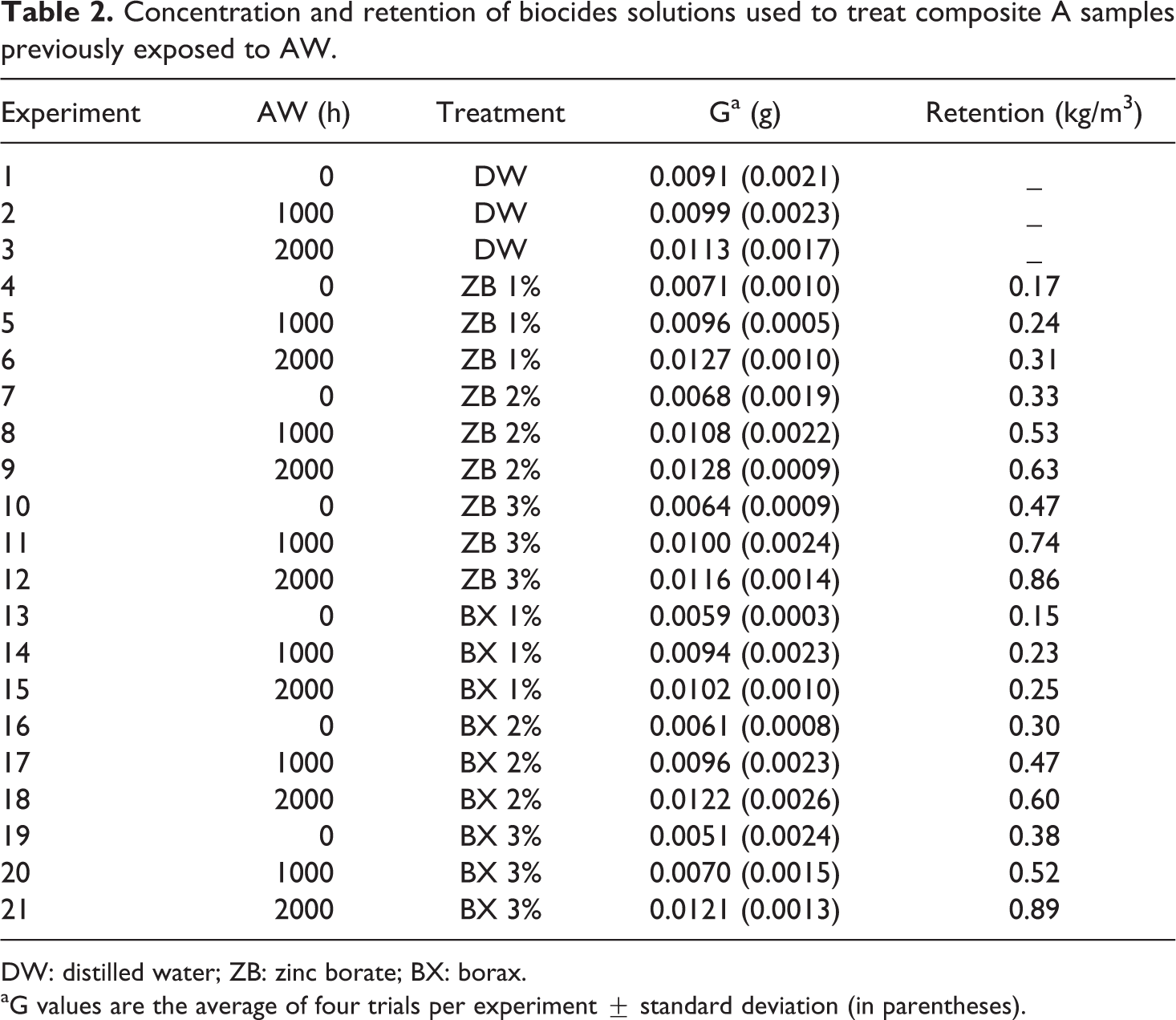
DW: distilled water; ZB: zinc borate; BX: borax.
aG values are the average of four trials per experiment ± standard deviation (in parentheses).
Concentration and retention of biocides solutions used to treat composite B samples previously exposed to AW.
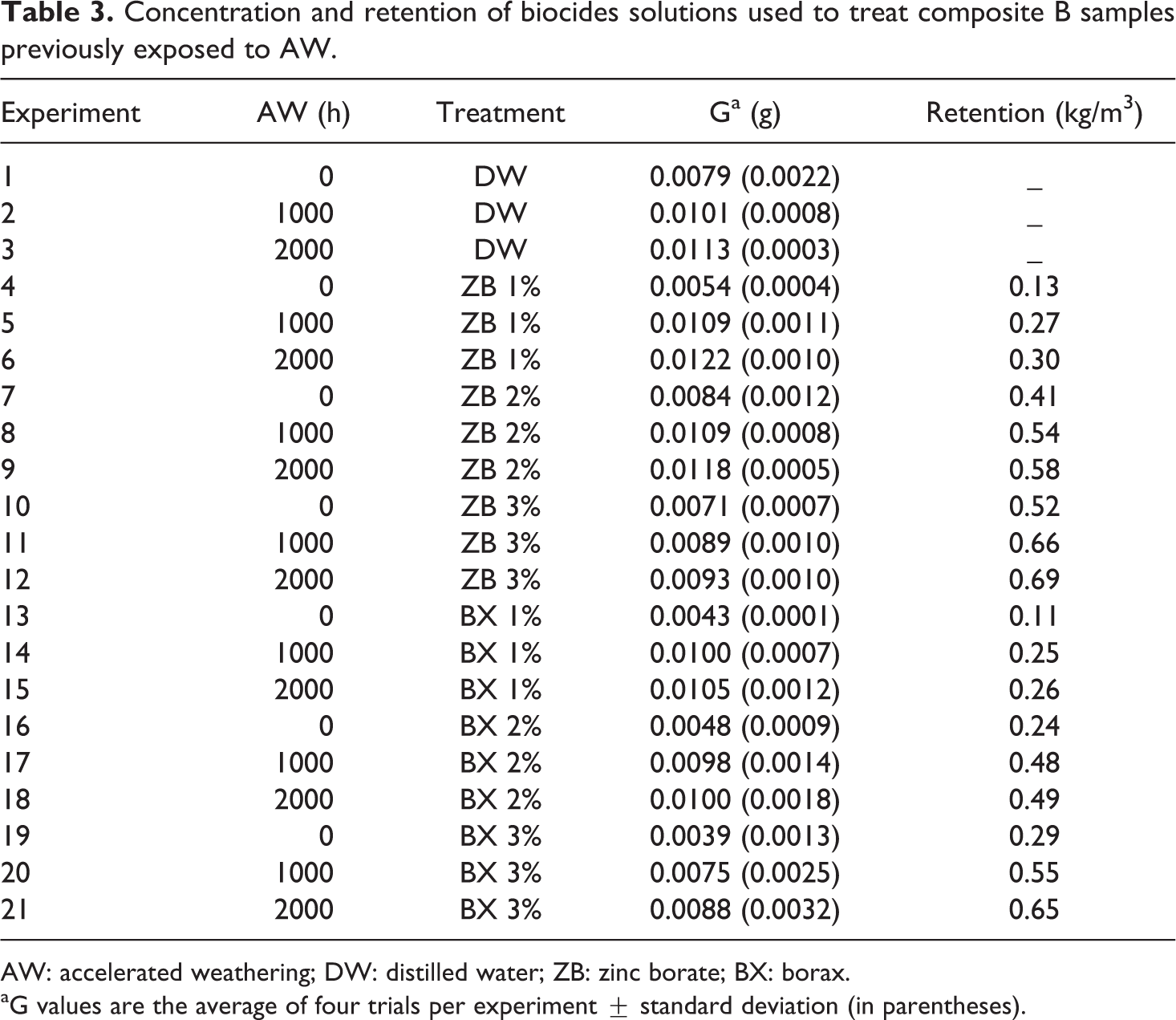
AW: accelerated weathering; DW: distilled water; ZB: zinc borate; BX: borax.
aG values are the average of four trials per experiment ± standard deviation (in parentheses).
Tables 2 and 3 also show the amount of preservative absorbed by the samples (retention), calculated according to the ASTM D 1413 standard. 18 The retention observed in this kind of materials is by far lower than that reported for wood and plywood. For example, Simsek et al. 9 found that for wood specimens made of Scots pine (Pinus sylvestris L.), treated with aqueous solutions of sodium tetrafluoroborate, ammonium tetrafluoroborate, and ammonium pentaborate octahydrate dissolved in DW to a concentration of 3%, retention levels of 15.98, 11.48, and 9.89 kg/m3 were, respectively, obtained. Also, Nami Kartal et al. 21 reported 8.59 kg/m3 as average retention for plywood using BX at a concentration of 3%. Comparing those results with those reported in the present work corresponding to the same biocide concentration, that is 3%, it is clear that the polymer matrix prevented the penetration of treating solutions into the composites, avoiding wood to absorb higher amounts of the preservatives, hence maximum retention levels of 0.86 and 0.89 kg/m3 for ZB and BX, respectively, were observed.
Now, the weight losses due to termite attack are depicted in Figure 1, which shows the results corresponding to composite specimens previously weathered and treated with DW, BX, and ZB. It is possible to observe that although the WPCs’ retention levels were low, the weight loss was reduced for both samples of composites A and B previously exposed to 1000 h of AW (Figure 1(a) and (c)) as well as for samples exposed to 2000 h of AW (Figure 1(b) and (d)). In this regard, the efficiency of different borates has been previously reported. For instance, Temiz et al. 10 reported that samples of Scots pine (P. sylvestris L.) treated with a solution with a content of 2% 4-methoxytrityl tetrafluoroborate were protected against subterranean termites. Moreover, Nami Kartal et al. 21 stated that after 3-week termite exposure, the average mass loss in untreated plywood specimens was 23.90%. They also reported that samples treated with 3% concentration of boric acid and BX showed mass losses raging approximately from 3% to 5% approximately. On the other hand, specimens treated with 6% concentration of borates did not shown mass loss. Additionally, all plywood specimens with treated veeners showed greater termite mortalities than untreated samples, suggesting an improvement in termite resistance caused by the biocides used. Related to wood composites degraded by biotic agents, Murphy et al. 22 affirmed that various wood composites protected with vapor boron at retention of 0.50% boric acid equivalent were resistant when exposed to brown and white rot fungi. Furthermore, Kord et al. 23 reported that the addition of nanoclays as filler in WPCs reduced weight loss caused by white rot fungi.
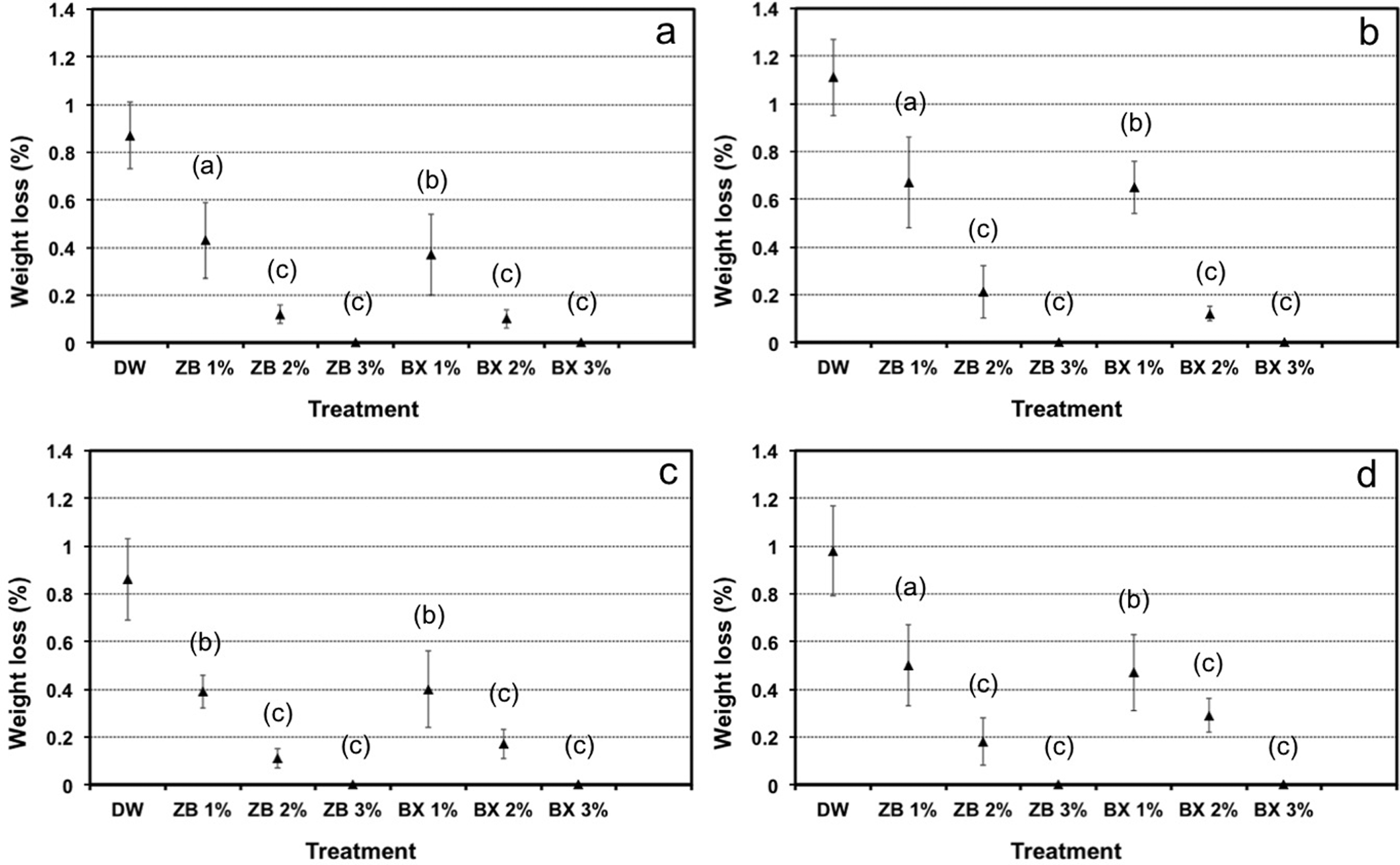
Weight loss due to termite attack on previously weathered composite specimens. (a) Composite A (1000 h of AW), (b) composite A (2000 h of AW), (c) composite B (1000 h of AW), and (d) composite B (2000 h of AW). The letters in parenthesis indicate values significantly different from the control group (i.e. DW), a p < 0.01, b p < 0.001, c p < 0.0001. AW: accelerated weathering.
In a similar way, our results showed that the biocides used in this work had a significant effect on the susceptibility of the composite studied against termite attack, as can be observed in Figure 1. It is relevant to mention that nonaged samples, both treated and nontreated, did not register any weight loss since termites did not attack them due to the absence of cracks on the surface of these specimens, because, as it has been previously reported they constitute access routes for termites’ mandibles. 24 Additionally, in all the experiments performed, AW played an important role regarding weight loss, which was reduced as exposure time to weathering decreased.
Weight loss on samples previously exposed to 1000 and 2000 h of AW decreased as the concentration of both, ZB and BX increased. According to our results, composites A and B remained intact at 3% concentration of both BX and ZB. Comparing these results with those reported by Nami Kartal et al., 21 it can be observed that a lower BX concentration was required to protect WPC samples than plywood specimens, since in the case of WPC, the polymer matrix also prevents samples to be degraded by termites. At lower concentrations (1% and 2%), termite resistance increased compared to that of untreated samples. In the case of samples previously exposed to 1000 h of AW, the weight loss was reduced from 42% to 49% of its original value. On the other hand, for samples previously exposed to 2000 h of AW, minimum weight loss reduction ranged from 40% to 53%.
The use of a CA did not have an effect on the retention levels since the results for both composites were similar. That happened probably because CA is mainly designed to improve the compatibility between wood and synthetic polymers, not to modify the absorption capacity. Samples of composites A and B with the same exposure time to AW and protected against termites with the same treatment showed a similar behavior, that is, weight loss differences were not statistically significant. Finally, according to our results, BX and ZB had a similar effect of protecting composites A and B since samples treated with the former or the latter biocide, and tested under the same experimental conditions, showed similar weight drops.
Scanning electron microscopy
Selected SEM micrographs presented in Figure 2 show the effect of different treatments (DW, BX 2% and, BX 3%) on the surface of samples of composite A previously exposed to 1000 and 2000 h of AW. It can be observed in Figure 2(a) and (b) that AW produced cracks over the composite surface as it was reported previously, 5,6 which we assume were used by termites as an entrance route to access into the material to reach wood. Samples treated with DW (Figure 2(c) and (d)) and BX 2% (Figure 2(e) and (f)) show clear evidence of insect attack. In these micrographs, wood fiber bundles looked disordered, and missing sections of HDPE can be observed. Finally, no damages were observed in Figure 2(g) and (h) since treatment with a solution at 3% concentration of BX apparently protected composite samples against biotic degradation. The effect on the surface of composite B specimens was similar to that described for composite A.
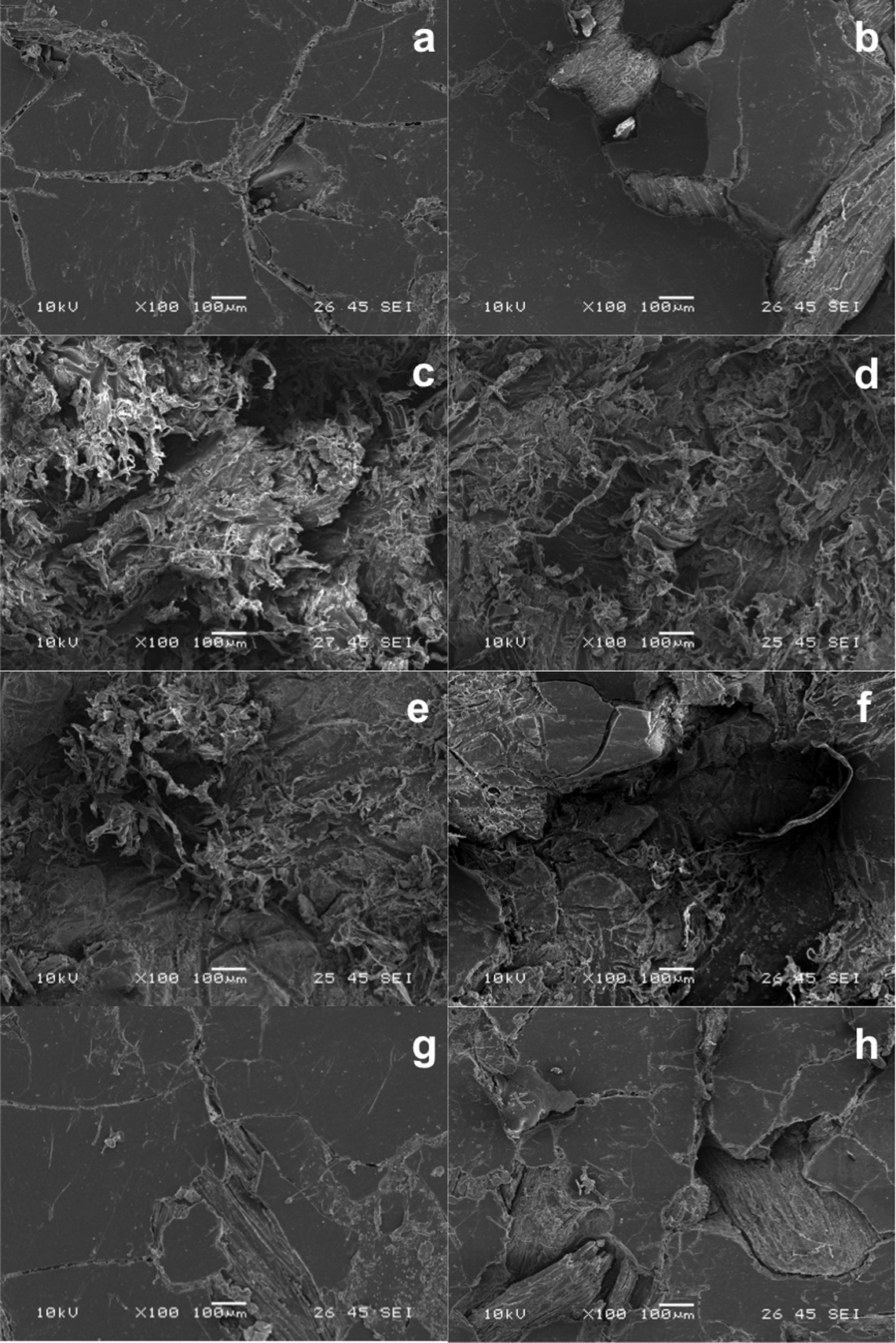
Selected SEM micrographs of treated and nontreated weathered samples of composites A. (a) 1000 h of AW and nonexposed to termites, (b) 2000 h of AW and nonexposed to termites, (c) 1000 h of AW exposed to termites and DW treated, (d) 2000 h of AW exposed to termites and DW treated, (e) 1000 h of AW exposed to termites and BX 2% treated, (f) 2000 h of AW exposed to termites and BX 2% treated, (g) 1000 h of AW exposed to termites and BX 3% treated, and (h) 2000 h of AW exposed to termites and BX 3% treated. SEM: scanning electron microscopy; AW: accelerated weathering; DW: distilled water; BX: borax.
Conclusions
Borate treated samples improved termite resistance compared with untreated composite samples. Both ZB and BX decreased weight loss in resistance tests; our results indicate that 3% BX or ZB concentration efficiently protected WPCs containing 40 wt% of wood since no weight losses occurred. AW decreased composites’ resistance due to the exposure of wood to the environment and the appearance of cracks that may have served as access routes to termite mandibles. The presence of a coupling agent in the formulation of one of the composites studied in the present work did not reduce weight losses and had no effect in preventing termite attack.
Footnotes
Acknowledgments
Gratitude is expressed to Centro de Investigación en Corrosión of Autonomous University of Campeche for the assistance provided, and to Drs José T. Méndez-Montiel, Armando Equihua-Martínez and Reginaldo Constantino for their invaluable help to identify termites’ species. Additional thanks are given to MSc Jorge A Domínguez-Maldonado and MSc Carlos V Cupul-Manzano.
Declaration of Conflicting Interests
The author(s) declared no potential conflicts of interest with respect to the research, authorship, and/or publication of this article.
Funding
The author(s) disclosed receipt of the following financial support for the research, authorship, and/or publication of this article: The authors want to thank to the Mexican Council for Science and Technology and to the Government of the Yucatan State for the financial support granted to carry out this study through the project YUC-2008-C06-107327 (“Fondo Mixto CONACyT-Gobierno del Estado de Yucatan”)