




Abstract
The aim of this work is to evaluate the effects of oxidation treatment and the addition of silicon dioxide (SiO2) on the mechanical properties of carbon nanotube (CNT)/polytetrafluoroethylene (PTFE) composite film. A powder impregnation process with integrated inline continuous oxidation of CNTs was used to produce CNT/PTFE composite. CNT/PTFE composite was processed into test laminates by compression molding, and interface-dominated composite properties were studied. The tensile strength of composites-containing SiO2 and oxidation-treated CNT improved obviously.
Introduction
Polymer composites were widely used in electronic and information products, consumer commodities, and the construction industry. 1 In these polymer composites, inorganic materials were used to reinforce polymers due to their high heat durability and high mechanical strength, combined with the ease of processing polymers. The interfacial incompatibility between inorganic and organic polymers is the focus of various research activities. 2,3
Fiber-reinforced polymer composites are used widely in material applications. Several kinds of fibers have been applied as reinforcing materials, including carbon nanotubes (CNTs), 4 glass fibers, 5 aramid fibers, and ultrahigh-molecular-weight polyethylene fibers. 6 CNTs possess many advantageous properties, including light weight, high tensile strength and tensile modulus, and good resistance toward chemicals and wear but also possess several drawbacks, such as low surface energy and poor creep and heat resistance.
CNTs are widely used as reinforcements in composites, especially in composites with thermoplastic resins. They combine a high stress factor and strength with a low density, which has led to their increasing use in high-performance construction materials. 7 –9 Fiber-reinforced composites can be found in load bearing and structural applications such as coiled tubing, drill rods, field flow lines for deep-sea oil, and gas explorations. 10 –12
In order to avoid the disadvantages and utilize the advantages of polytetrafluoroethylene (PTFE), many researchers have developed polymer-based composites for tribological applications by considering the traditional fillers, such as glass fibers, carbon fillers, and nonferrous metallic powers as well as some metal oxides. 13,14 A noticeable characteristic of PTFE is that the increasing of wear resistance when filler is incorporated is much greater than in any other semicrystalline polymer. There are many kinds of PTFE-based composite for sliding applications because various fillers are incorporated into PTFE and one or more materials can be used simultaneously. 15
In this study, CNT and silicon dioxide (SiO2) were used for improving the mechanical and wear stability of PTFE composite. CNT and SiO2 were added into PTFE matrix, and the effectiveness of the composite was investigated by analyzing the mechanical properties.
Experimental work
Materials
CNT (Cheap Tubes, Grafton, Vermont, USA) with diameter 20–30 nm, length 10–30 μm, purity > 95 wt%, and ash < 1.5 wt% is used as reinforcement.
SiO2 with particle size of 30 nm was supplied by Chengdu Today Chemical Co. Ltd (Chengdu, China).
The PTFE powder (type CGM031) was supplied by Zhonghao Chenguang Research Institute of Chemical Industry (Zigong, China) with a particle size of approximately 200 mesh number. The serpentine powder used in this study has an average diameter <0.5 μm. All chemicals were used without any purification.
Sample preparation
For acidic modification of the CNTs, 3.0 g of CNTs were dispersed in 300 mL of concentrated sulfuric acid:nitric acid (3:2 v/v ratio) solution at 50°C and stirred for 20 h. The solution was filtered and washed with distilled water (H2O). The resulting oxidized CNTs were then dried in a vacuum at 80°C for 12 h. Then, the oxidized CNTs were dispersed in 2% 3-aminopropyltriethoxysilane solution (Aldrich, St Louis, Missouri, USA), which was then added to 300 mL of ethanol:H2O (95:5 v/v) solution. The mixture was stirred at 80°C for 3 h. The CNTs were separated by filtration using distilled H2O and dried at 90°C for 10 h.
After mixing, the mixture was compressed and molded in a cylindrical cavity. A laboratory pressure of 40 MPa was used to consolidate the mixture at room temperature in a cylindrical chamber made of grade D steel. This molding pressure was held for approximately 10–15 min. Then, the discoid samples were sintered in an electric heating furnaces equipped with a temperature control system. Finally, the sintered samples were machined into final specimens.
Mechanical test
All tests were performed at room temperature of 23°C on a universal testing machine (model 1474; Zwick, Germany) at a constant crosshead speed of 1 mm/min. The measurements followed DIN EN ISO 527 standard using dumbbell-shaped specimens. The displacement of each specimen during tension was accurately measured by an extensometer. All presented data correspond to the average of five measurements.
XPS analysis
X-Ray photoelectron spectroscopy (XPS) analysis of the CNT surface was carried out with an X-ray photoelectron spectrometer (model SES-200; SCIENTA, Da lian, China) equipped with a conventional hemispherical analyzer. The latter was operated in the fixed transmission mode at constant pass energy of 100 eV.
Results and discussion
X-Ray photoelectron spectroscopy
The surface elemental compositions of the samples are determined by XPS. Figure 1 shows the surface functional groups of untreated and treated CNTs. It can be seen that a distinct change of functional groups on CNT surface after the surface treatment. The graphitic carbon and carbonyl groups decrease, whereas alcoholic hydroxyl/ether groups and carboxyl/ester groups produce 34% and 132% increase after the oxidation. The amount of oxygen-containing functional groups in the state of carboxyl/ester groups is increased, which enhance molecular polarity and surface energy of CNTs. In addition, the ratio of activated to inactivated carbon atom of untreated CNTs is 0.26 and treated CNTs is 0.37, obtained from calculation of Figure 1. It is deduced that interfacial adhesion between fiber and matrix could be improved when CNTs are modified with oxidation treatment, which results in the promotion of interfacial properties. After surface treatment, some oxygen-containing groups are introduced onto the fiber surface, which can be stated that the oxidation of the fiber surface is the most decisive contribution to improve the bond property between the fiber and adhesive.
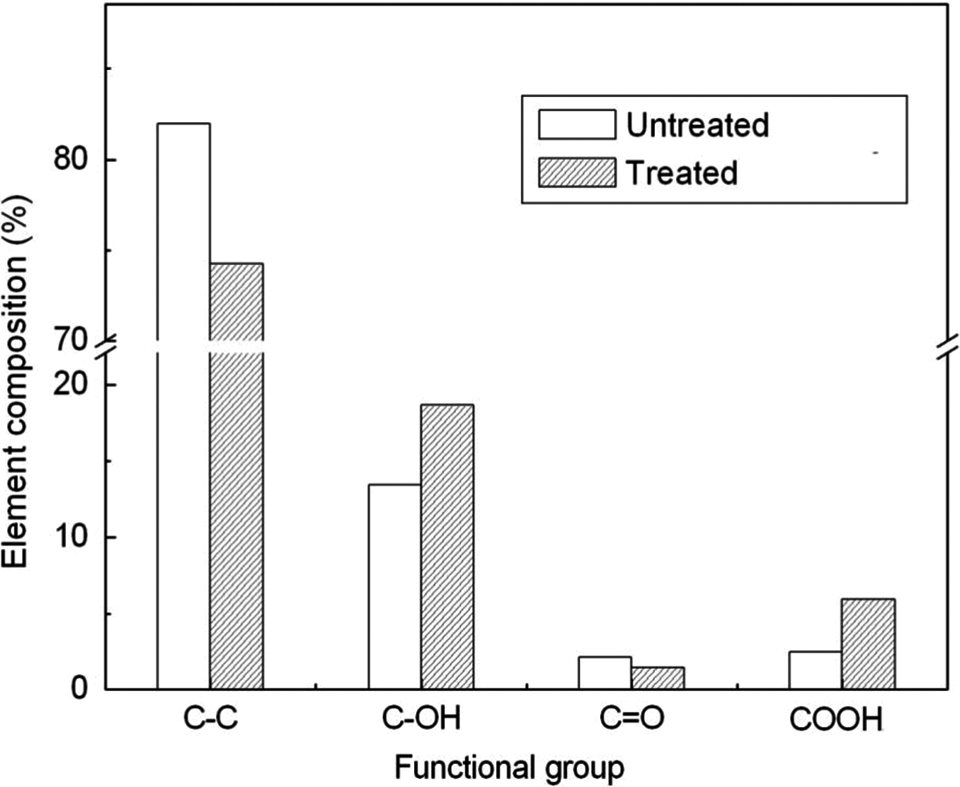
The oxygen-containing functional groups on the CNT surface. CNT: carbon nanotube.
Mechanical properties
Figure 2 shows the variation of tensile strength and tensile modulus of the CNT/PTFE composites with increasing amount of CNT as reinforcement. As shown in the figure, the tensile strength first decreases with respect to the CNT content. The initial decrease in the properties can be attributed to the fact that these low concentrations of the CNT simply act as defects rather than the true reinforcement. These defects then act as stress concentration centers and thus lead to premature failure of the composites. The effect is offset with the higher concentration of CNT so that the improvement in the strength of the composite is more than the loss in strength due to creation of defects on the matrix. An increase in the filler content increases the microspaces between the filler and the matrix, which weaken the filler–matrix interfacial adhesion. As a result, the values of tensile strength show a decreasing trend with increasing filler content in the composite. The presence of hydroxyl groups in the surface of carbon is responsible for its inherent hydrophilic nature. As a result, it becomes hard to compound hydrophilic carbon with hydrophobic PTFE, resulting in inefficient composites with weak interfacial bonding. In order to improve the mechanical properties of composites, CNT must be added.
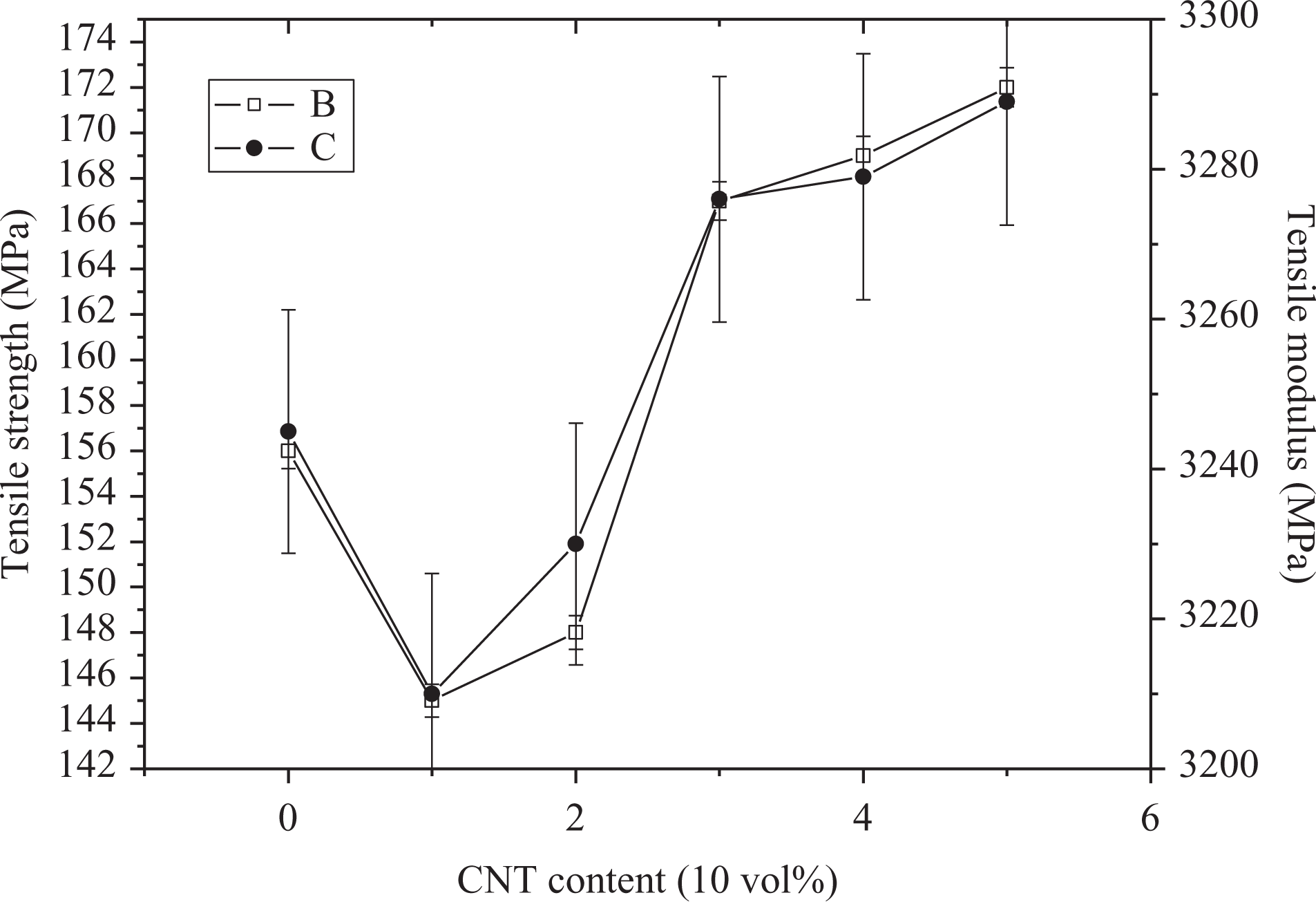
The tensile properties of CNT/PTFE composites. CNT: carbon nanotube; PTFE: polytetrafluoroethylene.
Figure 3 shows the influence of oxidation treatment of CNTs on the tensile properties of the CNT/PTFE composites. The tensile strength and tensile modulus of the CNT/PTFE composite with oxidation-treated CNTs were found to be higher than that with untreated CNTs.
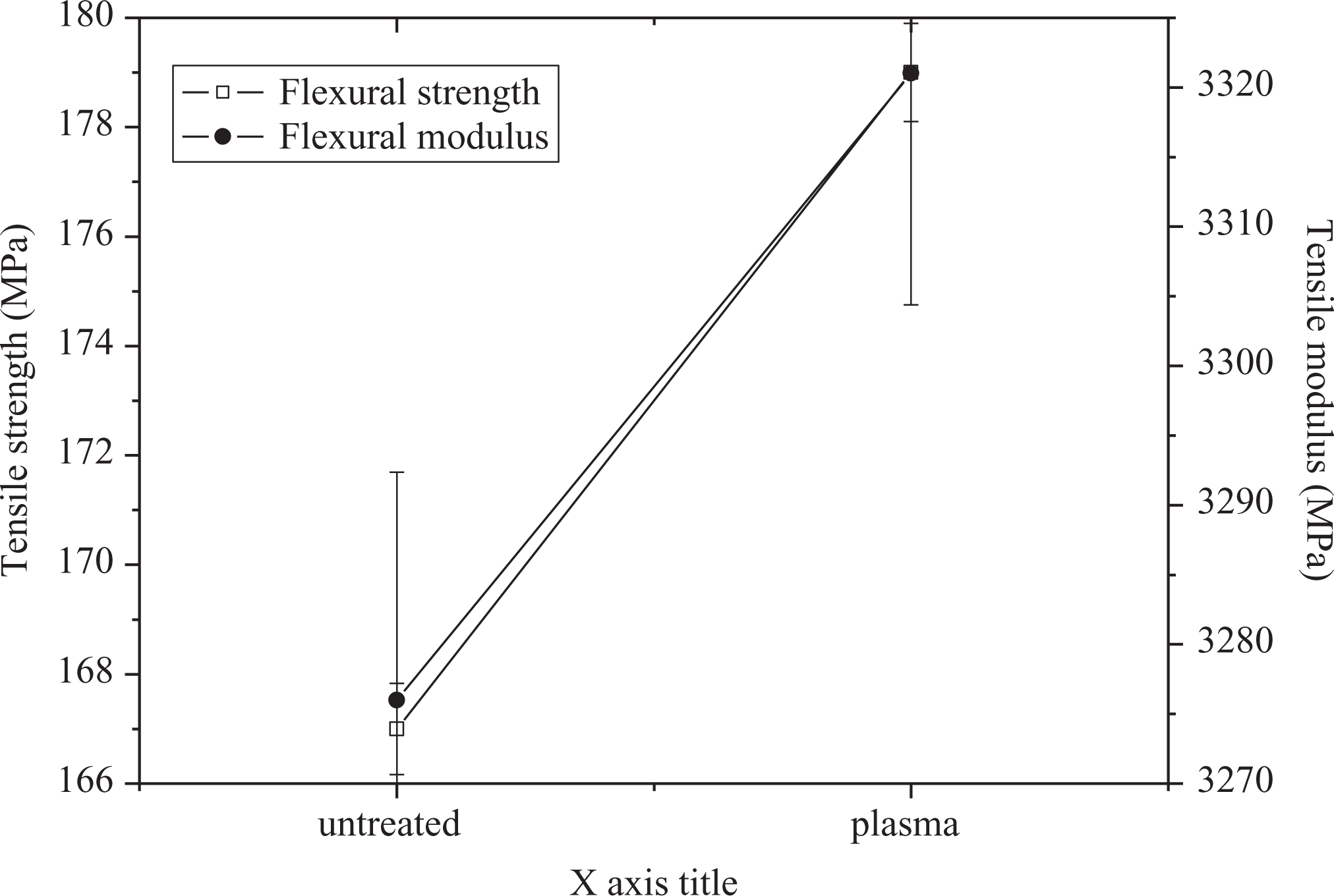
The tensile properties of CNT/PTFE composites with and without modification. CNT: carbon nanotube; PTFE: polytetrafluoroethylene.
Figure 4 shows the results of tensile testing of the neat CNT/PTFE and CNT/PTFE composite filled with SiO2. It was observed that the mechanical properties decreased very slightly upon the addition of SiO2. This is critical for the application of this CNT/PTFE material. Polyurethane shows optimum performance with the SiO2 addition. As a matter of fact, improvements on mechanical properties of composites are significantly dependent on the bonding rate and on the average molar mass of the graft copolymer.
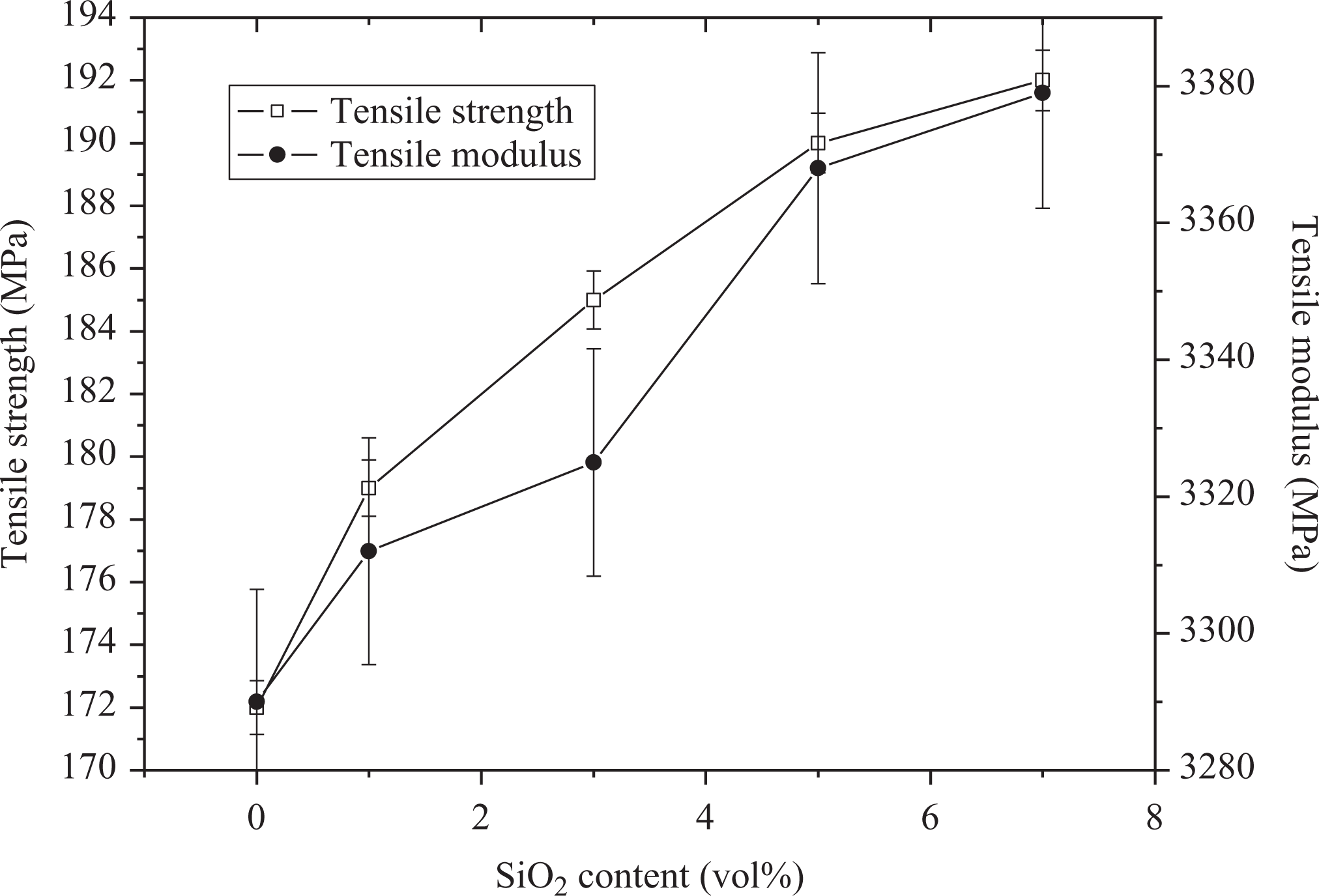
The tensile properties of CNT/PTFE composites with the change of SiO2 content. CNT: carbon nanotube; PTFE: polytetrafluoroethylene; SiO2: silicon dioxide.
Mid-IR absorption spectrum
Figure 5 presents the mid-infrared (IR) spectra of plain and SiO2 composites, the bands at 710 cm−1 and 910 cm−1 can be attributed to Si–O–Si bending vibrations and Si–O stretching vibrations, respectively, and the vibration band appearing at about 970 cm−1 corresponds to C–S–H. In both the plain and nano-SiO2-containing samples, a small shoulder at about 1100 cm−1 corresponding to silica gel and a vibration band at about 1605 cm−1 corresponding to H2O bending appear. There are also stretching vibration bands identified at about 3440 and 3650 cm−1, which can be attributed to O–H groups in H2O or hydroxyl. In this research, the mid-IR spectrum of the composites-containing nano-SiO2 displays a sharp stretching located in the range of deformation of Si–O stretching vibrations (902 cm−1), which is slightly shifted to higher frequency, and a large shoulder in the range of Si–O–Si bending vibrations at approximately 710 cm−1, which is not observed in the plain sample. Furthermore, for the composites-containing nano-SiO2, a small shoulder at approximately 520 cm is observed that can be attributed to the deformation of silicon tetraoxide (SiO4) tetrahedra reported at 400–500 cm−1, which is shifted slightly to higher frequency. This shift can be evident for the possibility of magnesium insertion into the structure of C–S–H, and based on the interaction mechanism of magnesium in cement hydration and the proposed pattern for magnesium ions insertion into the dreierketten pattern of the CSH gel, the following two possibilities for magnesium insertion can be considered. The first possibility is that magnesium insertion into the gap of Q2p tetrahedral may modify the TO4 deformation vibration of the Si(Q2) tetrahedron and cause the shoulder that is attributed to the deformation of SiO4 tetrahedra shift to higher frequency, and the second possibility is that the incorporation of SiO2 tetrahedra into the gap of the Q2p silicon deformation is equilibrated by calcium.
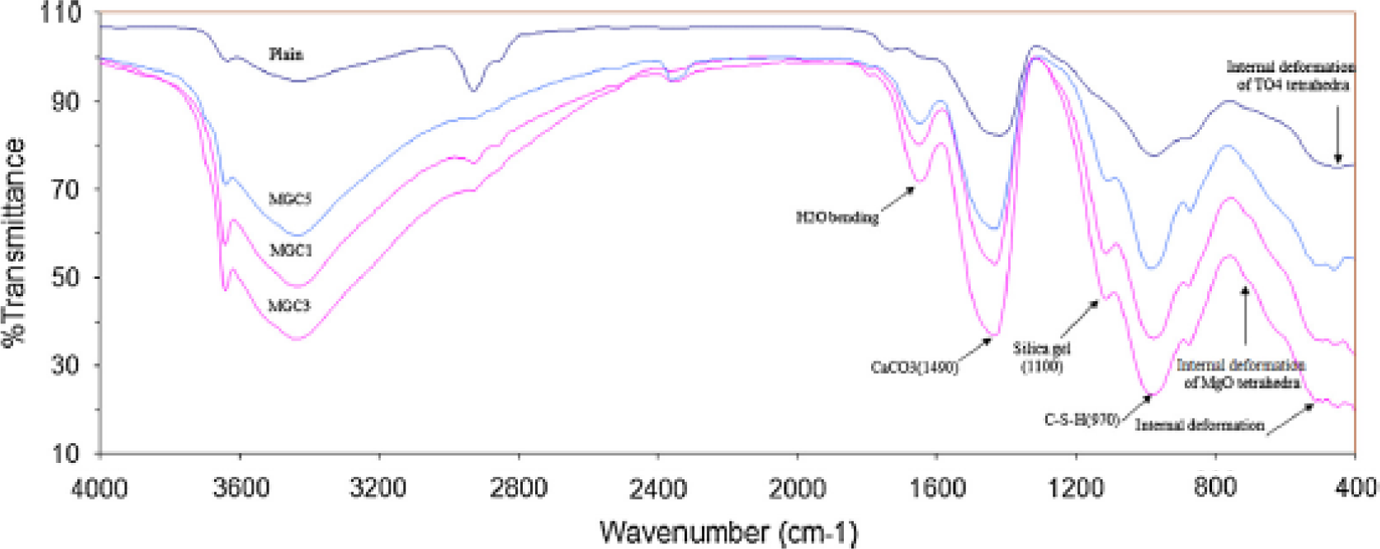
Mid-IR absorption spectrum (per centimeter) of the plain and composites-containing nano-SiO2. IR: infrared; nano-SiO2: nanosilicon dioxide.
The mid-IR results of the sample-containing nano-SiO2 show better resolution and stretched O–Si–O and Si–O–Si bands compared with the plain cement samples. This stretching band and large shoulder for the SiO2 composite confirm the improved crystallinity of C–S–H in the sample-containing nano-SiO2 with respect to plain sample and prove that the degree of crystallinity, the silicate chain length, and the extent of condensation of the silicate change across the interlayer (cross-linkage) for C–S–H in SiO2 composites are all significantly higher in comparison with C–S–H in plain composites. These results show that the addition of a limited amount of SiO2 into cement-based composites can give rise to improved mechanical properties due to the incorporation of limited amounts of ions into the C–S–H nanostructure and the modification of the C–S–H nanostructure.
This nanostructure modification can be considered one of the reasons for the mechanical strength variation in addition to the known mechanisms of nanoparticles in the improvement of the mechanical properties in cement-based composites.
Conclusion
In conclusion, the tensile properties of the CNT/PTFE composites with oxidation treatment were higher than that with untreated fibers, although their overall behavior was broadly similar. The mechanical properties of the CNT/PTFE/SiO2 composites were superior to the CNT/PTFE composite especially when the CNT was oxidatively treated. The fiber surface treatment favored the improvement of the interface adhesive strength and so had good effect in improving the mechanical properties of the composites. The addition of a limited amount of SiO2 into cement-based composites can give rise to improved mechanical properties due to the incorporation of limited amounts of ions into the C–S–H nanostructure and the modification of the C–S–H nanostructure.
Footnotes
Declaration of Conflicting Interests
The author(s) declared no potential conflicts of interest with respect to the research, authorship, and/or publication of this article.
Funding
The author(s) received no financial support for the research, authorship, and/or publication of this article.