




Abstract
This article presents the nonlinear dynamic response of functionally graded (FG) shallow spherical shells in thermal environments subjected to low-velocity impact by an elastic ball. The material properties of a FG shallow spherical shell vary continuously through the thickness according to a power law distribution of the volume fraction of the constituents. The temperature field is considered to vary along the thickness direction due to the steady state heat transfer. Based on the higher order shear deformation theory, the governing equations of motion for the shell, which account for geometric nonlinearity is obtained using Hamilton’s principle. The contact force between the shell and the impactor is relative to local deformation and calculated using a numerical method. Then, the governing equations of motion are solved numerically by the Chebyshev collocation method and Newmark scheme. This is a complete model that can not only fully model the dynamic behavior of the shell but also fully model the impactor’s dynamic behavior. In the numerical example, the effects of material properties, temperature, initial impact velocity and mass of the impactor on the dynamic behavior of the shells, and contact force are discussed in detail.
Keywords
Introduction
The concept of functionally graded (FG) materials (FGMs) was first introduced in 1984 by the material scientists in the Sendai area of Japan. 1 FGMs refer to heterogeneous composite materials whose composition varies continuously from one surface of the materials to the other surface, which results in continuously varying material properties. The continuity of material properties can avoid the large interlaminar stresses compared with the usual composite materials 2 and survives the environments with high-temperature gradients while maintaining their structural integrity. 3 Therefore, FGMs have gained potential applications in aerospace, biomedical, and civil engineering. The low-velocity impact phenomena exist extensively in these application areas, thereby making the study of FG structures to low-velocity impact greatly significant.
In contrast to the impact problem dealing with the structures made of the usual materials and composite laminates, the study of FGMs with similar problem have received little attention. Apetre et al. 4 studied the low-velocity impact response of sandwich beams with FG core, in which the contact problem is solved using the assumed contact stress distribution method. Gong et al. 5 developed an Spring-Mass (S-M) model for the calculation of contact force between an FG cylindrical shell and an elastic ball and investigated the elastic response of the FG cylindrical shell using the Navier method. The low-velocity impact problem of FG circular plates was investigated using the contact model of composite laminates by Chelu and Librescu. 6 Larson and Palazotto 7 studied FG circular plates to low-velocity impact using the classical rule-of-mixtures approach and designed experiments to characterize the impact response of FG plates in Larson’s doctoral dissertation. 8 Apalak and coworkers 9 –11 studied the impact performance of aluminum (Al)/silicon carbide FG circular plates by experiments and the explicit finite element code LS-DYNA. Based on the contact law proposed by Giannakopoulos and Suresh, 12,13 Mao et al. 14 presented a contact force formula for FGMs by assuming that the pressure distribution in contact area follows the Hertzian law and investigated the nonlinear dynamic response of FG shallow spherical shells to low-velocity impact in thermal environments. Shariyat and Jafari 15 studied the nonlinear low-velocity impact response of FG circular plates employing an amendatory Hertz-type contact law. Khalili et al. 16 investigated the impact response of FG plates with temperature-dependent properties based on classical plate theory and S-M model. Yalamanchili and Sankar 17 investigated two kinds of FG beams based on Galerkin method by assuming contact stress distribution method and found that the soft- to hard-graded materials can increase impact resistance. Since FGMs are mainly designed for temperature environments, the thermal problem has received much attention. Apalak and Gunes 18 investigated the thermal elastic residual stresses occurring in FG plates using three-dimensional layered finite element. Sankar and Tzeng 19 obtained a closed-form solution for the thermal stress analysis of FG beams. As the shear deformation effects are pronounced for the moderately thick structures subjected to transverse load, the classical shell theory is not adequate to model the behavior of the shells. Hence, many suitable higher order shear deformation theories (HSDTs) have been proposed to obtain the realistic variation of the transverse shear strains and stresses through the thickness of the shells. These theories can be classified into two major classes on the basis of assumed fields 20 : (1) stress-based theory and (2) displacement-based theory. Donnell 21 and Reissner 22 developed the HSDT for the plates and shells based on series expansions. Reddy 23 obtained the parabolic shear stress distribution through the thickness of the plates and shells. However, only limited literatures relating to the application of the higher shear deformation theory to study the dynamic response of FG shells subjected to the transverse impact loads are available.
In this article, the nonlinear low-velocity impact analysis of FG shallow spherical shells in thermal environments is conducted using a third-order shear deformation theory (TSDT). The temperature varies along the thickness of the shell and is obtained by solving the steady state heat transfer equation. The contact force is expressed by a developed contact law and solved by a numerical method. The governing equations of motion are solved numerically by the Chebyshev collocation method and Newmark scheme. The dynamic behavior of the shells during the impact procedure is analyzed in the numerical examples.
Basic equations
An FG shallow spherical shell clamped with in-plane immovable on its edge to low-velocity impact is considered, as shown in Figure 1, in which R, a, and h are the curvature radius of the middle curved surface, radius of the base circle, and the thickness of the shell, respectively. Arbitrary point in the shell can be determined by the orthogonal curvilinear coordinates
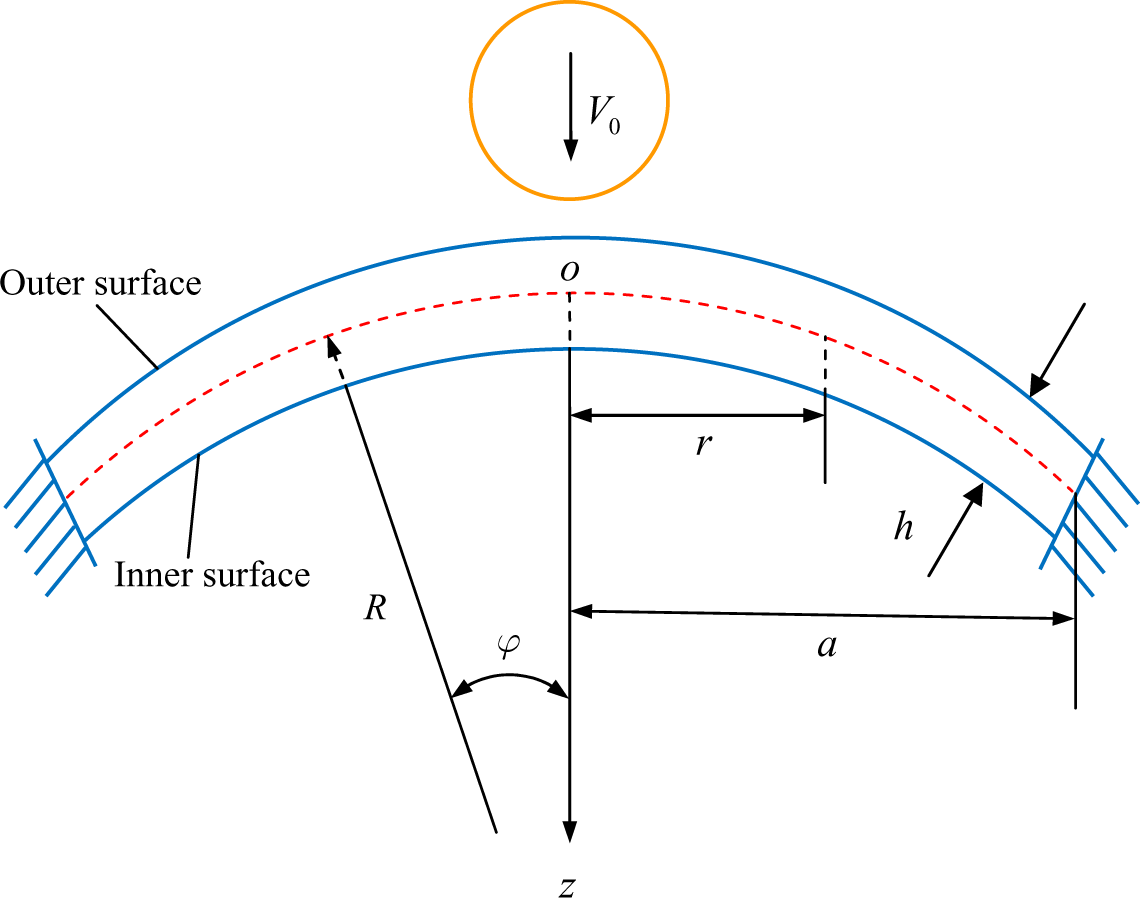
Geometrical configuration of FG shallow spherical shell to low-velocity impact. FG: functionally graded.
Properties of FGMs
The material properties of an FG shallow spherical shell are assumed to vary as a function of position. But the Poisson’s ratio ν depends weakly on position change and is assumed a constant.
24,25
The elastic modulus E(z), thermal conductivity k(z), mass density ρ(z), and coefficient of thermal expansion α(z) vary from the outer surface to the inner surface as
26

where P
m and P
c denote the material properties of metal and ceramic, respectively. V
m denotes the volume fraction of metal and can be expressed as a simple power function:

where n is the volume fraction index. According to the distribution, the outer surface
Geometric relations
Based on the TSDT, the displacement components

where
In the case of the axisymmetric deformation of a shallow spherical shell, the circumferential displacement

The functions

Introducing the coefficients

In the analysis of the shallow spherical shell, introducing a new coordinate r along the direction of the radius of the parallel circle, using the following approximate relations

where the subscript “,” denotes the partial derivative.
Constitutive relations
For an FG shallow spherical shell, the material properties vary through the thickness direction and the temperature effect, and the elastic constitutive relations can be written as

in which

Nonlinear governing equations of motion
The nonlinear governing equations of motion for an FG shallow spherical shell are derived from Hamilton’s principle that requires
28

where δ is the variable operator, T
e is the kinetic energy of the shallow spherical shell, V
e is the potential of the external load, and U
e is the total elastic strain energy. The Lamé coefficients of any point in the shallow spherical shell are

where
and I
0 is defined as

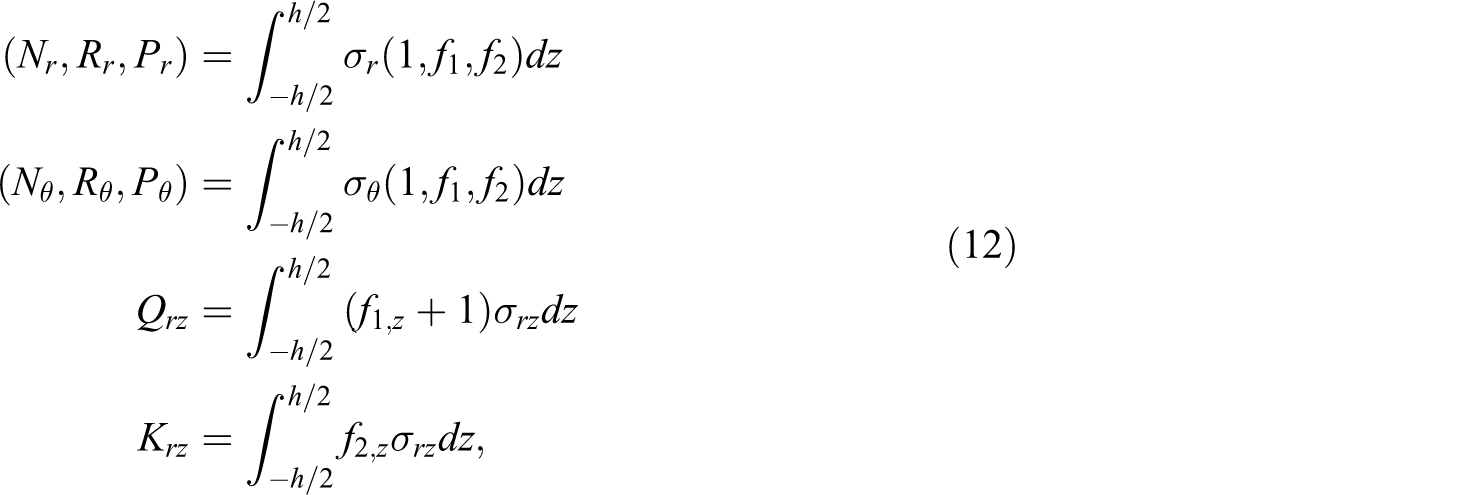
The forces and moments

Introducing the coefficients
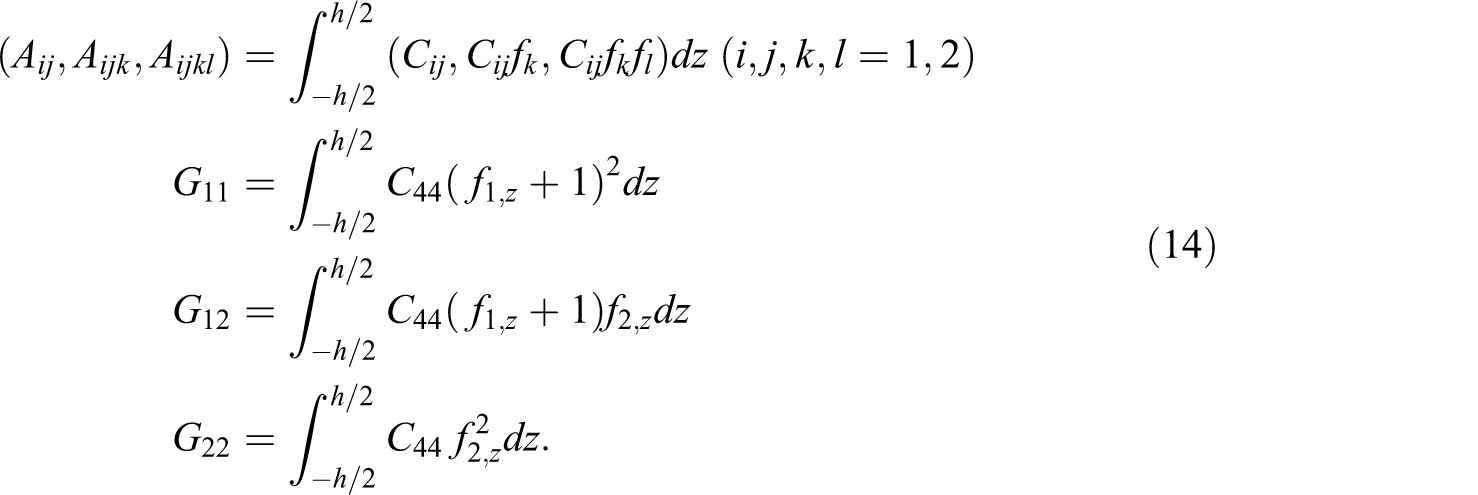
Introducing the following dimensionless parameters:
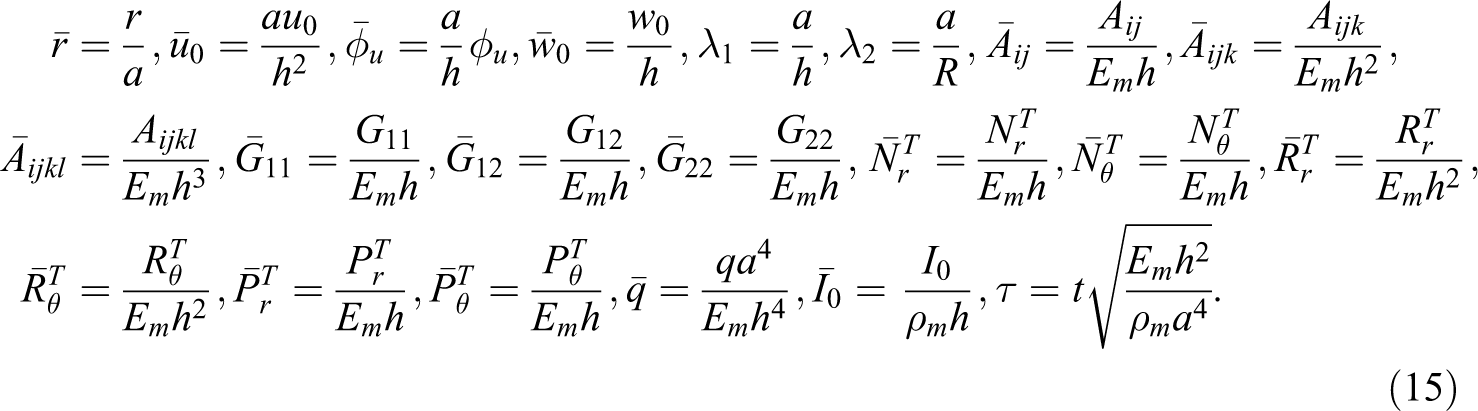
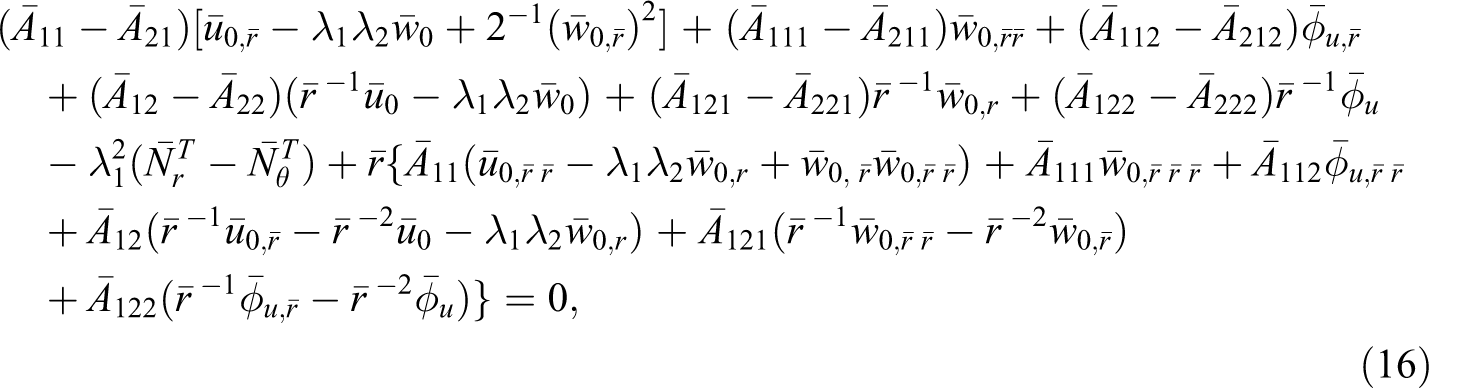
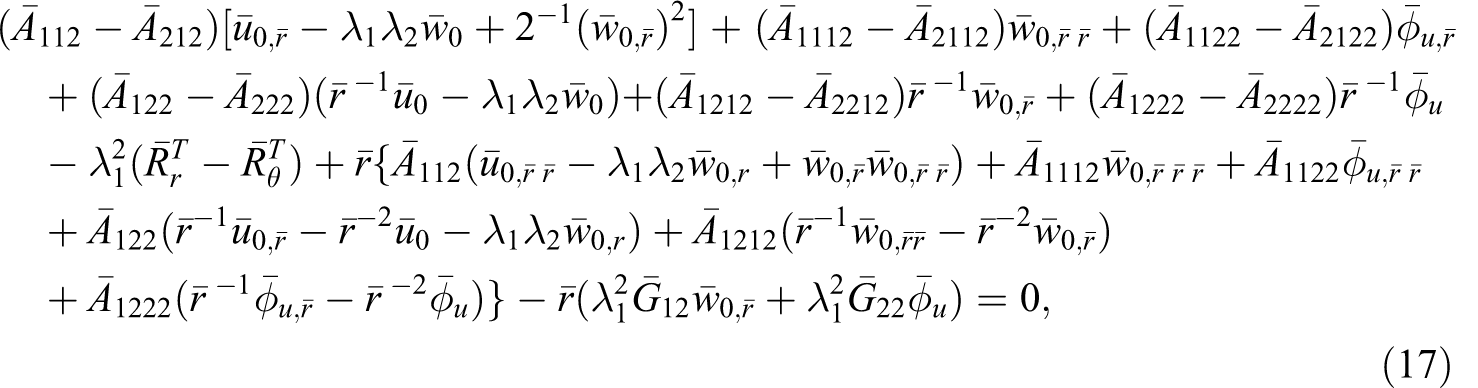
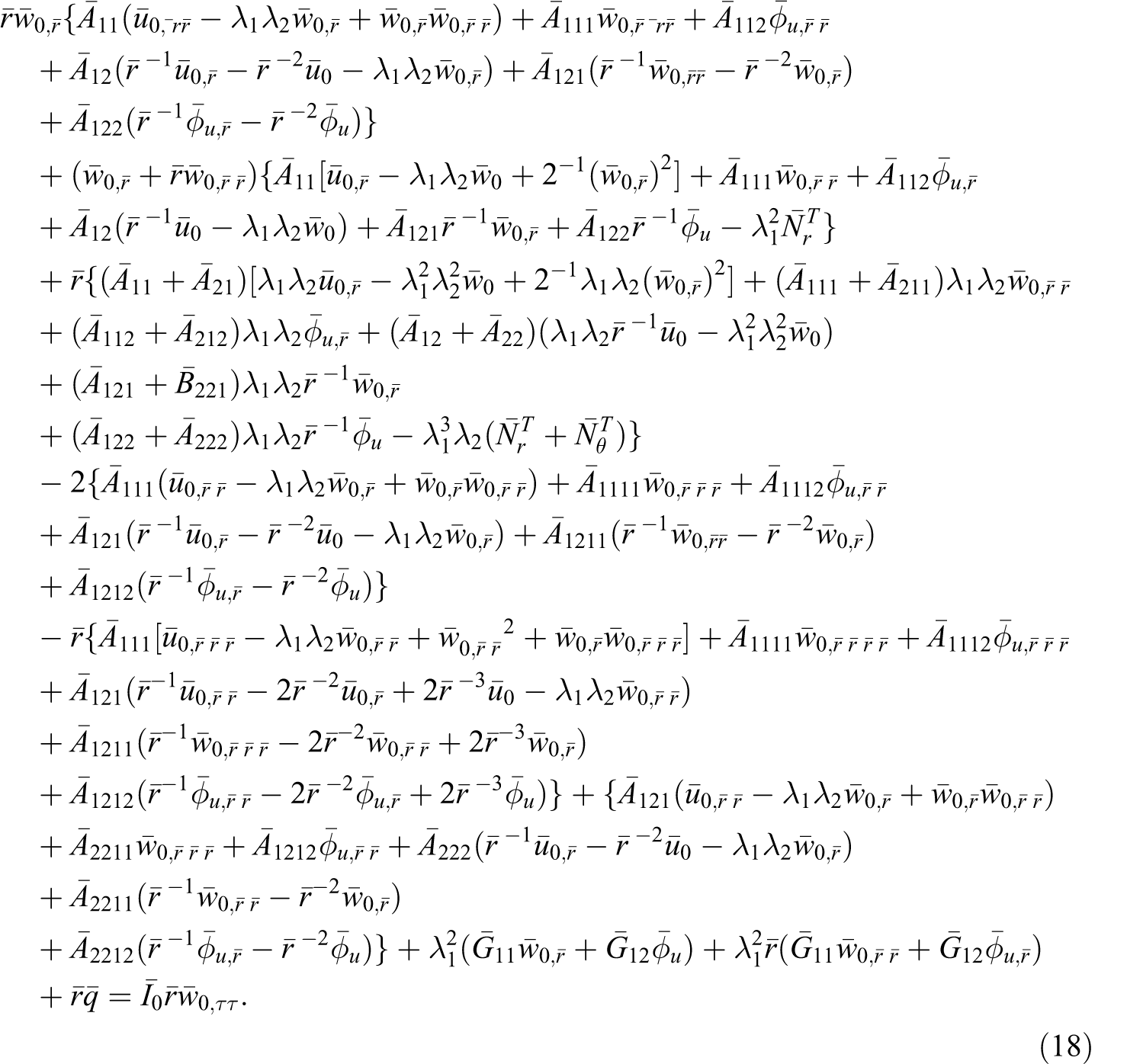
Substituting equation (12) into equation (11), and using equations (8), (7), and (15), the dimensionless nonlinear governing equations of motion for the shallow spherical shell can be expressed as
Consider the shallow spherical shell clamped with in-plane immovable at

The dimensionless initial conditions are

Temperature field
This article considers the influence of one-dimensional steady state temperature field on the behavior of FG shallow spherical shells. The temperature of a shallow spherical shell is assumed to be different on the outer surface

in which

Contact force
Consider an FG shallow spherical shell impacted by an elastic ball on the top Geometrical configuration of local deformation.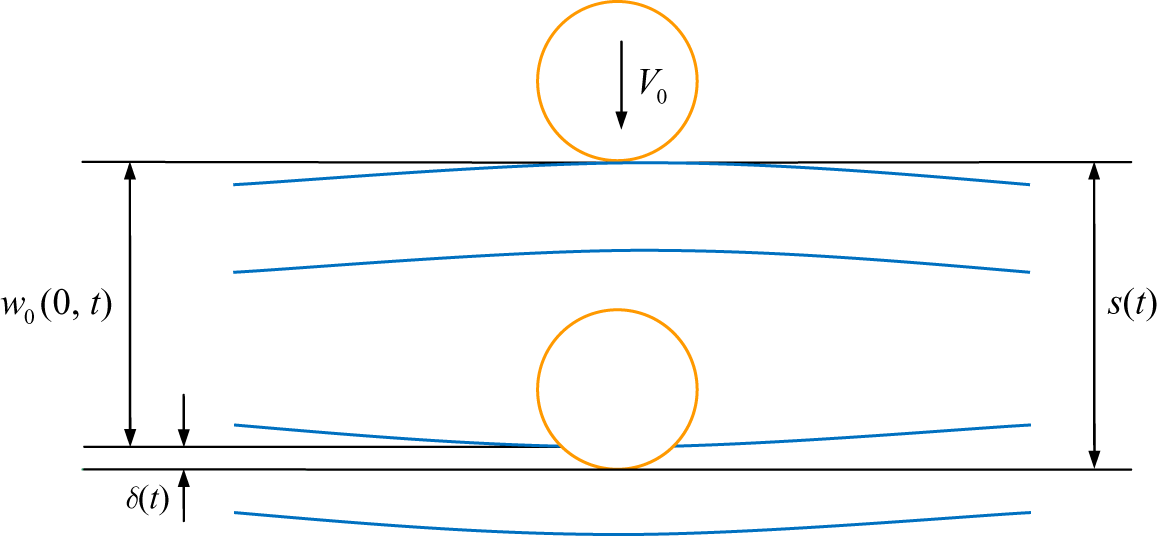

where F(t) is the contact force, and

where the parameters

where

Suppose the initial displacement between the shallow spherical shell and impact ball is zero, then, the displacement of the impact ball with initial velocity

where

Because the analytic solution of equation (28) is hard to obtain, a small time increment method is adopted to seek a numerical solution here, and it is similar with the method reported by Sankar and Sun
30
where the contact force variation is linear in time during each small time increment. The contact force is regarded as constant during the time increment

where the quantity

At the beginning of the contact, the response of the shallow spherical shell is mainly due to the appearance of local deformation on the contact area, so that the whole displacement of the shallow spherical shell is neglected. According to equation , we can obtain the initial contact force of the iterative process as

Solution method
As the nonlinear governing equations of motion for FG shallow spherical shell to low-velocity impact are complicated, approximate theories are employed to numerically solve the problem. The unknown dimensionless displacement functions

where M is the number of the discrete points

The inertia terms are discretized using the Newmark scheme, which can be expressed as

The whole equations are solved iteratively. In each iterative step J, the nonlinear items in the nonlinear governing equations of motion (16), (17), (18) and boundary conditions (19) are linearized:

where

For the different iterative steps, the coefficients A, B, and C are

Substituting equations (32), (34), and (35) into the nonlinear governing equations of motion (16), (17), (18), and boundary conditions (19), and using the initial conditions (20), one can get
Numerical example
In order to verify the present analysis, the results obtained in this article are compared with the results given by Abrate 31 and Shariyat and Jafari. 15 When an isotropic circular plate with clamped boundary conditions impacted at its center by an elastic ball is considered, the geometrical configuration and material properties are the same as reported by Shariyat and Jafari and Abrate. 15,31 The central deflection of circular plate and contact force history obtained by Abrate, 31 Shariyat and Jafari, 15 and the present analysis, respectively, are shown in Figures 3 and 4. The three results are in agreement with each other on the whole and just have small difference, Shariyat and Jafari 15 indicated the difference can be acceptable, which is evident that the present analysis yields acceptable results. The reasons for the difference are that the solution methods of contact force and HSDT are applied in this article.
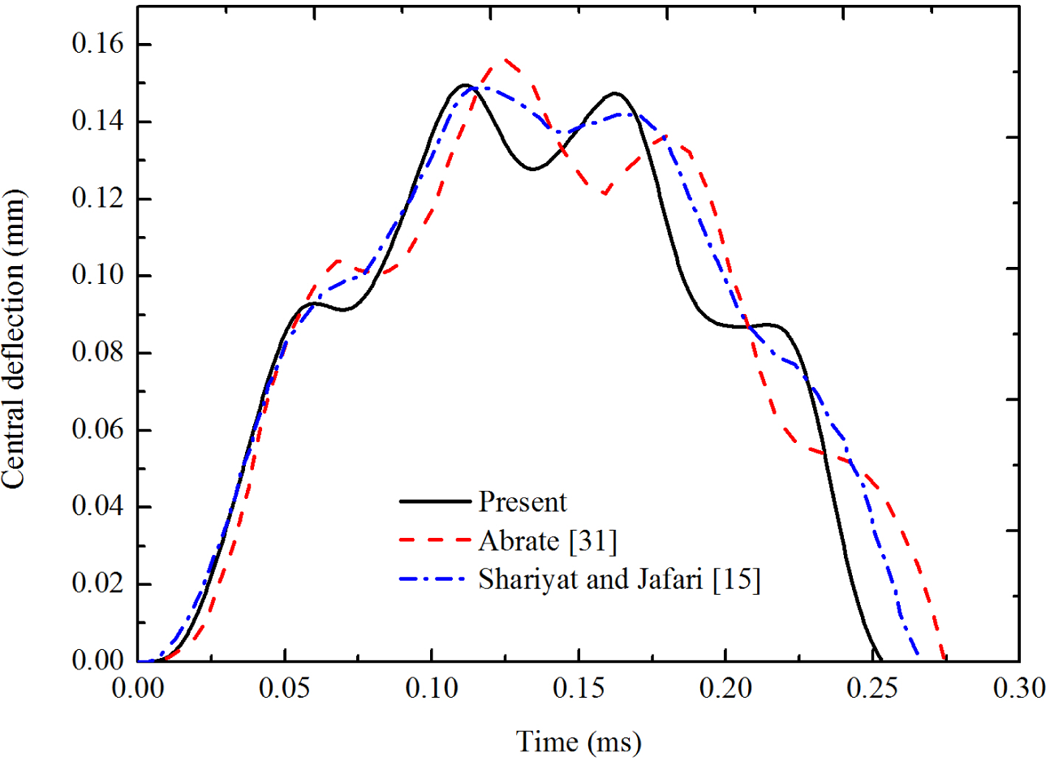
Comparison of the central deflection history for a circular plate to low-velocity impact.
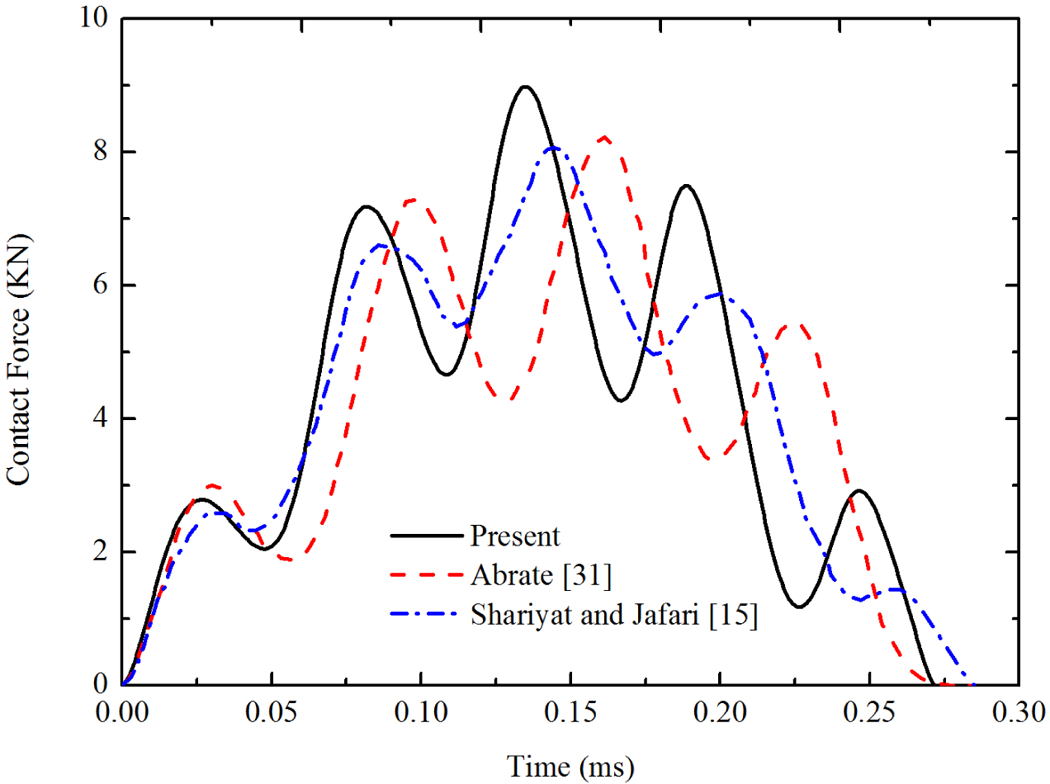
Comparison of contact force history for a circular plate to low-velocity impact.
In the subsequent section, the numerical examples are performed for FG shallow spherical shells whose thickness, radius of the base circle, and curvature radius of middle curved surface are 6, 62, and 260 mm, respectively, impacted by an elastic ball. The material properties of metal and ceramic in FG shallow spherical shells are listed in Table 1.
26
The outer surface of FG shallow spherical shell is assumed to be pure ceramic (zirconia) and the inner surface is assumed to be metal rich (Al). The variation of volume fraction

Material properties of aluminum and zirconia in FGMs. 26
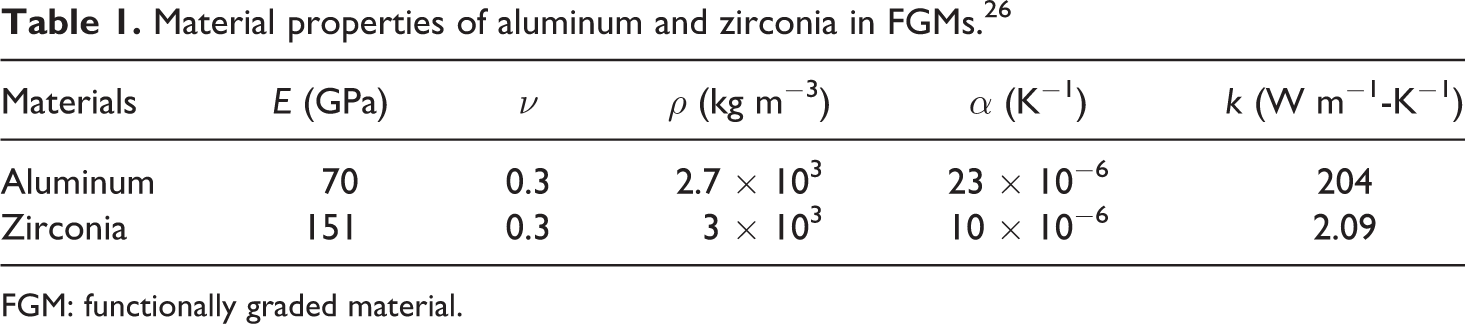
FGM: functionally graded material.
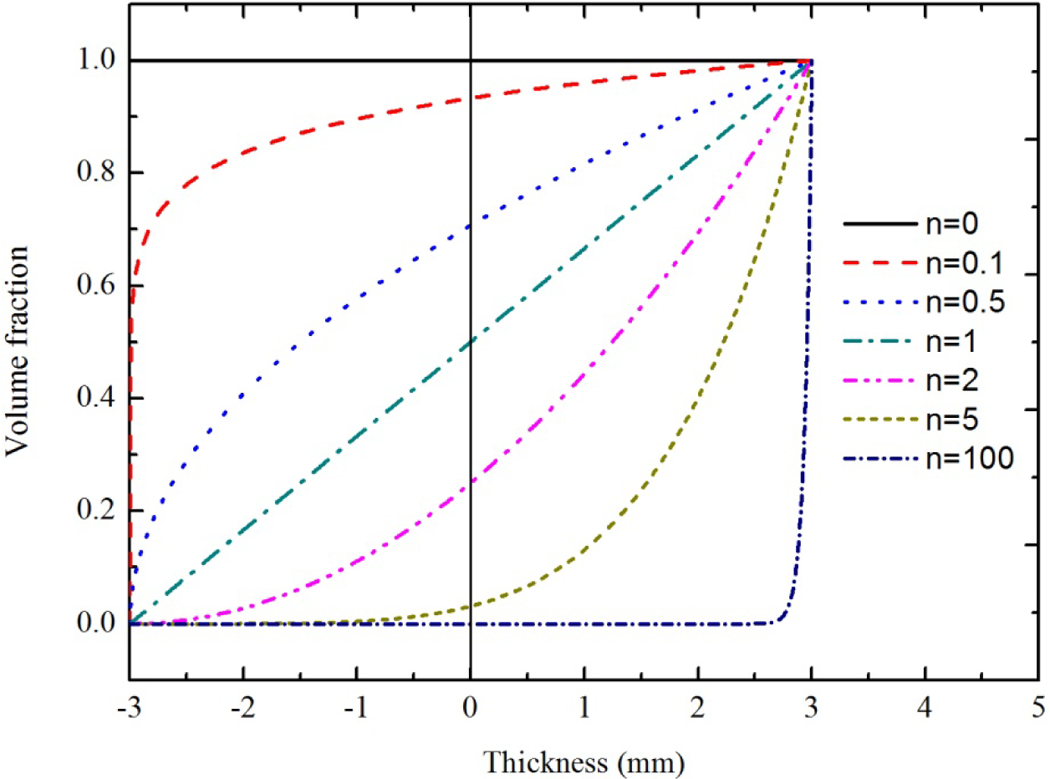
Variations of volume fraction through the thickness of FG shallow spherical shell with different volume fraction indices. FG: functionally graded.
Unless otherwise specified, the above material and geometric parameters for FG shallow spherical shell and impactor are used in the following numerical examples.
In order to study the effect of volume fraction index n on the dynamic response of FG shallow spherical shells, the shallow spherical shells with different volume fraction indices
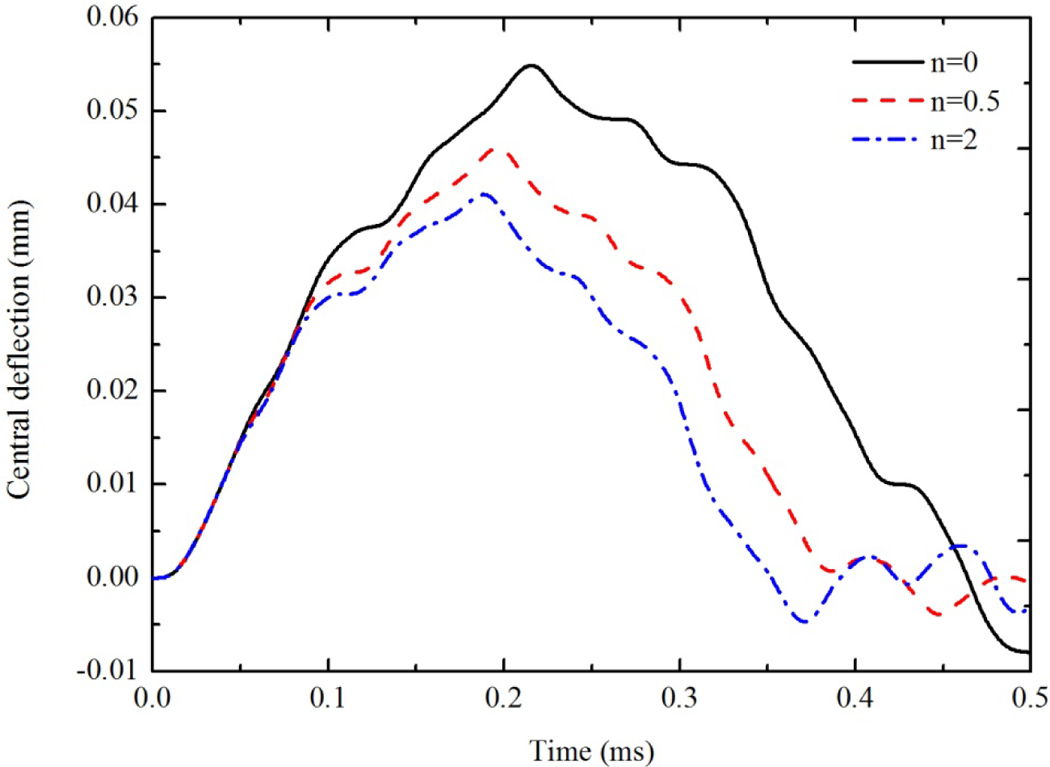
Central deflection history of FG shallow spherical shell with different volume fraction indices
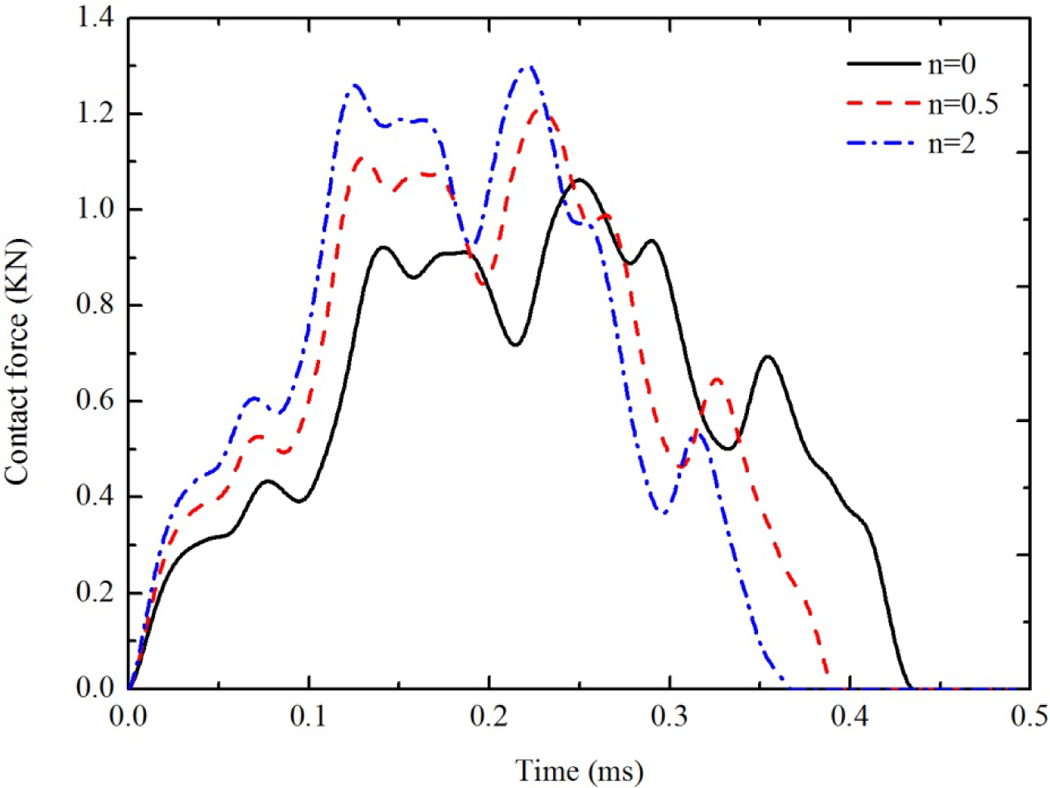
Contact force history of FG shallow spherical shell with different volume fraction indices
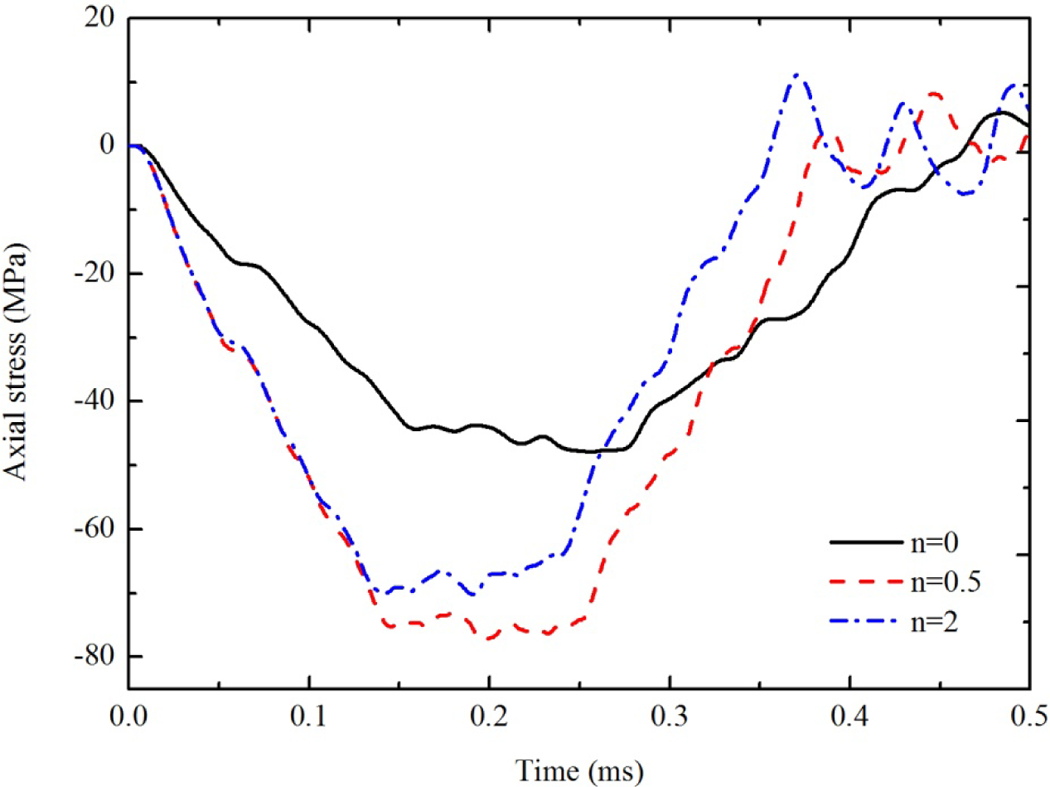
Axial stress history at the center of outer surface for FG shallow spherical shell with different volume fraction indices
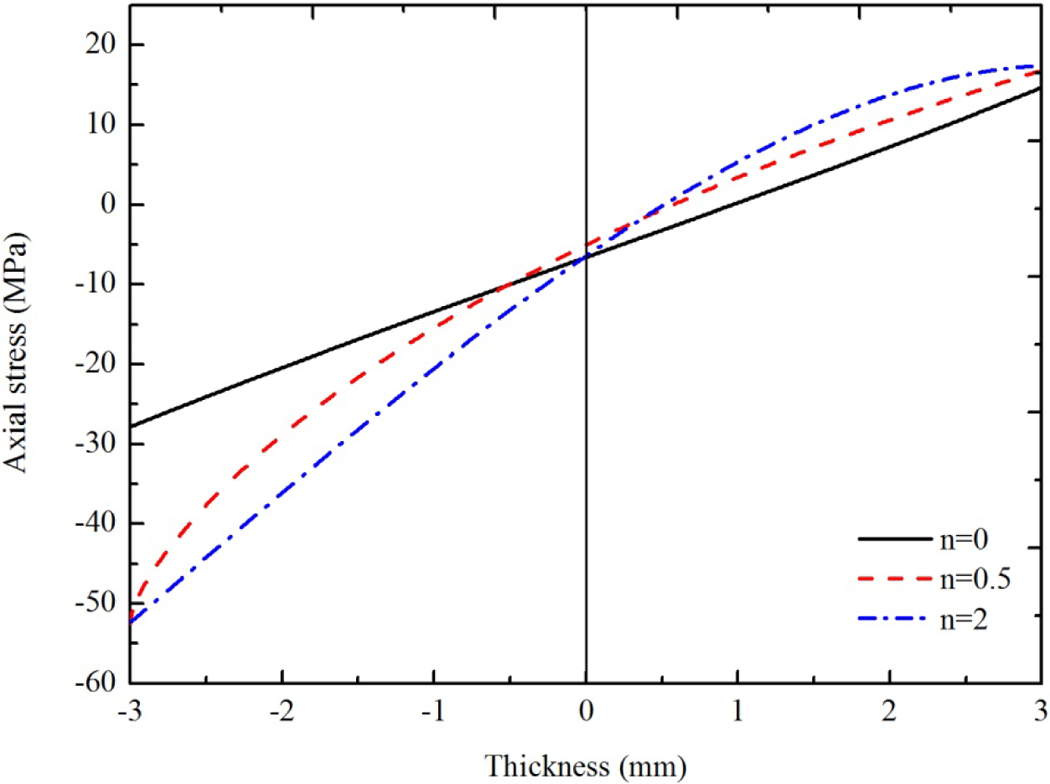
Distribution of axial stress at
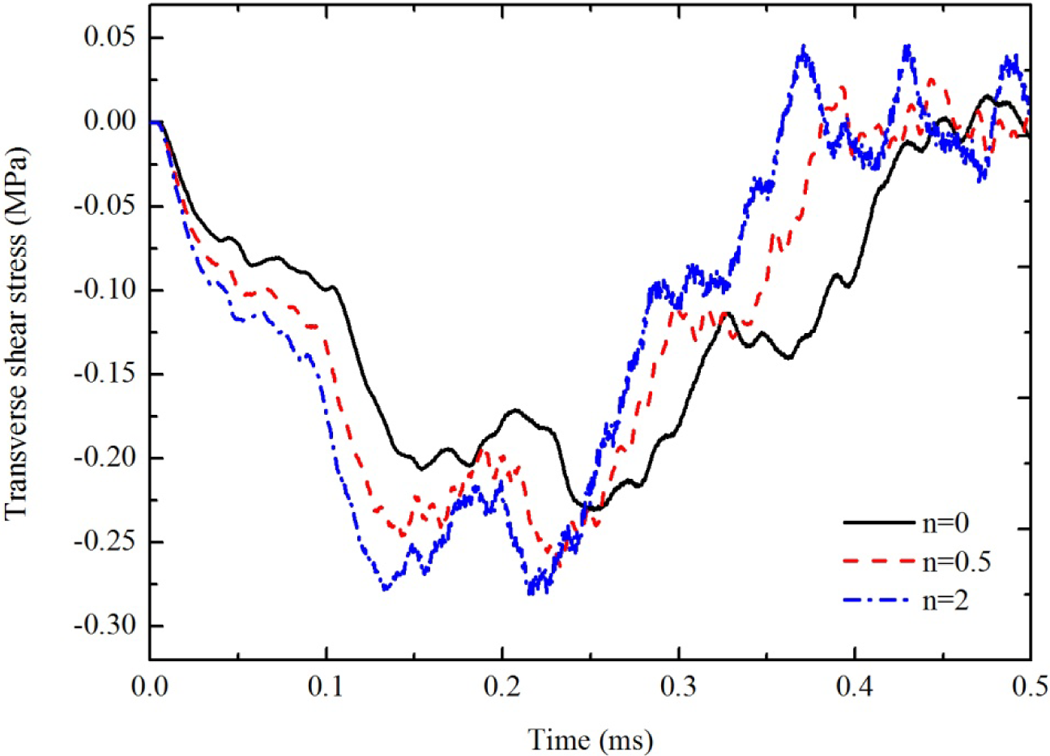
Transverse shear stress history at the center of middle plane for FG shallow spherical shell with different volume fraction indices
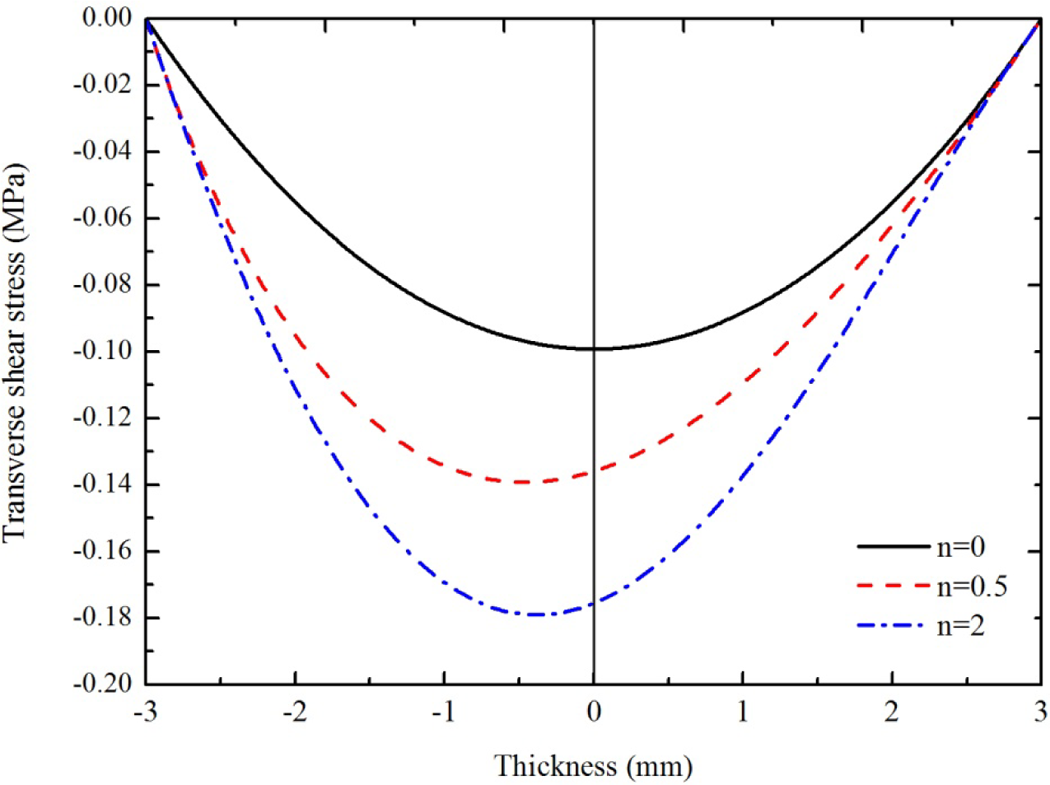
Distribution of transverse shear stress at
The effect of temperature field on the behavior of FG shallow spherical shell with volume fraction index
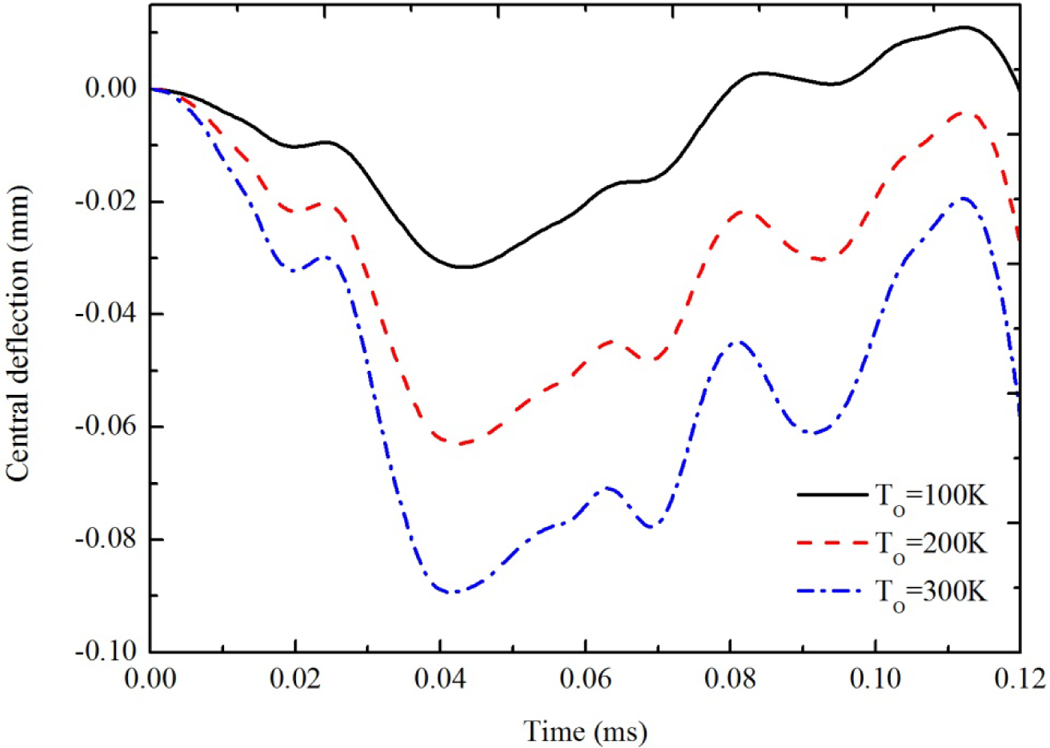
Central deflection history of FG shallow spherical shell to low-velocity impact with different temperatures on the outer surface of the shell T 0 = 100, 200, and 300 K. FG: functionally graded.
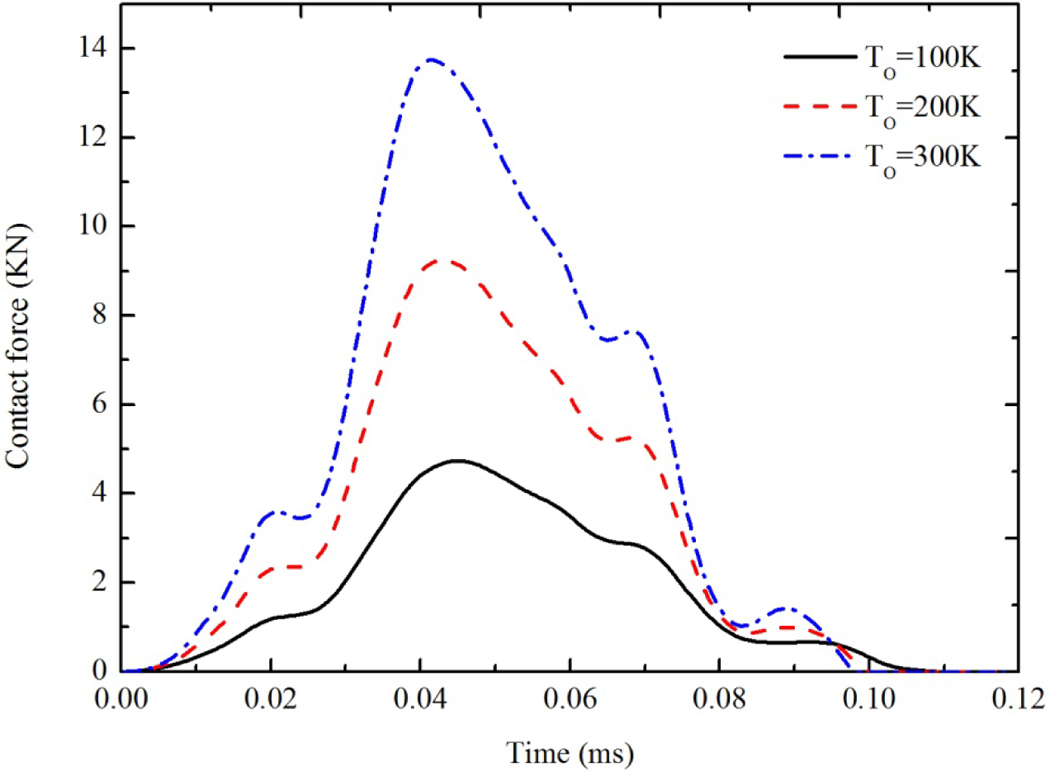
Contact force history of FG shallow spherical shell to low-velocity impact with different temperatures on the outer surface of the shell T 0 = 100, 200, and 300 K. FG: functionally graded.
In order to investigate the effect of initial impact velocity on the dynamic behavior of FG shallow spherical shell with volume fraction index
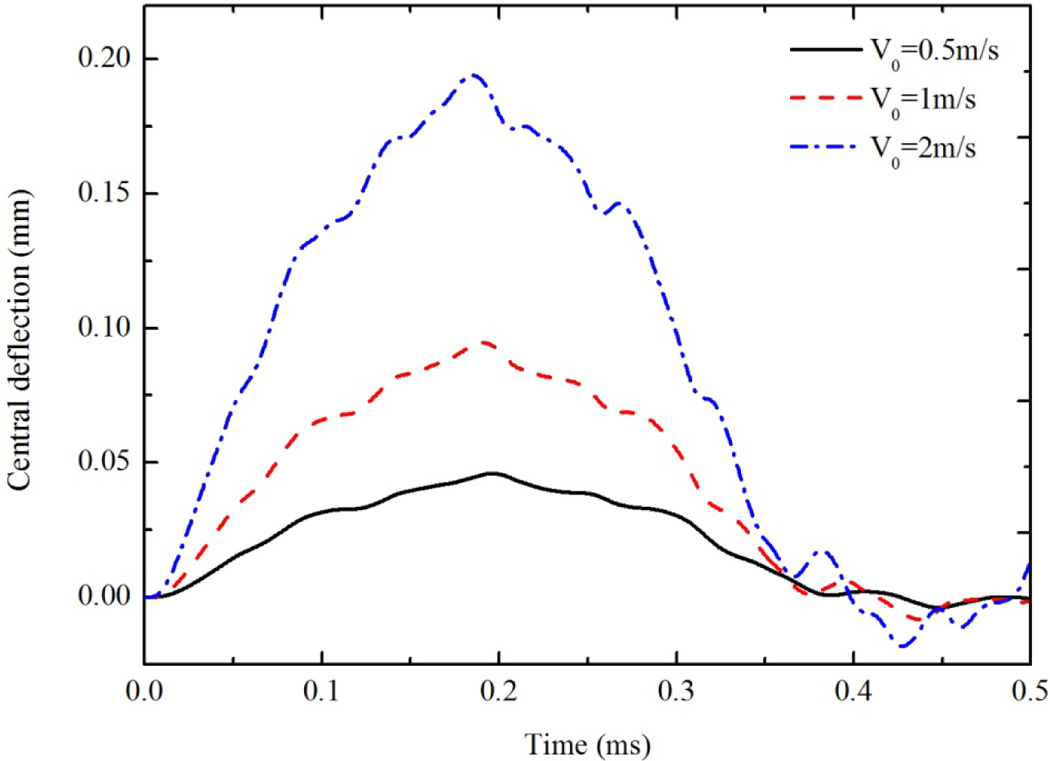
Effect of initial impact velocity on the central deflection history of FG shallow spherical shell to low-velocity impact. FG: functionally graded.
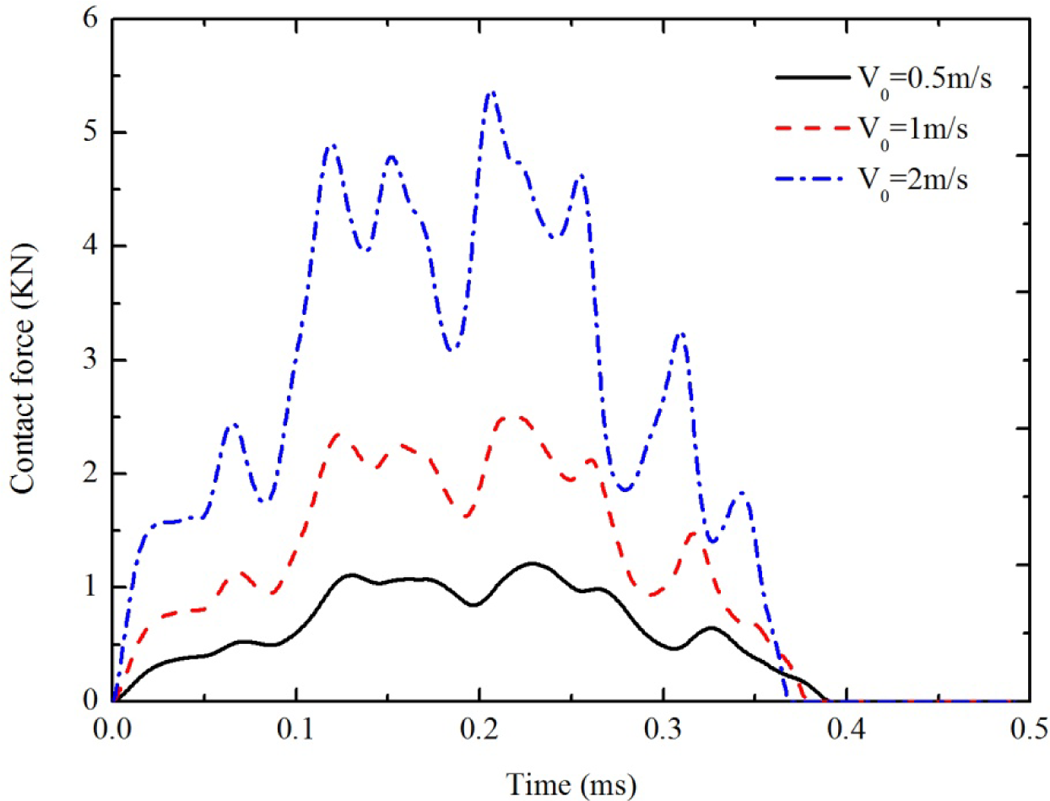
Effect of initial impact velocity on contact force history of FG shallow spherical shell to low-velocity impact. FG: functionally graded.
The effect of impactor’s mass on the dynamic behavior of FG shallow spherical shell with the volume fraction index
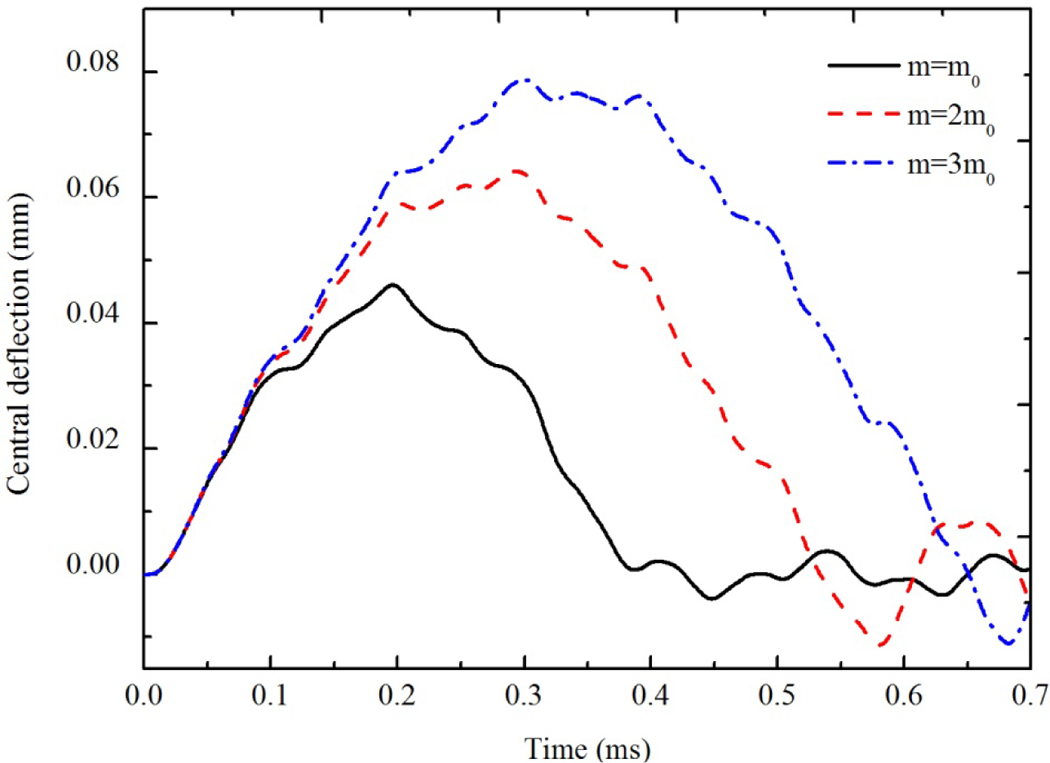
Effect of impactor’s mass on the central deflection history of FG shallow spherical shell to low-velocity impact. FG: functionally graded.
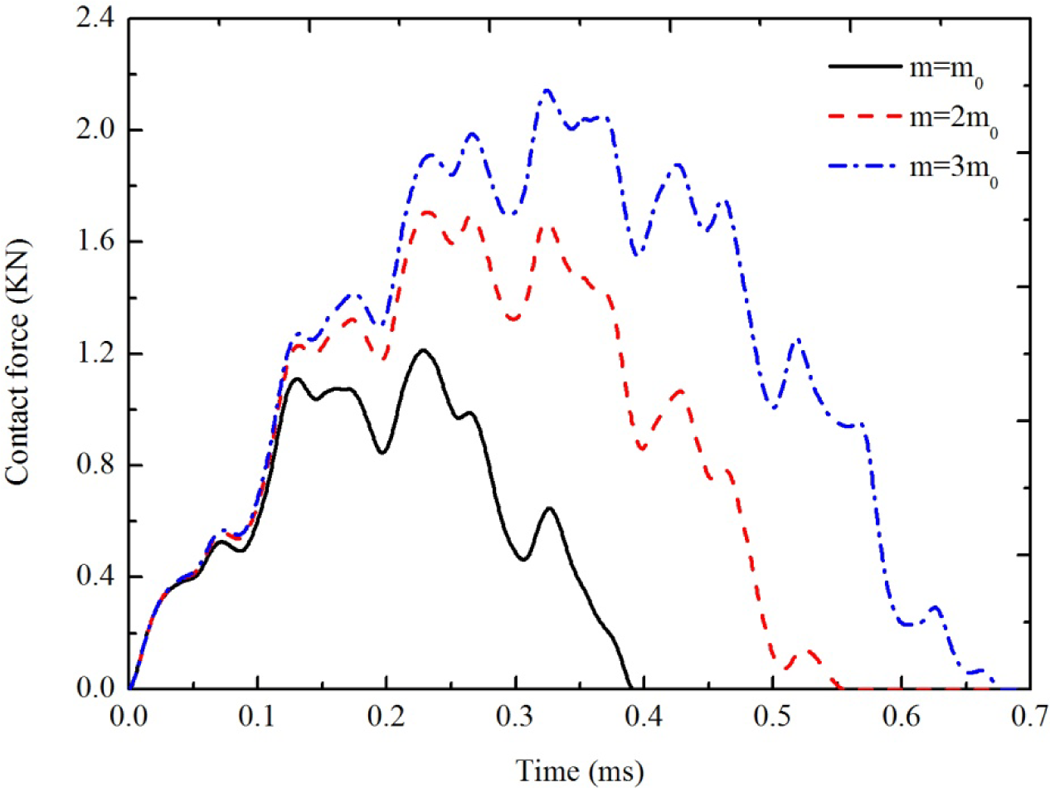
Effect of impactor’s mass on contact history of FG shallow spherical shell to low-velocity impact. FG: functionally graded.
Conclusion
This article presents a nonlinear higher order dynamic modeling for an FG shallow spherical shell in a thermal environment subjected to low-velocity impact. The temperature field varies along the thickness of the shell and is obtained from the steady state heat transfer equation. A small time increment method is adopted to seek a numerical solution of contact force. Then, the governing equations of motion are solved numerically by the Chebyshev collocation method and Newmark scheme. The main conclusions can be drawn as follows.
The whole impact duration is influenced significantly by the volume fraction index n. The larger volume fraction index contributes to more rigidity of the shell and hardens the shell to deform when the shell is subjected to transverse impact. The magnitude of axial stresses near the inner and outer surfaces increases as the volume fraction index increases, 0.1 ms after impact. The magnitude of transverse shear stress at the center of middle plane increases as the volume fraction index increases during loading while decreases as the volume fraction index increases during unloading. The maximum transverse shear stress through the thickness occurs upon the middle plane for FG shallow spherical shell
Footnotes
Declaration of Conflicting Interests
The author(s) declared no potential conflicts of interest with respect to the research, authorship, and/or publication of this article.
Funding
The author(s) disclosed receipt of the following financial support for the research, authorship, and/or publication of this article: We acknowledge support from the National Natural Science Foundation of China through grant no. 11072076.