




Abstract
In this article, a new model was developed to predict the fatigue life and stiffness reduction in thermoplastics filled with two-dimensional nanoparticles. The established model is a combination of micromechanics model and the normalized stiffness degradation approach. It was assumed that under fatigue loading condition, only stiffness of thermoplastic resin was degraded due to the temperature rise and thermal softening phenomena, while the stiffness of the nanofillers remains unchanged. The developed model is capable of predicting the fatigue life of thermoplastic nanocomposites based on the experimental data of the neat thermoplastic resin without nanofillers. The results obtained by the new model are in very good agreement with the experimental data of polyamide-6 pellets and hectorite clay nanocomposites under constant stress amplitudes fatigue loading conditions.
Keywords
Introduction
Fatigue is a major cause for catastrophic failure in thermoplastic polymeric materials, and design against them requires thorough understanding of the underlying mechanisms and factors influencing them. Polyamide (PA) and polypropylene (PP) are used as thermoplastic matrix of nanocomposites, and research on the fatigue behavior of PA and PP nanocomposites reveals the modulus variation. 1 Thus, the fatigue behavior of pure PP and PA thermoplastic resins reinforced with nanofillers is studied by many researchers. They have focused on experimental methods and tried to find the optimum weight ratio of nanofillers added into thermoplastic polymers and reported improvements in fatigue behavior of nanocomposites under load or displacement control conditions. 1 –9 Mallick et al. 1 studied the fatigue behavior of PP and polyamide-6 (PA6) nanocomposites (PA6NC) filled with montmorillonite silicate clay particles. Ramkumar and Gnanamoorthy 2 studied the effect of nanoclay addition on the temperature rise and modulus drop during the axial cyclic loading in PA6 and PA6NC and claimed that the addition of nanoclay improved the modulus of nanocomposites in comparison to pristine polymers. Also, they 3 described the effect of nanoclay addition on the flexural fatigue response of PA6. They performed the fatigue tests under displacement controlled conditions and demonstrated a marginal improvement in fatigue life of the specimens due to the addition of the nanoclay. Bellemare et al. 4 performed axial fatigue loading tests on PA6 montmorillonite clay nanocomposites and pure PA6 at stress ratios of 0.1 and −1. Their results indicated an initial and a subsequent decrease in the storage modulus. Wang et al. 5 presented an experimental study on the cyclic fatigue of thermal softening of PA6NC. Bellemare et al. 6 characterized the effect of nanoparticles on the fatigue crack initiation and propagation mechanisms, and on the fatigue properties of PA6 nanocomposite prepared by an in situ polymerization with montmorillonite clay. Charles et al. 7 investigated the rolling contact fatigue behavior of PA6NC in unlubricated, nonconformal rolling using twin-disc test rig. Zhou et al. 8 tested and evaluated the thermal and mechanical behaviors of neat PP, 40 wt% talc-filled PP, and 5 wt% silicate clay-filled PP nanocomposites. They showed that filling talc particles or nanoclay into PP can increase the decomposition temperature, and the nano-phased PP exhibited the highest fatigue performance. Chen and Wong 9 measured the fatigue life with different displacement ranges under strain control condition and tensile loading. They implemented a unified model for nylon-6, PP with 20 wt% calcium carbonate and used their model to predict the fatigue lives of the specimens.
To predict the stiffness of laminated composite materials, a set of gradual and sudden material property degradation rules, such as stiffness degradation, for various failure modes of a unidirectional ply under a multiaxial state of fatigue stresses was developed by Shokrieh and Lessard 10 as well as by Shokrieh and Taheri-Behrooz. 11,12 Also, for the quasi-isotropic carbon fiber-reinforced laminates, sudden material property degradation was investigated by Vavouliotis et al. 13 A direct correlation between the stiffness degradation and the electrical resistance change has been established under the cyclic loading, and the sudden material property reduction as a damage index of nanocomposites under fatigue loading was investigated by many researchers. 14 –16 Alexopoulos et al. 14 used the material property degradation method as a damage control parameter and considered the effect of adding carbon nanotubes on the glass/epoxy under dynamic fatigue loading conditions. The fatigue behavior and lifetime of polyimide/silica hybrid films are investigated by Wang and Zhao 15 to evaluate the fatigue property of this class of hybrid films, where the stress life cycle experiments were performed under tension–tension fatigue loading. An exponential model of fatigue stiffness degradation was suggested by Lee and Hwang 16 to predict the fatigue life of matrix-dominant laminated composites based on the nonlinear stress/strain behavior of those materials under uniaxial tension fatigue loadings. Shokrieh and Esmkhani 17 developed a model to predict the fatigue life of nanoparticles/fibrous polymeric composites based on the micromechanical and normalized stiffness degradation (NSD) approaches. They assumed that during the cyclic loading; only material properties of fibers and epoxy matrix were degraded, whereas the nanofillers property remained intact.
A comprehensive survey in the available literature reveals the lack of an exclusive model to predict the stiffness degradation of neat thermoplastic resin and nanoparticle-filled thermoplastic nanocomposites under fatigue loading conditions. In this article, a new fatigue model is proposed to predict the stiffness reduction in thermoplastics filled with two-dimension (2D) nanoparticles. The new model was developed by the coupling of a micromechanical model and the NSD approach for thermoplastic polymeric composites.
Modeling strategy
A schematic framework of the modeling strategy is shown in Figure 1. The model is an integration of two major components: a micromechanical model and normalized gradual stiffness degradation approach. The model is capable of predicting the final fatigue life of thermoplastics filled with 2D nanofillers under general fatigue loading conditions. As shown in Figure 1, in the first step, the model predicts the equivalent stiffness of nanoparticles/thermoplastic composites by means of a micromechanical model (Halpin-Tsai model). Then the NSD approach for polymeric composites under fatigue loading conditions was used to predict the stiffness degradation of nanocomposites.
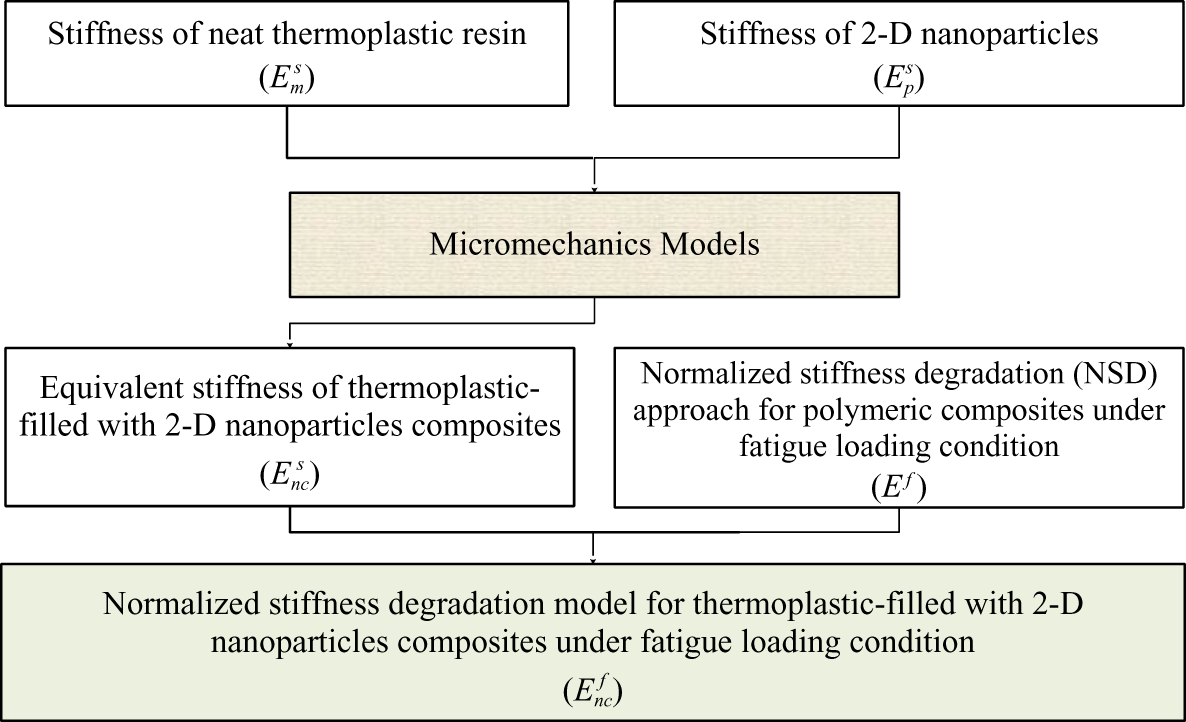
Schematic flowchart of the present model of fatigue life prediction of two-dimensional nanoparticle/thermoplastic nanocomposites.
Equivalent stiffness of nanoparticle/epoxy nanocomposites
Halpin-Tsai micromechanics model
There are several models for prediction of elastic properties of nanocomposite materials. The Halpin-Tsai (HT) model
18,19
is based on the self-consistent field method that is often considered to be semiempirical and simple. Moreover, this is an accurate model that takes into account the shape and the aspect ratio of the reinforcing particles. However, in HT model the quality of the bonding and the fillers arrangement were not considered. The HT model enables user to predict the modulus of nanoparticle-filled matrix nanocomposites as a function of the modulus of the neat matrix and 2D particles subjected to static loading conditions. The predicted modulus of the nanocomposites (

where
Normalized stiffness degradation approach
In the present research, the stiffness reduction in the neat thermoplastic matrix due to applied axial cyclic loading was considered. This behavior is simulated in this research by the material property degradation rules. A complete set of gradual and sudden material property degradation rules for all various failure modes of a unidirectional ply under a multiaxial state of static and fatigue loading was developed by Shokrieh and Lessard.
10
The residual stiffness of the material is a function of the stress state and the number of cycles. Since residual stiffness can be used as a nondestructive measure for damage evaluation, the stiffness degradation models have been developed by many investigators.
20,21
By means of normalization technique, all different curves for different states of stress can be shown by a single master curve.
10
Normalized form of the residual stiffness as a function of number of cycles was proposed by Shokrieh and Lessard
10
as follows:

where,
The developed model
In the current research, by a combination of the HT model (Eq. 1) and the NSD approach (Eq. 2), a NSD model (NSDM) for thermoplastics filled with 2D nanoparticles under fatigue loading conditions was developed as Eq. 3:

where


Results and model verification
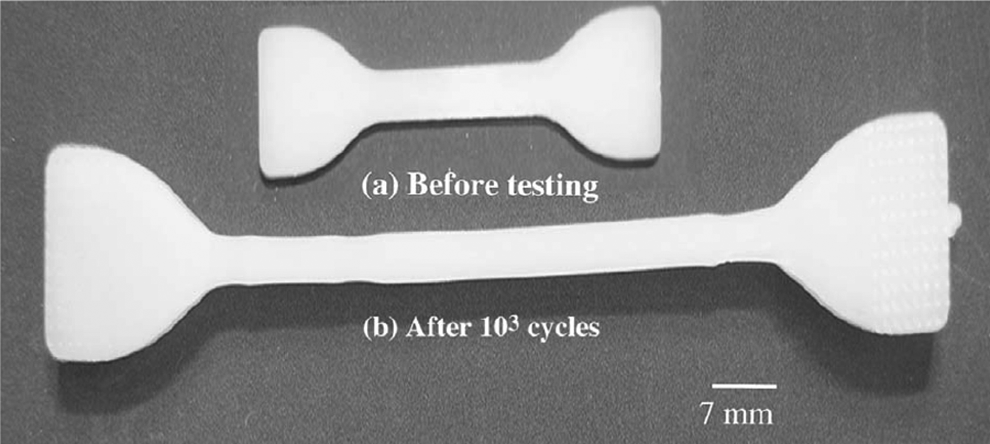
In order to evaluate the model, experimental results of Ramkumar and Gnanamoorthy 2 are used in the present research. They investigated the effect of adding nanoclay on temperature rise and modulus drop during axial cyclic loading for thermoplastic modulus behavior of neat matrix and clay/PA6NC. The major reason for modulus reduction in PA6NC and neat PA6 under fatigue loading conditions is assumed to be due to the temperature rise and thermal softening phenomena. The investigated temperature rise at 30 MPa and 22 MPa during fatigue testing in PA6 and PA6NC specimens is presented in Figure 2. After 1000 cycles, an elongation of about 2.5 times the original gauge length is observed and necking is depicted in Figure 3 for the pristine PA6 specimen. 2 They employed commercial grades of PA6 pellets and hectorite clay (bentone) nanoparticles in micron dimensions to modify the PA6 thermoplastic matrix. The clay was organically modified with a hydrogenated tallow quaternary amine complex. In this research, PA6 pellets and 5 wt% clay nanofillers were mixed to make PA6NC, and the measured tensile properties of PA6 and PA6NC are shown in the Table 1. 2
Tensile properties of PA6 and PA6NC. 2 ,a
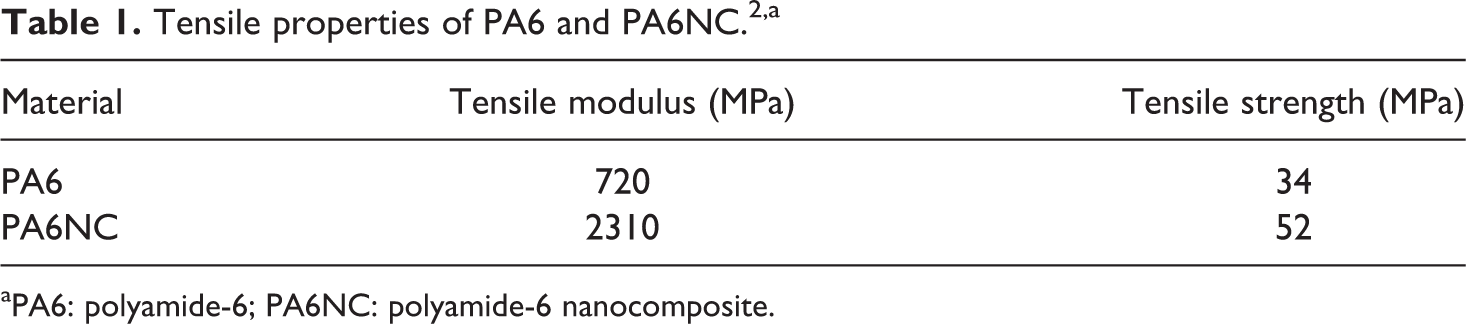
aPA6: polyamide-6; PA6NC: polyamide-6 nanocomposite.
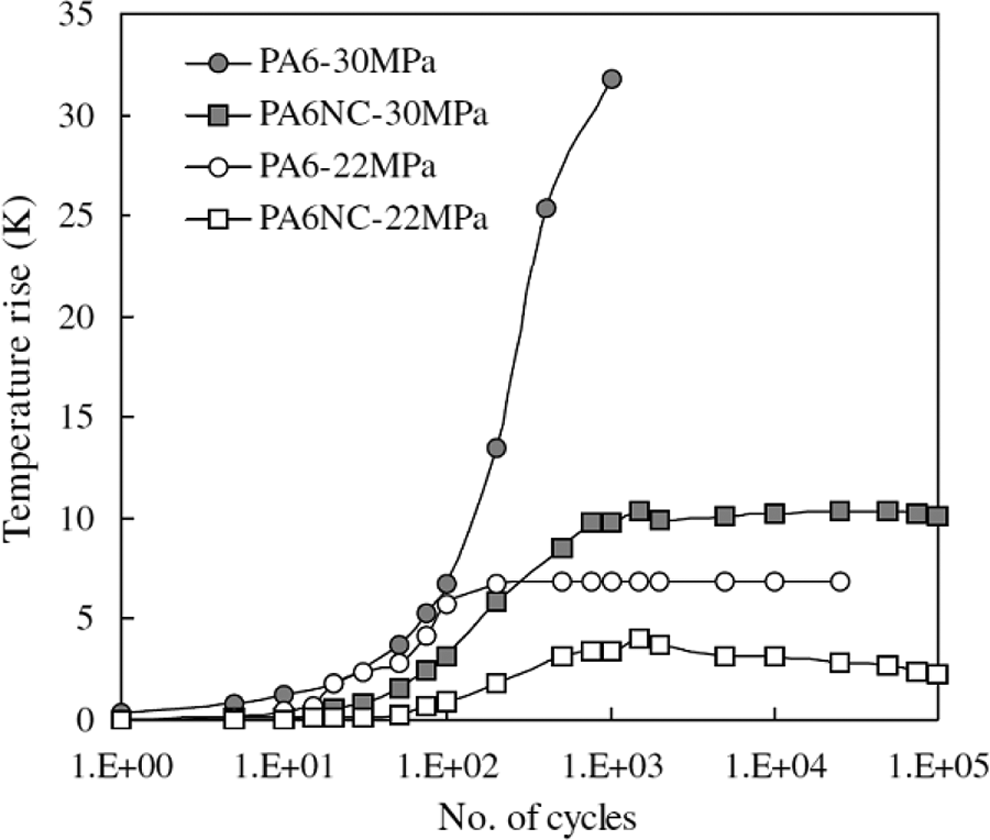
Temperature rise during fatigue testing in PA6 and PA6NC specimens tested at 30 MPa and 22 MPa. 2 PA6: polyamide-6; PA6NC: polyamide-6 nanocomposite.
In Figure 4, the normalized modulus drop as a function of number of cycles for the PA6 thermoplastic matrix without nanoparticles at 30 MPa and 22 MPa stress magnitudes is demonstrated and is used in the present work to verify the developed model for PA6. Then the normalization technique is applied and NSD curve for PA6 thermoplastic resin without nanoparticles. Then the curve fitting parameters, λ and γ, are obtained as shown in Figure 5, which are equal to 3.984 and 1.169, respectively. For evaluating the accuracy of derived equations for the neat PA6 thermoplastic resin without nanoparticles, the trend for stiffness versus number of cycles is depicted in Figure 6, and a good agreement was obtained with the experimental data. This compatibility shows that the obtained curve-fitting parameters are suitable for this thermoplastic resin.
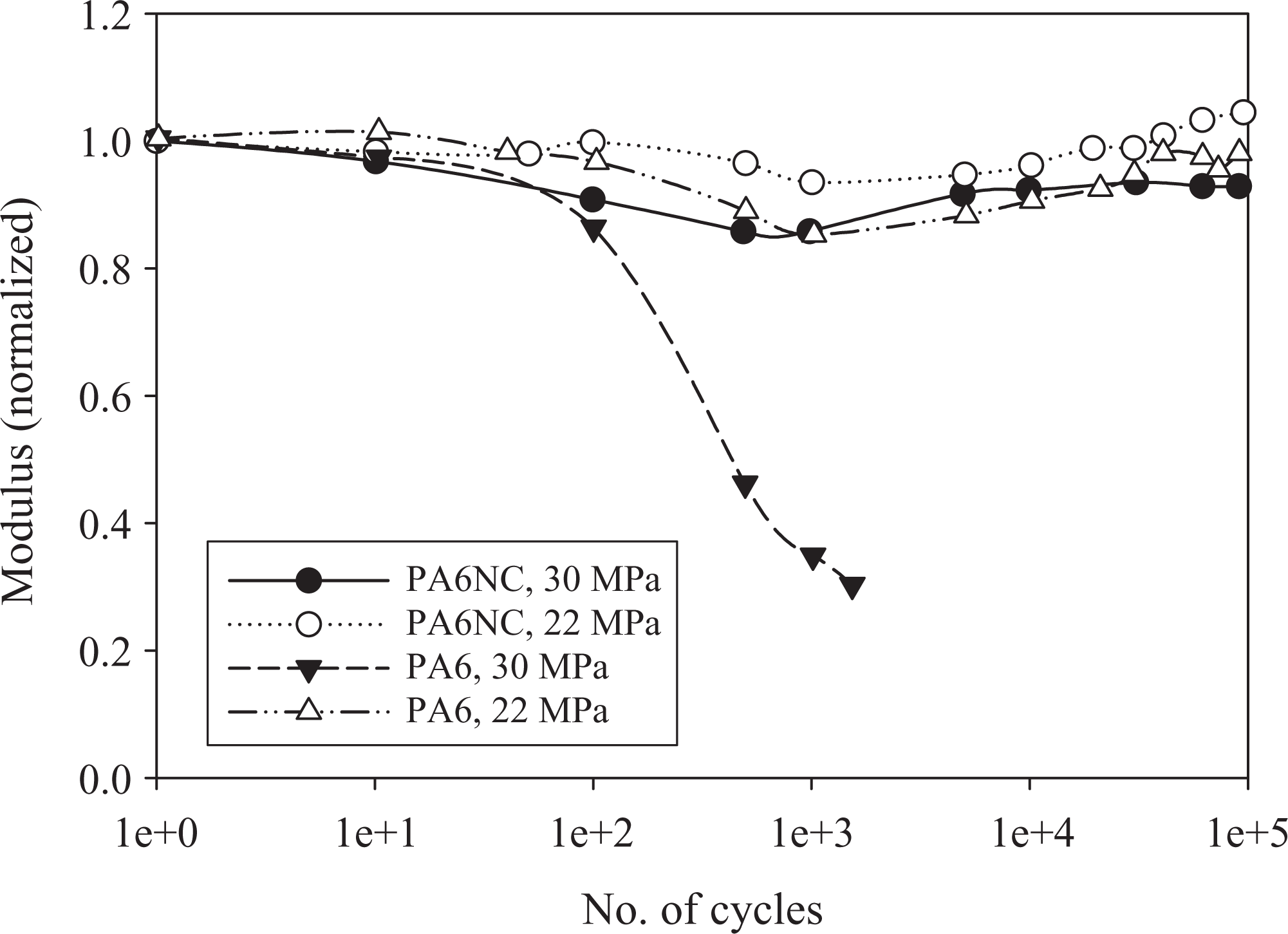
Modulus drop (normalized) as a function of number of cycles for PA6 and PA6NC specimens tested 2 at 30 MPa and 22 MPa stress magnitudes. PA6: polyamide-6; PA6NC: polyamide-6 nanocomposite.
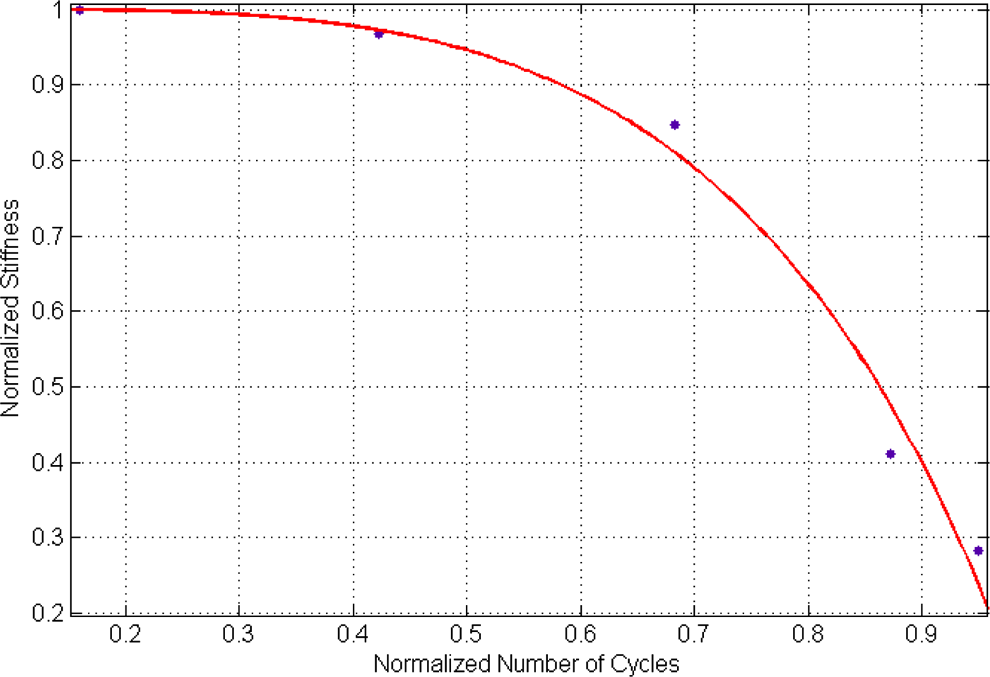
Normalized stiffness degradation curve for PA6 thermoplastic resin without nanoparticles, λ = 3.984, γ = 1.169, εf = 0.52. PA6: polyamide-6.
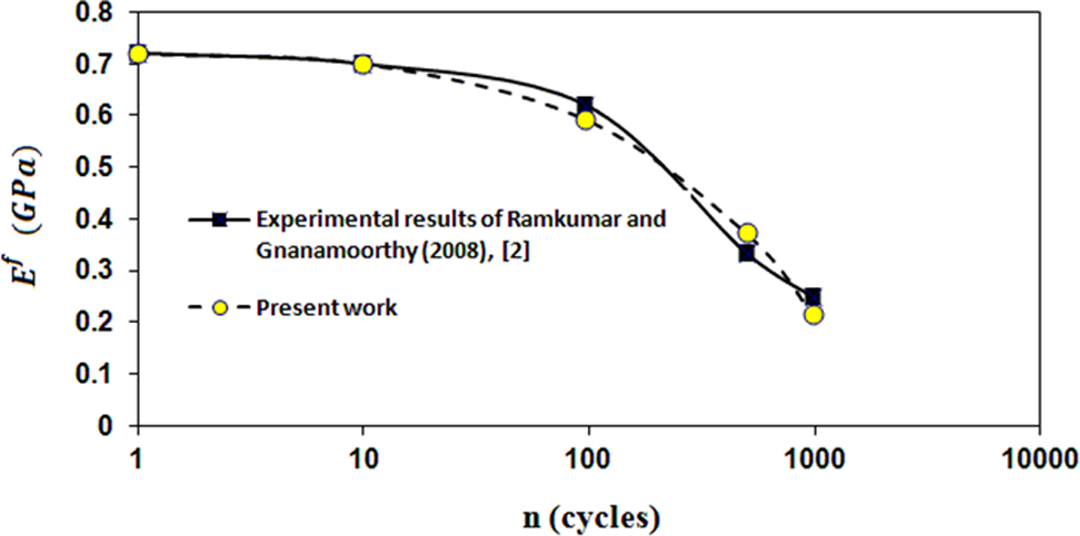
Stiffness reduction in PA6 thermoplastic resin without nanoparticles, σ max = 30 MPa. PA6: polyamide-6.
The major capability of the developed model is the fatigue life prediction of thermoplastic-filled with 2D nanoparticle composites under fatigue loading condition based on the experimental data of the neat thermoplastic resin without nanofillers. For this purpose, properties of the nanoparticles and neat thermoplastic matrix are replaced in the established model. In literature, both aspect ratio and width are mentioned as 100 nm, 22 and other typical properties of the hectorite clay are used as shown in Table 2. By means of an inverse method and the HT model (Eq. 1), the stiffness of hectorite clay is found to be equal to 120 GPa subjected to the static loading conditions.
Properties of the hectorite clay nanoparticles.

Finally, the developed model was verified at 22 and 30 MPa of stress levels. First, the stiffness versus number of cycles for 5 wt% PA6NC at 30 MPa stress magnitude was found and shown in Figure 7. It shows that the developed model results of the NSD versus the number of cycles for 5 wt% hectorite PA6NC show a good agreement with the experiments. The behavior of the nano-NSDM based on the HT model, covers the result of the experiment completely. For more elaboration, the results and error value of the model are presented in Table 3. For instance, while the number of cycles was 474 cycles, according to the experimental results,
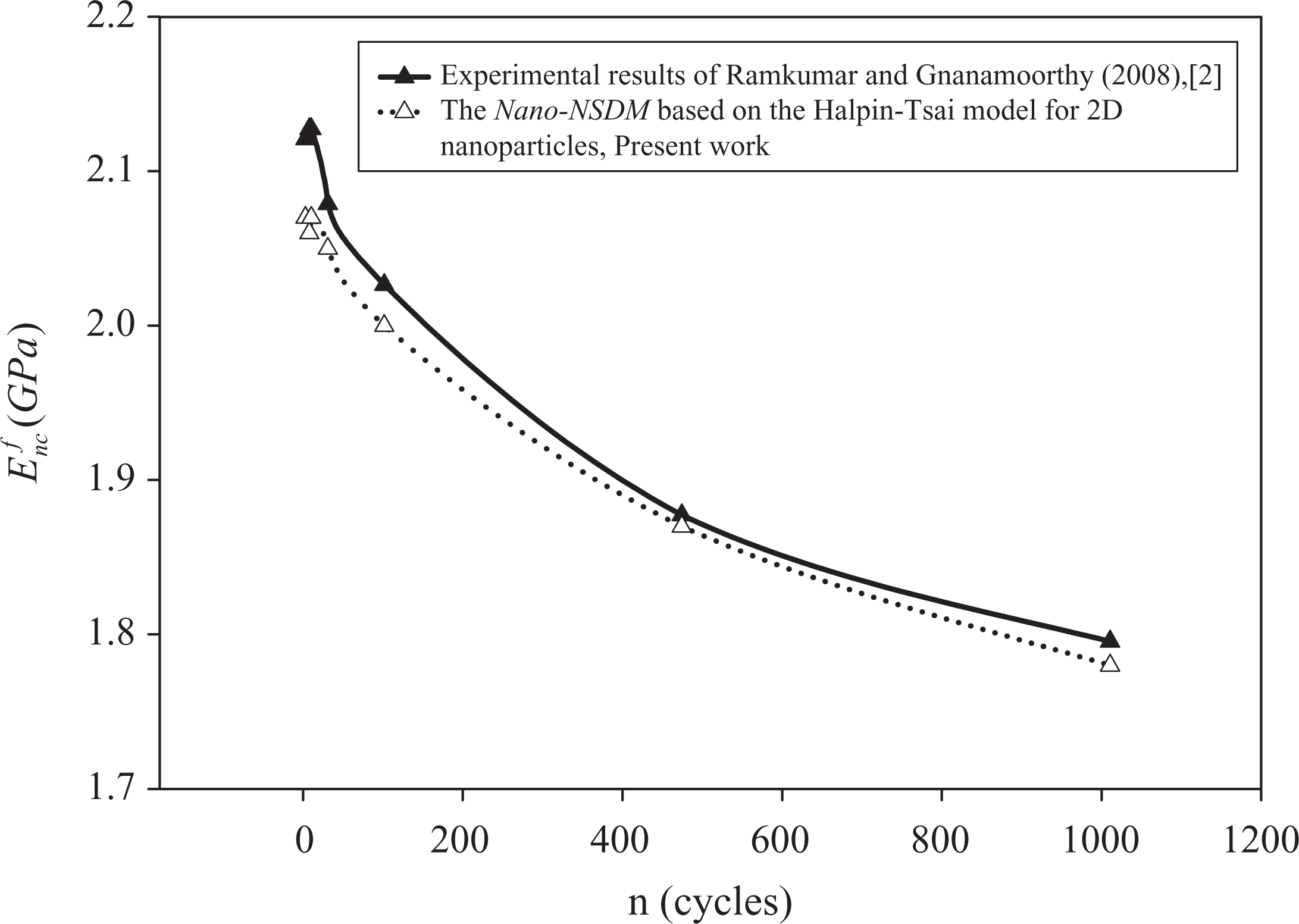
Stiffness reduction for 5 wt% clay/PA6NC, σ max = 30 MPa. PA6NC: polyamide-6 nanocomposite.
Results and value of error percentage of the modified model. (PA6NC), σ max = 30 MPa.a
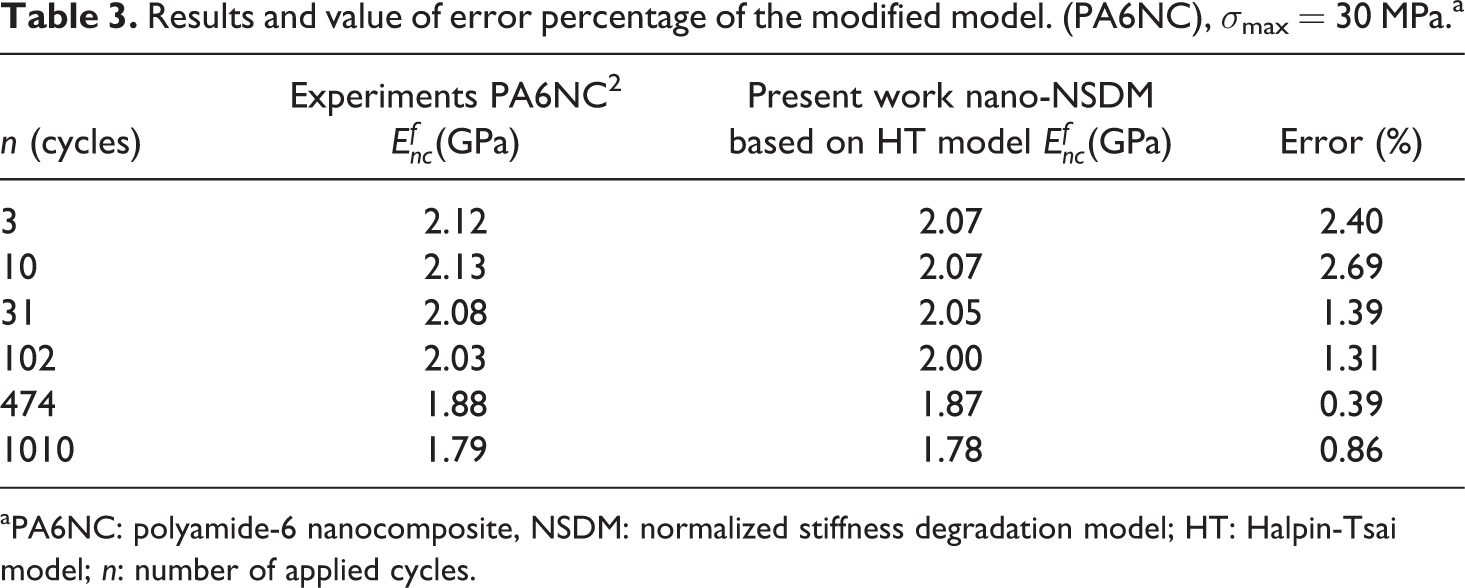
aPA6NC: polyamide-6 nanocomposite, NSDM: normalized stiffness degradation model; HT: Halpin-Tsai model; n: number of applied cycles.
Conclusions
In the present work, a novel model is developed to predict the fatigue life of thermoplastic-filled with 2D nanoparticles composites under fatigue loading condition. The model is an integration of two major components: the micromechanical and NSD approaches to predict the final fatigue life of clay/PA6NC based on the experimental data of the neat thermoplastic resin without nanofiller. In the developed model, nano-NSDM, material properties of the nanoparticles and neat thermoplastic matrix were used in the model and the NSD parameters were obtained. Then the stiffness versus number of cycles for clay/PA6NC at a given stress magnitude was found by means of PA thermoplastic matrix values. For model verification, the published experimental results of Ramkumar and Gnanamoorthy 2 have been used at two stress levels and the predicted results by the new model for 5 wt% clay PA6NC were in good agreement with the experiments.
Footnotes
Declaration of Conflicting Interests
The author(s) declared no potential conflicts of interest with respect to the research, authorship, and/or publication of this article.
Funding
The author(s) received no financial support for the research, authorship, and/or publication of this article.