




Abstract
To study the effect of sample width and inclined angle on flame spread across expanded polystyrene (EPS) surface, a series of laboratory-scale experiments were conducted in the Lhasa plateau and the Hefei plain. Surface flame height, flame spread rate and preheating zone length were obtained. The dimensionless surface flame height varied as the −n power of the sample width and 0.7 < n < 0.9. As angle of incline increased, the surface flame height first rose and then dropped. The surface flame height difference between maximum and minimum width became smaller with the increase in angle of incline. With an increase in sample width, the flame spread rate first dropped and then rose where the angle of incline was small, while the trend was reverse for samples with larger angle of incline. For EPS at 15°and 30°, the trend of flame spread rate versus sample width in Lhasa was inverse, compared with the results obtained in Hefei. The variation trend of preheating zone length with sample width and inclined angle was different from the flame spread rate trend. However, a linear relationship of vf /w and δph /w was found in Lhasa plateau. The surface flame height, flame spread rate and preheating zone length in Hefei plain were larger than the results obtained in Lhasa plateau. The experimental results agreed well with theoretical analysis.
Introduction
Polystyrene (PS) foam is widely applied to the facade of buildings for energy saving. PS foam includes expanded PS (EPS) foam and extruded PS (XPS) foam, which are used in high-rise buildings due to their good heat-shielding performance and beauty. However, these materials represent a greater fire hazard as they are easily ignited, and their melting and flowing behaviours can promote the flame spread. An example of such instance is a fire accident that occurred on the facade of Beijing Television Central Culture building in February 2009. 1 The facade was covered with PS foam. The fire began on the top of the building, where some exposed PS foam was ignited by the spark from fireworks, and then quickly spread through the entire building. It was one of the fastest spread fires in recent years in China. The fire caused death of one fireman and many people were injured. The economic loss exceeded $26.2m. The fire increased public concern over PS foam.
There is growing research interest in PS flame spread. Huang et al. investigated flame spread characteristics of EPS and XPS under different environments, 2 and they also studied thickness effect on EPS flame spread. 3 They predicted the scope of PS flame spread rate. They also concluded that flame spread rate of EPS increased with the increasing sample thickness and the increasing trend was more obvious on plain than on plateau. Zhang et al. 1 explored sample width effects on XPS flame spread and found that with an increase in sample width, flame spread rate first dropped and then rose.
Although the experimental materials were not PS foam, many researchers have explored the effects of sample width or inclined angle on the characteristics of flame spread. Recent researchers 4 –9 suggested that below a critical value, the influence of sample width on flame spread was significant. When the inclined angle was 0°, Mell et al. 9 hypothesized that stronger convective heat transfer led to the larger spread rate of narrower samples. However, Li et al. 4 suggested that when width scope was from 2 to 11 cm, flame spread rate would increase with width. When the inclined angle was 90°, flame height and flame spread rate increased with a raise in sample width. 5 –7 Rangwala et al. 5 and Pizzo et al. 6 attributed the width effects to diffusion by the sides, while Tsai 7 demonstrated that diffusion across the entire flame width could account for the width effect. Akihiko et al. 10 analyzed solid heat transfer under different inclined angles, according to their measured temperature field and flow field, revealing an underlying relationship between spread rate and inclined angle. Many researchers 11 –13 have proposed different equations for flame spread rate and inclined angle.
There appears to be little consensus on the effects of width or inclined angle on flame spread. Therefore, the mechanism involved needs to be further studied. Furthermore, there has been no study on combined effects of sample width and inclined angle on the characteristics of flame spread across EPS surface in different environments, though this area merits comprehensive research.
In this work, a series of experiments of EPS were conducted in the Lhasa plateau and the Hefei plain. Lhasa is the administrative capital city of the Tibet, which is located in the southwest of China. Lhasa is one of the highest cities in the world. Hefei is a city in east of China. The high-speed development of Hefei arouses more attention on fire safety. Various sample widths and inclined angles were tested to compare the characteristics of flame spread, and then, the effects of sample width and inclined angles on EPS flame spread behaviours were obtained.
Experiment apparatus
The experimental apparatus is shown in Figure 1. The experimental system includes rotary supporter, ruler, gypsum board, EPS sample, computer, digital camera, thermocouple and data collector. The angle of incline of the sample can be set to the required angle using the rotary supporter. In this work, four inclined angles were set at 0°, 15°, 30° and 90°. The ruler was fixed on one side of the rotary supporter to locate the flame front and to identify the ratio of the pixel distance and actual distance. Gypsum board was employed to insulate the heat generated during combusting. During the process of flame spread, variation in surface temperature was measured by thermocouple, which has a diameter of only 0.5 mm and has a short response time of 0.03 s. The thermocouple measurement range is −200 to 600°C, with an accuracy rating of 2.2°C. Data collector was used to collect the temperature data of the thermocouple. The dynamic process of flame spread was recorded using a digital camera with a frequency of 25 frames per second. The results were stored in a computer, whose image processing was used to obtain the characteristic parameters of flame shape and the relationship between flame front and time.
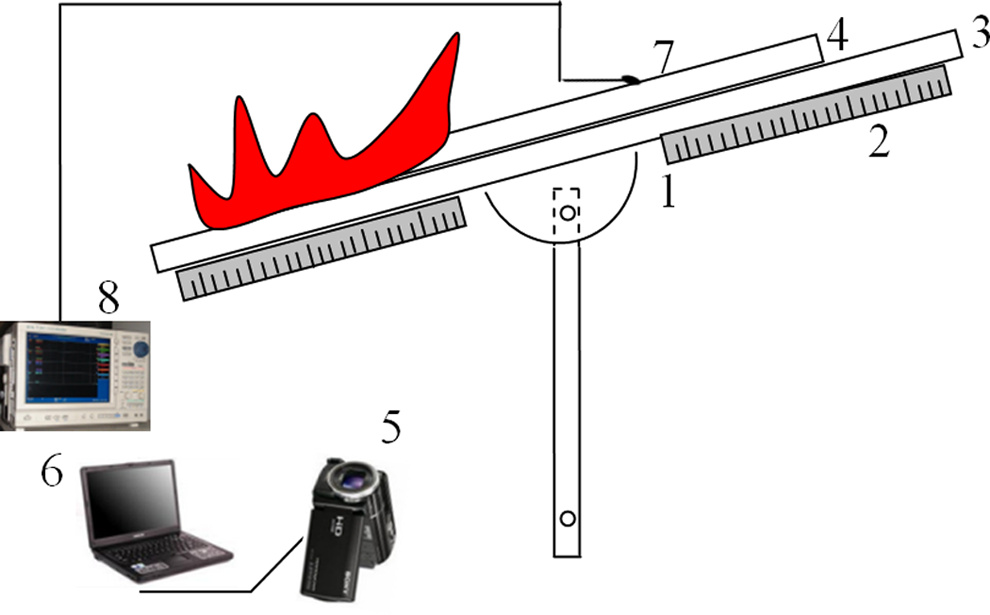
Schematic illustration of the experimental system. 1. Rotary supporter, 2. ruler, 3. gypsum board, 4. EPS sample, 5. digital camera, 6. computer, 7. thermocouple and 8. data collector. EPS: expanded polystyrene.
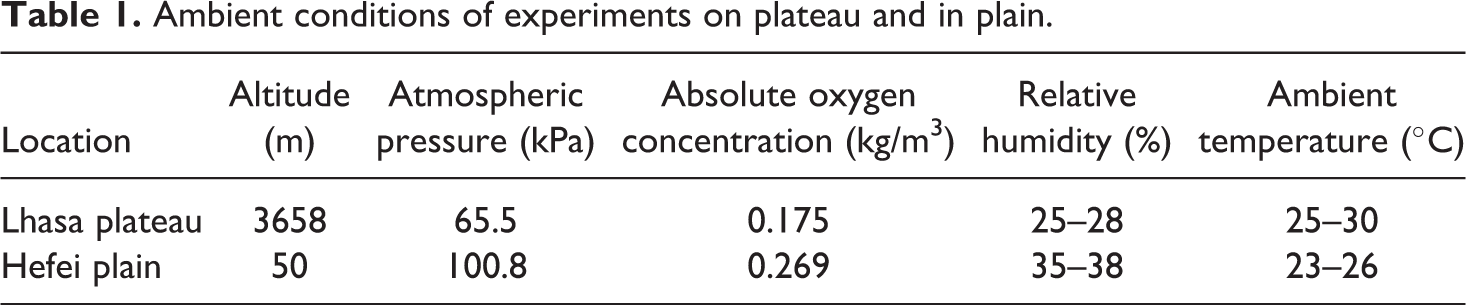
The length, thickness and density of EPS were 80 cm, 4 cm and 18 kg/m3, respectively. The widths of the samples were 4, 8, 12 and 16 cm. Aluminium foil was attached to the bottom surface of each sample to prevent molten materials from flowing onto the gypsum board. Before the experiment, the sample was placed on the gypsum board, and the thermocouple was positioned on the sample upper surface in the middle to measure the surface temperature. At the beginning of each test, a linear igniter was employed to ignite one end of the sample and every test was repeated five times under the same condition in order to minimize experimental error. The experiments were conducted in the Lhasa plateau and the Hefei plain. The experimental ambient conditions of the two locations are listed in Table 1.
Ambient conditions of experiments on plateau and in plain.
Results and discussion
Flame shape
The flame shapes of 12 cm wide samples under angle of incline 30° in Lhasa and Hefei are shown in Figure 2. It was found that the combustion zone of the samples comprises two parts: the surface flame zone and the pool flame zone. After EPS sample is ignited, the unburned material is heated, softened, melted and changed into liquid. The surface flame is formed from one part of the EPS liquid adhering to the surface. The pool flame is formed from the other part of the EPS liquid, which flows down into the aluminium foil trough and is heated to burn. Through above analysis, the flame structure schematic representation is obtained and shown in Figure 3.
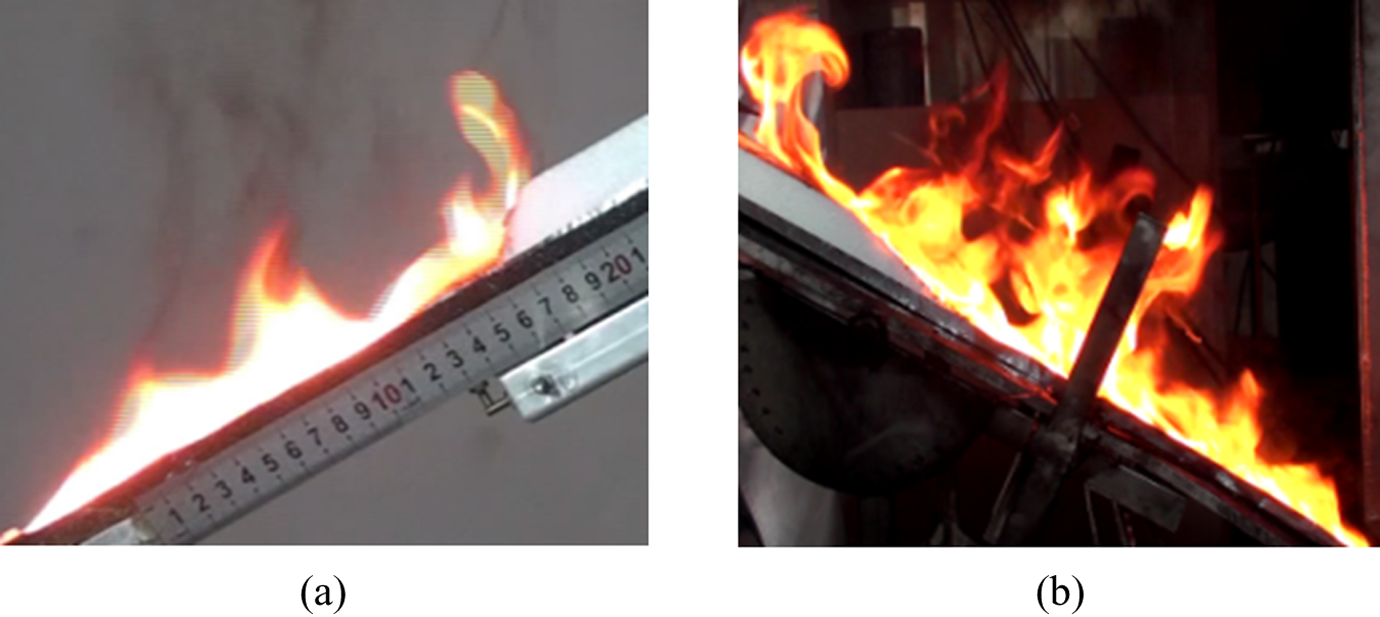
EPS (12 cm width, 30°) flame shape in (a) plateau and (b) plain. EPS: expanded polystyrene.
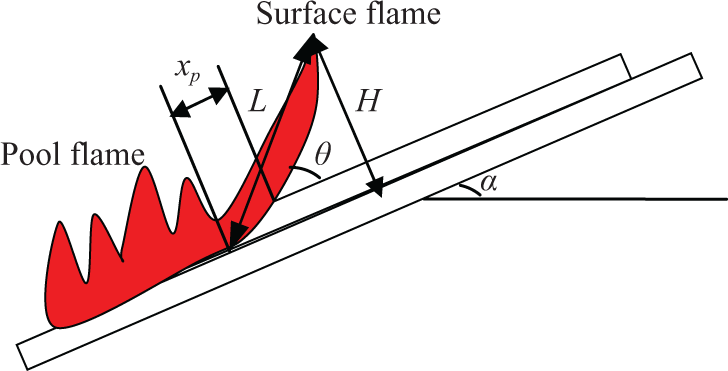
Flame structure schematic representation. xp : Pyrolysis length; H: surface flame height; α: inclined angle; θ: flame angle (the angle between the lower surface of the flame and sample surface); L: surface flame length.
Surface flame height
In this work, surface flame height H is defined as the vertical distance between flame tip and sample rear surface (Figure 3). Images of the flames were obtained from the camera, and in each one, an appropriate threshold value of luminosity was set to determine flame contour. Flame height was then obtained from the flame contour. However, the flame height fluctuated with time. Therefore, the concept of average surface flame height, which was defined by the 50% flame tip appearance rate, was introduced into this study. The dimensionless surface flame height is the average surface flame height divided by the sample width (H/w).
Width effect
The diffusion flame height is related with the Froude number. Because the Froude number is a comparison of inertia and buoyant forces, the diffusion flame height is determined by the interaction of the two forces. When the buoyancy is dominant, the Froude number should be small and the dimensionless flame height follows H/w∼Fr
n
.
14
As Fr = u0
2
/(wg), the relationship between the dimensionless flame height and sample width can be expressed in the following form
Figure 4 demonstrates that the experimental results agreed well with equation (1), and Figure 4 also shows 0.7 < n < 0.9.
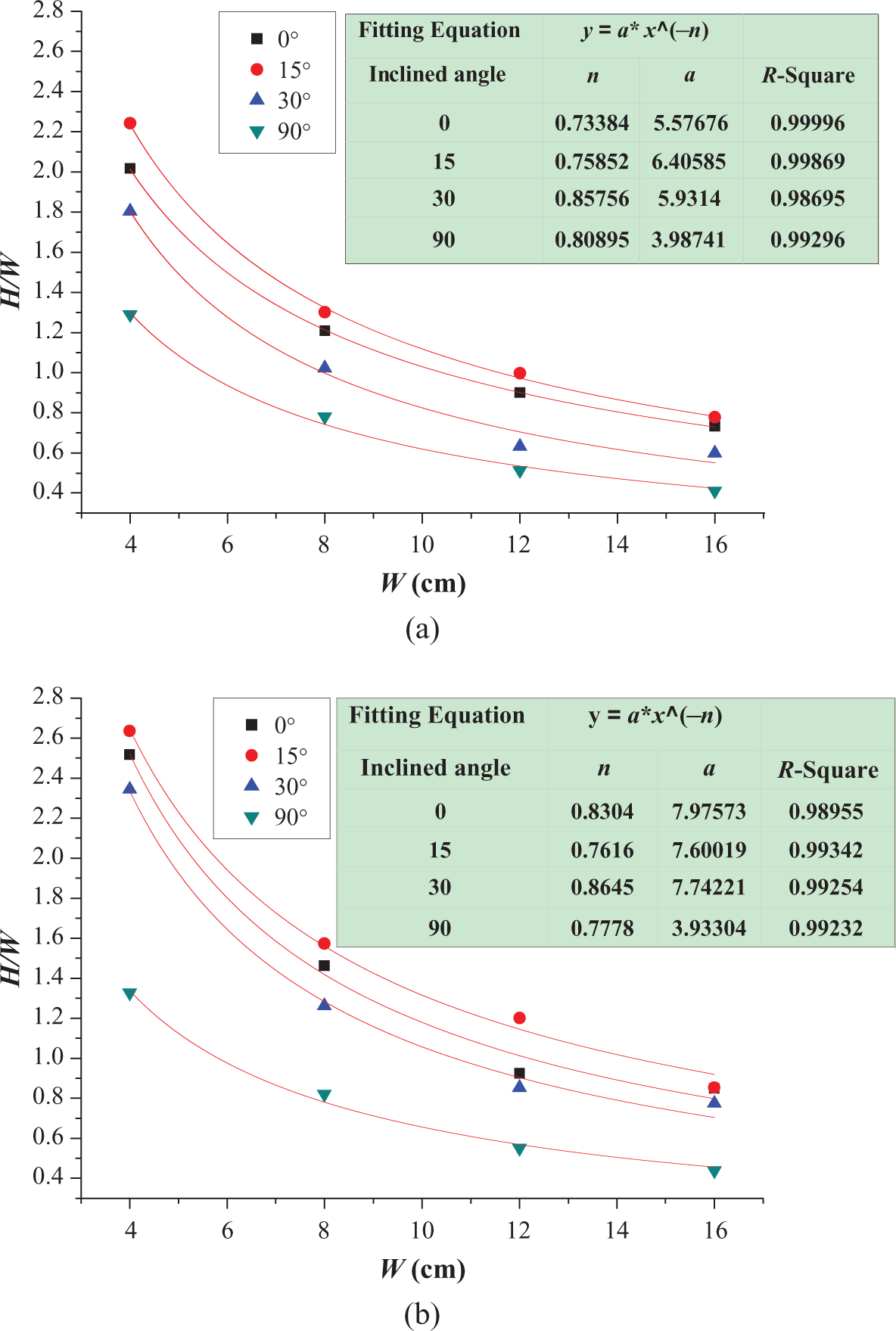
Dimensionless surface flame height versus the sample width under different angles of incline (data points are experimental values, and curves are the fit results): (a) plateau; (b) plain.
Inclined angle effect
As shown in Figure 5, the surface flame height first raises and then falls as the angle of incline increases. The maximum value appears when the angle of incline measures 15°.
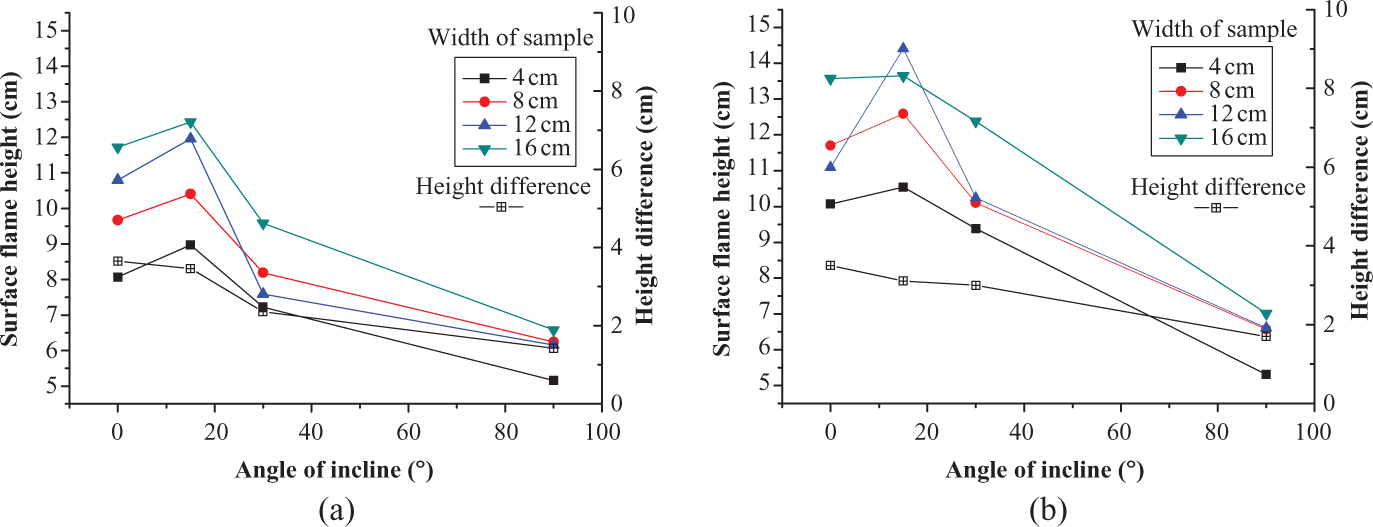
Surface flame height and height difference under different angles of incline and different sample widths: (a) plateau; (b) plain.
As the angle of incline rose, the surface flame was stretched and flame length L increased, as observed in Chen and Sun’s research.
13
However, the relationship between surface flame length and surface flame height is as follows:
where θ is the flame angle. As the angle of incline increased, the flame angle became smaller. When these two effects (θ and L) are considered in combination, the trend (first rising and then dropping) can be understood. The trend also demonstrates that the effect of L is dominant under smaller inclined angles, while the effect of θ is dominant under larger inclined angles.
Combined effect
It is also observed from Figure 5 that the surface flame height difference between maximum and minimum width becomes smaller with an increase in angle of incline. This suggests that the influence of width on surface flame height is weaker when the angle of incline is greater. When the inclined angle becomes greater, the melting materials adhering to the surface flow downwards more easily due to gravity. This will result in a decrease in surface flame height which is formed from the melting materials adhering to sample surface. This behaviour weakens the width effect (the surface flame height raises with the increase in sample width) on surface flame height, resulting in the above decreased difference.
In addition, from Figure 5, it is evident that the surface flame height of EPS in Hefei is larger than the results obtained in Lhasa. This difference is explained by the higher pressure in Hefei, which leads to a greater burning rate, and thus a higher heat release rate per unit width.
15,16
As described by equation (3), the higher heat release rate per unit width causes a larger flame height.
where xf
is flame height,
The flame spread rate
The flame spread rate is one of the most important parameters characterizing the fire spread behaviour of solid fuel. It is defined as the change speed of the flame front position. 1 In our experiments, the position of the flame front was obtained by processing the camera image sequences. It was found that the spread rate was not constant under certain conditions. In such cases, the spread rate was averaged for further analysis. The experimental data concerning flame spread rate as a function of sample width with different angles of incline are showed in Figure 6.
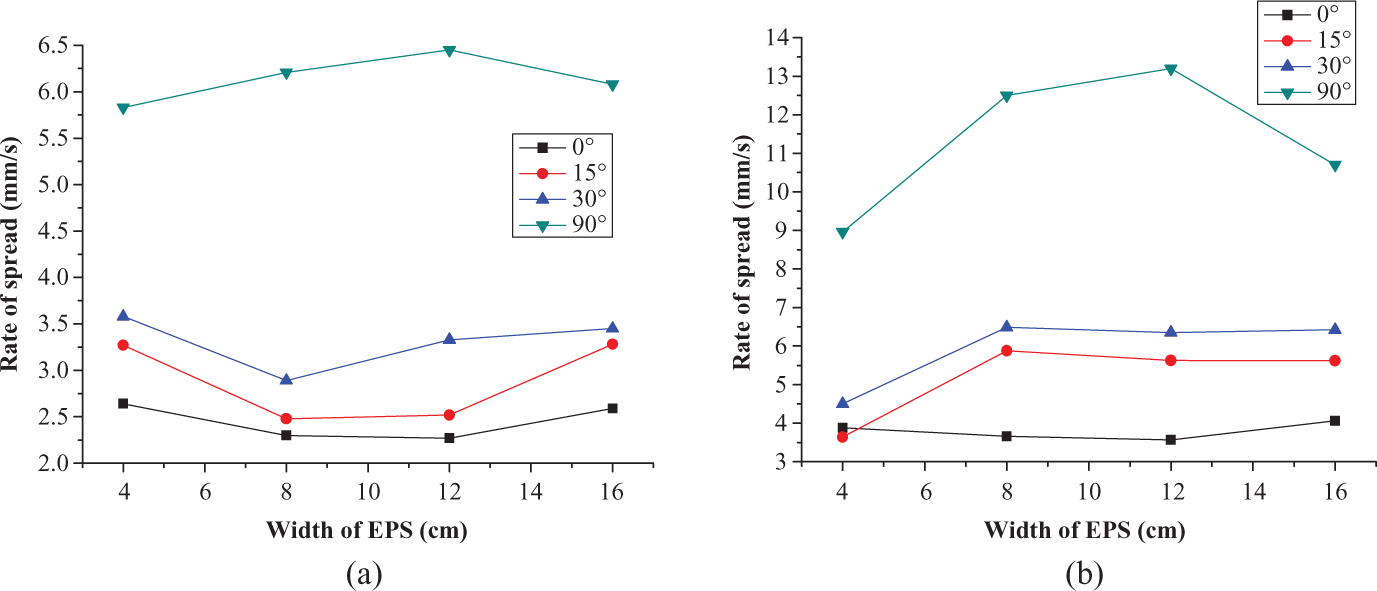
Flame spread rate versus the sample width for EPS under different inclined angles: (a) plateau; (b) plain. EPS: expanded polystyrene.
Width effect
With the increase in sample width, the change in flame spread rate was not monotonic. Zhang et al. 1,15 researched width effects on flame spread rate. They suggested that flame spread rate was influenced by flame heat feedback, which comprised two elements: convective heat transfer and radiative heat transfer. The former decreased with an increase in sample width, while the latter rose, which offered a credible explanation of the non-monotonic trend. However, Zhang et al.’s study was conducted employing horizontal samples and did not seek to explain the width effects under other angles of incline, which is further explored in this work.
Inclined angle effect
Figure 6 demonstrates that as the angle of incline increases, the flame spread rate raises on the whole for EPS in Lhasa and Hefei, which agrees with Morandini et al.’s results. 22 The reason is that with a raise in angle of incline, the flame angle θ decreases, so that the flame heat flux feeding back to the unburned materials is enhanced, causing an acceleration in the spread rate.
Wang et al.
12
established an equation for wood flame spread rate and inclined angle through multiple experiments. The equation is as follows
where vf is flame spread rate, c1, c2, m, n, r and k are undetermined constants and their value is different for different materials and l is sample thickness.
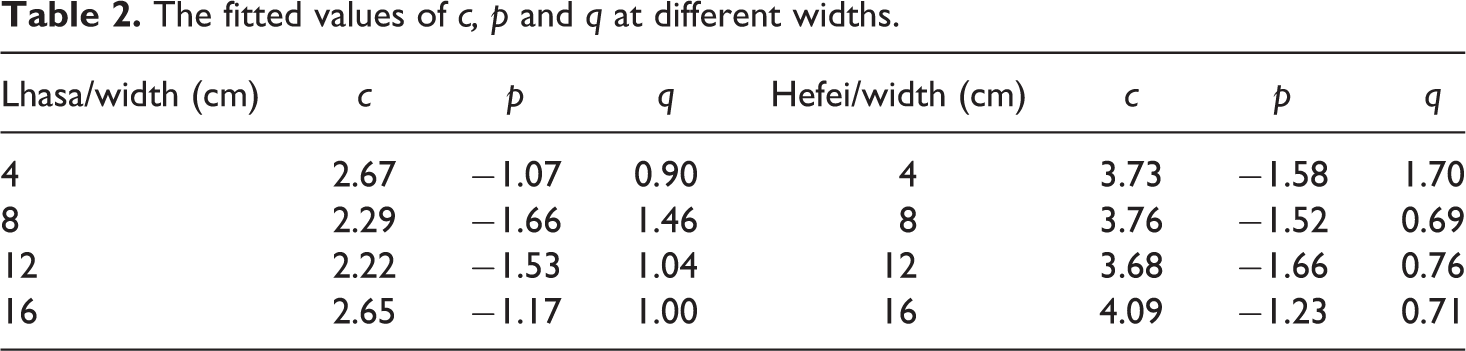
Although our experimental materials and measuring system were different from theirs, a similar fitting equation was obtained from the experimental data
where c, p and q are undetermined constants. The fitting curves are shown in Figure 7, and the values of c, p and q are listed in Table 2.
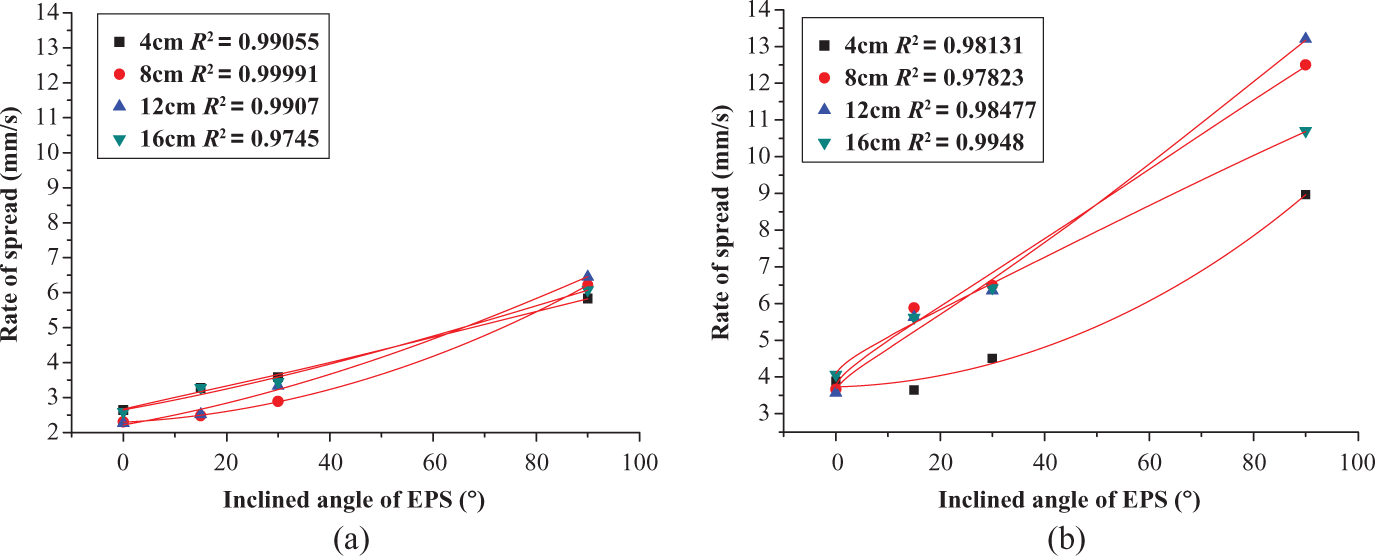
Flame spread rate vs. angle of incline (data points are experimental values and curves show the fitted results):(a) plateau;(b) plain.
The fitted values of c, p and q at different widths.
Combined effect
Figure 6 demonstrates that as sample width increases at smaller angles of incline, flame spread rate first drops and then raises. This phenomenon is described as ‘Trend I’. However, when the angle of incline becomes larger, the flame spread rate will first raise and then drop with width increasing. This phenomenon is described as ‘Trend II’. One reason for the change from Trend I to Trend II is as follows.
Since the conduction heat flux from the pyrolysis zone to the control volume, the conduction flux from the control volume to the further material and the heat loss from the rear surface can all be ignored for EPS,
1
the energy balance equation given in equation (6) can be established.
where ρ is the density of the material, Tm
is the melting temperature of the material, d is the thickness of sample, 
The width effects on flame spread rate can then be explained by the influence of width on flame heat flux. The flame heat flux may be obtained from the following equation
23

where Cq, L, B and l are governed by the properties of the combustion materials and are constant for a given material, and α is the angle of incline. Thus,
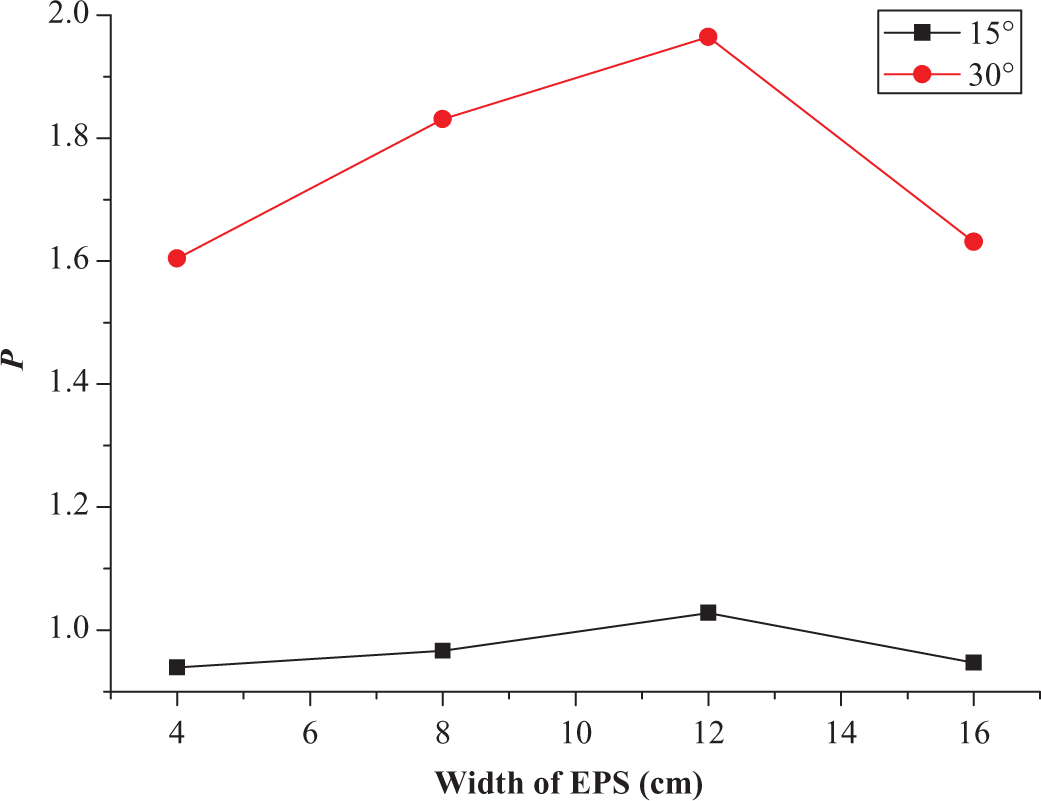
Value of p versus sample width at different angles of incline in Hefei plain.
Another reason for the transformation from Trend I to Trend II may be the intensified radiative heat transfer with the increase in angle of incline and weakened surface flame with the raise in sample width.
As discussed above, flame heat flux is a significant factor influencing flame spread rate. The flame heat flux (
According to Zhang et al.’s 1,15 theory, when the angle of incline of the sample is 0°, the lateral entrainment is strong and the convective heat transfer is dominant for the narrow sample, while radiative heat transfer is dominant for the wide sample. The convective component drops with sample width, while the radiative component raises, which results in Trend I. Therefore, flame spread rate raises with the increase in width when radiative heat transfer is dominant, and it drops with the increase in width when convective heat transfer is dominant.
The radiation flux obeys the Stefan-Boltzmann law
in which
The difference in results obtained in Lhasa and Hefei can be observed in Figure 6. The flame spread rate in Hefei is much higher than that in Lhasa. The phenomenon is attributed to higher oxygen concentration in Hefei. Both flame convective heat flux and flame radiative heat flux raise with the increase in oxygen concentration.
25
Therefore, the total flame heat flux (
In Lhasa, Trend I occurred at the range of 0° to 30°, while Trend II occurred at the angle of incline of 90°. However, in Hefei, Trend I occurred at the angle of incline of 0°, while Trend II occurred at the range of 15°–90°. For EPS with angles of incline of 15° and 30°, the trend in Lhasa is inverse compared with that of Hefei. This may result from the difference in flame radiation in Lhasa and Hefei. The pressure effect on carbon particle formation in homogeneous flame at a large range of pressure was studied, and it was found that the production of carbon particles increased significantly as pressure rose.
26
Li et al.
27
also suggested that higher pressure may create a greater volumetric number of soot particles in the flame. This increases the extinction coefficient K, which in turn results in a larger flame emissivity
Preheating zone length
The preheating zone is the heating extension over the new material about to ignite. The preheating zone length is defined by the following equation
28

where Tig and T∞ are the ignition temperature of insulation material and the ambient temperature, respectively, and Ts is the surface temperature.
A typical figure of EPS surface temperature and its gradient are shown in Figure 9. Furthermore, the surface temperature gradients were used to calculate the length of the preheating zone through equation (11). The results are shown in Figure 10.
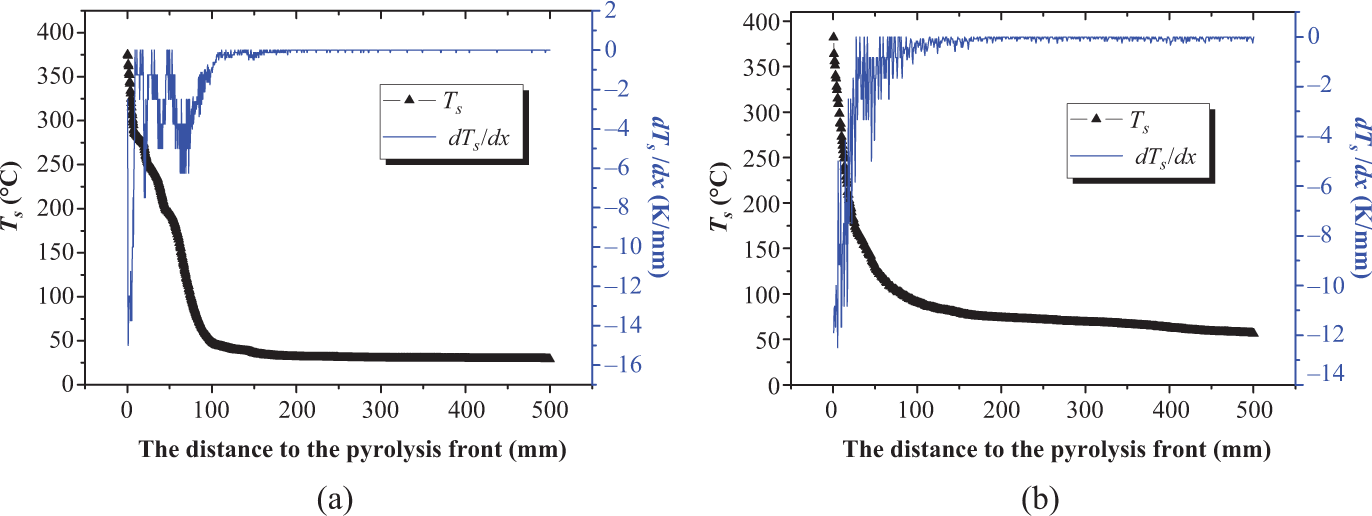
Surface temperature gradient during flame spread across EPS (width 4cm, 0°): (a) plateau; (b) plain. EPS: expanded polystyrene.
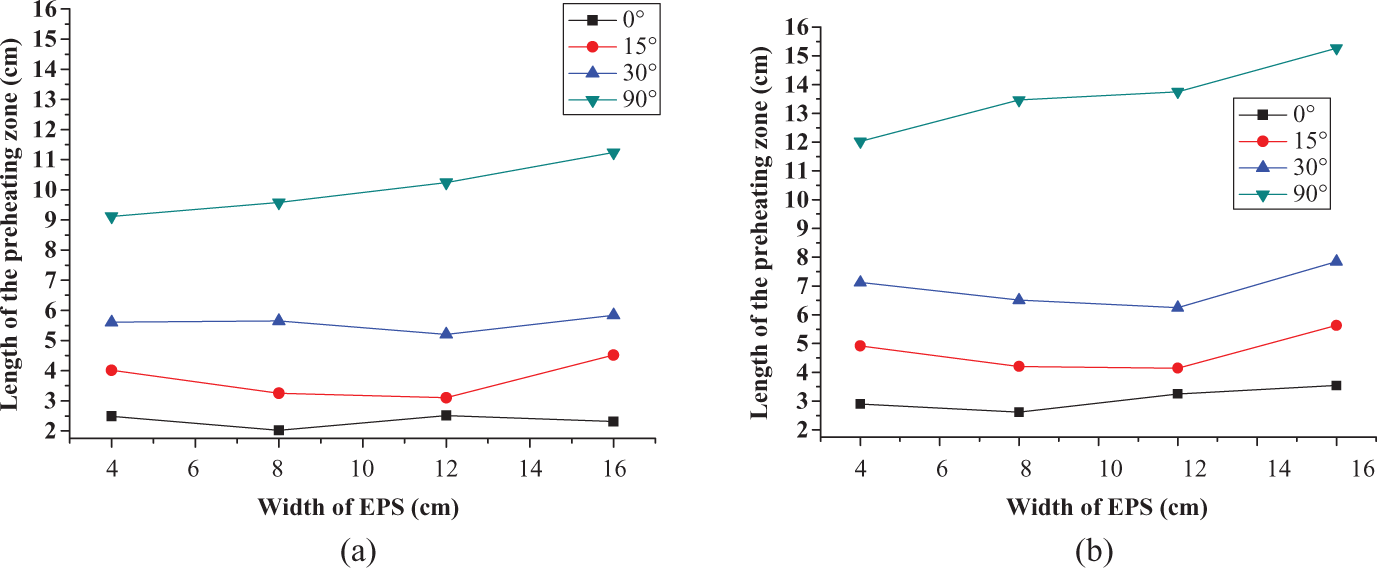
Preheating zone length versus sample width for EPS under different inclined angles:(a) plateau; (b) plain. EPS: expanded polystyrene.
Comparing Figure 6(a) and (b) and Figure 10(a) and (b), it is evident that the variation trend of the preheating zone length with sample width and inclined angle is different from the flame spread rate trend. This phenomenon is inconsistent with equation (7), which demonstrates that the preheating zone length is an important factor influencing flame spread rate.
The inconformity may attribute to the property of EPS, whose surface is rough and inhomogeneous. Therefore, when heat is transferred to the surface of EPS, the temperature raise may be significant at a given local surface and then the temperature gradient increases. As described in equation (11), the preheating zone length will be smaller in this situation, resulting in the lack of correlation between the preheating zone length and flame spread rate. However, for XPS, the well agreement of preheating zone length and flame spread rate was found in our previous work. The pore closed structure of XPS is superior to EPS, leading to a smoother and more homogeneous surface of XPS. The comparison of surface properties of EPS and XPS confirms the above explanation.
Although flame spread rate is not consistent with preheating zone length for EPS at certain width and angle of incline, a linear relationship of vf /w and δph /w was found in Lhasa, as shown in Figure 11.
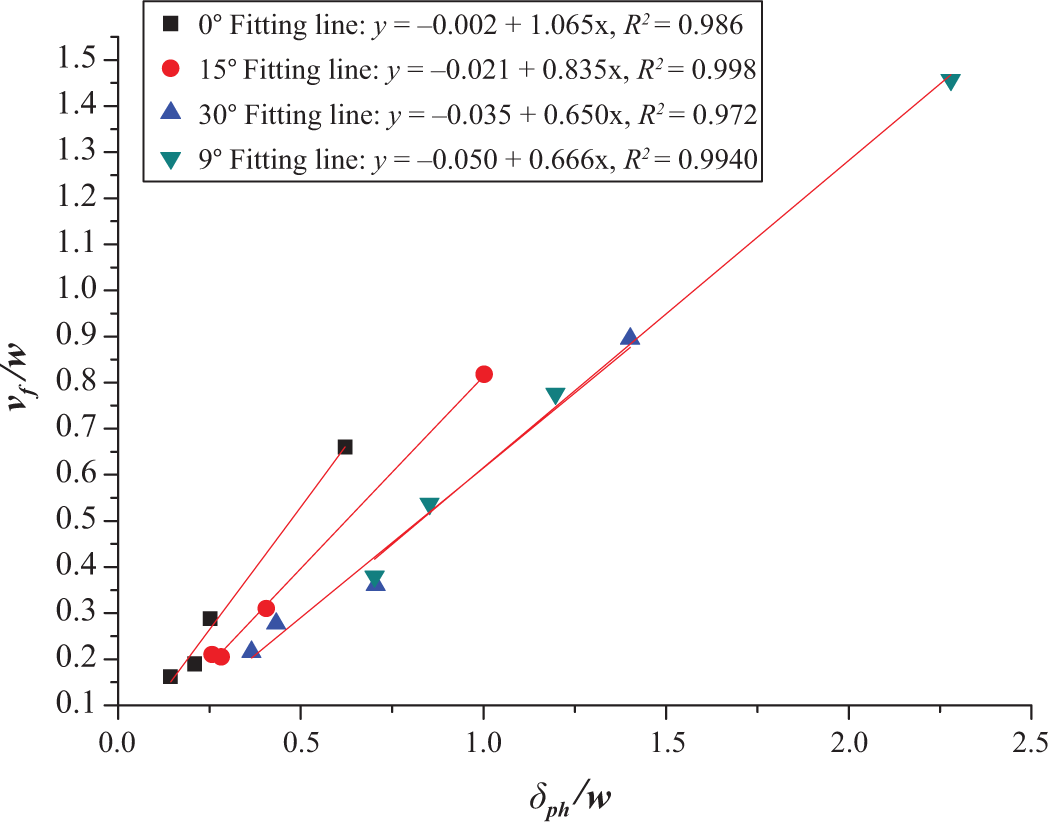
The relationship between flame spread rate and preheating zone length under different inclined angles (data points are experimental values and curves are the fit results).
In such cases, the relationship between vf
/w and δph
/w can be expressed as follows
With the increasing angle of incline, the value of a (negative) and b (positive) is decreasing (except that the line slopes at 30° and 90° are approximately the same); thus, the effect of width on spread rate is strengthened while the effect of preheating zone length is weakened. Equation (12) can also explain the lack of correlation between preheating zone length and spread rate for EPS, because sample width influences their relationship.
Conclusion
The effect of sample width and angle of incline on the characteristics of flame spread across EPS surface in plateau and plain environments is investigated in this work. A series of laboratory-scale experiments were conducted and the spread processes were recorded. Furthermore, the surface flame height, the flame spread rate and the preheating zone length were obtained. The influences of sample width, angle of incline and different environments on these flame spread characteristics were analyzed. The results of the study are summarized as follows: 1. The dimensionless surface flame height varies as the −n power of the sample width and 0.7 < n < 0.9. 2. As angle of incline increases, the surface flame height first raises and then drops, and the surface flame height difference between maximum and minimum width becomes smaller. 3. A non-linear relationship was obtained between flame spread rate and inclined angle: 4. With the increase in sample width, flame spread rate first drops and then raises, where the angle of incline is small, while the trend is reverse for samples with larger angle of incline. Two reasons for the trend reversing are proposed: As angle of incline raises, the trend of flame heat flux with the increase in sample width becomes inverse. With the increase in angle of incline, the radiative heat transfer is intensified, which results in the initial raise in spread rate; as spread rate and sample width increase, surface flame is weakened, which results in subsequent dropping in spread rate. 5. The variation trend of preheating zone length with sample width and inclined angle is different from the flame spread rate trend. However, a linear relationship of vf
/w and δph
/w is found for EPS in Lhasa plateau. 6. For all sample widths and inclined angles tested in the study, the surface flame height, flame spread rate and preheating zone length in Hefei plain is larger than the results obtained in Lhasa plateau. For EPS at 15° and 30°, the trend of flame spread rate versus sample width in Lhasa plateau is inverse, compared with the results obtained in Hefei plain.

Footnotes
Funding
This research is supported by National Basic Research Program of China (973 Program, Grant. No. 2012CB719702) and National Natural Science Foundation of China (No. 50976110 and No. 51206002) and from National Natural Science Foundation of China (No. 51036007). The support from the Young Teacher Fund (No. QZ201109) of Anhui University of Technology, the Fundamental Research Funds for the Central Universities (No. WK2320000014) and the open fund of State Key Laboratory of Fire Science (No. HZ2012-KF04) is also appreciated.