




Abstract
In order to investigate the combined action of temperature, humidity, and ultraviolet (UV) radiation, polyphenylene sulfide (PPS)–carbon fiber composite specimens were exposed to environmental degradation through two different techniques: water immersion and UV climatic chamber. The moisture weight gain curves of the composites were compared with those of the neat matrix in order to determine the interface effect on moisture absorption. Fourier-transform infrared spectroscopy of UV-weathered samples presented oxidation formation. Compressive tests and dynamic mechanical thermal analysis (DMA) revealed that the weathered materials gained in stiffness, nevertheless a small deterioration in strength was found after long periods of UV radiation exposure.
Introduction
Carbon fiber-reinforced plastic (CFRP) composites are extensively being used in aerospace structures mainly due to their high strength–weight ratios. 1 Thermoplastic composites have been successfully introduced into a wide range of applications due to their superior impact resistance, high toughness, and ease of shaping and recycling compared with thermosets. 1
Among advanced thermoplastic polymers, polyphenylene sulfide (PPS) has been used widely in structural parts due to its easy processability, excellent tensile strength, flexural modulus, low water absorption, and appropriate thermal resistance. 1 –4
However, in these structural applications, PPS is most commonly reinforced with carbon fibers (CF) fabrics. PPS/CF composites have also demonstrated good retention of mechanical properties and fiber–matrix adhesion under hot–wet conditions. 5,6
During service, polymeric materials are subjected to a variety of environmental conditions such as moisture, temperature, mechanical loads, and continuous incidence of radiation. 7 Therefore, the study of the exposure of these materials to environmental conditions such as varying temperature, humidity, ultraviolet (UV) radiation, and so on is of outmost importance. 8
Moisture substantially affects the properties of fiber-reinforced plastic composites. 7 Water enters into a composite material mainly by the mechanism of diffusion. Other mechanisms are also possible such as capillarity effects along the fibers 9 and the water transport across the interface or inside microcracks. 10 Moisture diffusion into a polymer, to varying degrees, depends upon molecular and microstructural aspects such as polarity, the extent of crystallinity of thermoplastics, and the presence of residual hardeners. 11,12
As a result of water absorption, plasticization and swelling can occur. Plasticization induces plastic deformation generally in addition to lowering the T g (glass transition temperature), whereas swelling is related to the differential strain that is created by the expansion force exerted by the liquid while stretching polymeric chains. 13,14 Moreover, absorbed water can lead to accumulation of hydroscopic stresses that may crack and fail the polymer. 8
Another possible effect of water sorption is the creation of a secondary cross-linking in the polymeric matrix, due to a specific kind of hydrogen bond that forms between polymer and water molecules. This phenomenon depends on the chemical structure of the polymer, the temperature, and the total period of exposure to water. 8,15
Besides moisture, most applications also expose the material to a wide range of temperatures, which affect moisture diffusion and environmental aging. According to the literature, temperature can influence moisture absorption in polymeric composites in a complex manner. Diffusion is a thermally activated process and diffusivity is very sensitive to temperature. Diffusion coefficient obeys the activated transition state theory and its temperature dependence can be expressed by the Arrhenius equation (equation (1)).
16

where E a is the activation energy of diffusion, D 0 is the preexponential factor, and R is the gas constant. Typical activation energies of moisture diffusion in polymeric composites range from 20 to 80 kJ/mol. 16
Thermal aging also plays an important role in degradation, involving chemical reaction and physical changes. Chemical reaction is represented by oxidation, cross-linking, and further reaction of unreacted monomers, while physical change is typical of viscoelastic behavior. 10,15 It is demonstrated that, during their thermal aging in air, organic matrix composites undergo a superficial oxidation, leading to a spontaneous cracking without application of external loading. 10,17,18 At the macromolecular scale, chain scission and cross-linking affect the polymer network and, thus, alter the mechanical properties of the oxidized layer; at the macroscopic level, the hindered shrinkage of the oxidized layer induces a stress gradient susceptible to initiate and propagate cracks. 10,17
UV exposure can as well be responsible for irreversible effects. Sunlight can lead to a loss of matrix material at the surface of composites and changes in mechanical and optical properties, such as discoloration. 19 These are generally attributed to chain scission, although cross-linking may also occur. 20 UV solar radiation incident on the earth surface is in the 290–400 nm band. Thus, UV photons can impose scission of the chemical bonds of the matrix (i.e., main C–C chain scission), leading to photooxidation and crazing of the material. 8 Another effect is cross-linking, which restricts molecular mobility and reduces the ability of the material to accommodate externally applied deformation. 19 –24
Besides the degradation mechanisms discussed above, UV radiation and moisture can act in conjunction to further enhance the degradation of CF-reinforced thermoplastic composites. In the present work, the influence of weathering on the mechanical properties of CF-reinforced PPS laminates was investigated. The specimens were exposed to degradation through two different techniques: water immersion and UV radiation climatic chamber.
In this current publication, the changes in the mechanical and viscoelastic behavior of the aged materials were evaluated using compression tests and DMA. The fracture aspect behavior after compression tests was also analyzed using stereoscopy.
Experimental
Materials
PPS/CF composites used in this work consisted of six ply CF fabric reinforcement having a 5HS style. The material was supplied by TenCate Advanced Composite Company (Nijverdal, the Netherlands). The composite was produced using hot compression molding in the temperature range of 280–290°C. According to the supplier, the composite has a 64% volume fraction of CFs. The composite laminate was evaluated by an optical microscope NIKON Epiphote 200 (New York, USA), in order to evaluate manufacture defects.
Weathering
Accelerated UV-weathering tests
Artificial photodegradation was carried out using an accelerated weathering tester (Model QUV/Se; Q-Panel Lab Products, Cleveland, Ohio, USA, with solar eye irradiance control) following the ASTM G 154: standard practice for operating fluorescent light apparatus for UV exposure of nonmetallic materials. According to the ASTM mentioned above, damages caused by the sunlight, the rain, and the dew were reproduced by 8-h periodic cycles under UV-B light and 4-h under water condensation provided by the vapor generation from the water bath. The UV-B radiation is generated by fluorescent UV lamps that have a wavelength in the region of 295–365 nm, corresponding to the UV solar radiation component (0.35 W/m2 irradiance, at 340 nm). The light intensity is emitted and monitored constantly, the “solar eye” radiation detectors measure the light intensity, and they are calibrated every 400 h of service with the purpose of evaluating the lamps’ performance. The samples were subjected to the aging process for periods of 200, 600, and 1200 h.
Fourier-transform infrared spectroscopy
In order to determine any possible chemical degradation during water absorption, the chemical changes during UV exposition were monitored by Fourier-transform infrared spectroscopy (FT-IR). The infrared spectrum was acquired using a Perkin-Elmer system 100 FTIR spectrophotometer, at a resolution of 4 cm–1. The spectra were taken in reflection mode in the region 650–4000 cm–1.
Accelerated water immersion-weathering tests
Accelerated water immersion tests were performed on a Tecnal thermostatized water bath. The moisture absorption and diffusion behavior of PPS composite were determined by immersion of this material in liquid water (in the thermostatized bath TE-184 (São Paulo, Brazil)) and measuring the weight periodically. The specimens were obtained by cutting and polishing the composite panels. These specimens were sectioned with the dimensions of 10 mm × 60 mm × 1.9 mm, using a low-speed diamond wafering saw. In order to achieve uniform thickness within each specimen, the sections were polished using 600-grit sand paper. Before conditioning, the test samples were dried in an oven at 60°C for 24 h. The specimens were submerged into distilled water at 50, 70, and 80°C for 6 weeks. At each temperature, at least three specimens of the same material were tested. After a certain period of time, the specimens were removed from the water, weighed in a high precision balance to find the amount of water taken up and then resubmerged. Water uptake was calculated as weight gained related to the weight of the dried specimen. The activation energies of diffusion were determined by plotting the diffusivity in an Arrhenius plot.
Mechanical and thermal characterization
Compression tests
Compression tests were conducted to determine the degradation effects of UV radiation and water immersion exposure on the deterioration of mechanical properties. Since the purpose was to determine irreversible degradation in properties, the specimens were held in a desiccator for 48 h prior to compression test. In this work, the compression test was carried out according to ASTM D3410, using at least five specimens with the dimensions of 100 mm of length, 12.3–12.7 mm of width, and 1.9 mm of thickness, for each different weathering and exposition period. The specimens were prepared by bonding end tabs of glass fibers/epoxy laminate as recommended by the ASTM D3410. These tests were performed on a Shimadzu Precision Universal Tester (Autograph AGX Series), at a constant cross speed of 1.27 mm/min, at room temperature.
Stereoscopy
After compression tests, the failure mode of the specimens was analyzed using a Zeiss Stemi 2000 stereoscope (New York, USA).
Dynamic mechanical thermal analysis
DMA was used in this work in order to evaluate the influence of both conditioning on viscoelastic properties and glass transition temperature (T g) of PPS/CF specimens. These analyses were carried out in dual-cantilever bending mode using specimens with dimensions of 10 mm × 60 mm × 1.9 mm. A frequency of 1 Hz and a maximum displacement of 10 μm were used. The temperature was scanned from 20 to 250°C at a heating rate of 3°C/min. A TA Instruments 2980 DMA Dynamic Mechanical Analyzer (Delaware, USA) was used for T g and viscoelastic measurements.
Results and discussion
Processing evaluation
An overall view of the carbon-reinforced composite obtained by optical microscopy is presented in Figure 1. The micrographic analysis shows the homogeneous distribution of matrix and fibers of the laminate. No voids, microcracks, delaminations, or regions excessively rich in matrix were observed. Therefore, it can be inferred that the parameters of the molding process were properly chosen, producing composites free from stress concentrators that could mask the results.
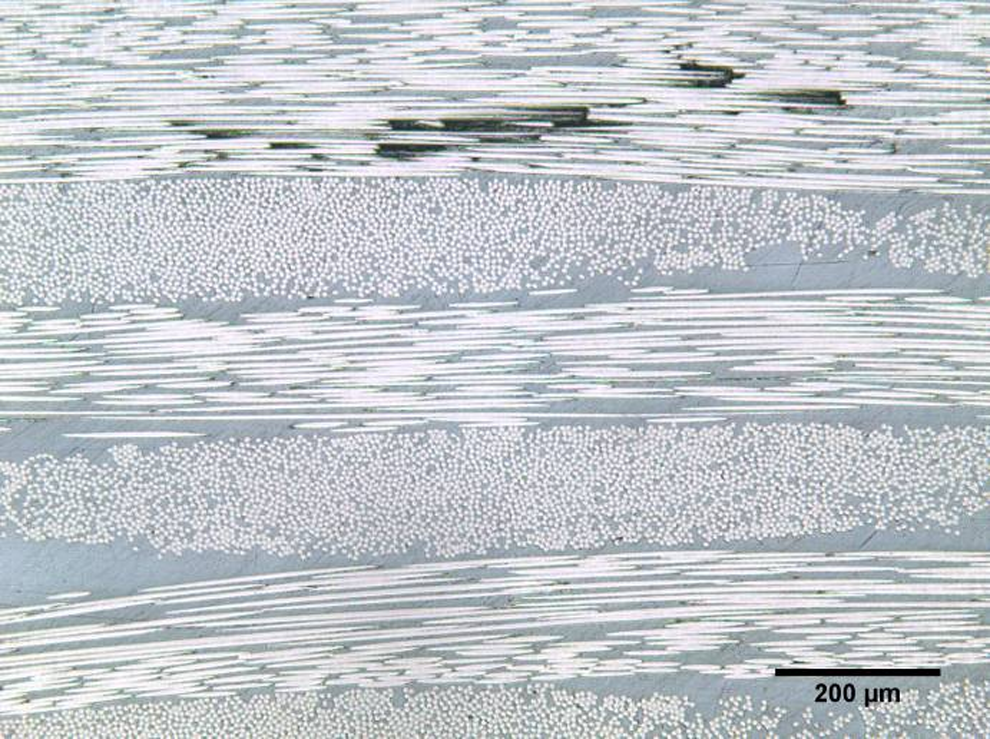
Optical micrograph of PPS/CF laminate as received. PPS: polyphenylene sulfide; CF: carbon fiber.
UV weathering
Surface of all specimens exposed to UV radiation exhibited a distinct change during early stages of exposure (Figure 2). The discoloration established that photooxidation results in the formation of chromophoric chemical specimens that absorb light in the visible range. The same behavior has been observed in the literature for thermoset composites. 24 Minor changes in surface roughness, usually observed in epoxy/CF laminates after being exposed to the same conditioning, 24 were not visible to the naked eye for the PPS specimens exposed to UV radiation.
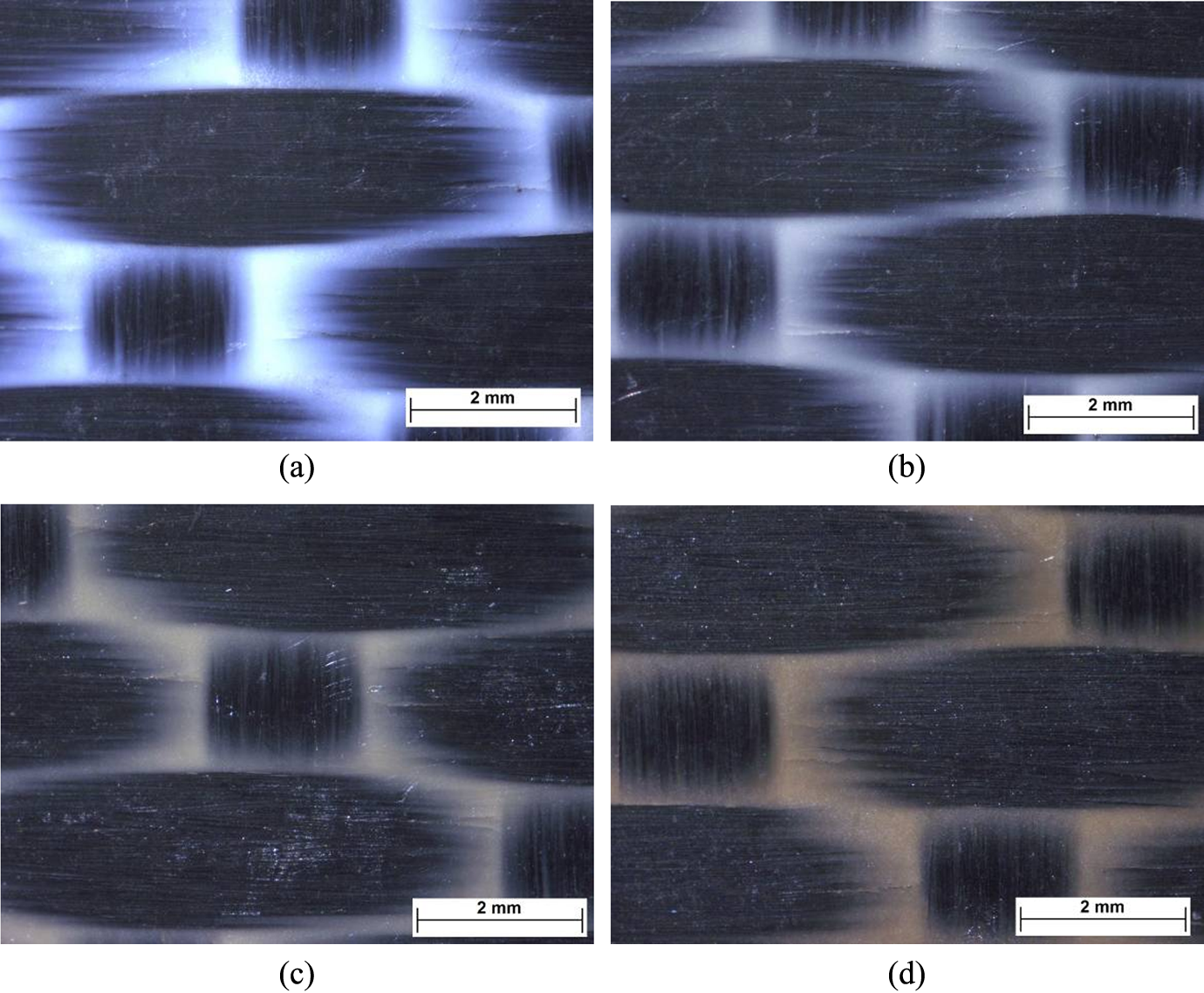
Optical micrographs of PPS/CF laminates after being exposed to UV radiation (a) unexposed; (b) after 200 h; (c) after 600 h; and (d) after 1200 h of exposure.
Exposure to water vapor condensation associated with UV conditioning did not result in any visible changes in the specimen morphology. According to these previous results, it can be concluded that the specimen surfaces and the edges do not exhibit severe physical degradation in the form of extensive matrix erosion, void formation or fiber–matrix interface debonding.
Environmentally degraded composite specimens were also analyzed using FT-IR spectroscopy in order to determine the effects of UV radiation on the surface chemistry. Figure 3 presents the peaks of the unexposed specimens. 25,26
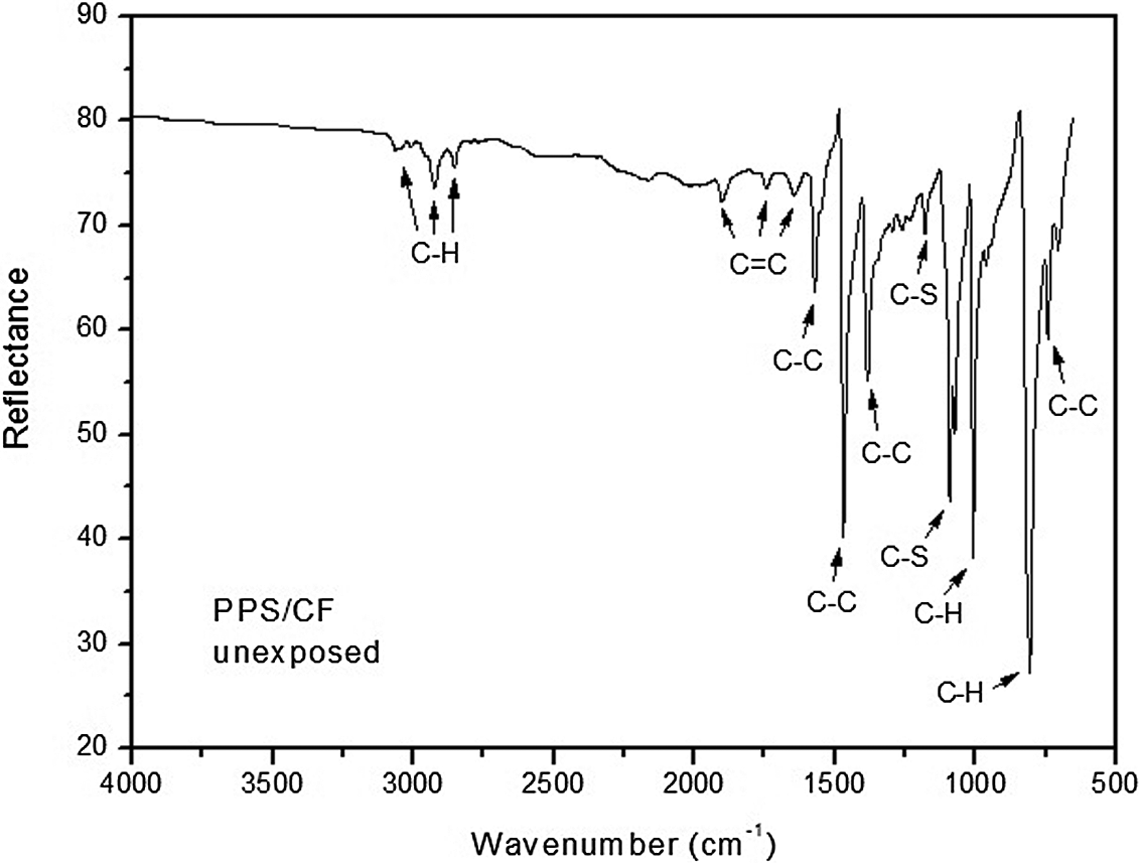
FT-IR spectra of PPS/CF unexposed to UV radiation.
After UV weathering, various changes were observed, as presented in Figure 4. The increasing band around 3670–3100 cm−1 is attributed to the O–H presence due to the absorption of humidity during water spray periods. The peaks around 1800–1600 cm−1 are attributed to carbonyl (C=O) stretching, which indicates that the oxidation of the polymer occurs during UV and/or heat exposure in the QUV apparatus. The peaks around 1300–1100 cm−1 are probably due to the oxidation process, for example, formation of C–O bonds. 22,26 These increases lead to cross-linking and to excessive brittleness, which have opposite effects.
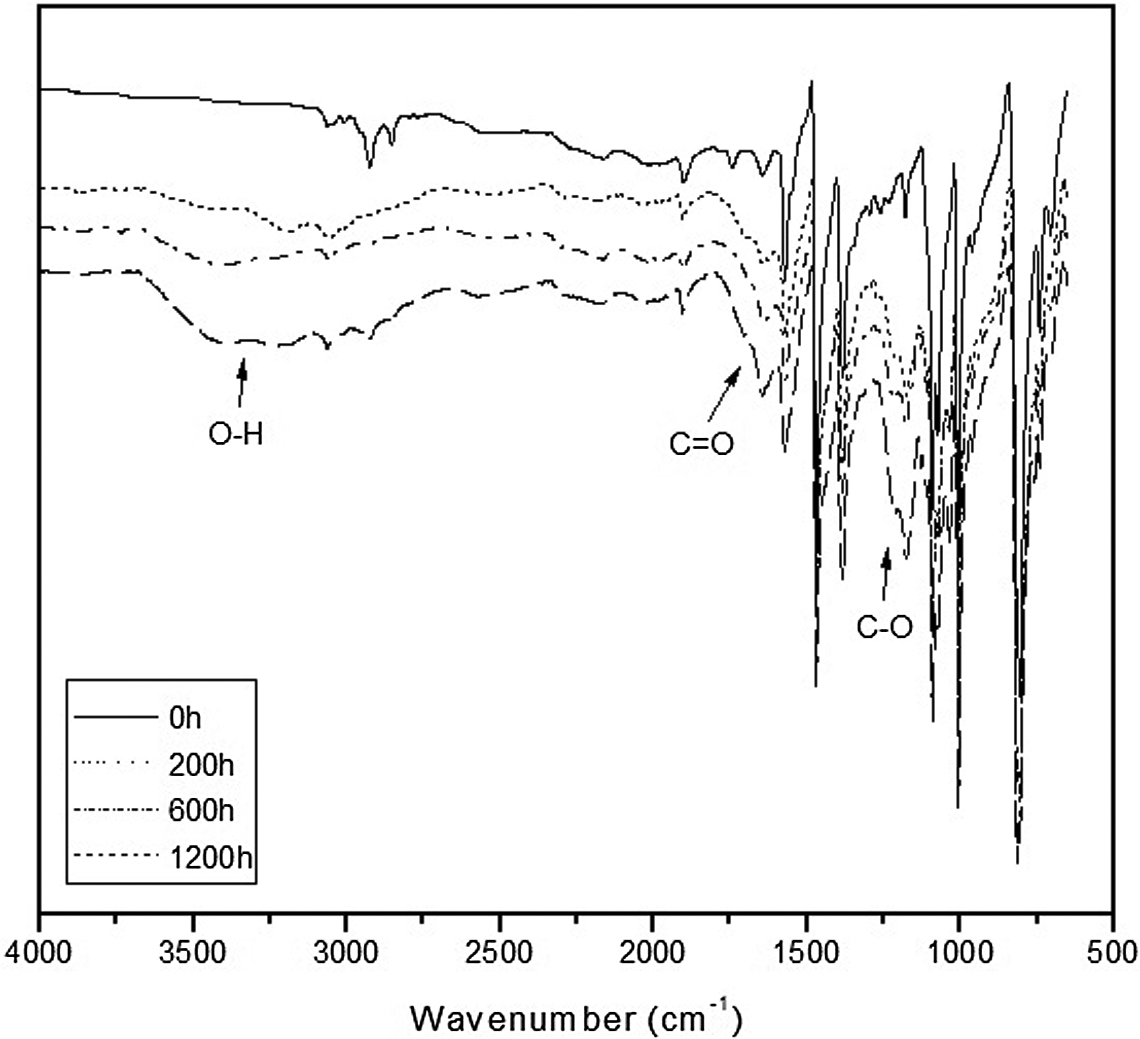
FT-IR spectra of PPS/CF during UV radiation exposure.
The dynamic mechanical behavior of UV-aged composites is illustrated in Figure 5. This analysis was employed to support the suggestion of cross-linking and to establish the relationship between chemical and rheological changes that occurred in the specimens. According to Figure 5(a), the α relaxation, related to the glass transition temperature, occurs at T g = 121.4°C for the PPS/CF specimen as received. An increase in glass transition temperature of 1.7, 2.3, and 9.1°C, for specimens exposed during 200, 600 and 1200 h, respectively, was observed between the received and UV-aged PPS/CF samples.
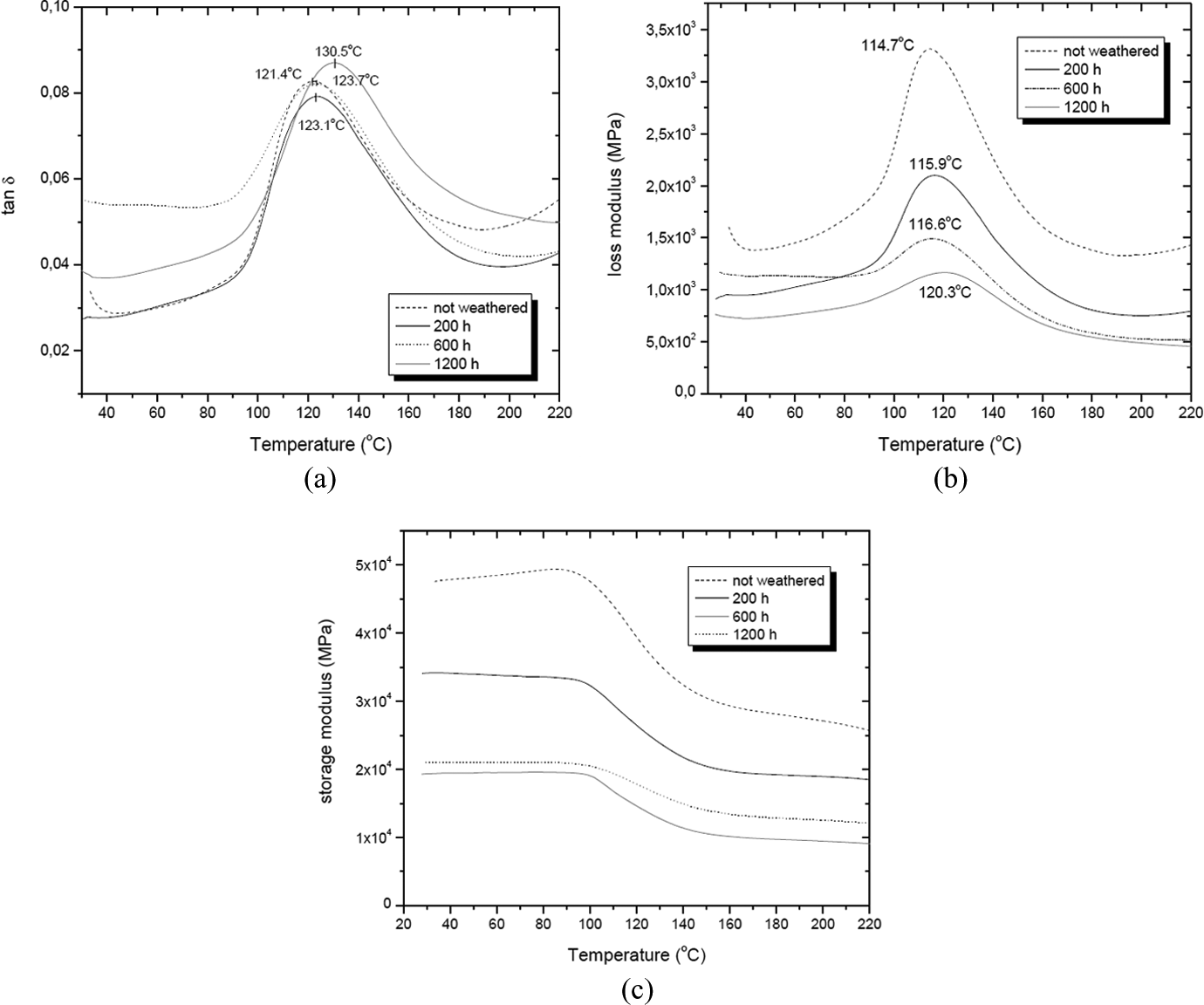
DMA results of PPS/CF after being subjected to UV radiation (a) tan δ; (b) loss modulus, and (c) storage modulus.
The phenomenon of T g increase for the UV-aged specimens is possibly related to a crescent reduction in local segmental mobility as networks are tightened due to oxidative cross-linking. 22,23 An increase in the T g was also identified in the storage and loss moduli curves after the specimens were subjected to UV radiation, indicating a reduction in molecular motion of chain segments (Figure 5(b) and (c)).
For a highly cross-linked structure, the molecular motion of chain segments is limited, resulting in a rigid material with low damping and high storage modulus. Conversely, if chain segments within a polymer structure are free to move as a result of a chain scission reaction, the extent of dissipation of mechanical energy increases as heat increases, giving rise to a material with high damping and low storage modulus. Therefore, changes in tan δ describe a competition between a softening mechanism involving chain scission, and a stiffening mechanism involving chain recombination via cross-linking. 22,23 Figure 5 shows the main changes involved during the course of UV weathering.
DMA results showed an increase in the cross-link density of specimens as the degradation proceeded. It can be noted that cross-linking in the early stages of exposure may lead to an overall improvement in the physical properties of the network. However, after prolonged exposure, extensive cross-linking leads to embrittlement and premature brittle failure. 23 Generally, the scission rate is higher near the exposed surface, while cross-linking occurs more frequently as the depth from the exposed surface increases, since polymer radicals survive longer when oxygen is scarce and the likelihood that they will combine, creating a cross-link rather than react with oxygen, increases. 19 For the same reason, the scission rate in the interior of the composite decreases as the exposure time increases, presumably because of the progressive reduction in the oxygen level.
Figure 6 plots the variation in compressive strength of PPS/CF composites, for specimens exposed to UV radiation for different periods of time. As shown in this figure, after the first 200 h of UV exposition, the compressive strength increased, nevertheless, with longer periods of exposition, a reduction in the measured strength started to appear.
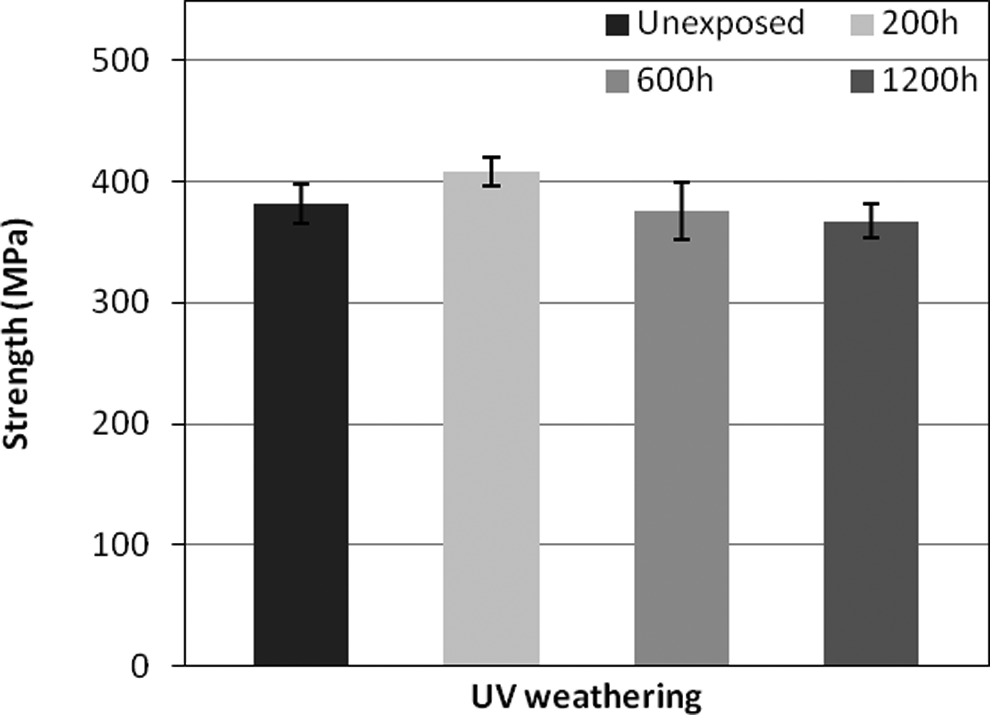
Compressive strength results after UV weathering.
The increase in the compressive strength, when this specimen is exposed to short period to UV radiation can be attributed to the combined action of UV, temperature, and humidity, which seem to impose cross-linking in the polymer matrix. This kind of accelerated environmental aging is accompanied by a relative stiffening effect that increases the compressive strength.
Therefore, the reduction in properties during UV irradiation for longer duration is probably due to the degradation occurring with PPS molecules. This degradation of PPS polymer possibly owes to photolysis and photooxidation promoted by UV irradiation. This reduction in properties also indicates that the molecular weight of the PPS/CF laminates decreased after being exposed to UV radiation, as an effect of a chain scission process and photooxidation, which occurs through a chemical interaction among oxygen molecules and PPS molecules. For the photooxidation reaction, oxygen is used up before it can diffuse to the interior so that degradation is concentrated near the surface, 12,20 even in polymers in which high UV levels are present in the interior. This degradation causes changes in the surface of the composite material, not just by lowering the mechanical properties but also by causing changes in color and texture.
The fracture surfaces generated by the compressive test are shown in Figure 7 for specimens as received and for aged specimens. As can be observed in this figure, no distinct differences could be stated from the photomicrographs with respect to matrix or fiber failure. Fracture surfaces for aged and nonaged specimens are dominated by microbuckling and formation of kink zones that consist of several crushed and angled break; they occur on various planes and the overall fracture surface sometimes is formed entirely of steps. 21 This pattern of failure, with matrix fracture and multiple fiber fragmentation, is typical for these types of composites. There are evidences of interfacial debonding phenomena.
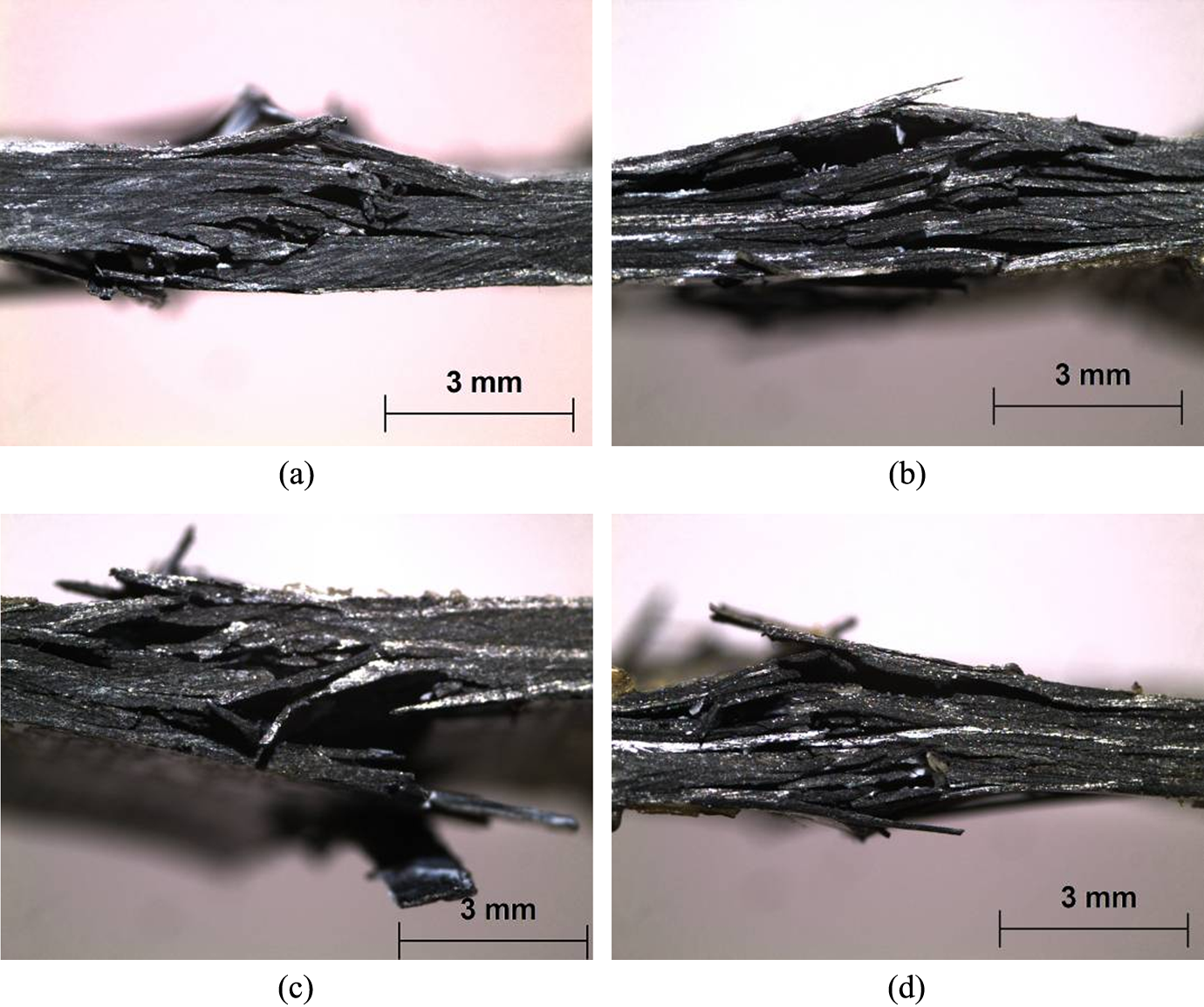
Stereoscopy results of specimens fractured by compression tests after UV weathering (a) unexposed; (b) after 200 h; after 600 h, and 1200 h of exposure.
Water immersion weathering
The typical short-term absorption curves of the PPS/CF laminate at different temperatures are shown in Figure 8. As expected for a thermally activated process, an increase in temperature significantly accelerates moisture diffusion. The specimens display similar diffusion behavior in all temperatures (50, 70, and 80°C), where it is clear that the rise in temperature leads to enhanced sorption in terms of water uptake at equilibrium. In each case, the reported curve is the average of three specimens.
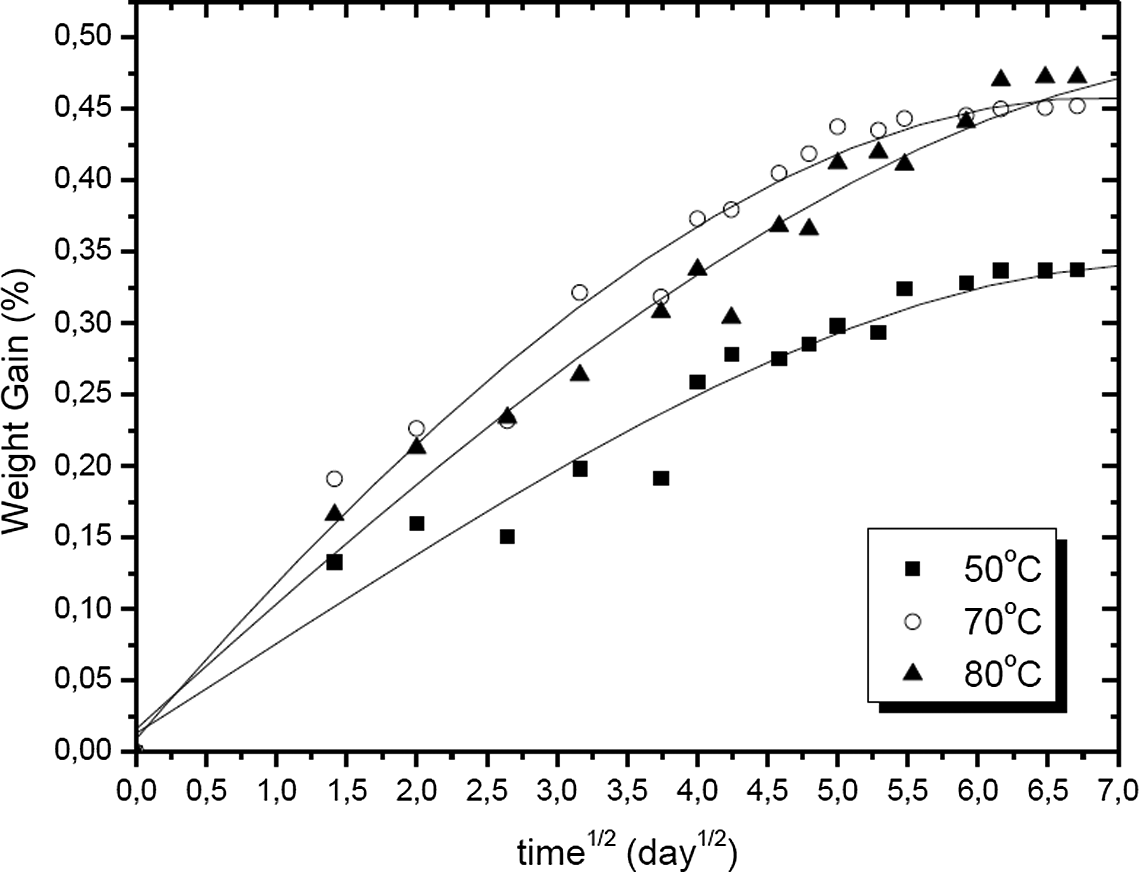
Weight gain curves of PPS/CF laminate at different temperatures. The symbols are experimental results and the solid lines are curve fits.
Figure 8 shows that the behavior is almost linear, during the first few days of immersion. Water saturation point is reached at around the 30th day, with moisture absorption near to 0.32% at 50°C. The highest absorption occurred at 80°C, reaching approximately 0.45%, although no significant differences in moisture absorption were found at higher temperatures of 70 and 80°C.
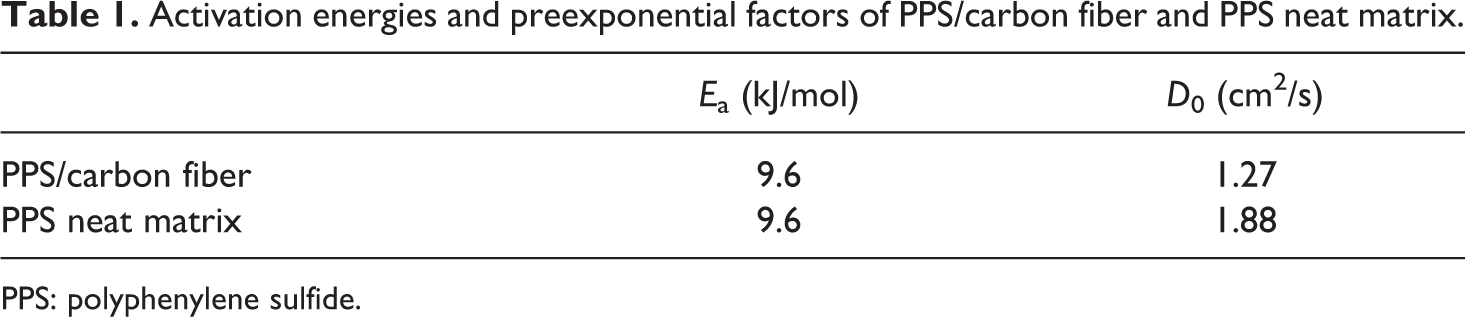
Using equation (1) (Arrhenius equation), when ln(D) is plotted as a function of 1/T, as shown in Figure 9, a linear relationship is obtained. Thus, the activation energy of the diffusion process can be calculated from the slope of the Arrhenius plot. The activation energies and preexponential factor are listed in Table 1. The presence of fiber usually results only in a changed preexponential factor. 16 The fact that similar activation energies are observed in the composites and neat PPS indicates that the matrices of the composites behave very similar to the neat PPS, and the effect of fiber–matrix interface on the kinetics of moisture diffusion is minimal.
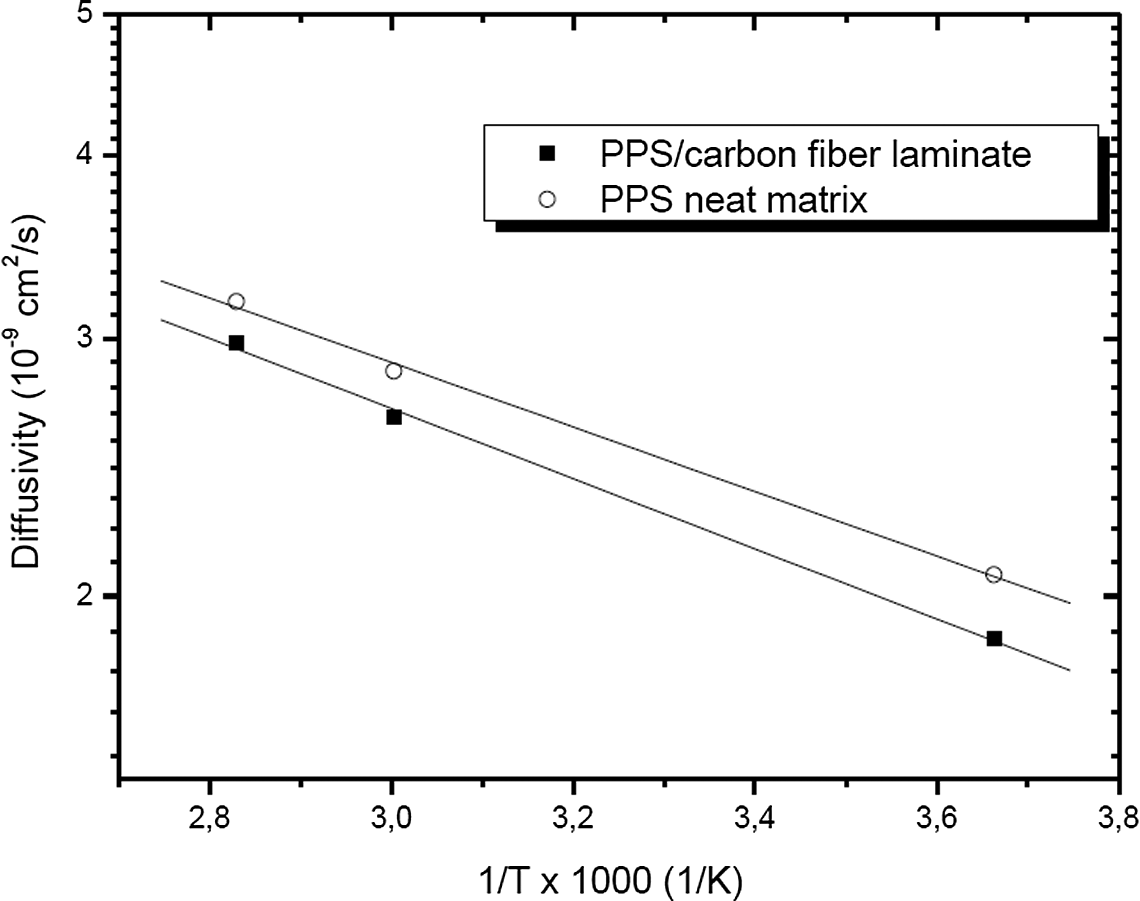
Moisture diffusivity vs. 1/T for PPS/CF composites.
Activation energies and preexponential factors of PPS/carbon fiber and PPS neat matrix.
PPS: polyphenylene sulfide.
It should be mentioned that diffusivity is only an indicative of the diffusion mechanism during initial absorption. The absence of interface effect on diffusivity does not mean interfacial damages will not occur after prolonged environmental aging.
Moisture uptake most often leads to plasticization in polymers, inducing plastic deformation in addition to lowering the T g. 13,14 This is especially common in polymers with polar character different from the matrix tested. Figure 10 presents the DMA results for the PPS/CF samples.
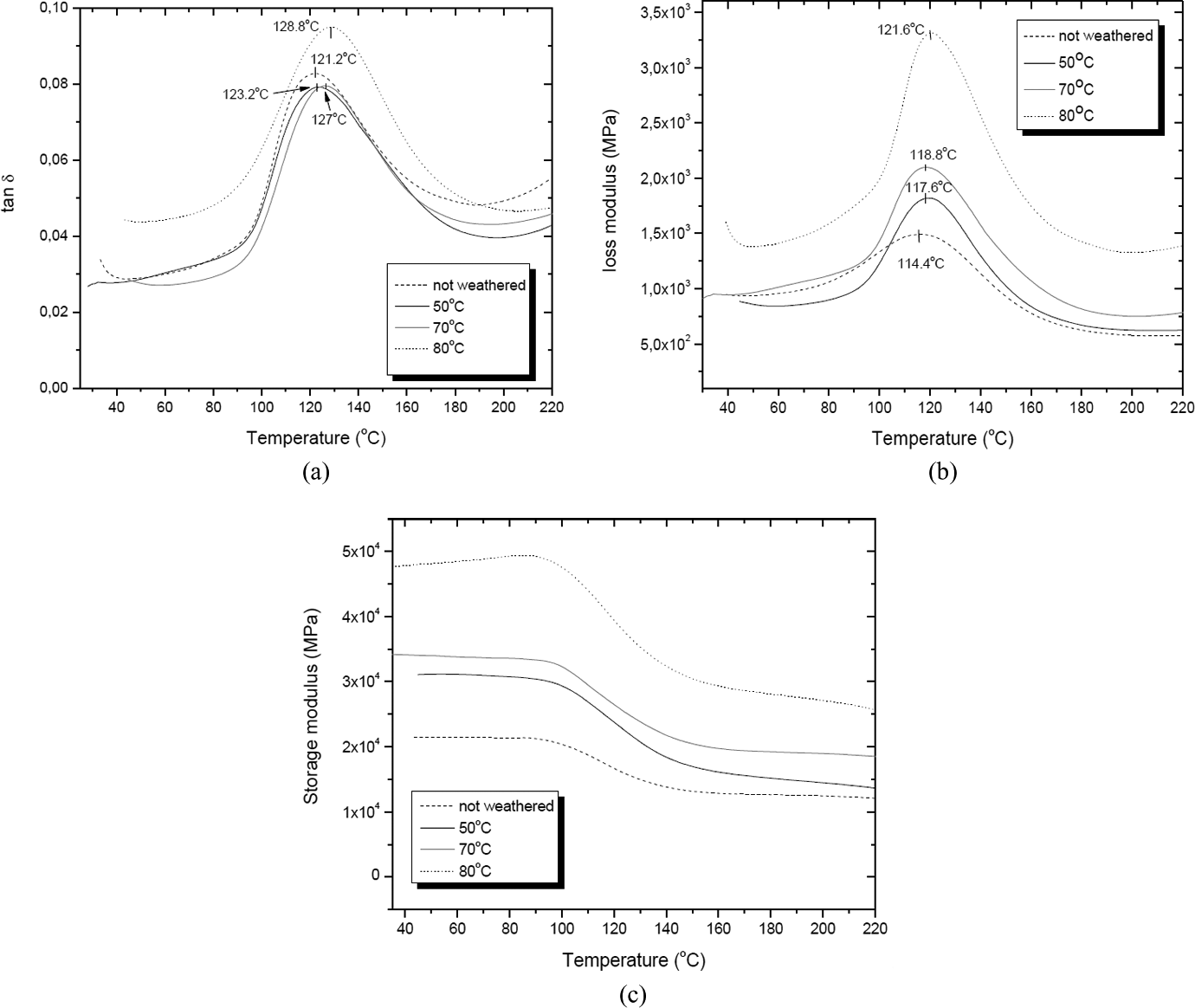
DMA results of PPS/CF after being subjected to water immersion conditioning (a) tan δ; (b) loss modulus, and (c) storage modulus.
In Figure 10(c), it can be observed that within the glass transition region, the storage modulus (E′) of the environmentally conditioned samples increased as weathering temperature increased when compared with the nonexposed sample. However, only an increase of 7°C in T g can be observed between the loss modulus (E′′), as shown in Figure 10(b). On the other hand, the damping factor, tan δ, of the weathered samples increased marginally with an increase in temperature (Figure 10(a)).
The increase in storage modulus implies that some kind of stiffening occurs in the weathered composite. Moreover, a slight increase in the T g of the weathered samples can be observed. These changes in the T g imply a decreased material mobility. A plausible explanation for the increase in E′, which occurred in the weathered composite, is due to the formation of a secondary network cross-linking. Therefore, in this case, the combination of water molecules and high temperature does not act as plasticizers, as expected, but in contrast make the composite stiffer. This is also marked by a shift in the T g at higher temperatures.
Although the composite material properties improved, stiffening of the composite material matrix when exposed to the environment can lead to nonpredictable behavior of a structure such as Eigen frequency shifting and/or deterioration of the overall structural damping and thus to life span degradation. 8
Figure 11 shows the compression strength behavior after conditioning during a period of 8 weeks at 80°C. A similar result was obtained at 50 and 70°C.
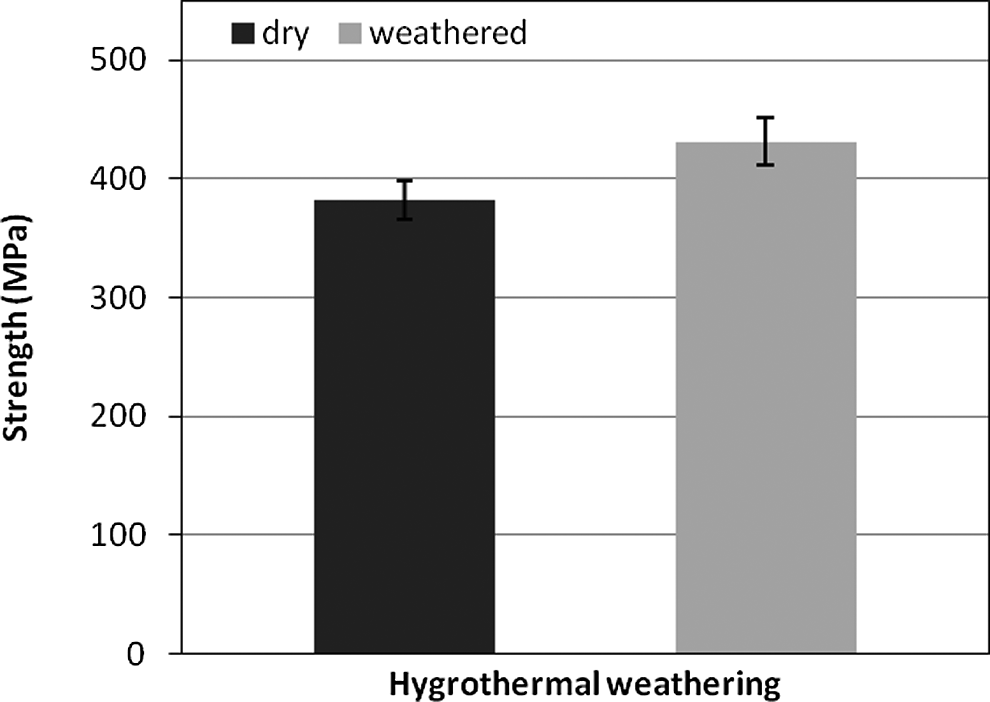
Compressive strength after water immersion weathering.
From this figure it is evident that the compressive strength values of the PPS/CF composite appear to increase (12.91%) after weathering. This behavior is an indicative of stiffing in the case of the conditioned specimen, probably due to an induced cross-linking caused by the temperature increase, confirming DMA results. However, the standard deviations of the compressive tests were also significant.
The fracture surfaces of the hygrothermal-conditioned specimens after to be subjected to compressive test are shown in Figure 12. No distinct differences could be stated from these photomicrographs with respect to matrix or fiber failure.
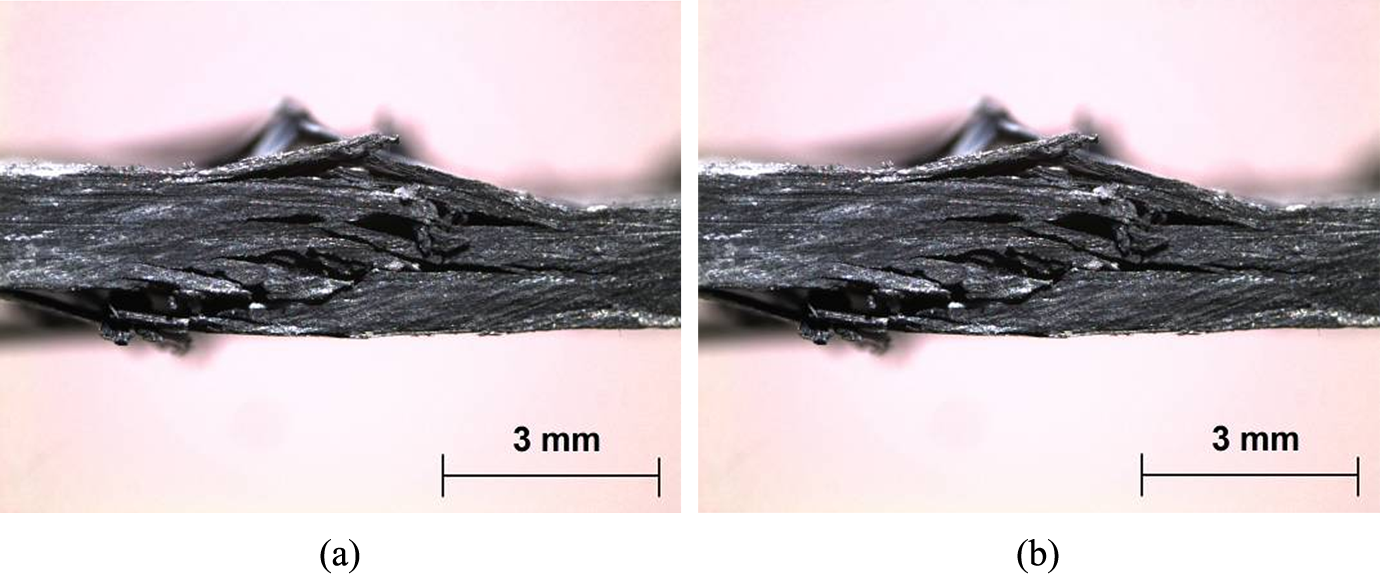
Stereoscopy of specimens fractured by compression tests after water immersion weathering (a) unexposed and (b) weathered.
Fracture surfaces are dominated by microbuckling and formation of kink zones. This pattern of failure, with matrix fracture and multiple fiber fragmentation, is typical for these types of composites. In addition, there are evidences of interfacial debonding phenomena.
Conclusion
The work presented here described the influence of various weathering conditions, such as moisture, heat, and UV radiation, on mechanical and thermal properties of PPS/CF composites.
Exposure to UV radiation revealed that short period of exposition improved compressive strength, while extended periods promoted deterioration in the mechanical properties. The improvement can be attributed to a stiffening effect due to cross-linking formation created by the action of UV, temperature, and humidity. The degradation occurring in longer periods owes to photolysis and photooxidation as well as an embrittlement process caused by extensive cross-linking. The information obtained with DMA complemented the compression tests, showing an increase in T g as the exposition period increases, which indicates a crescent reduction in local segmental mobility as networks are tightened.
Water uptake of the composite was found to increase with temperature since temperature activates the diffusion process. Water saturation point was reached around the 30th day, with moisture absorption near to 0.32% at 50°C and approximately 0.45% at 80°C. As expected, water diffusion is a matrix-dominated property. The same diffusion model used to describe moisture diffusion in the neat resin can also successfully fit the weight gain curves of the composites. Compressive strength increased near to 13% after weathering. The main factors that contributed to the increase in stiffness were the secondary cross-linking due to temperature increase and water absorption, the occupation of materials’ voids and the possible leaching of low-molecular-weight molecules due to water absorption. No specific differences could be stated for compressive fracture surfaces of the weathered and nonweathered composite specimens.
Footnotes
Acknowledgement
The authors are grateful to TenCate Company for supplying the material.
Funding
This work was financially supported by CNPq (grants 109478/2008-8) and FAPESP (grants 08/00171-1).