




Abstract
The present investigation deals with the preparation and characterization of nanocomposites of poly(ether ether ketone) (PEEK) containing nanosized nickel filler up to 3 wt% loading. Characterization of the developed nanocomposites has been carried out by various advanced analytical techniques. Thermogravimetric analysis study depicts that the prepared nanocomposites exhibit enhanced thermal stability. Dynamic mechanical analysis (DMA) technique has been utilized to investigate the viscoelastic deformation of nanocomposites. From DMA studies, it has been demonstrated that with the increase in nano-nickel content, the stiffness of nanocomposites decreases and a very minute change in glass transition temperature (T g) has been noticed. The resulting nanocomposites show the optimum improvement in Young’s modulus, tensile strength, flexural strength and flexural modulus. Scanning electron microscopy study reveals that he dispersion of nano-nickel particulates is uniform throughout the PEEK matrix.
Introduction
Composites pertaining to poly(ether ether ketone) (PEEK) have numerous applications in high-speed aircraft structures, electronic/microelectronics substrates and space structural components of space research vehicles due to their high strength, modulus and retention of mechanical properties over a wide temperature range under extreme environmental conditions. The properties of composite materials can be tailor-made in terms of specific design requirement such as low density, high strength, high stiffness, chemical resistant, high thermal conductivity and good electrical properties by the induction of specific reinforcing filler in polymer matrix. PEEK is a high-performance semicrystalline polymer due to its outstanding thermal stability, wear resistance, mechanical properties and excellent resistance to chemicals. It has high melting temperature (T m), glass transition temperature (T g) and continuous service temperature. It can be processed by conventional methods such as injection molding, extrusion, compression molding and powder coating techniques. Therefore, PEEK and its composites have been reported to be used in aerospace, automotive, structural, high-temperature wiring, tribological and biomedical applications. 1,2 Teng et al. 3 prepared alumina-based ceramics and discussed the effect of the particle size on mechanical properties and microstructure. Recently, polymer-based nanocomposites have been extensively investigated due to much higher surface area to volume ratio of filler that ultimately produces a much higher interface between nanofillers and the polymer matrix in comparison with conventionally used microsized fillers and polymer matrix. The use of nanofiller in polymer composites has attracted great attention of material scientists for various applications. Nevertheless, the effect of nanofiller on the properties of composites depends strongly on its shape, size, surface characteristics and degree of dispersion. In order to improve the properties of polymer nanocomposites, a homogeneous dispersion of nanofillers in the polymer matrix is essential. 4 –10
The main objective of the present work is to prepare the nanocomposite based on PEEK with the incorporation of nano-nickel with varied loading. The present investigation will also demonstrate the effect of nano-nickel on the performance of composite in terms of mechanical, thermal and morphological properties.
Experimental
Materials
The matrix material PEEK (grade ketaspire 820P) powder has been procured from Solvay Chemicals Alpharetta (Richmond Avenue Houston Texas, USA). The density and metal index flow of PEEK polymer is 1.3 g/cc and 3.7 g/10 min, respectively. The reinforcing nickel filler has been procured from Sigma-Aldrich (Spruce St. Louis Missouri, USA) with the size in the range of ˜ 100 nm. Coupling agents silane (N-(2-amino ethyl)-3-amino propyl trimethoxy silane) and ethanol were purchased from E-Merck ( Darmstaat, Germany).
Nanocomposites preparation
All the composites were prepared first by dry mixing preweighed quantities of PEEK powder and nano-nickel powder at different weight percentages (0.5, 1, 2 and 3) followed by melt mixing in a twin-screw extruder (Haake Rheomix 9000, IM, Steingrund, Dreieich, Germany), 18 mm screw diameter, L: D = 24:1 fitted with a sigma die. All the compositions were maintained at a melt temperature of 390°C and the screw speed of 30 r/min. The coupling agent silane was mixed with ethanol and thereafter nano-nickel filler was mixed with the solution. This mixture was agitated for 20–30 min. The filler is intercalated and then dried at 110°C in a vacuum oven for approximately 8 h. The nickel filler was added to the PEEK powder and mixed for 10 min using a high-speed mixer. The mixed materials were compounded and granulated.
Specimen preparation
The specimens were prepared from these dried granules by Minijet injection molding machine (Thermo Scientific, IM, Steingrund, Dreieich, Germany) at 400°C and 950 bar pressure according to the respective ASTM test standards.
Nanocomposite characterization
Mechanical properties
The mechanical tests were performed on the Universal Testing Machine (Instron, MA, USA) with a maximum load capacity of 100 kN. Tensile tests were conducted according to ASTM D-638. Flexural tests were conducted according to ASTM D-790. For each composition, five measurements were taken and the average values of strength and modulus were reported.
Thermogravimetric analysis
In the present study, the degradation behavior and thermal stability of various nanocomposites were studied with the help of a Pyris TGA-1 thermal analyzer (Perkin Elmer, Waltham, Massachusets, USA). The maximum weight loss of the samples was analyzed as a function of temperature through thermogravimetric analysis (TGA). The quantity of the sample for each test was about 10 mg and they were heated from 50°C to 750°C at a control heating rate of 10°C/min under an inert atmosphere.
Scanning electron microscopy
This technique was employed to study the morphology of the nanocomposites of PEEK/nano-nickel. Prior to scanning electron microscopy (SEM) analysis, the fractured samples obtained after tensile analysis were gold coated with the help of gold sputtering unit to avoid the charging effect and enhance the emission of secondary electrons. SEM studies were carried out with a Carl Zeiss EVO-50*VP Low-Vacuum scanning electron microscope (Oberkochen, Germany).
Dynamic mechanical analysis
Dynamic mechanical analyzer is a very important tool to investigate the dynamic mechanical properties, namely storage modulus, loss modulus and so on, with the help of 2980 Universal TA instrument ( TA instruments, Luken Drive, New Castle, DE, USA). Dynamic mechanical analysis (DMA) is a technique where a small deformation is applied to a sample in a cyclic manner. The specimen dimension was taken as 3.5 × 104 mm3 by monitoring the stress–strain relationship with the change in temperature. Its experiments have been conducted from room temperature (23°C) to 250°C under an inert atmosphere at a constant heating rate of 3°C/min at 1 Hz frequency.
Results and discussion
Mechanical properties
Tensile properties
The variation in the tensile strength, tensile modulus and elongation at break as a function of nano-nickel particle content is depicted in Figures 1 to 3, respectively. The results reveal that Young’s moduli of nanocomposites are higher than those of neat PEEK. Tensile modulus of the neat peak has been found to be 3.12 ± 0.11 GPa, with the incorporation of 3 wt% of nanosized nickel into the PEEK matrix, it is found to be 3.45 ± 0.12 GPa. The corresponding tensile strength has a significant enhancement of approximately 24% compared with neat PEEK but in the same case percentage elongation at break decreases up to 33%. This can be attributed to the decrease in ductility of the polymer with the addition of nano-nickel. The elongation at break is an indicator of the material flexibility, restriction of the amorphous phase imposed by the deposited nickel plays a key role in this behavior. The reason is that nano-nickel included in the PEEK matrix behaves like physical cross-linking points and restricts the movement of the polymer chains. This causes a decrease in the flexibility of the polymer. Higher tensile strength and Young’s moduli with the incorporation of the nano-nickel into the PEEK matrix can be attributed to the improved interfacial adhesion and dispersibility of the nano-nickel due to the chemical interaction between polar groups present on the outer layers of the nano-nickel and surrounding matrix. The interfacial bonding enables an effective stress transfer between the polymer and nano-nickel (Figure 4).
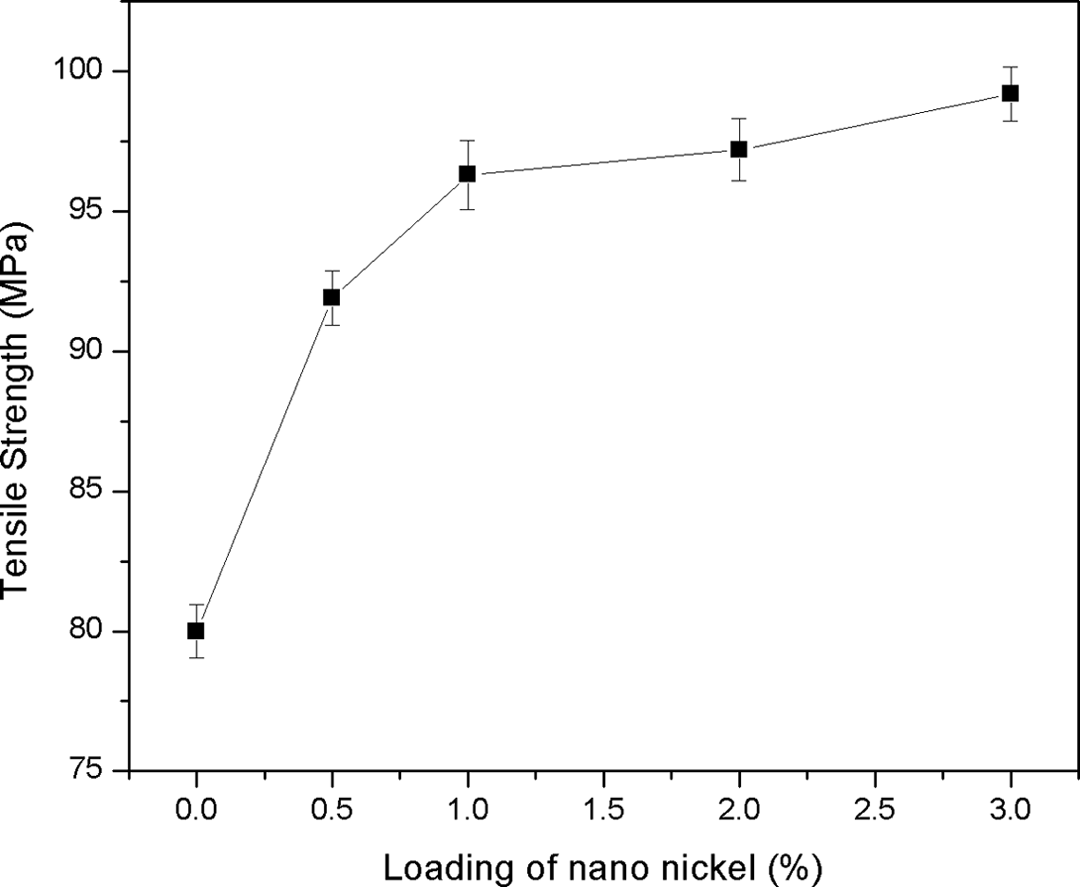
Variations in the tensile strength of the nanocomposites as a function of the nano-nickel particles content in wt%.
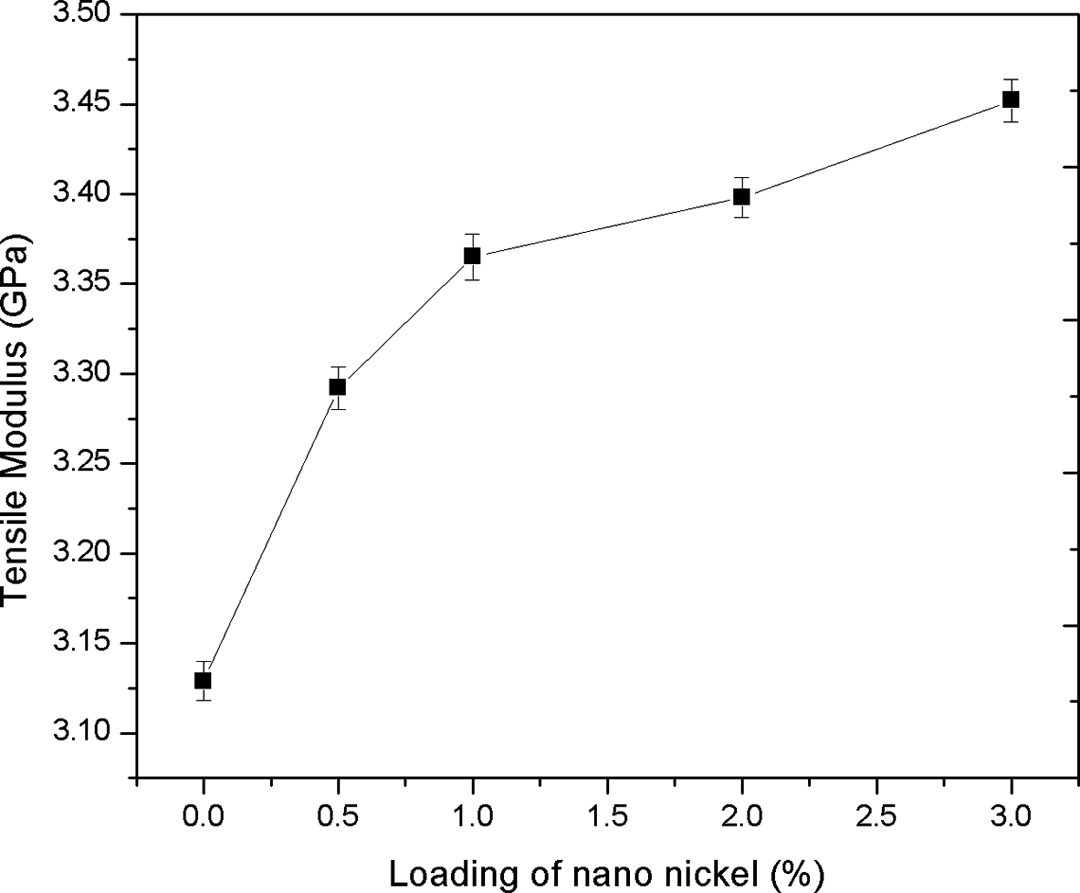
Variations in the tensile modulus of the nanocomposites as a function of the nano-nickel particles content in wt%.
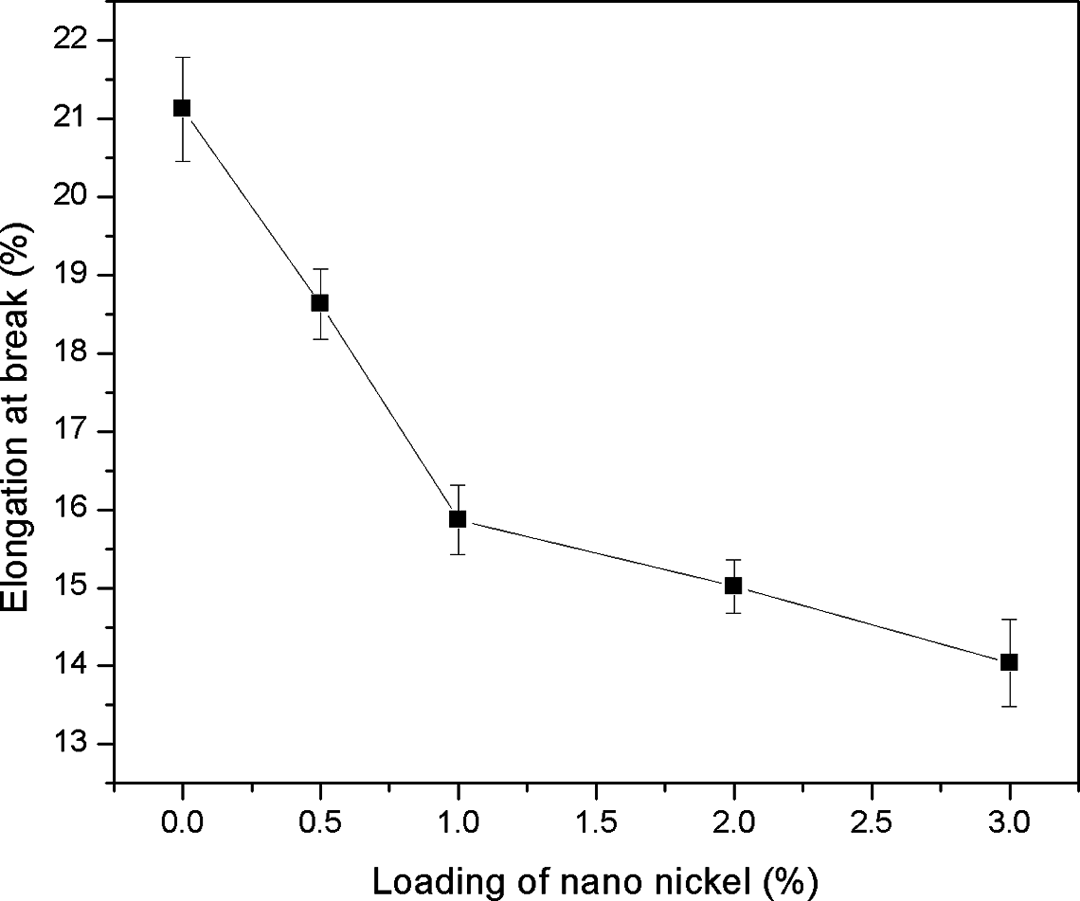
Variations in the elongation at break of the nanocomposites as a function of the nano-nickel particles content in wt%.
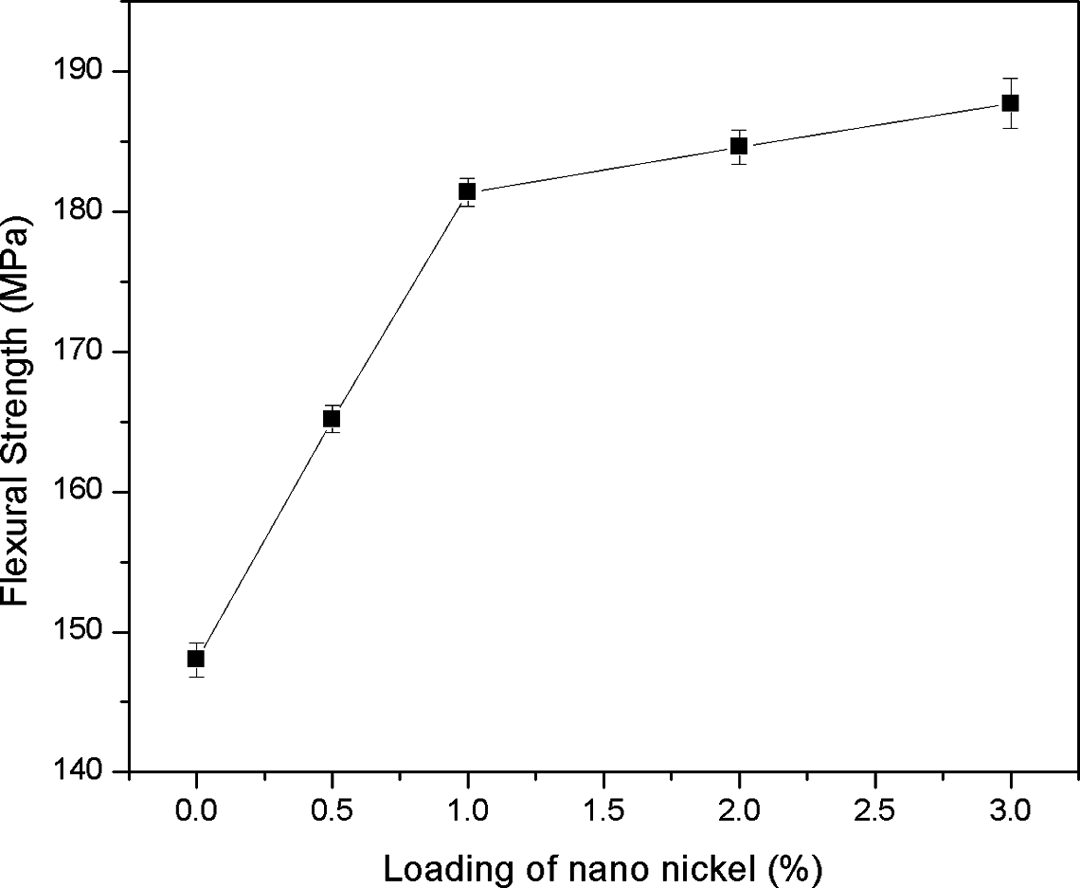
Variations in the flexural strength of the nanocomposites as a function of the nano-nickel particles content in wt%.
Flexural properties
The flexural modulus of PEEK nanocomposites filled with nanonickel particles increased with increasing nickel content and a low increment occurred when high contents were incorporated as shown in Figure 5. The increment has been observed to be nearly about 25% in the flexural modulus at 3 wt% of nano-nickel content. In PEEK/nickel nanocomposites, the modulus enhancement mainly depends on the dispersion for a given volume fraction of filler and also depends on the interaction of the PEEK matrix and nickel nanoparticles. Improvement in the flexural strength and modulus due to the inclusion of nano-nickel particulates in the PEEK matrix may be due to the development of the highly oriented domains of nano-nickel particulates and specific interaction between nanofiller and PEEK matrix. Another reason probably for such an improvement in flexural strength and modulus can be accounted on the basis of static adhesion strength as well as interfacial stiffness because of the efficient stress transfer at the interface.
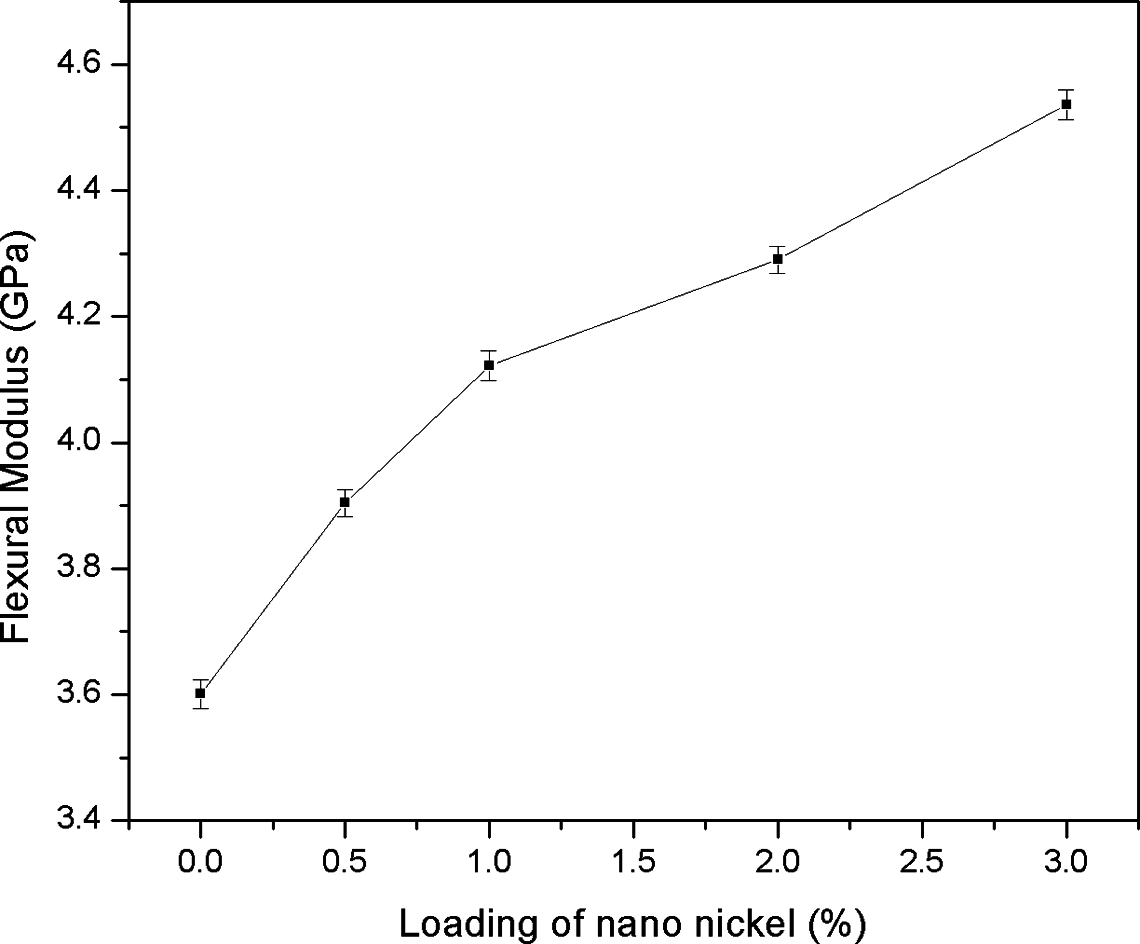
Variations in the flexural modulus of the nanocomposites as a function of the nano-nickel particles content in wt%.
Measurement of thermal properties
Thermo gravimetric analysis
It has been proposed that a polymer resin reinforced with nanosized inorganic particulates would improve its thermal stability, including the resistances of thermal degradation and flammability. TGA studies have been performed on the nanocomposites with varying nano-nickel content. Figure 6 shows the weight loss curve for the nanocomposites system in air. All the nanocomposites have shown improved thermal stability than that of neat PEEK. The onset decomposition temperature of neat PEEK has been found to be 580°C, which increases to 615°C with the incorporation of 3 wt% nano-nickel. The incorporation of nano-nickel reduces the chain mobility of the polymer matrix by imposing a vast number of restrictions sites, which in turn reduces the thermal vibration of the C–C bond. 11 –13 Therefore, the nanocomposites need much more thermal energy for the decomposition of polymer matrix, which in turn enhances the thermal stability. Another reason can be the formation of the char by the nanocomposites, which acts as a physical barrier between the polymer and the superficial zone, where the combustion of polymer is taking place. 14
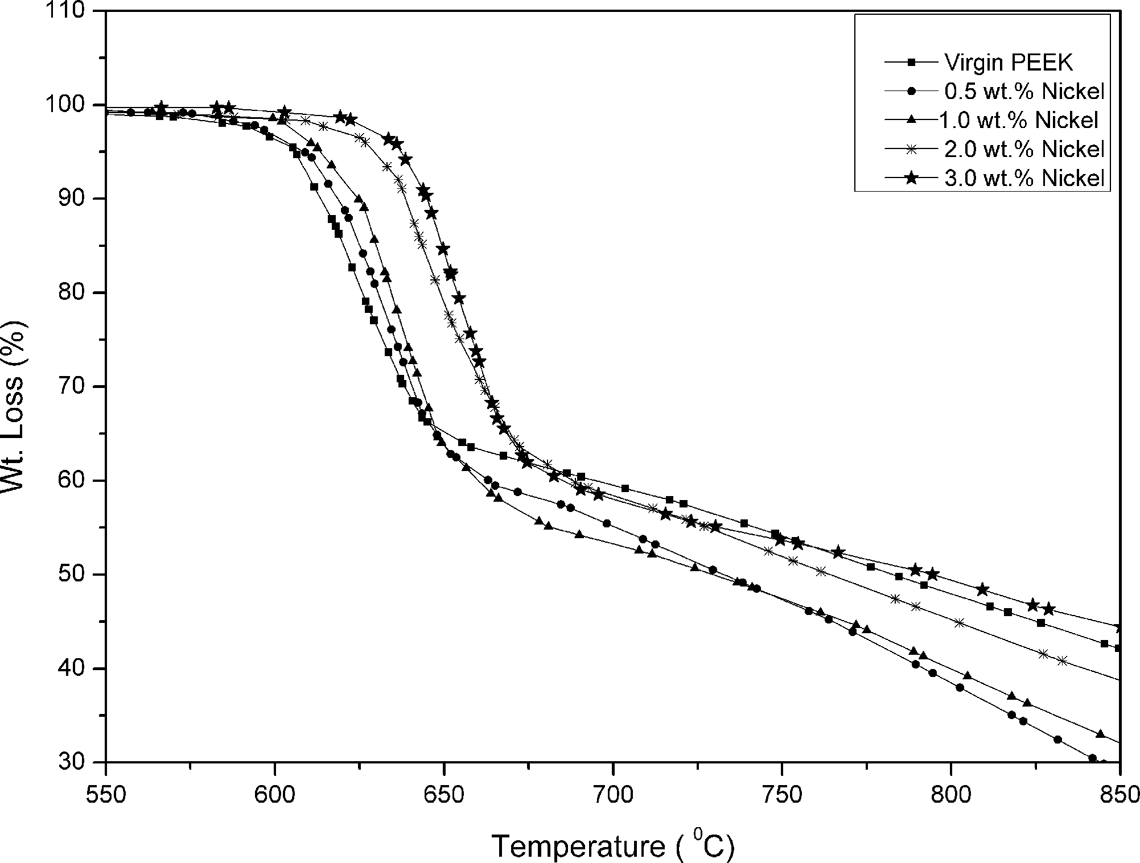
The TGA curves of the PEEK nanocomposites filled with nanosized nickel. PEEK: poly(ether ether ketone); TGA: thermo gravimetric analysis.
Scanning electron microscopy
Scanning electron micrographs of tensile fractured surfaces of virgin PEEK and the nanocomposites are shown in Figure 7(a) to (e). It is obvious from Figure 7(a) that for neat PEEK, bar-like structure can be seen followed by smooth surface having no defect or void. Figure 7(b) to (e) demonstrates that with the incorporation of nano-nickel, a uniform dispersion of the filler takes place and the rough surface of the nano-nickel produces effective physical interaction and reduces the slippage of nano-nickel particulates. It is conceivable that with further improvement in nanoparticle clustering via particle surface modification, although more expensive, the mechanical properties can be further upgraded.
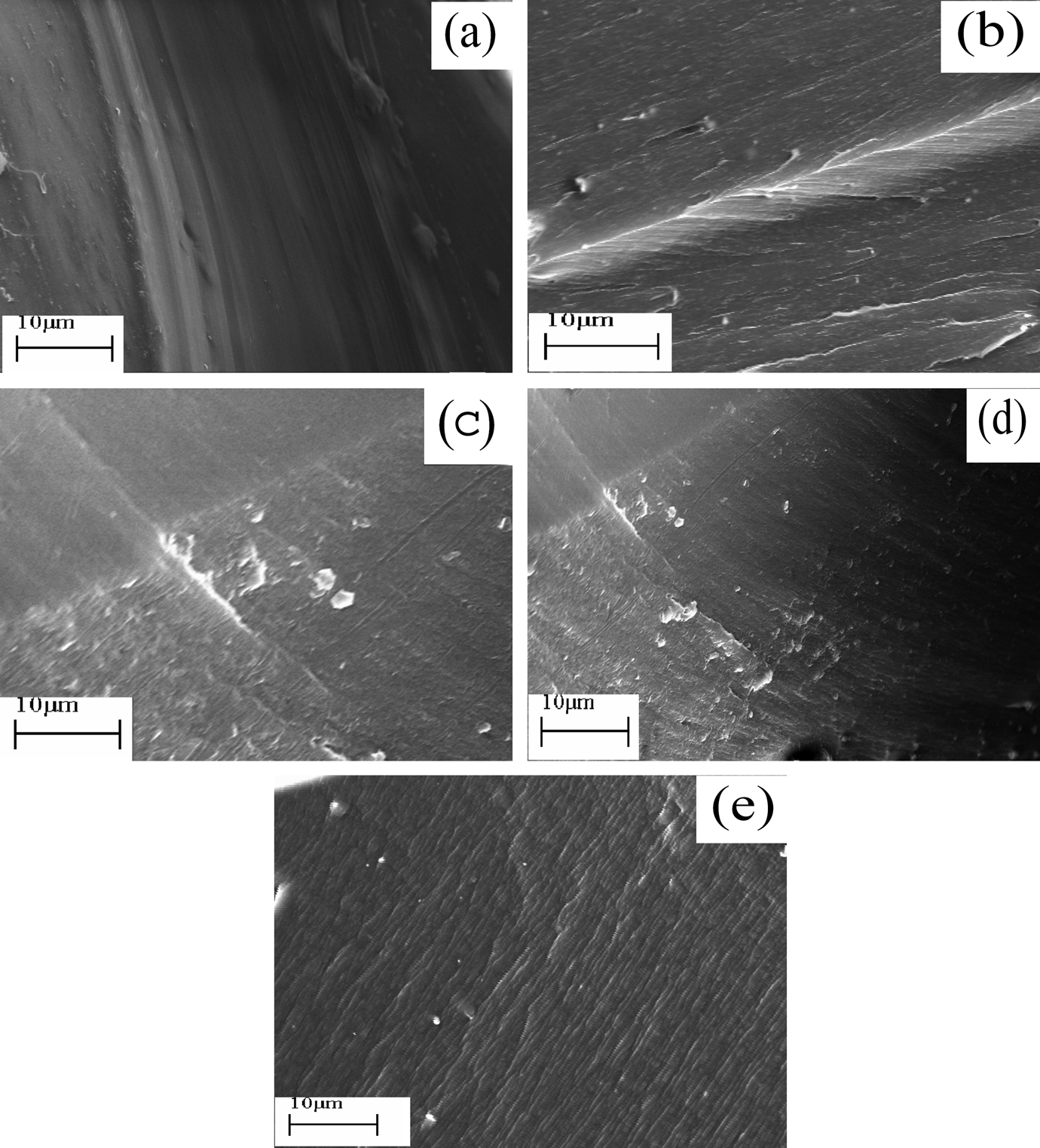
SEM of (a) plain PEEK at ×3000; (b) PEEK/nickel (99.5:0.5) nanocomposites at ×3000; (c) PEEK/nickel (99:1) nanocomposites at ×3000; (d) PEEK/nickel (99:2) nanocomposites at ×3000 and (e) PEEK/nickel (99:3) nanocomposites at ×3000. PEEK: poly(ether ether ketone); SEM: scanning electron micrograph.
Dynamic mechanical analysis
DMA for the nano-nickel-filled PEEK nanocomposites is performed to illustrate the effect of metallic nanofillers on the dynamic mechanical behavior of the PEEK polymer and its composites. Figure 8 shows the variation in storage modulus with temperature of the developed nanocomposites with varying content of loadings of nano-nickel filler and neat PEEK. The storage modulus curves show an increase in stiffness in nanocomposites with the incorporation of nano-nickel into the PEEK matrix. Both below and above the glass transition temperature (about 164°C), this effect is attributed to the decrease in the polymer chain mobility due to incorporation of nickel. The remarkable improvement in storage modulus of PEEK/nickel nanocomposites is attributed to the uniform dispersion of nickel in the PEEK matrix. 15,16 Tan δ and temperature curves for the PEEK/nickel nanocomposites illustrated in Figure 9 reveal that glass transition temperature (T g) almost maintains the same trend with the incorporation of nano-nickel. The virgin PEEK shows a T g of 164°C. Very minute increment in T g is attributed to the mobilization action of nano-nickel at higher temperature.
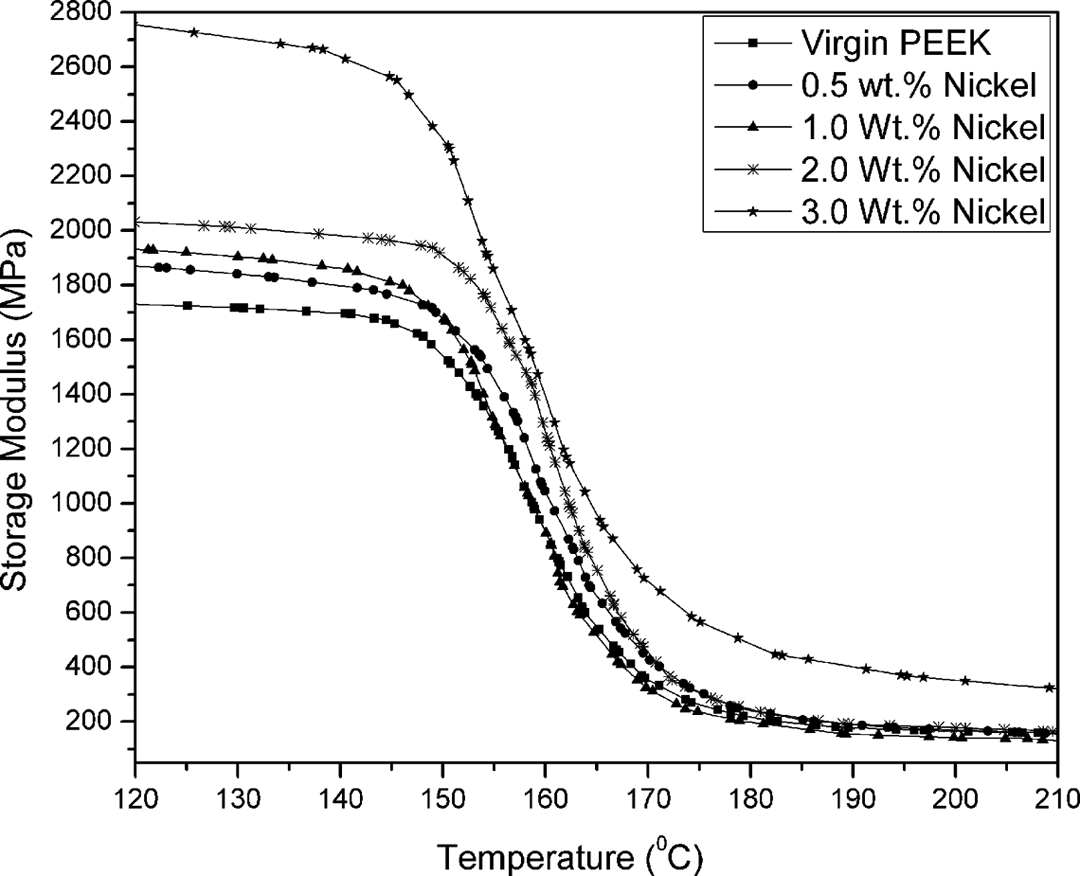
Storage modulus of nano-nickel-filled PEEK nanocomposites. PEEK: poly(ether ether ketone).
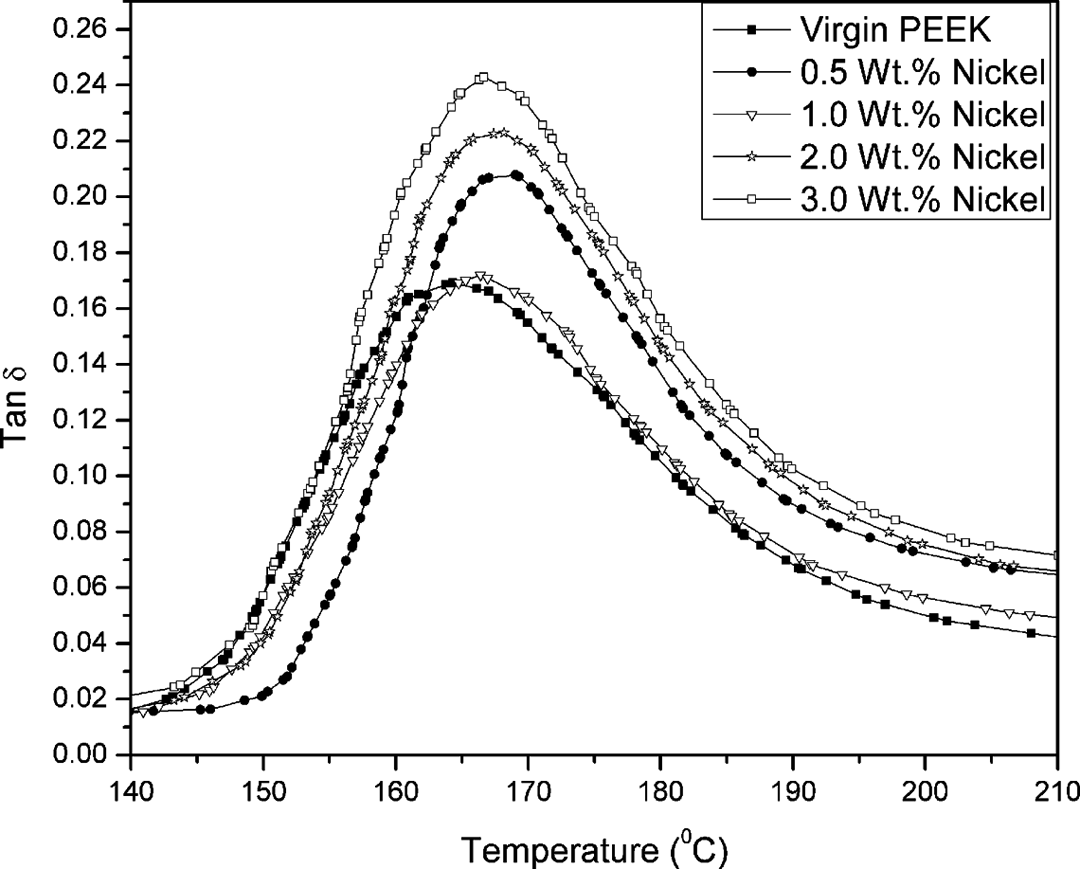
Tan δ versus temperature; the peak temperature of the tan δ curve can be defined as the glass transition temperature.
Conclusions
In conclusion, the mechanical and thermal properties of PEEK-based nanocomposites can be significantly enhanced by the incorporation of nano-nickel filler. Morphological studies conducted by SEM exhibit uniform distribution of nano-nickel filler in the PEEK matrix.
Footnotes
Acknowledgements
The authors would like to gratefully acknowledge the director of Defence Materials and Stores Research and Development, Kanpur, for providing the facilities required for successful completion of the project work.
Funding
This research received no specific grant from any funding agency in the public, commercial or not-for-profit sectors.