



Abstract
This study explores the thermomechanical behavior of steel fiber-reinforced high-density polyethylene matrix thermoplastic composite (TPC) discs possessing distinct fiber arrays and the influence of circular hole diameter, upon exposure to convective air cooling loading. The discs were manufactured and their thermomechanical properties were assessed. Models of the discs for different D/W ratios (where D is the circular hole diameter and W is the disc width) were constructed and analyzed. Two parameters, the circular-hole diameter and the fiber array configuration, were varied. Thermal stresses generated during the cooling of each disc were then determined. Residual thermal stress and equivalent plastic strain for each respective D/W ratio were presented in graphical form, enabling evaluation and comparison. A parametric study was conducted to identify the influence of both circular hole diameter and distinct fiber reinforcement upon residual thermal stress and plastic deformation for steel fiber/TPC discs subjected to thermal loading.
Keywords
Introduction
Using composite technology, it is possible to design new, multifunctional materials with unique properties, unobtainable using any monolithic material. Thermal-induced internal stresses and their corresponding residual thermal stresses, arising during the production of thermoplastic composites (TPCs), have an important potential impact on the performance and properties of the composites. Fiber-reinforced TPCs have found widespread applications in a range of engineering fields, such as aircraft structure design 1 on account of their robustness, low sensitivity to moisture effects, and adaptability to mass production and repair. For the design and analytical modeling of such composites, accurate knowledge of residual stresses under loading is required since it can cause failures, including fiber misalignment, 2 transverse cracking, 3 delamination, 4 warpage, 5 and fatigue behavior. 6 Residual thermal stress is one form of residual stress. It arises due to greater shrinkage of the matrix compared with that of the fibers, following the processing of TPC laminates, as they cool from a high processing temperature to service temperature (22°C). Several researchers have studied residual thermal stresses and their causes under different conditions. Nairn and Zoller 7 published an experimental study of thermal residual stress in TPC. According to Favre, 8 if long-term and environmental parameters are excluded, the magnitude of thermal residual stresses in composite structures is dependent on four parameters: the temperature differential, the cooling thermal expansion/shrinkage coefficients of the composite constituents (or plies), the constituent elastic coefficients, and the fiber to volume ratio. These parameters are also dependent on other factors such as the thermoplastic matrix morphology (semicrystalline or amorphous), fiber types, fiber–matrix interface properties, fiber morphology (woven or unidirectional prepreg), and the processing conditions. Parlevliet et al. 9 reviewed these parameters separately, starting at the micromechanical level and the fiber-dominated properties, followed by the matrix-dominated properties. Barnes and Byerly 10 found that the further the temperature drops from the glass transition temperature, the more thermal residual stresses exist within all polymer composites. The study has shown that for thermoplastics matrix composites, the (radial) residual stress increases with an increasing cooling rate. 11 Sayman and Arman investigated the thermal residual stresses occurring in TPC discs reinforced by steel fibers with circular arrays, under steady state, 12 uniform, 13 linear, 14 and parabolic 15 temperature distribution conditions by numerical solution and also finite element analyses. Hu and Weng 16 analyzed the influence of thermal residual stresses on the deformation behavior of a composite using a new micromechanical method. Huang 17 presented a formula for determining the strength of unidirectional composites with thermal residual stresses. Fiber arrangement also plays an important part in the formation of thermal residual stresses occurring in composite production processes operating under normal working conditions. Hobbiebrunken et al. 18 examined the effects of nonuniform fiber arrangements on thermal residual stresses in carbon fiber-/epoxy-laminated composites. The effects of different fiber arrangements, including regular fiber arrays (square and hexagonal arrays) and a random fiber array, on residual thermal stresses in unidirectional composites of various fiber volume ratios were investigated by Jin et al. 19 Tsai and Chi 20 studied the thermal residual stress effect on the constitutive behaviors of fiber composites with three different fiber arrangements, that is square edge packing, square diagonal packing, and hexagonal packing. Moreover, geometric stress concentration was found to arise due to holes, cutouts, or abrupt change in the section and to limit the load-carrying capabilities of structures under loading. As a result, stress distribution is not uniform throughout the whole cross section. Failure, such as cracking and plastic deformation, frequently occurs at points of geometric stress concentration, since stresses reach their maximum magnitude at those points. In the literature, 21 –23 various descriptions can be found of stress concentration in plates with a hole. Toubal et al. 24 have experimentally studied the stress concentration in composite plates with a circular hole. Ting et al. 25 presented a stress analysis theory, a method using alternating rhombic arrays for discs with multiple circular holes. Despite potentially wide-ranging applications, few studies have reported the influence of the hole diameter on thermal residual stresses within metal fiber TPC discs. The purpose of this research study is to investigate the influence of circular hole diameter on residual thermal stresses and plastic deformation, for steel fiber-reinforced TPC discs with a distinct fiber array exposed to convective air cooling condition.
Materials and methods
First, three TPC discs, each with different fiber array types (Figure 1) were manufactured. To produce each disc, raw granules of high-density polyethylene were initially put into molds and held for 5 min at 2.5 MPa. Electrical resistance was used to hold the temperature at 173°C. The steel wires were wound around the disc in patterns to form circular and radial fiber arrays. Having produced the matrix layer and its reinforcement, two matrix layers and one fiber array were bonded together under the same pressure and temperature conditions to obtain a TPC disc. Each disc had a diameter of 160 mm and a thickness of 2 mm, and the fiber volume ratio was measured at 8%.
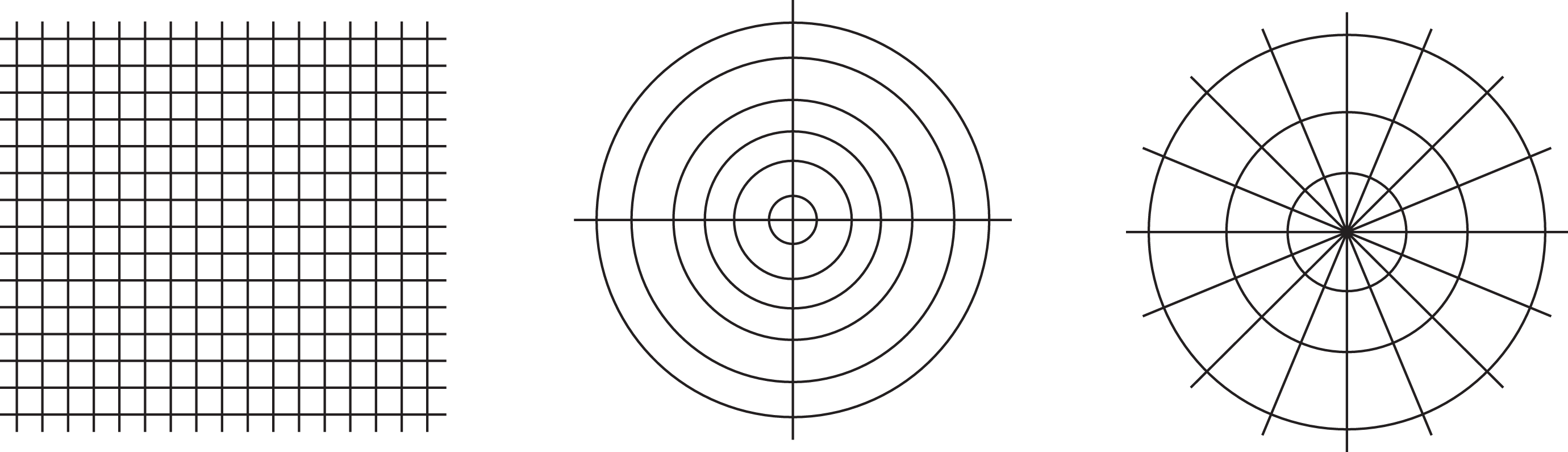
Woven, circular, and radial steel fiber arrays for TPC discs, respectively. TPC: thermoplastic composite.
An analysis was performed by the authors and the material and thermal properties of the discs were determined as displayed in Table 1. E, G, and
Average thermomechanical properties of each TPC disc.
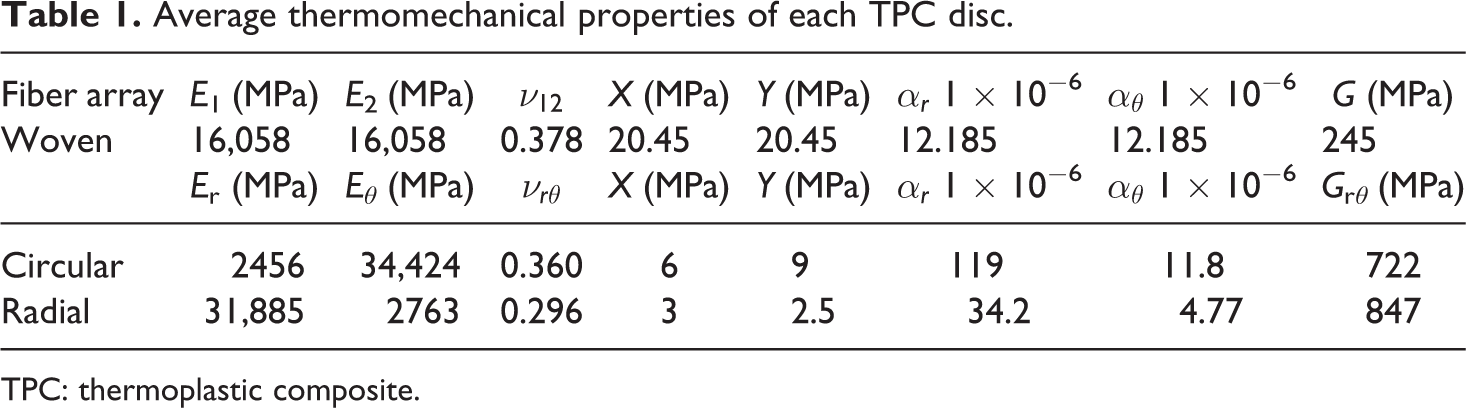
TPC: thermoplastic composite.
Finite element method (FEM) and Tsai–Hill yield criterion were used to provide a numerical solution. It was important to ensure that the cooling process for each composite disc was consistent and that accurate data were recorded. ABAQUS engineering simulation software was used for this purpose. The numerical and experimental cooling curves of the discs were measured. Then the numerical and experimental curves were converged so that a precise value for the convective film coefficient could be calculated. Numerical cooling curves were obtained using data taken from the results of analysis solutions of each disc in ABAQUS simulation software. In order to obtain experimental cooling curves, each composite disc was warmed to operational temperature (94°C) in an oven and then cooled to service temperature (22°C). During this process, surface temperatures of the discs were measured at the same surface position at 20-s intervals by a digital thermometer as the discs cooled from 94°C to 22°C. Finally, the numerical and experimental cooling curves of each disc were plotted (Figure 2).
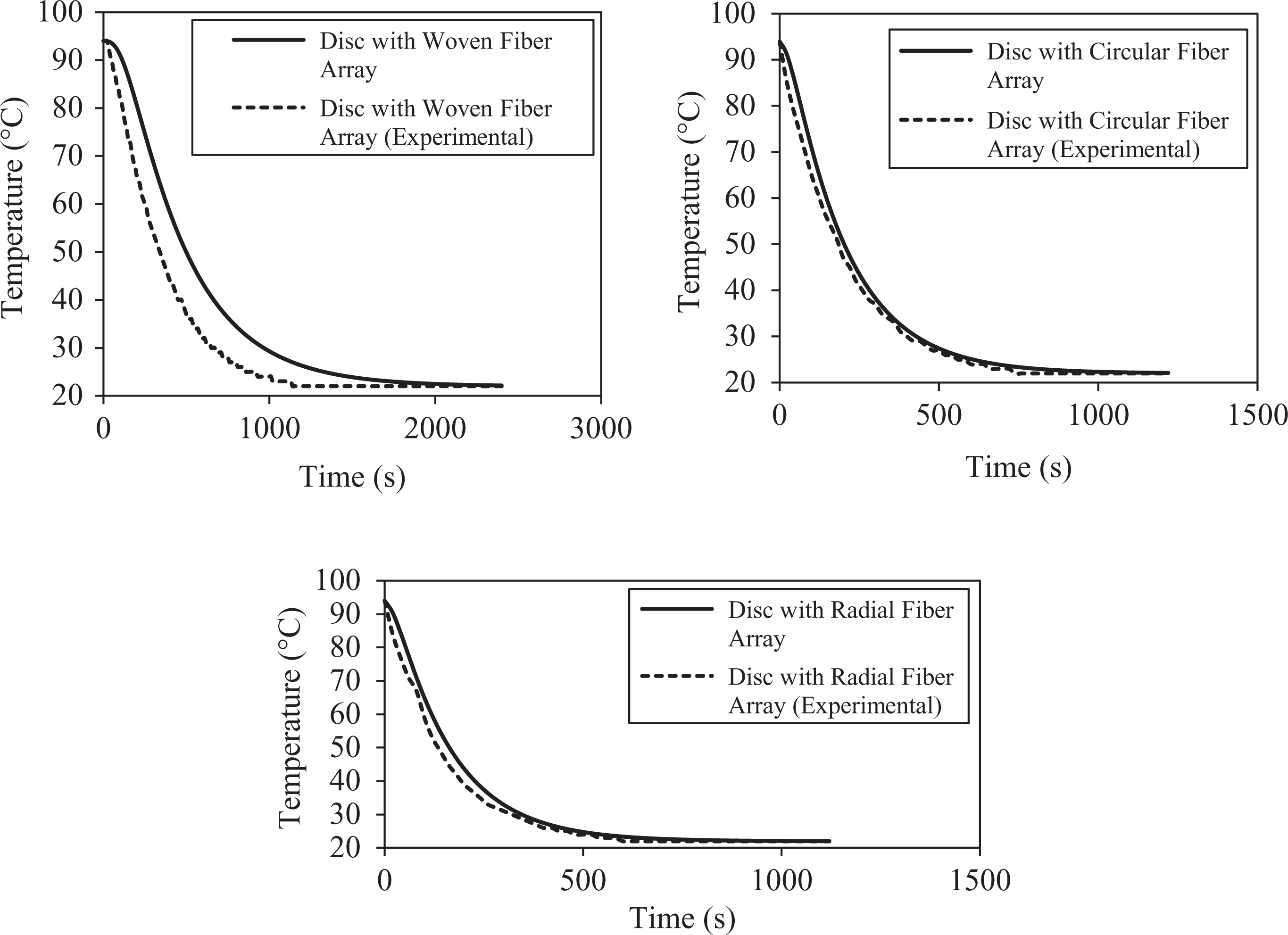
Numerical and experimental cooling curves of TPC discs. TPC: thermoplastic composite.
The value for the convective film coefficient affecting the outer disc surfaces was determined as 6.67 W/m2 °C h. Other factors influencing the convective film coefficient (h) of the composite disc on which analysis was carried out were its density (d), specific heat (C p), and thermal conductivity (k) as shown in Table 2.
Physical properties of the TPC discs.
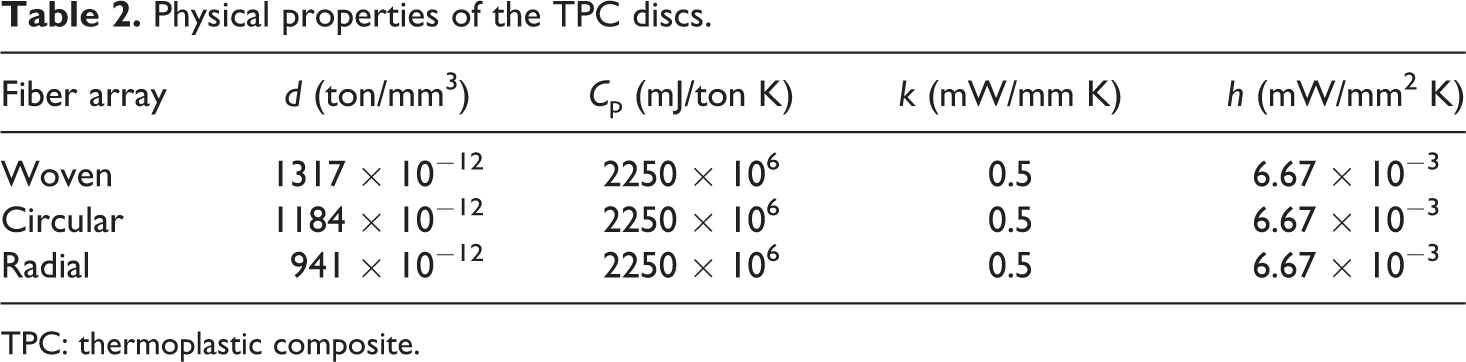
TPC: thermoplastic composite.
Finite element analysis
FEM was used as a basis for a numerical solution. Cartesian coordinates for woven fiber array and polar coordinates for circular and radial fiber array were employed in the analyses. Suitable element selection was the primary task in the finite element analysis. Multiple checks and convergence tests were made to guide the selection of suitable elements, including the determination of optimum element length. An elastoplastic material model, demonstrating anisotropic yield properties, was populated with data obtained in characterization tests. The models were established using quadrilateral plane solid elements, specified as CPS8T in the ABAQUS package. In this system, CPS8T is defined as “eight-node plane stress thermally coupled quadrilateral, biquadratic displacement, and bilinear temperature,” and it has an orthotropic plate element size of four. The symmetry of the disc geometry and loading conditions meant that assessing a quarter of each disc was sufficient. In order to construct graphical images and finite element modeling of the disc models for different D/W ratios, ABAQUS engineering simulation software was used. Figure 3 provides an example for graphical image and meshing the quarter disc model for a circular fiber array. This was one of the disc models used in this study, and in this case, it depicts a disc with a 0.3 D/W ratio. Mapped meshing is used for all models, so that more elements are employed near the surface–hole boundaries. After the mesh generation process was complete, all models were divided into elements and nodes.
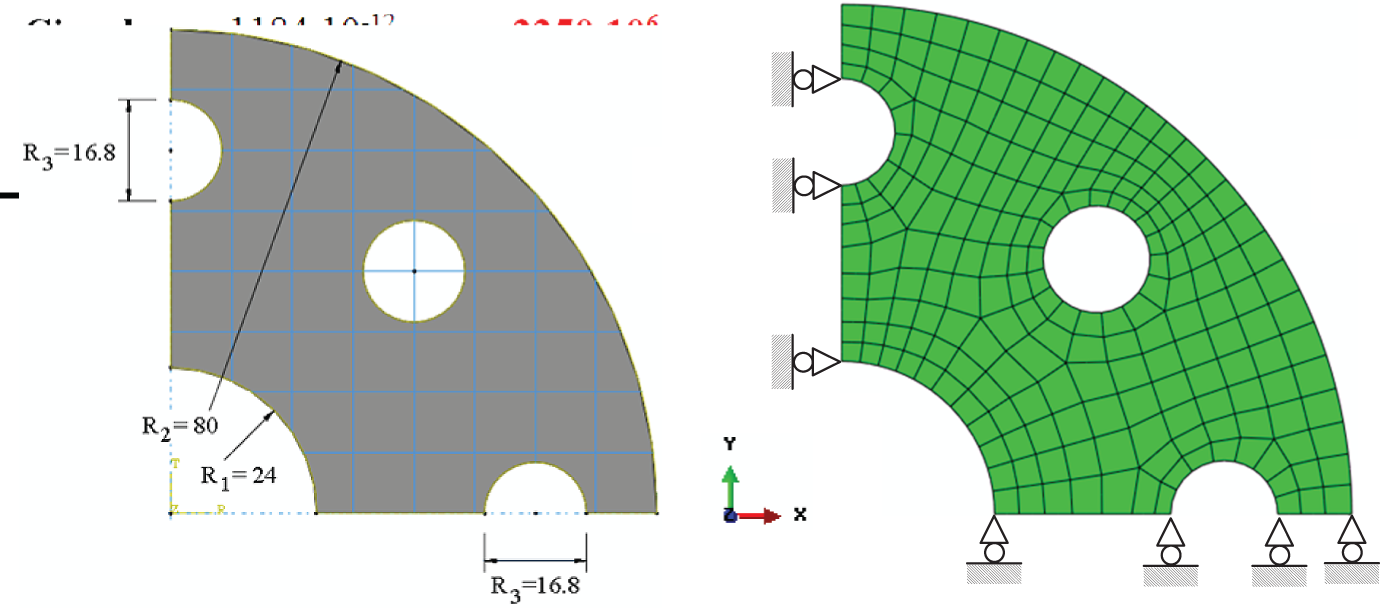
Graphical images (left) and finite element modeling (right) of the quarter TPC disc model possessing circular fiber array for D/W = 0.3 ratio. TPC: thermoplastic composite.
The discs were analyzed using simply supported boundary conditions, where both Uy
and Uz
are equal to zero. The Tsai–Hill theory was used to determine the yield, since the yield strengths in tension and compression were the same. According to this criterion, the equivalent stress in the fiber direction can be written as
26

where X, Y and
For this study, the temperature at the beginning of the cooling process and the service temperature were 94°C and 22°C, respectively. Residual stresses and plastic strains that occurred were measured from the results of numerical solution of ABAQUS simulation software and then analyzed for the following ratios
In case where D/W = 0 and
Results and discussion
The numerical results presented here are for fiber-reinforced thermoplastic orthotropic discs with woven, circular, and radial fiber arrays. Thermal stresses generated during convective air cooling were obtained, and residual stresses and plastic strains present in the discs at service temperature were evaluated for a number of D/W ratios.
According to Tsai–Hill yield criterion, equivalent stresses should be considered. Substituting the values of thermal stress components that occurred in the longitudinal and transverse directions during cooling into equation (1), equivalent stresses can be calculated for each disc employing software conducted by the authors. Equivalent thermal stresses revealed at small values compared to thermal stress components.
Figure 4 shows the change in equivalent thermal stresses present on the same point at the inner diameter in discs with woven, circular, and radial fiber arrays during cooling. The results were obtained subsequent to cooling the discs from the processing temperature (94°C) to the service temperature. Different coefficients of thermal expansion in radial and tangential directions for circular and radial discs caused higher thermal stresses than those experienced in woven discs for a uniform temperature distribution.
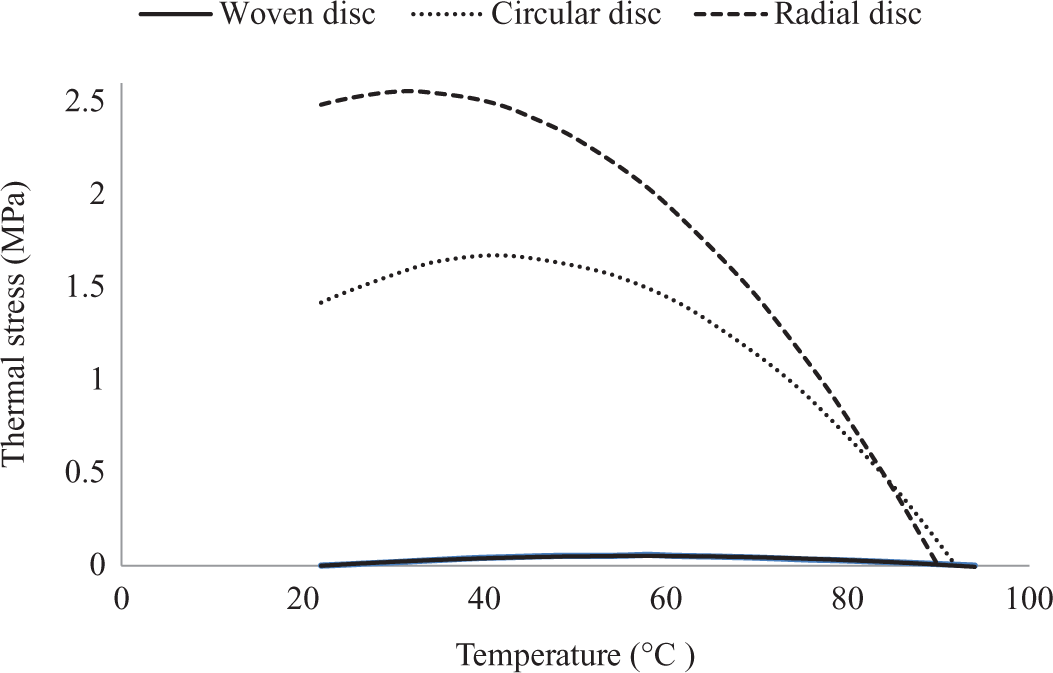
Equivalent thermal stresses on the same point at inner diameter during convective air cooling for the TPC discs with distinct fiber array. TPC: thermoplastic composite.
On the other hand, thermal residual stresses attain their greatest values at the inner diameter edge in the discs, for all types of fiber array when the D/W = 0. As the D/W ratio is increased from 0 to 0.5, the numerical results indicate that thermal residual stresses occur at both the inner diameter edge and around each circular hole in the disc. For example, Figure 5 illustrates the thermal residual stress through the x direction distribution in the TPC disc with a circular fiber array at service temperature for each of the D/W ratios used in this study.
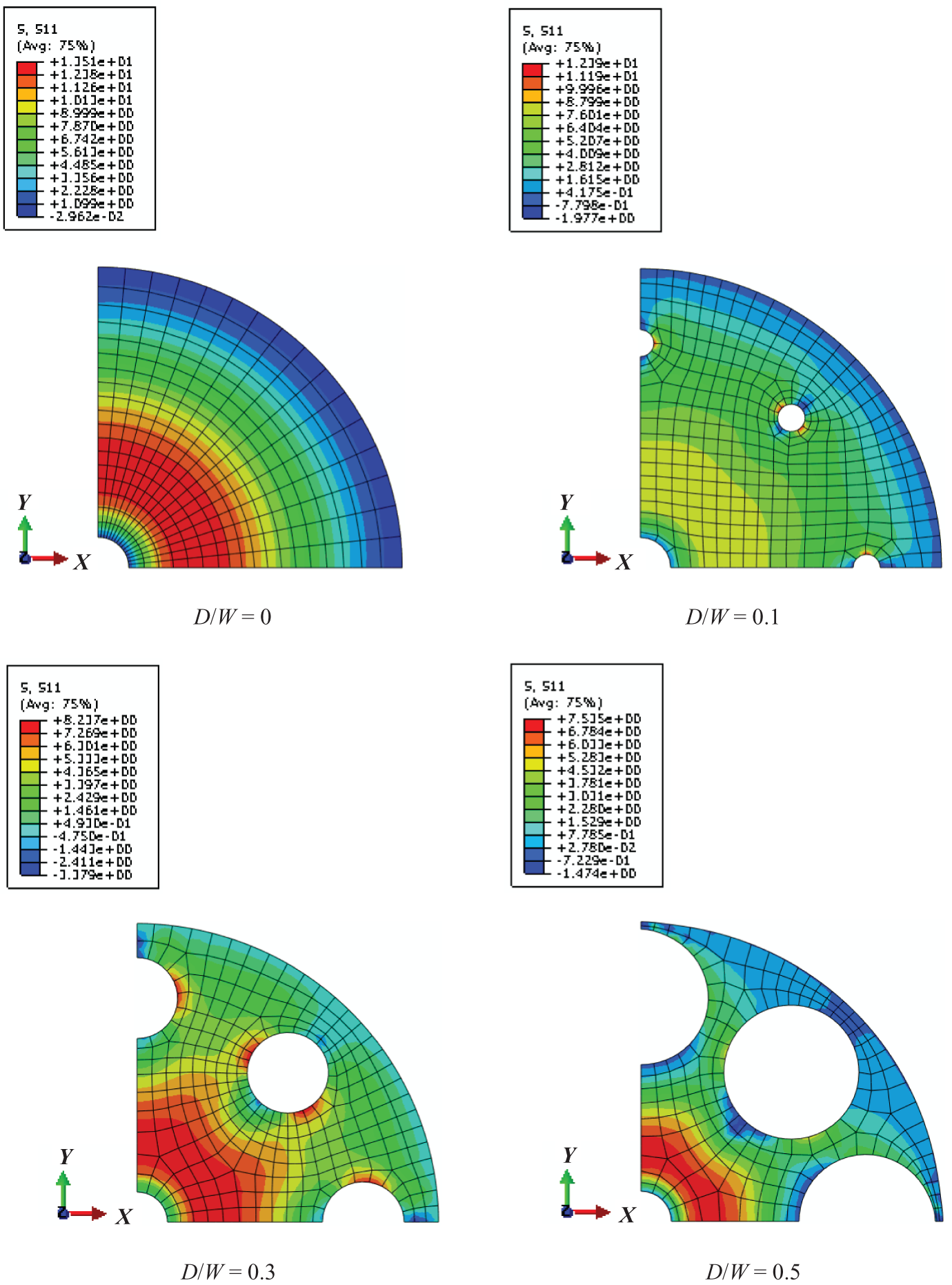
Thermal residual stress distribution in the TPC disc with circular fiber array for each of D/W ratio. TPC: thermoplastic composite.
In order to correctly compare the thermomechanical behavior of the discs, it is necessary to introduce residual stress ratio (SR) for this study. The residual SR is defined as the maximum thermal residual stress in the circular or radial fiber array discs expressed in proportion to the same value for the disc with woven fiber array. To determine the highest thermal residual stress and equivalent plastic strain (not only strain in longitudinal and transverse directions) value occurring in each disc at service temperature, numerical results obtained from simulation software was employed.
Figures 6 to 11 show the effect of D/W on SR values and equivalent plastic strain occurring in the composite discs with woven, circular, and radial fiber array under uniformly distributed convective air cooling loading at service temperature. The following observations can be made from the results obtained. Figures 6 and 7 show the effect of D/W on SR1 and SR2 ratios and the
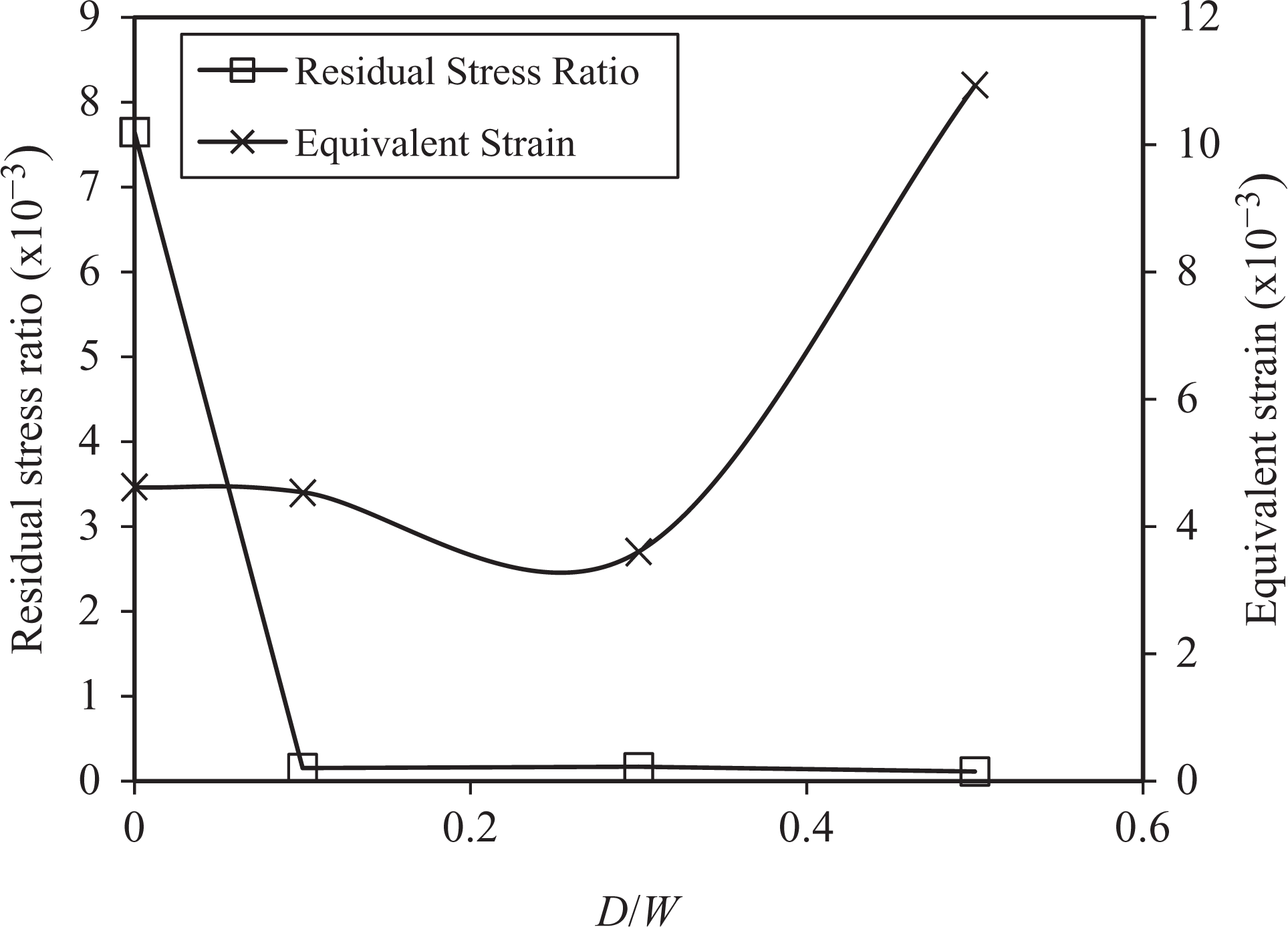
Influence of D/W ratio on plastic strain for disc with radial fiber array and SR6 ratio. SR: stress ratio.
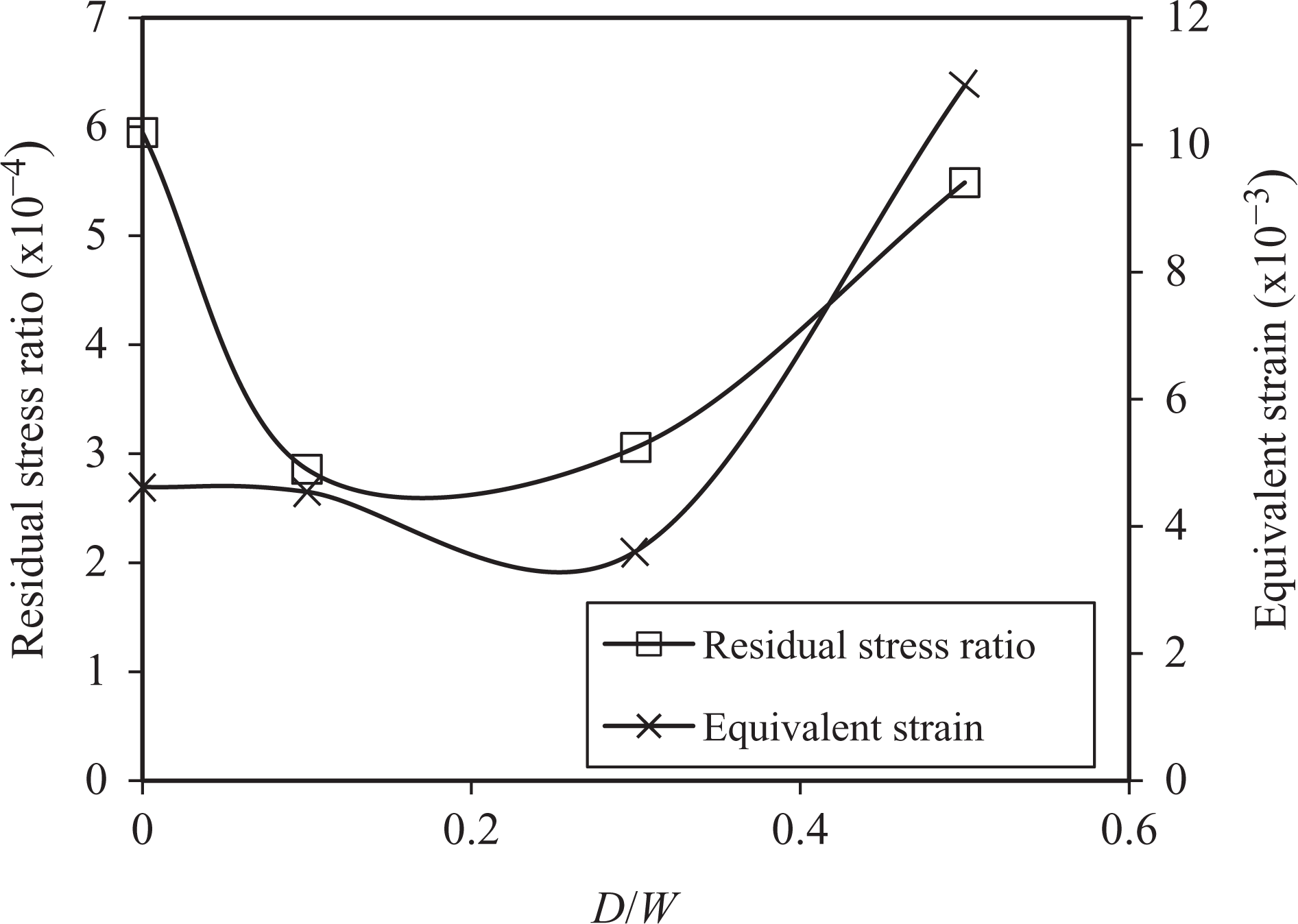
Influence of D/W ratio on plastic strain and SR2 ratio for discs with radial fiber array. SR: stress ratio.
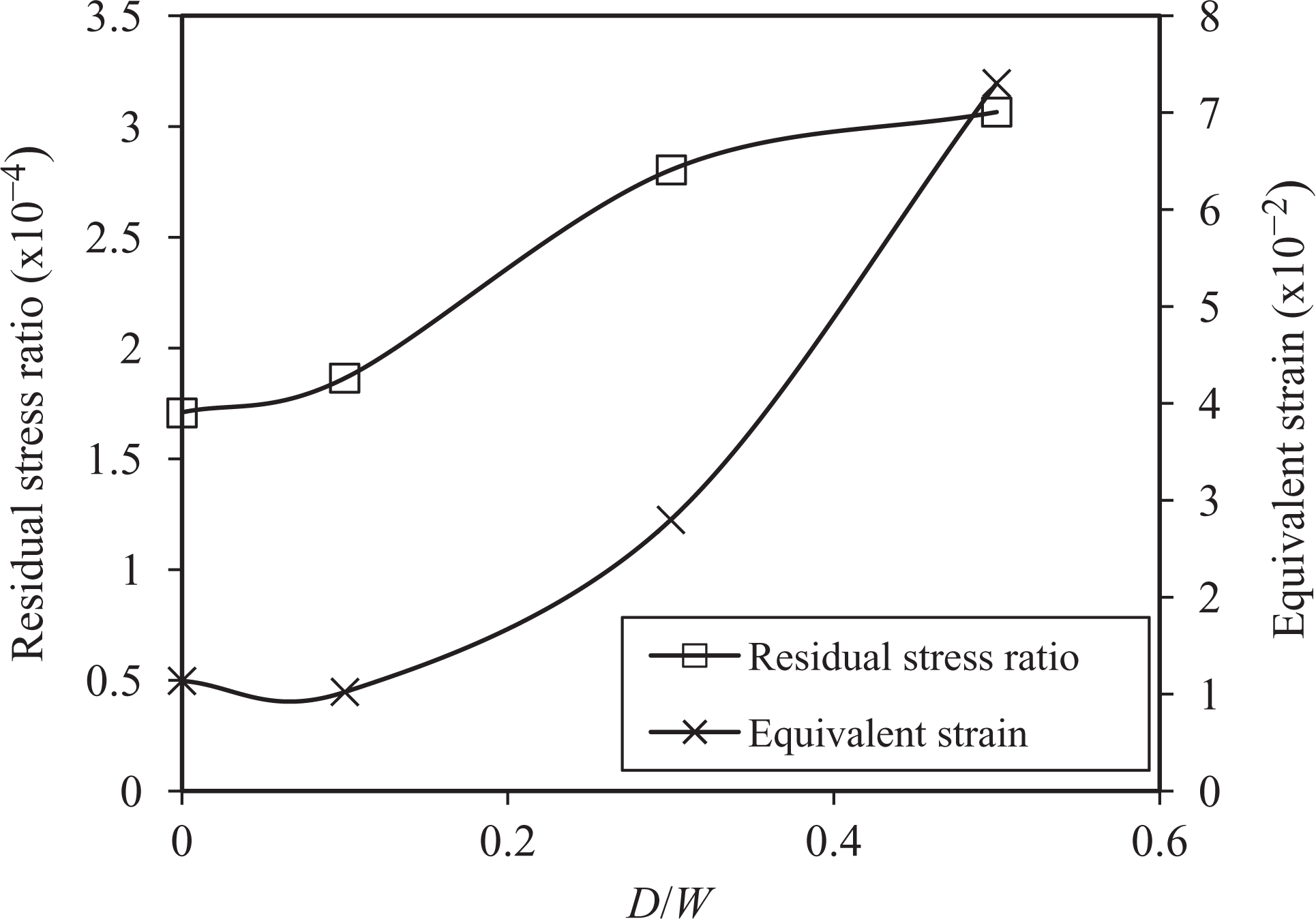
Influence of D/W ratio on plastic strain and SR1 ratio for discs with circular fiber array. SR: stress ratio.
The SR1 ratio continuously increased from 1.6 to 3.1 when D/W was increased from 0.1 to 0.5. That is, the value of
Figures 8 and 9 show the effect of D/W on SR3, SR4 SRs, and
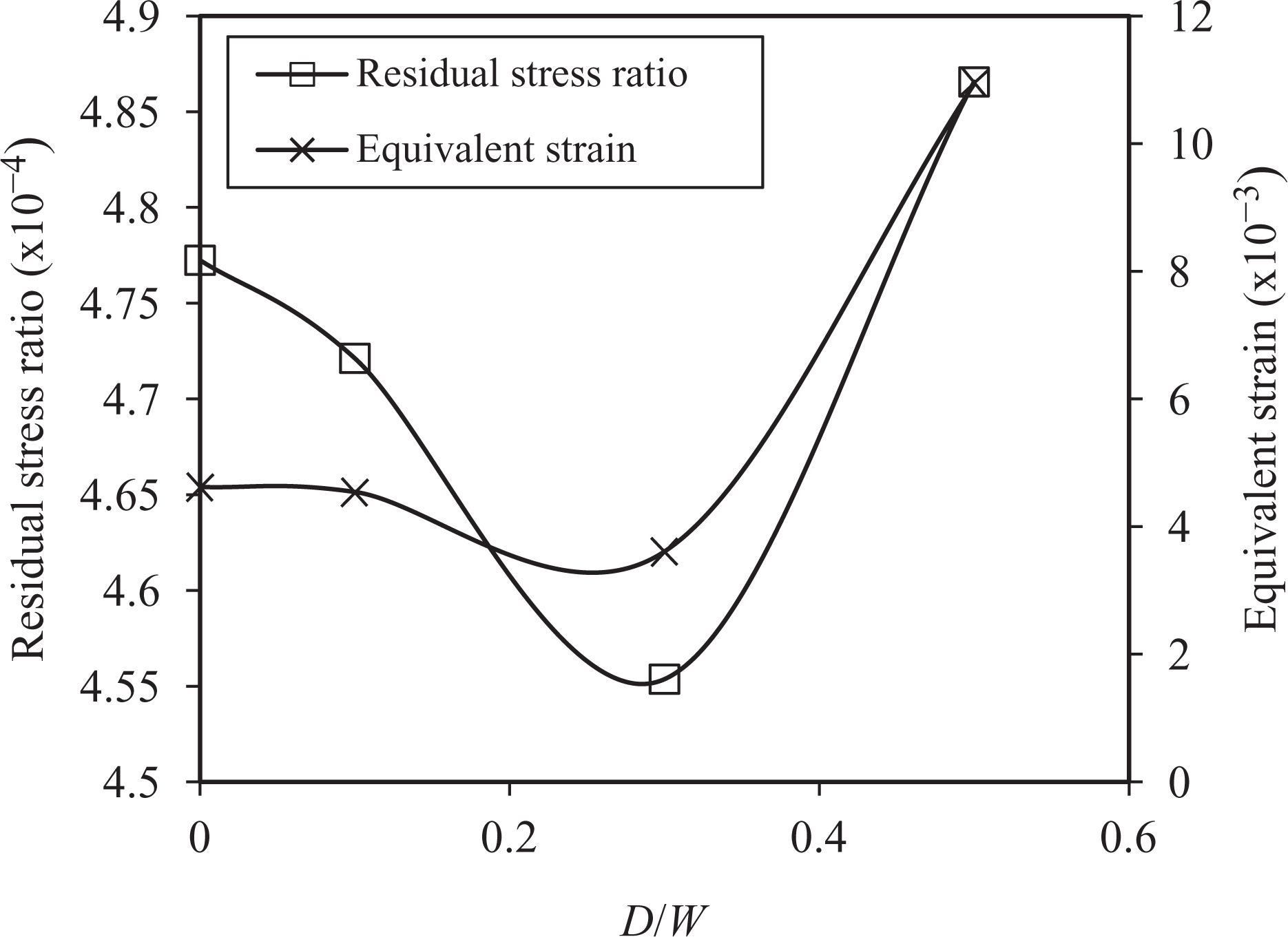
Influence of D/W ratio on plastic strain and SR4 ratio for discs with radial fiber array. SR: stress ratio.
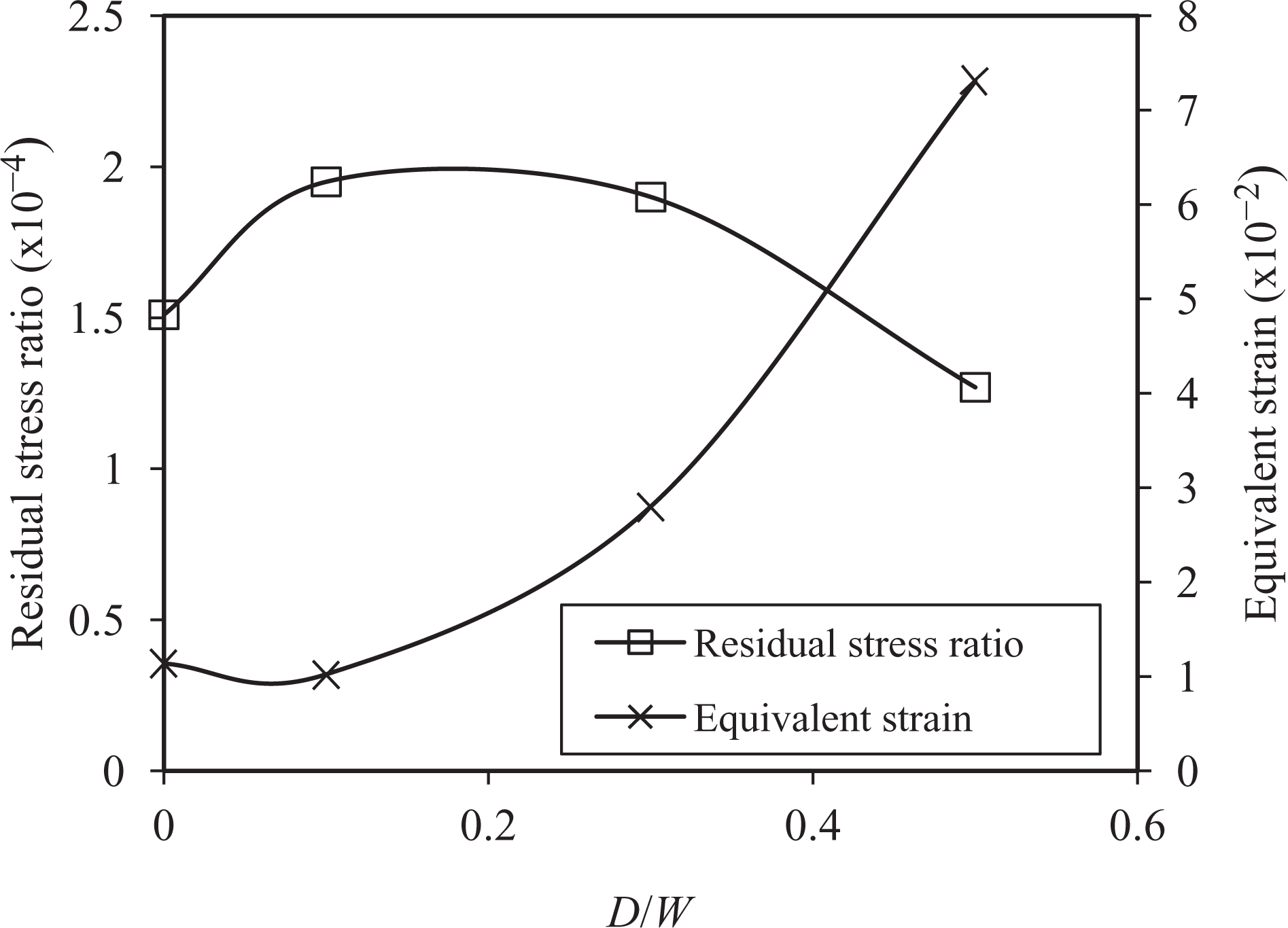
Influence of D/W ratio on plastic strain and SR3 ratio for discs with circular fiber array. SR: stress ratio.
The SR3 ratio continuously increased from 1.5 to 1.9 when D/W was increased from 0 to 0.1. It then remained constant at 2 when D/W was increased from 0.1 to 0.3, and then decreased to 1.25 when D/W was increased from 0.3 to 0.5. The SR4 ratio decreased from 4.76 to 4.72 when D/W was increased from 0 to 0.1 through the drilling of surface holes. It then sharply decreased from 4.72 to 4.55 when D/W was increased from 0.1 to 0.3 and continuously increased to 4.86 as D/W rose from 0.3 to 0.5. A maximum strain value for
Figures 10 and 11 show the effect of D/W on SR5 and SR6 SRs for the highest
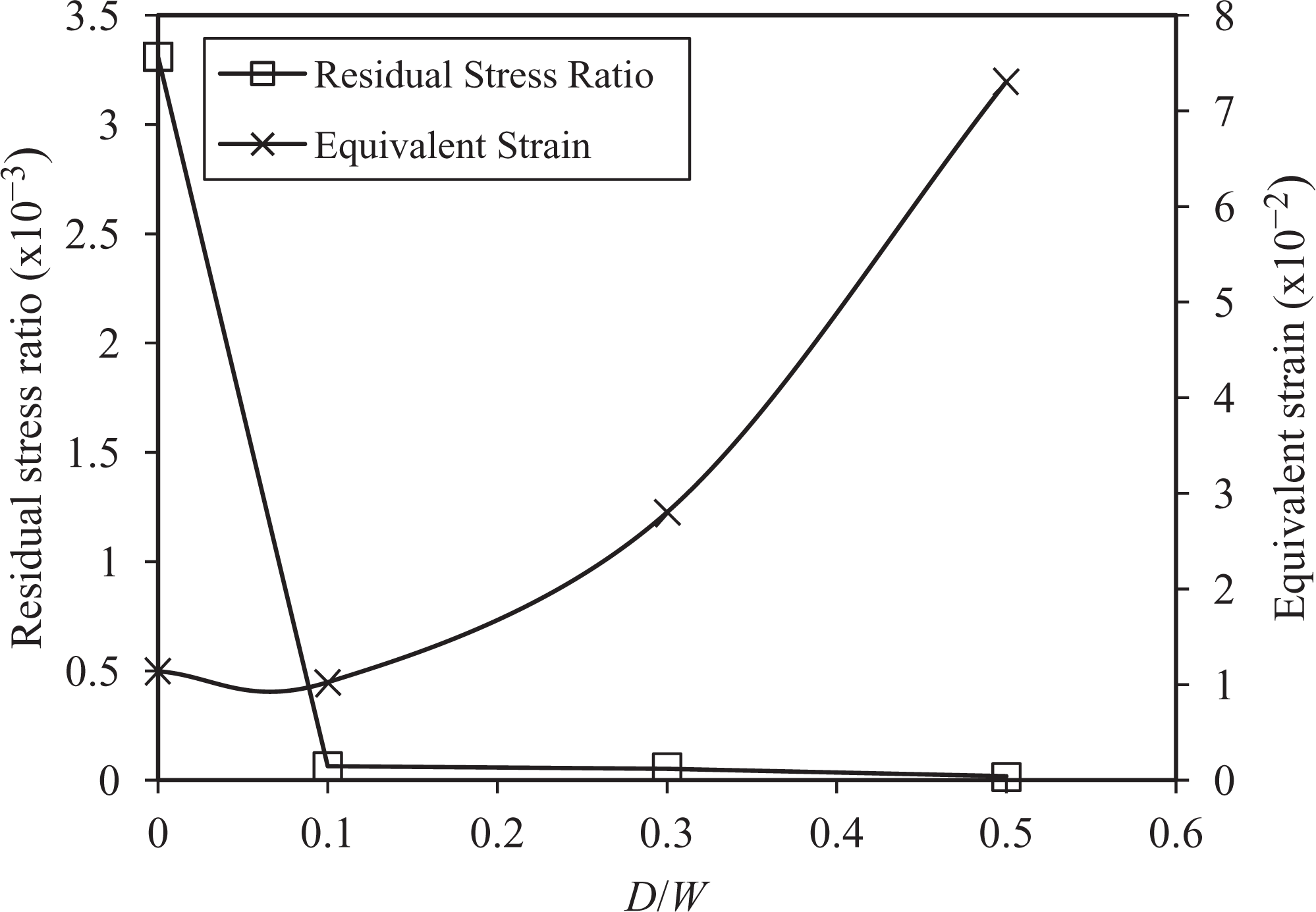
Influence of D/W ratio on plastic strain and SR5 ratio for discs with circular fiber array. SR: stress ratio.
The SR5 ratio continuously decreased from 3.4 to 0.1 when D/W was increased from 0 to 0.1 and then remained nearly constant at 0.1 as D/W was increased from 0.1 to 0.5. The value of
When D/W is equal to zero, the discs have no surface hole, the thermal stresses occurring in the disc with a woven fiber array were always smaller than the other discs, due to the same coefficient of thermal expansion in the radial and tangential directions under thermal loading.
In general, as D/W increased from 0 to 0.1 as surface holes were drilled, SR1 and SR3 ratios increased for
Conclusion
The values of the stresses and strains may be different depending on the distinct manufacturing technique and fiber volume concentration of TPC discs and diameter of the hole drilled on them. In order to compare their advantages and disadvantages of fiber array, same fiber volume ratio is considered in this study.
Woven fiber reinforcement is competent configuration in terms of reducing the formation of thermal stress and plastic deformation when compared to circular and radial fiber reinforcement. Comparison of TPC materials with radial and circular fiber array including same amount of fiber reinforcement confirmed that the radial is a better choice for thermal stress and strain point of view.
Existing of the circular holes on the discs have reducing effect on the thermal residual stresses and plastic deformations and as the diameter of hole increases, the values of the residual stresses and the plastic deformations decrease.
Finally, it can be understood that configuration of fiber array and hole dimension have an important influence on the thermal stresses and plastic deformations. It is possible to make new studies in which the effects of the different fiber arrays, composite geometries, materials, and load conditions may have been considered for TPC materials.
Footnotes
Funding
This research received no specific grant from any funding agency in the public, commercial, or not-for-profit sectors.