




Abstract
The present work investigates the effect of organomodified nanoclay (ZW1) and butadiene–acrylonitrile copolymer terminated with amine group (ATBN copolymer) on the properties of epoxy resin (EP). The impact strength (IS) and the critical stress intensity factor (KC ) values of EP containing 1% nanoclay increased approximately by 200% and 75%, respectively, in relation to neat EP. Moreover, hybrid composites containing 1% or 2% nanoclay and ATBN showed improved mechanical properties in relation with unmodified EP. The magnification and analysis of the Fourier-transform infrared spectra showed an increase in the peak height of 3338 cm-1 due to polymeric modifier incorporation. This finding might be explained by the reaction between modifier or hardener amine groups and the unreacted part of EP cured at room temperature. Hybrid composite containing 2% Nanobent ZW1 and 5% ATBN exhibited synergistic effect in terms of tensile adhesive strength toward composites with one modifier. Moreover, scanning electron micrographs showed more elongated and leaf-like structure for hybrid compositions, explaining the enhancement of IS and KC values of the tested composites.
Introduction
Epoxy resins (EPs) are used nowadays as matrices for high-performance composite materials, electric insulators, printing circuit boards, surface coatings and adhesive for metals. However, cured EPs exhibit low impact strength (IS), poor resistance to crack propagation and small elongation at break. 1 –3
Over the last few decades, a great emphasis has been placed on the improvement of the mechanical and adhesive properties and at the same time without compromising the thermal stability of EPs. The commonly known approaches for epoxies toughening include the use of inorganic particles, tough thermoplastics, reactive rubbers and cross-linkable polymers to yield interpenetrating polymer network structures, core-shell particles as well as nanoparticles and nanotubes. 2 –12 The surface modification of nanosized particles was used to further facilitate the dispersion as well as interaction with the EP. 13 –15 However, it was found that the level of improvement in the matrix properties was dependent on nanoclay modifier type and content.
It was shown that EP properties can be improved via different mechanisms depending on the modifier used. Indeed, the use of two different modifiers may promote, under optimal conditions, the simultaneous occurrence of two toughening mechanisms and consequently a synergistic effect leading to a significant enhancement of the matrix performance properties.
More recently, Liu et al. 16 modified EP with carboxyl-terminated butadiene–acrylonitrile (CTBN) copolymer rubber and organoclay. Their obtained results showed improvement in fracture toughness, compressive modulus, yield strength and ultimate strength of the EP, due to nanoclay exfoliation in the composite. Moreover, the addition of organoclay led to the enhancement of the mechanical properties of the rubber–modified epoxy compositions. There was a superposition of positive effects on fracture toughness of the hybrid epoxy nanocomposites modified with both liquid rubber and organoclay particles.
Min et al. 17 investigated the effect of montmorillonite (MMT) content on the mechanical properties and morphology of EP containing CTBN. They showed that the modified nanoclay can be well dispersed in the ternary system EP/CTBN/MMT, leading to only a slight effect on the mechanical properties of the polymer matrix. The effect of CTBN and MMT incorporation on the toughness and mechanical strength of EP was also investigated by Lee and coauthors. 18 Their results confirmed the easy intercalation of the incorporated nanoclay to the epoxy and CTBN as verified by x-ray diffraction analysis. The work of Pearson and Liang 19 on the toughening of a highly cross-linked piperidine-cured EP demonstrated that the incorporation of a small amount of nanosilica particles into CTBN toughened epoxies further improved the fracture toughness to a level that could not be achieved by increasing CTBN content alone.
Other nanoparticles were also combined with liquid rubbers aiming at improving the toughness of diglycidyl ether of bisphenol A. 20,21 The effects of SiO2 nanoparticles on the performance of carboxyl-liquid butadiene–acrylonitrile rubber (CRBN)-modified EP nanocomposites were studied by Qi et al. 20 The addition of 2% SiO2 to EP/CRBN (95%/5%) led to the enhancement of IS and modulus. The scanning electron microscopy (SEM) and transmission electron microscopy analyses showed uniform dispersions of both the rubber particles and SiO2 nanoparticles in the EP matrix. Mülhaupt et al. 21 evaluated the properties and analyzed the structure of EP containing both inorganic nanofillers and compatibilized polyether liquid rubbers. The obtained results showed that, in the absence of compatibilizer, the rubber does not phase separate and flexibilizes the EP. However, the toughness was improved while stiffness, strength and glass temperature decreased.
The purpose of the present study was a mere investigation into the effect of the addition of a combination of nanoclay modifier and amine-terminated butadiene–acrylonitrile (ATBN) to the extent of improvement in the mechanical properties of EP. The obvious characteristic of the reactive rubber is its phase separation throughout the epoxy matrix curing reaction. To the best of our knowledge, the investigation of the structure–property relationship of epoxy–ATBN–nanoclays hybrid system is a new attempt.
Experimental
Materials
The following ingredients were used in the present work:
Diglycidyl ether of bisphenol A EP: Araldite LY 564 with an epoxy equivalent of 170 g/equiv. and viscosity of 1300 mPa s (25°C) supplied by Huntsman Advanced Materials Company (Germany).
Curing agent: Aradur 22962 cycloaliphatic polyamine from Huntsman.
Modifiers: ATBN copolymer (Hycar ATBN 1300X16) with amine equivalent weight of 900 and acrylonitrile content of 16% obtained from Hanse Chemie (Germany). Nanobent ZW1 is a natural nanoclay modified with a quaternary ammonium salt of 3-dimethyloaminopropylamine fatty acid with cation exchange capacity = 85 mequiv./100 g. The nanoclay was obtained from ZGM Company (Zębiec, Poland).
Preparation of epoxy compositions containing reactive rubber or nanoclay
Different amounts of reactive rubber (5 wt%, 10 wt% and 15 wt%) were mixed with EP for 5 min at 9500 r/min and stirred using ultrasonic stirrer for 5 min, cycle 1 and amplitude 100%.
The compositions were then placed in an oven at room temperature and under vacuum for 60 min to remove the air bubbles. Then, a stoichiometric amount of hardener (35 phr) was added and the mixing continued for 5 min.
A 15% dispersion of organomodified nanoclay was prepared in dichloromethane using an ultrasonic stirrer for 15 min under cycle 0.9 and amplitude 80%. The obtained nanoclay dispersion was kept at room temperature for 24 h for nanoparticles swelling before mixing with EP.
Nanocomposites based on 1%, 2% and 3% (w/w) nanoclay were prepared before the addition of matrix hardener.
Preparation of hybrid compositions
Epoxy and a fixed amount of nanoclay (1% or 2%) were mixed using a mechanical stirrer for 5 min at 9500 r/min followed by ultrasonic homogenizer during 5 min at cycle 1 and amplitude 100%. The reactive rubber was then added and mixing continued for 5 min additionally. The hybrid compositions were then placed in a vacuum oven at 120°C for 3 h to remove air bubbles and rest of the solvent. The mixtures were then cooled down to 40°C, a stoichiometric amount of hardener was added and mechanical mixing continued for 5 min. Finally, the mixtures were poured into coated metallic forms with adequate geometries and submitted to room temperature curing for 48 h. Postcuring was carried out for 3 h at 80°C.
Properties evaluation
The IS was measured according to the Charpy method using a Zwick 5012 apparatus (ISO 179) on samples having 8 cm in length, 1 cm in width, 4 mm in thickness and 1 mm of notch depth.
The critical stress intensity factor, KC
, was evaluated using a three-point bending test on the samples of 80 × 10 × 4 mm and 1 mm notch. The measurement was carried out by means of an Instron 5566 with a deformation rate of 5 mm/min and a distance between the spans of 60 mm22

where P stands for load at break, L represents spans distance, a is notch length, w stands for sample width, B is sample thickness and Y means a geometry factor.
The geometry factor was calculated according to the following equation
22

Three-point bending tests (ISO 178) were carried out at room temperature on specimens of the same dimensions as for impact tests using an Instron 5566 at deformation rate of 5 mm/min. The distance between the spans was 60 mm.
Five samples were used for each data point of impact, KC and flexural tests.
The tensile adhesive strength (TAS) and shear adhesive strength were evaluated using metallic rods and metallic plates with an adhesive surface area of 1 cm2. The tests were carried out at room temperature using an Instron tensile machine and a deformation rate of 5 mm/min.
Structure and morphology analyses
Fourier-transform infrared (FTIR) spectroscopy was performed on an IRT C JASCO spectrophotometer recording the IR spectra from 450 cm−1 to 4000 cm−1.
Scanning electron microscope (Hitachi S-2460 N) was employed to examine the fracture surfaces of specimens obtained from the impact tests.
Results and discussion
Mechanical properties
The IS, the critical stress intensity factor (KC ) and the flexural properties (stress at break, strain at break) were measured for EP containing various amounts of nanoclay (Nanobent ZW1) and ATBN copolymer. Table 1 shows the mechanical properties of EP modified with nanoparticles and reactive rubber, it can be noted that the addition of nanoclay led to the improvement in mechanical properties of EP. The composition containing 1 wt% ZW1 exhibited maximum enhancement of IS and KC values, attaining 200% and 75%, respectively, in comparison with unmodified epoxy network. The improvement in the resistance to slow crack propagation (expressed by the KC parameter) or rapid crack propagation (estimated by IS) of EP could be attributed to the exfoliation/intercalation processes of the incorporated nanoclay. The relationship between the exfoliation/intercalation of nanoclays and epoxy nanocomposites properties was confirmed by several studies. 5,6,23,24
Mechanical properties of epoxy resin modified with nanoclay (Nanobent ZW1) and reactive rubber (ATBN).
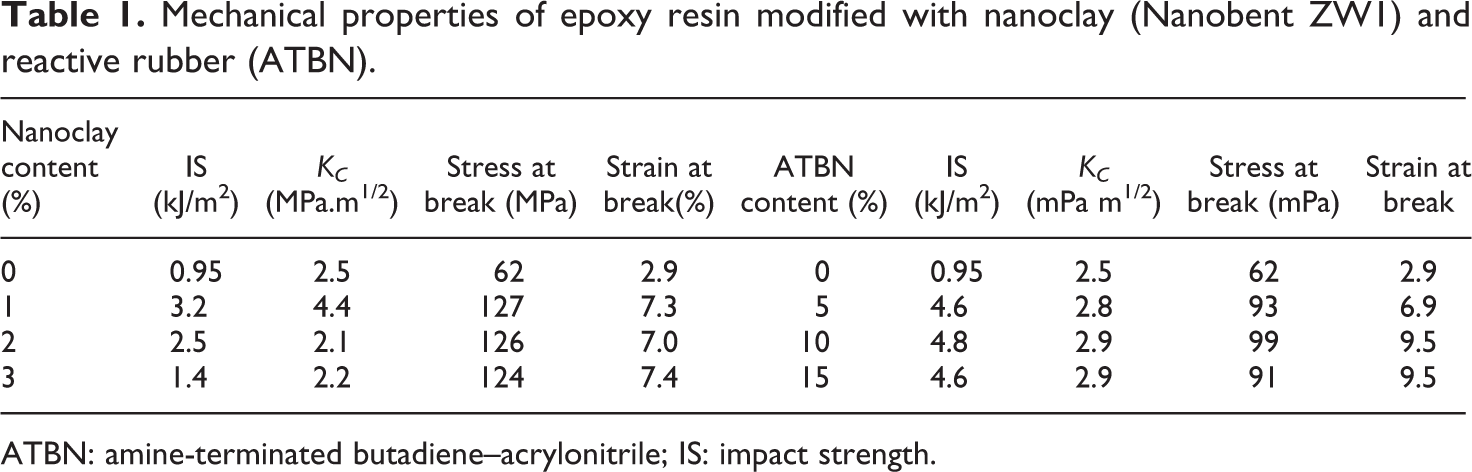
ATBN: amine-terminated butadiene–acrylonitrile; IS: impact strength.
Furthermore, it was noted that the flexural strength and flexural strain at break of all the modified epoxy compositions were improved due to the loading of solid nanoparticles. Maximum flexural strain at break increase of approximately 150% with respect to unmodified polymer matrix was shown by the composition containing 1 wt% ZW1.
Moreover, it results that all reactive rubber-based epoxy compositions exhibited increased values of IS, flexural strength and flexural strain at break. The IS reached 4.6 kJ/m2 and 4.8 kJ/m2 with the addition of 5 wt% and 10 wt% ATBN, respectively, in comparison with 0.95 kJ/m2 of virgin epoxy composition. The IS enhancement could be explained by the dispersion of rubber phase that may act as plasticizer. The addition of liquid polymeric modifier led to an increase in free volume, which facilitates the chains’ movement and consequently increases the energy needed to fracture the samples. However, the addition of reactive rubber did not significantly improve the resistance to slow crack propagation expressed by the critical stress intensity factor as in case of IS. Maximum KC parameter increase (approximately 16% in comparison with virgin EP) was shown by the composition with 10% ATBN. It has to be pointed out that, Kim and Kim related the improvement in EP IS to the phase separation of polymeric modifier during the curing reaction of the matrix. 25 Rubber particles undergo large deformations during the crack propagation process as well as they act as crack stopper.
However, Takemura et al. 26 confirmed that the blending of ATBN with EP at room temperature led to a reduction in the nonreacted part of this latter, thus contributing to the strength increase.
Similar to IS and KC results, the modified epoxy compositions exhibited higher flexural properties than virgin polymer matrix. The addition of 10 wt% ATBN resulted in approximately 60% increase in flexural strength and 230% in strain at break and might be explained by the plasticizing effect of the polymeric modifier and/or related to the elastic deformation of rubber particles, which can make separated phase with polymer matrix. Moreover, the significant enhancement of the flexural energy at break might be explained by the significant enhancement of flexural strength and flexural strain at break of the tested compositions in comparison with neat epoxy samples. Hwang et al. 27 explained the improvement in IS and critical stress intensity factors values by rubber-enhanced shear deformation of the matrix.
It is worth mentioning that other researchers confirmed opposite results when different liquid rubbers were used to toughen diglycidyl ether of bisphenol A. 28, 29 Ben Saleh et al. 28 attributed the reduction in the flexural and properties of EP to the presence of low modulus rubber (CTBN copolymer), which was well distributed in the polymer matrix.
Hybrid composites were then prepared and tested based on different amounts of polymeric modifier (ATBN) and selected nanoclay ZW1 content, which exhibited optimal mechanical properties. Figure 1 depicts the IS of EP modified with 1 wt% or 2 wt% of Nanobent ZW1 as a function of reactive rubber (ATBN) content. It appears that the addition of both nanoparticles and liquid reactive rubber improved significantly the IS of the polymer matrix. Hybrid epoxy composites containing 1 wt% ZW1 exhibited higher IS in comparison with composites having 2 wt% ZW1. Maximum IS increase was shown by hybrid composite based on 1 wt% ZW1 and 15 wt% ATBN. The enhancement attained 475% with respect to neat EP. However, no synergistic effect was observed, although the incorporation of both modifiers to EP led to a very significant increase in IS.
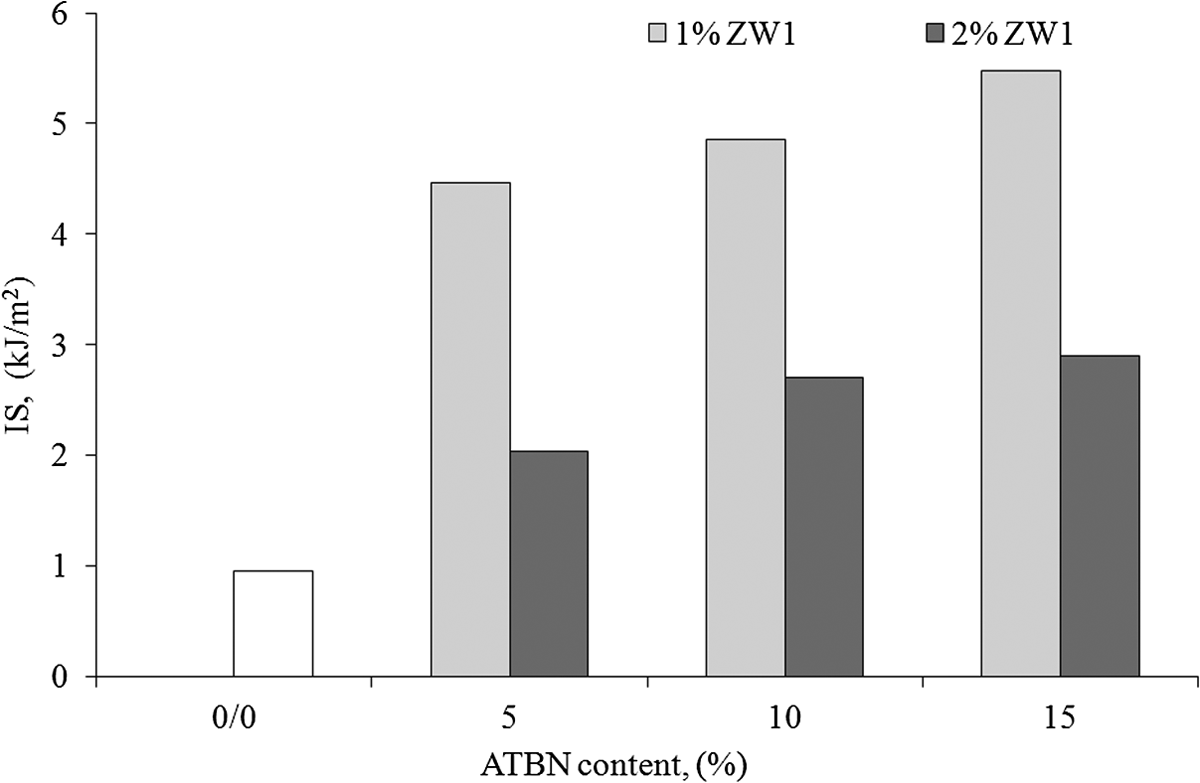
Effect of ATBN copolymer on IS of epoxy resin modified with 1% and 2% nanoclay Nanobent ZW1. ATBN: amine-terminated butadiene–acrylonitrile; IS: impact strength.
The critical stress intensity factor is presented in Figure 2 as a function of ATBN copolymer and nanoclays content (1 wt% and 2 wt% ZW1). The addition of reactive rubber led to a decrease in resistance to crack propagation of epoxy compositions modified with 2 wt% nanoclay. However, the effect of rubber addition was less significant for epoxy composition based on 1 wt% nanoparticles. Maximum KC value enhancement of 15% was exhibited by the composite with 5 wt% ATBN and 1 wt% nanoclay.
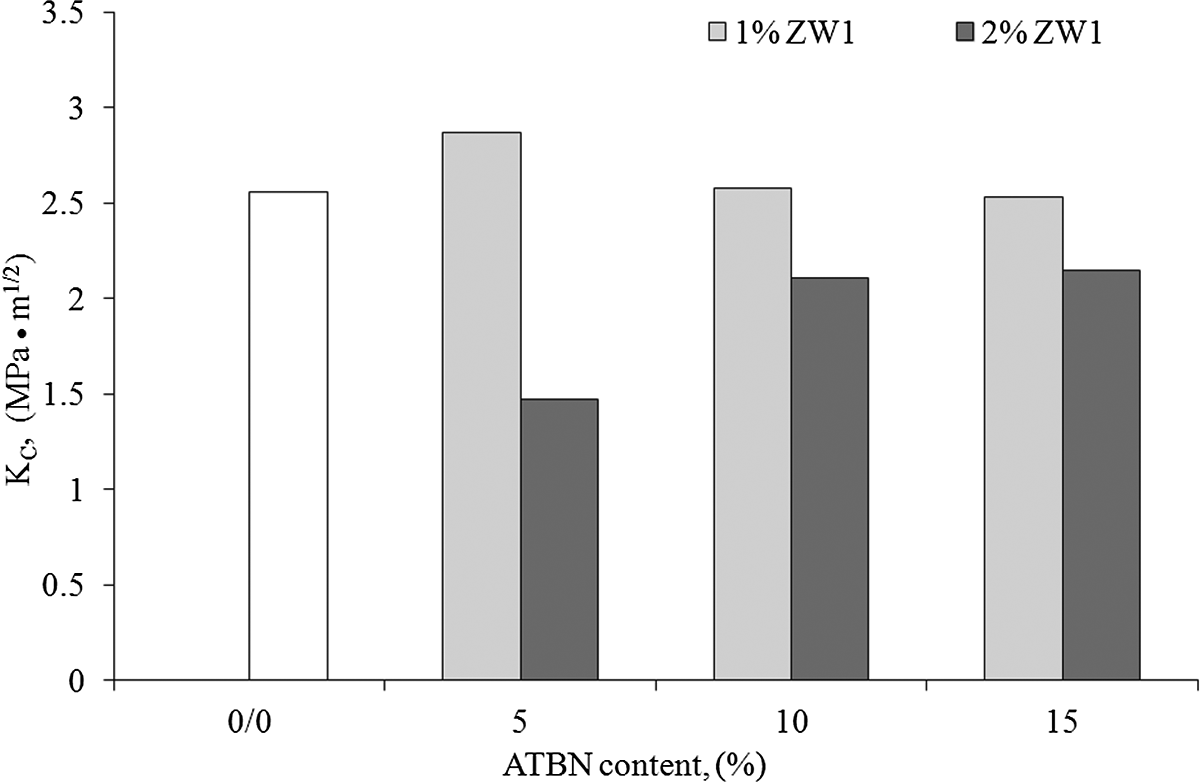
Effect of ATBN copolymers on critical stress intensity factor (KC ) of epoxy resin modified with 1% and 2% nanoclay Nanobent ZW1. ATBN: amine-terminated butadiene–acrylonitrile.
The decrease in KC and fracture energy values due to rubber incorporation and higher nanoclay loading might be explained by the agglomeration of nanoparticles as reported already in the literature. 30,31
The flexural properties of EP modified with 1 wt% and 2 wt% nanoclay Nanobent ZW1 are shown in Figures 3 to 5 as a function of ATBN copolymer content. From Figure 3, it can be noted that the flexural strength of all epoxy compositions based on 1 wt% and 2 wt% nanoclay (besides the one with 5 wt% ATBN/2 wt% ZW1 which showed a very small decrease) was improved in comparison with neat epoxy samples. Maximum improvement attaining approximately 70% was exhibited by the composition containing 5 wt% and 10 wt% ATBN. The strain at break (Figure 4) showed similar trend as the flexural strength (Figure 3). The simultaneous incorporation of 5-15 wt% ATBN and 1 wt% nanoclay resulted in about twofold enhancement of the strain at break with respect to unmodified EP. The increase in the EP strain at break due to liquid modifier and nanoparticles might be attributed to the plasticizing effect of the former. Indeed, the polymeric chains will extend easily due to free volume increase, conducting to higher deformations before the fracture of the samples.
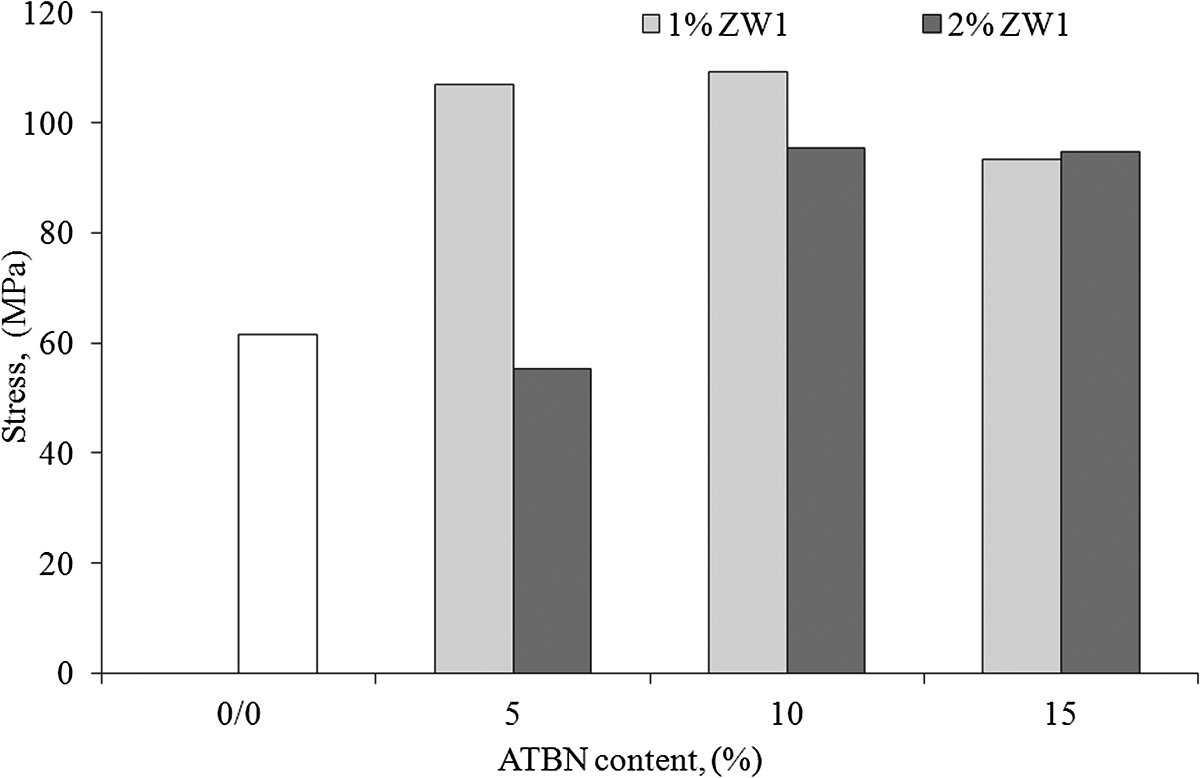
Effect of reactive rubber (ATBN) and nanoclay content on the flexural stress at break of epoxy resin. ATBN: amine-terminated butadiene–acrylonitrile.
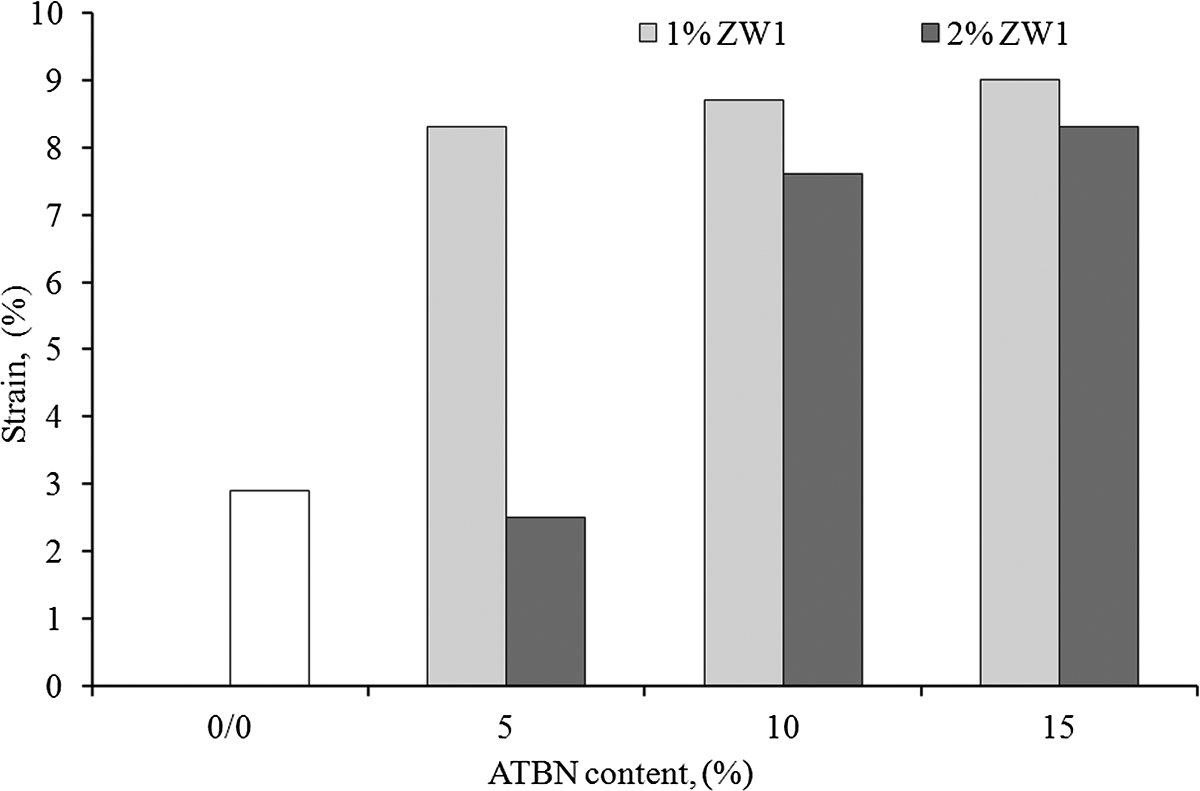
Effect of reactive rubber (ATBN) and nanoclay content on the flexural strain at break of epoxy resin. ATBN: amine-terminated butadiene–acrylonitrile.
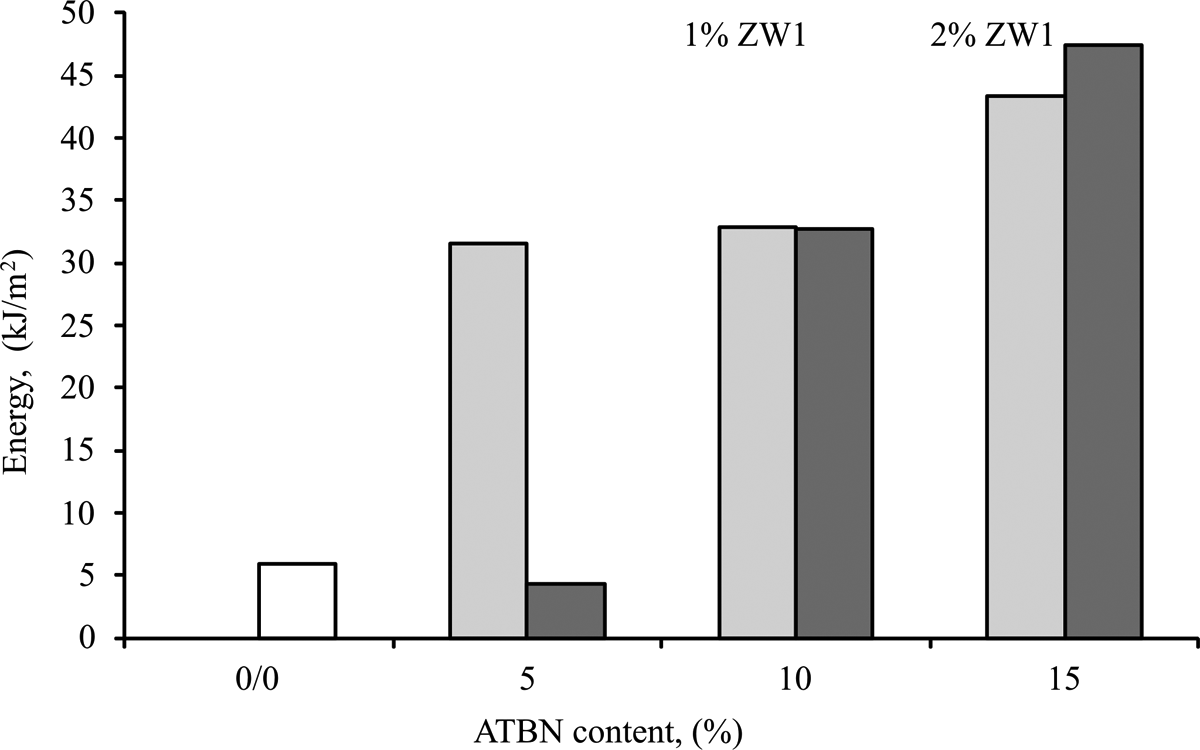
Energy at break of epoxy resin modified with 1% and 2% nanoclay Nanobent ZW1 as a function of reactive rubber (ATBN) content. ATBN: amine-terminated butadiene–acrylonitrile.
It is worth mentioning that no synergistic effect was reached, although significant enhancement was obtained in the flexural strength and the strain at break of epoxy compositions.
The energy at break of EP modified with 1 wt% ZWI and 2 wt% ZW1 is shown as a function of reactive rubber content in Figure 5. We noticed a significant increase in the energy at break due most probably to the important increase in the flexural strain at break but also to the good compatibility between the polymer matrix and incorporated modifiers as well as the good dispersion of these latter. Similar to previous results on flexural strength and flexural strain at break, no synergistic effect was obtained for the flexural energy at break. The lack of synergistic effect for hybrid compositions may be explained by the significant improvement in the mechanical properties due to incorporation of single modifier in the epoxy matrix.
The significant improvement in EP mechanical properties by the addition of two different modifiers was already confirmed and reported in the literature. 32,33
Tensile adhesive strength (TAS) and shear adhesive strength (SAS) of EP are presented in Table 2 as a function of nanoclay (Nanobent ZW1) and reactive rubber (ATBN) content. Addition of either modifier improved the adhesive strength of the polymer matrix.
Tensile adhesive strength and shear adhesive strength of epoxy resin modified with nanoclay (Nanobent ZW1) and reactive rubber (ATBN).
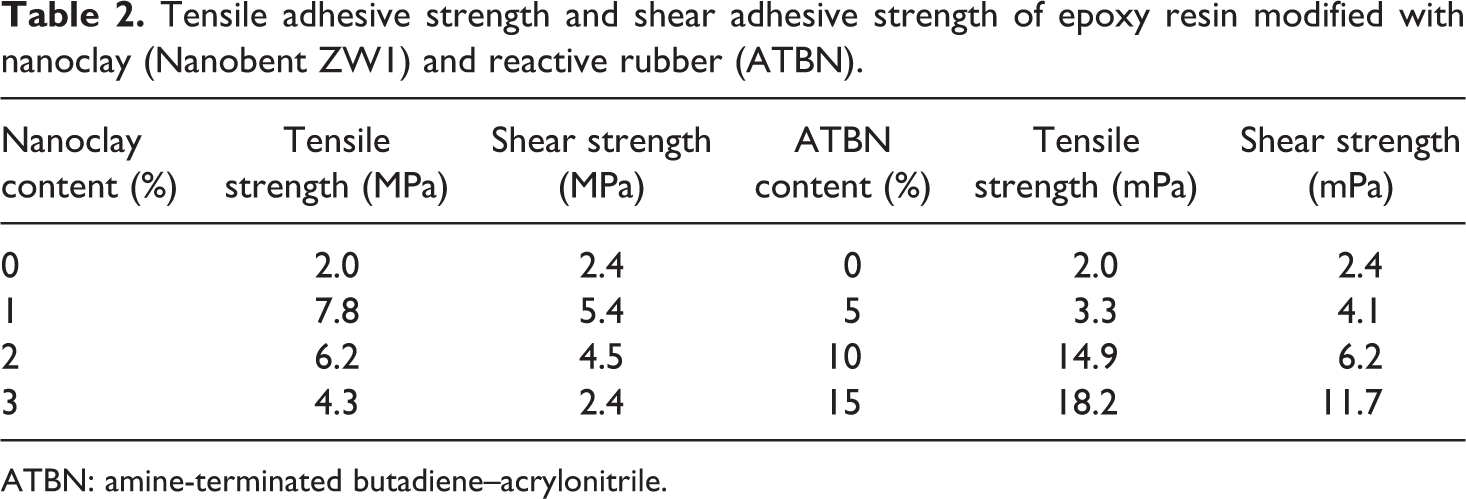
ATBN: amine-terminated butadiene–acrylonitrile.
Figures 6 and 7 show TAS and SAS values of hybrid epoxy composites. It can be observed that all hybrid composites exhibited enhanced adhesive strength (TAS and SAS) in comparison with neat epoxy samples. Furthermore, the occurrence of synergism effect was confirmed with TAS of hybrid composite containing 2 wt% Nanobent ZW1 and 5 wt% ATBN (approximately 35% of positive deviation was obtained with respect to the sum of TAS of composites with one modifier). The significant improvement in hybrid composites adhesive strength might be explained by the good compatibility between the blend components as well as the uniform dispersion of nanoparticles within the ternary system. Takemura et al. 26 related the increase in the adhesive strength of EP to the viscoelastic behavior of the adhesive polymers in the epoxy/ATBN systems as it was already observed in completely miscible polymer blends.
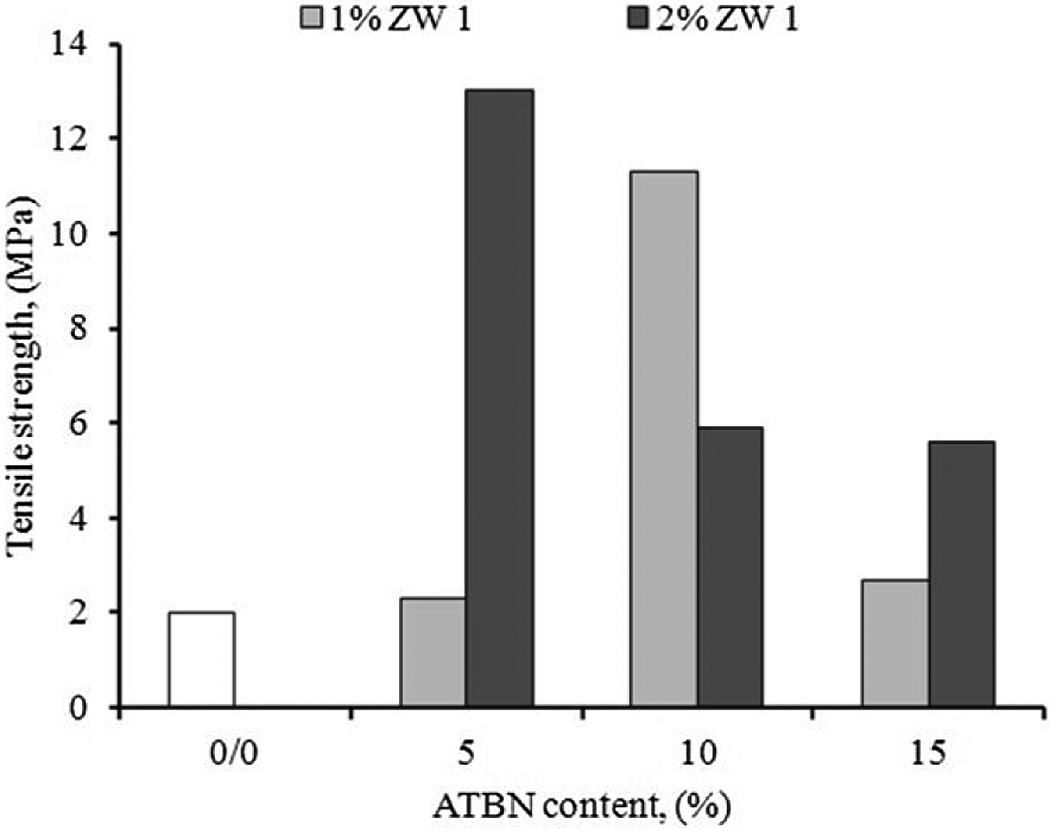
Effect of ATBN copolymer on tensile adhesive strength of epoxy resin modified with 1% and 2% nanoclay Nanobent ZW1. ATBN: amine-terminated butadiene–acrylonitrile.
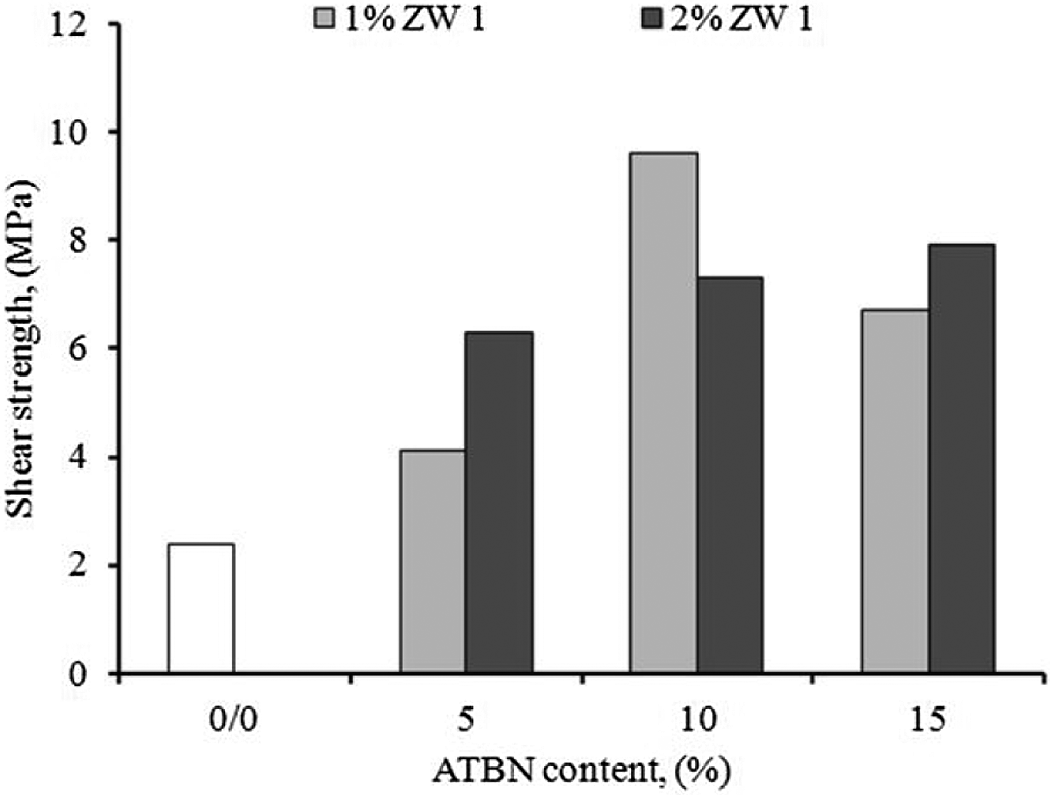
Effect of ATBN copolymer on shear adhesive strength of epoxy resin modified with 1% and 2% nanoclay Nanobent ZW1. ATBN: amine-terminated butadiene–acrylonitrile.
Structure characterization and fracture surface analysis
FTIR spectra shown in Figure 8 were obtained from impact test samples to demonstrate the eventual occurrence of chemical reaction between EP, liquid modifier (ATBN) and solid particles (Nanobent ZW1). One can observe the characteristic peaks connected with functional groups of EP appearing at 3338 cm-1 for hydroxyl and amine groups and 936 cm-1 for epoxy groups.
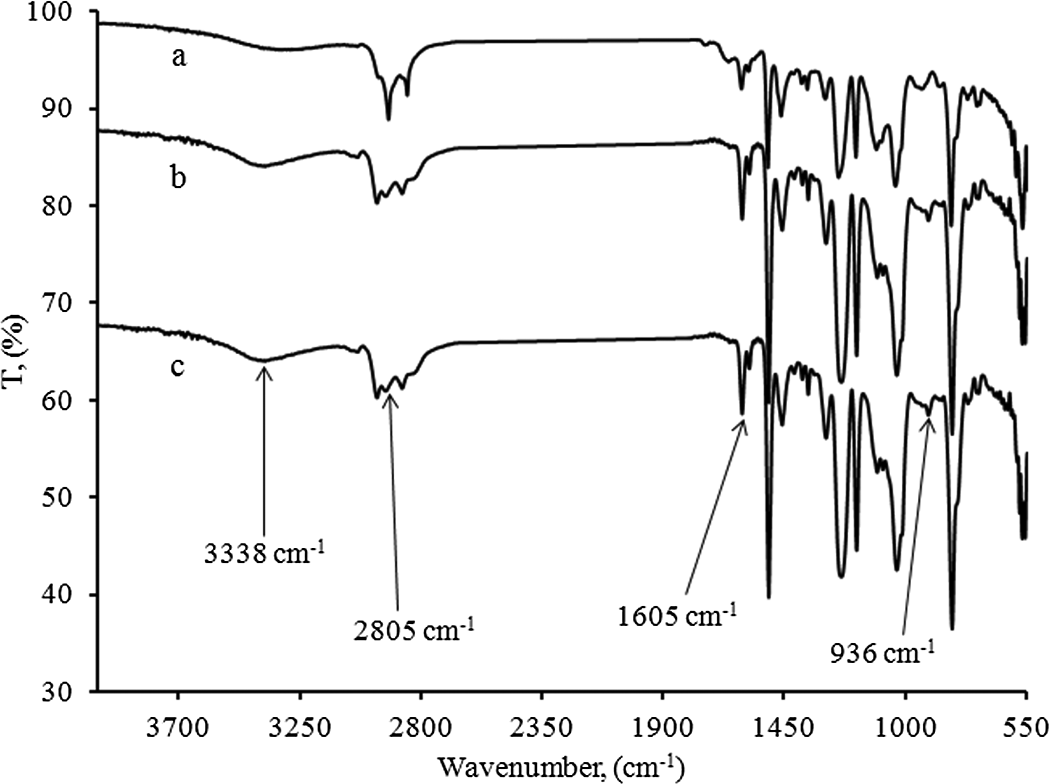
Infrared spectra of neat epoxy resin (a), epoxy composition containing 15% ATBN (b) and hybrid composition based on 1% nanoclay and 15% ATBN (c). ATBN: amine-terminated butadiene–acrylonitrile.
The series of peaks within the wavelength range 1000-1600 cm-1 are connected with aromatic rings. It is interesting to note that the peaks associated with epoxy groups of the polymer matrix did not vary their intensities upon addition of the polymer modifier and/or nanoclay. However, the magnification and analysis of the FTIR showed that the addition of 15 wt% of polymeric modifier to nanoclay modified or virgin EP led to twofold increase in peak height at 3338 cm-1 in relation to that of neat epoxy sample. This finding was already reported in the literature 32 and was related to the reaction between amine groups of ATBN or the hardener and the unreacted part of EP cured at room temperature and/or the reaction of hydrogen bonding between amine, ether and hydroxyl groups within the system. Such possible reactions associated with the plasticizing effect of incorporated liquid rubber can also explain the enhancement of EP mechanical properties.
Moreover, it can be seen that the height of C=C groups appearing at 1605 cm–1 increased for epoxy compositions containing polymeric modifier, specifying the absence of chemical reaction between the latter with groups of other compounds of the ternary or binary systems.
SEM micrographs obtained from impact fractured surfaces near the crack tip were used to explain the toughening mechanism of the mechanical properties of modified EP. The fracture surface of the unmodified epoxy composition (Figure 9) is flat and glassy, indicating the occurrence of regular crack propagation path and low fracture energies of the tested samples. The lack of specific features or significant plastic deformation associated with the smooth surface indicates that the specimen fractured in a brittle manner.
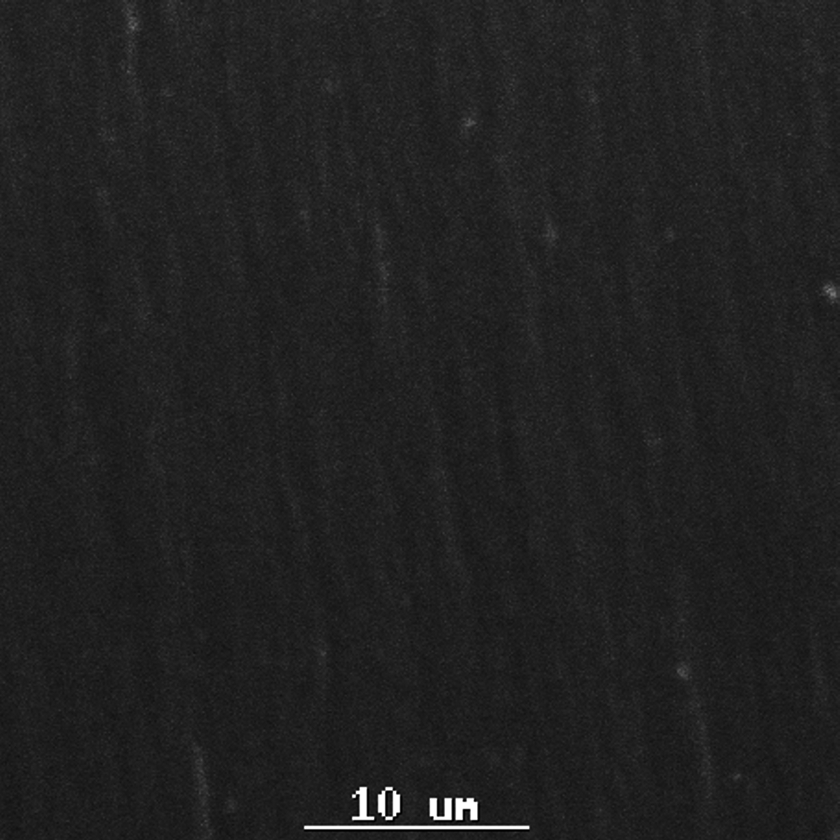
Micrograph of unmodified epoxy resin.
The fracture surface of epoxy resin samples containing 15% ATBN (Figure 10) presents a quite flat surface with a minimum surface deformation and seems to be similar to that of virgin EP (Figure 9). Such typical morphology is similar to that reported for EP modified with polyurethane having long flexible chains. 34
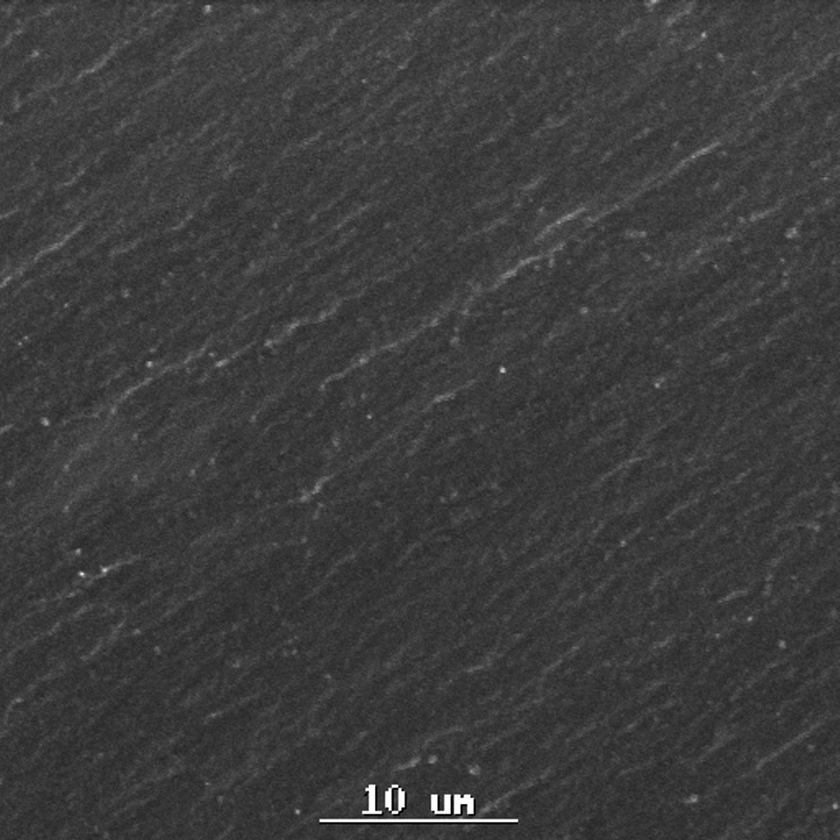
Micrograph of epoxy composition modified with 15% ATBN. ATBN: amine-terminated butadiene–acrylonitrile.
Figure 11 shows micrographs of epoxy composition containing 2% nanoclay. The fracture surface is rough with significant plastic yielding of the polymer matrix. Moreover, the micrograph presents a more elongated morphology with more cavitations, which may act as stress concentrators.
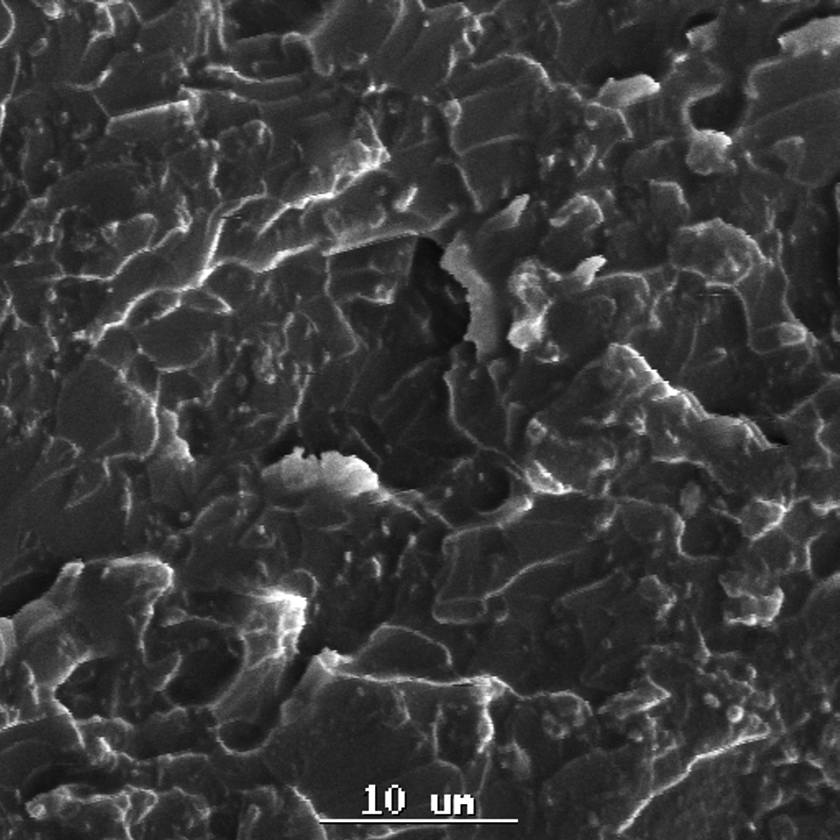
Micrograph of epoxy composition containing 2% ZW1.
The micrographs of hybrid compositions based on 1 wt% nanoclay (ZW1) and 5% ATBN and 2 wt% ZW1 and 10 wt% ATBN are depicted in Figure 12(a) and (b), respectively. The hybrid composition containing 1 wt% ZW1 and 5 wt% ATBN presents a more elongated and leaf-like structure, explaining thus the enhancement of IS value of the tested composition. However, the fracture surface attributed to the hybrid composition with 10 wt% ATBN and 2 wt% ZW1 also presents some yielded structure but narrower stratified surfaces than that of hybrid composition based on 1 wt% Nanobent ZW1 and 5 wt% ATBN (Figure 12a). It is worth reminding that this latter composition exhibited lower IS and KC values in comparison with composition based on 5 wt% ATBN and 1 wt% ZW1.
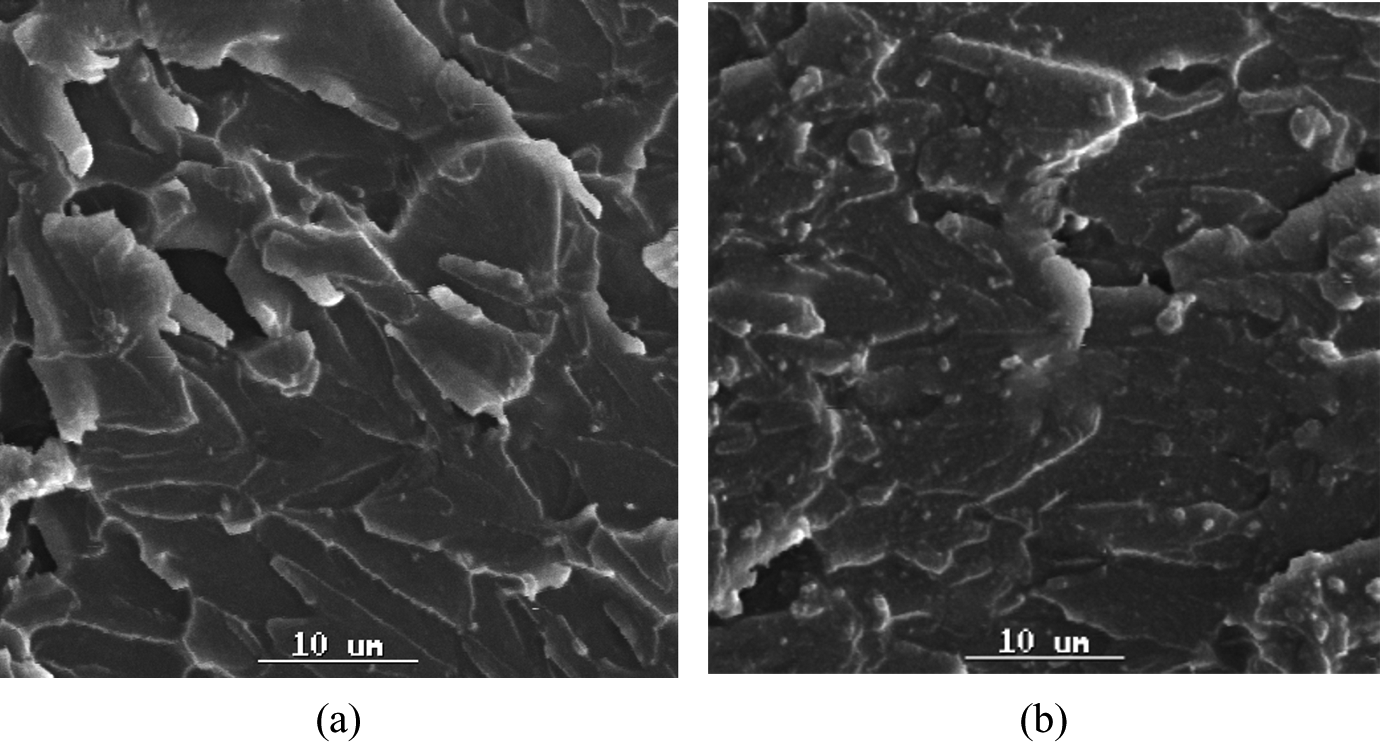
(a) Micrograph of hybrid epoxy composition containing 1% ZW1 and 5% ATBN. (b). Micrograph of hybrid epoxy composition containing 2% ZW1 and 10% ATBN. ATBN: amine-terminated butadiene–acrylonitrile.
It appears that the incorporation of both solid nanoparticles and liquid reactive rubber led to more plastic yielding and stratified structure than nanoclay resulting in enhanced IS and resistance to slow crack propagation. The presence of liquid modifier may promote better intercalation of the polymer matrix chains into the nanoclay galleries. 30,31
The rubber particles may promote cavitations as well as may cause some localized shear yielding which leads to the observed improvement in the polymeric matrix strength, toughness and flexural strain at break in relation to neat epoxy samples. Similar results were reported by other researchers on the epoxy rubber toughening. 35 –37
Conclusions
The following conclusions can be drawn from the obtained results.
The addition of nanoclay or polymeric modifier resulted in the improvement of the mechanical properties of EP. The composition containing 1 wt% ZW1 exhibited maximum enhancement of IS and critical stress intensity factor (KC ), attaining 200% and 75%, respectively, in comparison with unmodified epoxy network. The improvement in EP fracture toughness parameters may be related to the exfoliation process of incorporated nanoclays. Moreover, the addition of 5 wt% or 10 wt% ATBN led to approximately fourfold increase in IS in comparison with virgin epoxy composition.
The hybrid composites containing 1 wt% ZW1 or 2 wt% ZW1 and ATBN showed improved mechanical properties in relation to unmodified EP. Maximum IS increase in approximately 475% with respect to neat EP was shown by hybrid composite based on 1 wt% ZW1 and 15 wt% ATBN. Moreover, all the flexural properties were enhanced for hybrid compositions based on 1% ZW1 with no synergistic effect. Such property enhancement could be related to good dispersion of rubber phase that may act as plasticizer.
FTIR analysis showed an increase in the peak height at 3338 cm-1 due to polymeric modifier incorporation. This finding might be explained by the reaction between modifier amine groups or the hardener and the unreacted part of EP cured at room temperature.
Scanning electron micrographs showed more elongated and leaf-like structure for hybrid compositions Nanobent ZW1 and ATBN, thus explaining the enhancement of IS value of the tested composition. However, the fracture surface of the epoxy composition containing 15 wt% ATBN presented a flat surface with less plastic yielding and is very similar to that of virgin EP, although the mechanical properties were higher.
Footnotes
Authors’ Note
The present work was carried out within the Strategic Program “Innovative Systems of Technical Support for Sustainable Development of Economy” in Innovative Economy Operational Program.
Funding
This research received no specific grant from any funding agency in the public, commercial, or not-for-profit sectors.