




Abstract
The objective of this work is to improve the interlaminar shear strength (ILSS) of the composites by surface coating of carbon fibers (CFs). The effect of polypyrrole (PPy) coating on CF composites was studied. The morphologies of untreated and treated CFs were characterized by scanning electron microscope and x-ray photoelectron spectroscopy, respectively. Surface analysis showed that the surface of CFs chemisorbed oxygen-containing groups and active carbon as well as increased wettability after surface treatment with PPy. The mechanical properties show that the treated CF composites can possess excellent interfacial properties with polytetrafluoroethylene matrix, and ILSS of the composites is up to 106 MPa.
Introduction
Traditional polymer and coating composites, as the bearing liners materials, cannot satisfy the requirement of high-antiload performance under extreme bearing load condition, such as extreme applied load. Fiber-filled composites have been considered as an advanced bearing liner materials for load-bearing application due to good self-lubricity, antiwear abilities and load-carrying capacity as well as the low density. 1,2 Many researchers found that the fabric reinforcement appears to be the most promising in this respect. 3 –6 Polytetrafluoroethylene (PTFE) polymer exhibits a low coefficient of friction and retains useful mechanical properties at temperatures from −260 to 260°C for continuous operation. Because of its resistance to chemical attack in a wide variety of solvents and solutions, high melting point and biocompatibility, PTFE is commonly used in bearing and seal applications as a popular polymer solid lubricant. However, pure PTFE is subjected marked cold flow under stress and reveals the higher wear rate than other semicrystalline polymers. 7,8
To avoid the disadvantages and to utilize the advantages of PTFE, many researchers have developed polymer-based composites for tribological applications by considering the traditional fillers, such as glass fibers, carbon fillers and nonferrous metallic powers as well as some metal oxides, and so on. 9 –11 A noticeable characteristic of PTFE is that the increase in of wear resistance when filler is incorporated is much greater than in any other semicrystalline polymer. There are many kinds of PTFE-based composites for sliding applications because various fillers are incorporated into PTFE and one or more materials can be used simultaneously. 12
In this study, polypyrrole (PPy) coating was used to improve the interfacial adhesion of carbon fiber and PTFE matrix. The objective of this work is to study the interfacial and mechanical properties of the PTFE composites filled with differently surface-treated carbon fiber. Moreover, the surface characteristics of PPy-coated carbon fibers are also shown.
Experimental
Materials
The carbon fibers were polyacrylonitrile (PAN) based, unsized, having a length of about 75 μm and a diameter of 7 μm (Shanghai Xinxing Carbon Co. Ltd, Shanghai). Analytical grade pyrrole was purchased from Aldrich (Shanghai). Iron (III) chloride hexahydrate was obtained from Tianjin Chemical Reagent Institute (Tianjin) and used without any further purification. Carbon fibers were obtained from Yizheng Chemical Fiber Company (China).
Carbon fiber treatment
Carbon fibers were soaked in an aqueous solution of 0.1% iron (III) chloride hexahydrate (catalyst) for 4 h at 30°C, then these carbon fibers were treated by the coating machine (RT100) continuously, in which there are two or three reaction tanks filled with liquid phase pyrrole monomer. After pyrrole polymerization (for 15 min at 30°C) on the carbon fiber, these PPy-coated carbon fibers turned black and were collected by a winder. Finally, these PPy-coated carbon fibers were thoroughly washed with water to remove the excess monomer or loose PPy. PPy-coated carbon fibers were immersed in distilled water and stirred with oscillator.
The PTFE and carbon fiber were obtained in powder form. The PTFE powder (type: CGM031) was supplied by Zhonghao Chenguang Research Institute of Chemical Industry (Shanghai) with a particle size of approximately 200 mesh number. The carbon fibers were PAN based, unsized, having a length of about 75 μm and a diameter of 5 μm (Shanghai Xinxing Carbon Co. Ltd). Powder mixtures containing the serpentine mass fractions of 0–30 vol% were prepared and blended in a high-speed mixer that is traditionally used to make uniformly dispersed powder mixtures.
After mixing, the mixture was compressed and molded in a cylindrical cavity (Ø6 × 10). A laboratory pressure of 40 MPa was used to consolidate the mixture at room temperature in a cylindrical chamber made of Grade D steel. This molding pressure was held for approximately 10–15 min. Then, the discoid samples were sintered in an electric heating furnaces equipped with a temperature control system at 40°C. Finally, the sintered samples were machined into final specimens.
Measurement and characterization
Interlaminar shear strength (ILSS) of carbon fiber (CF)/PTFE composites was tested on an universal testing machine (AG-X10KNSTD, Shimadzu, Japan), using ASTM standard D2344 at room temperature. The movement of crosshead was 2 mm/min. ILSS for the short-beam test was calculated according to the following formula
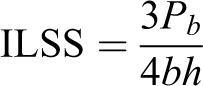
where Pb is the maximum compression load at fracture (in Newtons (N)), b is the width of specimen (in mm) and h is the thickness of specimen (in mm). Each reported ILSS value was the average of the results from six specimens. The relative error in ILSS values was estimated to be 10% based on the reproducibility of the data among different specimens.
Results and discussion
XPS of carbon fiber
X-Ray photoelectron spectroscopy (XPS) is known as an effective analytical technique to evaluate the surface composition of CFs. Figure 3 shows the surface functional groups of untreated and treated CFs. A distinct change in functional groups on the surface of CFs after the surface-coating treatment can be seen. The graphitic carbon and carbonyl groups decrease, whereas alcoholic hydroxyl/ether groups and carboxyl/ester groups produce 39% and 141% increase after the anodic oxidation. The amount of oxygen-containing functional groups in the state of carboxyl/ester groups is increased, which enhance molecular polar and surface energy of CFs. In addition, ratio of activated to inactivated carbon atom of untreated CFs is 0.23 and treated CFs is 0.35, which is obtained from the calculations of Figure 3. It is deduced that interfacial adhesion between fiber and matrix could be improved when CFs is modified with anodic oxidation treatment, which results in the promotion of interfacial properties (Figure 1).
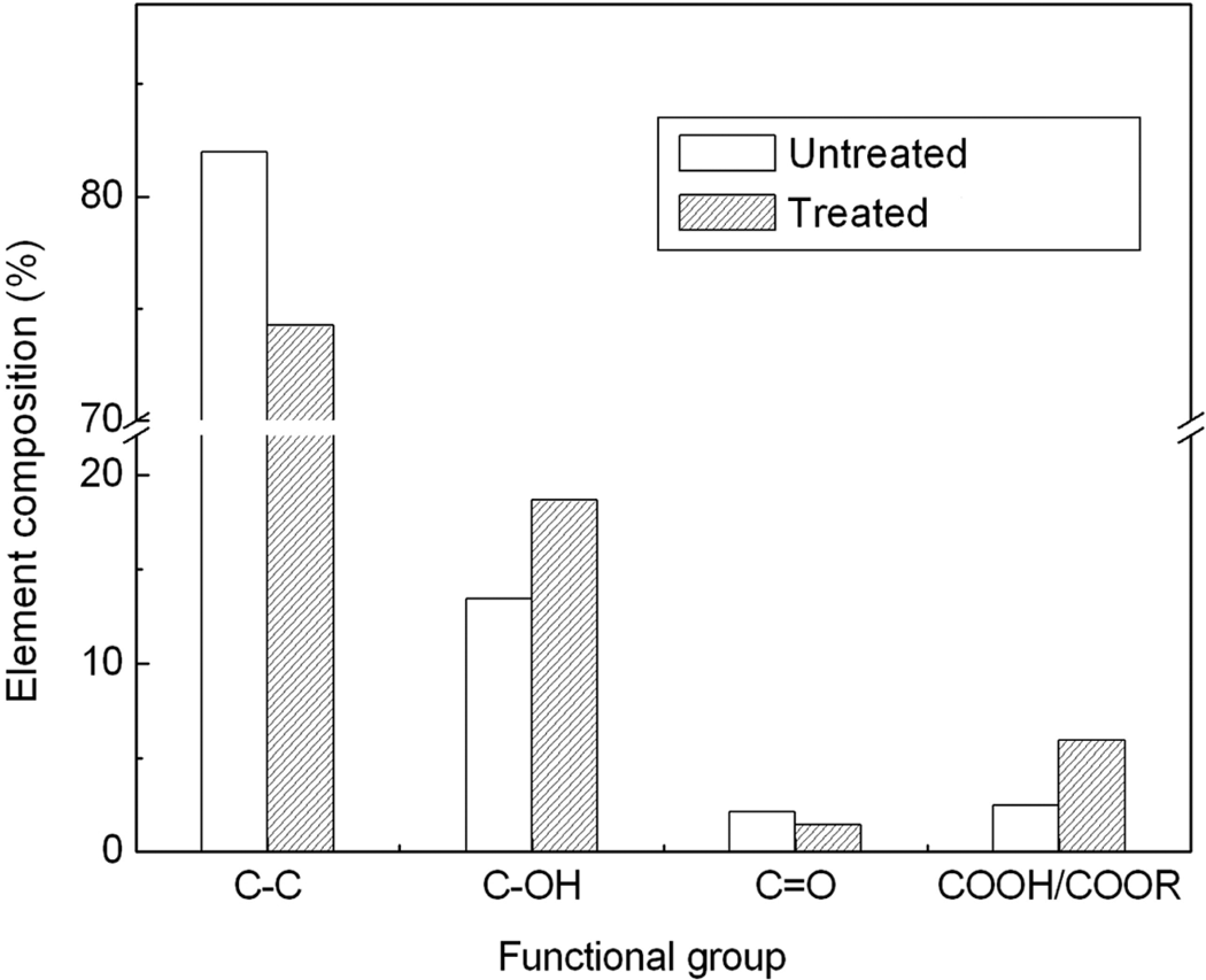
The content of –oxygen-containing functional groups on the CF surface. CF: carbon fiber.
It was reported that the interfacial adhesion was strongly related to the surface structure, while the chemical component on the surface had little influences on the interfacial adhesion.
The contact angle
Contact angle was used as a parameter to characterize the wetting performance and surface free energy of the carbon fibers modified by the solvent. It is interesting to find from Figure 2 that the contact angles of PPy-coated carbon fibers decreased. The improved wettability of CF can be attributed to the changed nature of the surface of fibers; in other words, the increased roughness on carbon fiber, increasing the ILSS values of CF/PTFE composites.
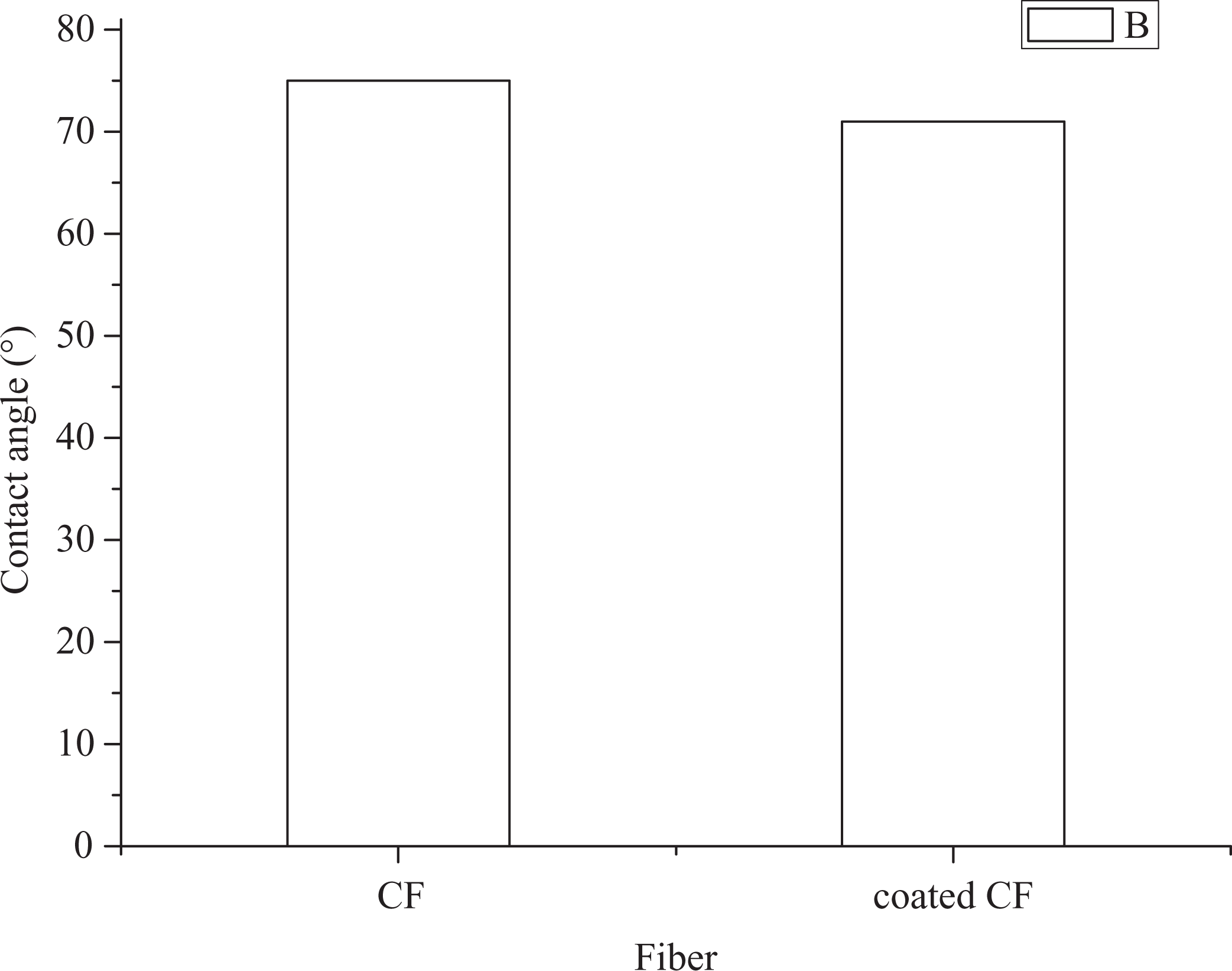
The contact angle of CF/PTFE composites. CF: carbon fiber; PTFE: polytetrafluoroethylene.
Above data indicate that the improvement in the surface roughness of CFs is beneficial to improve the interfacial adhesion of composites, because increased roughness can supply larger contact area between the reinforcement and matrix, which increase their surface roughness, thus providing stronger mechanical interlocking on the interfaces of the composites.
Influence of surface coating on mechanical properties
ILSS of PTFE composite reinforced by unidirectional CFs is shown in Table 1. It was seen that the surface-coated CF/PTFE composite shows the highest ILSS, which is over 100 MPa. The result can be explained in the light of the inherent properties of CF surface bonded with reactive groups per molecule. The composites have high stiffness owing to the high crosslink density of PTFE. Although high viscosity of PTFE resin can hinder resin impregnation into fibers, the large amount of groups can increase the crosslink density of PTFE, which results in better mechanical performance of CF/PTFE composites.
ILSS of CF/PTFE composites with and without surface coating.
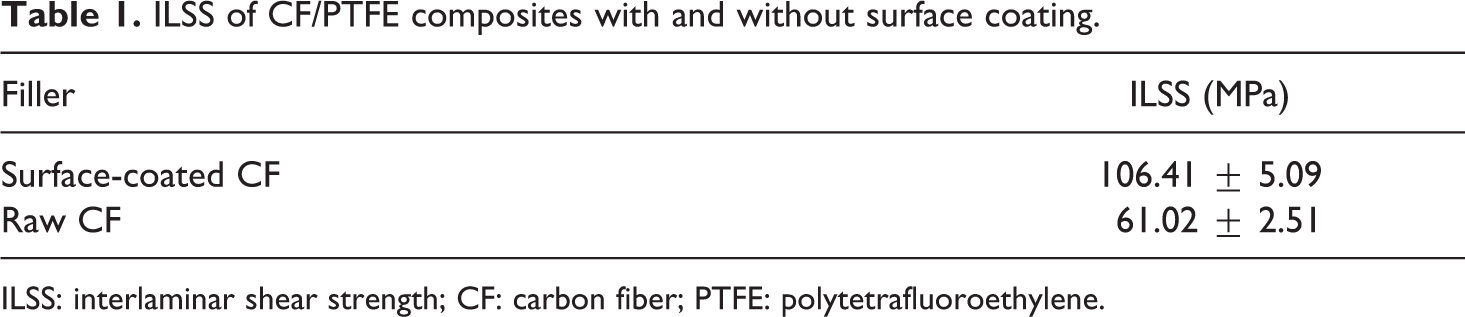
ILSS: interlaminar shear strength; CF: carbon fiber; PTFE: polytetrafluoroethylene.
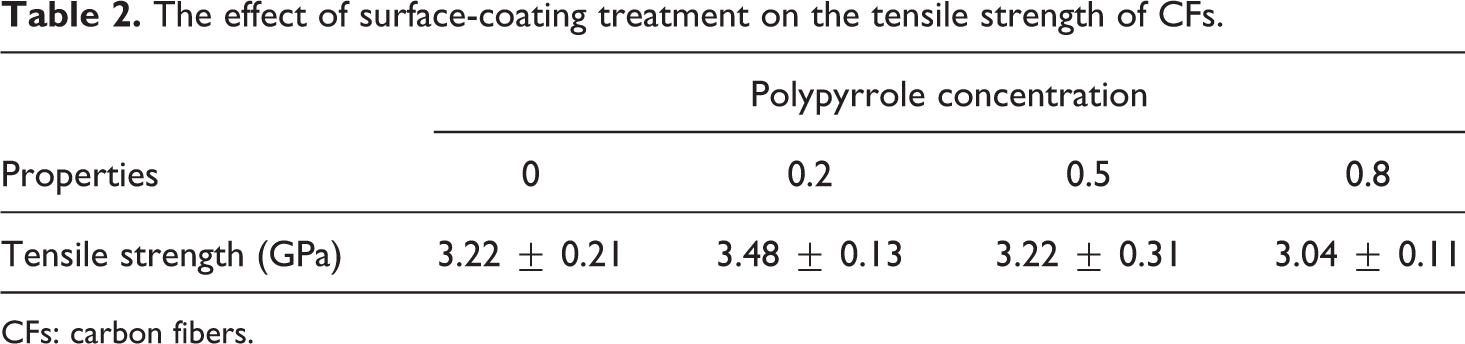
Multifilament tensile strength of CFs was carried out for studying the effect of surface-coating treatment on the damage to fiber strength. Table 2 shows the relationship between current concentration and multifilament tensile strength of CFs. As a result, tensile strength of CFs remains almost constant as the PPy concentration increases until 0.8. This result indicates that CFs cannot be damaged severely under a certain moderate PPy concentration, which is 0–0.8 range.
The effect of surface-coating treatment on the tensile strength of CFs.
CFs: carbon fibers.
The addition of filler is expected to increase the modulus of composites that results from the inclusion of rigid-filler particles into the thermoplastics. It is evident from the table that inclusion of both untreated and treated carbon fiber in the matrix results in an increase in the modulus of the composites. The treated CF/PTFE composites are found to show higher modulus when compared with the composites of untreated carbon. Usually, crystallites possess higher modulus when compared with amorphous substances. When carbon fiber is treated, crystallization of carbon fiber surface probably dominates over its bulk nature, giving higher modulus of treated CF/PTFE composites. Furthermore, incorporation of fiber into the polymer matrix reduced the matrix mobility, resulting in the stiffness of the composite.
The addition of both untreated and treated carbon fiber has significantly increased the flexural strength of the composites. There is no significant increase in the flexural strength from 10% to 25% filler content (Figure 3) for untreated one. This may be due to the balanced effect of favorable entanglement of the polymer chain with the filler and opposing weak filler–matrix interfacial adhesion with increasing filler content in the composite.
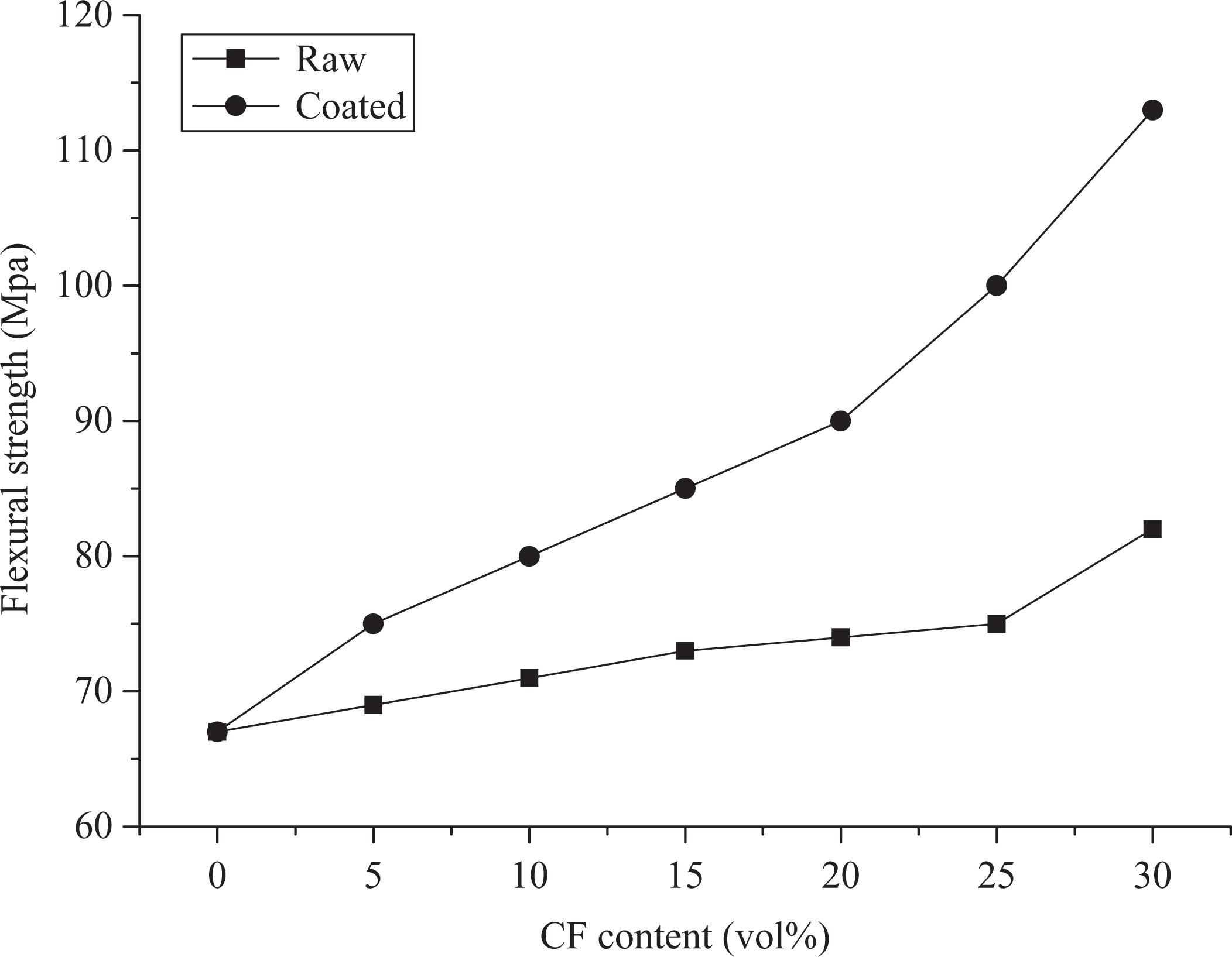
The flexural strength of CF/PTFE composite with different contents of CF. CF: carbon fiber; PTFE: polytetrafluoroethylene.
Flexural strength of the treated surface-coated CF/PTFE composites is found to be higher than that of the raw CF/PTFE composites. Because CF is a high-strength material, higher fiber content demands higher stress for the same deformation, and increased fiber–filler adhesion provides increased stress transfer from the matrix to the filler. This result can be attributed to the addition of the filler, resulting in an increase in the strength because of the incorporation of rigid CF into the soft PTFE matrix. The morphology of the fracture surface shows the phase information that reflects the reasons why the mechanical properties of the composites fabricated under different conditions are different.
It can be seen in Figure 3 that the flexural strength of the composites reinforced by the carbon fiber modified with PPy coating increased to the maximal enhancement of about 116%. The greatly improved interface adhesion will effectively transfer the stress between the reinforcement and matrix, and thus completely elaborate the reinforcing role of CFs. Otherwise, the cracks induced by a smaller external stress will easily go along the interfaces, leading to the failure of the whole composite.
Figure 4 shows the scanning electron micrographs (SEM) of the damage morphology along the cross-section of CF/PTFE composites with and without surface-coating treatment. An SEM of the untreated fiber was presented in Figure 4(a). Only extrusion marks running parallel to fiber axis and particles from fiber manufacturing process could be seen in the image. The surface of untreated fiber appears to be relatively smooth. However, PPy-coating treatment produced etching lines along the fiber axis direction and increased the number of particles on treated CF surface, as shown in Figure 4(b). This high roughness can increase reactivity between CF and PTFE matrix.
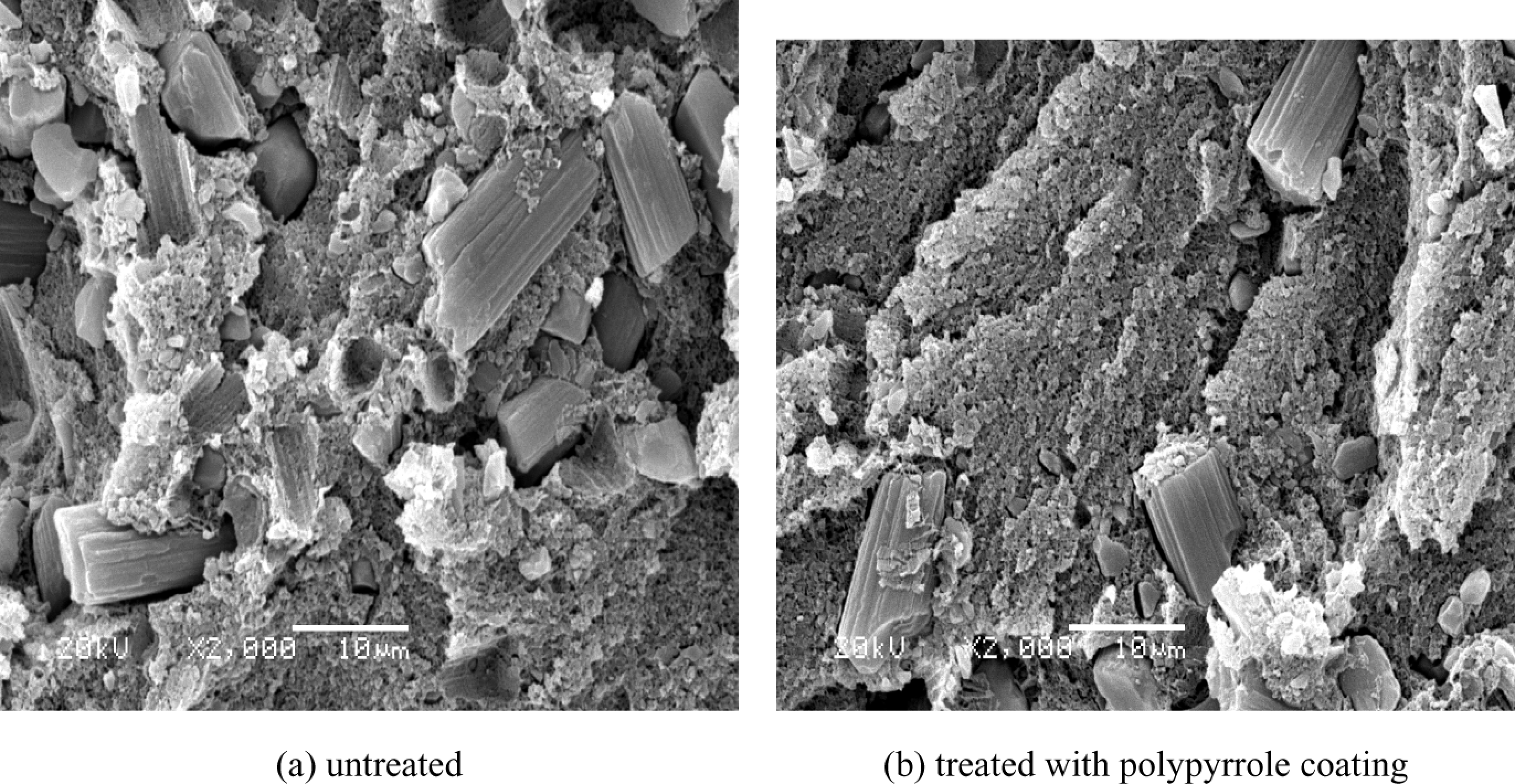
SEM photographs of cross-section of CF/PTFE composites. CF: carbon fiber; SEM: scanning electron microscope; PTFE: polytetrafluoroethylene.
From Figure 4(a), it can be seen that the compatibility of untreated fibers is poor, and the micrographs show that some of the CFs are pulled out from matrix. The delamination of untreated CF/PTFE composites occurred at the interface between fiber and matrix, which indicates the interfacial bonding is poor and the interface structure could not transfer stress effectively. As seen in Figure 4(b), strong interlocking of fiber/matrix could be observed. It can be seen that large quantity of resin matrix is covered on fiber surface, which indicates strong interfacial adhesion between fiber and matrix. The fracture model changed from pure fibers broke into the combination failures of fibers broke, interface and delamination. From Figure 4(a), we can see that its structure is very loose and many cracks can be seen clearly. So the mechanical properties of the composite are very poor. It is shown that its structure is compact and almost no crack can be seen (Figure 4(b)). Few carbon fibers were pull out from the matrix and few holes appeared on the facture face showing that the adhesion between carbon fiber and matrix was effectually improved after the carbon fiber modified with the clay coating, which made the reinforcement of the carbon fiber, and the matrix resin break together in the process of the pressure break. Results indicate that the coating of carbon fibers contribute to enhance the performance of the composites.
Conclusions
This study has demonstrated that the modified CF is crucial for the improvement of interfacial bonding between CF and PTFE matrix. With the use of the surface-coating method, synergistic effect was found distinct and the ILSS of the composites increased significantly. PPy-coating treatment is considered a promising method for the preparation of high-performance composites.
Footnotes
Funding
This research received no specific grant from any funding agency in the public, commercial or not-for-profit sectors.