




Abstract
In this article, low-density polyethylene (LDPE) rubber and silica (SiO2) particles were employed to modify polytetrafluorethylene (PTFE) simultaneously. The distribution and dispersion of LDPE and SiO2 particles in PTFE matrix can be adjusted by the wettability of SiO2 particles toward PTFE and LDPE, so as to achieve a simultaneous enhancement of toughness and modulus of PTFE. A unique structure with the majority of PTFE surrounded by SiO2 particles was first observed using maleic anhydride (MAH)-grafted LDPE, resulting in a dramatical increase in Izod impact strength as the rubber content in the range of brittle–ductile transition (4–16 wt%). The friction and wear properties were obviously improved with the addition of MAH-grafted LDPE regardless of the content of SiO2.
Introduction
Binary mixtures of immiscible polymers, where one of the components is in excess, usually display a typical droplet-in-matrix phase morphology. The size of the dispersed particles depends on the blend composition, melt-viscosity and elasticity of each phase, interfacial tension and mixing conditions. 1 –3 When the dispersed phase component can crystallize, the particle size has a crucial impact on its crystallization behavior, due to fractionated crystallization. 4
During the last few decades, much work has been carried out on developing insight into polymer wear processes. Such knowledge is important in order to provide designers with suitable information, design rules and predictive equations regarding the lifetime of polymer bearings. In polymer–metal bearing applications, it is well established that the formation of a transfer layer on the metal counterface has a large effect on the wear behavior. In recent years, organic/inorganic hybrid materials, which combine the advantages of organic polymers with the benefits of inorganic components, have received a great deal of attention. 5,6
Polymers that are often reported to form a transfer layer are polytetrafluorethylene (PTFE), low-density polyethylene (LDPE), ultra-high-molecular-weight polyethylene (UHMWPE) and sometimes polyoxymethylene and polyacetal. 7 –9 The reduction in wear due to an effective, or beneficial, transfer layer is usually attributed to shielding of the soft polymer surface from the hard metal asperities, reducing its abrasive action.
Polytetrafluoroethylene (PTFE), an engineering plastic, has been widely used in industrial fields because of its excellent thermal stability, good solvent resistance and low-friction coefficient. However, due to its special wear rate at normal friction conditions and poor mechanical properties, a lot of research have been made to decrease the wear of PTFE and improve the mechanical properties by means of incorporation with various kinds of fillers, such as fibers, fine particles, whiskers and so forth.
Of the most commonly used composite materials in modern engineering, the polymer–matrix composites have been finding increased applications owing to their much lower weight and better corrosion resistance and biocompatibility than the metal–matrix and ceramic–matrix ones. 10 For example, UHMWPE has been widely used in bearing applications due to its good chemical stability, biocompatibility and friction reducing and antiwear ability. It has also been used as some components or parts of machines in chemical engineering, textile engineering, transportation engineering, agricultural engineering, food processing and the paper making industry, because of its excellent chemical corrosion resistance, water-repellent function, adhesion resistance and self-lubricity.
In this study, maleic anhydride (MAH)-grafted LDPE were used to fill the silica (SiO2)/PTFE composite. The objective of this work is to study the mechanical, friction and wear properties of the PTFE/LDPE/SiO2 ternary composites filled with MAH-grafted LDPE. The fracture was characterized by scanning electron microscopy (SEM).
Experimental
Materials
The powder of PTFE with an average size of 25–100 μm was supplied by Dupont (7A-J, commercial product). The SiO2 with an average of 1 μm was commercially obtained.
The MAH-grafted LDPE compatibilizer of grafting degree 3.5 wt% was kindly supplied by the Petrochemical Research Institute of Lanzhou Petrochemical Corporation, China. (Table 1).
The composition of the sample.
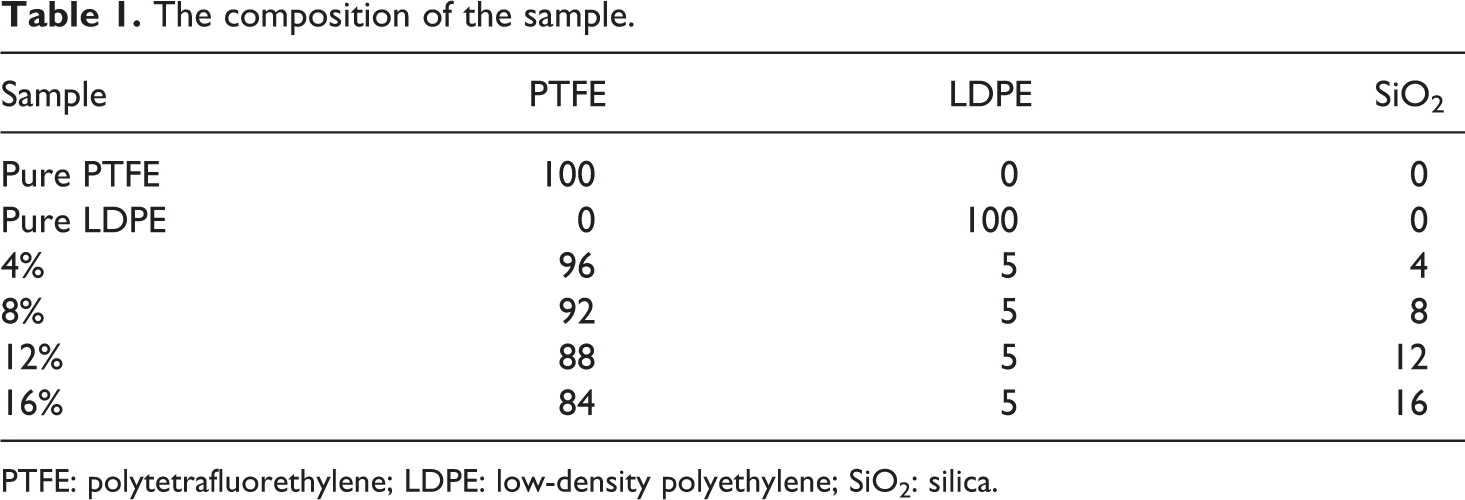
PTFE: polytetrafluorethylene; LDPE: low-density polyethylene; SiO2: silica.
Specimen preparation
PTFE was mixed with SiO2 at mass fractions of 4, 8, 12 and 16%. The mixtures were preheated at 240°C for 30 min and then molded to plates of size 6 × 7 × 30 mm3 under 20 MPa at 340°C. The composite plates to be tested were obtained after cooling the molded specimens in ambient air.
Mechanical test
Tensile tests were conducted on Instron 5567 testing machine using laboratory dumbbell-shaped specimens with 10 × 2 × 1 mm3 dimensions of the working part at 20 mm/min cross-head rate. Specimens of size measuring up the GB/T16420 – 1996 (50 × 5 × 5 mm3) standard were prepared from the molded board for Izod impact tests. Impact tests were conducted in an impact machine Type ZBC – 4B (Made in China) at room temperature.
Tribological test
The friction and wear tests were conducted on an M-2000 model friction and wear tester. The counter-face material was steel 45. Sliding was performed under dry friction and ambient conditions (temperature: 25°C, humidity: 50 ± 5%) at sliding velocities of 0.42 m/s, normal loads of 100 N.
The test time was 60 min. The friction force was measured with a torque shaft, provided with strain gauges, and the coefficient of friction was calculated from the friction force. Before each test, the surfaces of each specimen and counterpart ring were polished with 800 grit paper to a surface roughness of 0.2–0.4 μm and were cleaned with alcohol. Finally, the wear volume loss was calculated out from the loss of each specimen’s weight.
Results and discussion
Mechanical properties
To better understand the properties and morphologies of the ternary blends, we begin with PTFE/SiO2 binary blends. For PTFE/SiO2 blends, the Izod impact strength decreases with the addition of SiO2 particles, while the tensile strength, flexural strength and flexural modulus slightly increase with the SiO2 content as shown in Figure 1. This is because the nano reinforcing effect of SiO2 and the increase in it makes for the void in the PTFE.
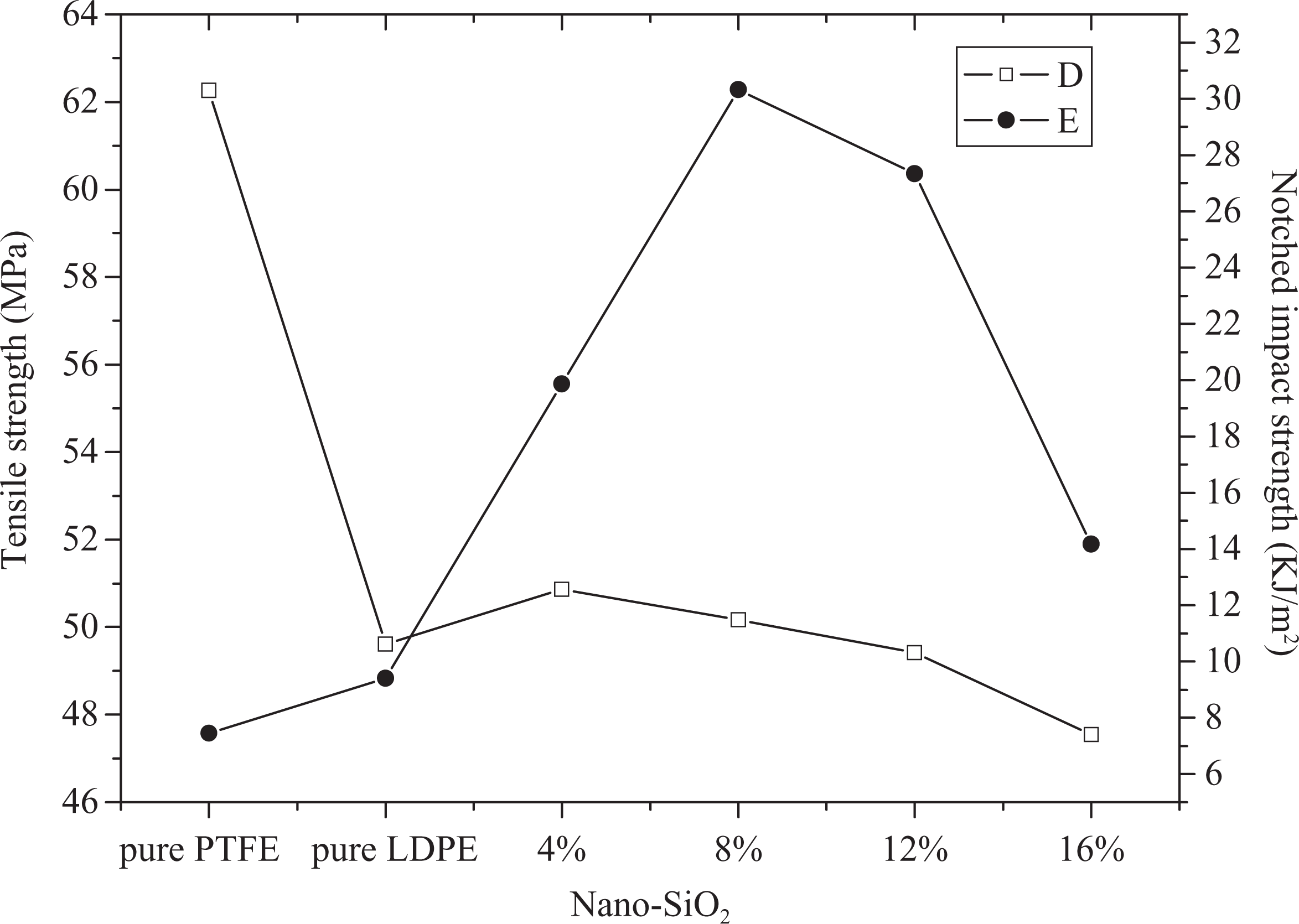
The tensile and impact strength of the PTFE, LDPE and PTFE/SiO2 composites. PTFE: polytetrafluorethylene; LDPE: low-density polyethylene; SiO2: silica.
For MAH-grafted LDPE-filled PTFE/SiO2 ternary blend, as expected, Izod impact strength increases dramatically and a sharp brittle–ductile transition is achieved when LDPE content reaches a certain value, companied with an increase in the tensile strength, flexural strength and flexural modulus, as shown in Figure 2 and 3. It can be seen that a sharp brittle–ductile transition occurs at 8 wt% of SiO2 content. The toughness of PTFE/LDPE/SiO2 blend becomes independent of SiO2 content when SiO2 content is more than 8 wt%. However, when LDPE and SiO2 particles were used together, a simultaneous increase in the toughness and stiffness in PTFE/LDPE/SiO2 ternary composites can be achieved using an appropriate processing method and adjusting the wettability of SiO2 particles toward PTFE and LDPE.
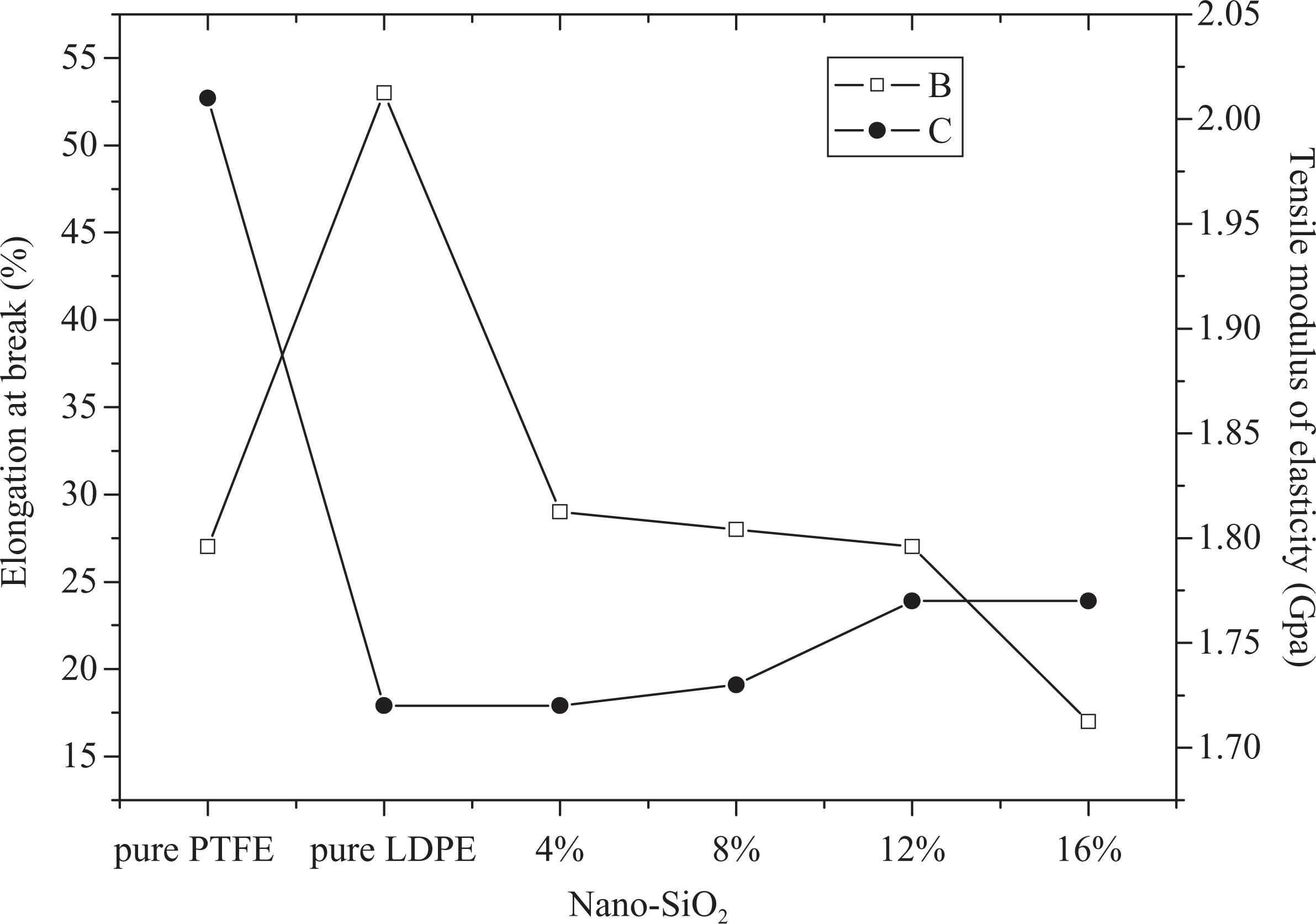
The bending strength of the PTFE, LDPE and PTFE /SiO2 composites. PTFE: polytetrafluorethylene; LDPE: low-density polyethylene; SiO2: silica.
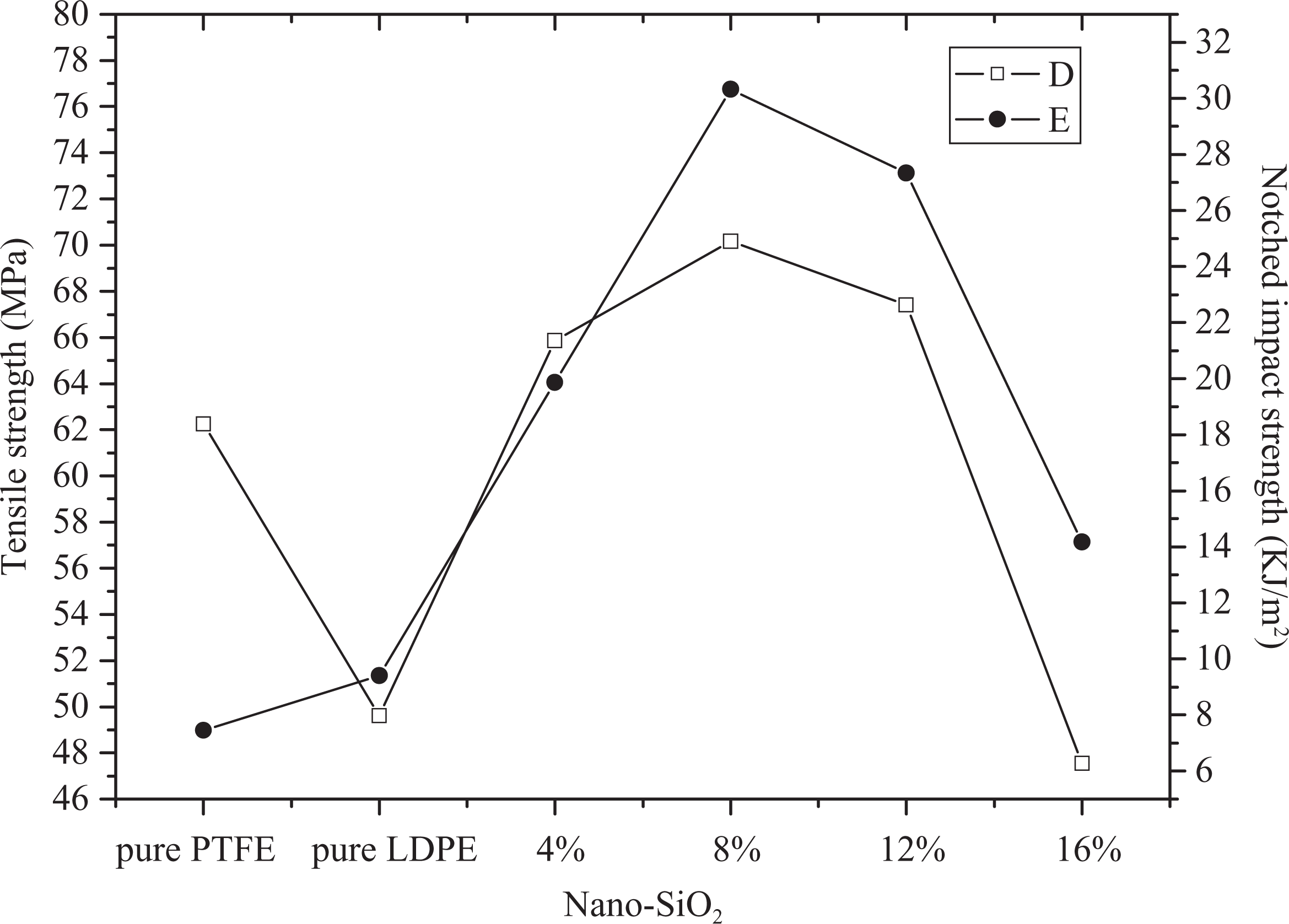
The tensile and impact strength of PTFE/SiO2 composites filled with maleic anhydride-grafted LDPE (5% LDPE). PTFE: polytetrafluorethylene; LDPE: low-density polyethylene; SiO2: silica.
Figure 4 depicts the scanning electron micrographs of the fracture surfaces of the PTFE/LDPE/SiO2 composite after impact test. It is unusual that MAH-grafted LDPE is better than LDPE as a toughening agent based on the wettability of SiO2 particles toward PTFE and LDPE. In other words, one in general does not expect filler mixed in polymer to produce materials with good properties. Therefore, SEM experiment was carried out to understand the phase morphology of PTFE/LDPE/SiO2.
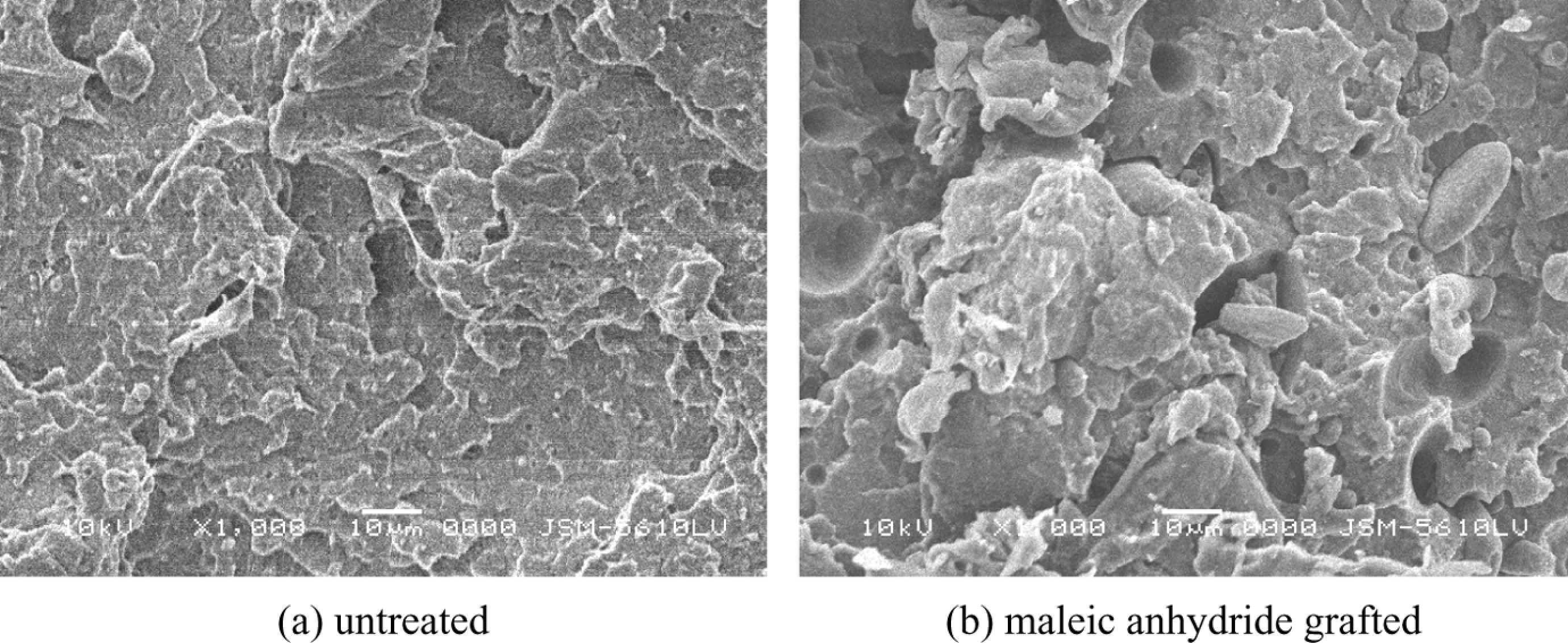
The impact fracture surface of composite: (a) untreated; (b) maleic anhydride-grafted LDPE.
In this study, the SiO2 particles tend to aggregate around the PTFE matrix since SiO2 particles can be wetted by neither PTFE nor LDPE. Showing as an example, the dispersion of SiO2 particles in pure PTFE matrix is shown in Figure 4(a). A poor wetting of the filler within the aggregates is seen. These poorly dispersed particles act as voids rather than stiff inclusion, resulting in a decrease in impact strength and only slightly increase in tensile strength, flexural strength and modulus, as can be observed in Figure 1. For PTFE/LDPE/SiO2 ternary composites with MAH-grafted LDPE, however, the method is convenient to the dispersion of the SiO2 particles and the formation of the unique structure that SiO2 particles agglomerate around PTFE matrix. These SiO2-surrounded PTFE particles can, therefore, be regarded as a soft core surrounded by rigid SiO2 particles shell of comparable size, which could increase the effective size of the SiO2 particles. Then the stress fields around SiO2 particle can interfere or overlap with those around the PTFE matrix when LDPE matrix are closely surrounded by SiO2 particles and a percolation of SiO2 particles in PTFE matrix is formed. In this case, the stress fields around SiO2 particles seem to serve as a bridge between two neighboring PTFE matrix. Therefore, the overlap of the stress volume between LDPE and SiO2 particles is believed to result in the observed increase in Izod impact strength in PTFE/LDPE/SiO2 ternary composites with 8 wt% LDPE content. When the impact load is given to the composite with lower strength, the composite cannot transfer the energy around the loading spot. Hence, the impact energy absorption mechanisms such as filler debonding and filler pullout do not occur.
When LDPE content is 12 wt%, the interparticle distance is very large. Although the addition of SiO2 particles, at a certain degree, reduces the matrix–ligament thickness, the interparticle distance is too large to form the continuum percolation of stress volume around the LDPE particles, hence the yielding process cannot propagate and pervade over the PTFE matrix (seen in Figure 4(a)). That is why the Izod impact strength of PTFE/LDPE/SiO2 composites with 8 wt% SiO2 content increases slightly with the addition of SiO2 particles. When 16 wt% of SiO2 are blended with 84 wt% of PTFE, the interparticle distance decreases sharply and becomes equivalent to the critical interparticle distance, so that the brittle–ductile transition occurs. After adding LDPE, PTFE is found to be closely surrounded by SiO2 particles and a percolation of SiO2 particles over the PTFE matrix is also observed. Thus, the overlap of stress volume between LDPE and SiO2 particles can be achieved since a large amount of SiO2 particles agglomerate around LDPE particles and pervade over the PTFE matrix (seen in Figure 4(b)).
This is of great benefit to the percolation of the yielding process over the PTFE matrix, thus dramatically enhancing the Izod impact strength of the composite. However, for PTFE/LDPE binary composite with 12 wt% SiO2 content, which is in the regions above the brittle–ductile transition (seen in Figure 4(a)), the toughness becomes independent of LDPE content because of the mechanical saturation. In other words, there is no need for SiO2 particles to be the intermediate for the stress fields overlap between two rubber particles (seen in Figure 4(b)).
Figure 5 shows the scanning electron micrographs of the fractured surfaces of the PTFE and PTFE/LDPE/SiO2 composite. The samples show a strong cable-like structure and the positions of the cords can be identified easily. In contrast, the composite which contained a low content of either PTFE or LDPE exhibited a fracture surface similar to that of a single phase material, despite their cable-like structure being apparent in the micrographs.
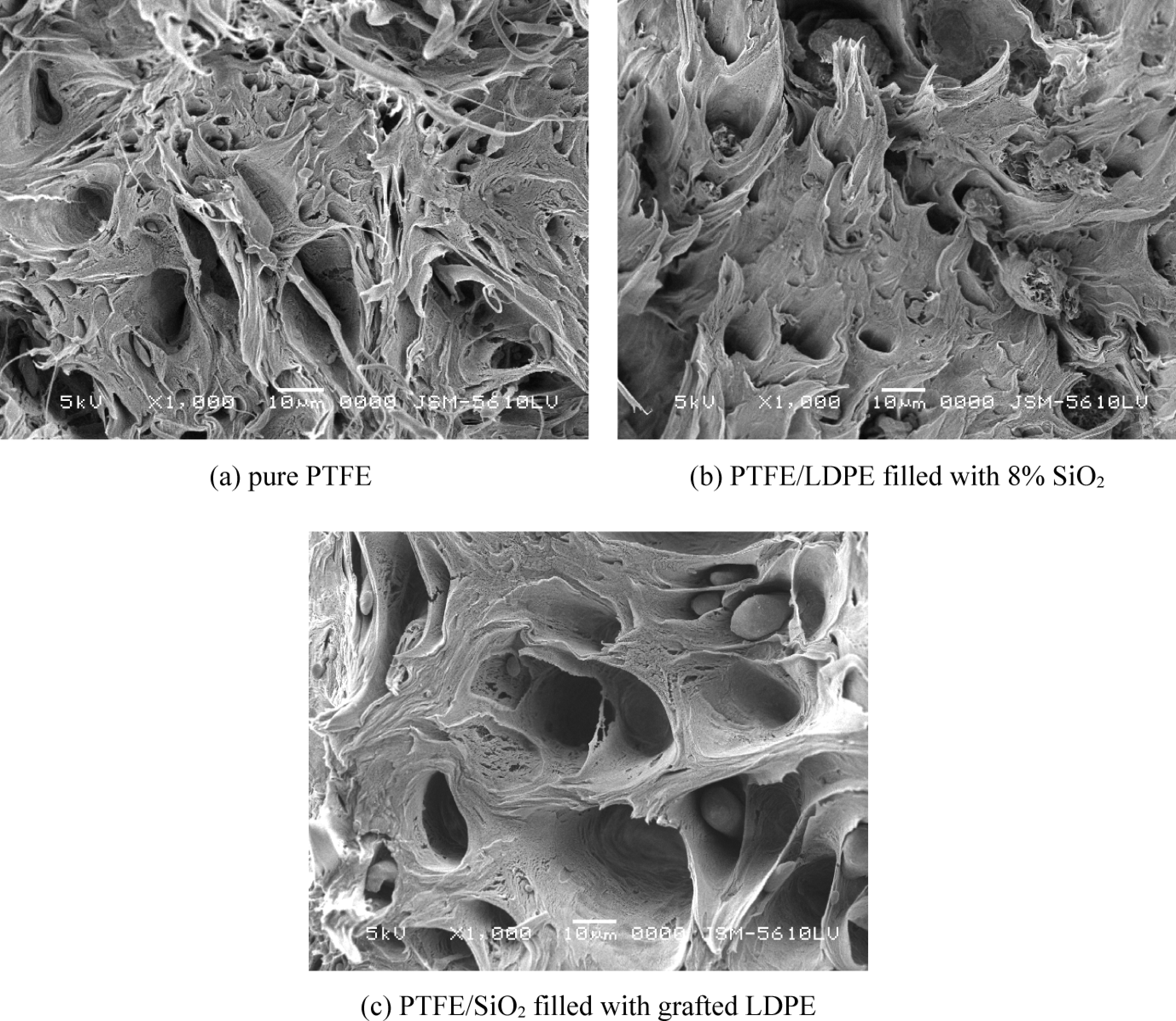
Morphology of tensile surface of composites: (a) pure PTFE; (b): PTFE/LDPE filled with 8% SiO2; (c) PTFE/SiO2 filled with grafted LDPE. PTFE: polytetrafluorethylene; LDPE: low-density polyethylene; SiO2: silica.
The segregation of SiO2 between these two regions is expected to cause a difference in viscosity in the regions. Since the melt flow index of the PTFE is much greater than that of the LDPE, the skin layer that contained more PTFE is therefore expected to have a lower viscosity. The perimeter of the cord showed a strong laminar structure and cracks between the laminae were easily observable. It is obvious that the fracture topography of the samples in Figure 4 was due much to cracking along the interfaces between the laminae. Additionally, the plastic deformation of PTFE matrix is easily observed near the particle peeling-off region. When the composite has more amount of SiO2 than optimum content, there is insufficient PTFE matrix to be plastically deformed. In addition, the filler breakage takes place more frequently than the case of 8% content. However, filler breakage is not known as main impact energy absorption mechanism. When filler content is lower, the volume of matrix resin is too small to deform plastically. In addition, strength reduction in the composite is thought to be one of the reasons of impact absorption energy reduction. Strength reduction in the composite is revealed by the lowest crack initiation energy of the composite with 8% filler among any other ones.
Friction and wear properties
Figure 6 provides the variation in average friction coefficient with increasing SiO2 content in PTFE/LDPE rubbed at a 0.42-m/s rotate speed under a 100-N load. It was showed that the friction coefficient and wear rate change little with the change of SiO2 content when filled with MAH-grafted LDPE.
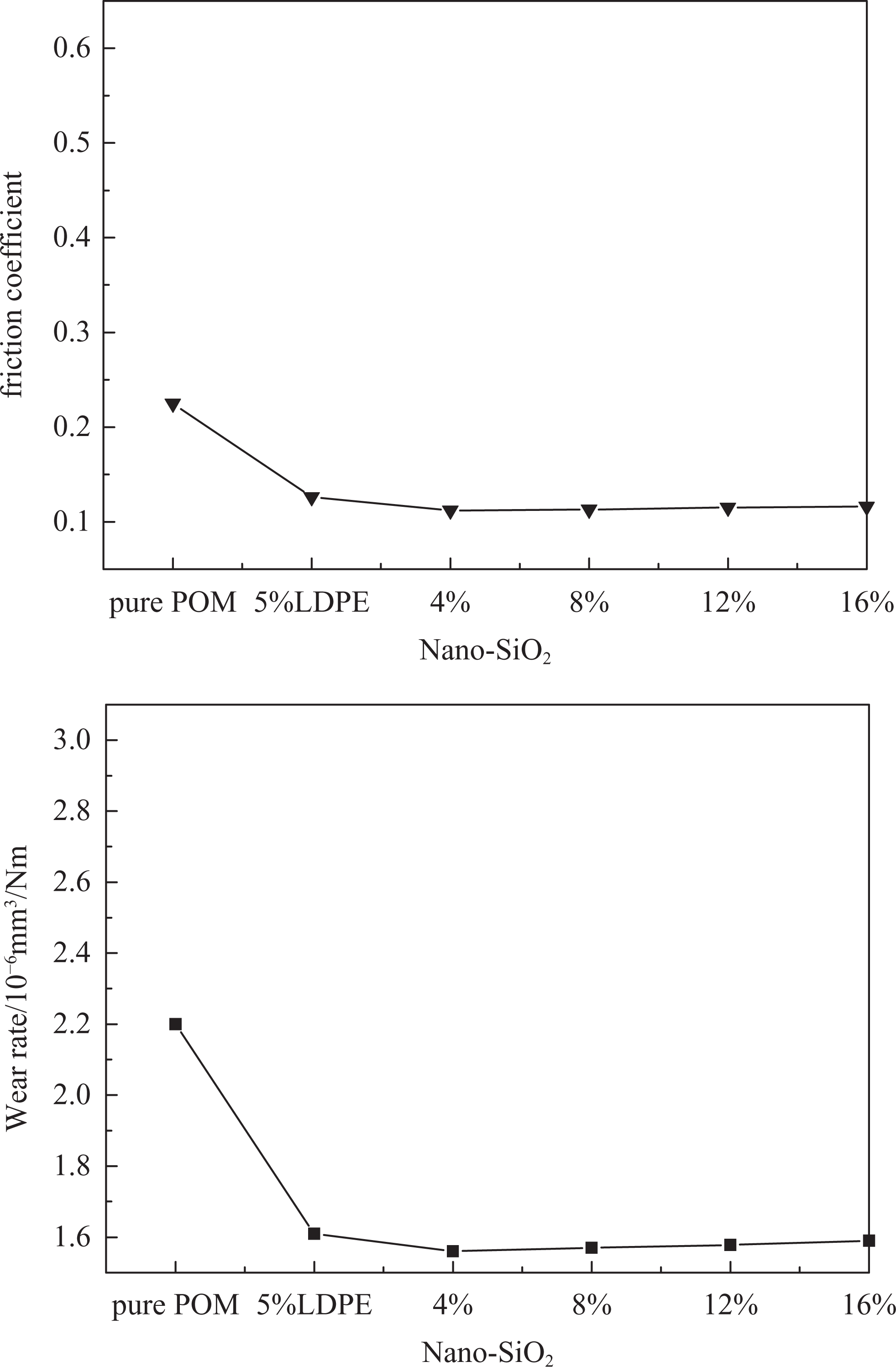
Variation of wear rate and friction coefficient with the content of fillers (load: 100 N; rotate speed: 0.42 m/s).
Conclusions
When the SiO2 content increased in the PTFE matrix from 4 to 16%, the tensile and bending strength increased, while the impact strength decreased. For the SiO2/PTFE composite filled with MAH-grafted LDPE, both the strength and toughness increase with the content of SiO2.
The friction coefficient and wear rate of SiO2/PTFE composite improved when MAH-grafted LDPE were added, and the change in friction and wear properties is little regardless the SiO2 content.
Footnotes
Funding
This work was supported by Shanghai Top Academic Discipline Project- management science & engineering, Shanghai College Young Teacher Training Program (shhs008), The National Natural Science Foundation of China (71101090), Shanghai Education Committee Projects (J50604), Shanghai Education Committee Projects (12ZZ148), and Ministry of Communications Research Project (2009-329-810-020).