




Abstract
The mechanical and friction and wear behaviors of carbon fiber/polyphenylene sulfide (CF/PPS) composite and polyamide 6 (PA6)-filled CF/PPS (CF/PA6/PPS) composites were investigated. The addition of 2 vol%, 4 vol% and 6 vol% PA6 increases the bending strength of CF/PPS composite. In order to further understand the wear mechanisms, the worn surfaces of samples were analyzed by scanning electron microscopy (SEM). The experimental results indicated that the wear loss and the friction coefficient of CF/PPS composite decreased with the addition of PA6 particles. The main wear mechanisms under dry sliding condition are the plastic deformation and mechanical microploughing.
Introduction
Fiber-reinforced polymers are known to be improved not only in mechanical properties but also in friction and wear performance. For examples, the addition of carbon fiber (CF) to polymers increased the yield, tensile, and flexural strength 1,2 ; increased the glass transition temperature 3 ; and improved the mechanical stability at elevated temperature. 4
Polyphenylene sulfide (PPS) is a linear, part crystalline high-performance plastic. Phenyl ring and sulfur atoms form the backbone of the macromolecule, giving it a number of unusual characteristics. Due to the inherent nonflammability as well as the high hardness and rigidity, this technical plastic is suitable particularly for the production of mechanically and thermally high loadable parts (service temperatures up to 240 1C). The reinforcement with glass fibers reduces its thermal coefficient of expansion to values typical for metals. Thus, it is suited for components manufactured with a mix of metal and plastic material. Also PPS shows a very good chemical and oxidation resistance as well as dimensional stability, minimum water absorption, good isolation behavior and low flue gas density. 5 The most important application areas are automobiles, aircrafts and electrotechnology/electronics.
The technique of forming a polymer alloy, in which a modifier such as an elastomer is dispersed in a matrix polymer, is generally attempted in order to improve the toughness of polymers. 6 –8 It is pointed out that the efficiency of improvement in the toughness of a polymer alloy is affected by many factors such as the molecular weight of the matrix polymer, the mechanical property of the elastomer, and the states of distribution of the elastomer.
In random-oriented short-fiber–reinforced polymer composites, there is an interesting morphology that affects the erosive wear performance of material. Composite material contains a mixture of ductile (polymer) and brittle (short fiber) components. On the other hand, there is a random fiber orientation with respect to the impingement direction (parallel, perpendicular or angular) of the particle which gives a complicate wear morphology.
Several explanations have been proposed to account for the toughening mechanism of polymer alloys. The improvement in mechanical and/or tribological properties of polymers by incorporation of particulate filler materials and short fibers has been widely studied. 9 It has been noticed that there is synergism between the filler and fiber materials when both are simultaneously present, and such hybrid composites provide tribological properties unachievable by the filler or the fiber alone. 10
In this study, the friction and wear behaviors of CF/PPS composite and PA6-filled CF/PPS (CF/PA6/PPS) composites were investigated on a block on-wheel model friction and wear tester under dry sliding conditions.
Experimental
Materials and specimens
CF/PPS composites were prepared in the following volume ratios: 0/100, 10/90, 20/80, 30/70 and 40/60, using a HAAKE PTW16/25D corotating twin-screw extruder (Table 1). The temperatures from the feed zone to the die of the extruder were 265, 275, 285, 295 and 285°C, respectively. The diameter of the die is 3 mm. The screw speed was set at 70 r/min. All the materials were dried at 100°C for 24 h before compounding. The extrudate was obtained in the form of a cylindrical rod that was quenched in cold water and then pelletized.
Materials used in this study.
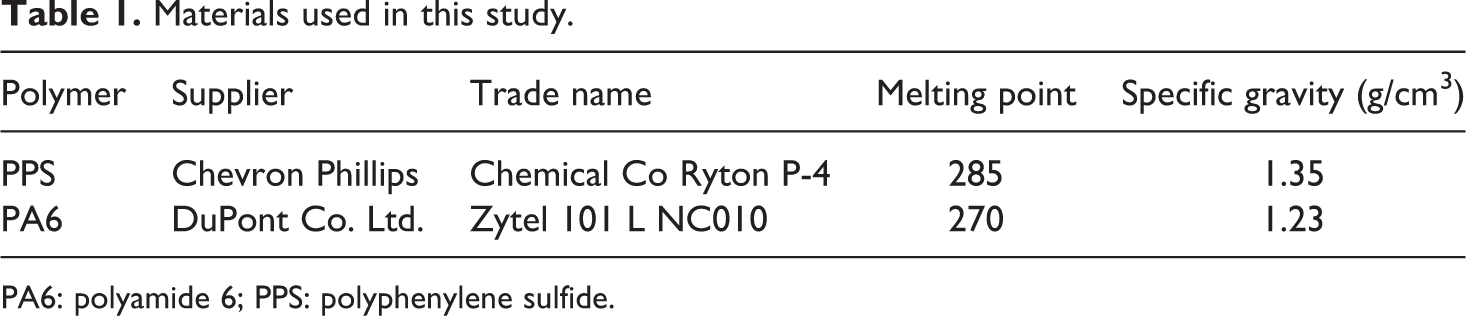
PA6: polyamide 6; PPS: polyphenylene sulfide.
Mechanical testing
Bending tests were conducted at room temperature at a crosshead rate of 5 mm/min with an Instron Model 5567 computer-controlled testing machine. Bending strength and Young’s modulus were simultaneously recorded.
Friction and wear tests
Block on-wheel sliding tests were performed on a hardened tool steel counterface (55–60 Rockwellhardness [HRC]). The test surface was finished by abrasion, washed, and dried. The wear tests were performed at the sliding speeds of 0.84 m/s. A nominal contact load of 50, 100, 150 and 200 N were used.
The cross section of the wear scars was measured using a surface profilometer (Model 2206, Harbin Measuring & Cutting Tool Group, China). The wear volume of the specimen was calculated using the equation V = Sl, where V is the wear volume in mm3, S is the area of cross section, l is the length of the stroke.
Results and discussion
Mechanical properties
Figure 1 shows the dependence of CF content on the bending strength of the PPS composites. In the case of the composites containing 25 vol% fibers, the bending strength values were higher than that of the monolithic PPS, which was caused by adding the CFs, improving bending strength of the composites. However, the addition of more than 25 vol% CFs led to the decreased bending strength values of the composites, and the bending strength values of the composite with more than 40 vol% CFs were lower than that of the monolithic PPS. When adding short fibers was up to a value, the fibers bridged to skeleton construction and the matrix material could not wrap up the fibers and fill voids, which resulted in the poor load transfer, weakening the fiber-reinforced and the strength of the material. The fiber bridge function and fewer matrixes prevented densification, which was considered to be the main reason for the decreased bending strength values of the composites. Therefore, the strength of the composites can be improved only by adding moderate amount of the short CFs. Figure 2 shows the addition of 2 vol%, 4 vol% and 6 vol% PA6 increases the bending strength of CF/PPS composite, meaning the PA6 has good dispersion in the interface between CF and PPS. And the increase in the bending strength is obvious in the linear curve.
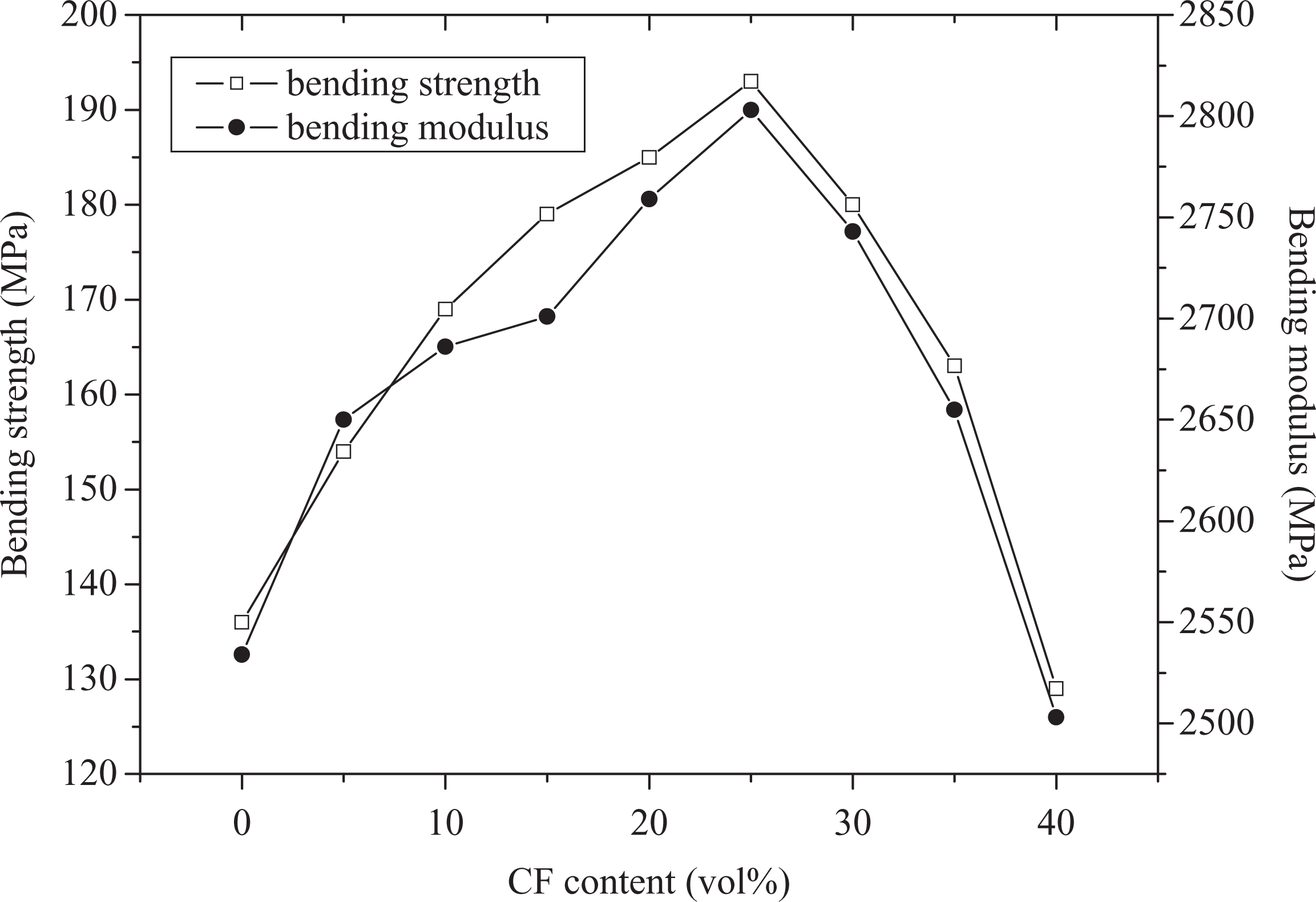
The effect of carbon fiber content on the bending strength of polyphenylene sulfide (PPS) composites.
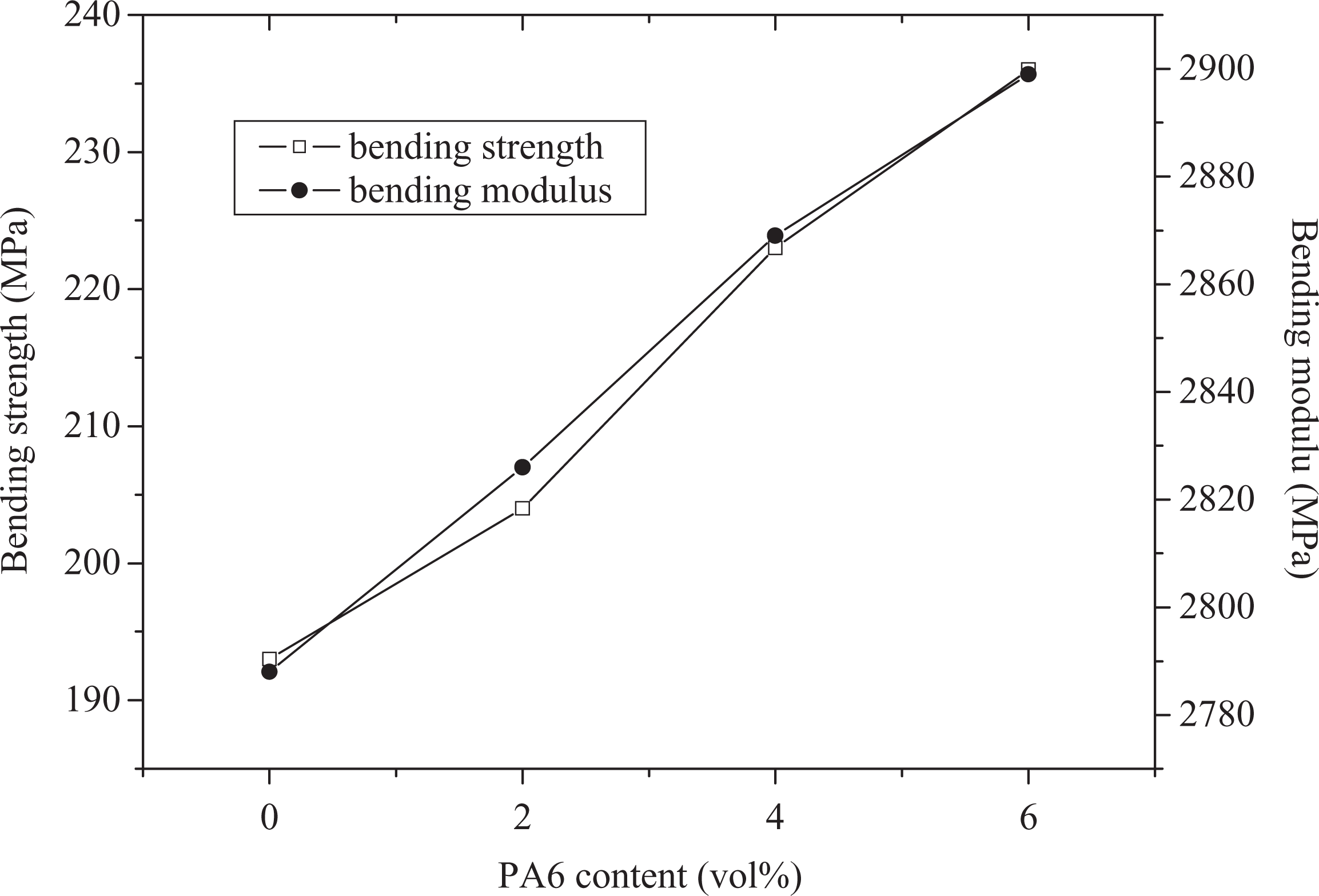
The effect of polyamide 6 (PA6) content on the bending strength of carbon fiber/polyphenylene sulfide (CF/PPS) composites.
Figure 3 shows the scanning electron microscopy (SEM) micrographs of the fractured sections of the CF/PPS composites with and without PA6. The uncompatibilized composite shows obvious sign of phase separation, and the interfacial gap between the CF and the PPS matrix on the fractured section is clear (Figure 3(a)). Those interfacial gaps are attributed to a poor interfacial combination between the CF reinforcing agent and the PPS matrix. Contrary to the above, the fractured section of the composite compatibilized with PA6 has a fuzzy morphology (Figure 3(b)), which is especially so when the mass fraction of the PA6 is 6 vol%. This indicates that in this case the CF is well bonded to the PPS matrix, which contributes to retard the rupture through the CF/PPS interface and harmonize the plastic deformation of the CF reinforcing agent.
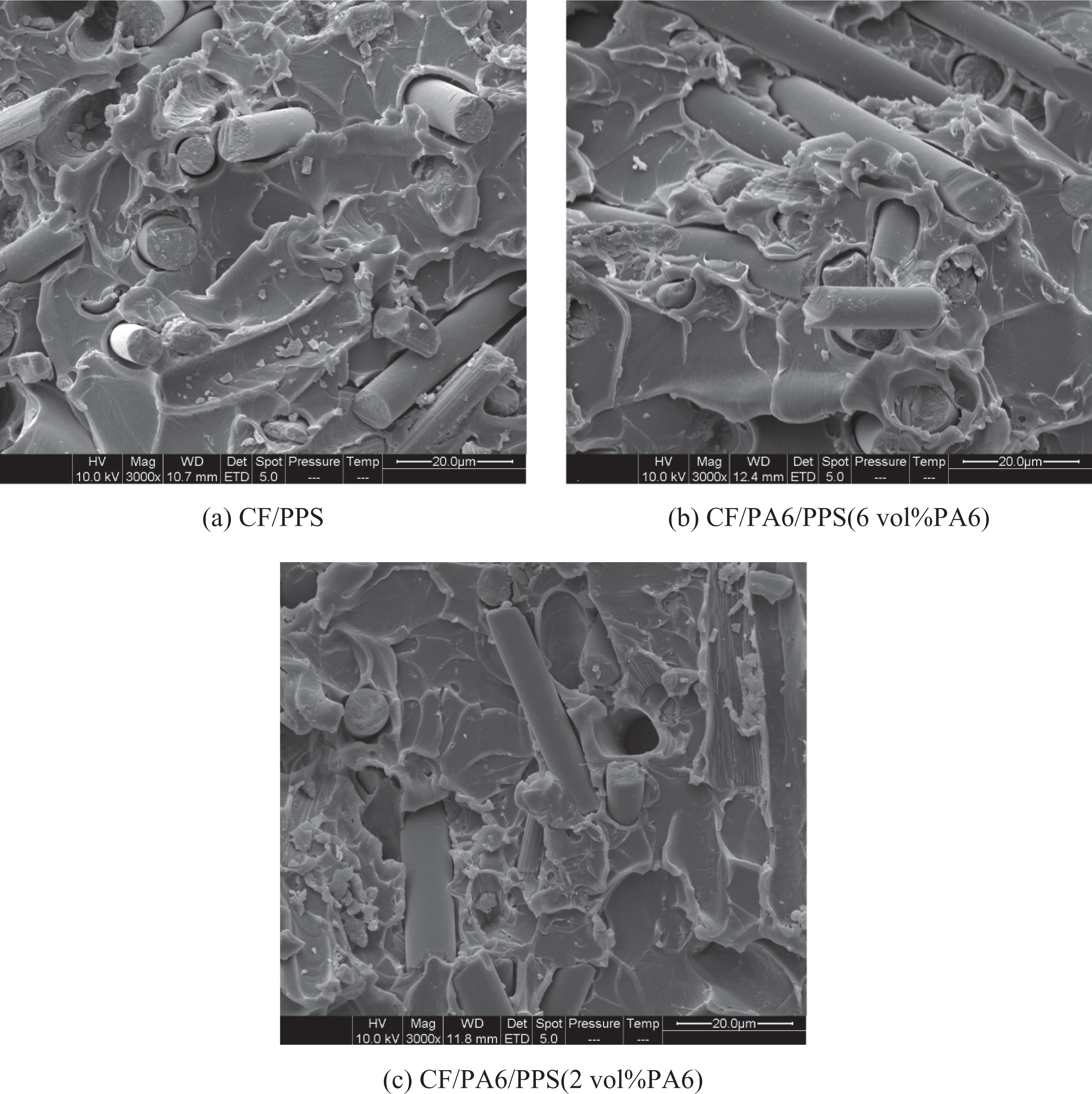
The scanning electron microscopy (SEM) micrographs of the fractured sections of the carbon fiber/polyphenylene sulfide (CF/PPS) composites with and without polyamide 6 (PA6).
Moreover, with the decrease in the content of PA6, the interfacial gaps between the CF and the PPS matrix on the fractured surface become clear (Figure 3(c)), which indicate that the lack of compatibilizer leads to a damage in the interfacial bonding of the CF/PPS composite.
The incorporation of PA6 as a compatibilizer contributes to significant increase in the tensile strength and wear resistance of CF/PPS composites, which is closely related to the cross-linking reinforcing action of the compatibilizer.
Friction and wear behaviors
The friction coefficients of the composites with different PA6 contents at loads of 50 N are shown in Figure 4. It can be seen that the composites filled with PA6 exhibit a large drop in friction coefficient. As shown in Figure 4, the friction coefficient decreases sharply, with the PA6 content increasing until 6 vol%.
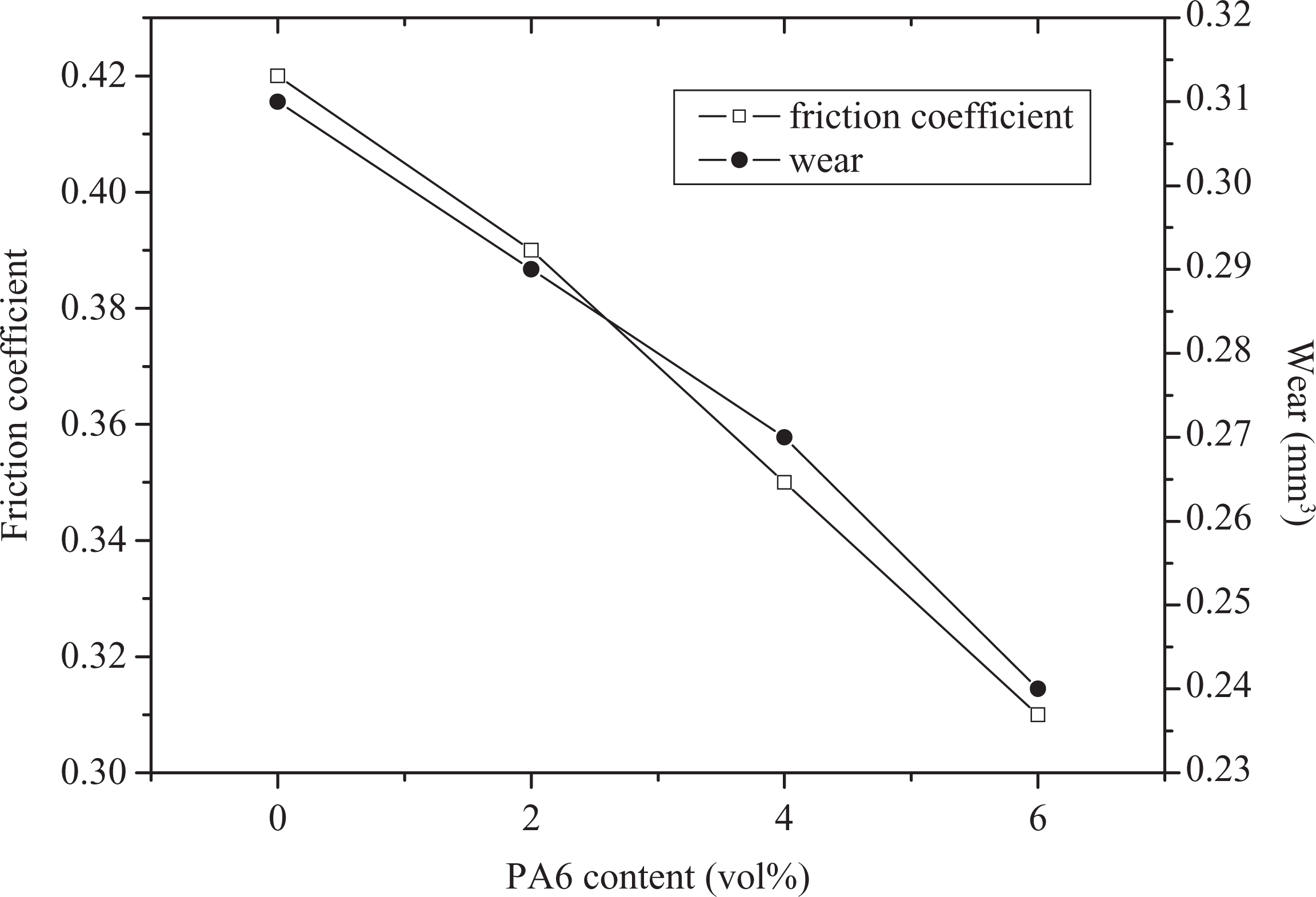
The relationship of the friction coefficient of polyamide 6 (PA6)-reinforced carbon fiber/polyphenylene sulfide (CF/PPS) composites versus the content of PA6.
In the meantime, the reinforced composites exhibit dramatic improvement in the wear resistance. As shown in Figure 5, the friction coefficient and wear volume of the composites decrease significantly with the increase in the PA6 content. CF/PA6/PPS ternary composite with a compatibilizer weight fraction of 6 vol% PA6 has the best wear resistance among the tested composite specimens. Thus, it is suggested to set the critical weight fraction of the PA6 in the CF/PPS composite as 6 vol%. The CF/PPS composites of a higher PA6 content have stronger anisotropy than the ones of a lower PA6 content, which indicates that the mechanical and tribological behavior of the CF/PPS composites with a higher PA6 content is dominated by the content of PA6.
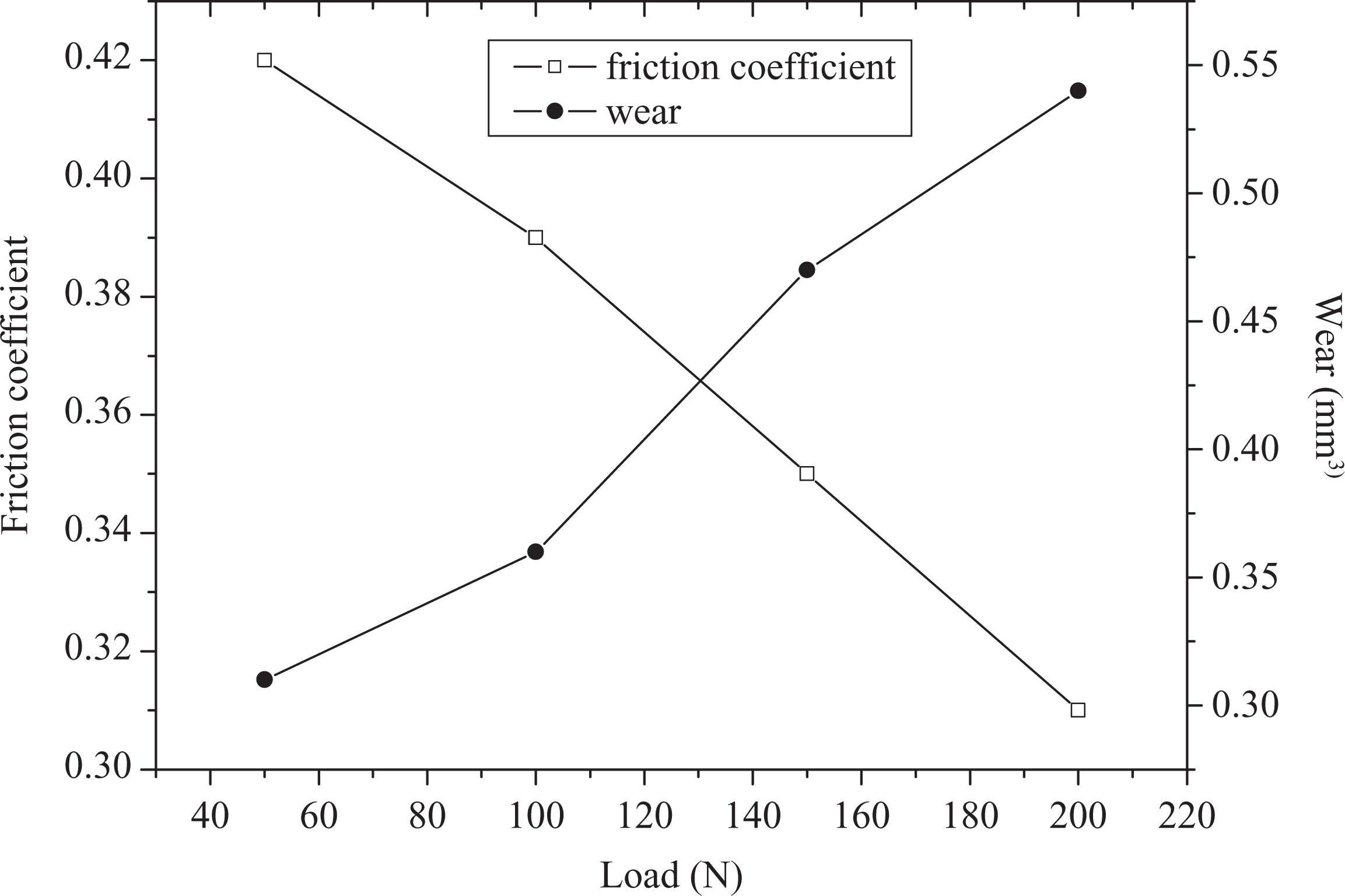
The tribological performance of CF/PA6/PPS composites. CF: carbon fiber; PA6: polyamide 6; PPS: polyphenylene sulfide.
In addition, the friction coefficient and wear of the composites also show a decreasing trend as the applied load increases. This observation is in tune with the findings of some other researchers.
Figure 6(b) shows the surface of the composite without PA6 worn under 50 N and 0.84 m/s. In comparison to Figure 6(a), the surface here is apparently smoother and without micro-cracks. This can be explained by the increased ductility of PPS with the addition of PA6. Therefore, a brittle fracture of the PPS matrix in the fiber/matrix interfacial region was greatly restricted. This restriction causes the fibers to maintain in the matrix. As a result, the wear process was rather mild, resulting in a high load-carrying capacity. The worn track of the monolithic CF/PPS indicated a rough surface with cracks and crushed debris, which resulted in the high friction coefficient and wear volume. The wear mechanism of the monolithic CF/PPS was considered to be abrasive because the intrinsic brittle nature of CF led to grain pull out or grain fracture, grain comminution, or plough of the worn surface during sliding condition due to the high Hertz stresses. The worn tracks of the composites indicated smooth appearances and were covered with adhesive debris forming a film that consisted mainly of carbon. Modified with short carbon fiber (SCF) and PA6 flakes, a polymer film layer can be transferred to the steel counterpart, which results in a new countersurface producing primarily an adhesive wear mechanism. This mechanism is generally less dangerous for polymer sliding surface than an abrasive one, resulting in a lower frictional coefficient and specific wear volume. As shown in this figure, the worn surface appears smooth that is without obvious grooves. However, the micro-cracks occurred in the region of the fiber/matrix interface, which are caused by a brittle fracture of the PPS matrix. With the propagation of these interfacial cracks, the fibers exposed to the asperities of the counterpart are finally removed, leaving voids on the worn surface.
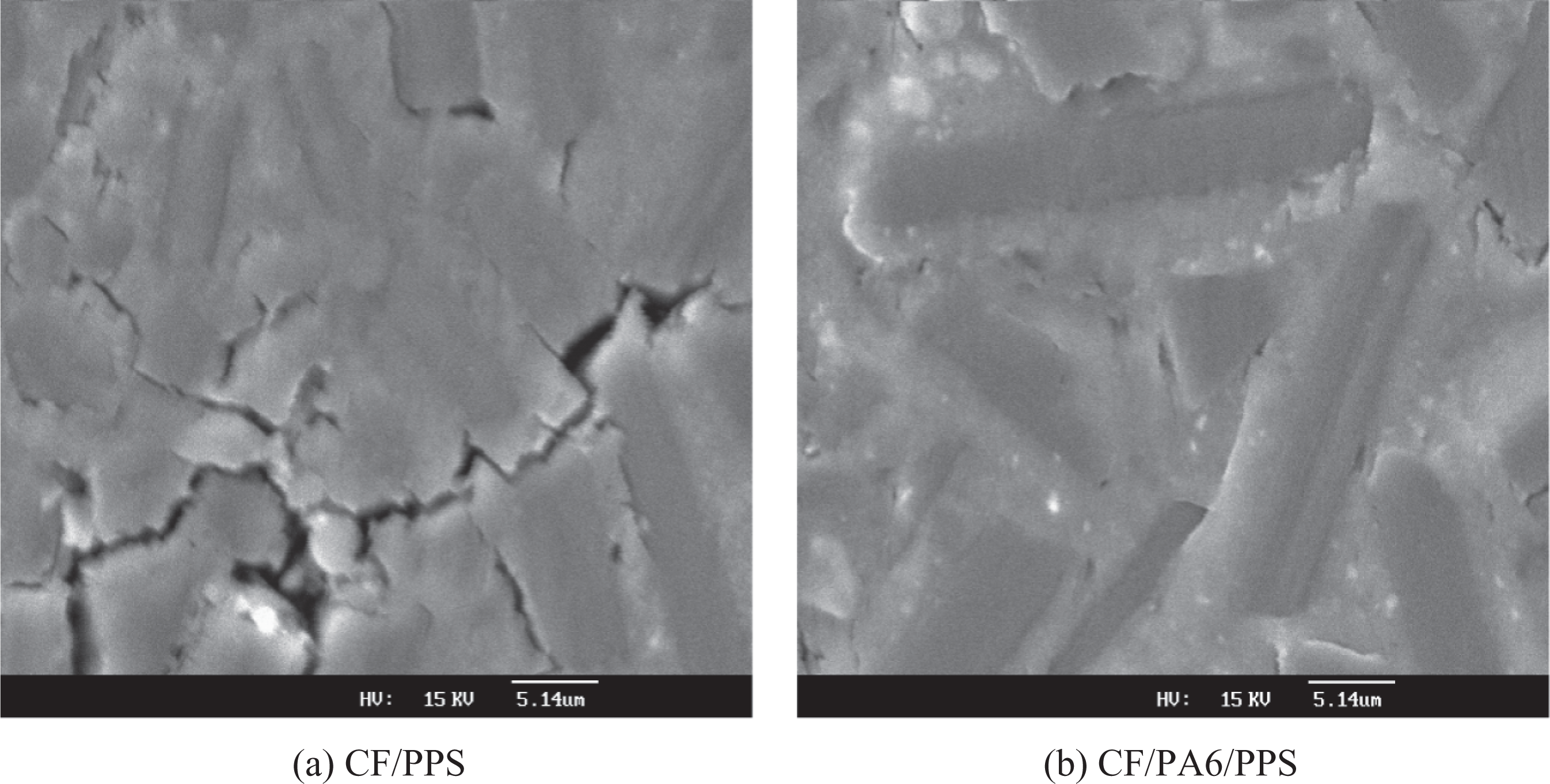
The worn surface of the carbon fiber/polyphenylene sulfide (CF/PPS) composite with and without polyamide 6 (PA6).
Conclusion
The PA6 filler particles came into being on the interface of CF and resulted in improved mechanical properties. As the content of PA6 was increased, the more homogeneous morphology of blends was formed due to the increased compatibility between CF and PPS, and the surface properties of surface tension and hydrophilicity of blends were also increased due to the higher polar surface tension of PA6. The CF/PPS composites filled with PA6 exhibit a large drop of friction coefficient. The friction coefficient and wear of the composites also show a decreasing trend as the applied loads increase. The dominant wear mechanisms were adhesion wear, plastic deformation, brittle facture and spalling.
Footnotes
Funding
This work received support from “ChenGuang” project supported by Shanghai Municipal Education Commission and Shanghai Education Development Foundation (project no. 09CG65) and the Leading Academic Discipline Project of Shanghai Municipal Education Commission, Project Number: J51802. Shanghai Municipal Natural Science Foundation: 11ZR1413600.