




Abstract
This article presents a study of the tribological properties of short carbon/polyamide (PA)/polytetrafluoroethylene hybrid composites. Their wear rate and the coefficient of friction were examined as a function of operating conditions (load and sliding distance) under dry and lubricated conditions. In addition, the hybrid composites with varying carbon to PA volume ratio were tested to assess hybrid effects. It was found that the friction and wear rate decreased with sliding distance and then leveled off under dry sliding conditions. Different changing patterns with normal load were observed under dry sliding conditions. Furthermore, it was noted that the hybrid effects on the wear resistance and the friction coefficient were identified for the current hybrid system. The composite with a carbon fiber content of 30 vol% was found to have the least wear and friction among all hybrid composites studied. Worn surfaces were observed by scanning electron microscope and wear mechanisms were discussed in this study.
Introduction
Thermoplastic materials have been used as bearing materials for a long time. Self-lubricating characteristics and low cost make polymer materials interesting, particularly for bearings with minor demands. If the bearing requires higher loads and small clearance over the entire lifetime, pure polymer materials are less suitable because of their lower mechanical strength. The solution for these applications is the production of compounds especially reinforced with different materials and additives.
Reinforcement increases the tensile and compressive strength of such materials. The combination with special additives results in a reduction of the coefficient of friction and an increase in thermal conductivity, insofar such compounds are produced by mixing and sintering of the individual components or by melt processing. This study presents newly developed polytetrafluoroethylene (PTFE)–polyamide (PA) compound. It concerns materials with improved characteristics, manufactured by chemical bonding of PTFE and PA by reactive extrusion. They allow smooth processing by extrusion and injection molding under PA processing conditions.
PTFE finds an exceptional position in the plastic industry due to its outstanding chemical and heat resistance, electrical insulation and its significant low-friction coefficient. 1 It is usually blended with other polymers or reinforced as a composite material for special purpose applications. 2 –4 Both thermoplastic and elastomeric fluoropolymers find a wide use in automotive applications such as seals, O-rings and gaskets for tribological purposes. 5 Although it has a unique low-friction characteristic, it suffers from high wear rate because of its smooth molecular morphology. 6 For this reason, it is extensively used in conjunction with various kinds of fillers, thermoplastics and resins. 7 –12 Newly developed chemically coupled PTFE compounds have opened a new way in producing enhanced wear resistant materials for high performance tribological applications. 12 –14 PTFE micropowders are low-molecular-weight tetrafluoroethylene homopolymers commonly used as an additive for nonsticking and sliding properties.
Short-fiber-reinforced polymers find their applications in various fields of engineering, and form a very important class of tribomaterials. 15 Despite lower mechanical properties in comparison with continuous fiber reinforced polymers, short-fiber-reinforced thermoplastics (SFRT) are very attractive due to their advantages of easy fabrication, economy and better mechanical properties compared with neat polymers. 16 SFRT are mainly used as components intended to run without any external lubricants. Fiber reinforcements, for example, carbon, glass and aramid fibers, are the main candidates and have been widely employed. Many investigations have shown that the incorporation of fiber reinforcement improved the wear resistance and reduced the coefficient of friction. 17
Many studies have reported that the wear resistance of polymers sliding against steel improved when the polymers are reinforced with carbon and/or PA fibers. 18 However, the wear behavior is controlled by factors such as the type, amount, size, shape and orientation of the fibers as well as by the matrix composition and the testing conditions like load, speed and temperature. 19 As a factor controlling property of composites, hybridization is likely to influence tribological performance of composites. As a result, fundamental understanding of the wear and friction behavior of these hybrid composites is believed essential to the assessment of the materials as potential materials for both orthopedic and engineering applications. Accordingly, the objective of the present work was to evaluate the tribological properties of the carbon/PA/PTFE hybrid composites under dry sliding wear conditions.
Experimental
Materials and specimens
For the present investigation, the reinforcement materials were continuous polyacrylonitrile-based carbon fibers manufactured by Shanghai Sxcarbon Technology Co. Ltd. The reinforcement was PA-6 supplied by YueYang Juli Engineering Plastic Co. (Hunan) with the following specified properties: tensile strength, 85 MPa; flexural strength, 115 MPa; and density, 1150 kg/m3. PTFE powder supplied by XStar company with a grit size of about 30.0 µm was used as matrix resin of the composites.
Preparation process
The hybrid blends were prepared by the twin-screw extruder. The extrudate was chopped into small pellets. The produced carbon fiber/PA-6/PTFE pellets were vacuum-dried again at 80°C for 12 h. The twin-screw extruder was operated at the same processing conditions used during the blend preparation. The specimens for the tribological characterization experiments were molded using an injection-molding machine at a barrel temperature of 230°C and mold temperature of 80°C.
Sliding wear tests
Sliding wear tests were carried out on a M2000 block-on wheel sliding wear tester. The schematic diagram of the wear tester is presented in Figure 1. Specimens of dimensions of 30 × 20 × 20 mm3 were used. The counterpart used was a quenched medium carbon steel ring with a Rockwell hardness of 52 and a Ra of 0.40 μm. In this study, sliding velocity was kept at 0.42 m/s and sliding wear tests were conducted at normal loads of 50, 100, 150 and 200 N. Tests were performed at ambient temperature and relative humidity of 45%. The specimens were removed and cleaned after predetermined sliding durations to measure the width of the wear scratches with a three-dimensional profilometer.
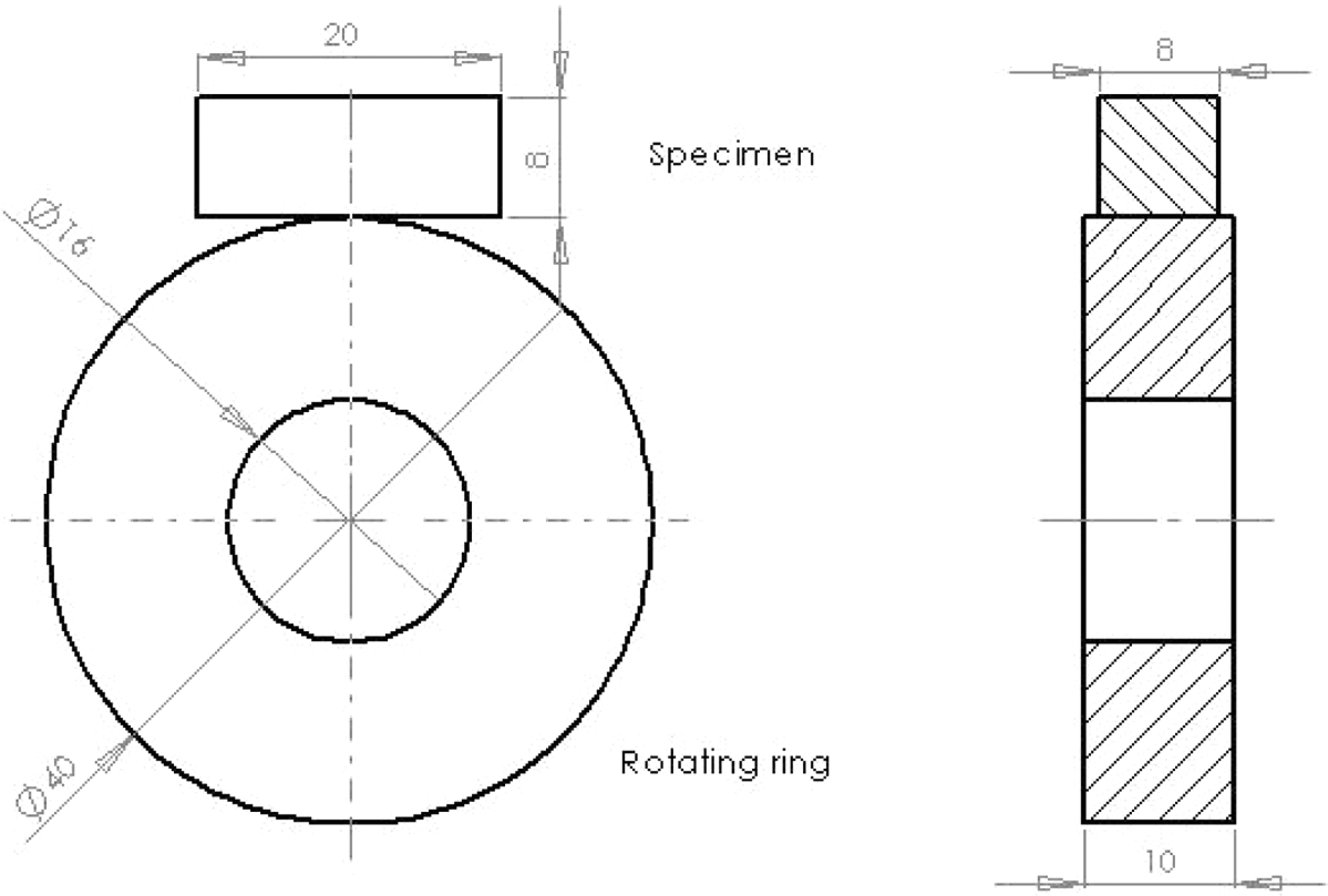
The contact schematic diagram of the frictional pair.
Results and discussion
Effect of carbon fiber volume ratio
The friction coefficient and wear rate of short carbon/PA/PTFE hybrid composites with various carbon fiber contents at a sliding speed of 0.42 m/s under 100 N are shown in Figures 2 and 3. The friction and wear behavior of short carbon/PA/PTFE hybrid composites changed obviously when carbon fiber is incorporated, especially the antiwear ability of the composites. There is a significant reduction in the values of the friction coefficient and wear rate at carbon fiber volume content as low as 30 vol%. With an increase in the concentration of carbon fiber, the declining trend becomes little. In the tested system regarding the friction coefficient, the optimum volume content of carbon fiber was about 30%.
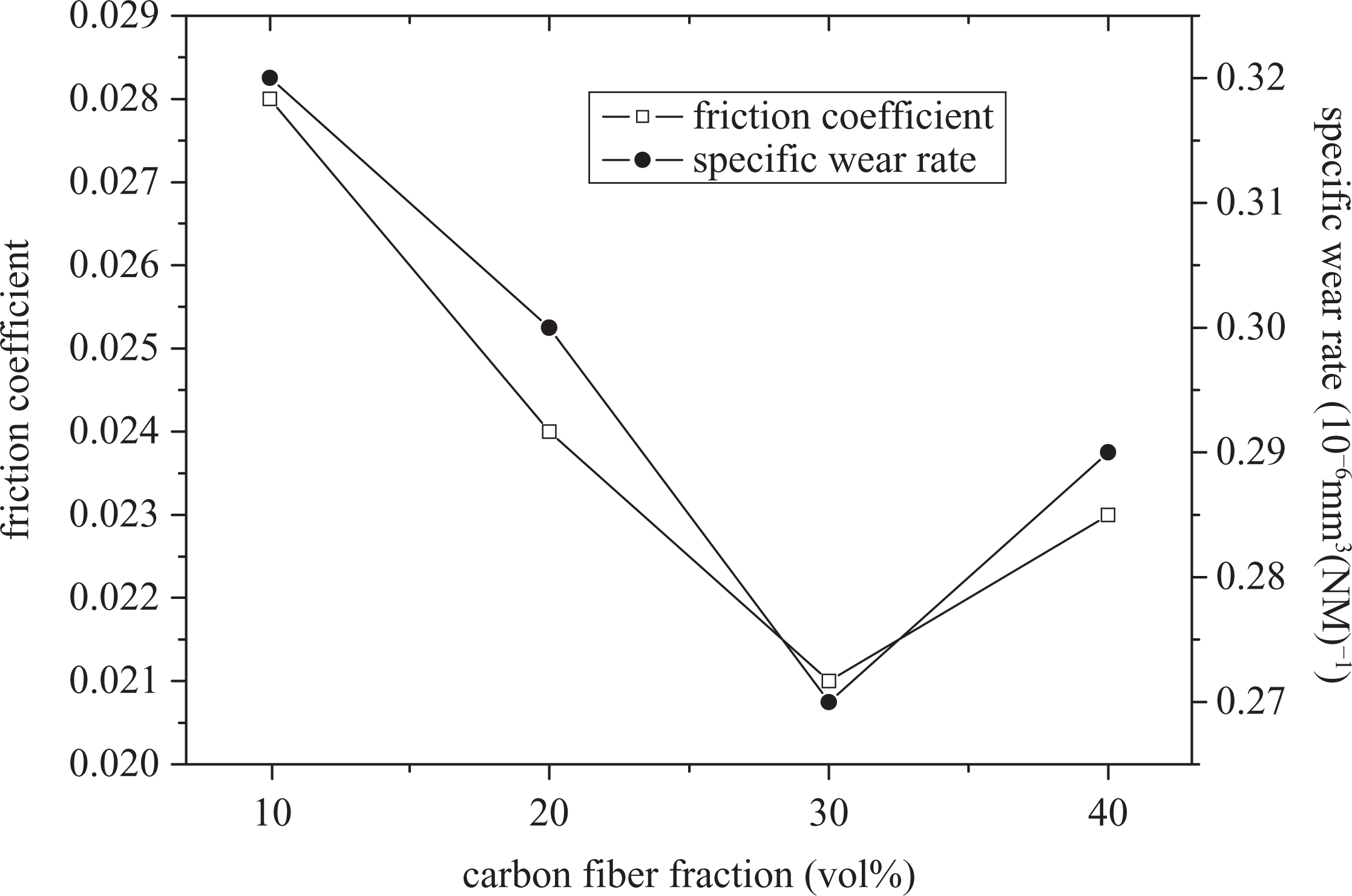
Variations in the friction coefficient and wear rate with various carbon fiber contents in the PA/PTFE composites. PA: polyamide; PTFE: polytetrafluoroethylene.
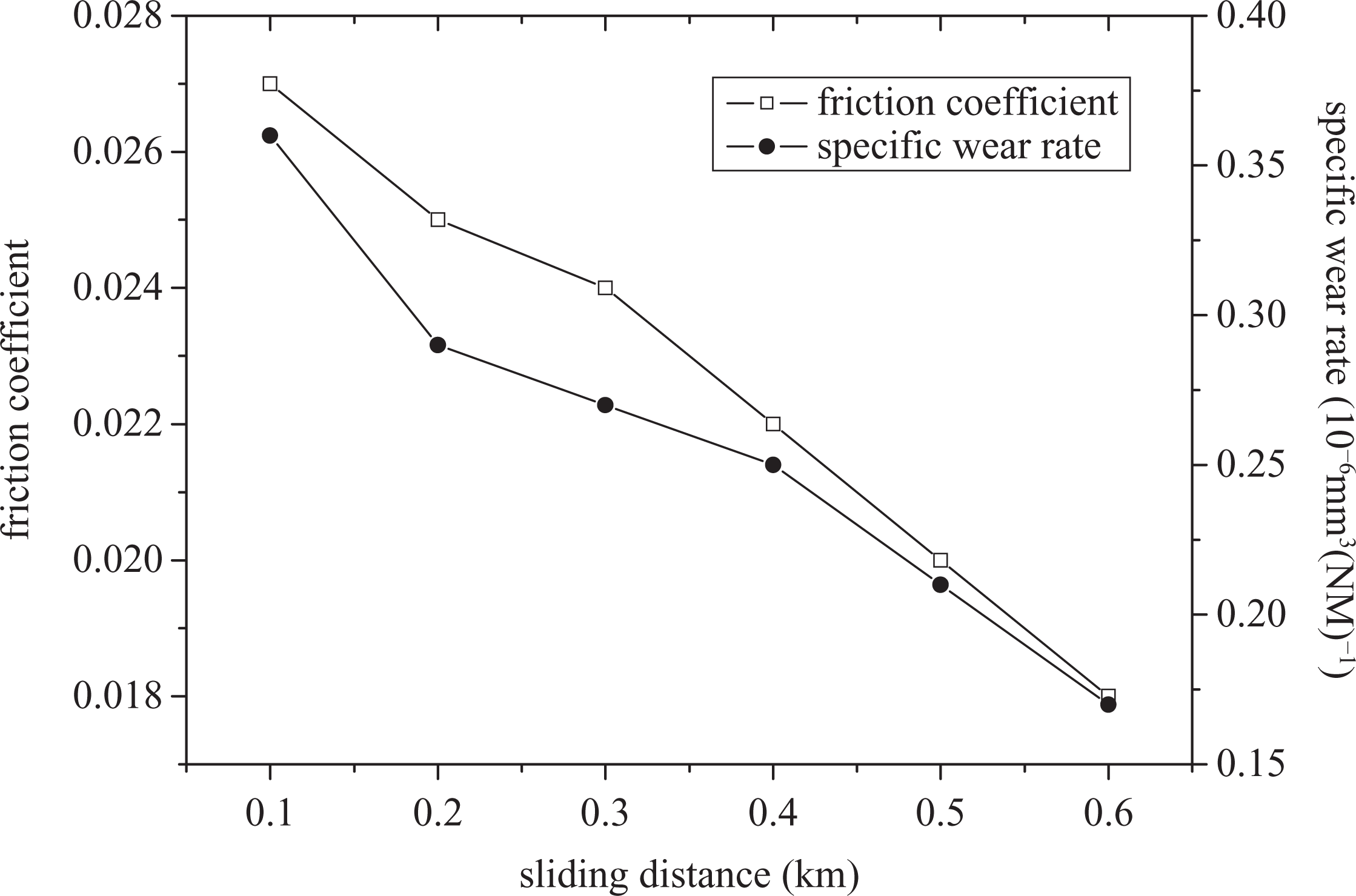
The specific wear rate versus sliding distance and the coefficient of friction versus sliding distance.
Taking all these results into consideration, it was realized that the simultaneous presence of carbon and PA fibers appeared to create effects on the wear resistance and the friction coefficient for the hybrid composites. Moreover, the short carbon/PA/PTFE hybrid composite with a carbon content of 30 vol% showed the best wear resistance and the lowest friction among all hybrid composites tested in this study. This suggests that when a certain amount of carbon and PA are hybridized, the negative hybrid effects can be reduced to the least extent.
Effect of sliding duration on wear and friction
Plots of the specific wear rate versus sliding distance and the coefficient of friction versus sliding distance are shown in Figure 4 for the short carbon/PA/PTFE hybrid composite with a carbon content of 30 vol% under dry sliding at a normal load of 100 N. It can be seen from the figure that the coefficient of friction experienced considerable drops at early stages, that is, at the running-in period. Thereafter, it remained a relatively constant value of 0.022. The behavior can be explained by the well-established concept of transfer film mechanism on the counterface. During initial stages, the surfaces of both the composite specimens and the steel counterparts were rough and thus strong ‘interlocking’ took place, resulting in a high friction coefficient. As the wear process continued, the rough profiles of the steel counterparts and the composite specimens were smoothened as a result of formation of a transfer film on the surface of the steel counterparts. Consequently, lower coefficients of friction were achieved when a steady wear stage was reached.
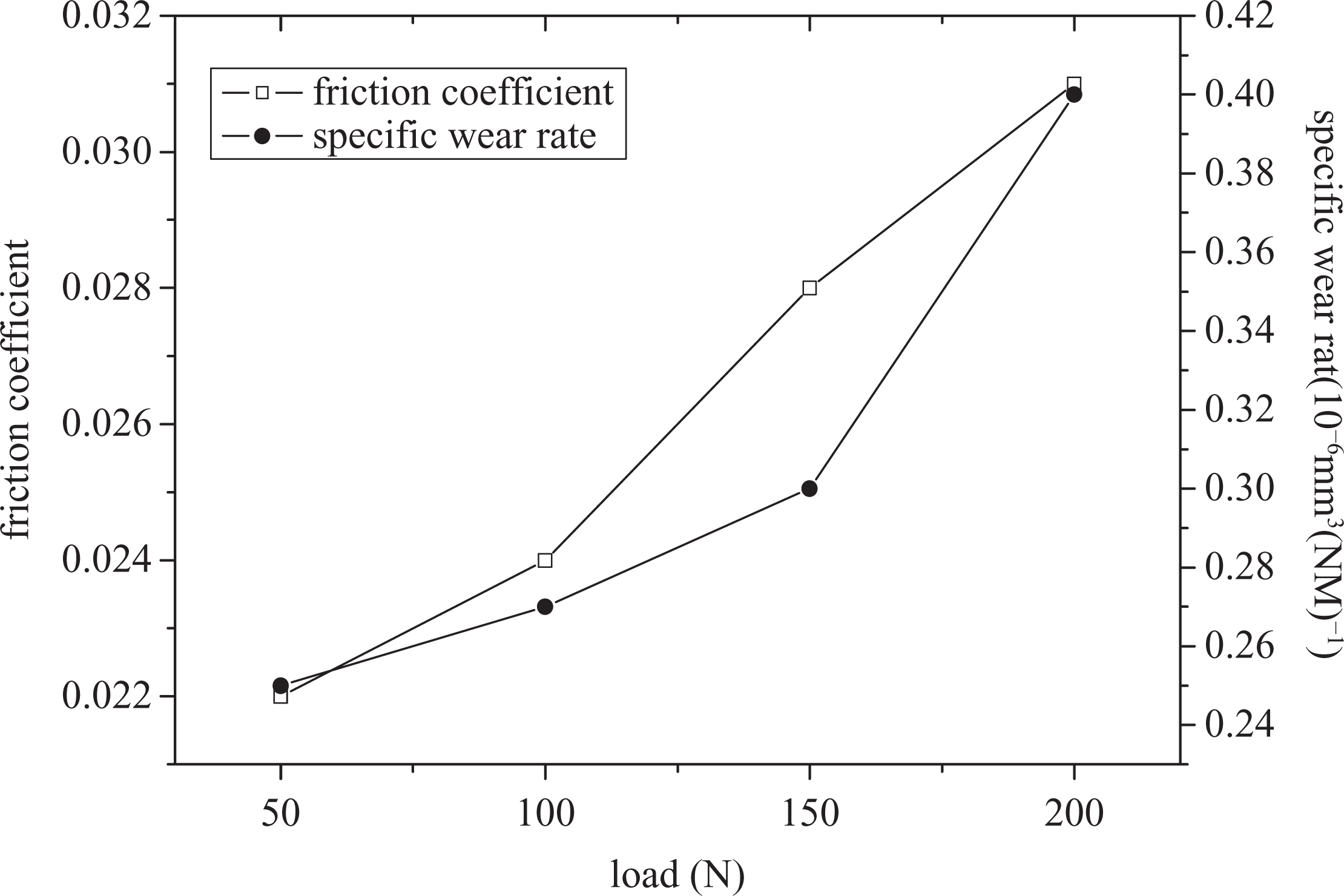
The effect of normal load on the specific wear rate and the coefficient of friction of the hybrid composite.
As displayed in Figure 3, the specific wear rate showed a similar pattern to the friction coefficient—the specific wear rate dropped sharply during the running in period and then kept constant values at steady wear stages. These are expected characteristics of a polymeric composite. Similarly, this can also be ascribed to the formation of transfer film. The current results may suggest that hybridization does not change the patterns of friction coefficient and wear rate versus sliding distance.
Effect of load on wear and friction
The effect of normal load on the specific wear rate and the coefficient of friction of the hybrid composite with a carbon fiber content of 30% under dry sliding conditions are given in Figure 4. The average friction coefficient and specific wear rate showed increases in 3 and 2%, respectively, when the normal load increased from 50 to 150 N under dry sliding. It was interesting to note that the specific wear rate and the friction coefficient increased significantly under dry sliding conditions when the load increased further to 200 N.
In general, the specific wear rate and the friction coefficient were observed to decrease with increasing normal load. Nevertheless, opposite results were reported, which were attributed to thermal softening of matrix. The current results agree well with those reported by those who found that the friction coefficient and the specific weight loss per unit load and sliding distance decreased with increasing applied load, but then increased with increasing load above a critical value of load. The increased interface temperature, which caused thermochemical degradation and fiber pullout, appeared to contribute to the increased wear at high loads, suggesting that the hybridization of carbon with PA fibers exerts an effect.
Scanning electron microscopic studies on worn surfaces
To better understand the mechanisms involved, the worn surfaces under various loads were analyzed. Figure 5 displays typical pictures of worn surfaces of the hybrid composite with a carbon fiber content of 30 vol% under dry sliding. It was found in Figure 5(a) that adhesive and abrasive wears took place at a low load of 50 N, but the former dominated because the craters formed by tear up of the matrix layer was the main feature of the surface, although traces of grooves were also noted. When load increased to 150 N, no long grooves were found (Figure 5(b)). The worn surfaces were characterized by numerous plucked marks as shown in Figure 5(b) indicating an adhesive-dominant mechanism at this load. As shown in Figure 5(c), when load was further increased, obvious fibrillation of the PA fibers was observed, suggesting that severe adhesive wear took place at the high load of 200 N. The fibrillation was likely due to the high pressure that caused high frictional work and which, in turn, brought about high temperature at the frictional interface. Under this condition, the PA fibers could melt or at least soften, resulting in numerous microweldings and therefore extensive fibrillation.
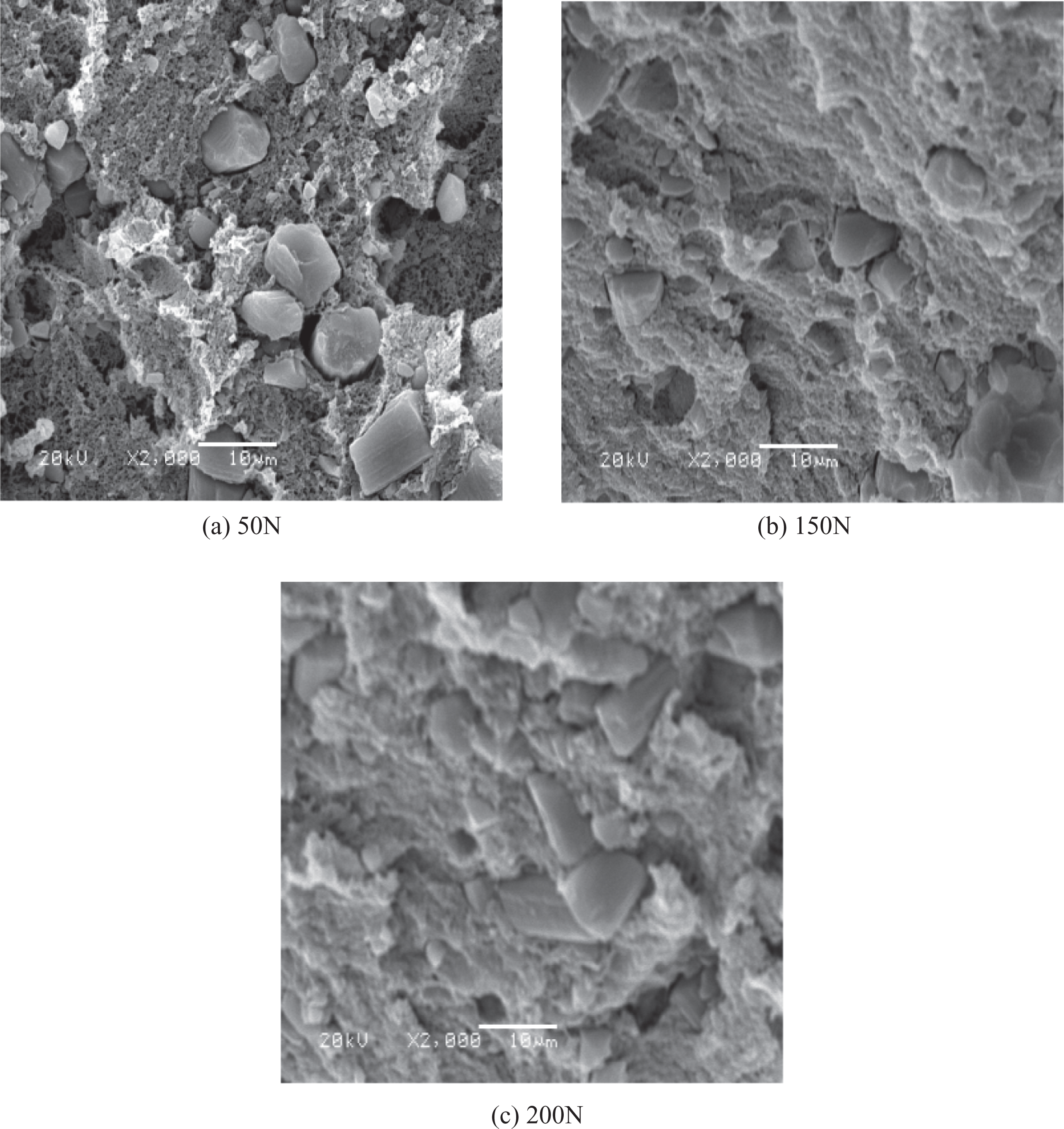
Scanning electron microscopic photographs of the worn surfaces (sliding speed: 0.42 m/s).
Figure 6 presents typical worn surfaces of various hybrid composites. Figure 6(a) is a typical worn surface of the all-carbon specimens, showing adhesive-controlled wear. Figure 6(b) shows some fibrillation of a hybrid composite with a carbon fiber content of 10% under a normal load of 100 N, which was different from the worn surface shown in Figure 6(c) for the hybrid composite with a carbon fiber content of 30 vol%, suggesting the effect of carbon to PA ratio. Figure 6(d) is the worn surface of the 40 vol% carbon fiber composite. It should be mentioned that the experimental evidence we have collected is sufficient to enable us to interpret the ‘synergistic effect’ between the carbon and the PA fibers in the hybrid composites.
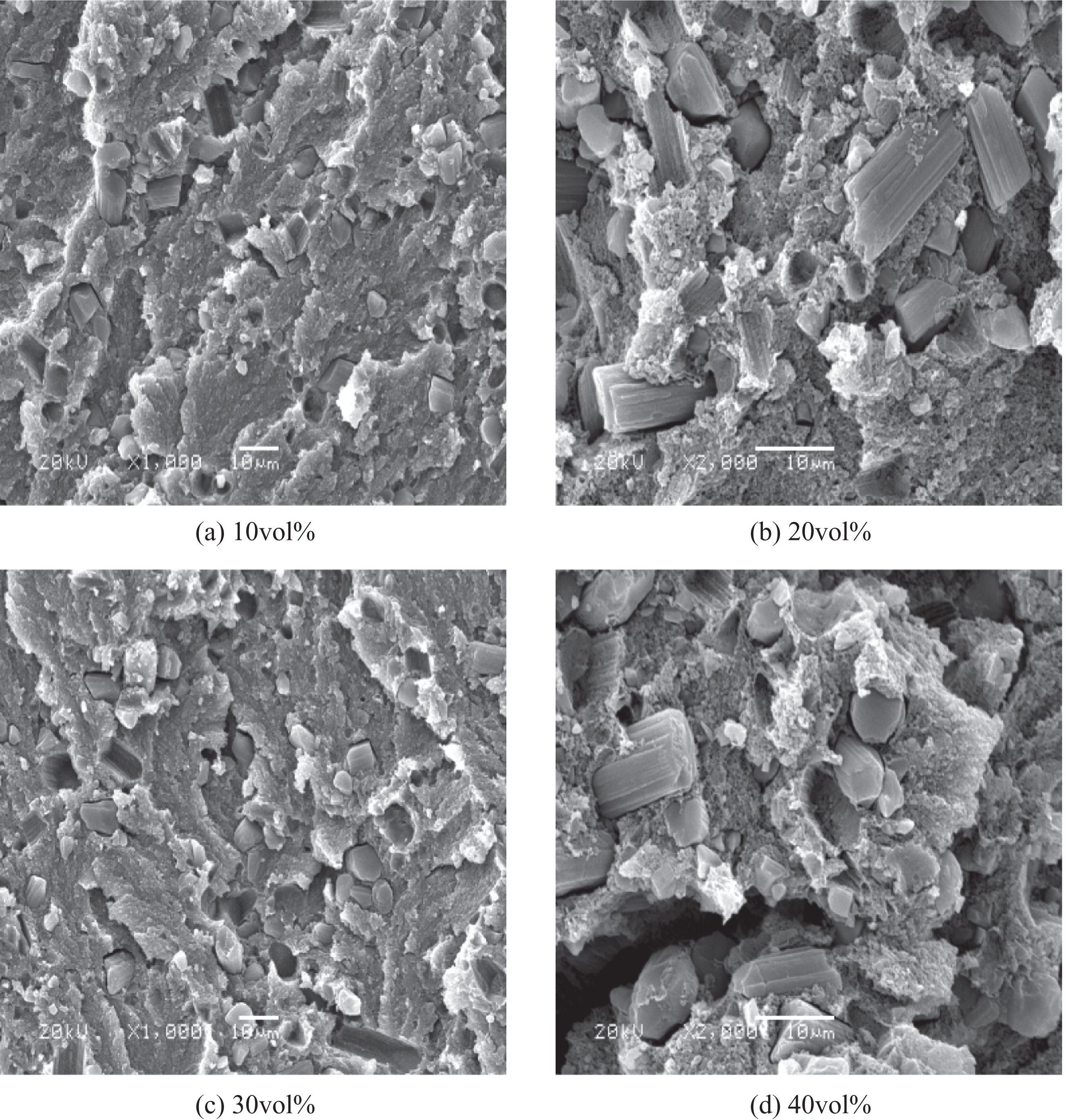
Worn surfaces of various hybrid composites.
Conclusions
When the short carbon fiber (SCF) content increased in the PTFE matrix from 10 to 40 vol%, the tribological properties increased with an increase in the carbon fiber content of the carbon fiber/PA-6/PTFE systems due to the synergetic effect. The scanning electron micrographs support a well-established interfacial bonding in the hybrid composites.
The composite with a carbon fiber content of 30 vol% was found to have the least wear and friction among all hybrid composites studied. The friction and wear rate decreased with sliding distance and then leveled off under dry sliding conditions.
Footnotes
Funding
This research received no specific grant from any funding agency in the public, commercial, or not-for-profit sectors.