




Abstract
The porous polyphenylene sulfide (PPS) self-lubricating composites with sweating effect were designed and fabricated, and the friction and wear behavior were evaluated. Results indicated that, porous PPS self-lubricating composite modified by 1 wt.% zeolite and impregnated with lithium-base grease in the pores showed the lowest friction coefficient and wear rate, which were recorded as 0.024 and 1.79 × 10⁻¹⁶ m3/Nm, respectively. Compared with pure PPS under dry condition, the friction coefficient reduced by 90% and wear resistance increased by 4.67 × 10⁴ times. The wear resistant enhanced by 3.61 times than that of PPS/30 wt.% NaCl composites, so it showed synergistic effect on improving wear resistance. By means of scanning electron microscope, it was found that the pores of porous PPS composites with 1 wt.% zeolite were uniformly distributed and grease were well embedded in these orderly pores of PPS composites. Under the effect of load and temperature, grease squeezed from micropores and nanopores can provide the excellent lubrication effect, which are the main reason for the outstanding self-lubricating and wear resistance of PPS porous composites.
Introduction
Polymer-based self-lubricating materials have attracted more and more attention in recent years owing to their excellent wear resistance and self-lubricating properties. However, with the rapid development of modern technology, the high friction coefficient and wear rate of general polymer-based self-lubricating materials under high normal load, velocity and temperature conditions are the main obstacles for their high-performance tribological applications. In view of this, a wide way of decreasing friction and wear is to use liquid lubricants such as oil to separate sliding surfaces by a film of low shear strength. But certain disadvantages are associated with this type of lubrication: (1) it typically requires filters, pumps and cooling systems; (2) it has a negative impact on the environment partly due to the disposal of used lubricants and partly due to leakages and emissions of gases or particles; (3) it can contaminate products, such as foods and textiles, during manufacturing. 1 Due to these limitations and downsides, there exists an interest in porous self-lubricating materials with sweating effect for economical, ecological and even technical reasons.
Some efforts have been made to investigate the effect of internal solid and/or oil lubricants on tribological behaviors of porous polyamide, 2,3 polyimide, 4 polytetrafluoroethylene 5 and ceramics. 6,7 However, it should be noted that no literature is available about porous polyphenylene sulfide (PPS) for tribological application.
PPS is a kind of high-temperature engineering plastic with the potential for applications in load-bearing sliding contacts because of its excellent dimensional stability and good mechanical properties, 8 –10 so it is suitable for the matrix of porous self-lubricating material. However, pure PPS is rarely used for frictional components due to high friction coefficient. Thus, a lot of efforts have been taken to reduce the friction coefficient and the wear rate of pure PPS by incorporating inorganic particles in the composites. 10 –12
Zeolites are microporous crystalline aluminosilicates and have been used as fillers in polymer composites mostly to improve the mechanical properties 13 –15 and the separating performance of membranes. 16 –18 While zeolites are still absorbents with a microporous structure, their adsorptive properties would become apparent only upon the removal of water from their pores via drying process. These features of zeolites make their polymer composites multifunctional.
In this study, an attempt has been made to evaluate the feasibility of using NaCl as pore-forming agent and zeolite as filler for PPS. The aim of our work is to prepare a kind of self-lubricating material with sweating effect—porous PPS material impregnated with lithium-base grease in the pores. The grease lubricant can be reserved in the pores of PPS composites, which functions in a similar way as the sweat gland of human beings (as is shown in Figure 1) and provides long lasting lubrication during sliding. The tribological properties of the new porous PPS self-lubricating composites were also discussed.
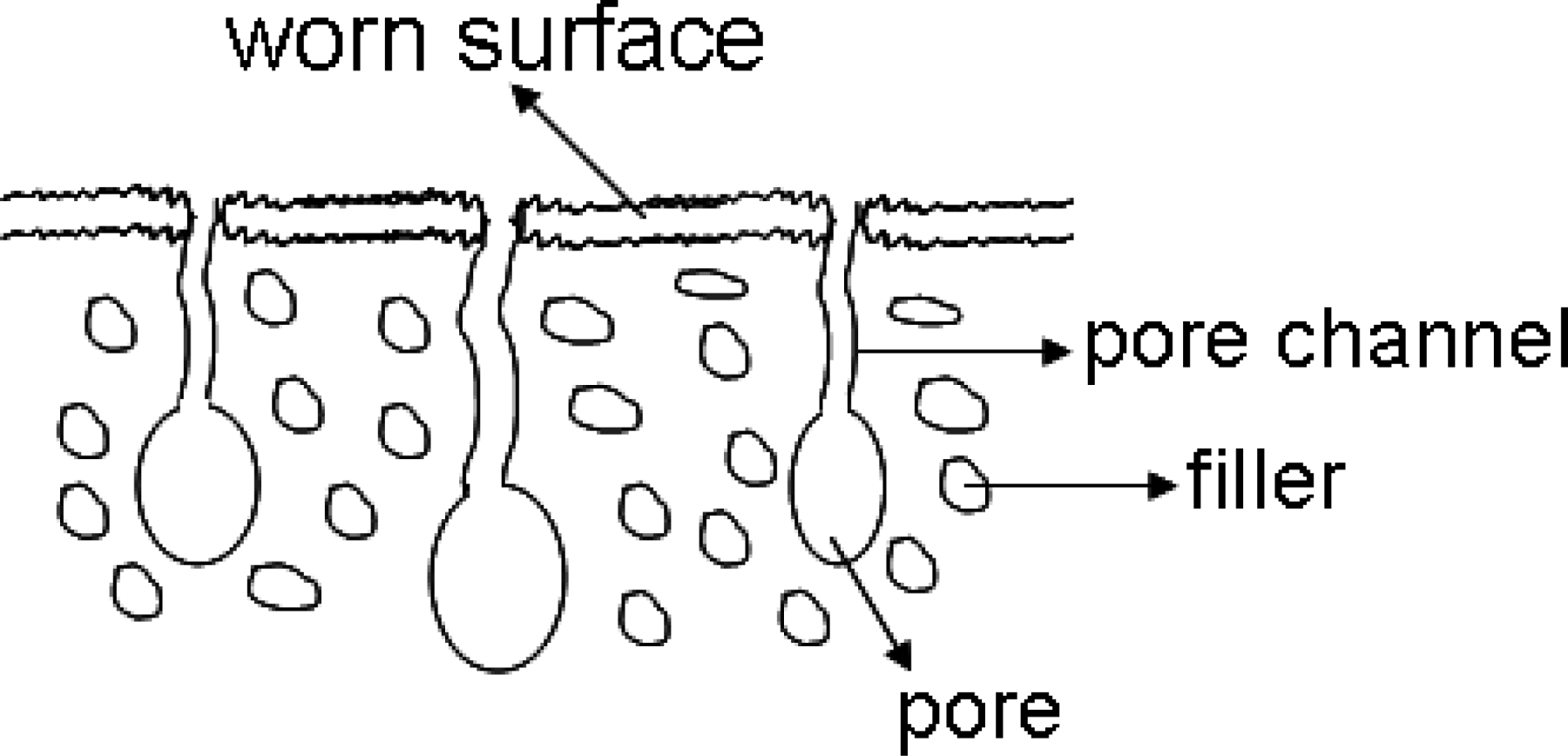
The schematic diagram of the porous self-lubricating material with sweating effect.
Materials and details
Preparation of the porous PPS self-lubricating composites
PPS powder of 150-mesh size (supplied by Yuyao Degao Plastic Technology Co. Ltd, Zhejiang, China) was used as the polymer matrix material. Sodium chloride was sieved, which plays the role of pore-forming agent. Zeolite is obtained from catalyst plant of Fushun Petroleum Company (Liaoning, China). Powder X-ray diffraction (XRD) spectra, recorded on a D/max2200 spectrometer (Japan) using Cu Kα radiation, with the samples scanned from 10 to 80° at the rate of 0.02° at each point, were taken to confirm the β-zeolite structure.
The PPS powder, NaCl and zeolite were dried at 120°C for 4 h and then mixed mechanically. The samples were produced by cold molding in a press mold and then sintered. Finally, the samples were cut into a shape with an external diameter of 32 mm, an inner diameter of 22 mm and a shoulder height of 2.5–3 mm. The samples were immersed in water bath maintained at the temperature of 80°C for about 2 hours, and then the porogen will be dissolved by deionized water. The leaching out of the porogen from the polymer material leads to the creation of pores and channels. After leaching, the porous samples were dried by maintaining them at 100°C in an oven for about an hour. Washing times were determined by weight loss before and after washing until there was no further decrease. Then, the dried samples were impregnated with melting lithium-base grease for 2 h at 120°C under vacuum condition.
Friction and wear tests
The friction and wear tests were carried out on an MPX-2000 friction and wear tester (Xuanhua Testing Factory, Hebei, China). Sliding experiments were performed in the ring-on-ring configuration. The tests were run under ambient conditions with the sliding speeds of 1.40 m/s and normal loads of 150 N. The friction duration was 120 min. Before each test, the specimen and counterpart ring were polished to an average roughness of 0.15–0.3 μm with 1000-grit silicon carbide abrasive paper and cleaned with acetone. The samples were kept in an oven at 135°C for 8 h before they were weighed. The computer recorded the frictional torque data every second, and the friction coefficient was the average value of the last 60 min. The specific wear rate (Wr (m3/Nm)) was calculated with the following equation

In this work, three replicated friction and wear tests were carried out to minimize data scattering, and the average of three replicate test results was reported. The microstructure of the cross-section, worn surface and counterpart surface were investigated with a Quanta 200 scanning electron microscope (SEM; FEI Co., Eindhoven, the Netherlands). Temperatures of friction zone were measured by infrared thermometer.
Results and discussion
Zeolite properties
Figure 2 shows the XRD patterns of PPS composites and pure zeolite. As evidenced by the characteristic XRD peak at around 22.5°C, the zeolite used in this study was confirmed to have a pure β-zeolite structure with high crystallinity. 16 In PPS composites the characteristic peaks of zeolite slightly decreased, which can be due to the mixture of PPS and zeolite. 19 This suggests that zeolite still retains its original crystal structure. The basic physical properties of β-zeolite are shown in Table 1, and it can be seen that the pore diameter of β-zeolite is small and the specific surface area is large, so that it has the ability to absorb greases.
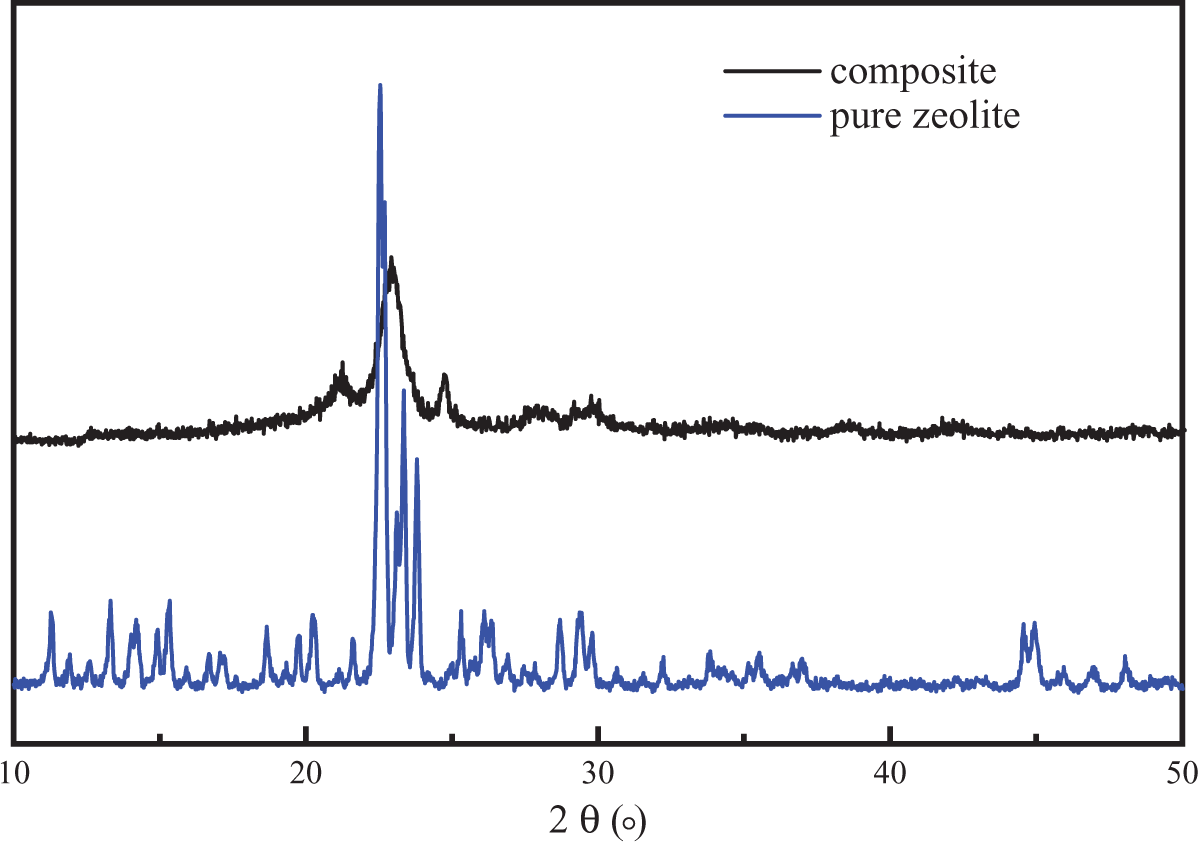
X-ray diffraction (XRD) patterns of the zeolite powder.
The basic physical properties of β-zeolite.

The effect of NaCl content on the tribological properties of porous PPS self-lubricating composites
The friction coefficient, wear rate and porosity of porous PPS self-lubricating composites filled with various amounts of NaCl are shown in Figure 3. According to Figure 3, it can be seen that the friction coefficient and wear rate of porous PPS self-lubricating composites decreased at first and then increased with the increase in NaCl content, and the friction coefficient and wear rate reached their lowest values at 30 wt.% NaCl. In comparison with pure PPS under dry friction condition (its friction coefficient is 0.24 and wear rate is 8.36 × 10⁻¹² m3/Nm), the friction coefficient of porous PPS self-lubricating materials decreased by 90% and the wear resistance increased by 12,941 times. It showed the outstanding self-lubricating and wear resistance properties, therefore these composites may find wider application, such as in bearings and seals. This can be explained by the role of self-lubricating effect of grease. The porous structures of these materials, when impregnated with lubricating grease, functions as a reservoir. Under the effect of load and temperature, greases are squeezed from the pores of porous PPS materials and form grease-lubricating layers on friction surface.
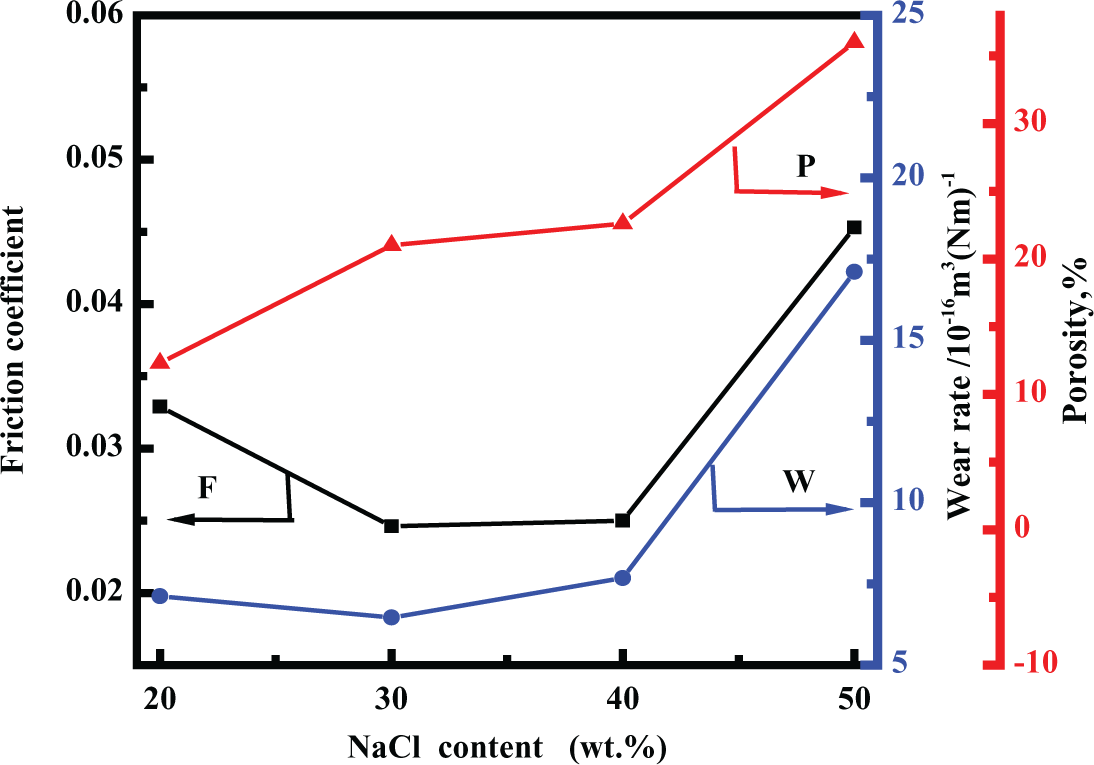
The friction coefficient, wear rate and porosity of porous polyphenylene sulfide (PPS) composites filled with various amounts of NaCl, under 150 N, 1.4 m/s condition.
The porosity of sintered materials is advantageous in withholding the lubricant. 20 Moreover, the porosity and pore distribution could be controlled by the content of pore-forming agent. From Figure 3, it can be seen that the porosity of porous self-lubricating material increased with the increase in NaCl content. When the NaCl content was less than 30%, pores in the composites were scarce and the porosity was low, which resulted in insufficient grease in the composites, so under this condition it leads to higher friction coefficient and wear rate during sliding. Increasing porosity lead to the decrease in the bearing capacity and oil leakage of porous PPS self-lubricating materials, as a result, the friction coefficient and wear rate became poorer when the NaCl content was more than 30%.
The effect of zeolite content on tribological properties of porous PPS self-lubricating composites
The results of tribological performances and counterpart surfaces temperature of porous PPS self-lubricating composites filled with various amounts of zeolite at the load of 150 N are presented in Figure 4. It can be seen that the tribological performances and counterpart surface temperatures of porous PPS self-lubricating composites decreased at first and then increased with the increase in the content of zeolite. It indicated that the porous PPS self-lubricating materials with 1 wt.% zeolite showed the highest wear resistance and lowest friction coefficient, which were 1.79 × 10⁻¹⁶ m3/Nm and 0.024, respectively. Compared with pure PPS under dry condition, the friction coefficient reduced by 90% and wear resistance enhanced by a factor of 4.67 × 10⁴. It showed excellent self-lubricating and super wear resistance properties. While the wear rate decreased by 3.61 times than that of PPS/30 wt.% NaCl composites, therefore it showed synergistic effect on improving wear resistance.
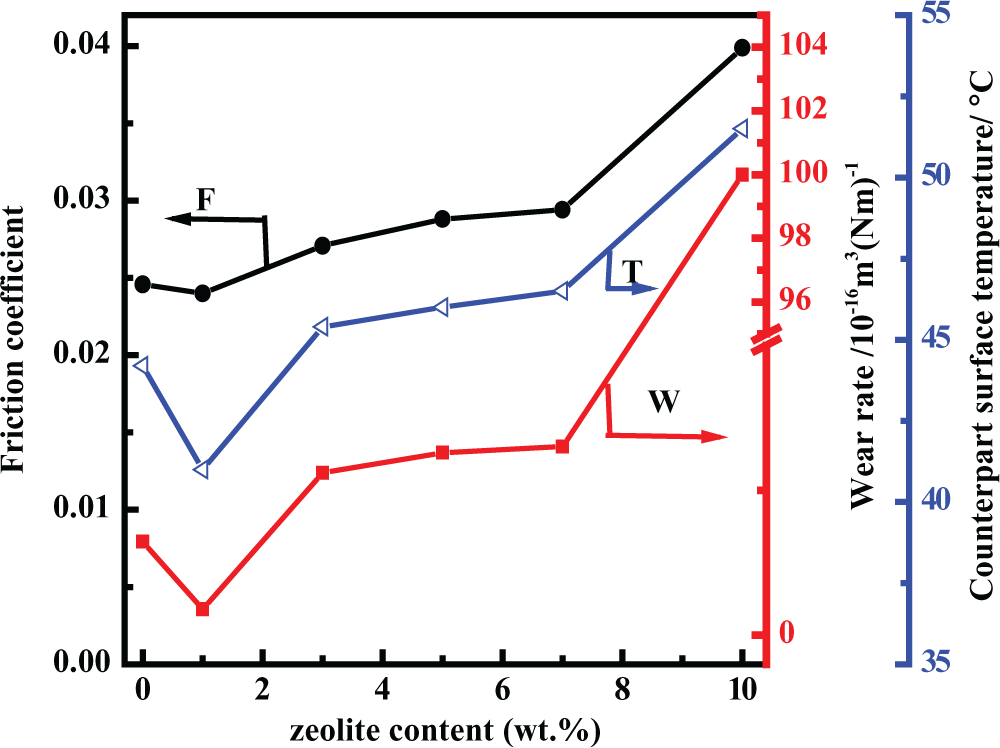
Effect of zeolite content on the tribological performances and counterpart surface temperatures of porous polyphenylene sulfide (PPS) composites under 150 N, 1.40 m/s condition (NaCl content: 30 wt.%).
The micropores of NaCl can reserve grease and the nanopores of zeolites which can act as a grease absorbent thereby increasing the self-lubricating effect. However, with the increasing zeolite’s content, zeolite particles may disperse unevenly and agglomerate in PPS composites, which result in the degradation of wear resistance property.
The temperature on the counterpart ring and the tribilogical results showed the same trend, as shown in Figure 4. The increase in the temperature on the friction surface can decrease the viscosity of grease. When the temperature is lower, grease can be squeezed from the pores of composites, forming the continuous grease layer on the friction surface, which ensured long lasting self-lubrication effect. However, when the temperature is very high, the viscosity of grease decreased substantially. Owing to leakage and volatility of grease, it is difficult to form continuous grease layer on the friction surface, therefore it leads to higher friction coefficient and poorer wear resistance of the porous PPS.
SEM micrographs of cross-section of porous PPS self-lubricating composites
Figure 5 shows the SEM micrographs of the cross-sectional view of porous PPS composite modified with 1 wt.% zeolite before and after impregnating greases. It can be seen that the pores are uniformly distributed throughout the sample (Figure 5(a)). These interconnected pores function in a similar way as the sweat gland of human beings (Figure 1). Under vacuum conditions, lithium-base grease lubricant can be stored and exist in solid state in these orderly pores (Figure 5(b)). The fabrication technology of porous PPS self-lubricating composites whose pores are filled with lithium-base grease made it possible to obtain grease-filled PPS self-lubricating composites.
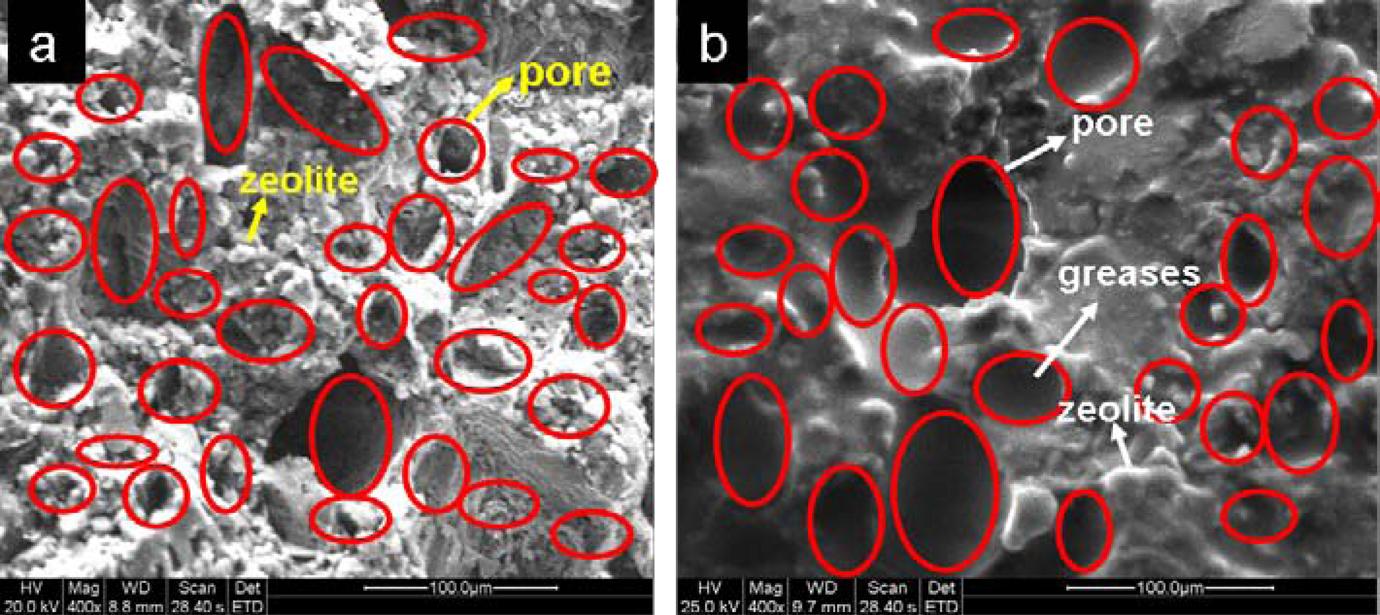
Scanning electron micrographs (SEM) of cross-section of porous polyphenylene sulfide (PPS) material (×400).
SEM micrographs of worn surfaces of PPS composites
For porous self-lubricating materials, self-lubrication was based on two preconditions. 7 One is the lubricants in holes that can reach the sliding surface during friction. The other is that the lubricants have a good lubricating effect. It is usually considered that the supply of the lithium-base grease lubricant from the pores to the contact surface requires the open pores on the surface and sufficient permeability of lithium-base grease lubricant in the porous matrix during the sliding.
To better understand the friction and wear behaviors, the worn surfaces of porous PPS self-lubricating composites were studied with SEM, as shown in Figure 6. From Figure 6(a), it can be seen that the worn surface of pure PPS composite is relatively rough, there were little pores and no grease was observed on the worn surfaces. So, under the dry test conditions, it leads to the higher friction coefficient and wear rates. On the contrary, the worn surface of PPS composites filled with 30 wt.% NaCl formed some pores, which can be seen in Figure 6(b), a fraction of the pores on the contact surface remained open and only some pores were full of grease; and this helped to decrease the friction coefficient and wear rate, while they become somewhat smoother by diffusion and exposure of grease. In contrast to the above, the porous structure of PPS self-lubricating composites with 1 wt.% zeolite (Figure 6(c)) was more ordered, the pores were well distributed and full of grease on the worn surface, so it became relatively smoother by the even diffusion of lubricating grease.
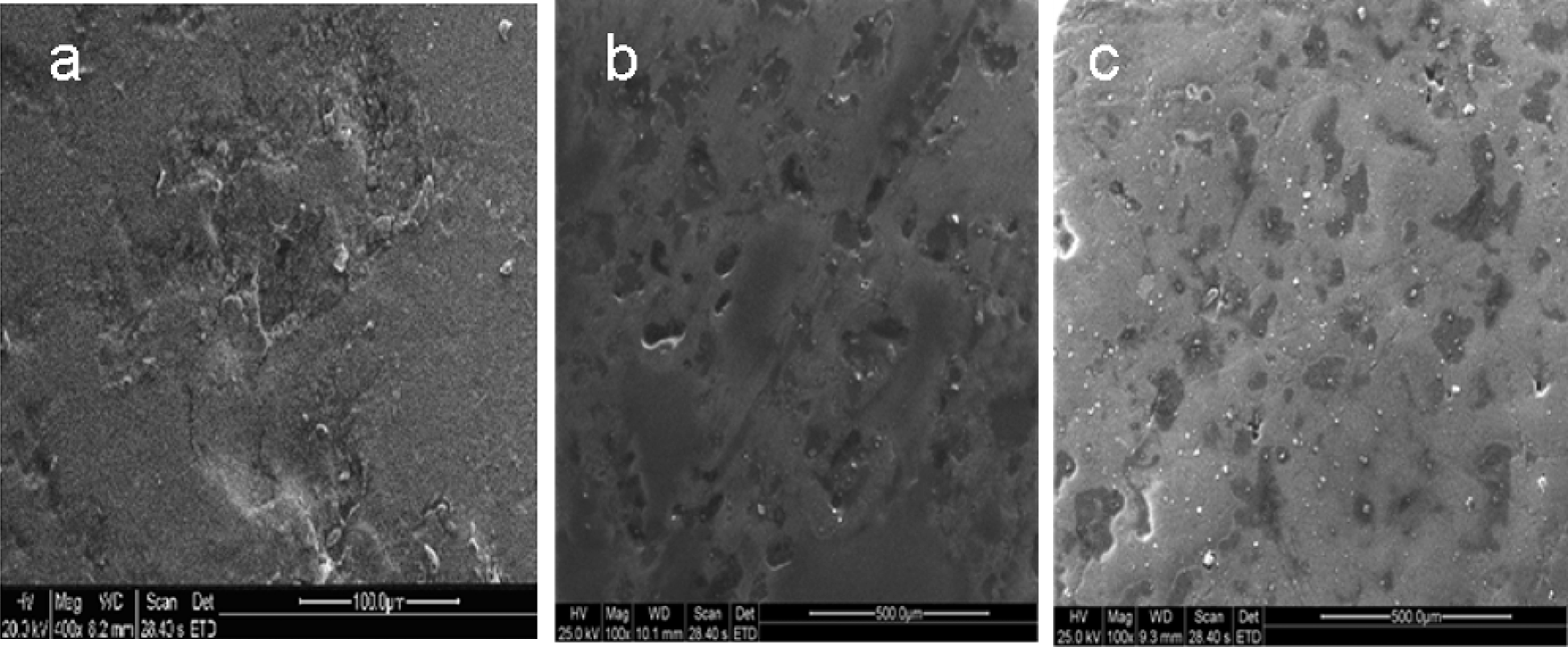
Scanning electron micrographs (SEM) of the worn surface at 1.40 m/s and 150 N: (a) pure polyphenylene sulfide (PPS); (b) PPS/NaCl; (c) PPS/zeolite/ NaCl.
SEM micrographs of counterpart surfaces of PPS composites
The SEM micrographs of the counterpart surface of PPS composites are shown in Figure 7. From Figure 7(a), wear debris and deep nick can be seen on the counterpart surface of pure PPS under dry condition. There was no grease-lubricating layer formed on the counterpart ring. However, lots of nicks appear on the counterpart ring of PPS self-lubricating composite with 30 wt.% NaCl before testing (Figure 7(b)) and uncontinuous grease-lubricating layer can be seen on the worn surface. In contrast to the above, porous PPS self-lubricating composite with 1 wt.% zeolite was relatively smooth and there was no obvious nicks on the counterpart surface (Figure 7(c)). It was covered with continuous grease-lubricating layer which may reduce the friction coefficient and wear rate. The SEM investigations of the counterpart surfaces are in accord with the results of worn surfaces.
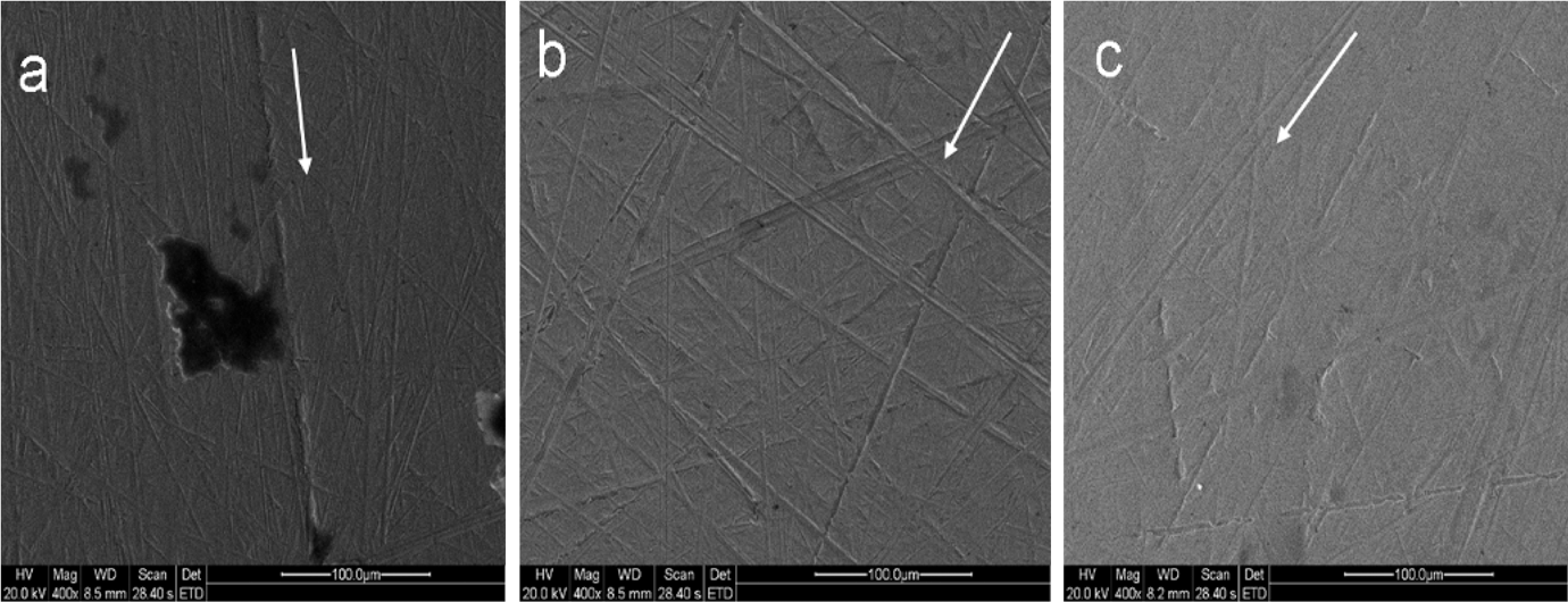
Scanning electron micrographs (SEM) of counterpart surfaces at 1.40 m/s and 150 N: (a) pure polyphenylene sulfide (PPS); (b) PPS/NaCl; (c) PPS/zeolite/ NaCl.
The increase in wear resistance and decrease in frictional coefficient on modification by 1 wt.% zeolite and impregnation with grease may be attributed to the formation of a grease-lubricating layer during friction, which hindered the direct contact between polymer materials and counterpart ring. Mechanical squeezing and even diffusion of the grease through pores are the main lubricating mechanisms, resulting in continuous grease lubricant layer. The grease layer between the polymer and the counterpart ring is helpful to increase the tribological performance of PPS composites.
Conclusions
A new kind of super wear resistance material, the porous PPS self-lubricating composites with sweating effect, was fabricated. The tribological properties were also studied. The following conclusions can be made on the basis of this study:
The lowest friction coefficient and wear rate was obtained by porous PPS self-lubricating composites filled with 1 wt.% zeolite and impregnated lithium-base grease, which were 0.024 and 1.79 × 10⁻¹⁶ m3/Nm, respectively. It showed excellent self-lubricating performance and super wear resistance.
Compared with pure PPS under dry condition, the friction coefficient decreased by 90% and the wear resistance increased by 4.67 × 10⁴ times. The wear resistance enhanced by 3.61 times compared to PPS/30 wt.% NaCl composites, so it showed a synergistic effect on improving wear resistance.
The pores of porous PPS self-lubricating composites with 1 wt.% zeolite were uniformly distributed in the matrix and grease were well embedded in these orderly pores of PPS composites. The unique structure of micropores and nanopores in the composites makes it possible that grease can squeeze mechanically and diffuse evenly to the friction surface under the effect of load and temperature, which is better for forming continuous grease-lubricating layer on friction surface and providing long lasting lubrication.
Footnotes
Funding
The research was financially supported by National Science Foundation of China (Grant No. 50903010, 51175066), New Century Excellent Talent (1251-NCET-007), National Doctor Foundation (20110490114), Provincal Core Teachers (gg1203) and FANEDD-201164.