




Abstract
In the present work, Agave americana fibers have been used as a reinforcement in the preparation of polystyrene matrix-based biocomposites using compression molding technique. The composites thus prepared were subjected to the evaluation of different mechanical properties such as tensile, compressive and flexural strength. The results obtained suggest that composites reinforced with agave fibers exhibited better mechanical properties than neat polystyrene. The morphological and thermal properties of matrix, fibers and composites have also been investigated by scanning electron microscopy and thermogravimetric analysis, respectively. Further composites were subjected to the evaluation of physicochemical properties such as swelling behavior in different solvents and resistance to acid, alkali and salt of 1 N strength for different time intervals.
Introduction
Nowadays, thermoplastic composites reinforced with biomass are an important class of materials round the globe. Although the use of biomass as reinforcement in polymer matrices is not a new practice, due to increased environmental, health and economical concerns, there is a renewed interest in developing such materials. 1–3 Biomass in the form of particles, short fiber and long fibers extracted from different lignocellulosic materials has been used as reinforcement in polymer matrix-based composites. 4–6 Nowadays, biomass-based lignocellulosic fibers are in great demand in the area of thermoplastic composites as compared to traditional synthetic fibers such as carbon, aramid and glass fibers due to many technoecological advantages such as low cost, low density, nonabrasive nature, competitive specific properties, easy processability, low energy consumption, no dermal and respiratory irritation and biodegradability. 7–10 This has led to the enhanced demand of these eco-friendly products in the market.
These composite materials have received much commercial success in the semi-structural as well as structural applications. 11–14 For example, interior parts such as door trim panels from natural fiber polypropylene and exterior parts such as engine and transmission covers from natural fiber–polyester resins are already in use. Advantages of natural fiber-reinforced thermoplastic composites over thermoset composites include the greater design freedom, as they are suitable for injection and extrusion molding, processing and recycling. 15 However, higher strength requirements are needed for these thermoplastic composite materials to be used in semi-structural and structural applications in various fields. The lignocellulosic fiber can be obtained from a wide variety of sources such as flax, jute, hemp, kenaf, ramie, agave, etc. In the plant body, fibers provide structural support by absorbing mechanical stress. By using these fibers in reinforced composites, key properties of plant fibers are transferred to the composites.
In the present study, agave fiber-reinforced polystyrene matrix-based composites were prepared using hot compression molding technique. Agave fibers were reinforced with different percentage loading ranging from 10% to 30% by weight. The composites thus prepared were investigated for mechanical, morphological, thermal, chemical resistance and swelling properties in different solvents.
Experimental
Materials and methods
Matrix
Styrene was supplied by Acros chemicals. Benzoyl peroxide was supplied by CDH chemicals, Central Drug House (New Delhi, India). Polystyrene resin used as matrix polymer was synthesized by benzoyl peroxide initiated polymerization of styrene per the method developed in our laboratory.
Reinforcement
The biomass used as reinforcement was in the form of lignocellulosic fibers extracted from leaves of wild agave plant by the water retting method. After extraction, agave fibers were washed with mild detergent in order to remove impurities and then thoroughly washed with continuously flowing freshwater. The fibers were then dried in a hot air oven at 60°C for 24 hours and finally soxhlet extracted with acetone for 72 hours in order to remove any impurities and waxes. Before reinforcement, agave fibers were chopped into short fibers of length 3–5 mm.
Instruments
Electronic balance of Shimadzu (Libror AEG-220 of Shimadzu Corporation, Kyoto, Japan) was used to weigh samples. Compression molding machine (Santec India Ltd., New Delhi) was used to prepare composite blocks. Compression molding was performed in a hot press using a mold preheated to a temperature of 80°C. The composite sheets of dimensions 150 mm × 150 mm × 10 mm were prepared by hot pressing the mold at 80°C for 6 hours at pressure 200 kg/cm2. The mechanical properties of composites were evaluated on universal testing machine of Hounsfield H25KS (Hounsfield Test Equipements Ltd. Surrey, UK). Morphological studies were carried out on scanning electron microscopy (Leo 435 VP by Zeiss, New York, USA). Before focusing electron beam on the samples, they were coated with gold suspension in order to make them conducting. The image resolution was set at 1000×. The thermal studies were carried out on thermal analyzer (Perkin Elmer Pyris Diamond, Massachusetts, USA) at a constant heating rate of 10°C/min.
Preparation of polymer composites
The polymer composites were prepared in specially designed molds of dimensions 150 mm × 150 mm × 5 mm. The inner surface of the mold was coated with oleic acid in order to have the easy removal of the composites after hardening. Agave fibers were cut into small fiber of length 3–5 mm with the help of chopper and spread between the alternate layers of polystyrene resin. The agave fibers were randomly oriented in each layer and five alternate layers of polystyrene resins were used to prepare the composite sheets. The composites were prepared by hot pressing in compression molding machine maintained at a temperature of 80–85°C under pressure of 200 kg/cm2. The composite specimens were prepared by loading 10%–30% of fibers by weight.
Mechanical analysis
Tensile test
The tensile tests were conducted in accordance with ASTM D3039 on universal testing machine. The samples of dimensions 100 mm × 10 mm × 5 mm were used for analysis. The sample of 100 mm length was clamped between the jaws of machine with each end covering 20 mm of sample. The tensile load was applied over a 60-mm span length at a constant strain rate of 10 mm/min. Tensile load was applied till failure and tensile stress–strain curve was obtained.
Compressive test
The specimens of dimensions 100 mm × 10 mm × 5 mm were used for analysis. The compressive test of composite specimens was carried out on computerized universal testing machine in accordance with ASTM D3410. The compressive load was applied over a 25-mm span length at a constant strain rate of 10 mm/min till failure and compressive stress–strain curve was obtained.
Flexural test
The three-point bending test was performed in accordance with ASTM D790 on universal testing machine. The span length was fixed at 50 mm and the test was conducted at constant strain rate of 2.54 mm/min. The flexural stress–strain curve was obtained.
Morphology and thermal studies
Morphology studies were performed with the help of scanning electron microscopy. The electron micrographs give a clear cut difference between neat resin and loaded composites.
Thermal studies of the samples were carried out on thermal analyzer (Perkin Elmer) at a heating rate of 10°C/min. Thermal analysis of specimen gives information of thermal stability and were carried out as function of weight loss with temperature.
Chemical resistance
Chemical resistance studies were performed as a function of weight loss. The definite weights of sample were immersed in acid, base and salt of 1 N strength for varying time interval. These studies were carried out by immersing samples for 120, 240 and 720 hours. After definite time interval, samples were taken out and weighed. The final weights were noted down and percentage weight loss was calculated as given below.

where W 1 indicates initial weight of sample and W 2 is final weight of sample.
Swelling studies
The swelling behavior of composites was investigated in different solvents such as water, ethanol and n-Butanol. The definite weights of samples were immersed in definite volume of solvent for a time interval of 360 hours. The samples were taken out of the solvents and final weights were noted down. Percentage swelling was calculated as given below.

where W i indicates initial weight of the sample and W f is final weight of the sample.
Results and discussion
The properties of composite material largely depend upon the nature of matrix, reinforcement and distribution and orientation of reinforcement. The evaluation of the mechanical properties of composite materials helps to study the behavior of composites under different conditions of tensile, compressive and flexural load.
Tensile strength
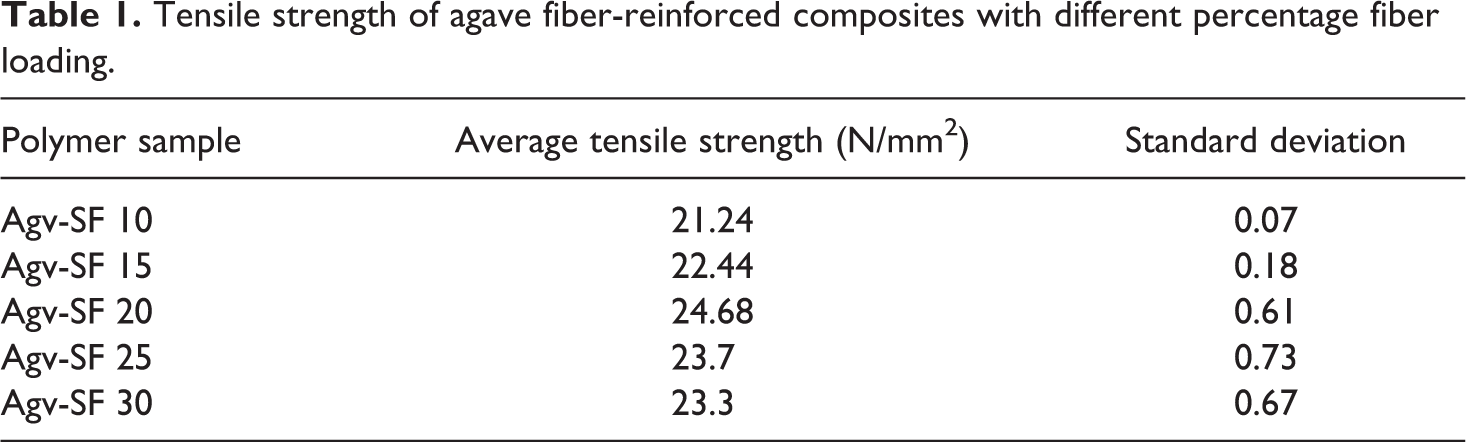
It has been observed that composites reinforced with short agave fibers show better tensile strength as compared to neat polystyrene resin. Neat polystyrene could bear a maximum load of 995 N at an extension of 1.2 mm, whereas composites reinforced with 20% agave short fibers were found to bear a load of 1234 N. Tensile properties of agave fiber-reinforced polystyrene matrix-based composites have been presented in Figure 1. It has been observed that tensile strength of polystyrene composites increases initially up to 20% fiber loading and decreases with further increase in fibers loading up to 30%. This behavior could be explained on the basis that with an initial increase in the fiber content more and more load is transferred on to the fibers resulting in higher tensile strength. The composites with 10% fiber loading show minimum tensile strength that may be attributed to the availability of insufficient amount of fiber required to transfer load from polymer matrix. The average tensile strength of polystyrene composites reinforced with different weight percentage loading of agave fibers has been represented in Table 1.
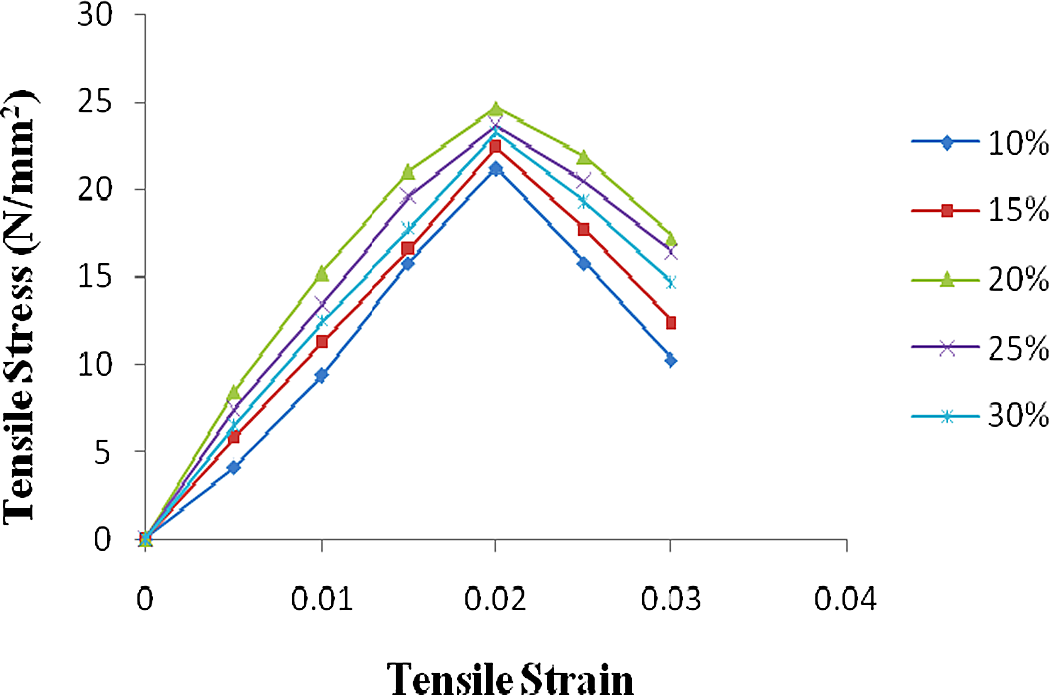
Tensile stress–strain curve for Agv-SF-rnf-PS composites.
Tensile strength of agave fiber-reinforced composites with different percentage fiber loading.
Compressive strength
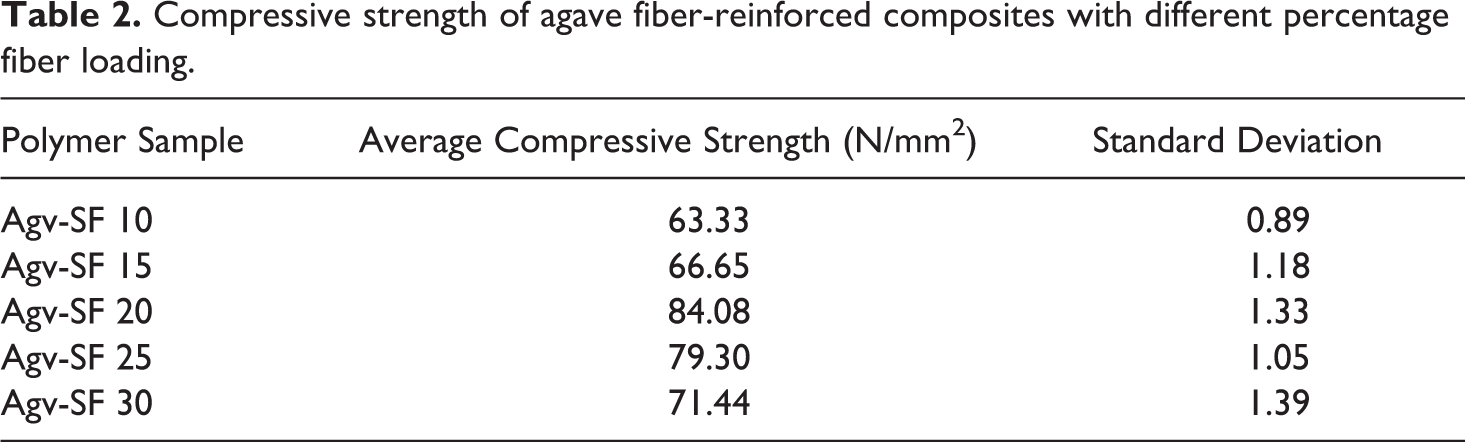
It has been observed that composites reinforced with short agave fibers showed better compressive strength when compared to neat polystyrene resin. Neat polystyrene could bear a maximum load of 2640 N at an extension of 2 mm, whereas composite reinforced with 20% agave short fibers could bear a load of 4218 N. Compressive properties of agave fibers that reinforced polystyrene matrix-based composites have been presented in Figure 2. From the figure, it is evident that compressive strength increases with initial increase in fiber loading, becomes maximum at 20% loading and then decreases with further increase in fiber loading up to 30%. The average compressive strength of polystyrene composites reinforced with different weight percentage loading of agave fibers has been represented in Table 2.
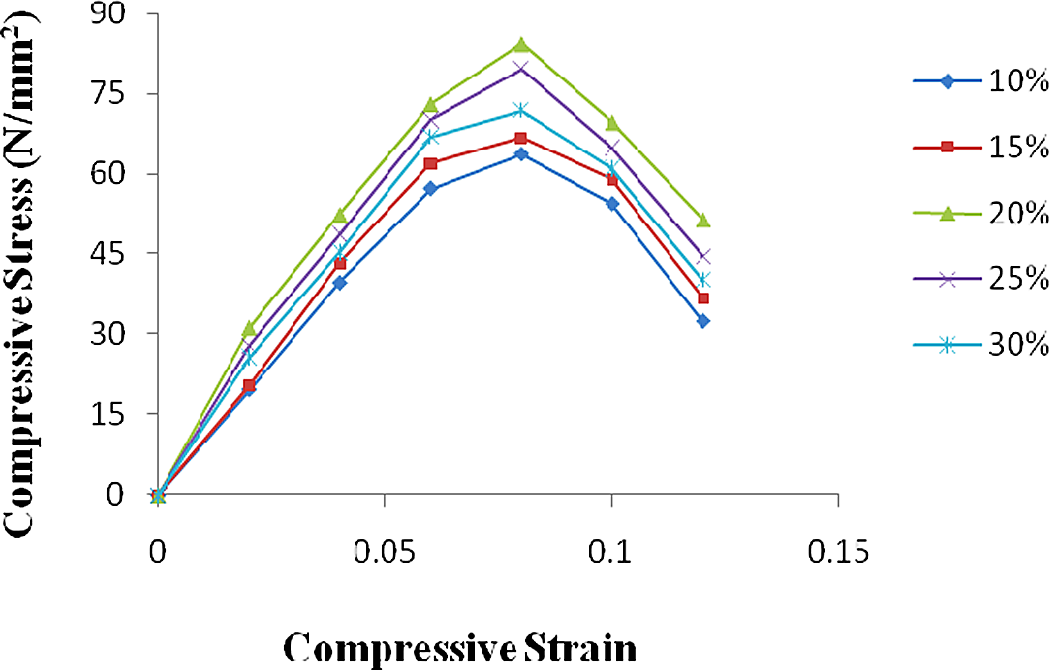
Compressive stress–strain curve for Agv-SF-rnf-PS composites.
Compressive strength of agave fiber-reinforced composites with different percentage fiber loading.
Flexural strength
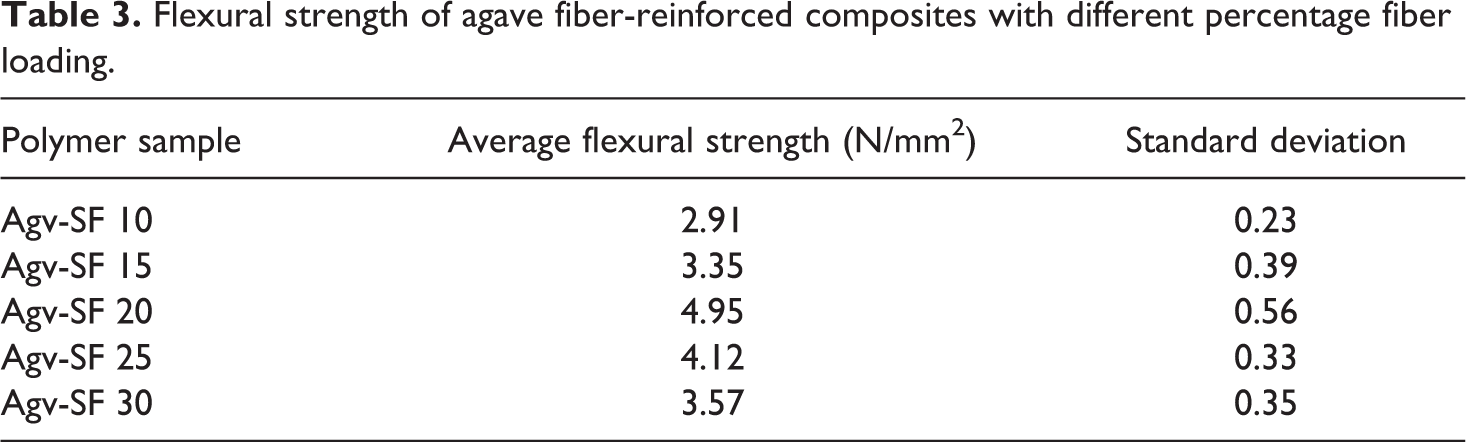
Composites reinforced with short agave fibers show similar trend in the flexural properties as in the case of tensile and compressive strength. Figure 3 represents flexural stress–strain curve of polystyrene resin reinforced with different weight percentage of agave fibers. The composites could withstand a load of 246.75 N with deflection of 0.8 mm before bending failure when compared with neat polystyrene that could withstand a load of 115.62 N only. Flexural strength of agave fiber-reinforced polystyrene matrix-based composites has been presented in Table 3.
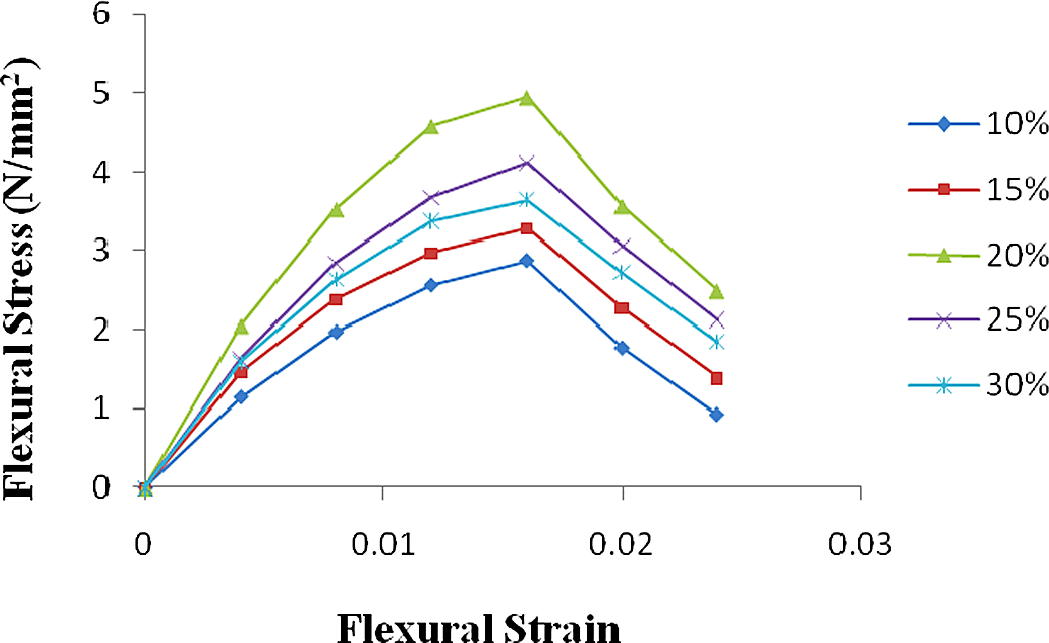
Flexural stress–strain curve for Agv-SF-rnf-PS composites.
Flexural strength of agave fiber-reinforced composites with different percentage fiber loading.
Morphology and thermal studies
Figures 4 and 5(a, b) show scanning electron micrographs of neat polystyrene and composite reinforced with agave short fibers, respectively. From the electron micrographs, it is clear that there is a change in the morphology of the matrix upon reinforcement with lignocellulosic fibers. It has been observed from the microstructure of composite sheet (Figure 5b) that during compression molding process, a strong interface is developed between agave fibers and polystyrene matrix, which facilitates the transfer of load from matrix onto fibers. The micrograph clearly indicates the formation of interfacial bond between agave microfibrils and polystyrene resin. These interfacial interactions are responsible for enhanced mechanical properties of composites when compared to neat polystyrene.
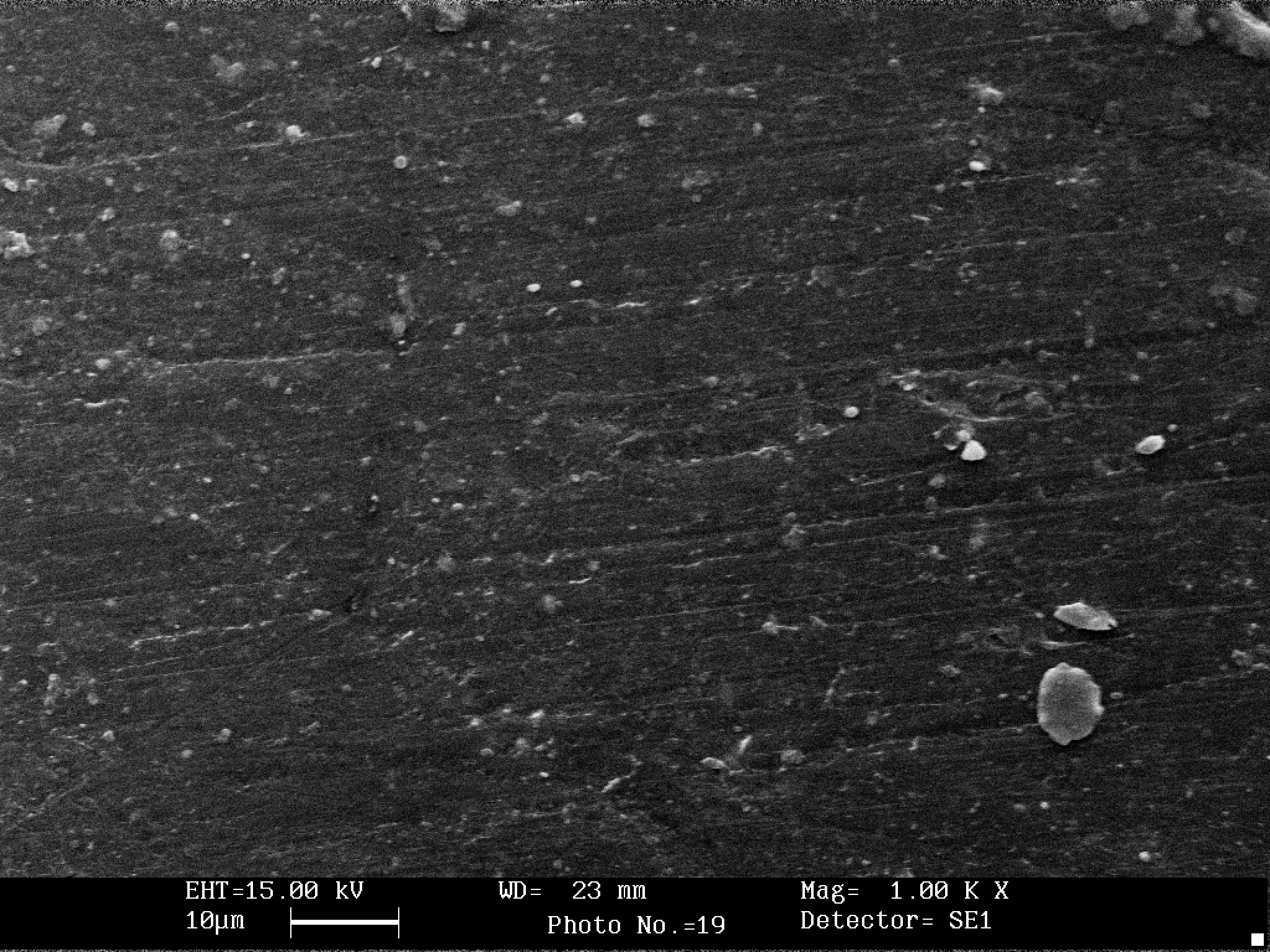
Scanning electron micrograph of neat polystyrene.
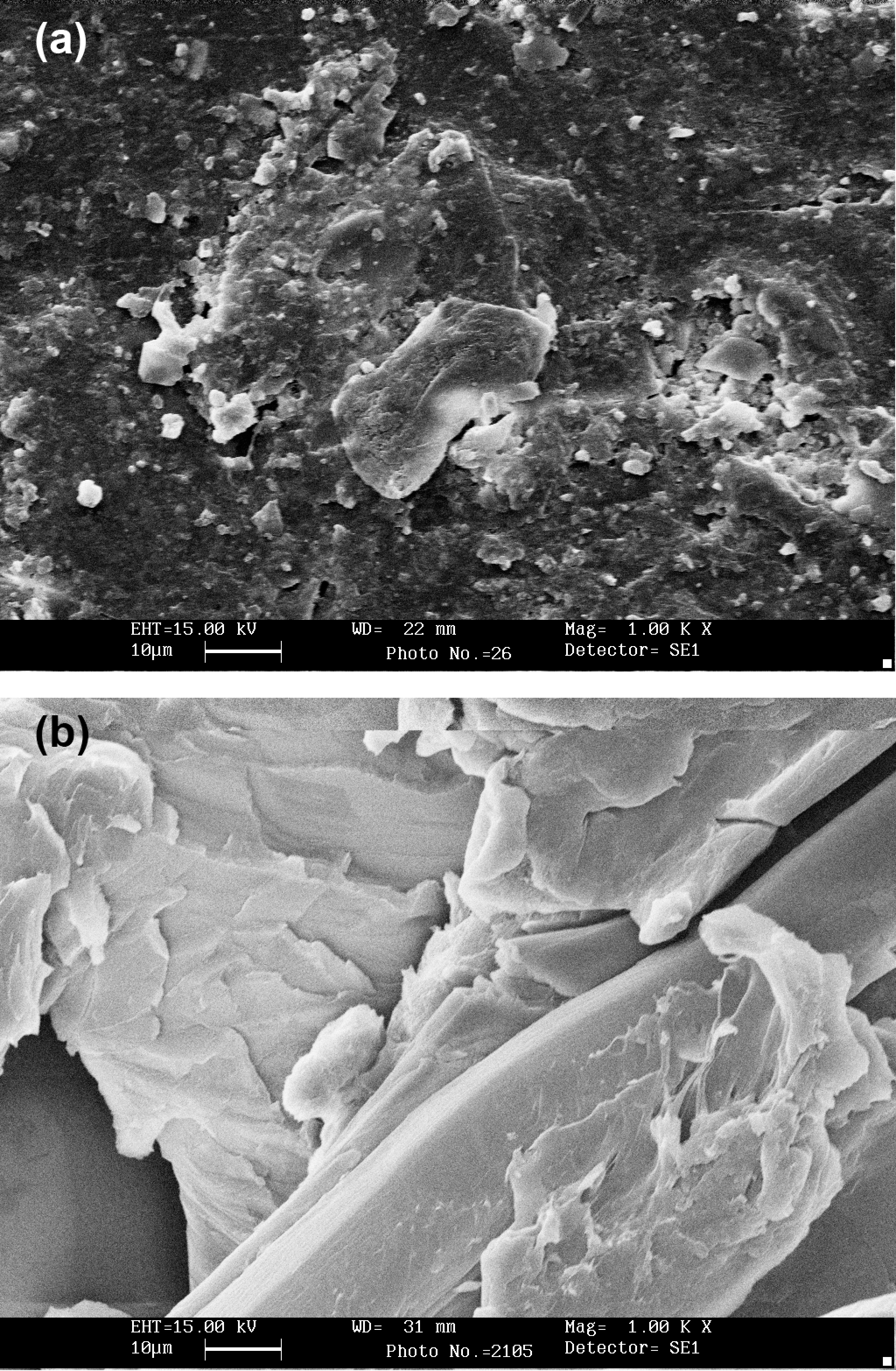
(a, b) Scanning electron micrograph of agave fiber-reinforced composite (20% fiber loading).
Thermal properties of agave fibers, neat polystyrene and composites reinforced with agave short fibers were investigated as a function of percentage weight loss with increase in temperature. The initial decomposition temperature and final decomposition temperature of agave fibers, neat resins and composites are represented in Table 4. From the table, it is evident that there is an increase in the decomposition temperature of the composite when reinforced with agave short fibers. This increase in the decomposition temperature of composite is due to better surface adhesion of the fibers with polystyrene matrix. Figures 6 –8 depict thermal behavior of raw fiber, neat polystyrene and polystyrene reinforced with short agave fibers.
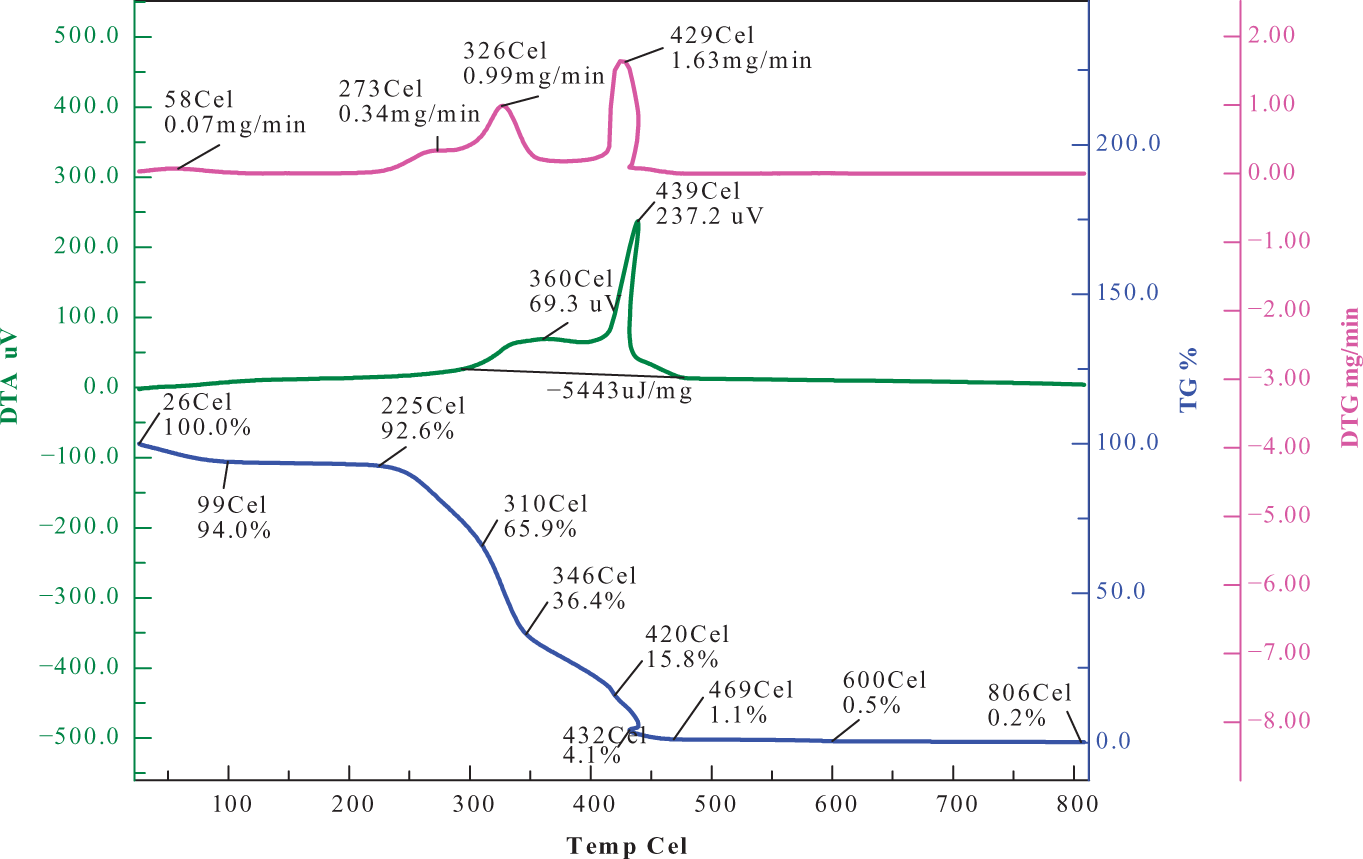
Thermogram of raw fiber.
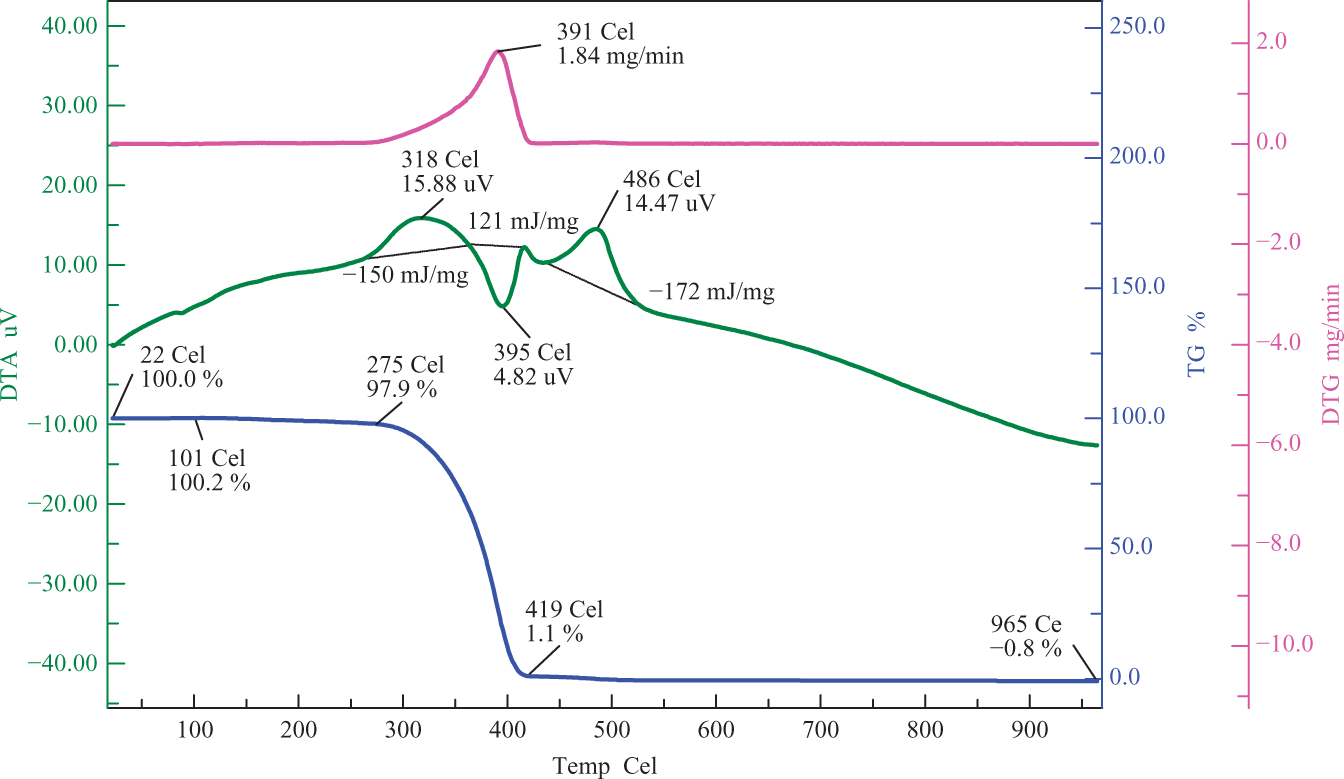
Thermogram of neat polystyrene.
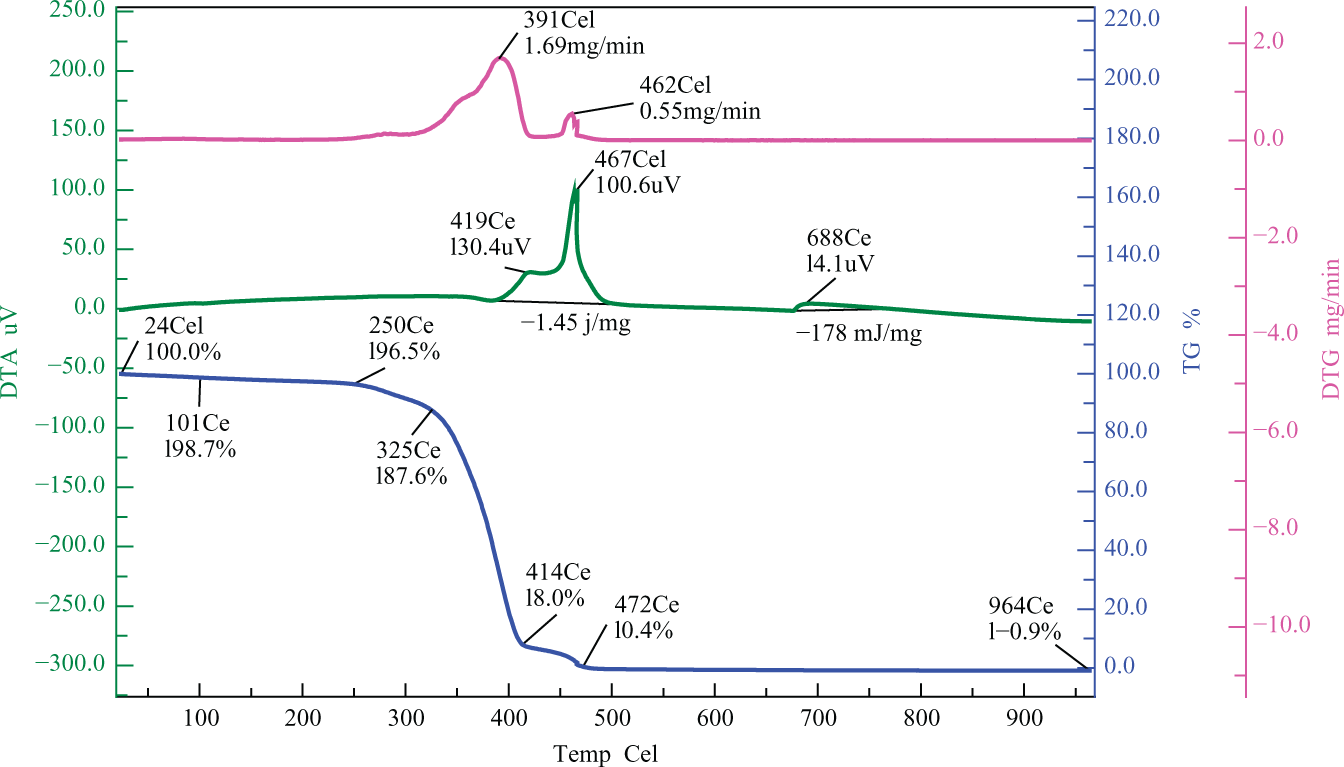
Thermogram of Agv-SF-rnf-PS composite.
Thermogravimetric/differential thermal analysis of fiber, PS resin and SF-rnf-PS.
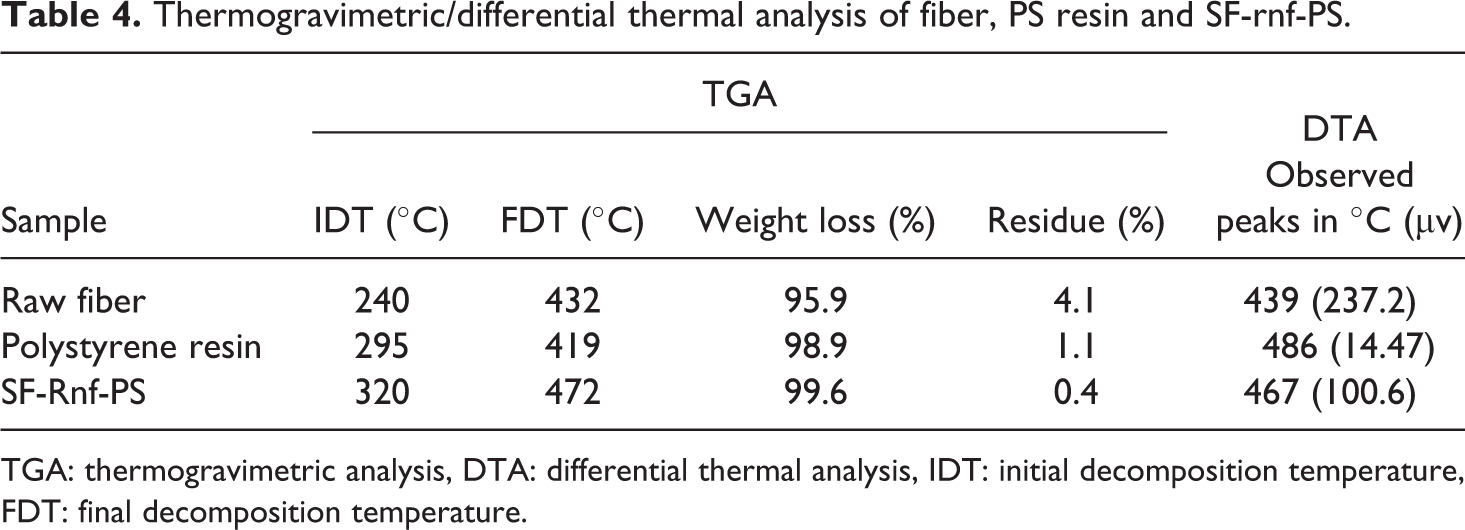
TGA: thermogravimetric analysis, DTA: differential thermal analysis, IDT: initial decomposition temperature, FDT: final decomposition temperature.
Chemical resistance studies
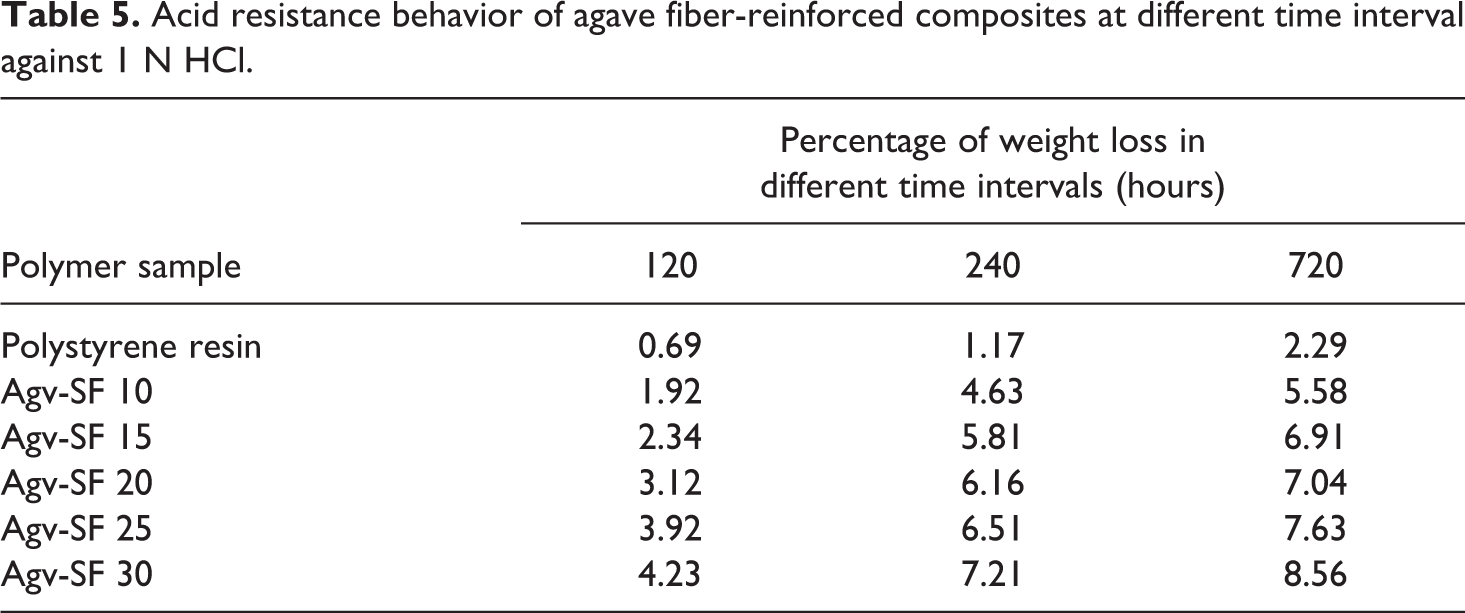
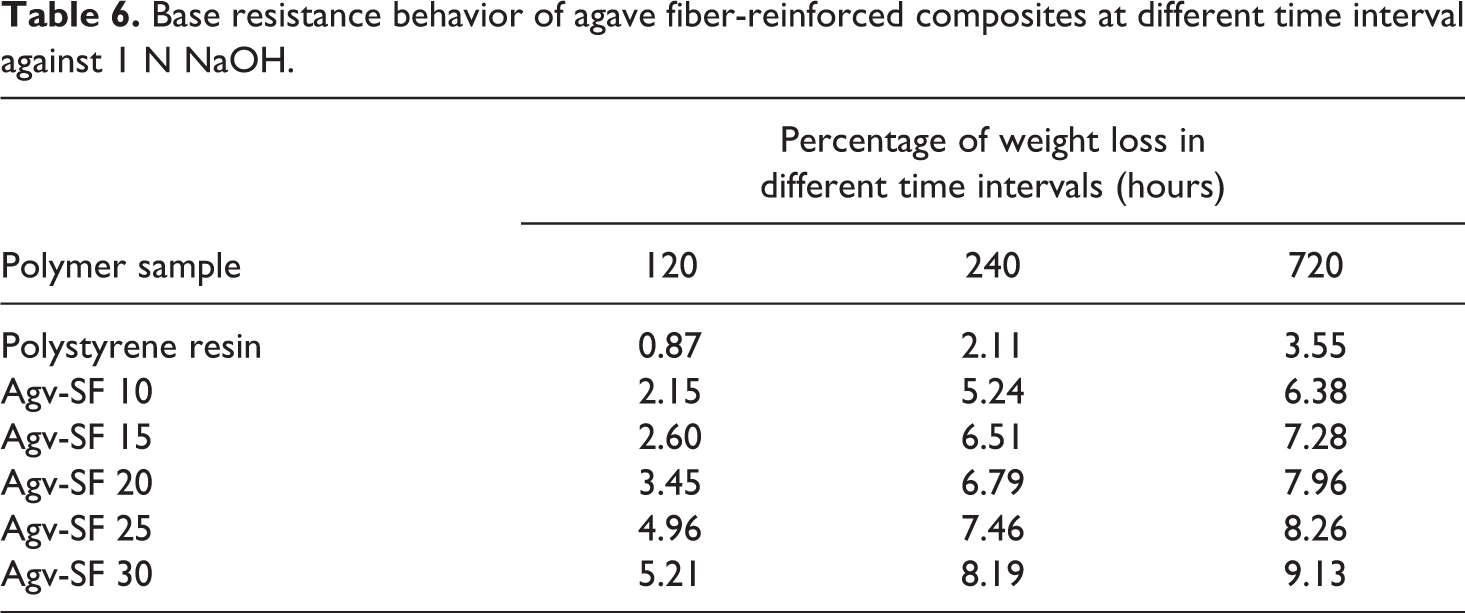
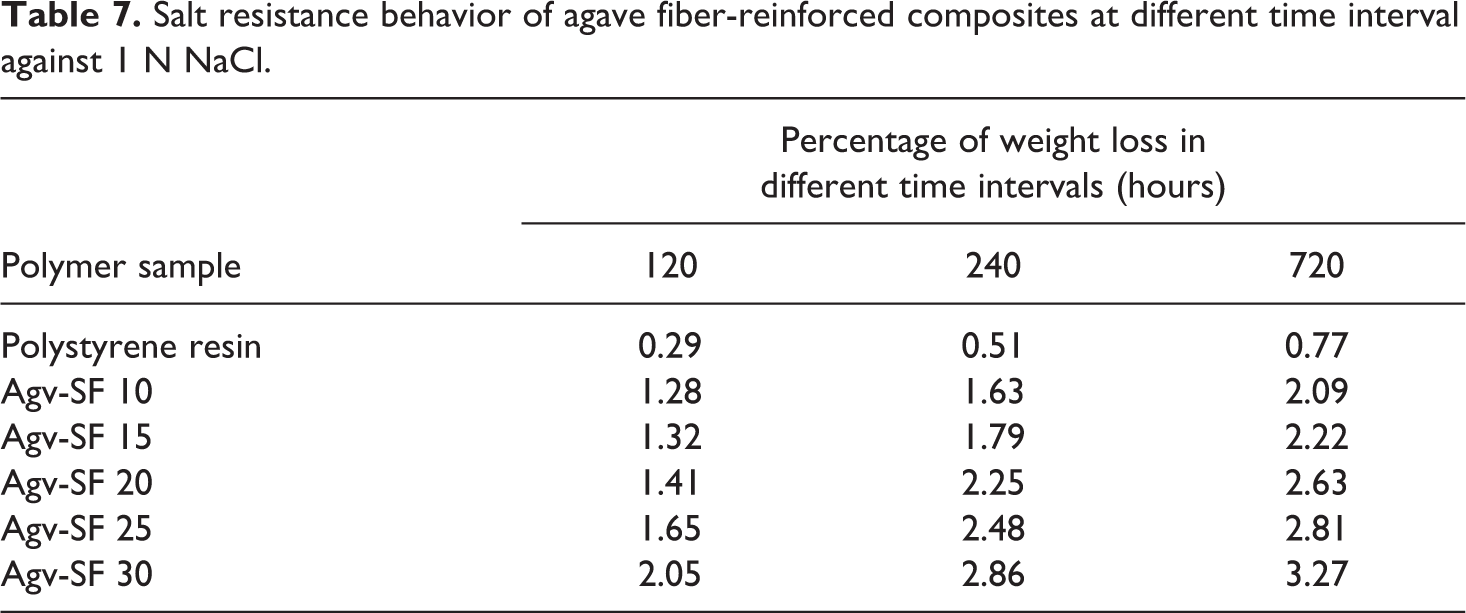
Acid, base and salt resistance behavior of agave fiber-reinforced composites has been depicted in Tables 5–7, respectively. It has been observed from these studies that chemical resistance decreases as percentage fiber loading increases. This behavior of composites toward chemicals can be attributed to more vulnerability of lignocellulosic fibers toward chemical attack. As the percentage loading increases, fiber content in the composites also increases, which leads to more weight loss.
Acid resistance behavior of agave fiber-reinforced composites at different time interval against 1 N HCl.
Base resistance behavior of agave fiber-reinforced composites at different time interval against 1 N NaOH.
Salt resistance behavior of agave fiber-reinforced composites at different time interval against 1 N NaCl.
Swelling behavior studies
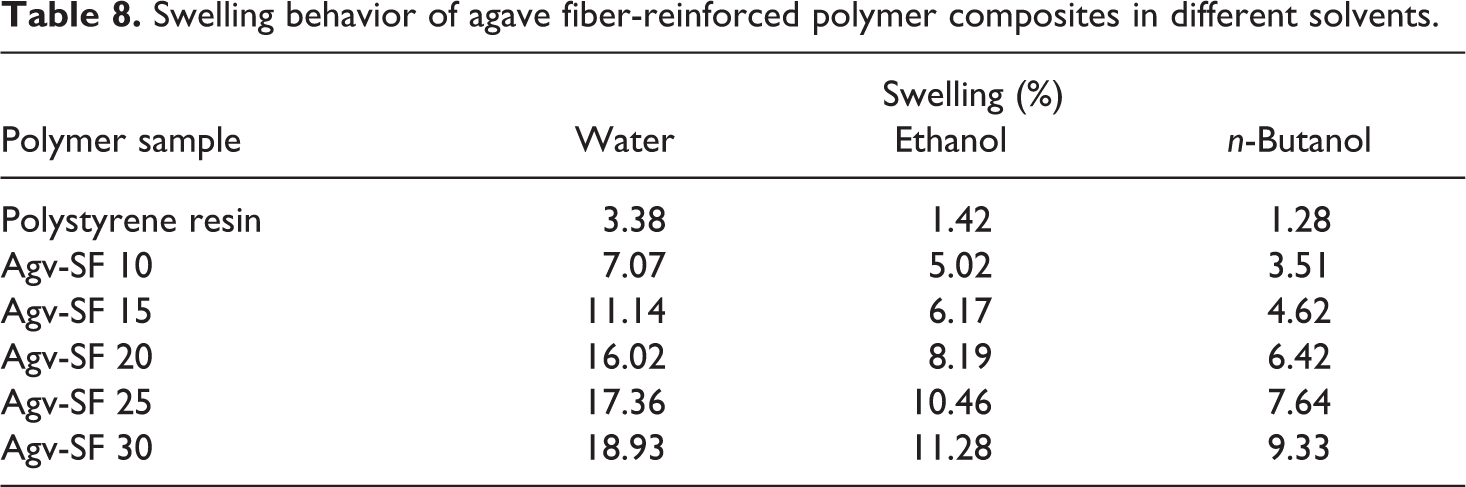
Swelling behavior of agave fiber-reinforced composites follow the order: water > ethanol > n-butanol. Composites show maximum swelling in water, which can be attributed to the presence of hydrophilic hydroxyl groups on the lignocellulosic fibers resulting in greater affinity toward water. Further percentage swelling in water increases with increase in percentage of fiber loading. Table 8 depicts the results of swelling studies in different solvents.
Swelling behavior of agave fiber-reinforced polymer composites in different solvents.
Conclusions
Polystyrene matrix-based thermoplastic composites have been prepared by reinforcing short agave fibers with 10%–30% fiber loading. It has been concluded from the present study that composites reinforced with 20% fiber loading exhibited the best mechanical properties. Furthermore, thermal stability and chemical resistance of neat polystyrene increases upon reinforcement with short agave fibers.
Therefore, the present work ensures the proper utilization of waste biomass and at the same time these composites thus prepared are environment friendly due to their biodegradable nature. These fibers could be a best substitute to harmful synthetic fibers being used as reinforcement for preparing a variety of polymer-based composites.
Footnotes
Acknowledgements
The authors thank the Director, National Institute of Technology, Hamirpur, for providing necessary laboratory facilities.
Funding
This work was supported by Ministry of Human Resource Development (MHRD), New Delhi.