




Abstract
Polypropylene (PP) hybrid composites filled with wood flour (WF) and short glass fiber were prepared by melt blending and injection molding. Maleic anhydride-grafted PP (PP-g-MA), glycidyl methacrylate-grafted PP (PP-g-GMA), maleic anhydride-grafted ethylene-octene copolymer (POE-g-MA), and maleic anhydride-grafted hydrogenated styrene-butadiene-styrene (SEBS-g-MA) were used as the compatibilizers to enhance the interfacial adhesion between PP and the fillers. The effect of the types and contents of graft polymer on the crystallization and melting behavior, micromorphology, mechanical property, moisture resistance, and thermal stability of PP hybrid composites was observed. The result showed that PP-g-MA and PP-g-GMA had strong heterogeneous nucleation and promotion effect on PP crystallization. PP-g-MA was superior to enhance the tensile, flexural, and impact properties of composites. Hybrid composites had excellent moisture resistance and low water absorption. WF and PP macromolecular compatibilizer could improve the thermal stability of PP composites, in which the most obvious effect was obtained in PP-g-MA-modified WF and short glass fiber hybrid system. As a result, PP/WF composite could achieve outstanding improvement effect by being modified with macromolecular compatibilizer.
Keywords
Introduction
In recent years, as resource scarcity, energy shortage, and environmental pollution have already become pressing concerns, increasing attention has been paid on the use of native cellulose fibers (NCF) as reinforcements in polyolefines composites (NCFRP). Except for the basic properties of mineral fibers, NCF also has many other advantages such as low cost, low weight, high strength, and so on, therefore, NCF are expected to replace traditional mineral fibers as reinforcements in polyolefines composites in the application of aviation, automotive, construction, textile, furniture, and other areas. In our pervious research, polypropylene (PP) hybrid composites filled with wood flour (WF) and needle-like minerals including silicon dioxide (SiO2) whisker, calcium carbonate (CaCO3) whisker, and short glass fiber (GSF) were prepared by melt blending and injection molding. Among them, GSF was superior to enhance the tensile, flexural, and impact properties of hybrid composites. So WF and GSF were chosen to fill PP in this article.
However, PP does not have any polar groups, and thus the dispersions of NCF are extremely difficult unless proper modifications of PP. An important feature of the compounding processes is the addition of compatibilizers that are required to overcome incompatibility between the polar wood and the non-polar hydrocarbon polymer. Many approaches have been described in the literature aiming to improve the interfacial adhesion between the organic fillers and the polymer matrix.1–5 A prominent method represents the addition of maleic anhydride polymers as compatibilizers.6–9 Since maleic anhydride-grafted PP (PP-g-MA) has been successfully and widely used as a compatibilizer for the NCFRP composites. As far as we know, there has been a few studies on the effect of glycidyl methacrylate-grafted PP (PP-g-GMA), maleic anhydride-grafted ethylene-octene copolymer (POE-g-MA), and maleic anhydride-grafted hydrogenated styrene-butadiene-styrene (SEBS-g-MA) on the properties of NCFRP.
Moreover, compared with mineral fibers-reinforced polyolefines, NCFRP still have rigidity, strength, and water absorption problems that hamper the large-scale application of NCFRP.10,11 In addition, its application as an engineering thermoplastic is somewhat limited because of its relatively poor impact strength, especially at low temperatures.12,13 In order to improve impact toughness of the PP, it is common practice to incorporate elastomers, but its stiffness and tensile strength are thus simultaneously reduced. In general, impact modifiers were added to NCFRP with low toughness to improve the general resilience. Previous researchers have reported that some elastomers such as maleated ethylene–propylene rubber (EPR-g-MA),14,15 polyethylene–octene elastomer (POE), 16 and POE-g-MA 17 have been proven to be effective compatibilizer and toughener to solve the drawbacks mentioned above. However, little work has been done on PP composites filled with WF and GSF toughened with different elastomer. The aim of this study was to evaluate the effect of compatibilizer on the morphology, mechanical, and thermal properties of PP composite containing 30% WF and 10% GSF. This filler content was chosen because the highest values in tensile strength and flexural strength of PP composites were achieved at 30% WF and 10% GSF in our previous research. For convenient comparison, the compatibilizer content was 3% or 6%. The effects of the compatibilizer type and combination on mechanical property, morphology, and thermal behavior were indicated.
Experimental
Materials
A commercial grade isotactic PP (HP500N, MFR = 12 g/10 min at 230°C) used in this study was supplied by Reliance Industries Limited. PP-g-MA (with the MA grafting ratio of 1.0%), PP-g-GMA (with the GMA grafting ratio of 1.0%), POE-g-MA (with the MA grafting ratio of 1.0%), and SEBS-g-MA (with the MA grafting ratio of 1.0%) were supplied by China Guangzhou Lushan Chemical Materials Co., Ltd. The WF was supplied by a wood processing factory in South China and passed through 100 mesh screen. GSFs (E-glass chopped strands) were supplied by Dongguang tiansheng glass fiber Co., Ltd. The diameter of single glass fiber was 13 µm and the length was 4.5 mm.
Preparation of composites and test specimens
Formulation of wood fiber polypropylene composites.
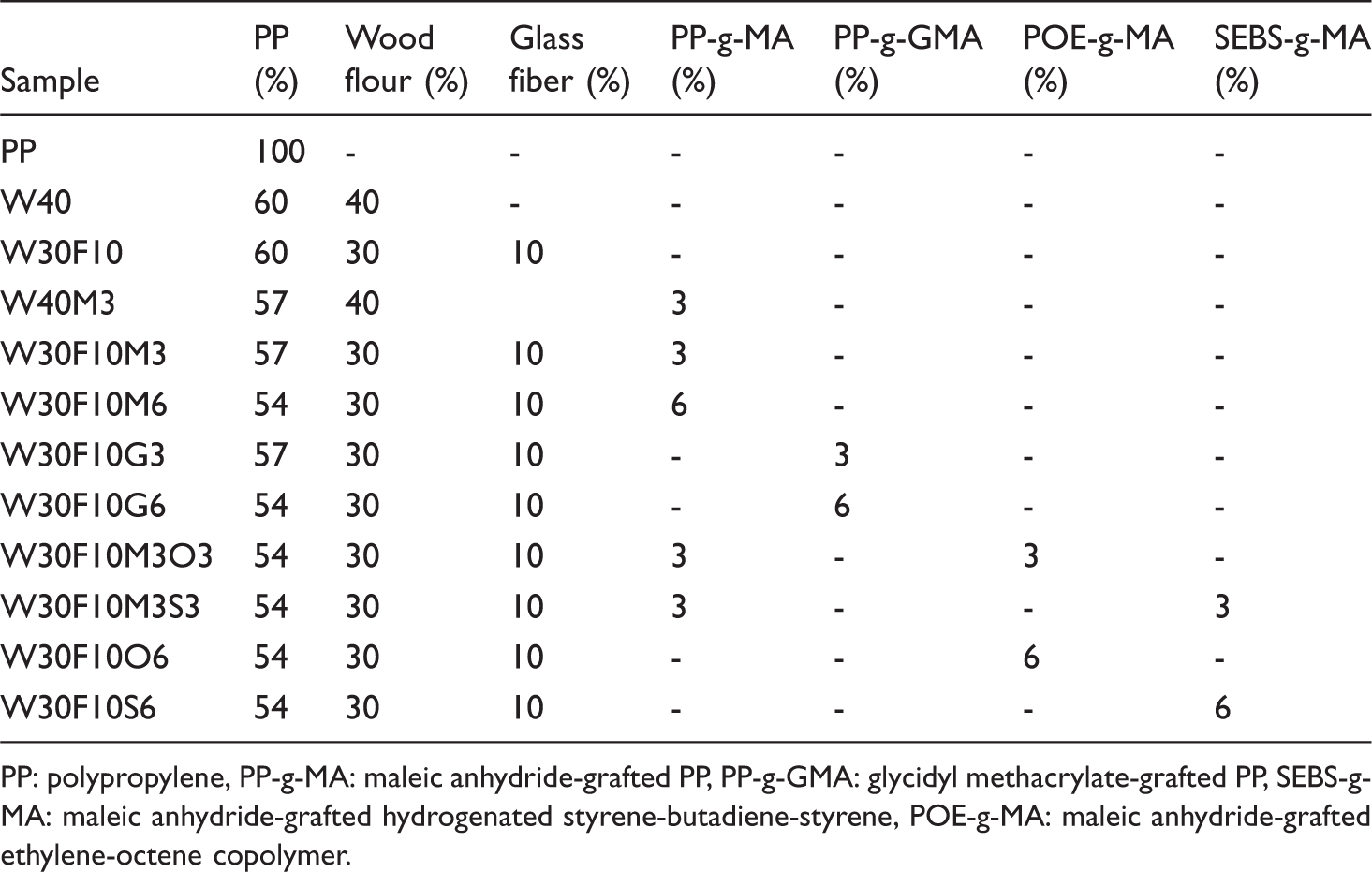
PP: polypropylene, PP-g-MA: maleic anhydride-grafted PP, PP-g-GMA: glycidyl methacrylate-grafted PP, SEBS-g-MA: maleic anhydride-grafted hydrogenated styrene-butadiene-styrene, POE-g-MA: maleic anhydride-grafted ethylene-octene copolymer.
Mechanical testing
Tensile, flexural, and Izod impact tests were carried out according to ASTM Standard. For each test and type of composite, five specimens were tested and the average values are reported. Tensile tests were conducted according to ASTM D 638 using a Universal Testing Machine (Zwick/Roell Z005, Zwick Roell Testing Machines Pvt Ltd) at a crosshead speed of 50 mm/min. Static flexural tests were carried out according to ASTM D 790 using the same testing machine mentioned above at a crosshead speed of 2 mm/min. Izod Notch impact tests were conducted according to ASTM D 256 using a Universal Impact Testing Machine (ZBC-50, China Shenzhen SANS Testing Machine Co., Ltd).
Microstructure analysis
The impact specimens were frozen in liquid nitrogen for 3 h, and then quickly smashed. The fracture surfaces of the specimens were sputter-coated with gold before scanning electron microscope (SEM) analysis. The fracture surface morphology of the composites was observed on a Philips XL-30 ESEM SEM with an acceleration voltage of 15 kV.
Characterization of non-isothermal crystallization and melting behavior
A TA Instruments Q200 differential scanning calorimeter (DSC) was used to study the nonisothermal crystallization and melting behavior of pure PP and the PP/WF composites and was calibrated using the melting temperature and enthalpy of a pure indium standard. About 8–9 mg of the sample was accurately weighted for DSC testing, and all measurements were performed in nitrogen atmosphere. A composite sample was rapidly heated to 220°C and held for 5 min to eliminatethe heat history. Subsequently, it was cooled to 60°C at the cooling rate of 20°C /min for crystallization behavior study. And then, it was reheated to 220°C at 20°C/min for melting behavior study.
Thermogravimetric Analysis (TGA)
The thermal decomposition behavior of the composites was studied by a thermogravimetry (model Q500, TA Instruments) in nitrogen atmosphere with the heating rate of 10°C/min.
Water absorption testing
Water absorption test was carried out according to ASTM D 570-1998 Standard. The sample with the size of 10 mm × 10 mm × 4 mm was put into the drying oven at 50°C for 24 h, and then soaked into the beaker filled with distilled water for 48 h at room temperature. Subsequently, the water on the surface of the sample was wiped off with a filter quickly. The sample was weighed immediately after water immersion. The ratio of the weight gained after being soaked is the water absorbing capacity.
Results and discussion
Mechanical properties
Mechanical properties of composites.
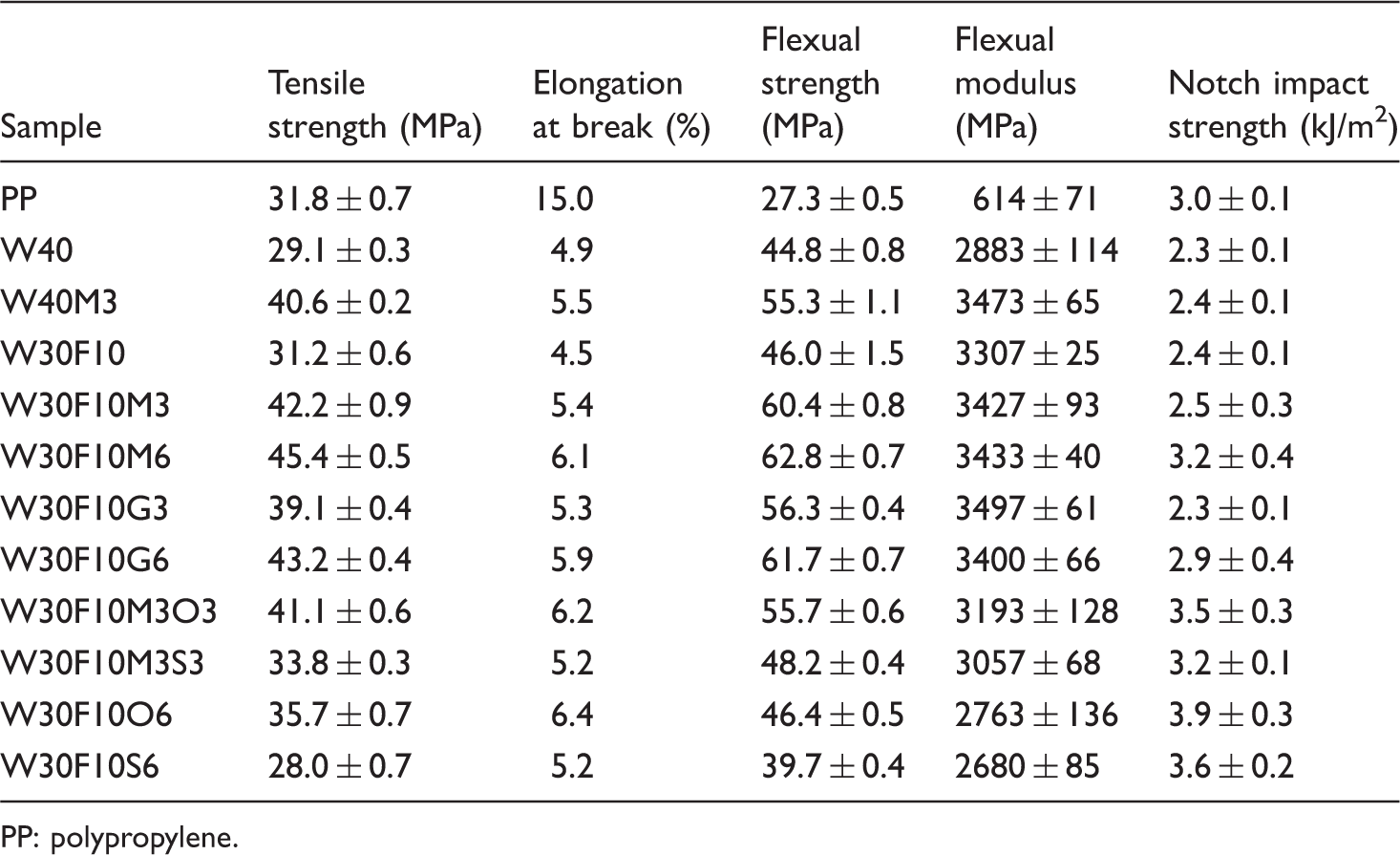
PP: polypropylene.
SEM photographs
SEM photos of fracture surface of NCFRP composites and its modified composites with different compatibilizer are shown in Figure 1. As is seen from the SEM photos of unmodified NCFRP composites (Figure 1(a) and (c)), a coarse surface with lots of exposed WF rod-shaped particles was observed. Fracture was uneven, and the interface between WF particles and PP resin matrix was clear. Compared with unmodified NCFRP composites, the composite modified by PP-g-MA (Figure 1(b)) had a relatively smooth surface, and no rod-shaped particle and cavity were observed. Only a few WF particles embedded in the PP resin, and the interface between them was tight. These indicated that PP-g-MA modified the interface adhesion between WF and PP very well. The ester bond was generated through reaction between the hydroxyl group in wood and anhydride in PP-g-MA, which resulted in the formation of the interface layer and reduced the surface-free energy of wood.
21
The SEM photographs of composites modified by 6% of PP-g-MA, PP-g-GMA, POE-g-MA, and SEBS-g-MA were shown in Figure 1(d), (e), (h), and (i), respectively. Little wood fiber was observed in Figure 1(d), meanwhile, wood fiber and PP matrix was linked closely together while the glass fiber and wood fiber were also close to each other. A small amount of traces of glass fiber left from the PP matrix was seen in Figure 1(e), which maybe the reason of poorer modification effect of PP-g-GMA than that of PP-g-MA. Comparing the SEM photo of Figure 1(f) and (h) with those of Figure 1(g) and (i), the only difference was the content and type of compatibilizer. However, with the addition of POE-g-MA, it can be seen from the SEM micrograph of the W30F10M3O3 and W30F10O6 blends that the dispersed particles are adhered to the matrix by the formation of bridges between the dispersed phase and the matrix (Figure 1(f) and (h)). These results suggest that the formation of these bridges could indicate the existence of interaction between the components. Otherwise, more clusters of WF and glass fiber were seen in Figure 1(g) and (i) with the introduction of SEBS-g-MA. In the melt phase, the POE-g-MA may interact with the evolving PP droplets through van der Waals bonding between the PP chain.
22
So the better improvement of mechanical properties were presented than those of SEBS-g-MA.
Scanning electron microscope (SEM) photographs of polypropylene (PP)/ wood flour (WF) composites modified with different compatibilizer.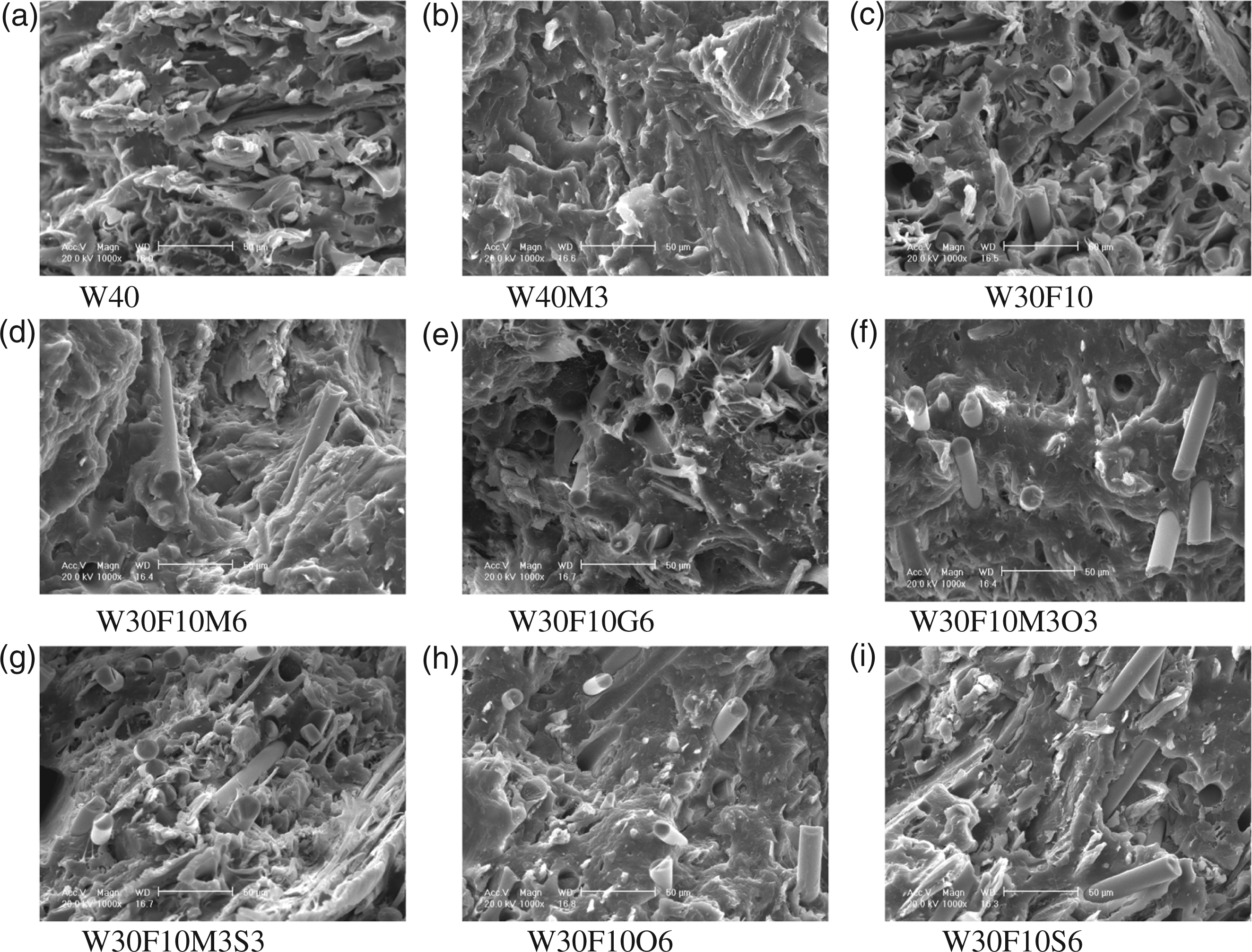
Nonisothermal cystallization and melting behavior
Nonisothermal crystallization and melting parameters of PP/WF composites and its compatibilized composites.
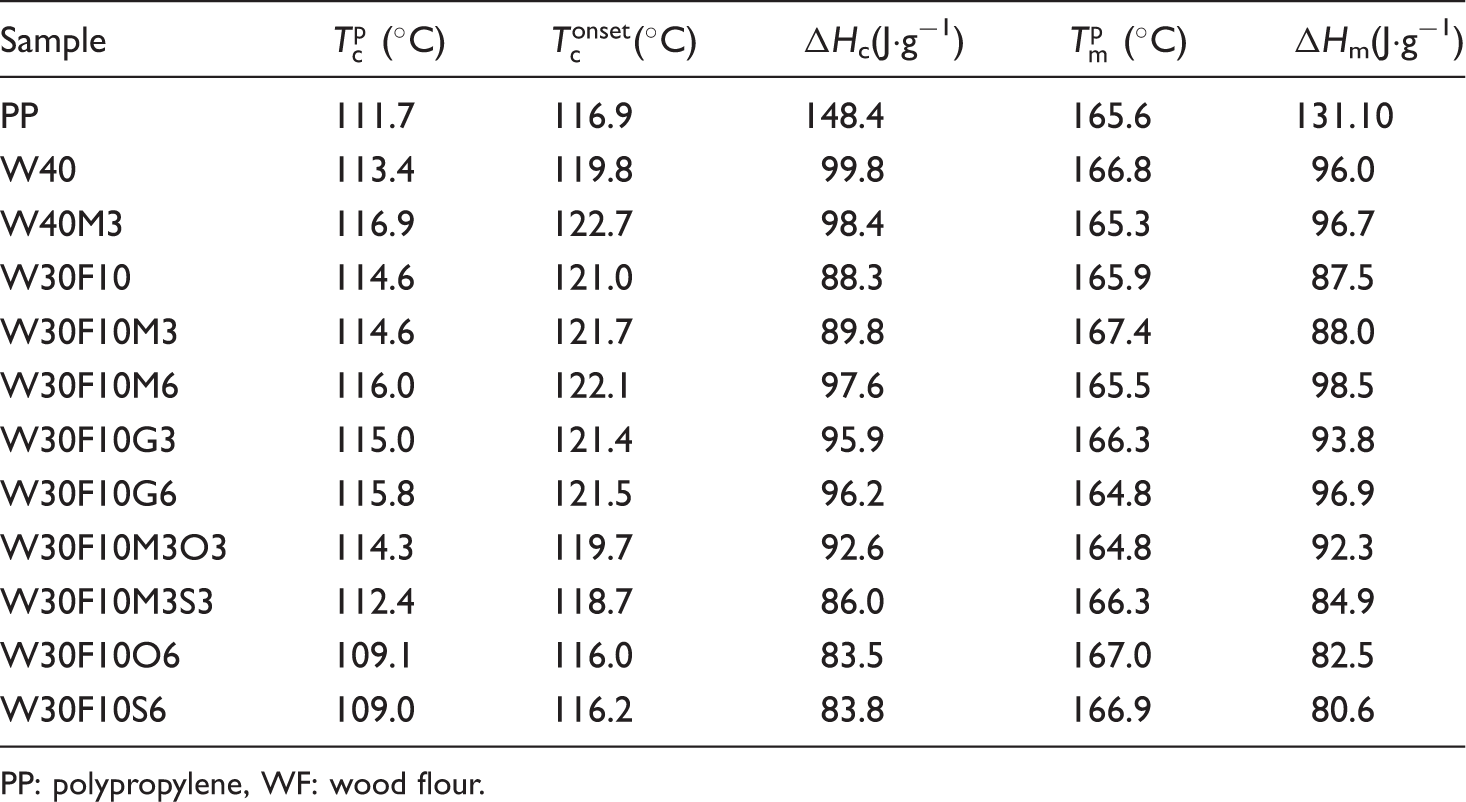
PP: polypropylene, WF: wood flour.
Thermal stability
Figure 2 shows TG and differential thermal gravimetric analysis (DTG) curves of pure PP, PP/WF composites, and its composites modified by different compatibilizers. From these figures, it is clear that the degradation temperature is shifted to a slightly higher region in the case of treated composites than that of untreated composites. This is due to the improved fiber/matrix adhesion during chemical treatment as a result of the formation of bonds existing between fiber and matrix provided by the compatibilizer. It could be seen that only one decomposition stage occurred on the DTG curves of PP. However, three decomposition stages appeared on that of WF/PP composites and PP hybrid composites filled by WF / GSF. The three decomposition stages were in turn corresponding to the early thermal decomposition of WF, the decomposition of PP and pyrolysis of tar substances formed by early thermal decomposition of WF.
26
However, in WF, GSF and graft polymer-filled PP composites, the early stage of thermal decomposition of WF is no longer evident, which is mainly the result of the reaction of hydroxyl groups in the surface of WF particle surface with maleic anhydride groups or glycidyl methacrylate, thereby slowing the release of WF thermal decomposition. The maximum thermal decomposition rate temperature of PP composites filled with GSF and graft polymer was improved compared with that of pure PP and PP composites only filled with WF. The sample W30F10M6 and W30F10G6 displayed the maximum improvement, which raised from 345°C of pure PP to 360°C and 363°C, respectively. On the one hand, graft polymer promoted the dispersion of WF in PP matrix. On the other hand, more difficult tar substance was formed by early thermal decomposition of WF, and these substances were dispersed uniformly in the PP matrix, which effectively improved the thermal stability of PP. Therefore, the addition of SGF and grafted polymer was effective means to improve the thermal stability of PP plastic materials.
TG and DTG curves of polypropylene (PP), wood flour (WF) filled PP and PP/WF modified with different compatibilizer.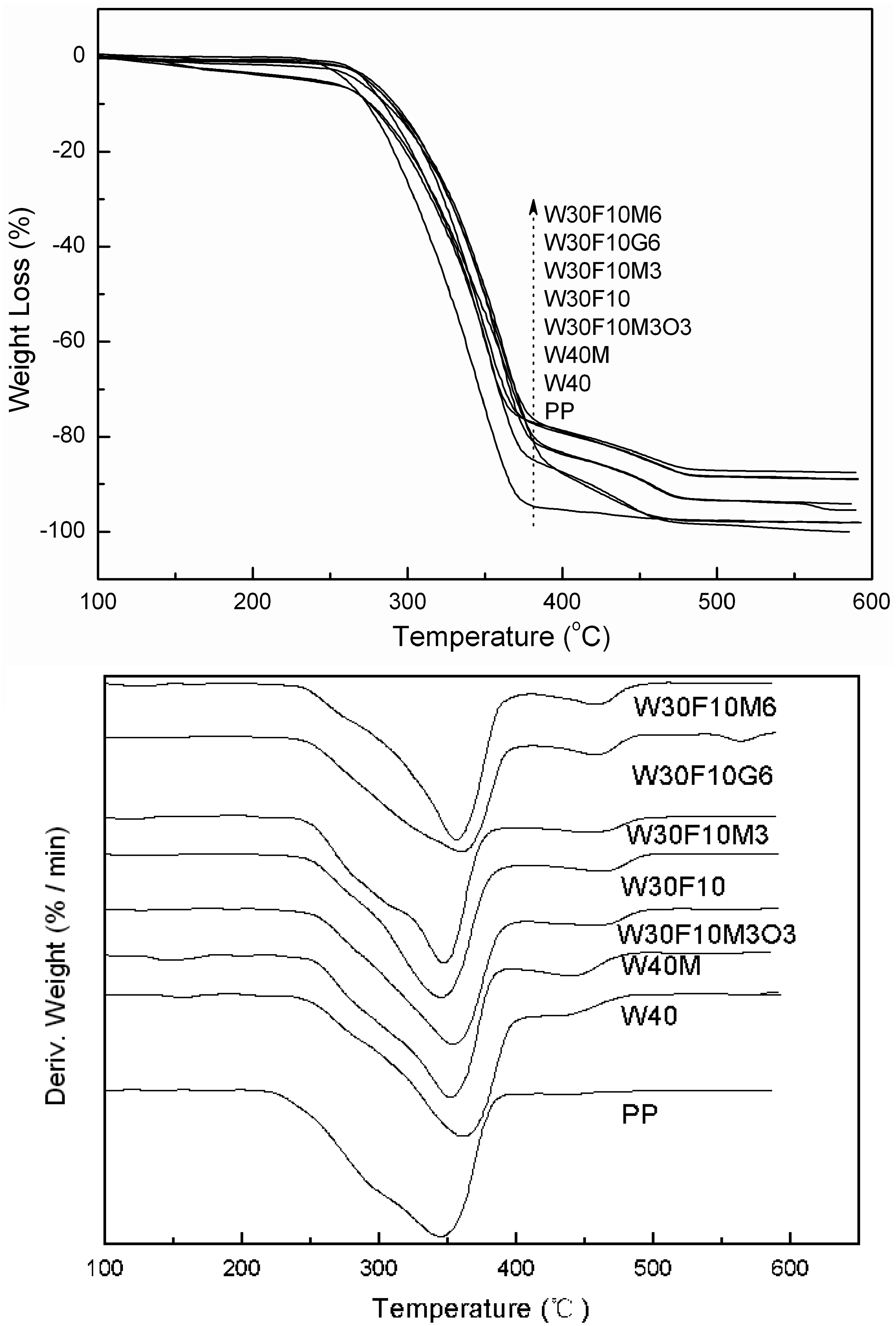
Water absorption
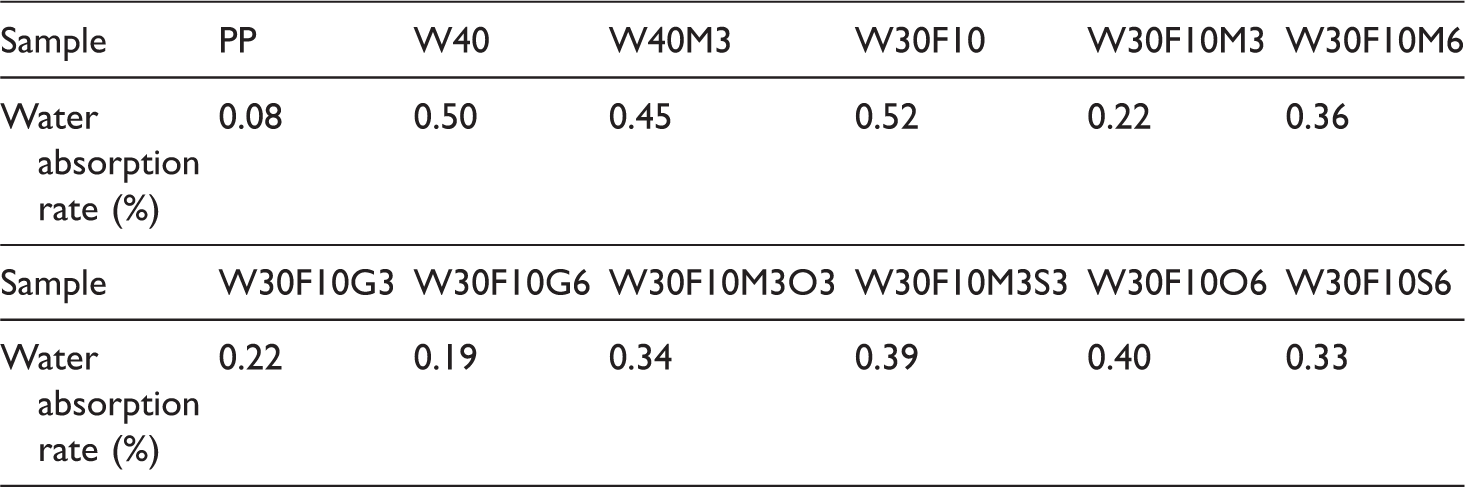
Water absorption data of PP/WF composites.
Conclusions
In this article, PP/WF composites, PP-g-MA, PP-g-GMA, POE-g-MA, and SEBS-g-MA modified PP/WF composites and PP/WF hybridized by GSF were prepared. Meanwhile, mechanical property, thermal behavior, micromorphology, and moisture resistance of composites were studied. The compatibilizer exhibited heterogeneous nucleation and promotion effect on the PP crystallization. The interface adhesion between WF and PP was poor. The addition of PP-g-MA modified the dispersion and the interface adhesion of WF in PP/WF composites, and further upgraded the mechanical properties, especially the tensile strength and toughness. PP-g-MA and PP-g-GMA were beneficial for improving the tensile strength and flexural strength, while POE-g-MA and SEBS-g-MA were beneficial for increasing the impact strength. Inorganic fibers and WF were blended to prepare inorganic-organic hybrid materials. The mechanical property and thermal stabilization of composites were further improved. PP-g-MA had the best effect on the mechanical property improvement, and it simultaneously improved the tensile, flexural, and impact properties of the composites filled with WF and some GSFs. Both WF and compatibilizer exert the positive effect on the improvement of thermal stabilization. Comparatively speaking, the optimal improvement in mechanical property was obtained for PP-g-MA-modified composites filled with WF and GSFs. As a result, PP/WF composite could achieve outstanding improvement effect by being modified with macromolecular compatibilizer.
Footnotes
Acknowledgments
This work was supported by China Guangdong scientific and technological project (No2010B080701060) and Guangdong natural science fund (No8451063201000041).