




Abstract
Casted PVC films with hindered amine light stabilizer (HALS) and antioxidants are photo-irradiated for 400 h and the process of photodegradation is characterized by color differences, ultraviolet-visible (UV-vis) spectroscopy, Fourier transformation infrared (FT-IR) spectroscopy and viscosity-average molecular weight (
Introduction
Poly (vinyl chloride) (PVC) is one of the most important and widely used traditional thermoplastics around the world, due to its low price, good processability, and chemical resistance. 1 – 3 But the poor photo-stability restricts its application outdoors, due to the intrinsic defect of commercially polymerized PVC. 4 To counteract this drawback, light stabilizers have been added to the PVC products. The most popular light stabilizers are ultraviolet absorbers (UVAs), 5 but hindered amine light stabilizer (HALS), 6 commonly thought to be developed as light stabilizers for polyolefins7, 8 are also used in PVC. 9
During the thermal processing and applications of polymer, the effect of heat, oxygen or heat-oxygen induces the structural changes of materials. Thus antioxidants are essential additives for polymer that experiences heat or oxygen. 10 Antioxidants can be divided into two kinds by their functions: one traps free radicals which participate the oxidative cycles of polymer, and the other scavenges hydroperoxide (ROOH).11, 12
Antioxidants are also added inevitably before thermal processing. For example, bisphenol antioxidants are added into flexible PVC to reduce the dehydrochlorination. 13 The mechanisms of action of antioxidants include the trapping of alkyl radicals (e.g. phenylenediamine derivations 14 ), and the degradation of PVC during photo aging is commonly considered to be free radical degradation. The antioxidative effect of antioxidants during the photo aging of PVC is also interesting. Kong et al. 15 find that phenol antioxidants (Irganox 1076 and 1010) protect the discoloring of PVC under UV irradiation sterilization.
The photo stability of antioxidants on PVC has not been studied. They may accelerate the photodegradation of PVC products or protect them from harmful UV rays. In addition, antioxidants are often used in combination with different kinds of antioxidants or thermal stabilizers to obtain optimum stability of PVC. As we know, HALS is a radical trapper, another kind of antioxidant, though it belongs to the category light stabilizers. 14 The combination of antioxidants and HALS in PVC indicates the investigation of combined effect of antioxidants on the photodegradation of PVC. 16
In the previous work, 17 low content of basic HALS (Tinuvin 770) is found to accelerate the photodegradation of PVC films under photo-irradiation. The combination of HALS and benzotriazole type UVA efficiently protects PVC films from dehydrochlorination and oxidation.
Like the former work,18,
19
a series of tests are carried out, to remove the influence of other additives, following the sequence of casted PVC films and then the flexible PVC. In this paper, the photo stability of casted PVC films with three kinds of antioxidants in combination with HALS is evaluated. The analytic methods include color-difference measurements, ultraviolet-visible (UV-vis) spectra analysis, Fourier transform infrared spectra (FT-IR) analysis and viscosity-average molecular weight (
Experimental
Materials
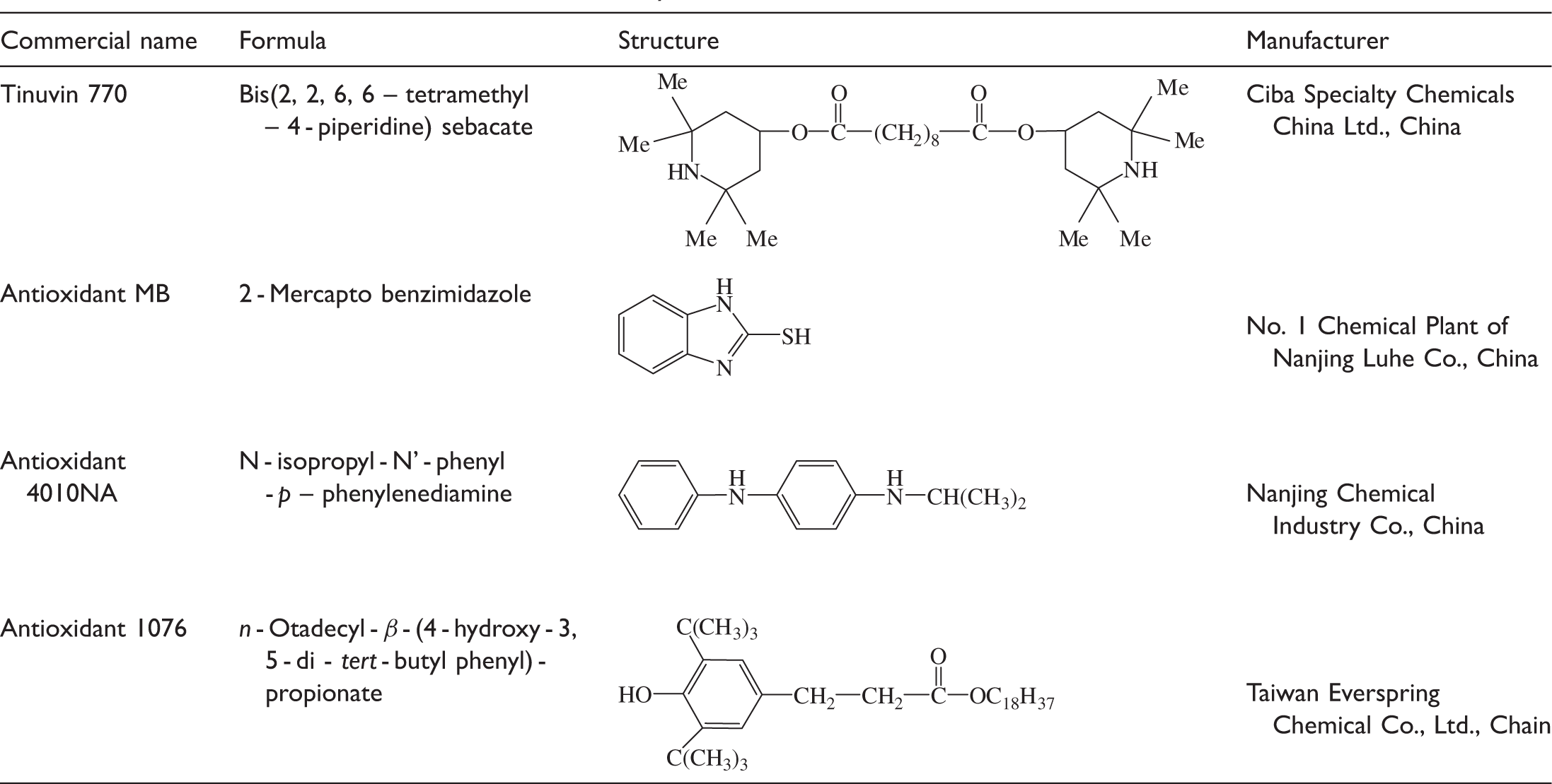
Detailed information of additives used in this study.
Sample Preparation
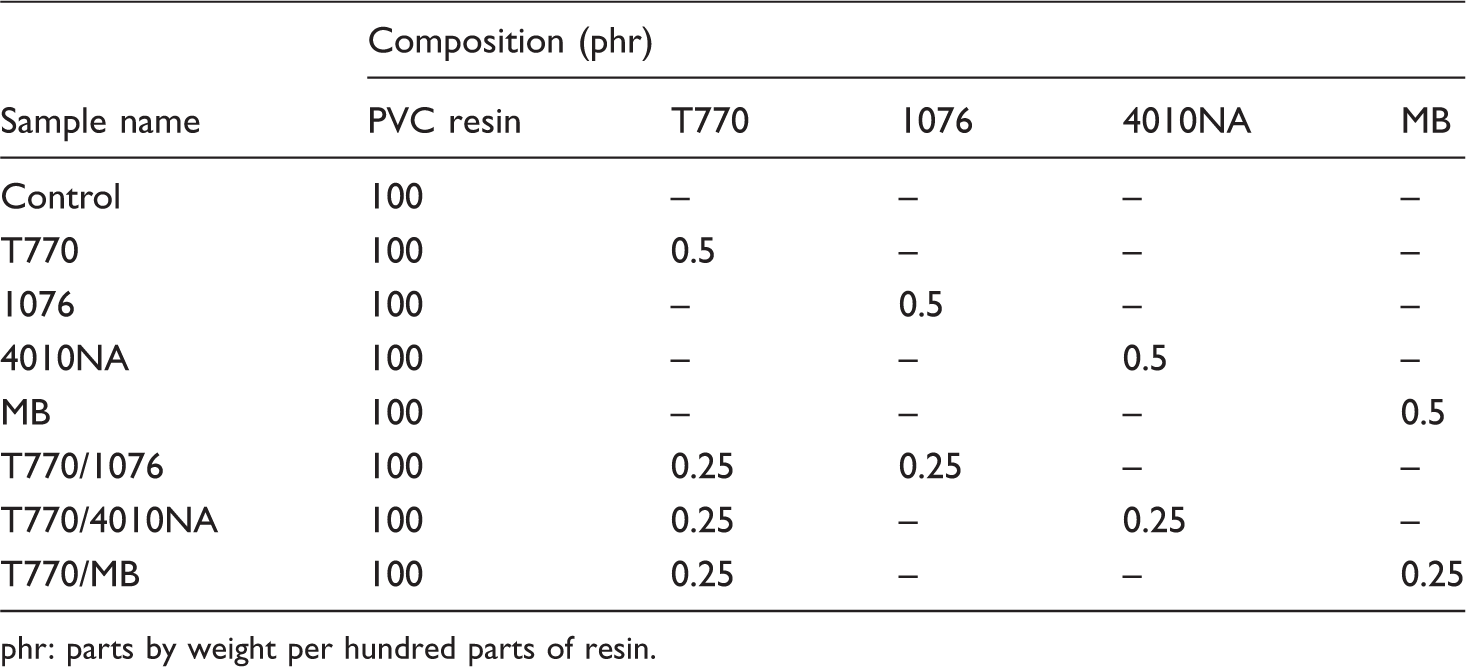
Eight formulations of PVC samples with various additives.
phr: parts by weight per hundred parts of resin.
Photo-Irradiation of PVC Films
PVC films were artificially photo-irradiated in the Q-Sun Xenon Test Chamber (Q-SUN1000, Q-panel Ltd., USA) in the atmosphere of air at 65±3 °C, according to ISO 4892-2:2006. The intensity of the light inside the chamber was 0.51 W/m2 @ 340 nm and its distribution was consistent with sunlight. The total irradiation time was 400 h and the samples were taken out at the interval of 100 h. A black standard thermometer was used to assure the temperature of circulating air at 65 °C during irradiation.
Experimental Analysis
Changes of the color between the irradiated and unirradiated samples were measured by a colorimeter of Konica Minolta model CR-300 (Konica Minolta, USA), according to ASTM D2244-89. Four parameters (ΔE, ΔL, Δa, Δb) would be recorded from the colorimeter and they are associated by Equation (1):

The length of the polyenes is characterized by UV-visible spectrometry with a UV-3101 PC spectrophotometer (Shimadzu Co. Ltd., Japan) in the range of 800–200 nm, in absorbance mode.
Oxidation photoproducts formed by irradiation of PVC films in the presence of air were investigated by Nicolet spectrometer (NEXUS 670 technique, USA), observing always the same areas and with a resolution of 4 cm−1 in the range of 4000–400 cm−1, in transmission mode.
The viscosity of PVC samples in cyclohexanone solution was tested with an Ubbelohde viscometer at 25 ± 0.1 °C, corresponding to the previous work.
20
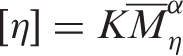
Then the viscosity-average molecular weight of PVC could be calculated through the Mark-Houwink Equation:
Results and discussions
UV-Visible Spectra Analysis
UV-vis spectra of PVC films with additives are recorded in Figure 1. When used separately, there is a small peak around 280 nm for PVC control, PVC with T770, and PVC with 1076 before photo-irradiation. It is reported that the charge-transfer complexes between the residual THF and oxygen would absorb UV rays at 280 nm.22,
23
While for PVC with 4010NA, it is observed that there is peak at 300 nm. According to literature, UV-vis spectra of 4010NA show an obvious peak around 280 nm in CHCl3
24
and in simulated wastewater.
25
Thus, the red shift of λmax could be explained by the combined effect of 4010NA and charge-transfer complexes (THF-oxygen). In terms of PVC films with MB, two obvious peaks around 250 and 300 nm before aging are observed. This may be due to the absorption of –SH or N=C in MB.
26
UV-vis spectra of PVC films with different irradiation time.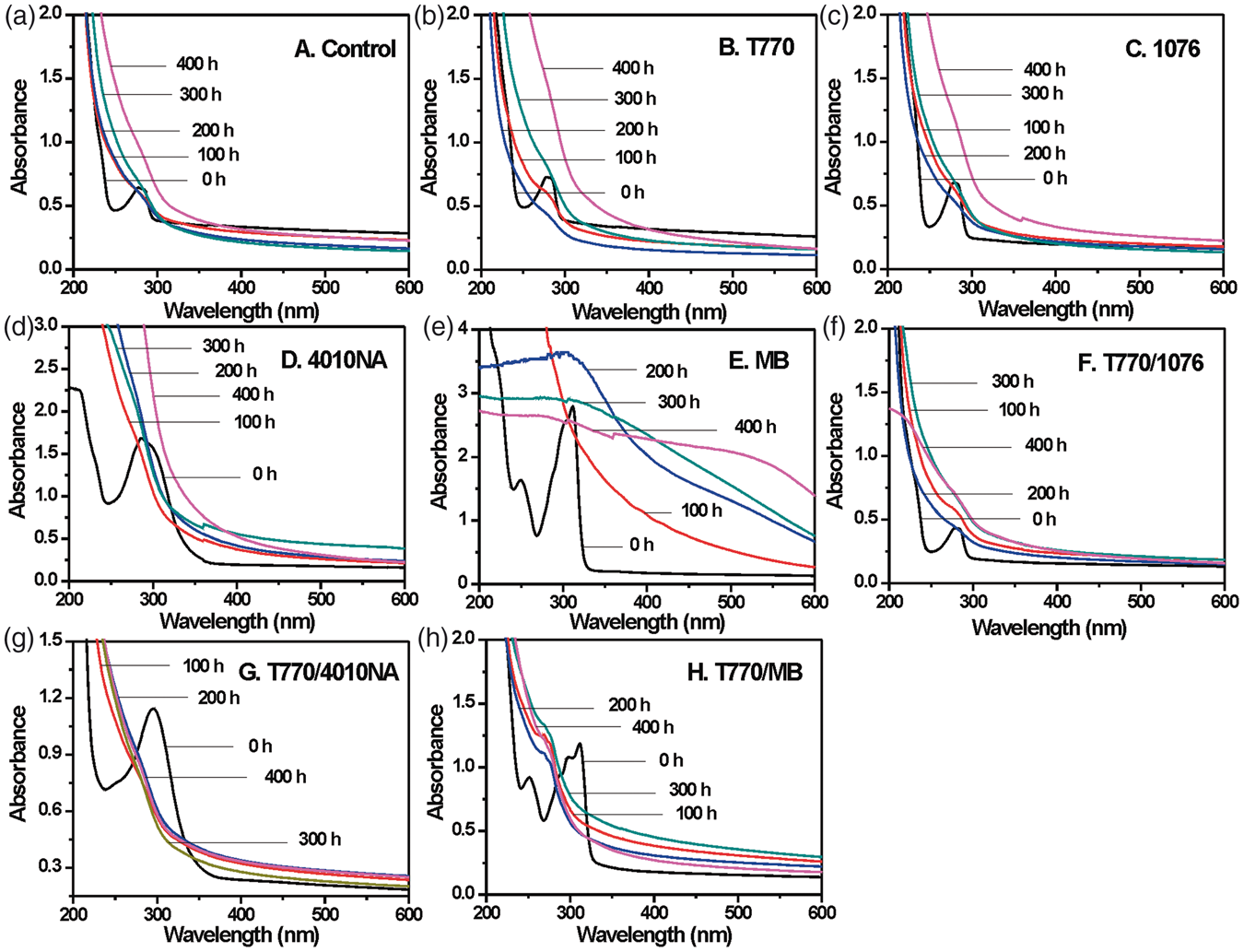
In terms of the combination of T770 and antioxidants, there is a peak in the spectra of PVC with T770/1076 at 280 nm, and the peaks in the spectra of PVC with T770/4010NA and PVC with T770/MB are the same to the peaks in PVC with the single use of 4010NA and MB, respectively. This is due to the charge-transfer complexes between the residual THF and oxygen, and such complexes could absorb UV rays at 280 nm.
To estimate the degree of photodegradation of PVC films, the relative changes of absorbance of PVC films are quantified at two wavelengths: 300 nm and 421 nm. They are representative of shorter (n ≤ 3) and longer (n = 9) conjugated polyenes, respectively.
27
The relative intensity of the absorption peaks is calculated by Equation (3):
28

Figure 2a shows the shorter polyenes (n ≤ 3) of PVC control and PVC with single additive. The relative absorbance of PVC control increases only a little, from 0.1 to 0.4 after being irradiated for 400 h. Relative absorbance of PVC films with single T770 and single 1076 also grows a little. On the contrary, the relative absorbance of PVC with MB increases from 2.3 before irradiation to 2.9 at 200 h, and decreases to 1.2 at 400 h. The relative absorbance of PVC films with 4010NA drops from 1.4 to 0.8 at 100 h, due to the disappearance of the absorptive peak at 300 nm. Then it changes a little from 100 h to 300 h, but increases to 2.0 at 400 h.
Relative absorbance of PVC films with different irradiation time.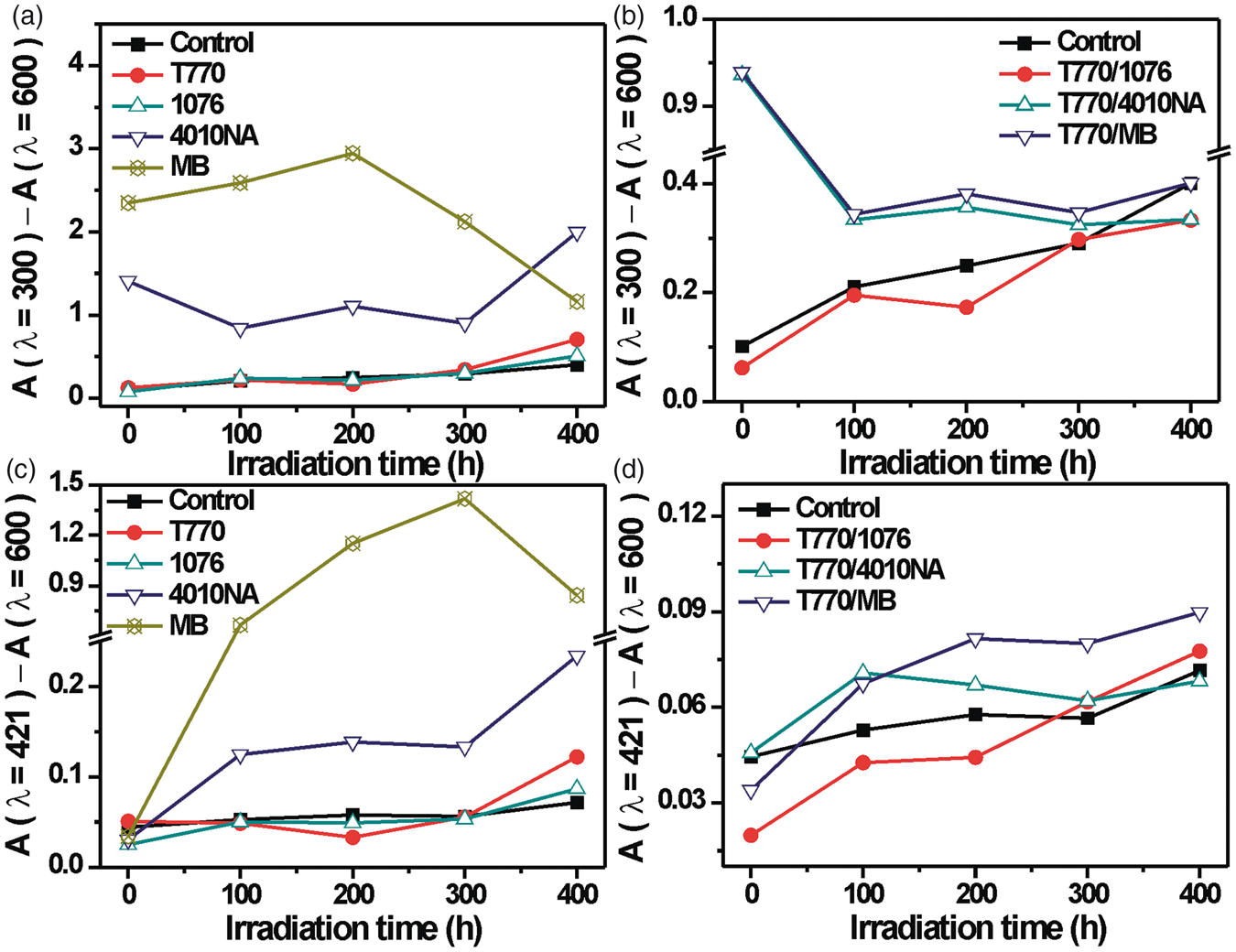
The poor photo stability of MB and 4010NA may be because they have the ability to prevent polymer from thermal oxidation, but they do not have the same ability during photo oxidation. The functional groups in T770 and 1076 have steric hindered structures but the amine (NH) in 4010NA and MB is possibly not protected by the steric hindrance, as shown by their molecular structures in Table 1. Yousaf, Qureshi and Ahmad report that amine groups could promote the dechlorination of PVC. 29 Although 4010NA and MB could trap free radicals in PVC, the unprotected amines in 4010NA and MB may promote dechlorination of PVC. These two are competing reactions, and in this study the latter reaction is the dominant one.
Figure 2b shows the shorter polyenes (n ≤ 3) of PVC control and PVC with the combined additives. The relative absorbance of PVC with T770/4010NA and PVC with T770/MB at 0 h is only a little higher than that of PVC control, despite the bigger value at 0 h which is ascribed to the obvious absorptive peak in Figure 1g and 1h. This may be because that the antioxidants are prevented from the harmful UV radiation by HALS. The relative absorbance of PVC with T770/1076 is a little lower than that of PVC control. Compared with the single addition of T770 and 1076, unobvious synergism occurs at the latter stage of photo-irradiation.
Relative absorbance of PVC samples at 421 nm is shown in Figure 2c and 2d. This represents the content of longer polyenes (n = 9) in PVC films. In Figure 2c, the relative absorbance of PVC control, PVC with T770, and PVC with 1076 is small (lower than 0.13), and keeps almost unchanged. The relative absorbance of PVC films with 4010NA increases quickly from 0.03 to 0.12 at 100 h, keeps unchanged from 100 h to 300 h and increases again at 400 h. PVC with MB still has a high value of relative absorbance at 421 nm. This indicates that a large amount of long conjugated polyenes emerges as the films absorb much energy from the light.
The relative absorbance of PVC with T770/1076 is much lower than that of PVC control during the first 200 h of photo-irradiation, but its relative absorbance is a little bigger during the last 200 h. The hindered amine and hindered phenol may react as shown in Equation (4). 30 The relative absorbance of PVC with T770/4010NA increases quickly during the first 100 h of irradiation and decreases a little during the last 300 h. The relative absorbance of PVC with T770/MB increases quickly during the first 200 h and gradually during the last 200 h.
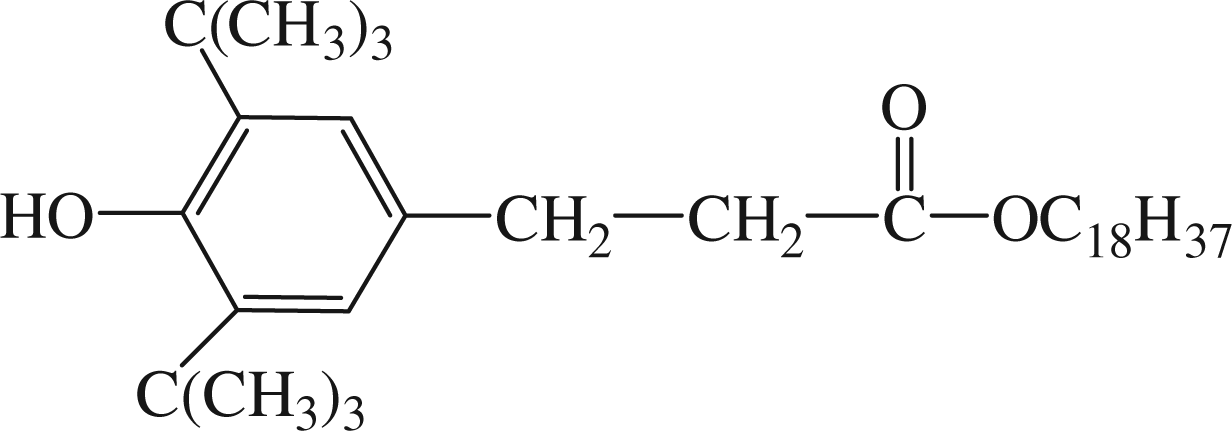
The noteworthy drop of the relative absorbance of PVC with T770/MB compared to PVC with single MB indicates that T770 in PVC with T770/MB could protect MB from UV rays. Similarly, T770 also protects 4010NA in PVC with T770/4010NA.
FT-IR Spectra Analysis
FT-IR spectra of PVC control and PVC with additives are presented in Figure 3. In the infrared spectra, photooxidation of PVC films was reflected by the carbonyl bands at 1550–1850 cm−1 and obvious absorptive peaks appeared at 1723 cm−1 and 1771 cm−1. The absorptive bands of PVC films with single 4010NA or MB had been added to form a wide band peaking at 1723 cm−1, due to the strong absorption of a great many carbonyl groups in an aliphatic neighborhood, and the original peak at 1771 cm−1 had been covered.
FT-IR spectra of PVC films with different irradiation time.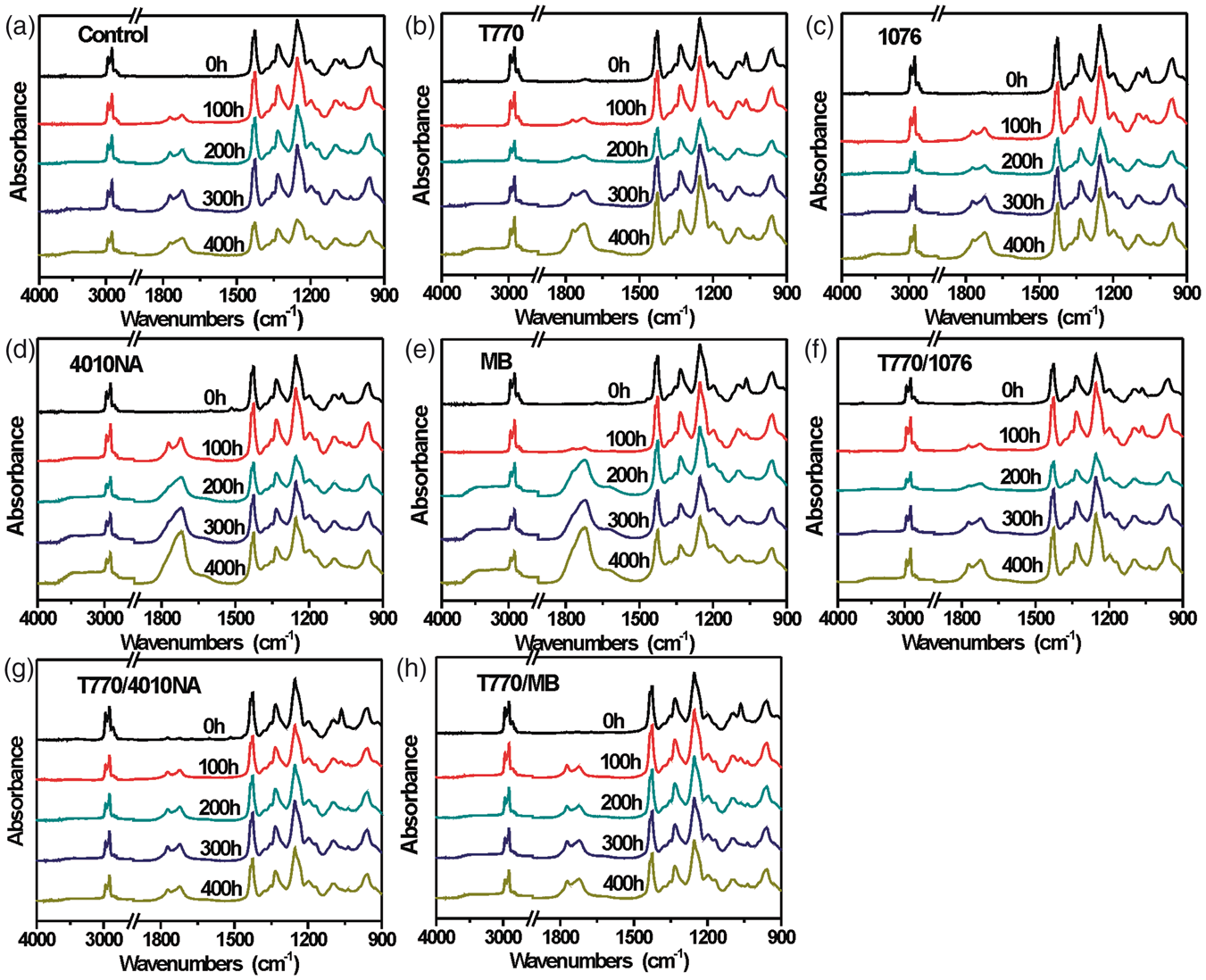
Carbonyl index (CI) is introduced to quantify the photooxidative products. The absorptive band of the C-H bending vibration in –CH2– is selected as internal reference to get ride of the influence of sample thickness. Carbonyl index of PVC films at different irradiation time is calculated by Equation (5):
Carbonyl index of PVC films with different irradiation time.
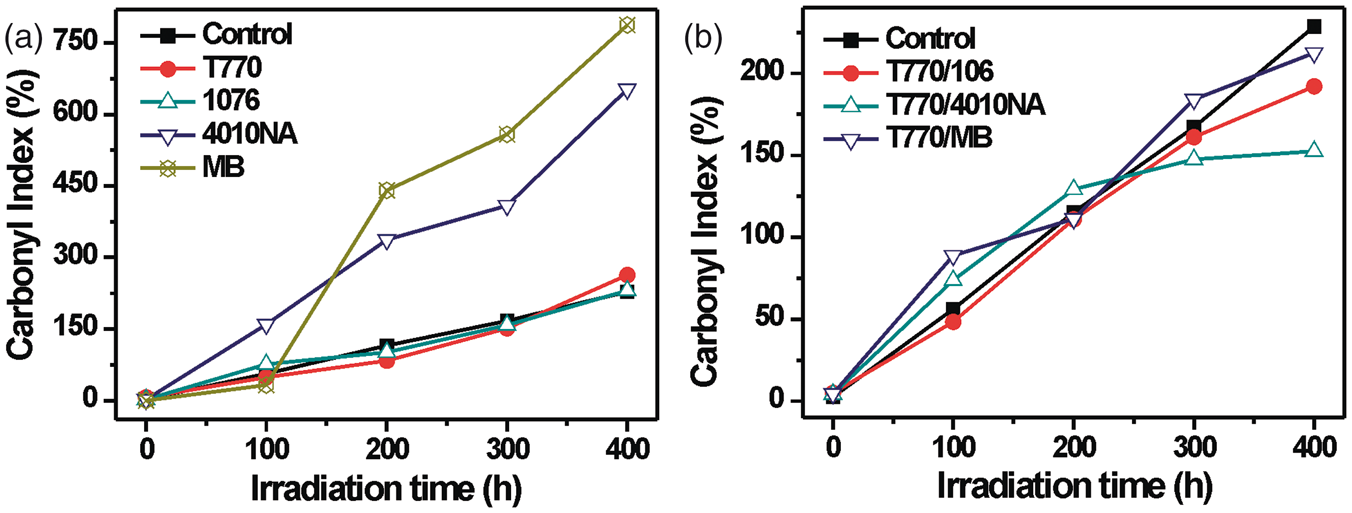
Carbonyl index represents the content of carbonyl groups which generate during the photooxidation of PVC samples. Carbonyl index of PVC control and PVC with single additive (Figure 4a) follow the order: PVC control ≈ PVC with T770 ≈ PVC with 1076 < PVC with 4010NA < PVC with MB. The antioxidative effect of MB is proposed as Equations (6)–(8). 31 After irradiated for 400 h, carbonyl index of PVC control only reaches 229%; in contrast, PVC film with MB has a much bigger value of carbonyl index (788%) at 400 h.



In Figure 4b, additive effect is found between the combination of T770 and 1076. Besides the drop of the carbonyl index of PVC films with T770/4010NA and T770/MB during the first 300 h of photo-irradiation, at 400 h they are even lower than that of the PVC control. This indicates that when 4010NA and MB were combined with HALS T770, their antioxidative stability had been improved. For antioxidants 4010NA and MB that are not stable when exposed to light, the better stability of the T770/4010NA and T770/MB is due to the protection of HALS.
Color Differences
When exposed to UV radiation, the transparent PVC films first become yellow, subsequently a deep red-brown color and even black, due to the photodechlorination of PVC molecular chains and the formation of polyene sequences. The changes of color were quantifiably recorded by a colorimeter and shown in Figure 5.
Change of color parameters of PVC films with single additive during photo-irradiation.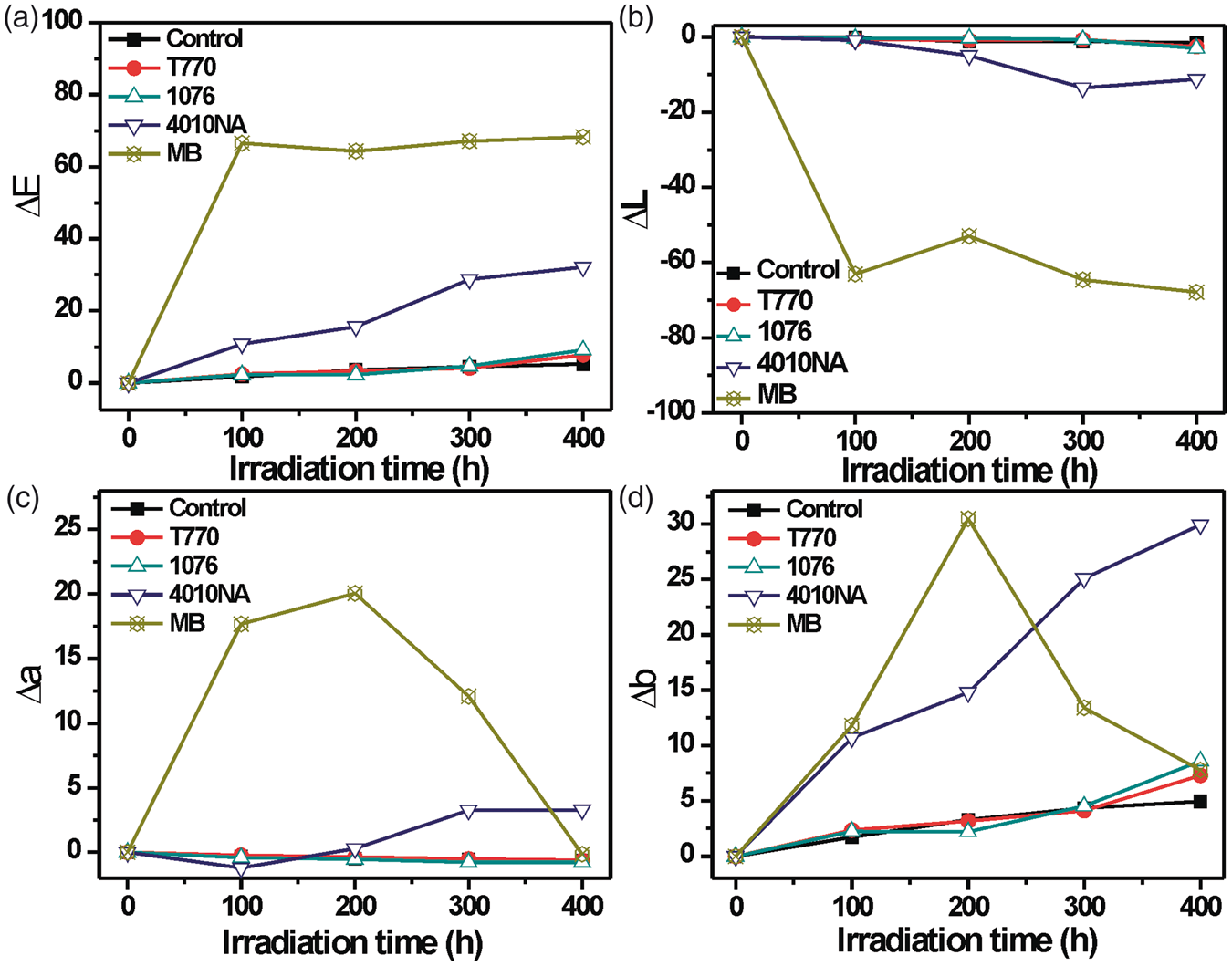
Total color change (ΔE) consists of three parameters: the redness (Δa), the lightness (ΔL) and the yellowness (Δb) according to Equation (1). ΔE of PVC control and PVC with single additive is presented in Figure 5a. PVC control gradually discolors with irradiation and ΔE of it increases to 5.24 at 400 h. ΔE of PVC with T770 and PVC with 1076 also increases slowly and reaches to 7.77 and 9.14, respectively. ΔE of PVC with 4010NA increases quickly during irradiation and reaches 32.13 at 400 h. The color of PVC with MB changes strongly at the first 100 h of photo-irradiation and ΔE of it increases to 66.52. At the last 300 h, the ΔE keeps a high value.
The great color change of PVC films with MB reflects that violent photodegradation have taken place and the process interestingly follows the order of yellow (Figure 5d, at 200 h) /red (Figure 5c, during 100 h to 200 h) to dark (Figure 5b, at 200 to 400 h). The total color change of PVC films with T770, 1076 and 4010NA in Figure 5A are attributed to yellowness as shown in Figure 5d.
Figure 6 shows the color change of PVC films with the combination of T770 and other three oxidants during photo-irradiation. Compared with Figure 6b–6d, it can be seen in Figure 6a that the total color change of all samples is mainly attributed to yellowness (Δb). Δb of PVC control increases gradually to 4.95 at 400 h. Δb of PVC with T770/1076 is lower than that of PVC control during the first 300 h of irradiation but quickly increases to 6.77 at 400 h. Yellowing of PVC with T770/MB develops quickly at 100 h and Δb of it increases to 3.07; but during the last 300 h, Δb slowly rises to 5.95. Δb of PVC with T770/4010NA increases to 2.86 at the first 100 h of irradiation, but then it changes little and is lower than that of PVC control.
Change of color parameters of PVC films with additives in combination during photo-irradiation.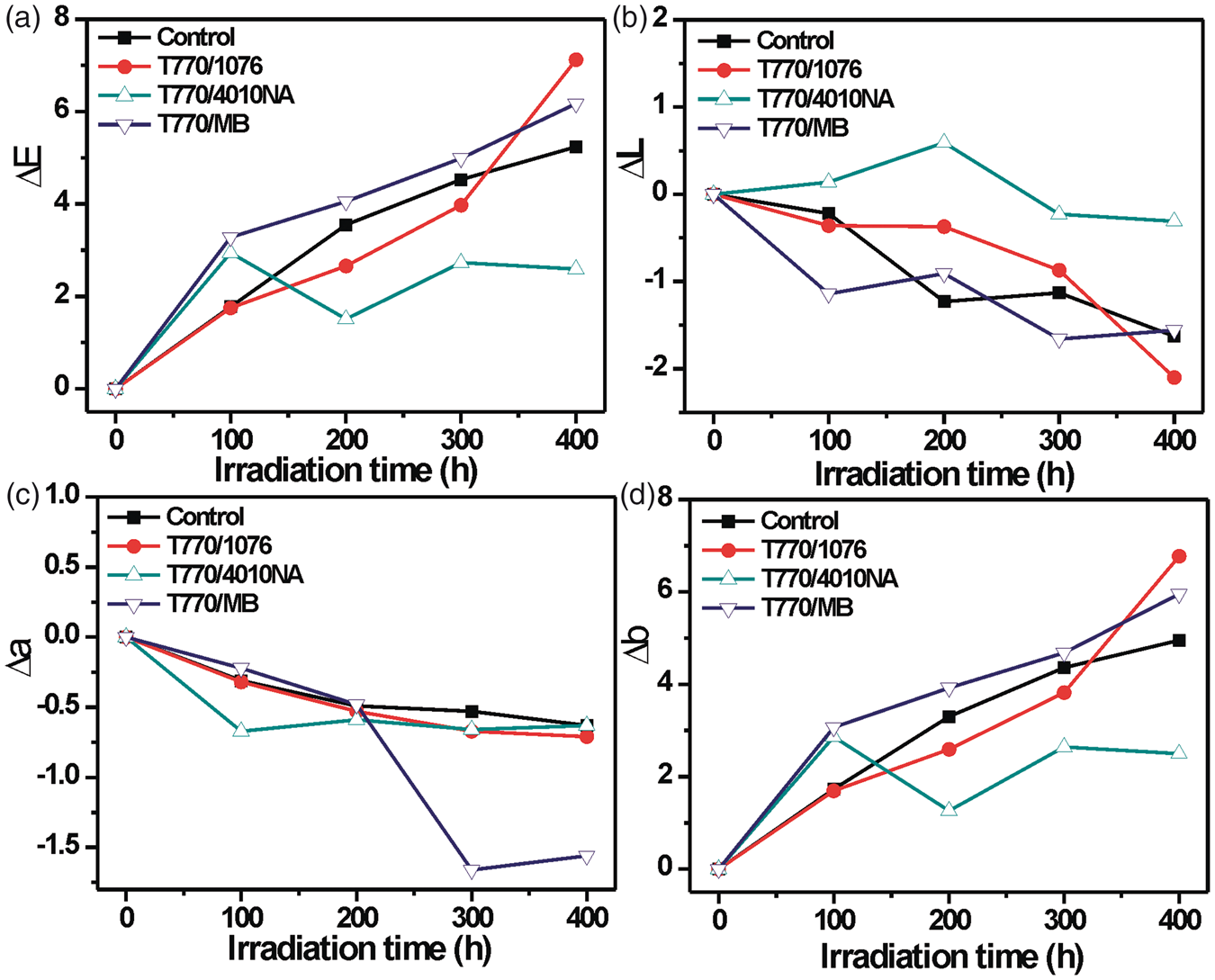
Viscosity-Average Molecular Weight
Viscosity-average molecular weight (
Viscosity-average molecular weight of PVC films with different irradiation time.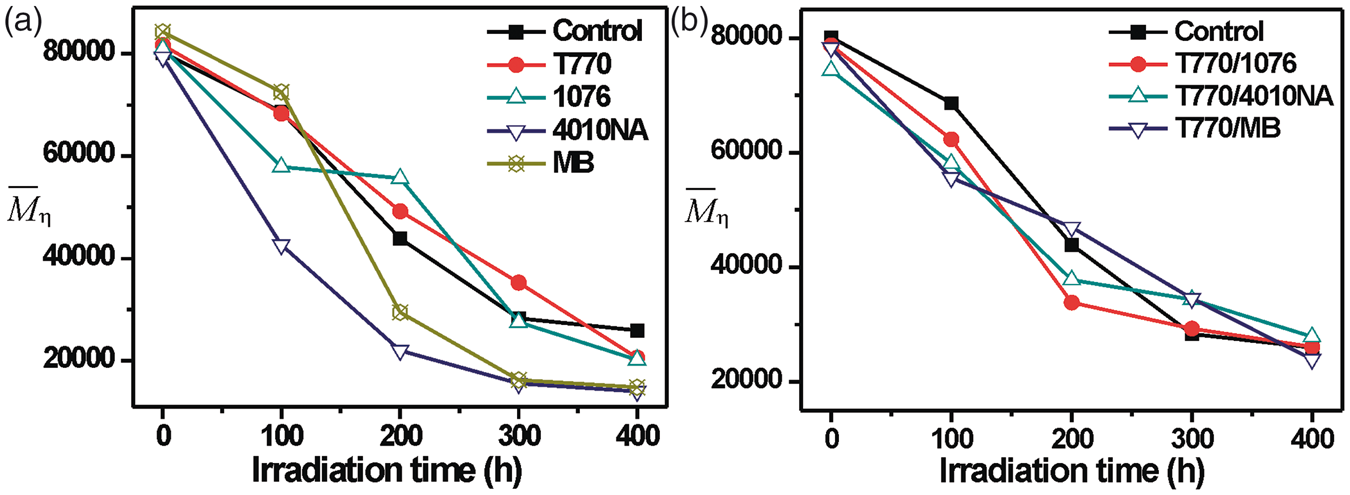
Figure 7a shows that
Gel contents of the crosslinked PVC films.
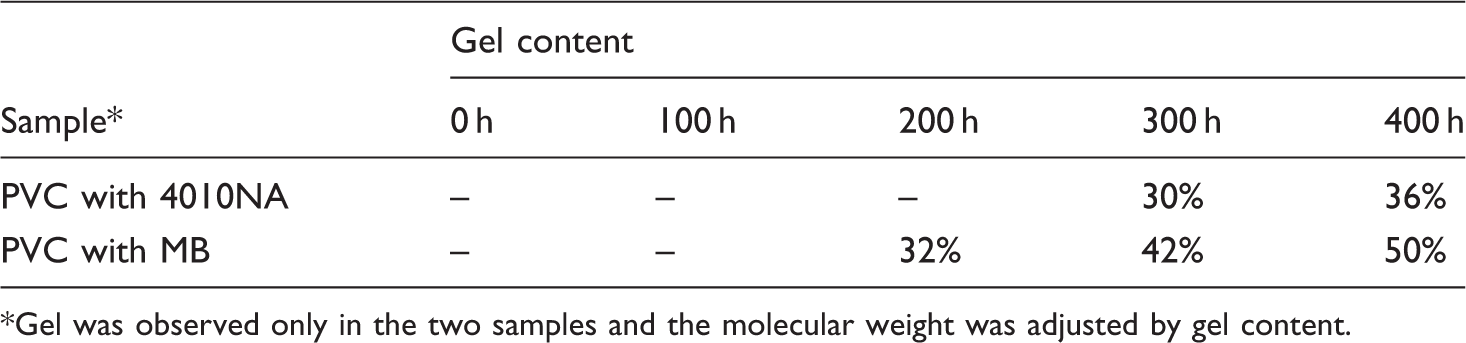
Gel was observed only in the two samples and the molecular weight was adjusted by gel content.
Gel in PVC with 4010NA and PVC with MB indicates that crosslinking occurs in the two formulations. The decomposition products of MB contain S-S bond which may induce the crosslinking. In some references32, 33 tetramethylthiuramdulfide which contains S-S bond could induce chemical crosslinking of PVC. Besides, Singh and Romero Tendero34, 35 found that multifunctional amines activate the crosslinking reaction of plasticized PVC.
Oxyradicals such as ROO• and RO• abstract H• from the OH group of hindered phenol and the formed phenoxyl radicals are complex. 30 But the hindered phenol has no other active groups like amine or mercaptan that induces the crosslinking of PVC samples. The reaction of hindered amine is similar to that of hindered phenol. Besides, it is reported that hindered phenols (Irganox 1010) inhibits crosslinking in unplasticized PVC which crosslinks by the electron beam. 36
The molecular weight of PVC with T770/1076 and PVC with T770/4010NA decreases quickly during the first 200 h of photo-irradiation, but decreases slowly during the last 200 h.
Single 4010NA and MB both accelerate the crosslinking of PVC films. However, there is no crosslinking in PVC with T770/4010NA and PVC with T770/MB. This phenomena means the light stabilizer T770 protects antioxidants (4010NA and MB) from photo-irradiation and antioxidants can play a positive role in the antioxidation of PVC films.
Conclusions
The single use and combination of T770 and three kinds of antioxidants are carried out in the casted PVC films by photo-irradiation.
Added to PVC separately, T770 and 1076 has little effect on the dehydrochlorination and oxidation of PVC films by UV-vis, carbonyl index, color change, and molecular weight. However, 4010NA and MB accelerate the photodegradation of PVC films. Meanwhile, PVC with 4010NA and PVC with MB crosslink strongly after irradiated for 200 h.
In PVC films with T770/1076, the extension of shorter polyenes is retarded during photo-irradiation of 400 h. While the extension of longer polyenes is well retarded from 0 h to 200 h but grows from 200 h to 400 h. T770/1076 has only a little effect on the anti-oxidation of PVC films from 0 h to 400 h. The changes of polyenes in PVC films with T770/4010NA and T770/MB are unobvious and only a little bigger than that of PVC control. Carbonyl index of PVC with T770/4010NA and T770/MB increases quickly at the first 200 h and then slowly at the last 200 h.
The
Footnotes
Acknowledgments
We would like to express our sincere thanks to the Scientific Achievement Transformation of Jiangsu Province for Financial Support (BA2010017) and the Priority Academic Program Development of Jiangsu Higher Education Institutions.