



Abstract
Calcium alginate fibers (CAFs) were prepared from sodium alginate, which is a natural polymer extracted from brown seaweeds, by extruding aqueous sodium alginate solution (4% by weight) into a calcium chloride (2% by weight) bath. Water uptake of CAF was determined in deionized water at room temperature (25°C) and it was found that the fibers absorbed 49% of water within a minute and indicated strong hydrophilic nature. Polyethylene oxide (PEO) based CAF (as a filler/reinforcing agent) reinforced unidirectional composites (10% fiber by weight) were fabricated by compression molding. Tensile strength, tensile modulus, bending strength, bending modulus, and impact strength of the PEO/CAF composite were found to be 11 MPa, 320 MPa, 18 MPa, 565 MPa, and 12 kJ/m2, respectively. Degradation tests of the PEO/CAF composites were performed for 8 weeks in soil medium and it was found that composites retained almost 50% of its original strength. The interfacial shear strength (IFSS) of the PEO/CAF composites was also measured by single fiber fragmentation test. The IFSS was found to be 0.47 MPa that indicated good fiber–matrix adhesion.
Introduction
Over the past few years, several production technologies have been developed for processing fiber-reinforced thermoset resins. Fiber-reinforced composites have gained major attraction both in industrial and research sectors. Composite materials are widely used in civil, industrial, and military applications mainly because of their excellent tensile and bending properties. Synthetic fiber-reinforced thermoplastic composites attracted much attention due to their better durability and moisture resistance properties. However, the manufacture, use, and removal of traditional composite structure made of glass, carbon, and aramid fibers are considered negative due to growing environmental consciousness. For this reason, alternative reinforcement with natural fiber in composites has gained much attention due to its low cost, low density, CO neutrality, biodegradability, and recyclable nature. Natural fibers can be substituted for glass and carbon fiber in polymer composites. Their potential for use in molded articles which do not need high strength for acceptable performance has been tried in various equipments and for different purposes. 1 Cellulose-based fibers are being used in reinforced plastic to fabricate new material for structural and non-structural applications. 2 Natural fibers show many advantages (low cost, low density, high specific properties, biodegradability, and non-abrasion) compared with the traditional ones. The advantages of natural fiber composites are their good dimensional stability and durability against fungi and insects compared with wood. Moreover, their mechanical performance can be compared to that of synthetic fibers used nowadays and they have good thermal properties. The improvement of the interfacial adhesion markedly increases the mechanical performance of the composites because debonding is hindered. 3 – 8 Algae which are the sources of many important polysaccharides from the point of view of applications are among the oldest known living organisms. Morphologically, they are very primitive and their evolution was very slow over time. Blue-green algae (Cyanophyta) appeared first, then came red algae (Rhodophyta), green algae (Chlorophyta), and finally brown algae (Phaeophyta). Seaweeds were first used for a long time as food in Asian countries. Algae are washed, macerated, and then extracted using sodium carbonate. The extract is filtered, and calcium chloride added to the filtrate forming a fibrous precipitation of calcium alginate. Alginates are cell wall constituents of brown algae (Phaeophyceae). They are chain-forming heteropolysaccharides made up of blocks of mannuronic and guluronic acids. Composition of the blocks depends on the species being used for extraction and the part of the thallus from which extraction is made. Extraction procedures probably also affect alginate quality. 9 – 12 Compositing is a very useful method for the improvement or modification of the physico-chemical properties of polymeric materials. Therefore, polymer compositing has attracted increasing interest in both in industrial and scientific fields. This study aims to study the mechanical, degradation, and interfacial properties of the composite.13,14 Research has been done previously to investigate the ability of sodium alginate as a matrix for drug delivery,15,16 scaffolds for specific cell cultures, 15 and wound dressings. 17 This carbohydrate polymer has been reevaluated recently as an attractive natural resource possessing the potential to be further developed for medical, pharmaceutical, biological, and other industrial applications. Qin 18 – 20 studied the preparation and characterization of fiber-reinforced alginate hydrogel. Lee et al. 12 investigated the structural and physical properties of the sodium alginate and polyvinyl alcohol blend nanowebs. One of the useful characteristics of alginate is the ability to form fiber. Very few research studies have been done to investigate the fiber as a reinforcing agent.21,22 In this study, the thermoplastic polymer, polyethylene oxide (PEO), was used as the matrix polymer and the calcium alginate fiber (CAF) as the reinforcing material to prepare a reinforced composite. PEO is a non-ionic homopolymer of ethylene oxide, represented by the formula: (OCH2CH2) n , in which n represents the average number of oxyethylene groups. It is a white to off-white powder obtainable in several grades, varying in viscosity profile in an aqueous isopropyl alcohol solution. It may contain a suitable antioxidant.
Alginate fiber is stiffer and stronger (higher tensile strength (TS) and bending strength (BS)) than the PEO matrix. Alginate fiber has a TS of 120 MPa whereas PEO matrix has a TS of 8 MPa. Over the recent years, there is an increasing interest in natural fibers as a substitute for glass fibers mainly because of their low specific gravity, low cost, as well as their renewable and biodegradable nature. Alginate fibers are low-cost fibers compared to glass fibers with low density and high specific properties. These are biodegradable and non-abrasive.
This investigation involves measurement of the mechanical and degradation properties of the CAF-reinforced PEO composites. The interfacial properties of the PEO/CAF composite were measured using the single fiber fragmentation test (SFFT).
Experimental
Materials
The PEO was purchased from Polyolefin Company Limited, Singapore, sodium alginate from Loba Chemie Private Limited, Mumbai, India, and calcium chloride from BDH, UK.
Preparation of CAFs
CAFs were synthesized by extruding aqueous sodium alginate solution (4% by weight) through a syringe into a coagulation bath containing aqueous calcium chloride solution (2% by weight), whereby sodium alginate is precipitated out in filament form (CAF) which is insoluble in water. CAFs were air-dried for 24 h, packed in polyethylene bags, and kept in the desiccators. The diameter of the fibers varied from 30 ± 12 μm. The fiber length was 300 mm. The prepared alginate fibers were then subjected to various mechanical properties. The image of the prepared alginate fiber is shown in Figure 1. Alginate is a linear copolymer of α-(1-4)-linked (a) Structural unit of alginate; (b) Image of CAF.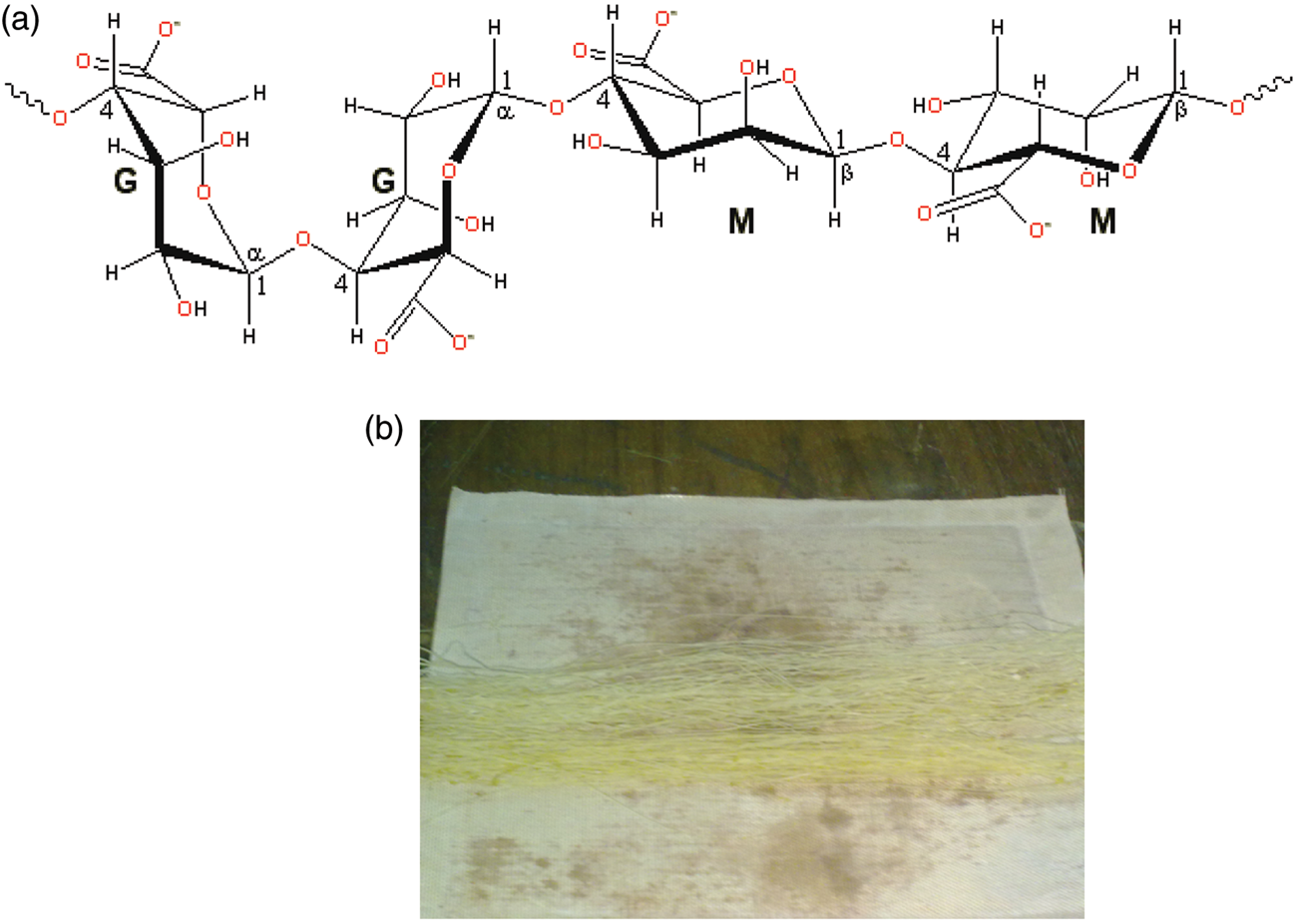
Fabrication of the PEO/CAF composite
The PEO matrix unidirectional composites were made by compression molding. First, granules of PEO were placed in two steel plates and placed in the heat press (Carvar, USA). The press was operated at 95°C and steel plates pressed at 5 bar consolidation pressure for 1 min. The plates were then cooled for 1 min in a separate press under 5 bar pressure at room temperature. The resulting PEO sheets were cut into rectangles (120 × 80 × 0.3 mm3) for composite production. Composites were prepared by sandwiching three layers of unidirectional fibers between four sheets of PEO. The alginate fiber length was 300 mm. The sandwich construction was placed between two steel plates and heated at 95°C for 1 min to soften the polymer prior to pressing 3 bar pressure for 1 min. The fiber weight fraction of the composites was calculated to be 10%. The percentage content of the fiber-reinforced composite was: 10% CAF + 90% PEO. The thickness of the composites was 2 mm.
Mechanical properties of the composites
Tensile and bending properties of the composites were evaluated using a Hounsfield series S testing machine (UK) with a cross-head speed of 10 mm/s at a span distance of 25 mm. For bending tests, cross-head speed was 10 mm/min and span distance 40 mm. Tensile and three-point bending tests were carried out following DIN 53455 and DIN 53452 standard methods, respectively. The dimensions of the test specimen were (ISO 14125): 60 × 15 × 2 mm3. Composite samples were cut into the required dimension using a band saw. Composite edges were smoothed using sand papers. Impact strength (IS) of the composites was measured using Impact tester (MT-3016, Pendulum type, Germany). Hardness was determined by HPE Shore-A Hardness Tester (Model 60578, Germany). IS was measured according to DIN 53433. All the samples were conditioned at 25°C and 50% relative humidity. Values reported were averages of five measurements.
Degradation tests of the composites
Degradation tests of the composite are important to know the information of how much the mechanical properties of the composite retained after a certain period of time when it came to contact with water or soil during its uses. The degradation tests of the PEO/CAF composites were carried out up to 8 weeks in the soil medium. Composite samples (dimension of each sample: 60 × 15 × 2 mm3) were put inside 10 cm deep humid soil and at set time points, samples were taken out, washed with water, and dried 12 h at 60°C. Then, samples were kept inside desiccators prior to mechanical testing.
Interfacial properties
Single-fiber composite samples were prepared using a single filament of CAF between two sheets of PEO. The sandwich was then hot-pressed at 95°C for 1 min between two steel plates. The plates were cooled in a separate press at 3 bar pressure to room temperature. The thickness of the specimen was 0.40 mm. The single-fiber composite specimens (25 × 5 × 0.40 mm3) were loaded on the tensile machine (Hounsfield series S testing machine, UK) to bring out the repeated breakage of the fiber. A cross-head speed of 0.25 mm/min was used. The gage length was 25 mm. The experiment was monitored by a microscope (Hitachi) attached to a monitor. To reach the saturation level, the number of fragments over the 25 mm gage length at each load level (using 2N increments) was counted. Similarly, the saturation point was also checked by the number of fragments againstdisplacement. The critical length (lc) was then measured using the formula: lc = 4lf/3, where lf is the average fragment length which was calculated as the monitored length (25 mm) divided by the number of breaks observed within that length of the experimental fragment length distribution, according to Kelly–Tyson 23 model. 24 To find out the critical length, the number of fragments was counted. Fiber tensile properties were obtained by tensile testing filaments using the international standard BS ISO 11566. A single fiber was mounted on a paper frame with a gage length of 25 mm. The fiber was fastened to the frame with epoxy adhesive. Once prepared, the sample was gripped in the tensile machine. Before starting the test, thepaper sections were cut. A cross-head speed of 1 mm/min was used. The interfacial shear strength (IFSS) of the composites was calculated from both the Kelly–Tyson 23 and Drzal 24 equations.
Results and discussion
Water uptake of CAF
Water uptake of CAF was carried out at room temperature (25°C) in de-ionized water for 80 min. The results are shown in Figure 2. It was found that initially, CAF absorbed water rapidly, then slowly, and become static with time. After 1 min of immersion in water, fibers absorbed 15% of water, but gained 45% and 50% of mass after 30 and 80 min, respectively.
Percentage of water uptake of CAFs in aqueous medium at room temperature (25°C).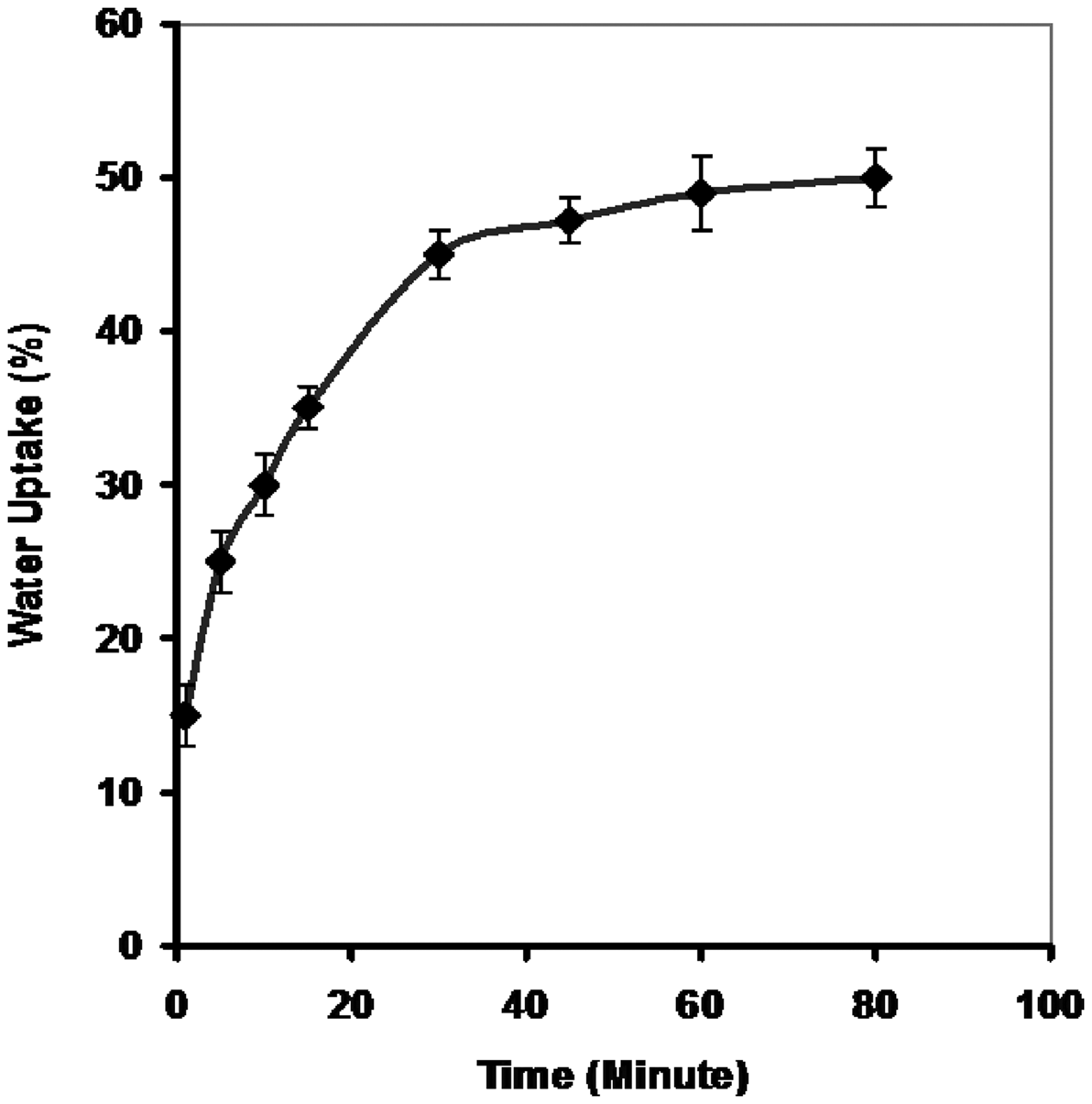
Calcium alginates are the salts of linear copolymers of β-(1-4)-linked
Mechanical properties of the CAF
Mechanical properties of the CAF.

Fiber length and distribution play important roles in the processing and mechanical performance of fiber-based composites. Mechanical properties increased with increasing fiber length, whereas performance in water immersion tests decreased. In our laboratory, the fibers were prepared manually using a syringe. Therefore, the strength of the CAF was found poor compared to the one prepared by spinneret.
Mechanical properties of the composites
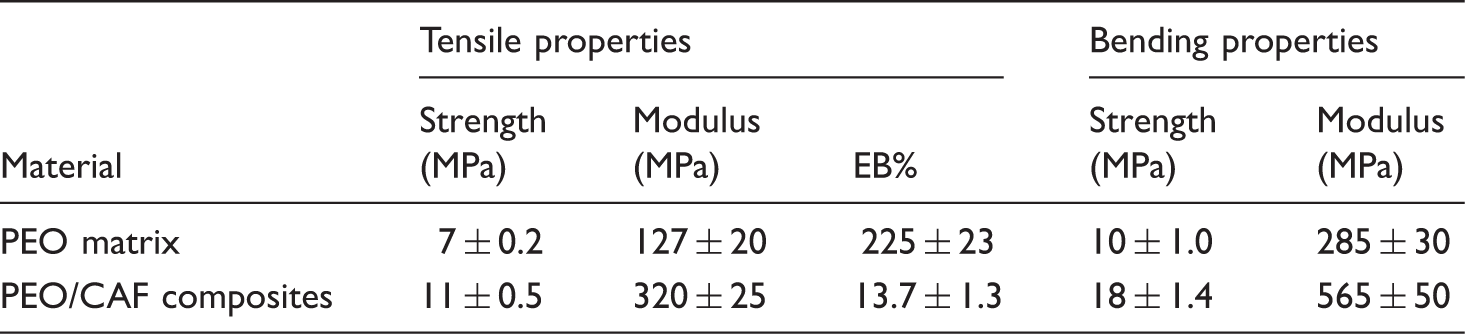
Tensile and bending properties of PEO matrix and PEO/CAF composite (10 wt% fiber).
IS and hardness of PEO matrix and PEO/CAF composite (10 wt% fiber).

Tensile and bending properties
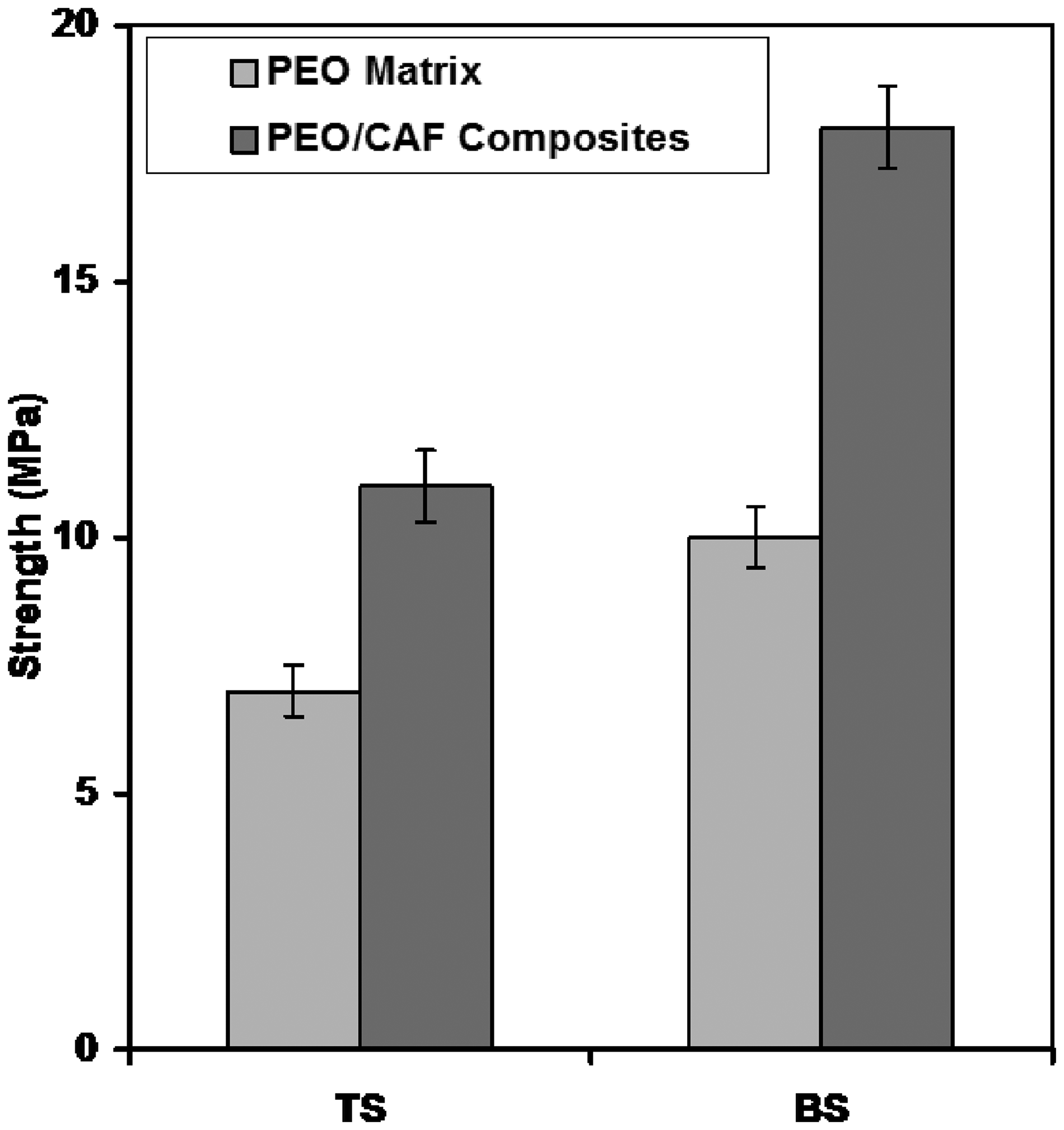
Tensile and bending properties of the composites are very important parameters for their diverse applications. TS and BS of the PEO matrix and the PEO/CAF composites are shown in Figure 3. From Figure 3, TS and BS of the PEO matrix were found to be 7 and 10 MPa, respectively. In case of PEO/CAF composite systems, TS and BS were found to be 11 and 18 MPa, respectively. It was found that fiber reinforcement occurred and has improved TS and BS for the composites. PEO/CAF composites gained 57% increase in TS and 80% increase in BS over those of the matrix PEO. The increased TS and BS are attributed to the reinforcement of the PEO matrix with CAFs. TM and BM of the PEO matrix and the PEO/CAF composites are shown in Figure 4. From Figure 4, it was evident that due to the reinforcement of the matrix with the CAFs, TM and BM were improved. The TM and BM of the PEO matrix were found to be 127 and 285 MPa, respectively. PEO/CAF composites showed TM and BM of 320 and 565 MPa, respectively. For the PEO/CAF composites, TM and BM were increased by 150% and 130%, respectively, than those of the matrix materials.
TM and BM of the PEO matrix and PEO/CAF composites. TS and BS of the PEO matrix and PEO/CAF composites.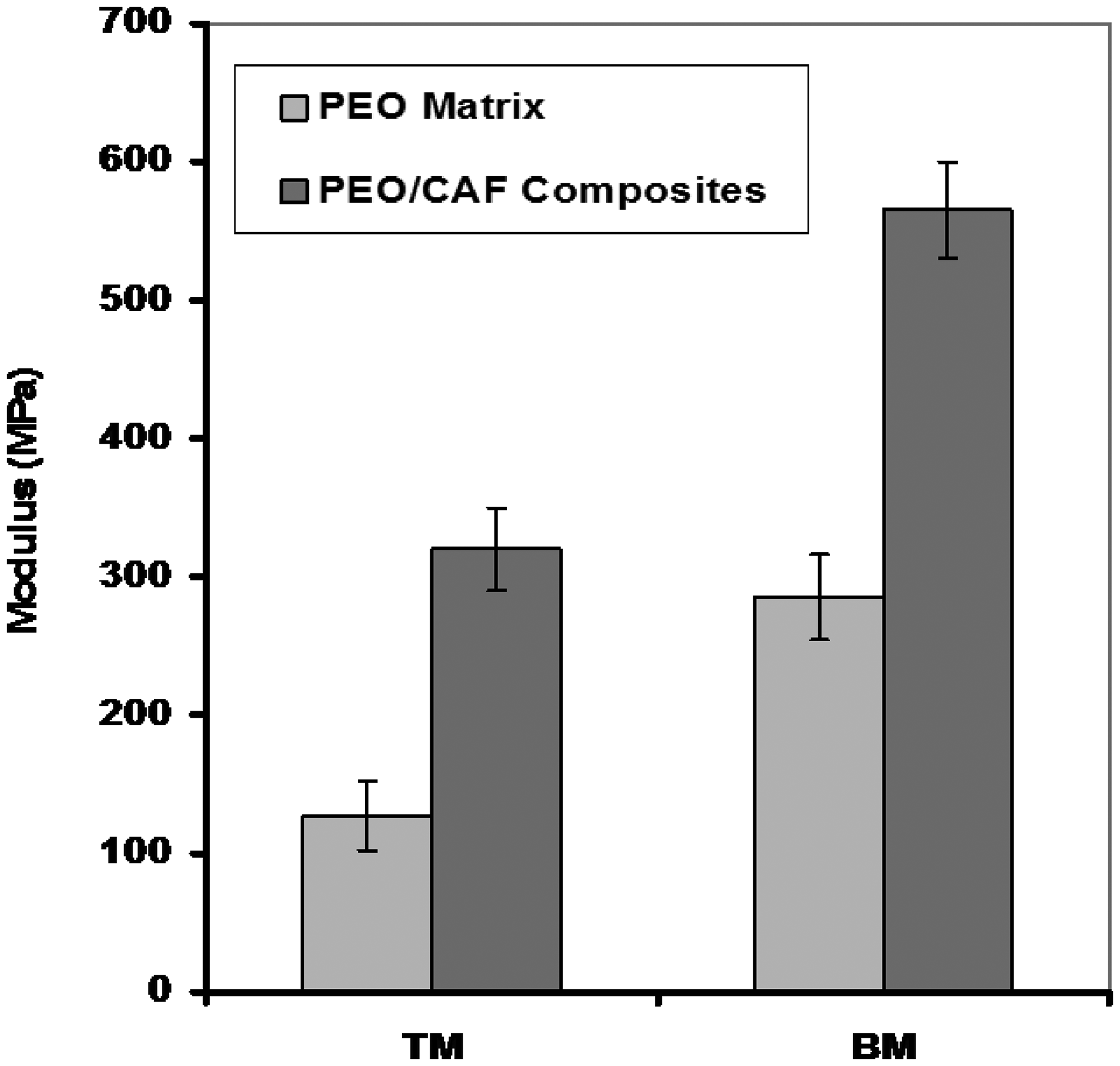
Degradation of mechanical properties of the PEO/CAF composites
Degradation tests of the PEO/CAF composites were performed in the soil medium for up to 2 months. TS and BS values were plotted against degradation time and are shown in Figure 5. It was found that TS, BS, TM, and BM decreased rapidly with time for the composites. The rapid degradation of both the composites was attributed to the bio-degradable nature of both PEO matrix and alginate fibers. After 2 months of degradation in the soil, composites lost almost 50% and 54% of TS and BS, respectively.
Degradation of TS and BS of the PEO/CAF composites during soil degradation tests.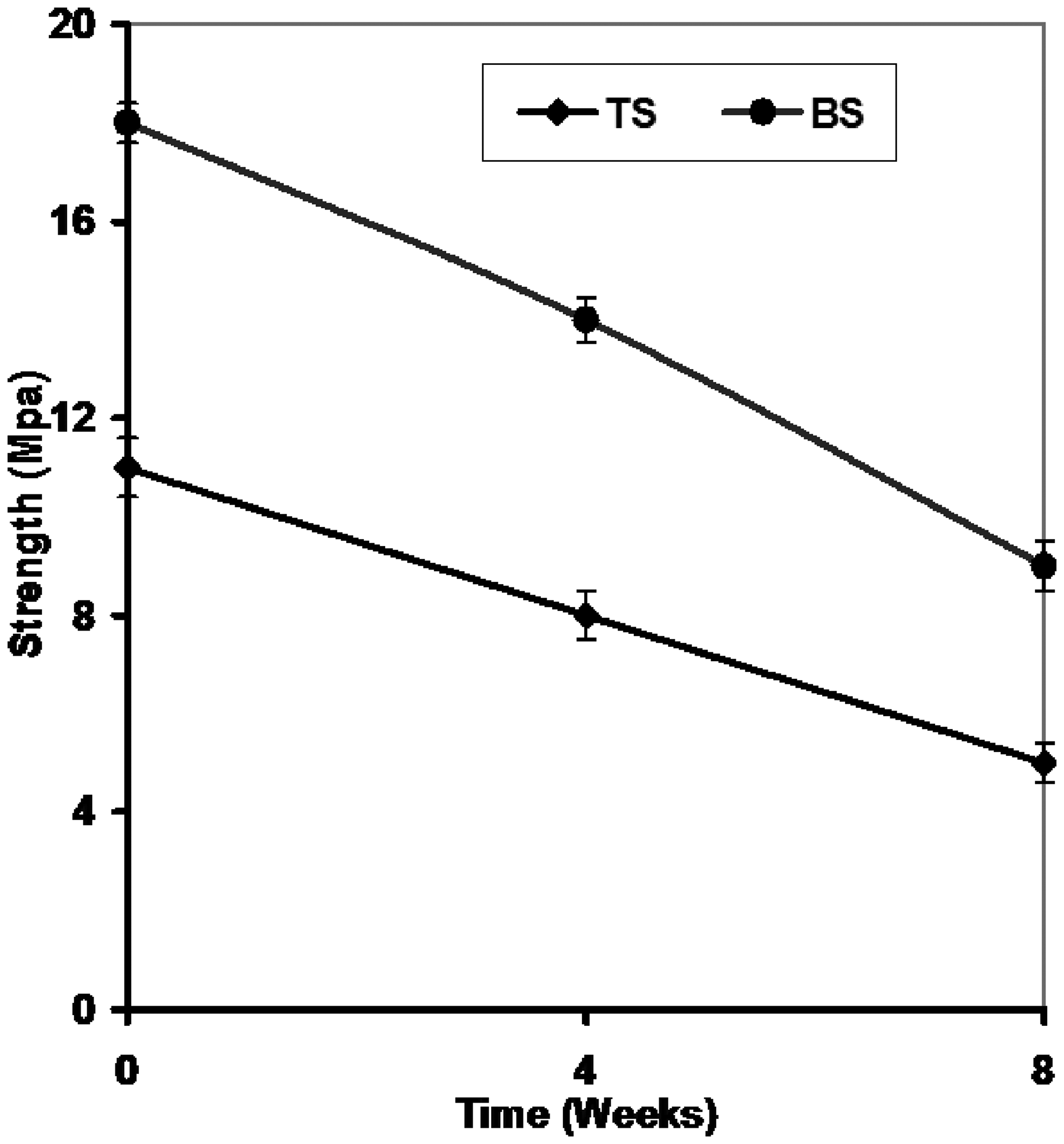
Similarly, TM and BM of the composites were also decreased over degradation time and the results are depicted in Figure 6. It was found that TM and BM of the PEO/CAF composites decreased by 55% and 53%, respectively. This investigation clearly showed that almost 50% of the strength of the PEO/CAF composites is retained after 2 months of degradation time in the soil.
Degradation of TM and BM of the PEO/CAF composites during soil degradation tests.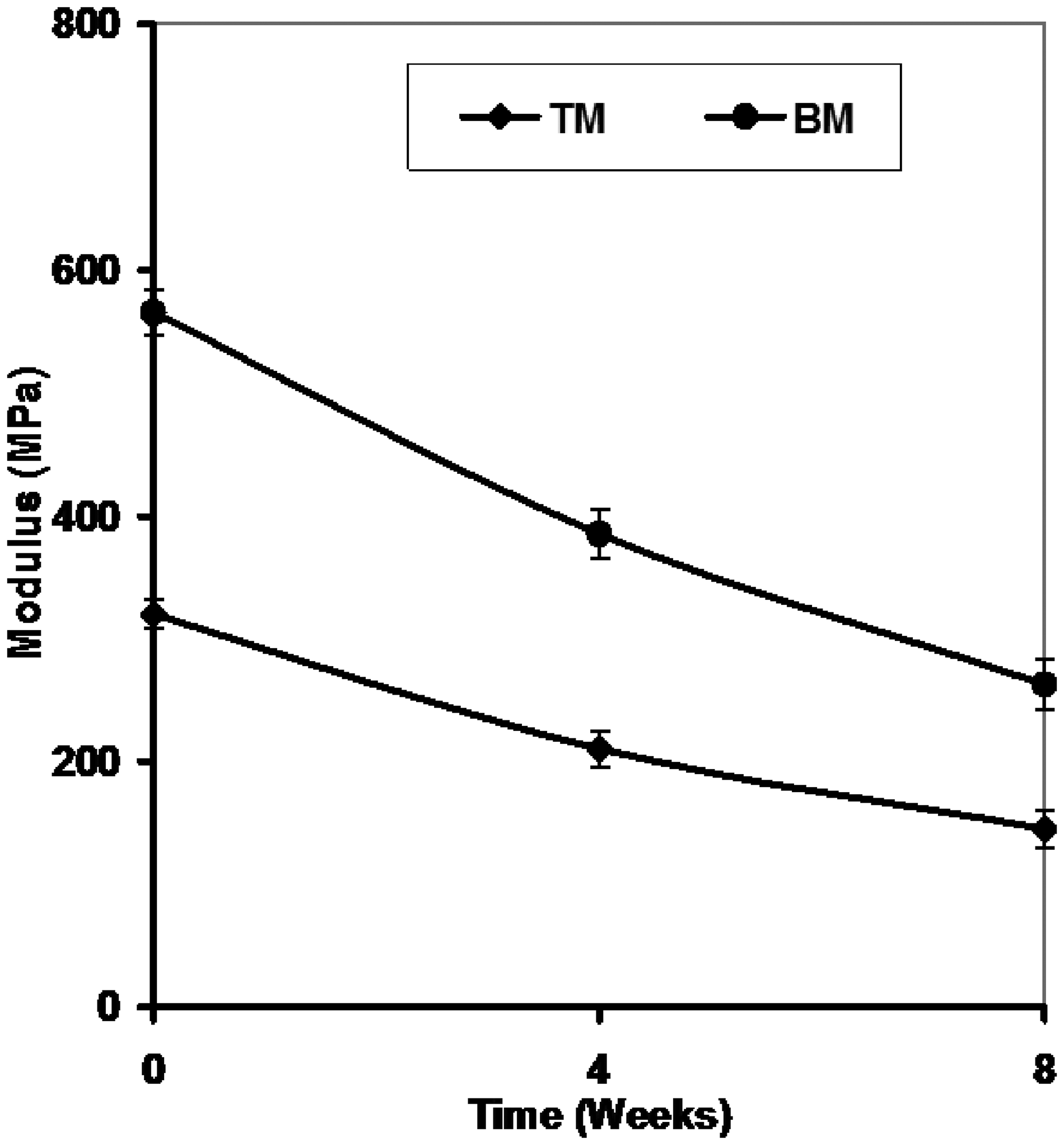
After 2 months of degradation of the composites, the mass loss was calculated and is shown in Figure 7. The mass loss of the PEO/CAF composites increased rapidly with the extent of degradation time. After 4 and 8 weeks of degradation, the mass of the PEO/CAF composites reduced to 7% and 13%, respectively. The reduction of the mass from the composites was attributed to the loss of degradable PEO matrix and CAFs.
Weight loss of the PEO/CAF composites during soil degradation tests.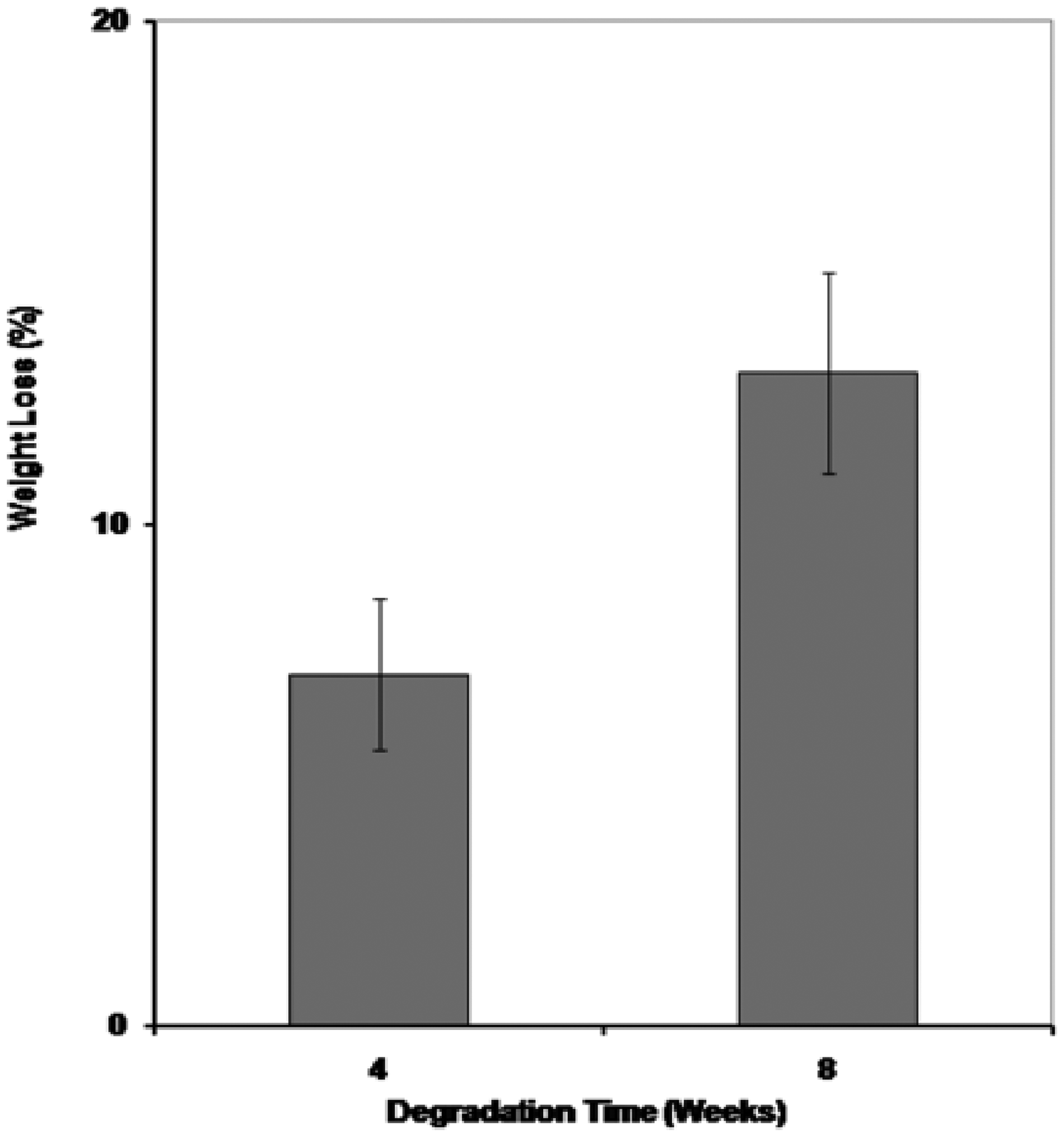
Interfacial properties of the PEO/CAF composite
IFSS of the PEO/CAF composite system.

The total number of fragments reached 3 and the critical length was found to be 11,110 μm, which was calculated according to the equation mentioned in the ‘Experimental’ section. TS of the fiber at the critical length was measured from the Weibull weakest chart rule 15 and it was found to be 175 MPa. The diameter of the fibers used in this experiment was varied from 30 ± 12 mm. The IFSS was found to be 0.47 MPa. Although both PEO and CAF are hydrophilic in nature, low IFSS was found for the composite system. This was logical because of the poor mechanical properties of PEO.
Conclusion
CAF-reinforced PEO-based composites were successfully fabricated and characterized. Mechanical properties (tensile, bending, and impact) of the composites improved significantly than those of the matrix material. TS, BS, TM, and BM of the PEO matrix were found to be 7, 10, 127 and 285 MPa, respectively. TS and BS of the PEO/CAF composite were found to be 11 and 18 MPa, respectively, which were 57% and 80% higher than those of the PEO matrix materials. For the PEO/CAF composites, TM and BM were found to be 320 and 565 MPa, respectively, which were 150% and 130% higher than those of the matrix material. Degradation tests of the PEO/CAF composites were performed for up to 2months in soil medium and found that composites retained about 50% of their original mechanical properties. The interfacial properties of the PEO/CAF composite were investigated using the SFTT, and the IFSS of the PEO/CAF composite was found to be 0.47 MPa.