



Abstract
In this study, the effect of layered nanoparticles on physical, mechanical, fire, and dynamic mechanical properties of polypropylene (PP)/hemp fiber was investigated. Composites based on PP, hemp fiber, nanoclay, and maleic anhydride-grafted PPs were made by melt compounding and then injection molding. Results revealed that the tensile modulus, tensile strength, and elongation at break of composites increased with an increase of nanoparticles loading up to 3% and then decreased. However, the impact strength decreased with the increase in nanoclay loading. Also, significant reduction in water absorption and swelling thickness has been shown with increasing nanoparticles loading. The dynamic mechanical behavior and fire properties of composites were improved by the addition of nanolayered silicates. X-ray diffraction (XRD) tests clarify that the nanoparticles in the hemp fiber/PP samples are not exfoliated, and the dispersion is in need of improvement. Finally, this project has shown that the PP/hemp fiber composites treated with layered nanoparticles will be desirable as building materials due to their improved dimensional and fire stability and strength properties.
Introduction
Manufacturers fill polymers with particles in order to improve the stiffness and the toughness of the materials, to enhance their barrier properties, to enhance their resistance to fire and ignition, or to simply reduce cost. Addition of particulate fillers sometimes imparts drawbacks to the resulting composites such as brittleness or opacity. 1 Nanocomposites are a new class of composites, which are particle-filled polymers for which at least one dimension of the dispersed particles is in the nanometer range. Polymer nanocomposites form an emerging class of mineral-filled plastics that contain relatively small amounts (usually 5–10%) of nanometer-sized inorganic particles. While still an embryonic segment of the industry, nanocomposites comprising either manacles or nanocarbon fillers are expected to be a major growth segment for the plastics industry. 1 – 3
Polymer-layered silicate nanocomposites containing both polymer and inorganic-layered material are now an active area of research because of its enhanced physical, mechanical, and chemical properties when compared with those of pure polymer. 1 – 4 This can be achieved when the nanoscale silicate platelets are well dispersed by delamination of the silicate-layered structure throughout the polymer matrices, which results in the so-called exfoliated morphology. Clay minerals, especially the smectite clays, are the most widely chosen nanofiller for the preparation of polymer/clay nanocomposites due to some advantages. First, it has a special layer structure in which the thickness of the clay platelet is <1 nm and the length of the surface is in the order of 300 nm; the clay platelets are stacked together to form the tactoids.4,5
Moreover, clays have negative charges in the surface that are compensated by the naturally occurring cations like Na+, K+, Ca+2, and Mg+2 situated in the interlayer position. These cations can be exchanged with other cations under suitable condition. Clays are hydrophilic inorganic compounds, whereas polymer contains hydrophobic group. That is why pure clay does not mix with the polymer, and therefore, clays are to be modified by organic modifier containing both hydrophilic and long-chain hydrophobic group to increase not only the interlayer spacing but also the compatibility with the polymer matrices. Besides this, clay is naturally occurring, environment friendly, cheap, and readily available in large quantities. It is evident that when 0.5–7 wt% of clay is added to form polymer/clay nanocomposites, the polymer properties are substantially improved, i.e., increases in strength and stiffness, thermal stability, gas barrier property, clarity, and decreased flammability, compared with other conventionally filled composites. 1 – 5
It is well known that the polymers can be modified by the use of fillers and reinforcing fibers to suit the high strength requirements. The fibers have several advantages, such as high specific strength and modulus, low cost, low density, renewable nature, absence of associated health hazards, easy fiber surface modification, wide availability, and relative nonabrasiveness. Much work has been done in studying and developing thermoplastic/natural fibers composites, especially wood–plastic composites (WPCs), which have successfully proven their high qualities in various fields of technical application, especially in load-bearing applications. The main applications of WPCs are in building products, such as fencing, rails, decking, door and window profiles, decorative trims, and etc. These composites are also gaining acceptance in automotive, industrial, and marine applications. 6 – 8
The market of natural fiber-reinforced composites is one of the world’s largest and fastest growing markets, which is in part due to the public desire to consume environmentally compatible products. Therefore, various sectors of industry are looking for novel materials having such properties. 8 Hemp production is easy to achieve organically; therefore, many of the ecological problems in chemical farming of other fibers are obviated. Hemp has been produced for thousands of years as a source of fiber for paper, cloth, sails/canvas, and construction materials. Furthermore, using hemp fiber to make composites can introduce a more effective application for this material. 9 Addition of nanoparticles, such as nanoclays with ultralarge interfacial area per volume to form nanocomposites, has provided the means to improve materials performance including biodegradation. Many efforts have been made in the formation of wood-plastic composites (WPC) to improve such properties so as to meet specific end user’s requirements. Both thermoplastic and thermosetting systems have been used and have achieved certain improvements in wood properties, but both showed limitations. 10 – 20 Among polymer nanocomposites, those based on polypropylene (PP) and nanoclay have attracted considerable interest 3 – 5 because PP is one of the most widely used and fastest growing class of thermoplastics with a low cost. Also, PP has been used in conventional composites for a long time and shows better mechanical properties with even low amounts of filler. 6 Nanotechnological preparation of WPCs could represent a promising new approach to obtain better products. In this study, the effect of nanolayered silicates on physical, mechanical, fire, and dynamic mechanical properties of PP/hemp fiber was investigated.
Materials and methods
Materials
The nanoparticles used in this study was natural montmorillonite modified with a quaternary ammonium salt (dimethyl ammonium chloride) of dehydrogenated tallow as an organic modifier, having a cationic exchange capacity of 125 meq/100 g clay, density of 1.66 g/cc, and a d-spacing of d001 = 31.5 Å, obtained from Southern Clay Products Co., USA, with the trade name Cloisite 15 A. PP is used as the polymer matrix that was got from Arak Petrochemical Co., Iran, with a density of 0.92 g/cm3 and the melt flow index of 18 g/10 min. Maleic anhydride-grafted PP (PP-g-MA) provided by Solvay with trade name of Priex 20070 (MFI = 64 g/min, grafted maleic anhydride 0.1 wt%) was used as a coupling agent. Hemp is used as the reinforcing fiber material that was collected from hemp fields in Behshashr city, the southern region of Golestan province (Iran). Then, the hemp fibers were separated from the hemp stalk through the warm water retting process; when the retting process is complete, the primary fibers are readily separated from the core. The average length of hemp fibers is 100 mm.
Method
Composite preparation
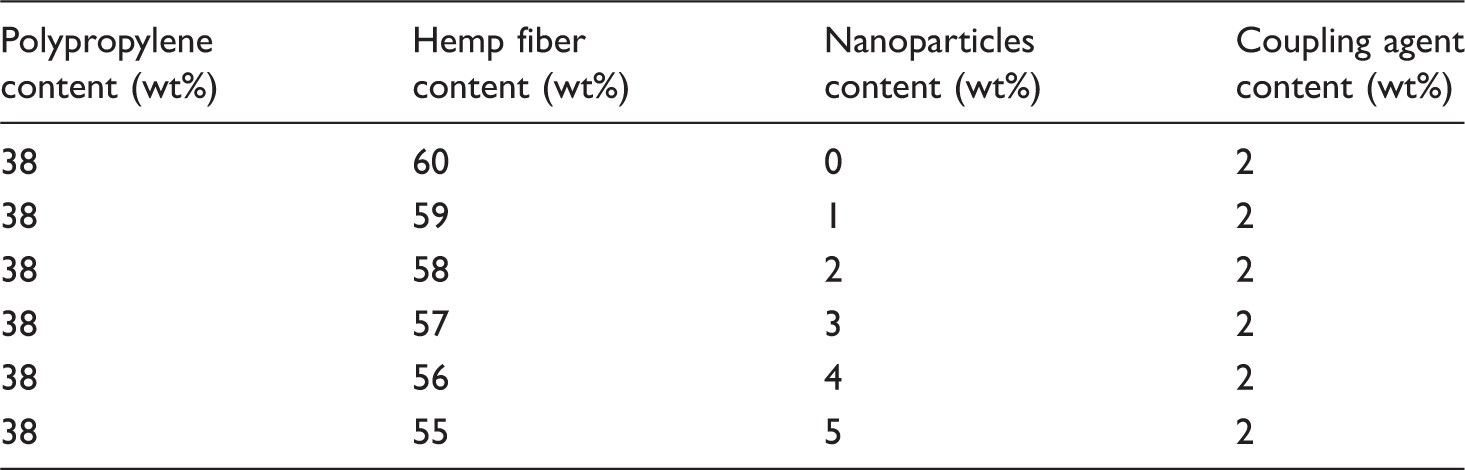
Composition of the studied formulations.
Measurements
The degree of nanoparticles dispersion in PP/hemp fiber composites were characterized by XRD method. XRD measurements taken on powdered nanoclay and nanocomposites were carried out with a Seifert-3003 PTS (Germany) using CuKα radiation (λ = 1.54 nm) and the generator power was 50 kV and 50 mA. The scan mode was continuous with a scan rate of 1°/min in scan range from 0° to 12°.
The tensile tests including strength, modulus, and elongation at break were measured according to ASTM D 638 using an Instron machine (Model 1186, England), and the tests were performed at crosshead speeds of 2 mm/min. A Zwick impact tester (Model 5102, Germany) was used for the Izod impact test. All the samples were notched on the center of one longitudinal side according to ASTM D 256.
The thickness swelling and water absorption tests were conducted according to ASTM D 7031. Water absorption and swelling tests were done through two steps. After conditioning, the samples were dried at 102°C ± 3°C for 24 h in an oven to a constant weight, they were then impregnated with water. The impregnated samples were then completely submerged in water at room temperature. After 30 days, the samples were taken out, then weighed and measured for their dimensions after the surface water was removed.
The combustion parameters such as char residue, total smoke production, and time to ignition tests were measured according to the ASTM E1354, using a cone calorimeter (FTT Company, UK), the tests were performed at an incident heat flux of 50 kW/m2. The burning rate test of composite was carried out according to ASTM D 635.
A Du Point 983 DMA instrument was used to characterize the dynamic mechanical behavior of the material at different temperatures. The dynamic properties were studied in fixed frequency mode at a frequency of 1 Hz and strain amplitude of 0.2 mm. The samples were heated in the temperature range from −40°C to + 160°C at a heating rate of 10°C/min. For each treatment level, five replicated samples were tested for each property.
The statistical analysis was conducted using SPSS programming (Version 16) method in conjunction with the analysis of variance techniques. Duncan multiply range test was used to test the statistical significance at α = 0.05 level.
Results and discussion
Morphological study
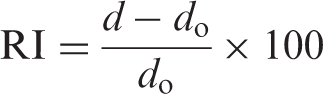
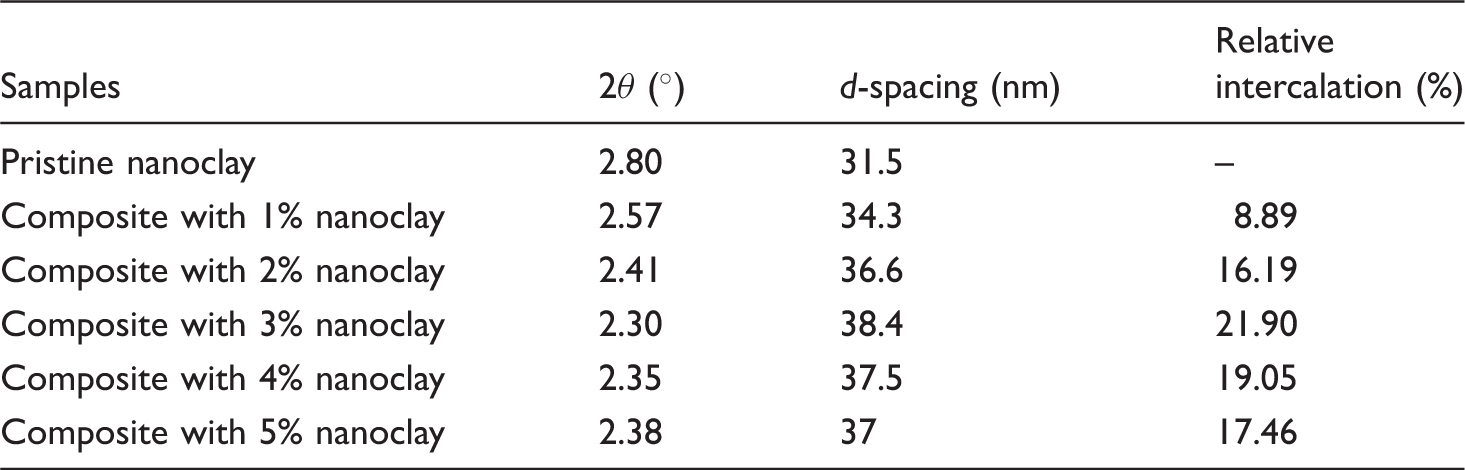
Characterization of the morphological state of the composites was accomplished using XRD. To verify a homogeneous dispersion of nanoparticles (so-called intercalation and exfoliation) in a polymer matrix, the interlayer spacing in nanolayered silicates (Bragg’s law) and the relative intercalation (RI) of the polymer in nanoclay were quantified using the following equations:

Interlayer spacing and relative intercalation in the hemp fiber/polypropylene composites.
Mechanical properties
Statistical analysis indicated that nanoparticles had a significant influence on the mechanical properties of PP/hemp fiber composites.
The researchers’ findings
6
–
8
indicated that the modulus of composites increased with an increase in reinforcing filler. It is well established that the presence of the hemp fiber reduced the ductility of the composites and increased their stiffness. This is true for WPCs in which fillers added to a polymer restrains the movement of its chains, thereby increasing its modulus. From Figure 1, it can be concluded that the tensile modulus and strength increases with an increase of nanoparticles loading up to 3% and then decreases. At low weight of nanolayered silicates loadings, the enhancement of properties is attributed to the lower percolation points created by the high aspect ratio nanoclays. The increase in properties may also be attributed to the formation of intercalated and exfoliated nanocomposite structures formed at these loadings of clay.
10
–
22
At higher weight loading, decreases in tensile properties may be attributed to the formation of agglomerated clay tactoids.
19
–
22
Also, reinforcing efficiency of the nanoparticles is balanced by two opposite phenomena. A negative effect is attributed to migration of nanoparticles into the wood–plastic interface, which caused decreased performance. At 5% of nanoclay, agglomeration of nanoparticles could decrease the reinforcement of clay. Dispersion of nanoparticles as positive effect could enhance the modulus; therefore, it can be concluded that in 3% of nanoclay content in hybrid composite, the former phenomenon has dominated and the tensile modulus increases.
Effect of nanoparticles loading on tensile strength and modulus of hemp fiber/polypropylene composites.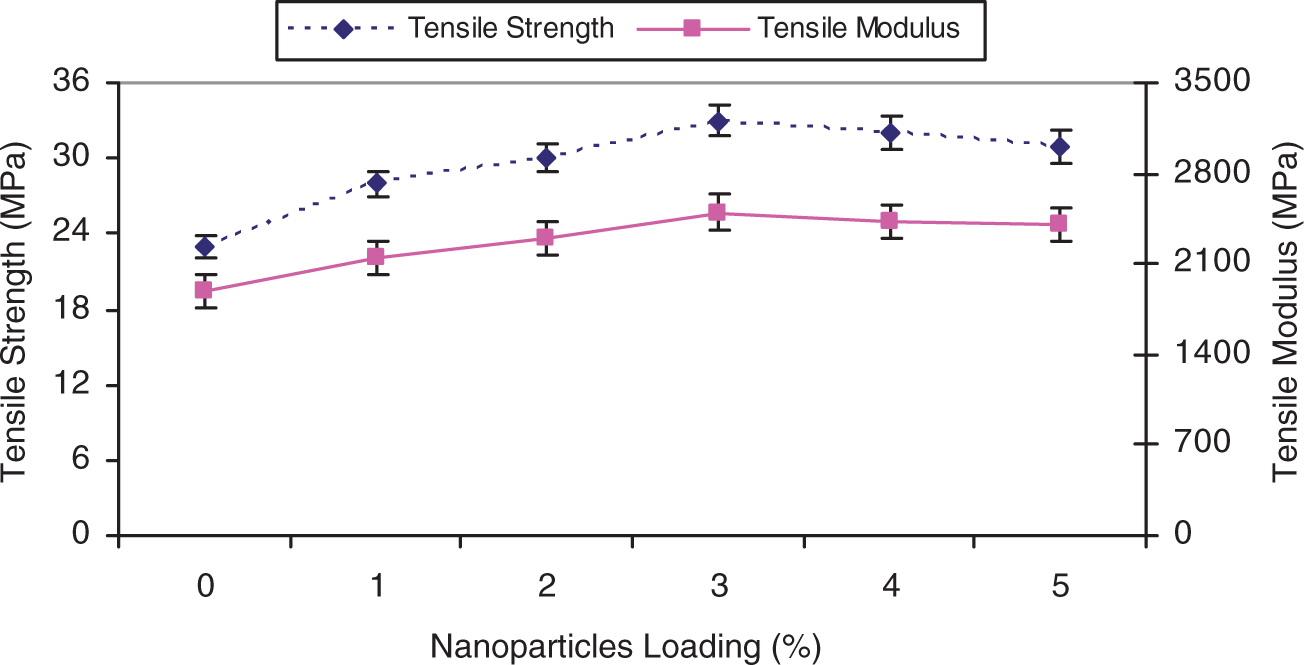
We expected that the impact strength of composites decreased with an increase in hemp fiber loading. The poor interfacial bonding between the hemp fiber and PP causes microcracks to occur at the point of impact, which causes the cracks to easily propagate into the composite. Figure 2 exhibits that the impact strength of the composites decreases with an increase in the nanoparticles loading. The decrease in impact strength at higher nanolayered silicate content levels is probably due to the formation of clay agglomeration, and the presence of unexfoliated aggregates and voids.
17
–
24
Other studies
6
–
8
concluded that the elongation at the break of composites decreased with an increase in reinforcing filler. It is well established that, when the percentage of filler loading was increased, the ductility of the PP/hemp fiber composites was greatly decreased. Figure 2 also demonstrate that the elongation at break increases with an increase of nanoparticles up to 3% and then decreases. This improvement in elongation is related to the high aspect ratio of nanoclay. The increment of elongation is depending on the intercalation structures, which are possibly existent in composites.
Effect of nanoparticles loading on elongation and impact strength of hemp fiber/polypropylene composites.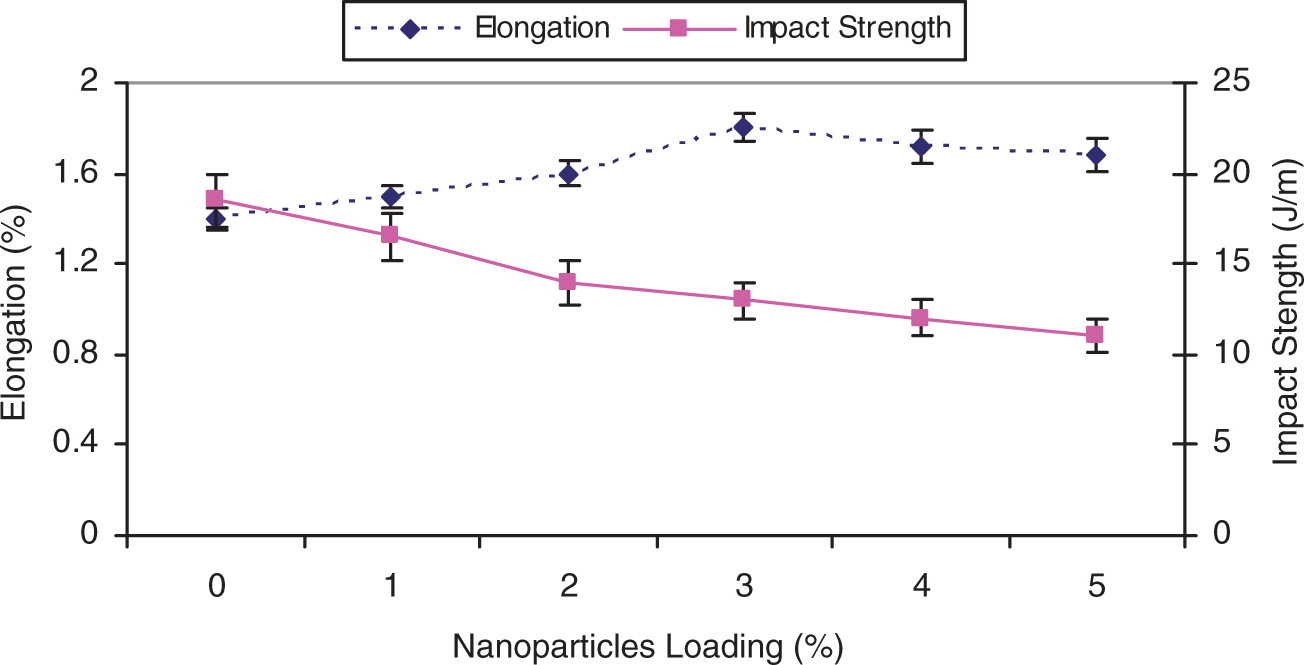
Physical properties
Statistical analysis indicated that nanoparticles had a significant influence on the physical properties of PP/hemp fiber composites. As can be seen in Figure 3, the water absorption and thickness swellings decrease with increase in nanolayered silicates loading. It seems that the barrier properties of nanoparticles inhibit the water permeation in the polymer matrix. Two mechanisms have been reported for this phenomenon. First is based on the hydrophilic nature of the clay surface that tends to immobilize some of the moisture;
25
second, surfactant-covered clay platelets form a tortuous path for water transport.26,27 This barrier property hinders water from going into the inner part of the nanocomposite. It seems that both the aforementioned mechanisms could be more efficient when the morphology is exfoliated. In other words, in exfoliated morphology, there is more available surface of organoclay (with hydrophilic nature) and surfactant (tortuous path), so the water transport goes down under the severe conditions. The another reason for less water absorption and swelling thickness could be the change in crystallinity of WPCs coupled by coupling agent and existence of nanoclay as a nucleating agent. It was reported that crystallinity of the WPCs with coupling agent is much greater than that of the corresponding WPCs without the coupling agent modification.17,20 On the other hand, the nucleation efficiency and the crystallinity of the hybrid composite can be improved by the presence of the nanofiller as a nucleating agent. As the crystalline regions are impermeable, the water absorption is less in the composites.
Effect of nanoparticles loading on water absorption and thickness swelling of hemp fiber/polypropylene composites.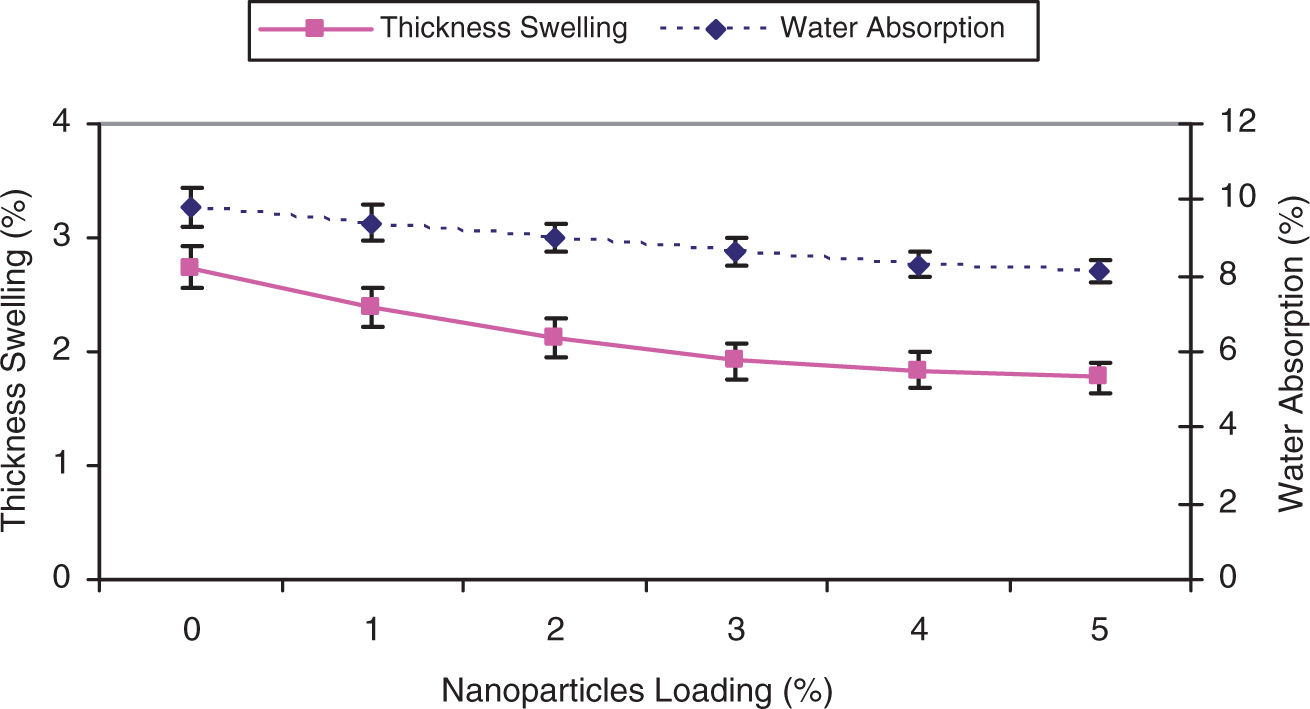
Fire properties
Statistical analysis indicated that nanoparticles had a significant influence on the fire properties of PP/hemp fiber composites. Figure 4 shows that the char residue increases with increase in nanoclay loading. It is well known that the homogeneously dispersed or even intercalated/exfoliated clay may form an organic shell-like structure until ignited by heating. Other research showed that the carbonaceous silicate char was formed at the surface of the nanocomposite from start before ignition.19,28 The inorganic-rich surface had better barrier property in result that the combustion of the nanocomposite was remarkably hindered. The inorganic over coat acts as an excellent insulator of heat and oxygen transport barrier, so that the ignition of the composites with low loading of nanoparticle-layered silicates was effectively delayed. Figure 4 also shows that the total smoke production decreases with increase in nanoclay loading. It is well known that, the smoke suppression by the ceramic skin on the surface of the samples was produced by condensed inorganic nanodispersed-layered silicate lamellae in the cone calorimeter that effectively protects nanocomposite from thermodegradation. Thus, a small quantity of nanoparticles reduces the smoke emission, which is favorable for visibility from around and helpful for persons to escape from fire. It also reduces the toxic smoke quantity, which is especially important for polymeric composites.
Effect of nanoparticles loading on char residue and total smoke production of hemp fiber/polypropylene composites.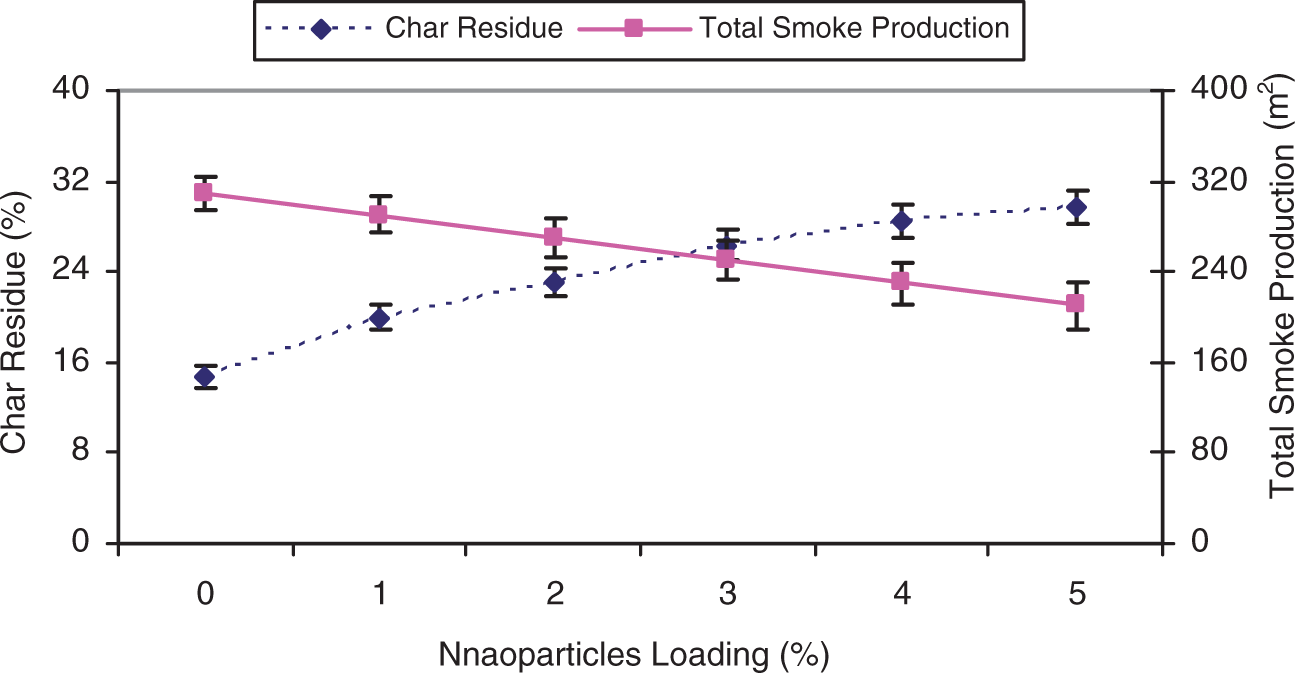
Figure 5 exhibits that the burning rate of the composites decreases with increase in the nanoparticles loading. It is attributed that achieving a higher degree of exfoliation of nanoclay is the key point to enhance the flame retarding properties when a very small amount of clay issued. Zhao et al.
16
reported that the clay must be nanodispersed to enhance the flame retarding properties of the nanocomposites. In general, the flame retarding mechanism of the nanocomposites involves a high-performance carbonaceous-silicate char, which builds upon the surface during burning. This insulates the underlying material and slows the mass loss rate of decomposition products.
Effect of nanoparticles loading on burning rate and time to ignition of hemp fiber/polypropylene composites.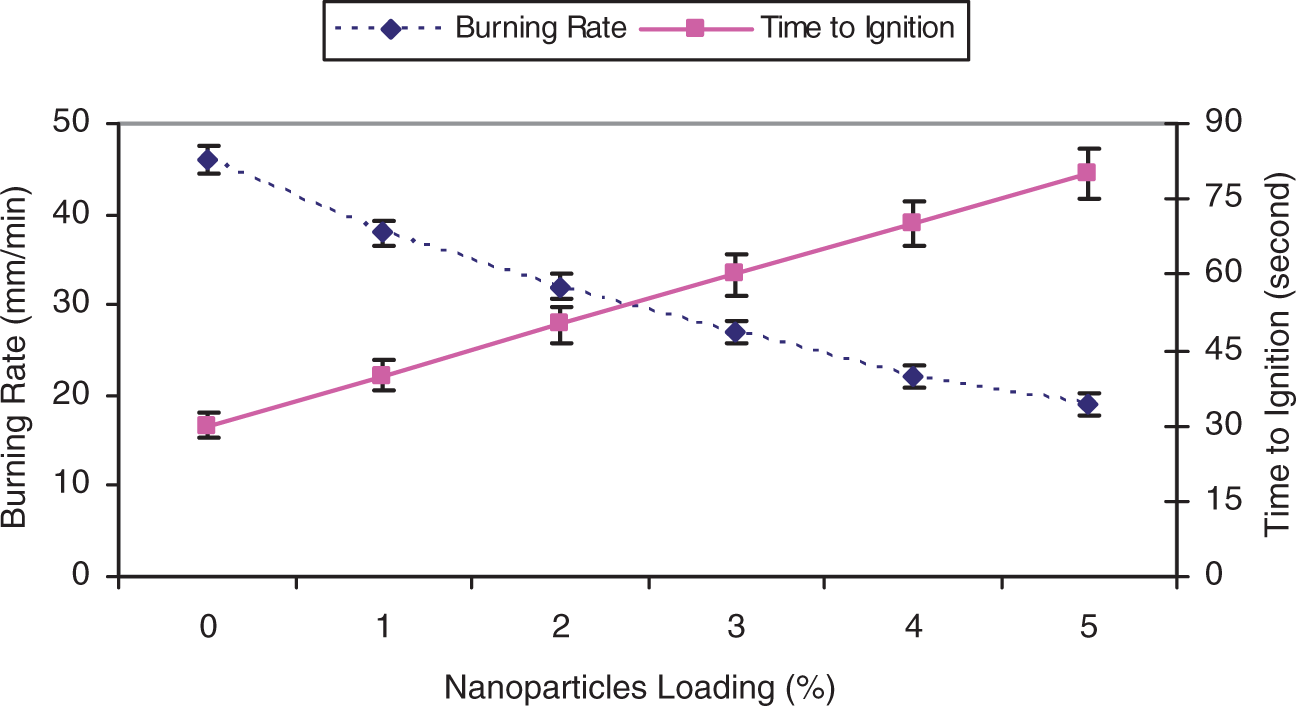
Figure 2 also demonstrate that the time to ignition of the composites increases with increase in the nanoparticles loading. It is attributed that the time to destruction of the char shield strongly depends on the formulation and the dispersed/intercalated structure of the compounds. More of nanoclay incrassated formation of the char shields delays time to ignition and the thickened char shield needs higher temperature to break down.19,29,30
Dynamic Mechanical Behavior
The effect of nanoparticles content on the dynamic mechanical behavior of the PP/hemp fiber composites is shown in Figure 6. The storage and loss modulus values were increased with an increase in the nanoclay loading. The dynamic mechanical behavior of the nanocomposite materials is related to the properties of the components, the morphology of the system, and the nature of the interface between the nanofiller and polymer matrix. When a nanoparticle is added to a matrix to form a polymer nanocomposite, and an interphase is created. This interphase is very sensitive to the surface modification of nanofiller, such as the compatibility between the nanoclay and the matrix.31,32 Based on the results of this study, we can see that the storage and loss modulus was improved considerably. This improvement was, however, more obvious for the surface-modified nanolayered silicate.
Effect of nanoparticles loading on loss and storage modulus of hemp fiber/polypropylene composites.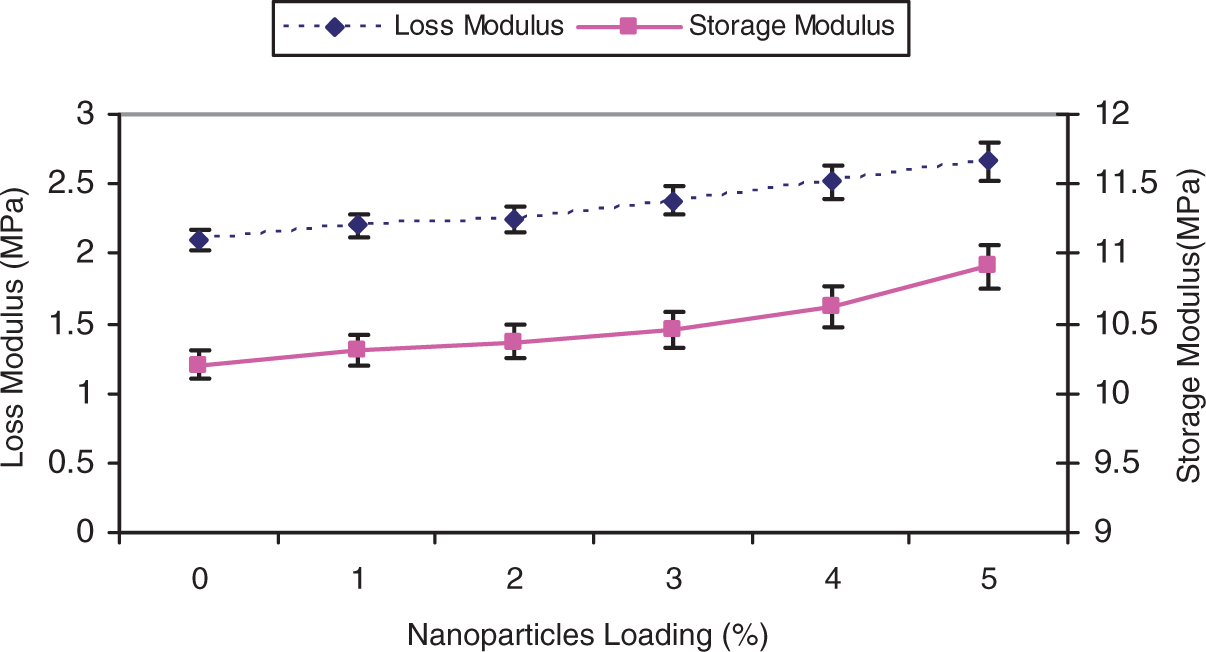
Conclusion
The following conclusions could be drawn from the results of the present study:
The tensile modulus, tensile strength, and elongation at break of composites increased with an increase in nanoparticles up to 3% and then decreased. However, the impact strength decreased with the increase in nanoclay loading. The storage and loss modulus of composite were improved by addition of nanolayered silicates. Significant reduction in water absorption and swelling thickness has been shown with increase in nanoparticles loading. The burning rate and total smoke production of samples decreased with the increase in nanolayered silicates content. Also, the char residue and time to ignition increased with the increase in the nanoclay loading. The XRD tests clarify that the nanoparticles in the hemp fiber/PP samples is not exfoliated, and the dispersion is in need of improvement. Also, morphological findings showed that samples containing 3% of nanoparticles had higher order of intercalation and better dispersion. This project has shown that the composites treated with layered nanoparticles will be desirable as building materials due to their improved dimensional and fire stability and strength properties.