



Abstract
In this study, the effect of nanoclay on the physical and mechanical properties of nanocomposites was investigated. Composites based on polypropylene, reed fiber, coupling agent (maleated polypropylene, MAPP) and nanoclay were made by melt compounding and then injection molding. The mass ratio of reed fiber to polypropylene was controlled at 60/40 for all blends. The concentration was varied and set to 0, 2 and 4 per hundred compounds (phc) for nanoclay and 0 and 2 phc for MAPP. Results indicated that the tensile modulus and strength of PP/reed flour composites significantly increased with nanoclay loading. However, the impact strength and water uptake of the composites decreased by addition of nanoclay. Finally, the mechanical and physical analyses showed that the biggest improvement of these properties can be achieved for the nanoclay loading at 4 phc. The morphology of the nanocomposites has been examined by using X-ray diffraction. The morphological findings revealed that intercalation from the sample with 4 phc concentration of clay, which implies the formation of intercalation morphology and better dispersion, and the d-spacing of clay layers were improved in the composite in the presence of MAPP. Additionally, the coupling agent improved the mechanical and physical properties of the composites.
Introduction
The use of natural fillers in the place of synthetic fillers in the manufacture of thermoplastic composites has become more commonplace in recent years. Natural fibers have many advantageous attributes, such as low density, high specific strength and modulus, ease of fiber surface modification, and wide availability. 1 Natural fibers are also much cheaper than synthetic fibers. With the increasing global utilization of wood plastic composites in the market and increasing wood costs and competition of wood resources from traditional wood sectors, seeking alternative fiber sources for wood plastic composites manufacturing is urgently needed. One of the natural resources that can be abundantly available in Iran is reed. Reeds cover vast regions in northern and southern Iran. There is a possibility of executing a harvest in Hoor-Alazim and Mordabe Anzali canebrake as a natural site or habitat. According to a study in Hoor-Alazim, 80 tons per hectare of dried reed could be harvested. 2 The use of reed fiber in wood plastic composites (WPC) production can help reduce the demand for wood fibers and also the environmental impact associated with wood fiber harvesting.
In addition, in recent years, composites reinforced with nanoparticles have caught the attention of many researchers and engineers.3–6 In nanocomposite materials, the particles are dispersed through the polymer matrix in the nanometer range at least in one dimension. 7 Nanocomposites have attracted great interest, both in industry and in academia, because they often exhibit remarkable improvement properties compared with composites. These improvements can include high modulus, increased strength and heat resistance, decreased gas permeability and flammability, and increased biodegradability of composites.8–10 The main nanofillers used today are nanoclays. Nanoclays (layered silicates) are especially interesting for bulk applications because they are relatively inexpensive, commercially available, exhibit a layered morphology with high aspect ratio, have large specific surface areas and they cause an improvement in the mechanical properties of polymers.8–10 The main objective of this study is to evaluate the effect of nanoclays on the physical and mechanical properties of the reed flour/polypropylene nanocomposites.
Materials and Methods
The reed used as filler was directly obtained from the Mahmodabad area, which is located in northern Iran. After debarking it was chopped and by grinding changed to flour. The flour was dried at 95°C for 24 h and then was sieved. The mesh size of the fiber selected was +40–60. It was dried again and stored in sealed plastic bags before compounding. Polypropylene (PP) homo-polymer, with the trade name V30S, was obtained from Arak Petrochemical Company, Iran. Its melt flow index was 18 g/10 min at 190°C and 2.16 kg as measured by ASTM D 1238-04. The coupling agent, maleated polypropylene (MAPP), was obtained from Eastman Chemical Products; Epolene G-3003TM has an acid number of 8 and a molecular weight of 103,500. Cloisite 15A, a natural montmorillonite modified with a dimethyl, dehydrogenated tallow, quaternary ammonium (Cationic Exchange Capacity (CEC) = 125 meq/100 g of clay, d-spacing (d001) = 31.5 Å), was obtained from Southern Clay Products Co, USA.
Compounding and Sample Preparation
Composition of the studied formulations.
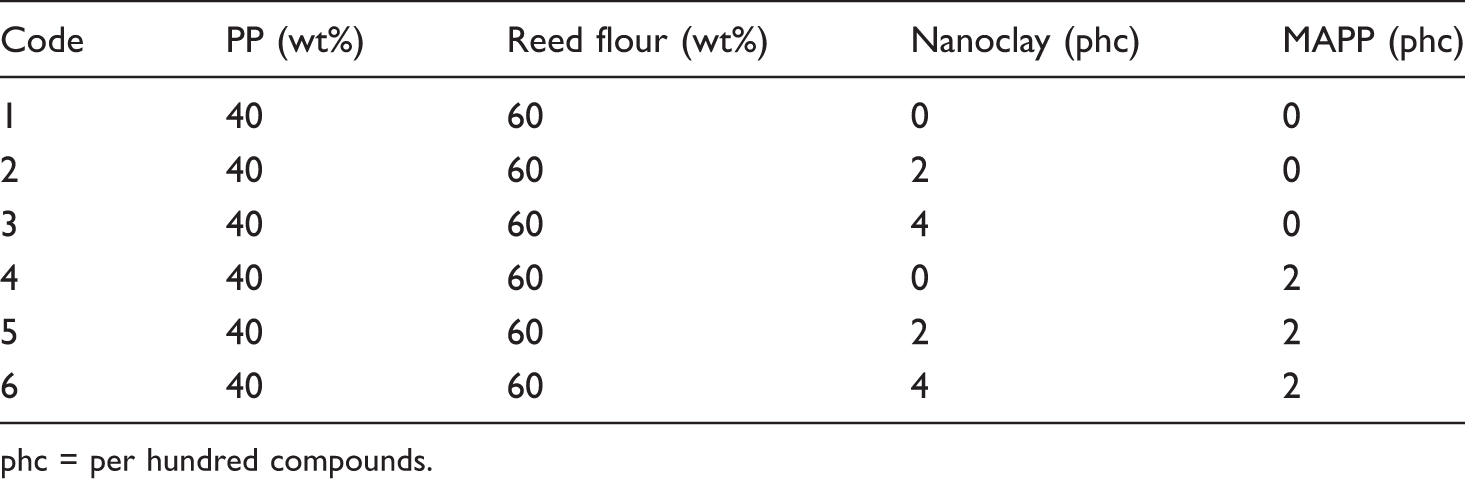
phc = per hundred compounds.
Physical Properties
Long-term water absorption tests were carried out according to the ASTM D-7031-04 specification. 12 Five specimens of each formulation were selected and dried in an oven for 24 h at 102±3°C. The weight and thickness of the dried specimens were measured to a precision of 0.001 g and 0.001 mm, respectively. The specimens were then placed in distilled water and kept at room temperature. For each measurement, specimens were removed from the water and the surface water was wiped off using blotting paper. Weights and thicknesses of the specimens were measured after 624 h. The values of the water absorption were calculated using the equation
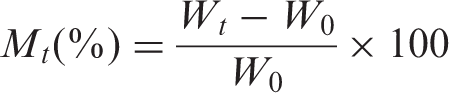
where Mt is the water absorption at time t (in percent), W0 is the oven dried weight and Wt is the weight of the specimen at a given immersion time t. Also the values of the thickness swelling were calculated using the equation

where TSt is the thickness swelling of the specimen at a given immersion time t (in percent), W0 is the oven dried thickness and THt is the thickness value of the specimen at a given immersion time t.
Mechanical Properties
The mechanical behavior of the nanocomposites was characterized via tensile tests in accordance with ASTM D 638-99. 11 Strength measurements of the samples were conducted using an Instron testing machine (Model 1186). The crosshead speed during the tensile test was 1.5 mm/min. The unnotched impact strength was measured with impact pendulum tester (Santam Model) according to ASTM D 256-97 at room temperature. 13 Each value obtained represented the average of five samples.
Morphological Behavior
Wide angle X-ray diffraction (XRD) analysis was carried out with a Seifert-3003 PTS (Germany) with CuKα radiation (λ = 1.54 nm, 50 kV, 50 mA) at room temperature, with a scanning rate of 1° /min.
Results and Discussion
Long-term Water Absorption and Thickness Swelling
The effect of MAPP on long-term water absorption is illustrated in Figure 1 where the percentage of water absorption in the studied composites with and without MAPP is plotted against time. Figure 1 shows that water absorption is deceased by adding MAPP. As is seen, generally water absorption increases with immersion time, reaching a certain value at the saturation point where the water content remains constant. In the studied composites, the PP has negligible water absorption, indicating that moisture is absorbed by the reed flour. Because of constant reed flour content in all formulations, the different water absorption among the studied composites can be attributed to the role of MAPP and nanoclay. The gain in weight of the samples upon exposure to water after 900 h decreased as the percentage of MAPP increased for all composites tested. Because of the presence of the coupling agent the interface between the reed flour and the matrix is enhanced and then there is a reduced gap between the polymer and natural flour. The MAPP chemically bonds with OH groups in the natural filler (or reed flour) blocking the hydrophilic groups and limiting the water absorption of composites.
4
Effect of MAPP on water absorption.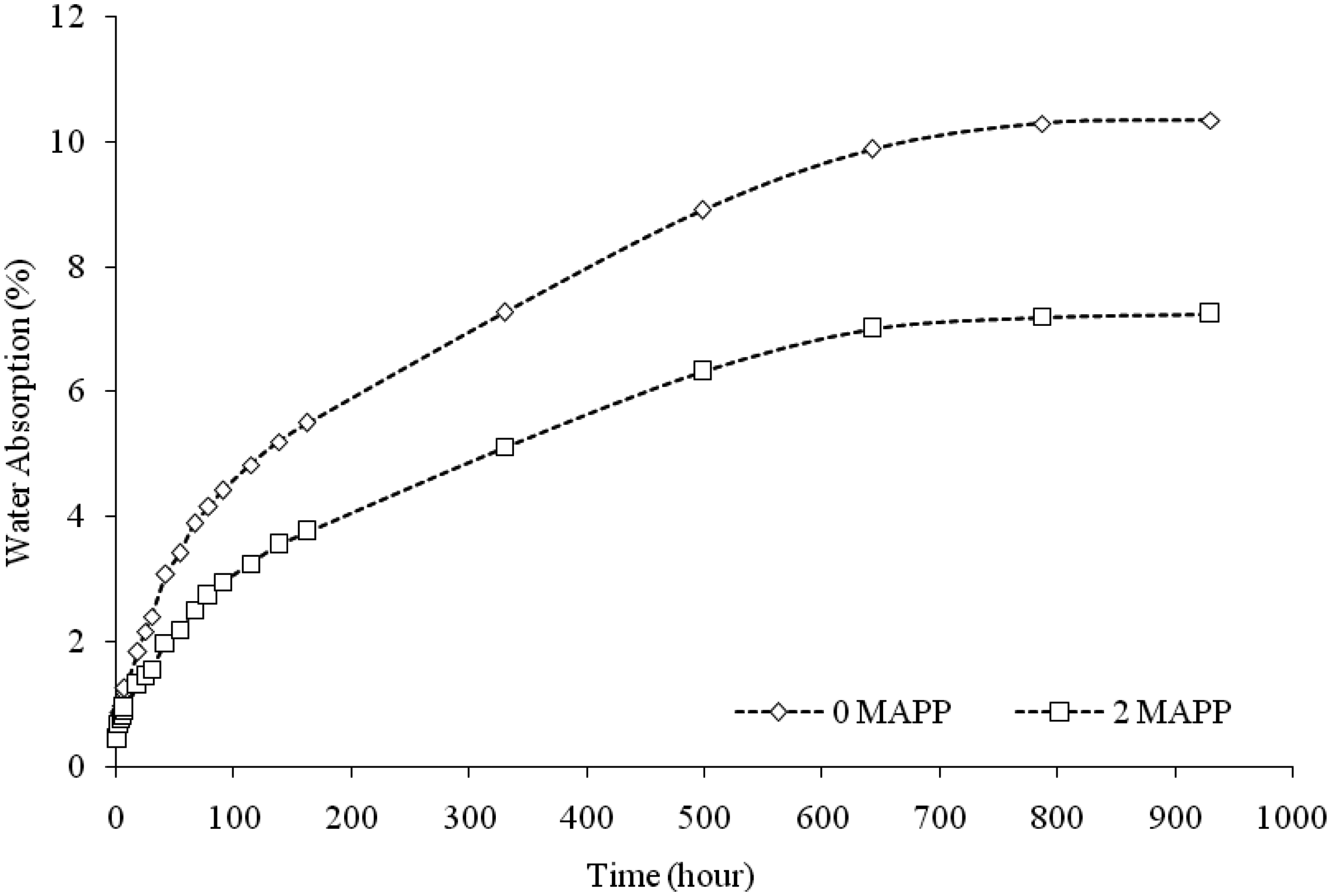
The effect of nanoclay loading on water absorption is illustrated in Figure 2. According to Figure 2 composites containing 4 per hundred compounds (phc) nanoclay show lowest values of water absorption and composites without nanoclay exhibit the highest values. It seems that the barrier properties of nanoclay inhibit the water absorption in the polymer matrix. This could be based on two mechanisms for this phenomenon that have been reported by researchers.14–16 The first is based on the hydrophilic nature of the clay surface that tends to immobilize some of the moisture.
15
The second, as the composite voids and gaps between flour and PP were filled with nanoclay, this prevents the penetration of motion of water into the deeper parts of the composite.14,16
Effect of nanoclay loading on water absorption.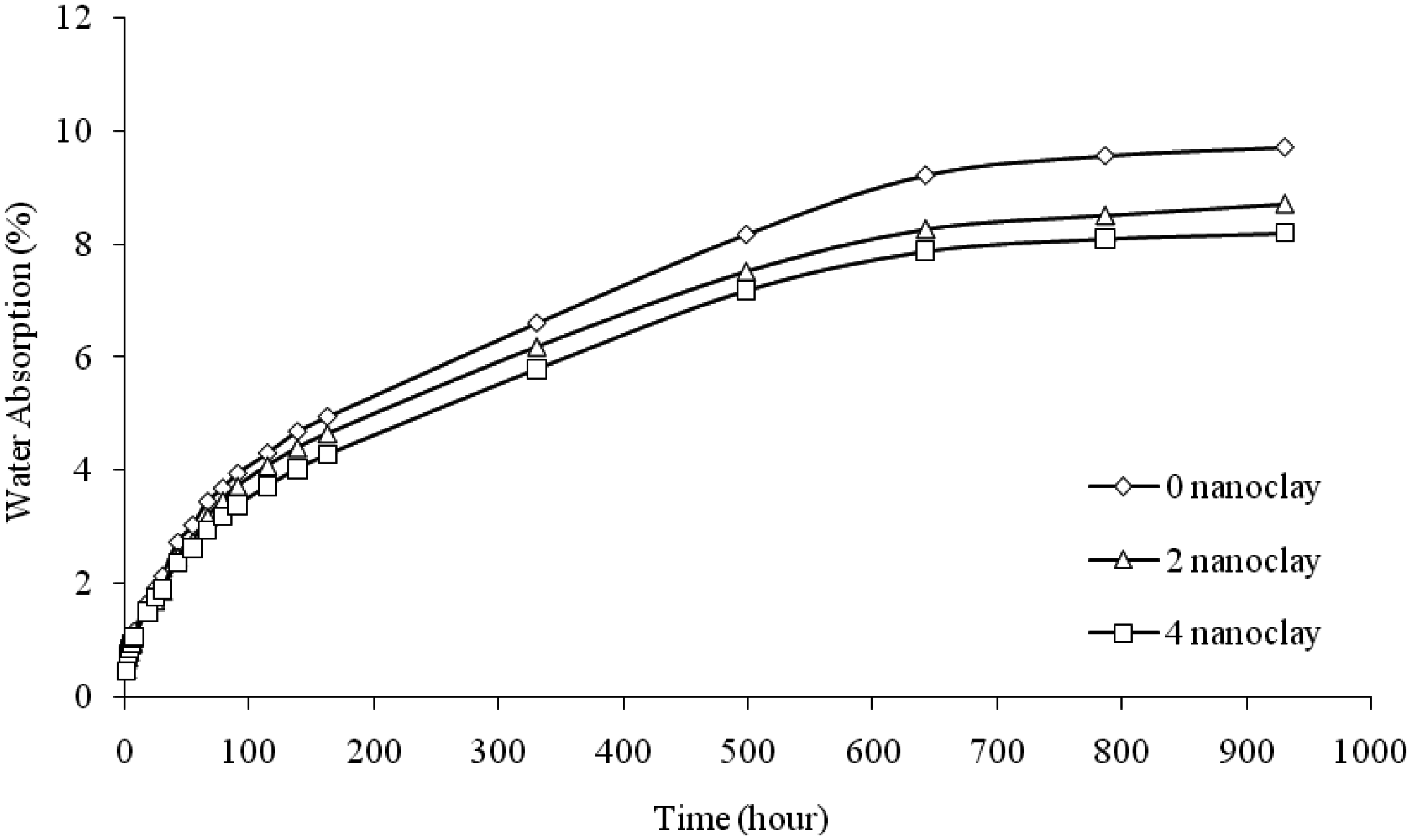
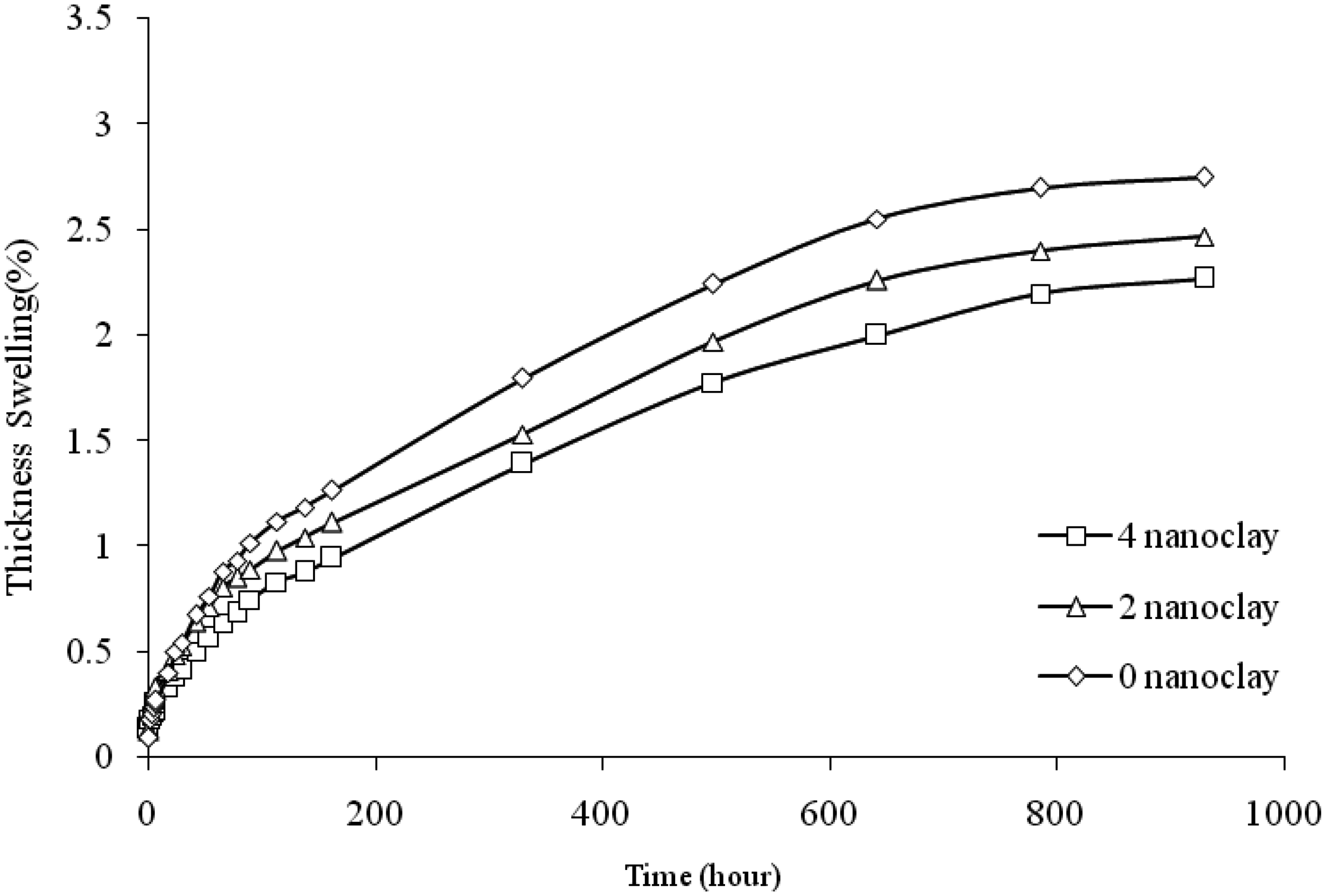
Figure 3 shows the effect of MAPP on thickness swelling of nanocomposites. According to Figure 3 as the percentage of MAPP increased for all nanocomposites tested, the thickness swelling of nanocomposites decreased. Figure 4 shows the effect of nanoclay on thickness swelling of nanocomposites. It is seen that when nanoclay increases thickness swelling of nanocomposites decreases too. Variations in thickness swelling of the composites are similar to variations in water absorption. The decrease of the thickness swelling in the studied composites can be attributed to the same reasons as discussed concerning water absorption.
Effect of MAPP on thickness swelling. Effect of nanoclay content on thickness swelling.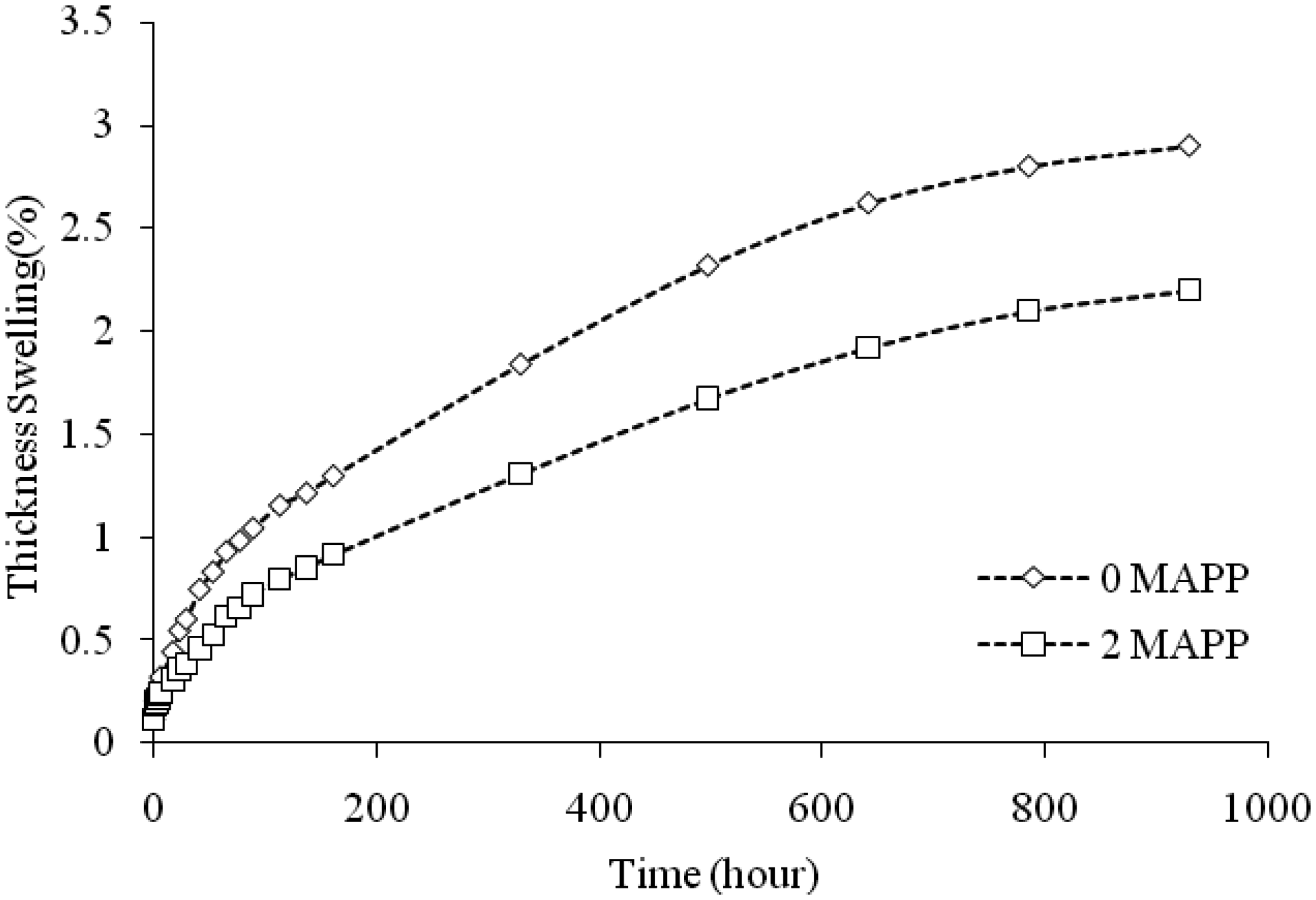
Impact Strength
Unnotched impact strength, tensile strength and tensile modulus (±standard deviation) of composites with different levels of nanoclay and coupling agent.
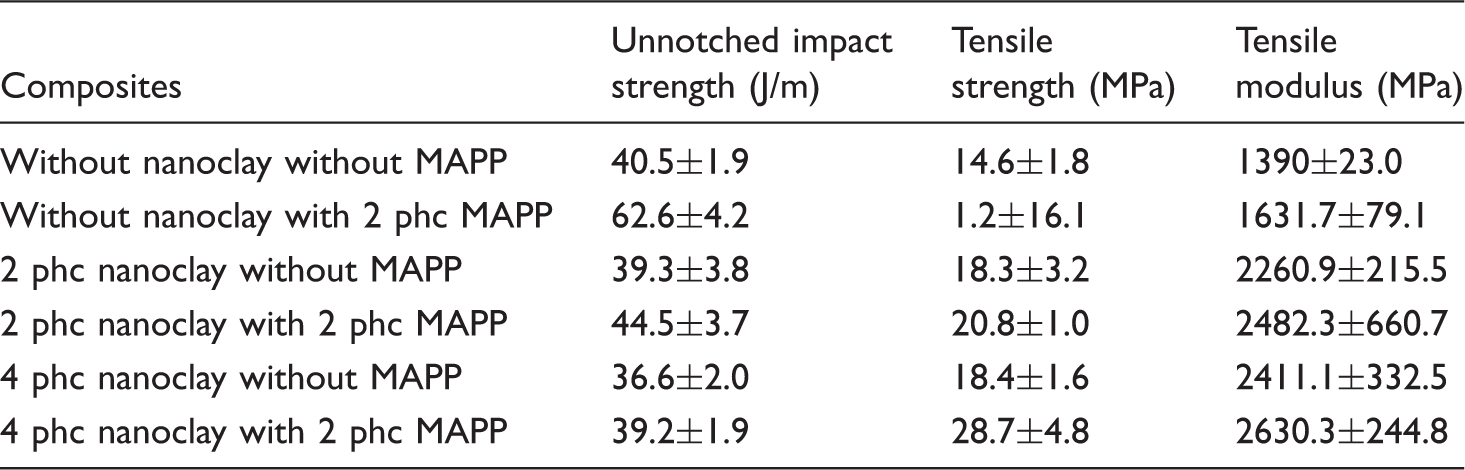
Also, Table 2 represents the dependence of the unnotched impact strength on the various nanoclay loadings. It is seen that the impact strength of the composites is generally decreased with increasing nanoclay content. This is consistent with the results reported by most authors.6,14,17 The presence of nanoclay particles in the PP matrix provides points of stress concentrations, thus providing sites for crack initiation. It should be noted that for specific applications the impact strength can be increased by using impact modifiers.
Tensile Properties
Table 2 shows the values of the tensile strength and modulus in the studied nanocomposites. It can be seen that the strength and modulus values of the nanocomposites increase in samples with 2 phc MAPP. According to Table 2 the effect of MAPP is positive in enhancing the modulus and tensile strength of the nanocomposites. As in nanocomposites including 2 phc MAPP, the modulus and tensile strength were increased by 11% and 27%, respectively. The composites with 2 phc MAPP show maximum values of the tensile modulus and strength. This is consistent with the results reported by most authors.6,7,14
Figure 5 presents the tensile properties of the studied composites containing different contents of nanoclay. From the curves of Figure 5 it is evident that an increase in tensile modulus and strength occurred upon filling the polymer matrix with nanoclay, indicating a reinforcing effect. Enhancement of properties is dependent on the dispersion of nanooclay in the matrix and morphology of the clay in nanocomposites.
4
The reinforcing effect of the nanofiller is balanced by two opposite phenomena. The negative affect is attributed to migration of nanofiller into the interface of wood/plastic, which decreased its performance. Dispersion of nanoclay as a positive effect could enhance the modulus of nanocomposites.
4
This effect can be seen in composites with 4 phc nanoclay. The results of previous studies have reported that mechanical properties of nanocomposites could be attributed to morphological behavior.4–6
Effect of nanoclay content on tensile strength and modulus.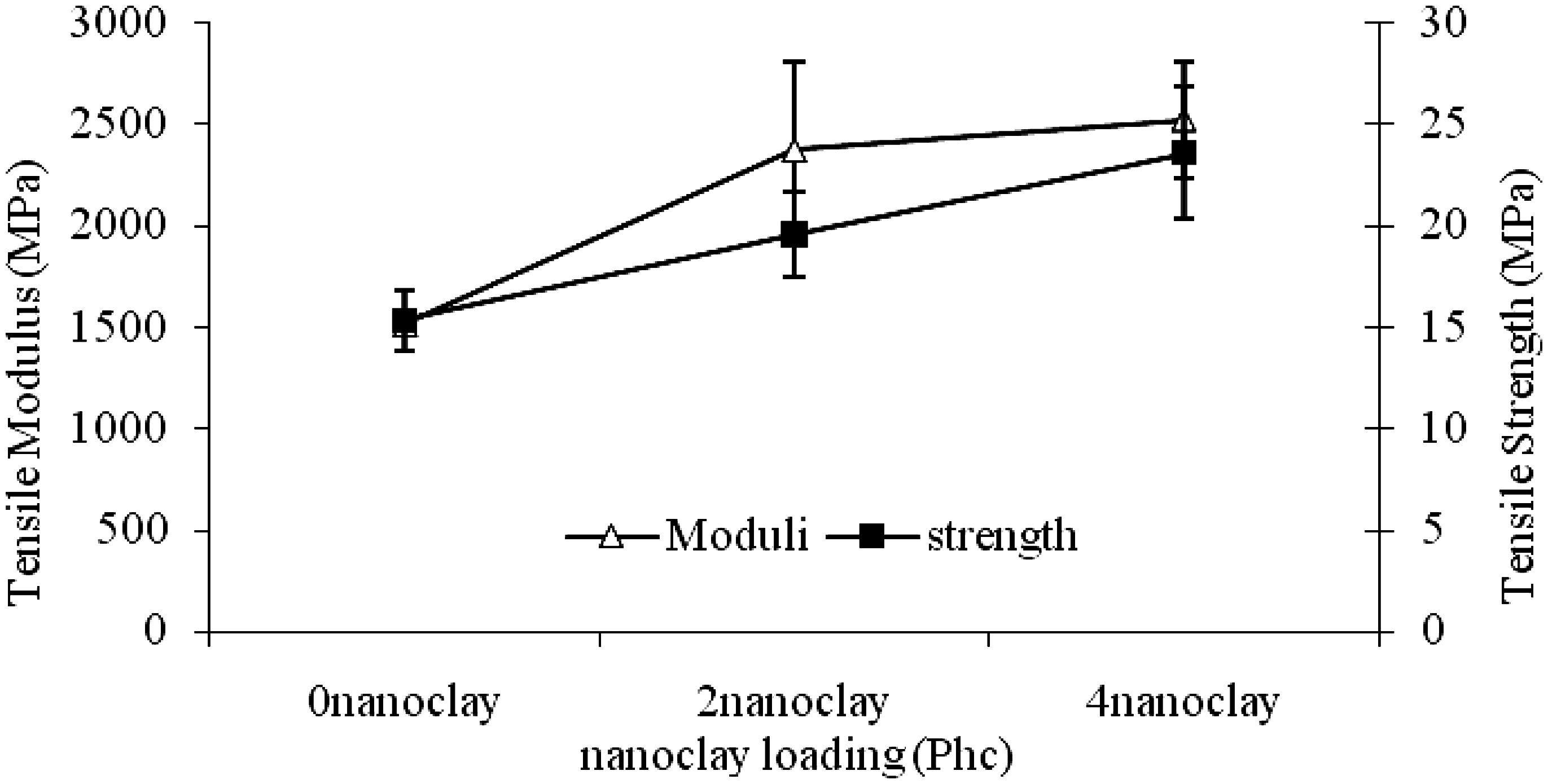
Morphological Behavior
Summary of XRD data for PP/reed flour composites with different levels of nanoclay and coupling agent.
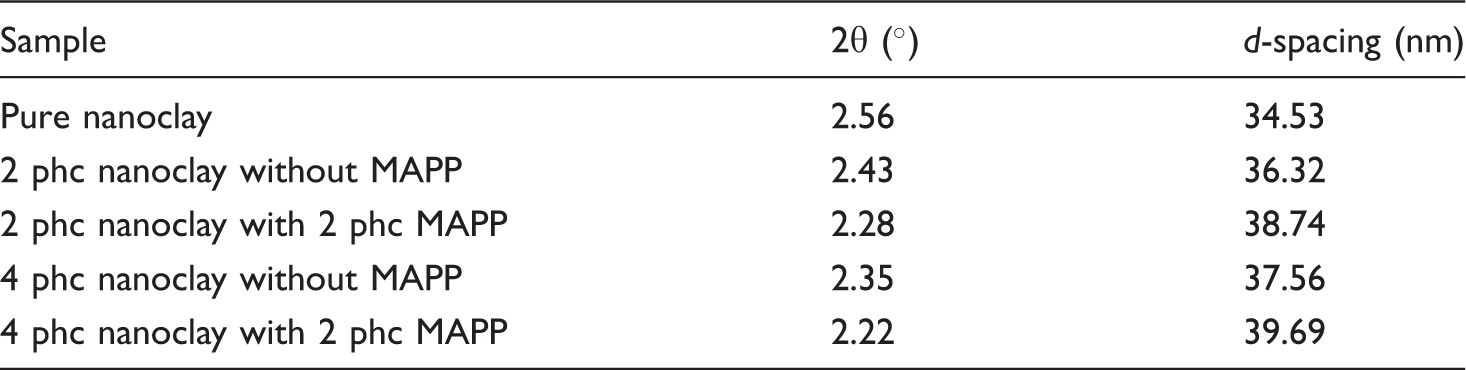
The x-ray diffraction of sample with the different levels of MAPP to the same concentration of nanoclay are listed in Table 3. With increase of MAPP in the composite, d001 is increased. Because of the strong interaction between the clay layers and coupling agent, 4 MAPP molecules could enter and penetrate the gallery between the clay layers when the clay was mixed with MAPP.
Conclusions
In this study the impact of the nature of nanoclay on the physical and mechanical properties of polypropylene/reed flour nanocomposites was researched and the following conclusions drawn from the results:
- The tensile modulus and strength of PP/reed flour composites increased with addition of nanoclay.
- The unnotched impact strength was lowered by the addition of nanoclay; it was lowered further when the nanoclay content increased from 2 to 4 phc.
- The water absorption and thickness swelling of composites were lowered with the increase in nanoclay content.
- Additionally, MAPP improved the mechanical and physical properties of the composites.
- As a consequence, it is possible to conclude that nanoclay enables the achievement of better physical and mechanical properties than conventional composites.
Footnotes
Funding
This research received no specific grant from any funding agency in the public, commercial, or not-for-profit sectors.