




Abstract
Two groups of polymer nanocomposite samples were synthesized. One of them was Poly(vinyl chloride) (PVC) loaded with different concentrations of carbon nanopowder (CNP), while the other was PVC loaded with different concentrations of carbon nanotubes (CNTs). The dependence of the tensile mechanical parameters, rheological properties and the dc electrical conductivity on the concentration of either filler was investigated. Results revealed a lower electrical and mechanical percolation threshold of CNTs than CNP. Concentration of CNTs of 1 wt% increases the elastic modulus 2.3 times greater than CNP at a concentration of 2 wt%. The storage modulus and the complex viscosity studied at a frequency of 0.1 Hz had the same behavior as the elastic modulus. The glass transition temperature was slightly changed with the addition of either nanofiller. The behavior of the temperature dependence of the electrical conductivity was found to be temperature independent in the studied range for composites containing CNTs, while composites containing CNP showed an activated one at relatively high temperatures. At concentrations in the percolation region of either CNP or CNTs, a jump region in the I-V characteristics was observed with a highest slope of 36.35 at 1 wt% of CNTs. Otherwise the conduction mechanism of the charge carriers was determined and found to be Ohmic.
Introduction
Carbon nanotubes (CNTs) are new materials, which have many interesting properties finding their application in different fields, such as nanoelectronic devices, automotive, aeronautic and aerospace industries.1–3 Development of new materials and in particular, polymer/CNTs composites has become a new interesting area of research during the last decade. However, investigation and improvement of their physical properties are still necessary for optimization of such materials and for development of their applications. It was shown that the mechanism of electrical transfer is better in polymer/CNTs materials than in composites filled with metallic or carbon particles. 4 A combination of conductive CNTs with an insulating polymer matrix is expected to result in electrically conductive composites at very low filler concentrations.5,6 It was shown that the spatial distribution of dispersed conductive filler influences the electrical conductivity of PVC and polypropylene.4,7 The effect of spatial distribution and geometry of CNTs on the modulus of nanocomposites using finite element analysis was studied. 8 Results illustrated that the effects of fiber volume fraction and aspect ratio were similar to those of conventional short-fiber composites.
When the filler distribution results in the formation of a segregated structure (when the filler phase creates a conductive skeleton within the polymer matrix), the electrical conductivity is enhanced as compared to a random distribution of a filler in the polymeric matrix. 9 For most composites, improvement of the polymer/CNTs properties strongly depends on several factors, such as orientation and distribution of CNTs in the polymeric matrix, the manufacturing process, the surface contacts and adhesion between both components. 9
CNTs are excellent candidates for polymer matrices reinforcement because of their high strength (∼100 times stronger than steel 10 ) and modulus (about 1 TPa), high thermal conductivity (about twice as high as diamond), excellent electrical capacity (1000 times higher than copper), and thermal stability (2800°C in vacuum). 10 Nanophased matrices based on polymers and carbon nanotubes have attracted great interest because they frequently include superior mechanical, electrical, and thermal properties. Different polymer/CNTs nanocomposites have been synthesized by incorporating CNTs into various polymer matrices, such as polyamides, 11 polyimides,12–14 epoxy, 15 polyurethane,16,17 polypropylene18–20 and poly(vinyl chloride). 21 The mechanical properties of nanocomposites with various volume fractions of CNTs embedded in amorphous polymer matrix has been investigated. 22 Results indicated that when the interaction between the CNTs and polymer is strong, the interfacial effect cannot be ignored.
In the present work the effect of both carbon nano powder and carbon nano tubes on the tensile, rheological and electrical properties will be investigated. In this respect the stress-strain corves, elastic modulus, tensile strength and strain at brake will be studied. Besides, the storage modulus, complex viscosity and loss modulus will be studied as a function of the concentration of each filler at constant frequency and room temperature will be investigated. The dynamic mechanical thermal properties at constant frequency for all composites will be studied and the glass transition temperature will be produced. Moreover, the I-V characteristics and the dc electrical conductivity as a function of fillers loadings will be studied. The conduction mechanism of the charge carriers will be determined. The dependence of the dc conductivity on temperature will be also investigated.
Experimental
Materials and preparation
A commercial grade of Polyvinyle chloride (PVC) was supplied from Sabic Company, Saudi Arabia. It was in the powder form (powder fraction of 90–120 µm, average size of 100 µm, density ρp = 1.37 g/cm3) was used as a polymeric matrix for preparation of composites.
Carbon nanopowder, average particle size diameter less than 50 nm and specific gravity of 1.8 was supplied by Aldrich. Carbon nanotubes with density of 2.045 g/cm3 were supplied from the Center of Ecxellence in Nanotechnology, KFUPM, Saudi Arabia. Scanning Electron Microscopy (SEM) image of the CNTs is shown in Figure 1a with diameters ranging from 12.7 to 24.4 nm. TheEnergy dispersive X-Ray (EDX) microanalysesis shown in Figure 1b satisfies the purity of used CNTs.
(a) SEM micrograph of as received CNTs and (b) EDX microanalysis of as received CNTs.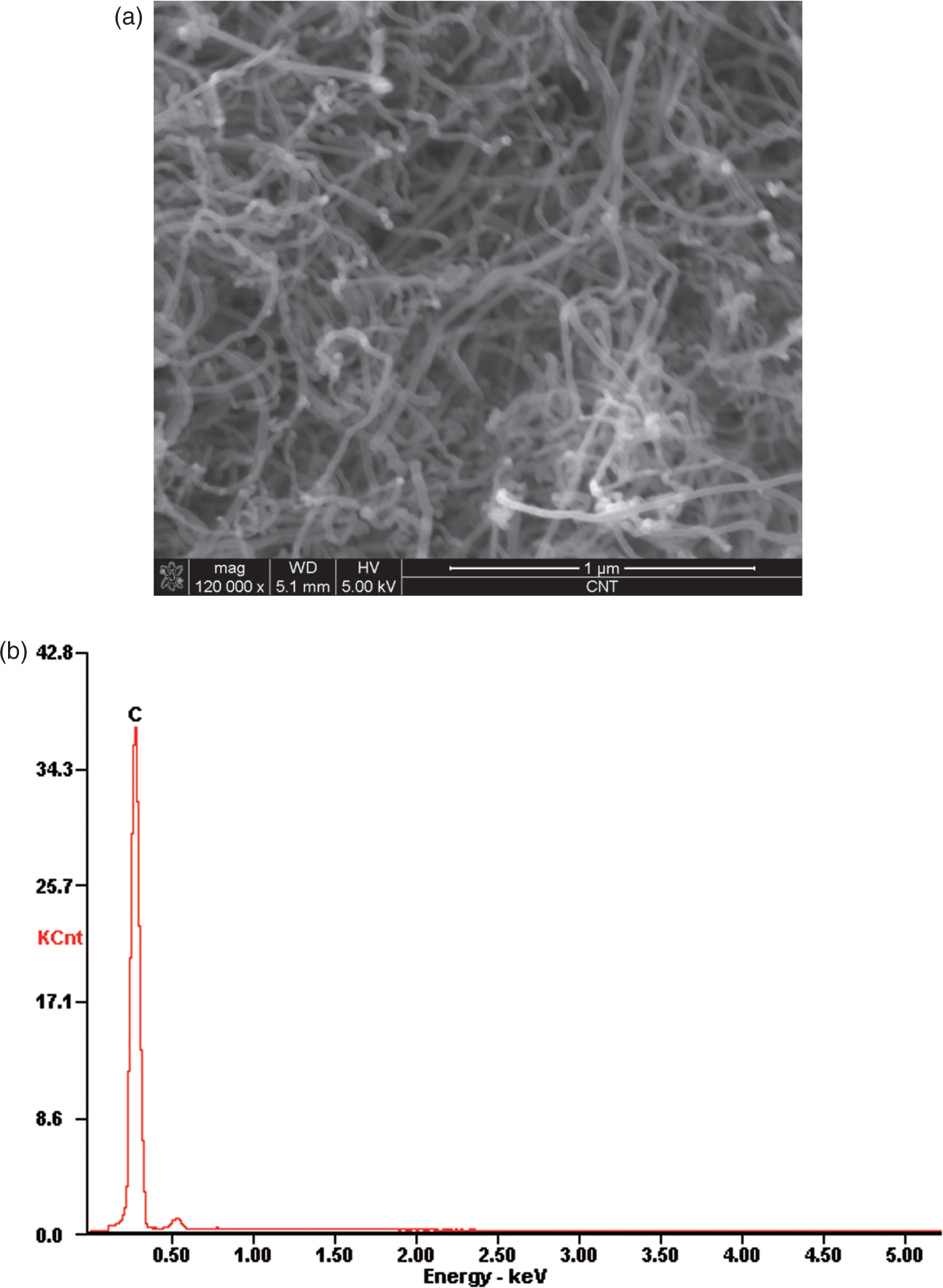
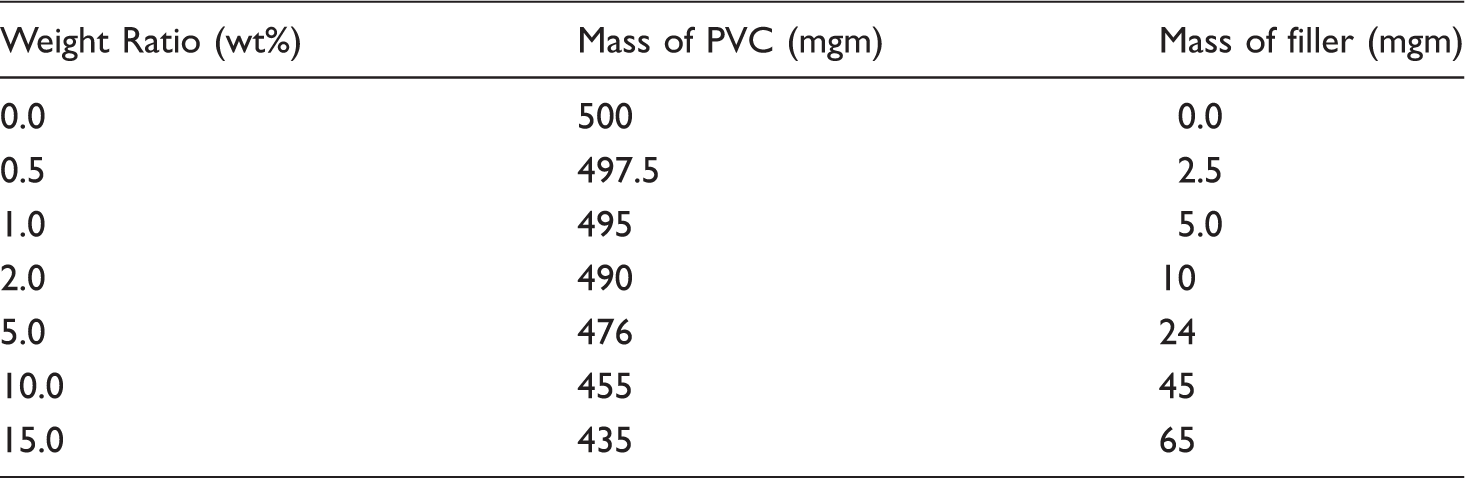
Mix formation of CNP or CNTs/PVC nanocomposites.
Tensile tests
The tensile tests were carried out on dumbbell-shaped specimens. The measurements were done at 25°C on an Instron 3345J8621 (Norwood) tensile machine with a grip separation of 40 mm at a crosshead speed of 5 mm/min according to ASTM D 412.
Rheological and DMTA test
These tests were carried out on a Dynamic Mechanical Analyzer DMA Q800 (TAInstruments LLC, Delaware, USA) instrument with film clamps in dry mode.
Rheological properties measurements were done through an isothermal process at 25°C and at different frequencies ranging from 0.01 to 200 Hz. A static pre-load force (0.01 N) was applied to the sample prior the dynamic oscillating force to prevent film buckling.
For the DMTA measurements a slow heating rate of 1°C/min was employed throughout to ensure that the sample was in thermal equilibrium with the instrument. The oscillating frequency was fixed at 5 Hz.
During all measurements, the instrument was programmed to maintain the static load at 125% of the force required to oscillate the sample. It is important that the film remained in its linear viscoelastic region during measurement (to ensure that the properties observed were independent of the deformation applied and truly reflected molecular motions), and so experiments were recorded maintaining constant strain. Generally, for thin polymer films, linear viscoelastic behavior can be assured with a strain less than 0.1%, and so this limit was used.
Electrical conductivity measurements
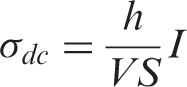
The DC electrical specific conductivity σdc was measured using a two-electrode method. Sample was painted from both sides with a high quality silver paste and placed between two brass electrodes to ensure a perfect composite-electrode contact. The values of σdc were calculated using the equation:
Structure CNTs
The structure of CNTs was examined with an FEI NNL200 SEM (KACST, Saudi Arabia).
Results and discussions
Stress-Strain curves
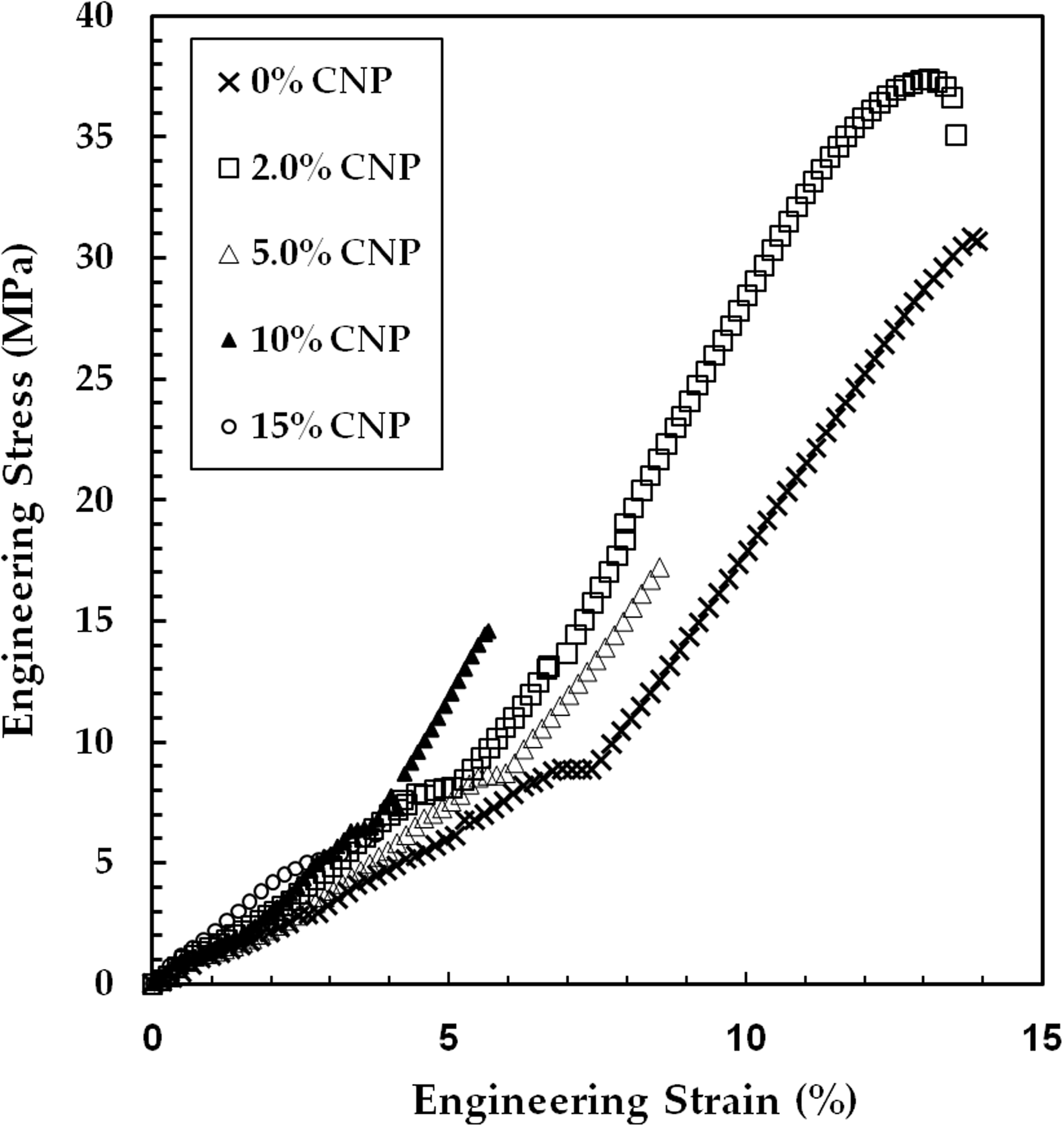
The stress strain curves of PVC loaded with different concentrations of CNP and CNTs are illustrated in Figures 2 and 3 respectively. It is observed for all the plots that, at low strain, there exists a so-called elastic energy in the materials. This energy is stored in the chemical bonds in the form of strain energy prior to break. For greater strain, the stored energy is called plastic energy and it is used to describe the amount of energy residually stored in the material as internal and free (orientation) energy after break. Finally rapture of the material takes place when unstable microcracks begin to appear at the weakest sites. Once the crack exists, fracture occurs when the energy stored in the part above the crack surpasses the energy stored for chemical bond strain, together with the energy stored for molecular orientation around the microcrack.
23
Stress-strain curves of PVC filled with different concentrations of CNTs at a strain rate of 5 mm/min. Stress-strain curves of PVC filled with different concentrations of CNP at a strain rate of 5 mm/min.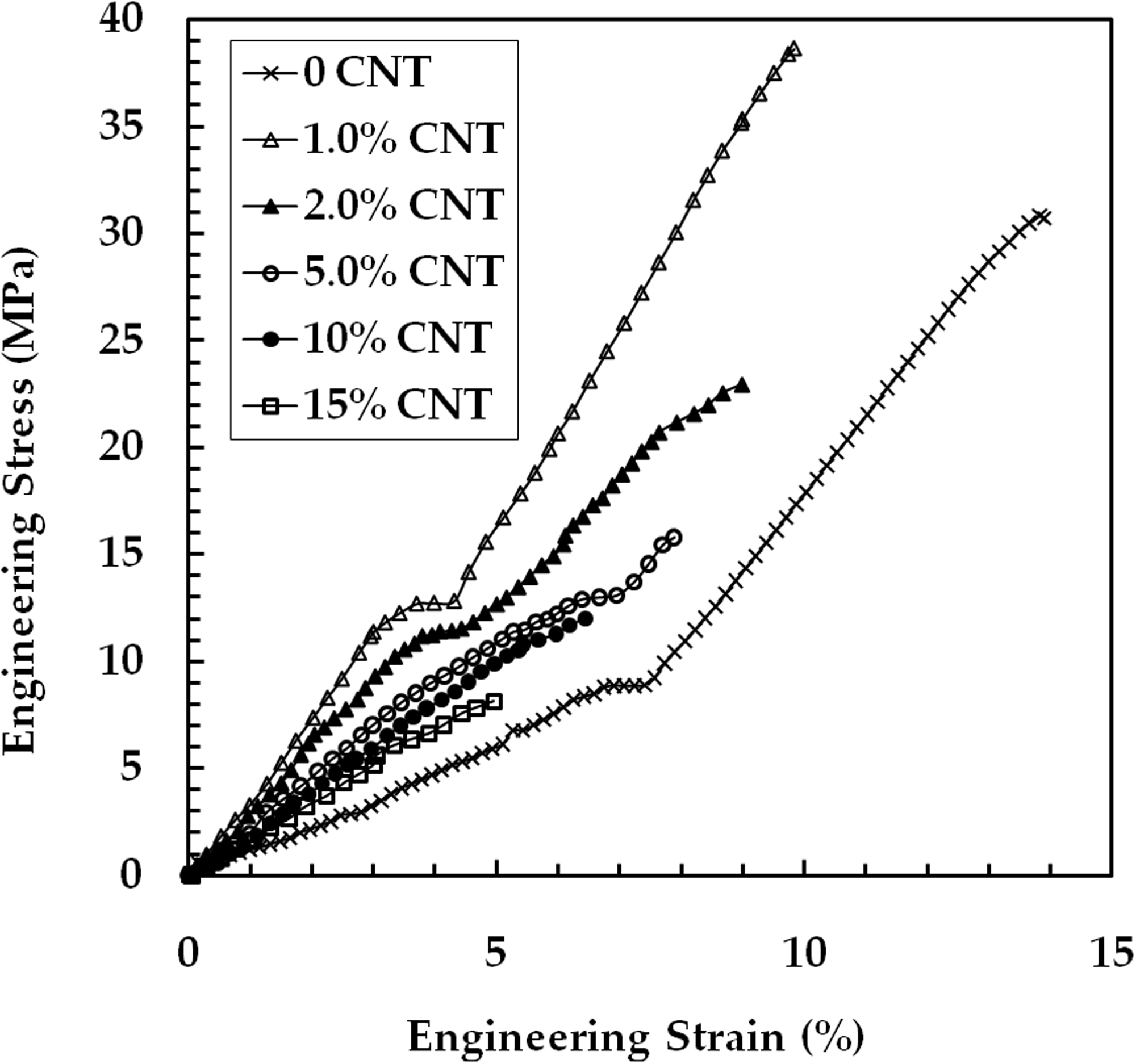
Young's modulus, E is calculated from separate plots (not mentioned here) between d σ / d ɛ versus ε for all studied composites. The plots show strain independent regions at very low strain values. These constant values are taken as Young's moduli E, at different concentrations of both CNP and CNTs which are shown in Figure (4). One weight percent of CNTs increases Young's modulus by about 200% while 2w% from CNP increases it only by about 37%. Polymer chains may get folded around the length of the CNTs making additional entanglements which results in strengthen the composite. Besides, this may be due to direct bonding between chain ends and CNTs.
24
The increase in Young's modulus with adding CNP may refer to the folding of polymer chains around the powder aggregates. Entanglements between polymer chins and CNTs are larger than those for CNP which may be the reason behind the high values of E for composites filled with CNTs over those with CNP. As the filler concentration increases beyond 1w% of CNTs and 2w% of CNP, filler-filler contacts and so fewer contacts between fillers and polymer chains resulting in a decrease of E.
The elastic modulus of PVC filled with different concentrations of both CNP and CNTs.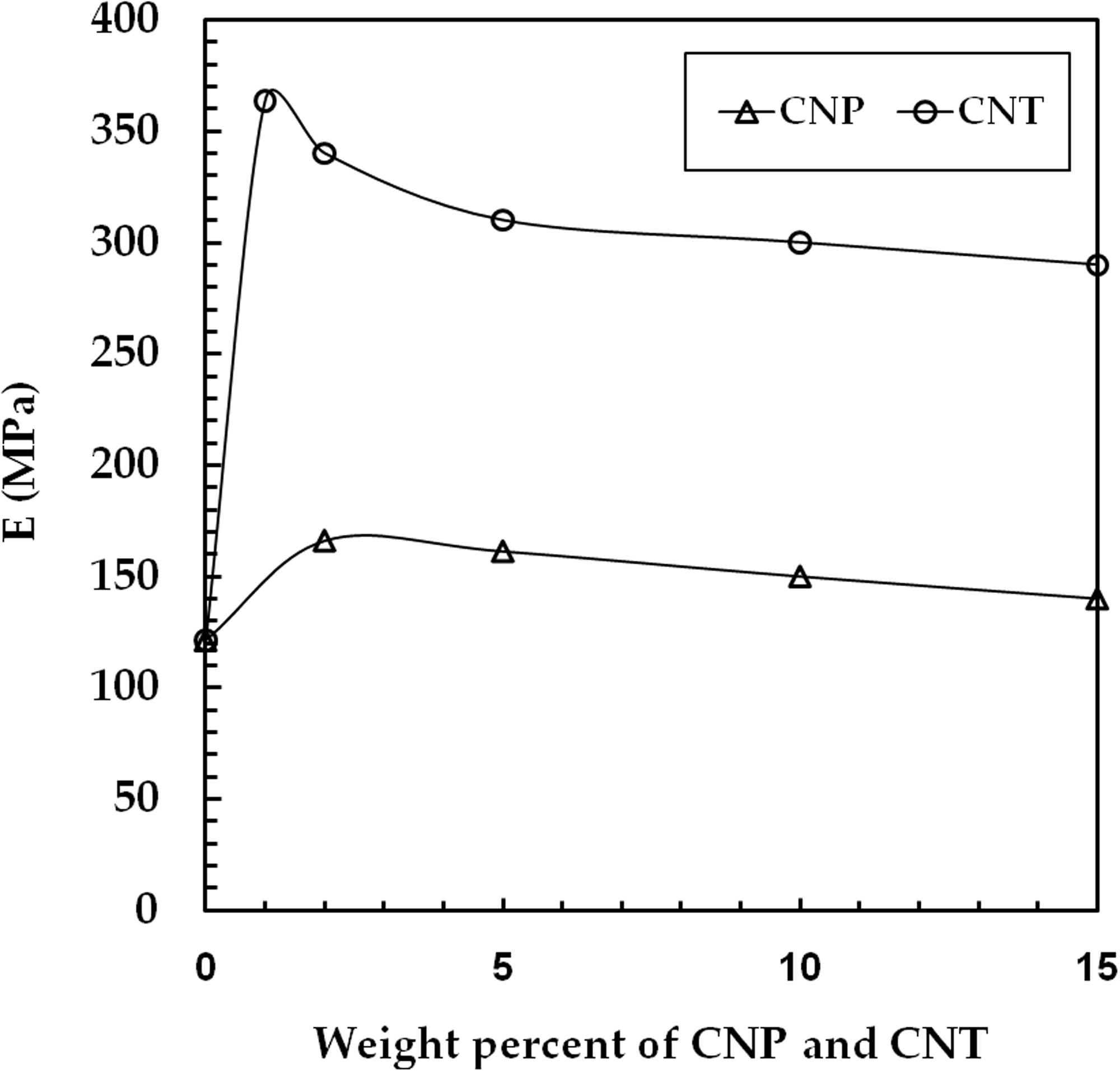
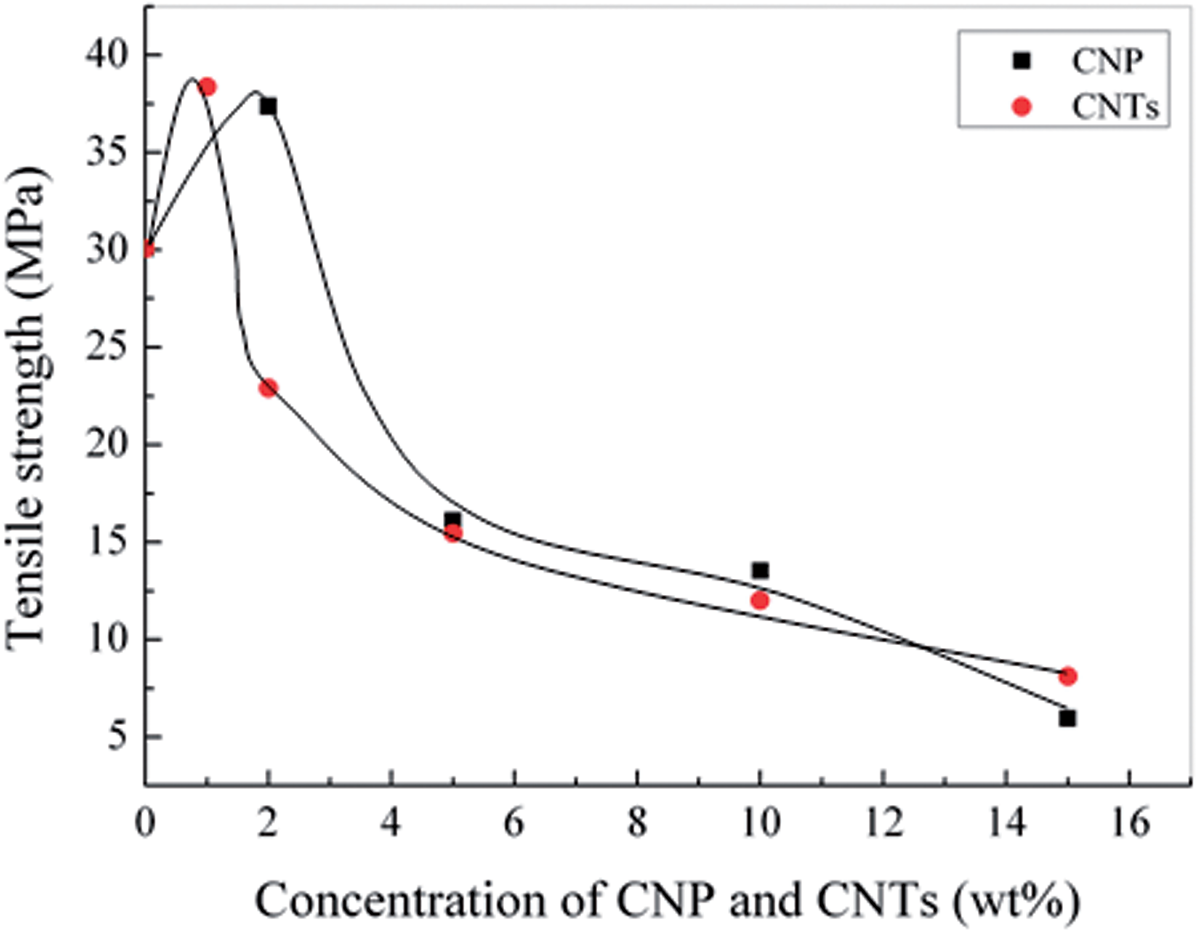
The addition of both fillers to PVC increases the tensile strength from 31 to 39 MPa at 1 wt% of CNTs and from 31 to 35 at 2 wt% of CNP followed by a decrease for both of them as shown in Figure 5. The observed increase at low filler content could be attributed to the interaction between filler surfaces and polymer chains endings. At higher contents of either filler, there are less filler-polymer contacts and consequently less filler polymer interactions. Figure 6 shows that the strain at break falls sharply when PVC is loaded with 1 wt% of CNTs followed by a gradual decrease for higher loadings. However, a small change in the failure strain is observed when PVC is loaded with 2 wt% of CNP. Behind this concentration the strain at break decreases gradually too. High tensile stresses tend to reorient, uncoil and align polymer chains along the stress direction. The presence of filler acts as obstacle to chains reorientation and prevents them to uncoil which results in a decrease in the strain at break. Higher interactions between CNTs, and polymer chains than CNP, make them highly restrict chains mobility and thus decrease the strain at break.
The strain at break of PVC filled with different concentrations of CNP and CNTs. The tensile strength of PVC filled with different concentrations of CNP and CNTs.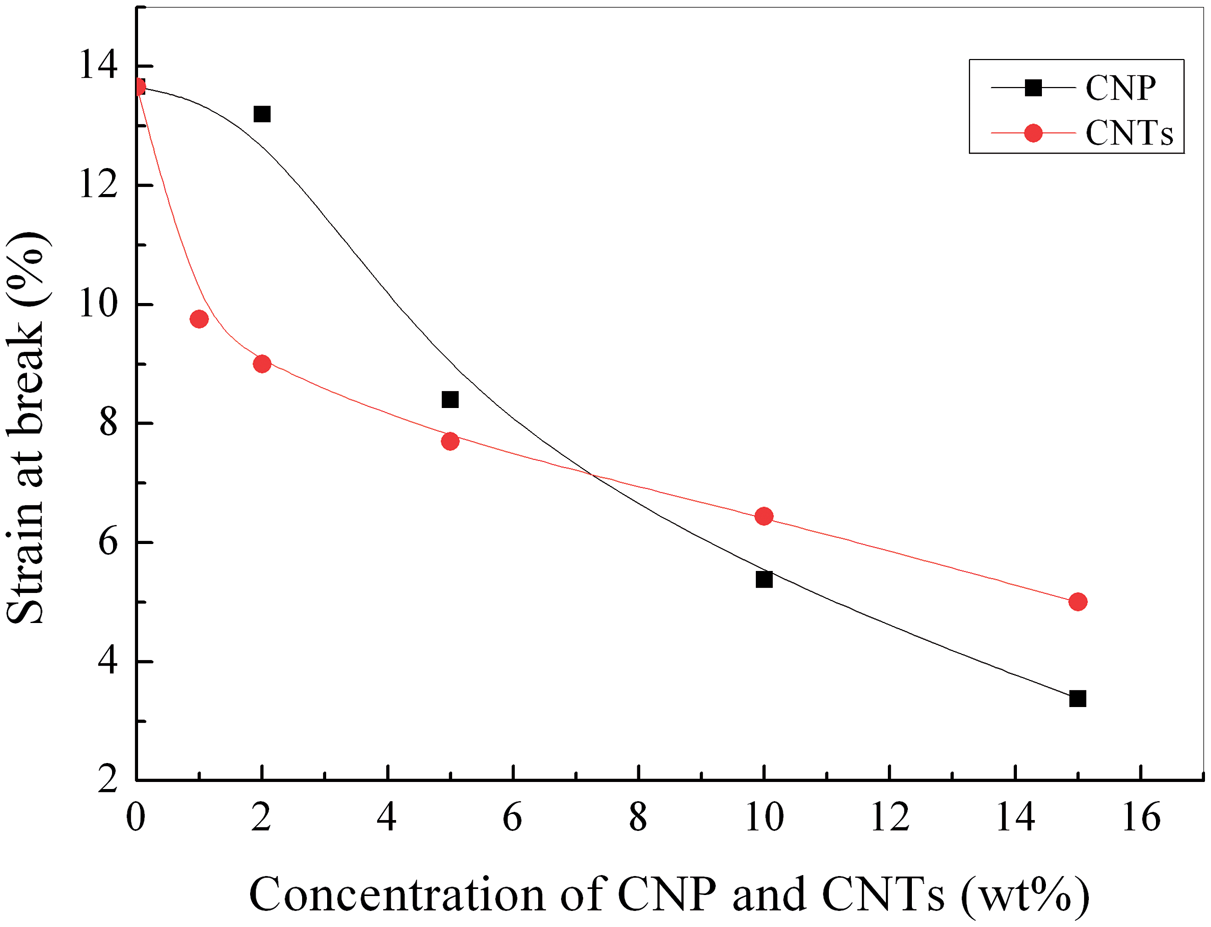
In general, the mechanical strength of PVC is found to improve with the addition of carbon as a nanocomposite filler. The nanosized carbon particles or tubes lodge themselves at the interface between the phases and enhance the stress transfer, which results in enhancement of mechanical properties, particularly the Young's modulus. 25 The polymer chains become stiffened and rigid, making the nanocomposite polymer less susceptible to stretching.26,27
Rheological properties
The complex viscosity, η*, for PVC loaded with different concentrations of CNP and CNTs measured at a driving frequency of 0.1 Hz and at room temperature is shown in Figure 7. It can be seen that η* icreases with increasing the concentration of CNTs to 1 wt% and CNP to 2 wt%. This may be attributed to the increase in physical interactions between the PVC matrix and the nanofiller with high aspect ratio and large surface area, respectively. Beyond these concentrations up to 10 wt% of CNTs η* is seen to be approximately constant which indicates no more interactions between CNTs and PVC chains. At concentrations greater than 5 wt% of CNP and 10 wt% of CNTs the complex viscosity decreases as a result of less bonding between either filler and polymer chains. The complex viscosity has higher values for CNTs than CNP, at the studied frequency, because of the high aspect ratio present in CNTs.
The complex viscosity of PVC filled with different concentrations of CNP and CNTs.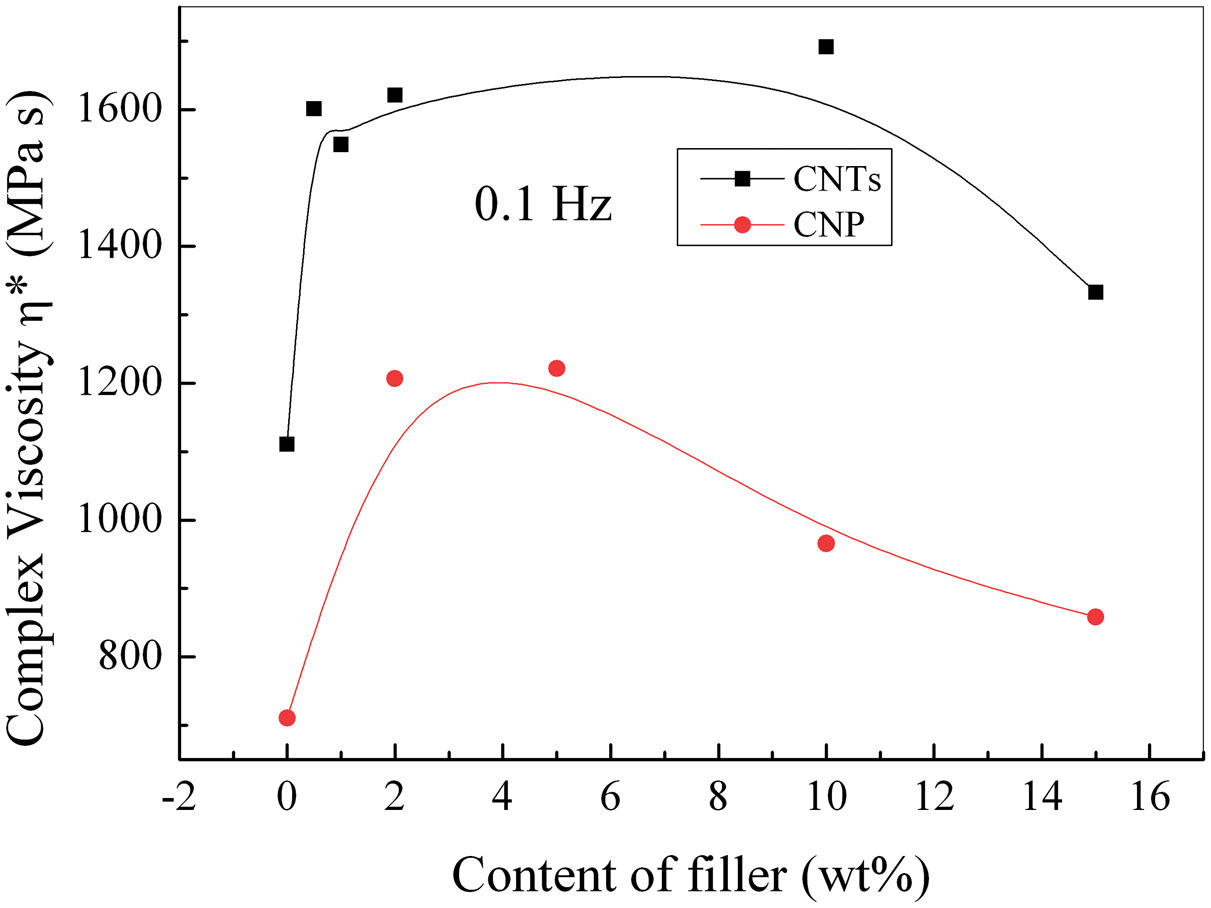
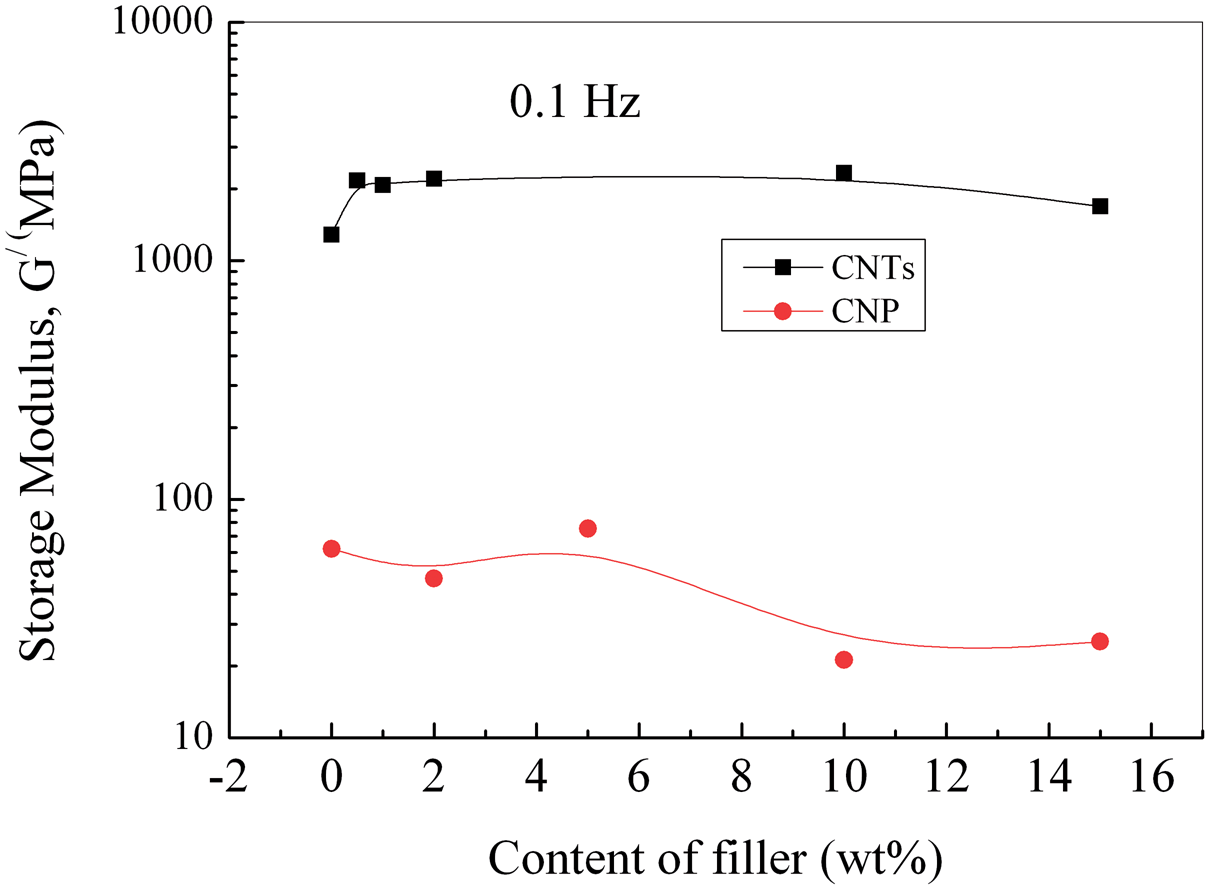
Figure 8 presents the dependence of the storage modulus, G′, on the concentrations of CNP and CNTs loaded PVC at a frequency of 0.1 Hz and at room temperature. Concentration of 1 wt% of CNTs increases the storage modulus of PVC matrix to approximately double its original value and then remains constant. This is in consistence with the values obtained for both the elastic modulus (Figure 4) and the complex viscosity (Figure 7). However, loading CNP up to 5 wt% does not change G′ but it decreases at higher concentrations. The behavior of G′ for both fillers can be explained more when we analyze the dependence of the loss modulus, G//, on the concentration of fillers which is shown in Figure 9. Low concentrations of CNTs make interacted CNTs and polymer chains are reoriented in a new configuration. This new configuration may make polymer chins to oscillate with less phase lag with the oscillating driving frequency which results as a reduction in the loss and consequently increases the storage modulus as well as the elastic modulus, since the oscillating frequency is low (0.1 Hz) that resembles static case. On the other hand, fewer interactions between CNP and polymer chains make more frictions and more phase lag between PVC chains oscillations and the applied frequency. Besides, further frictions may take place by the un-interacted CNP particles. These appear as an increase in an energy loss or increase in the loss modulus.
The loss modulus of PVC filled with different concentrations of CNP and CNTs. The storage modulus of PVC filled with different concentrations of CNP and CNTs.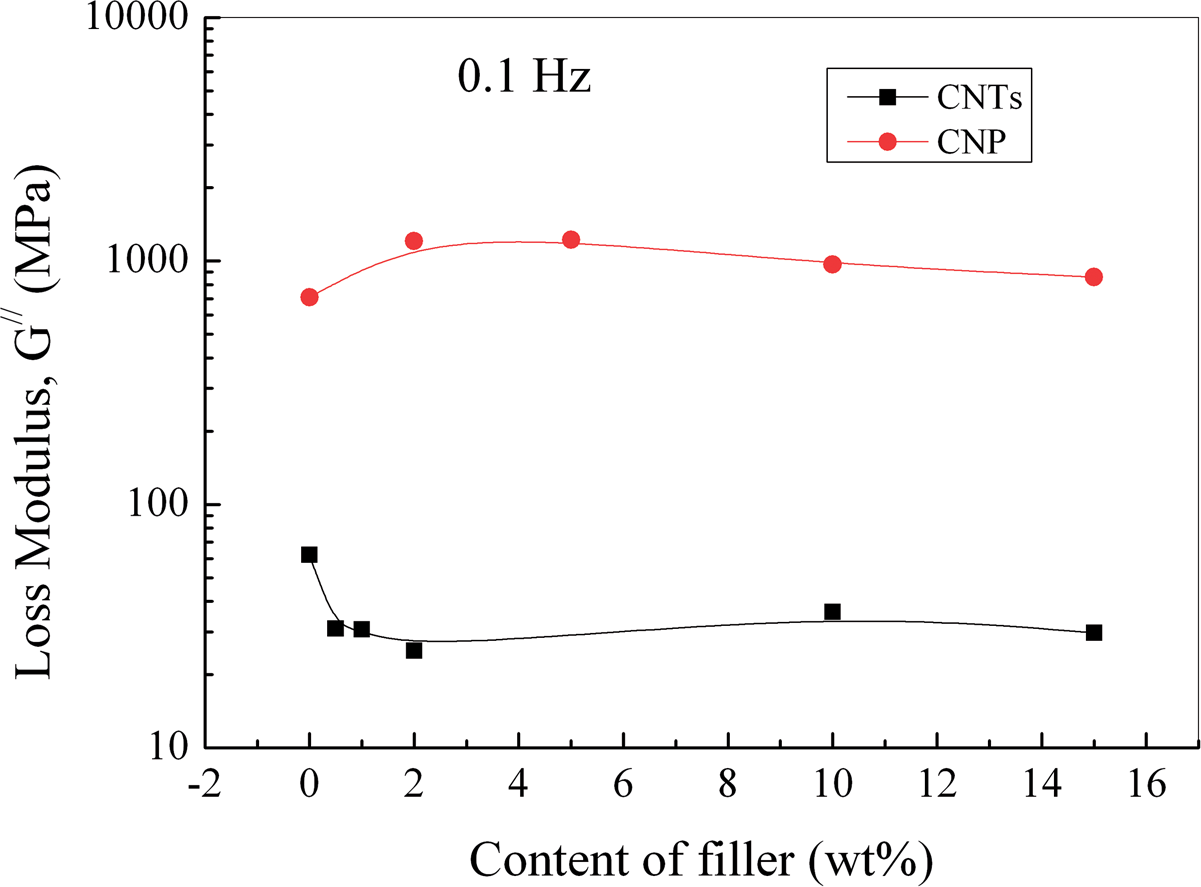
Dynamic mechanical thermal properties
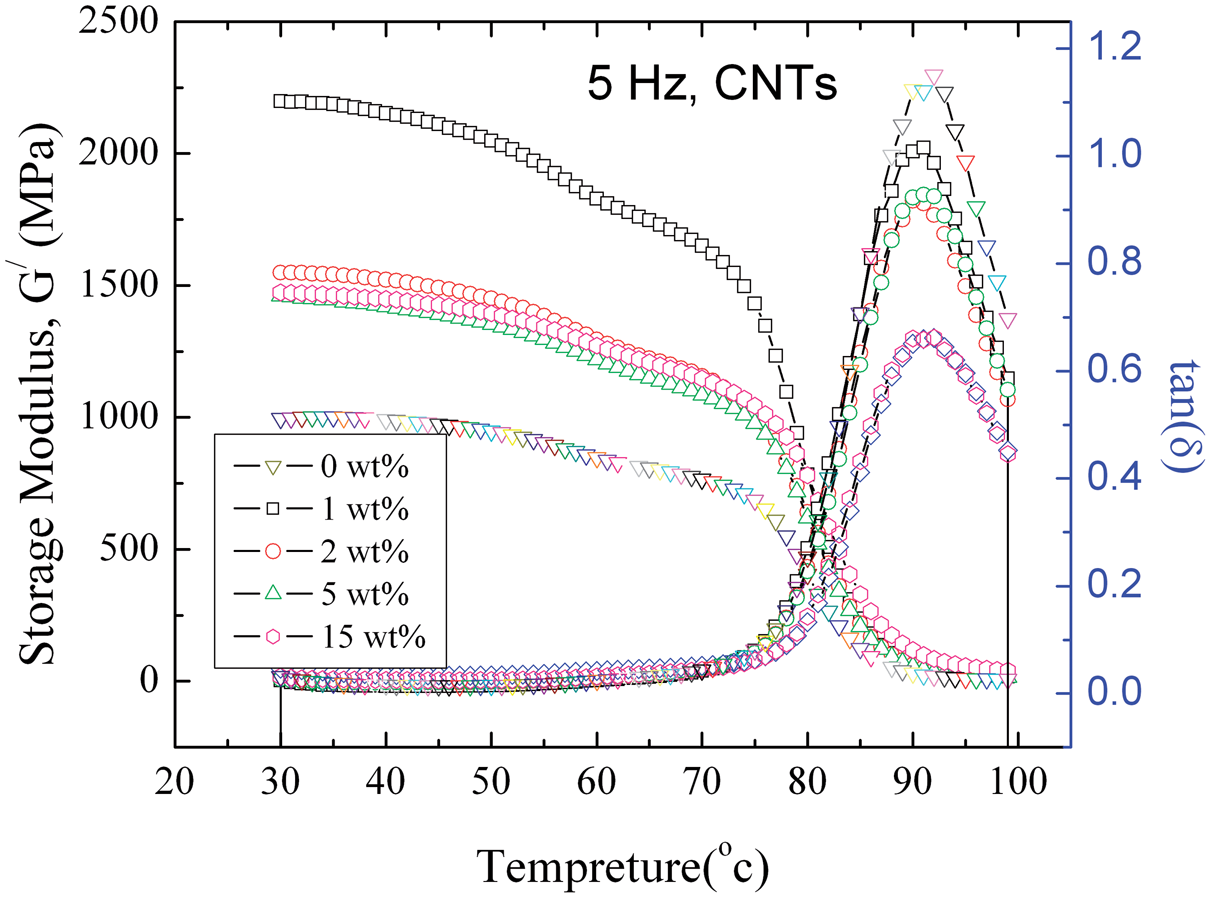
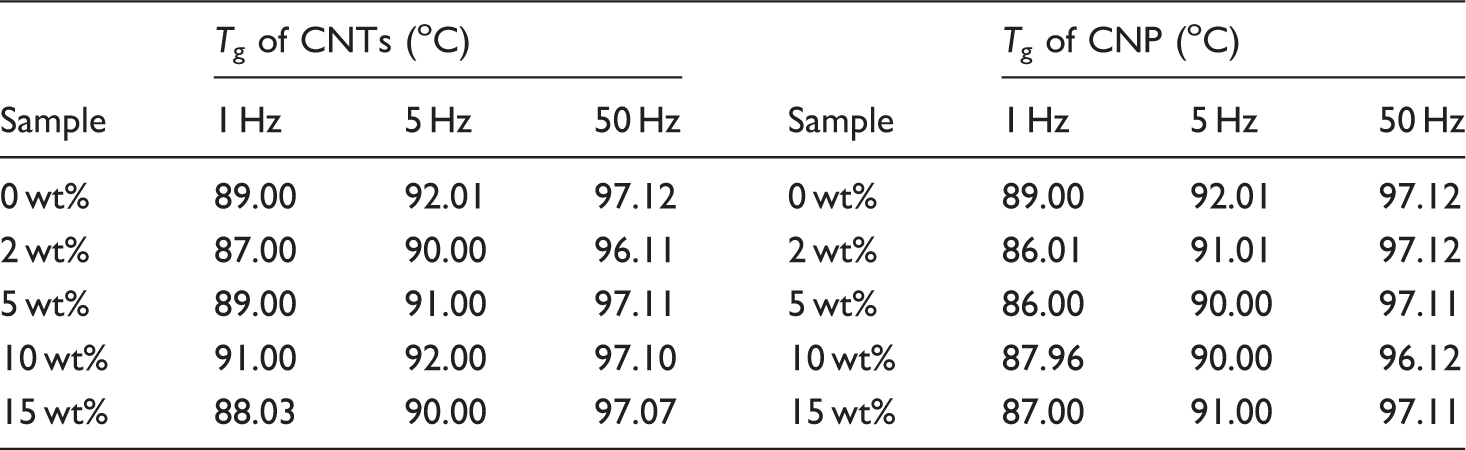
Figures 10 and 11 plots the storage modulus G′ and the loss factor tanδ for PVC/CNP and PVC/CNTs respectively, obtained by DMTA measurements, as a function of temperature at an oscillating frequency of 5 Hz and under a dynamic force of 1 N. A single mechanical transition has been observed in the temperature range studied and is recognized as the α-relaxation or the glass transition peak. The α-relaxation is related to the Brownian motion of the main chain associated with the glass transition and the relaxation of segments associated with it. Onset of glass transition is marked by a sharp decrease in its storage modulus, as shown in Figures 10 and 11.
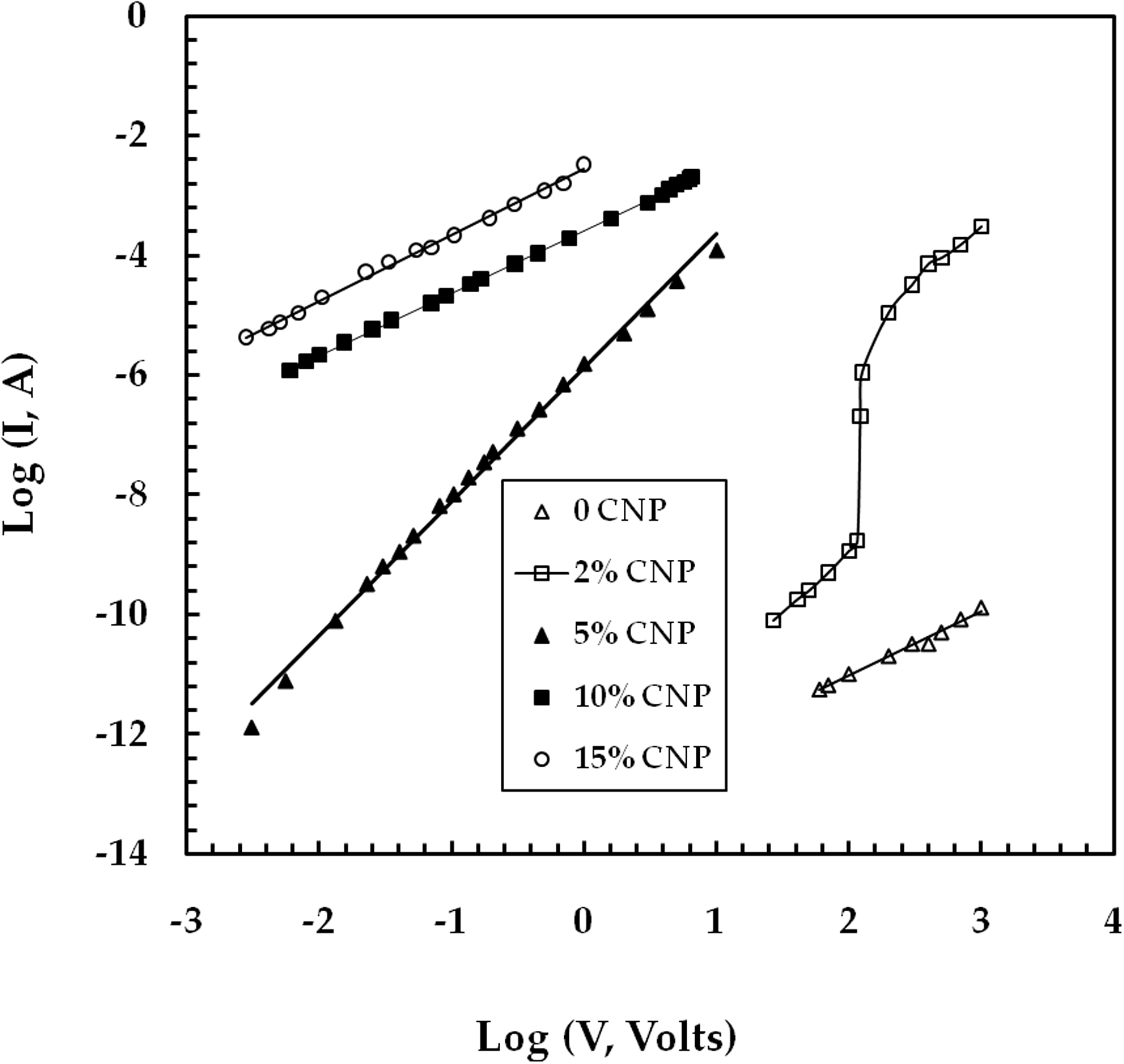
The storage modulus and loss tangent of PVC filled with different concentrations of CNP and CNTs at 5 Hz. The storage modulus and loss tangent of PVC filled with different concentrations of CNP and CNTs at 5 Hz. Log(I)-Log(V) characteristics of PVC filled with different concentrations of CNP.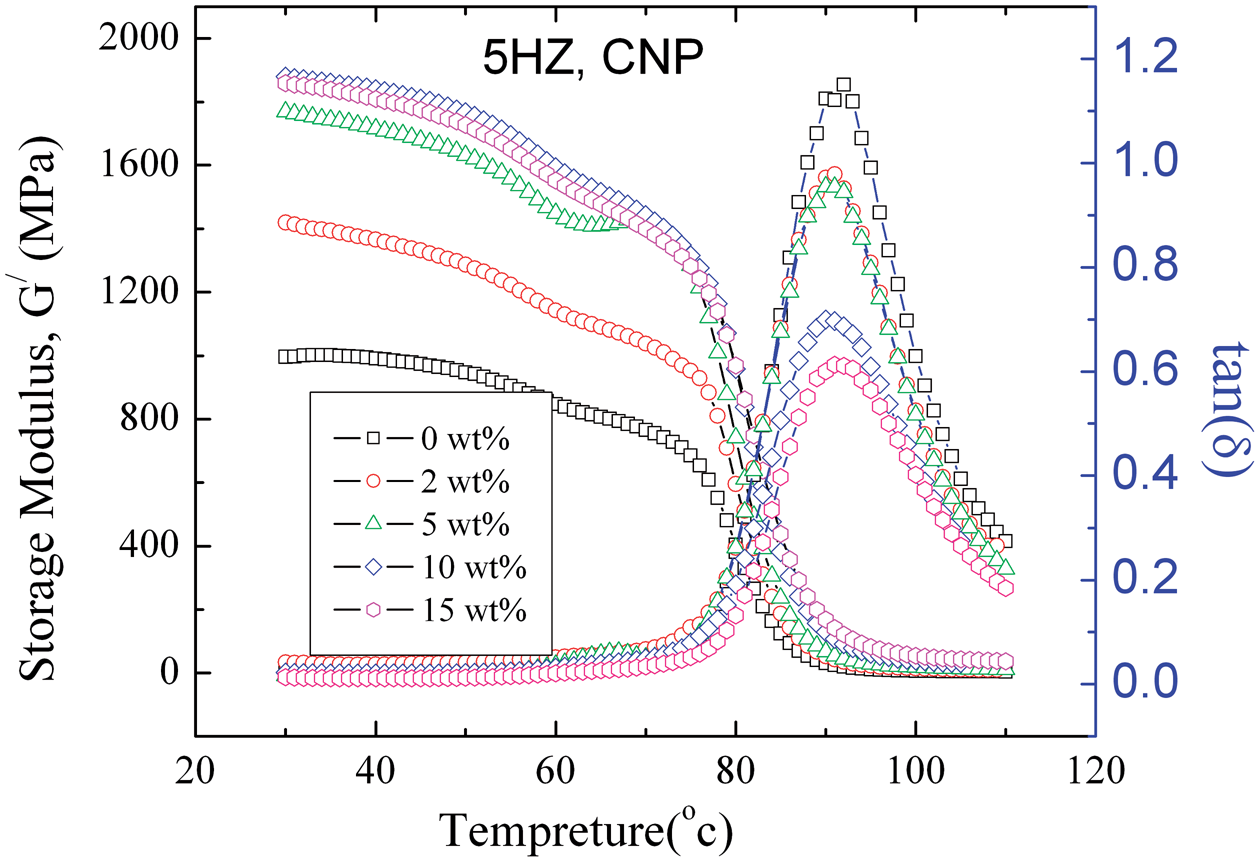
The predicted values of the glass transition temperature at different frequencies for both CNTs and CNP.
Current–voltage characteristics
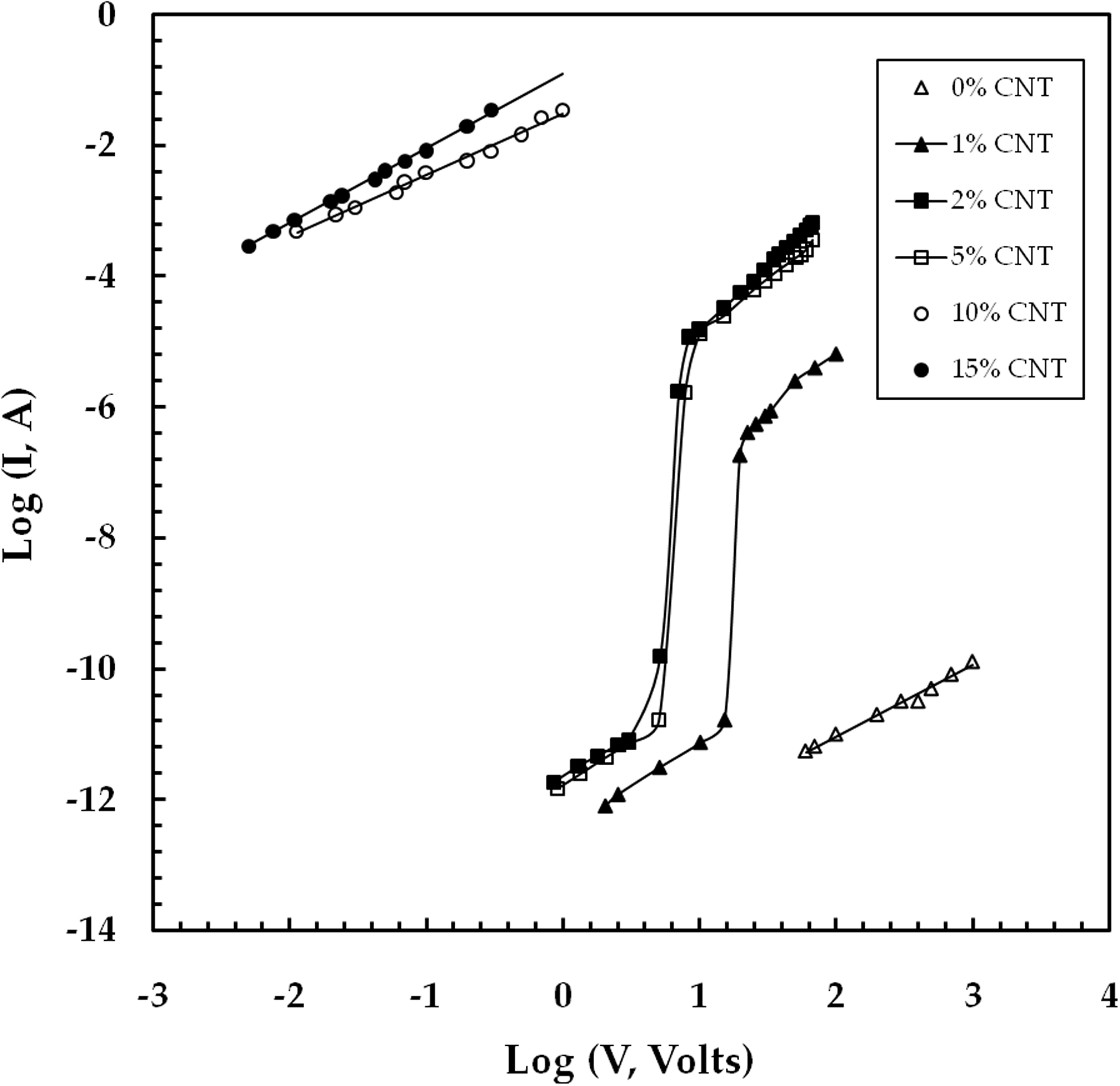
The current–voltage characteristics of PVC loaded with different concentrations of CNP and CNTs are shown in Figures 12 and 13, respectively. For concentrations 0, 5, 10 and 15 wt% of CNP and 0, 10 and 15 wt% of CNTs the curves show straight lines between log(V) and log(I) with slopes of 1.08, 2.24, 1.05 and 1.10 for CNP and 1.08, 0.94 and 1.13 for CNTs, respectively. This indicates an Ohmic conduction mechanism for samples containing 0, 10 and 15 wt% of both types of fillers. A non linear behavior with three distinct regions appears for concentrations of 2 wt% of CNP and 1, 2 and 5 wt% of CNTs composites. The charge conduction in polymeric materials consists of the charge injection from the electrode into the material and the charge transport inside the polymeric material itself. In general, the charge injection mechanism is reasonable when the whole charge conduction is mostly influenced by the charge injection, whereas the charge transport mechanism is suitable when the effect of the injection barrier is negligible compared with the bulk resistance of the material. The former and the latter are called the injection-limited and the bulk-limited conduction, respectively.
Dependence of the dc electrical conductivity of PVC filled with different concentrations of both CNP and CNTs at room temperature. Log(I)-Log(V) characteristics of PVC filled with different concentrations of CNTs.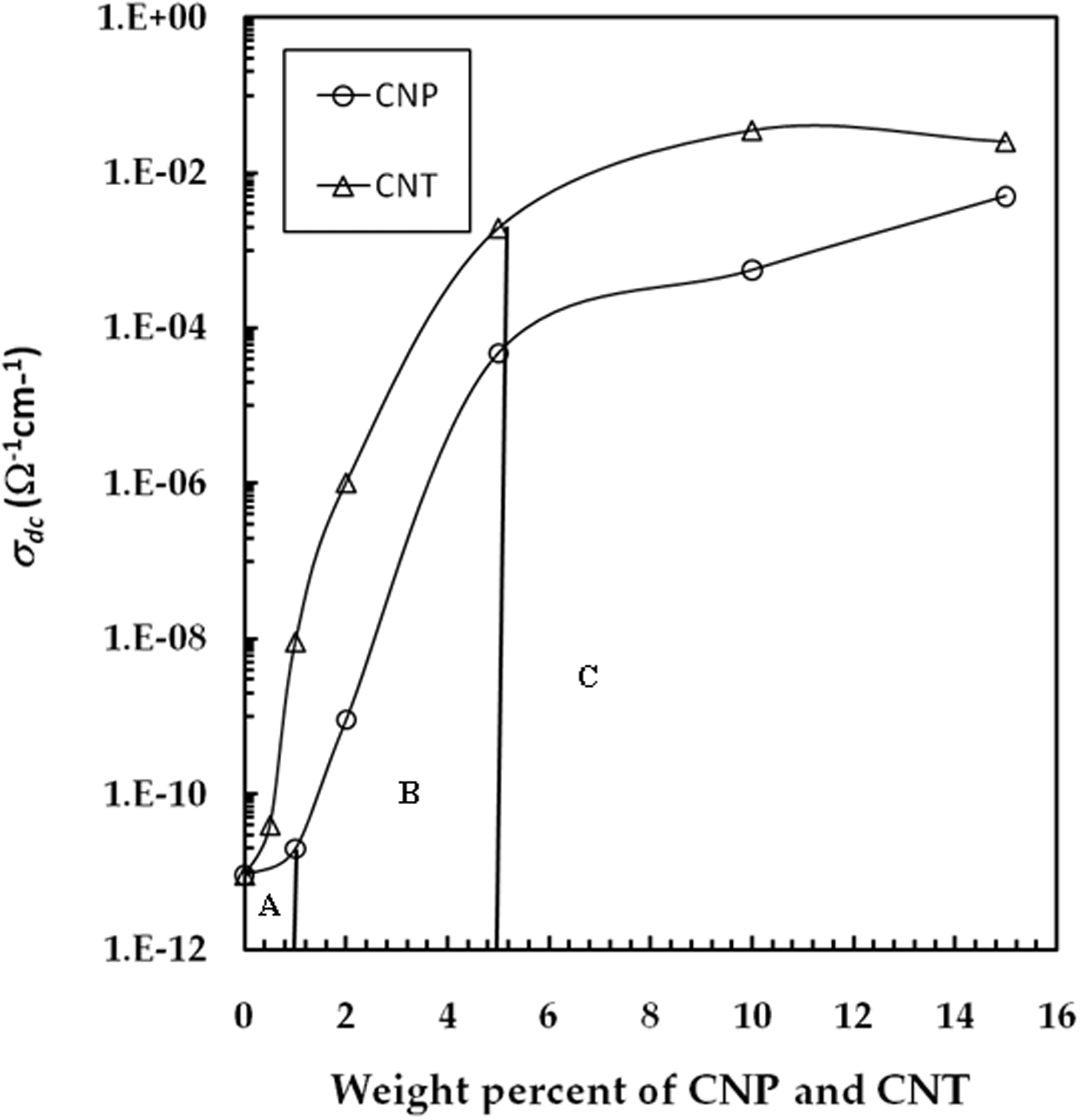
The charge transport mechanism based on the power law model
Dc electrical conductivity
Polymers and plastics are insulators to which conductivity is imparted by additionof finely divided or colloidal fillers of high intrinsic conductivity, such as carbon black, CNP and recently CNTs. At low loading of either CNP or CNTsin PVC, the conductivity of the composite is essentially equal that of the polymer. As the loading is increased, a percolation threshold or critical loading is reached where the conductivity starts to increase rapidly as shown in Figure 14 forPVC loaded with CNP and CNTs as a function of filler loading. The figure canbe divided into three distinct regions. Region A, which starts from concentration 0 phr up to approximately 0.5 phr for CNTs and 1 phr for CNP. This regionis characterized by low conductivity. The fillers are dispersed inside the polymer matrix and there are no paths for charge carriers. This region is named dispersed region. The region where conductivity increases rapidly (region B) is called the percolation region. In this region, conductivity is limited by barriers to pass the charge carriers from one filler conducting site to another which is close but not in contact. In the last region C, the fillers are in contacts and the conductivity ofthe matrix comes mainly from that of the filler and it is called attached region. As a result of the high aspect ratio of CNTs over CNP, one can notices that the percolation concentration threshold for CNTs is less than that for CNP. Besides, CNTs make shorter paths for charge carriers than CNP. This seems to be the reason behind the high values of conductivity of CNTs over CNP at same concentrations.
Temperature dependence of the dc electrical conductivity of PVC filled with different concentrations of CNP.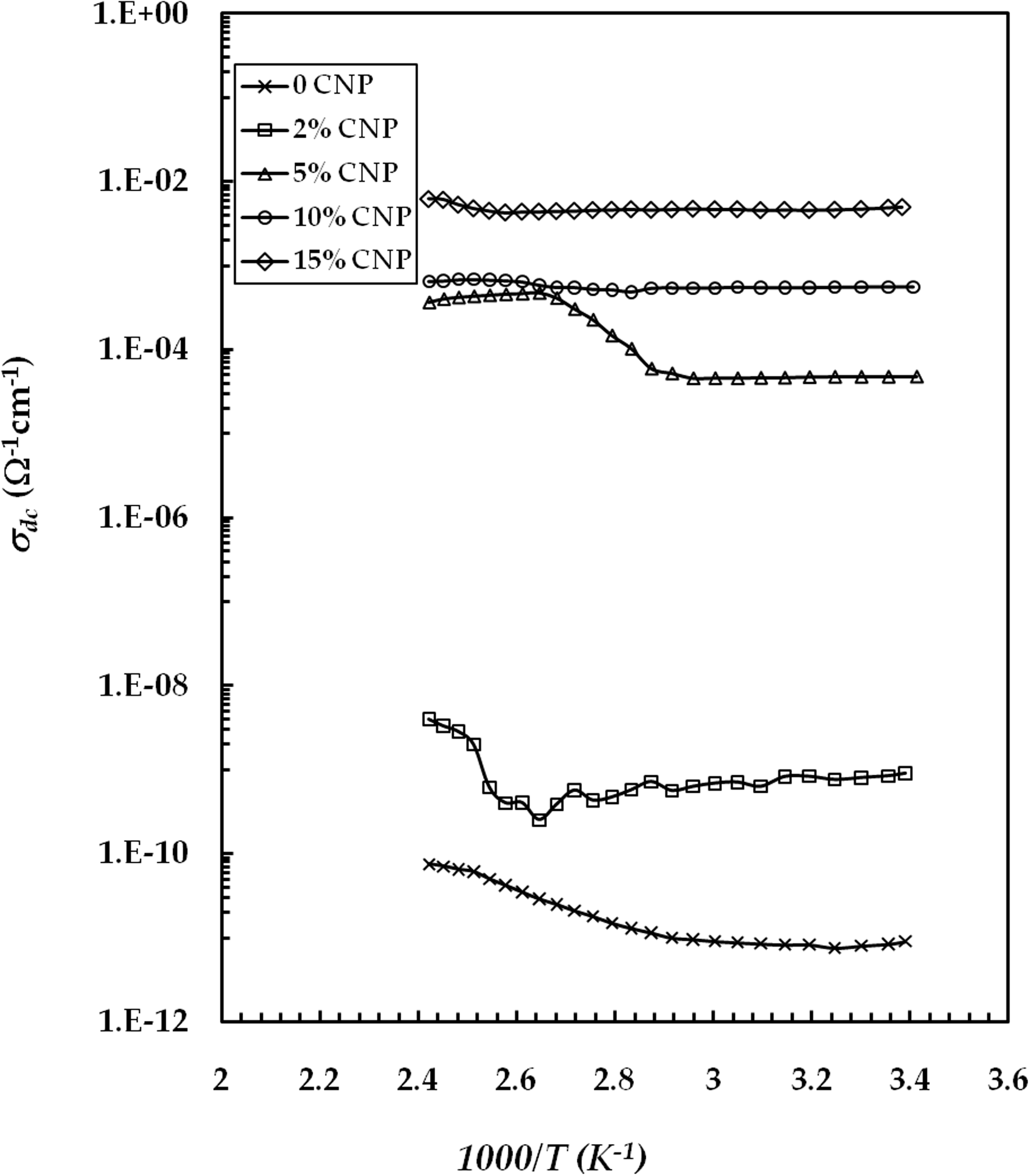

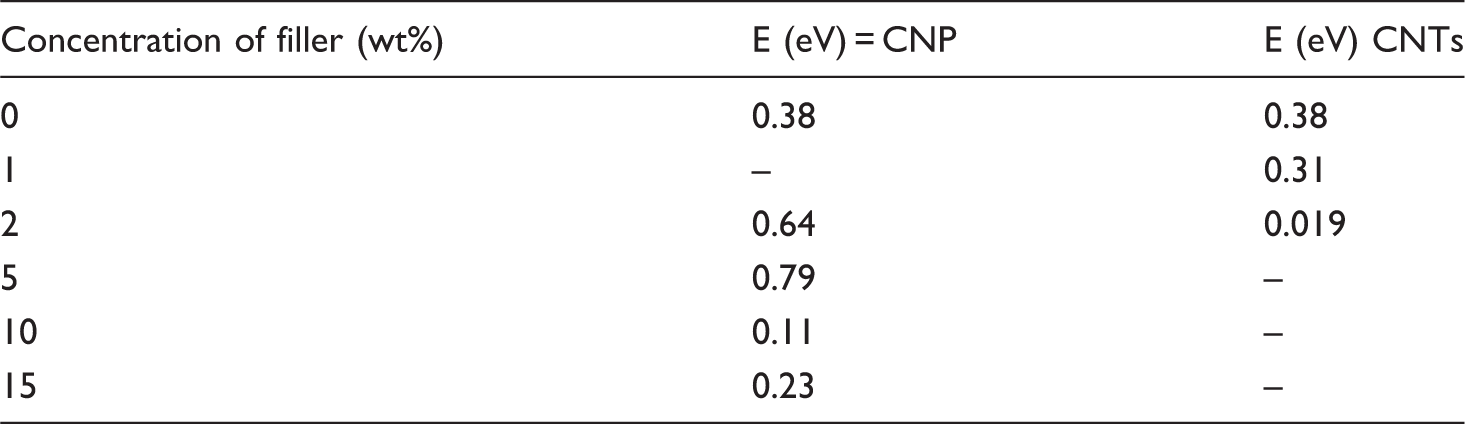
The calculated values of the activation energy for PVC filled with different concentrations CNP and CNTs.
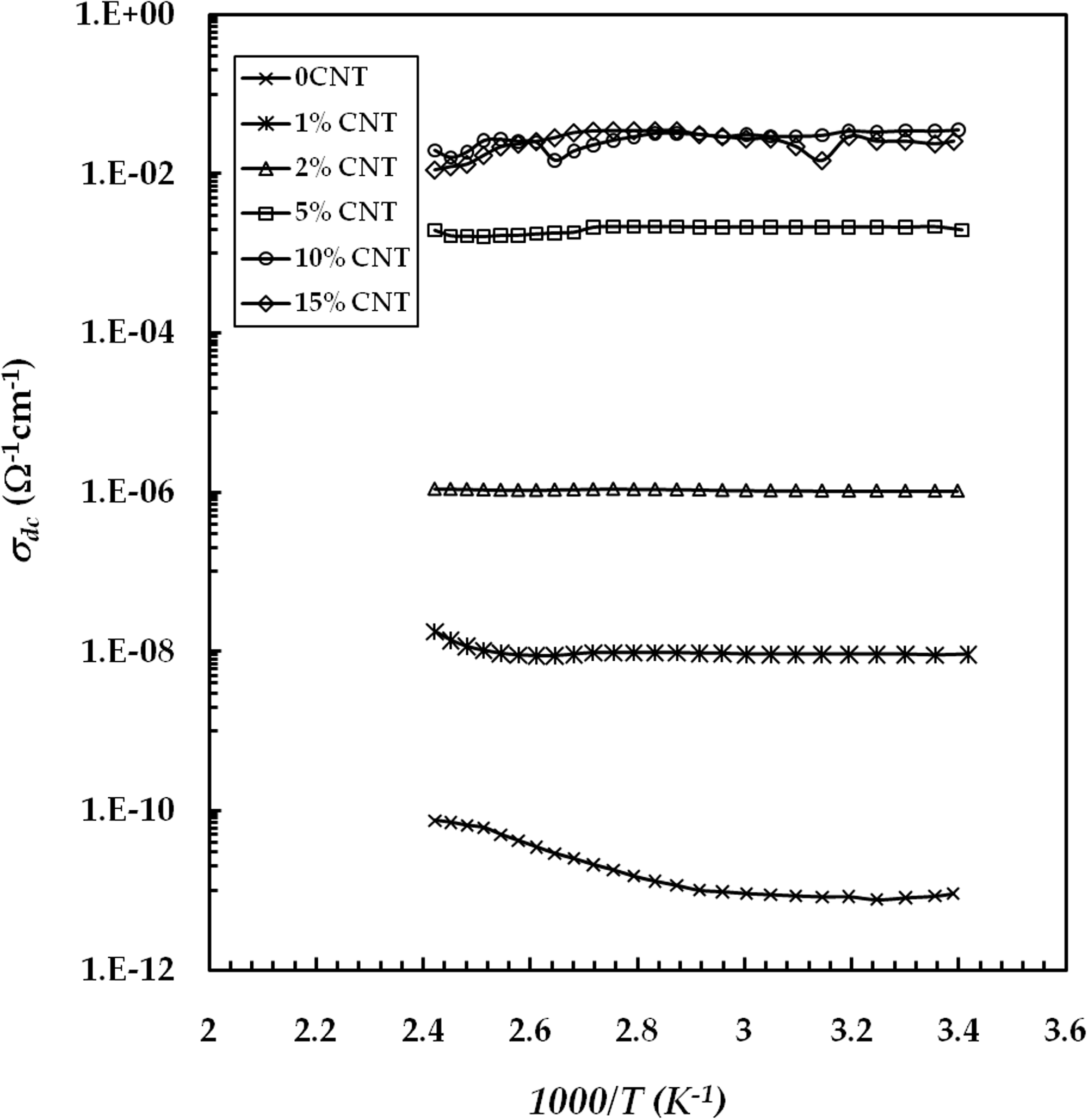
Temperature dependence of the dc electrical conductivity of PVC filled with different concentrations of CNTs.
Conclusions
Study of the mechanical properties of PVC/CNTs and PVC/CNP composites depending on the content of nanofillers demonstrate an increase in Young's modulus by 2.3 times at concentration of 1 wt% of CNTs and 1.4 times at 2 wt% of CNP. The tensile strength initially increases up to concentrations of 1 wt% and 2 wt% of CNTs and CNP respectively, and then decreases with increasing either nanofiller. However, the strain at break is found to decrease with increasing eitherfiller in PVC host. The behavior of the storage modulus and the complex viscosity at a frequency of 0.1 Hz and at room temperature is similar to that of the Elastic modulus for PVC/CNTs composites, while the storage modulus is different for PVC/CNP. The addition of either filler to PVC slightly changes the glass transition temperature.
The presence of nanofillers reduces the percolation concentration threshold from 1 wt% CNP to 0.5 wt% CNTs. It is caused by high anisotropy of the CNTs and CNP and the presence of a segregated structure of them within the polymer matrix with distribution of nanofillers on the boundaries between the polymer grains.
Composites containing CNTs can be better employed for electronic and microwave devices working at different temperatures since their electrical conductivity is independent on temperature in the studied range. Concentrations of either nanofiller in the percolation region produce a jump region in the I-V curve. The conduction mechanism is Ohmic for other composites.