




Abstract
The motive of this study is to lessen the dependence on non-degradable plastic packaging by developing alternative material; reinforced poly(lactic acid) (PLA) with kenaf fiber (KF) biocomposite using available plastic processing machineries. For that reason, this study focuses on fabrication of PLA–KF biocomposite using intermeshing co-rotating twin-screw extruder and then injection molded for mechanical characterization. The effect of KF loading from 0 to 20 wt% was studied. No coupling agent was added due to high affinity of PLA and KF and both components are hydrophilic in nature. The average of KF aspect ratio is 30. Tensile properties and flexural properties show similar trend where significant improvement was attained at 20 wt% KF content. Scanning electron micrograph of tensile fracture specimen has revealed the hypothesis of interaction between fiber and matrix which subsequently amplified the tensile properties. It is an interesting finding where the experimental value of tensile modulus was 15% higher than theoretical tensile modulus at 20 wt% KF. Additionally, PLA–KF bicomposite produced, has high specific strength and specific modulus. This could suggest that KF may be incorporated into PLA to reduce mass of the end product and substantially reduce the cost of raw materials. As expected, impact strength however decreases with KF content.
INTRODUCTION
Petroleum-based polymers are known to cause environmental problems due to nondegradability of disposable daily items such as food utensils, packaging containers, and trash bags. Most of the plastics used in the food packaging industries are typically utilized only once and thus have shortened life span. In addition, development of recycling technology for this purpose is not economical at all. Additionally, the factor of pricing of this polymer is keeps on arising and petroleum is a finite source that is going to get depleted one day. Moreover, it is our responsibility to bequeath clean and green environment to the next generation and future. In line with this, research studies are now focusing on environmental-friendly plastic, so-called bioplastic materials. Sustainability, renewability, eco-efficiency, and green chemistry are the guidelines to develop this bioplastic.
Poly(lactic acid) or PLA is a linear aliphatic thermoplastic polyester produced through ring-opening polymerization or polycondensation of lactic acid monomer which can be obtained from fermentation of renewable resources such as corn, sugar beet, wheat, sugarcane, or any starch-rich source material [1]. PLA is a fully renewable, compostable, and biodegradable material. The bioplastics are capable of undergoing decomposition by catabolic metabolism catalyzed by enzymatic action of microorganisms through decreasing molecular weight, and the hydrolyzable oligomer will be used for biosynthesis of new materials. At the end of the biodegradation process, carbon dioxide, methane, water, inorganic compounds, or biomass products may be produced [2,3]. In a nutshell, PLA is a cradle-to-grave material. Like any other thermoplastic materials, PLA can be processed using similar machinery as thermoplastic processing. PLA offers several advantages associated to mechanical, thermal, and biodegradable properties, and as such, it is suitable for wide range of applications, as shown in Figure 1.
Alternative biocomposite from ‘cradle-to-grave’ material.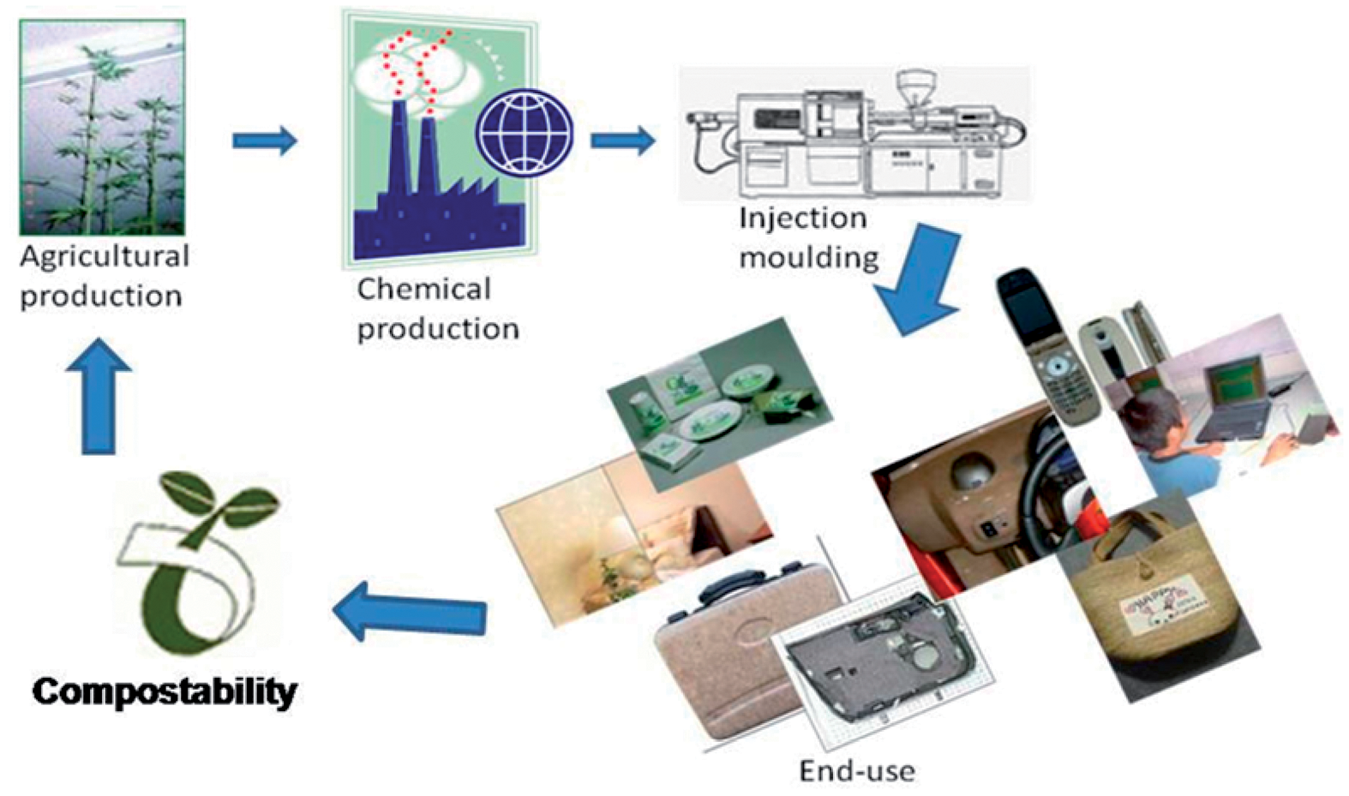
The idea of producing PLA biocomposite materials is to strike a balance within the framework of strength and stiffness. The increment in strength and stiffness is usually accompanied by decrease of strain, and this problem is also exhibited by the PLA biocomposite [4,5]. In order to maintain the degradable properties, one promising candidate of natural fiber, kenaf fiber (KF) or Hibiscus cannabinus L. may be incorporated as reinforcement fiber into PLA. KF offers lightweight, renewability, and high specific properties such as stiffness, impact resistance and flexibility, non-abrasiveness, combustibility, non-toxicity, low cost, and biodegradability. Other properties include less skin and respiratory irritation, vibration damping, excellent sonic insulation properties, and enhanced energy recovery. In Malaysia, kenaf has received considerable attention and the government is stimulating to commercially enhance the upstream and downstream potentials of kenaf plant. Kenaf bast fiber is grouped together with flax and hemp fibers and has been reported to have comparable mechanical properties to synthetic fibers such as glass fiber [6–8].
Reinforced PLA with KF is no longer a new biocomposite. The first KF-reinforced PLA biocomposite with alkalization and silane treatment was reported by Huda et al. [9]. They studied on laminated biocomposite using compression molding and found substantial improvement in flexural properties. In the same year, Ochi [10] reported on tensile and flexural strengths of unidirectional long KF-reinforced PLA. Maurizio Avella and coworkers [11] then reported on melt-mixing and compression-molded short KF-reinforced PLA biocomposite. Another attempt on PLA/KF biocomposite using carding process was reported by Lee et al. [12]. They studied on the effectiveness of 3-glycidoxypropyltrimethoxysilane as a coupling agent between PLA and KF. However, to the best knowledge of the authors, there was no study reported on the processing of KF-reinforced PLA biocomposite using extrusion and then injection molding. Extrusion and injection molding are well-known economical techniques and effectively maintained the properties of product throughout the entire process. The goal of this study is to develop and characterize mechanical properties of biodegradable PLA–KF biocomposite at various KF contents. However, due to low density of KF, studies have only been carried out up to 20 wt% KF content.
EXPERIMENTAL METHOD
Preparation of PLA–KF Biocomposite
PLA 3051D in the pellet form was manufactured by Nature Works. The kenaf bast fiber was supplied by Kenaf Natural Fiber Industries Sdn. Bhd, Malaysia and was harvested at 6 months aged. The density of KF measured is 1.13 g/cm3. Determination of KF length and diameter was performed using Carlzeiss Axioteh 100HD microscope. At least 50 fibers were measured and the average diameter and length were calculated to get the fiber aspect ratio (length-to-diameter, l/d).
Compositions of PLA–KF biocomposites prepared.
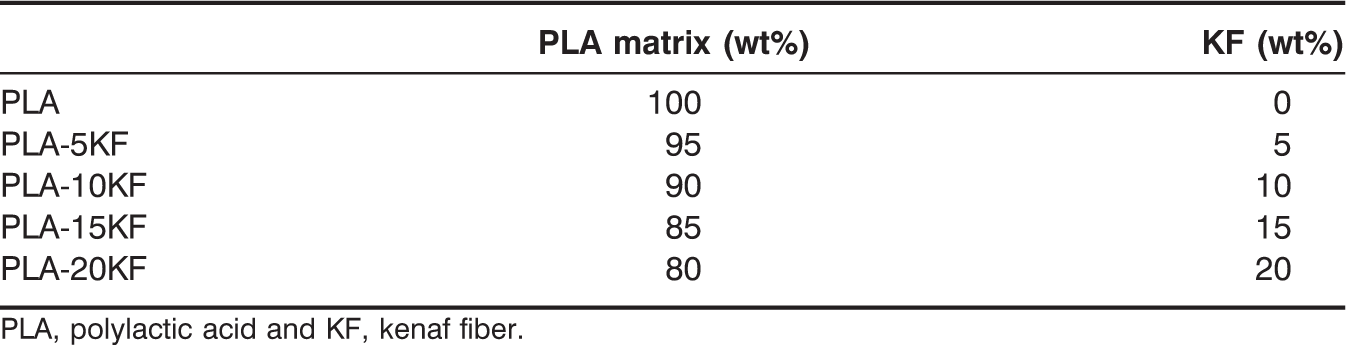
PLA, polylactic acid and KF, kenaf fiber.
Characterization of PLA–KF Biocomposite
Aspect ratio of KF has been determined before processing of the PLA–KF biocomposite using optical microscope (Olympus BX51 attached to photo-camera C-5060). The average length and diameter were observed for 50 fibers.
Tensile testing has been evaluated using Z020 Universal Tensile Tester according to EN ISO 5275:1999. The strain rate used was 50 mm/min. Three-point flexural testing was carried out on the same machine with span length of 64 mm and the compression speed of 5 mm/min. Unnotched Charpy impact test has been conducted according to EN ISO179 using CEAST tester attached to DAS8000. For all the mechanical testings, an average has been taken on seven specimens. Tensile fractured surfaces of unreinforced PLA and PLA–20KF biocomposite were examined under scanning electron microscope (JEOL JSM-638OLA). The fracture ends of the samples were mounted on an aluminum stub and coated with a thin layer of gold to avoid electrostatic charging during examination.
RESULTS AND DISCUSSION
Fiber Aspect Ratio
Fiber aspect ratio is one of the key factors that determine the mechanical properties of the composite. Higher aspect ratio and consistent dimension of fiber will lead to higher mechanical properties of the reinforced composite. Figure 2 shows the optical micrograph of KF. It reveals that there is inconsistency in dimension of KF and some of the fibers are multifilament. The average length of KF is about 2954 µm, and average diameter is about 98 µm. Hence, the aspect ratio (L/D) calculated is 30. The aspect ratio is very low as compared to synthetic fiber reinforcement such as carbon and glass fibers. The high aspect ratio of carbon fiber consequently enlarged mechanical properties of reinforced polymer.
Optical micrograph of multifilament kenaf fiber observed under 5000 × magnification.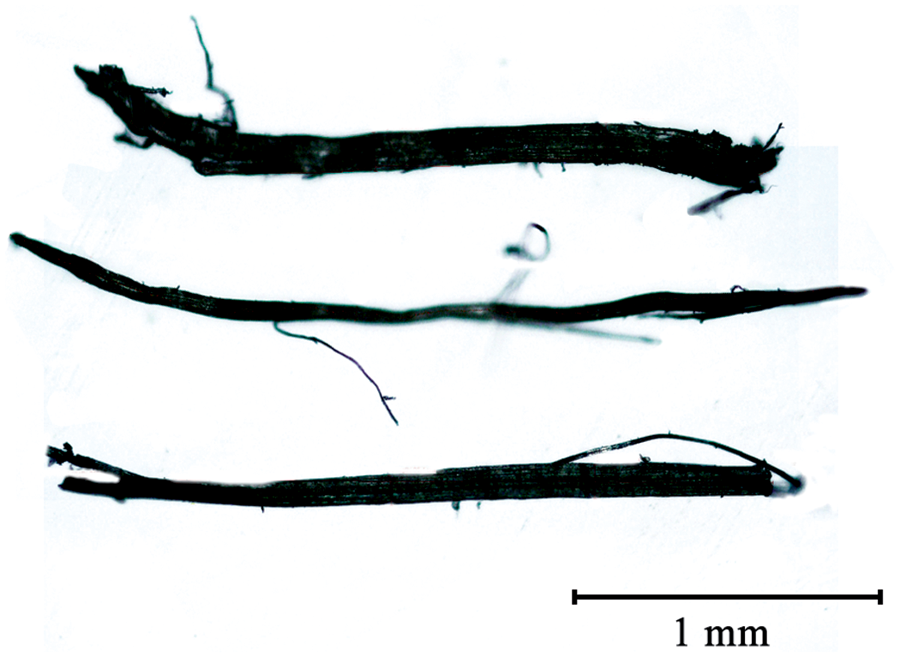
Tensile Properties
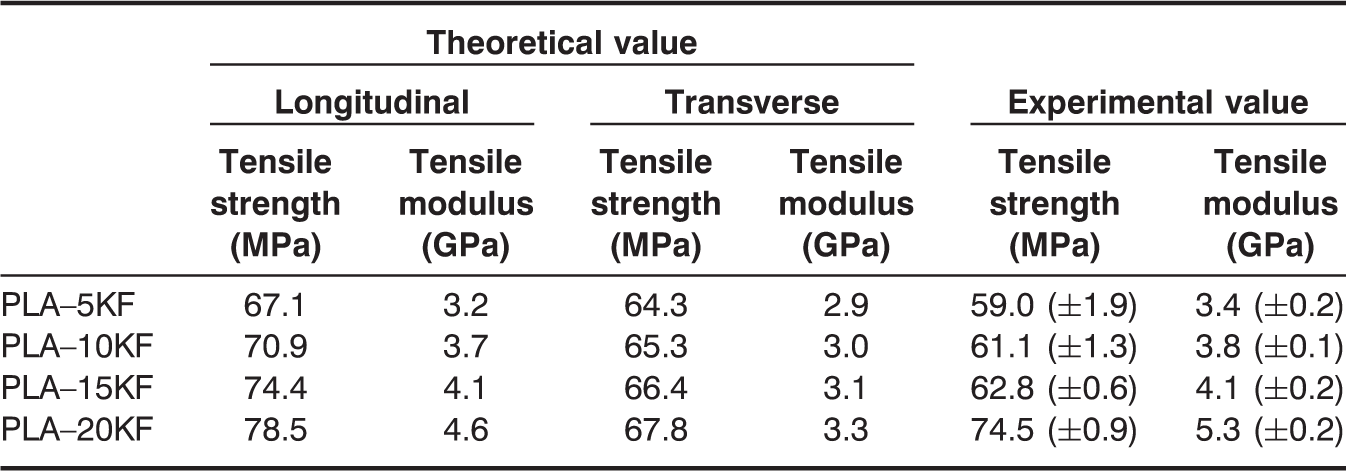
Tensile test has been conducted to determine the strength and elongation of PLA–KF biocomposite when the force is given in tension. The effect of KF as reinforcing agent is shown in Figure 3 and obviously seen at higher KF content. The presence of KF initially at 5 wt% reduced the tensile strength by about 6% and elongation at break by about 17%, respectively, as compared to unreinforced PLA. However, on raising the fiber content up to 20 wt%, tensile strength kept on increasing and reached a maximum at about 74 MPa, approximately 18% higher than unreinforced PLA. The value obtained is particularly higher than PLA/flax (54 MPa at 30 wt%) and PLA/cordenka (58 MPa at 30 wt%) reported by Yu et al. [13], PLA/ramie (64 MPa with silane treatment, 67 MPa with NaOH treatment, both at 30 wt%) [14] and PLA/hemp fiber (60 MPa at 30 wt% [15]. It is eminent in Figure 3 that the tensile modulus at 20 wt% was about 92% higher than unreinforced PLA. Low fiber aspect ratio and nonuniform cross-section of KF do not contribute much to the efficiency of stress transfer between PLA-to-KF and vice versa. Stiffness of the composite is more dependent on fiber content or volume fraction rather than fiber length and fiber aspect ratio.
The effect of fiber content on tensile strength and modulus of PLA–KF biocomposites.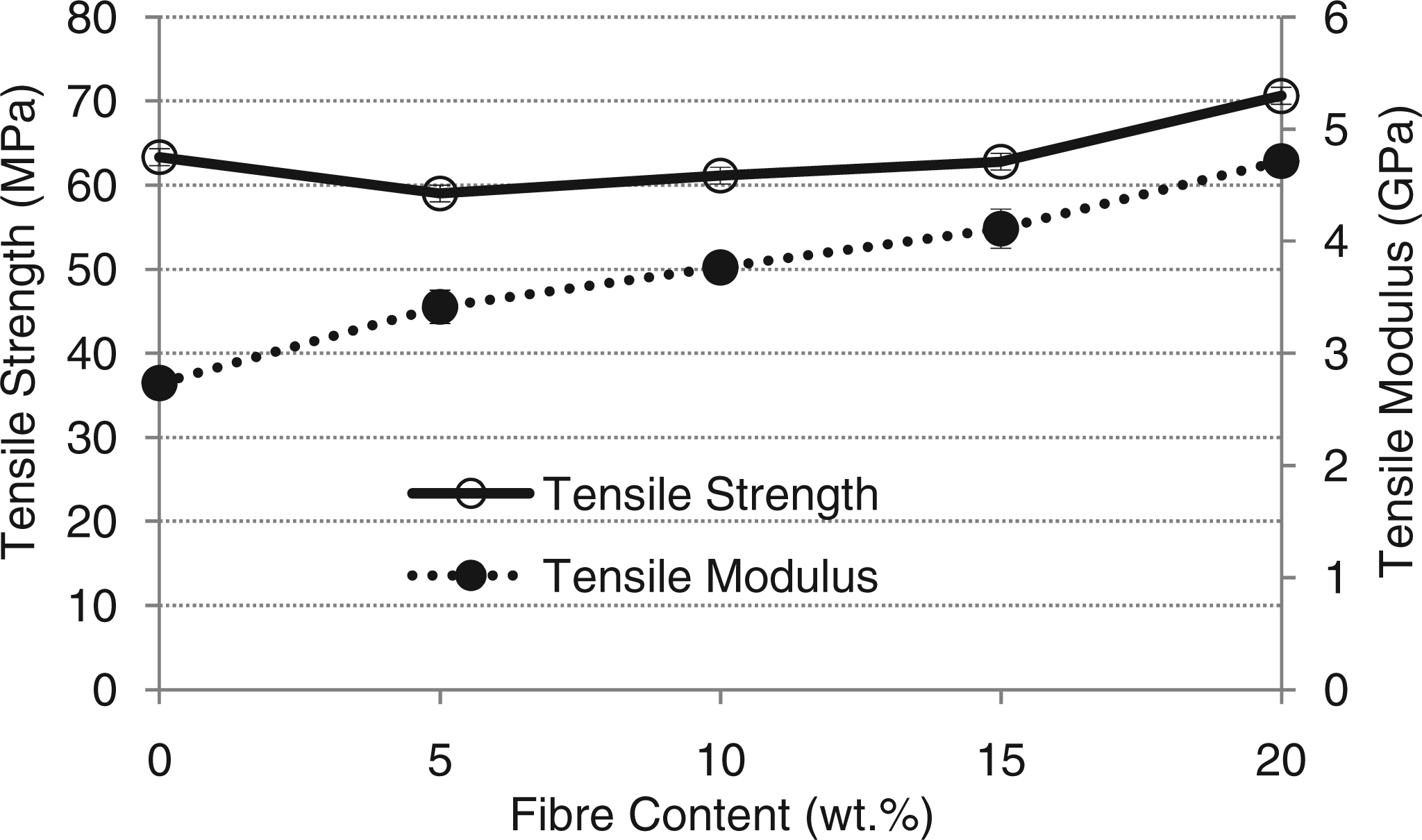
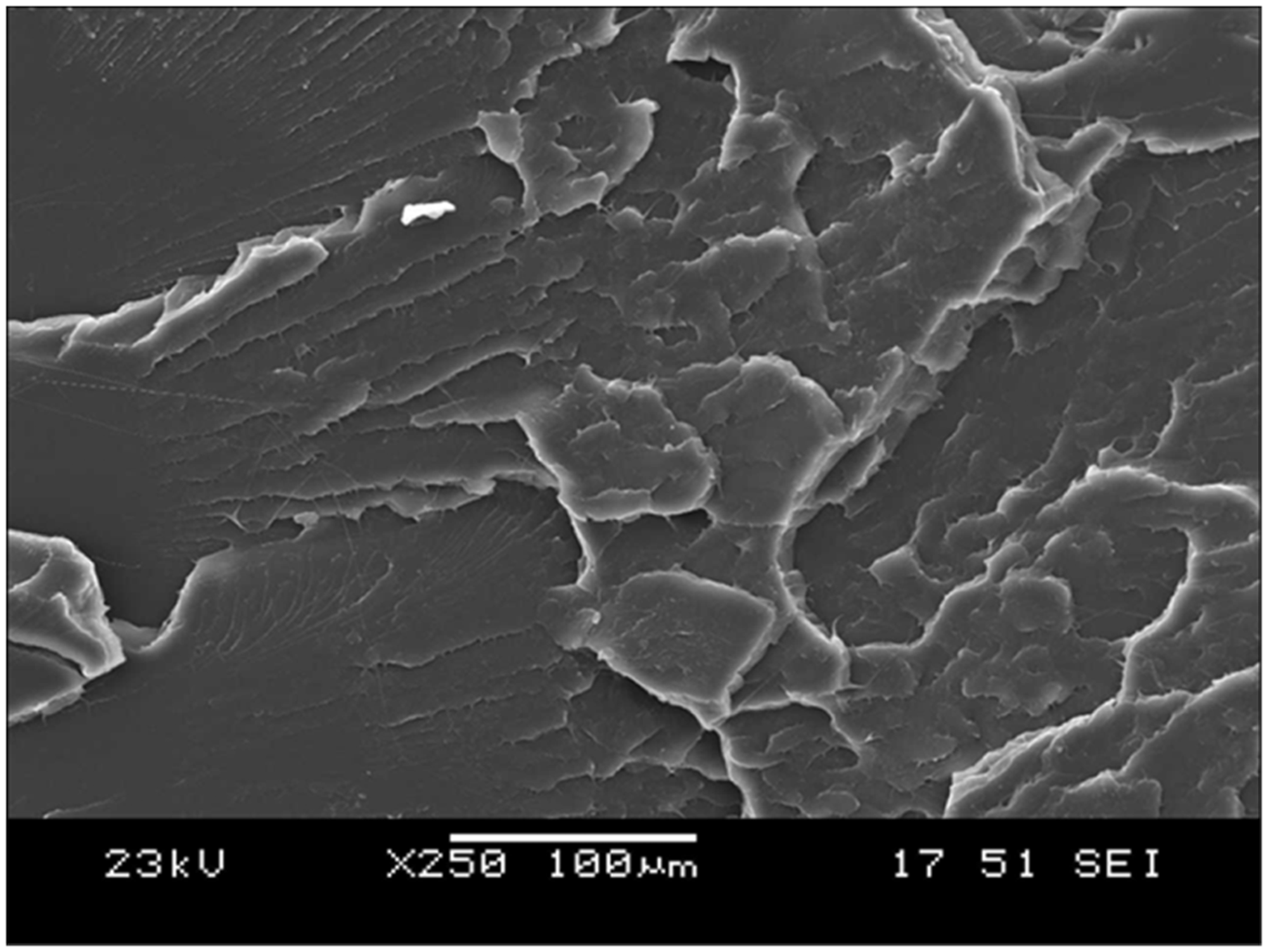
In short-fiber composites, the enhancement in tensile strength and modulus not only depends on the fiber content, fiber aspect ratio, and processing technique, good interaction between KF and PLA matrix, but also influences the mechanical properties, as revealed by scanning electron micrograph shown in Figure 4. This gave rise to better stress transfer from matrix to fiber leading to improvement in reinforcing effect as evident in Figure 4. Additionally, KF has stopped the crack propagation to the entire surface of PLA matrix. As can be observed in Figure 5, typical tensile fracture of brittle polymer is also seen for PLA matrix in this study. However, the presence of KF has induced less brittle fracture pattern although the strain has slightly reduced. It is important to also note that the surface of tensile fracture specimen is free from any void and is relatively smooth. This corresponds to good processing conditions and no moisture was absorbed during the preparation of the PLA–KF biocomposite.
Scanning electron micrograph of PLA–20KF biocomposite at 250× magnification. Scanning electron micrograph of PLA at 250 × magnification.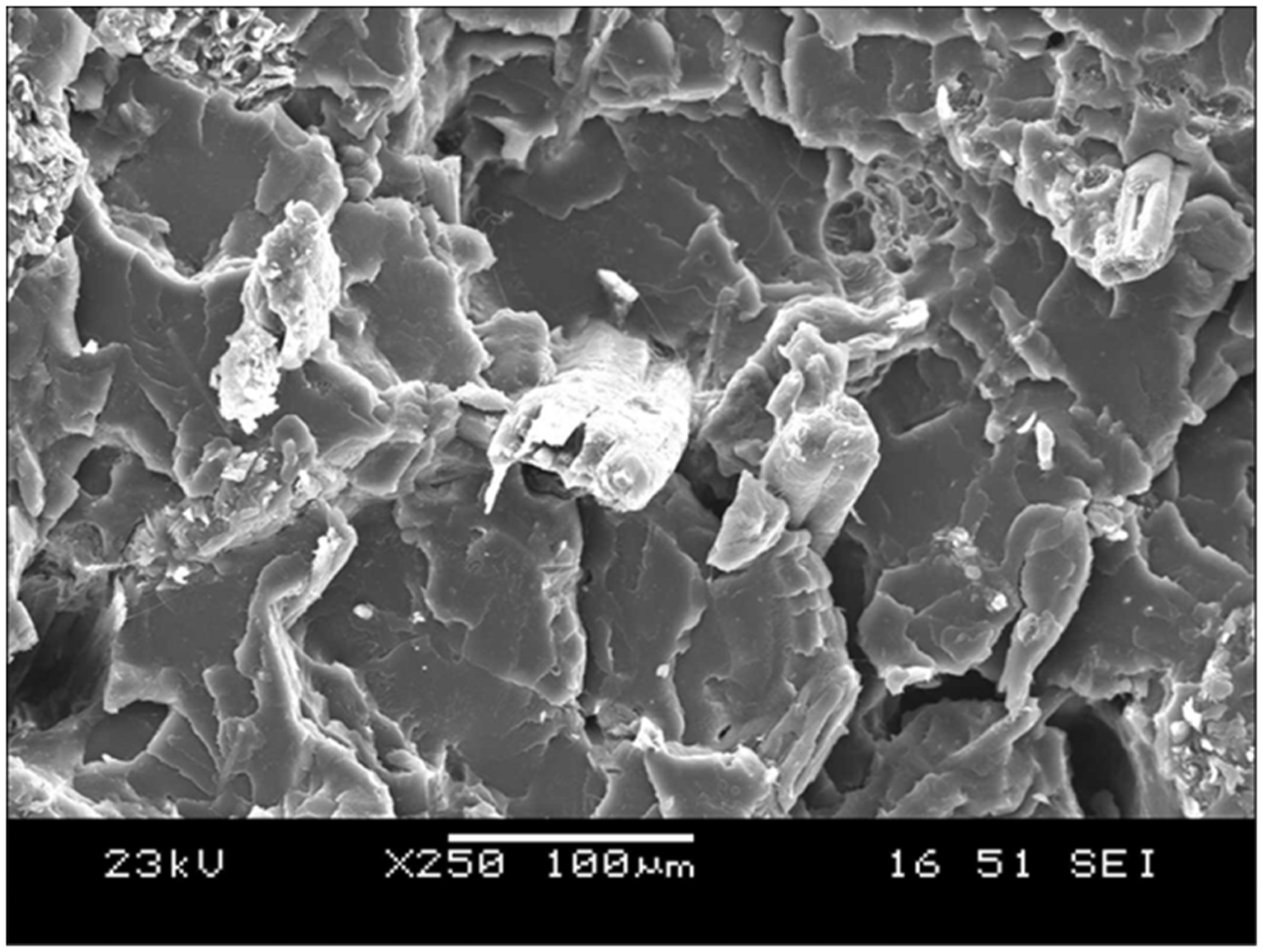

Comparison of calculated theoretical (longitudinal and transverse) and experimental tensile properties.
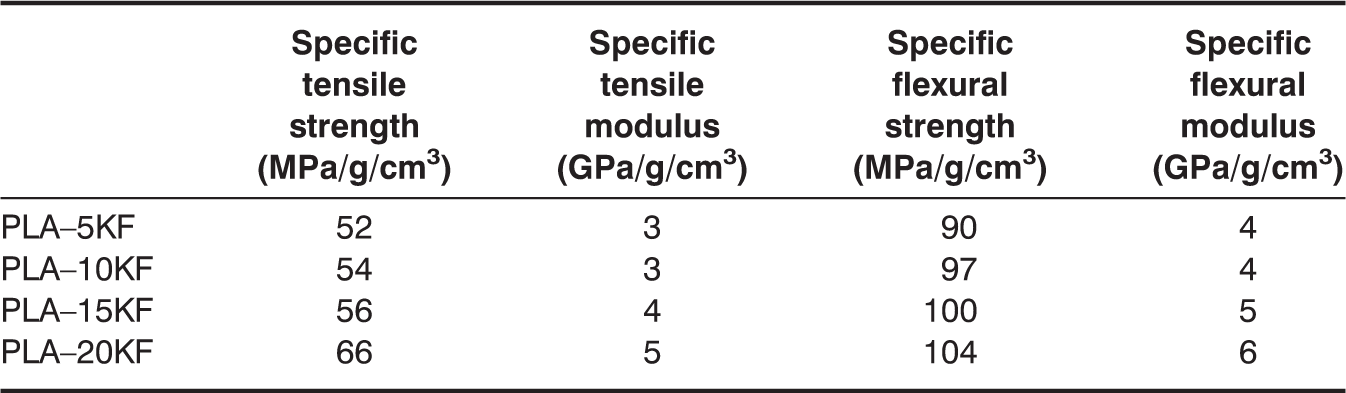
Specific tensile properties and flexural properties.
Flexural Properties
The flexural strength of the PLA/KF biocomposites as a function of fiber content is illustrated in Figure 6. The same trend is seen in tensile properties where flexural strength decreases by about 4.1 MPa at 5 wt% KF. Referring to low density of KF, it can be suggested that KF was acting as filler at lower fiber content. However, at higher KF content, flexural strength increases and reaches a maximum value at 20 wt% KF which is almost 11.1% higher than unreinforced PLA. This value is comparatively higher than 90 MPa which was reported on reinforced PLA composites with 40% hemp fiber content [16].
The effect of fiber content on flexural strength and modulus of PLA–KF biocomposites.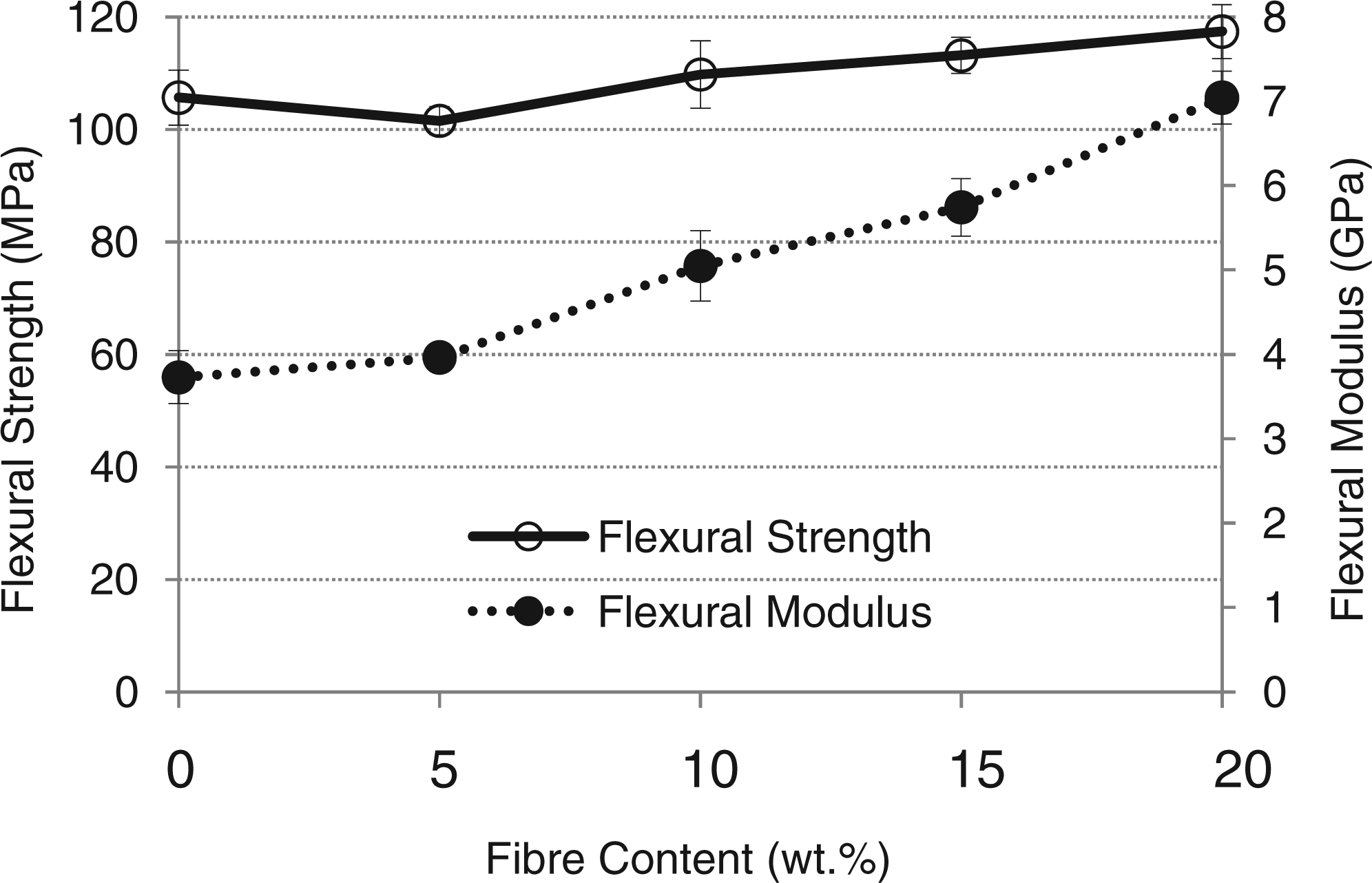
The flexural modulus of the PLA/KF biocomposites strongly depends on the modulus of the KF. The stiffness is measured at a very small strain when simple physical contact of components is sufficient to transfer the stress. Generally, flexural modulus increases with KF content. The values obtained for the flexural strength and flexural stiffness were absolutely higher than PLA/abaca and PLA/cellulose as reported by Bledzki et al. [5].
By comparing with glass fiber composite, specific flexural strength of 30% by volume glass mat composites is about 24 [17]. However, the specific flexural strength and modulus of 20 wt% PLA–KF are about 104 and 6231GPa/g/cm3, respectively, which were extremely higher than glass mat composites. This shows that, though natural fibers generally have much lower mechanical properties than glass fibers [18], their specific properties are comparable to the values of glass fibers.
Impact Strength
Figure 7 shows impact strength and force maximum versus KF content. Impact strength decreases with KF content. The impact strength obtained is however far more higher than the value of impact strength reported on PLA–flax bicomposite [13]. This finding shows that KF has absorbed better impact strength than flax fiber. Other than that, in the present experiment, there was a mixture of KF and kenaf particle. It is expected that if powder particles were not present during the preparation of PLA–KF biocomposite, higher impact strength may be obtained due to consistency in fiber dimension and better homogeneity. In addition, as the length of the fiber in the composite decreases, the stiffening and reinforcing effects of the fiber reduce and the effect of fiber ends becomes insignificant. This is because the long KF is essential to raise the amount of energy required for fiber pull-out. In contrast, the energy needed to break the specimen increases with KF content.
The effect of fiber content on impact strength and force of PLA–KF biocomposites.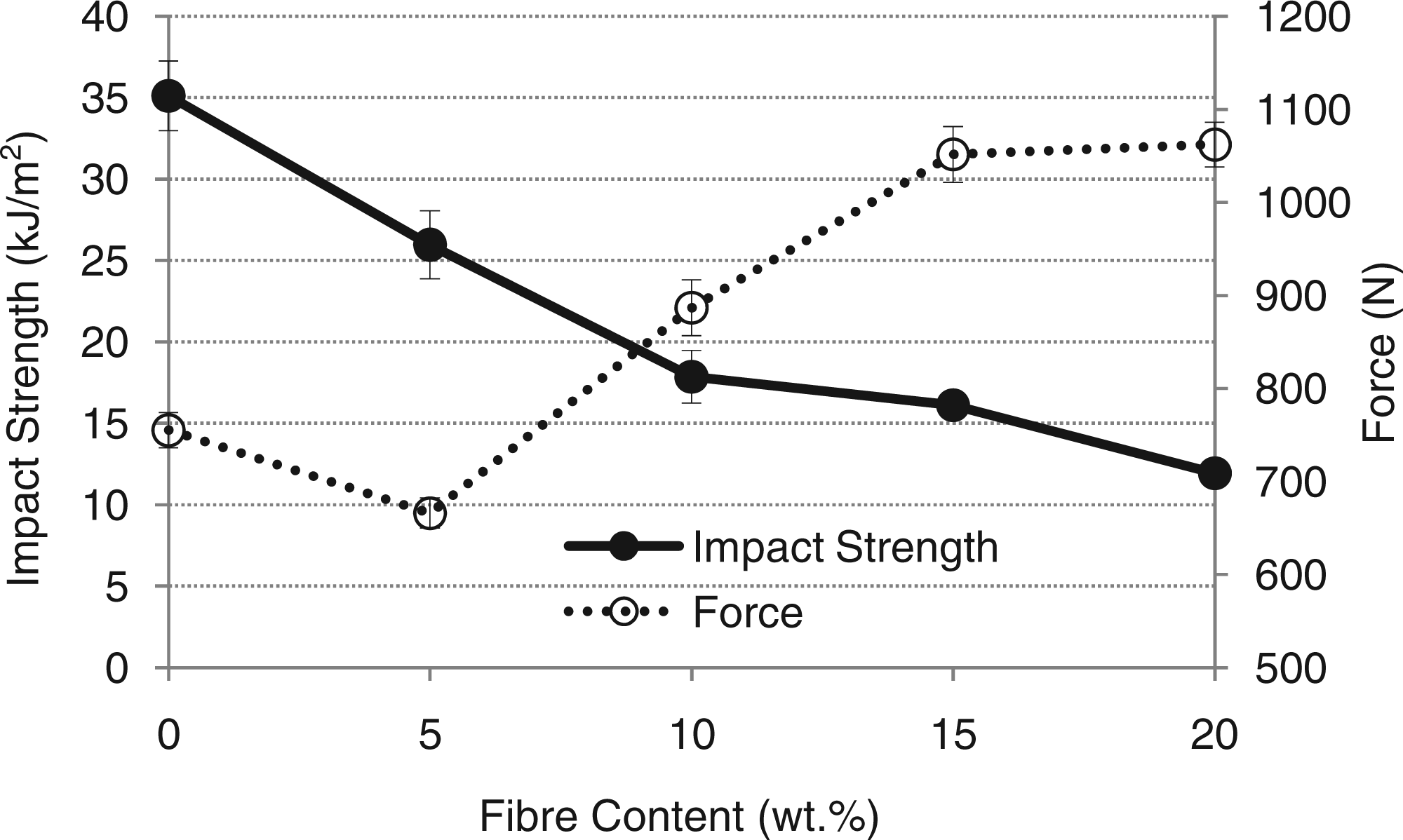
CONCLUSION
Biocomposite made of PLA reinforced with KF has been successfully fabricated by extrusion and injection molding processes. PLA–KF biocomposite has the potential as an ecologically beneficial alternative to natural reinforced composites with petroleum-based matrices in the future. KF has proven to be a good reinforcement for PLA by enhancing the tensile strength, tensile modulus, flexural strength, and flexural modulus. This is evidently seen in scanning electron micrograph where there was interaction between KF and PLA matrix. Furthermore, PLA–KF biocomposite produced have high specific strength and specific modulus. The experimental value of tensile strength is at par to the theoretical data, whereas tensile modulus is higher than the theoretical value and this offers synergistic balance in terms of weight and properties of PLA–KF biocomposite. However, in order for PLA–KF bicomposite to be viable commercially, improvement in impact properties is vitally imperative as well as biodegradability and compostability of PLA–KF biocomposite should also be investigated.
Footnotes

ACKNOWLEDGMENTS
The authors thank Brain Gain Malaysia and Research Matching Grant Scheme (RMGS09-06) and eScience Fund (03-01-08-SF0087) for providing financial support, and Department of Polimer Engineering, Budapest University of Technology and Economics, Hungary for providing facilities and equipments in making this study success.