



Abstract
The structure of the interlayer between matrix and inclusions affect directly the mechanical and physical properties of inorganic particulate-filled polymer composites. The interlayer thickness is an important parameter for characterization of the interfacial structure. The effects of the interlayer between the filler particles and matrix on the mechanical properties of polymer composites were analyzed in this article. On the basis of a simplified model of interlayer, an expression for estimating the interlayer thickness (
INTRODUCTION
It is generally believed that interfacial interactions between the dispersive phase and continuous phase play an important role in the determination of the properties of all heterogeneous polymer systems, including inorganic particulate-filled polymer composites. Due to the interaction between the inorganic inclusions and resin matrix there is a kind of matter between the two phases in polymer composites. This matter is usually called as interlayer or interphase, and its structure and property are different from either the inclusions or the matrix, such as density, crystallinity, and so on. Early in 1960s, Kwei and Kumins [1] investigated polymer–filler interaction in polymeric composites. Although this interlayer is only a tiny partial region, its structure and property affect, to a considerable degree, the properties of composites. Esmaeili et al. [2] studied a ternary composite system by presenting an interface layer around the particle, and demonstrated that a soft interlayer changes the shear band pattern around a hard particle and therefore, leading to changes in macroscopic resistance, mean stress, and normal stress. The results obtained suggested that a suitable combination of the stiffness of the particles and interfaces leaded to an improvement in the mechanical characteristics of the blended polymer. Therefore, the mechanisms of interlayer generation as well as the structure and property of the interlayer in polymer composites have been paid extensively attention during the past 20 years [3–5]. Wu et al. [3] studied the interlayer in particulate-reinforced composite materials. Liu et al. [5] researched on the influence zone and the prediction of tensile strength of particulate polymer composites. Recently, Yung et al. [6] proposed a Young’s modulus model of polymer-layered silicate nanocomposites using a modified Halpin–Tsai micromechanical model, and the results showed that the modified composite theory satisfactorily captured the stiffness behavior of the polymer/clay composites. Amdouni et al. [7] investigated the influence of the interlayer thickness on pre-yielding and fracture properties of epoxy composites filled with glass beads coated with liquid rubber, they found that an elastomeric layer improved fracture toughness, and an optimum thickness of elastomeric interlayer was between 2% and 2.8% of the ratio interlayer thickness to filler radius. Lü and Lu [8] researched the elastic interlayer toughening of potassium titanate whiskers–nylon66 composites and their fractal, and obtained the similar conclusions: the optimal fraction of epoxy resin was 1.5 wt% of whiskers, which corresponded to an interlayer thickness of 3% of the radius of whiskers.
Interlayer thickness is one of major parameters for characterizing the interlayer structure and plays an important role for the mechanical properties of composites. In 1999, several researchers applied some advanced instruments and techniques to measure or observe the interlayer of polymer composites, such as attenuated total reflectance Fourier transform infrared (FTIR) technique [9], atomic force microscope (AFM) [10] and pressing trace instrument, and so on. However, the measurement precision for the interlayer by these apparatus should be further studied. Because the factors affecting the interlayer are quite complicated, most of the studies on the quantitative analysis or prediction of the layer thickness are limited to numerical analysis or under critical conditions [3,5,6,9–11].
The objectives of this study are to investigate the relationships among the interlayer thickness and the volume fraction as well as size of filler particles of particulate-filled polymer composites.
THEORY
Basic Assumptions
The basic assumptions for the theoretical analysis in this article are as follows: (1) the dispersion and distribution of filler particles in resin matrix are uniform; (2) the fillers may be considered as spherical particles because their size is very small; (3) the interaction between the filler and matrix, such as stress concentration and crystallization, are obvious. In general, the formation and structure of the interlayer of polymeric materials may be divided roughly in to the following types: (1) the adsorption layer is produced due to the roughness and activity of filler surface; (2) the matter is generated by the chemical reaction between the chemical matter of the filler surface and the resin matrix; (3) the crystallization layer induced by the filler surface; (4) the remaining stress layer is caused by contraction difference when polymer and filler is cooling. Obviously, the reinforcing and toughening effects of filler on polymer will be increased distinctly as soon as the interlayer can transfer stress and absorb strain energy or fracture energy under action of loadings.
Modeling
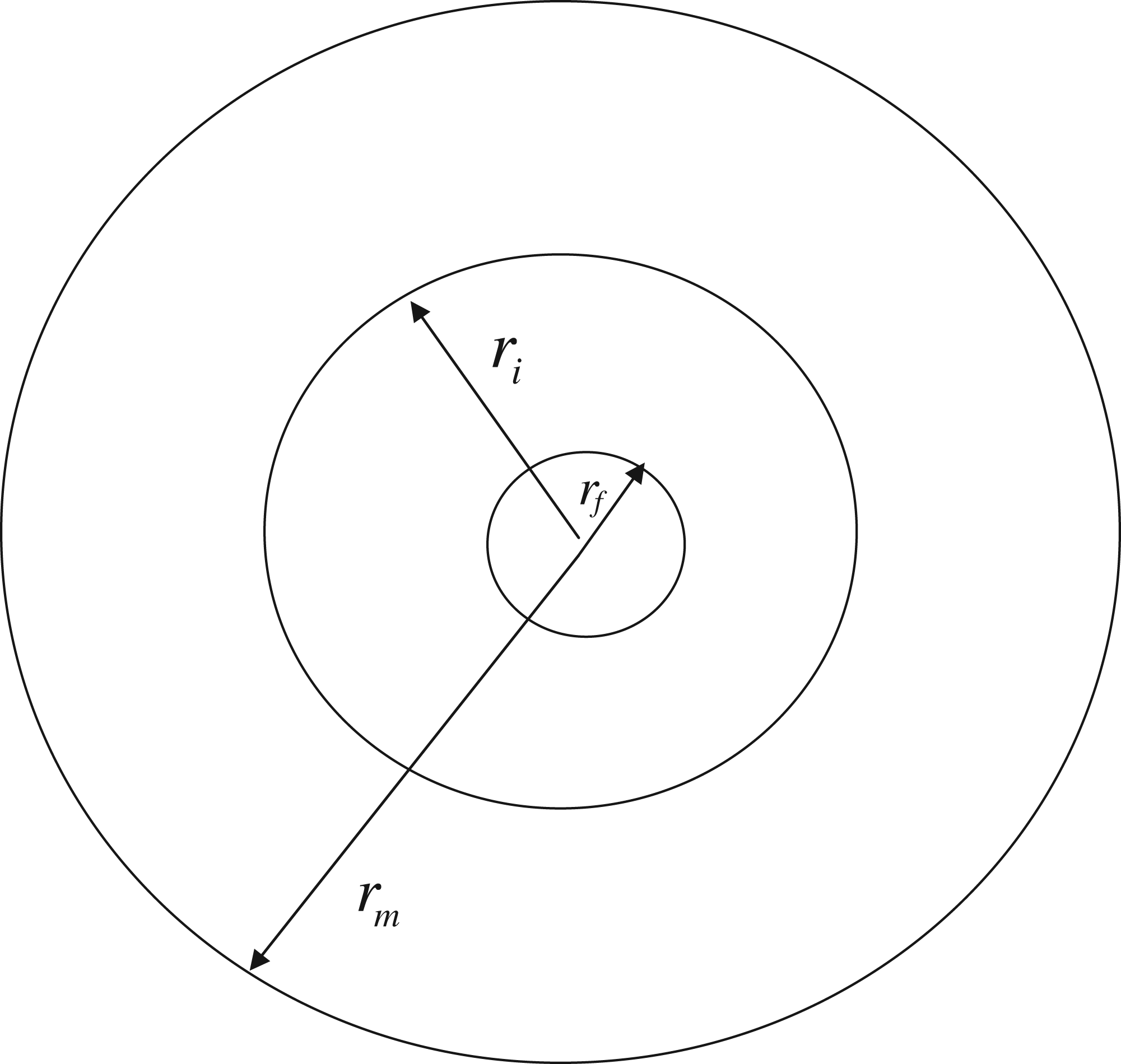
Figure 1 shows the relationship among the three phases, filler and the interlayer as well as the resin matrix. Where Diagram of interlayer model.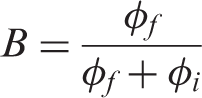
where
If let 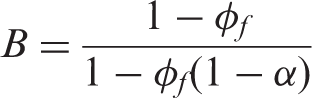
From Figure 1 one may determine the relationship among the volume fractions of interphase and the radius of the three-phase regions. Thus, combining Equations (1) and (2), one may derive an expression of the interlayer thickness (
where df = 2rf is the diameter of the filler particles. Equation (3) describes quantitatively the relationship among the interlayer thickness, filler particle diameter, and the fraction of the interlayer.
RESULTS AND DISCUSSION
Factors Affecting α
It may be seen from Equation (3) that the key for predicting the interlayer thickness is how to determine the value of Relationship between 
where
Effects of
and
on
It is known from Equation (3) that the interlayer thickness of particulate-filled polymer composites is related closely to the filler content and size. It is, therefore, necessary to understand the effects of the filler content and size on the interlayer thickness. Maiti and Mahapatro [12] measured the mechanical properties of calcium carbonate-filled polypropylene (PP) composites, and found that the effects of reinforcing and toughening of the composites were the best when the volume fraction of the filler particles reached up to the critical value. The mechanisms that generated this phenomenon may be interpreted by using the brittle–ductile transition theory proposed by Margolina and Wu [13]. According to this theory, the critical volume fraction of the filler particles in polymer matrix is expressed as follows: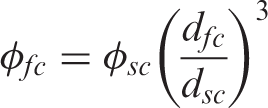
where
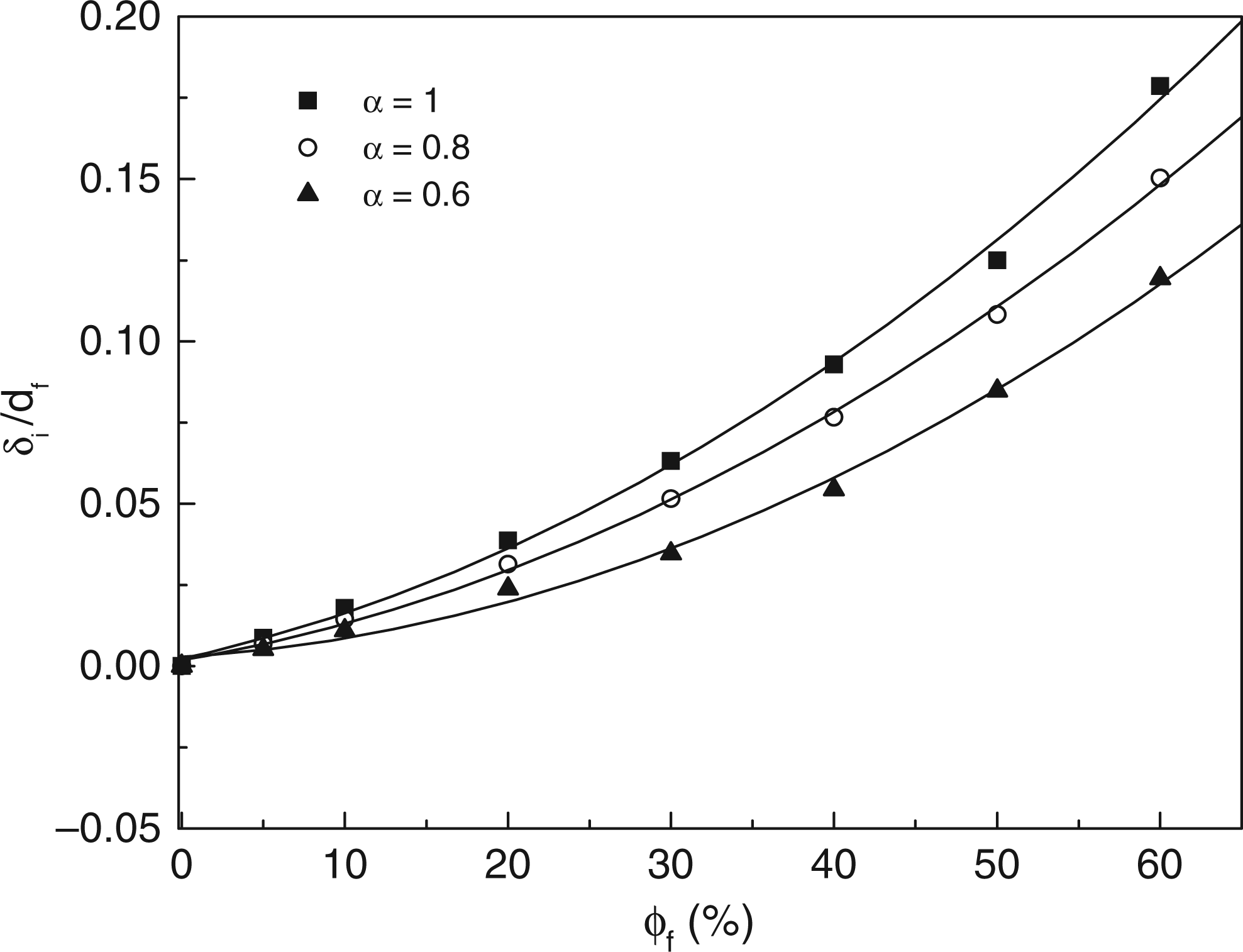
Figure 3 illustrates the dependence of the interlayer thickness on the volume fraction of the filler particles at various particle diameters and α = 1. Similarly, Dependence of 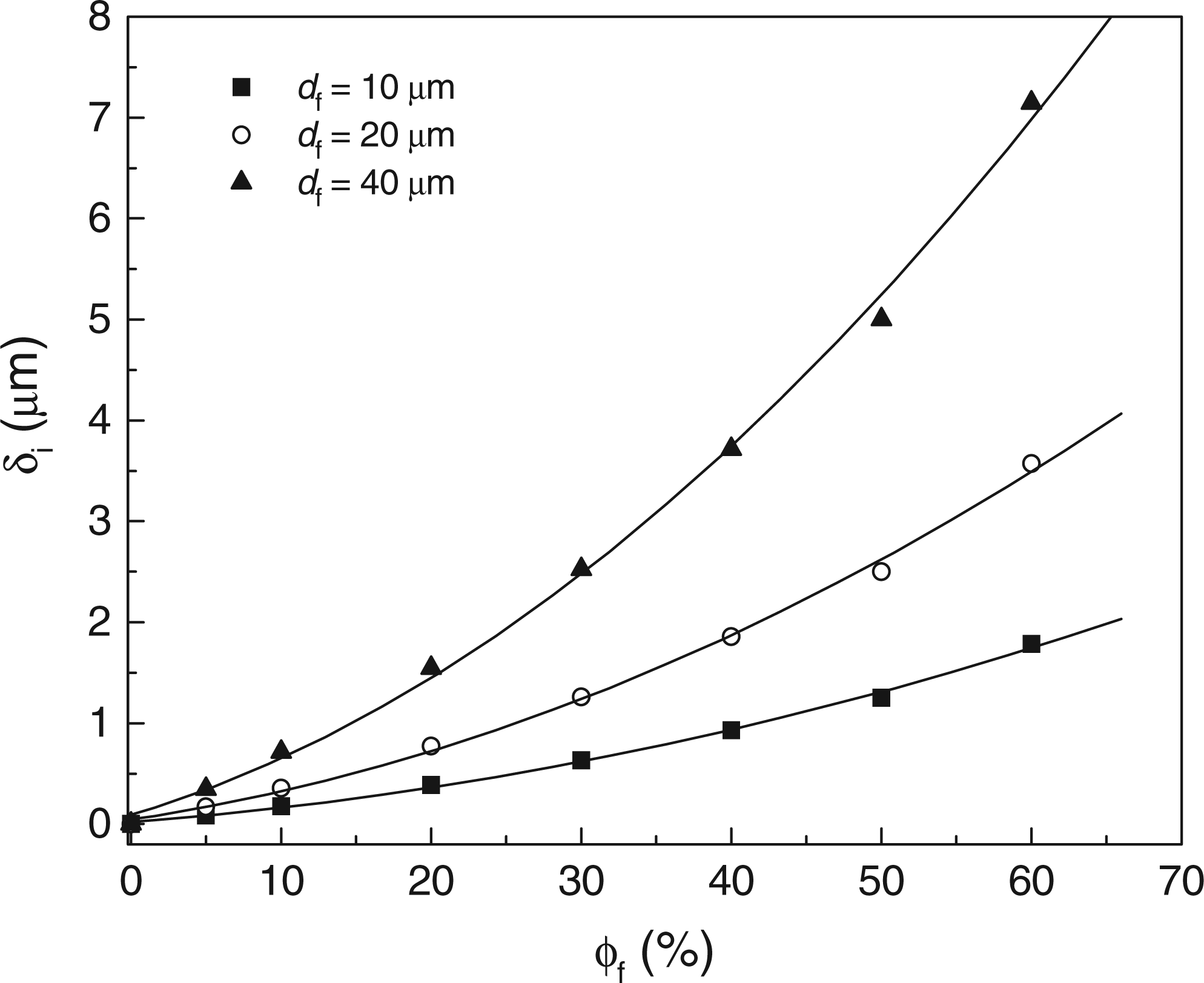
Discussion
From a point of view of the thermal movement of polymeric molecules or molecular chains, the particles filled into the matrix will block, to a certain extent, the macromolecular motion of resin, and will affect the mechanical consumption and thermal property of the composite materials. On the basis of these, Lipatov [4] proposed an expression between 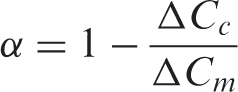
where
Substituting Equation (6) into Equation (3), one has
Thus, after measuring the
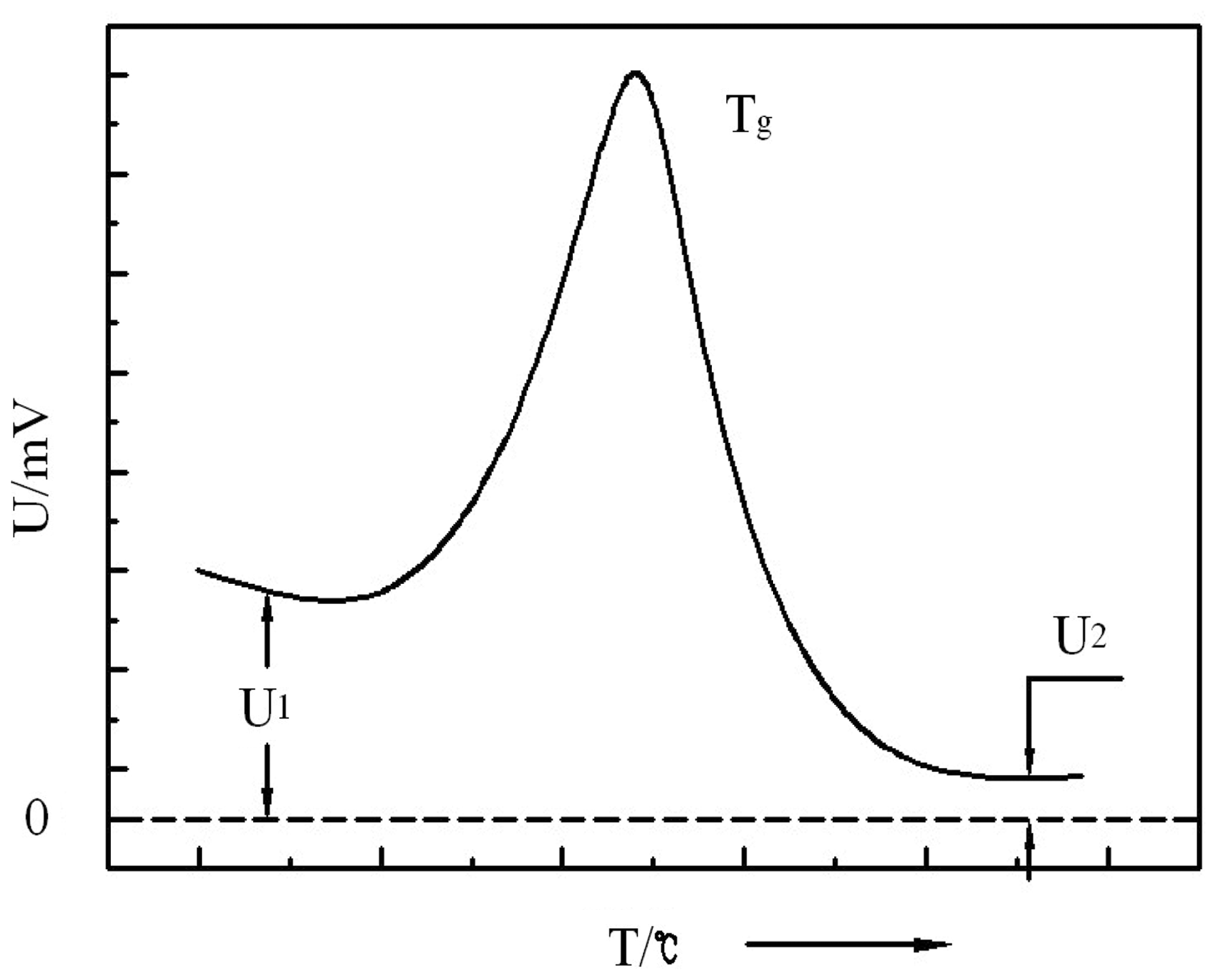
Gao et al. [14] proposed a new method for determining approximately 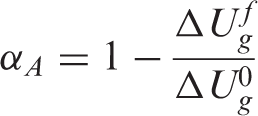
where 
The values of U1 and U2 may be determined as shown in Figure 4 [14]. Substituting Equations (8) and (9) into Equation (3), one may determine roughly the Sketch of determination of 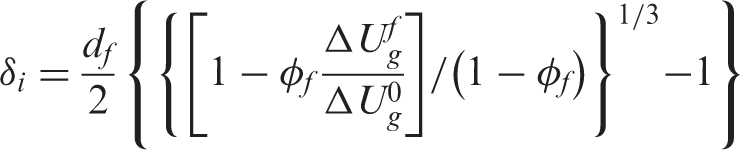
Thus, there are different methods or ways to estimate the interlayer thickness of inorganic particulate-filled polymer composites.
Pukanszky [15] considered the effect of interfacial interaction on the tensile strength of particulate-filled polymer composites and proposed a following equation:
where
Moczo et al. [16] proposed an expression between B and interlayer thickness on their previous work, which is as follows: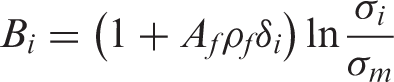
where
It might be known from Equations (11) and (12) that the B value could be determined by measuring the tensile properties in experimental, and then the interlayer thickness might be estimated.
Comparison
The interfacial layer thickness of EPDM/Al(OH)3 composites [14].

Comparison between the

Comparison of interface thickness calculated for composites containing uncoated and coated fillers [16].

Zheng et al. [17] researched the selective laser sintering of polystyrene (PS) modified by Al2O3/PS composite particles with core-shell structure when the diameter and weight fraction of Al2O3 were 60 nm and 5%, respectively, and observed the shell thickness using transmission electron microscope (TEM) and FTIR spectrometer. They found the shell thickness is about 10–20 nm. This is also close to the predictions (Figure 3).
Amdouni et al. [7] investigated the influence of the interlayer thickness on pre-yielding and fracture properties of coated glass beads epoxy composites. The diameter range of the glass beads was from 4 to 200 µm, and the volume fraction was from 2% to 30%. In their study, the average ratio of elastomeric interlayer thickness to particle diameter (
In fact, the model shown in Figure 1 is a physical model, because the parameters in Equations (3), (7), and (10) are related closely with the interlayer properties including crystalline and dynamic mechanical properties. In other words, these equations describe the correlation among the interlayer thickness and the interlayer property parameters, and provide a simplified method to estimate the interlayer thickness of the inorganic particulate-filled polymer composites.
CONCLUSIONS
There are many factors affecting the interlayer in polymer composites. Based on the simplified conditions, a model on the interlayer of inorganic particulate-filled polymer composites was established in this article, and an expression for prediction of the interlayer thickness was derived correspondingly.
The interlayer thickness of inorganic particulate-filled polymer composites with various content and size of filler particles were estimated. The results showed that the increase of the predicted interlayer thickness was relatively obvious in the case of greater concentration or size of the filler particles, and these calculations were more close to the research results reported in references. The surface treatment of filler particles is beneficial to enhance the action between the matrix and inclusions, resulting in an increase of the interlayer thickness.
The estimations of the elastomeric interlayer thickness or the ratio of the thickness to particle diameter for inorganic particulate-filled polymer composites by means of Equation (7) were compared with the experimental data reported in literature, good agreement was shown between the calculations and the measured data.