



Abstract
Jute fabrics (hessian cloth) reinforced thermo-set composites were prepared by using urethane acrylate oligomer solutions (50–90% by weight) followed by UV radiation. It was found that 70% oligomer-treated jute fabrics performed the best results. The monomer hexanediol diacrylate (HDDA) was used as a coupling agent for jute fabrics and found potential on the performance of the composites. Urea was incorporated with 30% HDDA to monitor its effect on the properties and 1% urea showed the best mechanical properties of the composites. Water uptake and dielectric properties of the composites were also performed.
INTRODUCTION
Composites are materials that comprise strong load carrying material (known as reinforcement) imbedded in weaker material (known as matrix). Reinforcement provides strength and rigidity, helping to support structural load. The matrix or binder (organic or inorganic) maintains the position and orientation of the reinforcement. The constituents of the composites retain their individual physical and chemical properties; yet together they produce a combination of qualities which individual constituents would be incapable of producing alone [1]. Natural fiber composites are environment friendly materials, since reinforcement comes from renewable resources such as plant fibers or wood [2]. Natural fibers contribute to the easier degradation of the composites. Moreover, these fibers involve less environmental impact on their production compared with both glass fibers and polymers, because they require lower energy and produce fewer emissions [3]. The performance of natural fiber reinforced composites can be comparable to that of the synthetic fiber-based composites, but with lower specific weight and price. The advantages of natural fiber composites are their good dimensional stability and durability against wood-based composites [4–7]. Natural fiber composite has a good demand in the world for environmental and ecological concerns [8]. Among all the natural fibers, jute appears to be a promising material because it is relatively inexpensive and commercially available in tropical countries [9–13]. It has low density, higher strength, and modulus than plastic and is a good substitute for conventional fibers in many situations. Among commodity materials, thermosetting urethane acrylate possesses outstanding properties like good surface hardness, scratch resistance, and excellent electrical properties [14].
As a material of construction, jute-based thermo-set composite can play a vital role. Jute-based composite can be used as particleboard, ceiling, blocks for building construction, and furniture. Moreover jute is cheaper than most of other nature fibers like sisal, flax, hemp, etc. The high strength of jute fibers has not been intensively exploited in reinforced composites. This occurs, at least partially, because they are hygroscopic and their low wettability by resins. These characteristics result mainly from the presence of hydroxyl groups and other polar groups in several constituents of the fiber, mainly cellulose and lignin. In order to compete with the synthetic fiber-reinforced composite, the mechanical properties of jute reinforced urethane acrylate composite should be improved. Some researchers prepared by using the synthetic polymers as coating over the natural fibers with the improvement of the mechanical properties. To enhance the use of jute fibers, investigations are necessary to search for chemical modifiers and physical treatments of jute fibers for better adhesion between synthetic polymer and natural fiber (jute). Several processes, such as chemical [15] and photochemical [16–20] treatments have been developed to modify fiber surfaces. Improved physico-mechanical properties of natural fibers with different impregnating solutions under UV radiation have been reported [19–21]. Coupling agents such as 1,6-hexanediol diacrylate (HDDA) usually improve the degree of cross linking in the interface region and offer a perfect bonding result. Coupling agents are effective in modifying the natural fiber/matrix interface [21].
The present study deals with the fabrication of jute fabrics reinforced urethane-based thermo-set composites. The effect of coupling agent (HDDA) onto jute fabrics and in composites was investigated. The potentiality of urea as coupling agent on the performance in jute-based composites was also carried out. Water uptake behavior and dielectric properties of the composites were also studied.
EXPERIMENTAL
Materials
Bleached jute fabrics (Tossa jute) were collected from Bangladesh Jute Research Institute (BJRI), Dhaka. The difunctional monomer HDDA and swelling agent methanol (MeOH) were procured from E. Merck, Germany. Urea was procured from Sigma-Aldrich, Germany. The oligomer, urethane acrylate (M-1200) of Laromer Company Limited (Belgium) was used. The photoinitiator Darocur-1173 (E. Merck, Germany) was used to initiate the photolytic reaction.
Methods
SURFACE PRE-TREATMENT
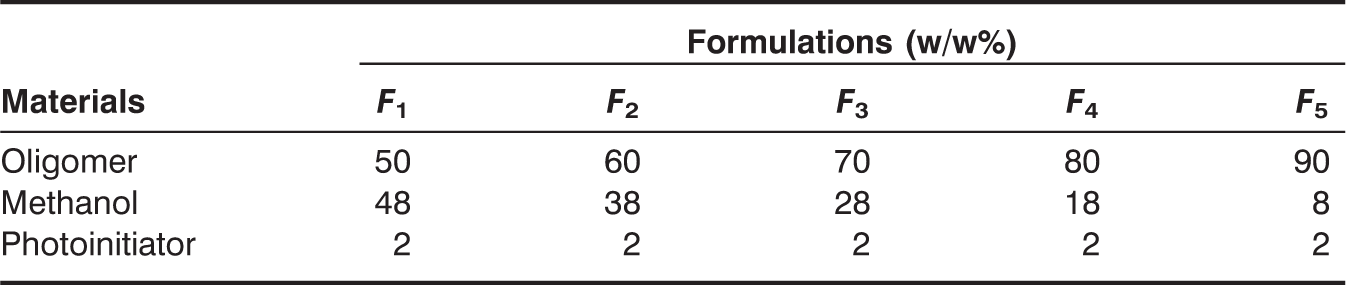
Composition of different formulations based on oligomer.
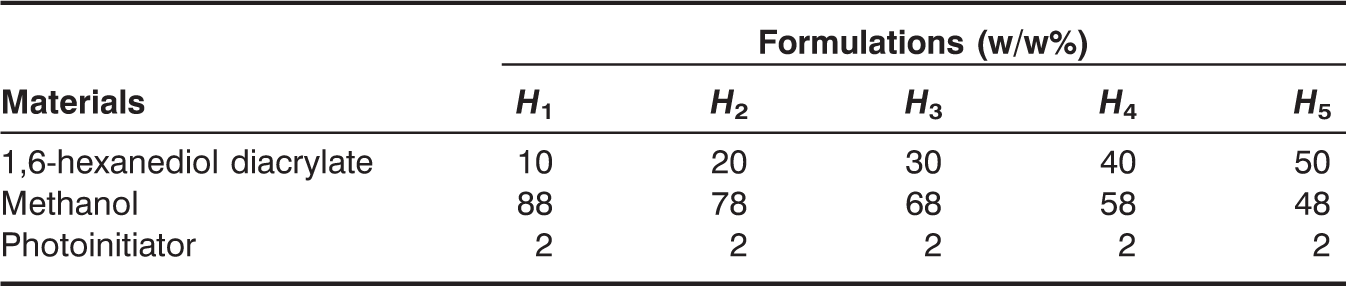
Composition of different formulations based on 1,6-hexanediol diacrylate (HDDA).
MECHANICAL PROPERTIES OF THE COMPOSITES
The tensile properties of the composites were determined using a universal testing machine (model H50 KS-0404, Hounsfield Series S, UK). The load capacity was 5000 N; efficiency was within ± 1%. The crosshead speed was 10 mm/min and gage length was 20 mm.
POLYMER LOADING OF THE COMPOSITES
Jute fabrics were soaked in the prepared solutions and then dried in the oven at 100°C for 2 h. Then PL was measured on the basis of weight gained by the jute fabrics. The formula is given here:

WATER UPTAKE OF THE COMPOSITES
Untreated and treated composite samples (4 cm in length) were immersed in the beaker containing 100 mL of deionized water at room temperature (25°C) for different time periods (up to 30 days). Weight of the samples was determined initially then after certain periods of time, samples were taken out from the beaker and wiped (5 times) using tissue papers then took weight again. The weight gained that is, water uptake of the samples was determined by the subtraction from final weight to initial weight.
Dielectric Measurements of the Composites
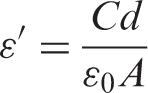
Dielectric properties of the composites were carried out by using Keithley Electrometer and Hewlett Packard impedance analyzer (HP 4291 A). For dielectric measurements, the rectangular shaped samples were well polished to remove any roughness and the two surfaces of each sample were coated with silver paint as contact material. Dielectric properties like dielectric constant and loss tangent were carried out with the variation of temperature at different radiation intensities and at a fixed frequency of 10 kHz by using Hewlett Packard impedance analyzer in conjunction with a laboratory made furnace, which maintain the desired temperature with the help of a temperature controller. The real part of dielectric constant was calculated using the formula:
RESULTS AND DISCUSSION
Effect of UV Radiation on the Mechanical Properties of the Composites
Jute fabrics reinforced urethane-based composite samples were treated with UV radiation and the results are shown in Figure 1. Best mechanical properties were obtained when jute fabrics were coated with the formulation F3 (Table 1) and cured under UV radiation at 20th UV pass. Mechanical properties of that sample, such as 16% increase in tensile strength (TS), 6% increase in tensile modulus (TM) were found under 20th UV pass relative to untreated urethane acrylate-based samples. Surface modification of jute fabrics by UV treatment usually increased the polarities of fiber surface, which increased the fiber wettability as well as sample strength. An intense UV radiation results in a decrease of mechanical properties, a reduced degree of polymerization is observed, and two opposing phenomena such as photo-crosslinking and photo-degradation take place simultaneously when UV radiation is used as a method of surface pretreatment [22].
Tensile strength and tensile modulus against number of UV passes.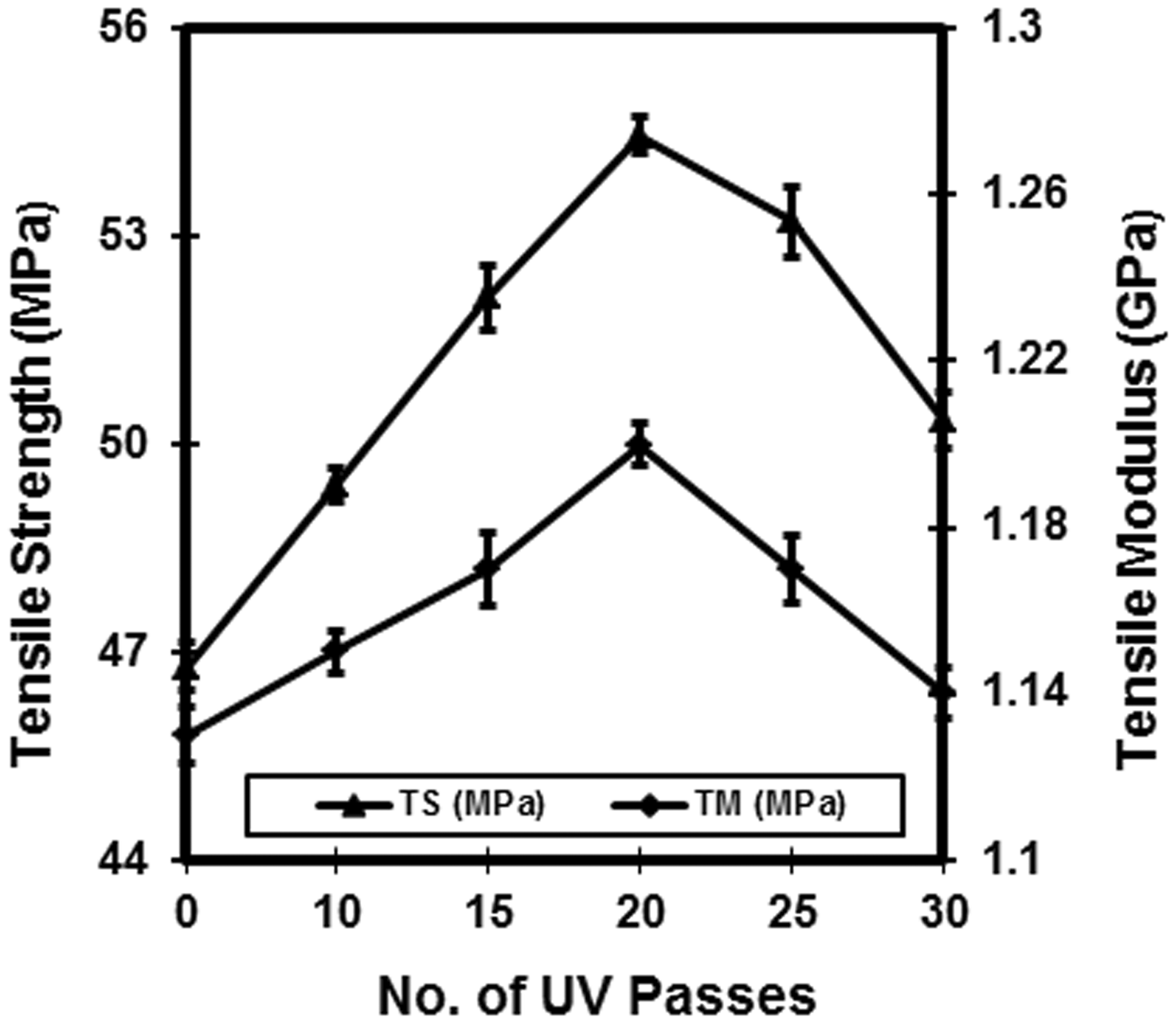
Effect of Coupling Agent (HDDA) on the Performance of the Composites
In this investigation, jute fabrics were soaked (5 min) in different HDDA solutions (10–50 wt%) and the formulation is given in Table 2. Soaked jute fabrics were cured under UV radiation at different intensities (10–35 UV passes). The results of polymer loading (PL) are shown in Figure 2 against number of UV pass with respect to different monomer concentrations. It was observed that PL values increased with radiation intensities up to 25th UV pass; after attaining a maximum value, PL values decreased with increasing the number of UV pass. The decrease of PL values after attainment of the maximum could be caused by the photo-degradation of higher UV radiation dose [23]. The highest PL value (31%) was obtained at 30% HDDA solution and at 25th number of UV pass. Percentages of PL increase with HDDA up to 30%, but more than 30% monomer concentration reduces the PL of jute fabrics with HDDA. For a particular polymerization reaction, the extent of polymerization increases with monomer concentration up to a certain limit. After the maximum value of PL, it decreases with increase in monomer concentration. At higher HDDA concentration, the radical–radical recombination reaction among growing HDDA molecules leading poly(HDDA) may be dominant. Thus, the reaction between HDDA and jute cellulose is diminished. At low concentration, the PL value is less because monomer promotes rapid free radicals propagation reaction with the help of photo initiator leading to network polymer structure through graft copolymerization reaction via their double bonds [24]. As HDDA concentration increased, the amount of residual concentration is also increased with consequence of faster rate of formation of three-dimensional network structure causing restricted mobility. Another factor could be that the swelling of the cellulose backbone with methanol is insufficient due to its low concentration. As a result, monomer molecules are incapable of penetrating into the cellulose molecules at low solvent concentrations. This may cause a smaller number of reacting sites at the cellulose backbone and thus continue to reduce the active sites as MeOH concentration decreases with higher HDDA concentration.
Polymer loading (%) vs number of UV passes as a function of different monomer concentrations.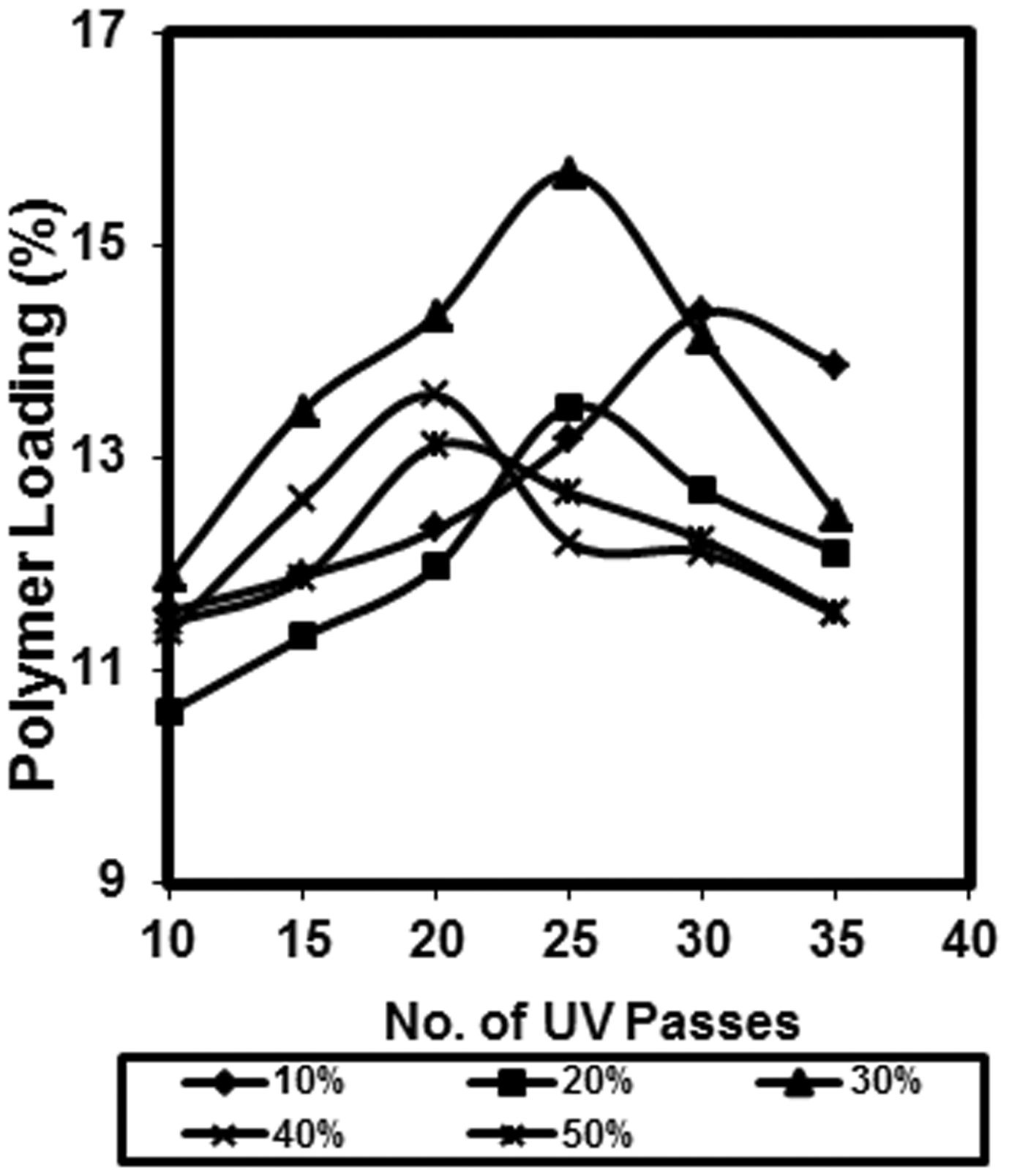
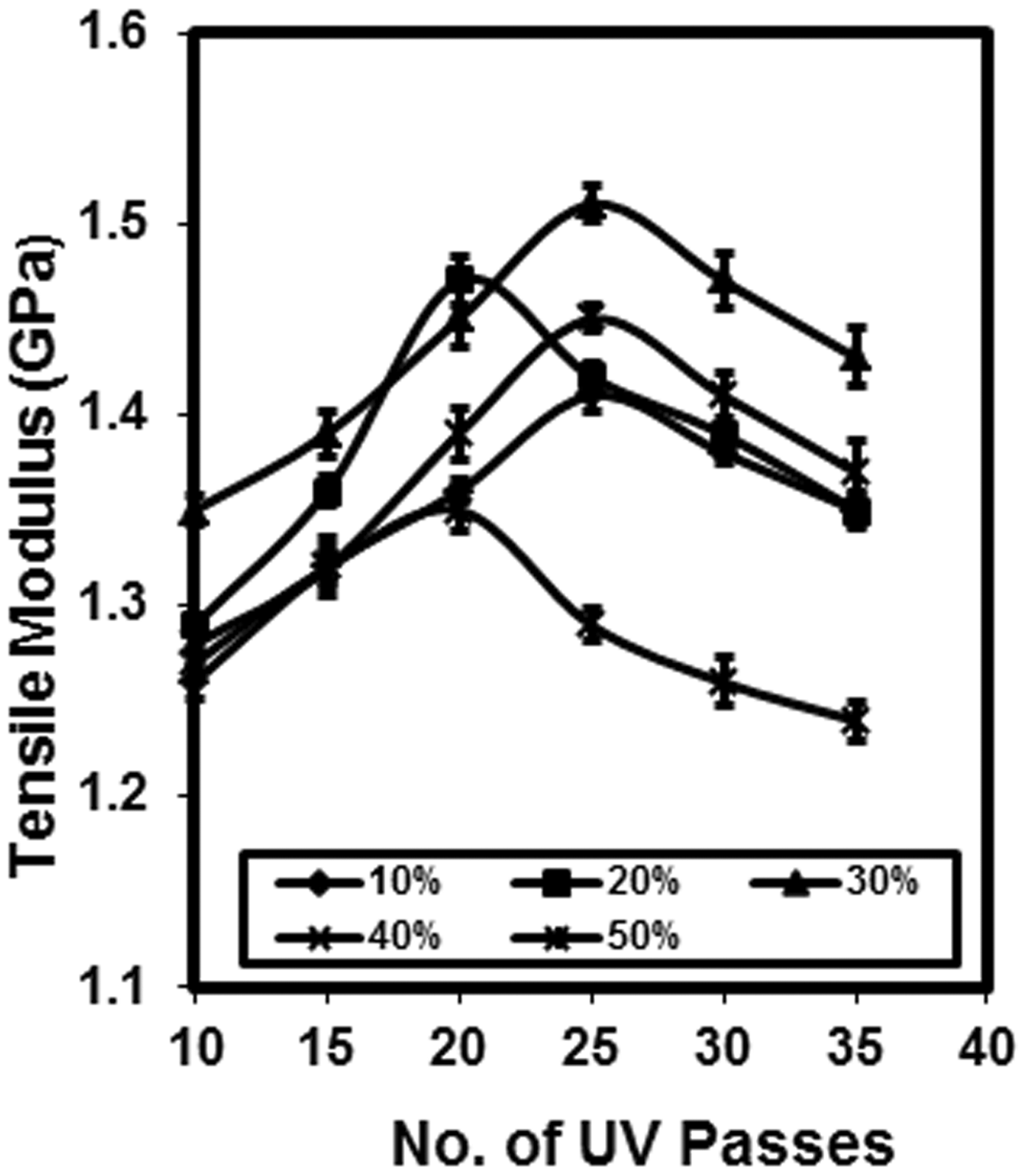
The values of tensile strength (TS) of the treated samples are depicted in Figure 3 against the number of UV passes as a function of different monomer concentrations. The TS increases with irradiation dose up to the 25th UV pass and then decreases as the number of UV pass is increased. It was also observed that TS values increase with HDDA concentration up to 30% and above that, the values of TS decreases with UV radiation exposure. Samples treated with 50% HDDA attained 55.37 MPa which is lower compared to 30% HDDA. The highest TS (62.57 MPa) is obtained by the sample treated with 30% HDDA. It may be noted that the increase of TS with increasing the number of UV passes may be due to the inter-cross linking between the neighboring cellulose molecules that occurs under UV exposure. It was also observed that TS value of the composite increased up to a certain limit and then decreased due to the two opposing phenomena such as photo-crosslinking and photo degradation that takes place simultaneously under UV radiation. In low doses, free radicals are stabilized by combination reaction; as a result, photo crosslinking occurs. The higher the number of active sites generated on the polymeric substrate the greater the grafting efficiency. But at higher radiation, main chain may be broken and polymer may be degrade into fragments, as a result, TS decreases with increasing higher UV dose (i.e., higher UV pass). The values of TM of the treated sample are presented in Figure 4 against the number of UV passes with respect to different HDDA concentrations. The TM values of the composite for 30% HDDA solution at 25th pass of UV radiation is about 1.51 GPa which is the highest among all the concentrations investigated. The TM decreased with the increase of UV radiation doses after the 25th UV pass. The TM values increased with UV radiation, and the 25th UV pass shows the maximum values in most cases.
Tensile strength against number of UV passes as a function of different monomer concentrations. Tensile modulus against number of UV passes as a function of different monomer concentrations.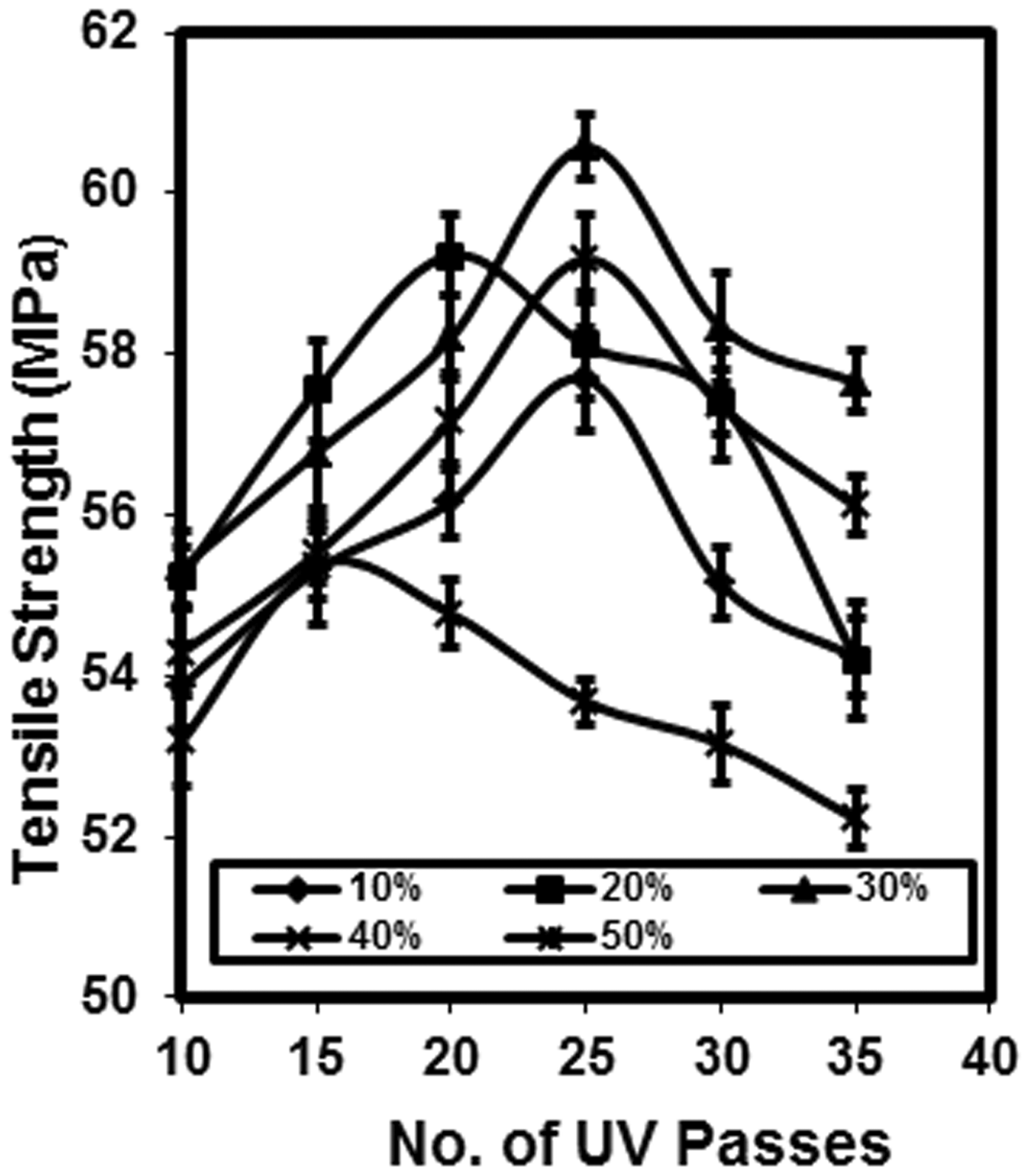
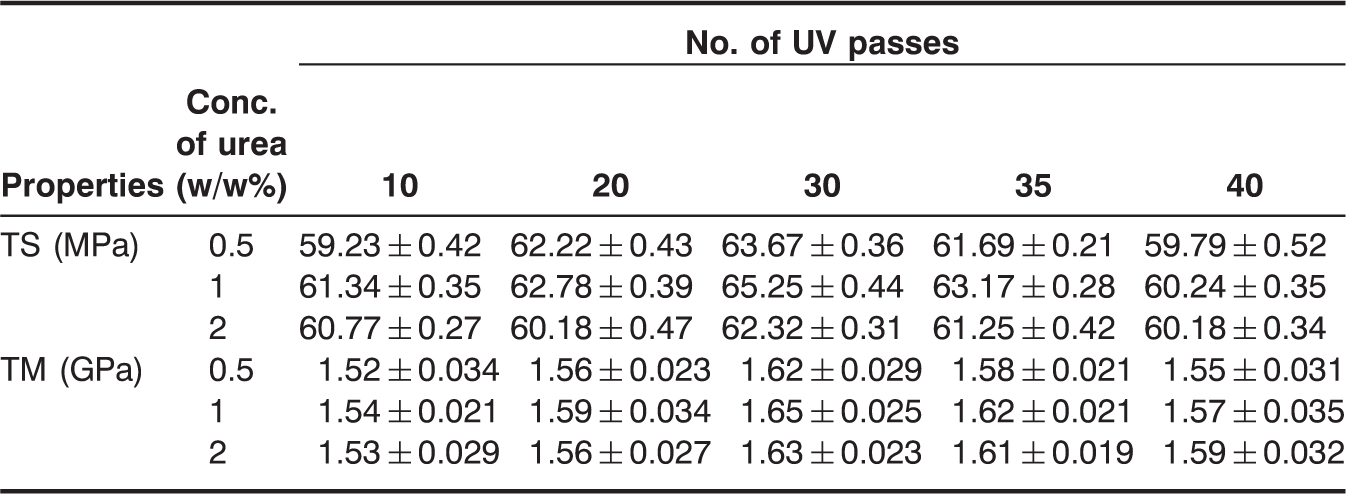
Effect of Additive (Urea) on the Mechanical Properties of the Composites
Effect of urea on TS and TM of 30% HDDA treated jute fabrics oligomer composites.
Water Uptake of the Composites
Water uptake values of untreated, 30% HDDA with 70% oligomer treated composite (C-1) and 30% HDDA with 70% oligomer + 1% urea treated composite (C-2) were calculated by immersing the composite samples in deionized water contained in a static glass beaker at room temperature. The samples were taken out of water after constant time interval and their weight gain were calculated. The results of water uptake values of the untreated and treated samples are shown in Figure 5. The treated samples took up water within 25 days of soaking, and then the values were almost constant. But the untreated sample continued to take up water through out the period of monitoring. The minimum amount of water was taken up by C-2 sample (8%) and the maximum amount of water was counted by untreated sample (15%) at the maximum period of observation (30 days). Jute is mainly built up with cellulose which is the hydrophilic glucan polymer. The elementary unit of jute is anhydro-d-glucose which contains three hydroxyl (–OH) groups [25]. This hydroxyl groups in the cellulose structure account for the strong hydrophilic nature of jute and as a result, within some days jute absorbs such a huge amount of water. The hydroxyl groups of the cellulose molecules were filled up by the monomer molecules. So the water uptake value of that system was lowest.
Water uptake (%) of the untreated and treated composites against soaking times.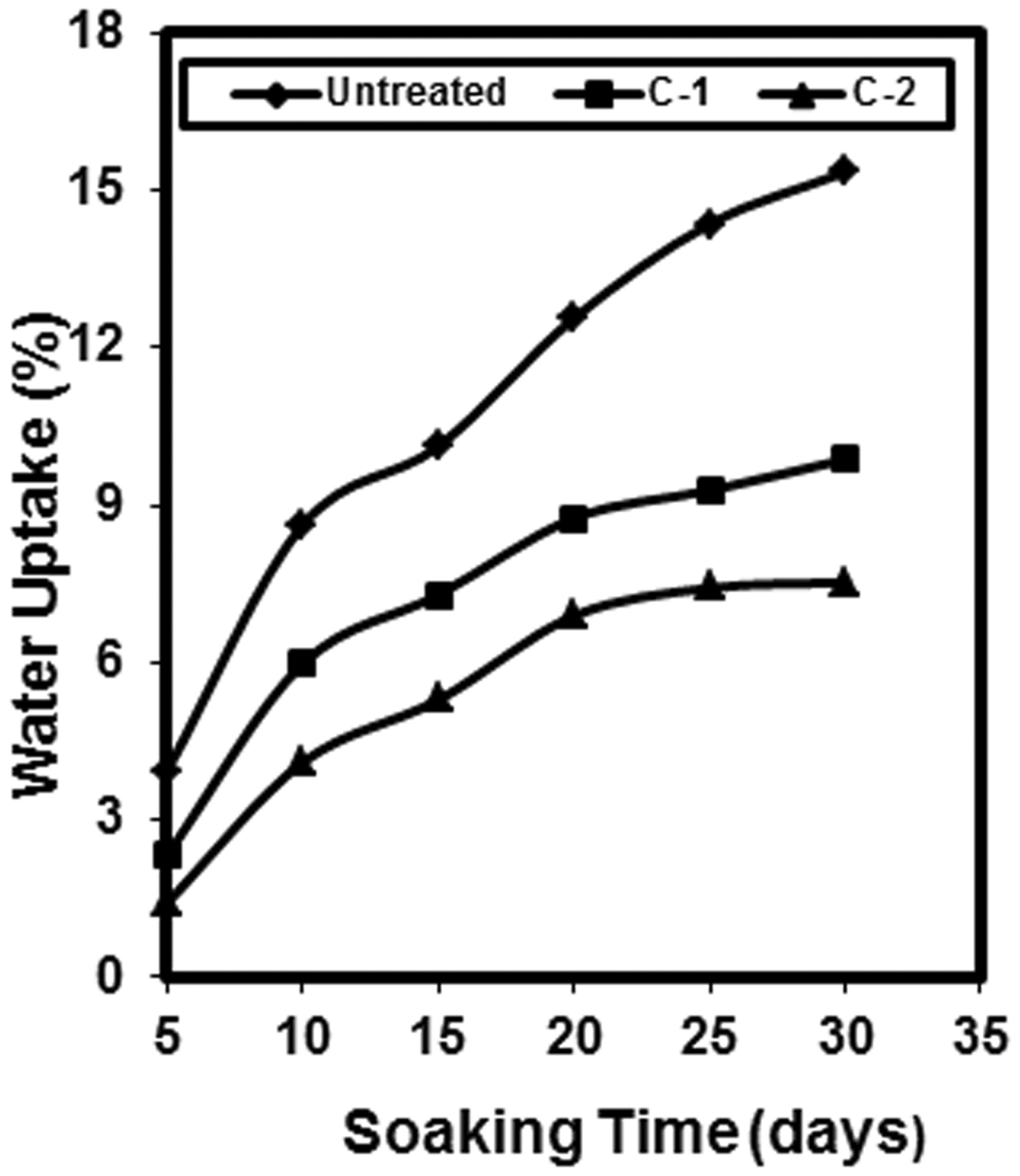
Dielectric Properties of the Composites
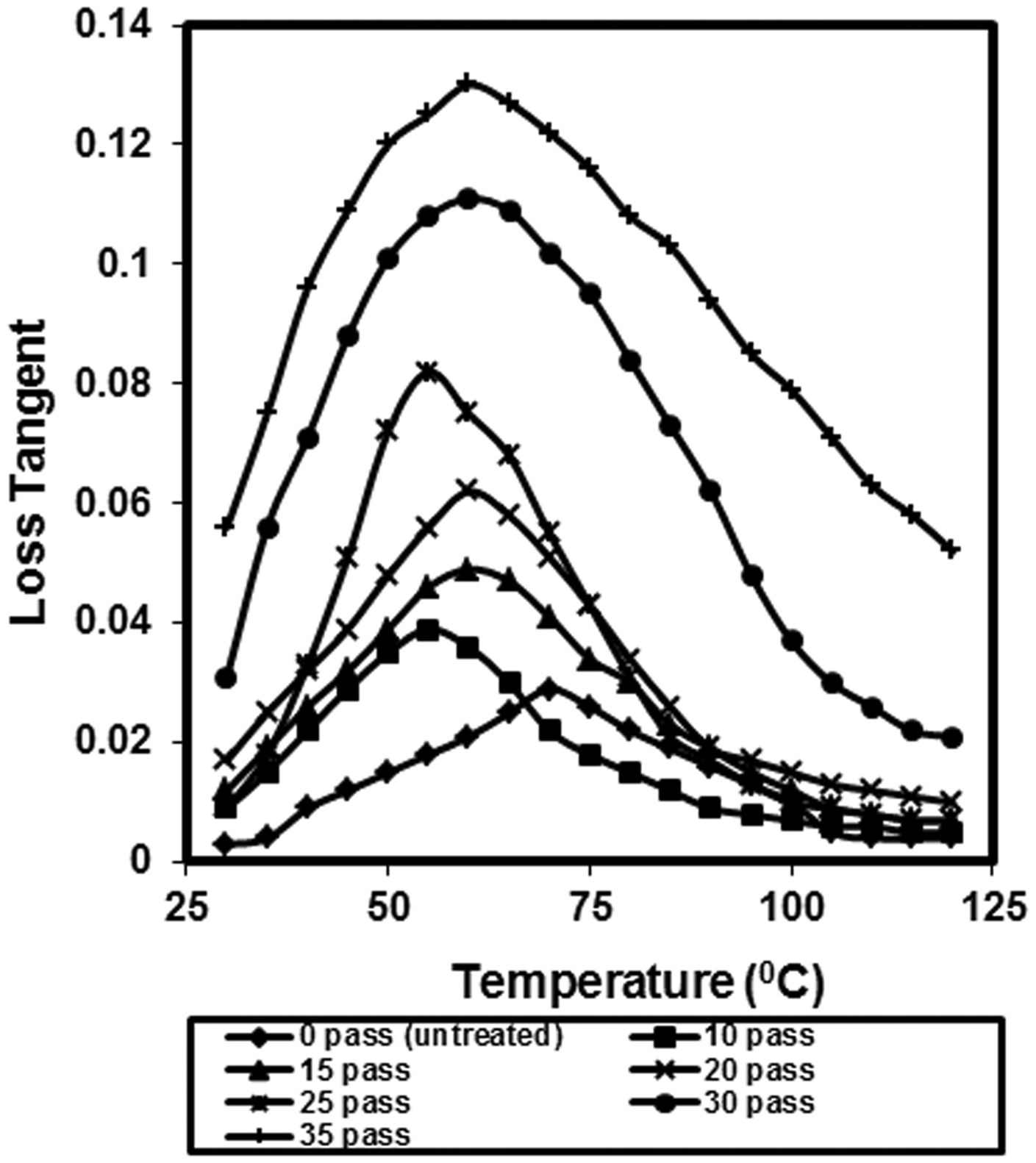
The dielectric constant and loss tangent of untreated and 70% oligomer with 30% HDDA + 1% urea treated jute fabrics have been studied with the variation of temperature at different radiation intensities and at a fixed frequency of 10 kHz. The dielectric constant versus temperature curves for the samples treated with 30% HDDA + 1% urea treated jute fabrics oligomer composites are showed in Figure 6. It is evident that the dielectric constant rapidly increases with increasing temperature up to transition temperature and above the transition temperature it decreases and reduces to almost room temperature and with further increase of temperature it remains almost constant. For 10, 15, 20, 25, 30, and 35 number of UV pass the transition temperatures are 55, 60, 60, 55, 60, and 60°C, respectively. Loss tangent follows the similar trend like dielectric constant and increases up to the transition temperature and then decreases with increasing temperature and then remains almost constant (Figure 7). For 10, 15, 20, 25, 30, and 35 number of UV pass the transition temperatures are 55, 60, 60, 55, 60, and 60°C, respectively. Both the dielectric constant and loss tangent attains a maximum value at 60°C and 35th UV pass. They depend on the number of radiation pass. From both dielectric constant and loss tangent it is evident that there is a transition at the same temperature that is at 60°C. This transition is very likely associated with ferroelectric to paraelectric phase transition. From the above results it is found that the dielectric constant and loss tangent is higher for treated sample than that of untreated sample. Jute is composed of cellulose whose skeletal backbone is linked by intra-molecular hydrogen bonded material. As temperature increases, these bonds break up to split the chain into smaller unit of dipoles. The dipole so formed trend to align them with the applied electric field and thus increases the dielectric constant and loss tangent. At the transition temperature, the formation of dipoles and alignment towards the field is maximum giving rise to maximum dielectric constant and loss tangent values. Above the transition temperature, the dipoles trend to be oriented random. As the randomness increased with increasing temperature, the dielectric constant and loss tangent values were decreased and eventually constant. The maximum dielectric constant and loss tangent values were found at lower transition temperature because UV radiation of the composites might be due to the photo cross-linking between the neighboring cellulose molecules and polymer matrix that occurs under UV exposure.
Dielectric constant vs temperature for treated composite as a function of different number of UV passes. Dielectric loss tangent vs temperature for the treated composite as a function of different number of UV passes.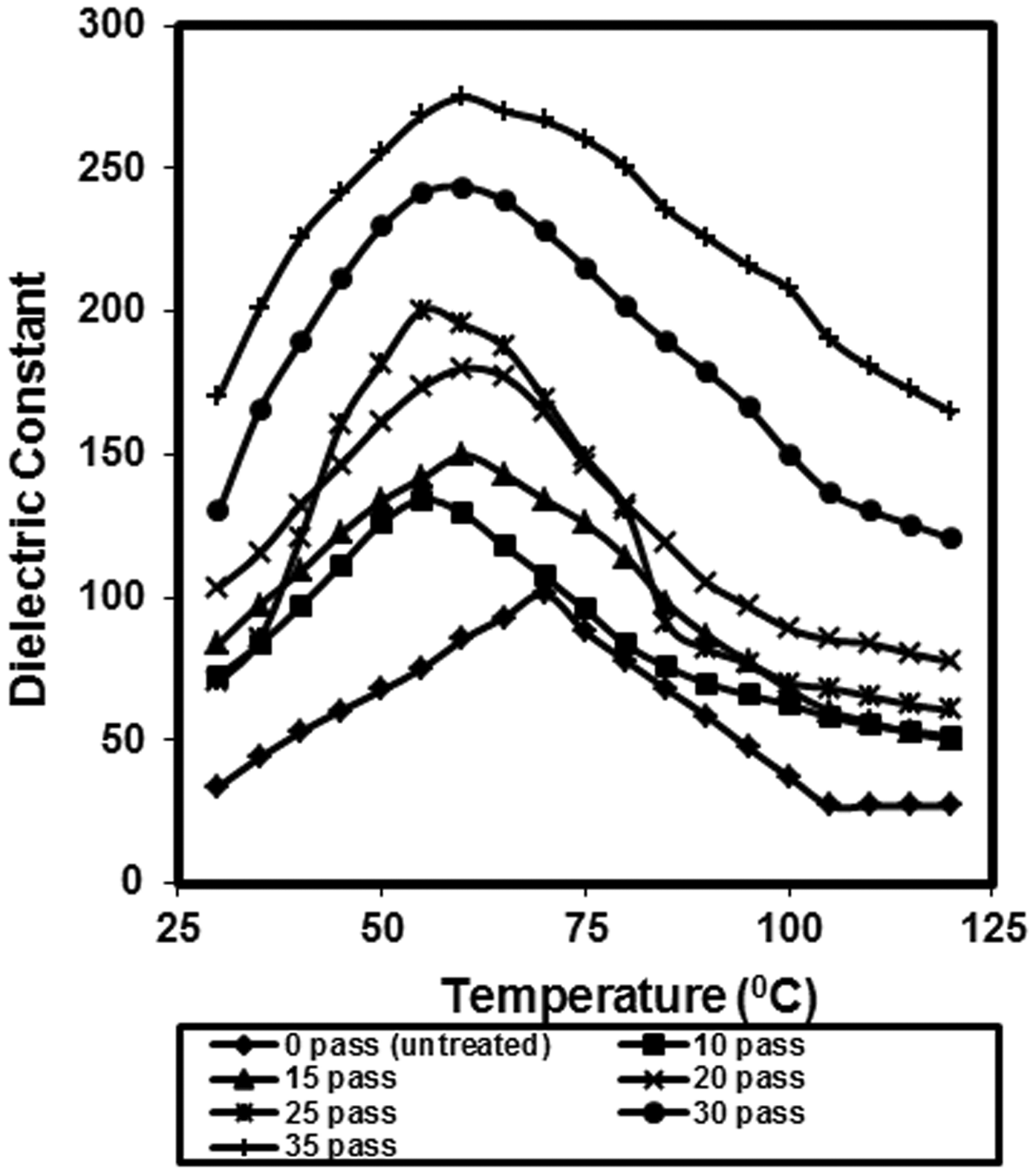
CONCLUSIONS
Investigation shows that the mechanical properties of jute fabrics reinforced urethane-based composites possessed promising values. In order to improve the mechanical properties, jute fabrics were treated with the monomer (HDDA) solution followed by UV radiation. The highest TS and TM of the composite samples (jute fabrics were treated with 30% HDDA at 25th pass of UV radiation) were found to be 60.57 MPa and 1.51 GPa, respectively, which was increased about 29% and 34% compared to the untreated composites. For further upgrading the properties, the jute fabrics were again treated with oligomer solution (70%) along with 30% HDDA + 1% urea and found the best results (PL = 16%, TS = 65.25 MPa, and TM = 1.65 GPa), which were increased about 39% for TS and 46% for TM at a certain intensity of UV radiation. Water uptake behavior of treated sample showed a significantly lower trend compared to untreated sample. The dielectric constant and loss tangent of both untreated and treated sample increases up to the transition temperature and then decreased. The transition temperatures are 70°C for untreated and 60°C for treated sample. This means that transition temperature decreases with chemical treatment. UV radiation proved as one of the important sources to improve the mechanical and dielectric properties of the jute-based composites.