




Abstract
Carbon nanoplatelet and nanoalumina reinforced PEEK nanocomposites were fabricated by twin-screw extrusion followed by injection molding. The effect of the filler loading on mechanical properties, morphology, dielectric strength, and thermal stability of the composites has been analyzed. The mechanical properties were found to increase with nanoplatelet content up to 1% loading (optimum filler content) and after that, due to agglomeration of filler, slight decrease in properties were observed. For alumina-filled systems mechanical properties increased with increasing filler content due to the well-dispersed fillers in the composites. The modulus and toughness of alumina-filled composites were higher than platelet-filled composites.
INTRODUCTION
In recent times there has been a great interest in the use of nanocomposites because of their excellent properties and diverse applications. Nanofillers like nanoclay [1–3], graphite nanoplatelets [4,5], and carbon nanotubes [6] are having very high modulus and aspect ratio and they offer exceptional reinforcement at very low filler concentrations. Properties of nanocomposites are dependent on the intrinsic characteristics of the inclusions like aspect ratio, modulus, orientation, and quality of the dispersion within the polymeric material [7–10].
Carbon nanotubes (CNT) are among the most exciting new materials discovered because of their superior properties such as low-weight, very high aspect ratio, high electrical conductivity, elastic moduli in the TPa range, and much higher fracture strain. These outstanding properties of CNTs make them an attractive candidate for making advanced composite materials with multifunctional features [11–13]. However, the nominal costs associated with the manufacturing of CNTs are very high and manufacturing CNT-based nanocomposites is more challenging. An alternative for this problem is to use carbon nanoplatelets (CNPs), which have been found to be equally effective in reinforcing composite materials. CNPs can reinforce the matrix in two directions unlike CNTs, which are effective only in one direction. Termonia [14] analyzed the structure property relationships in nanocomposites and found that platelets are generally more efficient than fibers in improving composite modulus. Yasmin and Daniel [15] showed that the addition of graphite platelets increased tensile strength, elastic modulus, glass transition temperature, and thermal stability of pure epoxy and the coefficient of thermal expansion of epoxy decreased to almost half of its original value with addition of 2.5% graphite platelets.
Poly(ether ether ketone) (PEEK) is a high performance semi crystalline polymer having outstanding mechanical properties, thermal stability wear resistance, and excellent resistance to chemicals. Therefore PEEK and its composites have been reported for use in aerospace, automotive, structural, high temperature wiring, tribiology, and biomedical applications. Lai and co-workers [16] used simple compression molding technique to develop PEEK nanocomposites and increase in thermal stability and mechanical properties were observed. Goyal et al. [17] prepared PEEK nanocomposites by compression molding and analyzed the effect of alumina on the dynamic mechanical properties of the nanocomposites.
In this article, carbon nanoplatelet filled PEEK composites were developed by twin screw extrusion followed by injection molding. The reinforcing effect of nanoplatelets in PEEK matrix have been compared with that of a much cheaper nanofiller, nanoalumina. The effect of nanoplatelet content on the mechanical properties of the PEEK composites were analyzed and compared to that of nanoalumina/PEEK composites.
EXPERIMENTAL
Materials
PEEK of grade 5300 was supplied by Gharda Chemicals, Panoli, India. NanoAlumina, Al2O3 (Aeroxide Alu C), supplied by Degussa (Germany) was used as received. The average particle size of hydrophilic untreated nanoalumina (Aeroxide Alu C) was 20 nm, its specific surface area Brunauer-Emmett-Teller (BET) theory was 00 ± 15 m2/g, and tapped density∼50 kg/m3. Carbon nanoplatelet chains were derived from biomass by bombarding bimetallic transition catalyst. This is a very unique material having platelet structure (Figure 1) of outer diameter of the tube 60 nm and inner diameter 20–30 nm. The nanoplatelets were obtained from I.I.T. Mumbai, India.
The transmission electron (TEM) micrographs of carbon nanoplatelet chain.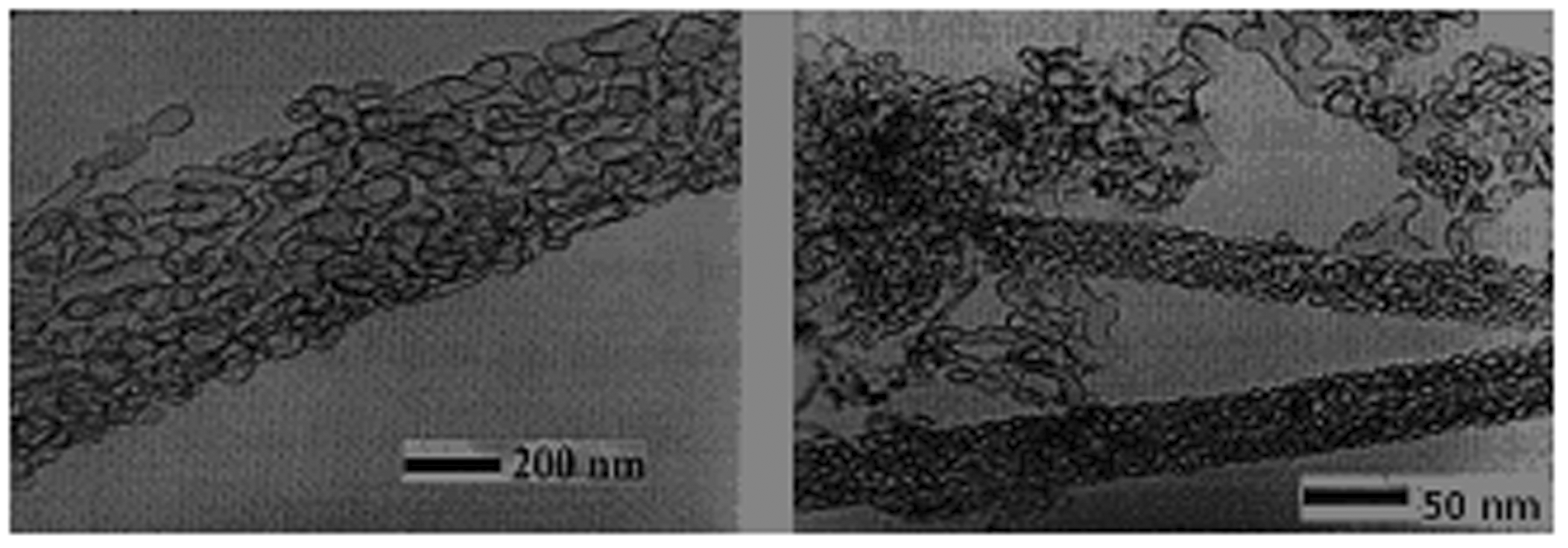
Preparation of Nanocomposites
The nanocomposites were prepared by varying the concentration of nanofillers, (nanoplatelet from 0 to 2 wt% and nanoalumina 0 to 3 wt%). Before compounding preweighed quantities of filler and PEEK powder were mixed in high speed mixer of speed 600 rpm for 1/2 h at 80°C. The premixed compositions were melt blended using co-rotating twin screw, ZE twin screw, Ze-25 Berstott, Italy, with L/D 40:1 with screw speed of 60 rpm. In all compositions 0.25% antioxidant (Ultranox) was used. The temperature profile used for melt mixing was as follows: Zone 1–350°C, zone 2 – 370°C, zone 3 – 380°C, and die 380°C. The extruded samples were quenched in cooling tank containing 20–30°C water, pulled at a speed of 2 meter/min and pelletized. The resulting pellets were dried for 3 h at 180 ± 5°C in an air circulating oven and the test specimen for tensile, flexural, and impact tests as per ISO standards were injection molded using micro processor injection molding machine (LTM- Demang Italy). The processing parameters were zone 1 – 340°C, zone 2 – 360°C, zone 3–370°C, and nozzle 390°C. The cooling of mold was controlled by hot water maintained at 80–85°C to avoid sudden quenching.
Mechanical Properties of the Composites
The dumbbell shaped tensile strength specimens were injection molded and tensile properties were evaluated according to the ISO 527 using Instron universal tester at a crosshead speed of 5 mm/min. Average value of seven results was reported.
Flexural properties were measured using Instron universal tester according to ISO 178. Jaw speed of 2.8 mm/min was maintained for 3 point flexural test and span was 200 mm. All the reported values were average of seven results.
The rectangular samples for impact testing as per ISO 179 were injection molded. The notch was cut on rectangular bar specimen using a motorized notch cutting machine, Notch Vis Ceast Italy. The impact strength was determined using Resil 25 impact tester Ceast Italy, with a striking velocity of 3.46 m/s and 2.7 J striker and average value of seven results were reported.
The rectangular bars for hardness test as per ASTMD 785 standards were injection molded. The hardness scale was Rockwell M and test was carried out using Rockwell hardness tester. The average value of seven results were reported.
Morphology of the Nanocomposites
The dispersion of the fillers in PEEK matrix were investigated on a transmission electron microscope (TEM) CM-12 Philips, Holland, operated at 80 kV. The nanocomposite samples were cut in to 50 nm thick slices using an ultramicrotome with a diamond knife.
RESULTS AND DISCUSSIONS
Tensile Properties
The tensile strength and modulus of carbon nanoplatelet chains filled PEEK as a function of filler content is presented in Figure 2. At 1% nanoplatelet concentration, the tensile strength and tensile modulus are increased by 12% and 17% respectively compared to PEEK matrix. It is observed that tensile strength and modulus increase with increase in filler concentration and attain maxima at 1% filler loading, thereafter decrease gradually. The decrease in properties beyond 1% concentration indicates agglomeration of platelets there by reducing the total surface area of filler available for filler/matrix interaction. Figure 3 depicts the transmission electron (TEM) micrographs of carbon nanoplatelet/PEEK composites at different (0.1–2%) filler loadings. It is seen that carbon nanoplatelet chains are well dispersed up to 1% filler loading and thereafter start agglomerating. The extent of dispersion affects the effective surface area of filler available for filler/matrix interaction and thereby tensile properties are showing increase up to 1% filler loading.
The tensile strength and modulus of carbon nanoplatelet chains filled PEEK as a function of filler content. The transmission electron (TEM) micrographs of carbon nanoplatelet/PEEK composites at different filler loadings: (a) 0.5 wt%, (b) 1 wt%, (c) 1.5 wt%, (d) 2 wt%.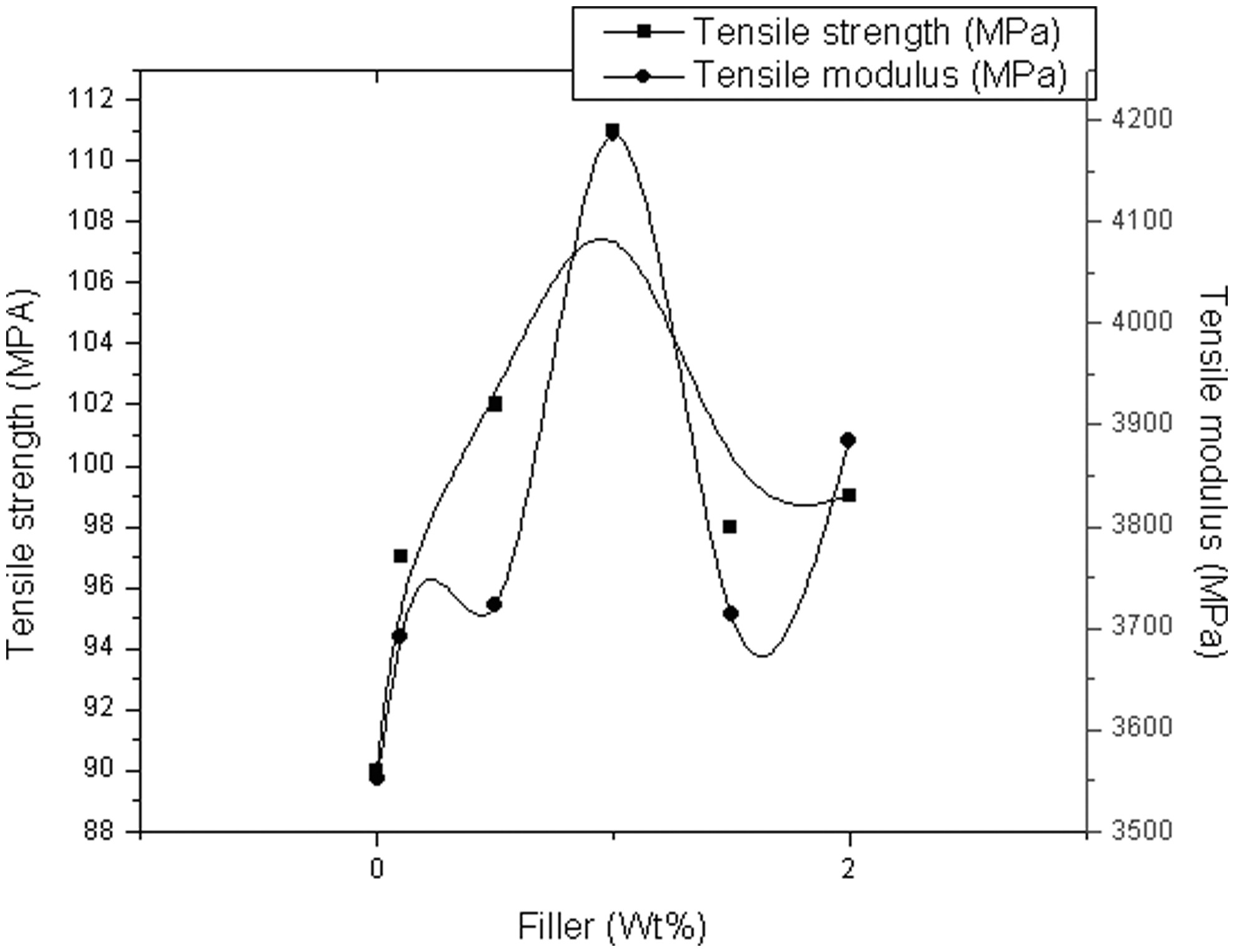
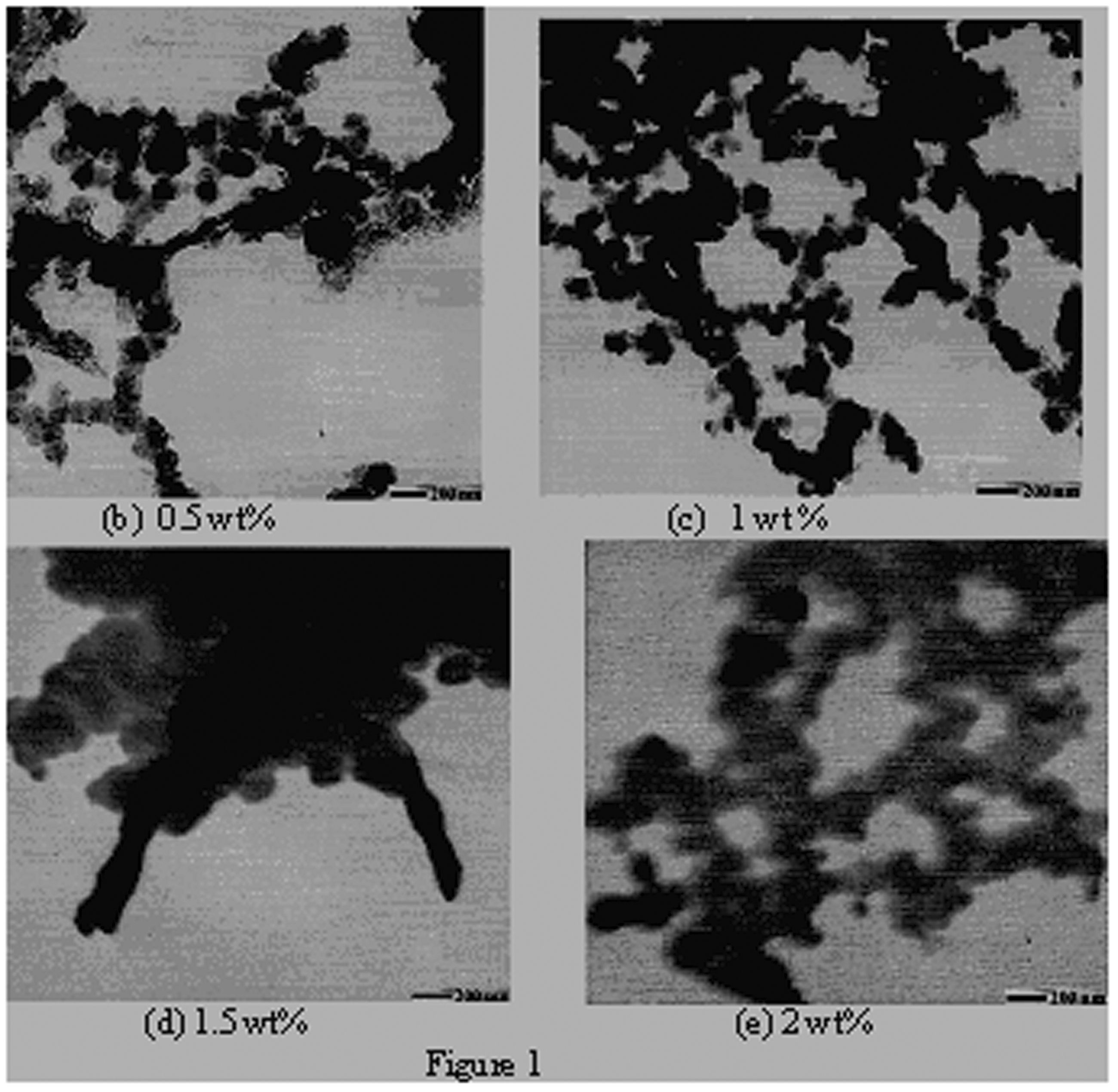
Figure 4 shows the tensile strength and modulus values of nanoalumina-filled PEEK composites with alumina content. Here, increase in tensile strength is observed with increase in filler content. The TEM micrographs of alumina-filled PEEK composites are given in Figure 5. The TEM studies showed that the filler particles are well dispersed in alumina-filled PEEK nanocomposites. As particles are highly dispersed, the interfacial area available for stress transfer will be more, which in turn will increase the tensile strength and modulus. Tensile modulus of the polymer is also found to have a drastic increase with the addition of nanoalumina fillers and the value is increasing with increase in filler content. By incorporating 3% alumina filler, 39% increase in Young’s modulus value is obtained. It is reported that the denser, uniform dispersion, and less agglomeration of the fillers play an effective role in enhancement of Young’s modulus [16]. High modulus values in alumina/PEEK composites are due to the good interfacial interaction as well as the uniform dispersion of fillers in this system compared to others. In alumina-filled PEEK composites, there is the possibility of H-bonding interactions between the OH groups of Alumina and Oxygen in PEEK matrix. Because of the better interfacial interaction between alumina filler and PEEK matrix, alumina filler is well dispersed in the matrix.
The variation of tensile strength and modulus values of alumina-filled PEEK composites with alumina content. The TEM micrographs of alumina-filled PEEK composites.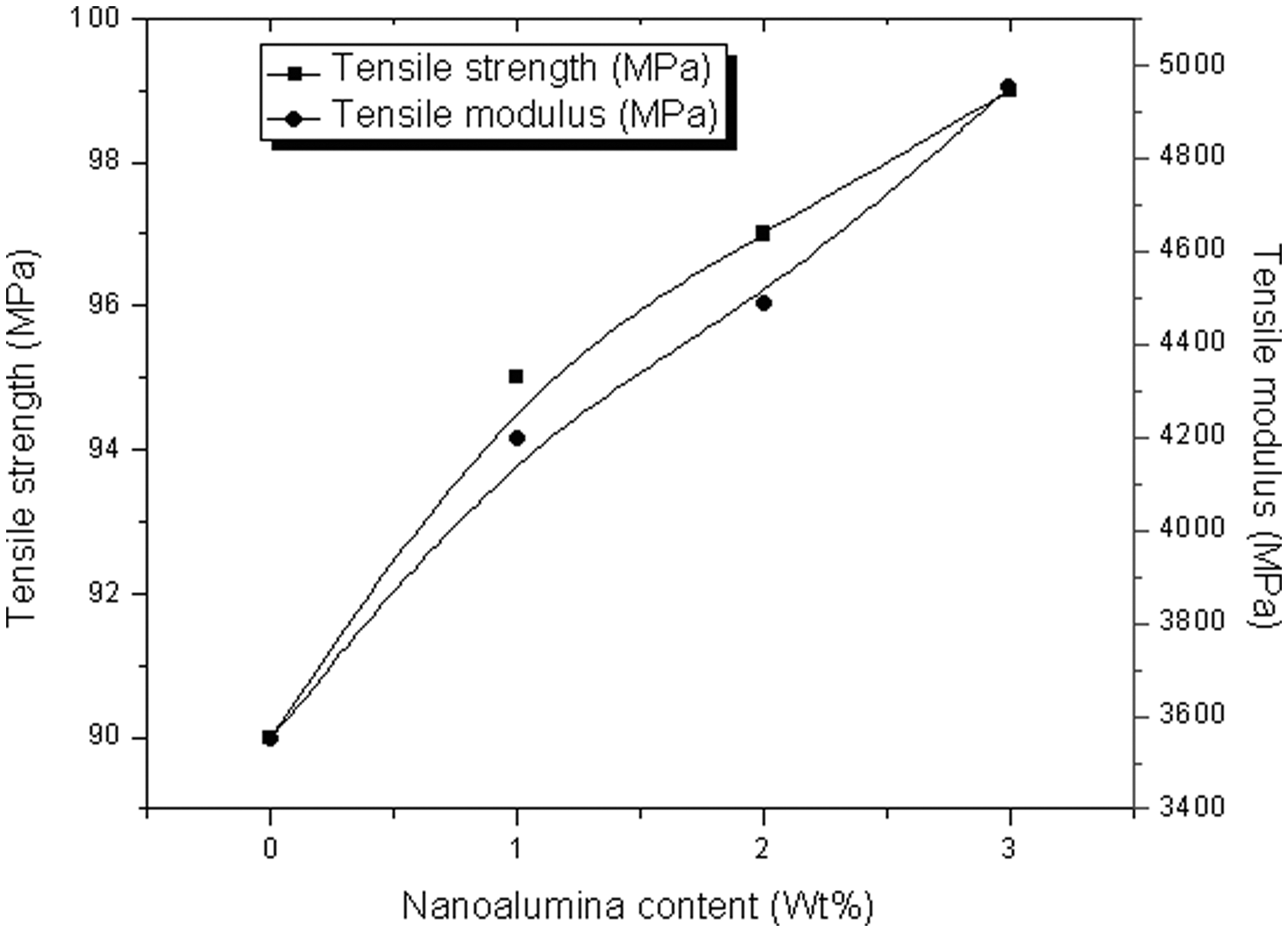
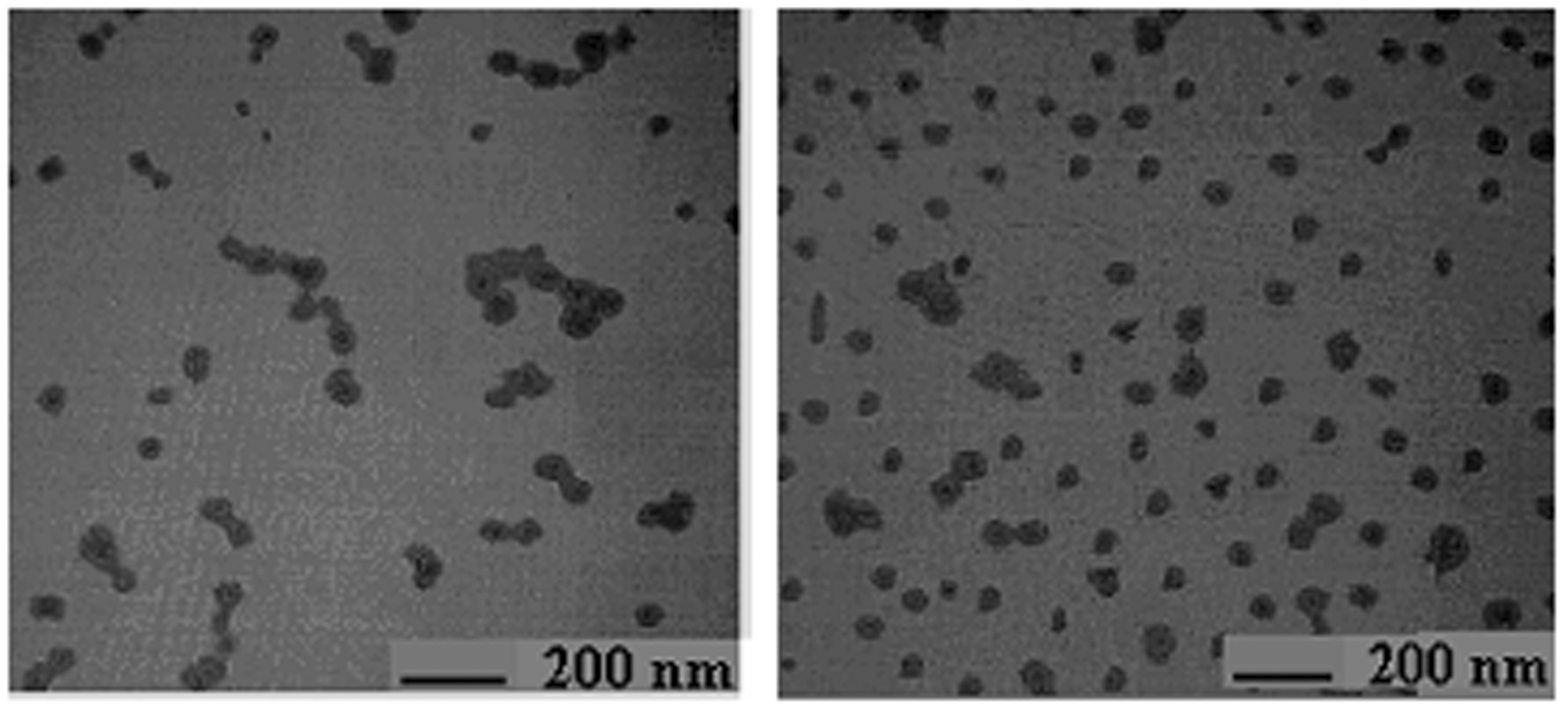
Comparing the tensile properties of carbon nanoplatelet/PEEK and Alumina/PEEK composites, tensile strength is higher for the former while the modulus value is higher for alumina composites. High tensile properties of alumina composites comparable to nanoplatelet composites are due to the possibility of high interfacial interaction in alumina composites. The carbon nanoplatelet is smooth and chemically nonreactive surface while there can be chemical interaction between alumina and PEEK. Similarly the shape of filler particle also affects the property of composite. Alumina being spherical in shape will be more effective filler then platelets of carbon. In carbon nanoplatelets, the filler agglomeration starts above 1% filler loading and properties starts to decline. But in the case of alumina composites, even at 3% loading the agglomerates are less.
Flexural Properties
Variations of flexural strength and flexural modulus of carbon nanoplatelet chains/PEEK composites with filler concentration is presented in Figure 6. The flexural strength and flexural modulus increase with increase in concentration of filler and attains the maxima at 1% filler loading. The decrease in flexural strength and modulus after 1% loading indicates the cluster forming tendency of filler thereby reduction in extent of a filler/matrix interaction due to reduction in total surface area of filler which is available for interaction.
Variations of flexural strength and flexural modulus of carbon nanoplatelet chains/PEEK composites with filler concentration.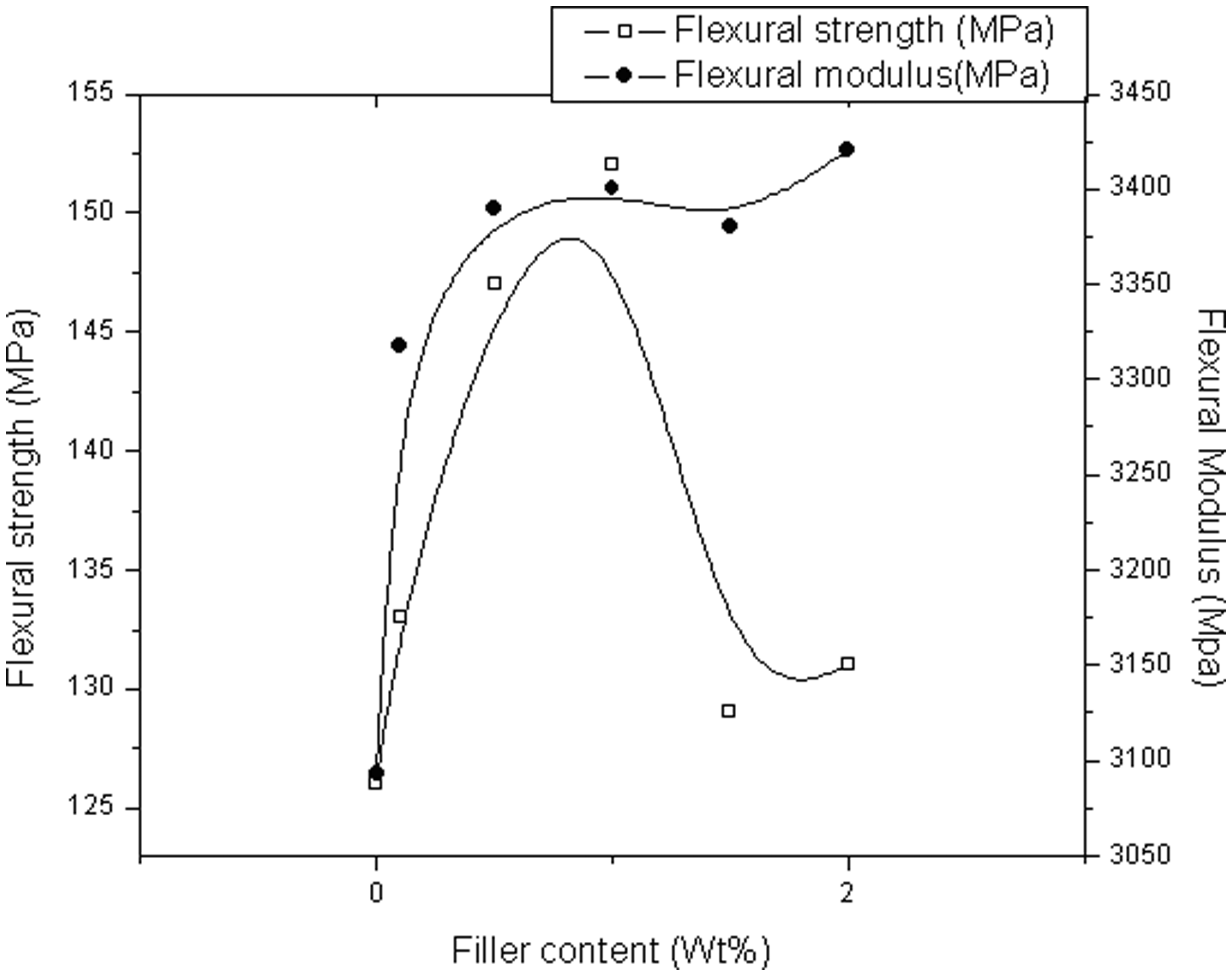
The flexural strength and flexural modulus of alumina-filled PEEK composites with varying filler content is given in Figure 7. Both the values are found to increase with increase in concentration of filler. The flexural strength is higher for carbon nanoplatelet filled composites, but very high flexural modulus values are obtained for alumina-filled composites.
The flexural strength and flexural modulus of alumina-filled PEEK composites with varying filler content.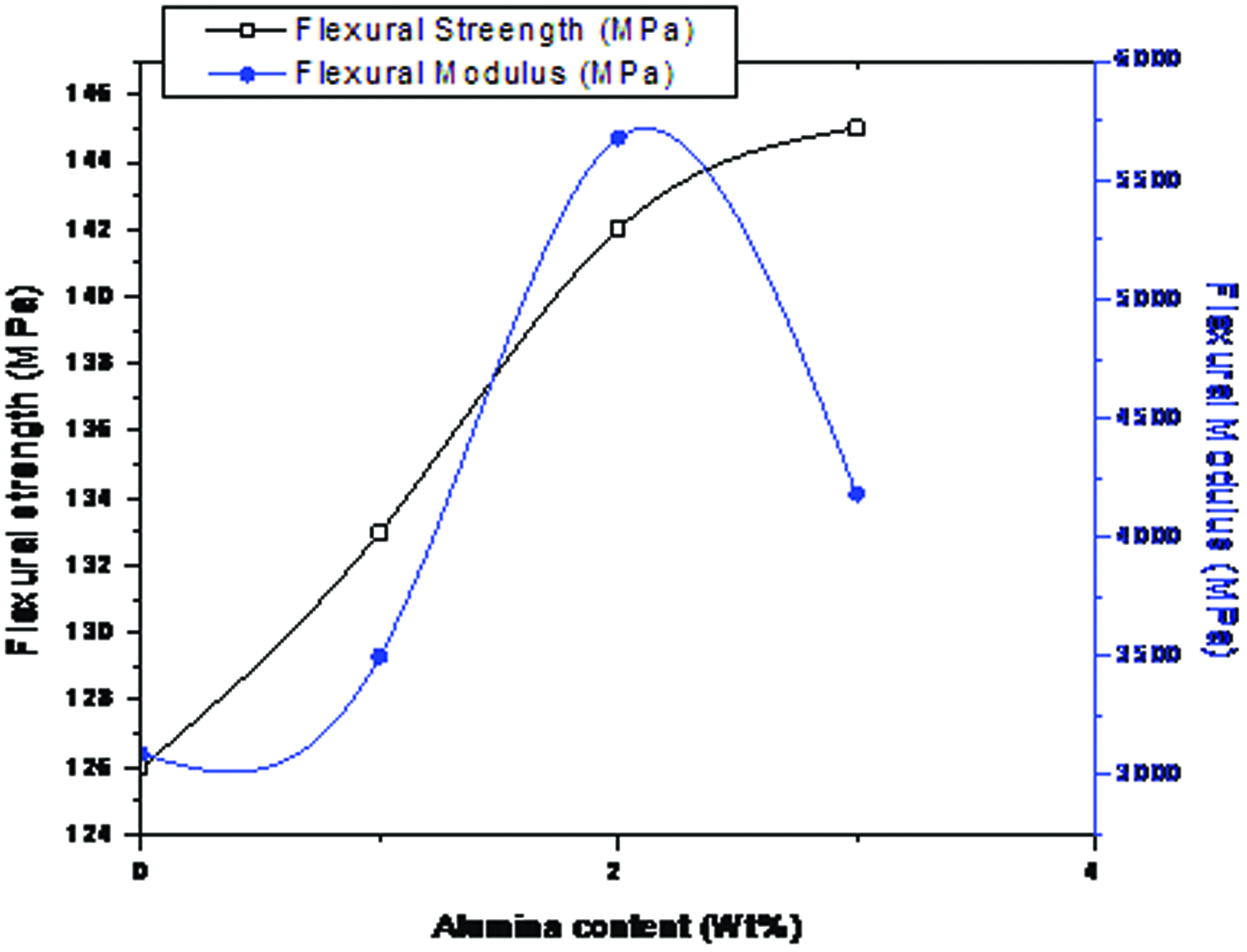
Impact Strength and Hardness
The variation of impact strength and hardness of carbon nanoplatelet chain PEEK composites with filler loading is presented in Figure 8. The observations of variation in impact strength show that the impact strength increases with increasing concentration of filler and attains maxima at 1% loading and decreases gradually later. The hardness of the composites also increases with the increase in concentration of the filler. The increase in hardness of composite is due to contribution from the hardness of the filler.
The variation of impact strength and hardness of carbon nanoplatelet chains filled PEEK composites with filler loading.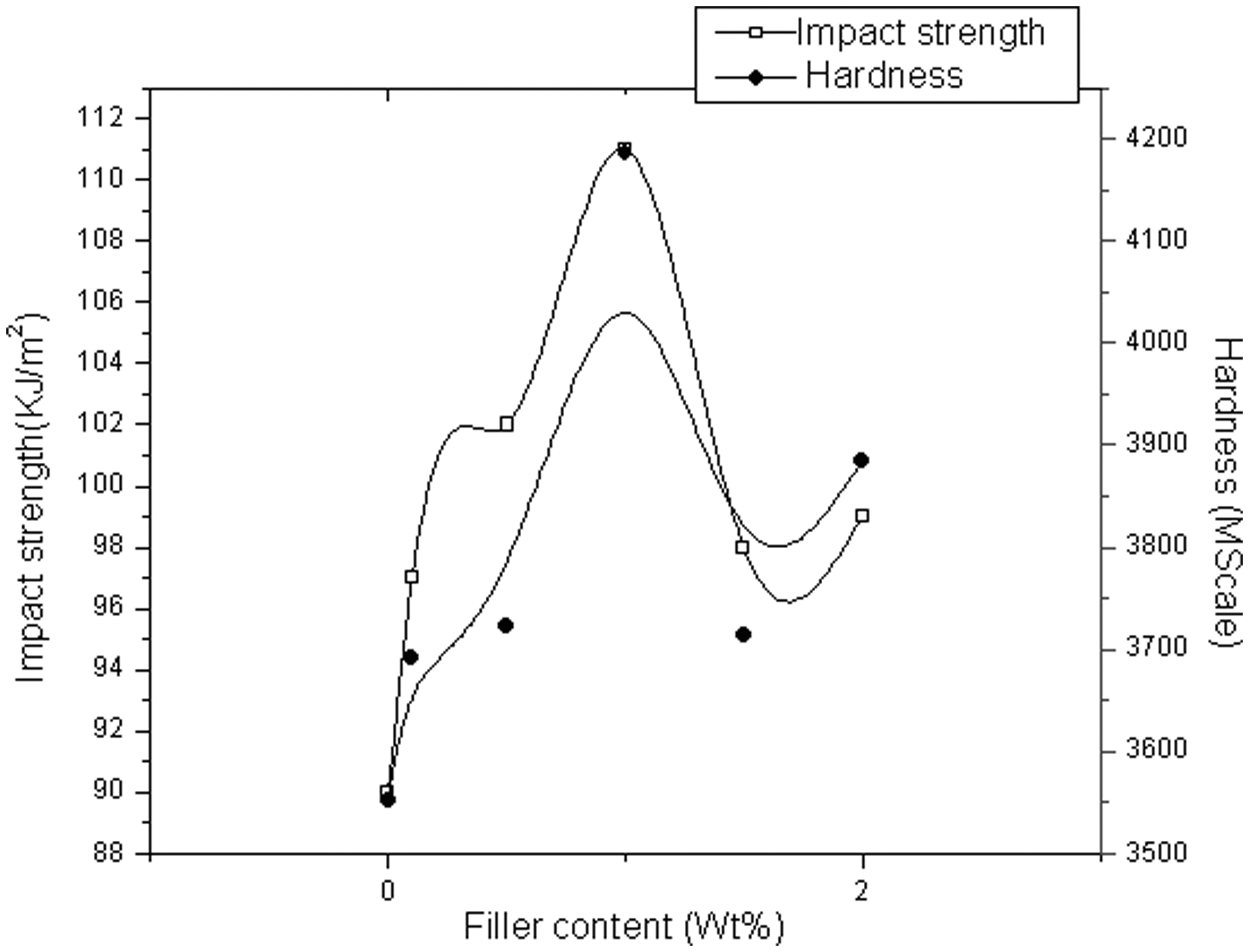
Figure 9 shows the variation of hardness and impact strength of alumina-filled PEEK nanocomposites as a function of filler loading. It is observed that hardness of nanocomposite increases with increase in concentration of nanofiller. Nanoalumina is found to be a good filler for stiffness enhancement of PEEK matrix. Smaller fillers have been reported to be more effective in increasing the hardness and lowering the wear rate [11]. The impact strength also increases with increase in concentration of fillers. The increase in impact strength in the filled system is because of the stress transfer through the polymer/filler interface to the fillers which can withstand high impact energy compared to neat PEEK matrix.
The variation of hardness and impact strength of alumina-filled PEEK nanocomposites as a function of filler loading.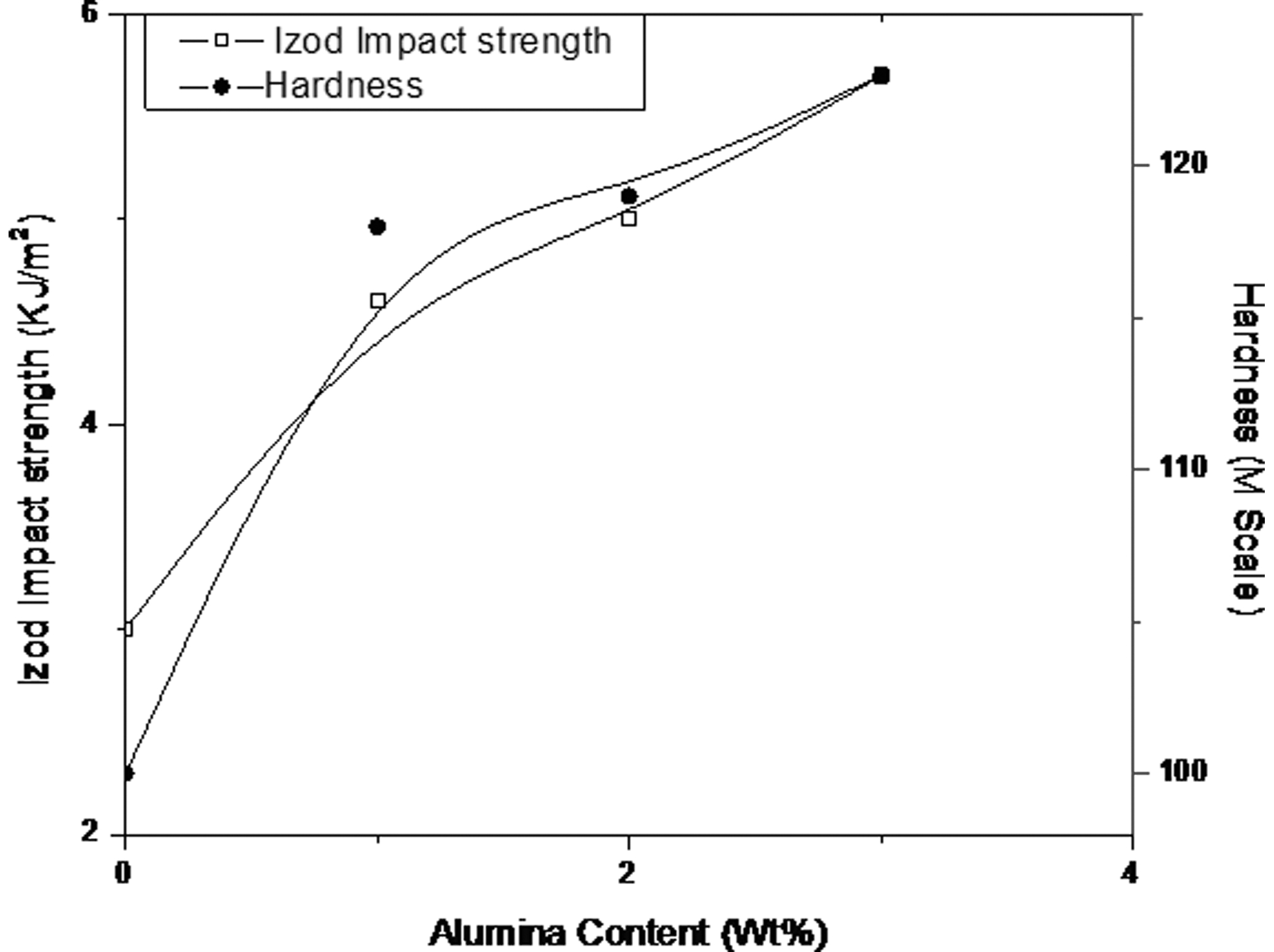
Due to the strong interface in alumina/PEEK system compared to that of carbon nanoplatelets/PEEK, the interfacial stress transfer will be more efficient in alumina-filled system than in weakly bound interface in carbon nanoplatelet. So Impact strength is higher in alumina-filled PEEK composites.
CONCLUSIONS
PEEK nanocomposites were developed using carbon nanoplatelet and nanoalumina as reinforcement. The tensile, flexural, and impact properties of the composites were increased by the nanoplatelet addition. The properties increased with nanofiller content up to 1% loading, the optimum concentration, and decrease in properties due to agglomeration were observed at higher filler loading. The TEM studies revealed the poor dispersion of nanoplatelets at higher filler contents. The nanoalumina composites showed higher mechanical properties due to the interfacial interaction between the alumina filler and PEEK matrix and the well-dispersed fillers.
Footnotes
ACKNOWLEDGMENTS
One of the authors Dr Seena Joseph is thankful to University Grants Commission, New Delhi for Dr D.S. Kothari Post-Doctoral Fellowship awarded for her work.