



Abstract
Middle leaders (MLs) often face the challenge of fostering teacher leadership (TL) amid complex dynamics of power and role expectations. This study aims to examine how MLs in private schools in the Arab States Region navigate sense-making processes to promote TL within their contexts. Drawing on qualitative case studies and interviews, data reveal a complex discourse on TL that exposes tensions between formal roles and more inclusive, informal leadership positions. Findings indicate that MLs perceive TL development as dependent on both individual and collaborative efforts, carefully balancing centralized and distributed leadership approaches. Influenced by senior leadership and teacher agency, MLs demonstrate a critical awareness of micro-politics, particularly in managing informal power dynamics. The study highlights practical implications for school leadership, suggesting that addressing these informal dynamics is crucial for effective TL development and sustainable leadership practices in educational settings
Introduction
Middle leaders (MLs), including subject coordinators, heads of department, curriculum coordinators, instructional coaches, and mentors, are increasingly recognized as crucial for effective school operations (Ghamrawi et al., 2023b; Tang et al., 2022). They perform multidimensional roles, supporting academic departments, fostering instructional innovation, and advancing teacher development (De Nobile, 2018). Their impact extends beyond administrative tasks to enhance education quality and student learning (Harris et al., 2019; Harris and Jones, 2017; Lárusdóttir and O'Connor, 2017). Lipscombe et al. (2023) reviewed middle leadership, highlighting MLs’ significant influence on teacher practice, team development, school reform, and professional learning. Ghamrawi (2013a) also noted MLs’ critical role in fostering teacher leadership, often surpassing that of school leaders. However, Lipscombe et al. (2023) argue that MLs’ professional learning has not sufficiently evolved to address role complexities.
Similarly, Harris et al. (2019) reviewed middle leadership literature from 2003 to 2017, highlighting a focus on ML roles, distributed leadership, professional identity, and their impact on school culture, while calling for more empirical research and theoretical analysis. In alignment with this, De Nobile (2018) pointed out the under-researched nature of middle leadership. Adding to this perspective, Ghamrawi et al. (2023b) noted that the role of MLs in teacher leadership development remains insufficiently understood.
Exploring the sense making of school MLs regarding their role in developing teacher leaders is crucial for several reasons. First, it provides insights into the subjective experiences and perceptions of these leaders, offering a deeper understanding of how they interpret and make sense of their responsibilities. This understanding is essential for tailoring support structures, training programs, and leadership development initiatives that align with their perspectives or aim to induce a conceptual change in their mindsets. Second, investigating the sense-making processes sheds light on the factors influencing the effectiveness of MLs in cultivating teacher leadership. This, in turn, can help educational institutions optimize their strategies to enhance teacher leadership development. It aligns with the broader goal of improving the quality of education by strengthening leadership at all levels within schools.
Despite the critical role that MLs play in educational settings, there remains a significant gap in the literature specifically addressing their experiences and sense-making processes pertaining to their roles in developing TL within the context of Arab states. This study aims to fill this void by examining the unique challenges and dynamics that MLs encounter in this context. Addressing this gap is vital for developing contextually relevant frameworks and strategies that empower MLs to effectively support their colleagues and enhance the overall educational environment. As such, it was guided by the following research question: How do experienced MLs make sense of their role in developing teacher leadership?
Theoretical framework
The conceptual framework of this study builds upon Weick's (1995) sense-making theory to elucidate the manner in which MLs in schools derive meaning within the context of their leadership roles, specifically concerning the development and fostering of teacher leadership. Sense-making, as defined by Weick (1995), encompasses a dynamic process of attributing significance, where ‘sense’ denotes meaning and ‘making’ refers to the active construction of understanding. Weick (1995) asserted that sense-making is intricately linked to the construction of roles and transpires within the ongoing execution of these roles, resulting in behaviors that actively contribute to shaping the environment. This process unfolds retrospectively when the prevailing state of the world challenges expected conditions.
Within organizational settings, individuals endeavor to coordinate actions and establish order to comprehend their own actions and identities amidst the complexities they face. In response, people collectively and individually undertake efforts to reduce complexity, forging new understandings and interpretations. Action is directed by the selection and interpretation of information from the environment, thereby influencing the evolution of culture, social structures, and routines over time (Coburn, 2005; Weick, 1995; Weick et al., 2005). Crucially, sense-making is portrayed not as a passive revelation of reality but as an active process in which actors purposefully engage and enact their environments.
This study positions Weick's (1995) sense-making theory within the broader theoretical framework, coupling it with the organizational insights from Meyer and Rowan (1977). This theoretical amalgamation enriches the understanding and interpretation of the theme-based analysis by acknowledging the interconnected nature of sense-making and organizational dynamics. The synergy between organizational dynamics and sense-making underscores how individuals within educational institutions organize and derive meaning from ambiguous inputs, actively implementing these interpretations to enhance the overall orderliness of their roles and environments.
Literature review
Teacher leadership
Leadership is crucial for school improvement and significantly affects student achievement (Leithwood et al., 1996). While the main driver of student success is the quality of teaching, effective leadership also plays a significant role in enhancing teacher motivation and classroom instruction (Fullan, 2001). Over time, the understanding of leadership in schools has evolved beyond traditional models, such as the ‘great man’ theory (Murphy, 2000), which centers leadership in the hands of a singular, often heroic figure. Contemporary perspectives increasingly emphasize distributed leadership frameworks that recognize leadership as a collaborative and dynamic process (Ghamrawi et al., 2023a, 2023b, 2023c, 2023d). Rather than being defined by one person, leadership in this model is shaped by the interactions, expertise, and contributions of various individuals across different roles within the school community (Harris, 2002; Liu, 2021). This approach acknowledges that leadership capacity can reside in both formal and informal roles, reflecting a shift toward a more relational and context-dependent view of leadership.
This shift has led to the rise of teacher leadership, where teachers take on both formal and informal roles within the school (e.g. Liu, 2021). Formal roles include positions like subject leaders, heads of departments, and curriculum coordinators (e.g. Ash and Persall, 2000; Pineda-Báez et al., 2019). Informal leadership involves teachers taking on roles outside their classrooms that impact their colleagues and the overall school climate. Ghamrawi (2013a) identified 15 informal teacher leadership roles, such as resource providers, mentors, change agents, and policy advocates, which involve peer learning, agentic leadership, and self-reflection. This study views teacher leadership as a dynamic function that shapes the broader school community, emphasizing its decentralized and non-hierarchical nature, separate from formal titles or positions (Cherkowski, 2018; Harris, 2020; Harris and Jones, 2019).
School middle leadership
Middle leaders (MLs) act as intermediaries between senior leadership, such as principals and deputy principals, and classroom teachers (Bush, 2016). Their roles often include advisors, subject coordinators, and heads of departments, while they remain actively involved in classroom teaching and team management (Edwards-Groves et al., 2020). De Nobile (2018) offers a comprehensive framework for middle leadership in schools (MLiS), based on a review of over 250 papers. This model, which uses an input/output structure, highlights key responsibilities like team leadership, relationship management, and effective communication. Inputs include principal support, professional development, school culture, and understanding of curriculum and pedagogy. Outputs include the quality of teachers, their attitudes, and student outcomes.
While traditional literature emphasizes school principals as primary drivers of teacher professional learning (Hallinger, 2005), MLs also play a crucial role in fostering professional development by creating supportive environments (Bryant et al., 2020; Dinham, 2007; Hairon et al., 2015). Busher (2005) identifies six functions for MLs: vision creation, department management, staff collaboration, departmental coordination, engagement in various arenas, and serving as role models.
Although there is substantial literature on principals developing teacher leadership (Crowther et al., 2009; Harris and Muijs, 2002; Nguyen et al., 2020), explicit references to MLs in this role are rare. Only few studies have noted MLs’ contributions to teacher leadership development (e.g. Fluckiger et al., 2015; Ghamrawi, 2013a, 2013b, 2013c, 2013d). Ghamrawi (2013a) even attributed the development of teacher leadership primarily to MLs, with minimal involvement from principals.
This study aims to address a critical gap in the literature concerning the role of middle leaders (MLs) in teacher development by exploring how MLs perceive their responsibilities in cultivating teacher leaders through a non-traditional approach: sense-making. Despite the recognition of MLs as pivotal figures in educational settings, their specific contributions and perceptions related to teacher leadership development remain underexplored. By employing a sense-making framework, this study seeks to enhance our understanding of the interactions between MLs and the processes involved in developing teacher leadership, ultimately contributing to a more comprehensive understanding for supporting effective middle leadership in education.
Context of the study
Educational systems in the AS are characterized by a blend of traditional and modern approaches, influenced by diverse cultural, political, and historical factors (Boujaoude and Faour, 2024). Leadership practices in this region are often shaped by unique cultural norms and expectations, which can impact how authority and responsibility are perceived and enacted within schools (Ghamrawi, 2016). In this region, private schools often operate with greater flexibility and autonomy compared to their public counterparts, which tend to adhere to more bureaucratic structures (Litz et al., 2020). This difference in governance impacts the leadership dynamics within these educational institutions (Ghamrawi, 2016). Private schools can implement innovative practices and adapt quickly to changes, fostering a more collaborative and responsive environment (Muasher and Brown, 2018). In contrast, public schools typically follow rigid protocols and hierarchical systems (Liu et al., 2021), which can constrain leadership roles and limit the scope for middle leaders to exercise agency in developing teacher leadership (Ghamrawi, 2023).
Middle leaders in schools, particularly within the Arab States’ educational system, include all individuals who occupy positions between the senior leadership team and classroom teachers in the school hierarchy (AllAbabidi and David, 2024; Ghamrawi et al., 2013, 2023a; 2024a. These roles typically encompass subject coordinators, department heads, grade-level leaders, and curriculum specialists, among others (Ghamrawi et al., 2023b). Their primary responsibilities involve translating school-wide strategic goals into actionable practices at the classroom level, ensuring alignment with national education standards and cultural values (Alshaboul et al., 2024a, 2024b). Middle leaders play a crucial role in mentoring teachers, fostering professional development, facilitating collaboration, and monitoring the implementation of curriculum and pedagogy (Ghamrawi et al., 2024b). They act as key communicators, bridging the gap between policy and practice while addressing the unique challenges of the region's educational context. Their work is essential in promoting instructional quality, enhancing student outcomes, and supporting continuous school improvement (Hammad et al., 2022).
Method
Research design
This study utilized a qualitative multiple case-study design, building on Yin (2014), and employed purposive sampling to include 12 experienced school MLs. In alignment with Stake's (1995) perspective, the case-study approach facilitated a thorough exploration of the complex and distinctive dynamics associated with the role of school MLs in fostering and cultivating teacher leadership. Termed ‘the quintan’ by Stake (1995, 2006), the chosen cases specifically delved into the leadership roles of highly experienced school MLs, each having served in their positions for over 10 years. The intentional selection of these participants underscores the case-study design's dedication to particularization rather than broad generalization, aligning with the Stake's (1995) methodological framework.
Participants and data collection
The board of an online community, which attracts educators from various levels and countries within the Arab States region, was approached to connect with experienced school MLs. According to the community board, there were 68 members in middle leadership roles, including heads of departments (HoD), subject leaders (coordinators), grade-level coordinators, and professional development (PD) coordinators, across six countries. Out of these 68 school-based MLs, only 39 had experience exceeding 10 years. All 39 MLs were invited to participate in the study, and 12 responded positively. Notably, all respondents who expressed interest in participating were all from private schools, despite 16 of the invited MLs being from public schools. Prior to their involvement, all participants signed an informed consent form describing the study's objectives, procedures, and ethical considerations to ensure their understanding and voluntary commitment to the research. Detailed participant characteristics are presented in Table 1.
Characteristics of participants in the study.
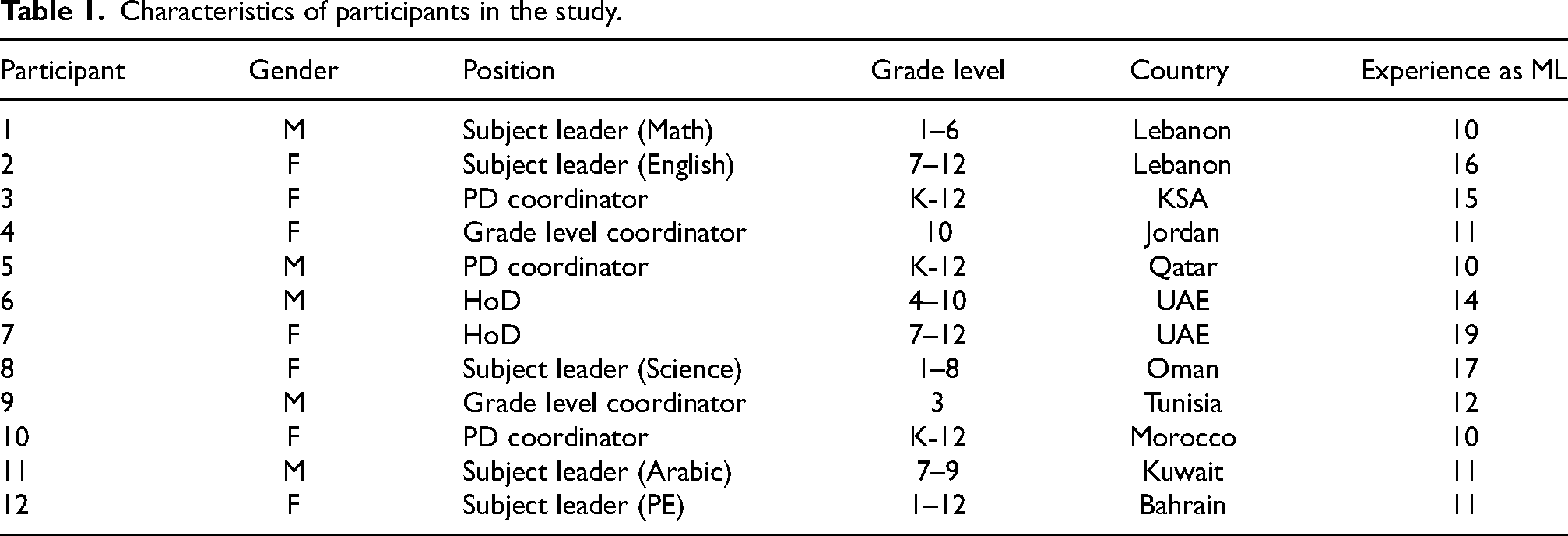
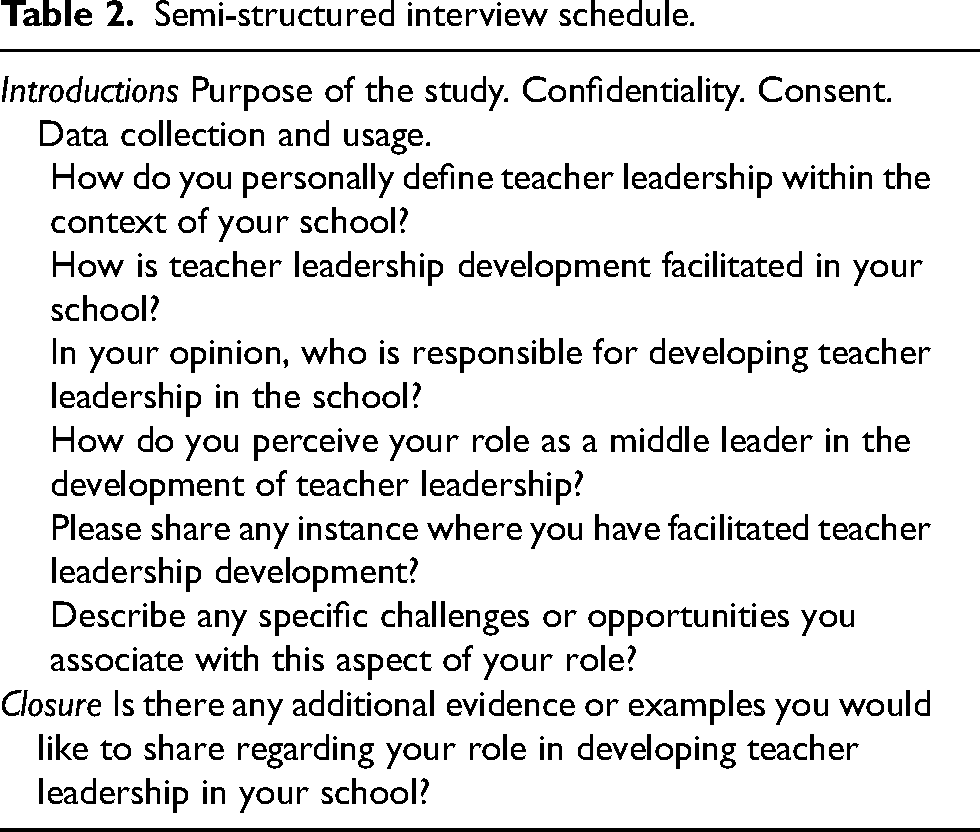
Semi-structured interviews were conducted with participants via Google Meet, with closed cameras. The interviews lasted 40 minutes on the average and were recorded and transcribed verbatim. The interview schedule is presented in Table 2.
Semi-structured interview schedule.
Data analysis
Data analysis involved the sequential application of open coding, axial coding, and selective coding, as recommended by Williams and Moser (2019). To validate the codes and themes, a peer debriefing approach was adopted. Two researchers independently coded the data and then cross-referenced and harmonized the codes and themes based on the recommendations of Scharp and Sanders (2019). During the analytical process, interview transcripts were dissected into smaller units, and labels (codes) were assigned. These codes were consistently compared and contrasted to identify similarities and differences. Subsequently, axial coding was employed to categorize the codes into groups, establishing connections between them. The final stage encompassed selective coding, allowing researchers to enhance and articulate the narrative by elevating the central coding to a more abstract level (Flick, 2009). This method reinforced the construction of significance and the narration of a story using the accumulated data, aligning with Charmaz (2014).
Findings
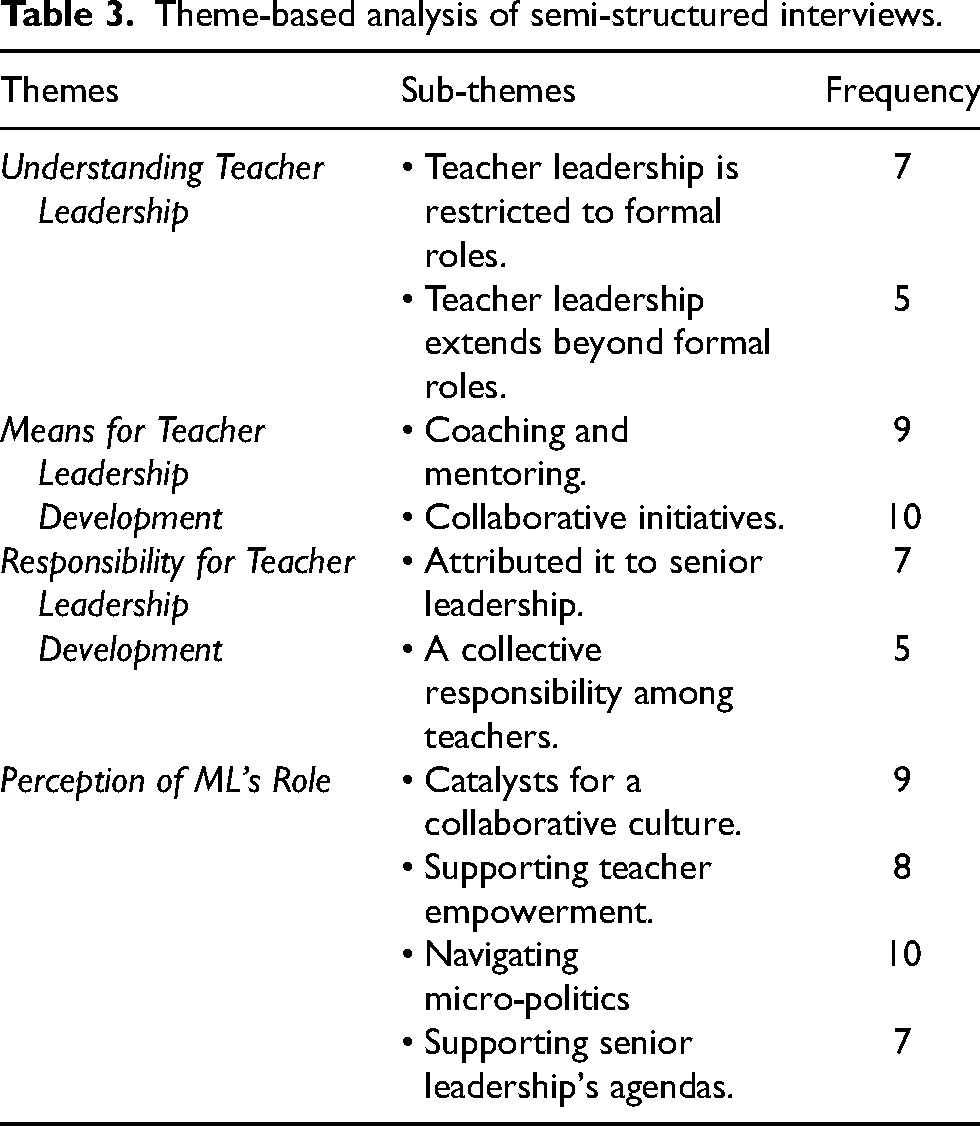
Theme-based analysis that was carried out on interview data is represented in Table 3.
Theme-based analysis of semi-structured interviews.
Understanding teacher leadership
The exploration of teacher leadership in the study revealed a dichotomy in perceptions, with some participants adhering to a conventional understanding linked to formal roles in the school hierarchy. The prevailing sentiment among these individuals was that teacher leadership is predominantly tied to official titles such as department heads or coordinators. Participant 8 succinctly captured this viewpoint, stating, “In our school, teacher leadership is mostly about those with official titles, like department heads or coordinators.”
Contrastingly, a more progressive and expansive perspective on teacher leadership emerged during the study, challenging the notion that it is confined solely to those in formal positions. Participant 2 provided a different perspective, stating, “I believe teacher leadership goes beyond titles. It's about influence, collaboration, and contributing to a positive school culture.”
In further support of this broader perspective, another participant, Participant 4, asserted, “Every teacher has the potential to be a leader in their own way, regardless of their official title. It is about contributing positively to the school community.”
Means for teacher leadership development
Middle leaders presented a versatile perspective on teacher leadership development, as highlighted by their insights that underscore the transformative roles of coaching, mentoring, and collaborative initiatives in influencing teacher leadership.
The significance of coaching and mentoring in nurturing teacher leadership emerged as a recurring theme among participants. Participant 1's reflections shed light on the profound impact of coaching: “Coaching is not just about skills; it is about building teachers’ capacities to lead. It is a personalized journey that instills confidence.” Another participant emphasized the pivotal role of the mentoring program in initiating teacher leadership, stating Teacher leadership starts with the mentoring program they receive once they join the school. It gives them a strong message as to what type of teacher the school is looking for: a leader or just a passive follower. (P6)
Furthermore, collaborative initiatives emerged as a cornerstone for teacher leadership development, according to the participants. The communal nature of leadership development was highlighted by one participant who stated, “Collaboration brings diverse perspectives. Initiatives like joint projects enable teachers to showcase leadership skills and learn from each other” (P8).
Responsibility for teacher leadership development
Revealing a spectrum of perspectives, participants provided nuanced insights into the attribution of responsibility for teacher leadership development, offering divergent views on the role of senior leadership and collective teacher responsibility in this process.
For some participants, a traditional viewpoint emerged, placing the primary responsibility for teacher leadership development on senior leadership. Participant 12 succinctly expressed this sentiment, stating, “The onus is on the formal leaders—the senior leadership. They set the tone and provide opportunities for teacher leadership.” Moreover, Participant 9 stated, “Senior leaders are the ones who create the structures that foster the cultivation and nourishment of teacher leadership.”
In contrast, fewer participants embraced a more contemporary and inclusive stance, highlighting a collective responsibility among teachers for the development of teacher leadership. Participant 5 articulated this perspective, stating, “Each teacher plays a role in developing their leadership skills, both for themselves and their colleagues, before external input comes into play.” Another participant stated, Teacher leadership is a shared journey where each teacher contributes to the collective growth of the entire teaching community. It is about proactively engaging in continuous self-improvement, and this is in essence what encourages the emergence of leaders at every level. (P1)
Perception of middle leaders’ role
Participants articulated complex perspectives on the perception of Middle Leaders’ roles in developing teacher leadership. They suggested roles in catalyzing teacher collaboration, empowering teachers, and navigating the complex terrain of micro-politics; however, within the framework of the agendas set forth by senior leadership.
To begin, participants emphasized the indispensable roles of MLs as key catalysts for fostering a collaborative school culture. One participant asserted, “As a ML, I set the tone for effective communication, creating an environment where ideas are shared and valued. They are the glue that binds a collaborative ethos” (P7). Adding depth to this perspective, Participant 9 highlighted the role of MLs as facilitators of collaboration, stating, “Middle Leaders act as conduits, facilitating the flow of ideas and expertise between different levels of the teaching staff. They are instrumental in weaving a tapestry of collaboration that extends beyond individual classrooms.” Moreover, Participant 12 shed light on the empowering aspect of ML roles, noting, “MLs are enablers, empowering teachers to take ownership of their professional development. They provide the necessary support and resources for teachers to thrive as leaders in their own right.”
Furthermore, MLs perceived their role in advancing teacher empowerment and cultivating collaborative cultures as derived from senior leadership agendas and directives. This alignment underscores their involvement in the process, though it is essential to note that they did not initiate or create it. Consequently, they explicitly associated their responsibilities with navigating the complexities of micro-politics within their schools. One participant articulated this, saying, “MLs align with the school's goals and support the senior leadership in achieving their objectives, including development of teachers as leaders. As a ML I translate the broader vision of senior leadership into actionable steps” (P11).
In the operational contexts of MLs, micro-politics—characterized by complex power dynamics and relationships—significantly influences their approach to fostering teacher leadership. MLs demonstrate a nuanced understanding that promoting teacher leadership is deeply connected to the school's contextual factors. They strategically navigate advocacy, knowing when to assert influence strongly and when to adopt a more delicate approach, especially with certain teachers. As Participant 7 noted, “I have to understand the message from senior leadership as to whether I am supposed to empower a given teacher or not. It is very political, a lot of power struggle comes along.”
Middle leaders and sense-making
MLs traverse conflicting pressures between senior leadership and teacher agency through a complex sense-making process that allows them to balance their responsibilities within existing hierarchies. The exploration of teacher leadership revealed a dichotomy in perceptions—some participants associated it primarily with formal titles like department heads (Participant 8), while others advocated for a broader understanding emphasizing influence and collaboration (Participant 2). This variance highlights the sense-making challenges MLs face as they strive to support their colleagues while reconciling differing views on leadership. For instance, Participant 4 noted, “Every teacher has the potential to be a leader in their own way,” illustrating how MLs advocate for teacher agency while still aligning with senior leadership expectations.
The importance of coaching and mentoring further underscores how MLs actively construct meaning in their roles. Participant 1 reflected, “Coaching is not just about skills; it is about building teachers’ capacities to lead,” showcasing how MLs interpret their support as essential for nurturing teacher leadership. Additionally, the communal nature of leadership development emerged as a crucial aspect of their sense-making, with Participant 8 stating, “Collaboration brings diverse perspectives,” emphasizing MLs’ role in facilitating joint initiatives that allow teachers to demonstrate their leadership skills.
However, the perceived responsibility for teacher leadership development varies among participants, reflecting different sense-making perspectives. While some view senior leadership as the primary force behind creating structures for teacher leadership (Participant 12), others, like Participant 5, argue for collective responsibility, stating, “Each teacher plays a role in developing their leadership skills.” This divergence illustrates the complexity of MLs’ sense-making processes, which require them to navigate the expectations of senior leadership while empowering their colleagues to take ownership of their professional growth. As Participant 11 noted, “MLs align with the school's goals and support senior leadership in achieving their objectives,” highlighting their position within the organizational hierarchy.
Ultimately, MLs’ sense-making processes in this context reveal a dynamic interaction of advocacy, reflection, and strategic maneuvering of micro-political landscapes within their schools. They must carefully assess when to assert their influence to empower teachers and when to adhere to directives from senior leadership, illustrating the delicate balance they must maintain in fostering a collaborative culture that supports both teacher agency and organizational goals. As Participant 7 articulated, “I have to understand the message from senior leadership as to whether I am supposed to empower a given teacher or not,” underscoring the political complexities inherent in their role and the critical nature of sense-making in navigating these challenges.
Discussion
This study investigated the sense-making processes of middle leaders within the Arab States Region, focusing on their leadership responsibilities in developing teacher leaders in schools. Using a qualitative case study design, the research conducted semi-structured interviews with 12 middle leaders. The central research question guiding this study was: How do experienced middle leaders engage in the sense making of their role in developing teacher leadership?
The thematic analysis of semi-structured interviews provided valuable insights into MLs’ perceptions and sense making of their role in teacher leadership development. The exploration of teacher leadership uncovered a divergence in perspectives, reflecting an ongoing discourse regarding whether teacher leadership is a functional role or a formal position. This discourse runs parallel to that dominating the literature (Fairman and Mackenzie, 2016; Ghamrawi, 2013a, 2013b, 2013c, 2013d; Ghamrawi et al., 2023c, 2023d; Ghamrawi and Abu-Tineh, 2023; Harris and Muijs, 2002; Shal et al., 2018, 2019, 2024a, 2024b, 2024c, 2024d; Wenner and Campbell, 2017; York-Barr and Duke, 2004). In the same vein of the international literature, while some participants adhered to a traditional belief that teacher leadership is confined to formal roles; others embraced a more modern and inclusive understanding, recognizing the potential for every teacher to contribute positively to the school community, irrespective of official titles, as is the case with several authors (e.g. Harris and Muijs, 2002; Shal et al., 2018, 2019, 2024a, 2024b, 2024c, 2024d; Wenner and Campbell, 2017; York-Barr and Duke, 2004).
Formal positions within educational hierarchies, such as department heads or administrative roles, often come with prescribed responsibilities and structured authority. Teachers occupying these positions are explicitly designated as leaders, wielding influence over curriculum decisions, policy implementation, and broader school initiatives. This formalized structure provides a clear framework for leadership but may risk limiting the scope of teacher leadership to administrative functions, potentially overshadowing the rich tapestry of informal leadership that unfolds within classrooms and among peers. Linking teacher leadership to informal positions is paramount for fostering a culture of empowerment, innovation, and risk-taking within schools. When teacher leadership is exclusively tethered to formal roles, a limited number of individuals hold the reins of influence, potentially stifling the wealth of untapped leadership potential within the broader teaching community. By recognizing and promoting leadership in informal positions, a more extensive pool of teachers can be empowered to contribute their unique perspectives and talents. This democratization of leadership not only enriches the teaching profession but also creates a dynamic and collaborative environment where a multitude of voices can shape the direction of education.
Parallel to the literature (e.g. Wenner and Campbell, 2017) the findings reveal a layered relationship between formal and informal leadership roles within educational hierarchies, where traditional roles like department heads or administrative figures provide structured authority and responsibility but may unintentionally narrow the broader impact of teacher leadership. Formal roles are essential for clarifying accountability in areas like curriculum management and policy execution; however, they risk reducing leadership to administrative functions, sidelining the informal yet profoundly influential leadership that emerges naturally among teachers in classrooms and peer interactions. This informal leadership, often expressed through mentoring, peer guidance, or innovative practices, represents an adaptive approach that directly meets the needs of students and the educational environment. Expanding leadership definitions to encompass these informal roles allows a more diverse array of teachers to exercise influence, contributing insights and creative strategies that enrich the school's collaborative culture. Embracing this more inclusive approach strengthens the school community, enabling it to adapt effectively and create a resilient educational culture capable of addressing complex challenges beyond what a strictly hierarchical model can achieve. This aligns with the literature that emphasizes the importance of distributed leadership models, which recognize the value of both formal and informal leadership roles in fostering a collaborative, dynamic, and adaptive school culture capable of driving continuous improvement and innovation (e.g. Gul et al., 2019; Lárusdóttir and O’Connor, 2017).
On the other hand, teacher leadership development emerged as a manifold process, as elucidated by participants. The study highlighted the individualized and empowering nature of coaching, emphasizing its capacity to build teachers’ leadership skills and instill confidence. This finding comes parallel to Gul et al. (2019) and Rhodes (2012), who both emphasized the role played by mentoring and coaching in developing the leadership potential of educators. The significance of one-on-one guidance and support in honing leadership abilities was underscored, revealing coaching as a pivotal catalyst for fostering self-reflection and continuous growth among teachers.
Furthermore, the participants in the study articulated the transformative impact of personalized feedback and guidance provided by coaches being instrumental in helping teachers overcome challenges, refine their instructional approaches, and cultivate a heightened awareness of their leadership roles within the broader educational context. This aligns with the findings of Gul et al. (2019), who noted the positive correlation between effective coaching and increased teacher self-efficacy, ultimately contributing to enhanced leadership capabilities.
In contrast to the individualized nature of mentoring and coaching, participants articulated the efficacy of collaborative methodologies for teacher leadership development. The consensus among participants underscored the notion that joint engagement in projects serves as a catalyst for the formation of vibrant learning communities. Within these communities, educators are afforded the opportunity to cultivate leadership skills organically through meaningful interactions with their peers and collective experimentation. The synergy derived from collaborative endeavors is often conducive to risk taking and experimentation. The collaborative paradigm, as advanced by the participants, thus transcends the confines of individual mentorship, positioning itself as a transformative force in nurturing a cadre of teacher leaders who draw inspiration and expertise directly from their collaborative networks. This perspective aligns with the literature, emphasizing the communal aspects of professional development as indispensable components for teacher leadership development (Hairon et al., 2015; Ghamrawi et al., 2023a; Lee and Ip, 2023; Wilson, 2016). All of these studies and many other converge on the power of collaborative communities as means for the development of informal teacher leadership in school settings.
These findings deepen the discourse on teacher leadership by highlighting the layered complexities inherent in educational settings within the Arab States. Traditional leadership models, often rigidly hierarchical, risk constraining the emergent, informal leadership dynamics that thrive through collaborative networks and peer-driven initiatives. The study reveals the dual importance of individualized coaching, as well as collaborative, project-centered endeavors, in fostering environments where teachers can exercise agency beyond formally designated roles. While prior studies have underscored the value of coaching and professional learning communities (e.g. Hairon et al., 2015; Lee and Ip, 2023) the nuanced potential of these frameworks, when tailored to diverse educational ecosystems, remains underexplored. This study proposes that advancing teacher leadership in the Arab States requires frameworks attuned to both structured hierarchies and organic, contextually adaptive pathways for leadership growth. Ultimately, this study contributes to a redefined understanding of teacher leadership by suggesting that dynamic, context-sensitive models of development are crucial to empowering educators in shaping cohesive, and progressive school cultures.
The attribution of responsibility for teacher leadership development revealed a tension between centralized and distributed leadership models. Parallel to the literature (e.g. Nguyen et al., 2020; Wilson, 2016), some participants attributed primary responsibility to senior leadership, acknowledging their role in setting the tone and providing opportunities. In contrast, others advocated for a more collective responsibility among teachers. This tension echoes the ongoing discourse in the literature surrounding who bears the onus for fostering teacher leadership (Cooper, 2023; Ghamrawi, 2013a; Liu, 2021). Synthesizing these diverse perspectives, the sense-making of the role held by MLs appears to reside at the intersection of two crucial spheres: the influence of senior leadership and the collective willingness of teachers to engage in a collaborative community (teacher agency). However, an intriguing observation emerges regarding the role of MLs themselves. Rather than distinctly carving out a clear role, MLs positioned themselves as instrumental agents contributing to the larger narrative without asserting a bold and distinct role in teacher leadership cultivation. This is a finding that has not been noted earlier in the literature of teacher leadership.
Building on this, the study presents a pivotal insight into the role of MLs as facilitators rather than assertive drivers in the promotion of teacher leadership. This intermediary positioning suggests a unique, mediating function of MLs who operate at the juncture of influence and agency, acting as conduits through which both senior leadership's strategic direction and teachers’ collaborative initiatives are channeled. The reluctance or inability of MLs to delineate an independent, authoritative role within the framework of teacher leadership development reveals an adaptive approach to leadership that aligns with but does not overpower established structures. This positioning of MLs underscores an unexplored dimension in the literature, suggesting that the role of MLs in teacher leadership may be less about direct authorship of leadership initiatives and more about sustaining an environment conducive to the organic evolution of teacher agency and capacity. This finding enriches the conversation around distributed leadership by introducing a variant that incorporates both the flexibility of influence and the constraints of organizational structure.
Furthermore, MLs portrayed themselves as champions of collaboration and empowerment, acknowledging their role in shaping effective communication and cultivating a collaborative ethos within the school. However, this narrative also revealed the complex interplay of micro-politics within the operational landscape of MLs. Implicit in their depiction of their roles was the acknowledgment that their actions were shaped not only by explicit directives from senior leadership but also by subtle messages conveyed. That is to say, while MLs play a significant role in fostering teacher leadership, the study indicates that a sophisticated understanding of the power dynamics within the school environment shapes their actions. This astute and measured approach by MLs exemplifies their inclination to fostering teacher leadership while navigating the complexities of micro-politics. The findings underscore the importance of acknowledging and addressing informal power dynamics to effectively implement initiatives promoting teacher leadership within educational institutions. This comes in line with Ball's (2016) view on power and leadership is complex, suggesting that leaders must be critically aware of the hidden power structures and the ways they might unconsciously uphold or challenge them.
Power and leadership have been explored extensively in the scholarly literature and there is an agreement that power influences leadership practices in schools (Blose and Khuzwayo, 2023; Randall, 2012). The findings of this study resonate with the aforementioned works, affirming the pervasive influence of power on leadership practices in educational settings. In fact, the study underscores that middle leaders engage proactively in scanning the leadership landscape. They exhibit a keen awareness of the micro politics at play within their educational contexts, adeptly analyzing these dynamics to inform their strategic actions. Particularly noteworthy is the discernment exercised by middle leaders in selecting teachers for leadership development, suggesting a deliberate and thoughtful approach to identifying individuals who can benefit most from skill enhancement.
The findings elucidate the pivotal role of MLs as astute architects of power dynamics within their educational milieu. Rather than adhering passively to top-down mandates, they strategically traverse relational complexities, enhancing their agency in shaping leadership practices. Their discerning selection of teachers for leadership development underscores a sophisticated understanding of how power operates, fostering a culture of empowerment and collective efficacy. This study advances the discourse on educational leadership by highlighting how middle leaders fundamentally influence the interaction of power within schools, redefining the contours of teacher leadership.
Limitations and suggestions for future research
The study acknowledges inherent limitations, particularly the small participant pool, which could be criticized for limiting the generalizability of findings. While some argue that as a case study, this research may not inherently contribute to existing literature, it's crucial to recognize the potential theoretical contributions of case studies. Scholars like Robert Yin, Sharan Merriam, and Robert Stake suggest that case study methodology can generate theories, as highlighted by Yazan (2015). Siggelkow (2007, cited in Yazan, 2015) argues that even a single case study has the power to challenge widely held views. In this context, with the thick description of the methodology followed, the study not only enriches literature on middle leaders’ sense-making in terms of teacher leadership development but also potentially contributes to the broader discourse on the role played by middle leadership in the architecture of teacher leadership. Despite these constraints, the study significantly contributes by providing in-depth insights into middle leaders’ sense-making and their construction of meaning in teacher leadership development.
Moreover, it is important to note that the study focused exclusively on MLs in private schools within the Arab States region. Given the more bureaucratic measures often found in public schools (Ghamrawi, 2016), the results may differ in that context. This disparity highlights the need for further research that includes MLs from public schools to explore how differing organizational structures influence sense-making processes.
As such, future research should broaden the scope by including middle leaders (MLs) from public schools across the Arab States to capture the impact of varying organizational structures on their sense-making processes. Investigating how the bureaucratic frameworks characteristic of public schools shape the roles, responsibilities, and leadership development of MLs could provide valuable insights into how leadership practices adapt to different educational environments. Additionally, comparative studies between private and public school MLs would further illuminate the influence of contextual factors on teacher leadership development. Expanding the participant pool and diversifying school types would enhance the generalizability of findings and contribute to a more comprehensive understanding of middle leadership within the diverse educational landscape of the Arab States.
Conclusion
This study elucidates the complexities surrounding the roles of MLs and their influence on TL development within the AS Region. The findings highlight the imperative for a balanced approach that values both formal and informal leadership roles, advocating for the democratization of leadership to unlock the untapped potential within the teaching community. For school leaders and policymakers, these insights indicate that fostering a collaborative environment can significantly enhance leadership practices. Implementing robust coaching and mentoring programs can empower educators, instilling confidence and promoting organic growth among teachers. Moreover, addressing the tension between centralized and distributed leadership models proves essential; leaders must devise structures that support teacher agency while aligning with the overarching objectives set by senior leadership.
The significance of understanding informal power dynamics within schools emerges as a critical factor. School leaders should actively cultivate a culture that values input from all educators, allowing middle leaders to adeptly navigate micro-political landscapes and identify individuals poised for leadership roles. The implications of this research apply for the AS region, but may be useful to be considered on a global scale with future research initiatives. Acknowledging and promoting diverse leadership pathways fosters more inclusive environments that support the development of teacher leadership across various cultural and organizational contexts. Ultimately, this study advances our comprehension of teacher leadership development, paving the way for future inquiry and practice both within the Arab States and beyond.
Footnotes
Declaration of conflicting interests
The authors declared no potential conflicts of interest with respect to the research, authorship, and/or publication of this article.
Funding
The authors received no financial support for the research, authorship, and/or publication of this article.
Informed consent
All participants in this study were informed of the purpose of the study and how data will be used. They were assured that their identities would remain anonymous across the study.

Authors’ biographies