




Abstract
This study explored the dimensionality and measurement invariance of a multidimensional measure for evaluating teachers’ perceptions of the quality of their relationships with principals at the dyadic level. Participants were 630 teachers (85.9% female) from 220 primary and 204 secondary schools across the Netherlands. Teachers completed the 10-item Principal–Teacher Relationship Scale (PTRS) for their principals. Confirmatory factor analyses (CFA) provided evidence for a two-factor model, including a relational Closeness and Conflict dimension. Additionally, multigroup CFA results indicated strong invariance of the PTRS across school type, teacher gender, and teaching experience. Last, secondary school teachers and highly experienced teachers reported lower levels of Closeness and higher levels of Conflict in the relationship with their principal compared to primary school teachers and colleagues with less experience. Accordingly, the PTRS can be considered a valid and reliable measure that adds to the methodological repertoire of educational leadership research by focusing on both positive and negative aspects of dyadic principal–teacher relationships.
Keywords
Introduction
One profession that probably always will make the list of most stressful jobs is teaching (Innstrand et al., 2011). This is not only true globally, but also for countries such as the Netherlands: changes in society, increasingly diverse classrooms, and paperwork make teachers’ work today more taxing than at any other time (Abós et al., 2019; den Brok et al., 2017; Skaalvik and Skaalvik, 2015). Undoubtedly, some teachers experience relatively little trouble coping with such challenges. Yet, for many others, especially those in their early career stages, such job circumstances mark the beginning of a vicious cycle of stress and burnout, causing some of the highest turnover rates ever (Perrone et al., 2019). Providing resources to increase teachers’ ability to cope with job-related stress, therefore, seems a crucial goal for policymakers to retain qualified teachers amid lingering shortage.
Prior studies on organizational management have pinpointed several factors that protect teachers against ill-being and work stress, among which are principal supportive behaviours (cf. Collie et al., 2016; Edgerson et al., 2006; Moolenaar et al., 2010; Nguyen et al., 2019). As the leaders of a group of qualified teachers, principals may occupy an important position in creating a safe and open climate by empowering staff, building trust, and promoting supportive environments in which teachers’ input is valued (Collie et al., 2016; Hoy et al., 2002; Musah et al., 2018; Price, 2012). Conceivably, principals’ caring relationships with teachers lie at the core of such supportive workspaces. This is especially true in the Netherlands, where principals, due to a highly decentralized governance structure, have to rely on their team of teachers to improve teacher practices and student learning outcomes within their schools (cf. Thoonen et al., 2012).
Following the basic tenets of leader–member exchange (LMX) theory (Dansereau et al., 1975; Graen and Uhl Bien, 1995), principal–teacher relationships have commonly been described as distinct, dyadic working relationships that may vary in quality, depending on the way resources are exchanged between leaders (i.e. school principals) and members (i.e. teachers). Empirical research has indicated that high-exchange relationships, characterized by mutual trust, respect and influence, may provide a solid basis for developing mutual obligations between teachers and principals that may reinforce trust, innovative teacher behaviour and organizational citizenship behaviour (Comstock et al., 2021; Musah et al., 2018; Ng, 2017; Vermeulen et al., 2022; Wang et al., 2005). In contrast, low-exchange relationships, in which elements such as loyalty, professional respect or honesty are largely absent, have been shown to result in antagonistic outcomes such as indifference, distance, and low expectations of extra-role behaviour (Da and & Liang, 2004; Ng, 2017). Such negative teacher-level outcomes may not only spill over to hamper the school's organizational climate, but its overall performance as well (Brief and Weiss, 2002).
Although the educational management literature is replete with studies on the importance of principal–teacher relationships, there remain gaps in current knowledge regarding the nature of this construct and its measurement. Thus far, the majority of studies using the theoretical lens of LMX have operationalized principal–teacher relationships in terms of dyadic working relationships or social exchanges, using measures such as the LMX-7 or LMX-MDM that predominantly tap positive relationship qualities (Liden and Maslyn, 1998). Less research recognizes, however, that the bond between principals and teachers might extend the working environment to include personal and affective aspects as well. Hailing from attachment theory, research from the field of student–teacher relationships has repeatedly suggested that the affective quality of dyadic bonds within school may provide the key infrastructure to healthy development and performance (Pianta et al., 2003; Roorda et al., 2017). Furthermore, this body of research disclosed the importance of using measures explicitly covering both positive relationship qualities that tap the degree of warmth, open communication and self-disclosure in the relationship (i.e. Closeness), as well as negative aspects that reflect the degree of distrust, suppressed anger and negativity in the relationship (i.e. Conflict; cf. Koomen et al., 2012). Unfortunately, multidimensional instruments that focus on positive and negative aspects of the emotional bond between principals and teachers rather than social work exchanges and mutual contractual obligations does, to our knowledge, not yet exist.
There is also a lack of knowledge about whether principal–teacher relationships operate differently across different settings and groups. Estimating the factorial equivalence for measures of principal–teacher relationships is an important requisite, as potential differences in the quality of such relationships across school settings, genders, and teaching experience have frequently been assumed in the literature. Regarding school settings, for instance, most studies have mainly focused on relationships in primary school (Moolenaar et al., 2010; Price, 2012). However, such relationships may function differently in secondary education. Compared to secondary school teachers, educators in primary school usually teach only one classroom each year, have to deal more often with behaviour issues in class, and tend to put in more-after school hours due to shorter planning periods. Furthermore, primary schools are smaller than secondary schools and usually employ fewer teachers, resulting in more opportunities for interpersonal contact (Hargreaves, 2000). Accordingly, there may be variation in the importance of principal–teacher relationship quality between primary and secondary education, but such differences can only be explored if instruments of relationship quality operate similarly across school types.
A similar issue can be raised regarding gender. Research suggests that males and females are likely to differ in terms of the quality of relationships they encounter (Spilt et al., 2012). Whereas women may take an emotion-focus regarding their relationships and value close relationships for their emotional and expressive qualities, men tend to be problem-focused and use relationships for accomplishing instrumental tasks or conveying information (Wood and Inman, 1993). Furthermore, within schools, female teachers may perceive greater collegiality among teachers (Huang and Fraser, 2009) and experience closer and less conflictual relationships with students than male teachers (Spilt et al., 2012). Possibly, these gender differences extend to principal–teacher relationships as well.
Last, there might be a reason to believe that there may be differences in the way novice and more experienced teachers perceive the relationship with their principals. In two studies taking an LMX theoretical approach, teachers with more working experience in education were found to report a slightly higher quality of LMX in relation to their principals than those with fewer years of teaching experience (Berkovich and Eyal, 2021; Runhaar et al., 2013). Additionally, Tse et al. (2008) had a sample of 215 manager–employee dyads rate their team climate and interpersonal exchange relationships, and found employees with more experience to have more workplace friendships than less experienced counterparts. Although such empirical findings suggest that more experienced teachers may experience higher-quality relationships with their principals, a prerequisite for such a hypothesis in terms of measurement invariance has barely been tested empirically.
Present study
The current study used data from primary and secondary school teachers in the Netherlands to gain insight into the quality of teacher–principal relationships. Three specific aims were addressed. First, we explored the dimensions of teacher-perceived principal–teacher relationship quality, which can be considered an important preliminary step in validating a measure. Different from prior studies, which primarily relied on measures that predominantly tap positive aspects of dyadic working relationships, we conceptualize principal–teacher relationships as affectional bonds between teacher and principal that are unique and reflect both positive and negative qualities (cf. Pianta et al., 2003). Accordingly, we evaluated a multidimensional measure, the Principal–Teacher Relationship Scale (PTRS), including a positive (Closeness) and negative relationship dimension (Conflict). Second, we explored measurement invariance of the PTRS across school type, teacher gender, and teaching experience. Third, we compared latent variable mean differences regarding school type, gender, and teaching experience. Based on the current body of evidence, we expected that primary school teachers, females, and more experienced teachers report higher-quality relationships with their principals than secondary school teachers, males, and less experienced teachers.
Method
Study context
School principals and their teachers are situated both in an organizational and cultural context (cf. Lee and Hallinger. 2010). As such, the way teachers build relationships with their principals may, in part, be dependent upon larger governance and cultural patterns that may exist within a particular country. This study was conducted in the context of primary (kindergarten–grade 6) and secondary schools (grades 7–12) across the Netherlands. Following the typology of governance in education of Windzio et al. (2005), the Dutch education system can be considered a good example of a private governance form. In this decentralized education system, the central government is mainly responsible for safeguarding high-quality education, with lump sum as the dominant financing system, whereas school boards and principals hold the autonomy to define, guarantee, and pay accountability for such quality standards (Frankowski et al., 2018). To manage this form of governance and accountability, it might be increasingly important for school boards, and principals in particular, to improve teacher practices, collaborative decision-making, and student learning outcomes by strengthening their relationships with their teachers in school (cf. Thoonen et al., 2012). As such, exploring the quality of principal–teacher relationships within this governance structure may be particularly relevant.
Dutch education is compulsory for children between the ages of 5 and 16 years. Most children, however, start school when they are four and continue their primary education until they are approximately 12 years old (grade 6), where they are usually taught by one or two teachers (in the case of part-time employment). Prior to entering secondary education, students are allocated to different tracks. Admission to these tracks is based on primary school teachers’ track recommendations and a final standardized test. In secondary school, teachers usually teach children in multiple classrooms and have expertise in about one or two subjects. As secondary schools in the Netherlands tend to be larger than primary schools, there might be less opportunity for secondary school teachers to interact with their colleagues, team leaders and principals, thereby potentially affecting the overall quality of the principal–teacher relationship. Given the potential differences between primary and secondary schools in terms of governance and culture, we included both primary and secondary school teachers in our sample.
Participants and procedure
This study was conducted from February to April of the consecutive school years 2017–2018 and 2018–2019. After receiving permission from the institutional Ethics Review Board, approximately 1150 primary and secondary school teachers were approached to participate via telephone and e-mail, social media, and face-to-face messages. After providing active consent, teachers were asked to complete a 15-minute digital survey within 2 weeks, which involved the PTRS and some background questions. Ultimately, 74.5% of all invited teachers (N = 630) returned completed surveys.
Teachers (85.9% female, Mage = 39.02 years, SD = 10.89, range = 19–66 years) were drawn from approximately 220 primary schools and 204 secondary schools in rural and urban areas across the Netherlands. On average, teachers had 13.88 years of teaching experience (SD = 9.45, range = 0.5–42 years). Most of them identified themselves as ethnic-Dutch (96.3%), which is slightly higher than the percentage of teachers with an ethnic Dutch background in the total teacher population. This can probably be explained by the fact that the number of participating schools from rural and less urbanized areas was slightly higher than schools from highly urban areas across the Netherlands. About two-thirds of the teachers (63%) had a full-time employment (> 0.8 fte). This comparable to larger population of teachers, 45% of which has a full-time employment in primary education and 63% of which has a full-time employment in secondary education (Ministry of Education, Culture, and Science, 2021). Independent samples t-tests showed that teachers with a part-time (<0.8 fte) or full-time employment (> 0.8 fte) did not differ in on the key variables in this study (p > .05).
PTRS
To measure teachers’ perception of the affective quality of the relationship with their principal, we used an adaptation of Pianta's (2001) attachment-based Student–Teacher Relationship Scale (STRS). This instrument is developed to evaluate teacher-perceived student–teacher relationship quality along three affective dimensions: Closeness (the degree of warmth and open communication in the relationship), Conflict (negative and coercive interaction patterns) and Dependency (overly clingy behaviour). This descriptive typology of relationships has been well-validated and successfully used to predict differences in teachers’ and children's performances in school (Koomen et al., 2012; Roorda et al., 2017). As such, the STRS and associated underlying dimensions could provide a fruitful base for a measure of principal–teacher relationship quality.
We first adjusted the original STRS items to the target population of principals and teachers. For instance, the item ‘I share an affectionate, warm relationship with this child’ was changed to ‘I share an affectionate, warm relationship with my principal’. We only adjusted items pertaining to the Closeness and Conflict scales, as the Dependency items did not seem representative of adult relationships (e.g. ‘This child reacts strongly to separation from me’). Furthermore, in prior studies, the Dependency scale has occasionally been excluded due to poor internal reliability (cf. Koomen et al., 2012) or interpretation issues (Dependency seems to have a more positive meaning in collectivistic cultures; cf. Roorda et al., 2021).
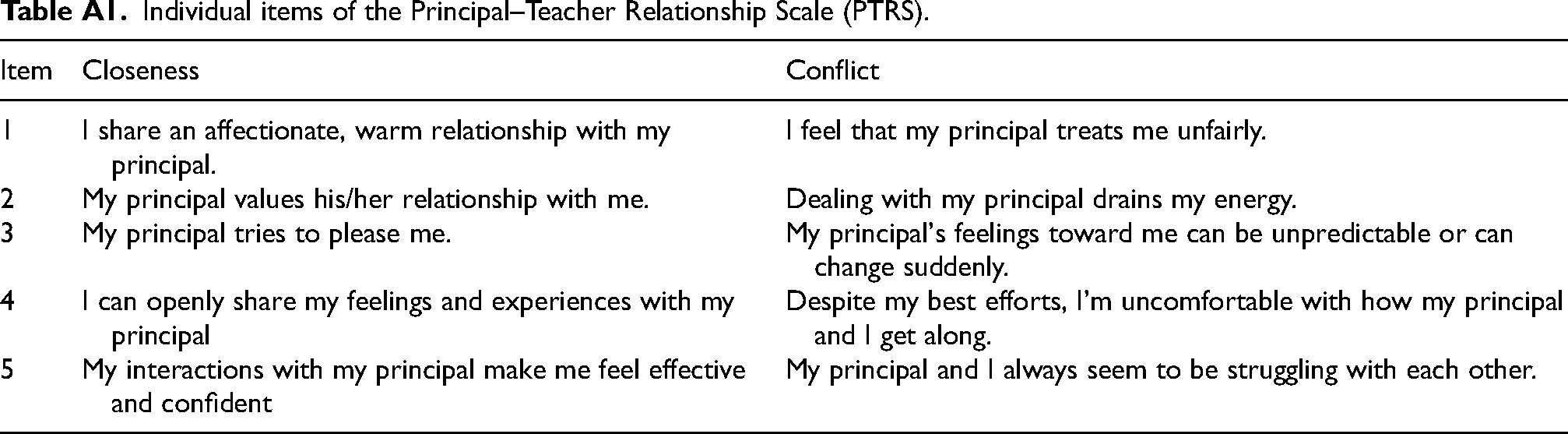
After adjusting the 23 Closeness and Conflict items, we further shortened the scale by removing 10 items that seemed awkward, ambiguous, or less relevant to adult relationships (e.g. ‘This child is uncomfortable with physical affection or touch from me’, ‘This child whines or cries when he/she wants something from me’). Last, we discarded three items that, after adjusting them, showed considerable overlap (e.g. ‘My principal easily becomes angry with me’ versus ‘My principal remains angry or is resistant after disagreements’). This resulted in a brief two-dimensional scale, including five items pertaining to Closeness and five items pertaining to Conflict (Appendix Table A1). All items were answered on a 5-point Likert-type scale (1=definitely does not apply; 5=definitely applies).
Data analysis
To evaluate the dimensionality and measurement invariance of the PTRS, we conducted confirmatory factor analyses (CFA) using Mplus 7.11 (Muthén and Muthén, 1998–2012). First, we evaluated the hypothesized two-factor model and an alternative one-factor model (overall relationship quality) to establish the best-fitting factor structure of the PTRS. Subsequently, composite reliability of the factors was estimated (Brown, 1989). Second, we evaluated measurement invariance across school type (primary school teachers: n = 303; secondary school teachers: n = 327), gender (female teachers: n = 541; male teachers: n = 89) and teaching experience, for which we created three groups: Junior (0–5 years of experience; n = 123), medior (5–10 years of experience; n = 108) and senior teachers (> 10 years of experience; n = 397). Third, we compared latent mean differences across groups.
We tested four invariance hypotheses (Van de Schoot et al., 2012). First, we evaluated configural invariance, indicating that the same factor structure is valid in each group. Second, we evaluated metric invariance, assuming that teachers across groups attribute the same meaning (factor loadings) to the latent constructs. Third, we evaluated scalar invariance, implying that factor loadings and intercepts are equal across groups, and that the latent means of these groups can be compared. Last, we tested invariance of residuals, assuming that the explained variance for all items is the same across groups.
All models were estimated using robust maximum likelihood estimation (MLR). The dependency among teachers within schools 1 was taken into account by employing the complex option in Mplus (Muthén and Muthén, 1998–2012). In evaluating model goodness-of-fit, we used the mean-adjusted chi-square test, with non-significant chi-squares indicating satisfactory fit. The model's approximate fit was determined using the root mean square error of approximation (RMSEA), with values below 0.08 signifying satisfactory fit (Hu and Bentler, 1999; Kline, 2011), comparative fit index (CFI) and Tucker–Lewis Index (TLI), with values ≥ 0.95 indicating close fit (Bentler, 1992). Last, we tested differences in model fit with the Satorra–Bentler scaled chi-square difference test (TRd; Satorra and Bentler, 2010), with non-significant chi-squares indicating equivalent fit, and differences in CFI, with changes ≥ 0.01 being indicative of model non-equivalence (Cheung and Rensvold, 2002).
Results
Baseline models
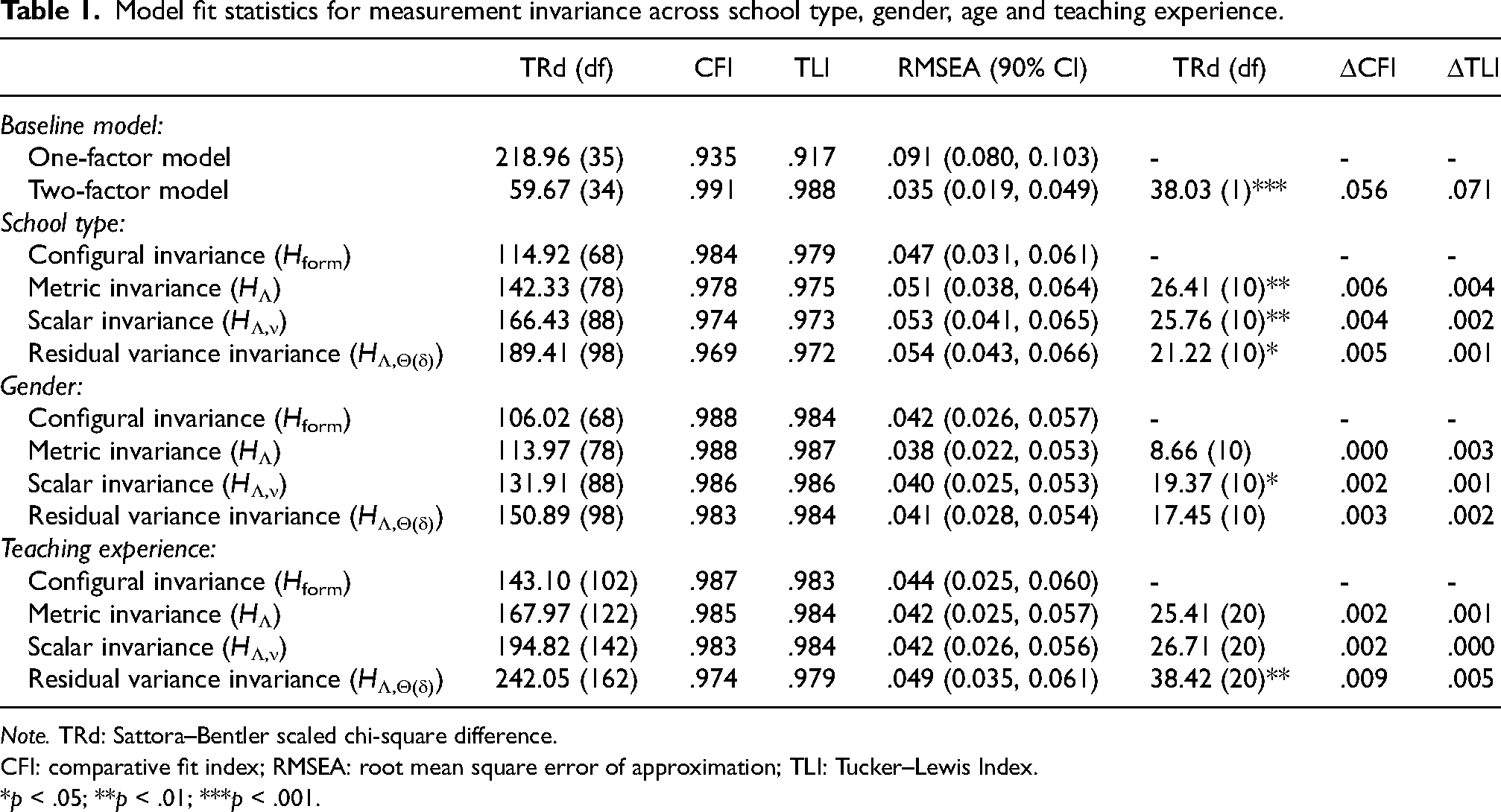
Table 1 shows the CFA results for the hypothesized models. The one-factor model's fit was not satisfactory. Comparison with the hypothesized two-factor model indicated that the latter reflected a better representation of the data, ΔTRd (1) = 38.03, p < .001; ΔCFI = .056; ΔTLI = .071. Based on these fit indices and attachment theory, the two-factor model was retained as the best-fitting baseline model. Standardized factor loadings of this model are shown in Figure 1. Factor loadings ranged between .69 and .93. Composite reliability of both factors was excellent (ρcCloseness = 0.96; ρcConflict = 0.93).
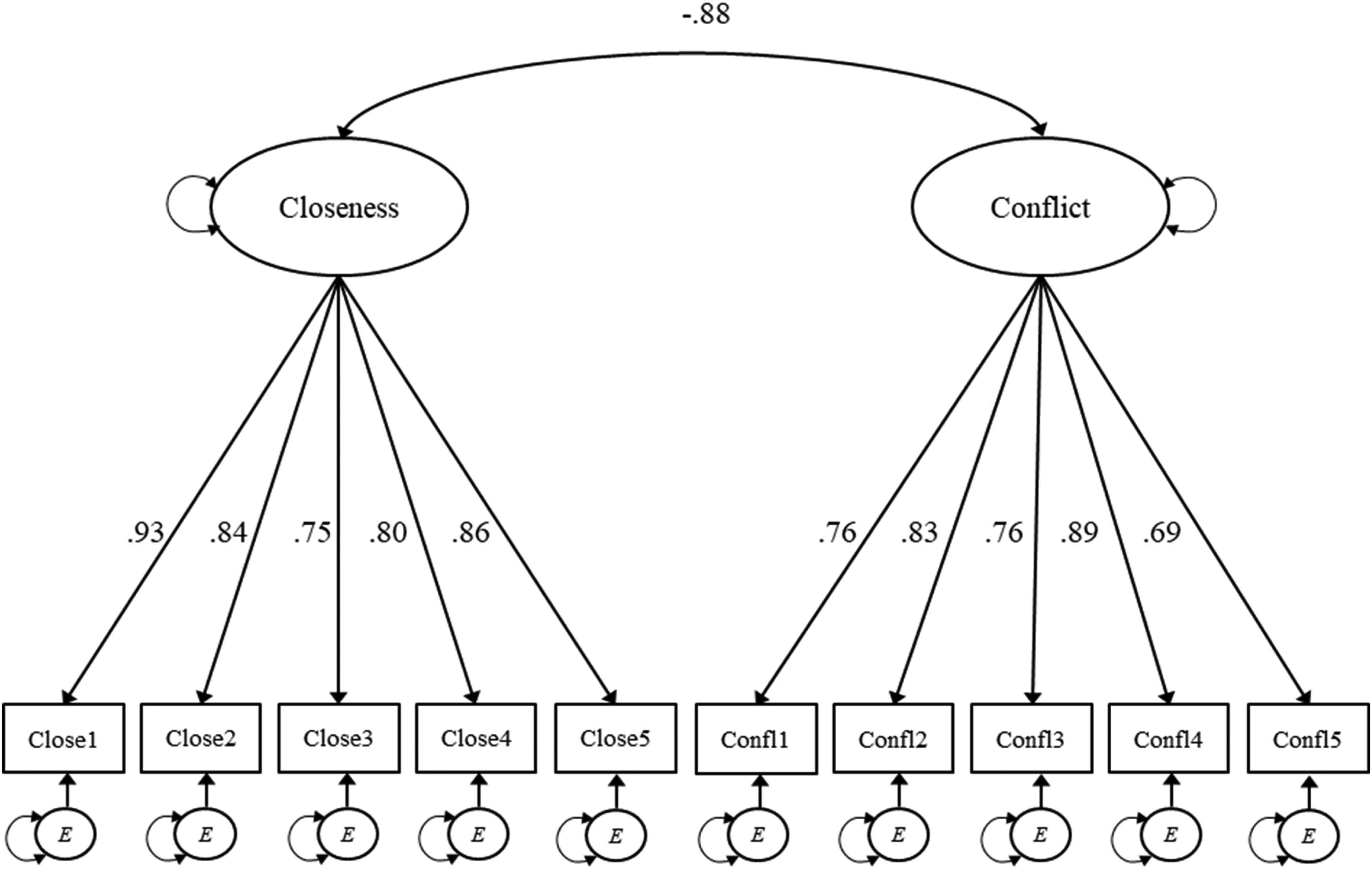
Two-factor model of the quality of the principal–teacher relationship. Standardized robust maximum likelihood parameter estimates are reported. All factor loadings are statistically significant (**p < .001).
Model fit statistics for measurement invariance across school type, gender, age and teaching experience.
Note. TRd: Sattora–Bentler scaled chi-square difference.
CFI: comparative fit index; RMSEA: root mean square error of approximation; TLI: Tucker–Lewis Index.
*p < .05; **p < .01; ***p < .001.
Measurement invariance
The model fit statistics of the multigroup CFAs are shown in Table 1. Results indicated that the two-factor model reached measurement invariance across groups at the configural and metric levels. Despite significant TRd differences between the scalar invariance and metric invariance model, approximate fit indices also provided support for measurement invariance at the scalar level, with RMSEA values indicating close fit for gender and teaching experience, and satisfactory fit for school type; and CFI and TLI values indicating close fit across all different groups. This suggests that teachers in these groups give the same meaning to Closeness and Conflict and that latent mean difference across groups can be evaluated. Last, we explored whether the explained variance for all items is the same across different groups. Again, significant TRd differences between residual variance invariance and scalar invariance models for school type and teaching experience emerged, but no differences in model fit as indicated by the ΔCFI and ΔTLI values were noted. These results indicate strong invariance of the PTRS across school type, gender, and teaching experience.
Latent mean comparisons
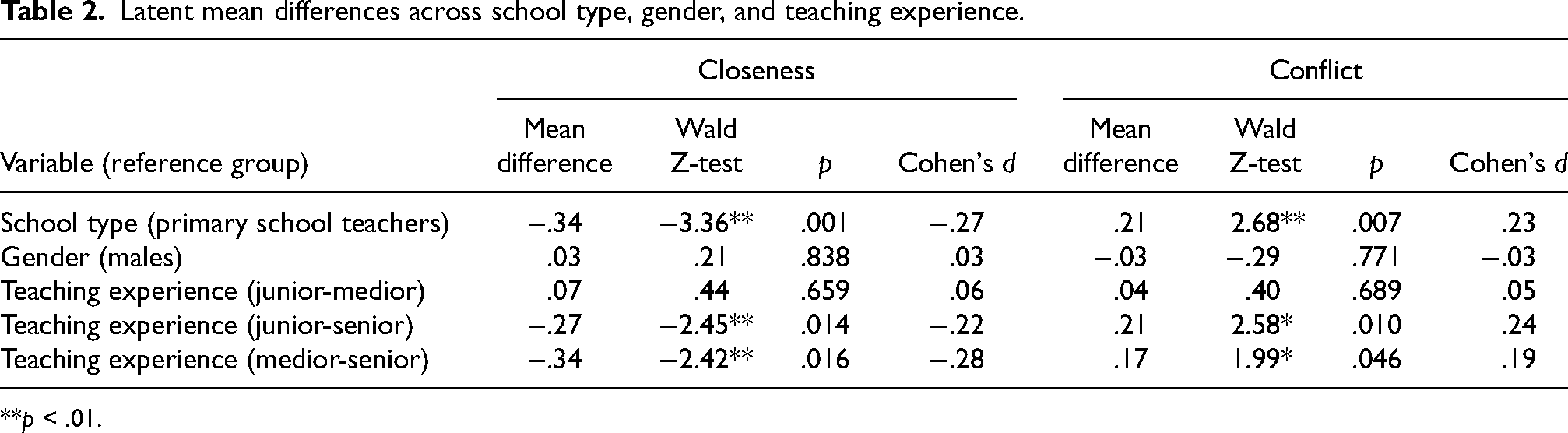
Next, we explored differences in the factor means of Closeness and Conflict across groups. In all analyses, we fixed the latent means of the reference groups (i.e. primary school teachers, male teachers, and junior teachers) to zero and used Wald z-tests to indicate whether mean differences across groups were significantly different from zero. To ease interpretation of the results, we also reported standardized latent means, with mean differences ≤ .02 reflecting small differences, ≤ .05 reflecting medium differences, and ≥ .08 reflecting large differences (Cohen, 1988). The results (Table 2) revealed significant mean differences across school type and teaching experience but not across gender. Specifically, secondary school teachers experienced lower levels of Closeness and higher levels of Conflict in their relationships with principals. Furthermore, compared to junior and medior teachers, senior teachers with > 10 years of teaching experience reported less Closeness and more Conflict.
Latent mean differences across school type, gender, and teaching experience.
**p < .01.
Discussion
Prior research has pinpointed several factors that protect teachers against work stress, among which are affective principal–teacher relationships (Price, 2012). Yet, there remain gaps in current knowledge regarding the nature of these relationships and its measurement. Following attachment theory (Koomen et al., 2012; Pianta et al., 2003), we evaluated a multidimensional instrument to measure affective, dyad-level principal–teacher relationships. Specific aims were to evaluate the dimensionality of this measure and explore the equivalency of the factors and underlying latent structure of the PTRS across school type, gender, and teaching experience. Additionally, we compared latent variable mean differences regarding these groups of teachers after establishing sufficient levels of measurement invariance.
Dimensionality of the PTRS
Based on prior research and well-validated measures of dyadic relationships within school contexts (Roorda et al., 2017), we hypothesized the PTRS to be a multidimensional measure, comprising a positive and negative factor. Overall, the results of our study afforded credence to this hypothesis. Specifically, the hypothesized two-factor model appeared to be a better reflection of the data than a unidimensional model representing one common factor of affective principal–teacher relationships. This finding thus provides initial support for the presence of the attachment-based relationship dimensions of closeness and conflict in the PTRS. Of these dimensions, closeness can be considered a positive dimension, reflecting warmth, affection, and emotional security between principal and teacher. Conceivably, teachers who experience high levels of affection in the principal–teacher relationship feel they are effective and confident as they can rely on the principal in times of stress and use them as a source of support. Conflict can be described as a negative relationship factor, reflecting the degree of discordance, negativity, and unpredictability in the principal–teacher relationship. Teachers who perceive the relationship to be conflictual tend to frequently struggle with their principal, feel emotionally drained and believe they are ineffective (cf. Verschueren and Koomen, 2012).
In our study, the substantial inter-factor correlation between closeness and conflict indicated that about 75% of the variance is shared between the two relationship dimensions. However, the markedly poorer fit of the unidimensional model and its parameter estimates suggested that specific qualities of the principal–teacher relationship can be distinguished. These results add to the idea that closeness and conflict tap into relatively unique aspects of the bond between principals and teachers, instead of falling along an underlying continuum (Verschueren and Koomen, 2012). Moreover, the PTRS seems to fit with the premise of the closeness and conflict factors reflecting features of secure and insecure (extended) relationships that have previously been distinguished by Ainsworth et al. (2015).
Measurement invariance
The second objective of this study was to make advances in understanding whether there are mean differences in the level of closeness and conflict across school type, gender, and teaching experience. Therefore, we first tested measurement invariance across these school and teacher characteristics at the configural, metric, scalar and residual variance invariance levels. Exploration of the former two levels revealed invariance regarding the two-factor model's loadings across school type, gender, and teaching experience. Hence, the way teachers conceptualize closeness and conflict items and corresponding factors are probably not influenced by item complexity or personal or contextual factors that may affect teachers’ perceptions (Cheung and Rensvold, 2002; Tayeb, 1994).
The PTRS also appeared to meet the criteria of scalar and residual variance invariance. Hence, closeness and conflict are likely to have the same operational definition across males and females, primary and secondary school teachers, and teachers with varying levels of teaching experience (Cheung and Rensvold, 2002). This level of strong factorial invariance is a necessary step in the process of comparing latent means across groups (Meredith and Teresi, 2006). If teachers from different groups differ in how they define the closeness and conflict constructs and levels of underlying items, it becomes near impossible to determine whether latent mean differences are due to real teacher characteristics, item bias, or measurement artefacts. The PTRS thus allows future researchers to make comparisons in the quality of principal–teacher dyads across various contexts, including primary and secondary schools, and between various groups of teachers, such as more or less experienced teachers.
Latent mean comparisons
Last, we explored latent mean differences in the degree of closeness and conflict between teachers and principals. Although we did not find any differences between male and female teachers, some differences in latent means across school type and teaching experience emerged. Regarding school type, teachers in secondary schools experienced higher levels of conflict and lower levels of closeness in the relationship with principals than did primary school teachers. This was in line with our idea that teachers in primary school may have more opportunities engaging in meaningful interactions with their principal than secondary school teachers, as primary schools tend to be smaller and employ fewer teachers than institutions for secondary education (cf. Hargreaves, 2000). Beyond the assumption that the bureaucratic and specialized organizational structure of secondary schools makes it less likely for teachers to interact with their principals, there is no further empirical understanding of how principal–teacher relationships are affected by varying conditions in primary and secondary school. This is probably one of the first studies to shed light on these differences.
Additionally, senior teachers with more than 10 years of teaching experience appeared to experience less closeness and more conflict in the principal–teacher relationship than junior or medior teachers. This was somewhat unexpected, given that prior research (Berkovich and Eyal, 2021; Runhaar et al., 2013; Tse et al., 2008) indicates that teachers with more experience may have more workplace friendships and higher-quality relationships with principals than less experienced counterparts. This finding does, however, coincide with stages of teachers’ professional life cycle (Day and Gu, 2007; Huberman, 1989). Specifically, less experienced teachers may experience heavy workloads and difficulties in balancing work and private life, thereby probably benefiting more from advice from and high-quality relationships with their principals and colleagues. In contrast, highly experienced teachers generally report a gradual loss in energy and enthusiasm, but seem to compensate these feelings by a greater sense of confidence in themselves and a stronger teacher identity (Day and Gu, 2007). Possibly, experienced teachers’ confidence in their teaching abilities makes them less reliant on emotional support from their principals, resulting in somewhat more distant relationships in which less personal information is disclosed.
Another plausible explanation is that differences among teachers and their principals in age and experience may lead to interpersonal struggles. Especially when teachers trust their own competencies more than those of their (younger) principal, such daily struggles result in higher levels of conflict. Yet, more evidence is evidently needed to further investigate the mechanisms explaining differences in relationship quality between more and less experienced teachers. One step forward in this direction may be the inclusion of principal's background characteristics, including age, gender, and experience.
Limitations and future directions
Although this study employed a relatively large sample and rigorous tests of measurement invariance, some caveats and limitations have to be noted. First, we solely relied on self-report information from teachers to evaluate principal–teacher relationship quality. Yet, given the dyadic nature of these relationships, future use of principals’ perceptions of closeness and conflict is evidently needed. Such questionnaires may provide further insight in potential differences in the relationship views of members within the same dyad, a notion that is commonly shared by attachment researchers (Pianta et al., 2003).
Second, it should be noted that we only focused on the degree of warmth and open communication (i.e. Closeness) and the degree of distrust and discordance (i.e. Conflict) in the principal–teacher relationship. Even though we had both conceptual and methodological reasons to leave out a Dependency dimension from the PTRS, it might be a relevant next step to develop a new set of items that tap teachers’ overreliance on their principals. Such a dimension might be particularly relevant in samples of preservice or beginning teachers, who might be more dependent on their principal for help, advice, and career opportunities (Peters and Pearce, 2012).
Third, although the groups of teachers were relatively equally balanced regarding school type and teaching experience, the majority of our sample comprised female teachers. Although this unequal gender distribution is comparable to the larger population of Dutch teachers, who typically are female (84%; DUO, 2014), it might have influenced the results of the invariance tests in this study. A recommendation is to use a more balanced sample regarding the teacher, principal, and contextual characteristics that may impact the invariance of the constructs and levels of underlying items of the PTRS.
Fourth, caution is warranted when generalizing these results to other populations and settings. The large majority of teachers in this sample was female, had the Dutch nationality, and filled out the Dutch, original version of the PTRS. Please also note that this study was conducted in the Netherlands, which is characterized by a highly decentralized educational system where school boards and principals have a relatively large degree of autonomy to make their own decisions, set goals, and define and produce quality standards for their schools (cf. Frankowski et al., 2018). As such, it remains to be explored whether our results also generalize to teachers with other backgrounds and from other countries that might be characterized by different forms of governance of educational systems. By relying on a more heterogeneous sample, future investigators may provide further empirical support for the PTRS, as well as further generalize the present study's findings.
Practical implications and conclusion
We sought to expand the knowledge base regarding principal–teacher relationships by investigating the dimensionality and measurement invariance of the PTRS and exploring latent mean differences across gender, school type, and teaching experience. Several theoretical and practical implications can be derived from the findings of this study. First, prior empirical research based on LMX theory has repeatedly shown that high-quality working relationships between teachers and their principals may be an important requisite for teachers’ well-being and school effectiveness (Musah et al., 2018; Nguyen et al., 2019). If principals desire to keep high school effectiveness and a healthy teaching workforce, building high-quality relationships with teachers that go beyond working alliances and contractual obligations, and focus on personal, affective bonds as well may be a major step forward. This seems to be particularly relevant in schools in countries with highly decentralized governance structures such as the Netherlands, where school boards and principals are held accountable for the effectiveness and quality of their education. Hence, to manage such forms of governance and accountability, the PTRS may be a fruitful tool for identifying principals within schools that have the ability to build high-quality affectionate bonds with their staff. Furthermore, insights gained from this instrument can be used by policymakers to prevent ill-being at work and retain qualified teachers amid shortage. This may be particularly relevant in secondary school, where principal–teacher relationships, possibly due to its bureaucratic and specialized organizational structure, tend to be less close and more conflictual.
Second, this instrument may instigate further research on antecedents and consequences of high-quality principal–teacher relationships. Thus far, the majority of research on principal–teacher relationships predominantly leaned on the seminal LMX scholarship. Possibly, extended attachment theory might be a useful addition in the field of educational management. Specifically, this theory might provide a new avenue to consider how affective relationship qualities such as warmth and open communication, but also discord and anger, may uniquely contribute to individual teachers’ and principals’ effectiveness and well-being as well as the wider school climate. In sum, the PTRS may add to the methodological repertoire of educational psychologists by focusing on positive and negative aspects of dyadic principal–teacher relationships and provide insight into the role principals play in helping teachers to cope with job-related stress.
Footnotes
Author’s note
Marjolein Zee, Research Institute of Child Development and Education, University of Amsterdam, P.O. Box 15776, NL-1001 NG Amsterdam, The Netherlands, Tel. +31 20 525 1250. Contacts: M.Zee@uva.nl, Zee@essb.eur.nl; Debora L. Roorda, Research Institute of Child Development and Education, University of Amsterdam, P.O. Box 15776, NL-1001 NG Amsterdam, The Netherlands, Contact: D.L.Roorda@uva.nl; Fadie Hanna, Amsterdam University of Applied Sciences, P.O. Box 15776, NL-1001 NG Amsterdam, The Netherlands, Contact:
Declaration of conflicting interests
The author(s) declared no potential conflicts of interest with respect to the research, authorship, and/or publication of this article.
Funding
The author(s) received no financial support for the research, authorship, and/or publication of this article.

Notes
Author biographies
Appendix
Individual items of the Principal–Teacher Relationship Scale (PTRS).
| Item | Closeness | Conflict |
|---|---|---|
| 1 | I share an affectionate, warm relationship with my principal. | I feel that my principal treats me unfairly. |
| 2 | My principal values his/her relationship with me. | Dealing with my principal drains my energy. |
| 3 | My principal tries to please me. | My principal's feelings toward me can be unpredictable or can change suddenly. |
| 4 | I can openly share my feelings and experiences with my principal | Despite my best efforts, I'm uncomfortable with how my principal and I get along. |
| 5 | My interactions with my principal make me feel effective and confident | My principal and I always seem to be struggling with each other. |