




Abstract
The aim of this study is to explore social interactions in the spatial and material environment within everyday life at special youth homes in Sweden, where youths with psychosocial problems, or criminal behavior are cared for involuntary. A microethnographic approach was chosen, and data was collected through participant observation. A theory integrating analysis, using Burke’s (1969) dramatistic pentad as a tool for structuring the data and Goffman’s (1956; 1961) dramaturgical perspective was undertaken. The findings demonstrate that the staff’s control over settings and objects also means control over the definition of what kind of place the special youth home is, and what takes place there. This is shown through a decorous behavior of sociomaterial control practices, rather than care practices, by the staff. This study contributes to knowledge on spaces and objects as crucial parts of care practices highlighting the intentions inscribed in institutional design and objects.
Introduction
The focus of the current study is to explore the social interactions in the spatial and material environment within everyday life at special residential youth homes in Sweden. The study undertakes a microethnographic approach, using Kenneth Burke’s (1897–1993) dramatistic pentad as an analytical tool for structuring the data, and the dramaturgical perspective according to Erving Goffman (1922–1982) as a theoretical framework. In this study, the perspective of space and materiality is due to the theoretical concept of sociomateriality, which views spaces and material objects as interrelated and inseparable from social practices.
Microethnographic Approach and Dramaturgical Perspective
A microethnographic approach allows for an analysis of social interactions considering spaces, and objects, viewing them as interrelated and co-occurring (Le Baron 2006). Further, microethnography encompasses the possibility of studying interactions in particular settings, such as institutions, with certain accountability of power asymmetries, where Goffman’s work has been one of the primary sources of inspiration for developing the method (Streeck and Mehus 2005).
In the light of the purpose of the study, a microethnographic approach, together with the dramaturgical perspective according to Burke and Goffman, constitutes a methodological and theoretical wholeness that supports the exploration of social interactions in “their socio-material surround” (Le Baron 2006, 2). The use of microethnography further allows for an ethically responsive approach, and a deeper understanding of what is happening in the field, by understanding the individuals, their relations, and the context in relation to each other (Le Baron, 2006). Examining spaces and materialities as parts of caring practices and interactions, through microethnography, can thus clarify their importance for the care and treatment of vulnerable groups, as for example young people in institutional care.
Space and Materiality in Studies of Caring
The relationship between space, care, and health has been the subject of academic attention and studied to a great extent in the context of mental health care settings (Alexiou et al. 2016; Olausson et al. 2019; Ulrich et al. 2018; Wijk et al. 2019). Existing research indicates the impact of space on mental health (Evans 2003; Huey and McNulty 2005; Notley et al. 2012; Svensson 2010) and highlights the significance of having a balance between the private sphere and social interactions for the well-being of the people who inhabit theses spaces (Evans 2003). Analytically investigating objects and spaces as crucial parts of care, may reveal interactions taken for granted that involve care (Latimer 2018). Nevertheless, spaces and everyday objects should not be viewed as separate entities but rather as intertwined objective and social dimensions of space (Schatzki 1991; Zieleniec 2008). This process of sociomateriality is a crucial part of one’s becoming, where things, spaces, relationships, and bodies, melt together and affects the body and identity (Fransson, Giofrè, and Johnsen 2018; Østerberg 1998)—also in care practices (Buse et al. 2018; Mol, Moser, and Pols 2010). However, definitions of “good” and “bad” care are intertwined, taking on different expressions and creating unintentional effects (Mol et al. 2010). This is evident in the youth institutions wherecare, security, and control are interconnected or intertwined. The traits of the caring space to maintain integrity or to withdraw from social interaction (Evans 2003; Persson 2012) become cluttered by the tangled relationship between care and security. In a previous study on Swedish youth homes, the youths perceived the institutional setting and its inherent material objects as inscribed with security and penal ideals. This perception of the setting influenced their self-understanding and the treatment alliance (Nolbeck et al. 2020). The lack of control over self-presentation, the forced self-image as “dangerous child,” and overshadowing of security ideals in institutionalized youths have been confirmed by previous studies (Enell 2015; Enell and Wilińska 2021; Fransson et al. 2018).
Swedish Special Residential Youth Homes
Special youth homes run by the Swedish National Board of Institutional Care provide individual compulsory care for children and youths up to 21 years. All placements are based on law, related to either difficult home conditions, extensive psychosocial problems, substance abuse, criminal behavior, or because of verdict according to Law on Young Offenders (SFS1990:52 1990; SFS1998:603 1998; Swedish Agency for Health Technology Assessment and Assessment of Social Services 2016; Ybrandt 2010; Ybrandt and Nordqvist 2015). According to the Swedish National Board of Institutional Care, the goal of care practices within the special youth home is “to create better conditions for a socially functioning life without abuse and crime” (The Swedish National Board of Institutional Care 2021, authors’ translation).
One of the main characteristics of the Swedish youth institutions is the staffs’ legal mandate to use coercive means, for example, isolation because of threatening and violent behavior (SFS1990:52 1990). In this sense, the youth home could be viewed as a borderland between “caring” and “guarding” (Leviner and Lundström 2017; Sallnäs and Wiklund 2017; Silow Kallenberg, 2016). The Children’s Ombudsman in Sweden and United Nations Child Rights Committee have repeatedly criticized Sweden for the special youth homes in general and the coercive means specifically. A considerable quantity of the criticism has concerned spatial and material environmental aspects, such as restrictions on movement and isolation (Children’s Ombudsman 2019; Sandberg Lööf 2011; United Nations Committee on the Rights of the Child 2015). Material and spatial environmental aspects have also been pointed out as crucial parts of the everyday life and interactions within the youth homes in studies that have not had this as their primary research object (Andersson Vogel 2020; Silow Kallenberg 2016; Wästerfors 2019). Further, studies demonstrate that relational restrictions follow the physical constraints of being locked in a secure institution (Enell and Wilińska 2021). This complex relation between caring and guarding, thus, places high demands on the social, spatial, and material environment regarding care, children’s rights, security issues, and civil protection.
However, existing research on how social interactions are influenced by the institutional spaces and materialities in the context of a special youth home is limited (Nolbeck and Thodelius 2019). Therefore, the aim of the current study is to explore the social interactions in the spatial and material environment within everyday life at special youth homes in Sweden.
Methodology and Method
Study Design and Outline of Context
Microethnography focuses on a small group of people for a shorter period (Roper and Shapira 2000), and on the social interactions in everyday situations, where verbal and nonverbal communication are understood regarding each other and their surrounding sociomaterial environment (Le Baron 2006). Rather than focusing on the individual, microethnography enables a focus on the pattern of interactions and practices in their context (Streeck and Mehus 2005).
This study is based on data collected during 60 hours of fieldwork in August and September 2019, with time evenly distributed between two youth homes in Sweden, referred to as the “girls’ institution” and “boys’ institution.” The homes are located in rural areas a short distance from larger cities and at geographically different locations. When entering the institutional area, the researcher passed gates posted with signs detailing the rules and prohibitions. At the boys’ institution, several low and old buildings are situated next to each other, with small walkways in between. At the girls’ institution, several cottage-like small houses rest on the green in an open area with a walkway lined with trees as the centerpiece. At both homes, youths have restricted access to outside areas, depending on the ward in which they are enrolled and the outcome of their individual risk assessment.
High fences with surveillance cameras surround the wards to prevent escapes. Additionally, the youths must wear slippers instead of shoes to make escape more difficult. Inside, the wards are usually decorated sparingly, with potentially dangerous objects removed, fixed furniture, and bulletproofed window glass. To enter or leave the wards, you must be preapproved and given a tag, a security code, and an alarm phone.
Fieldwork and Participants
The institutions were selected through purposeful sampling but with the aim of achieving variety. This study is part of a larger interdisciplinary research project, researching the physical environment of the special youth homes. Within the framework of this project information and request on participation went out to all special youth homes, through the authorities’ headquarters in 2017. Of all 21, 10 special youth homes showed interest in participating. These 10 then formed the basis from which the sample to the current study was drawn. The two institutions included in our study operates both according to the Care of Young Persons Act and the Law on Young Offenders. The fieldwork was performed when it was practical regarding the institutions’ schedule of activities. Observations were carried out at one ward at the girls’ institution and two wards at the boys’ institution, alongside other activities outside the wards, on the institutional grounds, including the school, the sports area, and outdoors. The continuous quantity of time was, on average, nine hours each day of field work.
In total, 5 girls and 6 treatment assistants at the girls’ institution, and 13 boys and 8 treatment assistants at the boys’ institution participated in the study. This excludes 1 girl and 1 boy who did not want to participate and 3 boys under the age of 15 whose parents or guardians could not be reached to provide consent. For the excluded youths no data were collected, meaning that observed interactions or statements involving them, were not included in the data material (see Ethical Considerations and Researcher Position). Since this only applied to a few youths, and came to the researcher’s knowledge early, the researcher did not interact with these youths other than when they were part of a larger group of youths. The included youths were between the ages of 14 and 19. For a more in-depth discussion of ethics, see section “Ethical Considerations and Researcher Position.”
Data Production
The first author conducted the fieldwork, which consisted of participant observation and ethnographic interviews (Angrosino 2007; Atkinson 2007; Roper and Shapira 2000). If fieldwork is considered the strategy of ethnography, participant observation constitutes its method (Dellenborg 2013, 22). Participant observation is a suitable method when exploring social relations and interactions in everyday life in a specific context (Nässén 2013; Roper and Shapira 2000). Through the engagement of the body and senses, the participant observer attempts to understand the everyday life of people. This means grasping what people do and what they say, aiming to capture the complexity to deepen the understanding of situations (Nässén 2013; Roper and Shapira 2000). This requires physical proximity to people and a sense of the spatial and social, alongside historical context (Dellenborg 2013; Nässén 2013).
On-site, the researcher undertook the overt observer-as-participant role at several points allowing for note taking during the fieldwork. However, at other times, the note taking would have disturbed the social interactions observed, why notes were taken after, yet in proximity to the observations made. To take field notes is not an objective procedure but part of the interpretation, and thus, reflexivity constituted a crucial part of the data production. This was handled by writing down or audio recording the researcher’s reflections on the observations made (Atkinson 2007). The field notes were written up immediately following the fieldwork.
As an integrated part of the participant observations, ethnographic interviews were undertaken to follow-up on questions that emerged from the observations and deepen the researchers’ understanding (Angrosino 2007; Atkinson 2007). The interviews were conducted spontaneously when the opportunity arose and documented through audio recording or note taking. The possibility to informally follow-up on observations made is an important part of ethnographic fieldwork and contributes to deepening the understanding (Roper and Shapira 2000). During the analysis process, the first author listened to the recorded interviews, quotes were transcribed verbatim, and translated into English, as were the field notes.
Data Analysis and Theoretical Framework
In this microethnographic study, Kenneth Burkes (1969) concept “the dramatistic pentad” was used as an analytical tool to structure the data (Burke 1969). Moreover, Erving Goffman’s (1956) theory on the presentation of self in everyday life was used to analyze the findings with special focus on his concepts “setting,” “regions,” and “region behavior,” especially the concept of “decorum” (Goffman 1956). Burke was one of Goffman’s most important influencers, and his dramatism inspired Goffman’s development of his dramaturgical perspective (Leveille 2008).
Burke’s Dramatistic Pentad as Analytical Tool
Burke’s (1897–1993) dramatism is concerned with life as drama. As a literary theorist, he was concerned with understanding the narrator’s perspective and motive and the tensions inherent in narrative dramas (Bowman 2017). He viewed the symbols of human actions as part of social interaction and developed the analytical concept of the “dramatistic pentad,” including the elements agent, act, agency, purpose, and scene. To Burke, the term “scene” answers the questions “where” and “when,” and the term “act” states what is happening on the scene. The term “agent” covers the question of “who,” whereas “agency” is related to questions on “how,” and the “purpose” illustrates the motives behind the act (Burke 1969). Burke claimed that all narratives are human dramas that involve the five elements and arrange these hierarchically concerning each other (Bowman 2017; Burke 1969). Depending on the perspective and interest of the researcher, a narrative (or situation) could be examined with a starting point in one element, meaning that an element could be considered more important regarding understanding the intention behind an act (Bowman 2017; Burke 1969). The focus of the present study is to explore the social interactions in the spatial and material environment within special youth homes, therefore, the element “scene” was put at the focus of interest since spaces and material objects belong to the scene, according to Burke.
Moreover, according to Burke, the scene could be a sufficient motive for an act, meaning that the scene in itself could determine the agent’s acts, agencies, and purposes (Burke 1969). However, when Burke’s dramatistic perspective involves also identifying “ratios,” “the governing interactions” and hence hierarchy of the ratios (Bowman 2017; Burke 1969), we use Burke’s dramatistic pentad as merely an analytical tool for structuring the data—descriptively. The importance of the scene is already implied—instead, we are interested in how—if in any way—the interactions are affected by them taking place at the specific scene(s) of the youth home. To attach greater importance to the scene is consistent with Burke’s dramatistic perspective, which points out the scene or the setting as the more common “determining force”. These ratios imply that the setting where a narrative—or a situation—takes place, determines the act in the way that it is influencing the actors themselves or the action undertaken by the actors (Bowman 2017; Burke 1969). Similar reasoning is present in Goffman’s dramaturgical perspective (see further below). Instead of not applying the whole theory of dramatism as Burke presents it, we use the works of Goffman to interpret and theorize our, according to the dramatistic pentad, structured findings (see “Theoretical framework” further below).
Analysis Process
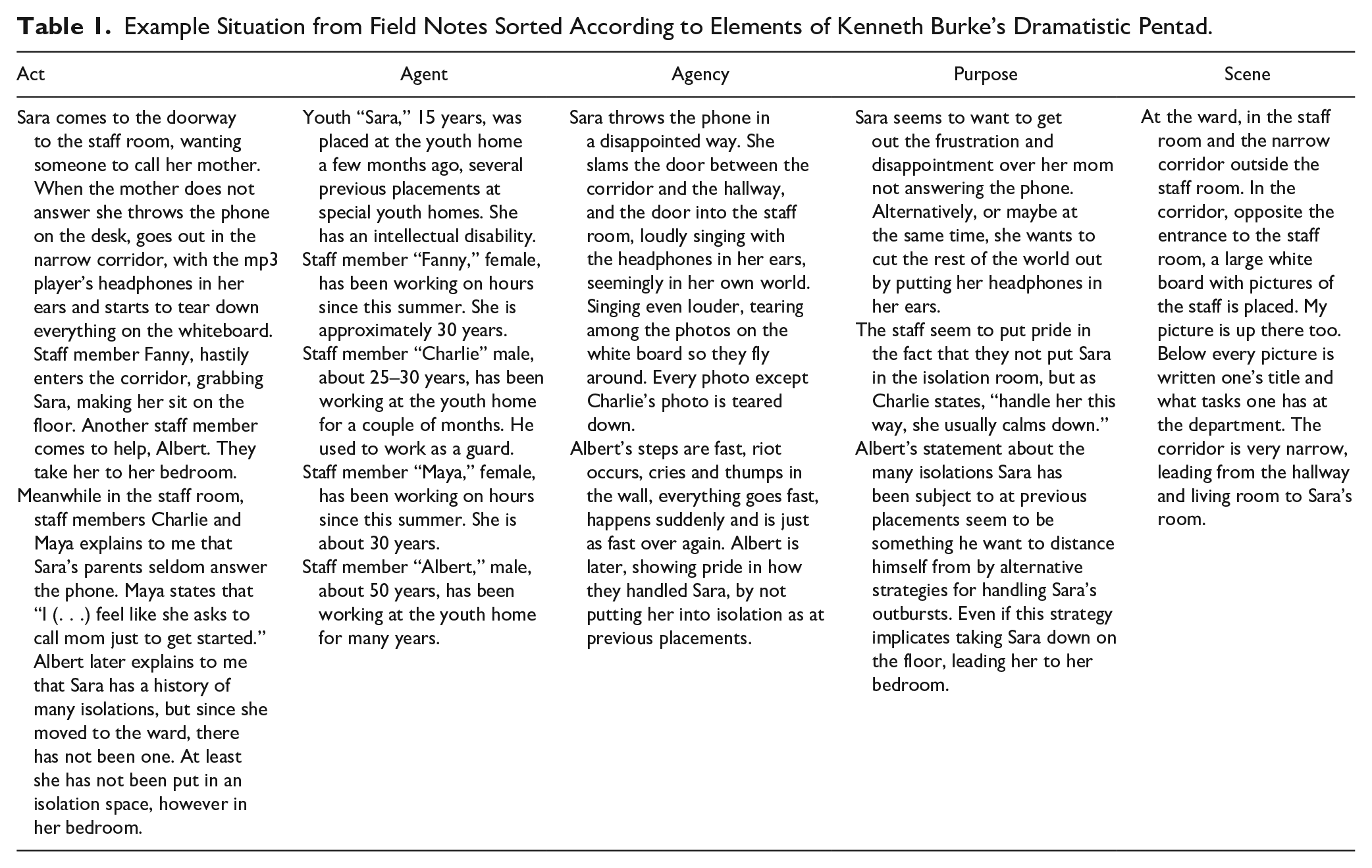
Even though the very definition of a theory-integrated analysis process is reflexivity and analytic induction, rather than a step-by-step approach (Atkinson 2007), we outline several procedural steps here. After the transcription of data (field notes and quotes from interviews), the entire data was read through several times by the first author to get to know the data. Second, Burke’s dramatistic pentad was used to systematize and sort the data. This means that every observed “narrative,” namely “situation,” was identified throughout the field notes and then sorted and structured according to the five elements in the dramatistic pentad (Table 1).
Example Situation from Field Notes Sorted According to Elements of Kenneth Burke’s Dramatistic Pentad.
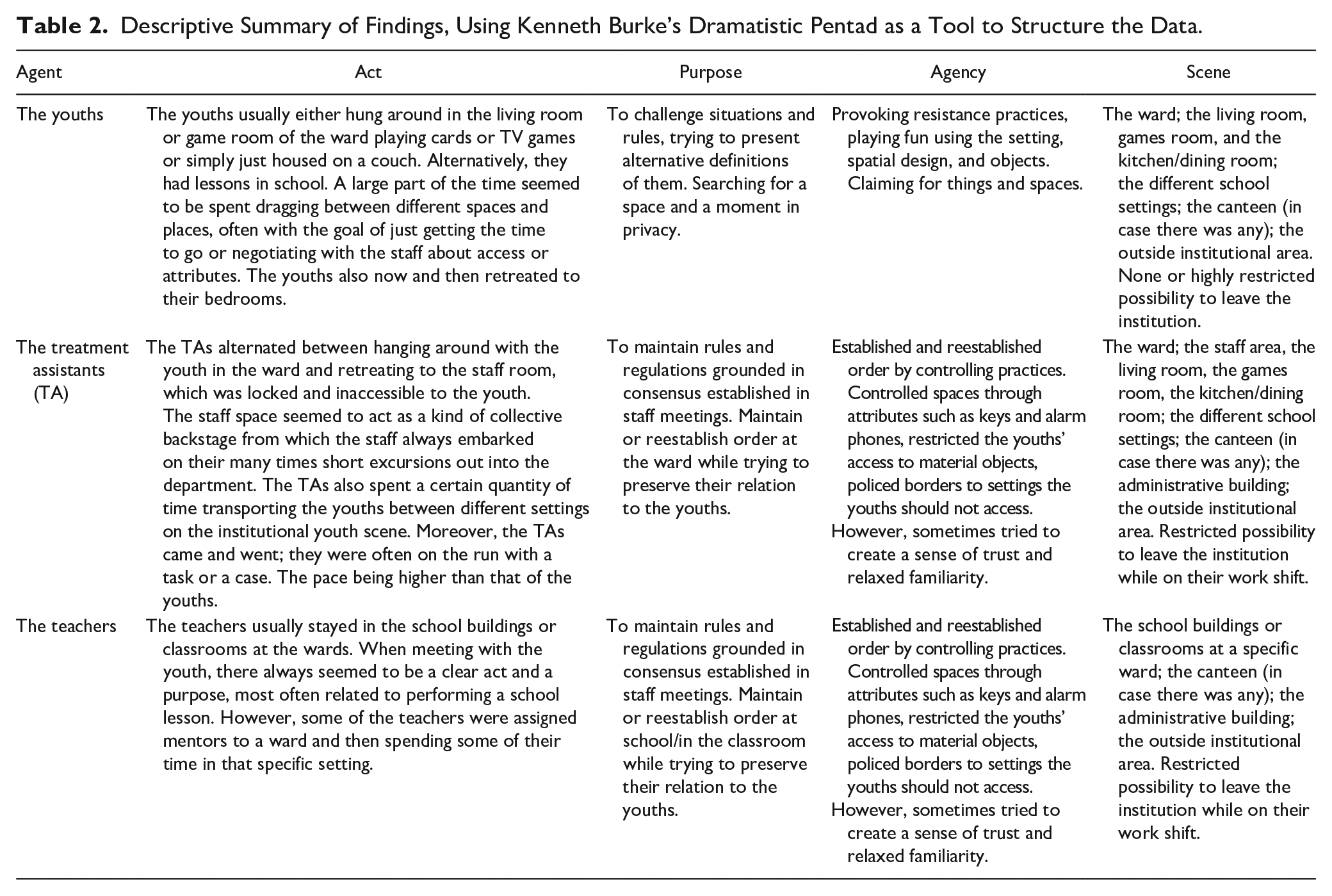
Third, a summary of the sorted situations was conducted (Table 2). Fourth, the entire dataset of field notes, sorted situations, and the descriptive summary were read through repeatedly to identify overarching themes, drawing on Goffman’s dramaturgical perspective in “the Presentation of Self in Everyday Life,” and “Asylums.” These “observer-identified” theory integrated themes (Lofland et al. 2006) are presented as headings under “Findings” further below. The ethnographic interviews were used to confirm or reject the observations made. The extracts from field notes that are presented in the findings section have been selected as they exemplify the identified themes, while at the same time showing the nuances of the data material.
Descriptive Summary of Findings, Using Kenneth Burke’s Dramatistic Pentad as a Tool to Structure the Data.
The first and last authors carried out the analysis in close cooperation. The second and third authors read parts of the data and gave thorough feedback throughout the analysis.
Statement of Rigor
In ethnographic fieldwork representativeness of the sample, rather than generalizability of a specific group or population, refers to generalizability of social processes. This means that the variance, that is, patterns and regularities in the material, rather than statistical representativeness, constitutes the generalizability. Thus, the findings of our study are not generalizable in terms of always and in any case being applicable to staff and youths, or clients, in institutions. Rather, they can be considered generalizable to other similar situations and contexts, where our theoretical assumptions are applicable, and as descriptions of what could arise given the conditions and context (Gobo, 2004).
We adopted a strategy of the constant interplay between concrete empiricism and abstract theory, meaning that “theorizing” and writing are ongoing reflexive processes inseparable from the “fieldwork.” This implies interweaving empiricism with theory and writing, forming ideal-typical constructs, representing our interpretation of the findings. This strategy is present in the way we introduce our findings further below (Atkinson 2007, 163).
Theoretical Framework
In “the Presentation of Self in Everyday Life” (Goffman 1956, 9), Erving Goffman argues that individuals in everyday situations strive to control others’ impressions of them with the aim to present themselves in a favorable way. The purpose of favorable self-presentation is to control the other’s way of approaching and understanding oneself and to preserve the social order—hence, that every actor acts according to the definition of the situation. Goffman claims that for a performance to be credible, there must be consistency between the different parts in an individual’s expressive repertoire, namely the setting, appearance, and manners. Otherwise, the definition of the situation, and thus the social order, risk being challenged. Goffman defines setting as dependent on place and including “. . .furniture, décor, physical layout and other background items which supply the scenery and stage props” for the performances that take place (Goffman 1956, 22).
Goffman uses the theatre as a metaphor and claims that, as in every theatre and everyday social interactions, there are actors or a team of actors and an audience. Goffman means that in social interactions, we often are simultaneously actors and audience, whether constituting a one-person-team interacting with a one-person-team or two teams interacting, constituting of several team members each. However, people are usually divided into two—and not several—teams in a social interaction, where the members are dependent on one another to maintain the definition of the situation (Goffman 1956, 84–85). Often, one of the teams controls the setting, and thus, their performance becomes more intimate, and the setting becomes a more integrated part of their performance than that of the other team. For example, when being a guest in someone’s home the setting within which the performance takes place is beyond one’s control. Consequently, the person who hosts the dinner party in their home, demonstrates a more intimately coherent performance.
As in real theatrical performances, in all social interactions, there is an “on stage” 1 area where the performance takes place, and possible negative impressions are concealed. There is also a “backstage” where the actors prepare their performances, and drop out of their social role, put down their masks, and engages in behavior not intended for the audience to observe. These “regions” are separated through “barriers to perception,” for example, wooden walls that separate visually but not audially or glass walls where the reverse is true (Goffman 1956, 106). The maintenance of control over one’s back region is crucial to the performance, according to Goffman (1956). Moreover, the onstage performance from an individual or a team on stage implies the attempt to maintain certain standards or norms for how to act in the presence of others. These are divided into two groups: “matters of politeness” (Goffman 1956, 107), which is the way that the actor treats the audience when engaging with them; “decorum,” which refers to the behavior considered appropriate while in sight of the audience, but not directly interacting with them (Goffman 1956, 107). Namely what is considered appropriate in the situation (Goffman 1956, 107; Persson 2012). The demand of a certain decorum is tied to the stage, or front region, where the performance takes place and is divided into moral and instrumental demands. The moral demands are considered an end in themselves and encompass moral obligations such as respect for another person’s integrity. The instrumental demands refer to obligations, or duties, as imposed by the employer (Goffman 1956, 107), and followed due to Goffman states that “(. . .) while decorus behaviour may take the form of showing respect for the region and setting one finds oneself in, this show of respect may (. . .) be motivated by ‘a desire to impress the audience favourably or avoid sanctions’” (Goffman 1956, 107–109).
Goffman further developed his theory in “Asylums” (Goffman 1961), where he specifically focuses on the interactions that occur in the specific setting of the institution and how the inmates and the staff handle their situation (Goffman 1961). The “total institution” is a secluded place, where interaction with the surrounding world is hindered, and the life spheres of work, leisure, and sleep merge in time and place, and the daily life is administered in structured activities controlled by the staff (Goffman 1961). In the concept of the total institution, an expectation is incorporated that the patient/inmate will internalize the institution’s view of him. In this lie, thus, every act of resistance is interpreted as evidence of the person being placed at a total institution. These processes restrict the individual’s possibility to control their self-presentation (Goffman 1961).
Goffman’s theoretical perspective could be argued for identifying both spaces and material objects as important parts of self-presentation and social interactions the maintenance of situational definitions (Goffman 1956).
Ethical Considerations and Researcher Position
Institutional youth care is a complex research field that puts high demands on researchers due to ethical considerations (Källström and Andersson Bruck 2017). Moreover, ethnographic fieldwork encompasses many ethical issues involving the need for reflexivity regarding researcher position (Atkinson 2007). For the larger interdisciplinary research project, an ethical codex was developed to identify and prevent potential ethical dilemmas (Nolbeck et al. 2021). The ethical codex relies on principles of research ethics and a child rights perspective (The World Medical Association 1964; Office of the United Nations High Commissioner for Human Rights 1989).
None of the authors have any work-related or other relation to neither the staff nor the youths included in the study. However, the first author, who conducted the fieldwork, has previous experience from community-based and institutional youth care.
Access to the youth institutions was obtained through contact with the head of the institutions. Prior to the fieldwork and after obtaining consent from the ward managers, both the youths and the staff were informed orally and in writing through the managers passing on information from the researchers. Additionally, to meet the needs of youths with intellectual disabilities, clear and comprehensible written information together with a photo of the researcher who would perform the fieldwork were presented prior to data collection.
While on-site, the first author adopted an overt observer as participant role. This means that the researcher is open with the intended purpose of the study and participates in daily activities, however, does not try to pass as a natural group member (Atkinson 2007). The youth and staff were invited to the study by the first author, who provided oral information on-site, including the opportunity to ask questions and time to consider the invitation, stressing the voluntariness and right to withdraw at any point. Written consent was obtained for those youths who agreed to participate. For staff who agreed to participate, oral consent was obtained. For youths under 15 years of age, written consent was obtained from their parents or guardians. No data were collected for the youths who did not want to participate or whose parents or guardians could not be reached. The research project received approval from the Ethical Review Boardin Gothenburg (ID No. 1158–16).
Findings
The “observer-identified” analytical themes (Lofland et al. 2006) related to the work of Goffman (Figure 1) are presented as headings and subheadings further. Extracts from field notes and quotations from participants (in italics) illustrate empirical examples. All names are fictitious.
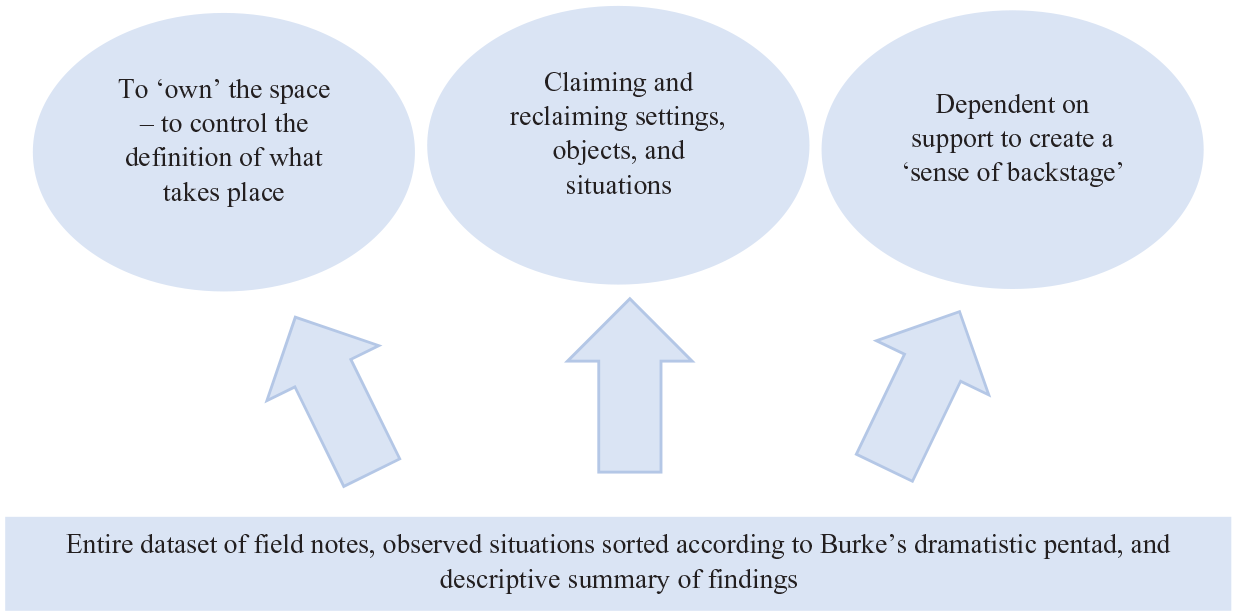
Overview of Observer-Identified Theory Integrated Themes, Derived from Descriptive Summary of Findings.
To “Own” the Space—to Control the Definition of What Takes Place
As an ethnographic researcher entering the scene of the youth homes, one cannot ignore the security measures present; the rural, distant location, high fences, surveillance cameras, security doors, and alarm phones. They all constitute a physical setting that is as inevitable as it is tangible. However, a researcher (or a staff member) can leave at any point, but the youths remain bound in the setting of the youth home, surrounded by their involuntarily imposed props. The staff control such things as keys, doors, and codes, meaning that they control the setting and the props that (involuntary) are a crucial part of the youths’ façade and performance. The setting appears to possess an inherent symbolism that lies within the small-scale material details as much as in the large-scale spatial design and manifests in the staffs’ possibility to spatially regulate and restrict the youths’ bodies and movements, as illustrated by the following sequence:
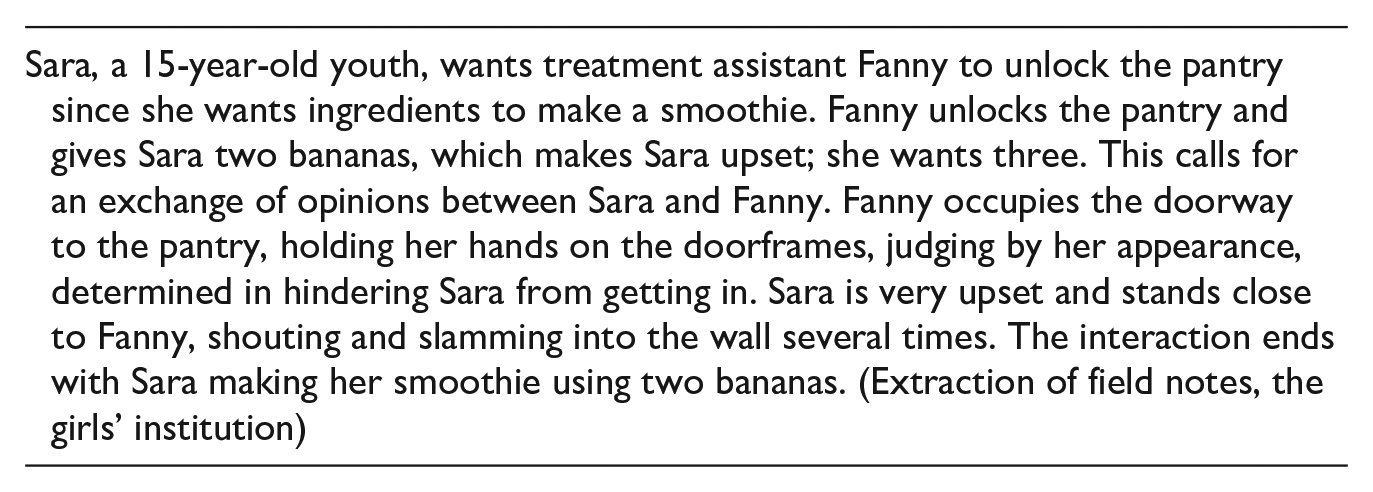
The background of the above sequence is a discussion at the staff meeting earlier the same day about Sara’s weight gain and that she eats “inappropriate,” in terms of quantities and what she eats. The staff’s discussion ended with the consensus of the definition of the situation that Sara’s consumption of food must be restricted. In this example, the definition of the situation is manifested both in the locked pantry door, which Sara must ask Fanny to unlock and extend to the material attributes (in this case, bananas) accessible to Sara. The restriction of access to the specific setting of the pantry and the limiting of the desired material objects hide the definition of the situation and the educational lesson the staff hopes to impart (wanting to influence Sara’s health and behavior). The spaces and the props are physically intrusive in their inevitable and constant presence, through locked doors and restrictions on bananas. Simultaneously, they are symbolically unavoidable manifestations of the definition of the situation.
In another example, a boy, Mario, describes the emotions evoking from hearing the sound from the keys and the alarm box, extending the sociomaterial experience of the institution, to also a senso material experience where materialities, their sound and the practices of the staff melt together:
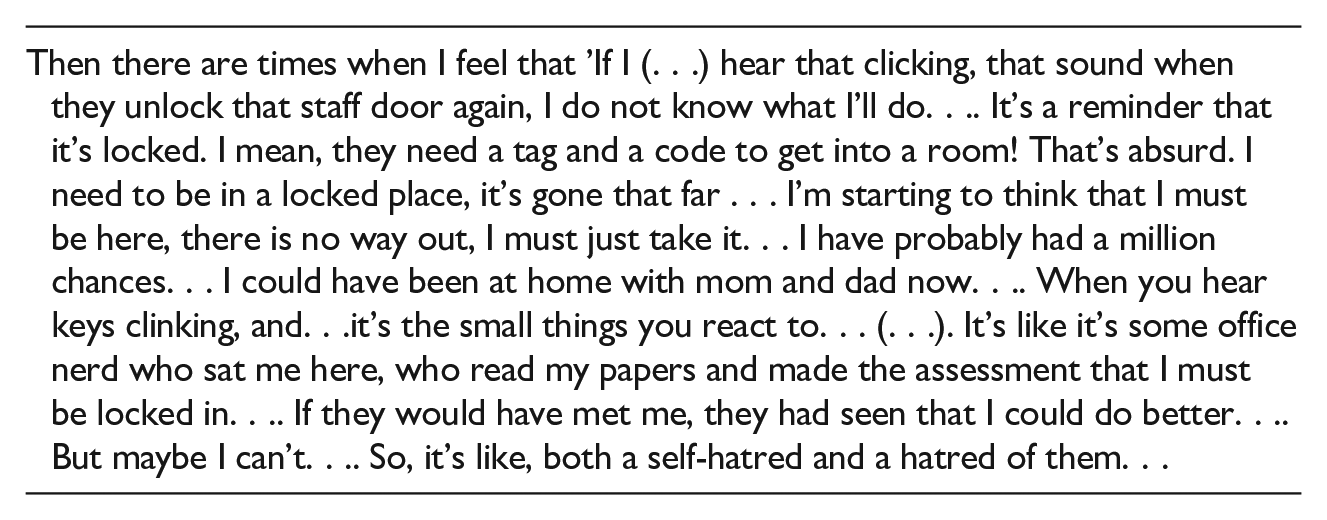
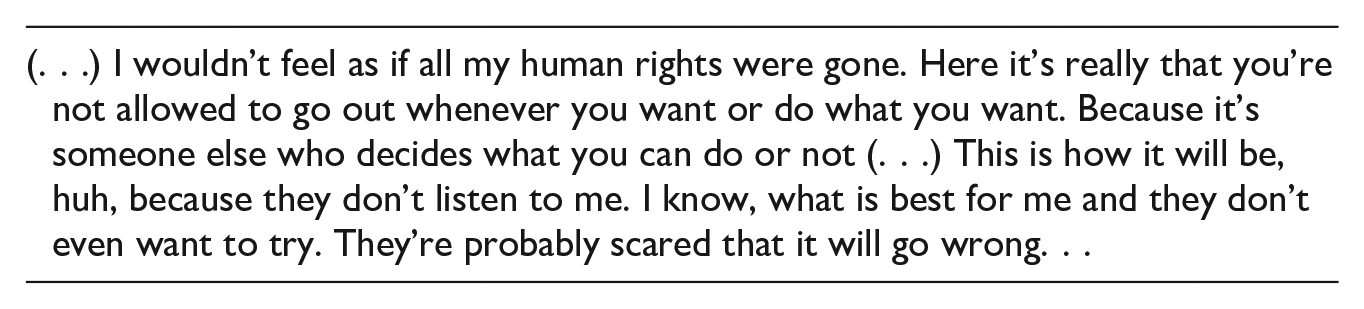
In both examples, youths Sara and Mario are neither in control of the setting or the material objects surrounding them nor over the definition of the situation they find themselves in. Sara wanting to get access to the pantry, and the bananas are defined as inappropriate behavior that needs to be restricted; consequently, the access to the pantry is restricted, as is the number of bananas. The definition of this specific situation is thus interconnected with the definition of the situation “being at a special youth home”; this is a place intended for behavioral changes where the youths who inhabit it need to be regulated, corrected, and educated. In the case of Mario, he interprets the institution’s definition of the situation through him being surrounded by materialities as locked doors, alarm boxes, and clicking keys. The intertwining of materials with the sounds they create through the staff’s actions with them gives rise to sociomaterial practices that are interpreted by Mario as if this setting and props are evidence of that he “must be locked in.” Consequently, affecting his self-image: he also has begun viewing himself in need of such a treatment and such a setting; “. . . If they would have met me, they had seen that I could do better. . .. But maybe I can’t. . .. So, it’s like, both a self-hatred and a hatred of them. . ..” In this case, not only the staff in his immediate vicinity represents the institution, but also the “office nerd who sat me here”—namely the bureaucratic “system” administered by invisible and unknown “others.” While Mario expresses opposition to the institution’s definition of what is going on and what he needs, he simultaneously seems to internalize it—and slowly accept it as his own.
Another sequence involving youth Ally further exemplifies the staff’s control over the setting and the definition of the situation:
Claiming and Reclaiming Settings, Objects, and Situations
The setting and the material objects are important parts of the situational definition, as displayed above. This appears to lead to the staff attempting to claim or reclaim settings and objects to maintain and preserve the definition of specific situations, but also the very definition of the special youth home itself as a regulative and behavior-correcting space. Similarly, the youths are claiming settings and using objects as props in acts of redefining and resisting the definition of both the situation and themselves. This seems to have different causes and manifest in different ways; as a way to play fun due to idleness and “empty time”; as a way to show loyalty with their “team,” that is, the other youths. But also, as a frustration and a resistance to a forced self-image as the unregulated, unruly (potentially) dangerous child. Or due to a striving to reduce the social distance to the human behind the role “staff member.”
The youths’ challenge of the definition of everyday situations can thus be understood as a way of simultaneously challenge the definition of the place “special youth home”—and of their forced self-image. The youths’ acts involve both the spatial design of the setting and material objects. Telling jokes about hiding under the patio, to pull a locked door, or run an awning up and down are acts of playing fun, but also disturbing and distracting, and thus, a way to resist and try to redefine the situation:
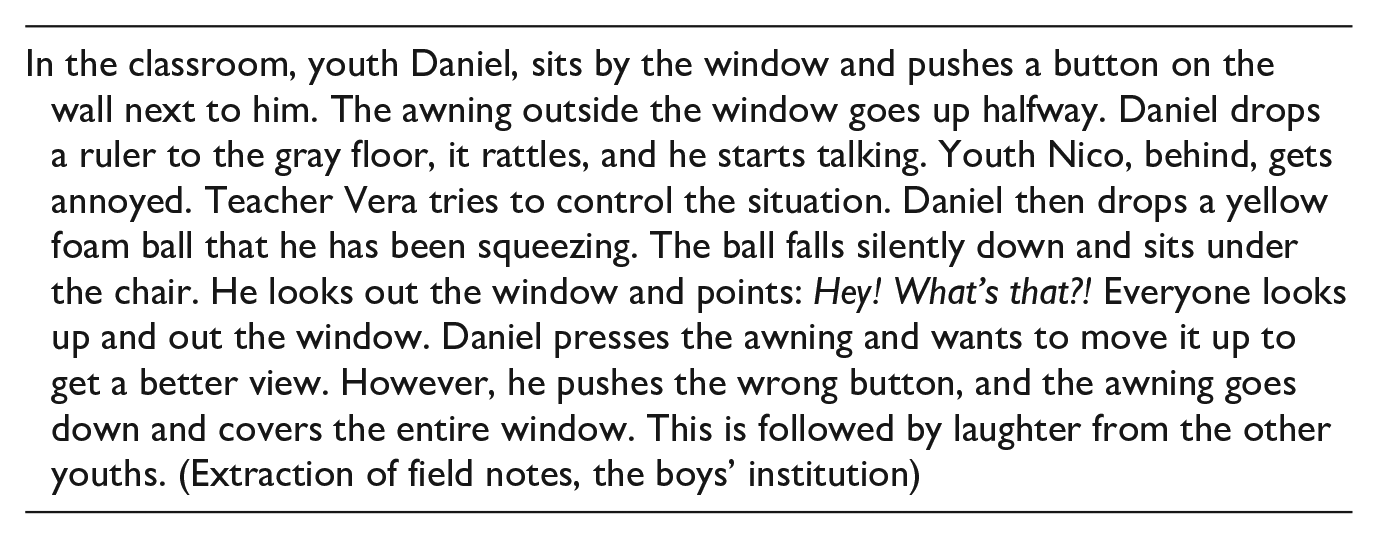
Daniel extends his act to involve the outside area, forcing the teacher to shift her attention from the classroom setting to the outside setting, acting before the other youths, trying to play fun and distract.
In another sequence, also in a classroom, a special type of prop, namely a computer, is used in the provocative act of redefining and resisting the definition of the situation. The youths normally do not have access to computers, but now by two youths Mario and Victor, use it to provoke the new, and by all accounts from his nervous behavior, insecure teacher, Andy. Mario and Victor put on joke versions of children’s songs on their computers, making the other youths laugh. Teacher Andy insecurely smiles, stretches across Mario’s table, and presses a key on the computer to stop the intrusive senso material experience, but Victor leans over and turns on the song again. He takes control over the situation, at least temporarily, by controlling the computer and using it as a prop in his act of intertwined fun and provocative resistance. The sequence repeats a couple of times, with teacher Andy appearing more stressed out.
Both teacher Andy, and treatment assistant Fanny, in the sequences above, repeatedly try to reclaim the setting and the material objects the youths use in their claim for an alternative definition of the situation. Andy’s and Fanny’s motives behind the attempt to reclaim the setting and objects are the same: to reclaim and maintain the definition of the specific situation, but what seems more important: the definition of the special youth home as a place where behaviors are corrected, and order maintained and restored. The setting constituting locked pantry doors and, normally, restrictions on computers hide an obligated instrumental decorum imposed by the employer: to guard and “police” the borders of the setting—and the situational definitions.
However, the staff’s ability to correctly interpret the instrumental decorum and what is required of them in terms of performance appears tied to their familiarity with the setting and how to use the objects. Lacking sufficient “space familiarity” means not being able to interpret what is demanded of them, and ultimately has consequences for one’s performance, illustrated as follows:
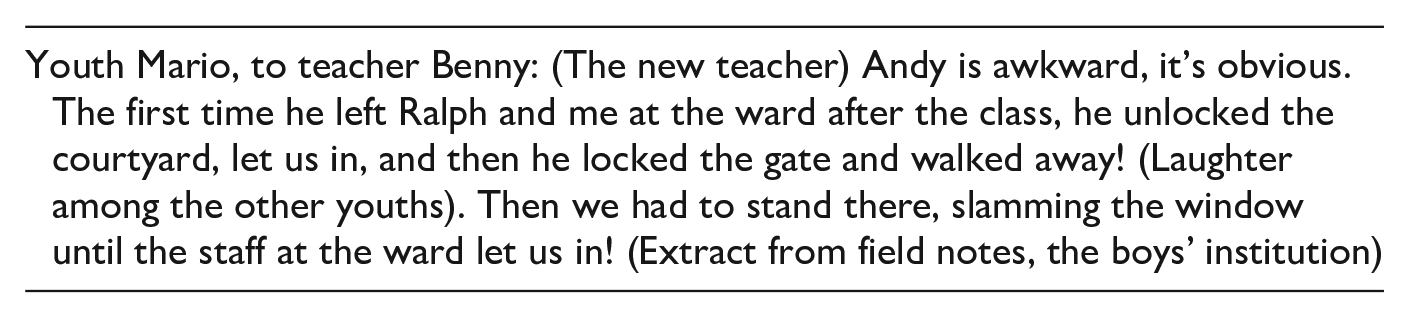
To get to the school, the youths must be escorted by staff. There are two security doors and two gates surrounded by high fences over the 20-meter walk, all of them with locks and alarm boxes. The incident revealed teacher Andy as a newcomer not credible in his role and with insufficient knowledge of the institutional setting and the demanded sociomaterial practices that he should have undertaken.
Apart from claiming for settings and props to redefine situations and their self-image, the youths appear to conceal parts of their behavior to avoid costs regarding their self-presentation. Ally, a 15-year-old girl, tells she feels insecure and confined, due to a previous incident, when a certain treatment assistant works his hours: I feel I need to be in my room, because if I’ll yell at him it will give me consequences. Similarly, Jack describes the frustration over not getting to choose sweetened yogurt for breakfast but must eat the unsweetened varieties that the staff thinks are healthier. The rule makes him feel humiliated and incapable. However, he has realized the importance of applying self-control to avoid consequences, above all the risk of remaining in the institutional setting for longer: In the beginning, when I first got here, I was pissed off. However, if I’ll continue like that every day, the staff will go like: “he’s not ready to move out.” Jack wants to resist the institution’s view of him as incapable of choosing for himself, but is forced to accept and conform, to approach the exit.
Dependent on Support to Create a “Sense of Backstage”
The situation with Ally feeling she needs to stay in her room, and Jack’s harsh statement regarding what he needs to do not to remain longer than necessary at the youth home, also illustrate the youths constantly being on stage. The constant evaluation of their behavior means they must continuously guard themselves and their performance, which appears further accentuated by the restricted access to a real and reliable backstage. At least, definitions of spaces seem unreliable and out of the hands of the youths, illustrated as follows:
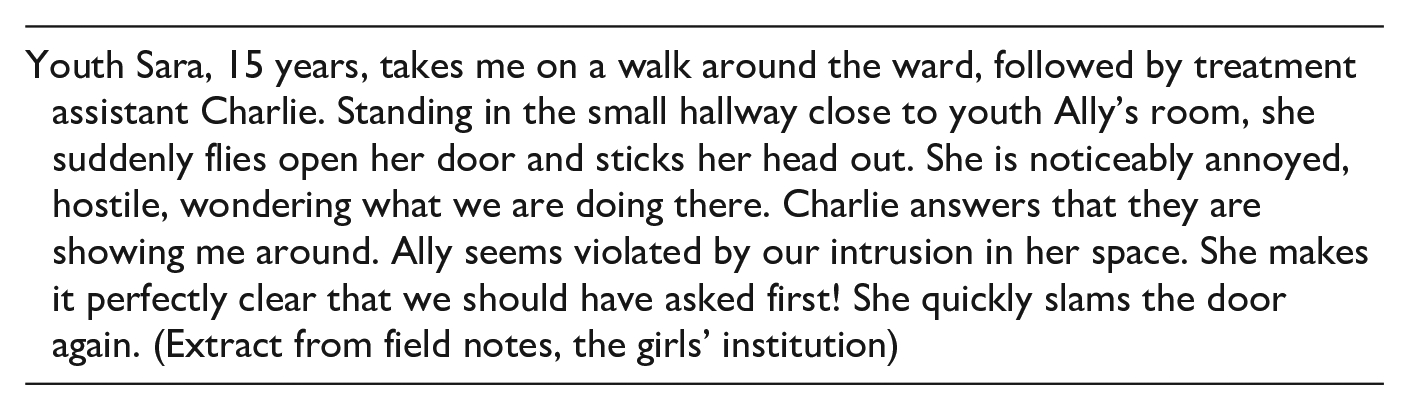
Ally appears to think of what happens as an act of intrusion, which is also confirmed in the subsequent interview with her. According to her, the hallway next to her bedroom is also her private space—her backstage. However, to treatment assistant Charlie, this space is included in the tour as a public space at the ward. The definition of the hallway—as an onstage or a backstage—differs between Ally and Charlie. As much as the definitions of regions appear to be unproblematic with the staff, they create uncertainty with the youths, adding to the experienced border-policing controlling agencies by the staff. The youths have nowhere to escape their performance, nowhere to drop their social role. Admittedly, the youths have their own space to retreat to as their backstage. But it is a backstage that is blurred at the edges and unreliable. The staff have keys which means that they can enter everywhere, at any time—and they have the power to control the definition of spaces.
Despite the lack of clearly defined reliable back stages, the “sense of a backstage” appears to be possible to create by the staff, as the following sequence demonstrates:
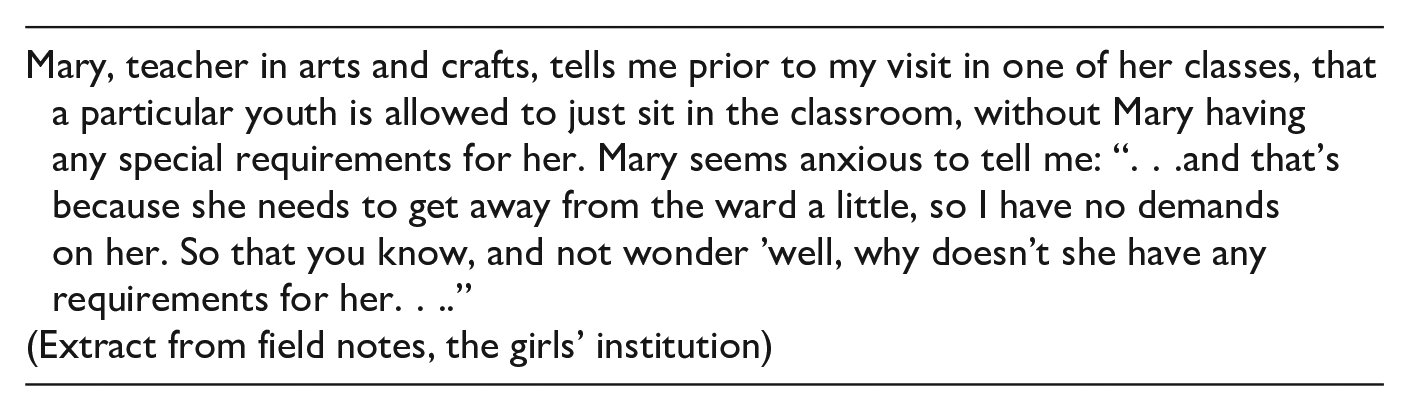
Mary creates the sense of a backstage for the youth, giving her the possibility to "just sit"—a possibility seemingly nonexistent at the ward. Apart from creating the sense of a backstage, from the follow-up interviews, both staff and youths express that “something happens” when they change settings and get out of the youth home. To leave the institutional setting becomes a way to get closer to each other, leaving the fixed social roles of “youth at a youth home” and “treatment assistant” behind. As Ally puts it: The most important thing you have when you sit here is to go out [and leave the institutional grounds] (. . .)! I can disconnect myself from the fact that I’m at a youth home.
The change of setting, thus, appears to evoke a connection between the youths and the staff, encourages closeness, and makes other conversations, social roles, and performances possible:
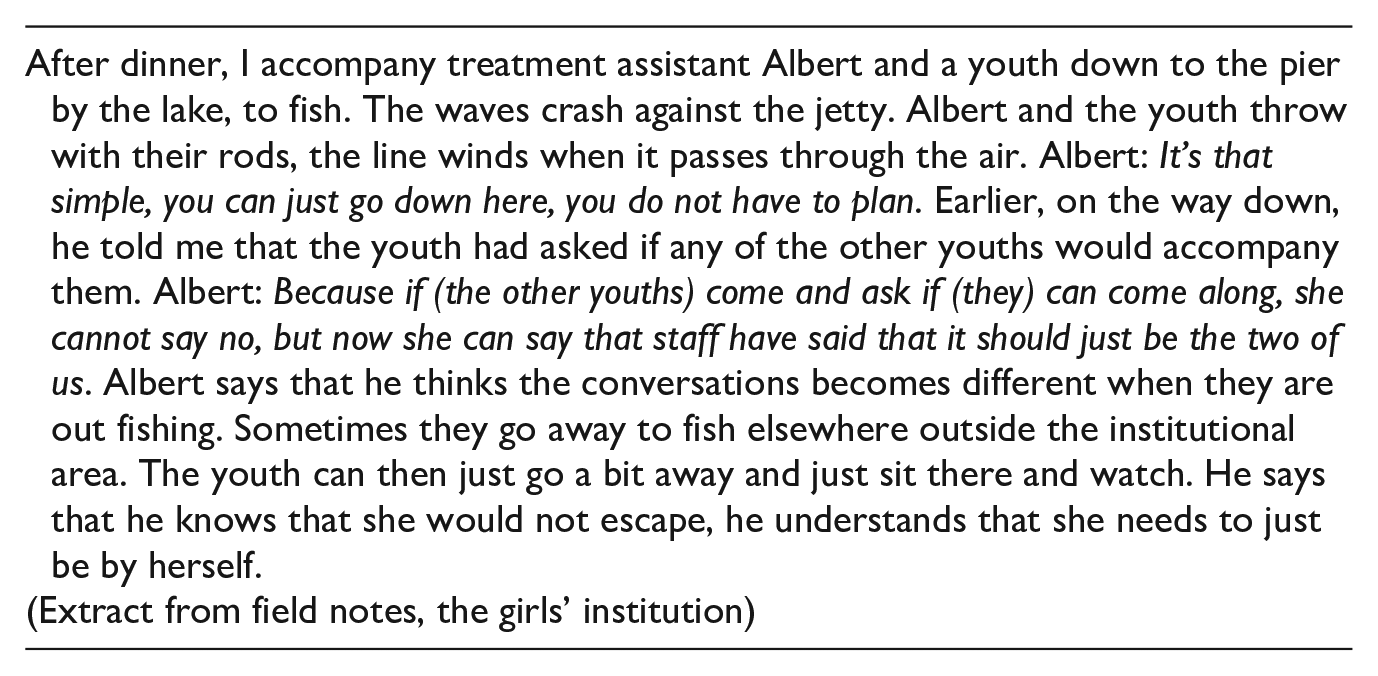
Moreover, to create the bedroom as an own private space for oneself is important as Ally states: Small things, small changes, you can have control over [at the youth home] is all you’ve got. To decorate my room, if I could do that, it would be my resting place (. . .). I haven’t control over anything, I cannot even decide where my bed should be, because it is nailed to the wall! However, as Ally’s statement demonstrates, and from the follow-up interviews, it is evident that the possibility to shift setting or get access to a real and reliable backstage, is restricted due to resources and risk assessments. In the absence of this, what remains is to try to reach a sense of a backstage and at homeness. For this, the youths depend on the staff—and sociomaterial practices characterized by care and closeness rather than control.
Discussion
In this microethnographic study, we sought to explore the social interactions in the spatial and material environment within everyday life at special youth homes in Sweden. Our findings demonstrate that the staff strive to control not only the setting and material objects but also the definition of situations: both the everyday situations and definition of the special youth home as a place intended for behavioral change, regulation, correction, and education. These situational definitions, however, are not necessarily the creation of the staff, rather the staff are representatives of the “system,” maintaining its outward impression (Goffman 1956; Ugelvik 2013). This results in a struggle between staff and youths to claim and reclaim settings, objects, and situations. The youths have restricted access to real and reliable spaces where they can drop out of their social role, rather, they are dependent on the staff supporting them in creating a sense of a backstage.
According to Goffman (1956), there needs to be the correspondence between the different parts in the individual’s expressive repertoire—namely, between the setting, the appearance, and manners—for a performance to be credible. Further, the demand for a certain decorum regarding standards as to how to behave and what is required for the performance to be credible is tied to the region and the setting where the performance takes place (Goffman 1956). However, Goffman believes that the “outside” and society’s values also affect how people act, and collective practices that arise (Goffman 1956)—of which the sequence with Mario, above, is an example.
The findings demonstrate that the setting and the objects of the special youth home are not “just” spaces and objects. Rather, they appear to constitute active agents with an inherent symbolic meaning (Jewkes 2018, 321), demanding a certain instrumental decorum with the staff (Goffman 1956). The setting constitutes security doors, security windows, high fences, and props such as alarm phones and keys, “inscribes” (Jewkes 2018) the setting with the meaning of security and risk management (Nolbeck et al. 2020; James and Olausson 2018, 2021). This inscription appears tied to and demanding, a certain instrumental decorum by the staff, “steering” them to maintain and reclaim settings and objects—to maintain the definition of the special youth home as a space where social order is maintained and restored, and behaviors corrected. The staffs’ control of the setting and the objects (having access to certain spaces through keys and codes, for example) means that their performance will be more intimate and more correspondent if in congruence with the demands of instrumental decorum (Goffman 1956, 107). Namely, a security-inscribed setting and objects as keys and alarm phones demand correspondent controlling security practices, to maintain a certain impression both as an individual and as a staff team and to maintain the definition of the situation. Thus, the setting and available “props” promote sociomaterial control practices—and sociomaterial care practices are absent, hindered, or complicated.
The institutional setting and materialities are also symbolic manifestations of what its inhabitants “need,” and what the staff requires—an ultimate material manifestation of the definition of what “is going on” at the special youth home. In the youth home, a locked pantry door and the denial of one more banana symbolize something beyond doors and bananas; they are practices embedded in the setting and materiality: sociomaterial control practices (Nolbeck et al. 2020; Fransson et al. 2018; Schatzki 1991; Østerberg 1998). Accordingly, the youths’ pulling a door handle, pushing an awning, or throwing a foam ball, could be interpreted as different ways to challenge the forced-on definition of situations and of themselves: as provocative acts of resistance; as ways of playing fun during “empty time”; to catch a glimpse of the person behind the role “staff member”—or as showing loyalty with the youth team (Goffman 1956). Material objects are used in unintended ways, involving foam balls and rulers as props in unexpected acts. To “set the scene” and to tailor one’s performance to fit the setting using available props, is both part of the striving for favorable self-presentation and a question of (social) survival (Burke 1969; Goffman 1956). Moreover, creating congruency between the setting and one’s needs could be viewed as a crucial part of gaining control over one’s life situation (Houle et al. 2018). By using the setting and the objects, the youths try to claim and challenge the definition of the situation and their forced self-image (Enell 2015). However, sociomaterial practices of resistance, playing fun or showing loyalty with the youth team, is often interpreted as evidence of the placement itself (Goffman 1961). Thus, both the staffs’ and the youths’ actions could be viewed as rational practices in striving to “pass” as credible in their social role (Goffman 1956). It becomes a way of trying to navigate their sociomaterial reality.
The absence of a real and reliable backstage is evident in the findings. The youths’ lack of control over their backstage creates dramaturgical difficulties (Goffman 1956) and imbalance between privacy and social interaction (Evans 2003). The fusion of spaces and activities and the unclear definition of regions leave the youths constantly performing on stage (Enell 2015; Goffman 1956). The solution becomes to either escape the setting of the youth home or trying to create a “sense of a backstage” (Goffman 1961, p. 128). Both require the staffs’ mandate and engagement, through challenging the required decorum and giving the youths access to spaces and things “inscribed” with something else than control.
Conclusion
Our analysis demonstrates that the claiming and reclaiming of settings, objects, and situations might be rational but not necessarily constitutes as care practices (Enell and Wilińska 2021; Mol 2008; Mol et al. 2010). To “re-set” the scene and create conditions for care practices requires spaces and objects, alongside decorous behavior (Goffman 1956) inscribed with care—or the possibility to shift to that kind of setting. Defining care practices in the context of the youth homes and identifying corresponding spaces and materiality becomes vital in the light of our study. After all, care and treatment are not just what happens during appointments occasionally but are enacted as practices that are done in everyday life, involving smoothies, bananas, and slippers. The institution is not a fixed space but inherits possibilities to reset the design and materiality to make space for care practices.
Strengths and Limitations
The microethnographic method enabled us to focus on interactions in the spatial and material environment of Swedish youth homes. The video recording, due to ethical reasons, could not be used—which is often the case in contemporary microethnography (Atkinson 2007; Streeck and Mehus 2005). Thisattributes our use of the method to the older school of microethnography (Streeck and Mehus 2005) and could be viewed as a limitation. However, relying on field notes and interviews is a common and well-established approach in ethnography (Atkinson 2007).
Burke’s dramatism was originally developed for language analysis rather than analysis of “reality” (Burke 1969). However, in the present study, the dramatistic pentad was used as an analytical tool for sorting the data, and Burke’s whole concept of dramatism was left behind in favor of the works of Goffman. However, Goffman’s examples of a total institution come from prisons and old mental institutions, and thus, could be considered less applicable to a special youth home, which could be viewed as more “porous” and more “permeable” as discussed by Wästerfors (2019, 32). Despite the “total” character in the sense of the all-encompassing grip it appears to have on its inhabitants, it is of use when examining the setting of the special youth homes (Wästerfors 2019). Another choice of theoretical perspective, or staying with Burke, could have influenced how the findings were interpreted and presented (Bowman 2017).
Neither the aim of the study, nor the purpose of microethnography, is striving for representativeness but to provide an interpretive understanding of the social interactions in a specific context (Le Baron 2006).The choice of a microethnographic design enabled us to focus on situations involving a small number of people and for a shorter period than classic ethnography (Atkinson 2007; Roper and Shapira 2000).
Although the authors did not relate to the included units, there is always a potential risk of overinterpretation due to preunderstanding. This was handled within the research group through critical reflections and dialogue prior to data collection, during the analysis process, and when writing the article. As stated above, extensive ongoing discussions regarding ethical standpoints are required when researching in the context of institutional youth care. The institutional spaces, materialities, and interactions are equally important to study alongside what creates ethical challenges.
Footnotes
Acknowledgements
The authors would like to thank the youths and the staff members that took part in the study: Without your participation this study would not have been possible. The authors also would like to thank Lisen Dellenborg, Phd in social anthropology, at the University of Gothenburg, Sahlgrenska Academy, Institute of Health and Care Sciences, for thorough reading and feed back on the manuscript.
Declaration of Conflicting Interests
The authors declared the following potential conflicts of interest with respect to the research, authorship, and/or publication of this article: The first author collected the data. The first and last authors read the field notes and interview extracts and worked closely during the analysis. The second and third authors read parts of the field notes and analysis and contributed with feedback throughout the process. Prior to submission, all four authors agreed on manuscript content and structure. No conflicting interests have been identified.
Funding
The authors received no financial support for the research, authorship, and/or publication of this article.
