




Abstract
Methodological “confessions” are an established genre of ethnographic writing and have contributed to the development of reflexivity in the practice of qualitative research. Yet despite their prevalence, methodological reflections on the specific challenges of conducting ethnography in institutional sport settings have not been developed. The aim of this article, therefore, is to provide a confessional representation of ethnographic fieldwork in a male academy sport environment in the United Kingdom which exhibited several institutional characteristics. Five images are used as stimuli for further methodological reflection in order to illustrate and analyze some practical, ethical, and relational qualities of ethnographic fieldwork. The interpretation and analysis draw attention to strategic ways ethnographers adapt their ethnographic presence in response to specific contextual challenges and constraints. The article concludes with a series of recommendations to guide ethnographic fieldworkers (especially novice ethnographers) in settings of a similar nature.
Introduction
On the methodological strengths of ethnographic fieldwork, the sociologist Ken Pryce (1979, 297) wrote: “participant observation permits the researcher to understand the problems of a group in a way that no other method will.” His first-hand account of West Indian lifestyles in Bristol, United Kingdom, between 1969 and 1974 is a classic example of ethnography’s power to get behind the scenes of cultural practice and disclose, in a richly descriptive and empathetic way, the everyday struggles people encounter. The epistemological characteristics and methodological complexities of the practice of ethnographic fieldwork and the production of the ethnographic text have been well documented in the wake of antirealist and political critiques of ethnographers’ (in)ability to study and portray the social world, and people’s experiences of it, in “natural” and uncontaminated ways (see Hammersley and Atkinson, 2019). Since Van Maanen’s (1988) influential classification of the “confessional tale,” ethnographers have been encouraged—and to an extent empowered—to ‘“confess” and reflect upon their presence in the research process and reveal some of the practical, ethical, biographical, social, historical, and relational dimensions of their work (e.g., Carrington 2008; Fincham 2006; Fleming 1997; Macphail 2004; Ortiz 2005; Parker 1998, 2016).
Recently, Norman (2018) contributed to this body of literature by depicting the difficulties he encountered in gaining entrée to “the field” (see also Campbell 2020). With aspirations to study the role of sport and physical activity in Canadian prisons through participant observation, he reflected on the institutional and political barriers that prevented him gaining privileged access in the way initially conceived. Having experienced a series of organizational barriers and obstacles along his research journey, Norman (2018, 20) concluded that “social scientists are often guilty of downplaying or ignoring the methodological difficulties they encounter in their research.” Methodological reflections about the complex nature of ethnographic fieldwork are commonplace, and this article is, in part, a response to Norman’s call for qualitative researchers of sport and physical culture to continue to offer reflexive accounts of undertaking research in sports settings.
Specifically, the article examines the process of conducting ethnographic fieldwork in UK academy sport, 1 a context designed to nurture athletic development into professional sporting locales. Our primary aim is to explicate some of the practical, ethical, and relational features of ethnographic fieldwork using photo elicitation as a reflexive frame of analysis. The intention is to provide a confessional account of what it was like to research in an institutional sport context and to illuminate using visual evidence of ethnographic fieldwork in practice. The article concludes with a series of recommendations to guide future fieldwork practices for the pedagogical (as well as theoretical) purpose of advancing, transmitting, preserving, and renewing ethnographic field craft.
Confessional Writing and Photo-elicited Reflexivity
The origins of confessional writing can be traced within Malinowski’s private fieldnotes published posthumously under the title A Diary in the Strict Sense of the Term (1989). Though never intended for publication, these excerpts from Malinowski’s fieldwork in New Guinea are said to convey “the reactions of a field anthropologist in an alien society” and provide insights into essential facets of Malinowski’s nature and character (Firth 1966 in Malinowski 1989, xv). Though initially downplayed as a “human document rather than a scientific contribution” (Firth 1966 in Malinowski 1989, xvii), in a revised introduction to the book, Firth (1988 in Malinowski 1989, xxxi) provides explicit recognition of the Diary’s methodological status as “not merely a record of thinking and feeling” but as “a highly significant contribution to the understanding of the position and role of a fieldworker as a conscious participator in a dynamic social situation.” Firth’s (1988) repositioning of Malinowski’s fieldnotes acknowledges a widening and more self-conscious conception of ethnography that is more accepting and analytically aware of the way fieldworkers affect and are affected by the human processes of ethnographic production.
The confessional style revealed in Malinowski’s personalized record of experience (since codified into a genre of ethnographic representation) is now a common means through which fieldworkers have come to share their ethnographic encounters and convince their audience that they have actually “been there” (Geertz 1988, 5). According to Geertz (1988), the power of ethnographic persuasion is as much a question of identity and discourse as it is of method and procedure. It concerns primarily the ways in which ethnographers locate and identify themselves in their writing and in relation to others. The “Malinowskian confession” is thus a particular form of “being there” in which “the self” is represented in all its complexity depicting what Geertz (1988, 78) calls an “I-witnessing approach to cultural descriptions.” Central to this form of ethnographic representation is building a legitimate “I” whose sincerity as a witness is constructed through a fieldworker’s situated account of their negotiated course between involvement and detachment and subsequent self-reckonings.
Couched under contemporary interests in researcher “reflexivity,” the confessional tale, according to Van Maanen’s (1988) categorization, is a supplementary genre of ethnographic writing that places the researcher’s experiences of fieldwork at the center of the text. By doing so, confessional writing foregrounds the researcher’s voice in an attempt to reveal what “really” happened in the research process (Sparkes 2002). Confessions are built on the premise that they provide a fuller and therefore more “honest” and transparent portrayal of the means of ethnographic production as an adjunct to descriptions of ethnographic fieldwork and the technical application of research methods (Fine 1993). Stories of conflict, ethical dilemmas, relational tensions, practical challenges, and compromised solutions feature in confessional tales and serve to personalize fieldwork experience. In so doing, they make the process of researching appear natural and fallible, and embed the human qualities, vulnerabilities, and subjectivities of the researcher into the ethnographic research process (Van Maanen 1988).
The modern prevalence of confessional texts and their emphasis on the principle of reflexivity shed light on the social and interpersonal characteristics of the ethnographic enterprise (Atkinson 2015), but reflexivity escapes a neat definition and the practice of being reflexive—as it applies to ethnography and social scientific research more broadly—is contested. There are questions of reflexivity and researcher positionality fitting into a broader debate on ontological, epistemological, and axiological dimensions of knowledge and self (Becker 1996; Coffey 1999)—concepts that are equally contested and often confused by (qualitative) researchers. That said, reflexivity is recognized throughout the methodological literature as a central pillar in the generation of knowledge via ethnographic and other qualitative means (Atkinson 2015; Brewer 2000; Hammersley and Atkinson 2019).
As it relates to the practice of ethnography specifically, reflexivity acknowledges the interactive effects of fieldwork, making explicit “the manifest truth” that fieldworkers are actively engaged in a web of social relations and interpretations with their informants that mimic the processes and practices of sense-making in everyday life (Atkinson 2015, 27). For Willis (1978), reflexivity is not just a retrospective reflective exercise, but a “technique” of participant observation (in the tradition of the Chicago School) to evaluate the limits of empathy in the interlocking of personal subjectivities between an observer and observed brought to bear by the process and practice of fieldwork. The consequence of reflexivity, according to Atkinson (2015), is the act of becoming critically self-aware during ethnographic research. Central to it is the recognition and appraisal of the researcher’s personal characteristics (e.g., age, gender, ethnicity, group membership, and life experience) as well as their actual or perceived influence on the procedures of fieldwork and interpretation of social phenomena (Davies 2007).
Confessional tales are therefore a textual representation of the reflexive principle described by Atkinson (2015), though not one that is unproblematic. Examples in sport and the study of physical cultures abound (see Sparkes 2002 for an early overview), including full-length ethnographic monographs that contain elements of confessional writing throughout (e.g., Sugden 2002). For instance, in his ethnography of the lifeworld and bodily craft of professional boxers, Body and Soul, Wacquant (2004) describes his negotiated position within a local boxing community in Chicago. In doing so, Wacquant (2004, 3) casts himself as a “perfect novice” upon entry—a blank canvas onto which the culture of professional boxing could be inscribed—and confesses other identity attributes that facilitated his full integration as the only “white member of the gym” in a black neighborhood (p. 5). These include his “opportunistic character,” adolescent “sporting capital,” and willingness to commit fully to the “exigencies of the field” (Wacquant 2004, 9–11). Though Wacquant’s (2004) methodological notes say little about the errors of judgement he made or vulnerabilities to which he was exposed, they provide guidance on the ascendancy of a sociological apprentice to an authoritative I-witness.
In an academy sport setting specifically, Parker (2016) explores the impact of gender identities in “talking man-to-man” during his ethnographic investigations of traineeship in an English professional (association) football club. He describes the influence of his biography as a “former industrial apprentice” in enabling him to negotiate the complexities of “working-class male, shop-floor talk,” and establish a “mutual commonality” to build relationships with trainees—in spite of several differences (Parker 2016, 115–116). By opening up aspects of his private life, and covering up others, Parker (2016, 116) describes how he was able to develop relational resonance with the young men at the center of his study amid the “cut and thrust” gender dynamics of football club culture.
Outside of sport, another recent example of confessional writing features in Alice Goffman’s (2014) study On the Run which contains an extended methodological appendix that outlines her experiences of fieldwork, investigating the lives of young black men and women embroiled in the criminal justice system in the United States. In it she provides vivid descriptions of the situations she encountered in the field
2
and how she came to understand the complex, interpersonal dynamics that shaped the foundations of her work. Writing about her identity, and sense of difference relative to her hosts, she explained: Some ethnographers maintain that their difference is an asset to the research: their distant background, gender, or race allows them to see what the local or natives [sic] cannot; their foreign identity gives them some special status or open doors . . . I didn’t take this approach. Or rather, I didn’t have this experience. In some ways, my identity was an encumbrance, and one I had to invest significant time and effort to overcome . . . the presence of a white young woman seemed to make people uneasy if not outright angry or visibly threatened . . . . [M]y lack of familiarity with the neighborhood, and my wholly different family background meant that I didn’t understand what was going on much of the time, and so had to work hard just to keep up. (Goffman 2014, 233).
Consistent across all confessional accounts of ethnographic fieldwork is the implicit notion that the practice of ethnography is not straightforward (Van Maanen 1995) with written narratives drawing upon “reflexive” fieldnotes to elucidate particular experiences and/or stimulate reflection (see Campbell 2020; Carrington 2008; Henriksen and Schleile 2020; Macphail 2004; McInch 2019; Parker 2016). Yet despite the use of visual methods in historical studies, and their increasingly widespread use in the social sciences (Becker 1995), and specifically ethnography (Pink 2007), there are few, if any, examples that draw specifically from photographic evidence of the researcher operating in the field.
“Visual methods” encapsulate an array of research practices, materials, and techniques used independently or in combination with one another (Pink 2007). Examples include film, photographs, drawings, sculptures, or other forms of artwork produced as products of the research process (by the researcher or the researched group) or as supplements to conventional discursive methods used over the course of fieldwork to gather data (Pink 2007). Wacquant’s (2004) use of imagery, for example, offers a series of visual reference points to accompany his ethnographic analysis of boxing culture. Wacquant’s choice of imagery includes photographs of specific boxing locales, practices, and personnel. It also includes photographs displaying his own participation in the field as the subject and object of enquiry. Though little is explained about the photographs’ empirical and/or methodological significance, collectively, the images help to represent and validate Wacquant’s claimed position within the Chicago boxing community.
Photographs are, of course, two-dimensional images that provide evidence for what was in front of the camera at the time of their taking (Tinkler 2013). Their empirical value depends on visual content, and they can be treated like texts rendering their content open to interpretation and analysis (Tinkler 2013). Hence, photographs can be used in research not only to illustrate experience, or represent a particular time, person, place, or event, but also to elicit deep reflection, stimulate recall, facilitate dialogue, and generate meaning beyond an image’s specific frame of reference (Harper 2002). When used in conjunction with traditional narrative passages, photographs can also serve as powerful tools for evoking responses and constructing more vivid and lucid arguments (Phoenix 2010).
The confessional account that follows is structured around five photographs that are used as stimuli to reflect on the relational qualities of ethnographic fieldwork, as well as some of the practical and epistemic challenges of undertaking ethnographic research in an institutional sport setting. It is based on the fieldwork experiences of the first author (Harry), with each image specifically chosen for what they help to reveal about his ethnographic research in practice. The photographs themselves and the circumstances that led to their creation were not contrived for this purpose. They are artifacts collected in the course of the fieldwork, produced by individuals—both internal and external to the studied context (not by Harry), and are presented as “authentic illustrations” of Harry’s ethnographic (co)presence and daily activities with the researched group. Each of the images have been selected for what they “reveal” about the ethnographic research process as symbols of Harry’s transition from outsider to trusted group member and are situated within the confessional narrative as devices to stimulate recall and frame the reflexive account.
The Studied Context
Harry’s fieldwork was located in one of six university centers of cricket excellence in the United Kingdom over a two-year period (see Bowles 2018). Founded in 2000 by the England and Wales Cricket Board (ECB), the 6 university centers incorporate 13 separate higher education (HE) institutions offering a range of undergraduate and other programs of study to match the interests and academic abilities of the aspiring cricketers they hope to attract. Individually and collectively the academies are said to provide: … an alternative pathway into professional cricket for young players who might be unsure of their abilities or plans, or for those unwilling to make an early choice between academia and sport, or simply for those who are late developers. (Atherton 2013, 58)
The idea behind the university centers of cricketing excellence (UCCEs) came from the former England, Lancashire, and Durham professional cricketer, Graeme Fowler, who piloted the first center of excellence at Durham University in September 1996. According to Fowler (2016, 196), the center of excellence at Durham was about giving young players the chance to “finish their education and progress their game into first-class cricket and beyond.” As the former captain of the England men’s team, Andrew Strauss, recollects (2013, 31), “overnight, the Durham University [Cricket Club] had gone from a ramshackle organization of talented students. . . to a highly professional set-up.” While the Universities of Oxford and Cambridge had a long history of producing first-class cricketers and future captains of the England men’s team, the center at Durham was a forerunner to the start of a new high-performance sport culture that was set to emerge amid a fast expanding HE sector.
Since their inception, it is estimated that the UCCEs have produced 23% of the current English qualified players in the men’s county system,
3
though their role and status within English men’s professional cricket’s development pathway have not escaped criticism.
4
Writing in defense of the part the UCCEs play in education and (future) employment of cricketers, the University of Cambridge graduate and former England captain, Michael Atherton (2017), describes the university academy system as an essential “buffer between the amateur and professional game” and an important delay in a young player’s transition into the all-encompassing realities of professional sport. Recognizing the holistic benefits of the scheme, Atherton (2017) highlights: The most important reason for encouraging university cricket, though, is to act as a brake on a game that is becoming ever more demanding of its players. More and more, the focus of professional cricketers is narrowing because of the uber-professionalisation of the game, and that, in turn, is storing up problems for when cricketers contemplate moving on in life. Anything that encourages breadth and diversity of interest, or a chance to gain qualifications that will help in later life, should be welcomed.
Against this backdrop, the study focused on players’ experiences of the university academy pathway as they transitioned into (and in some cases away from) professional sport, and the process of occupational identity exploration related to their lives as aspiring, able-bodied, and predominantly white British young men. At the center of the research was the academy’s role as a situated, work-based learning opportunity, and the tension between aspiration and reality players encountered on their journeys toward deciding whether cricket, as an occupation and future identity and lifestyle commitment, was right for them. Thematically, the research examined the symbolic, intergenerational identity interactions between players and their coach, the institutional nature and socializing effects of the academy and the cricketing lifestyle to which players were exposed, the reconfiguration of players’ attachments to cricket as work, and the turning points in players’ lives as students on the cusp of careers in professional sport that helped close the gap between their formative dreams and future adult selves. With the a priori aim of getting to know the group and the meaning behind their university cricketing experiences, Harry’s fieldwork took place over the course of two seasons 5 (including both winter training and summer playing months) in order to gain insider perspectives on a cricketing schedule that was intentionally designed to mimic/mirror that of their professional counterparts.
At the time Harry’s fieldwork was conducted (between October 2010 and June 2013), the organizational structure of the research setting comprised: a head Coach, a team manager, an assistant Coach, an assortment of medical and sport science personnel, and a cohort of approximately 20–25 male players per year aged between 18 and 24 years. The research setting also consisted of a variety of training and playing locations as places of social interaction connected together in a formalized schedule of weekly and daily events that created something of a “captive world” for its participants (Goffman 1961, 15). The “cricket bubble”—a phrase used by players in recognition of their immersive cricketing experiences—exhibited many of the institutional characteristics previously associated with academy sport environments by other ethnographic researchers (e.g., Adler and Adler 1991; Manley et al. 2012; Manley et al. 2016; Parker 1996; Parker and Manley 2017). Though a university-based cricket academy (like other elite youth sport academies) is not directly commensurable to Goffman’s (1961) conceptual exemplar of a total institution (indeed players moved in and out of the environment between training sessions and competitive fixtures), it was “total institution-like” in the way that the organization, as well as the temporal and spatial arrangements they inhabited as players, orientated them toward a singular (cricketing) existence for extended periods of time.
In addition to the physical locales that structured players’ cricketing experience as they moved between cricket grounds, hotels, and training facilities, and back and forth between their “student” and “athletic” lives, the cricket bubble represented a wider social network of teammates, opponents, friends, coaches, players, and administrators (captured by the phrase “the cricket family”) as well as a cognitive space (thoughts, aspirations, disappointments, and desires) into which players were immersed. The institutionalizing effects of the academy meant that even when players were “outside of the bubble” (i.e., not practicing, taking part in a game, traveling to a game, or in a hotel room), they remained “inside the bubble” in a socially, emotionally, and psychologically connected way. Thus, the cricket bubble was an extension of Goffman’s notion of institutional “totality” to the less material but equally pervasive (sub)cultural features of elite academy sport. Both the material and nonmaterial features of the cricket bubble became most apparent during the months of the competitive season that bound individuals to the social and physical world of an intensive cricketing schedule and the group to a narrow (and narrowing) cricket way of life, consisting of consecutive days’ play and multiple nights away (up to eight days at a time). In early spring and throughout the summer, cricket becomes residential, subjecting players to a rigid and routinized way of living managed by the disciplinary practices of their coach.
From an ethnographic perspective, the organizational characteristics of a cricketing environment designed to socialize and expose aspiring cricketers to the realities of a professional cricketing existence offer an analytically rich research context to which Harry sought access. It also presented a number of challenges of a practical, ethical, and epistemic nature. The following first-person narrative focuses on how Harry engaged and modified his ethnographic presence to navigate and respond to the contextual constraints that informed the execution of his research.
Reflections on Fieldwork Practice in an Academy Sport Setting
Negotiating Access: Discovering Place
Gaining entrée into the field can create a number of practical, ethical, and relational challenges for researchers (Cunliffe and Alcadipani 2016). It can be problematic for a combination of reasons ranging from issues related to the ethnographer’s personal characteristics to simply bad timing (e.g., Giulianotti 1995). For many, including those seeking access to sport settings, attempts to gain research access are often met with organizational resistance and suspicion for the researcher’s investigative intentions (Sugden 2012). In most instances, researchers must work hard to gain access and even harder to maintain it. Access is processual, involving dimensions of power between researcher and participants (Harrington 2003), and becoming a trusted insider takes time and acclimatization. In my experience, it also demanded a willingness to “tread softly” (Fetterman 1989) in first establishing and then maintaining a position in the field.
“Access” is of course a matter of degree. Having permission to visit a particular setting and watch what happens for a while is not the same as taking an active part in the most protected aspects of organizational life. My “soft” approach to access reflected a continuous process of negotiation that lasted the length of fieldwork that enabled admission not only into the physical settings that housed the group, but also entrée into the lives and private thoughts of individuals—none of which was ever guaranteed. Central to my negotiation was recognizing the importance of managing my ethnographic presence to ensure that it remained in the background (even whilst close to the action) and in respect of the rules, role, and relationship hierarchies that pre-existed my entrance into the university cricket environment. Figure 1 is neither at the start nor at the end point of this negotiation, but instead representative of a researcher-researched dynamic that centered on striking a balance between involvement and detachment. As a (youngish) man of a certain demographic and life experience, there were a number of commonalities that I used to instigate and unify my relationship with my respondent group, but there were also important differences that enabled me to regulate self-defining aspects of my participation within the organizational and relational structures of the field.

Behind the scenes and in the background.
Similar to Parker (2016), I used facets of my social class and gender identity to strike up rapport and bridge relational gaps with members of the studied group at different points throughout my fieldwork. In several ways, it was an advantage, though not a necessity, that as a (heterosexual) man entering a male (heteronormative) environment I was not prevented access to specific social sites (e.g., changing rooms and changing room balconies as displayed in Figure 1) by virtue of my biological sex—though such “behind the scenes” access was by no means assured. It formed a layer of pre-ordained research camouflage that would lead to my inclusion in forms of gendered conversation which the players assumed (to my empirical benefit but ethical discomfort) I was implicitly accustomed to.
In terms of initiating access, I faced little outward opposition from the academy’s principal gatekeeper despite the lack of any prior relationship—a luxury not always afforded to researchers seeking access to (elite) sports teams (e.g., Robidoux 2001). My fieldwork effectively began with a meeting with the head Coach (Coach) who had been in charge of the academy since its inception in 2000. What I had envisaged as a brief conversation aimed at pitching my investigative intentions resulted in Coach entering into a detailed monologue about the role of university cricket, the ethos that informed his practice and the type of environment he sought to create to frame his players’ expectations of becoming professional cricketers. As a former (working-class) professional cricketer, turned umpire, turned Coach, who had sought a to earn a living from the game out of necessity as much as choice, there was an undertone to his description that separated his life experience from my own and asserted his insider knowledge about the game and its professional realities as authentic and intrinsic to his role (see Bowles 2018). Our early conversation was symbolic of a power dynamic that set the tone for a relationship of voluntary subservience (on my part) for the duration of fieldwork that deferred to Coach’s authority, background, and character.
My preliminary meeting with Coach facilitated some tentative first trips “into the field” to observe preseason training on Wednesday afternoons. These trips amounted to nothing more than a series of ethnographic visits where I attempted to stay out of the way as much as possible. To facilitate my immersion as an outsider to the group, there were two principal tactics that I used. The first was to arrive at training early and on my own. I quickly learnt that Coach had a penchant for timekeeping. By arriving early, I displayed to Coach that I was willing to comply with the behavioral disciplines and expectations he held for his players without becoming a nuisance or a distraction to the standards he tried to instill. It also provided a window of opportunity to speak with Coach and to work on my relationship with him in the absence of others, thereby emphasizing my independence and communicating to Coach that despite similarities in age, education, and appearance, I was not one of his players.
My second tactic was to make my cricketing biography (in terms of my knowledge and history of playing) known in order to (re)frame and solidify my research relationship with the respondent group and utilize for credibility a small but meaningful degree of sporting capital (Wacquant, 2004). I had played cricket to a reasonably high standard, and like Carrington (2008), I expressed my learned understanding of cricket technique and vernacular to gain an early degree of acceptance and legitimacy from group members. This was strategic in as much as, like Fleming (1995), I was mindful (and a little embarrassed) of my researcher identity and keen to make who I was and what I was doing appear less formal. Though an outsider to the group, I was, by virtue of my personal history, an “insider to the context” (Dandelion 1997, 182) in as much as I was fully socialized and acutely familiar with the esoteric nature of the game and the eccentricities of those who play it. Aligning my identity to the environment’s primary orientation, however, carried a degree of risk. For the players, academy membership was based on a level of technical ability and cricketing acumen that I did not possess. Overplaying my cricketing credentials risked becoming labeled a “clubby”—parlance commonly used by elite players to belittle amateur and overly enthusiastic recreational cricketers—and distancing myself further from the respondent cohort. Where Coach was concerned, I was also cautious not to claim any of the expert knowledge or experience of the game upon which he constructed his own identity and influence. I therefore avoided any overt demonstrations of my cricketing competence in favor of subtle illustrations of my tacit understanding for what was taking place around me.
Finding a Role and Establishing an Identity: Playing to Strengths
My early identity negotiations were set against a micropolitical landscape that threatened my neutrality from the outset. Historical tensions between Coach, his assistant, and the academy manager fueled a belief that Coach was on the verge of losing his job. Indeed, Coach cast himself as an isolated figure as he went about running the academy and controlling the contributions of others through his authoritarian leadership style. Though he had the aid of a younger and enthusiastic assistant, Coach made his assistant virtually redundant by undermining his autonomy and experiential knowledge of the game. Against this backdrop, progressing my involvement from a passive bystander to a participatory member of the group was not as straightforward as simply asking if I could lend a hand at training. As Becker (1967, 247) points out “everyone has someone standing above him [sic] who prevents him [sic] from doing things just as he [sic] likes,” and whilst I recognized the importance of my relational subordination with Coach, standing on the fringes of preseason training created a number of structural and spatial barriers that prevented the development of any meaningful social relationships with the players (in whose experiences I was centrally interested).
With no formal or informal role to facilitate my involvement in training sessions, it was difficult to be anything other than a fly-on-the-wall as a mere “spectator-observer” (Carrington 2008, 434). In the enclosed and segregated spaces of the team’s indoor training facilities, my opportunities to interact with players were limited and constantly performed under the scrutiny of Coach’s watchful presence. The onset of the cricketing season provided the impetus, through a change in circumstances, which enhanced my involvement and role. The team’s competitive schedule meant that my level of access was propelled into a variety of new situations and social contexts, including the team minibus, cricket grounds, and locker rooms, hotels, restaurants, and motorway service stations as I traveled to and from games and spent multiple days and nights away with the academy team.
The arrival of the cricket season also thrust me into close contact with the respondent group for extended periods of time, adding depth and richness to my fieldwork as well as creating a series of new relational and methodological challenges. Though familiar with the general rituals that surround cricket, the volume and intensity of the academy’s cricketing routine was nothing I had ever experienced. The strain of participating in field-based research is such that the researcher has to learn to tolerate the tensions and dilemmas associated with another way of life (Parker 1998); but rather than being a burden, I considered the strain of being “on tour” to be a sign of my developing emotional connectedness to the cultural practices of the group. Indeed, as Henriksen and Schliehe (2020) have noted, the emotional labor of fieldwork can provide sensitizing insights into the effects of organizational structures, spaces, and temporal routines on the internal life-worlds of those studied.
The role(s) and identities of the researcher doing fieldwork are complex and multifaceted and issues of self-presentation are commonplace, particularly at the beginning of the research process when the ethnographer is focused on building positive relationships and gaining acceptance: Ethnographic research demands a painstaking sensitivity to explaining who you are and what you are doing in order to gain the trust and confidence of those in the field, and this frequently requires the researcher to adopt multiple roles and identities according to their interactions with gatekeepers and participants alike (Palmer & Thompson, 2010, 435).
Despite sharing some of the routine aspects of the players’ cricketing experiences, the question of role still hung over me. The intimacy offered by the enclosed space of a changing room, for example, left me feeling voyeuristic and out of place. Instead of just being there, I felt the need to attach my presence to something that was not defined by my role as a researcher. The potential for role conflict is great (Fleming 1997), and so the “ethnographic self” has to be managed to facilitate the process of research. “Identity work” is, therefore, a pervasive feature of the ethnographic enterprise (Coffey 1999; McInch 2019; Parker 2016) as complementary and competing aspects of the researcher’s persona come in and out of focus to obscure the lines between objectivity/subjectivity and outsider/insider status that is inherent to ethnographic research (Carrington 2008).
My cricketing identity, which I had managed tactically during the pre-season period to seek legitimacy and to make myself appear less threatening to the group, became the catalyst to establishing an active part in the team’s pre-match preparations as displayed in Figure 2. This, however, was not without controversy when I sacrificed the principle of voluntary subservience, I used to negotiate access and build rapport with Coach. During one of my early match-day experiences, I began to respond to players’ requests for “throw downs” 6 to help them warm up. My hands-on involvement brought with it a sudden increase in status which Coach was quick to acknowledge and confront. Later that day, I witnessed Coach chastise his team for their “lazy, student mentalities” in the changing room for seeking my support. Though directed at his players, I knew that, in effect, his words were aimed at me as a warning against venturing too close to his prized assets. The incident concerned me not least because my actions had inadvertently got the players into trouble, but it also threatened to destabilize the rapport I had begun to establish with Coach and risked imposing further distance between me and his players.
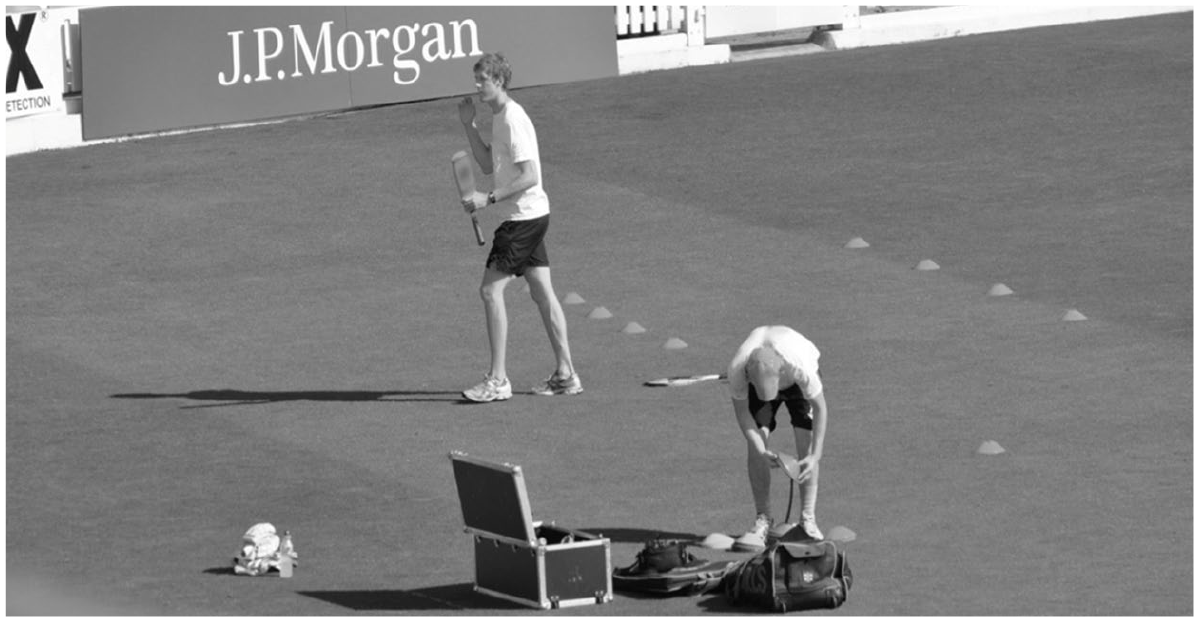
Taking an active part.
What this incident began to reveal was a set of “house rules” (Goffman 1961, 140) that I would need to adopt to if I were to continue to take an active role in the field. Interpreted in light of the mortification processes described by Goffman (1961, 26) to socialize new recruits for the purpose of institutional control, Coach was subjecting me (as well as his players) to an “obedience test” in order to obtain my “cooperativeness” and restrict my sense of agency as a researcher and subordinate member of the group. Though my cricketing identity would prove fundamental to my ability to play an active role in the research setting, I was not able to determine how I used it. From that moment on, I would seek Coach’s permission before participating in the cricketing practices of the group to ensure my hands-on involvement was compliant with the power differential between me and Coach, and between Coach and his players.
This incident reminded me that my relationship with Coach was fundamental to my level of access. Without his support, I would not be able to get close to his players or immerse myself into the structured routines of the cricket bubble. Whilst like Parker (1998, 2016) I continued to bite my lip and toe the line out of respect for the demarcation of power that symbolized our association throughout my fieldwork, I did so with an increasing degree of empathy, recognition, and admiration for the different sides to Coach’s character. I grew to like Coach and over time I think he began to like me. There is a common trope of flattery and betrayal in the ethnographic literature that describes (and over-simplifies) a unilateral relationship between researcher and researched, but which fails to account for the dynamic nature of fieldwork and the human bonds that typify such dynamism. As trust replaced suspicion on both sides of the relationship, I became a captive audience for Coach’s wistful, biographical ramblings during motorway journeys, rain delays and evenings in at hotel bars. Such interactions served for him a form of linguistic self-validation, and for me rich narratives of sociological insight that helped establish his symbolic connection to the identity explorations and career transitions of his players (see Bowles 2018).
Developing (Personal) Relationships: Demonstrating Commitment
Seeking permission to deploy my cricketing skill and acumen in a hands-on way was an example among several “tactics” I used to activate my research agency within the institutional structures of the academy governed by Coach. A tactic, suggests de Certeau (1988 xiv), describes a transient way of operating within the “microphysics of power.” De Certeau (1988 xix) goes on to argue that, “a tactic depends on time—it is always on the watch for opportunities that must be seized “on a wing.” Whatever it wins it does not keep. It must constantly manipulate events in order to turn them into ‘opportunities.’” Whereas a strategy is sustained, legitimized and concealed by its place within a system of power (e.g., an institution), a tactic is a fleeting and more resourceful form of action (de Certeau 1988). By operating tactically, I was able to cultivate a research path within an environment structured by hierarchy and institutionalized ways of doing things. Despite feeling constrained by cricketing events, places, my marginal status, and the disciplinary power of Coach, I was able to “make do” among the everyday practices of the group over which I had no control. My tactic of blending into Coach’s preferred way of doing things eventually enabled me to embed myself within the team’s pre-match rituals without challenging his authority (Figure 2). To this end, as the fieldwork progressed, I was able to solidify a non-threating identity as a cricketer rather than some “weird anthropology guy,” and as someone with a skillset and disposition to help. In this sense, I successfully migrated my research practice into the organizational strategies of the group which, in turn, brought me one-step closer to the players and Coach.
That said, conducting fieldwork in a team-sport environment, under the close scrutiny of the environment’s principal gatekeeper, brought with it several other methodological challenges. For example, I had particular difficulty creating opportunities for one-to-one interaction with players amidst the business of the team’s collective daily schedule. A central feature of players’ academy experiences, as with Goffman’s (1961) conceptualization of total institutions, was the fact that they were required to carry out a sequence of organizational duties and activities in the immediate company of each other. During the season, players travelled, trained, played and socialized together and frequently slept under the same roof for several nights at a time; their collective participation being tightly organized around an arrangement of time and locations, over which they had limited control. A typical day (subject to the game’s one-day, two-day or three-day format) would consist of waking at the team’s hotel at 7.30
Under these conditions, engaging with players on an individual basis was limited. The main problem that I encountered trying to manufacture moments to speak to players on a one-to-one basis early on in my fieldwork was that these conversations inevitably became somewhat contrived. Their artificiality was two-fold. First, though informal, such dialogue lacked the spontaneity of a causal conversation resulting in a distorted and unnatural form of talk. Second, not only were the circumstances of these conversations atypical (e.g., in a part of a cricket pavilion with no one else around), but they were also led by my own preoccupation with trying to encourage players to share their views with me on what was happening to affirm my understanding of events. The impact was that instead of helping to close the relational gap between me and the players and facilitate my transition from stranger to confidante, seeking solicited explanations of the players’ lives and experiences served only to widen the gap further.
On the evidential value of dialogue between observer and observed, Becker (1958) makes an important distinction between volunteered and directed statements. The latter are those framed by the fieldworker’s questions, whilst the former are statements produced independent of the researcher’s actions. The question is one of authenticity and to what extent the information revealed as a consequence of either condition is a trustworthy representation of an informer’s perspective(s). For Becker (1958) and Willis (1978), volunteered statements—that is, those unsolicited by the fieldworker—are of great evidential value as their origins are less directed by the bias contained within a given question. Assessing the quality of dialogue is further complicated by what Becker (1958, 655) refers to as the “observer-informant-group equation.” This equation requires fieldworkers to evaluate the relational qualities that may affect what informants are prepared to volunteer (in actions or words) in the company of a fieldworker, in comparison to what individuals say or do in front of other members of the researched group. Fundamental to understanding the nature of participant disclosure, therefore, is the researcher’s reflexive awareness of the conditions that sanction particular points of view.
Figure 3 depicts one method that I developed over the course of the fieldwork period that helped to account for the “observer-informant-group equation” and to embed my research practice in a nuanced and contextually sensitive way. Going for “a lap” (a walk around the boundary 7 ) enabled opportunities for one-to-one interaction with players and Coach in a manner that neither felt nor looked out of place. It was an activity that players used independent of my actions to alleviate moments of disappointment or boredom during games and a way of creating a personal space. Listening to individuals’ reflections as they walked generated several open-ended exchanges through which my personal relationships with players developed. My full commitment to the academy’s schedule served dividends relationally as I was always there to talk when an opportunity arose, and it enabled me to engage in the natural flows of conversation from my experiences as a participating eyewitness. To safeguard the quality and authenticity of these interactions—and to abide by the etiquette of the practice—my approach was to wait until invited before going for “a lap.” I took being invited as a sign, first that an individual had something to share and was preparing to have a private conversation with me, and second of my growing acceptance among the group which drew me closer to the vulnerabilities and uncertainties they felt as ambitious young men who were otherwise silenced by their public commitment to the institutional expectations of becoming professional cricketers.

Creating space for one-to-one interaction.
The cultural ritual of “a lap” was a frame in which players could continue their role-performances as “cricketers” alongside my own (albeit subtle) performance as observer and participant (Figure 3). Crucially, it was the relative privacy that this ritual afforded both observer and observed that enabled other performances to be engendered in conversation away from the performative pressure and scrutiny of the wider group. According to Turner (1987, 81), (role) performance is a reflexive action through which we come to know ourselves and each other better, crystallizing a process of knowing that is central to the ethnographic endeavor. As an ethnographic encounter, these moments helped to reveal that although “you” (cricketer) and “I” (researcher) are different, we share substance as emerging adults with similar outlooks, ideals, and concerns.
Handling Proximity: Managing Distance
The transition from “outsider” to “insider” is facilitated by several factors including deliberate efforts to decrease the “visibility” of fieldwork and distort the professional boundaries that distinguish researcher from participant (Atkinson 2015). The adoption of a research camouflage is a generally accepted practice in the course of ethnographic fieldwork for ease of access and reducing interference caused by the researcher’s proximal engagement in participants’ lives (Wheaton 1997). The degree of “closeness” achieved by ethnographers through tactical attempts to build relationships and merge their fieldwork into the background is a characteristic frequently emphasized in verification of the knowledge produced (see Goffman 2014; Pryce 1979). To this end, the researcher’s intimate exposure to the contexts and events that shape people’s lives leads to a better understanding of how individuals experience and build meaningful relationships to the world and the phenomena under investigation (Becker 1996). Though the epistemological basis and rhetorical credibility of this argument has been debated (e.g., Fine 1993; Van Maanen 1995), naturalism remains a cornerstone of the ethnographic enterprise (Brewer 2000; Hammersley 2018).
In the practice of ethnographic fieldwork, “closeness” is a product of a number of factors. It implies a physical proximity to the people and events that take place generated by the researcher’s material position in the field; and it also relates to a growing interpersonal connectivity born out of shared experience and empathy to which fieldworkers aspire (Willis 1978). While the ambition is to achieve experiential closeness, proximity is not without pitfalls (Sugden 1997). A general theme amongst the five figures presented in this article is my demographic closeness to the players at the center of the study. As a white, middle-class, able-bodied graduate in his early to mid-twenties, with an interest and biography in cricket, there was little separating observer from observed and the collective identity of the group. In addition to the methodological advantages previously described, my closeness sensitized me to some aspects of players’ lives and experiences that intersected with mine that might otherwise have been overlooked by the interpretive stance of another researcher. By the same token, my proximity created complexities of an ethical, practical and epistemic nature.
Figure 4 poses two simple methodological and ethical questions. Were the individuals in the foreground aware of my research presence and possible interest in their conversation, and if so, was I influencing what was being said? The likely answer is no. Indeed, on several occasions I was exposed to sensitive topics of conversations related to drinking, sexual activities, plots to steal equipment from the opposition or defecate in their changing room bin. It seemed there was very little that some players were unwilling to discuss around me that was undoubtedly influenced by my similarity in age, gender, and appearance. Like Parker (2016), I became complicit in performances of machismo however uncomfortable they made me feel. While this might seem advantageous from a data collection point of view, at times, players’ lack of self-censorship felt like an exploitation of their trust and a betrayal of their acceptance. Players were candid in front of me in the absence of knowing how I might reflect on their attitudes and actions in my fieldnotes. In conjunction with tactics designed to mask my research role, my personal characteristics did little to deter individuals from making public matters they might have otherwise kept private. There was, it seemed, a confidence among the players that I would not misrepresent them based on a (false) assumption that I shared the same feelings and beliefs towards certain lifestyle practices (Fincham 2006). As a result, distinguishing what to record and what to ignore was an ethical challenge I frequently encountered which relied upon my best judgement in deciding what was relevant and what was not with the context of an evolving research project. For example, while travelling and staying away with the team, I would frequently hear of players breaking the 10 pm curfew which Coach routinely set and listen, over breakfast, to individuals regale stories of the previous night’s social events—the details of which I would not record or seek to validate to avoid the possession of “guilty knowledge” (though I could not unlearn what I had been told). Instead, I would treat these stories as representations of male bravado that, while interesting, were subsidiary to my primary research goal.

Balancing involvement and detachment.
My decision here on whether to record the details of these conversations and research encounters was, however, simply to sidestep the bigger ethical issue of whether or not I should intervene in the players’ best interests by reporting their misdemeanors (e.g., to Coach) or challenging them on their attitudes and behaviors. As Jones et al. (2020) highlight, these decisions are not straightforward for fieldworkers and cannot be resolved by following a set of rules or predetermined procedures. Deciding whether to act (or not) in any given research scenario requires moral judgement and can be seriously damaging to a researcher’s integrity (McNamee 2001). Jones et al. (2020, 159) argue that, faced with ethical problems of this kind, researchers “should at least feel conflicted about what they are observing (regardless of their research focus).” Indeed, one could argue that not to feel conflicted in such circumstances “suggests a degree of moral failure” for not recognizing the saliency of a situation and the ethical responsibility of the researcher (Jones et al. 2020, 159).
In addition to these ethical concerns, my physical and relational proximity to the group caused a number of procedural and epistemic complexities. The practical demands of recording observational fieldnotes, for example, changed as my role and affiliation to the research context developed. The more involved and “hands-on” I became with the team’s cricketing rituals, the less chance I had to record events as they happened. Trying to hold on to the details of a conversation whilst continuing to play an active part in the team’s warm-up was an impossibility (see also Parker 1998, 2016). Prolonged stints “in the field” (up to eight days at a time) also left me feeling fatigued and looking for ways to counteract the challenges that were interfering with the quality of my written data capture.
Instead of using the fieldnote journal pictured in Figure 5, I took to writing my fieldnotes on my iPhone. Through its digital applications I found I could capture events quickly and more discreetly. Indeed, as McInch (2019, 4) reflects on his use of a multimedia tablet to collate fieldnotes “for all my respondents knew, I could be browsing the internet or paying a utility bill.” During periods of travel or inactivity, it was commonplace for players to be on their phones and thus a natural way of masking my research activity. 8 I could keep my phone in my pocket and remove it in an instant, enhancing my capacity to take notes in situ without compromising my active involvement. Through this technique I was able to amass a chronology of verbatim remarks and on-the-spot memos that I could transform electronically into substantive accounts as soon as circumstances allowed. As a rule of thumb, I followed Pryce’s (1979) recommendation of writing up my fieldnotes while the day’s events were still fresh in my mind. This meant generally the same day and never more than twenty-four hours later to mitigate against memory decay. The method I adopted was to write up my fieldnotes every evening. This often meant in my hotel room where I could write without distraction or concern for who was looking over my shoulder thanks to the privacy it bestowed. My attempts to write fieldnotes publicly (Figure 5) drew attention, felt voyeuristic, and occasionally triggered tongue-in-cheek accusations of “spying”. Like going for “a lap,” the approach I settled on was an attempt to lessen the influence of others on the “technical” and reflective task of transforming my digital notes into a fuller textual account of salient features of the day (see also Parker 1998, 2016).
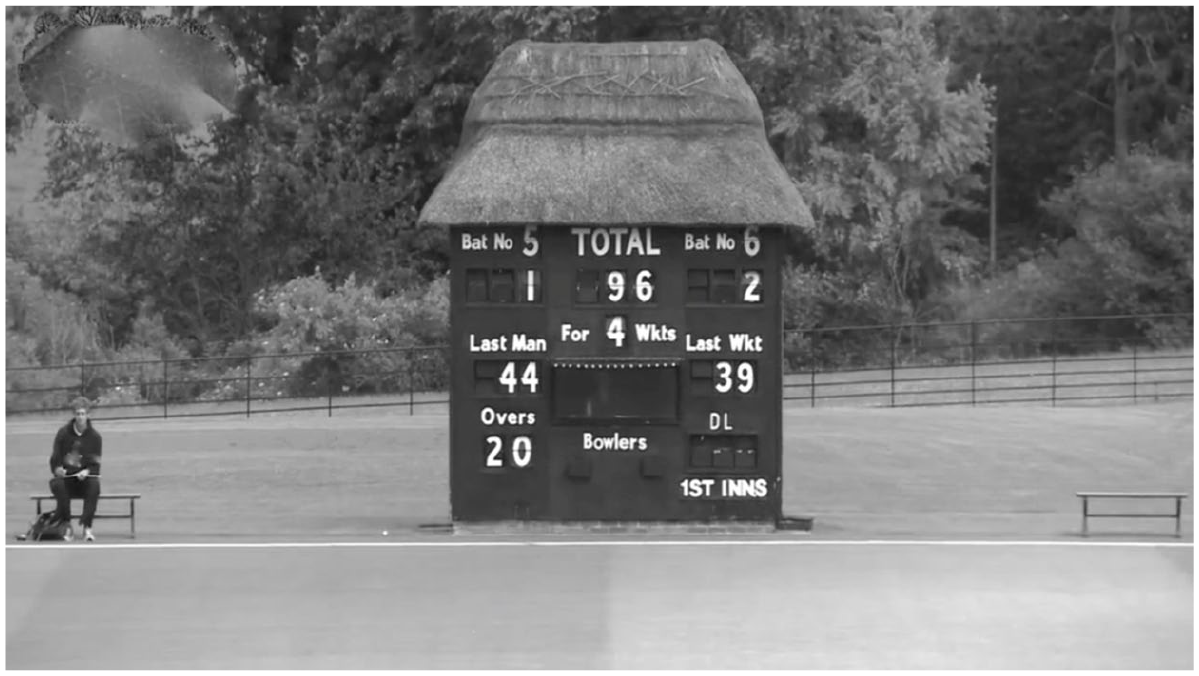
Acknowledging the boundary between self and other.
Adapting my practice with the assistance of digital technology to improve the accuracy of fieldwork data did not, however, reconcile the epistemic challenge of ethnographic interpretation. As Gorman (2017) notes, and as my experiences attest, the medium through which fieldnotes are collated has an active influence on researcher−participant dynamics. There are thus place-based contingencies on the acceptability of using smartphones (and other forms of digital technology) as a research tool that ethnographers need to be socially, practically, and ethically aware of (Gorman 2017). In addition, though new technologies can help make the practice of daily writing more subtle and efficient in some circumstances—and/or offer ethnographers new ways to engage in emergent research environments (e.g., social media/digital platforms) —questions concerning knowledge, representation and researcher positionality remain central to the ethnographic discipline (for a full account of ethnographic adaptation to the digital world see Pink et al. 2016). According to de Rond and Tuncalp (2017), the methods of ethnographic research (digital or otherwise) do not protect fieldworkers from human psychodynamic reactions that can interfere (both positively and negatively) with the processes of data collection and analysis. They elaborate explaining that during prolonged and immersive periods of fieldwork, ethnographers risk projecting their subjectivities into the research process in a way that inaccurately represents the experiences of those they observe.
The transference and subsequent counter-transference of feelings in the dialogue and interactions between fieldworkers and participants is a largely unconscious process making its identification difficult yet all the more fundamental in understanding how researchers are implicated in their work (Gemignani 2011). Acknowledging the “liminal space” between self and other is crucial in recognizing the limits of empathy and extent to which commonality and rapport between observer and observed are a reflection of shared experience (Gemignani 2011, 707), emphasizing the importance of ethnographers adopting a self-reflexive approach to their fieldwork (Atkinson 2015; Davies 2007; Willis 1978).
The boundary rope in Figure 5 became a physical and metaphorical reminder of the essential difference between me and the young people at the center of my research. In spite of a growing trend for ethnographers of sport and physical cultures to seek to live, in an embodied sense, the lives of those they study (e.g., Atkinson 2016; Wacquant 2004), to fully embody players’ positions was a structural impossibility by virtue of role. In contrast to Wacquant (2004, 11), it was never my aim, nor was it feasible, to “surrender” myself to a relationship with the game of equivalence to that which personified players’ cricketing lives (see Bowles 2018). As far as their sporting trajectories were concerned, I could never walk in their shoes—a realization that was practically, ethically, and analytically important. As much as I felt connected and empathetic towards the demands of their everyday sporting lives, and the self-questioning that characterized an aspect of players’ academy experiences as young men, I was not an aspiring cricketer on the cusp of a professional career—and neither could I have become one for the purpose of the research. The boundary rope signified this important organizational and epistemological distinction that helped me to retain a sense of personal identity and analytical distance and define the phenomenological limits of my shared experience with the group.
Conclusion and Recommendations for Future Fieldworkers
Confessional “tales” have a long history within ethnographic research and have become a well-established genre of methodological writing. Their purpose centers on providing rich, researcher-orientated accounts of fieldwork that enable ethnographers to engage in a process of systematic reflexivity and “come clean” about the way in which their research was conducted (Fleming 1995, 52). Notwithstanding the rhetorical characteristics of ethnographic representation (Atkinson 2015), confessional narratives help to reveal the difficulties of conducting research in “real-world” settings through critical self-reflection. The risk, however, is that personalized accounts of this nature collapse into “autoethnographic self-obsession” in failing to address any substantive theoretical or methodological issues (Delamont 2009, 58). The criticism—also levelled at the broader theoretical and empirical products of ethnography (Hammersley 1992) —is that confessions become too particularistic and thus unable to serve a wider analytical and/or pedagogical purpose.
The role of reflexivity is to locate the researcher vis-à-vis the field of study and illuminate the complex relationship between “self” and “other” that shapes—and is shaped by—the processes and practices of ethnographic fieldwork (Carrington 2008). Whether in an implied or more explicit way, confessional narratives offer a close examination of the identification processes implicated in the production of knowledge in relation to the common tropes of negotiating access, building rapport, gaining acceptance, and managing degrees of immersion, participation, and separation in the field. They are a means through which ethnographers present themselves as credible witnesses through the construction of a written identity (I) and a biographical conception of “being there” (Geertz 1988). Our aim in this paper has been to contribute to this body of literature by providing a (re)contextualized account of the identity-work involved in navigating some practical, relational, and ethical dimensions of fieldwork in a total-institutional-like sport setting. It is a response, in part, to Norman’s (2018) call for more confessional accounts of the challenges quasi-organizational sport contexts pose researchers. Five images have been presented as visual stimuli for reflexive analysis, revealing features of Harry’s research practice and co-presence with research participants, and inspiring a set of recommendations for (neophyte) researchers embarking on this kind of work.
The first recommendation is for fieldworkers to discover their place within the studied context in accordance with the rules that regulate organizational practice, and the role and relationship hierarchies that pre-exist their entrance into the field. The “discovery” is an active process of engagement with the social and organizational dynamics of the group. Blunders of interaction are therefore inevitable (e.g., Harry’s throw downs). Shaffir’s (1999) reminder that it is the group, and not the researcher, that defines the terms of acceptance and, by extension, the degree of participatory involvement that acceptance permits, is a useful principle in this regard. Being a researcher in an academy sport context means operating within a liminal space betwixt and between players and coaches. While one’s marginality can feel uncomfortable, this position can be to the fieldworker’s advantage by conveying a (false) sense of neutrality. To be perceived as too close or too distant from either side of this organizational power dynamic can be detrimental. Thus, discovering a place within an institutional structure defined by specific roles, and hierarchical relationships between roles, requires careful reflection and negotiation around how seemingly benign and mundane acts are being interpreted by all parties. To this end, fieldworkers should be prepared to accept a subordinate position (if this helps to prolong access and sustain fieldwork relations) and expect their actions to be monitored and tested by their principal gatekeepers.
The second recommendation is for fieldworkers to play to their strengths in what they present as a plausible researcher identity in order to gain access and build relationships. Honesty and transparency is crucial for fieldworkers managing their appearance to fit in with their research surroundings (Fetterman, 1989). This is not to deny the necessity for fieldworkers to engage in strategies of impression management, but to reinforce the value of authenticity in maintaining a consistent (and trusted) identity-performance. For example, while displaying a familiarity with the research setting may help to build informant confidence (Fincham 2006), it could just as easily undermine their confidence if such an identity fails to hold true. Claiming an “insider-status” is not an essential part of fieldwork in a sport-orientated organizational context (though it can be useful). Exploiting “insider knowledge” as a research strategy is dependent not on the researcher’s possession of a valued identity characteristic (or set of characteristics), but on its recognition and legitimization by the researched group and the demands of the research context.
Third, fieldworkers should demonstrate their commitment to the schedule of events and patterns of activity that shape organizational life. In line with the approach advocated by Sugden and Tomlinson (1999, 387), researchers immersing themselves in the day-to-day practices of an organization is preferable to snapshot forms of “ethnographic visiting.” Committing to organizational routine enables fieldworkers to penetrate “the set of contingencies that play upon a set of individuals” and attune themselves to the way individuals respond to their social situations (Goffman 1989, 125). It also provides a sense of institutional temporality giving the researcher an embodied experience of how the days unfold in a schedule of repeated events and patterns (Henriksen and Schliehe 2020), a salient feature in the lives of academy athletes in total institution-like sport settings (Bowles 2018; Parker 1996; Parker and Manley 2017). Crucially, a commitment to being present allows ethnographers to respond to opportunities to gather information, build insight and develop relationships rather than manufacture them. To facilitate their immersion, fieldworkers need to imagine congruent ways of conducting their research to fit patterns of daily activity to reduce their influence on the studied context and turn research tactics into long term strategies of research participation. This is all part of the practical epistemology of ethnography that requires fieldworkers to attend to the details of everyday life and ask questions about what people do based on what has been observed under the ordinary conditions of their lives (Becker 1996).
Finally, fieldworkers should engage in reflexive techniques that help manage their [ontological] distance. According to Fine (2003, 55), “each ethnographer has a personal equation that encourages the examination of some groups, while avoiding others.” A biographical connection between fieldworkers and their fieldwork has several methodological and relational advantages. However, this also creates epistemic and ethical challenges. Where differences between researcher and researched are subtle (as a result of shared characteristics and/or deliberate attempts to reduce social distance) but essential, fieldworkers should find reflexive cues that help them to distinguish the extent to which their experiences cross over with the experiences of those studied. This is about locating phenomenological boundaries between self and other, and striking a balance between involvement and detachment (Law 2019). Gans (1999) goes further by suggesting that researcher detachment is a primary operational principle of participant observation. This is particularly relevant when attempts at eliminating these differences (e.g., in Harry’s case masquerading as player or assistant Coach) endangers the researcher’s liminal position between hierarchical groups of organizational actors. Where the organizational structures (typical of total institutions and many modern work environments) prevent ethnographers from fully “embodying” the roles of their participants, fieldworkers should aspire to maintain a vantage point that is separate to those they study in recognition of the analytical limits of shared experience and the need to convey a degree of neutrality. Furthermore, from an ethical standpoint, maintaining distance may allay the risk of failing to recognize the moral dimensions of participant observation, a risk that Jones et al. (2020) argue is heightened when researchers “go native” or start their fieldwork from a “native” position (Jones et al. 2020, 159). Ethnographers are not participants in everyday life in an everyday sense. They are researchers of it and are thus bound by the moral obligations of that role whilst participating in the lives of others.
For the novice fieldworker, these recommendations are intended to inform understanding and critical reflection on the tactics they may use to get close to the lives, experiences and situations of others whilst contending with some of the practical, ethical, and relational qualities of doing fieldwork in total institution-like sport settings. Putting issues of professional self-presentation to one side (see Fine 1993), “confessional” accounts that reconstruct how fieldwork was performed successfully, or in some cases unsuccessfully (e.g., Campbell 2020; Norman 2018), are a valuable narrative resource in professional learning in the traditions and practices of ethnography. Though the lessons taken from one ethnographic study may never apply uniformly to another (ethnography is an idiosyncratic situationally receptive research craft), they play a vital role in advancing and continuing critical discussions about method and subsequently the survival of the ethnographic discipline.
Footnotes
Acknowledgements
We are grateful to the constructive comments provided by the anonymous reviewers. The final product is, of course, our own responsibility.
Declaration of Conflicting Interests
The author(s) declared no potential conflicts of interest with respect to the research, authorship, and/or publication of this article.
Funding
The author(s) received no financial support for the research, authorship, and/or publication of this article.
