




Abstract
Background:
Human milk is the optimal infant nutrition, but emergencies can disrupt breastfeeding. When maternal breastfeeding is compromised, informal human milk-sharing offers a solution. This practice has expanded due to increased awareness of human milk benefits, formal limitations of milk banks, and facilitation through digital platforms. Social media enables rapid network coordination. However, informal milk-sharing faces policy gaps. Research on milk-sharing dynamics during acute armed conflict, particularly when formal institutional resources are constrained, remains limited.
Research Aim:
This study addresses the research gap by examining how grassroots digital networks facilitate emergency milk-sharing during armed conflict.
Methods:
This qualitative case study examined communication, coordination, and support patterns within three Israeli Facebook groups related to milk-sharing during the October 2023 armed conflict. Data included all relevant original posts and associated interactions from 1 month before to 1 month after conflict onset. Analysis involved comparative temporal assessment and reflective thematic analysis.
Results:
Analysis revealed nearly double the posting activity post-conflict. Two primary themes emerged: (1) Recipients’ Needs (general necessities, milk-sharing requests, information sharing) and (2) Donor Motivation (non-war-related, war-related, active promotion, logistical support). Findings highlighted unique demands for milk due to maternal injury or absence, alongside robust community-led efforts.
Conclusion:
This study highlights the vital role of social media-based milk-sharing networks in ensuring infant nutrition security during armed conflict. It shows a sophisticated, adaptable community response utilizing digital platforms for comprehensive support. Findings expand Social Support Theory, emphasizing the need to incorporate such grassroots digital solutions into emergency plans while addressing safety concerns.
This is a visual representation of the abstract.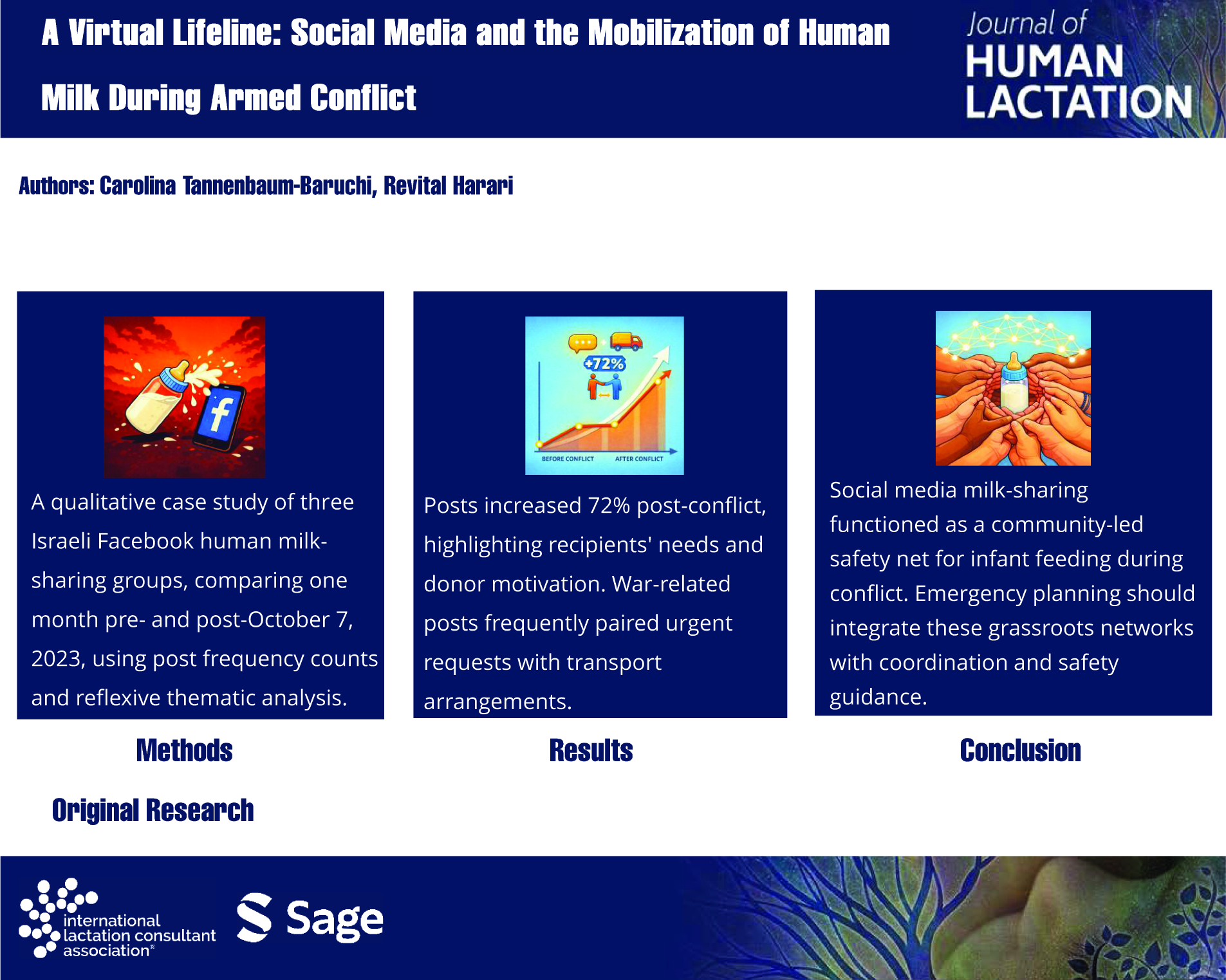
Key Messages
Research on informal human milk-sharing through social media during acute armed conflict remains notably limited, particularly when formal institutional resources are constrained. Understanding these community-driven networks is essential for supporting infant nutrition during crises.
The study found that war-related milk-sharing activity significantly increased following the October 2023 conflict, with posting activity almost doubling in Israeli Facebook breastfeeding and milk-sharing groups.
The research revealed that emergency milk-sharing was driven by urgent infant needs due to maternal injury or absence, while donors were motivated by both war-related concerns and general community support desires.
This research demonstrates how grassroots digital communities can effectively mobilize emergency infant nutrition support during armed conflict. The findings expand Social Support Theory and inform emergency preparedness strategies by showing how to integrate community-driven digital solutions into crisis response planning.
Background
Human milk is widely recognized as the optimal source of infant nutrition, providing unique immunological and neurodevelopmental benefits. The World Health Organization (WHO) recommends exclusive breastfeeding for the first 6 months and continued breastfeeding up to 2 years or beyond (Hahn-Holbrook et al., 2019; Meek et al., 2022). However, sustaining these practices may become particularly challenging in emergencies, as existing vulnerabilities are exacerbated by natural disasters, armed conflicts, or pandemics (Oggero & Wardell, 2022).
Informal human milk-sharing—the transfer of expressed milk to a non-biological infant—is a practical solution when maternal breastfeeding is disrupted or insufficient (Cassidy et al., 2018; Thorley, 2008). This historical practice has resurged due to a growing awareness of human milk benefits, limitations in formal milk banking systems, and digital platforms, which have facilitated far-reaching milk-sharing networks (Akma Jamil et al., 2021; Akre et al., 2011; Cassidy, 2022). Wet-nursing involves direct breastfeeding of a non-biological infant by another lactating woman (Abdelrahmman et al., 2025) and is recognized as a compassionate emergency response (Smith & Iellamo, 2020). Informal human milk-sharing, or peer-to-peer milk-sharing, involves voluntary exchange of expressed milk outside formal healthcare systems, typically without systematic screening or pasteurization (Carter & Reyes-Foster, 2020; Oreg & Negev, 2023). Formal donor milk systems utilize regulated human milk banks that screen donors, pasteurize donated milk, and follow established safety protocols (Doshmangir et al., 2019; Klotz et al., 2022).
Emergencies underscore the critical role of milk-sharing by restricting access to safe infant feeding alternatives. Infants may be separated from their mothers, or maternal capacity to breastfeed may be compromised by psychological trauma, physical injury, or malnutrition (Calderon-Rodriguez & Noble, 2022; Gribble et al., 2020). Shared human milk serves as a lifeline for vulnerable infants, providing immunological protection against infectious diseases that proliferate in emergencies (De Vera Reyes et al., 2020; Gribble & Berry, 2011).
Milk-sharing remains controversial, particularly regarding the safety and quality of donated milk in informal arrangements (Peila et al., 2017). Safety concerns include infectious disease transmission, medication or substance exposure, and contamination (Sriraman et al., 2018). The Academy of Breastfeeding Medicine recommends face-to-face donor screening and home pasteurization for informal sharing (Sriraman et al., 2018). While regulated milk banks mitigate these risks (Fang et al., 2021), they may become inaccessible during emergencies (Israel-Ballard et al., 2024).
In practice, milk banks are often prioritized for premature, low birth weight, or critically ill infants. In regions with limited access to regulated milk banks, informal milk-sharing remains more common (Fang et al., 2021; Herson & Weaver, 2024). During crises, infant formula may become scarce due to supply chain disruptions or panic buying (Dall’Oglio et al., 2020), intensifying the need for alternatives like shared human milk (Asiodu, 2022; Hwang et al., 2021).
Beyond infants’ physiological vulnerability, the emotional and identity dimensions of milk-sharing for caregivers are critical. Milk-sharing represents solidarity, bodily autonomy, and maternal resistance when institutional systems fail (Gribble & Berry, 2011; Jardine, 2023). Offering human milk carries both symbolic and practical significance. For many parents, providing human milk under duress is not only a nutritional choice but also an assertion of parental agency, resilience, and care (Gribble et al., 2020; Jardine, 2023). These meanings underscore attending to sociocultural logics shaping parental feeding choices in emergency settings, not just nutritional adequacy.
Emergency milk-sharing policy frameworks often lag behind practice. Regulatory systems, including Israel’s, focus on formal milk banking while overlooking or discouraging informal practices (Oreg & Negev, 2023; Sriraman et al., 2018). This creates a regulatory vacuum that is critical during crises, when institutional support is strained, and informal networks must fill the gaps. The Operational Guidance on Infant and Young Child Feeding in Emergencies (OG‑IFE) sets global standards for infant and young child feeding in emergencies (IYCF‑E), including breastfeeding support, wet nursing, and donor human milk in emergencies involving maternal separation, injury, death, and psychosocial stress (IFE Core Group, 2017; Tomori, 2023). The WHO and United Nations Children’s Fund’s (UNICEF) hierarchy prioritizes expressed maternal milk, followed by wet-nurse or milk-bank milk, then human-milk substitutes (WHO & UNICEF, 2003). However, guidance on informal milk-sharing during emergencies remains limited. Official emergency guidelines provide limited guidance for when breastfeeding is impossible, and milk banks are inaccessible (Gribble, 2018; WHO, 2017). This necessitates treating informal milk-sharing as a vital community resource in crises, not a fringe practice.
Social media has enabled rapid coordination of milk-sharing networks. Facebook, for instance, has become a central platform for milk-sharing communities, particularly valuable in emergencies for resource mobilization and information dissemination (Palmquist et al., 2019; Tannenbaum-Baruchi & Harari, 2024; White et al., 2024). However, most existing research has focused on non-emergency contexts, examining motivations, safety, and ethics (Reyes-Foster & Carter, 2018; Schindler-Ruwisch et al., 2018; Vickers et al., 2024; Wagg et al., 2022). Few studies explore how such networks operate under acute armed conflict, especially amidst institutional breakdown and compromised breastfeeding capacity. This study addresses this gap by examining real-time grassroots digital responses to infant feeding during wartime.
This study uses Social Support Theory (Cohen & Wills, 1985) to analyze social processes enabling milk-sharing during crises. It identifies four dimensions: emotional, informational, instrumental, and appraisal support, which are critical under stress. Exploring communication patterns on social media illuminates how digital platforms facilitate support networks for infant feeding in emergencies.
Methods
This qualitative case study examined how social media facilitated informal milk-sharing during Israel’s October 2023 conflict. We analyzed communication, coordination, and support patterns in three Facebook groups focused on breastfeeding, parenting, and milk-sharing, examining how these digital communities provided emergency infant feeding, logistical, and emotional support.
Research Design
We employed a qualitative case study design with descriptive enumeration to contextualize network activity. We counted original milk-sharing posts (excluding comments and replies) across two 1-month periods: pre-October 7, 2023 (baseline), and post-October 7, 2023 (crisis). This temporal comparison documented the acute crisis impact on community mobilization while maintaining a manageable dataset for in-depth qualitative analysis. However, the 1-month window may not capture sustained post-crisis practices, and seasonal variations or algorithm changes could have influenced post volume.
We applied reflective thematic analysis to examine posts and response threads (Braun & Clarke, 2019). The coding approach was inductive, while considering established infant feeding emergency frameworks. Both researchers independently coded approximately 20% of posts and met to compare codes, discuss discrepancies, and refine the framework. Disagreements were resolved through discussion to ensure codes captured participants’ meanings and priorities. The refined framework was applied to the full dataset with ongoing consultation to maintain consistency and rigor. We followed the six phases by Braun and Clarke: (1) data familiarization, where both researchers repeatedly read the data to immerse themselves in its content; (2) generating initial codes; (3) searching for potential themes by collating codes into broader patterns of meaning; (4) reviewing, modifying, and refining these potential themes; (5) defining and naming final themes; and (6) producing the final report. This iterative and recursive process involved ongoing dialogue between the researchers to ensure analytical rigor. We identified content patterns, extracted emerging themes, and documented interaction dynamics. Analyzing posts and their conversation threads, we traced how digital communities mobilized logistical and emotional support during the crisis.
Recognizing the sensitive nature of online support communities, particularly during emergencies, we followed rigorous ethical protocols. Although the Facebook groups were “public” with publicly accessible content, the researchers acknowledged the potential for a discrepancy between technical accessibility and participants’ expected privacy. This aligns with established ethical guidelines for internet research, which emphasize contextual integrity and caution against treating publicly available data as devoid of privacy expectations, particularly in sensitive health-related communities (Eysenbach & Till, 2001).
All data were treated as ethically sensitive. We implemented rigorous privacy protections: all personal identifiers (names, profile information) were removed; locations were replaced with geographic regions (North, Center, South); Facebook group names were omitted; and identifying details (professions, third-party names, infant ages) were removed. To prevent web search identification, all quotations were paraphrased while preserving their original meaning. Pseudonyms were used to maintain confidentiality while preserving the authenticity of their interactions. This study was approved by the authors’ Institutional Review Board (Approval # 006-25), ensuring adherence to ethical guidelines for research involving online data and vulnerable populations during the crisis. We balance public health value with our commitment to participant well-being and privacy.
We document the instrumental role of digital platforms in facilitating emergency milk-sharing and the social support networks emerging during this crisis. The design captured practical coordination efforts and emotional support.
Data Collection
We extracted data from public posts and interaction threads within three Facebook groups. We selected groups based on three criteria: (a) focused on breastfeeding, milk-sharing, and parenting; (b) publicly accessible; and (c) Israeli groups (exceeding 1,000 members). These criteria identified active, accessible communities where milk-sharing was central to members’ experiences. The 1,000-member threshold ensured sufficient activity while focusing on established communities. Our sample excludes private groups, which may differ in trust dynamics, safety protocols, and information sharing. Additionally, smaller groups, non-Hebrew groups, and milk-sharing via other platforms (WhatsApp, Telegram, Instagram) or face-to-face arrangements were not captured. These findings represent publicly visible, Hebrew-speaking, Israeli-focused networks and may not generalize to broader informal milk-sharing context.
We identified posts using Hebrew search terms: “Donation,” “Donor,” “Human Milk,” and “Mother Milk” 1 based on preliminary group scans and researchers’ familiarity with Israeli breastfeeding discourse. Inclusion criteria were as follows: (1) contained at least one search term; (2) original posts (not comments or shares); and (3) related to milk donation, receipt, or coordination. We excluded off-topic posts, spam, and automated announcements. Cross-posts across multiple groups were counted separately to reflect dissemination breadth, although this potentially inflated unique mobilization efforts. Our keyword-based strategy may have missed posts using alternative wording (colloquialisms, slang, abbreviations), emoji-only posts, or discussions without these terms.
Data collection occurred in June and July 2024. For each included post, we captured textual content, comment threads, reactions, and metadata, including posting timestamps, interaction frequency, geographic indicators (when available), and response patterns.
Findings
Posting activity across the three groups increased substantially following the war: posts increased from 237 before to 408 after, nearly doubling posting frequency. Most war-related posts reflected heightened community response. We identified two themes: Recipients’ Needs and Donor Motivation.
Recipients’ Needs
The Recipient Needs theme emerged during the conflict, highlighting both routine and conflict-specific challenges in infant care. We found three subthemes: General Necessities, Milk-Sharing Requests, and Information Sharing.
The first subtheme, General Necessities, included posts showing shortages of infant-care items in conflict-affected regions, such as diapers, clothing, and formula. Urgency was evident in posts from displaced mothers who evacuated with minimal provisions: “We ran away from . . . due to the situation, with very little equipment. Urgently in need of a donation of nursing clothes” (Anna). Support networks quickly emerged to meet these needs, with community members establishing coordination mechanisms: “If you lack equipment or need help, we will send you a link to the group closest to you” (Tal).
The second subtheme, Milk-Sharing Requests, reflected urgent demand for human milk during extreme situations. This included cases where mothers could not care for their infants due to conflict-related injuries, missing people, or captivity. Posts emphasized difficulties in maintaining infant nutrition amid armed conflict, especially when maternal access was curtailed by violence or displacement. Informal milk-sharing networks through social media showed an adaptive response to these severe conditions. Posts reflected acute circumstances where traditional feeding relationships were abruptly disrupted by violence: “Mother milk is needed for a one-month-old baby whose mother is seriously injured and cannot breastfeed him” (Dana).
Particularly distinctive within this theme were appeals concerning infants whose mothers’ whereabouts or status remained unknown: “Looking for mother milk donations for a six-month-old baby whose mother is missing from a party in the south” (Nirit). The most severe instances involved suspected abduction scenarios, creating unprecedented caregiving challenges: “Looking for mother milk for the twin babies whose mother is missing and was apparently kidnapped” (Julia). Within milk-sharing requests, volunteers and family members (including men) coordinated milk logistics. Posts described organizing transport to deliver milk to families: “We are organizing volunteers to transport milk across the country” (Dan). Others explicitly offered practical assistance to meet a specific request, including: “Following the request for the baby in the south, I can transfer donated milk from the central area” (Nir).
The emergence of these distinctive requests demonstrated how armed conflict creates unique infant feeding emergencies that require rapid community mobilization. This subtheme highlights how traditional infant feeding vulnerabilities are significantly exacerbated in conflict zones, necessitating innovative approaches to ensuring infant nutrition security during humanitarian crises.
The third subtheme, Information Sharing, highlighted the critical role of social media platforms as a primary source of information. Posts revealed specific concerns and informational needs regarding anxiety medications and breastfeeding safety, continuing to pump during stress, whether to switch to formula due to maternal stress levels, and advice on enhancing milk production through improved pumping techniques and galactagogues. Representative posts included: “There has been a significant decrease in my milk production in recent days, I need a recommendation for a pump that will keep my hands free” (Ayla). “I can’t fall asleep from all the thoughts and stress, what can I take to calm down that’s compatible with breastfeeding?” (Mila). “I read that stress passes through my milk to the baby, maybe it’s better to give formula these days?” (Nofar).
These informational needs were addressed both by group members sharing personal experiences and advice and by healthcare professionals who offered voluntary support. Notably, professional lactation consultants actively engaged in these groups, providing evidence-based responses and individualized support through voluntary consultations, as exemplified by posts such as: “To all nursing and new mothers, if you need assistance and support, we have compiled a list of lactation consultants for initial voluntary assistance” (Dita). Misinformation was not observed in the analyzed posts.
The groups disseminated official guidelines and protocols regarding milk donation to the milk bank during the crisis. This information sharing was crucial for addressing infant needs. Posts revealed a systematic effort to communicate information from institutional sources, notably the National Human Milk Bank: “Milk Bank is in dire need of human milk for those affected babies. Below are the criteria for donation” (Liat). Official institutions utilized these community platforms to communicate specific technical requirements for donations: “A message from the National Milk Bank. Please, we need 2 liters of frozen breast milk, pumped at the earliest on May 23rd” (National Milk Bank). These communications reflected significant policy revisions implemented by the Israeli Ministry of Health and the National Milk Bank during the war’s initial phase, particularly updated criteria for receiving human milk that addressed unique wartime circumstances.
These communications served multiple purposes: They established clear formal donation criteria, articulated specific requirements for milk collection, and clarified logistical constraints such as donation restrictions. The posts demonstrated a structured approach to managing human milk donations during the crisis, with precise specifications regarding quantity requirements and temporal limitations for donated milk. This subtheme demonstrates how social media platforms became critical information hubs during the crisis, addressing mothers’ diverse knowledge needs regarding stress-related breastfeeding challenges, equipment recommendations, medication compatibility, and feeding decisions. The platforms facilitated knowledge exchange through community peer support, professional guidance, and institutional communication of official protocols, revealing an adaptive integration of formal and grassroots information-sharing mechanisms during emergencies.
Donor Motivation
The Donor Motivation theme emerged as a multifaceted phenomenon during the conflict period, encompassing four distinct subthemes: Non-War-Related Motivations, War-Related Motivations, Active Promotion, and Logistical Support, which illustrated the complex interplay between routine and crisis-driven motivations for human milk donation.
The first subtheme, Non-War-Related Motivations, represented a continuation of traditional donation patterns, primarily driven by physiological factors such as excess pumped milk and pre-existing altruistic inclinations: “I have 2.75 liters of unfrozen milk to donate with love” (Dorit), and “I have lots of milk to donate from June, July, and August” (Aviva). These motivations persisted despite the crisis context, forming a baseline for donation behavior.
War-Related Motivations emerged as a distinct subtheme, characterized by heightened emotional responses to the conflict situation. These included expressions of national solidarity, empathy towards affected families, and a desire to contribute meaningfully to crisis mitigation efforts:
I can breastfeed or pump milk for those whose mother is absent/wounded/or recruited. There is also a quantity of frozen milk. If necessary, we can and are willing to take a baby for the short term or (God forbid if necessary) for the long term. (Anat)
Notably, some donors explicitly framed their participation as a form of crisis volunteering, highlighting the psychological significance attached to milk donation during emergencies: “I would love to donate the milk to the babies who were evacuated from the south. . . . I feel that this is the volunteering that will give me the greatest sense of meaning in this crisis period” (Hagar).
The Active Promotion subtheme demonstrated the emergence of community leadership in organizing donation efforts: “To help sort and streamline the donation process, we built an easy-to-fill form, so whether you are donating or searching, you should fill out the form” (Tamar). This was achieved through systematic efforts to streamline sharing processes, including the development of formal matching systems and standardized documentation procedures. These organizational efforts represented a grassroots community response to crisis-induced needs.
The Logistical Support subtheme demonstrated how community involvement expanded to include practical assistance like milk transportation and equipment distribution: “We provide a logistical solution for matches, such as transporting milk, distributing pumping bags or pumps to donors, and whatever is needed” (Dor). Posts mobilized non-lactating community members, particularly volunteers, to coordinate milk transport across regions, showing that distribution required collective and logistical coordination beyond donors. This development underscored the creation of comprehensive support networks that tackled both milk-sharing and distribution challenges during the crisis.
The Donor Motivation theme illuminates how crises can catalyze complex behavioral responses, transform individual donation motivations, while simultaneously fostering the development of organized community support systems.
In summary, the analysis revealed a significant increase in milk-sharing activity during the conflict, driven by unique infants’ and caregivers’ needs in crisis settings and diverse donors’ motivations (see Table 1). These findings highlight the dynamic and adaptive nature of informal milk-sharing networks in response to acute emergencies, offering crucial insights into community-led solutions for infant nutrition security under duress. The subsequent discussion will delve deeper into the theoretical and practical implications of these findings.
Comparison of Breastfeeding Support Group Post Themes, Subthemes, and Frequency Across Two 1-Month Periods: Pre-October 7, 2023 (Baseline) and Post-October 7, 2023 (Crisis).
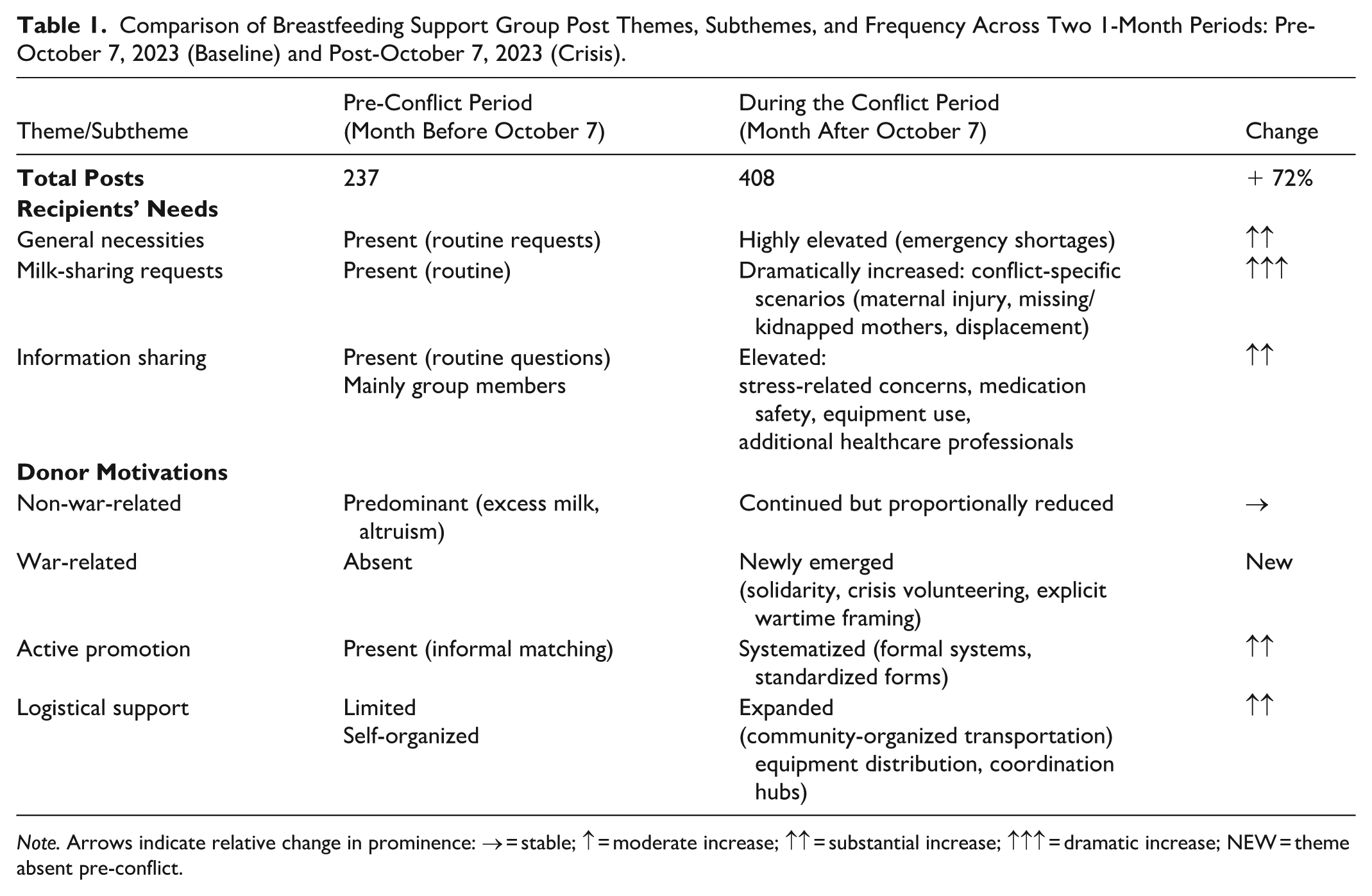
Note. Arrows indicate relative change in prominence: → = stable; ↑ = moderate increase; ↑↑ = substantial increase; ↑↑↑ = dramatic increase; NEW = theme absent pre-conflict.
Discussion
This study examined human milk-sharing during armed conflict, revealing social media’s critical role in facilitating emergency infant feeding. The increase in Facebook posts following the war demonstrated the community’s rapid mobilization and the significance of milk-sharing networks during emergencies. Although misinformation regarding breastfeeding on social media is a recognized risk, it was not observed in the analyzed posts, likely reflecting the moderating role of professional presence (Morse & Brown, 2022). The challenges identified in our study align with IYCF-E vulnerability categories outlined in OG-IFE (IFE Core Group, 2017), demonstrating how armed conflict triggers multiple vulnerabilities: maternal separation, injury/incapacitation, death/disappearance, and psychosocial stress. The emergence of War-Specific needs demonstrates the unique challenges caregivers face, a phenomenon documented globally. Research from conflict zones shows that crises heighten infant malnutrition risks, disrupt caregiving, and cause a collapse in newborn care, forcing reliance on informal support networks (Kampalath et al., 2022; Murphy et al., 2017; Shenoda et al., 2018). Accordingly, requests for milk for infants with missing or injured mothers highlight the vital role of these networks when traditional feeding relationships are abruptly disrupted. This finding aligns with previous research on the critical importance of accessible human milk in emergency settings, particularly for vulnerable infants (De Vera Reyes et al., 2020; Gribble & Berry, 2011).
Significant involvement of non-lactating community members emerged. Male partners, extended family, and volunteers coordinated milk requests, transportation, and distribution. This aligns with OG-IFE guidance emphasizing multi-actor engagement, including fathers or family members providing security and resources, and volunteers facilitating logistical coordination (IFE Core Group, 2017). These community-led initiatives demonstrated how communities filled critical gaps when formal systems were overwhelmed.
Government engagement, specifically the National Human Milk Bank’s use of these groups, signals institutional recognition of social media’s coordinative potential that could inform future emergency preparedness frameworks for infant nutrition security (Tannenbaum-Baruchi & Harari, 2024). Posts showed minimal donor screening, testing, or pasteurization recommended by the Academy of Breastfeeding Medicine (Sriraman et al., 2018) and formal milk banking (Israel-Ballard et al., 2024), and rarely mentioned donor health history, medication screening, or flash-heating. These findings highlight critical safety gaps relative to UNICEF wet nursing guidance for humanitarian contexts (UNICEF, 2025). Conflict disrupted standard safety frameworks, yet members practiced implicit risk-stratification, choosing unscreened human milk over unavailable or unsafe alternatives, consistent with research indicating that human milk may be the least harmful option when alternatives carry mortality risks (Abdelrahmman et al., 2025).
Networks operated outside OG-IFE protocols (IFE Core Group, 2017) yet fulfilled key IYCF-E objectives: maintaining human milk feeding during maternal separation, rapid mobilization, and avoiding formula dependence. OG-IFE presumes that functioning health systems coordinate responses, but institutional limitations forced communities to prioritize access over compliance. This tension existed pre-war, as informal milk-sharing typically operated outside formal protocols. Additionally, war conditions reduced the sharing of basic safety information (milk age, maternal diet, smoking) typically present in routine exchanges (Harari & Tannenbaum-Baruchi, 2025).
Theoretical Implications
Applying Social Support Theory (Cohen & Wills, 1985) to our findings, we analyzed them through its four dimensions: Emotional, Instrumental, Informational, and Appraisal Support. Posts were coded for: Emotional support (expressions of empathy, encouragement, and shared distress); Instrumental support (tangible aid, such as milk, equipment, or transportation); Informational support (exchange of advice, instructions, or official guidelines); and Appraisal support (validation, affirmation, and expressions of gratitude). This framework (see Figure 1) provides novel insights into how these support mechanisms adapt under extreme circumstances and how digital platforms facilitate complex support networks during emergencies.
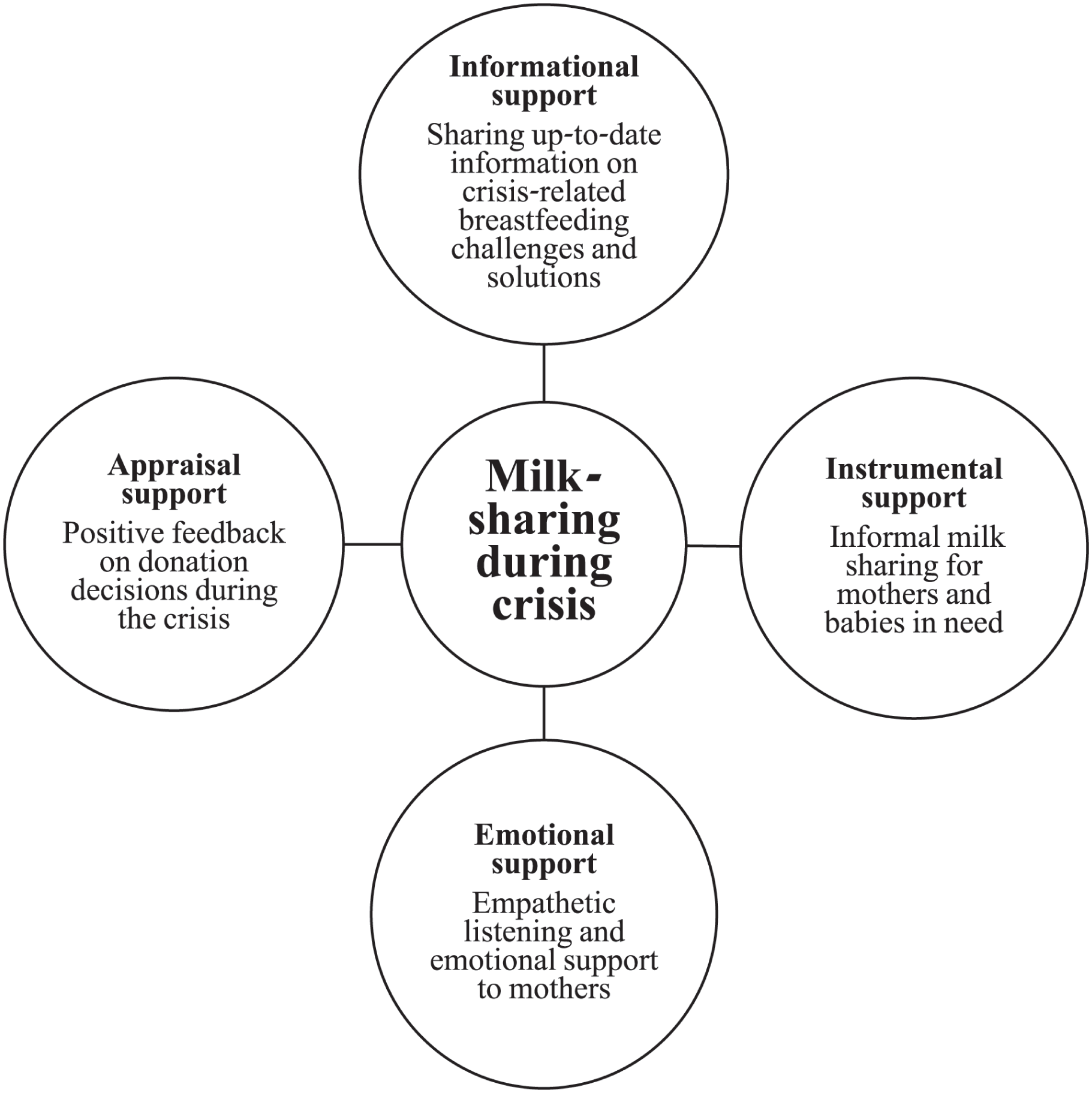
A Social Support Theory framework applied to informal milk-sharing practices during crisis.
Emotional Support
This dimension manifested through expressions of empathy, mutual understanding, shared emotions, and collective crisis processing: “My heart burns like never before!!!! An unbearable anxiety attack” (Michal). Posts also often reflected on the distinctive challenges of maintaining breastfeeding during conflict: “She asked me: ‘You are not going to stop breastfeeding?’ Yes! now! In the middle of a war! When the baby has abandonment anxiety because dad has not been home for 3 weeks, only you will understand me” (Inbal).
Informational Support
This dimension involved knowledge exchange regarding lactation management under crisis, such as navigating stress-related challenges: “Should a woman who has a very sensitive baby breastfeed even during stressful times, or should you pump and throw away?” (Ofri). It also covered technical aspects of establishing donation capacity: “What pump would you recommend?” (Davida), and urgent physical issues: “My breast pump stayed at home, I have terrible engorgement and pain, how can I relieve it?” (Libi).
Instrumental Support
This was the most tangible form of support, encompassing human milk and the logistical infrastructure for its distribution: “The main difficulty is the transportation from those places to the babies who need it. We will try to recruit volunteers who can transport the milk from all over the country” (Zehava). It also included requests driven by conflict-related stress: “My husband was drafted, and I’m anxious. As a result, my milk production decreased significantly. Can someone donate milk that is suitable for a 3-month-old?” (Efrat).
Appraisal Support
This dimension manifested as community validation of donation efforts, framing milk vision as a significant contribution to crisis mitigation: “Thanks to everyone who donates their private gold and helps save lives, no less” (Zehavit). Posts also often highlighted the life-sustaining impact of milk-sharing in extreme circumstances: “You guys are just amazing!! There is enough milk for the whole year. This sweet baby miraculously got out of there alive. Thank all the amazing mothers who donate milk for him” (Dikla).
Facebook groups became essential support networks for sharing experiences, seeking advice, and finding encouragement during crises (Morse & Brown, 2021; Robinson et al., 2019). This aligns with research on social media platforms for health management and social support (Sendra et al., 2020). This multidimensional support system, combining instrumental aid with emotional and informational interactions, likely contributed to psychological well-being. The sense of community probably increased perceived social support, a key element in crisis resilience (Diwakar et al., 2019). Our findings expand the theoretical framework by illustrating how social media converts emotional and informational support into instrumental assistance (see Table 2).
Mapping Social Support Theory to Crisis-Driven Milk-Sharing: Manifestations and Theoretical Contributions Across Four Dimensions.
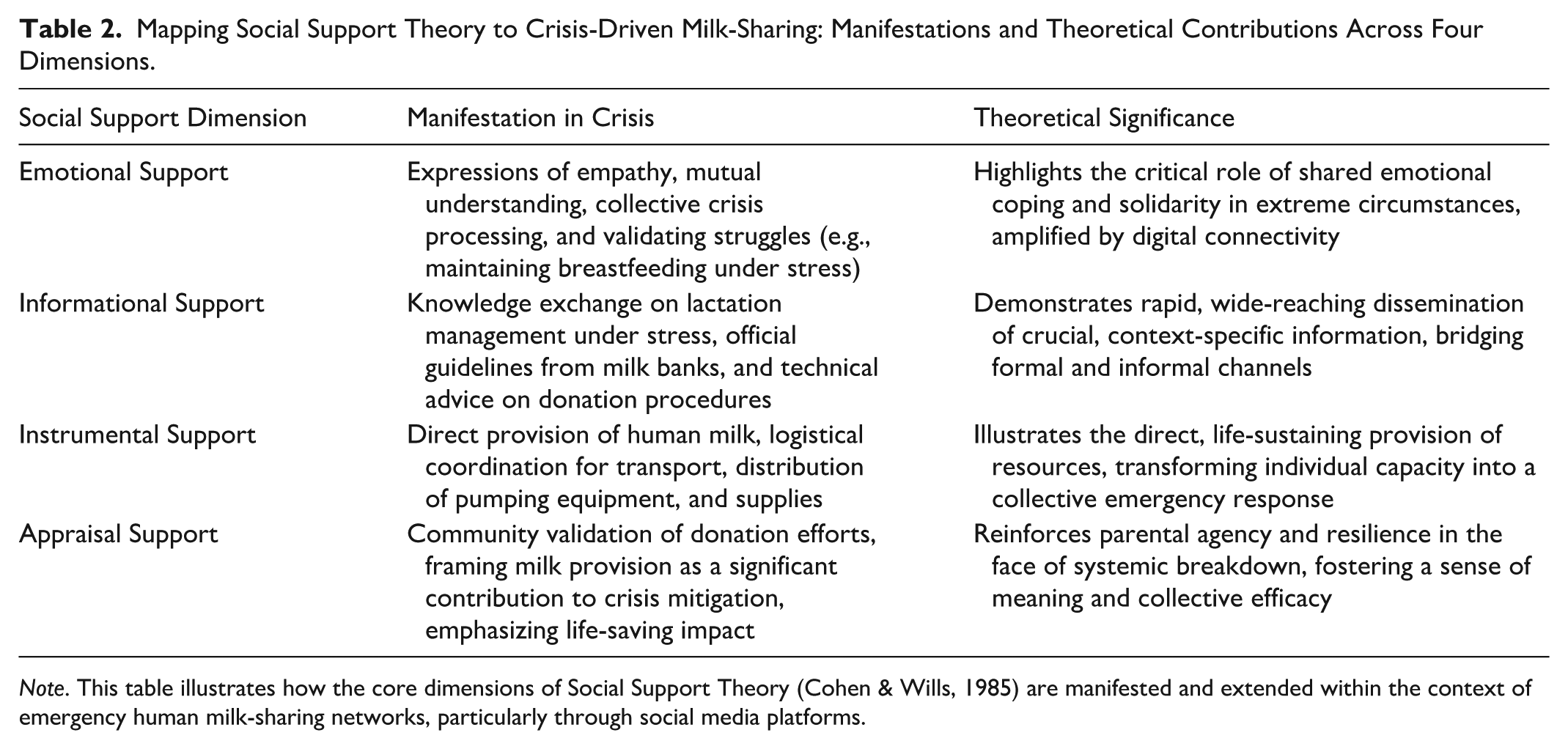
Note. This table illustrates how the core dimensions of Social Support Theory (Cohen & Wills, 1985) are manifested and extended within the context of emergency human milk-sharing networks, particularly through social media platforms.
Policy Implications for Emergency Preparedness
Our findings have implications for systems and organizations supporting infant feeding during emergencies. Rather than suppressing informal networks, unrealistic during institutional disruption, policy frameworks should prioritize integration, safety enhancement, and preparedness (IFE Core Group, 2017; Jack et al., 2024).
Emergency preparedness planners
Develop rapid-response emergency infant feeding coordination systems integrating community digital platforms with governance and escalation pathways for high-risk cases (Bartick et al., 2024); pre-position emergency lactation support for virtual guidance; establish protocols for emergency wet nursing and milk-sharing with harm-reduction guidance (IFE Core Group, 2017; Sriraman et al., 2018); and include community platforms in emergency communication strategies.
Health services and lactation support
Train healthcare workers in emergency breastfeeding counseling, including online community engagement (Bartick et al., 2024); establish referral pathways for non-breastfed infants, including formal milk banks and safer informal sharing; integrate professional lactation consultants into online communities; and ensure accessible, evidence-based lactation information via social media platforms.
Milk banking systems
Develop emergency activation protocols for rapid scaling (Israel-Ballard et al., 2024); partner with community networks to provide screening guidance (Sriraman et al., 2018); create distribution prioritization criteria for conflict-related emergencies; and consider mobile or decentralized models functional when infrastructure is compromised.
Government and regulatory bodies
Develop context-appropriate safety guidance balancing risk reduction with access; integrate community platforms into formal emergency coordination (Bartick et al., 2024); support research on safer informal practices and educate health professionals; and ensure preparedness plans address infant feeding needs (IFE Core Group, 2017). Preparedness plans should address digital inequities to avoid excluding the most vulnerable populations from these networks.
Acknowledging informal milk-sharing as inevitable when formal systems are overwhelmed, the policy challenge lies in constructively engaging these networks to enhance safety while preserving mobilization capacity.
Limitations
First, this study was limited to public Facebook groups, excluding private groups and other platforms, capturing only publicly visible digital milk-sharing. Second, digital inequities exclude populations without connectivity, displaced persons, economically marginalized families, damaged infrastructure areas, and non-Hebrew speakers, over-representing connected populations while missing the most vulnerable. Third, public visibility may have caused self-censorship. Fourth, the 1-month window limits understanding of sustainability and cannot rule out seasonal variations or algorithmic changes. Fifth, keyword-based searches may have missed posts using alternative wording, slang, or emojis.
Conclusion
This study demonstrates social media’s critical role in securing infant nutrition during armed conflict, revealing increased donations, complex motivational drivers, and adaptive grassroots logistics. As global crises threaten infant nutrition security, leveraging community networks alongside formal support is essential for public health preparedness. Findings extend Social Support Theory, demonstrating how its four dimensions operate synergistically on digital platforms during acute crises. Future emergency preparedness frameworks should incorporate digital platforms for rapid resource mobilization while addressing the inherent safety risks of informal milk distribution.
Footnotes

Author Contributions
Both authors contributed to the manuscript. Dr. Tannenbaum-Baruchi designed the study and drafted the manuscript. Ms. Harari conducted data collection. Both authors performed the analysis and contributed to the discussion section. Both authors reviewed and approved the final version of the manuscript for submission.
Funding
The authors received no financial support for the research, authorship, and/or publication of this article.
Declaration of Conflicting Interests
The authors declared the following potential conflicts of interest with respect to the research, authorship, and/or publication of this article: The authors declare that they had no competing interests. The authors are colleagues in the School of Nursing Science in The Academic College Tel Aviv–Yaffo.
AI use
We used the Grammarly AI Writing Assistance program.