Background: Infants who get irritable when breastfeeding can induce their mothers into thinking that the milk they are providing during nursing is not enough to satiate them. This may lead to early weaning. The “Teté Dance” is a strategy aiming to improve breastfeeding by having the breastfeeding parent initiate a dance using rhythmic music during the breastfeeding session just when the child begins to get irritable.
Aim: To evaluate the affect of the Teté Dance on the duration of a regular breastfeeding session of an irritable infant.
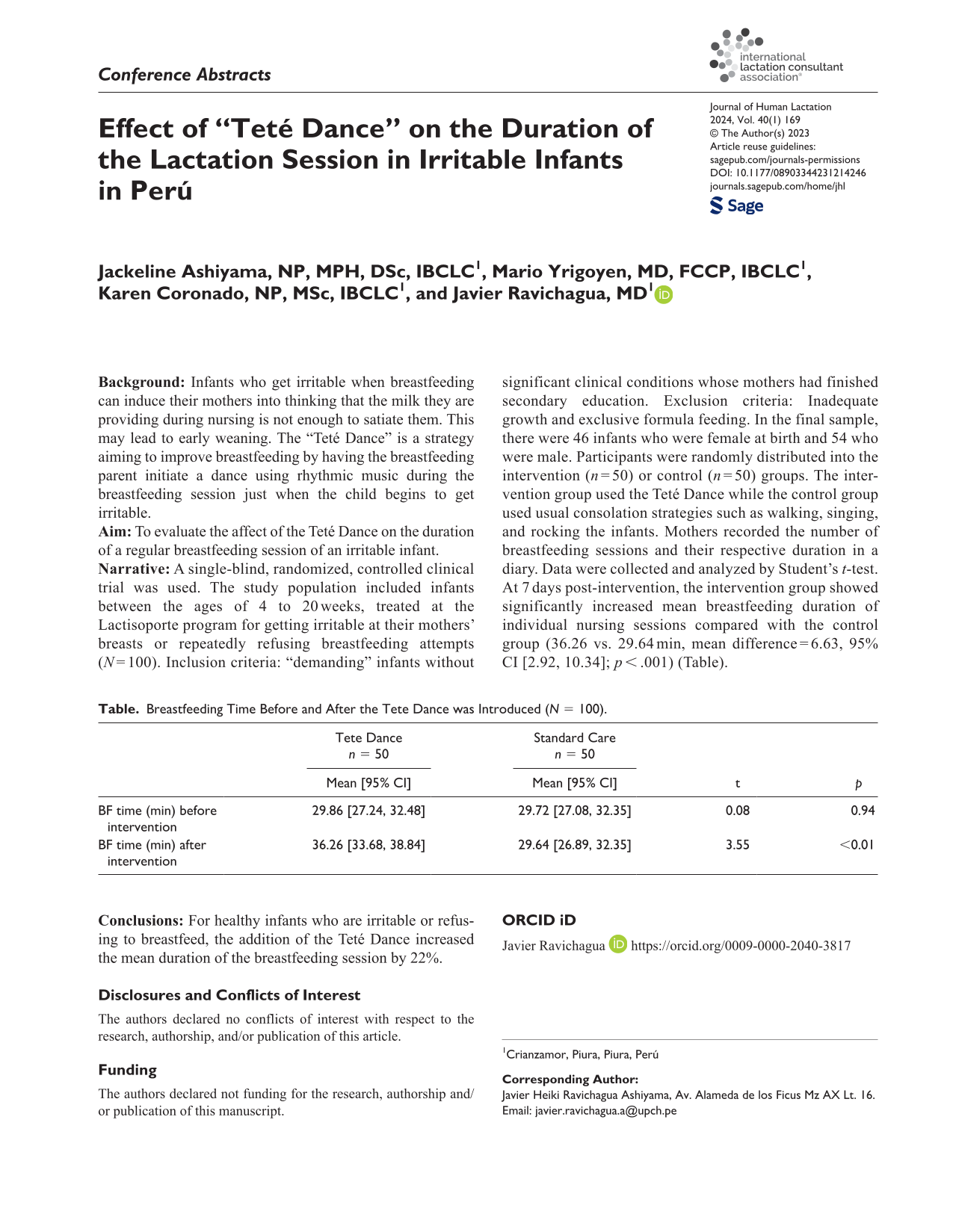
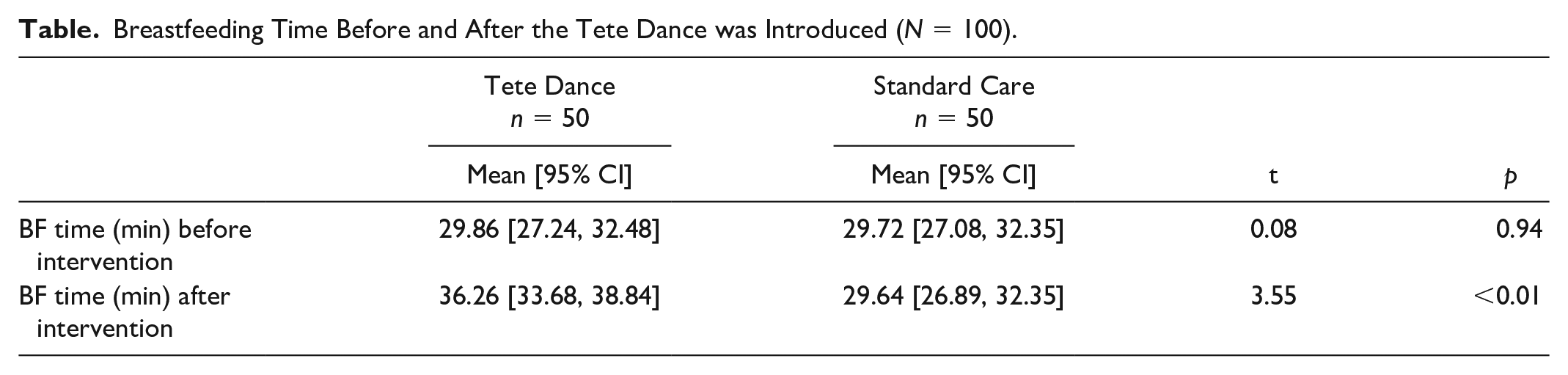
Narrative: A single-blind, randomized, controlled clinical trial was used. The study population included infants between the ages of 4 to 20 weeks, treated at the Lactisoporte program for getting irritable at their mothers’ breasts or repeatedly refusing breastfeeding attempts (N = 100). Inclusion criteria: “demanding” infants without significant clinical conditions whose mothers had finished secondary education. Exclusion criteria: Inadequate growth and exclusive formula feeding. In the final sample, there were 46 infants who were female at birth and 54 who were male. Participants were randomly distributed into the intervention (n = 50) or control (n = 50) groups. The intervention group used the Teté Dance while the control group used usual consolation strategies such as walking, singing, and rocking the infants. Mothers recorded the number of breastfeeding sessions and their respective duration in a diary. Data were collected and analyzed by Student’s t-test. At 7 days post-intervention, the intervention group showed significantly increased mean breastfeeding duration of individual nursing sessions compared with the control group (36.26 vs. 29.64 min, mean difference = 6.63, 95% CI [2.92, 10.34]; p < .001) (Table).
Conclusions: For healthy infants who are irritable or refusing to breastfeed, the addition of the Teté Dance increased the mean duration of the breastfeeding session by 22%.