Background: Although exclusive breastfeeding/chestfeeding for the first 6 months of life is recommended, the actual rate of exclusive breastfeeding in the United States is 62.6% at birth and only 24.9% at 6 months. Access to lactation support providers in the early postpartum period is vital to supporting breastfeeding goals, and the passing of the Affordable Care Act in 2010 by the United States legislature enabled more people to access and afford lactation care in the U.S. However, we have limited knowledge regarding what type(s) of lactation support are most beneficial to new mothers.
Aims: This study aimed to compare how in-home versus outpatient lactation visits affected breastfeeding self-efficacy, experiences, and outcomes.
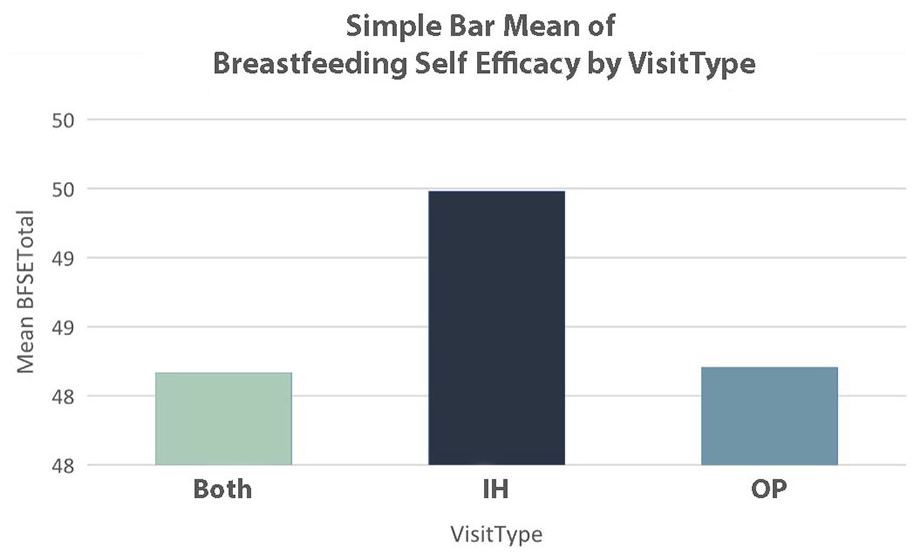
Narrative: This mixed methods survey was delivered electronically. Parents living in the United States, who had breastfed a healthy baby within the last 12 years, were recruited via social media and lactation support provider networks. Demographic data, breastfeeding outcomes and breastfeeding self-efficacy were collected quantitatively. Participants’ experiences regarding postpartum lactation visits were collected qualitatively. Of 130 participants, 23.1% (n = 30) had In-Home visits only, 51.5% (n = 67) had Outpatient visits only, and 25.4% (n = 33) had both In-Home and Outpatient visits. We explored the relationship between lactation visit type and reaching feeding goals (p = .193). Although the findings were not statistically significant, participants who received only Outpatient lactation care were 3.5 times more likely to reach their feeding goals compared to parents who received only In-Home lactation care, and 2.5 times more likely to reach their feeding goals compared to parents who received both Outpatient and In-Home lactation care. We also explored the impact of visit type on Breastfeeding Self Efficacy Score (BFSE). The mean BFSE score was higher in participants who had In-Home only visits (49.48) compared to Outpatient visits only (48.21), and both In-Home and Outpatient visits (48.17); however, the findings were not statistically significant (p = 0.871). We collected qualitative data around each participant’s experience with lactation visits. In all, 85.1% (n = 47 ) of participants who received In-Home visits expressed positive sentiments compared to 65.5% (n = 87) of participants who received Outpatient visits.
Conclusion: Lactation visits of any type are thought to affect whether breastfeeding goals are reached and influence Breastfeeding Self Efficacy. Our results demonstrated trends toward differences between visit type and breastfeeding outcomes, Breastfeeding Self Efficacy, and experiences with lactation visits but there is a need for further studies to be conducted with a larger, more diverse sample, to better understand the relationship.
IH = In-Home visit, OP = Outpatient visits, Both = both IH and OP visits. Breastfeeding Self-Efficacy Score mean by visit type. Breastfeeding Self-Efficacy Score was assessed using the Breastfeeding Self-Efficacy Short Form.
Footnotes
Conflicts of Interest
Dr. Bhagat was a former instructor of the primary author. She served as a mentor and partner for this project. The research was not completed as part of a student assignment. Ms. Saltysiak is a private practice lactation consultant exclusively providing in-home lactation visits, previously providing outpatient care.
Funding Statement
The authors received no financial support for the research or authorship of this abstract. This research did not receive any grant from funding agencies in the public, commercial, or not-for-profit sectors.