




Abstract
Background
The COVID-19 pandemic has introduced unforeseen challenges in the delivery of lactation training, education, and skilled support worldwide. The World Health Organization (WHO) has developed global recommendations for the protection, promotion, and support of breastfeeding when COVID-19 is suspected or confirmed (World Health Organization, 2020). This interim guidance, which is grounded in the best available clinical evidence and epidemiology, brings attention to the importance of integrating breastfeeding education and skilled lactation support into the COVID-19 pandemic response (Gribble, 2018; UNICEF, 2020).
Prenatal breastfeeding education is a critical, yet often overlooked, emergency nutrition intervention for COVID-19. It provides expectant parents with essential information and anticipatory guidance they will need as they prepare to care for a newborn and themselves. Because emergency response must be adapted to fit different situations and contexts, it is important that parents and other infant caregivers are supported to make informed decisions regarding the relative costs, benefits, and risks of available infant feeding alternatives (Angood, 2017). Anticipatory guidance during pregnancy on infant feeding in emergencies is integral to coordinated holistic response for maternal, child, and family health during COVID-19. However, social distancing measures that mitigate the transmission of SARS-CoV-2 have disrupted families’ access to perinatal care services around the world, including breastfeeding education, skilled lactation support immediately postpartum, and continuity of lactation counseling throughout the period of lactation. They have also created practical challenges for competency-based training of professional and peer lactation support persons, who might be deployed during the COVID-19 response.
Timely delivery of high quality, scientifically sound, and evidence-based prenatal breastfeeding education during the COVID-19 pandemic is a critical infant and young child feeding in emergencies (IYCF-E) intervention. It also is a component of care that is readily adaptable to virtual platforms compatible with social distancing measures. In this paper we describe our experience of leveraging lactation education, training, and technical assistance programs at the Carolina Global Breastfeeding Institute (CGBI) to provide virtual prenatal breastfeeding education during the COVID-19 pandemic.
Ready, Set, BABY Live: An Interactive Online Format for Prenatal Breastfeeding Education During the COVID-19 Pandemic
Ready, Set, BABY (RSB) is an open-access prenatal breastfeeding curriculum that was created by CGBI in 2012 (Figure 1). RSB content reflects best practices outlined for Step 3 (Figure 2) in the Ten Steps to Successful Breastfeeding and the Baby Friendly Hospital Initiative (BFHI). The RSB toolkit consists of a 24-page patient booklet along with a complementary facilitator flipchart that offers suggested scripting to support an interactive experience as the facilitator guides the learner through the content in the booklet. The use of RSB in face-to-face group prenatal counseling classes and individual sessions has been found to improve breastfeeding outcomes among participants (Parry et al., 2019). Since its initial release, the content has been continually updated to align with changes in BFHI global guidance, and RSB materials have been translated into Arabic, Chinese, French, Spanish, and Mongolian. In 2020, the English version of RSB was launched as a self-directed, online interactive experience for families in collaboration with the Connecticut Department of Public Health (http://www.readysetbabyonline.com).
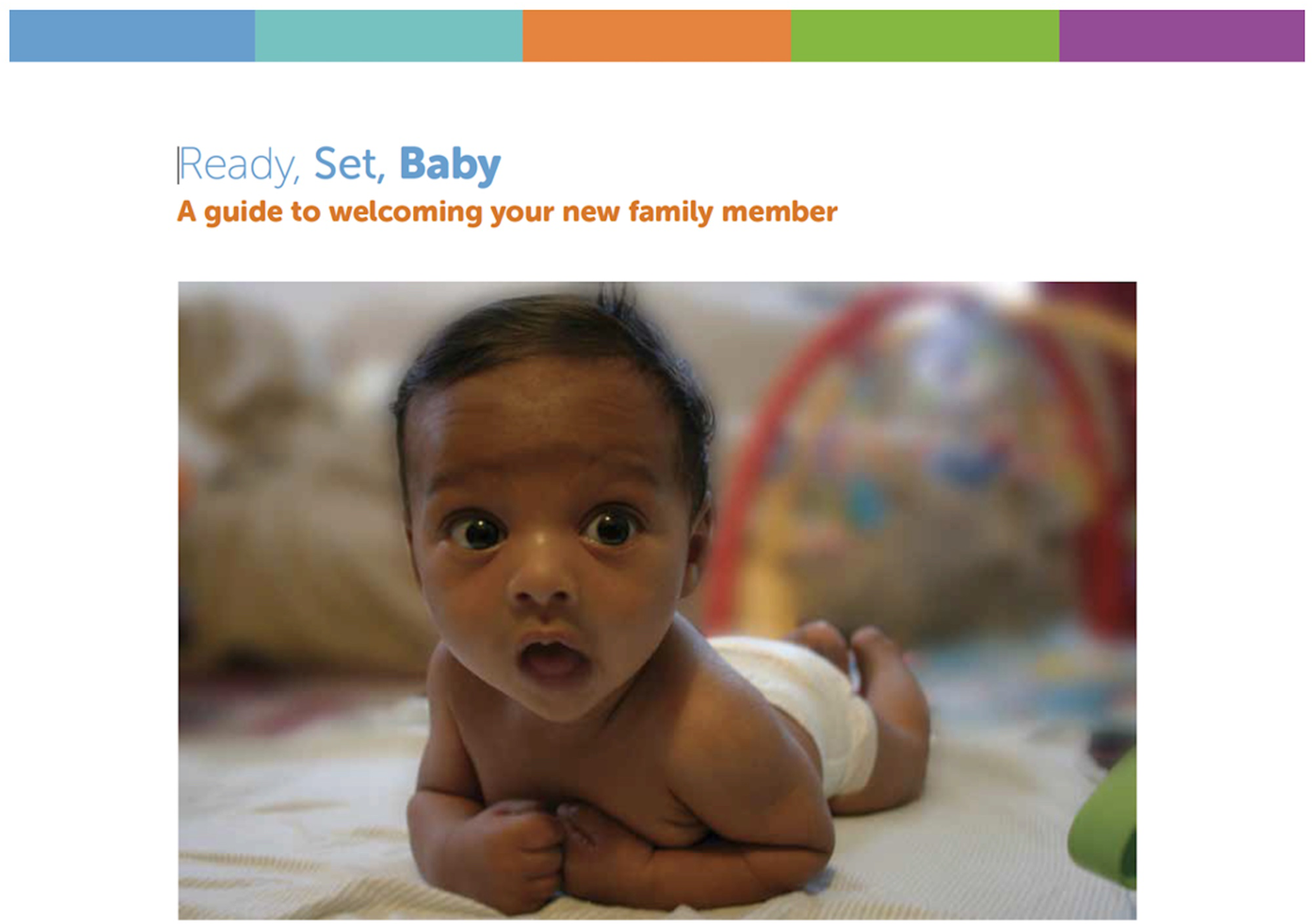
Ready, Set, BABY facilitation guide cover page.
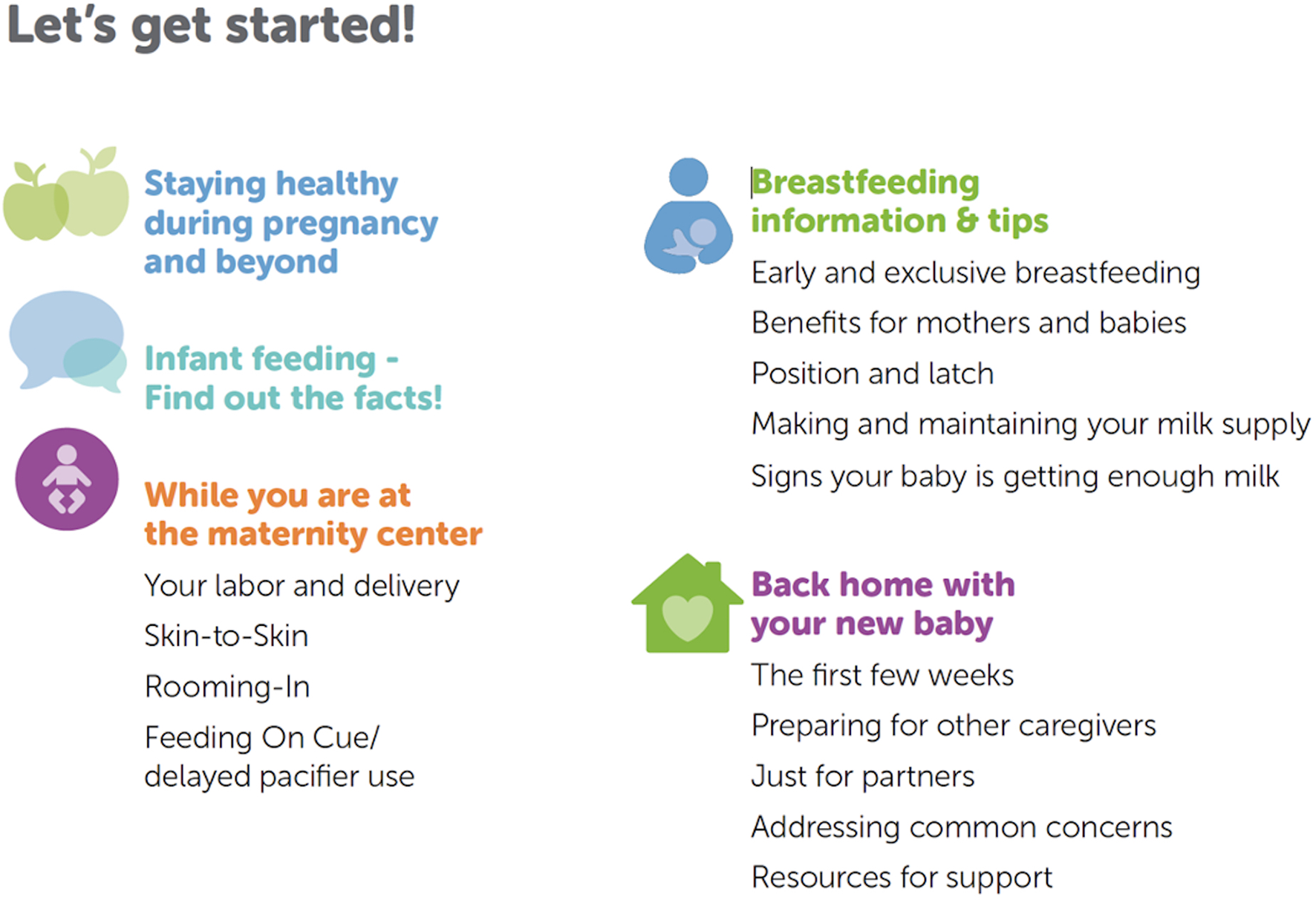
Ready, Set, BABY education topics.
Adaptation of RSB During the COVID-19 Pandemic
The opportunity to adapt RSB with content related to COVID-19 presented itself in March 2020, when the governor of the state of North Carolina (NC) announced an executive Stay at Home Order (NCDHHS, 2020). As a result, health care facilities across the state were required to limit on-site personnel to essential workers. This change meant that all clinical placements of lactation students enrolled in the CGBI Mary Rose Tully-Training Initiative (MRT-TI), a lactation education and training program for participants interested in becoming an International Board Certified Lactation Consultant (IBCLC), were suspended while the order was in effect.
Key Messages
Anticipatory breastfeeding guidance for expectant parents is a critically important aspect of emergency response.
There are few examples of technology-based prenatal breastfeeding education adapted to specific public health emergencies, like COVID-19.
It is possible to design a virtual prenatal breastfeeding education course that enables students to acquire clinical competencies required of a CAAHEP/LEAARC approved pathway 2 lactation training program.
MRT-TI is the first pathway 2 (P2) lactation consultant training program in the US to be accredited by the Commission on the Accreditation of Allied Health Education Programs (CAAHEP) fulfilling requirements set by the IBLCE. MRT-TI operates within the University of North Carolina (UNC) Chapel Hill system, and the program is completed in two academic semesters. It provides students with 90 hours of didactic education and over 300 hours of clinical practice under the supervision of an IBCLC. Participants enrolled in the MRT-TI program earn their required clinical hours through supervised, in-person practice across diverse settings, including several different hospitals, a free-standing birth center, outpatient pediatric offices, and external sites.
When the NC Stay at Home Order was executed, it was not clear how to provide MRT-TI students with directly supervised clinical hours so that they would remain eligible to register for the 2020 International Board of Lactation Consultant Examiners (IBLCE) examination. IBLCE did release interim guidance during the COVID-19 pandemic for P2 programs that allowed candidates to earn up to 100% of the 300 total required hours of directly supervised lactation practice using technology (e.g., via telehealth platforms). Based on this guidance, CGBI faculty and staff designed a solution that would provide MRT-TI students with an opportunity to earn the remaining 1/3 of their clinical practice hours, while simultaneously addressing the urgent need to deliver breastfeeding education for COVID-19.
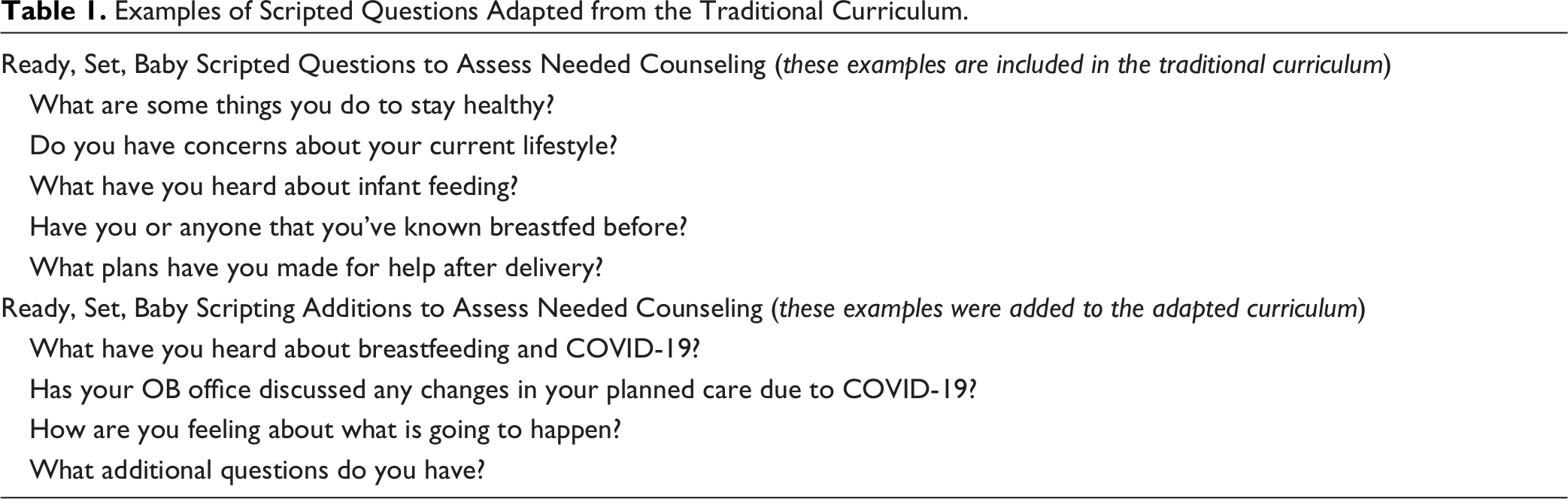
CGBI team members convened to review the standard RSB content and update it to reflect the WHO (2020) interim guidance for breastfeeding and COVID-19. COVID-19-related content was integrated throughout the facilitation guide wherever birthing practices were mentioned, along with other places where information about returning home after birth, visitors, and other caregivers are discussed. Other adaptations in content included incorporation of WHO (2020) guidance and infographics for pregnancy, birth, and breastfeeding when COVID-19 is suspected or confirmed, new open-ended questions and discussion points to enhance online interactive facilitation, and scripting to enable the facilitator to more effectively assess any counseling needs of pregnant attendees (see Table 1).
Examples of Scripted Questions Adapted from the Traditional Curriculum.
All content for RSB Live was evaluated to ensure that it fulfilled competency standards for P2 lactation consultant training programs that are accredited by CAAHEP through the recommendation of the Lactation Education Accreditation and Approval Committee (LEAARC). The assessment identified that RSB Live mapped to 33 of the 124 required competencies in the following content areas: communication and counseling; history taking and assessment; prenatal and perinatal breastfeeding support; extended breastfeeding support; professional responsibilities and practice; and leadership and teaching. Three MRT-TI students were involved in piloting RSB Live and contributed to further adaptions and improvements in the facilitation scripting. Once the content was finalized, all MRT-TI students were trained by CGBI faculty/staff IBCLC preceptors to ensure that they had an accurate and thorough understanding of the content, its adaptation to COVID-19, and that they were able to demonstrate the required competencies for assessment and education.
Implementation
RSB Live for COVID-19 is hosted on a secure virtual teleconferencing platform at the UNC Gillings School of Global Public Health that is compliant with the US Health Insurance Portability and Accountability Act (HIPAA), which protects personal information. RSB Live is offered in English and Spanish languages. The virtual conferencing platform supports both verbal and written interaction via the video conferencing feature and the interactive chat pod.
RSB Live was launched on April 15, 2020. The sessions were facilitated by two MRT-TI students and directly supervised by a CGBI faculty/staff IBCLC clinical preceptor, who provided technical assistance and facilitation support as needed. The primary student facilitator is responsible for presenting key content using video, voice, and visual aids. The secondary student facilitator is responsible for interactively monitoring the chat pod, responding to questions and comments from participants, and sharing appropriate resources and referrals. The standard RSB toolkit was designed for participants to have individual booklets to use throughout the facilitated session. All facilitation notes for RSB Live were updated so that key content would be covered verbally even if participants did not have access to a booklet. An electronic hyperlink is shared with all participants during the RSB Live presentation so that they might access the booklet online.
A single session length is just over an hour, depending on participant chat activity and questions. MRT-TI students earn their competency hours by facilitating an online session every 90 minutes between 9am and 5pm. This equates to 5 sessions per day Monday through Friday, and an additional 2 per day on Saturdays.
Broader Impact
RSB Live serves a dual-purpose during the COVID-19 pandemic; it is a clinical lactation training opportunity for MRT-TI students, and it is a quality, prenatal breastfeeding education resource for expectant parents. The rapid development, implementation, and dissemination of RSB Live was made possible by the strength of existing programs, resources, and faculty and staff expertise at CGBI.
CGBI has provided support to maternity care facilities for nearly a decade (Labbok et al., 2013; Taylor et al., 2012). Funded by The Duke Endowment, the ENRICH Carolinas community currently includes over 40 maternity care facilities, and additional enrollment is planned throughout 2021. Project coaches notified participating ENRICH Carolinas facilities of the opportunity for their prenatal community and encouraged them to share flyers with detailed information about the live online sessions with the prenatal clinics that send patients for delivery. Flyers were also shared with contacts from maternity care facilities from previous projects, posted on social media, and shared via the United States Breastfeeding Committee’s member news sharing resources. Between April and May 2020, 173 sessions were held in English and 65 in Spanish.
Participating ENRICH Carolinas facilities also have access to technical assistance for IYCF-E through the Lactation and Infant Feeding in Emergencies (L.I.F.E.™) Initiative. The L.I.F.E.™ Initiative has added value to multiple CGBI programs by providing technical assistance during the COVID-19 pandemic. The technical assistance has been instrumental to ensuring that RSB content stays up to date with any revisions to the interim guidance for COVID-19 and breastfeeding and is supported by the best available science and evidence.
Broad dissemination of RSB Live was made possible through engagement with stakeholders from the NC Division of Public Health. RSB Live offers a valuable solution to providing prenatal breastfeeding education in a time of social distancing. Stakeholders have been enthusiastic and grateful, and agreed to promote the RSB Live in public clinics providing Special Supplemental Nutrition Program for Women, Infants and Children (WIC) and prenatal care services across NC. Flyers for the sessions were shared with 84 NC local agencies that house the NC WIC Program. The NC WIC program, after vetting the background and training of the CGBI preceptors for the class and the class content, has allowed WIC participants to use RSB Live as the second required prenatal nutrition education contact or as a supplemental breastfeeding education session. Although RSB Live was designed primarily for a US-based audience, participants from other countries have joined RSB Live sessions.
Conclusion
The rapid onset of a global pandemic (i.e., COVID-19) can quickly change the landscape of maternity care practices and policies along with the ability to give and complete lactation training. In response to the lack of face-to-face supervised clinical opportunities for lactation training students, alongside the probable need for digital solutions for offering breastfeeding education in prenatal clinics and communities served by maternity care facilities and public health, the CGBI team opted to adapt the RSB curriculum as a digital COVID-19-specific resource. We focused on rapid implementation of live delivery of the RSB curriculum in a HIPPA-compliant online classroom supervised by IBCLCs, allowing students to continue to meet the rigorous demands of a P2 accredited lactation training program by providing interactive, assessment-informed counseling.
By the end of May 2020, health care facilities in NC began relaxing staffing restrictions. However, most still do not have adequate personal protective equipment (PPE) for employees or students completing clinical rotations. A lack of required PPE remains a barrier to clinical placement for most MRT-TI students, despite the availability of potential clinical training placements currently. There continues to be strong interest and participation in RSB Live.
CGBI has put into place a survey to assess the effectiveness and acceptability of the COVID-19 digital adaptation of RSB through a recently IRB approved patient experience survey. The findings of the assessment will be disseminated in peer-reviewed publications, professional conference presentations, and in CGBI programmatic reports. CGBI developed RSB Live to ensure that prenatal breastfeeding education is made available to families during emergencies and to maintain continuity of quality clinical lactation training during the COVID-19 pandemic. There is potential for other clinical lactation training programs and breastfeeding support organizations to adopt similar strategies to meet the breastfeeding education needs of expectant parents when remote learning and telehealth services are available.
Footnotes
Declaration of Conflicting Interests
The author(s) declared the following potential conflicts of interest with respect to the research, authorship, and/or publication of this article: All of the authors are affiliated with the Carolina Global Breastfeeding Institute (CGBI). CGBI is a not-for-profit institute within the Department of Maternal and Child Health, Gillings School of Global Public Health at the University of North Carolina at Chapel Hill (USA). Ms. Sullivan is a named inventor of the Couplet Care Bassinet™ technology and could receive royalties in the future. This relationship has been disclosed to and is under management by UNC-Chapel Hill. The author has no other financial relationships relevant to this article to disclose. All other authors have no interests to declare.
Funding
The author(s) disclosed receipt of the following financial support for the research, authorship, and/or publication of this article: Personnel support for Ready, Set, Baby live is made possible by the ENRICH Carolinas Project, funded by The Duke Endowment. The curriculum was originally funded by the W.K. Kellogg Foundation.
