




Abstract
Character strengths are 24 morally valued personality traits that are associated with both well-being and mental health. Despite their importance, systematic evidence quantifying these associations and integrating them with basic personality frameworks is lacking. To address this gap, we synthesized evidence from 130 studies (total N = 275,007) and used previous evidence on Big Five and HEXACO traits to locate character strengths and derive corresponding expectations. Using three-level meta-analytic models, we found meaningful (r > .10) correlations with healthy functioning for all strengths except humility, with most ranging between .10 and .30. Hope (r = .52) and zest (r = .52) emerged as the strongest correlates overall, followed by gratitude (r = .43), love (r = .43), and curiosity (r = .38) for well-being, and self-regulation (r = .29), gratitude (r = .30), and love (r = .34) for common mental health disorders. Well-being outcomes showed stronger associations with strengths compared to common mental health outcomes. Overall, the present findings fit well with the existing evidence on personality and support the notion that character strengths, like personality, may promote healthy functioning. Future research should focus on understudied outcomes (e.g., domain satisfaction, anxiety, and stress) and populations (e.g., clinical populations).
Plain language summary
Character strengths are 24 positive personality traits like hope, gratitude, and love that are theorized to help people live happier, healthier lives. This study analyzed data from 130 research papers, including over 275,000 participants, to explore to what extent these strengths are connected to well-being and mental health. The present research found that most character strengths, except humility, are linked to better mental health and higher well-being. For example, hope and zest (enthusiasm for life) were the strongest contributors to healthy functioning (i.e., higher well-being and mental health overall). Gratitude, love, and curiosity also played important roles for well-being. Strengths like perseverance and self-control were found to be particularly related to stress and depression. Well-being outcomes, such as life satisfaction and positive emotions, were more strongly linked to character strengths than mental health issues like anxiety or depression. The study also revealed that the same strengths that promote well-being may help people cope with challenges. By integrating character strengths into existing personality frameworks, the findings also offer new ways to understand and predict how specific traits may contribute to a good life. This research confirms the potential for using character strengths to improve mental health and well-being. For example, programs that encourage hope or gratitude might help people manage stress or improve their overall quality of life. Future studies could explore how these strengths affect specific groups of people, such as those facing mental health challenges. Overall, this study confirms the potential of focusing on positive traits to promote happiness and mental health.
Introduction
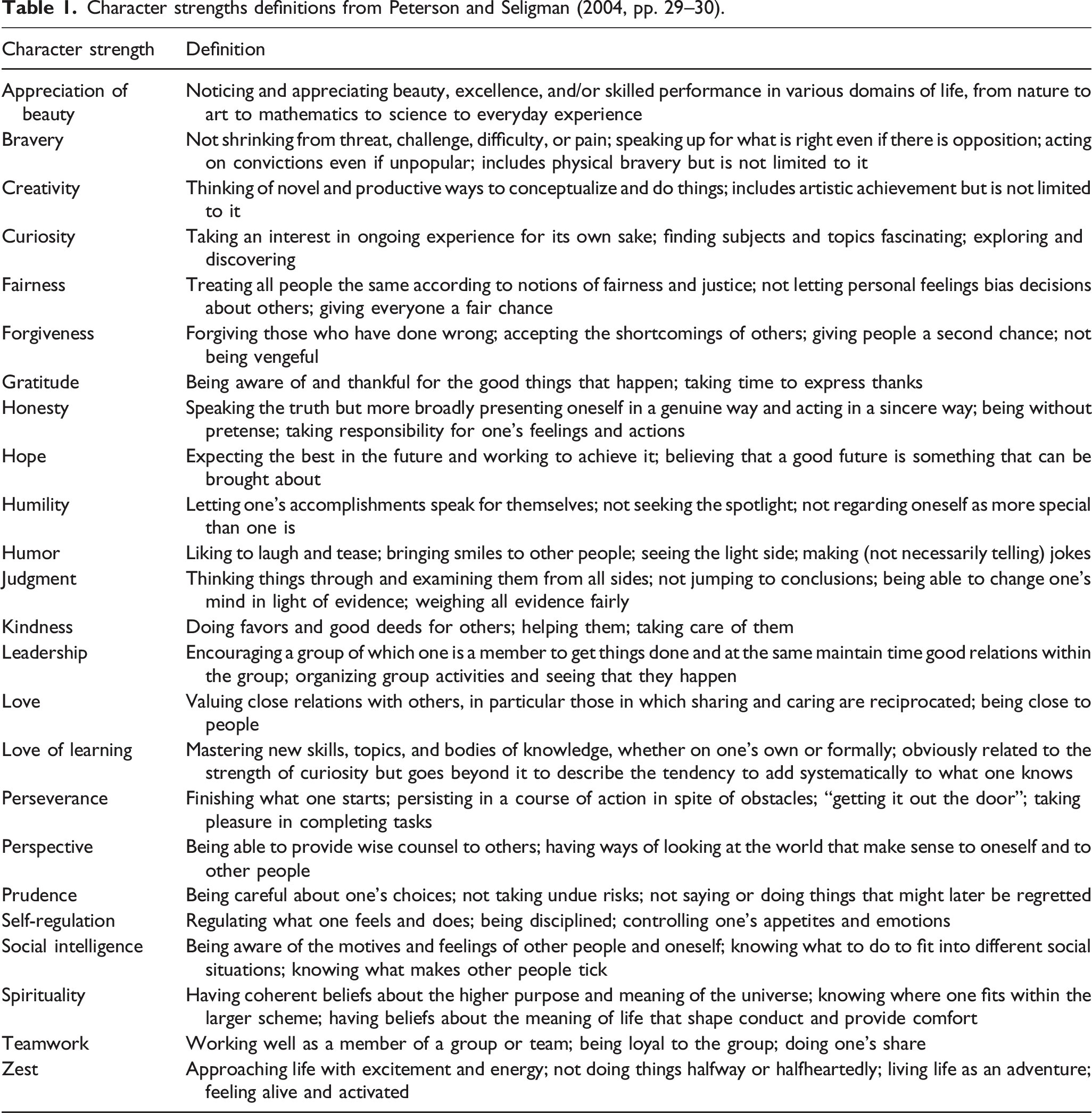
Character strengths definitions from Peterson and Seligman (2004, pp. 29–30).
A narrative synthesis of the evidence on the dual role of character strengths
Well-being
In the literature, character strengths have been found to be associated with a variety of outcomes commonly considered desirable (see Niemiec, 2013; Ruch & Stahlmann, 2020), ranging from positive functioning at work (Casali & Feraco, 2024; Dubreuil et al., 2014; Harzer & Ruch, 2013, 2015), to thriving interpersonal relationships (Goodman et al., 2018; Lavy et al., 2014) or academic satisfaction (Lounsbury et al., 2009).
These outcomes can all be ascribed to different components of well-being—that is, to aspects of the good life or optimal psychological functioning and experience (see Figure 1 for an overview). Authors (e.g., Deci & Ryan, 2008) have distinguished between subjective well-being, defined as the individual’s evaluation of how satisfying and pleasurable (i.e., happy) their life is, and psychological well-being, defined as the individual’s evaluation of how fulfilled and meaningful their life is. These two orientations are also referred to as hedonic and eudaimonic well-being, respectively, reflecting their different emphases on what constitutes a good life—happiness and flourishing. A schematic representation of well-being indicators.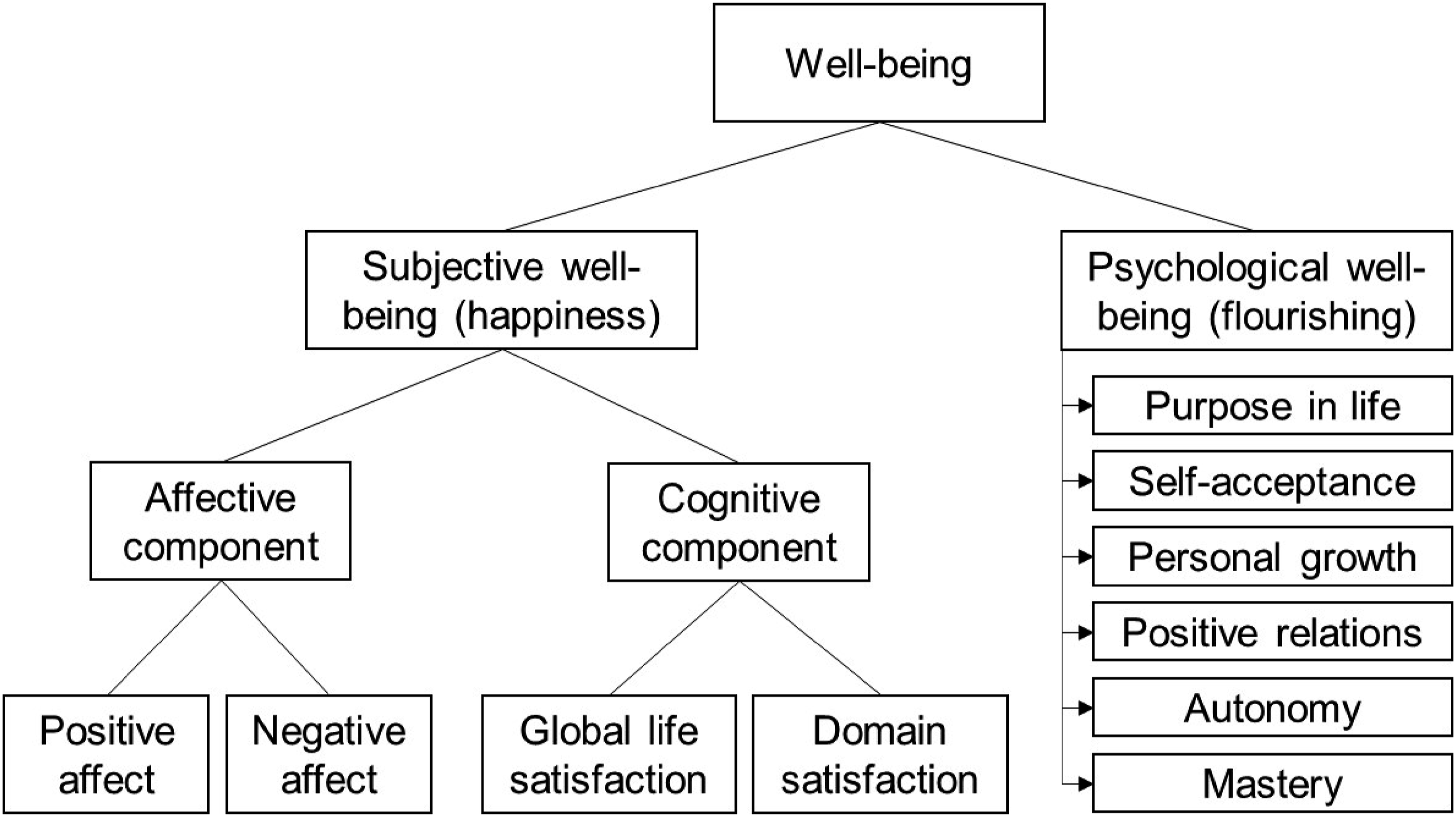
Outcomes such as general life satisfaction (how happy people are with their life conditions) or domain-specific satisfaction (e.g., job or academic satisfaction), as well as positive and negative affect, are typical operationalizations of the cognitive and affective components of subjective well-being, respectively. In contrast, outcomes such as meaning, positive interpersonal relationships, and flourishing are commonly considered indicators of psychological well-being (Ryff, 1989).
Particular attention has been paid to the relationship of character strengths with subjective (hedonic) well-being (also referred to as happiness) and, in particular, its cognitive component, global life satisfaction. A meta-analysis of 30 samples by Bruna et al. (2019) found large (r > .50) effects for the character strengths of hope and zest, and moderate (.30 < r < .50) effects for gratitude, love, curiosity, perspective, and perseverance; humility, appreciation of beauty, and fairness were the strengths least related to life satisfaction.
Comparatively, domain-specific satisfaction (e.g., school or job satisfaction), the affective components of subjective well-being (positive and negative affect), and psychological (eudaimonic) well-being have received less attention in the literature. As narratively reviewed by Harzer (2016) and more recently meta-analyzed by Wagner and Gander (2025), zest, hope, and curiosity appear to be the character strengths that are numerically most highly correlated with positive affect, while humility, spirituality, and prudence tend to have weaker correlations. Correlations with negative affect are generally negative and smaller in magnitude than those with positive affect and life satisfaction; hope, zest, gratitude, self-regulation, and curiosity seem to be the strongest correlates of negative affect, while appreciation of beauty, creativity, and humility show the weakest correlations. Studies also generally find that character strengths are strongly related to psychological well-being/flourishing, even more so than with subjective well-being (Goodman et al., 2018; Hausler et al., 2017). These results are particularly consistent for the so-called “happiness strengths,” namely, hope, gratitude, zest, curiosity, and love (Littman-Ovadia et al., 2017). While these strengths seem to be relevant across all life domains, some strengths may be of particular relevance to specific life domains. For example, perseverance and self-regulation have been found to highly correlate with college satisfaction (Karris Bachik et al., 2021; Lounsbury et al., 2009); kindness, social intelligence, leadership, and forgiveness seem to specifically relate to job satisfaction (Gander et al., 2020). As briefly reviewed by Weber (2021), these correlations also hold for children and adolescents, with small to medium effect sizes.
Common mental health disorders
As also shown in a recent bibliographic review of the character strengths literature (Feraco & Casali, 2025), there is a growing interest in the role of character strengths with respect to general mental health and specific mental health disorders, ranging from common mental health symptoms (e.g., Casali et al., 2021; Petkari & Ortiz-Tallo, 2016) to suicidal ideation or paranoia (Cheng et al., 2020; McTiernan et al., 2020). This broadened interest comes with the idea that character strengths may act as protective factors against psychological distress (Waters et al., 2022), both in the general population, and among patients with psychiatric and physical diagnoses (Freidlin et al., 2017; Graziosi et al., 2022). In the present review, we decided to focus on common mental health disorders (Kendrick & Pilling, 2012), roughly corresponding to the distress and fear subfactors in the Hierarchical Taxonomy of Psychopathology (HiToP), a dimensional, empirically driven classification system that organizes co-occurring signs and symptoms into hierarchically structured, broad and specific dimensions (Kotov et al., 2017). Common mental health disorders include depression, generalized anxiety disorder (GAD), panic disorder, obsessive-compulsive disorder (OCD), post-traumatic stress disorder (PTSD), and simple phobias.
Several character strengths have been associated with lower depressive and anxiety symptoms (Duan, 2016; Freidlin et al., 2017; Huta & Hawley, 2010; Kim et al., 2018; Smedema, 2020; Tehranchi et al., 2018). The findings suggest that, like subjective well-being, the happiness strengths of hope, zest, gratitude, love, and curiosity, are the character strengths most consistently associated with mental health. Results from the few longitudinal studies are available in the literature (Duan, 2016; Hausler et al., 2017) parallel from those cross-sectional analyses, further confirming the importance of character strengths in relation to mental health.
These results have informed the development of character strength-based interventions, that have been shown to reduce depression (Hedges’ g = .21 across seven studies) in the general population (Schutte & Malouff, 2019), and in patients with various physical complaints (Yan et al., 2020).
Locating character strengths within basic personality frameworks
As briefly outlined, character strengths can be considered as narrow personality traits that are related to morality (i.e., socially desirable and ethically relevant), although to varying degrees (i.e., strengths such as honesty or fairness are considered more morally relevant than creativity or zest, Stahlmann & Ruch, 2020). Despite several studies examining the relationships between character strengths and basic personality traits (e.g., Macdonald et al., 2008; McGrath et al., 2020; Noftle et al., 2011; Park & Peterson, 2006), an integration of character strengths into the Big 5 or HEXACO models is still lacking. Such integration has both theoretical and practical advantages.
Theoretically speaking, it can provide an organizing framework, fostering cumulative science and curbing construct proliferation and jangle fallacy (see Bainbridge et al., 2022). Relatedly, this can help determine whether character strengths assess something unique or rather are redundant with basic personality traits and especially their facets.
On a more practical level, it can inform prediction for less studied constructs, as one may refer to the overarching broad personality trait to inform hypothesis generation and know what kind of correlation (small, medium, or large) can be reasonably expected based on the existing evidence. To summarize, as suggested by Noftle et al. (2011), “by mapping the character strengths onto the Big Five, we will gain a deeper conceptual understanding of each strength and the nomological network surrounding it, allowing us to generate hypotheses about the correlates and consequences of the strengths” (p. 212).
We thereby provide an overview (see Table S2 in the Supplemental Materials in the OSF, https://osf.io/prjxb, or GitHub, https://feracotommaso.github.io/CSmetaAnalysis/supplemental/SupplementalResults.pdf) of the correspondence between the two frameworks based on empirical evidence (i.e., the most highly correlated facet and the corresponding broad domain), together with the magnitude of the correlations with well-being and mental health that can be expected (and that was estimated) for character strengths based on their corresponding basic personality traits according to recent meta-analytic evidence (Anglim et al., 2020; Pletzer et al., 2024; Strickhouser et al., 2017). It emerges that while several character strengths seem to quite univocally belong to one basic personality trait (e.g., creativity, social intelligence, forgiveness, or perseverance), others (e.g., kindness, perspective, and spirituality) appear to be a blend of (two or more) basic traits.
Rationale of the present meta-analysis
As reviewed in the previous sections, both the original formulation (Peterson & Seligman, 2004) and subsequent theorizations (Niemiec, 2020, 2023) suggest that character strengths serve two distinct functions, promoting well-being and limiting negative mental health symptoms. This view parallels the broader field of mental health, where the traditional medical model of mental health as the absence of illness or disability has given way to a more integrated view (known as the dual-factor model, Greenspoon & Saklofske, 2001; or the mental health continuum model, Keyes, 2002) in which mental health is better understood as the interplay between psychopathology and well-being. Together, high well-being and low mental health issues have been referred to in the literature as “flourishing” (as opposed to languishing, Keyes, 2002), but also as “healthy/optimal/full” functioning (Bleidorn et al., 2020; Rogers, 1963). Following this paradigm shift, it is important to consider both psychopathology (in our case, common mental health disorders) and well-being indicators (in our case, subjective and psychological well-being) to fully understand what mental health looks like in an individual. Consequently, prevention, intervention, and promotion strategies should target both the reduction of symptoms and the support of positive outcomes (see Magalhães, 2024 for a review of the evidence for the dual-factor model).
As a result, a systematic assessment of the relationships between character strengths—as potential dual agents of well-being promotion and illness reduction—well-being and mental health seems highly warranted. Our narrative understanding of the literature suggests that there is a widespread, but still unsystematic, interest in investigating these relationships across multiple domains and populations.
Furthermore, as preregistered (see https://www.crd.york.ac.uk/prospero/display_record.php?ID=CRD42023488089), we were interested in testing a few moderators of the effects. First, we wanted to examine differences between well-being and mental health indicators. As outlined before, based on our narrative understanding of the literature and correlations observed for basic personality traits, we anticipated stronger correlations between character strengths and well-being compared to common mental health disorders. Then, we were interested in testing whether clinical populations (e.g., depressed patients and students with specific learning disabilities) would show stronger or weaker correlations between character strengths and mental health and well-being. Since the interest in clinical samples is relatively recent (Feraco & Casali, 2025), we did not have specific hypothesis with regard to this moderator. Lastly, we also wanted to test a methodological moderator, namely, the type of VIA instrument used to measure character strengths. To this end, we classified the original 240-items scale as long and the more recent, shorter scales as short.
Method
This meta-analysis was entirely preregistered in PROSPERO (ID = CRD42023488089). Deviations from the preregistration are highlighted in the text and described in detail the Supplemental Materials (Table S1). All materials, data, and analytical code are provided in the Open Science Framework (https://osf.io/prjxb) and in the GitHub repository associated with this project (https://github.com/feracotommaso/CSmetaAnalysis).
Search strategy
On February 9th, 2024, we searched relevant studies from three different databases: ISI Web of Science, PSYCInfo, and Scopus. For character strengths, we used the following search string: (“character strength*” OR “signature strength*” OR PRISMA flowchart of the screening process. Values in square brackets indicate the number of papers retrieved during the first (left) and second (right) search.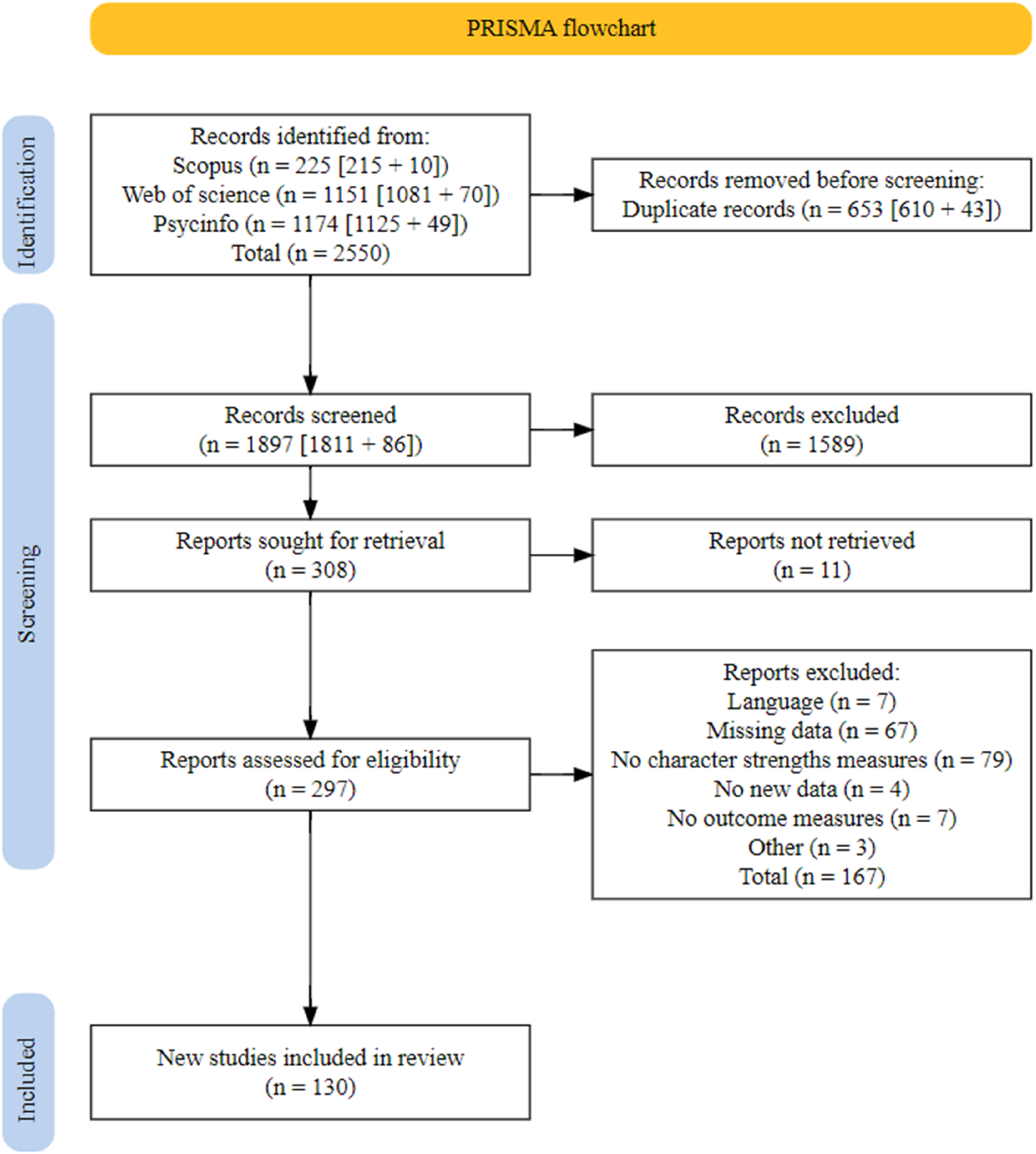
Inclusion and exclusion criteria
Citations were included in the meta-analysis based on the following inclusion criteria: (1) published since 2004, based on the publication of the seminal work on character strengths by Peterson and Seligman (2004); (2) written in English, Italian, Spanish, French, Portuguese, or German; (3) the study assessed the 24 character strengths of the VIA framework through a validated self-report measure; (4) the study included at least one measure of well-being or mental health; (5) the study referred to original data that are not already reported in other included studies; and (6) the population study was either the general population or a clinical population with mild/moderate mental health issues. Contrarily, a study was excluded if: (1) it was a qualitative study; (2) it was an experimental/longitudinal study that did not report correlations at baseline; (3) character strengths were measured with a non-validated measure, an observer-report measure, or with a measure that does not assess individual strengths or assesses them with descriptions (rather than items); and (4) the study focused on severe mental health issues (e.g., schizophrenia and bipolar disorder).
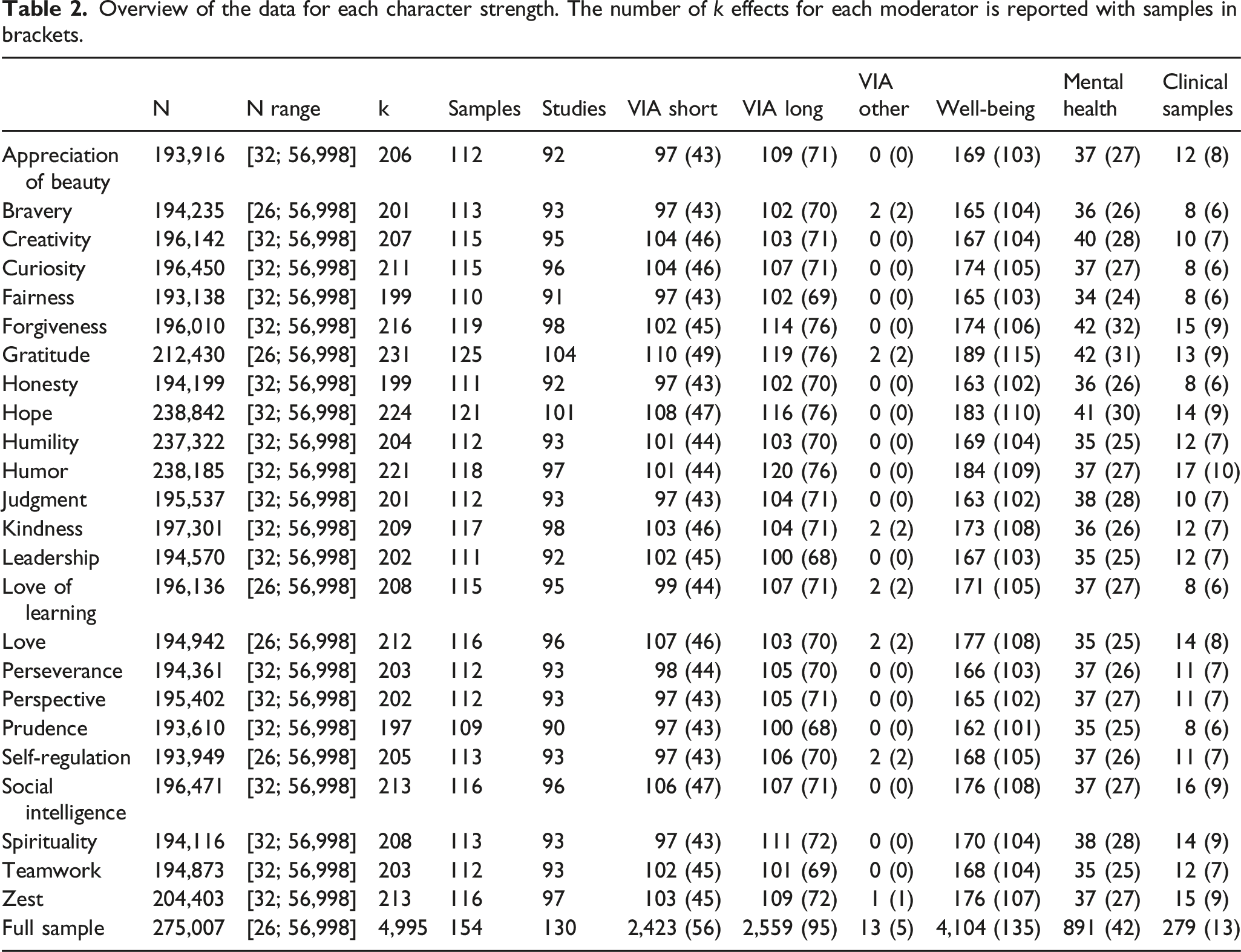
Overview of the data for each character strength. The number of k effects for each moderator is reported with samples in brackets.
Coding
After the first and last authors screened all the titles and abstracts for inclusion, full-text coding was conducted by three different people under the strict supervision of the first and last authors. Afterward, the first and last authors carefully revised all the coding by checking the information retrieved and the original papers. Agreement between coders was very high, with Cohen’s k ranging between .80 and 1, with the only exception of humility effects (k = .67). However, divergences between coders were solved by the first and last authors through discussion.
Each effect was coded according to the following criteria: • Effect size. Pearson’s correlations were extracted from the papers as measure of effect size. • Sample size. The sample size of each population on which correlations were estimated was extracted. Sample sizes ranged from 26 to 56,998, with a median of 359 participants (M = 1,902.23, SD = 6,352.74). • Country. Country of origin of the participants was extracted. In case participants from multiple countries were included in the same sample, the sample was coded as “mixed.” • Gender. The percentage of females was reported. This value ranged from 0% to 100%, with a median of 66.7%. • Age. The mean age of the sample was reported. This ranged from 11.68 to 69.62 years old, with a median of 30.90 years old. An additional category was added to distinguish between samples of youths (17%; all participants younger than 19 years old), old (4%; all participants were 55 or older), or adults (79%) if the study included participants of all ages or between 19 and 55 years old. • Clinical population. Samples were divided between clinical populations and non-clinical populations. In case a clinical population was included, we specified the diagnosis. 13 clinical samples were included (8%) with eight different diagnoses (e.g., depression, specific learning disabilities, and cancer). • Character strengths measure. Two kinds of information about each character strength measure were coded: (1) the length of the measure, which could be long (i.e., VIA-240 and VIA-192), short (VIA-120, VIA-96, and VIA-72), or non-VIA measures (i.e., CIVIC and CVQ); (2) the specific measure used. • Type of outcome. Outcome measures were initially divided into well-being outcomes (e.g., life satisfaction and positive affect) and mental health outcomes (e.g., distress and depression). A total of 227 well-being outcomes (k = 4,104) from 132 unique samples and 57 mental health outcomes (k = 891) from 22 unique samples were retrieved. • Specific outcome. We then coded the specific construct measured and the measure used to assess each construct. Specific well-being outcomes included domain satisfaction, happiness, life satisfaction, positive and negative affect, psychological well-being (including meaning and flourishing), and general subjective well-being. Common mental health disorders outcomes included anxiety, depression, distress, general mental health, post-traumatic stress, and stress. The number of effects for each specific outcome is reported in the Supplemental Materials (Table S7) in the OSF (https://osf.io/prjxb) or GitHub (https://github.com/feracotommaso/CSmetaAnalysis).
Data analysis
All the analyses were conducted in R 4.3.1 (R Core Team, 2022) using the “metafor” package version 4.6–0 (Viechtbauer, 2010). Each analysis was conducted for each specific character strength (i.e., 24 meta-analyses for each test).
In line with Borenstein et al. (2021), Pearson’s r correlation coefficients were transformed to Fisher’s z scale for analysis. The results were then back-transformed to Pearson’s r. All effects were keyed toward the same direction to allow for the integration of negatively and positively keyed measures. For instance, a positive meta-analytical association between strengths and depression now indicates that higher scores in character strengths are associated with lower levels of depression.
Although not preregistered, all effect size estimates were corrected for unreliability in both the predictor and the outcome variable. Outcome variables were corrected using local internal consistency estimates. On the other hand, character strengths scales were corrected using the meta-analytical estimates of Cronbach’s alpha provided by Bruna and Colleagues (2019). When internal consistency was not reported, we conservatively assumed perfect reliability (i.e., α = 1). When multiple indices were reported for the same scale, we computed their average.
Given the nested structure of the effect sizes—where multiple effect sizes were reported within the same samples and studies—we employed three-level meta-analytic random-effects models using restricted maximum likelihood estimation. This approach accounts for heterogeneity both between and within clusters. Confidence intervals were estimated based on a t-distribution. Inverse variance weights were used for the estimation considering the covariance between the estimates.
For each analysis, we report the number of included effects, the total sample size, the meta-analytical back-transformed Pearson correlation, 95% confidence intervals, and standard errors. When comparing two moderators, we report the estimate of the meta-regression model indicating the difference in the effect size (Δr) between the two conditions. We also report the predicted correlation coefficients for each level of the moderator.
In the Supplemental Materials, we also report heterogeneity information using the Q statistic, τ2 (i.e., the between-sample and between-study variance), and I2 (i.e., the percentage of total variance due to within- and between-study heterogeneity). Additionally, we report prediction intervals (PI), which reflect the expected range of correlation coefficients in a hypothetical new study, accounting for both the uncertainty in the pooled effect estimate and the between-study heterogeneity (Brannick et al., 2021).
Finally, we conducted leave-one-out analyses to test the robustness of the findings and Precision-Effect Test (PET) regressions to test for publication bias (Stanley & Doucouliagos, 2014; Viechtbauer & Cheung, 2010). We interpreted significant results of the PET regressions as indices of publication bias. In case meta-analytic estimates exceed the main confidence intervals when one single sample was removed from the analysis, we interpreted it as a highly influential sample. Results of the leave-one-out procedure and the PET regressions are available in the Supplemental Materials.
All results are summarized using plots for readability reasons; full Tables of the results are reported in the Supplemental Materials in the OSF (https://osf.io/prjxb) or GitHub (https://github.com/feracotommaso/CSmetaAnalysis). We also offer a Shiny app for navigating the results and inspect caterpillar and funnel plots for each meta-analysis (find the link to the Shiny app in the main GitHub repository: https://github.com/feracotommaso/CSmetaAnalysis).
To be conservative, p values were interpreted as significant only when < .01. Correlations were interpreted as meaningful only when their confidence intervals excluded |.10|. Otherwise, they were considered practically negligible, in line with common guidelines in the field (Funder & Ozer, 2019; Gignac & Szodorai, 2016).
The association between character strengths and well-being or common mental health disorders
To estimate the meta-analytical association between each character strengths and both well-being and common mental health disorders (i.e., healthy functioning) and directly test if such association was higher for one outcome or the other, we initially performed and overall meta-analysis for each character strengths using all k effects as dependent variable without separating well-being and common mental health outcomes. We refer to this as healthy functioning, to avoid confusion with psychological well-being/flourishing (since “flourishing” is commonly considered a form of psychological well-being in the positive psychology literature, e.g., Diener et al., 2010). We then performed a meta-regression model with dummy-coded predictors to test if the effects are different across the two levels of the moderator and estimate the corresponding associations.
Specific moderator analyses
Afterward, we performed, independently for common mental health disorders and well-being outcomes, moderator analyses to test for differences in meta-analytical estimates between (i) long and short versions of the VIA inventory; and (ii) differences between specific well-being (i.e., domain satisfaction, happiness, life satisfaction, negative affect, positive affect, psychological well-being, and subjective well-being) and common mental health disorders (i.e., anxiety, depression, general mental health, and stress) outcomes. Moderator analysis was conducted through meta-regression models with dummy-coded predictors.
Following our preregistration cutoffs for including moderators in the analyses, we did not include clinical and non-clinical samples in the main text of this manuscript as there were less than five samples for specific diagnoses, making the analysis unreliable. We still report the results of this analysis in the Supplemental Materials (https://osf.io/prjxb or https://github.com/feracotommaso/CSmetaAnalysis).
Results
The overall association between character strengths and healthy functioning
Figure 3 displays the back-transformed correlations between character strengths and healthy functioning (i.e., well-being and common mental health disorders); see also Table S8 and the Shiny app for additional plots. Most back-transformed meta-analytical associations between character strengths and healthy functioning fell between .10 and .30, with only one strength (i.e., humility) showing a weaker association with the outcomes (r = .07 [.05; .09]). Hope (r = .52 [.49; .55]) and zest (r = .52 [.49; .55]) showed the highest associations with the overall outcomes. However, all analyses showed high heterogeneity, as indicated by the PI, the high Q values, whose test was always significant, and the τ2 values, indicating that multiple moderators may influence these results. The I2 also suggests that most of the variance in the outcomes is due to heterogeneity. Meta-analytical association between character strengths and healthy functioning. The gray lines represent prediction intervals.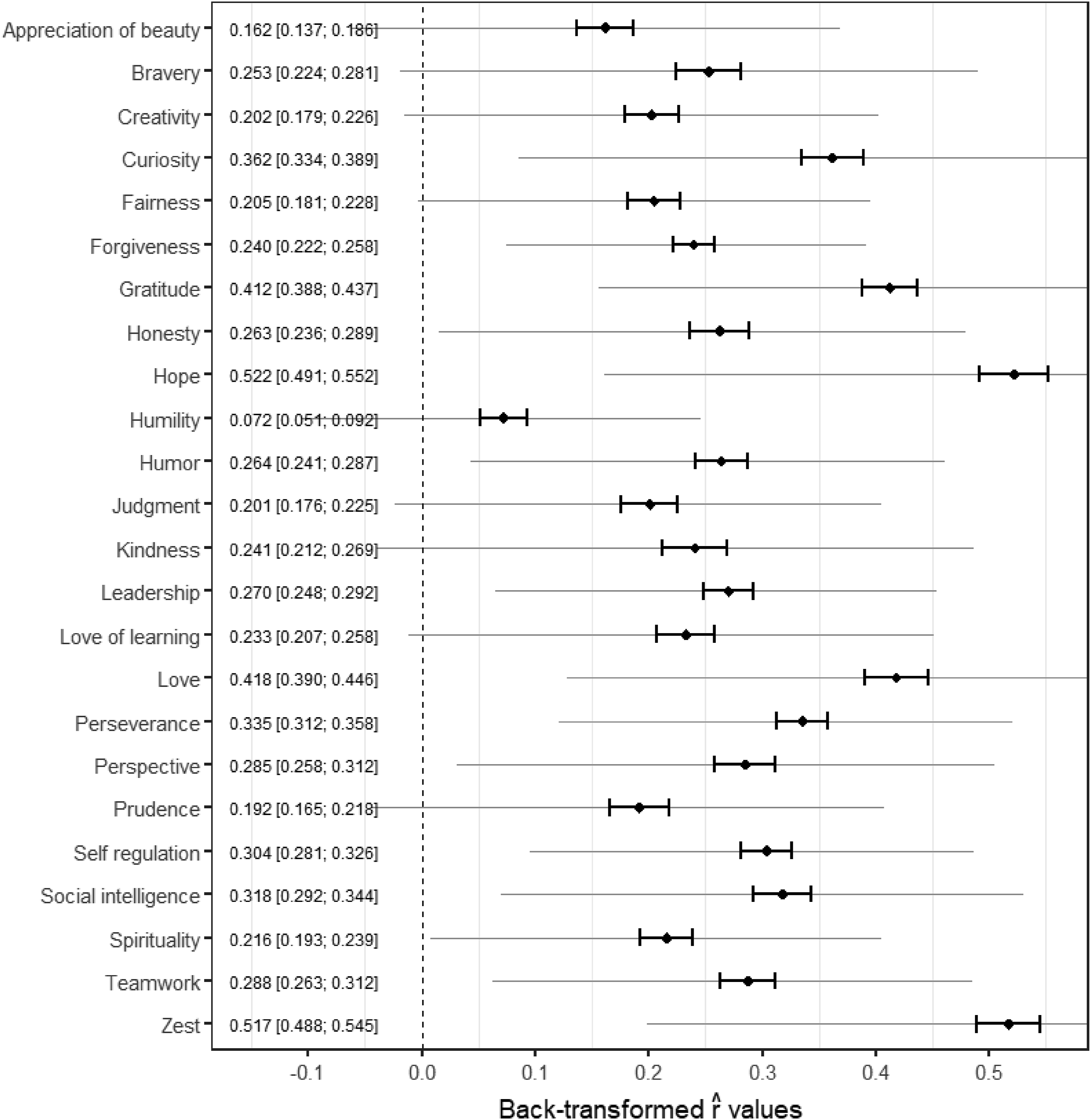
Differences between common mental health disorders and well-being
The first test of moderators concerned differences between common mental health disorders or well-being outcomes. Figure 4 displays the back-transformed meta-analytic correlation coefficients visually, while Table S3 shows them in relation to the expected correlations based on personality; see also Table S9 for the full set of results and the Shiny app for the scatterplots. Results show that, in general, character strengths are associated with well-being outcomes to a higher degree, with differences ranging from .01 to .16. However, in three cases this difference was not significant, and confidence intervals included zero (self-regulation, prudence, and humility). Importantly, the lower bound of the confidence intervals of the associations between appreciation of beauty, creativity, fairness, kindness, and spirituality with common mental health outcomes included .10, indicating that their effect may be considered negligible in these cases, but not for well-being. Humility was again the only strength without relevant associations with either outcome. Character strengths’ meta-analytical correlations with common mental health disorders and well-being outcomes. Differences and associated CI are reported on the left. Thin lines represent prediction intervals.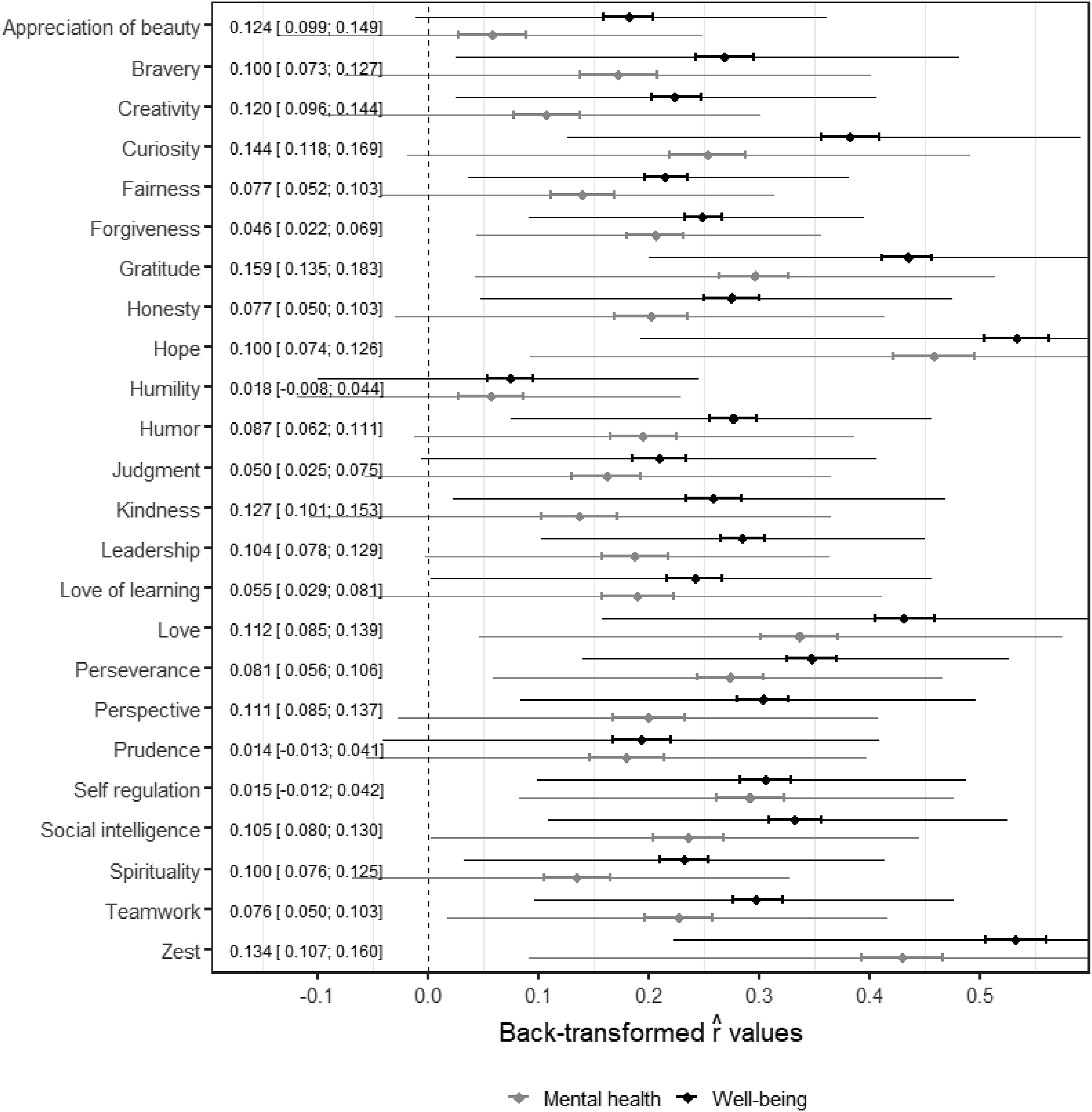
Q values, whose test was always significant, and the τ2 values, again indicated that multiple moderators may still influence these results. I2 again suggested that most of the variance in the outcomes is due to heterogeneity.
Publication bias was not detected for any of the analyses (see Table S9 in Supplemental Materials). Leave-one-out procedures also suggest that results for common mental health outcomes and well-being are not strongly influenced by any of the samples included (see Figure S1–S48 in the Supplemental Materials).
VIA measures
Well-being
For what concerns long and short formats of the VIA inventories, results (see Figure 5, Table S11 and the Shiny app) suggest that shorter versions similarly predict well-being outcomes when compared to the longer versions. However, some notable exceptions emerged for seven strengths, namely, curiosity, humor, love of learning, perspective, self-regulation, spirituality, and teamwork, for which the long version resulted in relatively larger correlations. Nonetheless, differences may be considered negligible (< .05) in most cases, except for humor (Δr = .09 [.06; .11]), perspective (Δr = .08 [.05; .10]), and curiosity, love of learning, and self-regulation (all Δr = .06). Character strengths’ meta-analytical correlations with well-being outcomes depending on the VIA format. Differences and associated CI are reported on the left. Thin lines represent prediction intervals.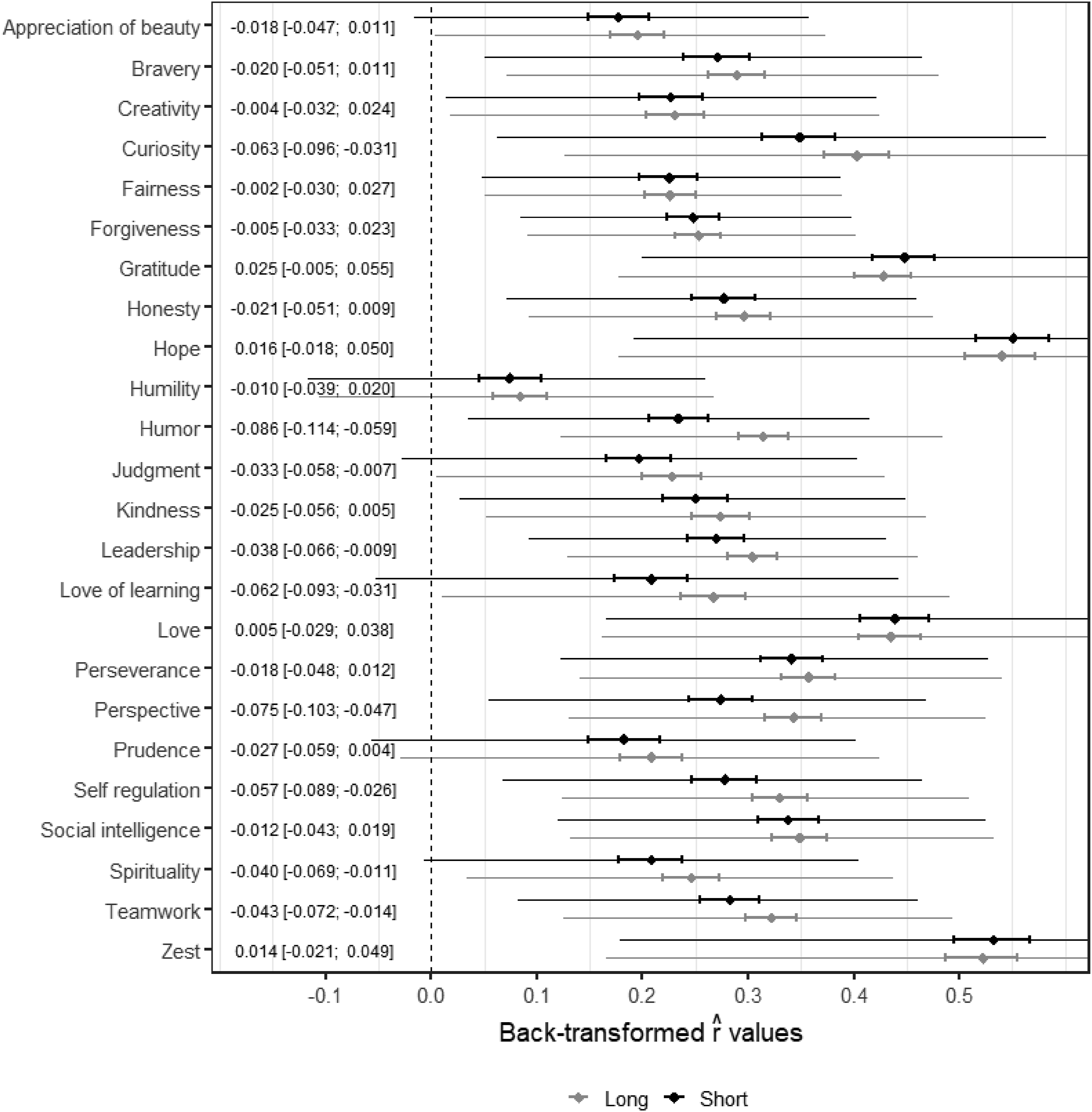
Common mental health disorders
Long and short formats of the VIA inventories similarly predicted common mental health outcomes (see Figure 6, Table S10 and the Shiny app). Nonetheless, some meaningful differences emerged, such as honesty, hope, love, and zest for which the mean differences were higher than .10, but confidence intervals and significant tests do not allow refusing the null hypothesis. Interestingly, in these cases, the short format was generally more associated with the outcome compared to the long format. Character strengths’ meta-analytical correlations with common mental health outcomes depending on the VIA format. Differences and associated CI are reported on the left. Thin lines represent prediction intervals.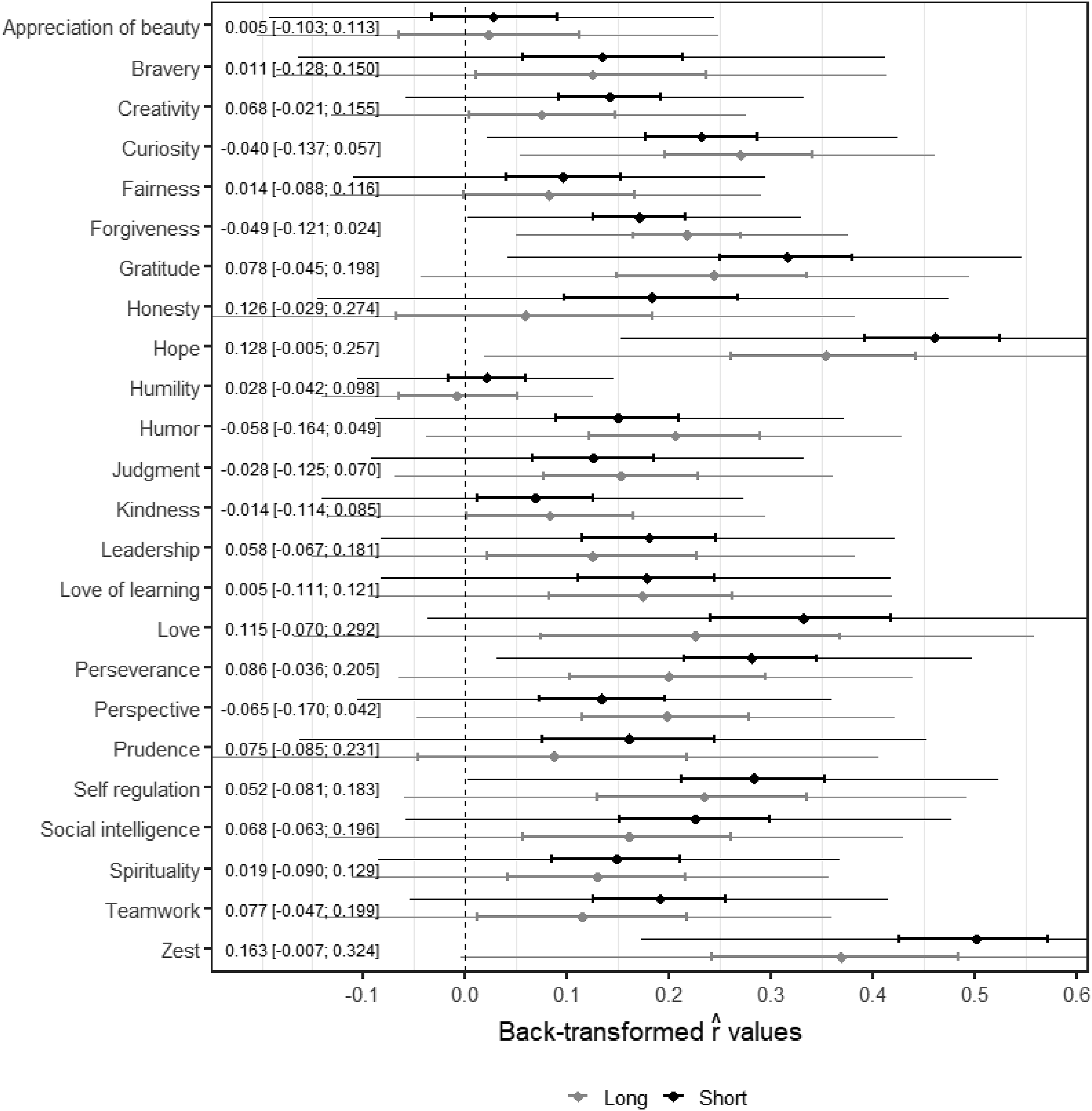
Specific outcomes
Well-being
For what concerns the specific well-being outcomes, the moderator analysis resulted significant in all cases (p < .01) except for humility. Figure 7 displays the back-transformed meta-analytic correlation coefficients visually (see also Table S12) and Table S4 also shows the correspondence with the personality literature; the Shiny app further contains scatterplots. Character strengths’ meta-analytical correlations with specific well-being outcomes. Thin lines represent prediction intervals.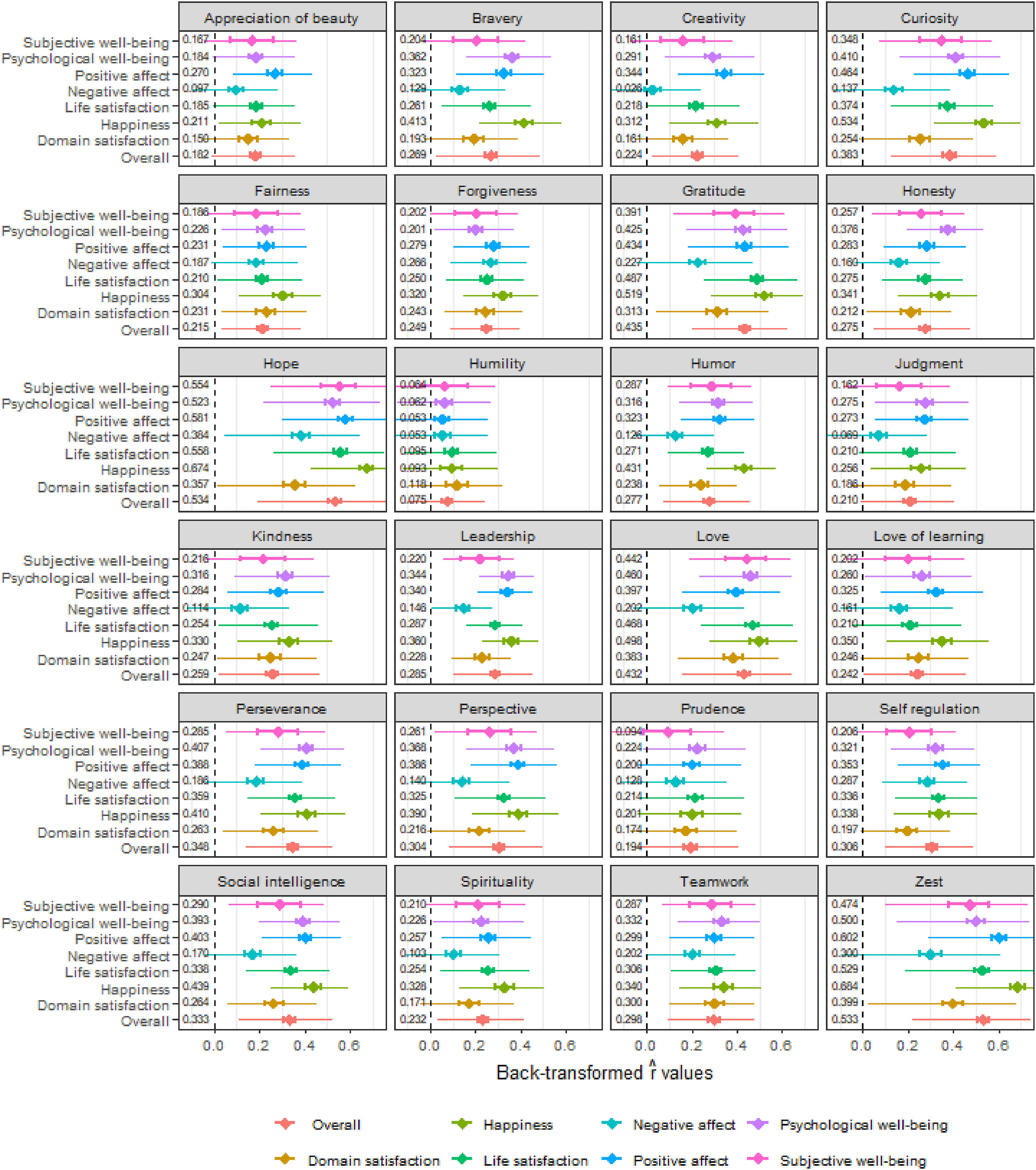
Effects resulted generally smaller for negative affect and domain-specific satisfaction compared to the other outcomes, while happiness appeared as the outcome with the strongest overall association with character strengths. Correlations were descriptively stronger for psychological well-being compared to subjective well-being, but since this comparison was only based on a very small number of samples (k = 4) considering an aggregate measure of subjective well-being, we refrain from interpreting this result further. For positive affect, correlations ranged between .05 (humility) and .60 (zest); the other most correlated strengths were hope (.58) and curiosity (.46). For negative affect, correlations ranged between .03 (creativity) and .38 (hope), with most correlations below .25. Correlations with life satisfaction ranged between .10 (humility) and .56 (hope), with gratitude and zest also showing correlations above .45. Correlations between strengths and happiness ranged from .09 (humility) to .68 (zest), with the “happiness strengths” (hope, zest, gratitude, love, and curiosity) all showing the highest correlations (all r above .40). Lastly, correlations with domain-specific satisfaction ranged from .12 (humility) and .40 (zest), with the other most correlated strengths being love (.38), hope (.36), gratitude (.31), and teamwork (.30).
Common mental health disorders
For what concerns the specific common mental health outcomes, the moderator analysis resulted significant in eleven cases (p < .01). Figure 8 displays the back-transformed meta-analytic correlation coefficients visually (see also Table S13) and Table S5 shows the correspondence with the personality literature; the Shiny app features the scatterplots. Descriptively, anxiety resulted generally having the lowest associations with character strengths, with its confidence intervals excluding .10 in only three cases (i.e., hope, self-regulation, and zest). The strongest association emerged between zest and depression (r = .52 [.44; .58]); hope (r = .48 [.42; .54]), and love (r = .36 [.28; .44]) were also quite strongly related to depression. For both general mental health and stress, the top three correlated strengths were zest (r = .38 [.27; .47] and r = .31 [.21; .41], respectively), hope (r = .34 [.24; .42] and r = .34 [.25; .42], respectively), and self-regulation (r = .28 [.20; .36] and r = .35 [.28; .42], respectively). Character strengths’ meta-analytical correlations with specific common mental health outcomes. Thin lines represent prediction intervals.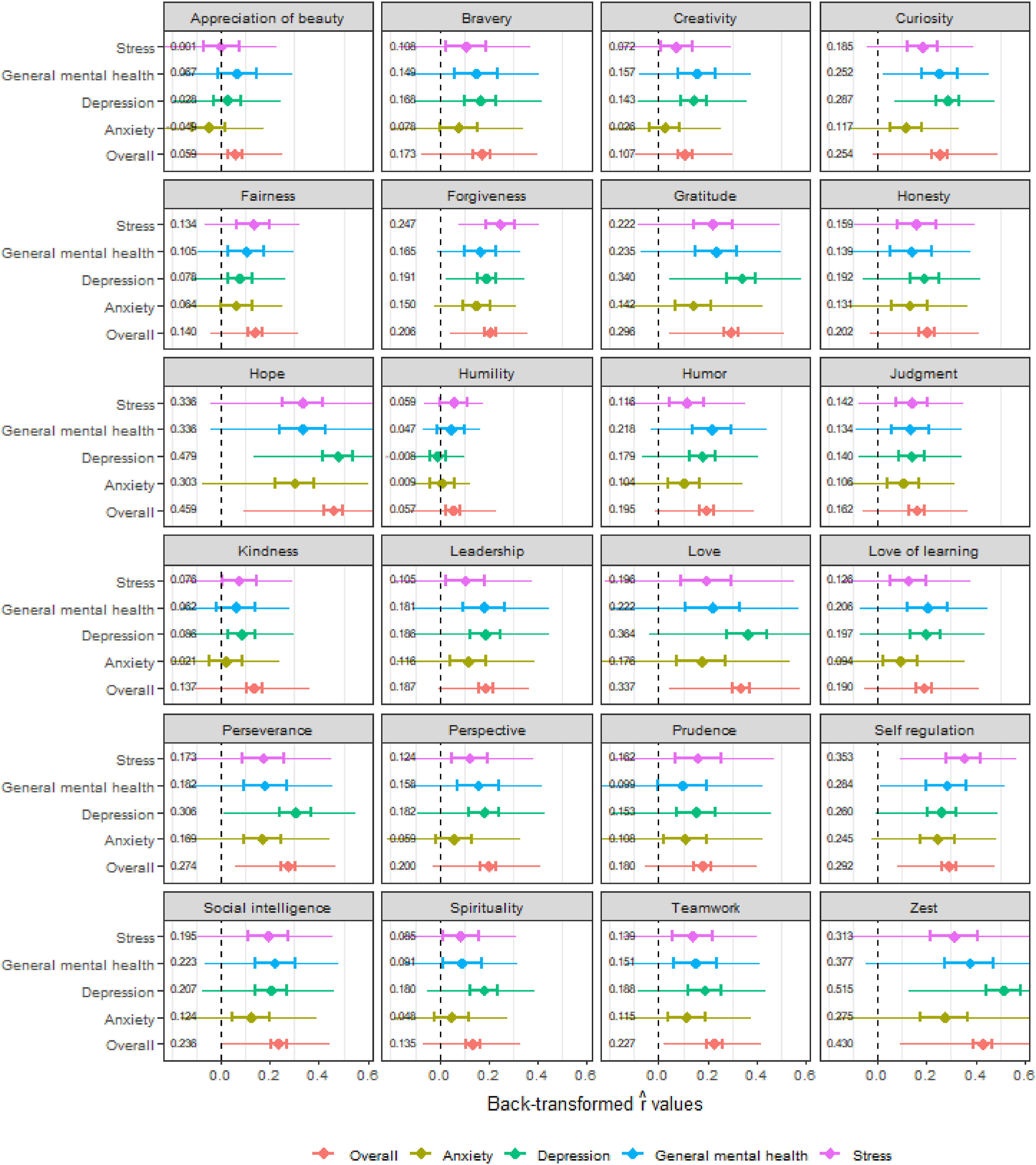
Discussion
Character strengths have been described from the very start as morality-related personality traits serving the double purpose of making people function better, that is, being happier, while effectively dealing with suffering (Peterson & Seligman, 2004). As such, they could help us understand individual differences in well-being and common mental health disorders from a moral personality perspective. However, there has been no systematic effort to synthesize this growing literature quantitatively and provide estimates of the effect sizes for each of the 24 traits across studies—and an integration with basic personality traits is lacking. The present meta-analysis aimed to bridge the gap between (moral) personality, mental health, and well-being.
By summarizing the results of 130 published papers (total N = 275,007), we found meaningful (r > .10) correlations with healthy functioning (i.e., higher well-being and mental health) for all strengths except humility, with most relationships being in the range between .10 and .30, that is, from relatively small but still potentially consequential effects to relatively large effects that can be considered powerful both in the short and long run (Funder & Ozer, 2019; Gignac & Szodorai, 2016).
We also found high heterogeneity across studies, which provided even more reason to delve into potential moderating effects. By contrasting well-being (135 samples) with common mental health disorders (42 samples), we found stronger, more meaningful correlations with the former compared to the latter, and still high heterogeneity in the results. We also did not find sizable differences in correlation sizes across short and long measures of character strengths, with few exceptions—specifically for well-being outcomes—where the long versions showed stronger associations (namely, for humor, perspective, curiosity, love of learning, and self-regulation).
When zooming in on the specific outcomes, we found that they significantly moderate the relationships with character strengths. Happiness was the well-being outcome most associated with character strengths, followed by positive affect and life satisfaction. Negative affect and domain-specific satisfaction showed comparatively lower correlations (mostly below .20 and .30, respectively). Correlations were generally stronger for psychological well-being than for subjective well-being. For common mental health outcomes, we found stronger correlations with depression, general mental health, and stress compared to anxiety.
Which character strengths are most related to healthy functioning?
By and large, hope and zest emerged as the two strengths most associated with overall healthy functioning, with correlations above .50, an effect size that can be considered very large (Funder & Ozer, 2019). This was still the case when looking at well-being and common mental health disorders separately, albeit with lower correlation sizes for mental health. Both these strengths can’t be clearly located within basic personality frameworks: hope seems a blend of extraversion and (low) neuroticism, while zest stands at the intersection of extraversion, (low) neuroticism, and conscientiousness (McGrath et al., 2020; Noftle et al., 2011). Interestingly enough though, they do relate to the basic personality traits that appear most strongly related to well-being and mental health (Anglim et al., 2020; Pletzer et al., 2024; Strickhouser et al., 2017), thus making the present results consistent with the personality literature, although providing evidence for the specific role of hope and zest.
Other than these two top strengths, other strengths showed fairly strong (above .30) correlations with healthy functioning. For well-being, it was gratitude, love, and curiosity, confirming the common finding in the character strengths literature that has brought authors to call them “happiness strengths” (Littman-Ovadia et al., 2017; Littman-Ovadia & Lavy, 2012). These strengths can all be considered tonic strengths, a denomination that indicates that they are relevant to a broad range of situations, as opposed to phasic strengths (e.g., bravery and forgiveness) that are more relevant to specific situations (Arbenz et al., 2023; Peterson & Seligman, 2004). The happiness strengths were also among the most related with common mental health disorders, in line with our narrative review of the literature (e.g., Casali et al., 2021; Freidlin et al., 2017; Tehranchi et al., 2018). Additionally, perseverance and self-regulation also appeared as moderate correlates of common mental health outcomes. While this finding is less established in the character strengths literature (but see Niemiec, 2023), it’s not surprising when looking at the connection of these two strengths with conscientiousness and neuroticism, both of which have strong relationships with mental health (Kotov et al., 2010; Pletzer et al., 2024; Strickhouser et al., 2017).
Some strengths, and most notably humility, showed very low correlations with healthy functioning (both well-being and common mental health disorders). This result is consistent with Anglim et al. (2020), who found that the modesty facet (in both the Big Five and HEXACO models) showed either no relationships or negative ones with well-being. The present findings concur to suggest there may be an “optimal margin of illusion” (Baumeister, 1989), meaning that optimal functioning may actually be associated with perceiving oneself as (slightly) better than average. This reasoning is supported by meta-analytical evidence showing that self-enhancement positively relates to personal adjustment (defined in terms of life satisfaction, positive and negative affect, and depression), with more mixed findings for interpersonal adjustment (i.e., informant reports of agency and communion, Dufner et al., 2019).
The moderation analysis further showed that character strengths correlate with well-being significantly stronger than they do with common mental health disorders, in line with our understanding of the literature. This (small) difference may be due to the number of studies available for review (six times larger for well-being), which is also found in the broader personality literature (see Pletzer et al., 2024; Strickhouser et al., 2017). Pletzer et al. (2024) do not report substantive differences between well-being and mental health, suggesting that personality traits similarly relate to both. In the case of character strengths, it may also be that their positive and socially desirable (moral) nature (Stahlmann & Ruch, 2020; Wilson et al., 2024) more strongly conceptually (and then also empirically) relates to well-being than mental health. This is also apparent when looking at the results for specific well-being and common mental health outcomes.
Which character strengths are most related to specific outcomes?
The moderation analysis showed that character strengths are not associated to all well-being indicators alike. First, and in line with both findings on character strengths (e.g., Goodman et al., 2018; Hausler et al., 2017) and personality traits (Anglim et al., 2020), correlations were generally stronger for psychological (eudaimonic) compared to subjective (hedonic) well-being. Differences in correlation size were more pronounced for bravery, creativity, honesty, leadership, perseverance, and prudence (all Δr ≥ .10), in line with some previous work (Casali & Feraco, 2024). Given the comparison was carried out with the few (k = 4) studies that explicitly measured subjective well-being as a unique construct, and provided the large confidence intervals we found, this finding should not be overinterpreted. The most correlated strengths were, for both subjective and psychological well-being, hope and zest, followed by love, gratitude, and curiosity (i.e., the happiness strengths). For psychological well-being, bravery, honesty, perseverance, perspective, and social intelligence also showed strong (> .30) correlations. These correlations were either in line or exceeding those found with personality traits (Anglim et al., 2020; Pletzer et al., 2024).
For positive affect, strong (> .40) correlations emerged for zest, hope, and curiosity, and moderate (> .30) correlations were apparent for a number of other strengths (namely, gratitude, love, perseverance, perspective, social intelligence, and creativity), in line with a previous reviews of the literature (Harzer, 2016; Wagner & Gander, 2025) and with the personality literature (Anglim et al., 2020; Pletzer et al., 2024).
Correlations with negative affect were smaller (mostly below .20), with the exception of hope, zest, self-regulation, forgiveness, gratitude, love, and teamwork. These findings slightly differ from the narrative review by Harzer (2016), that identified humor and curiosity among the strongest correlates of negative affect, together with hope and zest, while mostly aligning with the meta-analytical correlations (k = 3) reported by Wagner and Gander (2025). Correlations were also somewhat weaker than would be expected based on personality (Anglim et al., 2020; Pletzer et al., 2024), with eight out of 24 strengths showing lower correlations than one might expect: alignment was still pretty high (i.e., correlations for 14 out of 24 strengths fell in the anticipated interval based on previous meta-analytical results).
For life satisfaction, hope, gratitude, love, and zest all showed very large (> .40) correlations, while large (> .30) correlations emerged for curiosity, perseverance, perspective, self-regulation, social intelligence, and teamwork. These results extend the meta-analysis by Bruna et al. (2019) by doubling the number of studies considered; the present and their results mostly align. The present results are also generally consistent with previous findings on personality (Anglim et al., 2020; Pletzer et al., 2024). Also in line with by Bruna et al. (2019), humility was by far the least correlated strength to life satisfaction. This aligns again with the idea that the pleasant self-deception of seeing oneself as superior to others may actually boost global satisfaction (Anglim et al., 2020).
Happiness showed the strongest correlations with character strengths. As expected, correlations were strongest for the “happiness strengths,” reaching correlations of over .60 for hope and zest. Additionally, bravery, humor, perseverance, perspective, and social intelligence all showed strong (> .40) correlations and all but humility still showed correlations above .20.
Correlations across different kinds of domain satisfaction (e.g., job and relationship) were generally quite small, with most correlations below .20 and only four strengths surpassing .30 (namely, zest, love, gratitude, and hope). Results were mostly aligned with previous literature studies focusing on specific domains, showing that specific (phasic) strengths may relate to specific outcomes more strongly than others (Gander et al., 2020; Karris Bachik et al., 2021; Lounsbury et al., 2009; Weber, 2021).
Overall, the analysis of specific well-being outcomes made it clear that some strengths (e.g., the happiness strengths) relate quite strongly to all well-being outcomes, others (e.g., bravery, perseverance, and humor) relate to some outcomes (way) more than others, and others (e.g., appreciation of beauty and humility) generally have low correlations with all outcomes.
Character strengths also mostly differently related to specific common mental health outcomes, although the moderator analysis did not always turn out significant. It should be noted that the number of studies available for analysis was dramatically lower (five for anxiety, stress, and general mental health, and 20 for depression), questioning the generalizability of the present findings. Importantly, this was also the case for the HEXACO personality model (Pletzer et al., 2024).
Zest, hope, and self-regulation consistently showed the strongest correlations with general mental health, anxiety, and stress, while other strengths such as gratitude, curiosity, humor, love, love of learning, and social intelligence (for general mental health) and forgiveness and gratitude (for stress) also had smaller associations, typically below .30. For depression, correlations were generally the strongest. Hope and zest showed very large correlations, while curiosity, gratitude, love, perseverance, self-regulation, and social intelligence showed moderate correlations.
Overall, these results confirmed that hope and zest were the most related strengths to all specific common mental health outcomes, while other strengths more specifically related to some outcomes. Self-regulation also appeared to be at least moderately related to all common mental health outcomes. This may be explained through its connection with conscientiousness and (low) neuroticism (Pletzer et al., 2024; Strickhouser et al., 2017), also apparent in its original definition of “regulating what one feels and does, being disciplined, controlling one’s appetites and emotions” (Peterson & Seligman, 2004, p. 30).
Is personality a useful integrating framework for character strengths?
The present meta-analysis took the integration between character strengths and personality a step forward, by explicitly locating each of the 24 strengths within the Big Five and HEXACO personality models and using previous meta-analytical evidence (Anglim et al., 2020; Pletzer et al., 2024; Strickhouser et al., 2017) to derive expectations regarding the correlation sizes of character strengths with well-being and mental health.
All in all, the present meta-analytical results aligned pretty well with those expectations (see Tables S3–5): across well-being and mental health, more than half of the present correlations aligned with expectations, while less than a third were lower and around 20% were higher. For instance, creativity and love of learning showed higher correlations than it would be expected based on their correspondence with openness, while judgment and prudence showed lower correlations than their corresponding trait of conscientiousness. Interestingly, when considering expectations based on facets, rather than broad domains—which was only possible for well-being (Anglim et al., 2020)—alignment was even higher. This underscores the added value of considering narrow personality traits such as character strengths, as well as broad ones (Irwing et al., 2024), and prompts to a more fine-grained analysis of personality relationships with mental health. Overall, the present study suggests that broad personality frameworks are indeed useful to guide empirical predictions.
This integration also has theoretical implications, namely, the possibility for conceptual development. The personality processes literature (e.g., Baumert et al., 2017; Hampson, 2012) offers multiple insights on how and why personality relates to important outcomes such as mental health and well-being. This body of knowledge may be leveraged to develop new theories and/or refine existing ones, such as the opportunity and adversity functions of character strengths (Niemiec, 2020). For instance, the correspondence with personality may help better articulate which character strengths relate to which outcome through which function (e.g., the forgiveness-agreeableness correspondence may suggest that forgiveness leads to well-being by increasing appreciation of others). Said otherwise, the integration with personality opens possibilities for cross-fertilization (Feraco & Casali, 2025). In this sense, the personality literature could also benefit from the character strengths literature. To exemplify, volitional character change is a rather established topic in this literature, with meta-analytic evidence supporting the effectiveness of such interventions on mental health and well-being (Schutte & Malouff, 2019; Yan et al., 2020) but also on character strengths levels (Gander et al., 2024; Pang & Ruch, 2019). As such, the character strength-based intervention literature may be a goldmine of useful strategies to be applied in the growing field of volitional personality change (Haehner et al., 2024).
Limitations and future directions
The current meta-analysis provides the first and largest synthesis of studies on the association between character strengths and well-being and common mental health outcomes. However, our conclusions should be interpreted considering the following limitations.
First, our results are entirely based on self-report data, thus being transversally influenced by common method bias.
We would also like to highlight the lack of transparency in reporting data (i.e., lack of openly accessible datasets) and especially correlations between variables that caused many studies to be excluded from the analysis although they adopted both VIA-IS inventories and outcomes of interest. This may have not influenced our conclusions, but surely limited our systematic analysis, especially concerning moderator analyses. In fact, moderators had extremely unequal numbers of effect sizes at all levels. At the highest level, well-being outcomes were almost five times more frequent than mental health outcomes (k = 4,104–891), with a maximum of 42 effects (i.e., gratitude and forgiveness) for mental health and 189 (i.e., gratitude) for well-being. This also influenced successive analyses as, for instance, only nine effects for shorter versions of the VIA-IS were available for mental health outcomes. In general, we could only analyze few effects for specific outcomes, such as domain satisfaction, and a limited number of clinical populations.
Our results, independently from the moderator at hand, always showed a high degree of heterogeneity, suggesting that other factors may intervene and moderate the associations between character strengths and healthy functioning. Among them, cultural and geographical differences, as well as socio-demographic variables (e.g., age and gender) (Brdar et al., 2011; Casali et al., 2024; Heintz & Ruch, 2022; Martínez-Martí & Ruch, 2014; McGrath, 2015) may be further inspected in future studies and meta-analytical efforts.
Finally, our literature search was limited to three major databases (PsychInfo, Scopus, and Web of Science), which were selected based on their relevance to the field of character strengths and in alignment with prior reviews (e.g., Anglim et al., 2020; Pletzer et al., 2024). Although this approach likely captured the core body of literature, and a supplementary search in PubMed identified only one additional eligible study, we acknowledge that relevant studies in other databases might have been missed. Furthermore, the decision to not include unpublished studies, based on our preregistered protocol and the low anticipated risk of publication bias (confirmed by the PET regression analyses), may nonetheless have constrained the scope of the included evidence.
These limitations could be taken as suggestions for future research on character strengths as they highlight the need for expanding research in mental health, including clinical populations and fine-grained indicators of mental health and well-being, such as more specific life satisfaction domains and other domains of psychopathology (e.g., psychosis and eating disorders).
Conclusion
The present meta-analytical investigation summarized evidence from a large and growing body of research (Feraco & Casali, 2025), namely, the relationship between character strengths, 24 morally valued personality traits, and healthy functioning (i.e., well-being and common mental health outcomes). The results indicate that all character strengths but humility have meaningful correlations with healthy functioning, with a prominent role of hope and zest.
Results appear to be stronger and more established for well-being than for common mental health outcomes, where the evidence is much less abundant. Importantly, findings for each character strength align with evidence on the corresponding personality trait (Anglim et al., 2020; Pletzer et al., 2024; Strickhouser et al., 2017) and even more so with the corresponding facet (Anglim et al., 2020).
Taken together, these findings suggest that character strengths may serve as pathways to healthier functioning by promoting positive outcomes and mitigating negative ones, offering a valuable framework for understanding and fostering flourishing.
Footnotes
Declaration of conflicting interests
The authors declared no potential conflicts of interest with respect to the research, authorship, and/or publication of this article.
Funding
The authors received no financial support for the research, authorship, and/or publication of this article.
Open science statement
The study materials, data, and analysis scripts used for this article are permanently and openly accessible at https://osf.io/prjxb or  .
.
Supplemental Material
Supplemental material for this article is available online.
The study materials, data and analysis scripts used for this article can be accessed at a permanent and openly accessible at https://osf.io/prjxb or