




Abstract
The transition from secondary to tertiary education is important for educational identity development, as adolescents make choices regarding their academic track and vocational profile. The present study used Latent Transition Analysis to examine stability and change in identity statuses around the school transition, using questionnaire data from the Educational Identity Processes Scale in the Dutch educational context. Additionally, this study examined the extent to which the social context, characterized by positive relationship quality with parents and friends and school belonging, affects adolescents’ identity status and the probability of making a progressive shift toward identity coherence. These questions were examined in late adolescence (N = 204, 75.0% female, Mage T1 = 17.7 years) across two time points 1 year apart. Findings indicated that most adolescents were in an identity coherence status, while a sizable minority was in an identity crisis status. Patterns of stability and change between statuses indicated that most adolescents remained in the same status, but when change did occur it was more often progressive from crisis into coherence than from coherence into crisis. Finally, a positive social context seemed to be an important factor to promote more optimal educational identity development.
Keywords
Introduction
A key task during adolescence is to develop identity coherence (Erikson, 1968), characterized by finding answers to questions such as “Who am I?” and “Who do I wish to become?”. In the educational context, adolescents can achieve identity coherence by making conscious choices regarding their academic track and vocational profile that help them develop a clearly defined academic self-concept (Grotevant, 1987). Educational identity coherence has been related to several positive outcomes, such as higher levels of psychological well-being and academic adjustment (Branje et al., 2014; Hatano et al., 2020). The school transition from secondary to tertiary education is an important turning point in educational identity development during which adolescents can move from an identity crisis status, characterized by weak commitments and high exploration, toward an identity coherence status, characterized by strong commitments and low exploration (Grotevant, 1987; Waterman, 1999). However, while the majority of adolescents seem to be able to achieve identity coherence after the transition, a sizable minority may also experience doubt and worry about making the correct choice during this transitional period (Luyckx et al., 2008a) and struggle to strongly identify with their educational commitments after the school transition (Christiaens et al., 2021). The social context may aid adolescents’ ability to make a progressive developmental shift toward identity coherence, as interpersonal bonds are an important source of feedback that help adolescents make conscious choices and can provide a safe environment from which to explore (Branje et al., 2021; Erikson, 1968).
To better understand movement patterns in adolescents’ educational identity statuses around the transition to tertiary education and factors that may promote more optimal development, the present study examined stability and change in adolescents’ educational identity status using a transition-centered approach. Moreover, we examined which factors in the social context were associated with adolescents’ identity status and change.
Educational identity development in context
According to the dual-cycle models of identity, adolescents develop their educational identity by dynamically moving between a so-called formation cycle and a maintenance cycle (Luyckx et al., 2008a; Crocetti et al., 2008). The formation cycle is characterized by the identity processes exploration in-breadth and commitment making. In this cycle, adolescents broadly explore potential educational options, before committing to one of these alternatives. Once a commitment is made, adolescents are assumed to move to the maintenance cycle characterized by the identity processes exploration in-depth and identification with commitment. In this maintenance cycle, adolescents examine present commitments by reflecting on their educational choice and start integrating the educational choice with their values, goals, and interests. However, when a commitment is deemed unsatisfactory, adolescents may return to the formation cycle and re-engage in exploration in-breadth as they reconsider their current educational choice and look for a new alternative. Finally, adolescents may ruminate over finding the right education and worry about whether they like their selected education, an identity process labelled self-doubt (Luyckx et al., 2008a). Educational identity formation and maintenance cycles thus include the processes exploration in-depth, commitment making, and identification with commitment that contribute to a more coherent educational identity. The identity processes self-doubt and exploration in-breadth reflect a more “crisis-like” educational identity, as adolescents engaged with these processes are still relatively uncertain about their commitments (Luyckx et al., 2008a; Crocetti et al., 2008).
Following the contextual identity framework (Grotevant, 1987), identity does not develop in a social vacuum but is transactional in nature. Identity develops through interactions between the person and their context. In the school context, the degree and timing of adolescents’ engagement with specific educational identity processes is constrained by the organization of the educational system, making educational identity development a so-called closed identity domain (e.g., Branje et al., 2021; Meeus et al., 1999). In many countries, adolescents’ ability to make or change school-related commitments is limited in periods when the school structure does not easily enable adolescents to change their choices. However, most students have to transfer to a new educational system at specific points, such as to middle or high school or to tertiary education, and during these times they are encouraged to reflect and form commitments by selecting a new school or follow-up education. Even though country-specific differences in school systems exist, these school transitions can be considered turning points in the lives of adolescents across society (Seidman & French, 2004; Symonds et al., 2023).
In a closed domain like the school context, movement between the formation and maintenance cycles may be less dynamic as the educational context imposes strong restrictions on when adolescents are able to form new commitments and when it is relevant to reflect on current commitments. To match the real-life challenges of adolescents’ educational identity development, a transition-centered approach to the dual-cycle models is required that connects the cycles to the educational context and includes four educational identity processes instead of three or five (Bosma & Kunnen, 2008). Specifically, before the transition from secondary to tertiary education, adolescents’ educational identity development can theoretically be best described as part of the formative cycle, in which adolescents broadly search for a fitting option for their follow-up education through exploration in-breadth before selecting one that fits them best (Erikson, 1968). In the school context, the selection of a follow-up education (i.e., commitment making) before a school transition may be a practical choice as all adolescents are required to make a choice, but this choice may not necessarily be connected to their identification with this commitment (Bosma, 1985; Christiaens et al., 2022). Instead, some adolescents may not just select an education, but also consider whether potential options fit their interests, goals, and values. Therefore, in addition to exploration in-breadth, the processes identification with commitment and exploration in-depth may also be part of this formative cycle.
After adolescents have selected a new school and have transitioned to tertiary education, they enter the maintenance cycle. Since an educational choice has been made and cannot easily be changed within the school year, the process commitment making is less relevant at this specific moment in development. Instead, experiences in adolescents’ newly selected environment are used to reflect on and evaluate their current commitments through exploration in-depth and identification with commitment. In this post-transition context, adolescents may also reconsider their identity commitments and re-engage with exploration in-breadth. Yet, completely abandoning their previous commitment to select a new education requires adolescents to deviate from the regular pathway, for example, by dropping-out of their selected education. Both before and after the school transition adolescents may experience self-doubt by worrying about their school choice and their ability to find a fitting education. Therefore, during the school transition, adolescents’ educational identity development may be best understood through a 4-process model. The four processes include exploration in-depth and in-breadth, identification with commitment, and self-doubt and encompass the period when adolescents are forming their educational identity before the transition and when they are in the process of maintaining their identity after the transition.
A person-centered approach to educational identity development
As high levels of commitment can go together with both low and high exploration and varying levels of self-doubt, it is useful to take a person-centered approach to consider adolescents’ identity statuses, or constellations of different identity processes within individuals (Marcia, 1966; Robins et al., 1998). According to Marcia’s classical identity status theory (Marcia, 1966), adolescents’ identity can be differentiated into four statuses based on their levels of exploration and commitment: (1) “Identity Diffusion” status, in which adolescents are not actively engaging in exploration and do not have strong commitments; (2) “Identity Foreclosure” status, in which adolescents are committed to a choice without prior exploration; (3) “Identity Moratorium” status, in which adolescents are actively exploring their identity without having strong commitments; and (4) “Identity Achievement” status, in which adolescents have strong commitments after a period of active exploration.
With the introduction of the dual-cycles models (Crocetti et al., 2008; Luyckx et al., 2005), empirical evidence extended Marcia’s framework by differentiating between identity statuses depending on whether adolescents are considered to be forming or maintaining their identity (e.g., Meeus et al., 2010). For example, “Identity Closure” was traditionally viewed as a subgroup of adolescents who made commitments that are established early on without first engaging in identity exploration (i.e., “Foreclosed” or “Early Closure” status; Marcia, 1966). Following movement patterns in adolescents’ identity statuses over longer time periods (for a review, see Meeus, 2018), some adolescents indeed started in a “Foreclosed” identity status (i.e., low exploration, high commitment) and moved into “Identity Moratorium” (i.e., high exploration, low commitment) when early commitments were no longer satisfactory. However, other adolescents entered an “Identity Closure” status from an “Identity Moratorium” or from an “Identity Achievement” status (i.e., high exploration, high commitment), which means that these adolescents entered “Identity Closure” after engaging in prior exploration and, as a result, may be satisfied with their commitment and do not feel the need to further explore.
As the context of identity-defining decisions, like choosing a tertiary education, may play an important role in identity statuses (Kroger, 2017), it remains uncertain whether previous identity status work can be replicated around the school transition. Within this period, adolescents are strongly encouraged to partake in some educational identity search, for example, by visiting colleges, making it less likely that they are in a diffused identity status pre-transition (Becht et al., 2021; Luyckx et al., 2008; McKay et al., 2022; Meeus et al., 2010). Relatedly, differences between adolescents who can find a fitting education and those who are not may be amplified during the school transition, as the timing of the school system urges adolescents into committing to a follow-up education. As a result, adolescents’ educational identity status around the school transition may be best distinguished into “Identity Coherence,” finding a meaningful identity direction characterized by strong commitments and low exploration and self-doubt, versus “Identity Crisis,” a period of continued questioning of identity choices characterized by low commitments and high levels of exploration and self-doubt (Erikson, 1968). Still, it might be possible to observe more statuses.
The interpretation and specific characteristics of adolescents’ identity statuses may also be influenced by the school transition as the role of specific identity processes might depend on whether adolescents are in the formation or maintenance cycle. In the pre-transition context, adolescents are in the process of forming their identity and therefore normative development (i.e., the status that represents most adolescents at a specific point in time) may represent adolescents who weakly identify with commitments combined with heightened exploration and self-doubt. In other words, before the school transition adolescents may have a higher probability of being in a “crisis-like” identity status (Waterman, 1999). In the post-transition context, being in an identity “coherence-like” status, characterized by strongly identifying with commitments and in-depth exploration of commitments with lower levels of exploration in-breadth and self-doubt, may be more normative as it could indicate that adolescents are satisfied with their educational choice. School transitions may thus be especially important for change in educational identity statuses, as the normativity of being in a specific status may change from the pre- to the post-transition context. While remaining in the same educational context may co-occur with more stability in adolescent educational identity status, moving from a pre- to a post-transition educational context may stimulate identity status change from crisis to coherence.
The role of adolescents’ social context
Besides the role of the school context in promoting adolescents’ educational identity, the social context may also serve an important role in this development. Adolescents’ interpersonal relationships are an important source of feedback and reflection in their identity development (Crocetti, 2018; Erikson, 1968) and create a secure base for adolescents to explore their identities (Branje et al., 2021; Crocetti et al., 2023). Moreover, positive interpersonal experiences may affirm adolescents’ feelings toward the fit between themselves and their context (Erikson, 1968), which may strengthen their identification with commitments. Previous research showed that having positive relationship quality with parents or friends can promote optimal identity development (e.g., Beyers & Goossens, 2008; Timar-Anton et al., 2023). In late adolescence, the role of friends becomes especially important for adolescent identity development (de Goede et al., 2009; Van Doeselaar et al., 2016), while parents still seem to play a critical role when adolescents have to make important life choices like selecting a tertiary education (Koepke & Denissen, 2012; Wang et al., 2007). Moreover, having positive relationship quality with parents and friends can reduce the stress that accompanies a school transition (Nelemans et al., 2018) and as such can help adolescents form a more coherent identity.
The experienced school climate may also play an important role in adolescents’ identity formation. When adolescents feel personally connected to their school and experience a supportive classroom climate, they feel more confident to explore and reflect on what they like or do not like (for a review, see Craggs & Kelly, 2018; Verhoeven et al., 2019), which may foster optimal identity development. For example, experiencing a higher level of belongingness toward the school can help adolescents feel a stronger sense of autonomy to construct their own identities (Nind et al., 2012). Therefore, when adolescents experience a positive social context, this may have a positive influence on being in an identity crisis status before the transition, as adolescents are better supported to explore their options. After the transition, the social context can provide support to settle and maintain their recently selected identity and promote being in an identity coherence status. Moreover, a more positive context may help stimulate progressive development across the transition, indicated by changing toward an identity coherence status around the school transition.
The present study
The present study was pre-registered at the Open Science Framework (OSF; https://osf.io/x8ru4) and examined educational identity development around the transition from secondary to tertiary education, with one year between assessments (Figure 1). The study was based in the Dutch school context where adolescents at the age of 12 years (grade 7) enter secondary education in either a 4-year track to prepare for vocational education, a 5-year track to prepare for applied sciences, or a 6-year track to prepare for scientific education. At the end of their secondary education, adolescents are encouraged to reflect on their interests, values, and goals to select a fitting tertiary education where they can specialize and prepare for a more specific occupation. As a result of the track system, adolescents in the Netherlands transition at different ages to tertiary education depending on their education level. The present study examined (1) identity statuses around the school transition, (2) the extent to which a developmental shift occurs between identity statuses around the school transition, and (3) the extent to which the social context (i.e., parent and friend relationship quality, and school belonging) influences adolescents’ identity status and the probability of moving from identity crisis to identity coherence. INTRANSITION Study Design. T1 and T2 were one year apart, assessed during the fall term. The bold arrow at the top represents the overall educational trajectory examined in INTRANSITION, while the dotted timelines indicate the within-group timing of the data collection.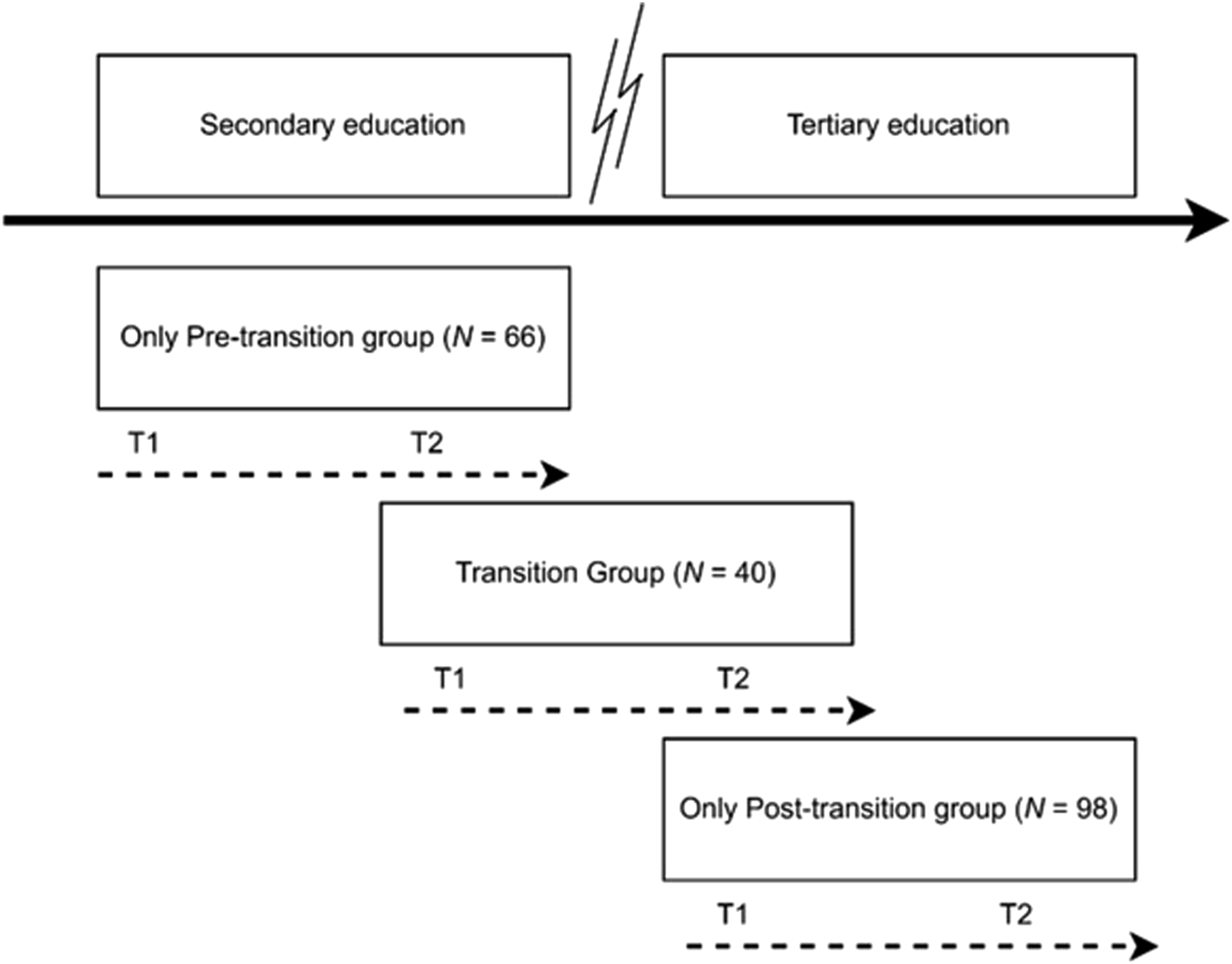
Based on our theoretical framework and given the sample size of the present study (N = 204), we expected to find at least two types of educational identity statuses surrounding the school transition (Hypothesis 1a): (1) Identity coherence, characterized by higher scores on commitment and lower scores on exploration and self-doubt and (2) identity crisis, characterized by lower scores on commitment and higher scores on exploration and self-doubt. However, the specific characteristics of these statuses may change depending on whether adolescents are in a pre-transition context, and forming their identity, or in a post-transition context, and maintaining their identity. Additionally, we expected a change in normativity of adolescents’ identity status indicated by a higher likelihood of adolescents being in identity crisis before the transition and being in identity coherence after the transition (Hypothesis 1b).
For the second research question, we expected that adolescents who remained in the same school context during the study period had a higher probability of showing stability over time compared to adolescents who did make the transition to tertiary education (Hypothesis 2a). Further, we expected that adolescents who transitioned to tertiary education during the assessment period had a higher probability of making a progressive developmental shift toward identity coherence compared to adolescents who remained in either a pre-transition or post-transition context (Hypothesis 2b).
In examining the role of the social context, we expected that adolescents who experienced more positive relationship quality with their parents and friends and more school belonging had a higher probability of being classified in a “normative” identity status of identity crisis before the transition and identity coherence after the transition (Hypotheses 3a). Additionally, we expected that the positive association between adolescents’ social context and likelihood of being in identity coherence would be stronger after the transition than before the transition (Hypotheses 3b), as identity coherence is expected to be a more normative identity status after the transition. Finally, we expected that experiencing more positive relationship quality with parents and friends and more school belonging was associated with a higher likelihood of following a progressive developmental trajectory (Hypotheses 3c), as indicated by moving from an identity crisis status to an identity coherence status across the transition. In examining the role of the social context, we controlled for age and gender, as these sociodemographic factors have been shown to relate to identity status classification (e.g., Christiaens et al., 2021; Verschueren et al., 2017).
Method
Participants
Participants were part of the INTRANSITION project, which has a longitudinal design to follow adolescents around the school transition. The sample for this study consisted of 215 adolescents from 49 different secondary or tertiary schools at T1. 1 The sample comprised of three education groups (i.e., “cohorts”; Figure 1): (1) adolescents who remained in upper secondary education at T1 and T2 (N = 66; i.e., pre-transition group); (2) adolescents who were in the final year of secondary education at T1 and transitioned to tertiary education at T2 (N = 40; i.e., transition group); and (3) adolescents who had recently started tertiary education at T1 and remained in tertiary education at T2 (N = 98; i.e., post-transition group). An additional 11 respondents dropped out of tertiary education and could therefore not be considered part of the group that remained in tertiary education. Because this sample filled out the pre-transition questionnaire at T2 and was too small for further analyses, these 11 adolescents were excluded from the analyses.
Descriptive statistics at T1 and T2.
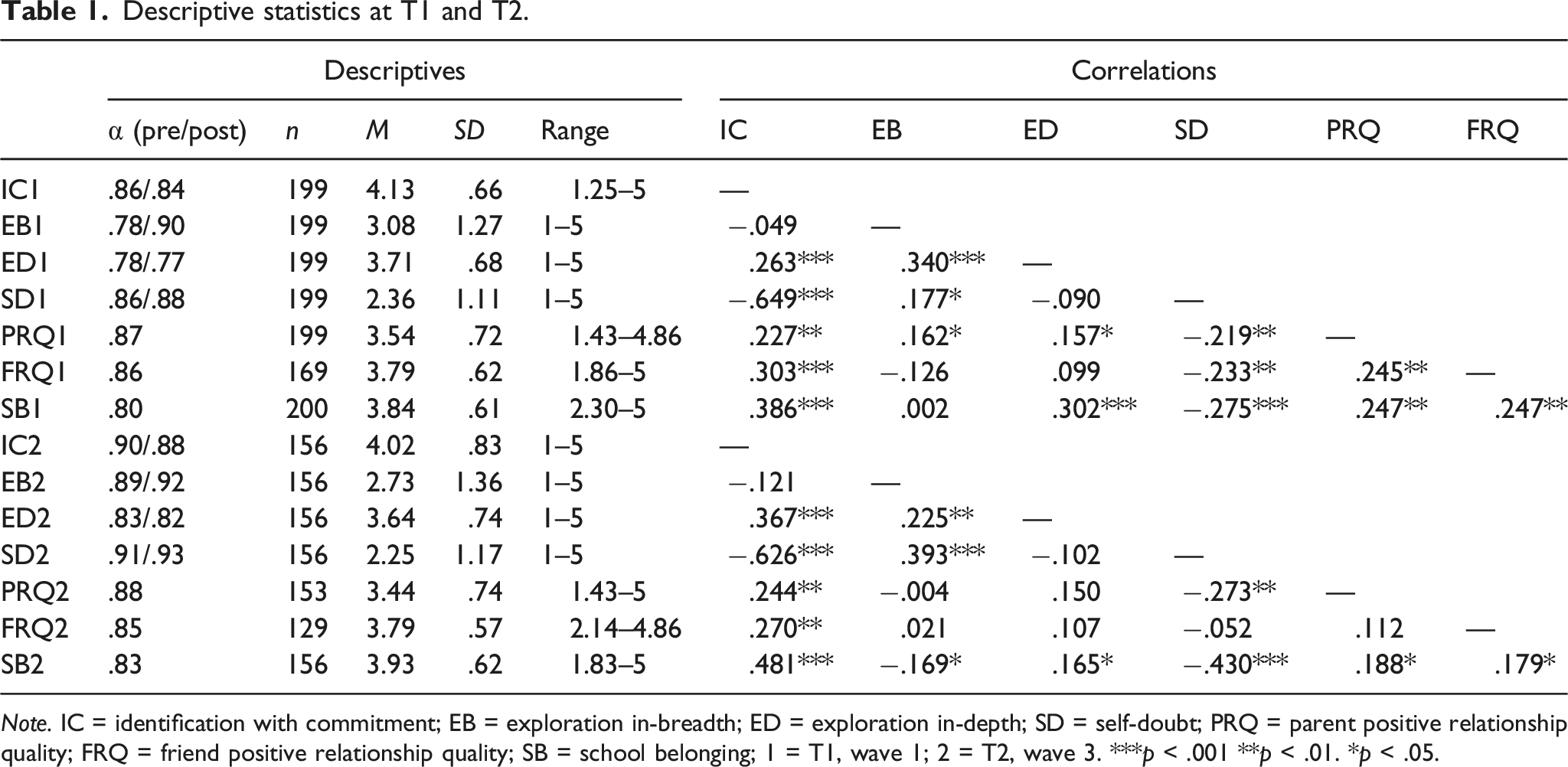
Note. IC = identification with commitment; EB = exploration in-breadth; ED = exploration in-depth; SD = self-doubt; PRQ = parent positive relationship quality; FRQ = friend positive relationship quality; SB = school belonging; 1 = T1, wave 1; 2 = T2, wave 3. ***p < .001 **p < .01. *p < .05.
Procedure
Adolescents were recruited by contacting secondary and tertiary schools across the Netherlands. 1 Schools that agreed to cooperate sent out information and consent forms to the participants and allowed promotion of the project on their communication platforms and through small promotional talks by the researchers. Adolescents could participate if they were in upper secondary education or if they were in the first year of vocational or applied sciences education in the academic year 2019–2020 or 2020–2021. Questionnaires were completed every six months online, up to a maximum of four measurement waves across two years, as part of a larger data collection procedure. Before the start of the assessment, the adolescents needed to provide active informed consent following GDPR regulations. Only those who took part in the previous wave were invited to participate in the successive assessments. The present study used the first (T1) and third assessment (T2) to examine stability and change in educational identity surrounding the school transition with one year between these two assessments. At both time points, data were collected between October and March. Each questionnaire lasted around 60–90 minutes and adolescents received a monetary reward of €10 for each assessment. The INTRANSITION project was approved by the local Ethics boards of Utrecht University (FETC18-135, FETC20-157).
Instruments
Educational identity
Educational identity was measured with the pre- and post-transition version of the Educational Identity Processes Scale (EIPS; Christiaens et al., 2022). The EIPS includes four subscales: “exploration in-breadth” (3 items; e.g., “I often talk with other people about the types of education I can attend/I often talk with other people about which other types of education I can attend”), “exploration in-depth” (4 items; e.g., “I often talk with other people about whether the education I want to attend fits me/I often talk with other people about whether my education fits me”), “identification with commitments” (4 items; e.g., “The education I want to attend really fits me/The education I am attending really fits me”), and “self-doubt” (3 items; e.g., “I doubt I will find a school that really fits me/I am doubtful about whether my education really fits me”). The items were assessed on a scale of 1 (completely disagree) to 5 (completely agree). Reliability in this study ranged between .77 and .93 (Table 1) and validity of the EIPS has been demonstrated (Christiaens et al., 2022).
Positive relationship quality
Adolescent’s perceived positive relationship quality with parents and friends was measured separately using the subscale “support” from the Network of Relationship Inventory – Short Form (NRI; Furman & Buhrmester, 1985, 1992). The subscale “support” consisted of 7 items (e.g., “How much do your parents/does your friend really care about you?”) that were rated on a scale of 1 (never) to 5 (very much). Reliability ranged between .85 and .88 for parent and friends (Table 1) and validity of the NRI was demonstrated (De Goede et al., 2009).
School belonging
The extent to which adolescents experience school belonging was measured with the School Connectedness scale (Jose et al., 2012). The scale consisted of 6 items (e.g., “The teachers at school respect me”; “I like going to school”) that were rated on a scale of 1 (completely disagree) to 5 (completely agree). Reliability ranged between .80 and .83 (Table 1) and validity of the School Connectedness Scale was demonstrated (Jose et al., 2012).
Analyses
All analyses were conducted in Mplus version 8.7 with Maximum Likelihood estimation with standard errors and chi-square robust to non-normality (i.e., MLR estimator; Muthén & Muthén, 1998–2017).
Latent Class Analysis
As preliminary analyses, we ran a multivariate multiple-group Latent Class Analysis (LCA) including all four identity dimensions (i.e., exploration in-breadth, exploration in-depth, self-doubt, and identification with commitment) across T1 and T2, to examine whether a two-class model fit well with the data. Specifically, the KNOWNCLASS command was used to specify the three pre-existing education groups: (1) the pre-transition group, (2) the transition group, and (3) the post-transition group (Figure 1). Class means of identity processes within these three education groups were constrained to be equal for all adolescents in the pre-transition context and for all adolescents in the post-transition context based on T1 and T2 data. Thus, constraining of class means was contingent on the school context (i.e., pre- vs. post-transition). 2
Because we hypothesized that a two-class model capturing identity crisis and identity coherence would best represent identity statuses around the school transition, we started with a 1-class model and stopped with a 3-class model. This allowed us to evaluate model fit of the 2-class model against a more parsimonious and a more complex model. Model selection of the optimal number of classes was based on four evaluation criteria (Jung & Wickrama, 2008). First, model fit should improve as indicated by a decrease in the sample size-adjusted BIC (ssaBIC) when the number of classes increases. Second, the bootstrapped likelihood ratio test (BLRT; Feng & McCulloch, 1996), 3 which tests the fit of k – 1 class model against the k class model, should be significant. Third, entropy should be .75 or higher to indicate good classification accuracy (Reinecke, 2006). Fourth, considering the theoretical interpretation of the classes, when the additional class did not have a differential substantive meaning or was a subtle variation of a pattern of another class in the k – 1 class model, the more parsimonious model was chosen.
Latent Transition Analysis
To test our hypotheses, we used the selected class solution of the LCA analysis to perform a Latent Transition Analysis (LTA). LTA calculates patterns of stability and change over time in the form of probabilities of movement between classes as a longitudinal extension of LCA (Lanza et al., 2003). First, we examined identity statuses around the school transition for three different education groups (Hypothesis 1a) through the evaluation of model fit and the theoretical interpretation of the class. Next, we used adolescents’ most likely class membership to test whether they were more likely to be in identity crisis before the transition and to be in identity coherence after the transition (Hypothesis 1b).
For Hypothesis 2, we examined the extent to which changes occurred between identity statuses around the school transition. Specifically, to test differences in stability and change in latent class membership between the observed education groups (Hypothesis 2a and 2b) we regressed class membership at T2 on class membership at T1 within the three education groups (i.e., pre-transition group, transition group, and post-transition group). We used a WALD chi-square difference test to contrast the regression path of the transition group with the regression path of the pre- and post-transition groups to test if patterns of stability and change significantly differed in the transition group compared to the pre- and post-transition groups. When the WALD test was significant, we interpreted the transition probabilities in each group to examine whether the only pre- and only post-groups were more likely to follow a stable trajectory (Hypothesis 2a) and whether the transition group was more likely to show progressive change from crisis to coherence (Hypothesis 2b).
Regression analyses
For the third hypothesis 4 , we examined the association between the social context (i.e., parent positive relationship quality, friend positive relationship quality, and school belonging) and adolescents’ probability of belonging to different identity classes. Missing values on the covariates were imputed with the expectation-minimization algorithm (EM) using the remaining scores in the dataset as predictors of those values. We used adolescents’ posterior probability, which captures adolescents’ probabilities of being in each of the estimated classes based on the adolescents’ combination of scores on the identity variables, to account for uncertainty in the estimation of class membership. As the posterior probability across classes adds up to one for each individual, making one of the probabilities redundant to include, we selected the probability of being assigned to the identity crisis class as reference group. To make most optimal use of our sample size, we restructured the T1 and T2 data into a long (multilevel) format and included respondent number as clustering variable to account for the multilevel structure in the data (i.e., using TYPE = COMPLEX in Mplus; Muthén & Muthén, 1998–2017). This means that we ran the regression analyses with 408 observations (i.e., T1 and T2) nested within 204 “clusters” (i.e., individuals). To be able to take the school context into account, we created a dummy variable contrasting the pre-transition context (reference group) with the post-transition context.
We ran three analyses to test our hypotheses of whether adolescents who experienced a more positive social context had a higher probability of being classified in crisis before the transition and coherence after transition (Hypothesis 3a) and whether associations were stronger after the school transition than before the school transition (Hypothesis 3b). First, in separate analyses we regressed adolescents’ estimated probability of being in the coherence class on parent positive relationship quality, friend positive relationship quality, and school belonging, while controlling for age and gender. Next, we included an interaction term between indicators of the social context (i.e., parent positive relationship quality, friend positive relationship quality, and school belonging) and the school context (social context * pre- vs. post-transition). Third, as a post-hoc test we ran a multiple-group regression analysis to examine the regression estimates separately for the pre- and post-transition contexts.
Finally, we examined whether experiencing a more positive social context was associated with a higher probability of making a progressive developmental shift from identity crisis to identity coherence across the transition (Hypothesis 3c). Specifically, using the posterior probabilities of the final LTA model we recoded adolescents’ change patterns into either positive stability (i.e., from coherence to coherence), negative stability (i.e., from crisis to crisis), progressive change (i.e., from crisis to coherence; reference group), or regressive change (i.e., from coherence to crisis). Since we did not have clear expectations on differences between education groups (i.e., pre-transition group, transition group, and post-transition group), we did not further differentiate between these education groups. We regressed adolescents’ change patterns on the adolescents’ social context (i.e., parent positive relationship quality, friend positive relationship quality, and school belonging) for T1 and T2 separately, controlling for age and gender.
Results
Descriptive statistics
Descriptive statistics are presented in Table 1. At both T1 and T2, adolescents experienced relatively high positive relationship quality with parents and friends and high school belonging. Additionally, at T1 and T2 adolescents experienced relatively high levels of commitment and relatively low levels of self-doubt. Overall, positive associations were observed between the social context and identity commitment, while negative associations were observed between the social context and self-doubt.
Adolescents’ identity status around the school transition
In line with Hypothesis 1a, LTA suggested that the 2-class solution fitted best with the data across T1 and T2 (Table S2). The ssaBIC, entropy, and BLRT indicated better fit for the 2-class solution compared to the 1-class solution, while the 3-class solution was too complex for the data as indicated by model nonidentification. Additionally, the 2-class solution mapped well onto the theoretical framework.
The first and largest class was Identity Coherence, which consisted of 63.4% of the sample at T1 and 68.4% at T2 (Figure 2; Table 2). In the pre-transition context, adolescents in this class were characterized by relatively higher identification with commitment, exploration in-breadth, and exploration in-depth, combined with lower self-doubt. In the post-transition context, adolescents in this class were characterized by relatively higher identification with commitment combined with average exploration in-depth, and lower self-doubt and exploration in-breadth. As adolescents in this class in both the pre-transition and post-transition context experienced relatively high identification with commitment and low self-doubt, we labelled this class “identity coherence.” Results indicated that adolescents in this class experienced significantly higher exploration in-depth and exploration in-breadth in the pre-transition context compared to the post-transition context (Table 2), while identification with commitment and self-doubt did not significantly differ across contexts. Mean Level Characteristics of the 2-Class Multiple-Group Latent Class Model. Scale ranges from 1 (completely disagree) to 5 (completely agree). IC = identification with commitment; EB = exploration in-breadth; ED = exploration in-depth; SD = self-doubt. N = 204. Class characteristics of the pre- and post-identity crisis and coherence class. Note. Different subscripts indicated significant differences at an alpha of .05 between class estimates based on Wald tests (see Table S3 for test statistics). N = 204.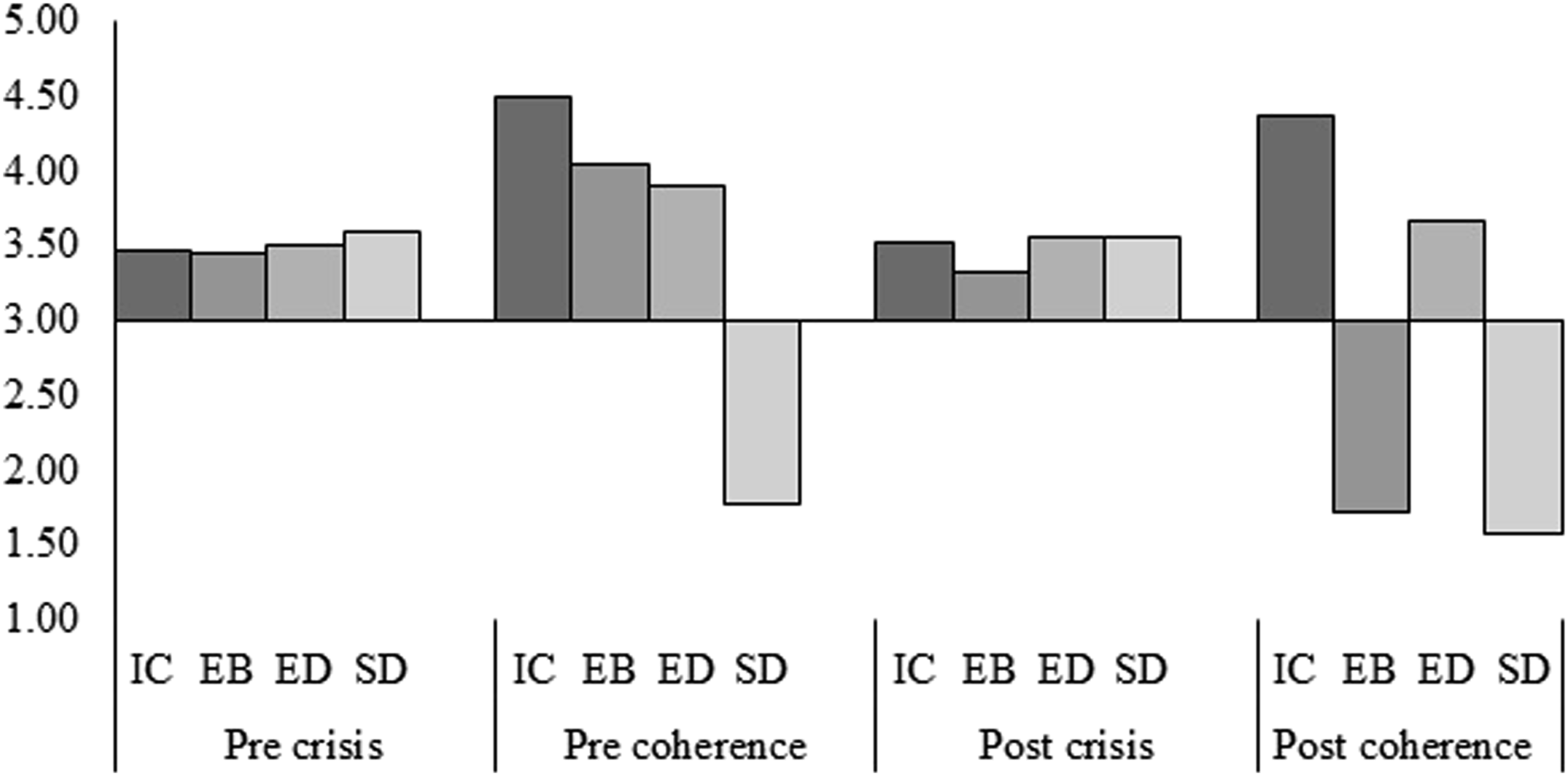
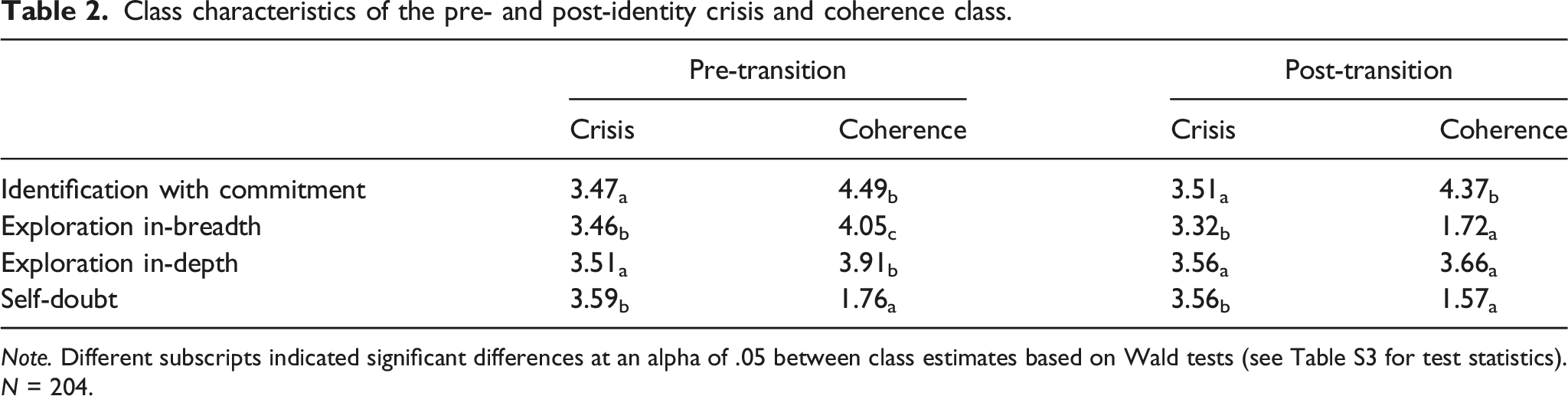
The second class was Identity Crisis, which consisted of 36.6% of adolescents at T1 and 31.6% at T2. Adolescents in this class were characterized by relatively lower levels of identification with commitment and exploration in-depth, combined with relatively higher levels of self-doubt and exploration in-breadth (Figure 2; Table 2). As adolescents in this class in both the pre-transition and post-transition context had relatively low identification with commitment and high self-doubt, we labelled this class “identity crisis.” Mean scores on the identity processes did not significantly differ between the pre- and post-transition context (Table 2).
Probability of being in crisis or coherence dependent on the school context.
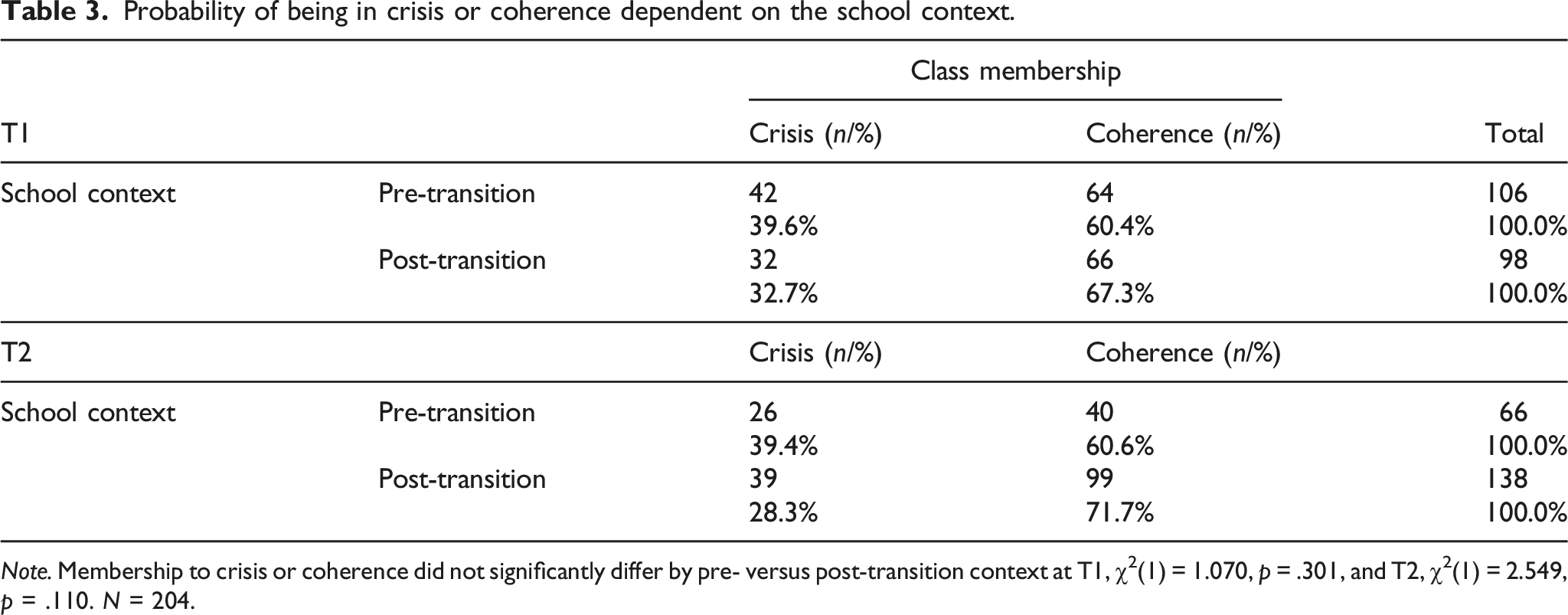
Note. Membership to crisis or coherence did not significantly differ by pre- versus post-transition context at T1, χ2(1) = 1.070, p = .301, and T2, χ2(1) = 2.549, p = .110. N = 204.
Stability and change in educational identity development
Probability of adolescents’ stability and change between coherence and crisis by school context.
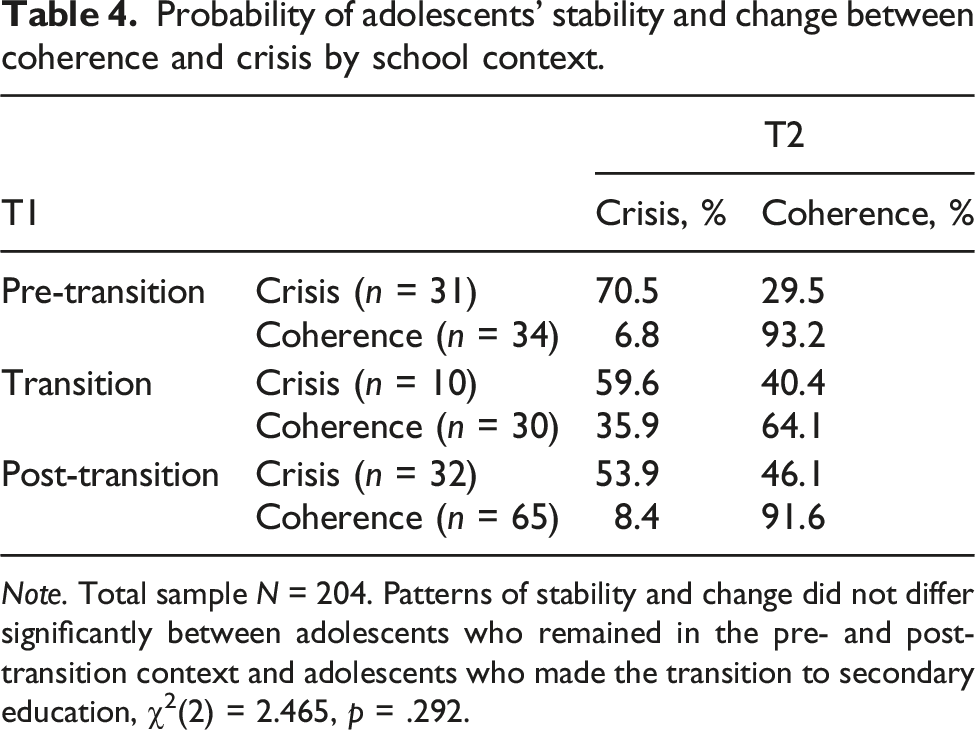
Note. Total sample N = 204. Patterns of stability and change did not differ significantly between adolescents who remained in the pre- and post-transition context and adolescents who made the transition to secondary education, χ2(2) = 2.465, p = .292.
The role of the social context in educational identity development
Adolescents’ probability of being in an identity coherence class regressed on social context and transition context.
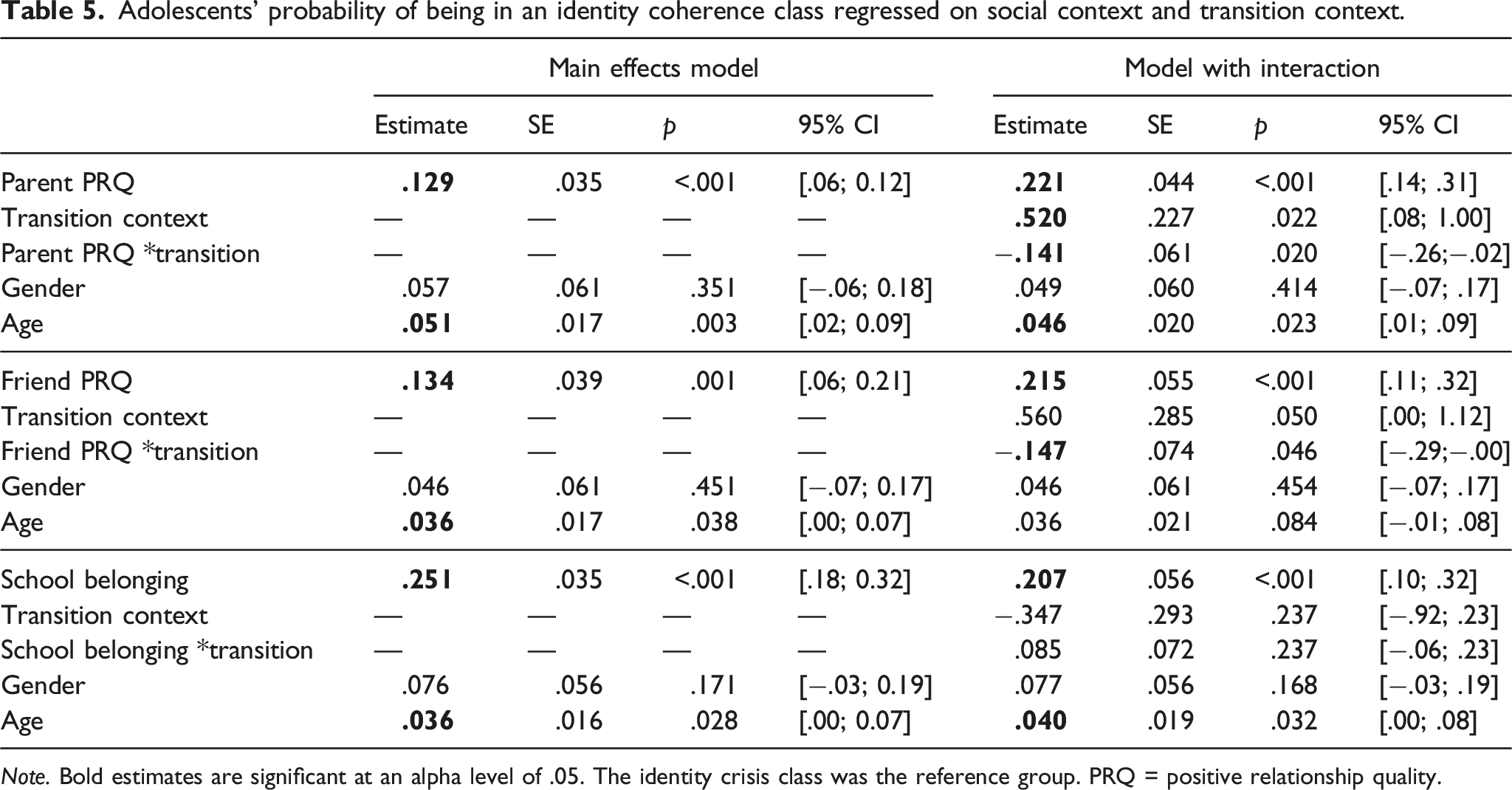
Note. Bold estimates are significant at an alpha level of .05. The identity crisis class was the reference group. PRQ = positive relationship quality.
Adolescents’ probability of following a specific developmental pattern regressed on social context.
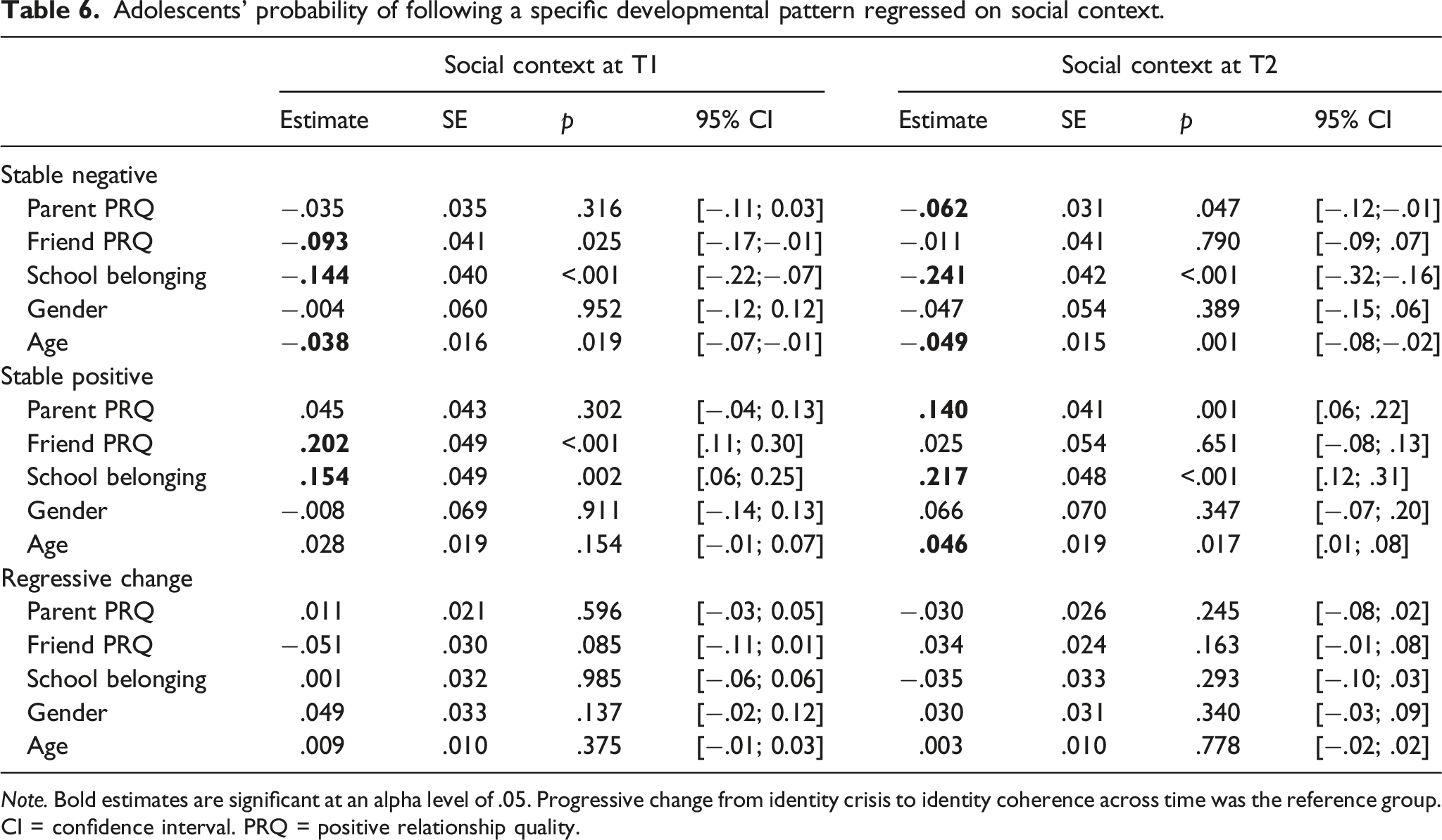
Note. Bold estimates are significant at an alpha level of .05. Progressive change from identity crisis to identity coherence across time was the reference group. CI = confidence interval. PRQ = positive relationship quality.
Discussion
The present study used multiple-group LTA among Dutch adolescents to examine (1) identity statuses around the school transition from secondary to tertiary education, (2) the extent to which a developmental shift occurs between identity statuses around the school transition, and (3) the extent to which the social context (i.e., parent positive relationship quality, friend positive relationship quality, and school belonging) influences adolescents’ identity status and the probability of following a progressive developmental trajectory. Findings indicated that most adolescents (63%–68%) were in an identity coherence status across the school transition, captured by high commitment and low self-doubt, while a sizable minority (32%–37%) were in an identity crisis status, captured by low commitment and high self-doubt. Adolescents were more likely to remain in the same status over time than change to a different status. The degree of stability and change between statuses did not significantly differ between adolescents who remained in a pre- or post-transition context and adolescents who made the transition from secondary to tertiary education. Finally, adolescents’ social context seemed to be an important factor for educational identity development, with school belonging emerging as a consistent predictor of adolescents’ likelihood of being and remaining in identity coherence.
Adolescents’ identity status around the school transition
In line with expectations, we found a coherence and crisis class that mapped well onto Erikson’s identity theory (1968), with adolescents in identity coherence being characterized by higher commitments and adolescents in identity crisis being characterized by more self-doubt. Class characteristics of the “Identity Crisis” status remained comparable across the transition and could be linked to Marcia’s (1966) “Moratorium” status in which adolescents actively engage in identity search without having strong commitments, along with a reasonable amount of worry and doubt. Importantly, through a transition-centered approach context dependencies were observed, as adolescents in the “Identity Coherence” status engaged significantly more in exploration in-breadth in the pre-transition context compared to the post-transition context.
Against our expectations, being in identity coherence was the normative state across the transition, as most adolescents were classified in this status both before and after the school transition. The observed context dependencies in identity coherence regarding the changing levels of exploration before and after the transition may partially explain the contrast between our findings and our hypothesis. Specifically, before the transition exploration is an important part of normative development as adolescents are forming their identity (Luyckx et al., 2008a; Waterman, 1999). Where we would expect higher levels of exploration to go together with a more “crisis-like” identity status before the transition, adolescents in identity coherence also considered their interests, goals, and values in evaluating whether a potential choice may fit. Indeed, past research observed that having a general clear self-concept is important for adolescents’ educational decision-making process, such as deciding which tertiary education would fit best (e.g., Van der Aar & Peters, 2019). The significantly lower exploration levels, especially for exploration in-breadth, among adolescents in identity coherence after the transition, might reflect an “Identity Closure” status in which adolescents are satisfied with their commitment and do not feel the need for further exploration (Meeus et al., 2010). Therefore, the transition-centered approach of the present study highlighted that adolescents’ school context may determine whether they are forming or maintaining their educational identity, which can be a critical factor when interpreting the state of adolescents’ identity development.
For adolescents in crisis, the findings indicated that even after selecting an education many adolescents remained indecisive about their choice and were not able to strongly integrate their educational choice with their interests, goals, and values. Even though the pre-transition context forced adolescents in identity crisis toward identity maintenance after the transition by selecting a follow-up education, adolescents in post-transition crisis may instead remain in a formative cycle after the transition, reconsidering their school commitments. Therefore, findings of the present study indicate the value of studying identity exploration in constellation with adolescents’ degree of commitment and self-doubt, as exploration may be necessary, but not sufficient, for understanding optimal identity development. To better comprehend the change in meaning of identity statuses across the transition, it is important for future research to consider other research approaches, such as fine-grained longitudinal assessments (e.g., ESM/daily diary research) or the use of narrative data. By using different approaches, we gain additional information on the content of educational identity statuses and adolescents’ personal experiences surrounding the school transition.
Stability and change in educational identity development
Across educational groups (i.e., pre-transition, transition, and post-transition), findings of the present study indicated that adolescents were more likely to stay in the same identity status than to change to a different identity status. When change did occur, adolescents were more likely to change progressively from crisis into coherence than regressively from coherence into crisis across all educational groups. These findings are in line with previous research that generally observed similar patterns of stability and change between identity statuses over time (e.g., Christiaens et al., 2021; Hatano et al., 2020; Meeus et al., 2010). Still, due to the transition-centered approach of the present study, we were able to observe that for adolescents in the transition group remaining in identity coherence seemed to represent a pattern of identity maturation, as adolescents moved from a formative cycle, characterized by relatively high commitments and high exploration, to a maintenance cycle, characterized by relatively high commitments with lower exploration (Luyckx et al., 2005; Waterman, 1999). These findings highlight the importance of taking the role of the educational context into consideration when interpreting adolescents’ educational identity development around a school transition. Finally, although the findings of the present study indicated that most adolescents seem to be able to form a strong and coherent educational identity, the high likelihood of remaining in crisis is troublesome because it may indicate that it can be challenging for these adolescents to make educational choices that fit their sense of self. Therefore, the period around a school transition may be a sensitive time for supporting adolescents with a less optimal identity development (Seidman & French, 2004).
The role of the social context in educational identity development
Overall, findings of the present study indicated that around the school transition adolescents’ social context can have a positive influence on their educational identity development. Experiencing positive relationship quality with parents and friends and having a sense of school belonging were positively associated with being in identity coherence as well as remaining in identity coherence over time and negatively associated with remaining in identity crisis over time. Importantly, school belonging was a significant predictor for being in coherence across the transition, indicating that feeling a connection with their school before the transition may foster positive experiences that motivate adolescents to form stronger commitments (Verhoeven et al., 2019). After the transition, feeling more school belonging may be seen as a confirmation that the right choice was made leading to strengthening of school commitment and lowering of self-doubt (Eccles & Midgley, 1989; Erikson, 1968).
In contrast, both experiencing more positive relationship quality with parents and friends were stronger predictors before than after the transition. Speculatively, in the process of forming commitments adolescents may greatly benefit from experiencing more positive relationship quality through the feedback and affirmation they receive from their social context (Nelemans et al., 2018; Timar-Anton et al., 2023; Van Doeselaar et al., 2016). The maintenance process may instead be more personal, as adolescents reflect on their own experiences after the transition to evaluate their educational commitment.
Finally, adolescents’ social context was not able to differentiate between changing progressively from crisis to coherence and regressively from coherence to crisis. As adolescents seem to benefit less from their social context in the post-transition phase, more personal factors, like adolescents’ personality traits (Klimstra et al., 2012) or the processing style adolescents adopt to develop their educational identity (Berzonsky & Kuk, 2021), may be important factors for future research to focus on to understand the factors associated with educational identity development across the school transition.
Limitations and future directions
The findings of the present study should be considered in light of certain limitations. First, generalizability might be limited due to the relatively small sample size. Although the INTRANSITION project aimed to recruit more participants, multiple challenges arose that led to a smaller sample (see Supplemental Materials). Latent class analyses are a data-driven approach, meaning that with a larger and more heterogeneous sample more classes can generally be found than when using a smaller and more homogeneous sample. Although we applied specific analytical constraints in our main analyses that enabled use of the full sample and measurement points, additional classes with a low prevalence rate in the general population may have gone undetected. Additionally, adolescents in our sample had high levels of commitment and low levels of self-doubt on average, identified primarily as Dutch, and were mostly female. Therefore, future research with a larger and more representative sample is needed to test the replicability of the results and examine generalizability of the findings to the general population.
Second, our study mainly focused on factors within the microsystem of adolescents, by taking school belonging and the relational context of adolescents into consideration (Bronfenbrenner, 1974). However, higher order systems such as country-specific societal aspirations (Verhoeven et al., 2019), systematic financial vulnerabilities, and job market developments (Timar-Anton et al., 2023) may play an important role in adolescents’ degree of choice and pressure in finding the right education. Therefore, it would be interesting for future research to extend the findings of the present study to other educational and intercultural contexts, and to examine the role of other ecological systems in adolescents’ educational identity development.
Finally, data were partly collected during the COVID-19 pandemic, which might have slightly changed adolescents’ behavior and experiences surrounding the school transition as some adolescents received online education and had limited opportunities to visit colleges before the transition. However, general identity processes are expected to be comparable to non-COVID-19 periods as the school structure remained the same.
Potential implications
The present study used a transition-centered approach to match adolescents’ educational identity development to the real-life constraints and opportunities of the school context. The findings of the present study highlight the value of taking a context-specific approach as we observed context dependencies that influenced the meaning and interpretation of what can be considered “normative” in terms of the content of identity statuses: while pre-transition healthy identity development consisted of high levels of exploration in-breadth combined with high identification with commitment and low self-doubt for adolescents in identity coherence, this was no longer true after the transition. In the post-transition context, exploration in-breadth was less healthy and more ruminative, as exploration in-breadth levels were still high for adolescents in crisis with high levels of self-doubt but adolescents in identity coherence who strongly identified with their commitments no longer actively engaged in exploration in-breadth. Although the school context, as a closed identity domain, offers unique opportunities to apply a context-specific approach to the study of identity, our findings may also be relevant to transitional contexts in other identity domains. For example, a person who is dating may be forming their relational identity, while someone who has been in a relationship for 10 years may be maintaining their identity. Therefore, the present study highlights that it can be important for identity research to consider the influence of transitional contexts.
Additionally, the present study has important practical implications as a sizable minority of around 30% struggled with forming their educational identity. Given the enduring nature of being in crisis (Luyckx et al., 2008a; Christiaens et al., 2021), it is important for school counsellors to not just focus on the amount of exploration, but also on detecting adolescents with higher levels of self-doubt and worries about being able to find a fitting education. Moreover, investing in the social context, with specific attention to school belonging, may help adolescents feel more confident to try out new roles and reflect on what they like or do not like.
Conclusion
Taken together, the present study examined adolescents’ educational identity development around the school transition to tertiary education to examine stability and change between adolescents’ identity statuses in a period where the search for a fitting education is especially relevant. The present study highlights the importance of context-specific research as the meaning and interpretation of identity coherence differed before and after the transition due to the change in normativity of engaging in exploration in-breadth. This led to novel insights in patterns of stability and change: While most adolescents were in a state of coherence around the transition, we did observe change within the coherence class from a formative to a maintenance cycle. In addition, a sizable minority of adolescents could be identified as belonging to an identity crisis status, which characteristics remained the same across the transition. Most adolescents in identity crisis had a high probability of remaining in crisis around the transition. Yet other adolescents made a progressive movement out of crisis or regressed to a state of crisis. Although the social context was found to relate to being and remaining in identity coherence across the transition from secondary to tertiary education, more research is needed to understand which factors positively or negatively affect progressive or regressive change between educational identity statuses. The present study provided consistent support for the role of school belonging for adolescents’ probability of being in the identity coherence status across the transition and for the role of positive relationship quality with parents and friends for being in identity coherence in the pre-transition context.
Supplemental Material
Supplemental Material - Educational identity statuses: Stability and change across the secondary school transition
Supplemental Material for Educational identity statuses: Stability and change across the secondary school transition by Annabelle HT Christiaens, Andrik I Becht, Stefanie A Nelemans and Susan Branje in European Journal of Personality
Footnotes
Declaration of conflicting interests
The author(s) declared no potential conflicts of interest with respect to the research, authorship, and/or publication of this article.
Funding
The author(s) disclosed receipt of the following financial support for the research, authorship, and/or publication of this article: This study has received funding from a grant of the European Research Council (ERC-2017-CoG - 773023 INTRANSITION).
Open science statement
The scripts for the Mplus analyses and the datafiles required to run these scripts are publicly available on the OSF repository (https://osf.io/73bfx/). The complete  for the present manuscript will be deposited in an open data repository after the study goals are achieved. The corresponding author can be contacted about questions related to underling research materials of the present study.
Supplemental Material
Supplemental material for this article is available online.
Notes
References
Supplementary Material
Please find the following supplemental material available below.
For Open Access articles published under a Creative Commons License, all supplemental material carries the same license as the article it is associated with.
For non-Open Access articles published, all supplemental material carries a non-exclusive license, and permission requests for re-use of supplemental material or any part of supplemental material shall be sent directly to the copyright owner as specified in the copyright notice associated with the article.
