




Abstract
Young adults differ in their self-esteem change during the university-to-work transition. The short-term processes (such as state changes) which are related to individual variability in change are not yet fully understood. In this pre-registered study, we examined experiences of pride as an emotional process underlying state self-esteem change in a sample of 232 Dutch master students over 8 months across their university-to-work transition. We used dynamic and multilevel structural equation models to analyze three waves of 14-day experience sampling data, examining momentary and daily associations between pride and state self-esteem on the within-person level. We examined correlated change in pride and state self-esteem, and the extent to which pride predicted variability in state self-esteem change. Results indicated positive within-person associations and considerable individual differences in pride–state self-esteem associations across moments and days. Across months, changes in pride and state self-esteem were positively correlated, but pride before graduation did not predict variability in later state self-esteem change. Pride–state self-esteem associations remained robust after accounting for feelings of joy, transitional valence, and timing of the transition. Findings indicated that pride uniquely predicted state self-esteem change during the education-to-work transition, which suggests that pride is a key emotion underlying self-esteem change.
Introduction
Self-esteem, an individual’s subjective evaluation of their worth, predicts important life outcomes (for a review, see Orth & Robins, 2022) such as mental and physical health (Orth & Robins, 2013; Steiger et al., 2014; Trzesniewski et al., 2006) and success in relationships (Erol & Orth, 2016; Harris & Orth, 2020) and in the work domain (Kuster et al., 2013). Self-esteem is relatively stable, but it can change across the lifespan with particularly pronounced changes in young adulthood (Orth & Robins, 2018) that occur in response to major life transitions (see Reitz, 2022 for a review).
The processes underlying trait change during major life transitions remain a major unanswered question in the field of personality (Baumert et al., 2017) and self-esteem development (Reitz, 2022). We followed current theoretical approaches that call for accounting for change on shorter time scales by investigating states that capture subjective experiences of the transition in daily life to understand processes of self-esteem change (Reitz, 2022; Wrzus & Roberts, 2017). A systematic investigation of short-term processes underlying self-esteem change is lacking due to prevalent use of panel designs in previous studies which do not sufficiently capture short-term experiences during major life transitions (cf. Luhmann et al., 2014). Advanced research designs that include repeated bursts of short-term assessments allow for capturing short-term processes and changes in self-esteem simultaneously. In this study, we examined short-term processes using experience sampling methodology (hereafter, ESM) which captures life as it is lived (Conner et al., 2009).
We examined state experiences of pride (hereafter, state pride) as an emotional process underlying state self-esteem change in a sensitive developmental window during which participants transitioned from university to work. We consider state self-esteem change as changes in state self-esteem expression, that is, increases or decreases in experiencing state self-esteem that deviate from people’s average levels across 8 months. The relationship between pride and self-esteem can be examined on the between-person level (i.e., the association across individuals), and on the within-person level (i.e., the association within individuals over time). Pride and self-esteem have been positively linked at the between-person level (Dickens & Robins, 2020; Tracy et al., 2009); however, evidence of their within-person association is scarce but needed for understanding the emotional processes of change.
We followed 232 Dutch master’s students during their university-to-work transition in a 3-wave intensive longitudinal study. The first assessment occurred before students’ graduation, and we obtained ESM assessments every 4 months. We examined three questions. First, we examined the directionality, timescale, and individual variability of the pride–self-esteem link to contribute to a better understanding of the short-term emotional process underlying state self-esteem change. We investigated whether there were within-person bidirectional associations between state pride and state self-esteem across shorter timespans (moments and days) and whether individuals differed in these associations. Second, we aimed to shed light onto whether state experiences of pride in daily life had meaningful consequences for state self-esteem change during the university-to-work transition. We therefore examined whether changes in state pride and state self-esteem were linked across 8 months during the university-to-work transition, and whether experiences of state pride before graduation predicted individual differences in state self-esteem change. Third, we aimed to examine whether two characteristics of the transition, the timing and the perceived valence, explained individual differences in state pride and state self-esteem change across 8 months.
Self-esteem change during the university-to-work transition
Lifespan development theory suggests that trait changes occur in response to environmental changes (Baltes, 1987). High density of normative major life transitions (i.e., transitions that signify a change, such as the beginning or end of having a specific status; Luhmann et al., 2012) are thought to trigger maturational changes in young adults. These changes may occur due to the mastery of the salient adult social roles that individuals take on during transitions (Roberts & Nickel, 2021). Mastery of developmental tasks that individuals are expected to fulfill at that age may also trigger change (Havighurst, 1976). As self-esteem fluctuates in response to success and failure (Crocker et al., 2002), major life transitions may elicit normative and heterogeneous trait self-esteem change depending on the mastery experiences during transitions (Reitz, 2022). There is evidence for average trait self-esteem change during relational (e.g., Lehnart et al., 2010; Luciano & Orth, 2017), educational (e.g., Chung et al., 2014; Hutteman et al., 2015), and work transitions (e.g., Reitz et al., 2022; for a review, see Reitz, 2022).
The university-to-work transition is a major life transition that occurs when young adults complete university education and start full-time work. Studies have found small average increases in trait self-esteem during the university-to-work transition. Italian (Filosa et al., 2022) and Dutch (van Doeselaar & Reitz, 2022) participants who transitioned from university to work showed an average increase in trait self-esteem. Only one study that examined German students’ university-to-work transition included a control group (Reitz et al., 2020). This study found that job starters slightly increased in trait self-esteem, but this change was not significantly different from the comparison group consisting of part-time workers and unemployed participants.
The inconclusive findings regarding mean-level change in trait self-esteem during the university-to-work transition may be due to individual differences in the subjective and objective experiences of the transition (Kritzler et al., 2021). Studies report that the university-to-work transition triggers substantial individual variability in trait self-esteem change (Filosa et al., 2022; Reitz et al., 2020). Yet, not much is known about why individuals differ in self-esteem change during major life transitions, that is, why some increase, some decrease, and yet others do not change at all. These individual differences in self-esteem change should be illuminated as they contain possibly valuable information about the psychological processes underlying change (Bolger et al., 2019).
Short-term processes of self-esteem change
Trait change during major life transitions is thought to occur indirectly, in a bottom-up manner that involves repetition of situation-contingent short-term processes (Roberts & Wood, 2006). Short-term situational processes such as sequences of triggering situations, expectancies, state/state expression, and reactions to the state are thought to translate into trait change through repetition (see the TESSERA framework, Wrzus & Roberts, 2017). Major life events are expected to trigger short-term state processes relevant to self-esteem (e.g., reflective and affective processes; Reitz, 2022). Therefore, short-term processes underlying fluctuations in self-worth also known as state self-esteem (Kernis, 2005) need to be investigated to understand trait self-esteem change. Repeated changes in the experience of states (that occur due to state processes) are thought to mediate trait change (Baumert et al., 2017; Geukes et al., 2018; Reitz, 2022; Wrzus & Roberts, 2017). If an individual consistently experiences state self-esteem that is higher than their trait level, the change in state self-esteem is likely to translate into trait self-esteem change over time. Thus, state self-esteem change during major life transitions needs to be examined to better understand trait self-esteem change.
The evidence for these processes during the university-to-work transition is limited but promising. Education-to-work transitions can elicit changes in the experiences of mastery (Reitz et al., 2022), which are important sources of self-esteem (Wojciszke et al., 2011). Mastery experiences such as daily achievement experiences during the university-to-work transition have been related to trait self-esteem change (Reitz et al., 2020; for a theoretical integration, see Reitz, 2022). Although there is no direct evidence on state self-esteem change mediating trait self-esteem change during the university-to-work transition, in one study monthly state self-esteem changes mediated yearly trait self-esteem change during an educational transition (Hutteman et al., 2015).
Affective experiences during the university-to-work transition may be a key psychological mechanism for translating mastery experiences such as daily successes and failures into state self-esteem (Crocker et al., 2002; Nezlek, 2005). Positive affective experiences may be particularly important (Coffey & Warren, 2020) because positive (rather than negative) achievement experiences predicted trait self-esteem change during the university-to-work transition (Reitz et al., 2020). Furthermore, a focus on the link between discrete positive emotions and state self-esteem is needed to understand the specific emotional processes because discrete emotions are thought to serve specific functions that help people to reach relevant social goals (Keltner et al., 2006).
Pride as an emotional process underlying state self-esteem
Pride is considered to be a particularly relevant discrete emotion for self-esteem. People feel proud when they perceive that they have achieved something (Holbrook et al., 2014; Tracy & Robins, 2004, for different definitions of pride). 1 For example, a new employee may feel proud when they perceive that they performed exceptionally well on their first task in their new job. Pride is especially relevant for self-esteem because it is a self-conscious emotion that requires people to form self-representations (e.g., “Does this situation inform who I am as a person?”) and self-evaluations (e.g., “How does this situation make me feel about who I am?”; Tracy & Robins, 2004). As pride is elicited when people focus on the self in a positive light, pride has been referred to as the “affective core” of self-esteem (Tracy et al., 2009).
Pride has been found to be positively associated with self-esteem at the between-person level in cross-sectional studies (Orth et al., 2010; for a meta-analysis, see Dickens & Robins, 2020) and at the within-person level in one experience sampling study (Chung et al., 2022). As pride is thought to function like a barometer of one’s achievement (Weidman et al., 2016), experiences of state pride may uniquely capture mastery experiences during the university-to-work transition. Two important questions about the pride–self-esteem association remain unanswered. First, the directionality of effects is unknown. It is plausible that pride predicts self-esteem because state experiences of pride likely reflect daily successes. It is also plausible that, vice versa, self-esteem predicts pride because high self-esteem on a given day may make it easier to see oneself in a positive light, and hence, individuals may experience more pride on the next day. Second, it is unclear on what timescale state pride and state self-esteem are related. Are they linked across months during the university-to-work transition or across shorter timescales, such as across days and/or even across moments? As personality change occurs in a bottom-up manner (Wrzus & Roberts, 2017), it is important to understand the timescales across which these associations might build up.
Characteristics of the transition as moderators of heterogeneity in change
Individuals differ from each other in the objective and subjective experiences of the education-to-work transition (Kritzler et al., 2021). These differences in transitional experiences may impact the magnitude and direction of change during the transition. We examined the moderating role of one subjective and one objective characteristic of the university-to-work transition in explaining individual differences in state pride and state self-esteem change.
First, individuals differ in the extent to which they perceive the transition to work to be positive, that is, the perceived valence of the transition (Kritzler et al., 2021). The perceived valence of major life events has been shown to predict personality trait change in previous studies (Lüdtke et al., 2011; Spinhoven et al., 2011). Individuals who perceive their university-to-work transition as positive (as compared to those who perceive it as less positive) likely experience their transition as a success and hence feel a greater sense of mastery of the transition (see Reitz, 2022). The perceived valence of the transition therefore captures whether young adults consider the transition to be a successful one, which might help explain individual differences in change in state pride and state self-esteem across months.
Second, the university-to-work transition does not follow the same timeline for all students. Some may transition to work immediately after graduation while others might only find a full-time job after several months. Those who experience a smooth, immediate transition to full-time work may experience greater boosts in mastery, and hence, in state pride and state self-esteem, than those who experience a delayed transition. We examined whether the timing of the transition predicted changes in state pride and state self-esteem.
The present study
The overall goal of this pre-registered study was to examine the dynamic association between state pride and state self-esteem in daily life as a process underlying state self-esteem change during the university-to-work transition. We followed 232 Dutch master’s students in three waves of 14-day ESM data across 8 months (with 4-month intervals). During this period, participants graduated from their master’s program after the first wave and most, but not all participants, started to work.
Our first research aim was to examine the within-person association between state pride and state self-esteem across shorter timespans. Pride and self-esteem are positively related, but evidence mostly stems from studies using a between- instead of a within-person approach. To gain insights into the processes of state self-esteem change, we examined the bidirectional association between state pride and state self-esteem on the daily timescale. We hypothesized that on the within-person level, people’s self-reported experiences of state pride on a previous day positively predict their self-reported experiences of state self-esteem on the current day (H1), and that people’s self-reported experiences of state self-esteem on the previous day positively predict their self-reported experiences of state pride on the current day (H2). To distinguish whether specifically pride or general positive emotions predict self-esteem, we tested whether state pride predicted state self-esteem when feelings of joy are accounted for. At the between-person level, we sought to describe individual variability in the daily within-person associations. We conducted additional analyses to explore whether momentary pride predicts momentary state self-esteem 3 hours later, and vice versa. We use the term momentary to refer to data based on participants’ ratings from four measurement occasions throughout the day, spaced approximately 3 hours apart. We use the term daily to refer to an aggregation of the same four momentary scores across each day and within each individual.
Our second research aim was to expand our examination of the pride–self-esteem link across 8 months to cover more of the full transitional period. To test whether the assumption that short-term processes underlie trait change (Wrzus & Roberts, 2017) applies to self-esteem (Reitz, 2022), we examined whether changes in state pride and state self-esteem were related across 8 months during young adults’ university-to-work transition. We hypothesized that within-person change in state pride positively correlates with within-person change in state self-esteem (H3). We expected significant individual differences in within-person state self-esteem change. We expected that stable between-person differences in state pride would predict individual differences in trajectories of state self-esteem change across 8 months during the university-to-work transition (H4).
Our third research aim was to examine characteristics of the university-to-work transition as moderators of heterogeneity in state pride and state self-esteem change. As young adults tend to differ in their self-esteem change and in their experiences of the university-to-work transition, accounting for the unique experiences of the transition may help us understand why individuals change differently (Reitz et al., 2020). We examined whether the timing of the transition and the valence of the transition explained change in state pride and state self-esteem. We hypothesized that individuals who perceive their university-to-work transition as positive would experience greater increases in state pride and state self-esteem than those who perceive their transition as less positive (H5). Furthermore, we expected that individuals who transition to work earlier (relative to graduation) would experience greater increases in state pride and state self-esteem compared to individuals who transition later (H6).
Method
Open science information
The measures, sample size, and analysis plan of the study were pre-registered via the Open Science Framework (OSF). The pre-registration, data, scripts used for analyzing the data, and output of the data analyses are openly available on https://osf.io/mfvp2/. We did not exclude any data. Data on other variables from the broader project dataset has been used in two publications; however, data on variables examined in this study has not been used in any previous publication.
Participants
Data for the present study came from a larger project (Project GradLife, https://osf.io/fwak9/) on self-esteem development during the transition from university to work in the Netherlands, which included 5 waves of data collection that were each spaced 4 months apart with ESM surveys during each wave. Most participants were expected to graduate after the first wave. The project received ethical approval from the ethics review board of Tilburg University (RP158). We included data from the first three waves of the project as we started data analysis when 3 waves were completed.
Master’s students in the final year of their educational program (N = 232) participated in the first wave of the study. Participants’ average age was M = 24.6 (SD = 2.67; ages mostly ranged between 21 and 32 years old except two participants were 40 and 51 years old, who were included in the analyses). Seventy-four percent of participants were women. The master’s programs in the Netherlands last for one or two years. For most university students in the Netherlands, a master’s degree marks the end of education after which students start to work. Participants had indicated that they will graduate in the summer of 2020. Participants studied Economics and Management (19%), Law (19%), Social and Behavioral Sciences (34%; 21% Psychology), Humanities (17%), and other subjects such as Technical and Medical Sciences (9%) at one of 18 universities in the Netherlands (77% of which were in the south of the Netherlands). Participants were still studying during the first wave and indicated the amount of work experience they had had until that point by picking multiple types of experiences that applied to them. Seven participants had no prior work experience, 108 had volunteer work experience, 195 had experience working in a side job alongside study, 169 had internship experience, 9 had experience in a dual work and study path, and 48 participants had worked previously for a period without studying. This suggests that the majority of participants had work experience in volunteer/side jobs/internships at the first wave (before graduation) likely unrelated to their career. After the first wave (i.e., graduation), participants were expected to transition to their first paid, full-time or large part-time job (the latter of which is very common in the Netherlands).
In the second wave, n = 139 participants participated, out of which 46.5% participants were working full time, 36% participants were working part time, and 17.5% participants had no work. In the third wave, n = 119 participants participated, out of which 50.4% participants worked full time, 21.9% participants worked part time, and 8% participants had no work. The percentage-wise distribution of the nature of the work contracts that participants held during Waves 2 and 3 is summarized in the supplemental material, Table S4. While there were fewer people without work in the third as compared to the second wave, there were also comparatively fewer people with permanent contracts. Working participants’ average ratings on the match between their education and field they were working in were M = 6.77 (SD = 3.34) and M = 7.58 (SD = 2.68) on a 10-point scale (1 = does not match at all, 10 = matches perfectly) in Waves 2 and 3, respectively. Overall, this suggests that many participants likely transitioned to work that was relevant to their career after the first wave.
The number of participants that completed more than 50% of the questionnaires is included in the supplemental material, Table S5. To examine whether the sample sizes provided us with more than 80% power to detect effects for Hypotheses 1 and 2, we ran a Monte Carlo simulation with estimates from Hamaker and colleagues (2018) with 200 participants at Wave 1 and 139 participants at Wave 2. We did not include Wave 3 in the power analysis because the numbers of participants who completed more than 50% of the questionnaires in Wave 2 and Wave 3 were similar, resulting in a similar number of data points in these waves. The Monte Carlo simulation indicated that our sample sizes from Waves 1 and 2 had more than 80% power to detect the estimated effects (for details, see pre-registration: https://osf.io/d9mkc). The combined dataset from three waves on which the short-term analyses were based included n = 245 participants, with 127 participants who completed questionnaires for more than 50% of the days. Therefore, the combined dataset had sufficient power to detect the expected effects.
Procedure
Participants were invited to participate in a project on the transition from university to work via emails, social media, newsletters of alumni associations, and university newspapers. At each wave, participants completed an online questionnaire and, via the Ethica app on their smartphone, ESM questionnaires (4 times a day for 14 days). Participants were asked to complete the first ESM survey of each day as soon as they woke up (which was possible between 6 a.m. and 11 a.m.), the second survey around lunchtime (12 p.m.–2:30 p.m.), the third survey toward the end of the afternoon (or workday; 4:30 p.m.–7 p.m.), and the fourth survey, which was a slightly longer daily-diary assessment, at the end of the day (9 p.m.–4 a.m.). Every time a new survey was available, participants received a notification in the app and 2 reminder notifications if they had not completed the survey. Participants received 7-euro total as monetary compensation, entered a lottery to win a voucher worth 10 euro, and received personalized reports on their personality based on the surveys as additional incentives.
Measures
Details of measures, reliability, and validity.
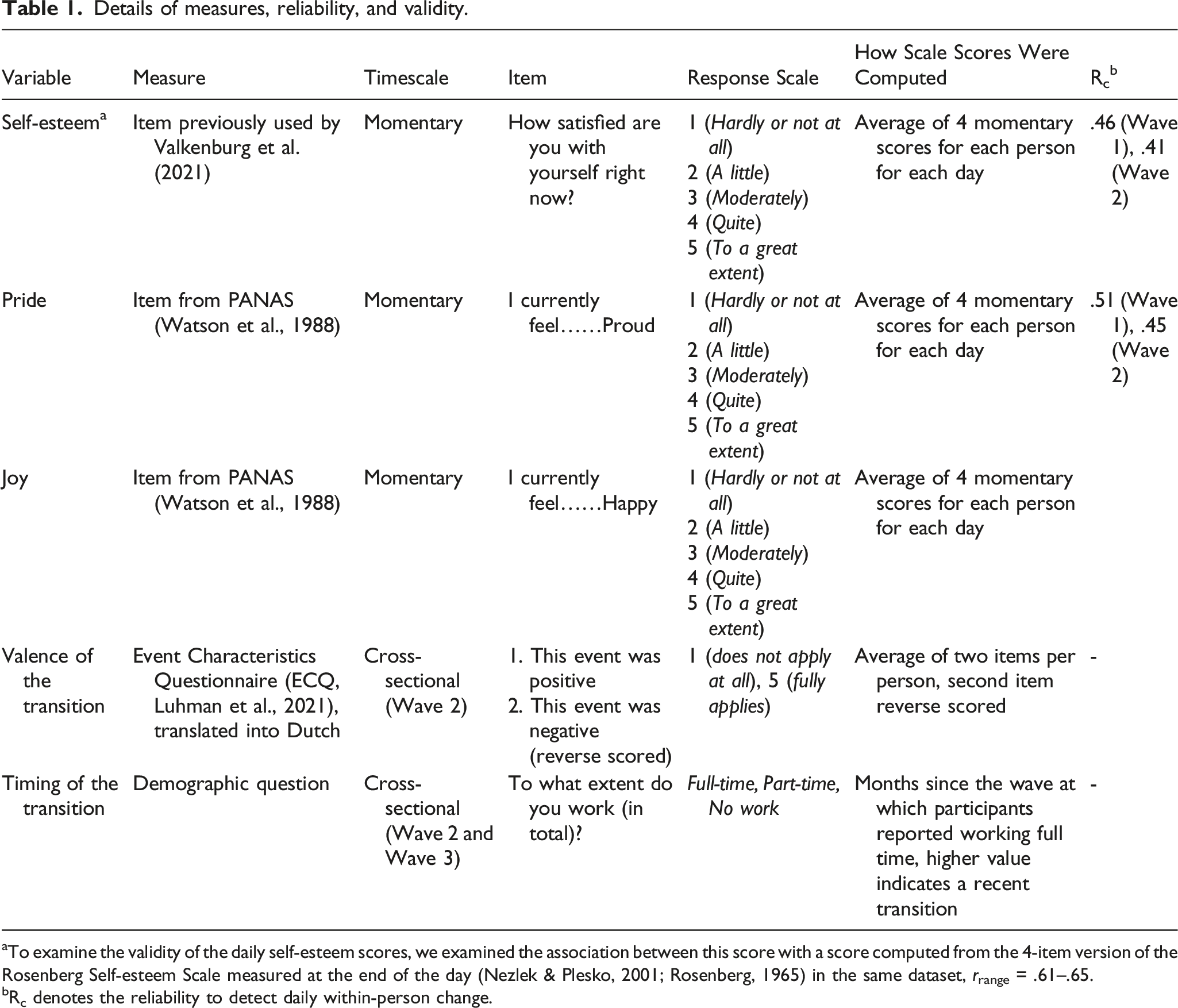
aTo examine the validity of the daily self-esteem scores, we examined the association between this score with a score computed from the 4-item version of the Rosenberg Self-esteem Scale measured at the end of the day (Nezlek & Plesko, 2001; Rosenberg, 1965) in the same dataset, rrange = .61–.65.
bRc denotes the reliability to detect daily within-person change.
Analytic approach
Preregistration
We pre-registered to examine Hypotheses 1 and 2 using three Multilevel Lag-1 Vector Autoregressive Models (MLVAR (1) models; McNeish & Hamaker, 2020), one model per assessment wave. We pre-registered to analyze the data with the Heterogeneous Variability Growth Model (HVGM, Nestler, 2021) to examine Hypotheses 3 and 4. Hypotheses 5 and 6 were not pre-registered as these follow-up analyses were added on reviewer suggestion and documented in a second registration document.
Deviations from the pre-registration
H1 and H2
We pre-registered that we would analyze data per wave for examining daily associations. When we analyzed data per wave, we observed daily associations only in one of the waves (see supplemental material S3). On reviewer suggestion, we conducted follow-up analyses (registered at: https://osf.io/9qps6) to statistically test whether daily associations differed between waves. As daily associations did not significantly differ between waves (see supplemental materials S4-5), we based our daily level results on data combined from all three waves of the study to maximize power. We conducted additional, exploratory analyses to examine the associations between state pride and state self-esteem at the momentary level, using the same MLVAR (1) models as for the aggregated daily data.
H3 and H4
We did not use a heterogeneous variability growth model (HVGM) to examine Hypotheses 3 and 4 as pre-registered because this model did not converge to the data (see supplemental material S8). We used multilevel structural equation modeling (MSEM) instead.
Statistical models
MLVAR (1) model
The MLVAR (1) model is a dynamic structural equation model (DSEM, Asparouhov, Hamaker, & Muthen, 2018) that facilitates modeling complex associations with multilevel time series data. The MLVAR (1) model has three advantages over other approaches: 1) it allows for the examination of within-person random cross-lagged effects in a time series, 2) it separates within-person variance from between-person variance by using latent person-mean centering (McNeish & Hamaker, 2020), eliminating biases associated with observed person-mean centering (Nickell, 1981) and does not suffer from interpretational problems that traditional cross-lagged panel models do (Hamaker et al., 2015), and 3) it allows for the modeling of person-specific (i.e., random) residual variances, which better approximates individual differences in predictability.
In the MLVAR (1) model (Figure 1), the total variance of pride and self-esteem at time point t is latently decomposed into within- and between-levels. The within-level variance is modeled into within-person means, autoregressive paths (i.e., Pride → Pride and Self-esteem → Self-esteem), and cross-lagged paths (i.e., Pride → Self-esteem and Self-esteem → Pride). The residuals capture residual change in the entire system (measurements at the lagged as well as current timepoints). We specified within-person means, autoregressive and cross-lagged effects, and residual variances as random effects so that individuals were allowed to differ from each other in these parameters. We added joy as an additional lagged predictor of state self-esteem to test if state pride predicted state self-esteem when joy was accounted for (see supplemental material S1 for a detailed explanation of the MLVAR (1) model). Multilevel VAR (1) dynamic structural equation model. Note: 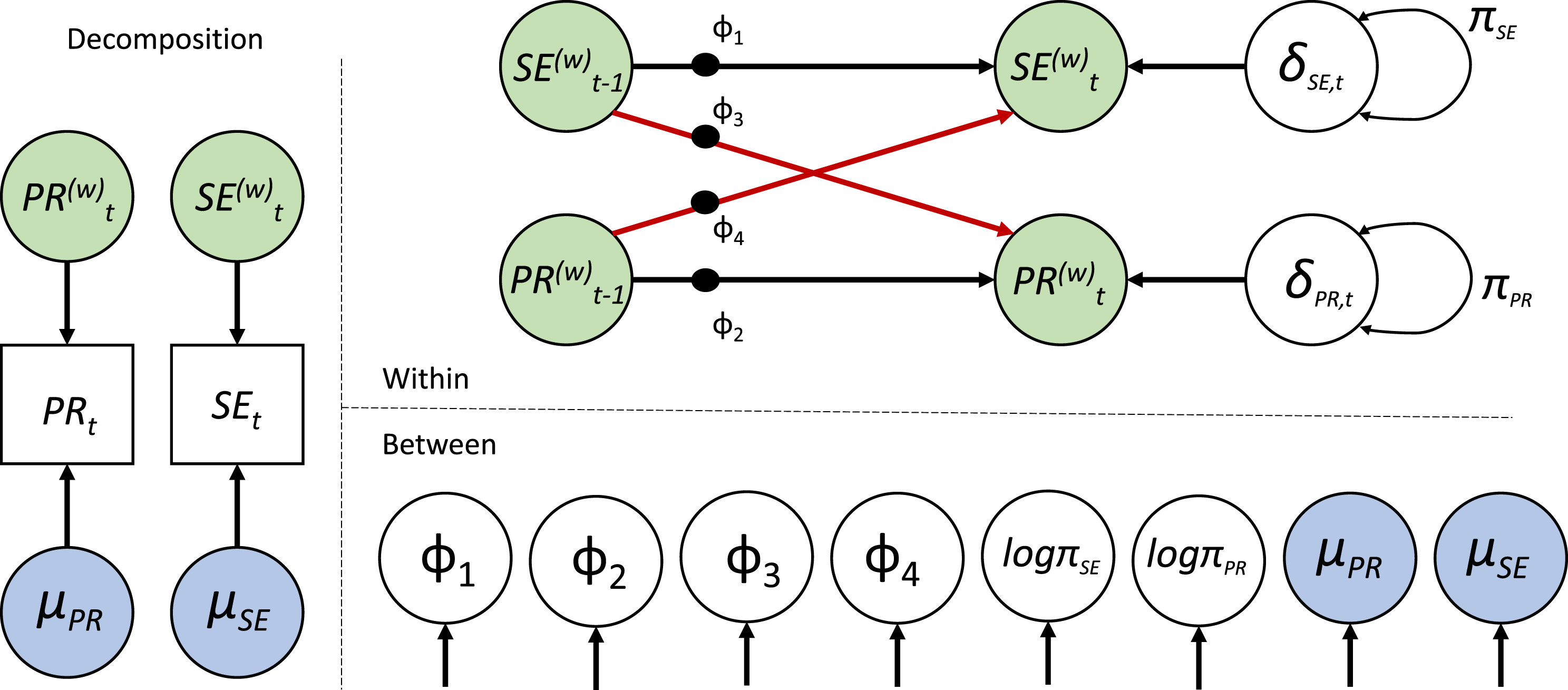
MSEM model
We estimated an initial MSEM model (Figure 2) in two steps. First, we estimated two random intercepts and slopes specifying increases in state pride and state self-esteem across the three waves. Second, we tested correlated change in state pride and state self-esteem (H3) by modeling the covariation between the intercepts and slopes at the between-person level. We then modified this model to include additional associations one at a time to test the remaining hypotheses regressing the slope variance of state self-esteem on the intercept variance of state pride at the between-person level (H4), and regressing the slope variance of state pride and state self-esteem on the valence (H5) and timing of the transition variables (H6) (for a detailed explanation of the MSEM model, see supplemental material S2). Multilevel structural equation model. Note: 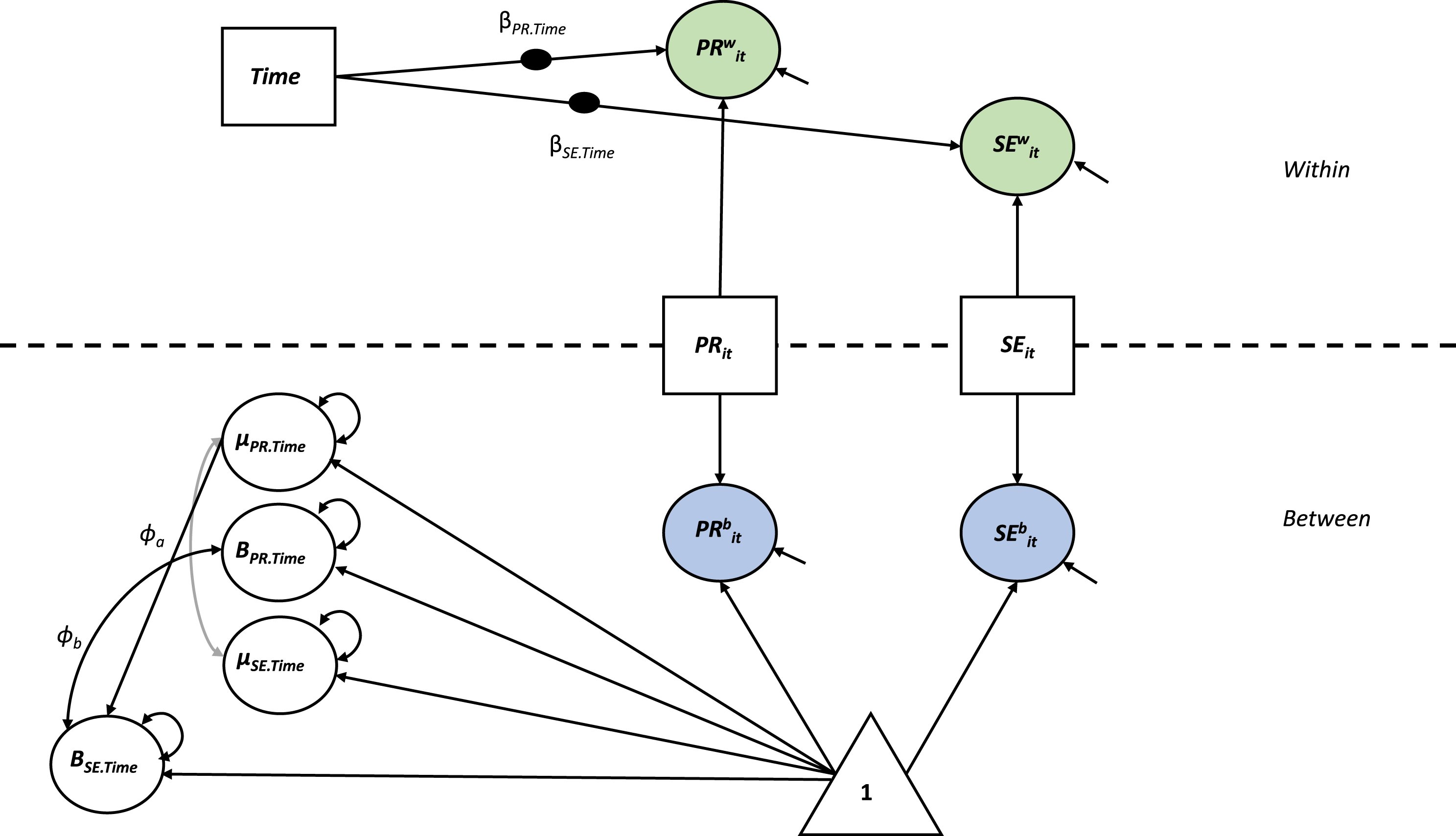
Missingness, convergence, and inference criteria
We calculated the descriptive statistics, missingness in data statistics, reliability, and validity estimates in R version 4.1.1 (R Core Team, 2021). We examined the percentage of missing data and ran the MCAR test (Little, 1988; see supplemental material Table S5) on each wave of data. At the daily level, on average 10% of the data was missing in the combined dataset, and missing data percentage was highest in the second wave. The MCAR test was only significant in the third wave of the data, indicating that data was not missing completely at random in this wave. To investigate missingness in the third wave, we examined if participants that dropped out after the second wave significantly differed in self-esteem from participants that stayed in the study. We did not find a difference which indicates that dropout was likely not systematic. We did not exclude participants based on ESM compliance because exclusion based on compliance rates can bias inferences and neglect important individual differences (Jacobson, 2020).
We estimated the MLVAR (1) and MSEM models in Mplus version 8.6 (Muthén & Muthén, 1998-2017) using Bayesian estimation. The prior distributions for Bayesian estimation in Mplus are uninformative by default (i.e., the prior distributions do not assume too much about the variables). To estimate the models, we ran 5000 iterations of the Markov chain Monte Carlo algorithm. We set the thinning factor to 2 which increases stable estimations. We concluded that the convergence succeeded when density plots were smooth, trace plots resembled “fat caterpillars,” and the Gelman–Rubin statistics were close to 1 (Brooks & Gelman, 1998). All the models reached convergence according to these criteria.
To assess if an effect was significant, we examined whether the credible interval contained zero. For average within-person effects (i.e., fixed effects), we examined standardized estimates (within-level standardized estimates averaged over clusters) with the following guidelines: .10 small, .30 medium, and .50 strong (e.g., Lodder et al., 2021). Estimates were standardized using within-person standardization, meaning that each individual’s estimate is standardized within-person and an average of a person-specific standardized estimate yields the standardized estimates (see Schuurman et al., 2016, for details on within-person standardization). For between-person differences in within-person effects (i.e., random effects), no effect size could be provided. To interpret our findings, we report the range of within-person effect sizes.
Results
Descriptive statistics
Descriptive statistics of ESM items across measurements and participants.
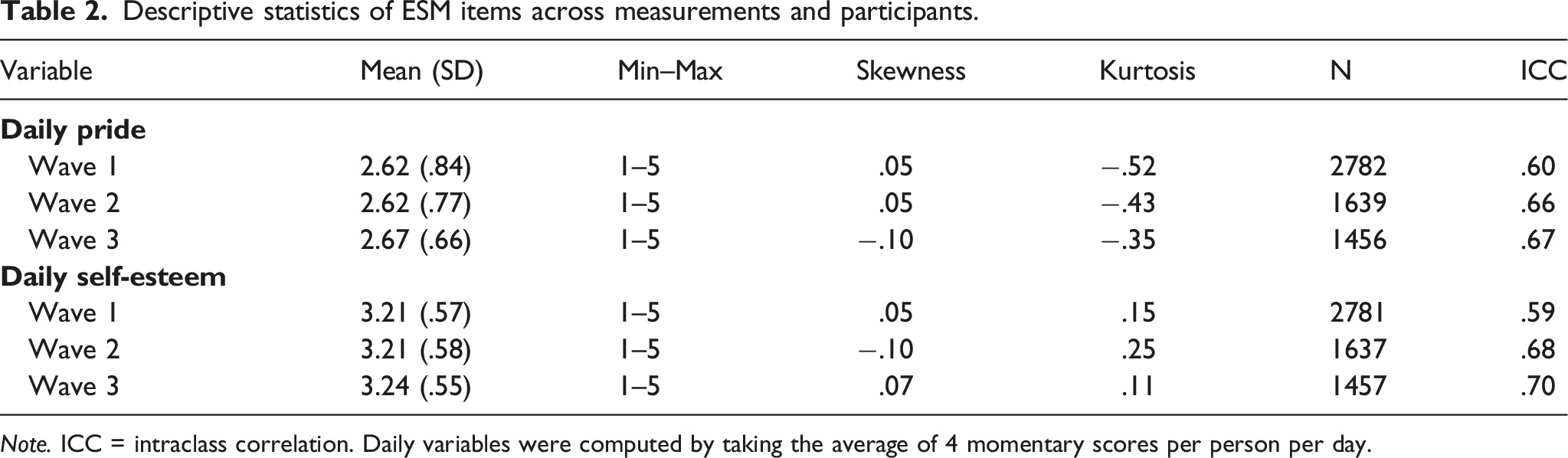
Note. ICC = intraclass correlation. Daily variables were computed by taking the average of 4 momentary scores per person per day.
Research aim 1: Short-term within-person associations between state pride–state self-esteem (H1 and H2)
Associations between state pride and state self-esteem at the daily and momentary levels.
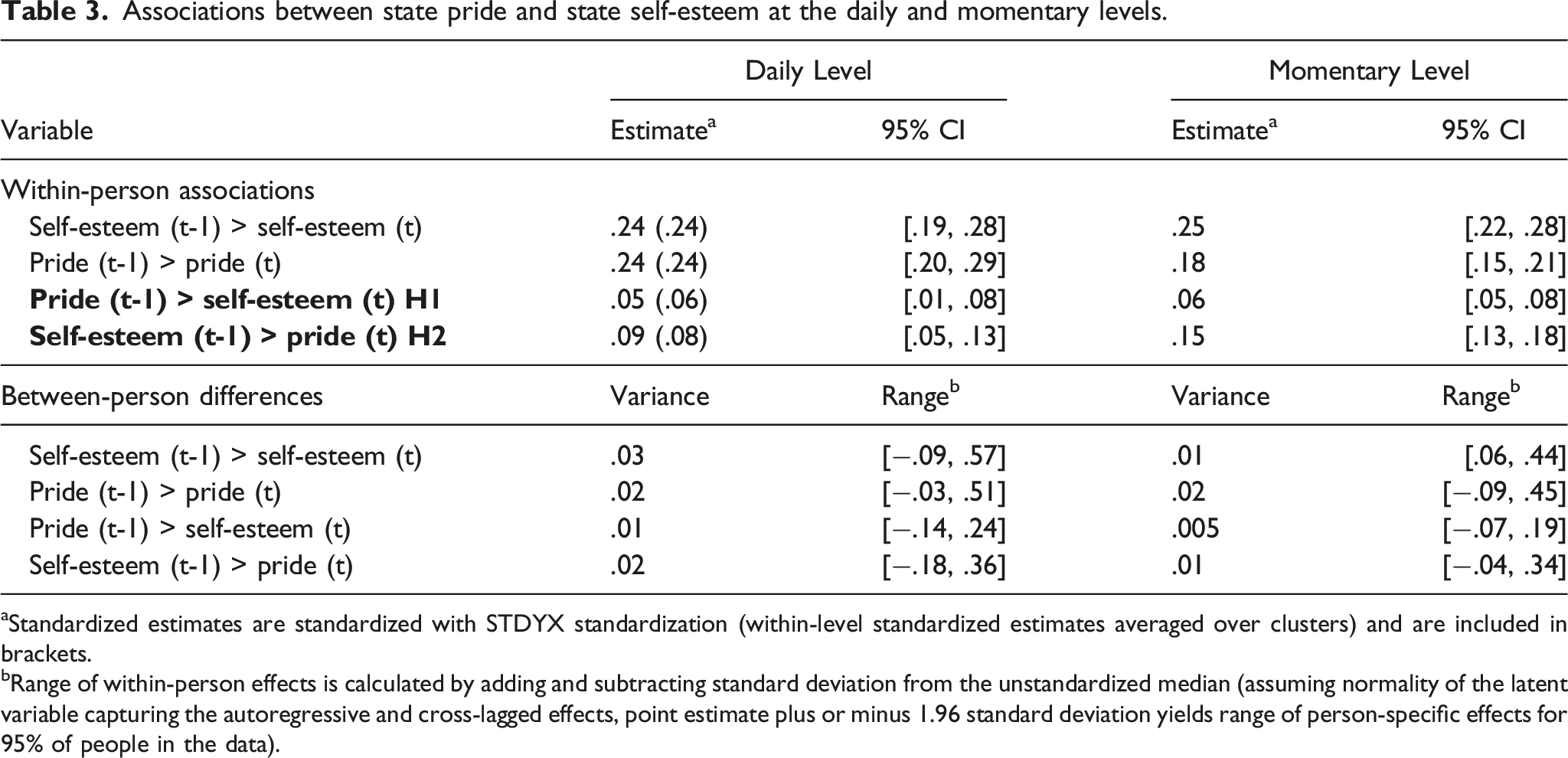
aStandardized estimates are standardized with STDYX standardization (within-level standardized estimates averaged over clusters) and are included in brackets.
bRange of within-person effects is calculated by adding and subtracting standard deviation from the unstandardized median (assuming normality of the latent variable capturing the autoregressive and cross-lagged effects, point estimate plus or minus 1.96 standard deviation yields range of person-specific effects for 95% of people in the data).
We found that individuals differed in the magnitude and direction of within-person autoregressive and cross-lagged effects (see Table 3 for the range of person-specific effects). The range of within-person effects indicated that for some individuals, state pride–state self-esteem associations were positive, whereas for others these associations were negative (for detailed results see supplemental material S6). We found similar associations between state pride and state self-esteem and individual differences in these associations at the momentary level (see Table 3; for details, see supplemental material S7).
Research aim 2: State pride and state self-esteem association across 8 months during the university-to-work transition (H3 and H4)
Associations between change in state pride and state self-esteem across months.
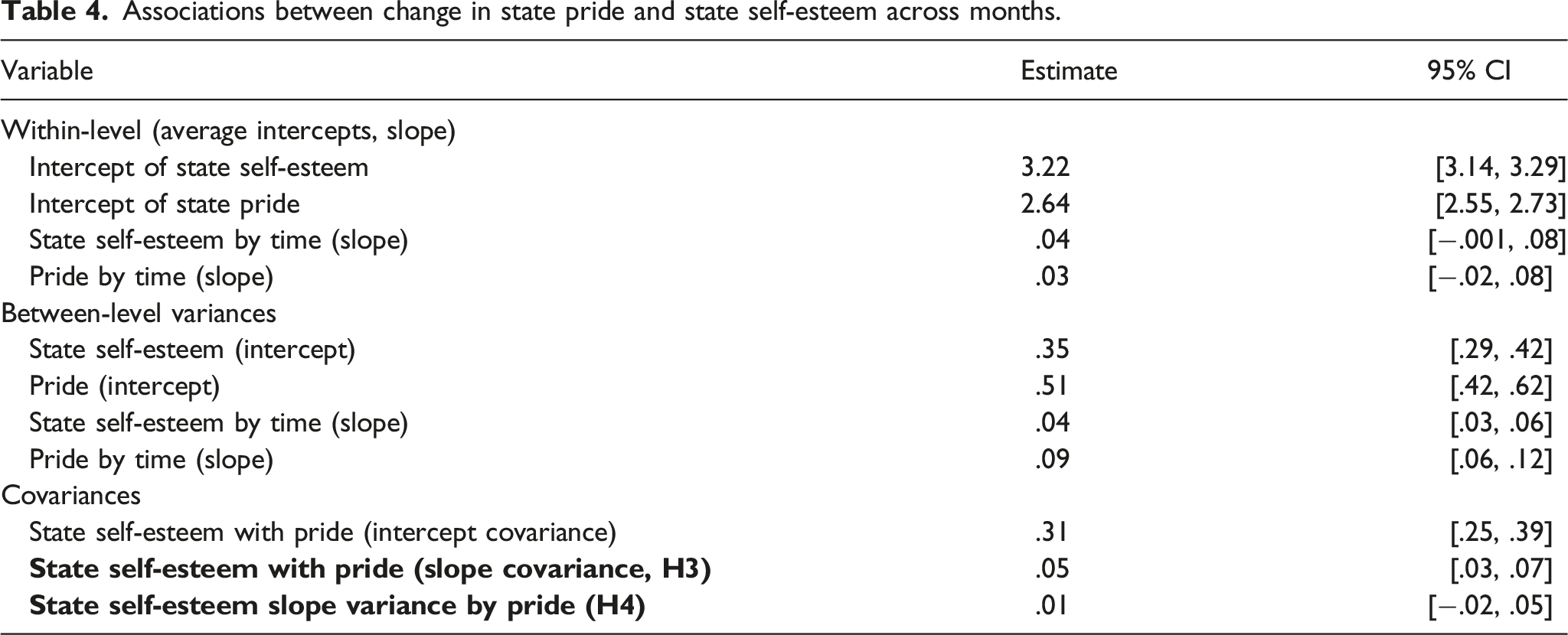
In line with Hypothesis 3, the covariance between slopes for state pride and state self-esteem change was positive and significant, indicating that within-person change in state pride was positively correlated with within-person change in state self-esteem. The size of this effect was small. The intercept variance of state pride did not significantly predict the slope variance of state self-esteem. Thus, we did not find evidence in line with Hypothesis 4. Individual differences in state pride during Wave 1 did not predict individual differences in state self-esteem change across the following 8 months.
Research aim 3: Characteristics of the transition as moderators of heterogeneity in change (H5 and H6)
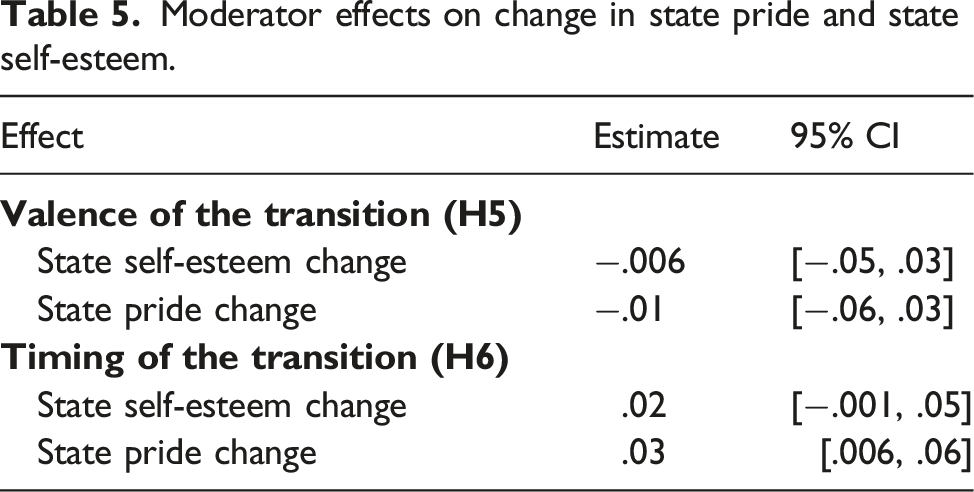
Moderator effects on change in state pride and state self-esteem.
Discussion
In the present study, we examined experiences of state pride in daily life as a short-term process underlying state self-esteem change during the university-to-work transition. We followed 232 master’s students in an intensive longitudinal design, starting before their graduation, in 3 waves across 8 months. At each wave, we employed 14-day ESM measurement bursts. Our study contributes novel insights to the literature on processes underlying self-esteem change in young adulthood by examining the dynamic association between state pride and state self-esteem at the within- and between-person levels across momentary, daily, and monthly timeframes during the university-to-work transition.
Research aim 1: Short-term within-person associations between state pride–state self-esteem (H1 and H2)
We expected that state pride on the previous day would positively predict state self-esteem on the current day and vice versa (H1 and H2). These hypotheses were supported. On average, state pride and state self-esteem positively predicted each other at the within-person daily level. In exploratory analyses, we also found that state pride and state self-esteem positively predicted each other across moments within a day.
Our results indicated that state pride and state self-esteem may be bidirectionally related across momentary and daily timespans. Further, the effect of state pride on state self-esteem remained robust after we accounted for general positive feelings of joy. Thus, pride may be an important self-conscious emotion for explaining fluctuations in state self-esteem which is consistent with previous evidence at the between-person level (Orth et al., 2010; for a meta-analysis, see Dickens & Robins, 2020) and with recent research which found that authentic pride was positively associated with state self-esteem within days (Chung et al., 2022). People’s state self-esteem can also impact their experiences of state pride across short timescales.
Overall, the effects we found across short timescales can be considered small in size. Previous ESM research on personality states has reported similar small effect sizes (Rauthmann et al., 2016). However, these small effect sizes may be meaningful given that they may build up through reflective and associative processes to bring about state change (e.g., across months as found in the present study) which is theorized to underlie trait change (Reitz, 2022; Wrzus & Roberts, 2017). Taken together, these results provide novel insights into the direction and timescale of effects between state pride and state self-esteem in daily life.
Individuals differed substantially in their within-person associations between state pride and state self-esteem such that for some individuals, state pride and state self-esteem were positively associated and for others, they were negatively associated. Investigating why individuals differ may further clarify the nature of this process (Bolger et al., 2019). One plausible reason why pride may be positively associated with self-esteem in some individuals and negatively associated in others is the two facets of pride, authentic and hubristic pride (Tracy & Robins, 2007). While authentic pride is positively associated with self-esteem, hubristic pride is negatively associated with self-esteem (Orth et al., 2010; Tracy & Robins, 2007). Future studies may want to examine if these two facets of pride have different links with state self-esteem and may therefore explain individual differences in the within-person associations of state pride.
Research aim 2: State pride and state self-esteem association across 8 months during the university-to-work transition (H3 and H4)
We found no average increases (changes) in state pride and state self-esteem across 8 months and considerable individual differences (i.e., variance) in the direction and magnitude of change for both. These findings are in line with previous research on trait self-esteem change during the education-to-work transition (Filosa et al., 2022; Reitz et al., 2020).
Changes in state pride and state self-esteem during the university-to-work transition were positively correlated which is consistent with Hypothesis 3 and with previous cross-sectional evidence for the pride and self-esteem link (Orth et al., 2010). Thus, the present study suggests that state pride and state self-esteem co-developed during the university-to-work transition, such that those who increased in daily experiences of state pride also increased in daily experiences of state self-esteem or vice versa. This finding suggests that individual differences in state self-esteem change during the university-to-work transition may co-develop with individual differences in mastery experiences (indicated in this study by experiences of pride) during the university-to-work transition.
We found that contrary to Hypothesis 4, individual differences in state pride before graduation did not predict individual differences in later state self-esteem change. Therefore, mastery experiences before the transition may not explain why some individuals increase whereas others decrease in state self-esteem during the university-to-work transition. Taken together, our findings across months support the theoretical notion that change during major life transitions may be triggered by mastery experiences during the transition (Reitz et al., 2022; Roberts & Nickel, 2021) such as mastery of the age-graded developmental tasks (Havighurst, 1976) and mastery of the new social role that young adults invest in (Roberts & Nickel, 2021).
Research aim 3: Characteristics of the transition as moderators of heterogeneity in change (H5 and H6)
Considerable individual differences in state pride and state self-esteem change that we found in the present study reiterate the importance of examining the objective and subjective nature of the transition to understand why individuals differ in their change. We examined whether the timing of the transition and perceived valence of the transition predict individual differences in state pride and state self-esteem change. Contrary to Hypotheses 5 and 6 and previous research (e.g., Reitz et al., 2022), we did not find effects of both characteristics on state self-esteem change.
We did find an effect of the timing of the transition on state pride change but this effect was opposite to what we expected. Those who transitioned to work later relative to the first wave (conducted before graduation) experienced greater increase in state pride than those who transitioned earlier. Those who transitioned to work later may have had to work harder to find a job as compared to those who transitioned earlier. It is also plausible that those who transitioned later initially worked in part-time jobs not relevant to their career and only later started a relevant full-time job. In contrast to what we expected, those who transitioned to work later may have experienced a greater sense of mastery as a result of their hard work (captured in experiences of state pride) than those who transitioned earlier.
Implications for theories on processes of self-esteem change
The present study suggests that experiences of state pride seem to not only predict state self-esteem across shorter timescales but also co-develop with state self-esteem across months. This evidence is in line with the TESSERA framework (Wrzus & Roberts, 2017). State pride and state self-esteem sequences repeatedly activated over time may co-develop with state self-esteem across months through associative change processes proposed for other constructs (e.g., personality) such as implicit association (e.g., Seger, 1994) and reinforcement learning (e.g., Caspi & Roberts, 2001). Repeated and sustained changes in state self-esteem may translate into trait self-esteem change across longer periods. Future research is therefore needed to examine the nature of processes (such as feedback loops and multivariate state networks, Wrzus, 2021) that translate short-term dynamics of state self-esteem into trait self-esteem change. Examining daily emotional experiences of major life transitions is therefore a promising avenue for research on processes underlying trait self-esteem change (Reitz, 2022).
Strengths, limitations, and future directions
The present study provided novel insights into the dynamic processes of state pride and state self-esteem change during the university-to-work transition. We collected ESM data at the momentary level at three time points across 8 months which allowed us to investigate short- and longer-term processes of change simultaneously. This ESM data allowed us to measure daily experiences during the university-to-work transition without retrospective bias. The three waves of momentary level data on state pride and state self-esteem allowed us to explore the timescale and direction of these relationships in the short term, which yielded novel insights into the short-term state pride–state self-esteem processes. Our examination of the link between state pride and state self-esteem across months yielded novel insights into how daily experiences of pride (i.e., the short-term process) may help explain state self-esteem change across months during the transition. Finally, examination of the characteristics of the university-to-work transition highlighted how contextual experiences of the university-to-work transition explain change in state pride.
Despite these strengths, there are some constraints on generalizability and limitations that need to be discussed. The three waves of data collection for the present study occurred during the COVID-19 pandemic when the Netherlands was in lockdown, which may have affected participants’ daily life and experience of the university-to-work transition. Therefore, our findings may not generalize to non-pandemic contexts. The present study included Dutch speaking master students in the Netherlands. However, non-Dutch students’ (such as international students’) experiences of the university-to-work transition may be entirely different. Further, the sample in the present study was relatively homogeneous in their socioeconomic status and gender (female). However, gender and socioeconomic status may have an impact on people’s experiences of the university-to-work transition as well as self-esteem. Future studies with diverse samples are therefore needed to examine the generalizability of these findings to non-native, gender diverse, and socioeconomically heterogeneous samples. In supplementary analyses, we found that the missingness in data in the third wave could not be interpreted as being completely at random; therefore, our results should be interpreted with caution.
While we found that state pride and state self-esteem are bidirectionally related across moments and days in the present study, we did not examine the specific context which may have elicited experiences of state pride. Daily positive and negative events during the university-to-work transition may impact experiences of state pride. Future studies are needed to examine the role of daily events in the association between state pride and state self-esteem. Furthermore, individuals may experience state pride in response to events that occur at work but also in response to events unrelated to work. Future research is needed to investigate daily events that occur at work because these events may be especially important for emotional processes underlying state self-esteem during the university-to-work transition.
We measured the variables using 1-item measures in this study which has consequences for interpretation of effects. We could not control for measurement error by modeling latent variables. Imperfect measurement due to unmodeled measurement errors might contribute to incremental cross-lagged predictions (Westfall & Yarkoni, 2016). Findings should be cautiously interpreted in relation to the measurement error associated with the 1-item measures used. We aggregated momentary ratings of state self-esteem to examine state dynamics and state change. This approach allowed us to (1) capture short-term emotional processes associated with state self-esteem and (2) capture change in state self-esteem that is theorized to underlie trait self-esteem change. However, whether aggregated ratings of personality states represent traits is an ongoing debate in the field (Roberts, 2018). Theories suggest that the mean distribution of states (i.e., aggregated states) conceptually represent traits (Fleeson & Jayawickreme, 2015). Depending on the method used for evaluating congruence, studies have reported poor (Finnigan & Vazire, 2018) and good (Rauthmann et al., 2019) personality state–trait congruence. The generalizability of these findings to trait self-esteem should be cautiously interpreted.
There may be two conceptual differences between the 1-item state self-esteem measure used in this study (Valkenburg et al., 2021) and 4-item state (Nezlek & Plesko, 2001) or 10-item trait measure of self-esteem (Rosenberg, 1965). First, while the 1-item measure of state self-esteem might prompt participants to report their current state self-esteem in contrast with themselves, the 4- and 10-item measures of self-esteem might induce a contrast with others (with items such as: I feel that I’m a person of worth, at least on an equal plane with others). Future studies could examine whether the present findings replicate when items that induce a contrast with others are included in the state measure. Second, the 1-item measure of state self-esteem used in the present study may not fully cover different aspects of the trait self-esteem construct. Future research might aim to replicate our findings with a longer, validated self-esteem measure that captures the whole breadth of the construct. Such research might also want to examine different domains of self-esteem (e.g., the competence domain might be most relevant here).
The present study highlighted individual differences in the processes and patterns of state change. Although we explored the impact of perceived valence and timing of the transition on state change, future research is needed to thoroughly examine the impact of contextual aspects of the transition. Individuals may differ in their work experience before graduation. The experience of the transition may be different for individuals who have considerable prior work experience compared to individuals who start full-time work for the first time. Therefore, future research is needed to compare changes in groups of job starters with and without prior work experience.
After graduation, while some individuals may start a full-time job which is an important step for their career, others may start a full-time job that does not align with their career goals, and yet others may work part time while looking for a full-time job. These differences may bring about individual differences in mastery experiences (and experiences of state pride) that explain variability in state self-esteem change. Young adults who start full-time work may have varied experiences in the workplace such as differences in work motivation and organizational support during the transition. These differences may bring about differences in individuals’ ability and capacity to succeed at their new job, which may explain individual differences in state pride and state self-esteem change. Therefore, future research is needed to examine the impact of contextual aspects of the university-to-work transition on state pride and state self-esteem change.
Conclusion
The present study provided novel insights into the processes underlying state self-esteem change during the university-to-work transition by examining the association between state self-esteem and the self-conscious emotion of pride on short and medium timescales. State pride and state self-esteem positively predicted each other within days and across days. Furthermore, changes in state pride and state self-esteem across the university-to-work transition were positively correlated, suggesting that state pride and state self-esteem co-develop during this period. Individuals significantly differed in the magnitude and direction of the short-term effects and long-term changes.
The present findings emphasize the importance of going beyond average change in self-esteem during major life transitions. Instead, focusing on short-term emotional dynamics that can capture people’s idiosyncratic experience of the transitions may help understand the processes underlying self-esteem development. Future studies are needed to examine the entire temporal process through which short-term state pride–state self-esteem dynamics build up over time to elicit long-term trait self-esteem change during the university-to-work transition. Our findings suggest that such studies are well-advised to account for the contextual experiences of the transition and the time-sensitive nature of short-term processes.
Supplemental Material
Supplemental Material - Short-term dynamics of pride and state self-esteem change during the university-to-work transition
Supplemental Material for Short-term dynamics of pride and state self-esteem change during the university-to-work transition by Ketaki A Diwan, Joanne M Chung, Christina Meyers, Lotte van Doeselaar, and Anne K Reitz in European Journal of Personality
Footnotes
Author’s note
Some parts of this manuscript were presented online at Society for Ambulatory Assessment Conference 2021, Association for Research in Personality Conference 2021, at the VNOP Conference 2022, Utrecht, the Netherlands, and ECP20, 2022, Madrid, Spain.
Declaration of conflicting interests
The author(s) declared no potential conflicts of interest with respect to the research, authorship, and/or publication of this article.
Funding
The author(s) disclosed receipt of the following financial support for the research, authorship, and/or publication of this article: This research received funding from the innovation program under the Marie Skłodowska-Curie grant agreement No 846839, awarded to Anne Reitz.
Open science statement
The pre-registration, data, and scripts used for analyses are openly available on OSF: https://osf.io/mfvp2/?view_only=e19f2874c3ef470da8b46fa185c221c1.  .
.
Supplemental Material
Supplemental material for this article is available online.
Notes
References
Supplementary Material
Please find the following supplemental material available below.
For Open Access articles published under a Creative Commons License, all supplemental material carries the same license as the article it is associated with.
For non-Open Access articles published, all supplemental material carries a non-exclusive license, and permission requests for re-use of supplemental material or any part of supplemental material shall be sent directly to the copyright owner as specified in the copyright notice associated with the article.
