




Abstract
Theory suggests that people’s work experiences influence their self-esteem and, vice versa, that self-esteem influences work experiences. This meta-analysis of longitudinal studies synthesizes the available evidence on prospective effects between work experiences and self-esteem, controlling for prior levels of the outcomes. The following work variables were examined: job satisfaction, job success, income, job resources, job stressors, and employment status. The analyses were based on 30 independent samples, including data from 53,112 participants. Mean age ranged from 17 to 64 years, spanning most of the work life. For each work variable, we computed random-effects models with standardized regression coefficients as effect size measure. Results suggested reciprocal effects between work experiences and self-esteem. The effects of self-esteem on later work experiences (point estimates ranged from .05 to .10) were slightly larger than the effects of work experiences on later self-esteem (point estimates ranged from .02 to .05). Moderator analyses on the relation between job satisfaction and self-esteem indicated that the effects did not differ across age, gender, sample type, and time lag. Overall, the findings support the corresponsive principle of personality development and suggest that the work domain and people’s self-esteem are interdependent.
For many people, work is a central life domain. Adolescents and young adults often think about their choice of occupation and put much effort into getting a job that suits them. Once individuals have a job, they spend a large part of their waking hours working (e.g., U.S. Bureau of Labor Statistics, 2019). Moreover, people often seek to improve their work life, sometimes by switching employers, career tracks, or vocational fields. Because much time and effort is spent for the job, the work domain is closely linked to people’s self-concept and identity (e.g., Ashforth & Mael, 1989; Van Knippenberg & Hogg, 2018). Consequently, laypersons and researchers alike often assume that experiences at work—such as job success and failure, being promoted or laid off, and receiving a pay raise—influence people’s self-esteem. Moreover, as we will review in detail later, there is reason to expect also effects in the opposite direction: People’s self-esteem may be one of the personal characteristics that lead to certain work experiences in the first place.
In fact, a large body of research shows that self-esteem is related to characteristics and outcomes in the work domain. For example, a meta-analysis found a correlation of .26 between self-esteem and job satisfaction, and, at the same size, between self-esteem and job performance (Judge & Bono, 2001). The meta-analysis by Bowling et al. (2010) yielded similar findings (.29 for job satisfaction and .18 for job performance), and additionally reported small to medium-sized correlations of self-esteem with salary (.14), social support at work (from supervisor .25, from coworkers .31), and job autonomy (.23). However, as these findings were based on cross-sectional data, they do not allow for any conclusions about the direction of the relation between work and self-esteem. Moreover, although some longitudinal studies have focused on this topic, the findings of these studies have been relatively inconsistent. In this meta-analysis, we therefore synthesize all available longitudinal data to gain better insights into prospective effects of work experiences on self-esteem and prospective effects of self-esteem on work experiences. Importantly, the two directions of effects are not mutually exclusive. Thus, it is possible that there are reciprocal prospective effects between the constructs.
Understanding the link between work experiences and self-esteem is important for two reasons. First, there is a need to gain more robust knowledge of the factors that influence people’s self-esteem (for a review, see Orth & Robins, 2019). Although factors such as social relationships (Gruenenfelder-Steiger et al., 2016; Harris & Orth, 2020; Reitz et al., 2016) and stressful life events (Orth & Luciano, 2015; Tetzner et al., 2016) show robust effects on self-esteem, researchers still know relatively little about many other factors that might shape the individual self-esteem trajectory across the life course. Second, research suggests that self-esteem has consequences for outcomes such as social relationships (Harris & Orth, 2020; Marshall et al., 2014; Mund et al., 2015) and mental health (Sowislo & Orth, 2013; Trzesniewski et al., 2006). However, the question of whether self-esteem exerts influence on important life domains or whether self-esteem is merely an epiphenomenon of the individual’s life circumstances has generated much debate in the field (Baumeister et al., 2003; Krueger et al., 2008; Orth et al., 2012; Swann et al., 2007, 2008). To date, the field has not yet reached consensus about the real-world consequences of self-esteem. Therefore, it is important to evaluate the available evidence with regard to life domains that have been neglected in prior research, including the work domain.
Before describing the theoretical and empirical background of this meta-analysis, we briefly review the definition and conceptualization of self-esteem. Self-esteem has been defined as a person’s subjective evaluation of their worth as a person (e.g., MacDonald & Leary, 2012; Trzesniewski et al., 2013). Thus, individuals with high self-esteem take a positive attitude toward themselves and accept and respect themselves (Rosenberg, 1965). In contrast, individuals with low self-esteem frequently experience self-doubts and feelings of being a failure. Moreover, research suggests that self-esteem is a relatively stable characteristic of individuals. Longitudinal data indicate that the rank-order stability of self-esteem is relatively high (Trzesniewski et al., 2003), even across long periods (Donnellan et al., 2012; Kuster & Orth, 2013; Wagner et al., 2016). Nevertheless, rank-order stability of self-esteem is far from unity, which implies that self-esteem is susceptible to changes at all ages.
The Effect of Work Experiences on Self-Esteem
Theoretical Perspectives
Several theoretical perspectives suggest that the work domain has important effects on self-esteem. First, sociometer theory (Leary, 2012) assumes that self-esteem stands and falls by the degree of social inclusion. The theory assumes that people monitor the current state of their social acceptance and that self-esteem declines when social acceptance is threatened. Most jobs are relevant for social inclusion and the individual’s social acceptance, both within and outside the workplace. Within the workplace, social acceptance can be witnessed, for example, by being sought for advice, being praised by coworkers, supervisors, clients, and customers, and by receiving social support in difficult work situations. Outside the workplace, the job may influence social acceptance, for example, by being viewed by others as a successful and competent person or—if an individual has a job with low occupational prestige, or experiences many job-related setbacks—by being viewed as a failure. Consequently, sociometer theory suggests that the work domain may exert significant influence on the individual’s level of social acceptance and thereby affect the individual’s self-esteem.
Second, neo-socioanalytic theory (Roberts & Wood, 2006; Roberts et al., 2008) proposes that social roles, such as being an employee, come with specific social expectations, such as being reliable, responsible, friendly, cooperative, and willing to take the initiative. Furthermore, the social investment principle of neo-socioanalytic theory assumes that most people are committed to their role and that, consequently, social expectations are an important driver of development in the direction of more mature personality traits (i.e., in the direction of conscientiousness, agreeableness, and emotional stability). Given that mature personality traits are associated with higher self-esteem (Robins et al., 2001; Watson et al., 2002) investing in work-related roles may also lead to increases in self-esteem. Moreover, the corresponsive principle of neo-socioanalytic theory posits that life experiences generally tend to reinforce those personality characteristics that led to the life experiences in the first place. Applied to self-esteem the principle suggests, for example, that high self-esteem may lead individuals to apply for, and get, higher job positions (as indicated, e.g., by occupational prestige, salary, responsibilities, and influence) than individuals with low self-esteem and that, in turn, working on higher job positions may provide more opportunities for gains in self-esteem compared with lower job positions.
Third, similar to neo-socioanalytic theory, the demands-affordances transactional model by Woods et al. (2019) proposes that work experiences influence personality development through the pursuit of person-environment fit. According to this model, individuals seek to meet the demands imposed by their work environment and will therefore adjust their affordances as necessary. For example, if an individual works as a sales person and likes this job, and if this job requires self-confident behavior but the person has relatively low self-confidence, then the person will seek to strengthen their self-confidence.
Empirical Findings
In the following, we review three lines of research that provide evidence about whether work experiences influence self-esteem. A first line of research focused on the relation between employment status and self-esteem. For example, a meta-analysis examined the effect of unemployment on several indicators of mental health, including self-esteem (Paul & Moser, 2009). Across more than 200 cross-sectional studies, the meta-analysis showed that unemployed individuals have significantly lower self-esteem than employed individuals (d = 0.51, corrected for unreliability). Additional analyses with longitudinal studies indicated that unemployment is associated with negative changes in mental health, and reemployment with positive changes (note, however, that the longitudinal analyses were conducted only for the broader construct of mental health, but not specifically for self-esteem). Moreover, normative transitions that alter people’s employment status, such as entering or retiring from the work life, show effects on self-esteem development. For example, a recent study examined the transition from university to work and found that job beginners slightly increased in their level of self-esteem compared with individuals who did not start with a job (Reitz et al., 2020). It is worth noting that the rank-order stability of self-esteem was significantly lower among job beginners compared with the control group, indicating that the transition to work was linked to greater individual differences in how self-esteem changed. Another recent study focused on effects of the retirement transition. Bleidorn and Schwaba (2018) examined the self-esteem trajectory across the 5 years before and 5 years after retirement and compared the findings with the self-esteem trajectory in a group of nonretirees. Although the self-esteem of retirees decreased more strongly before retirement (compared with nonretirees), self-esteem did not significantly decline after retirement and, moreover, after retirement the self-esteem trajectory of retirees did not differ significantly from the trajectory of nonretirees.
A second line of research focused on job outcomes, such as job satisfaction, job success, occupational prestige, and income. Overall, the findings from these studies are inconsistent. For example, a study with a large longitudinal sample suggested that occupational prestige leads to increases in self-esteem, even when controlling for the stability of self-esteem (Bachman & O’Malley, 1977). In contrast, other longitudinal studies did not find significant, or only very small, effects of job satisfaction, job success, occupational prestige, and income on later self-esteem (Kammeyer-Mueller et al., 2008; Kuster et al., 2013; Orth et al., 2012).
A third line of research examined the effects of positive and negative job conditions (i.e., job resources and job stressors) on self-esteem. Again, the findings from these studies are mixed and inconclusive. Some studies found positive effects of job resources, such as autonomy and social support (e.g., Keller et al., 2015; Mortimer & Finch, 1986; Xanthopoulou et al., 2007), and negative effects of job stressors, such as monotony, lack of control, and time pressure (e.g., Kivimäki & Kalimo, 1996; Mäkikangas & Kinnunen, 2003). However, a longitudinal study that tested the prospective effects of several work conditions on self-esteem across two data sets, did not find any effects of positive work conditions (e.g., justice and support at work) and negative work conditions (e.g., time pressure and ostracism) on later self-esteem (Kuster et al., 2013).
In summary, although theoretical perspectives strongly suggest that work experiences influence people’s self-esteem, the findings from prior research are inconsistent and many studies reviewed earlier are limited by at least one of the two following aspects. First, many studies used a cross-sectional design, which is methodologically problematic because quite different causal models could account for the observed correlations. Second, even if some studies used longitudinal designs, many of these did not control for the stability of self-esteem (i.e., autoregressive effects), which may considerably distort the results (see, e.g., Cole & Maxwell, 2003). Consequently, the available literature does not allow for any firm conclusions about whether work experiences have prospective effects on later self-esteem.
The Effect of Self-Esteem on Work Experiences
Theoretical Perspectives
Theory suggests that people’s self-esteem may shape their work experiences. First, neo-socioanalytic theory (Roberts et al., 2008) proposes several powerful person–environment transactions, including attraction to environments that are consistent with one’s own personality. Thus, self-esteem may affect the individual’s selection of work environment. As discussed earlier in the context of the corresponsive principle, high self-esteem may lead to more positive work experiences because individuals with high self-esteem may seek and get jobs with more responsibility, autonomy, and influence, compared with individuals with low self-esteem.
Second, conservation of resources theory states that an individual’s behavior is motivated by retaining and increasing important resources, such as self-esteem (Hobfoll et al., 2018). If an individual has high self-esteem, they will possibly engage in behavior to protect this resource, for example, by putting effort into the job to be successful, gaining acceptance from supervisors and coworkers, and avoiding overly stressful work conditions.
Third, people’s self-esteem influences their social interactions. The self-broadcasting model of self-esteem proposes that high self-esteem leads to better social integration through adaptive social behavior (Srivastava & Beer, 2005). For example, individuals with high self-esteem tend to engage in more open behaviors to deepen a relationship and improve connectedness. In contrast, individuals with low self-esteem behave relatively reserved to protect themselves from being rejected (Murray et al., 2008). Consequently, the self-broadcasting model suggests that individuals with high self-esteem are more likely to succeed in building and maintaining positive social relationships at work, to receive more social support by coworkers and supervisors, and, ultimately, to be more successful at work.
Empirical Findings
In the following, we review three lines of research that provide evidence about whether self-esteem influences work experiences. A first line of research focused on the effect of self-esteem on employment status. For example, research suggests that self-esteem is beneficial when searching for a job because people with high self-esteem receive better interview evaluations, get more job offers, and more often accept a job than people with low self-esteem (Ellis & Taylor, 1983). A longitudinal study with a sample of Finnish university students showed that high self-esteem at baseline predicted having a permanent position 10 years later (Salmela-Aro & Nurmi, 2007). Similarly, another study with a large sample found that high self-esteem in adolescence predicted a lower risk of long-term unemployment in young adulthood (Trzesniewski et al., 2006).
A second line of research examined the effects of self-esteem on job outcomes. Several longitudinal studies indicate that self-esteem positively predicts work outcomes, such as job satisfaction, income, and occupational prestige (Kammeyer-Mueller et al., 2008; Kuster et al., 2013; Magnusson & Nermo, 2018; Orth et al., 2012; Salmela-Aro & Nurmi, 2007; Trzesniewski et al., 2006). Moreover, research suggests that core self-evaluations—a concept that combines several personality characteristics, including self-esteem—are predictive of work outcomes (Judge et al., 1998). For example, positive core self-evaluations were related to higher motivation and performance (Erez & Judge, 2001) and predicted work success in general (Judge, 2009). In addition, positive core self-evaluations predicted later income even when controlling for educational attainment (Judge et al., 2009). Longitudinal studies also show that core self-evaluations predict job satisfaction (Keller & Semmer, 2013; Wu & Griffin, 2012). Interestingly, although core self-evaluations encompass several constructs, it has been noted that “self-esteem is the most fundamental core evaluation of the self” (Judge et al., 1998, pp. 18–19).
A third line of research addressed whether self-esteem has an impact on work conditions. However, few longitudinal studies are available. For example, in one study, high self-esteem predicted that participants later had high-quality jobs (as indicated by high levels of autonomy and skill variety), although this effect was significant only for women but not for men (Keller et al., 2015). In another longitudinal study, no gender differences emerged, and self-esteem significantly predicted both job resources and job stressors (Kuster et al., 2013).
In summary, although theoretical perspectives suggest that self-esteem influences work experiences, the number of longitudinal studies that focused on these questions is small. In addition, many of the studies reviewed earlier are limited by methodological factors, such as lack of control for autoregressive effects. Moreover, some studies did not focus on global self-esteem but on related constructs, such as core self-evaluations. Thus, the available evidence does not allow for clear conclusions about whether an individual’s level of self-esteem shapes their work experiences.
The Present Research
The aim of the present meta-analysis was to summarize the available evidence on prospective effects between work experiences and self-esteem. We examined these effects for the following job variables: job satisfaction, job success, income, job resources, job stressors, and employment status. Overall, we expected a pattern of reciprocal effects between work experiences and self-esteem. In the following paragraph, we briefly describe each of the six job variables (for more details, see the coding manual, which is available at https://osf.io/nztu2).
The variable job satisfaction comprised global job satisfaction measures and more specific satisfaction measures with regard to supervisors, coworkers, or salary. Job success included measures such as success, performance, achievement, occupational prestige, or supervisor position. Income was defined as the payment an individual receives for their work and included information on salary, wage, and pay (importantly, income does not refer to the household income, where rental income, subsidies, or the salary of the spouse might be included). Job resources comprised all work factors that are favorable to the employee with regard to well-being or productiveness, for example, support from supervisor and coworkers, justice at work, feedback, appreciation, job autonomy, or cognitive stimulation at work. Job stressors comprised all work factors that are unfavorable to the employee, for example, social exclusion, ostracism, incivility, time pressure, job insecurity, or illegitimate tasks. Employment status was defined as a dichotomous variable (i.e., employed vs. unemployed).
To strengthen the validity of conclusions, we analyzed effect sizes that were based on longitudinal data and that were controlled for prior levels of the predicted variables. Figure 1 provides a generic illustration of the effect sizes analyzed in this meta-analysis. First, we examined the cross-lagged coefficients between self-esteem and the job variables, where the autoregressive effects of the predicted variables were controlled for (e.g., the effect of self-esteem at Time 1 on job satisfaction at Time 2, controlled for the effect of job satisfaction at Time 1). Second, we examined the stability (i.e., autoregressive) coefficients of each construct (e.g., the effect of job satisfaction at Time 1 on job satisfaction at Time 2). Third, for reasons of completeness, we also examined the concurrent correlation between the constructs at Time 1 (e.g., correlation between self-esteem at Time 1 and job satisfaction at Time 1).
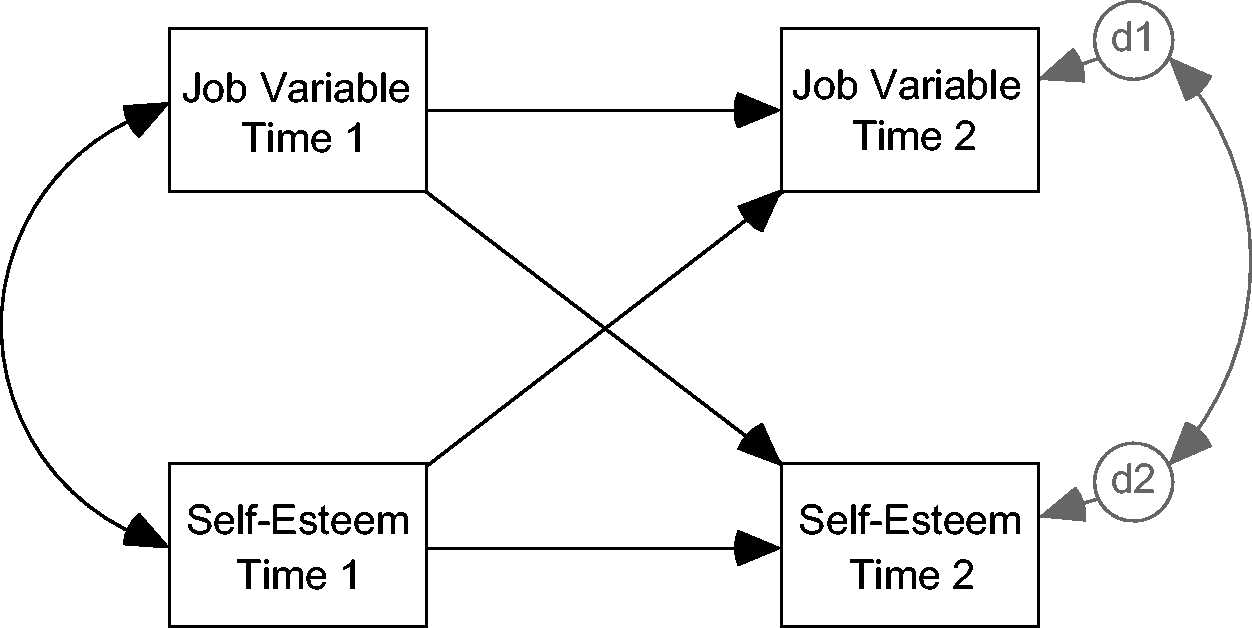
Generic Illustration of Effect Sizes Analyzed in the Present Meta-Analysis.
In this meta-analysis, we also tested for potential moderators of the prospective effects. However, because the number of eligible samples was relatively small for some of the job variables (for further information, see “Results” section), in the moderator analyses, we focused exclusively on job satisfaction (i.e., the job variable with the largest number of samples). As moderators, we tested three important sample characteristics—specifically, age, gender, and sample type (i.e., nationally representative vs. nonrepresentative)—and one design characteristic, that is, length of time lag between assessments. The aim of the moderator analyses was to test for the robustness of the effects. Moreover, theoretical perspectives suggest that the moderator variables could be important. For example, age might moderate the strength of effects of work experiences on self-esteem. Entering work life entails a new social role that, especially at the beginning of the career, may elicit changes toward a more mature personality (as suggested, e.g., by neo-socioanalytic theory; Roberts et al., 2008). Thus, the effects of work experiences on self-esteem could be stronger in young adulthood than in later developmental periods. Moreover, the work domain might play a more important role for men than for women, given that men tend to be more career-oriented, more often work full-time, and might base their self-esteem more often just on the work domain (Ferriman et al., 2009; Gregory & Connolly, 2008; Linville, 1987). Consequently, the effects of work experiences on self-esteem could be larger for men than for women. Testing sample type as a moderator helps to evaluate the validity of the effect sizes extracted from the studies. Findings based on nationally representative samples are generally more valid than findings based on other samples, and if the effects from representative samples do not significantly differ from the effects from nonrepresentative samples, this increases confidence in the overall pattern of findings. Finally, we tested for moderating effects of time lag as effects between work experiences and self-esteem might decrease with longer time lags because other influences might accumulate in the meanwhile.
The present meta-analysis extends previous research in several ways. First, we synthesize the available longitudinal evidence on the relation between work experiences and self-esteem (previous meta-analyses had focused exclusively on the cross-sectional relation between work experiences and self-esteem, which does not allow for any conclusions about the hypothesized causal direction between the constructs; Bowling et al., 2010; Judge & Bono, 2001). Importantly, in this meta-analysis, all prospective effects are controlled for autoregressive effects, which significantly improves the interpretation of the findings (e.g., Cole & Maxwell, 2003; Gollob & Reichardt, 1987). Second, we used a comprehensive approach toward work experiences by including a broad set of job variables (i.e., job satisfaction, job success, income, job resources, job stressors, and employment status). Third, compared with primary studies, in meta-analyses, effects are estimated with high statistical power and across heterogeneous samples, which increases the robustness of findings. Fourth, an additional advantage of this meta-analysis is that publication bias is unlikely, given that (a) many of the primary studies included did not focus specifically on the relation between work experiences and self-esteem but simply reported the relevant statistical information together with information on a broader set of constructs, and (b) for many of the studies, the relevant effect size information had not been published, but we received this information upon request from the authors (for further information, see later).
Method
The present meta-analysis used anonymized data and therefore was exempt from approval by the Ethics Committee of the authors’ institution (Faculty of Human Sciences, University of Bern), in accordance with national law. This research was not preregistered. 1 Coding manual, data, and scripts are available at https://osf.io/nztu2.
Selection of Studies
To identify potential studies, we searched the database PsycINFO for English-language journal articles, books, book chapters, and dissertations. For the construct of self-esteem, we used the following search terms: self-esteem, self-worth, self-liking, self-view*, self-concept, self-respect, self-regard, self-acceptance, and self-image*. For the constructs related to work, we used the following search terms: job*, work*, occupation*, vocation*, employment, unemployment, career, income, salary, wage*, and pay*. The asterisk (i.e., the truncation symbol) allowed for the inclusion of alternate word endings of the search term (e.g., self-view* yielded entries containing the term “self-view” but also “self-views”).
To ensure that the search will likely yield longitudinal studies, we employed two search strategies. First, we restricted the search to longitudinal studies by using the limitation option “longitudinal study” in PsycINFO. This first search yielded 699 potentially relevant articles, including 101 dissertations. Second, we omitted the limitation option “longitudinal study” and instead operationalized “longitudinal” via further search terms: longitudinal, prospective, and cross-lag*. The second search yielded 881 potentially relevant articles, including 212 dissertations. After accounting for the overlap between the two searches, the search resulted in a total of 1,142 potentially relevant studies, including 233 dissertations. The search was conducted on January 16, 2019.
Studies were included in the meta-analysis if the following criteria were fulfilled: (a) the study was empirically-quantitative; (b) the study used a longitudinal study design (i.e., it included two or more assessments of the same sample); (c) the study included measures of both self-esteem and a job variable (only continuous self-report measures of global self-esteem were eligible); (d) the measures were unaltered across assessments (i.e., with regard to number of items, item wording, response scale, etc.); (e) enough information was given to compute the effect sizes; and (f) the sample did not undergo a psychological or psychopharmacological intervention (e.g., if the study was an intervention study, only information from the control group, not undergoing any alternative treatment, was used).
Nearly all studies were assessed in full text. Only studies that were difficult to obtain were first screened on the level of the abstract by the first author of the present meta-analysis. If the abstract did not meet any exclusion criteria, the study was acquired as full text for further assessment. All full texts were assessed by two coders, to decide on the eligibility of studies. Different pairs of coders were formed to rate different sets of studies (the pool of coders consisted of the first author and four master’s students). 2 The interrater agreement on inclusion or exclusion in the meta-analysis was high (κ = 1.00).
From the 1,142 potentially relevant studies, 13 (thereof 2 dissertations) could directly be included in the meta-analysis, given that all required information was available in the article. If studies fulfilled all inclusion criteria except for providing enough information to compute effect sizes and if the article was published in 2000 or later, we contacted the authors with a request for providing the required information. Based on the authors’ responses, 14 additional articles could be included.
To make the meta-analysis as exhaustive as possible, we used two additional strategies to identify relevant data. First, we sent a request for unpublished studies via electronic mailing lists of five scientific societies in the fields of social–personality psychology and industrial–organizational psychology. We requested unpublished manuscripts, preprints, papers in press, theses, or any other form of gray literature or unpublished data. This strategy resulted in one additional article and two unpublished data sets. Second, we examined the reference sections of four articles that focused centrally on the topic of this research (Bowling et al., 2010; Brown & Zeigler-Hill, 2017; Dyson, 2019; Kuster et al., 2013). This strategy resulted in one additional eligible study.
In sum, the search procedures yielded 31 sources (i.e., 27 journal articles, 2 dissertations, and 2 unpublished data sets) for analysis.
Coding of Studies
We coded the following data: sample size, mean age of participants at Time 1, percentage of female participants, sample type (i.e., nationally representative, community, and college students), country of data collection, ethnicity, year of Time 1 assessment, time lag between assessments, effect size information, and publication status of effect sizes (i.e., effect size data published in article in form of correlation or regression coefficients vs. effect size data not published in article but obtained from authors). Time 1 is defined as the first assessment reported in the article at which both the job variable and self-esteem were measured. Time 2 is the next assessment reported in the article at which at least one of the relevant variables (i.e., job variable and self-esteem) was measured.
If an article did not report the mean age of participants, we used the most valid indicator of age that was available. Specifically, if an age range was given (e.g., 25–45 years), we used the midpoint of the interval as estimate of mean age (e.g., 35 years). If year of Time 1 assessment was not reported in the article or in other publications or sources of information on the sample, we estimated it using the following formula: Year of Time 1 assessment = publication year − 3 years (assuming that studies were published on average 3 years after the completion of data collection) − interval between first and last assessment (i.e., duration of data collection).
For studies that included more than two assessments, we coded only the first two eligible assessments (as described earlier). If a study provided more than one effect size for the same category of job variable using the same sample (e.g., an effect size for supervisor support and autonomy, which were both categorized as job resources), we included only one of the measures (following a priori determined coding rules, as defined in the coding manual). Thus, for all meta-analytic computations (which were conducted separately for each category of job variables), each sample provided only one effect size estimate per analysis, to ensure the statistical independence of effect sizes.
As effect size measure, we used standardized regression coefficients (denoted as β), where the effect of the predictor at Time 1 on the outcome at Time 2 is controlled for the stability of the predictor (see Figure 1). In most cases, these effect sizes were not directly reported in the article; instead, we coded all relevant zero-order correlations that were available (i.e., correlations between Time 1 self-esteem, Time 2 self-esteem, Time 1 job variable, and Time 2 job variable). Using these zero-order correlations, we computed the standardized regression coefficients with the following equation (Cohen et al., 2003), which is applicable when a criterion variable (Y) is influenced by two predictors (X1, X2):
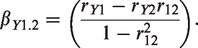
Here β Y 1.2 is the standardized regression coefficient of X1 predicting Y, controlling for the effect of X2 (e.g., the effect of job satisfaction at Time 1 on self-esteem at Time 2, controlling for self-esteem at Time 1); rY1 and rY2 are the zero-order correlations between each predictor (X1, X2; e.g., job satisfaction at Time 1, self-esteem at Time 1) and the criterion (Y; e.g., self-esteem at Time 2); and r12 is the correlation between the two predictors (X1 and X2; e.g., the cross-sectional correlation of job satisfaction at Time 1 and self-esteem at Time 1).
Studies for which we obtained data from the study authors (i.e., upon email request and in response to our request for unpublished data) were coded only by the first author of this meta-analysis. All other studies (i.e., studies from the PsycINFO search that provided all required effect size information) were coded by two raters (again, the pool of raters consisted of the first author and the four master’s students). Estimates of interrater agreement were based on 14 samples (i.e., all samples for which effect size data were available in the article) and were calculated with the “psych” package (Revelle, 2020) in R (R Core Team, 2020). The interrater agreement was high for categorical variables (averaged κ = .91) and continuous variables (averaged intraclass correlation coefficient = .96). All diverging assessments were resolved by the first author of the present meta-analysis.
Meta-Analytic Procedure
For all meta-analytic computations, we used the “metafor” package (Viechtbauer, 2010) in R (R Core Team, 2020). As effect size measure, we used correlation coefficients and standardized regression coefficients. For the analyses, all coefficients were converted to Fisher’s z values. The within-study variance of the transformed values is given by
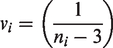
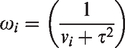
In the preliminary analyses, we first examined statistical outliers on effect size estimates and, second, determined whether there was evidence of publication bias, that is, whether studies with significant results were more likely to be published. In the effect size analyses, we computed weighted mean effect sizes separately for each job variable and tested for heterogeneity of effect size distributions. Finally, we examined sample and design characteristics as moderators of the cross-lagged effects: age at Time 1, percentage of female participants in the sample, sample type, and time lag between assessments.
Results
Description of Studies
The meta-analytic data set included information from 31 sources (i.e., 27 journal articles, 2 dissertations, and 2 unpublished data sets). For published studies (i.e., journal articles and dissertations), year of publication ranged from 1984 to 2018, with the median in 2012. The 31 sources provided information on 30 independent samples. Basic sample characteristics are shown in Table 1. Table 1 includes more than 30 lines because information for some samples was taken from more than one source (e.g., two sources reported on different job variables for the same sample). 4 Given that the exact sample characteristics, such as sample size or time of assessment, could differ between job variables, Table 1 reports the information separately for the sources from which the data were taken. However, in the following description of the sample characteristics, each sample was included only once. Sample sizes ranged from 92 to 12,377 (M = 1,770, SD = 3,121, Mdn = 479). In sum, the samples included 53,112 participants. Mean age at Time 1 ranged from 17.4 to 63.7 years (M = 36.7, SD = 11.4). The mean proportion of female participants was 48% (range = 0%–100%, SD = 25%, Mdn = 50%). Seven samples were nationally representative and 23 were community samples; there were no samples with college students. Eleven samples were from the United States, six from Germany, four from Switzerland, two from Australia, two from Finland, and one sample each from Norway, the United Kingdom, the Netherlands, New Zealand, and Japan. Taken together, 29 samples were from Western cultural contexts such as the United States, European countries, Australia, and New Zealand; only 1 sample came from an East Asian country (i.e., Japan); no South Asian, South American, Central American, or African samples were included. With regard to ethnicity, 21 samples were predominantly White/European (“predominantly” was defined as 80% and more), 1 predominantly Asian, 1 predominantly Black, and 5 were other/mixed (for two samples, it was not possible to infer information about ethnicity). Year of Time 1 assessment ranged from 1979 to 2013 (M = 1999.2, SD = 9.8). Time lag between the assessments ranged from 2 weeks to 10 years (M = 2.4 years, SD = 2.4 years, Mdn = 1.3 years).
Descriptive Information on the Studies Included in the Meta-Analysis.
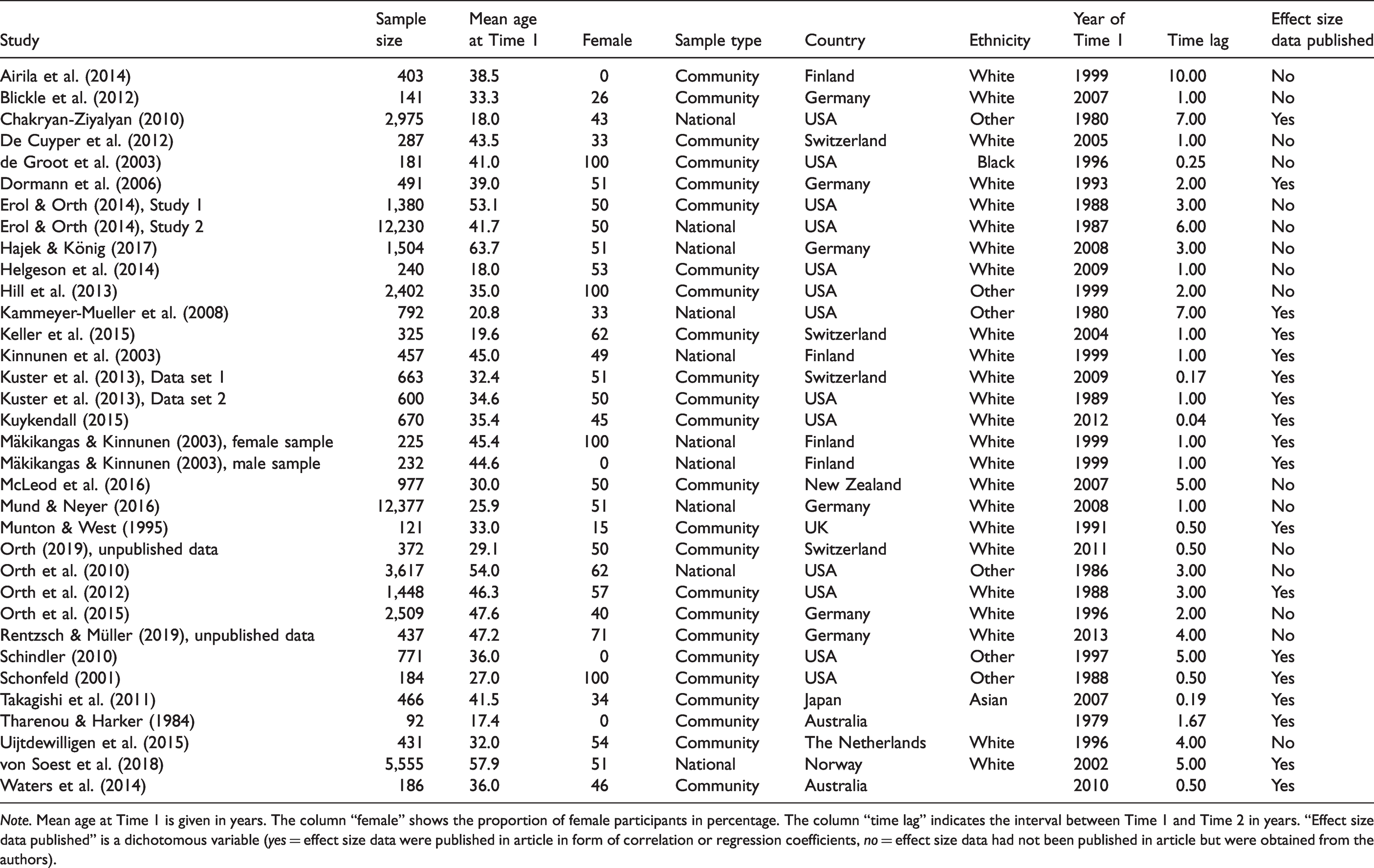
Note. Mean age at Time 1 is given in years. The column “female” shows the proportion of female participants in percentage. The column “time lag” indicates the interval between Time 1 and Time 2 in years. “Effect size data published” is a dichotomous variable (yes = effect size data were published in article in form of correlation or regression coefficients, no = effect size data had not been published in article but were obtained from the authors).
As reported earlier, some studies provided effect sizes for more than one job variable. By separately analyzing the different categories of job variables, we ensured that all meta-analytic computations were conducted with independent samples (i.e., no participant provided information for more than one effect size included in the same analysis).
Preliminary Analyses
For each of the effect sizes (i.e., all cross-lagged effects, stability effects, and Time 1 correlations, for each of the six job variables), we searched for influential outliers using the “influence” command of the metafor package (Viechtbauer, 2010). When an effect size was both influential and qualified as potential outlier (following the cutoff values implemented in the metafor package 5 ), we repeated the meta-analytic computation of the weighted mean effect size without this study for the purpose of sensitivity analyses. The results suggested that excluding these studies did not change the pattern of findings and did not lead to any different conclusions (Supplemental Table S1). We therefore used the complete data set in the remainder of the analyses, consistent with methodological literature advising against routine deletion of outliers (Viechtbauer & Cheung, 2010).
Also, we assessed whether there was evidence of publication bias in the cross-lagged effects (i.e., in the coefficients that were of key interest in this research). We expected no publication bias for any of the effect sizes because many studies included in this meta-analysis focused on other research questions (i.e., other than the prospective effects between self-esteem and job variables). In many cases, the relevant statistics (i.e., correlations between self-esteem and job variables) were simply reported along with other statistics on a larger set of variables (moreover, in many cases, the relevant statistics were not reported in the articles at all but obtained from the study authors; see “Method” section). We used three methods to test for publication bias. First, we examined the funnel plots, which display the relation between effect size and the standard error of the effect size. The funnel plots exhibited a relatively symmetrical shape typical of nonbiased meta-analytic data sets (Supplemental Figure S1). Second, Egger’s regression test (Egger et al., 1997) was nonsignificant in all cases (Table 2), suggesting that the funnel graphs did not deviate significantly from a symmetrical shape. Third, we compared effect sizes that were published in the articles (i.e., as correlations or regression coefficients) with effect sizes that were not published in the articles (but obtained from the study authors upon request) using mixed-effects meta-regression models. If the size and significance of an effect size influences whether it is published or not, then this comparison should yield a significant difference between effect sizes (i.e., this would be evidence of publication bias). The results indicated that effect sizes did not differ significantly as a function of whether effect size data had been reported in the article or not (Table 2). Thus, all three methods suggested that there was no evidence of publication bias in the meta-analytic data set.
Tests of Publication Bias in Cross-Lagged Effects.
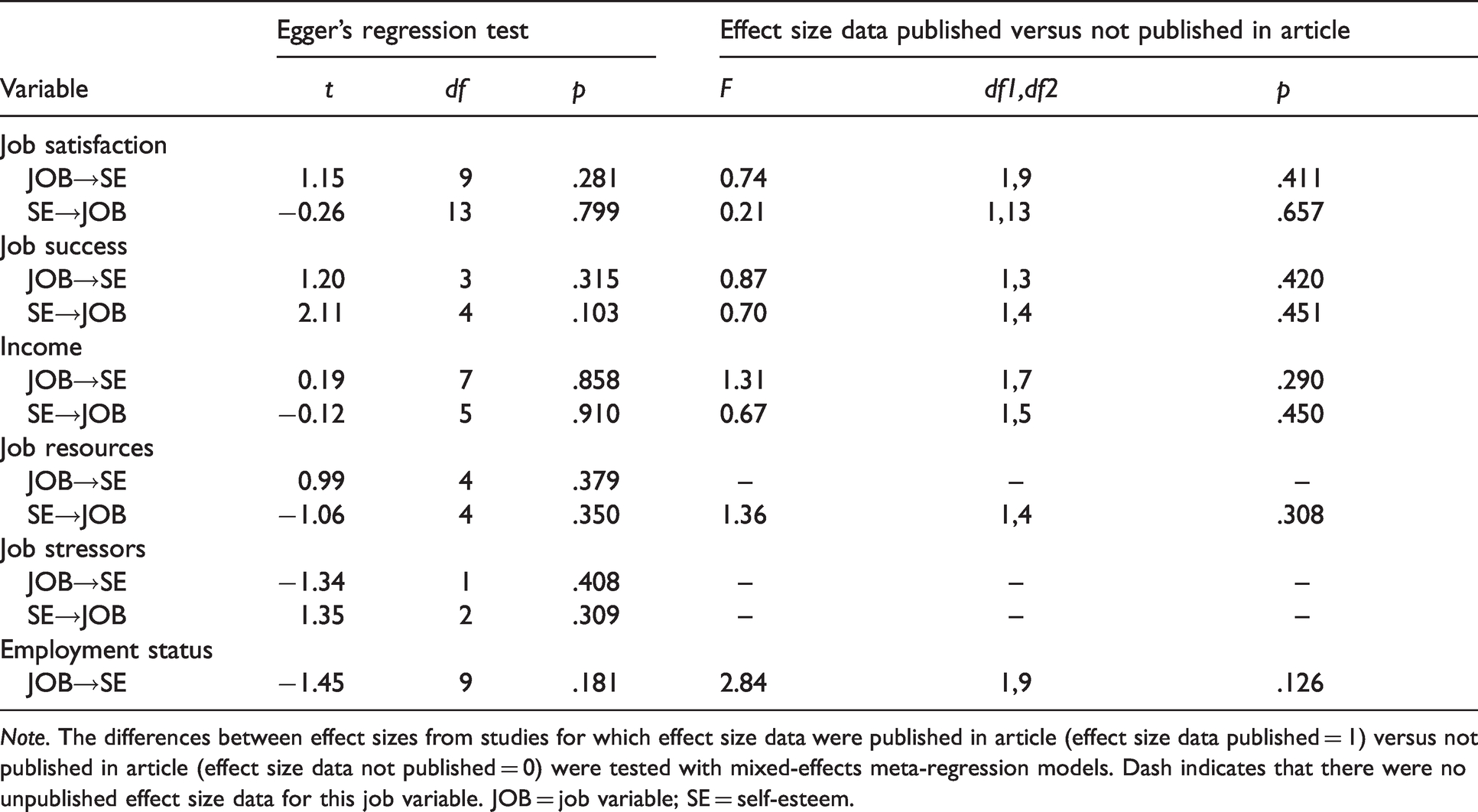
Note. The differences between effect sizes from studies for which effect size data were published in article (effect size data published = 1) versus not published in article (effect size data not published = 0) were tested with mixed-effects meta-regression models. Dash indicates that there were no unpublished effect size data for this job variable. JOB = job variable; SE = self-esteem.
Effect Size Analyses
For each of the job variables, we computed weighted mean effect sizes for the cross-lagged effects between the job variable and self-esteem, the stability effects for each variable, and the concurrent association between the job variable and self-esteem at Time 1. Table 3 reports the meta-analytic findings. Moreover, Figure 2 shows forest plots for all cross-lagged effects (i.e., the coefficients that were of key interest in this research).
Summary of Effect Sizes for Relations Between Job Variables and Self-Esteem.
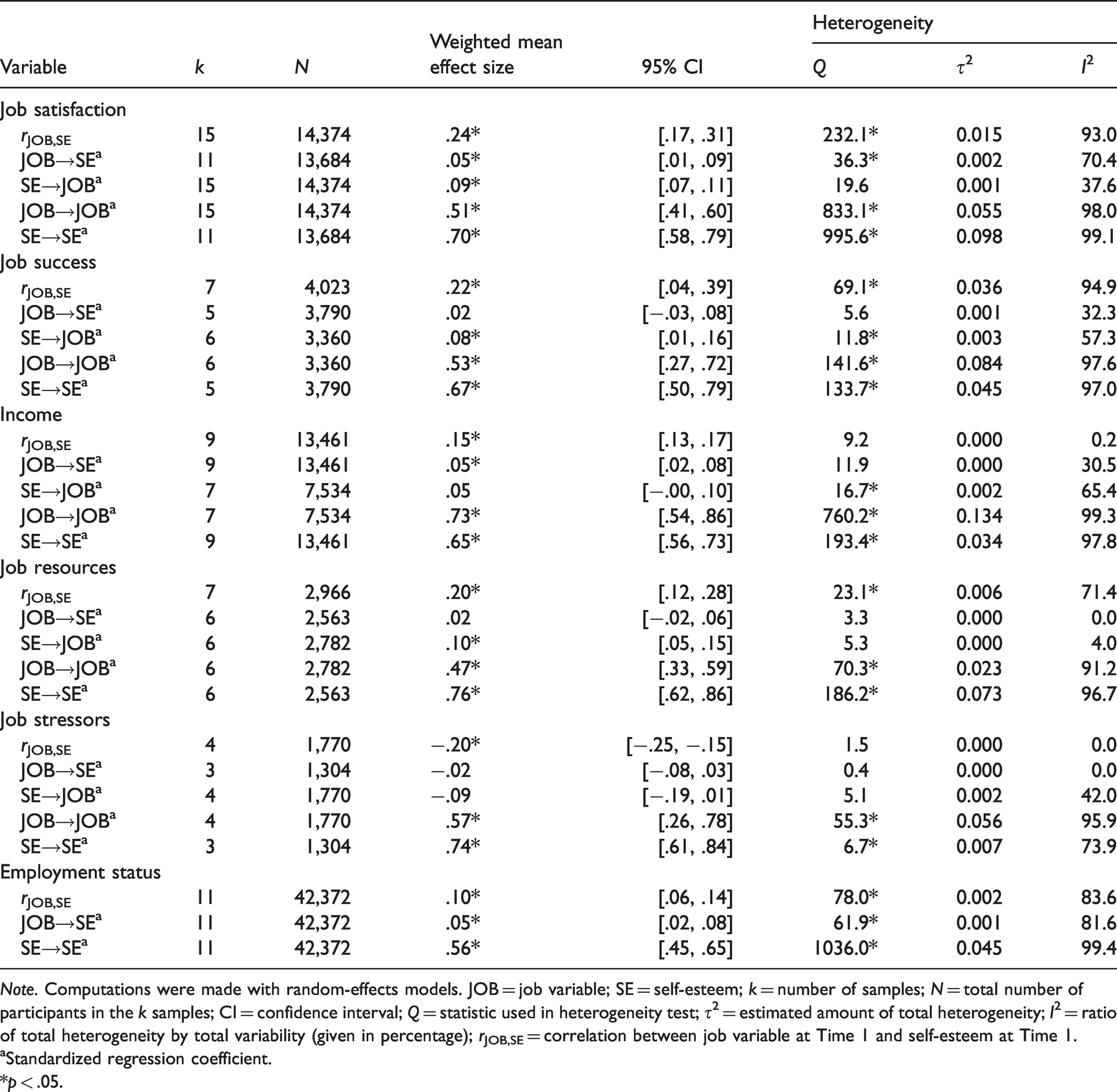
Note. Computations were made with random-effects models. JOB = job variable; SE = self-esteem; k = number of samples; N = total number of participants in the k samples; CI = confidence interval; Q = statistic used in heterogeneity test; τ2 = estimated amount of total heterogeneity; I2 = ratio of total heterogeneity by total variability (given in percentage); rJOB,SE = correlation between job variable at Time 1 and self-esteem at Time 1.
aStandardized regression coefficient.
*p < .05.
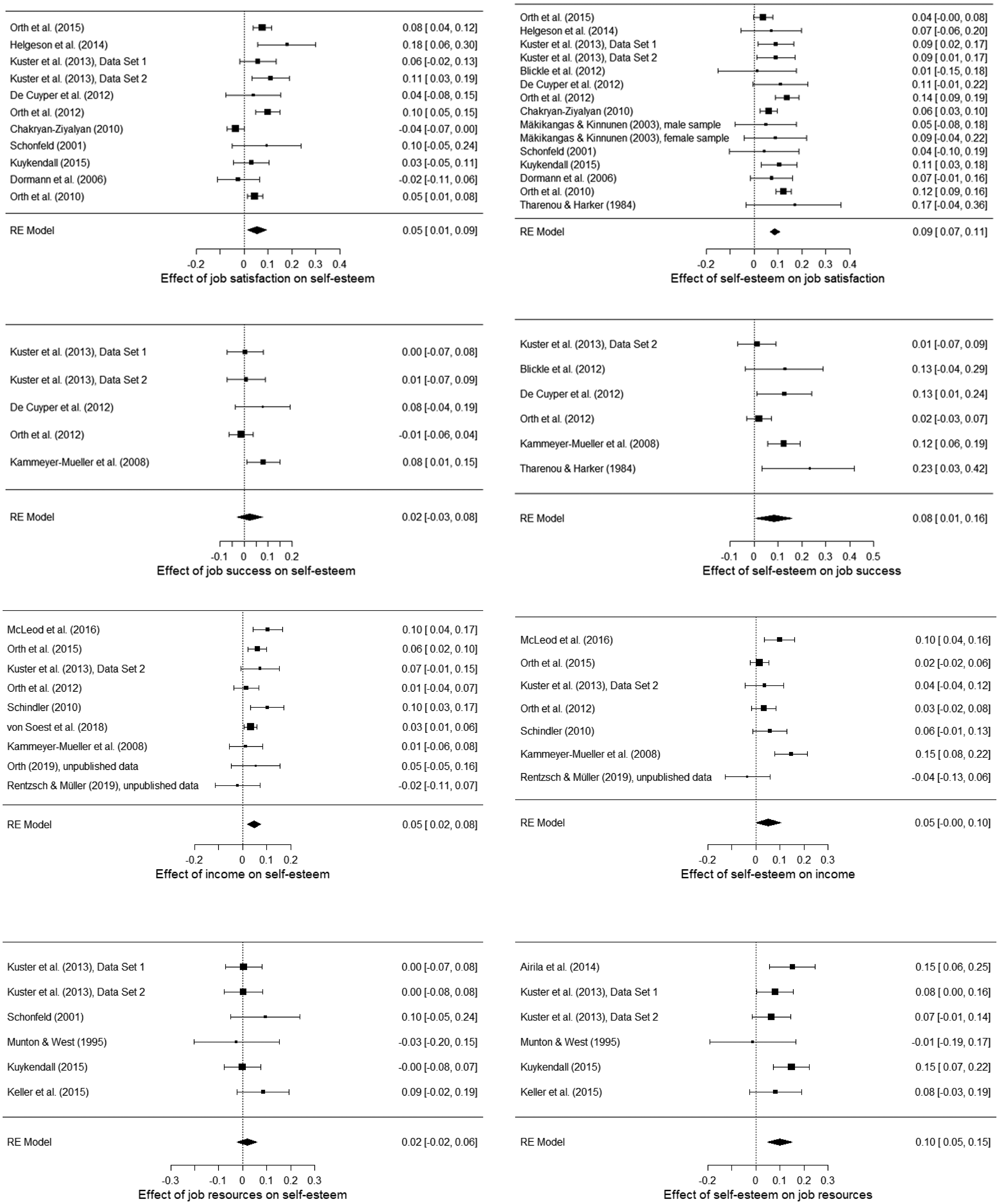
Forest Plots for Cross-Lagged Effects Between Job Variables and Self-Esteem.
For job satisfaction, significant cross-lagged effects emerged in both directions. Thus, job satisfaction positively predicted later self-esteem (.05), and self-esteem positively predicted later job satisfaction (.09). The prospective effects were small for both directions. No formal test of the difference between the effects is available because the samples on which these two effects were based overlapped partially. As an approximate means of comparing the cross-lagged effects, we used the 95% confidence intervals of the weighted mean effect sizes. For job satisfaction, the two confidence intervals overlapped, suggesting that the two effects did not differ significantly. Income and employment status positively predicted later self-esteem (both effects were. 05), but the effect of self-esteem on later income was not significant, and the effect of self-esteem on later employment status could not be tested. 6 The cross-lagged effects of job success and job resources on self-esteem were not significant, but self-esteem positively predicted job success (.08) and job resources (.10). No significant cross-lagged effects emerged between job stressors and self-esteem. Thus, the results showed that many, but not all, cross-lagged effects between job variables and self-esteem were significant. However, it is important to note that the estimates of cross-lagged effects were in the expected direction for all job variables. Thus, when considering the point estimates of the effects, the results were consistent with a model of reciprocal prospective effects between job variables and self-esteem. Moreover, the results suggested that the effects of self-esteem on job variables are slightly larger than the effects of job variables on self-esteem.
The results indicated that all stability effects were relatively large and statistically significant; stability coefficients for self-esteem ranged from .56 to .76, and for job variables from .47 to .73. Also, the concurrent correlations between self-esteem and job variables were all significant and in the expected direction (absolute values ranged from .10 to .24).
Moderator Analyses
The analyses suggested that many of the effect sizes were heterogeneous (Table 3), suggesting that moderating factors may account for systematic between-study differences in effect sizes. In the moderator analyses, we focused on job satisfaction for reasons of statistical power, as job satisfaction was the outcome for which the largest number of samples was available (Borenstein et al., 2009; Cooper et al., 2019; Viechtbauer et al., 2015). Moreover, each moderator was tested in a separate meta-regression model, because power is larger when testing moderators one at a time than when testing multiple moderators simultaneously. The variables mean age at Time 1, proportion of female participants, and time lag were continuous and were treated accordingly. The variable sample type was dichotomous, distinguishing between nationally representative (23%) and community samples (77%). Supplemental Table S2 provides information about the descriptive statistics and intercorrelations of the moderators.
Table 4 shows the results of the moderation analyses. Given that we tested four moderators per effect size but did not have specific hypotheses for the moderators, we adjusted the significance level to p < .0125 (Bonferroni correction). The results indicated that none of the moderators was significant. 7 Thus, the findings suggest that the cross-lagged effects between job satisfaction and self-esteem hold across samples varying with regard to age, gender, time lag between assessments, and sample type, which strengthens the generalizability of the findings.
Mixed-Effects Meta-Regression Models for Sample Characteristics Predicting Cross-Lagged Effects Between Job Satisfaction and Self-Esteem.
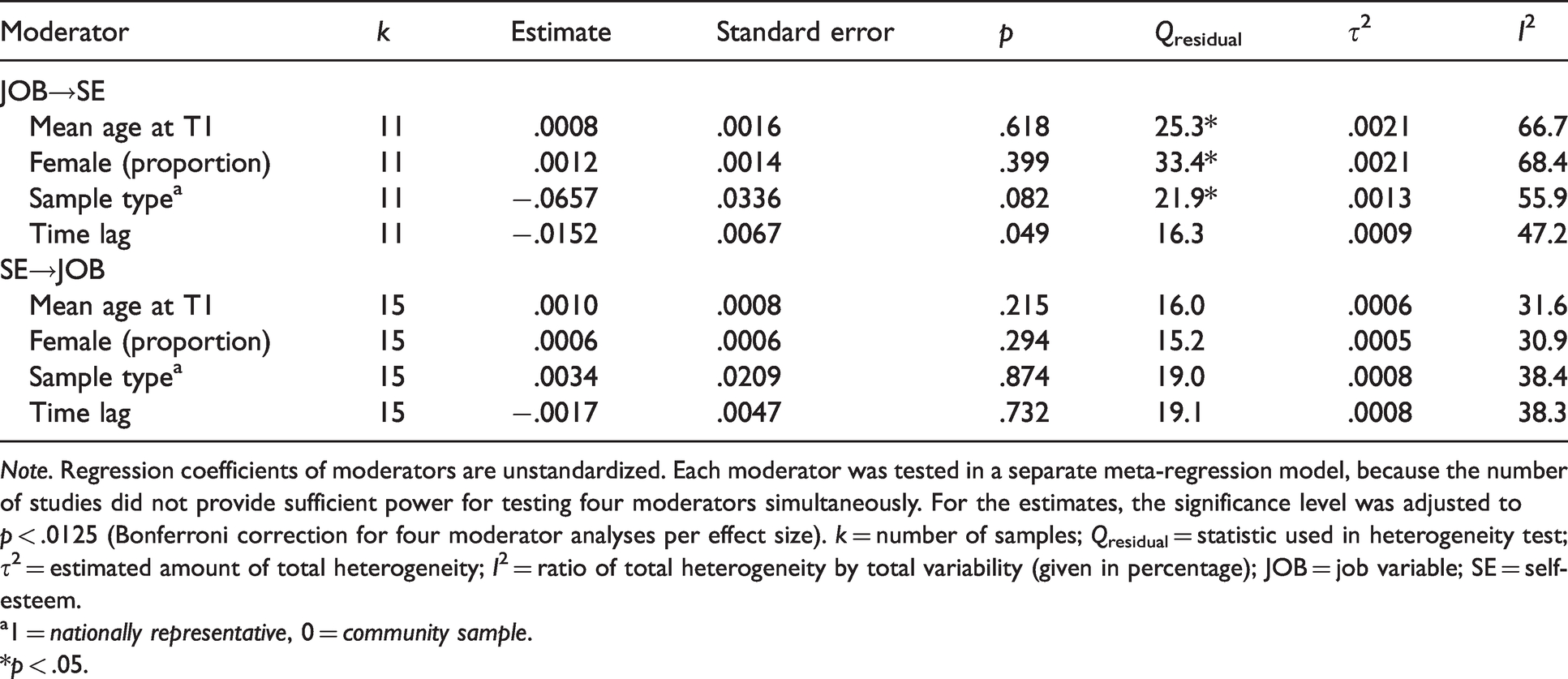
Note. Regression coefficients of moderators are unstandardized. Each moderator was tested in a separate meta-regression model, because the number of studies did not provide sufficient power for testing four moderators simultaneously. For the estimates, the significance level was adjusted to p < .0125 (Bonferroni correction for four moderator analyses per effect size). k = number of samples; Qresidual = statistic used in heterogeneity test; τ2 = estimated amount of total heterogeneity; I2 = ratio of total heterogeneity by total variability (given in percentage); JOB = job variable; SE = self-esteem.
a1 = nationally representative, 0 = community sample.
*p < .05.
Discussion
The aim of the present meta-analysis was to synthesize the available longitudinal evidence on the prospective relations between self-esteem and several aspects of people’s work experiences (i.e., job satisfaction, job success, income, job resources, job stressors, and employment status). The analyses were based on 30 samples, including data from more than 50,000 participants ranging from 17 to 64 years in age. Overall, the findings suggested a reciprocal pattern between self-esteem and work experiences. Although not all cross-lagged effects were statistically significant, all effects were in the expected direction. The prospective effects of self-esteem on work experiences were slightly larger than the prospective effects of work experiences on self-esteem. Moderator analyses on the reciprocal relationship between job satisfaction and self-esteem suggested that the prospective effects did not differ across age, gender, sample type, and time lag. All variables were relatively stable across time, and all job variables at Time 1 were significantly correlated with self-esteem at Time 1.
Implications of the Findings
General Pattern of Findings
Our overall interpretation of the meta-analytic findings was that there is a reciprocal pattern of effects between work experiences and self-esteem. It is important to note that only about half of the cross-lagged effects were statistically significant, which might be due to the relatively small number of studies for some of the job variables. Specifically, job satisfaction, income, and employment status had significant prospective effects on self-esteem, whereas the effects of job success, job resources, and job stressors were not statistically significant. Moreover, self-esteem had significant prospective effects on job satisfaction, job success, and job resources, whereas the effects on income and job stressors were not significant. Nevertheless, the sign of the cross-lagged effects was in the expected direction for all job variables, which strengthens confidence in the validity of the estimates. Also, the estimates were relatively similar among the effects of job variables on self-esteem (ranging from .02 to .05, in absolute values) and among the effects of self-esteem on job variables (ranging from .05 to .10, in absolute values). We therefore believe that it is appropriate to base the conclusions on the point estimates (i.e., the weighted average effects) determined in this meta-analysis, even if the lack of statistical significance for some of the estimates must be clearly acknowledged. Moreover, although a larger number of samples would certainly be desirable (see the “Limitations, Strengths, and Future Directions” section), we believe that this research makes an important step forward in the understanding of the link between self-esteem and work experiences, by synthesizing longitudinal data from 30 independent samples.
The overall reciprocal pattern between work experiences and self-esteem is in line with the corresponsive principle of neo-socioanalytic theory, stating that life experiences deepen those personality characteristics that have led to the experiences in the first place (Roberts et al., 2008). For example, an individual with high self-esteem tends to experience more job satisfaction, and experiencing job satisfaction positively affects the individual’s self-esteem. Thus, the reciprocal effects imply a positive feedback loop for people with high self-esteem and favorable work experiences and, at the same time, a vicious circle for people with low self-esteem and unfavorable work experiences. Also, the prospective effects suggest that self-esteem is not merely a correlate of work variables but rather serves as both predictor and outcome of the work variables (cf. Baumeister et al., 2003). These findings are consistent with a causal model, where self-esteem influences, and is influenced by, the work domain.
Moreover, the general pattern of findings suggests that the effect of self-esteem on work experiences is slightly larger than the effect of work experiences on self-esteem. To roughly estimate and characterize the relative size, we averaged the prospective effects in both directions across all work variables. On average, the effect of self-esteem on work experiences was .08, and the effect of work experiences on self-esteem was .04. Overall, this meta-analytically identified pattern is consistent with the findings from primary cross-lagged studies that examined both directions simultaneously (Kammeyer-Mueller et al., 2008; Keller et al., 2015; Kuster et al., 2013; Orth et al., 2012).
The present meta-analysis also provided estimates of the cross-sectional associations between work variables and self-esteem (i.e., the Time 1 correlations). All of these correlations were statistically significant and of relatively similar size (i.e., small to medium). Interestingly, the correlations of self-esteem with the more subjective variables (i.e., job satisfaction, job resources, and job stressors) were not much larger than the correlations of self-esteem with the more objective variables (i.e., job success, income, and employment status). Thus, this pattern of findings supports the notion that people’s self-esteem and their actual work experiences are interconnected. Moreover, we note that the concurrent correlations between job variables and self-esteem determined in the present meta-analysis were comparable to the effect sizes reported in an earlier meta-analysis of cross-sectional studies (Bowling et al., 2010), which strengthens confidence in the validity and robustness of the present findings.
A relatively surprising finding is that job stressors had almost no effect on later self-esteem, although theory suggests that work-related stress might threaten self-esteem (Demerouti et al., 2001; Karasek, 1979; Semmer et al., 2007; Siegrist, 1996). A possible explanation is that, in the studies included in this meta-analysis, job stressors were a relatively heterogeneous construct. The literature distinguishes between qualitatively different stressors, such as physical stressors, task-related stressors, role stressors, and social stressors (Sonnentag & Frese, 2013), and these stressors might substantially differ in the size of their effect on self-esteem. For example, following the propositions of sociometer theory, social stressors might have the most detrimental effect on self-esteem. Moreover, it might be even more important to distinguish between so-called hindrance stressors and challenge stressors (LePine et al., 2005). Hindrance stressors, which are perceived as burden, lead to strain, reduce energy to successfully perform a task, and might result in reduced self-esteem. In contrast, challenge stressors, which are perceived as manageable and motivating, lead to more effort and success and, consequently, might even have a positive effect on self-esteem. Thus, the effects of hindrance and challenge stressors on self-esteem might cancel each other out, which might explain the null effect of job stressors in the present meta-analysis.
Effect Sizes
The meta-analytic estimates of prospective effects between work experiences and self-esteem were relatively small (ranging from .05 to .10 for self-esteem effects on work experiences and from .02 to .05 for effects of work experiences on self-esteem). However, it is important to note that the conventions for interpreting correlation coefficients (Cohen, 1992; e.g., with .10 indicating a small effect) do not apply to cross-lagged effects because the stability of the predicted outcome is controlled for in the coefficients (Adachi & Willoughby, 2015). The stability of a construct usually explains a large part of the variance (which was also true in the present meta-analysis, as indicated by the large stability coefficients of the variables), which limits how strongly other constructs can predict the outcome. More precisely, when the stability of the outcome is controlled, a prospective regression coefficient reflects an effect on change in the outcome, which is typically much smaller than the correlation between the predictor and the level of the outcome. Thus, a cross-lagged effect of .10 likely indicates a more substantial effect compared with a cross-sectional correlation of the same size. Also, from a substantive perspective, the relatively small effect sizes are not surprising, given that there are many other factors besides work experiences that may influence self-esteem, and given that there are many other factors besides self-esteem that may influence work experiences. Moreover, the effects between work experiences and self-esteem may accumulate over time (i.e., over the span of people’s working life). Finally, we note that the effect sizes found in the present meta-analysis are similar in magnitude to effect sizes found in other meta-analyses examining prospective effects (e.g., Fairbairn et al., 2018; Harris & Orth, 2020; Khazanov & Ruscio, 2016; Talsma et al., 2018).
Limitations, Strengths, and Future Directions
Several limitations should be considered when interpreting the findings. First, the present findings do not allow for strong causal conclusions about the link between work experiences and self-esteem, given the nonexperimental design of the studies included in the meta-analysis. As in all observational studies, it is possible that the effects are confounded by third variables that were not controlled for (e.g., Little et al., 2007). Nevertheless, longitudinal data are useful to test whether the prospective effects are consistent with a causal model of the relation between the constructs. Moreover, it is worth noting that all prospective effects tested in this research were controlled for prior levels of the outcomes, which improves the validity of conclusions. Second, the present meta-analysis examined cross-lagged effects based on traditional cross-lagged panel models, which do not distinguish within-person and between-person variance. Alternative models have been proposed in which cross-lagged effects are controlled for stable between-person variance (e.g., the random-intercepts cross-lagged panel model by Hamaker et al., 2015). However, these models are mute with regard to prospective effects of between-person differences, which were of central interest in this research (for more details on different types of cross-lagged models and their interpretation, see Orth et al., 2021). For example, in the context of this research, a central question was whether employees experiencing high job satisfaction and success (i.e., more than most other employees included in the sample) tend to show more positive changes in self-esteem (as indicated by positive changes in their rank-order position on the construct) than employees experiencing less job satisfaction and success. Third, for some of the job variables only few samples were available, even after trying to exhaustively collect all available data through requests on mailing lists and directly contacting authors of potentially eligible studies. Moreover, due to the relatively small number of samples, moderator analyses could be conducted only for the relation between job satisfaction and self-esteem. Thus, future research would benefit from conducting more longitudinal studies examining the relation between work experiences and self-esteem. Fourth, in many studies included in this meta-analysis, job variables were measured by self-report, which implicates, for example, the problem of shared method variance (e.g., Podsakoff et al., 2003). Thus, it would be desirable that future studies more often use more objective measures of work outcomes and conditions (e.g., informant reports from supervisors and coworkers). Yet, there were no major differences between the effects of relatively subjective variables (i.e., job satisfaction, job resources, and job stressors) and more objective variables (i.e., income, job success, and employment status), which reduces concerns related to the use of self-report measures.
This research also has important strengths. As is true for all meta-analyses, a crucial advantage lies in the aggregation of all available data across a set of heterogeneous studies, which significantly increases the robustness and generalizability of the findings. In this research, 30 samples provided data from more than 50,000 individuals (including 7 nationally representative samples with more than 38,000 participants). Moreover, there was no evidence of publication bias, as indicated by funnel plots, Egger’s regression tests, and the comparison of effect sizes from published versus unpublished effect sizes. Another major strength of this research is the longitudinal nature of the meta-analysis. Specifically, testing prospective effects and controlling for autoregressive effects in the constructs significantly strengthens the validity of the findings, compared with findings from cross-sectional meta-analyses. Finally, the diverse strategies used in the search for studies (i.e., search in PsycINFO, examination of references in key papers, requests for unpublished studies via electronic mailing lists, and direct contacting of authors of potentially eligible studies) increased the likelihood that the present meta-analysis comprehensively covers the available data.
Given that this research suggests that work experiences and self-esteem reciprocally affect each other, future research should examine the mechanisms that might mediate the effects between the constructs. For example, one possible pathway is that an individual’s level of self-esteem might influence their social skills, which in turn may influence how the individual interacts with coworkers and supervisors, or deals with work-related stress and challenging tasks (Cameron & Granger, 2019; Hyatt et al., 2018; Riggio et al., 1990; Zeigler-Hill, 2011). Consequently, social skills might mediate the self-esteem effects on people’s work experiences. A possible pathway of the effect of work experiences on self-esteem is that having success in the work domain (as indicated, e.g., by income) might influence people’s level of social status and social acceptance, not only at the workplace but also in other contexts such as social networks, sports clubs, family, and their neighborhood. A high level of social acceptance, in turn, might then lead to increased self-esteem (Harris & Orth, 2020).
Moreover, although the present findings suggest that the effects between work experiences and self-esteem are not moderated by age and gender, research should continue to test for potential moderators of the effects, such as cultural context (e.g., Rattrie et al., 2020). For example, it is possible that work experiences have stronger effects on self-esteem in individualistic cultures compared with collectivistic cultures. Finally, an interesting avenue for future research may be the use of experience sampling methods, which focus on within-person effects across shorter time periods. This approach facilitates to examine, for example, how achievements or failures at the workplace lead to more or less immediate changes in self-esteem.
Conclusion
The present meta-analysis comprehensively synthesizes the current knowledge on the relation between people’s work experiences and their self-esteem. Based on longitudinal data from 30 independent samples with more than 50,000 individuals, the results indicate a reciprocal relation between the constructs. Thus, the findings suggest not only that people’s self-esteem is influenced by experiencing success or failure in the work domain, but also that their level of self-esteem influences their work experiences. Moreover, the results even indicated that the self-esteem effects on work experiences are slightly larger than, vice versa, the effects of work experiences on self-esteem. The findings support the corresponsive principle of personality development and suggest that the work domain and people’s self-esteem are interdependent.
Supplemental Material
sj-pdf-1-erp-10.1177_08902070211027142 - Supplemental material for Work Experiences and Self-Esteem Development: A Meta-Analysis of Longitudinal Studies
Supplemental material, sj-pdf-1-erp-10.1177_08902070211027142 for Work Experiences and Self-Esteem Development: A Meta-Analysis of Longitudinal Studies by Samantha Krauss and Ulrich Orth in European Journal of Personality
Footnotes
Data Accessibility Statement

Acknowledgments
The authors thank Stéphanie Bérard, Rebecca Mona Fry, Iris Schürch, and Lidia Truxius for their help with coding the data.
Authors Note
The findings of this research have been presented at the 16th Congress of the Swiss Psychological Society (2019, September) in Bern, Switzerland, at the 15th Meeting of the Division of Personality Psychology and Psychological Assessment of the German Psychological Society (2019, September) in Dresden, Germany, and at the Virtual Annual Convention of the Society for Personality and Social Psychology (2021, February).
Declaration of Conflicting Interests
The author(s) declared no potential conflicts of interest with respect to the research, authorship, and/or publication of this article.
Funding
The author(s) received no financial support for the research, authorship, and/or publication of this article.
Supplemental material
Supplemental material for this article is available online.
Notes
References
Supplementary Material
Please find the following supplemental material available below.
For Open Access articles published under a Creative Commons License, all supplemental material carries the same license as the article it is associated with.
For non-Open Access articles published, all supplemental material carries a non-exclusive license, and permission requests for re-use of supplemental material or any part of supplemental material shall be sent directly to the copyright owner as specified in the copyright notice associated with the article.
