




Abstract
Purpose
Micro-influencers (10,000 -100,000 followers) promote e-cigarettes in various contexts on social media. We assessed how e-cigarette promotion alongside fitness-oriented, healthy-lifestyle activities affects adolescent perceptions of e-cigarettes and micro-influencers.
Design
Randomized experiment.
Setting
Online survey.
Sample
California adolescents (N = 664, Mean age = 15) recruited in 2024.
Measures
After viewing each of 10 influencer videos, participants rated perceived influencer credibility (eg, honesty). After all videos, participants reported perceived harm, appeal, and susceptibility to use e-cigarettes.
Analysis
Participants were randomized to view 10 Instagram/TikTok posts of micro-influencers promoting e-cigarettes alongside fitness-oriented activities (treatment condition) vs micro-influencers promoting e-cigarettes without fitness-oriented imagery (control). Outcomes were compared between groups (treatment vs control) and between participants who perceived influencers as credible vs non-credible, using Cumulative Link Mixed Models.
Results
Participants in the treatment condition were more likely to report lower e-cigarette harm perceptions (AOR = 1.15; 95% CI = 1.03-1.27), higher social appeal (AOR = 1.13; 95% CI = 1.02-1.25) and attractiveness (AOR = 1.21; 95% CI = 1.09-1.34) of e-cigarette use. Among those who perceived influencers as credible, participants in the treatment condition were more likely to report lower harm perceptions and higher social appeal, attractiveness, and fun of e-cigarette use.
Conclusion
Micro-influencer e-cigarette promotion alongside fitness-oriented activities, and perceptions of micro-influencers as credible, contributes to lower harm perceptions and higher appeal of e-cigarettes among adolescents.
Purpose
Promotional tobacco-related content, posted by influencers on behalf of tobacco brands,1-4 is present on social media platforms like Instagram and TikTok, which are widely popular among Generation Z (ie, those 11 to 26 years of age in 2024).5,6 Research shows that about 30% of e-cigarette marketing on TikTok represents influencer marketing. 7 This content is present despite platform community guidelines, including those on Instagram and TikTok, restricting paid advertisements or promotions of tobacco products by influencers.8-10 This is concerning because consumers (including youth) may perceive influencers as reliable sources of information.11,12 Consequently, brands often partner with influencers, particularly micro-influencers (∼10,000 - 100,000 followers) to market their products, 13 which leads to dissemination of potentially harmful content on social media. 14 Micro-influencers, comparted to macro-influencers (∼100,000 - 500,000), mega influencers (∼500,000 - 1 million + followers), or celebrities, are not only more affordable for brands but also perceived as more genuine than direct brand advertizing.11-13
Influencers sometimes promote e-cigarettes alongside posts featuring healthy lifestyle activities (eg, exercising, playing sports), which could lower youth e-cigarette risk perceptions and contribute to use of e-cigarettes.1,15-19 Similar marketing tactics were used by tobacco brands in the past to advertise combustible cigarettes next to sports-related imagery featuring models.19,20 A survey-based experiment among young adults found that participants who viewed Instagram or TikTok videos featuring micro-influencers promoting e-cigarettes alongside healthy lifestyle (ie, fitness-oriented activities) vs fitness-oriented activities alone (control) were more likely to report lower harm perceptions of e-cigarettes and susceptibility to e-cigarette use. 19 Consistent with Social Learning Theory (SLT),21,22 the findings suggest that consumers perceive influencers as trusted, credible sources of information and adopt influencer behaviors (eg, e-cigarette use) through observing and modeling them. 11 The study also assessed the interaction effects between the treatment condition and perceived influencer credibility (honesty, trustworthiness, and knowledge) and found similar results (lower harm perceptions of, and susceptibility to use, e-cigarettes) among participants who perceived influencers as credible, but not among participants who perceived influencers as non-credible. 19 Consistent with the Prototype Willingness Model (PWM), the findings suggest that young adults were more willing to engage in a health-risky behavior (eg, e-cigarette use) when they had a positive view of the prototypical person (eg, an influencer) who engaged in the behavior.19,23-25
Given the findings among young adults, it is important to examine how exposure to healthy-lifestyle, fitness-oriented imagery alongside micro-influencer e-cigarette promotions affects adolescent perceptions of e-cigarettes – a topic not previously studied. Exposure to e-cigarette-related posts on social media is associated with e-cigarette use or intent to use among adolescents.26-28 While adolescent e-cigarette use has declined in recent years, it remains a public health concern, as e-cigarettes are still the most commonly used tobacco product among middle- and high school students in the United States. 29 Similar to the results observed among young adults, 19 exposure to e-cigarette content shown alongside healthy-lifestyle, fitness-oriented imagery on platforms popular with adolescents may reduce harm perceptions and increase the appeal of e-cigarettes among this vulnerable population. This study assessed the associations of exposure to Instagram and TikTok videos showing fitness-oriented activities (eg, exercising) alongside e-cigarette promotions by influencers on perceptions of these influencers, perceived harm and appeal of, and susceptibility to use, e-cigarettes among adolescents. Based on SLT and prior research,19,21,22 we hypothesized that adolescents who viewed videos of micro-influencers promoting e-cigarettes alongside fitness-oriented activities (treatment condition) would have lower e-cigarette harm perceptions (H1), higher e-cigarette perceived appeal (H2), and greater susceptibility (assessed among e-cigarette never-users) to use e-cigarettes (H3), compared to adolescents who viewed videos of micro-influencers promoting e-cigarettes without fitness-oriented contexts (control condition). Based on PWM and prior research,19,24,25 we also tested an interaction between the treatment condition and micro-influencer credibility and hypothesized that adolescents in the treatment condition, compared to those in the control condition, would have lower e-cigarette harm perceptions (H4), higher e-cigarette perceived appeal (H5), and greater susceptibility to use e-cigarettes (H6), if they perceived micro-influencers as credible.
Materials and Methods
This survey-based randomized online experiment follows CONSORT reporting guidelines. The study is registered as a clinical trial at ClinicalTrials.gov NCT06501937.
Participants and Procedures
In January 2024, adolescents (13-17 years of age) living in California were recruited by Qualtrics (a research panel agency that has been used in prior research to survey adolescents about their substance use and other behaviors)30-32 to complete an online randomized survey-based experiment on tobacco-related attitudes and behaviors. The participants (N = 664) completed a 15-minute online Qualtrics-programmed survey that consisted of text-based questions and 10-second-long videos. Researchers obtained participants’ written informed assent and parental consent prior to data collection (the participants accessed the survey via a URL link). Each adolescent received compensation by the panel ($11) after providing a quality completion of this survey. To ensure data quality, Qualtrics conducted fraud detection, checking for duplicate IPs, bots, straight-lining, speeding, gibberish, or incorrect responses to content or age verification questions (survey instrument, Supplemental Material). All low-quality responses were removed (Figure 1). The study was approved by the University of Southern California Institutional Review Board (UP-21-00352). Profile of a randomized clinical trial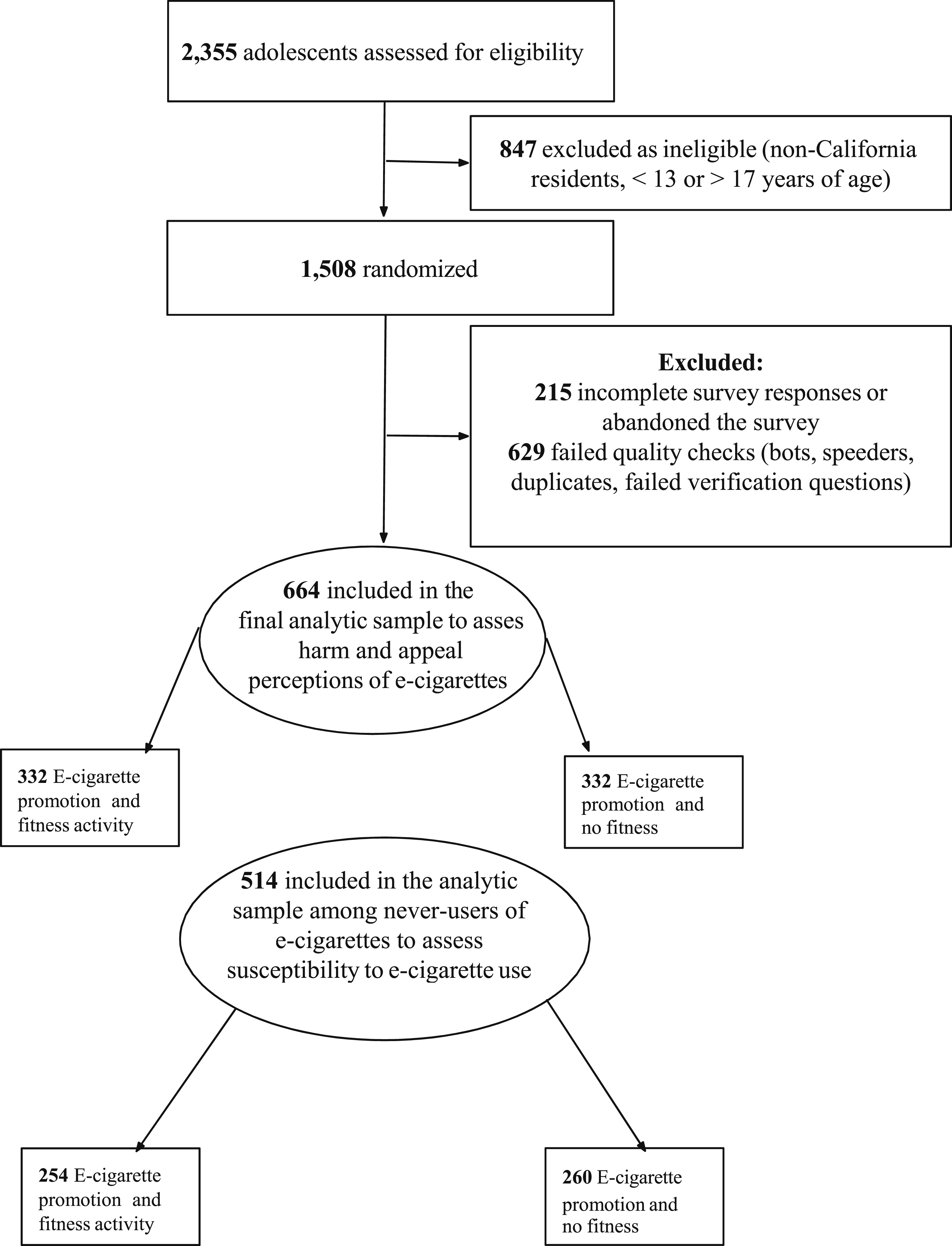
Experimental Stimuli Development
The experimental videos were created from content (Instagram and TikTok posts) of the 10 influencers with public accounts identified in prior research
1
who had disclosed that they were sponsored by e-cigarette companies. Besides promoting e-cigarettes, these influencers also posted about fitness-oriented lifestyle, including working out in a gym or outdoors (Figure 2A), doing yoga, hiking or swimming. Screenshots and publicly available videos featuring the individual in Figure 1 were sourced from the public Instagram account of a micro-influencer Arabellahafiedz in November 2023, (https://www.instagram.com/arabellahafiedz/?hl=en)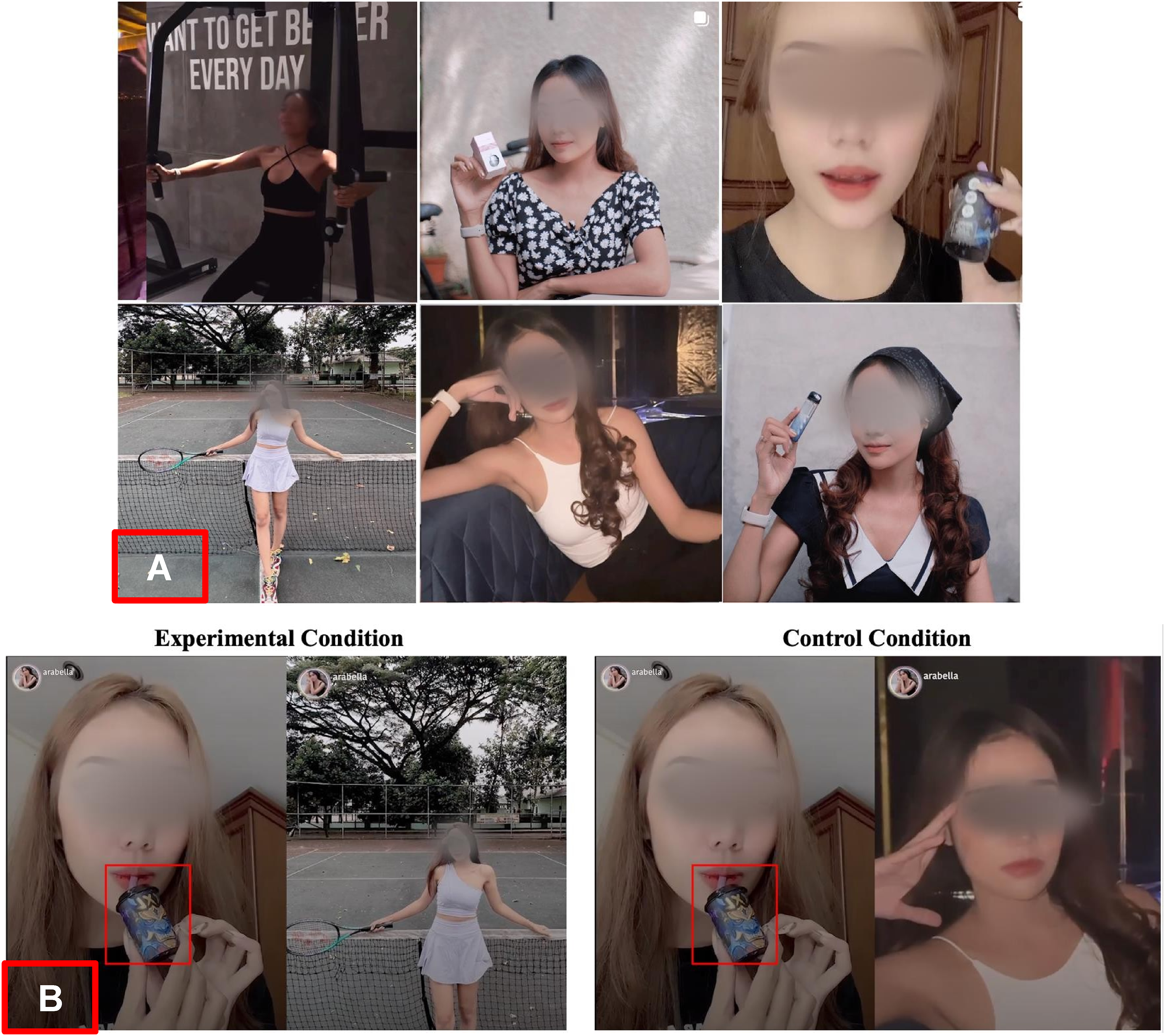
To create homogenous stimuli (eg, to ensure that no influencer is perceived drastically differently from the others by age, sex and attractiveness characteristics), 30 undergraduate students (ages 18-19) at the University of Southern California reviewed the stimuli prior to the experiment. They answered questions about perceived gender (“How likely that the person featured in this promotional image is Man/Woman/Transgender?”) and perceived age of the influencers (“How likely that the person featured in this promotional post is: a) younger than 21; b) 21-30; c) 31-40; d) older than 40?”), measured on the scale of 0 (not at all likely) to 10 (highly likely). Posts with the highest agreement and scores (≥8) were selected (5 male, 5 female influencers; perceived age range: under 21 to 30 years, from 12 profiles). Student raters also assessed influencer attractiveness by answering a question: “How attractive is the person in this image?” measured on the scale of 0 (not at all) to 10 (a lot). The mean attractiveness ratings were similar across conditions (M = 4.11 for treatment, M = 4.02 for control), indicating no meaningful difference in perceived attractiveness between the groups.
Experimental Design
Each participant was randomly assigned to view 10 10-second-long videos, also shown in random order, featuring 10 different influencers in 2 experimental conditions: 1) influencers promoting e-cigarettes alongside fitness-oriented activities (treatment), or 2) influencers promoting e-cigarettes without any fitness-oriented content (control). Presenting 10 videos ensured an adequate exposure dosage to the experimental stimuli. To ensure that the content of the stimuli only differed by the characteristics of interest, the first 5 seconds of each of the 10 videos featuring e-cigarette promotion remained unchanged across the 2 conditions. The conditions differed by the last 5 seconds of the videos, ie, influencers engaged in fitness-oriented activities in the treatment group vs generic influencer profiles unrelated to fitness in the control group. (Figure 2B shows an example of the treatment and control conditions for 1 influencer profile). At the end of the survey participants answered an attention check question: “What did you see in the videos?” with response choices: “people vaping and exercising,” “people vaping,” “people shopping,” “people reading,”” none of the above,” “all of the above.” All respondents in the treatment condition chose “people vaping and exercising,” while respondents in the control condition chose “vaping,” confirming that the video manipulation allowed participants to distinguish between the fitness-framed and substance-only conditions.
As part of the experiment, participants assessed perceptions of influencer credibility after each video. Harm and appeal perceptions of, and susceptibility to use, e-cigarettes were assessed after participants watched all the videos.
Measures of Harm Perceptions, Appeal Perceptions and Susceptibility to e-Cigarette use
Harm perceptions of e-cigarettes were assessed among all participants and measured using the following 2 questions adapted from a validated two-item scale:33,34 Do you think using e-cigarettes for vaping nicotine is harmful to your health? and Do you think people harm themselves when they use e-cigarettes for vaping nicotine? (survey instrument in Supplemental Material). Participants were prompted to think of e-cigarette products they saw in the stimuli videos. The responses were measured on a 0 (not at all harmful) to 100 (very harmful) scale to achieve higher granularity. 35 However, the outcomes were recoded to the 0-10 scale in the analysis, as models showed better fit with a less granular scale and when the outcome was treated as ordinal rather than continuous. The harm perception variable was also reversed-coded so that the higher score represented lower harm perceptions of e-cigarettes, for consistency with the appeal measure described below.
Attitudes or perceptions of appeal of e-cigarettes were assessed among all participants and measured using 3 validated items assessed on a 7-point semantic differential scale with the word pairs anchored at each end: Using e-cigarettes is: not cool/cool; unattractive/attractive; boring/fun, 36 (survey instrument, Supplemental Material). The higher score represented higher appeal based on these traits. Consistently, higher values across harm and appeal outcomes reflected more favorable perceptions of e-cigarettes.
Susceptibility to e-cigarette use was assessed among never-users of e-cigarettes and measured using a validated four-item scale (survey instrument, Supplemental Material). 33 The items were examined both individually and as a composite measure to capture distinct dimensions of susceptibility (ie, peer influence, intention, and curiosity) and to allow for comparison with studies that used either approach.19,37 Consistent with prior research, 38 separate items and the composite measure were dichotomized with responses “definitely not” (to all the items for the composite measure) coded as “not susceptible/not curious/not having use intentions” vs responses “probably not,” “probably yes”, or “definitely yes” coded as “susceptible/curious/having use intentions.”
Perceived Influencer Credibility
Perceived influencer credibility representing 3 personality traits (honesty, trustworthiness, knowledge) were assessed with a 0-100 scale adapted from prior research.23,39,40 Scores for each of the 10 influencers the participants viewed were measured per each trait (Supplemental Table 1). The 3 items representing honesty, trustworthiness, and knowledge were combined into a single measure of influencer credibility perceptions (α = 0.87). For each of the 10 videos participants viewed, a mean credibility perception score was calculated using the non-missing values from these 3 items.
Statistical Analysis
Main Effects Models
To test the hypotheses, we used main effects models, interaction effect models, and stratified subgroup analyses. The methodology was adopted from our prior experiment among young adults. 19 We first assessed the main effects of treatment condition (ie, exposure to videos of micro-influencers promoting e-cigarettes alongside healthy-lifestyle, fitness-oriented activities) on harm perceptions (H1) and appeal of (H2), and susceptibility to use (H3), e-cigarettes (assessed after all the videos), adjusting for perceived influencer credibility (assessed after each of the 10 videos). We used Cumulative Link Mixed Models for ordinal outcomes to assess e-cigarette harm and appeal perceptions among all the participants who completed the experiment (N = 644). We used the binary logistic mixed effects regression model among never-users of e-cigarettes (n = 514) to assess susceptibility to e-cigarette use. Repeated measures in experimental conditions (ie, perceptions of influencer credibility) were modeled as random effects (random intercept). This approach was chosen to avoid potential bias if stimulus repetitions go unanalyzed as a random effect. 41 The models were adjusted for fixed effects of sociodemographic and other covariates described below. Eight participants in the treatment group and 7 participants in the control group did not provide responses to the influencer perception question. Given the low missingness (2% of the overall sample), listwise deletion was used to exclude these observations from the analysis.
Interaction Effects and Stratified Models
To test potential moderating effects of influencer credibility perceptions on associations of the treatment condition with harm (H4) and appeal (H5) perceptions of, and susceptibility (H6) to use, e-cigarettes, the interaction term of the treatment condition X perceived influencer credibility (as a fixed predictor) was added to the subsequent interaction effects models (that also included perceived influencer credibility as a random intercept).
To interpret the significant interaction effects, stratified analyses were performed to assess the associations of the treatment condition with harm and appeal perceptions of e-cigarettes, stratified by the level of influencer credibility perceptions (ie, higher influencer credibility perception score [the credibility perception score at or above the median value] vs lower influencer credibility perception score). In all the main effects, interaction effects and stratified models, we organized the data in the long format, treating influencer credibility as a single variable across all ten videos. (Stratified analyses for susceptibility outcomes were not conducted since the interaction effects for these outcomes were not significant).
Covariates
All multivariable models were adjusted for covariates, based on prior research,19,39 that were expected to be associated with the outcomes. These covariates - all measured before the experiment (survey instrument, Supplemental Material) - included socio-demographic characteristics (age, sex assigned at birth, sexual orientation, race/ethnicity), substance use in the past month (cannabis, non-e-cigarette tobacco products), frequency of social media use, exposure to influencer e-cigarette content on social media in the past month (to account for participants’ familiarity with influencer marketing content on social media), and baseline harm perceptions of e-cigarettes (to account for participants’ pre-existing perceptions of e-cigarettes). We also controlled for participants’ self-reported physical activity in the past month (survey instrument, Supplemental Material), as engagement in exercise or fitness activities could influence their perception of fitness-related video content.
Estimates, Statistical Significance, Sample Sizes, and Software
In alignment with our prior research, 19 adjusted odds ratios (AORs) with 95% confidence intervals (CIs) were reported with statistical significance set at P < 0.05 (two-tailed) after applying Benjamini-Hochberg multiple testing corrections to control for the false discovery rate at 0.05. Qualtrics limited recruitment to 700 California adolescents, which determined the maximum feasible sample size. After excluding incomplete or low-quality responses, the final analytic sample included 664 adolescents. With this sample, the study achieves sufficient statistical power (>80%) to detect small-to-moderate effects (odds ratio ∼1.4). Power analysis was conducted using G*Power version 3.1. Sample sizes for the experimental conditions are shown in Figure 2. All analyses were conducted in R version 4.2.2.
Results
Participant Characteristics
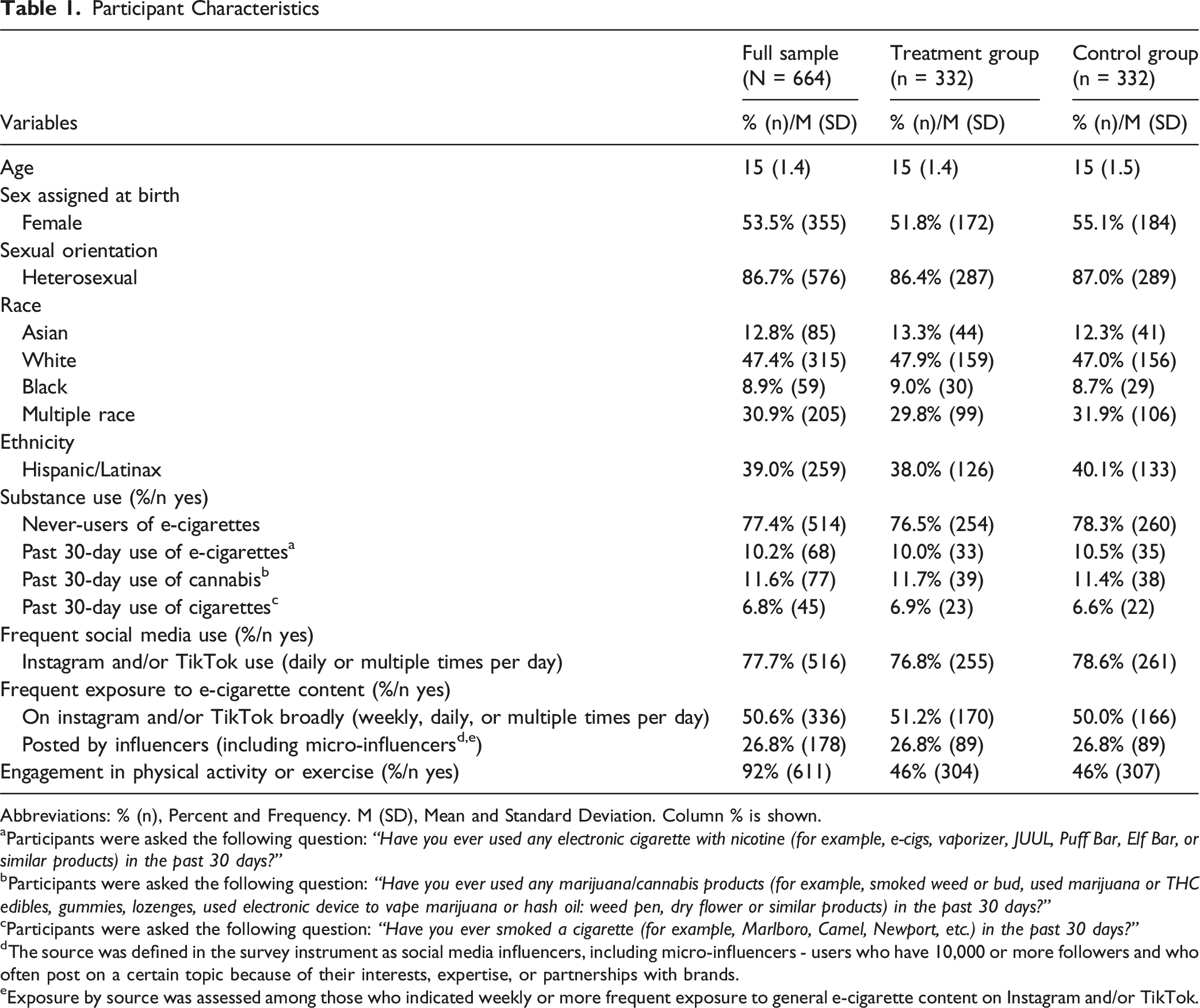
Abbreviations: % (n), Percent and Frequency. M (SD), Mean and Standard Deviation. Column % is shown.
aParticipants were asked the following question: “Have you ever used any electronic cigarette with nicotine (for example, e-cigs, vaporizer, JUUL, Puff Bar, Elf Bar, or similar products) in the past 30 days?”
bParticipants were asked the following question: “Have you ever used any marijuana/cannabis products (for example, smoked weed or bud, used marijuana or THC edibles, gummies, lozenges, used electronic device to vape marijuana or hash oil: weed pen, dry flower or similar products) in the past 30 days?”
cParticipants were asked the following question: “Have you ever smoked a cigarette (for example, Marlboro, Camel, Newport, etc.) in the past 30 days?”
dThe source was defined in the survey instrument as social media influencers, including micro-influencers - users who have 10,000 or more followers and who often post on a certain topic because of their interests, expertise, or partnerships with brands.
eExposure by source was assessed among those who indicated weekly or more frequent exposure to general e-cigarette content on Instagram and/or TikTok.
Main Effects Models
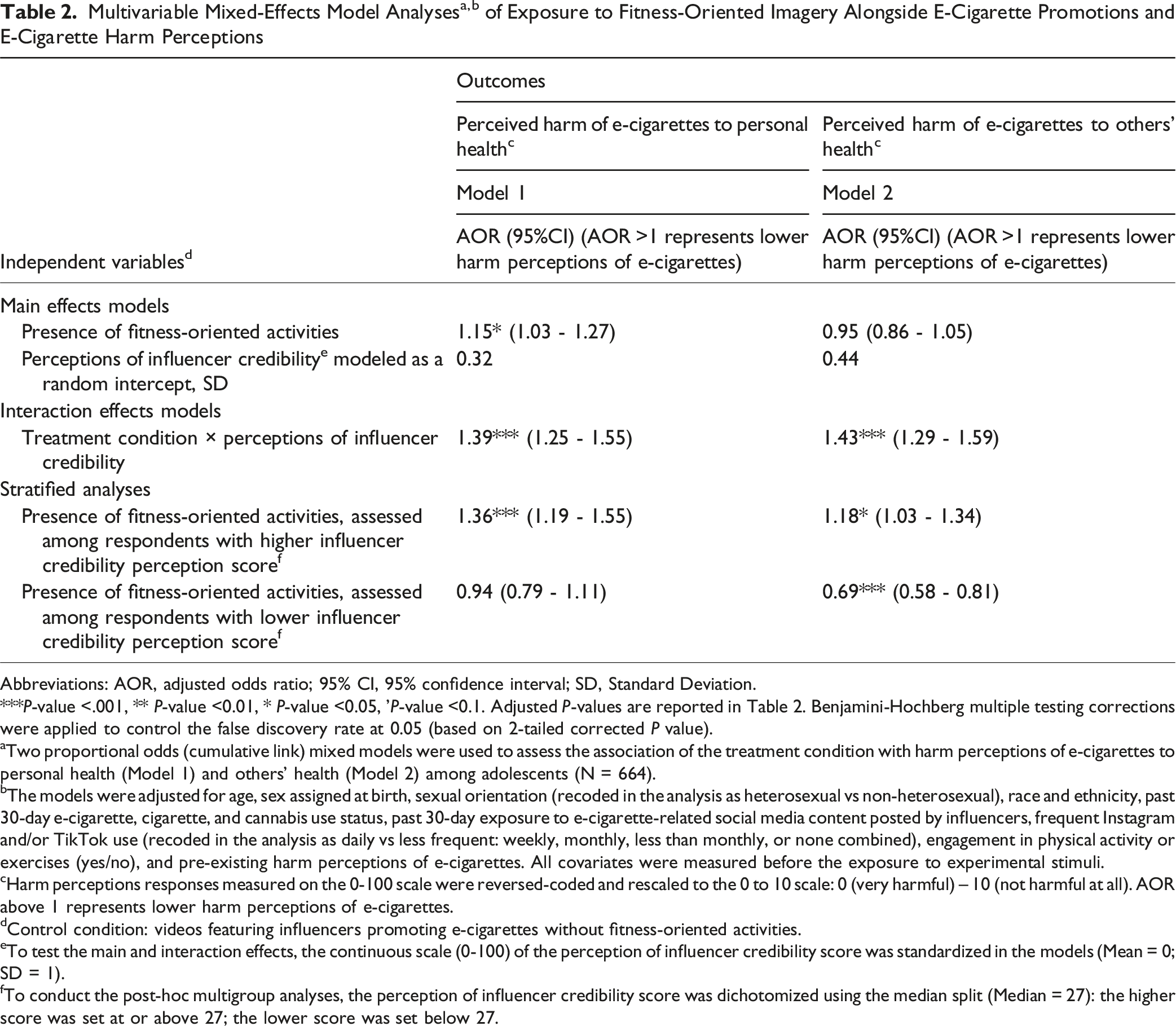
Abbreviations: AOR, adjusted odds ratio; 95% CI, 95% confidence interval; SD, Standard Deviation.
***P-value <.001, ** P-value <0.01, * P-value <0.05, ’P-value <0.1. Adjusted P-values are reported in Table 2. Benjamini-Hochberg multiple testing corrections were applied to control the false discovery rate at 0.05 (based on 2-tailed corrected P value).
aTwo proportional odds (cumulative link) mixed models were used to assess the association of the treatment condition with harm perceptions of e-cigarettes to personal health (Model 1) and others’ health (Model 2) among adolescents (N = 664).
bThe models were adjusted for age, sex assigned at birth, sexual orientation (recoded in the analysis as heterosexual vs non-heterosexual), race and ethnicity, past 30-day e-cigarette, cigarette, and cannabis use status, past 30-day exposure to e-cigarette-related social media content posted by influencers, frequent Instagram and/or TikTok use (recoded in the analysis as daily vs less frequent: weekly, monthly, less than monthly, or none combined), engagement in physical activity or exercises (yes/no), and pre-existing harm perceptions of e-cigarettes. All covariates were measured before the exposure to experimental stimuli.
cHarm perceptions responses measured on the 0-100 scale were reversed-coded and rescaled to the 0 to 10 scale: 0 (very harmful) – 10 (not harmful at all). AOR above 1 represents lower harm perceptions of e-cigarettes.
dControl condition: videos featuring influencers promoting e-cigarettes without fitness-oriented activities.
eTo test the main and interaction effects, the continuous scale (0-100) of the perception of influencer credibility score was standardized in the models (Mean = 0; SD = 1).
fTo conduct the post-hoc multigroup analyses, the perception of influencer credibility score was dichotomized using the median split (Median = 27): the higher score was set at or above 27; the lower score was set below 27.
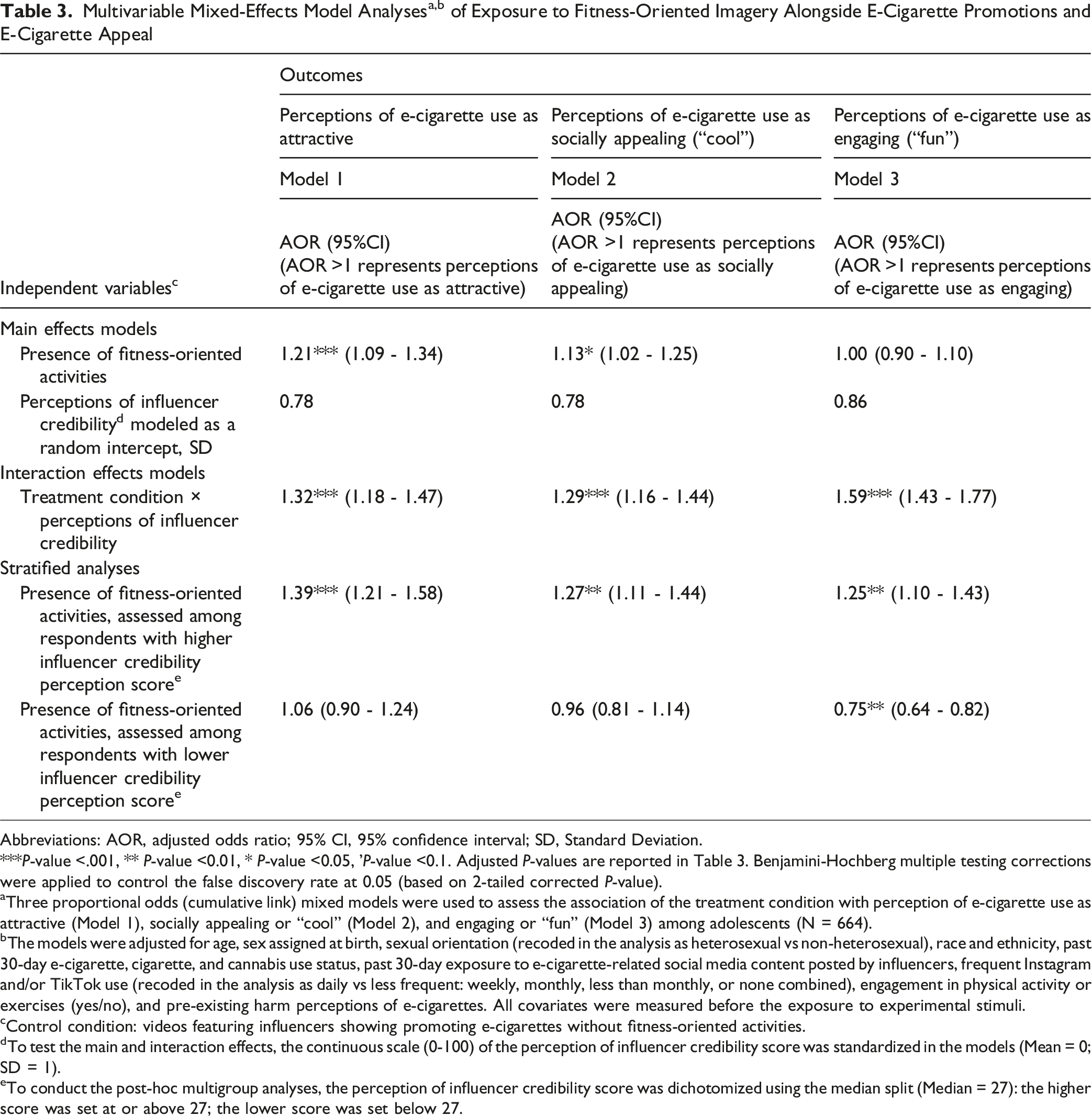
Abbreviations: AOR, adjusted odds ratio; 95% CI, 95% confidence interval; SD, Standard Deviation.
***P-value <.001, ** P-value <0.01, * P-value <0.05, ’P-value <0.1. Adjusted P-values are reported in Table 3. Benjamini-Hochberg multiple testing corrections were applied to control the false discovery rate at 0.05 (based on 2-tailed corrected P-value).
aThree proportional odds (cumulative link) mixed models were used to assess the association of the treatment condition with perception of e-cigarette use as attractive (Model 1), socially appealing or “cool” (Model 2), and engaging or “fun” (Model 3) among adolescents (N = 664).
bThe models were adjusted for age, sex assigned at birth, sexual orientation (recoded in the analysis as heterosexual vs non-heterosexual), race and ethnicity, past 30-day e-cigarette, cigarette, and cannabis use status, past 30-day exposure to e-cigarette-related social media content posted by influencers, frequent Instagram and/or TikTok use (recoded in the analysis as daily vs less frequent: weekly, monthly, less than monthly, or none combined), engagement in physical activity or exercises (yes/no), and pre-existing harm perceptions of e-cigarettes. All covariates were measured before the exposure to experimental stimuli.
cControl condition: videos featuring influencers showing promoting e-cigarettes without fitness-oriented activities.
dTo test the main and interaction effects, the continuous scale (0-100) of the perception of influencer credibility score was standardized in the models (Mean = 0; SD = 1).
eTo conduct the post-hoc multigroup analyses, the perception of influencer credibility score was dichotomized using the median split (Median = 27): the higher score was set at or above 27; the lower score was set below 27.
Interaction Effects Models and Stratified Subgroup Analyses
H4 and H5 were supported. We found significant interactions between the treatment condition and perceived influencer credibility for harm perceptions (H4) and perceived appeal (H5) of e-cigarettes (Table 2 and Table 3). In the subgroup analyses stratified by the influencer credibility perception score, among the participants who perceived influencers as credible (n = 305), those in the treatment condition had higher odds of lower harm perceptions of e-cigarettes to personal health (AOR = 1.36; 95% CI = 1.19 – 1.55) and to others’ health (AOR = 1.18; 95% CI = 1.03 – 1.34, (Table 2), and higher odds of perceiving e-cigarette use as “cool” (AOR = 1.27; 95% CI = 1.11 – 1.44), attractive (AOR = 1.39; 95% CI = 1.21 – 1.58), and “fun” (AOR = 1.25; 95% CI = 1.10 – 1.43, compared to those in the control condition (Table 3). Among the participants who perceived influencers as non-credible (n = 344), those in the treatment condition had lower odds of lower harm perceptions of e-cigarettes to others’ health (AOR = 0.69; 95% CI = 0.58 – 0.81, Table 2) and lower odds of perceiving e-cigarette use as “fun” (AOR = 0.75; 95% CI = 0.64 – 0.82, Table 3). Interactions between the treatment condition and perceived influencer credibility assessed for susceptibility (as a combined measure and as separate items) to e-cigarette use (H6) were not significant, and therefore subgroup analyses were not conducted (Supplemental Table 2).
Discussion
Using a randomized survey-based experiment, this study examined the associations of adolescent exposure to non-celebrity micro-influencer marketing depicting healthy-lifestyle, fitness-oriented imagery (eg, exercising) next to e-cigarette promotions in Instagram or TikTok videos with harm perceptions, appeal of, and susceptibility to use, e-cigarettes, and influencer perceptions. Adding to prior research that explored the associations of exposure to influencer marketing with youth perceptions and use patterns of e-cigarettes,19,23,37,39,42 this study demonstrated that micro-influencer e-cigarette promotion next to fitness-oriented activities affects adolescent perceptions of e-cigarettes and that micro-influencer perceptions moderate e-cigarette perceptions.
In line with SLT,21,22 the experiment showed that seeing influencers engaged in fitness-oriented activities next to e-cigarette promotions (versus e-cigarette promotion without fitness context) may contribute to lower harm perceptions and higher appeal of e-cigarettes among adolescents, although might not translate to adolescent susceptibility to e-cigarette use. Similarly, participants in the treatment condition were more likely to report lower harm perceptions and higher appeal of, but not susceptibility to use, e-cigarettes if they perceived micro-influencers as credible, but less likely to report lower harm perceptions of e-cigarettes to others’ health and less likely to perceive e-cigarette use as “fun,” if they perceived micro-influencers as non-credible. These findings are consistent with the PWM,24,25 suggesting that people are more willing to endorse a health risk behavior to the extent that they have a positive view of the prototypical person who performs that behavior. PWM posits 2 pathways to risk-related cognition and behavior: a reasoned path (intentions) and a social-reactive path (willingness). In this context, adolescents may not intend to vape but can develop lower harm perceptions and higher appeal of e-cigarettes when watching influencers perceived as credible promoting e-cigarettes in fitness-oriented settings, potentially increasing willingness to vape in social situations. Influencers act as social models, shaping adolescents’ image of the typical e-cigarette user as healthy and socially accepted. Notably, the effect sizes were larger among participants who viewed influencers as credible, compared to the results of the main effects models in the total sample, with consistently significant results across the outcomes, suggesting that influencer perceptions play an important role in shaping e-cigarette-related attitudes.
The findings for harm perceptions, but not for susceptibility, are in line with a similar online experiment among young adults, which showed that participants who viewed videos of micro-influencers promoting e-cigarette use paired with healthy-lifestyle, fitness-oriented activities (eg, exercising), compared to controls who viewed videos of micro-influencers depicting fitness-oriented activities alone, were more likely to report lower harm perceptions of, and higher susceptibility to use, e-cigarettes. 19 Differences in the susceptibility outcomes in the 2 studies may be due to different control conditions: the young adult study used a healthy behavior (eg, exercising) as the baseline, while this study used an unhealthy behavior (e-cigarette promotion without fitness-related activities). Seeing a healthy behavior as the control may have made the contrast with e-cigarette promotion alongside fitness imagery in the treatment condition more striking, potentially contributing to the observed susceptibility among young adults. The use of e-cigarette promotion as the baseline in this study more accurately reflects real-world e-cigarette influencer marketing, where influencers often promote e-cigarettes alone, and sometimes post about other distinct topics such as healthy-lifestyle, fitness-oriented activities. Another potential explanation of the null finding for susceptibility in this study is that adolescents may be less susceptible or less willing to report behavioral intentions to use e-cigarettes than young adults, who are more independent in decision-making about risky behaviors. Finally, continuing decline in e-cigarette use among adolescents 43 could have also contributed to the lack of statistically significant findings for susceptibility. Nevertheless, adolescent perceptions of e-cigarettes as appealing and of lowered harm could potentially influence e-cigarette use or susceptibility. While recent decline in e-cigarette use among adolescents in the United States is encouraging, 43 continued education and regulation targeting social media marketing remain important to prevent e-cigarette use.
Influencer e-cigarette-related marketing on social media is not sufficiently regulated by platforms’ community guidelines or federal legislation. 10 Although most social media platforms that are widely used by youth (eg, Facebook, Instagram, YouTube, Twitter, TikTok, Reddit, Snapchat) prohibit paid advertisements for tobacco products,10,39 few (Facebook, Instagram and TikTok) explicitly prohibit influencers from promoting nicotine/tobacco products. 11 Moreover, influencers still promote e-cigarettes on the platforms that have restrictions in place.1,44,45 Further improvement in the enforcement of social media community guidelines, including prompt automated detection and removal of such content, is necessary.46,47
While regulating certain features of influencer marketing could be challenging because specific framing of content could be protected by the First Amendment of the U.S. Constitution, 48 the U.S. Food and Drug Administration (FDA) can regulate youth-appealing marketing. For example, designing or packaging of e-cigarette products like toys, food, or cartoon characters is prohibited by the FDA. 49 Similar regulation could be possible for other marketing features (eg, depicting healthy lifestyle next to e-cigarettes) if such content contributes to lower harm perceptions and higher appeal of e-cigarettes among adolescents, as this study showed. Regulating influencers who partner with tobacco brands is important. According to the FDA and the Federal Trade Commission (FTC) guidelines, if influencers have any material connection with a tobacco brand – meaning that they have been paid or given something of value to tout the product - such relationships need to be disclosed in their social media posts. 50 However, many influencers’ posts have ambiguous or absent disclosures of their partnerships with tobacco brands. 1 Influencers who promote products on behalf of tobacco brands are also required to restrict access to e-cigarette marketing content only to individuals who are at or above the federal minimum age (ie, 21) of sale of tobacco products. 51 However, research has demonstrated that influencers have not been consistently using youth age restrictions to their social media accounts. 1 Enforcement of the existing influencer marketing regulations needs improvement, particularly in monitoring undisclosed brand partnerships and age-restricted content that exposes adolescents to e-cigarette promotions.
Limitations
Since participants were based in California, results may not generalize to all U.S. adolescents. Concerns about generalizability are mitigated by the fact that ethnic diversity of the samples represent the projected future ethnic diversity of the U.S. 52 Despite the randomized experimental design, the outcomes were self-reported and did not represent direct measures. Since Qualtrics recruited parents (not adolescents directly) per IRB protocols, we cannot fully ensure adolescents completed the surveys themselves. However, this concern is mitigated by a survey prompt emphasizing the importance of adolescent responses and by verification checks. Participants provided their age twice (at the start and end of the survey), and those with mismatched responses were excluded from the analysis. The measures in this study were assessed at 1 point in time, reducing generalizability of the findings. Although stimuli were based on real Instagram and TikTok posts, the survey did not simulate the platforms’ actual interface. While we assessed perceptions of and intentions to use e-cigarettes (susceptibility) among adolescents, it was not possible to assess the actual e-cigarette use behavior in these experimental settings: ie, the association between the experimental exposure and initiation of e-cigarette use. While we designed the stimuli to avoid overt fitness-oriented lifestyle cues in the control condition, some videos may have contained ambiguous or mildly active poses. However, while answering the attention check question at the end of the survey, participants in the treatment group recognized fitness-related activity alongside vaping, while those in the control group reported viewing vaping only, validating that the 2 conditions were perceived differently (as described in the Methods section). Because influencers tend to use attractive and stylized self-presentations on social media, constructing a truly ‘neutral’ generic influencer profile for the control condition, using ecologically valid, real social media posts, is challenging. Nevertheless, pre-experimental ratings showed no substantial differences in perceived attractiveness between the treatment and the control conditions, supporting the validity of our experimental stimuli. Finally, the survey did not assess participants’ body weight or weight-related perceptions, which may influence their attitudes towards e-cigarettes, particularly among adolescents who view e-cigarette use as a weight management strategy.
Conclusions
The study demonstrated that e-cigarette promotion alongside healthy-lifestyle, fitness-oriented activities in Instagram or TikTok videos featuring micro-influencers may contribute to lower harm perceptions and higher appeal of e-cigarettes among adolescents, especially when they perceive these micro-influencers as credible. Future research may assess the associations of broader contexts and themes (eg, cannabis use, fashion, gaming) often present alongside e-cigarette promotion in influencer marketing with youth perceptions of tobacco products and influencers. Future research should also continue providing surveillance data to show changes in e-cigarette influencer marketing over time, and investigating if tobacco companies use influencers to introduce new or promote existing e-cigarette products in violation of premarket authorization requirements (PMTA).53,54 Our findings indicate the need for further regulation of influencer marketing. At the same time, the findings highlight potential implications for the use of influencers in anti-tobacco campaigns. Since adolescents who perceived influencers as non-credible were less likely to report lower harm and higher appeal perceptions of e-cigarettes, the findings suggest that portraying influencer-like figures negatively in anti-tobacco campaigns may help reduce the appeal of e-cigarettes among youth. While results cannot be directly generalized to all influencer marketing or anti-tobacco campaigns, understanding how influencers are portrayed, and how such portrayals shape youth perceptions of influencers and tobacco products, may inform the design of future prevention efforts. Prior research found that micro-influencers promote e-cigarettes in various contexts on social media. We assessed how e-cigarette promotion alongside healthy-lifestyle, fitness-oriented activities (eg, exercising) affects adolescent perceptions of e-cigarettes and micro-influencers. This experimental study showed that micro-influencer promotion of e-cigarettes alongside fitness-oriented activities, and perceptions of micro-influencers as credible, contributes to lower harm perceptions and higher appeal of e-cigarettes among adolescents, with the opposite results if micro-influencers are perceived as non-credible. Our findings indicate the need for further regulation of influencer marketing and suggest that portraying influencers negatively in anti-tobacco campaigns could potentially help reduce e-cigarette appeal among youth.What is Already Known?
What Does This Article Add?
Implications for Health Promotion Practice and Research
Supplemental Material
Supplemental Material - Healthy Vaping? Fitness-Oriented Imagery in Influencer E-Cigarette Marketing and Adolescent Perceptions of Influencers and E-Cigarettes
Supplemental Material for Healthy Vaping? Fitness-Oriented Imagery in Influencer E-Cigarette Marketing and Adolescent Perceptions of Influencers and E-Cigarettes by Julia Vassey, Denise D. Tran, Jennifer B. Unger in American Journal of Health Promotion
Supplemental Material
Supplemental Material - Healthy Vaping? Fitness-Oriented Imagery in Influencer E-Cigarette Marketing and Adolescent Perceptions of Influencers and E-Cigarettes
Supplemental Material for Healthy Vaping? Fitness-Oriented Imagery in Influencer E-Cigarette Marketing and Adolescent Perceptions of Influencers and E-Cigarettes by Julia Vassey, Denise D. Tran, Jennifer B. Unger in American Journal of Health Promotion
Footnotes

Funding
The authors disclosed receipt of the following financial support for the research, authorship, and/or publication of this article: This work was supported by the National Institute of Health; R01CA260459, Tobacco-Related Disease Research Program; T33DT6620.
Declaration of Conflicting Interests
No potential conflict of interest was reported by the authors.
Supplemental Material
Supplemental material for this article is available online.