




Abstract
Objective
Back pain and neck pain are very common, costly, and disabling. Healthy building determinants within the built environment have not been adequately assessed as contributors to these conditions. The objective of this study was to systematically review the literature on the relationship of healthy building determinants with back and neck pain.
Data Source
PubMed, CINAHL, EMBASE, Google Scholar, and PEDRo. Study Inclusion and Exclusion Criteria: Studies were included if they met the following criteria: Adults, comparison of healthy building determinants (air quality, ventilation, dust and pests, lighting and views, moisture, noise, safety/security, thermal health, water quality) with back and neck pain, original research, English. Studies were excluded if full text articles were unavailable and if the focus was patient and materials handling or ergonomics.
Data Extraction
Data extraction and other review procedures were elaborated according to PRISMA guidelines. Data Synthesis: Data were synthesized with an approach adapted from Oxford Centre for Evidence-Based Medicine and American Physical Therapy Association.
Results
37 articles enrolling 46,223 participants were eligible. Most articles were cross-sectional (31/37) and fair quality (28/37). None were interventional. Evidence was found to generally support a relationship indicating that as healthy building determinants worsen, the risk of back and neck pain increases.
Conclusion
Although the available evidence precludes interpretations about causality, the study's findings are starting points to guide future research, knowledge creation, and health promotion initiatives about the relationships of the built environment with back and neck pain.
Objective
Chronic diseases are important public health concerns that are associated with various environmental factors. 1 While progress has been made on attenuating the impact of several significant chronic diseases through environmental and behavioral changes, 1 chronic diseases related to the musculoskeletal system of the spine (back and neck pain) continue to be problematic in various populations around the world.2-6 Back pain and neck pain are among the most common, disabling, and costly conditions in the world.2-6 In the Global Burden of Disease (GBD) studies,3,7 low back pain (LBP) is the most common cause of years lived with disability (YLDs) and a leading cause of disability adjusted life years (DALYs), and neck pain is also problematic in terms of YLDs and DALYs. Most adults will experience disabling LBP or neck pain at some point in their lives,4,5 and symptoms and disability often persist for those who suffer initial episodes.5,6
Management of back and neck pain is complex. For example, numerous biopsychosocial risk factors have been identified for these conditions, such as age, previous history of the condition, obesity, fitness, low physical activity, psychological conditions, smoking, poor ergonomics, and awkward lifting.5,6 Moreover, hundreds of treatment approaches are available,5,8 yet the positive effects of these interventions are often modest and diminish over the long-term.9,10 Thus, the complexities associated with managing back and neck pain are large, and it is possible that other factors may influence the development, treatment, and prognosis of these conditions. Health promotion of evidence based practices for back and neck pain is critical, yet is often supplanted by various and conflicting points of view, which is confusing for the patient, healthcare provider, and other stakeholders. 8
Environmental health risk factors and the built environment have been studied for their relationships with many chronic diseases.11,12 Environmental factors are occasionally addressed in reports about back and neck pain. However, these reports usually focus on ergonomics, such as heavy lifting, vibration, sitting, and body postures, 13 but do not include other significant indoor environmental elements that have been described in other fields. People spend more than 90% of their time indoors, 14 which suggests that most episodes of back and neck pain occur within the built environment. However, healthy building determinants within the built environment have not been adequately assessed as contributors to these conditions.
The concept of "healthy buildings" is an important component of the built environment and is a biopsychosocial framework that focuses on transforming the built environment to promote and enhance the health, wellness, performance, productivity, and quality of life of occupants. Healthy building initiatives encourage active designs to support physical activity, promote health, and limit chronic disease.11,12,14,15 This concept has been described in several publications,11,12,14,15 and was recently expanded in a published report "The 9 Foundations of a Healthy Building".14,15 The healthy building determinants described in this report by Allen et al14,15 are: air quality, ventilation, dust and pests, lighting and views, moisture, noise, safety and security, thermal health, and water quality. While no gold standard exists for defining healthy building determinants, this report offers a structured attempt at describing some of the important healthy building determinants and provides a general framework from which to expand.
It is plausible that targeting healthy building determinants could improve the management and health promotion of back and neck pain. For example, creating awareness among various stakeholders of these determinants could ultimately result in implementation of approaches to improve performance, productivity, and quality of life of those suffering from back and neck pain in residential and occupational settings. The stakeholders potentially impacted by these relationships are numerous, such as healthcare (e.g., patients, clinicians, third party payors), real estate (e.g., tenants, owners, investors, asset managers, property managers), occupational (e.g., employees, employers), policymakers (e.g., regulatory affairs, licensing, credentialing), and public health (e.g., World Health Organization officials, public health officers).
Despite the large global burden of back and neck pain, healthy building publications, such as those mentioned herein,11,12,14,15 do not address these conditions. Furthermore, the relationships of healthy building determinants with back and neck pain have not been systematically reviewed and are largely not addressed in clinical practice guidelines. Therefore, the objective of this study was to systematically review the literature on the relationship of healthy building determinants with back and neck pain.
Methods
Data Sources
This systematic review was conducted and reported according to the Preferred Reporting Items for Systematic Reviews and Meta-Analyses (PRISMA), 16 and other resources available to guide various components of the review and evidence synthesis processes.2,17-22 The study protocol was not registered or formally prepared for public review because: (1) To the investigator's knowledge, this systematic review was the initial attempt at summarizing the evidence on the topic. For example, a search of the International Prospective Register of Systematic Reviews (PROSPERO) database found no registrations relevant to the relationships of "built environment", "healthy buildings", or "indoor environmental quality" with back and neck pain; (2) given the initial attempt at summarizing the literature on this topic, the current study had some characteristics of a scoping review, 23 which is not typically registered in databases such as PROSPERO 24 ; and (3) the current review was not intended to directly inform regulatory decision-making processes for which protocol registration and public comment may be useful.
Studies were identified by searching the following databases in late September through October 2021: PubMed, Cumulative Index to Nursing and Allied Health Literature (CINAHL), Excerpta Medica database (EMBASE), Google Scholar, and Physiotherapy Evidence Database (PEDRo). The search strategy for the current study was constructed based on minimal guidance from the literature regarding search terms for healthy building determinants, along with general search terms for back and neck pain. The search strategy was broad since: (1) To the investigators' knowledge, no previous systematic reviews have been published specifically on this topic, thus the topic was not well-developed and the study had some characteristics of a scoping review 23 ; (2) the aim of the study was not to primarily assess the effect of interventions for back and neck pain, for which other search approaches may have been useful (e.g., Cochrane Back and Neck) 25 ; and (3) the target audience for this study's findings is a wide range of stakeholders across healthcare, real estate, occupational, policymakers, and public health domains. The senior author developed the search strategy, which was vetted by the first author. The senior author has conducted systematic reviews on musculoskeletal topics with teams in academic, clinical, commercial, and non-profit settings that have generated numerous evidence synthesis products.
The search strategy for PubMed was as follows: ("back pain"[MeSH Terms] OR "back pain"[All Fields] OR ("neck pain"[MeSH Terms] OR "neck pain"[All Fields]) OR ("radiculopathy"[MeSH Terms] OR "radiculopathy"[All Fields] OR "radiculopathies"[All Fields] OR "sciatica"[MeSH Terms] OR "sciatica"[All Fields] OR "sciaticas"[All Fields])) AND ("healthy buildings"[All Fields] OR "healthy building"[All Fields] OR ("sick building syndrome"[MeSH Terms] OR "sick building syndrome"[All Fields]) OR ("indoor environmental quality"[All Fields] OR "indoor environment"[All Fields]) OR ("environmental illness"[MeSH Terms] OR "environmental illness"[All Fields] OR "environmental illnesses"[All Fields]) OR ("air pollution"[MeSH Terms] OR "air pollution"[All Fields] OR "air quality"[All Fields]) OR ("tobacco smoke pollution"[MeSH Terms] OR "tobacco smoke pollution"[All Fields] OR "second hand smoke"[All Fields]) OR ("ventilation"[MeSH Terms] OR "ventilation"[All Fields] OR "ventilations"[All Fields] OR "ventilate"[All Fields]) OR ("lighting"[MeSH Terms] OR "lighting"[All Fields] OR "lightings"[All Fields]) OR ("noise"[MeSH Terms] OR "noise"[All Fields] OR "noises"[All Fields]) OR ("water quality"[MeSH Terms] OR "water quality"[All Fields]) OR ("dust"[MeSH Terms] OR "dust"[All Fields] OR "dusts"[All Fields]) OR ("pest"[All Fields] OR "pests"[All Fields]) OR ("moisture"[All Fields] OR "moistures"[All Fields]) OR ("thermal"[All Fields] OR "thermal health"[All Fields]) OR ("temperature"[MeSH Terms] OR "temperature"[All Fields]) OR ("security"[All Fields] OR "securities"[All Fields]) OR ("safety"[MeSH Terms] OR "safety"[All Fields] OR "safeties"[All Fields]))
The other databases were searched in a similar manner, depending on the allowable fields and terms for a particular database. Additional studies were identified through hand searches of citations within eligible articles from the primary search and original studies within excluded systematic reviews.
Inclusion and Exclusion Criteria
The PICOTS framework was utilized for eligibility criteria, 16 as follows:
P - patient/people: Human adults with back pain or neck pain and related conditions (e.g., cervical radiculopathy, lumbar radiculopathy, sciatica). Back pain is defined as pain or related symptoms in thoracic spine region, 26 or lumbo-sacral spine region. 27 Neck pain is defined as pain or related symptoms in the cervical spine region.26,28 Studies were included that reported on all grades, levels, and duration of symptoms for back and neck pain. Studies were excluded that reported on systemic pain syndromes (e.g., fibromyalgia).
I - Intervention: Studies were included that addressed any of the following nine healthy building determinants,14,15 either alone or combined with any other healthy building determinant: ventilation, air quality, thermal health, moisture, dust and pests, safety and security, water quality, noise, lighting and views. Operational definitions were as follows: • Healthy buildings: A biopsychosocial framework that focuses on transforming the built environment to promote and enhance the health, wellness, performance, productivity, and quality of life of occupants. This concept has been described in several publications.11,12,14,15,29 • Built environment: Human- "made or modified structures that provide people with living, working, and recreational spaces."
30
• Determinants of health: "The range of personal, social, economic, and environmental factors that influence health status."
31
• Healthy building determinants: Based on the definitions for healthy buildings, built environment, and determinants of health, an operational definition for healthy building determinants was developed, as follows: Factors within the built environment that influence health status, wellness, performance, productivity, and quality of life of occupants.
Intervention studies (e.g., randomized controlled trials) and other study types, such as cross-sectional, observational cohort, risk factor, correlational, and prognosis studies were included.
C - Comparator: Studies were included in which any of the nine healthy building determinants were compared with back pain or neck pain. The independent effects of one or more healthy building determinants on back pain or neck pain must have been apparent in the study.
O - Outcomes/variables: Studies were included that utilized quantitative and qualitative measures for healthy building determinants, such as patient reported outcomes, physical measures, and environmental constructs. Standardized outcomes, such as patient reported outcome measures, were included for back pain and neck pain. Studies that assessed other direct markers for back pain and neck pain were also included, such as disability, absenteeism, and presenteeism. Studies were excluded that assessed measures indirectly related to back pain or neck pain (e.g., obesity, behavioral).
T - Time/timing: Peer-reviewed articles published from onset of the databases through September - October 2021 were included.
S - Setting: For the nine healthy building determinants, studies were included that reported on commercial (occupational) or residential real estate settings. The healthy building determinants must have been assessed in an indoor (building) setting. Studies were excluded that reported on outdoor settings (e.g., general climate). Studies were excluded that reported on safe patient handling, ergonomic factors, lifting, and materials handling. For back pain or neck pain, studies were included that reported on these conditions, or their management, in any indoor setting.
Other eligibility criteria for the studies were: Peer-reviewed literature; no grey literature (e.g., books, theses, government reports); human research - no simulation, animal, basic science, laboratory; original research - subject level; no systematic or narrative reviews; no case reports; abstract available for initial review; full text available for final selection; and published in English.
Data Extraction
Study selection: Search findings from the databases and hand searches were exported to and managed within separate EndNote and Excel databases. After initial article processing, titles and abstracts of the uncovered articles were independently screened by the senior author and first author to determine if they met the inclusion criteria. Articles were categorized as relevant, possibly relevant, or irrelevant. After consensus was reached, full text articles were obtained for those deemed relevant and possibly relevant. Full text articles were independently screened for relevance by the senior author and first author and then a consensus was reached to determine the final set of eligible articles. No automation tools were used in the study selection process.
Data extraction: Data from the full text articles of the eligible studies were extracted and entered into a database by the senior author and independently verified by the first author. Then, these two authors reviewed the abstracted data together until a consensus was reached. No automation tools were used in the data collection process. Data items extracted and entered in tables included: author, year, country, funding source, population, sample size, gender, age, eligibility criteria, which healthy building determinant was addressed, which healthy building determinant outcome was measured, back pain and/or neck pain, which back pain and/or neck pain outcome was measured. Missing data are noted in the tables and were not included in the evidence synthesis.
Outcome measures: Considering the broad objective of this systematic review and lack of previous systematic reviews on this topic, most types of outcome measures were included from the eligible studies. The available evidence consisted exclusively of cross-sectional and observational cohort studies, thus the analyses within the individual studies were primarily odds ratios, prevalence ratios, risk ratios, and other relational variables.
Data Synthesis
The authors tabulated study data (characteristics, outcomes), synthesized evidence, and reported findings using strategies adapted from the Oxford Centre for Evidence-Based Medicine, Clinical Information Access Portal, and American Physical Therapy Association.2,17-21 Since air quality and ventilation could not be distinguished from each other, study findings for these two determinants are presented as one category.
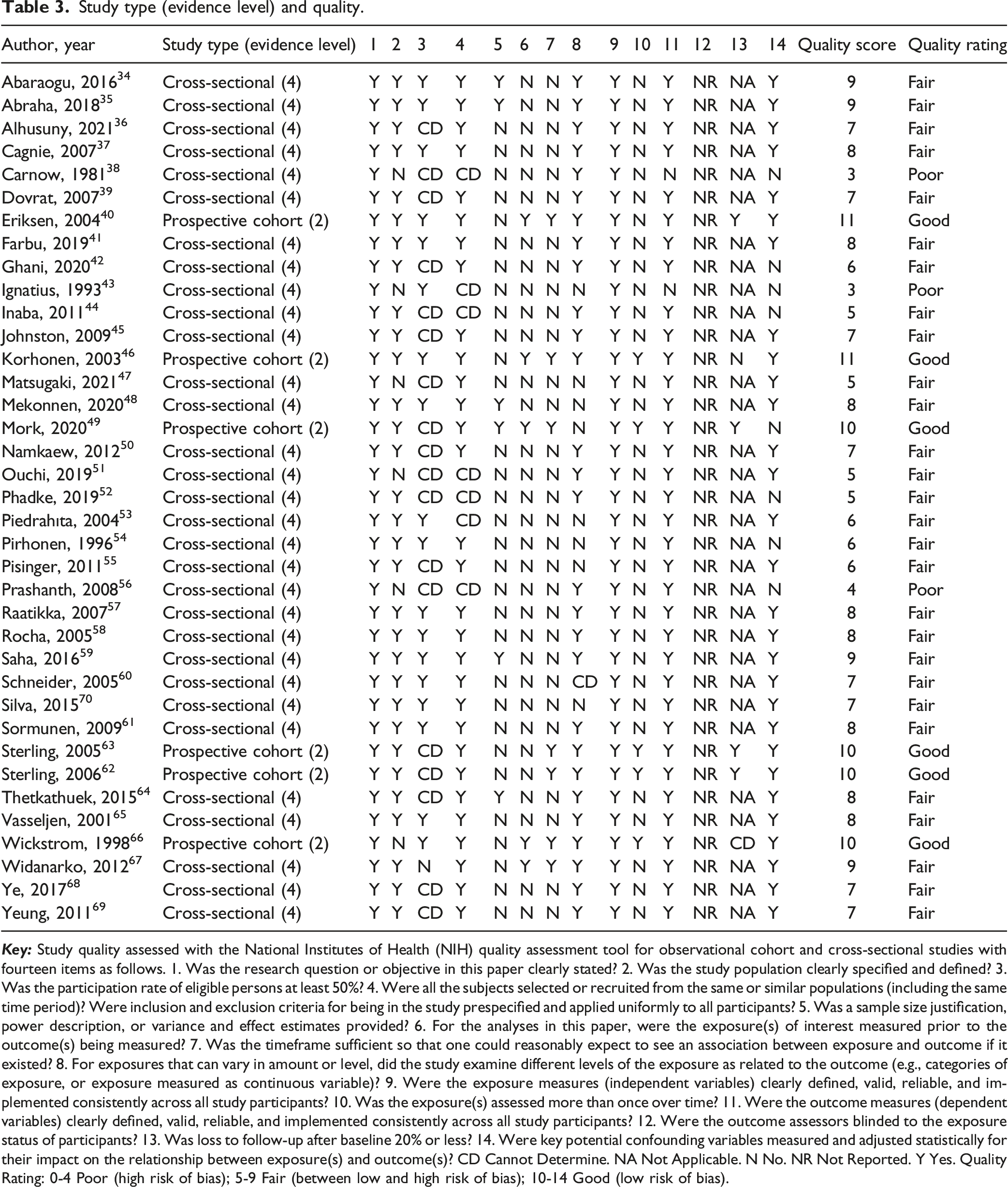
Study quality: The US National Institutes of Health (NIH) quality assessment tool for observational cohort and cross-sectional studies was used to assess risk of bias (study quality). 32 The NIH tool includes 14 items, with each item scored as yes (1) or no (0) and a total score ranging from 0 to 14. 32 From the total score, categories for study quality were derived as follows: 0-4 Poor, 5-9 Fair, 10-14 Good. "Poor" quality is defined as high risk of bias, "good" quality is low risk of bias, and "fair" quality is between low and high risk of bias. 32 According to the developer of this instrument, "the fair quality category is likely to be broad, so studies with this rating will vary in their strengths and weaknesses." 32 Standardized cutoff scores for study quality categories are not provided for this instrument, thus the investigators arbitrarily selected cutoff scores.
Study type (evidence level) was assessed and classified according to strategies adapted from the Oxford Centre for Evidence-Based Medicine.17-20 Risk of bias for each study was assessed by the senior author and independently verified by the first author. Then, the authors reviewed the findings together until a consensus was reached. No automation tools were used in the risk of bias assessment. Given the available evidence, formal assessment of reporting bias was not conducted, and missing data are noted in the study characteristics, outcomes, and quality tables.
Evidence synthesis and analysis: Strength of evidence and empirical evidence statements were synthesized and summarized with approaches adapted from the Oxford Centre for Evidence-Based Medicine,18-20 American Physical Therapy Association,2,21 and a non-intervention systematic review in spine care. 33 The following evidence categories were used: Strong (A), Moderate (B), Weak (C), Conflicting or no evidence (D). Given the objective of this systematic review and available evidence, meta-analysis, heterogeneity analysis, and sensitivity analysis were not conducted.
Results
Study Selection
A PRISMA flow diagram of search results is found in Figure 1. Overall, 37 articles reporting on 36 unique studies were deemed eligible and selected.34-70 Some articles appeared to be relevant upon initial review, but were excluded because the independent effects of the nine healthy buildings determinants could not be concluded.71-78 PRISMA flow diagram of search results.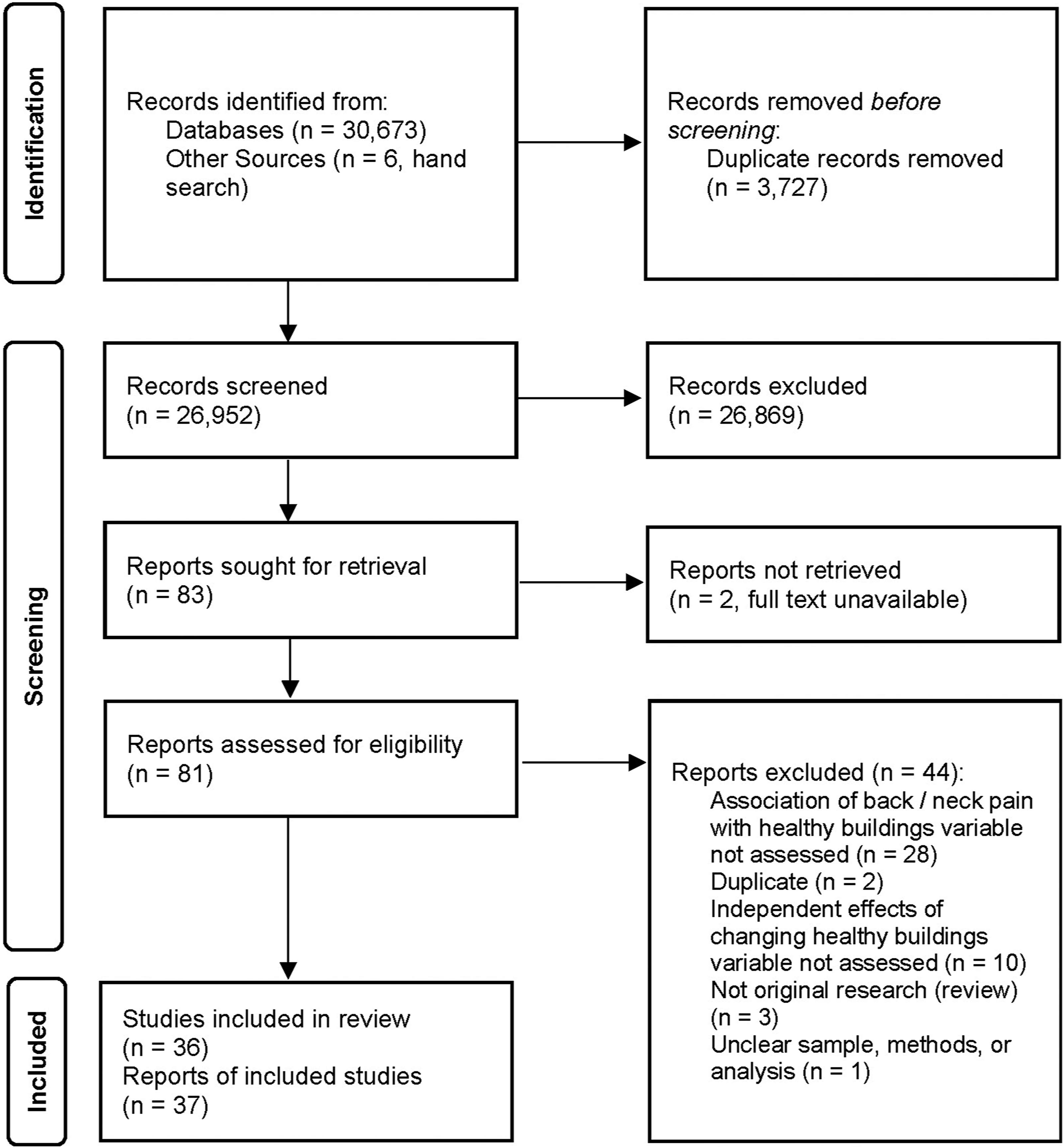
Study Characteristics
Study characteristics.
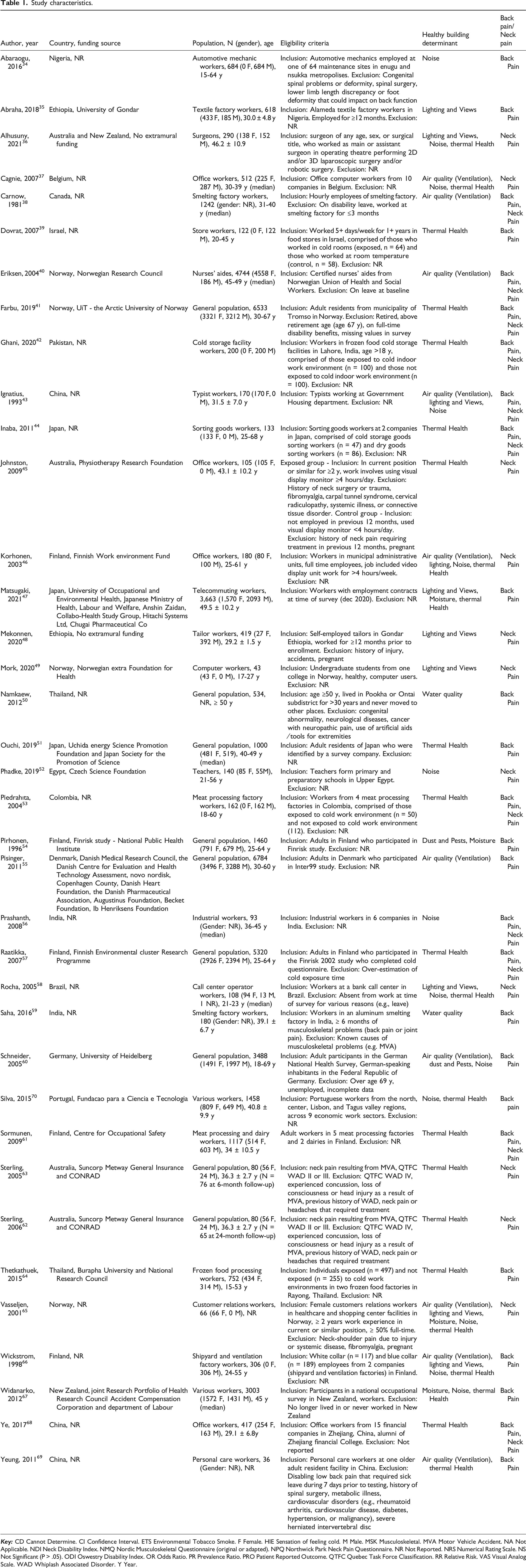
Back pain was addressed in 26 articles, 34,35,38-44,47,50,51,53-57,59-61,64,66-70 and neck pain was addressed in 22 articles.36-38,40-46,48,49,52,53,56-58,61-63,65,68 The healthy building determinants addressed were: air quality (ventilation) (N = 10),37,38,40,43,46,55,60,65,66,69 dust and pests (N = 2),54,60 lighting and views (N = 10),35,36,43,46-49,58,65,66 moisture (N = 4),47,54,65,67 noise (N = 13),34,36,37,43,46,52,56,58,60,65-67,70 thermal health (N = 23),36,37,39,41,42,44-47,51,53,57,58,61-70 water quality (N = 2),50,59 and overall work environment which consisted of an aggregate score including multiple healthy building determinants (N = 3).46,60,65 No articles addressed safety and security.
Various funding sources were reported in the articles, such as academic, government, non-profit, and commercial. Several articles did not report a funding source. The countries in which the study was conducted were: Australia (N = 3),45,62,63 Australia and New Zealand (N = 1), 36 Belgium (N = 1), 37 Brazil (N = 1), 58 Canada (N = 1), 38 China (N = 3),43,68,69 Colombia (N = 1), 53 Denmark (N = 1), 55 Egypt (N = 1), 52 Ethiopia (N = 2),35,48 Finland (N = 5),46,54,57,61,66 Germany (N = 1), 60 India (N = 2),56,59 Israel (N = 1), 39 Japan (N = 3),44,47,51 New Zealand (N = 1), 67 Nigeria (N = 1), 34 Norway (N = 4),40,41,49,65 Pakistan (N = 1), 42 Portugal (N = 1), 70 Thailand (N = 2).50,64 None of the articles described the racial and ethnic characteristics of the participants, or the specific effect of race and ethnicity on the relationship of healthy building determinants with back and neck pain.
Study Outcomes
Study outcomes.

Evidence Level and Study Quality
Study type (evidence level) and quality.
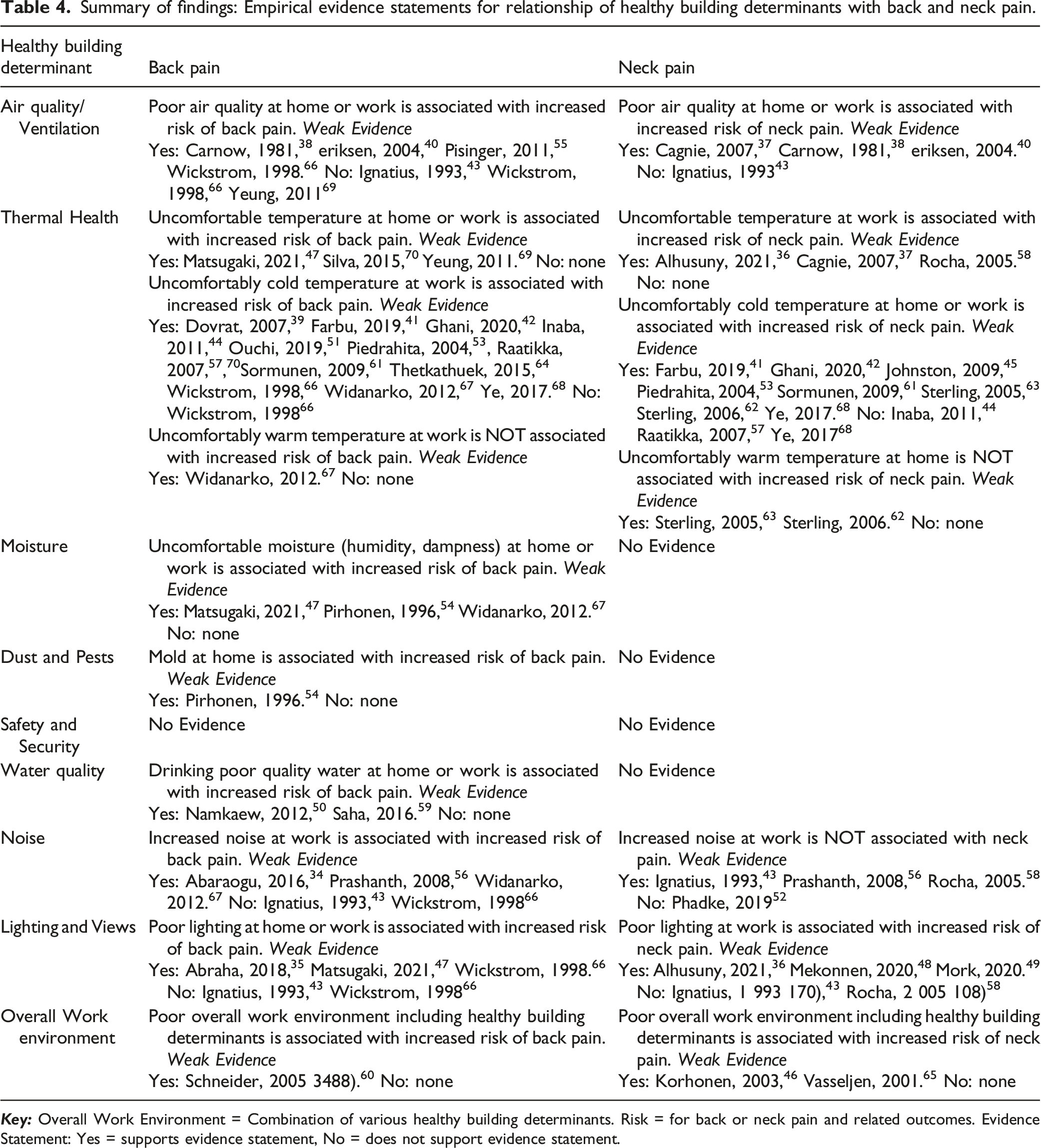
Evidence Synthesis and Analysis
Summary of findings: Empirical evidence statements for relationship of healthy building determinants with back and neck pain.
Summary of Results for Studies Within Each Healthy Building Determinant
Air Quality/Ventilation
Of the ten studies addressing the relationship of air quality/ventilation with back or neck pain,37,38,40,43,46,55,60,65,66,69 seven studies independently assessed air quality/ventilation.37,38,40,43,55,66,69 Three studies assessed air quality/ventilation as a component of an aggregate variable (overall work environment) that included other determinants.46,60,65 Of the studies examining the independent effects of air quality/ventilation, two were prospective cohort studies of good quality,40,66 and five were cross-sectional studies of poor to fair quality.37,38,43,55,69 Three studies reported on back pain alone,55,66,69 one study reported on neck pain alone, 37 and three studies reported on back and neck pain.38,40,43 Six studies reported on workers, including office workers (n = 512), 37 smelting factory workers (n = 1242), 38 nurses' aides (n = 4744), 40 typists (n = 170), 43 shipyard and ventilation factory workers (n = 306), 66 and personal care workers (n = 36), 69 and one study reported on the general population (n = 6784). 55
Overall, the uncovered studies provide weak evidence suggesting poor air quality at home or work is associated with increased risk of back and neck pain. Specifically, Cagnie et al 37 found that experiencing dry air at work was significantly associated with increased risk of neck pain in the past 12 months in office workers (OR 1.94, 95% CI 1.28-2.70, P = .001). Carnow et al 38 found that high exposure to ambient air fluoride (compared to low exposure) was significantly associated with increased prevalence of history of back pain and related musculoskeletal disorders in smelting factory workers (Chi-square = 42.9, P < .001), and back and neck surgery (Chi-square = 10.62, P < .005), but was not significantly associated with current frequency of back pain and related musculoskeletal disorders. Eriksen 40 found that exposure to environmental tobacco smoke in childhood was significantly associated with increased risk of sick leave greater than 14 days during the subsequent 12 months related to neck pain in nurses' aides (OR 1.34, 95% CI 1.04-1.73, P < .05) and upper back pain (OR 1.49, 95% CI 1.07-2.06, P < .05), with a trend towards a significant relationship with low back pain (OR 1.21, 95% CI .97-1.50, P = .09). Pisinger et al 55 found that in non-smokers from the general population, exposures to environmental tobacco smoke greater than or equal to five hours per day was significantly associated with increased risk of low back pain (OR 1.46, 95% CI 1.2-1.8, P < .05). Wickstrom et al 66 found that air draft at work was significantly associated with increased risk of back pain over the past 12 months in blue collar shipyard and ventilation factory workers (baseline: OR 2.06, 95% CI 1.11-3.84, P < .05; 24-month: OR 2.00, 95% CI 1.02-3.90, P < .05), but not in white collar workers. Ignatius et al 43 found no significant relationships between polluted air at work with back or neck pain in typists. Yeung et al 69 found no significant relationship between ventilation at work and low back pain in personal care workers.
Thermal Health
Of the 23 studies addressing the relationship of thermal health with back or neck pain, 21 studies independently assessed thermal health.36,37,39,41,42,44,45,47,51,53,57,58,61-64,66-70 Two studies assessed thermal as a component of an aggregate variable (overall work environment) that included other determinants.46,65 Of the studies examining the independent effects of thermal health, three were prospective cohort studies of good quality,62,63,66 and 18 were cross-sectional studies of fair quality.36,37,39,41,42,44,45,47,51,53,57,58,61,64,67-70 Eight studies reported on back pain alone,39,47,51,64,66,67,69,70 six studies reported on neck pain alone,36,37,45,58,62,63 and seven studies reported on back and neck pain.41,42,44,53,57,61,68 Seventeen studies reported on workers, including surgeons (N = 290), 36 office workers (N = 512), 37 store workers (N = 122), 39 workers from the general population (N = 6533), 41 cold storage facility workers (N = 200), 42 sorting goods workers (N = 133), 44 office workers (N = 105,45 telecommuting workers who performed work activities in the home setting (N = 3663), 47 meat processing factory workers, (N = 162), 53 call center operators (N = 108), 58 various workers (N = 1458), 70 meat processing and dairy workers (N = 1117), 61 frozen food processing workers (N = 752), 64 shipyard and ventilation factory workers (N = 306), 66 various workers (N = 3003), 67 office workers (N = 417), 68 and personal care workers (N = 36). 69 One study reported on the general population in the home setting (N = 1000). 51 Three studies reported on the general population in unspecified settings: (N = 5320), 57 (N = 76), 63 and (N = 65) 62
Overall, the uncovered studies provide weak evidence suggesting: uncomfortable temperature at home or work is associated with increased risk of back pain; uncomfortable temperature at work is associated with increased risk of neck pain; uncomfortably cold temperature at work is associated with increased risk of back and neck pain; and uncomfortably warm temperature at work is not associated with increased risk of back and neck pain. Specifically, Dovrat et al 39 found that working in a cold environment was significantly associated with increased risk of low back pain overall and during work in the past 12 months in store workers (overall: OR 2.98, 95% CI 1.30-6.70, P < .05; during work: OR 4.8, 95% CI 1.80-13.00, P < .05). Matsugaki et al 47 found that uncomfortable workplace temperature and humidity was significantly associated with increased risk of low back pain in telecommuting workers (OR 1.45, 95% CI 1.25-1.69, P < .001). Ouchi et al 51 found that severe and mild subjective assessments of feeling cold or chilly (HIE) were significantly associated with increased risk of low back pain in the general population (severe: OR 2.21, 95% CI 1.51-3.25, P < .001; mild: OR 1.81, 95% CI 1.27-2.59, P = .001). Silva et al 70 found that exposure to intense heat or cold at work was significantly associated with increased risk of back pain in blue and white collar workers (blue collar: OR 1.65, 95% CI 1.05-2.58, P ≤ .05; white collar: OR 1.63, 95% CI 1.28-2.09, P ≤ .01). Thetkathuek et al 70 found that exposure to cold work conditions was significantly associated with increased risk of back/muscular pain in frozen food processing workers (OR 11.96, 95% CI 6.12-23.45, P < .05). Wickstrom et al 66 found no significant relationships between cold work environment and risk of back pain over past 12 months in blue and white collar shipyard and ventilation factory workers. Cold work environment was significantly associated with increased risk of sick leave related to back pain in blue collar workers (RR 1.79, 95% CI 1.07-2.99, P < .05). Risk of sick leave related to back pain in white collar workers was not reported. Widanarko et al 67 found that working in a cold or damp environment was significantly associated with reduced activities and absenteeism related to low back pain in various workers (reduced activities: OR 1.86, 95% CI 1.13-3.06, P = .004; absenteeism: OR 2.94, 95% CI 1.68-5.14, P < .001). No significant relationship was observed between hot/warm work environment and reduced activities or absenteeism related to low back pain. Yeung et al 69 found that perceived thermal stress at work was significantly associated with increased risk for low back pain in personal care workers (OR 3.22, 95% CI 1.03-10.06, P = .001).
Farbu et al 41 found that working in a cold environment ≥25% of time was significantly associated with increased risk of persistent or recurring back and neck pain for workers in the general population (back pain: OR 1.38, 95% CI 1.12-1.71, P < .05; neck pain: OR 1.78, 95% CI 1.44-2.20, P < .05). Ghani et al 42 found that working in a cold environment was significantly associated with increased risk of back or hip pain and neck/shoulder or upper extremity pain in cold storage facility workers (back/hip: RR 137.00, 95% CI 8.59-2182.51, P = .001; neck/shoulder/upper extremity: RR 15.00, 95% CI 6.33-35.51, P = .0001). Inaba et al 44 found that cold exposed sorting goods workers had significantly greater prevalence of back pain compared to non-exposed workers (exposed 53%, non-exposed 33%, P < .05). No significant difference in prevalence of neck pain between cold exposed workers and non-exposed workers was observed. Piedrahita et al 53 found that cold exposed meat processing factory workers had significantly greater prevalence of low back pain and neck pain over past 12 months and that impacted normal work compared to non-exposed workers (low back pain: 12 months - PR 2.24, 95% CI 1.52-3.92, P < .05; work impact - PR 4.48, 95% CI 1.61-12.40, P < .05; neck pain: 12 months - PR 3.36, 95% CI 1.75-6.44, P < .05; work impact - PR 11.20, 95% CI 1.34-93.4, P < .05). Raatikka et al 57 found that increased cold exposure was significantly associated with increased risk of low back pain in the general population (female - OR 1.41, 95% CI 1.04-1.87, P < .05; male - OR 1.17, 95% CI 1.04-1.30, P < .05). No significant relationship was observed between cold exposure and head or neck pain. Sormunen et al 61 found that exposure to uncomfortable cold (slight, some, extensive) in neck-shoulder was significantly associated with increased risk of low back pain and neck-shoulder pain causing disadvantage in daily routines in meat processing and dairy workers (low back pain, extensive cold: OR 5.76, 95% CI 2.93-11.31, P < .05; neck-shoulder pain, extensive cold: OR 6.47, 95% CI 2.79-14.99, P < .05). Ye et al 68 found that cold office temperature was significantly associated with higher disability (P = .001) and increased risk of high disability related to low back pain in office workers (OR 4.17, 95% CI 1.82-9.57, P = .001. Cold office temperature was significantly associated with higher disability related to neck pain (P = .033). No significant relationship between cold office temperature and increased risk of high disability related to neck pain.
Alhusuny et al 36 found that frequent action to adjust temperature in the operating room was significantly associated with increased risk of neck/shoulder pain in the past 12 months in surgeons performing minimally invasive surgeries (OR 2.6, 95% CI 1.1-5.9, P = .024). Cagnie et al 37 found that experiencing temperature fluctuation was significantly associated with increased risk of pain in the past 12 months in office workers (OR 1.74, 95% CI 1.14-2.56, P = .010). Johnston et al 45 found that cold pain threshold (cold hyperalgesia) was significantly worse in office workers with disability compared to control (disability 10.3 ± 5.7; no disability 7.1 ± 3.9, control 7.4 ± 2.2; P < .05). Cold pain threshold was a significant predictor of disability (OR 1.27, 95% CI 1.08-1.49, P = .004). Rocha et al 58 found that bad thermal comfort was significantly associated with increased risk of neck-shoulder symptoms in call center operators (OR 3.06, 95% CI 1.09-8.62, P = .034). Sterling et al, 63 Sterling et al 62 found that cold pain threshold (cold hyperalgesia) was a significant predictor of recovery in patients with whiplash associated disorder (WAD) in the general population at 6- and 24-month follow-up (6-month: OR 1.29, 95% CI 1.05-1.58, P < .05; 24-month: OR 1.1, 95% CI 1.0-1.13, P < .05). Cold pain threshold was significantly worse in patients with WAD with moderate/severe disability compared to those who recovered and with mild disability at 6- and 24-month follow-up (6-month: moderate/severe 19.9 ± 6.4, mild 11.0 ± 6.1, recovered 10.0 ± 5.1, P < .05; 24-month: moderate/severe 18.2 ± 6.1, mild 8.4 ± 3.4, recovered 9.2 ± 3.6, P < .05). No significant relationships were observed between heat pain threshold and WAD.
Moisture
Of the four studies addressing the relationship of moisture with back or neck pain,47,54,65,67 three studies independently assessed moisture.47,54,67 One study assessed moisture as a component of an aggregate variable (overall work environment) that included other determinants. 65 The three studies examining the independent effects of moisture were cross-sectional studies of fair quality that assessed back pain. Two studies reported on workers, including telecommuting workers who performed work activities in the home setting (N = 3663), 47 and various workers (N = 3003). 67 One study reported on the general population (N = 1460). 54
Overall, the uncovered studies provide weak evidence suggesting uncomfortable moisture (humidity, dampness) at home or work is associated with increased risk of back pain, but no evidence was found for neck pain. Specifically, Matsugaki et al 47 found that uncomfortable workplace temperature and humidity was significantly associated with increased risk of low back pain in telecommuting workers (OR 1.45, 95% CI 1.25-1.69, P < .001). Widanarko et al 67 found that working in a cold or damp environment was significantly associated with reduced activities and absenteeism related to low back pain in various workers (reduced activities: OR 1.86, 95% CI 1.13-3.06, P = .004; absenteeism: OR 2.94, 95% CI 1.68-5.14, P < .001). Pirhonen et al 54 found that living in a home with dampness and mold problems was significantly associated with increased risk of low back pain in the general population (OR 1.49, 95% CI 1.15-1.93, P < .05).
Dust and Pests
Of the two studies addressing the relationship of dust and pests with back or neck pain, one study independently assessed dust and pests, 54 and the other assessed dust and pests as a component of an aggregate variable (overall work environment) that included other determinants. 60 The study examining the independent effects of dust and pests was a cross-sectional study of fair quality that assessed back pain in the general population (N = 1460). 54 This study provided weak evidence suggesting mold at home is associated with increased risk of back pain. Specifically, the study by Pirhonen et al 54 found that living in a home with dampness and mold problems was significantly associated with increased risk of low back pain in the general population (OR 1.49, 95% CI 1.15-1.93, P < .05).
Water Quality
Both studies addressing the relationship of water quality with back or neck pain independently assessed water quality.50,59 These studies were cross-sectional studies of fair quality that assessed back pain, one in the general population (N = 534), 50 and the other in smelting factory workers (N = 180). 59 They provided weak evidence suggesting that drinking poor quality water at home or work is associated with increased risk of back pain. Specifically, Namkaew et al 50 found that higher average daily fluoride dose (ADFD) in drinking water and living in an area with higher fluoride in drinking water were significantly associated with increased risk of low back pain in the general population (ADFD: OR 5.12, 95% CI 1.59-16.98, P < .05; fluoride area: OR 1.58, 95% CI 1.10-2.28, P < .05). Saha et al 59 found that drinking untreated water and increased urinary fluoride level were significantly associated with increased risk of back pain in smelting factory workers (untreated water: OR 1.51, 95% CI 1.03-2.76, P = .044; urinary fluoride: OR 2.71, 95% CI 1.81-3.75, P = .024).
Noise
Of the 13 studies addressing the relationship of noise with back or neck pain, seven studies independently assessed noise.34,43,52,56,58,66,67 Three studies assessed noise as a component of an aggregate variable (overall work environment) that included other determinants.46,60,65 Furthermore, three studies described noise as an outcome measure in the methods but did not report its specific results among the other healthy building determinants discussed.36,37,70 Of the studies examining the independent effects of noise, one was a prospective cohort study of good quality, 66 and six were cross-sectional studies of poor to fair quality.34,43,52,56,58,67 Three studies reported on back pain alone,34,66,67 two studies reported on neck pain alone,52,58 and two studies reported on back and neck pain.43,56 The seven studies reported on workers, including automotive mechanic workers (N = 684), 34 typists (N = 170), 43 teachers (N = 140), 52 industrial workers (N = 93), 56 call center operators (N = 108), 58 shipyard and ventilation factory workers (N = 306), 66 and various workers (N = 3003). 67
Overall, the uncovered studies provide weak evidence suggesting increased noise at work is associated with increased risk of back pain, but is not associated with increased risk of neck pain. Specifically, Abaraogu et al 34 found that increased noise at work was significantly associated with increased risk of back pain related to work in the past 12 months in automotive mechanics (OR 2.7, 95% CI .9-4.5, P = .007). Wickstrom et al 66 found no significant relationships between noise and increased risk of back pain over the past 12 months in blue collar and white collar shipyard and ventilation factory workers. Widanarko et al 67 found that loud noise exposure was significantly associated with reduced activities and absenteeism related to low back pain in various workers (reduced activities: OR 1.40, 95% CI 1.05-1.87, P = .043; absenteeism: OR 2.09, 95% CI 1.48-2.95, P < .001). Ignatius et al 43 found no significant relationships of noisy work environment with back pain or neck pain in typists. Prashanth et al 56 found that exposure to low-octave (31.5 Hz) or mid-octave (1Khz) band center noise frequencies at work was significantly associated with the presence of back pain symptoms in industrial workers (low-octave: Chi-square = 85.75, P < .001; mid-octave: Chi-square = 31.97, P = .01). No significant relationships were found between noise frequency and neck pain. Phadke et al 52 found that noise from other classrooms was significantly associated with frequent neck pain or laryngeal pain symptoms in teachers (Chi-square = 18.786, P < .001). They also found that raising one's voice due to increased noise was significantly associated with severity of neck pain or laryngeal pain symptoms in teachers (Goodman and Kruskal’s Gamma (G) = .231, P = .033). Rocha et al 58 found no significant relationship between noise and neck-shoulder symptoms in call center operators.
Lighting and Views
Of the ten studies addressing the relationship of lighting and views with back or neck pain, eight studies independently assessed lighting and views.35,36,43,47-49,58,66 Two studies assessed lighting and views as a component of an aggregate variable (overall work environment) that included other determinants.46,65 Of the studies examining the independent effects of lighting and views, two were prospective cohort studies of good quality,49,66 and six were cross-sectional studies of poor to fair quality.35,36,43,47,48,58 Three studies reported on back pain alone,35,47,66 four studies reported on neck pain alone,36,48,49,58 and one study reported on back and neck pain. 43 All eight studies reported on workers, including textile factory workers (N = 618), 35 surgeons (N = 290), 36 typists (N = 170), 43 telecommuting workers who performed work activities in the home setting (N = 3663), 47 tailors (N = 419), 48 computer workers (N = 43), 49 call center operators (N = 108), 58 and shipyard and ventilation workers (N = 306). 66
Overall, the uncovered studies provide weak evidence suggesting poor lighting at home or work is associated with increased risk of back pain and poor lighting at work is associated with increased risk of neck pain. Specifically, Abraha et al 35 found that inadequate availability of light at work was significantly associated with increased risk of back pain in the past 12 months in textile factory workers (OR 2.54, 95% CI 1.36-4.73, P < .01). Matsugaki et al 47 found that inadequate workplace lighting was significantly associated with increased risk of low back pain for telecommuting workers (OR 1.66, 95% CI 1.38-1.99, P < .001). Wickstrom et al 66 found that poor lighting was significantly associated with increased risk of back pain over the past 12 months in white collar shipyard and ventilation factory workers at baseline (OR 3.21, 95% CI 1.23-8.35, P < .05) but not at 24-month follow-up or in blue collar workers at baseline or 24-month follow-up. Ignatius et al 43 found no significant relationships of poor lighting with back pain or neck pain in typists. Alhusuny et al 36 found that increased sensitivity to light in the operating room was significantly associated with increased risk of neck/shoulder pain in the past 12 months in surgeons performing minimally invasive surgeries (OR 3.2, 95% CI 1.7-5.8, P < .001). Mekonnen et al 48 found that inadequate workplace lighting was significantly associated with increased risk of neck-shoulder pain in tailors (OR 5.02, 95% CI 3.50-9.03, P < .05). Mork et al 49 found that computer workers experienced significantly greater neck pain during a visual stress condition (visual stress (0-100 VAS, mean ± SD): 13.1 ± 2.5, no visual stress: 7.0 ± 1.5, P < .05). Rocha et al 58 found no significant relationship between illumination and neck-shoulder symptoms in call center operators.
Overall Work Environment
Of the three studies that assessed an aggregate variable including multiple healthy building determinants in the work environment,46,60,65 two were cross-sectional studies of fair quality,60,65 and one was a prospective cohort study of good quality. 46 One study assessed back pain, 60 and two assessed neck pain.46,65 The components of the aggregate variable differed across studies. One study included air quality (ventilation), lighting, noise, and thermal health in office workers (N = 180). 46 Another study included air quality (ventilation), dust and pests, and noise in workers from the general population (N = 3488). 60 The third study included air quality (ventilation), lighting and views, moisture, noise, and thermal health in customer relations workers (N = 66). 65
In general, the uncovered studies provide weak evidence suggesting poor overall work environment including various healthy building determinants is associated with increased risk of back and neck pain. Specifically, Schneider et al 60 found that the presence of poor environmental factors at work was significantly associated with increased risk of back pain in women and men in the general population (women: Chi-square 9.67, P = .002; men: Chi-square 25.95, P < .001). Korhonen et al 46 found that poor physical work environment was significantly associated with increased risk of neck pain in office workers (OR 2.0, 95% CI 1.0-3.9, P < .05). Vasseljen et al 65 found that indoor environment was worse in workers with neck-shoulder pain compared to no pain in customer relations workers (pain: mean 3.2, 95% CI 2.5-3.9, no pain: mean 4.6, 95% CI 3.6-5.6, P = .02).
Discussion
General Interpretation
This study was successful in systematically reviewing the available peer-reviewed literature on the relationship of nine healthy building determinants with back and neck pain. To the investigators' knowledge, this study was the first systematic review to report on this relationship. Thus, its findings can be used as positive starting points to guide future knowledge creation, awareness, research, and evidence synthesis efforts.
The literature uncovered in this review spanned 40 years (from 1981 through 2021) and more than half of the articles (19/37) were published during the past 10 years (since 2011). The studies were conducted in numerous locations throughout the world, assessed various populations and settings, and assessed many health building determinants within the framework of back and neck pain. Thus, the topic appears to be of interest to many stakeholders and awareness is growing.
As previously mentioned, no other systematic reviews are available on the relationship of healthy building determinants with back and neck pain. Thus, comparators for the findings of the current systematic review are unavailable. Nevertheless, the current systematic review found evidence to support weak correlations of eight healthy building determinants (air quality/ventilation, thermal health, moisture, dusts and pests, water quality, noise, lighting and views) with back pain. That is, as these determinants worsen, the risk of back pain increases. Similarly, evidence was found to support weak correlations of three healthy building determinants (air quality/ventilation, thermal health, lighting and views) with neck pain. That is, as these determinants worsen, the risk of neck pain increases. In contrast to back pain, there was weak evidence that environmental noise was not associated with neck pain, and no evidence was found on the relationship between moisture, dust and pests, safety and security, and water quality with neck pain.
The evidence uncovered for this systematic review was primarily obtained from cross-sectional studies, which are not ideal for causation to be inferred from correlation. 79 However, one longitudinal cohort study uncovered in this review provided evidence of a causal relationship between exposure to environmental tobacco smoke as a child and increased risk of sick leave in the past 12 months related to back and neck pain in nurses' aides. 40
A possible hypothesis to explain the study's observations is that the relationships of healthy building determinants with back and neck pain are bidirectional. For example, it is plausible that unhealthy indoor environments can be risk factors for the development of back and neck pain. On the other hand, it is also possible that people with back and neck pain perceive the indoor environment differently than those without these conditions. While the evidence available from the uncovered studies limits a detailed assessment of Hill's criteria for causality (strength, consistency, specificity, temporality, biologic gradient, plausibility, coherence, experimental evidence, and analogy), 80 the observed relationships are biologically plausible, in general. For example, the current review found several studies concluding that uncomfortably cold temperature in the indoor environment was associated with increased risk of back and neck pain, yet uncomfortably warm temperature was not. One explanation for this finding is that cold temperature inhibits movement of muscles and joints,81,82 and physical activity and proper movement are encouraged for prevention and treatment of back and neck pain.4,83,84 Another explanation for this relationship is that patients with chronic pain-related disability experience cold hyperalgesia, as reported in three studies of this review,45,62,63 and others. 85
Another example of biological plausibility is the observed relationship of air quality with back and neck pain in two studies of this review.40,55 Specifically, tobacco smoke inhalation may cause disruption of perfusion and nutrition of intervertebral discs,40,86,87 which conceivably could lead to occurrence of, poor recovery from, or disability related to back or neck pain. While attributing back and neck pain to specific anatomical and physiological pathologies is not always possible, 88 the relationship of environmental tobacco smoke with back and neck pain appears to be plausible.
Although many of the observed relationships are biologically plausible, it is also possible that the assessed healthy building determinants could be proxies for other unmeasured risk factors related to back and neck pain. For example, it is difficult to explain the findings by Phadke et al 52 (i.e., exposure to noise and raising one's voice were associated with neck pain or laryngeal pain) without considering other biopsychosocial factors. Closer examination of these factors is beyond the scope of the current study and requires further research.
Limitations
This systematic review has limitations that may affect generalizability of its findings, including: (1) The available evidence was primarily from level 4 cross-sectional studies, minimal evidence was from prospective cohort studies, and no evidence was found from intervention studies such as randomized controlled trials. The knowledge base consisted of low level evidence and data to determine causality based on Hill's criteria 80 were frequently missing or incomplete. Thus, causal relationships between healthy building determinants with back and neck pain could not be assessed, and the determinants could be proxies for other unmeasured risk factors. (2) No evidence was found for several pairwise relationships among the nine healthy buildings determinants with back and neck pain. (3) In some studies, accepted or standardized outcome measures were not used, and the heterogeneity of the outcome measures used made comparison among the studies challenging. (4) This systematic review only assessed nine healthy building determinants for the reasons describe earlier in this article. Other healthy building determinants are possible and may contribute to back and neck pain. (5) In most studies, healthy building determinants were assessed as secondary aims, not primary aims, thus analyses may be incomplete. (6) Only a few studies were conducted in residential settings. (7) Studies conducted in commercial settings only assessed a few occupations. (8) Most of the studies assessed one healthy building determinant in isolation without considering or controlling for the combined effects of other determinants, comorbidities, and biopsychosocial factors that may affect back and neck pain. The built environment is only one aspect of numerous occupational, residential, environmental, and biopsychosocial factors that may affect back and neck pain. Thus, attempting to determine the independent role of the built environment in employees and residential occupants without also considering other factors has limited application for research and implementation. (9) The search strategy used in the current study was developed and implemented based on minimal guidance from the literature regarding search terms for healthy building determinants, along with broad search terms for back and neck pain, which may have affected the studies uncovered in this review. Future systematic reviews on this topic may benefit from incorporating the current study's findings to help guide structured searches for healthy building determinants, as well as utilizing other search approaches for back and neck pain, such as that suggested by Cochrane Back and Neck. 25
Implications for Practice and Policy
Although the findings of this study do not have direct and immediate impact on practice and policy, they are useful starting points to create knowledge and awareness of the relationships between healthy building determinants with back and neck pain, which can provide a framework for future practice and policy. People spend more than 90% of their time indoors, 14 which suggests that most episodes of back and neck pain occur within the built environment. Assuming positive results in research trials, future efforts can lead to implementation of new practices and policies for healthy building determinants within the built environment that may improve performance, productivity, and quality of life of residents suffering from back and neck pain. For companies, these efforts may help attenuate absenteeism and presenteeism of employees, which could result in improved productivity, profitability, and quality in the workplace. These efforts could also help to hire and retain employees, since job seekers are satisfied with and attracted to companies that focus on well-being in the built environment. 89 For residential and commercial property owners, addressing healthy building determinants related to back and neck pain could result in increased rental premiums, such as those observed in other healthy building programs,15,29 more satisfied tenants, and reduction of tenant turnover. From a public health promotion perspective, these initiatives will add to the body of knowledge on how to address the global burden of chronic diseases. Stakeholders and investors with ecological, social, and governance (ESG) goals for built environments that address back and neck pain could contribute to decreasing the negative impact of chronic diseases and disabilities worldwide.
Future Research
Future research is necessary to fully characterize the relationship of healthy building determinants and related domains (e.g., built environment, indoor environmental quality) with chronic musculoskeletal conditions of the spine (back and neck pain). For example, well-designed studies of high quality and higher levels of evidence (e.g., prognosis, case-control, randomized controlled trials) are needed. Research is needed to determine causality of the relationships of healthy building determinants with back and neck pain using Hill's criteria of strength, consistency, specificity, temporality, biologic gradient, plausibility, coherence, experimental evidence, and analogy. 80 Novel interventions should be developed, assessed for safety, and validated to address healthy building determinants related to back and neck pain. Randomized controlled trials should assess the impact of interventions aimed at improving one or more healthy building determinant(s) on back and neck pain. Implementation studies, hybrid effectiveness-implementation trials, and health economic evaluations are needed to inform practice and policy. Considering the trend towards more people working from home, 90 the impact of working within residential properties on healthy building determinants and back and neck pain should be studied. Other biopsychosocial factors should be assessed that may be pertinent to the relationships of healthy building determinants and back and neck pain, such as diversity, health equity, race, ethnicity, dwelling type, occupational and residential characteristics, and co-morbidities and risk factors for back and neck pain. Likewise, future research should assess and control for the combined effects of other determinants, comorbidities, and biopsychosocial factors that may affect back and neck pain. Standardized outcome measures for healthy building determinants should be developed and validated for the use with back and neck pain. Lastly, other healthy building determinants should be assessed that have the potential to impact back and neck pain, in addition to the nine reviewed in the current study.
Conclusions
This study was the first known attempt to systematically review the relationship of healthy building determinants with back and neck pain. Thirty-seven peer-reviewed articles were deemed eligible, most of which were low level of evidence cross-sectional studies. The available evidence indicates that numerous aspects of healthy building determinants and back and neck pain are related. While the available evidence precludes interpretations about causality, the study's findings are positive starting points to guide future knowledge creation, awareness, research, and evidence synthesis efforts among a variety of stakeholders. Back and neck pain are among the most common and disabling conditions and a major global burden for individual suffers and society. Healthy building determinants within the built environment have not been adequately assessed as contributors to these conditions. This article uncovered 37 studies. Most were cross-sectional of fair quality and none were interventional, which exposed knowledge gaps. The available literature provides evidence to generally support a relationship indicating that as healthy building determinants worsen, the risk of back and neck pain increases. These findings are starting points to guide future research, knowledge creation, and health promotion initiatives. Subsequent efforts may ultimately result in implementation of practices and policies about the built environment to improve quality of life, performance, and productivity of those suffering from back and neck pain.SO WHAT? Implications for Health Promotion Practitioners and Researchers
What is already known on this topic?
What Does this article add?
What are the implications for health promotion practice or research?
Footnotes
Author Contributions
Conceptualization, E.G. and J.M.; methodology, E.G. and J.M.; software, E.G. and J.M.; validation, E.G. and J.M.; formal analysis, E.G. and J.M.; interpretation of data, E.G. and J.M.; investigation, E.G. and J.M.; resources, E.G. and J.M.; data curation, E.G. and J.M.; writing - original draft preparation, E.G. and J.M.; writing - review and editing, E.G. and J.M.; visualization, E.G. and J.M.; supervision, E.G. and J.M.; project administration, E.G. and J.M.
Declaration of Conflicting Interests
The author(s) declared the following potential conflicts of interest with respect to the research, authorship, and/or publication of this article: Ezequiel D. Gherscovici is Co-Founder of Healthy Buildings LLC. John M. Mayer is Senior Research Consultant for Healthy Buildings LLC.
Funding
The author(s) disclosed receipt of the following financial support for the research, authorship, and/or publication of this article: This work was supported by Healthy Buildings LLC.
Data Availability Statement
All data in this study were provided in the main manuscript and tables.
