



Abstract
Objective
There is a high prevalence of burnout in nurses. This systematic review investigates the use of music to manage burnout in nurses.
Data Source
MEDLINE (Ovid), MEDLINE InProcess/ePubs, Embase, APA PsycINFO, the Cochrane Central Register of Controlled Trials, and ClinicalTrials.gov databases were searched.
Study Inclusion and Exclusion Criteria
Full-text articles were selected if the study assessed the use of music to manage burnout in nurses. Burnout was defined according to the International Classification of Diseases 11th Revision.
Data Extraction
Data were extracted using an Excel sheet. The second and third authors independently extracted study characteristics, frequency and type of music engagement, measures of burnout, and burnout outcomes (occupational stress, coping with stress, and related symptoms such as anxiety).
Data Synthesis
Study and outcome data were summarized.
Results
The literature search resulted in 2210 articles and 16 articles were included (n = 1205 nurses). All seven cross-sectional studies reported upon nurses’ self-facilitated use of music including music listening, playing instruments, and music entertainment for coping or preventing stress, supporting wellbeing, or enhancing work engagement. Externally-facilitated music engagement, including music listening, chanting, percussive improvisation, and song writing, was reported in the four randomized controlled trials and five cohort studies with reductions in burnout outcomes.
Conclusions
Self-facilitated and externally-facilitated music engagement can help to reduce burnout in nurses.
Introduction
Burnout is a syndrome resulting from prolonged workplace stress that has not been managed effectively. 1 It is classified as an occupational phenomenon in the International Classification of Diseases 11th Revision. 1 Adverse influences on mental health may be described by three characteristics: lack of energy or exhaustion, decreased motivation or cynical feelings related to one’s job, and reduced work performance. 1 Consequences can also include physical issues, such as headaches, type 2 diabetes, and cardiovascular problems.2-4
Many studies have reported an increased risk for and high prevalence of burnout in healthcare workers, including nurses.5-10 Nurses make up the largest group of workers in the healthcare system, 5 and are essential to its proper functioning. 11 Higher levels of burnout in nurses may give rise to medical errors, decreased patient satisfaction, higher rates of patient mortality, and higher rates of nosocomial infections.5,12-16 Given that the adverse effects of burnout on nurses may also impact the quality of patient care, it is important to examine effective coping mechanisms for nurses to manage their occupational stress.15,17-20 Major sources of work-related stress in nurses may include workload, leadership and management, professional conflict, lack of reward, and emotional labour.6,21 Previous studies have explored various strategies for managing the occupational stress of healthcare workers. 22 However, there is an absence of studies that examine the use of music to manage burnout in nurses, despite the amount of research supporting music’s efficacy for reducing stress. 23 According to one systematic review and two meta-analyses, both passive and active engagement in music have been reported to reduce stress. 23 A narrative literature review of music intervention studies in the workplace reported that psychological factors, communication, rehabilitative outcomes, and cognitive work performance seem to be the principal areas of interest in the field of music and occupational medicine, with possible economic benefits. 24 The narrative literature review included 14 articles, but only three reported upon healthcare professionals. A study conducted to explore recreational music-making with nursing students resulted in statistically significant improvements in multiple burnout and mood dimensions, and potential annual cost savings of $16,800 were projected for the nursing program and $322,000 for the acute care hospital. 25 Considering the prevalence of burnout in nurses and its impact on patient care and the healthcare system, and the positive impact of music on stress, a review of the use of music in relation to burnout in nurses could inform non-pharmacological support for the wellbeing of nurses.
Objective
This study will report upon the type of music utilized, how it is implemented, and the outcomes in relation to burnout in nurses. This review will be inclusive of cross-sectional studies, cohort studies, and randomized controlled trials (RCTs) providing reports from both nurses and researchers about the use of music in relation to burnout. Prevention of unmanaged occupational stress is integral to reducing burnout and further research is needed in this area. 22 Previous findings from a review of a diversity of occupations suggest that music can have a positive impact on occupational health. 24 Given the high levels of burnout in nurses and the reported benefits of music, a review of the literature specific to the use of music to manage burnout in nurses is warranted and may provide insight into the use of music to prevent burnout. Music interventions have been shown to positively impact the mental health of adults by enhancing emotional wellbeing, decreasing stress levels, inducing relaxation, and reducing depression.26-33 Music may be easily implemented in a cost-effective manner both in daily life and in medical settings, making it a viable option to help manage burnout in nurses. 23
Methods
Study Design and Registration
The protocol of this study was registered in the International Prospective Register of Systematic Reviews (PROSPERO; CRD42021268840). This systematic review was conducted following the Preferred Reporting Items for Systematic Reviews and Meta-Analyses (PRISMA) guideline. 34
Search Strategy
MEDLINE (Ovid), MEDLINE InProcess/ePubs, Embase, APA PsycINFO, the Cochrane Central Register of Controlled Trials, and ClinicalTrials.gov databases were searched systematically. Results were limited to the English language, and searches started from the initial coverage of the respective database to July 2021. The search strategy is described in Supplemental Appendix: Table A1. Backward and forward citation searching of included full-text articles was conducted using Google Scholar to identify relevant articles missed through database searching. Backward citation searching involved examining the reference lists of included full-text articles, while forward citation searching involved identifying articles that cited an included full-text article. Continued literature surveillance was done through July 2021.
Study Selection and Data Extraction
The second and third authors individually conducted title and abstract screening using Rayyan. 35 They also independently conducted full-text evaluation, data extraction, and quality assessment. Full-text articles were selected according to the following inclusion criteria: the study assessed the use of music to manage burnout in nurses. Burnout was defined according to the International Classification of Diseases 11th Revision. 1 This definition of burnout is inclusive of chronic workplace stress that has not been successfully managed. Thus, the outcomes of occupational stress, coping with stress, and related symptoms such as anxiety were included. Reviews, case reports, conference proceedings, dissertations, and book chapters were excluded. Demographics and outcome data were extracted using an Excel sheet. Any conflicts between the reviewers were resolved by the last author.
Extracted study characteristics included the year of publication, country, study design, age, gender, sample size, intervention, comparison, and delivery methods. The type and frequency of music engagement were also extracted. The primary outcome was burnout, inclusive of the use of music as a coping strategy and other indicators of wellbeing.
Quality Assessment
The quality of the included studies was assessed by the second and third authors independently using the Newcastle-Ottawa Scale (NOS) and the Joanna Briggs Institute’s (JBI) critical appraisal tools.36-38 The NOS quality assessment forms were used to assess cohort studies and cross-sectional studies.36,37 The NOS checklist contains three sections: selection, comparability, and outcomes. The JBI critical appraisal checklist was used for RCTs. 38 This checklist appraises the appropriateness of study design, study population, outcomes, and statistical analysis. The reviewers met to discuss the results of their appraisal and any disagreements were resolved by the last author.
Results
The literature search resulted in 2210 articles (Figure 1). After removing duplicates, 1610 titles and abstracts were screened resulting in 1577 studies being excluded. Of the remaining 33 studies, 17 full-text articles were excluded.39-55 The reasons for exclusion are provided in Supplemental Appendix: Table A2. Sixteen studies met the inclusion criteria.56-71 The included studies contained a total of 1205 participants across eight different countries: Australia,57,59,60,67,68 United States,56,58,61,65 Turkey,64,69 Finland,
70
Greece,
66
India,
71
Taiwan,
62
and the United Kingdom.
63
The studies were published between 2005 to 2021. PRISMA flow diagram.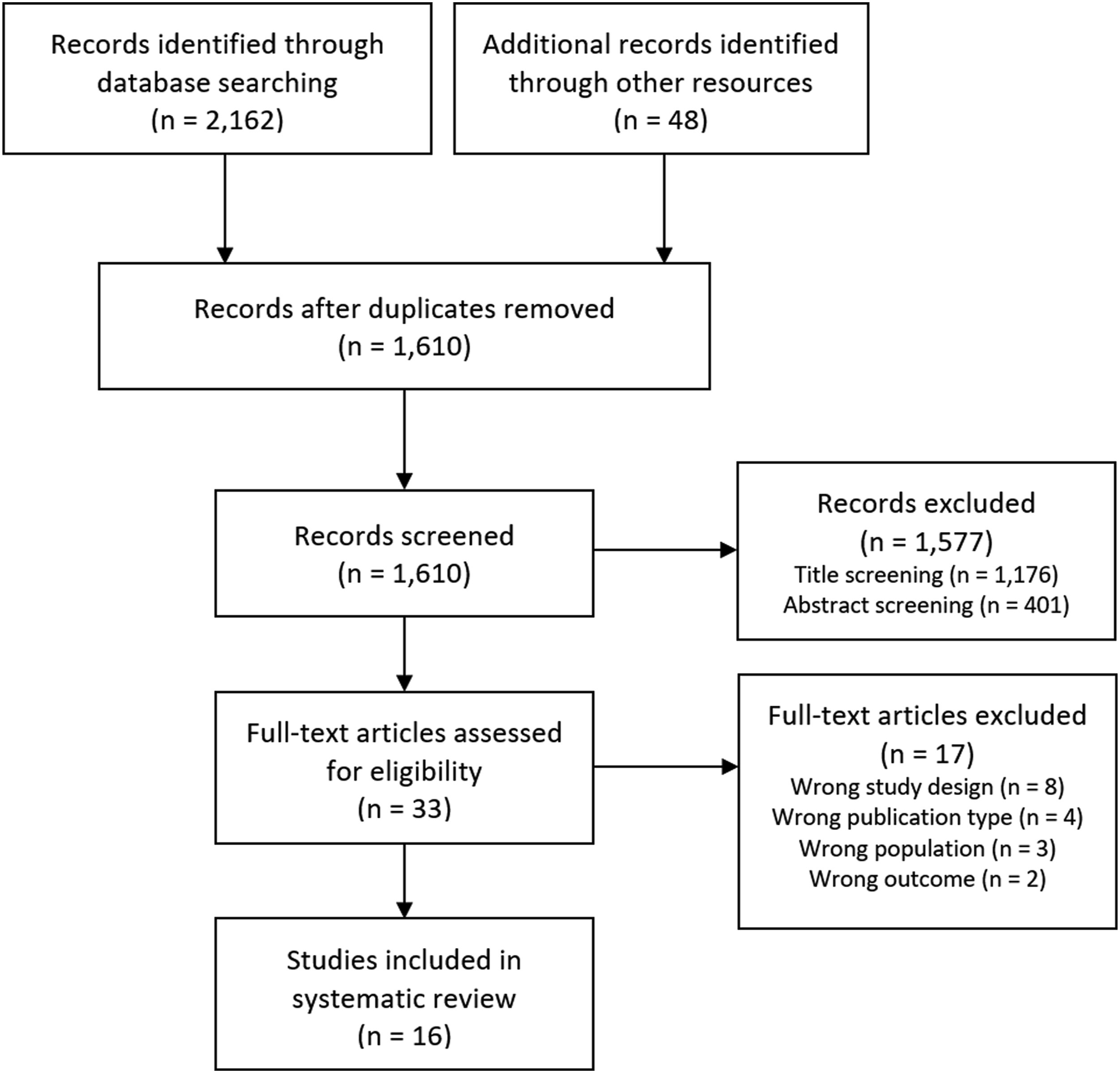
Study Characteristics
Characteristics of included studies.
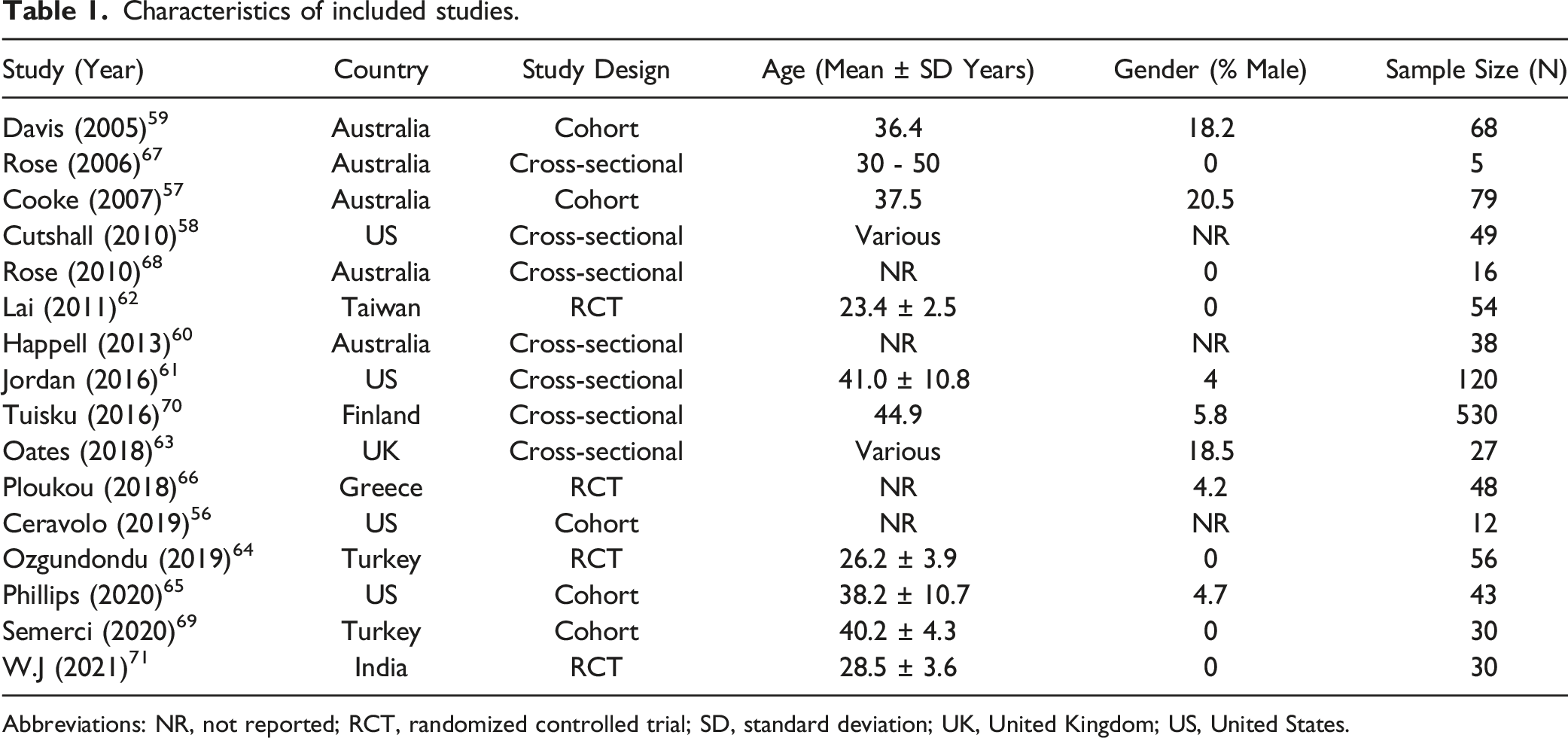
Abbreviations: NR, not reported; RCT, randomized controlled trial; SD, standard deviation; UK, United Kingdom; US, United States.
Cross-Sectional Studies
Seven of the 16 studies (43.8%) were cross-sectional and collected self-reported data from nurses about their general use of music for burnout.58,60,61,63,67,68,70 The seven cross-sectional studies reported: (1) 61% of nurses used music therapy as a coping strategy, 58 (2) music listening was the second most common activity for coping with stress, 61 (3) music listening and playing instruments was one of the four activities reported by nurses to support wellbeing, 63 (4) 20% of the nurses in the study used music listening as a coping mechanism, 67 (5) music was used to cope with stress, 68 (6) music on the wards was one of the 11 suggestions by nurses to reduce occupational stress, 60 and (7) nurses who participated in cultural activities provided by their employer (such as music entertainment) rated their work engagement to be significantly increased compared to non-participants. 70
Nurses experiencing moderate stress ranked music therapy as their most utilized complementary and alternative medicine therapy. 58 No description of how music was used within music therapy was provided. Although nurses who engaged in cultural activities (including music entertainment) rated their work engagement to be significantly increased compared to non-participants, no change in burnout (perceived stress) was reported. 70 No descriptions that identified which participants specifically attended each type of cultural activity were provided.
Summary of outcomes.
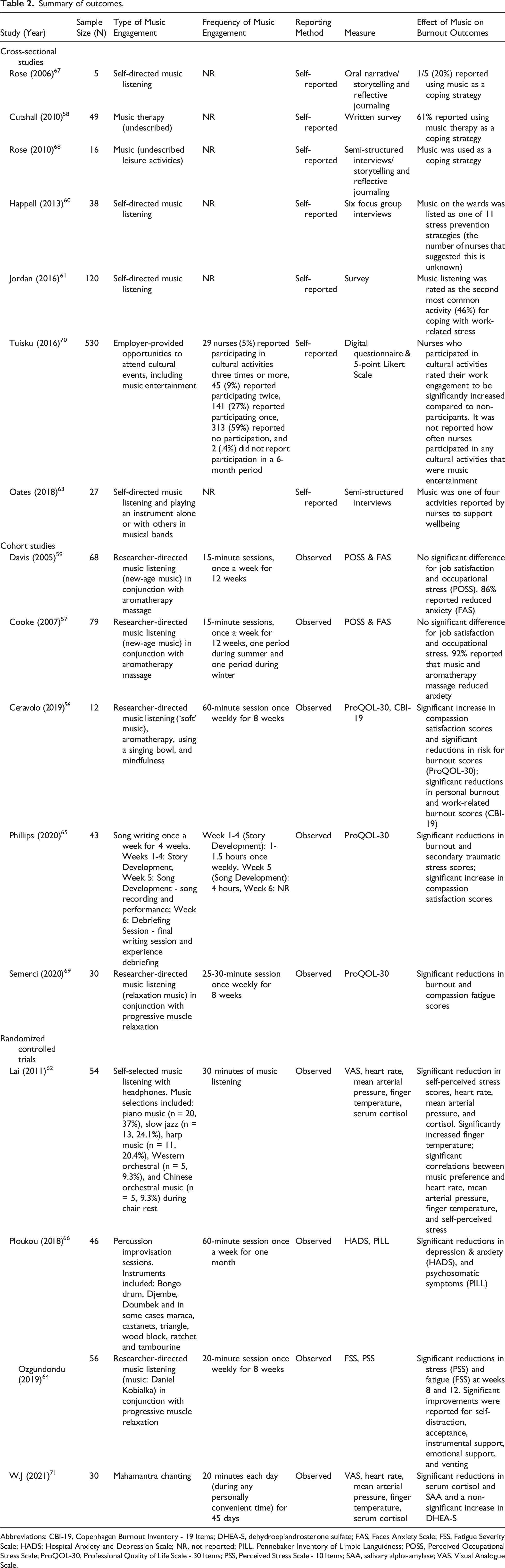
Abbreviations: CBI-19, Copenhagen Burnout Inventory - 19 Items; DHEA-S, dehydroepiandrosterone sulfate; FAS, Faces Anxiety Scale; FSS, Fatigue Severity Scale; HADS; Hospital Anxiety and Depression Scale; NR, not reported; PILL, Pennebaker Inventory of Limbic Languidness; POSS, Perceived Occupational Stress Scale; ProQOL-30, Professional Quality of Life Scale - 30 Items; PSS, Perceived Stress Scale - 10 Items; SAA, salivary alpha-amylase; VAS, Visual Analogue Scale.
Cohort Studies
Five of the 16 studies (31.3%) were cohort studies which reported different uses of music for burnout: (1) researcher-directed music listening with aromatherapy massage,57,59 (2) researcher-directed music listening with mindfulness activities, 56 (3) researcher-directed music listening with progressive muscle relaxation, 69 and (4) facilitated song writing. 65 Two of the cohort studies (40.0%) combined music listening with aromatherapy massage.57,59 In both studies, nurses were offered 15-minute aromatherapy massages while listening to new-age music once a week over a 12-week period. One of these two studies compared two 12-week periods, one in the summer and one in the winter. 57 Both studies reported that music with aromatherapy massage led to no significant difference in job satisfaction or occupational stress pre- and post-intervention. However, 86-92% of the nurse participants reported reduced anxiety.57,59 One study (20%) combined researcher-directed music listening with progressive muscle relaxation. 69 Nurses participated in group sessions for 25-30 minutes once a week for eight weeks. This led to a significant reduction in burnout and compassion fatigue. 69 One study (20%) implemented researcher-directed music listening with mindfulness activities. 56 Nurses participated in the mindfulness activities while listening to soft music once a week for eight weeks. This led to a significant increase in compassion satisfaction and a significant reduction in scores for risk for burnout, personal burnout, and work-related burnout. 56 One study (20%) implemented a six-week facilitated song writing activity that occurred once weekly. 65 This study reported that music-related activities led to a significant reduction in burnout and secondary traumatic stress; a significant reduction in depression, insomnia, and loneliness; and a significant increase in self-compassion and self-awareness. In addition, music-related activities resulted in a significant increase in compassion satisfaction. 65
All five cohort studies included an external facilitator for the use of music and occurred in a group setting. Duration of the interventions varied from 15 minutes over 12 weeks (music with aromatherapy massage),57,59 25-30 minutes over eight weeks (music with progressive muscle relaxation), 69 and approximately 1.5 hours each week for four weeks (song writing). 65 Four of the cohort studies (80.0%) investigated the use of music in conjunction with another activity (progressive muscle relaxation, aromatherapy massage, or mindfulness activities) and implemented researcher-directed music listening.56,57,59,69 Of these four studies, two reported a significant reduction specifically in burnout,65,69 and two reported significant reductions in anxiety but no significant change in occupational stress.57,59 One of the cohort studies (20.0%) investigated the use of song writing and reported significant reductions in burnout. 65
Randomized Controlled Trials
Four of the 16 studies (25.0%) were RCTs and each reported upon different uses of music for burnout: (1) self-selected music listening, 62 (2) percussive improvisation, 66 (3) researcher-directed music listening with progressive muscle relaxation, 64 and (4) chanting. 71 In one of the RCTs (25.0%), nurses engaged in self-directed music listening for 30 minutes and reported significantly reduced self-perceived stress scores, reduced heart rate, mean arterial pressure, and cortisol; significantly increased finger temperature; and significant correlations between music preference and self-perceived stress. 62 Additionally, 88.9% of the participants reported engaging in music listening to reduce stress. The music listening options included: piano music (n = 20, 37%), slow jazz (n = 13, 24.1%), harp music (n = 11, 20.4%), Western orchestral music (n = 5, 9.3%), and Chinese orchestral music (n = 5, 9.3%). One study (25.0%) implemented 60-minute drumming classes once weekly for four weeks and reported significant reductions in depression, anxiety, and psychosomatic symptoms. 66 One study (25.0%) implemented pre-determined music listening during 20-minute progressive muscle relaxation sessions that occurred once weekly for eight weeks. 64 Participants in the intervention group reported a significant reduction in perceived stress and fatigue severity scores at weeks 8 and 12; and significant improvements for self-distraction, acceptance, instrumental support, emotional support, and venting. 64 One study (25.0%) engaged nurses in chanting and reported significant reductions in serum cortisol and salivary alpha-amylase, and an insignificant increase in dehydroepiandrosterone sulfate. 71
All four RCTs included an external facilitator for the use of music. In total, one study (25.0%) reported upon self-selected music listening, 62 two (50.0%) reported upon active music engagement (chanting, improvised percussion),66,71 and one (25.0%) reported upon researcher-directed music listening in conjunction with progressive muscle relaxation for burnout. 64
Types of Music Engagement
The sixteen studies in this review reported upon eight different types of music engagement: (1) self-directed music listening (25.0%);60-62,67 (2) self-directed playing of music instruments and/or self-selected music listening (6.3%); 63 (3) song writing (6.3%); 65 (4) chanting (6.3%); 71 (5) percussive improvisation (6.3%); 66 (6) music entertainment (6.3%); 70 (7) researcher-directed music listening in conjunction with progressive muscle relaxation (12.5%),64,69 aromatherapy massage (12.5%),57,59 or mindfulness activities (6.3%); 56 and (8) music without description (12.5%).58,68
Quality Assessment
The NOS scores of the five included cohort studies ranged from 4 – 6 out of a possible score of 9 (Supplemental Appendix: Table A3).56,57,59,65,69 The five cohort studies were of poor quality. The NOS scores of the seven included cross-sectional studies ranged from 2 – 6 out of a possible score of 10 (Supplemental Appendix: Table A4).58,60,61,63,67,68,70 According to the Agency for Healthcare Research and Quality (AHRQ) standards, one study 70 was satisfactory and six studies58,60,61,63,67,68 were unsatisfactory. The JBI critical appraisal checklist was used to assess the four RCTs.62,64,66,71 The scores ranged from 8 – 10 out of a possible score of 13 (Supplemental Appendix: Table A5), resulting in the inclusion of all four studies.
Discussion
To the best of our knowledge, this is the first systematic review to report upon the use of music to manage burnout in nurses. Drawing upon the World Health Organization’s definition of burnout, unmanaged occupational stress is the main indicator of burnout. The 16 studies in this review reported upon eight different uses of music for burnout in nurses including managing occupational stress. It is not possible to make any conclusive statements about the use of music for burnout in nurses, not only due to the differences in study designs, but the differences in the types of music, frequency, duration, control groups and comparisons. To report upon the use of music for burnout with confidence, larger sample sizes are required, comparisons between the different uses of music are required, and controls need to be in place for variables such as facilitator and group effects. Additionally, the cultural use of music needs to be explored. In this review, studies were conducted across eight different countries. The findings, in relation to the type of music used, may be specific to the cultural demographics of the study. Despite the heterogeneity of the use of music in these studies, music has been shown to have a positive impact on the outcome of burnout. The results of the included studies primarily suggest that there were two mechanisms of music engagement that nurses used to manage their occupational burnout: (1) self-facilitated engagement and (2) externally-facilitated engagement.
Self-Facilitated Music Engagement
All seven cross-sectional studies reported upon nurses’ self-facilitated use of music including music listening, playing instruments, and music entertainment for coping or preventing stress, supporting wellbeing, or enhancing work engagement. Music may be easily utilized in daily life and medical settings and is thus accessible to nurses to manage stress and burnout, and to promote wellbeing.33,57,59-61,63,66-68 According to four cross-sectional studies, nurses were proactively engaging in self-selected music listening.60,61,63,67 When provided the opportunity to engage in music entertainment, they reported their work engagement to be significantly increased, even though there was no change in their perceived stress. 70 Music entertainment may encourage work engagement through communication and collective participation. 70 Additionally, feeling connected to others can enhance wellbeing as a preventative measure. 73 This was also noted for the playing of musical instruments, such as participating in an ensemble which may encourage feelings of connectedness. 63 Self-use of music may be effective for instant mood regulation through distraction and for improving perceived levels of anxiety by shifting one’s attention from stressful environmental stimuli to auditory information.63,74,75 The cross-sectional studies did not reveal how often nurses are listening to music, or the preferences of music. However, it appears that nurses are self-selecting music, which aligns with previous studies supporting the use of preferred music to induce relaxation and reduce physical and perceived stress.62,76,77 The importance of preferred music, or personalized use of music, is also highlighted in the cross-sectional study conducted by Cutshall and colleagues. 58 Data collection through surveys and storytelling sessions provide the opportunity to report upon the strategies that nurses employed to manage burnout. A common theme was the use of self-directed music (music listening, playing an instrument, or undefined) to cope with occupational stress. Considering the accessibility of music listening, and the research supporting the use of music listening for reducing stress, 78 health promotion practitioners may want to consider advocating for the use of music listening in healthcare settings.
Externally-Facilitated Music Engagement
Externally-facilitated music engagement, including music listening, chanting, percussive improvisation, and song writing, was reported in the four RCTs and five cohort studies with reductions in burnout outcomes. Systems-level facilitators can improve the mental wellbeing of nurses by providing external aid and access to music sessions instructed by trained professionals. These external facilitators can include the government, unit managers, and other stakeholders that determine the allocation of healthcare financial resources. The high prevalence of burnout among nurses necessitates the involvement of external facilitators to manage nurses’ occupational stress. The studies included in this review point towards positive outcomes of participation in music sessions facilitated by trained professionals. For instance, musical participation through cultural or religious events, including chanting and drum circles, may be effective to promote nurses’ mental and physical health.66,71,79,80 This type of active music engagement often requires a trained facilitator and often occurs in a group setting which can promote social cohesion. In this review, five of the studies used facilitated music in conjunction with another intervention; therefore, the results of the study do not solely reflect the use of music. Through music facilitation, nurses were able to learn musical skills to engage in song writing, chanting, and drumming regardless of their background in music. Song writing in a group setting may reduce loneliness through the sharing of experiences and enhanced self-awareness. Music-related activities, such as improvised drumming, may provide nurses with an opportunity to express their feelings, resulting in reduced burnout and improved wellbeing and patient care. 66 Healthcare settings may want to consider providing nurses the opportunity to actively engage in making music with a facilitator to reduce outcomes of burnout.
Related Research
A review of music in the workplace suggests that music can positively influence psychological symptoms, work-related stress, and burnout and improve work performance and cognitive outcomes. 24 The review did not include cross-sectional studies or target the nurse population specifically, but it does support similar findings to our systematic review which included studies that demonstrated a positive impact of music on burnout.56-71 A study of music listening for workplace stress stated that daily music listening could reduce work-related stress and that the effects may be related to individual musical preferences and familiarity. 78 This is a similar finding to this current systematic review which reports upon the self-directed use of music listening among nurses, and the ability of preferred music to induce relaxation and reduce physical and perceived stress.57,59-64,66-68 A study exploring both music listening and music therapy interventions in relation to pain reported both modes as equally effective for stress and anxiety reduction. 81 In the current systematic review, studies using both music interventions56,57,59-71 and a music therapy intervention 58 reported the positive impact of music on burnout or related outcomes. However, Bradt et al. 81 also reported that 77.4% of the participants preferred music therapy for future treatments. The preferences for music therapy were due to therapeutic relationships, interactive music-making, and the possibility of emotional expression.81-83 None of the included studies in the current systematic review compared the effectiveness, feasibility, and preferences of music and music therapy interventions. Development of standards for music therapy interventions and research comparing music and music therapy interventions may be necessary for further investigation.
Future Directions
Further research is needed to collect samples with rigorous randomization and the use of control groups. It may be important to determine whether the effectiveness of music may be influenced by anticipation of its benefits and daily use of music. 62 In addition, investigating associations between variables such as personal characteristics and the impact of music on burnout may be necessary.57,66 Longitudinal studies are required to determine the long-term effects of various music interventions on burnout in nurses.63,64,69,71 Further research is needed to incorporate accepted complementary therapies in control groups to provide context for the effectiveness of music on burnout in nurses compared to other interventions. 71
Limitations
This systematic review has several limitations. Among the 16 included studies, seven studies (43.8%) had a cross-sectional study design.58,60,61,63,67,68,70 From these studies, it was not possible to determine the direct impact of music on burnout and stress in nurses. Various scales were used56,57,59,62,64,65,69,70 and thus a meta-analysis was not conducted. Moreover, 11 studies (68.8%) were unsatisfactory or of poor quality according to AHRQ standards.56,58-61,63,65,67-69 Small sample size,56,61,65,66 homogeneous nature of the sample,56,59,61,66,68 non-randomized group assignment, 65 convenience sampling, 65 low response rate,61,63,70 voluntary bias, 62 inherent bias, 64 and response bias were reported. 61 Poor representativeness may reduce the generalizability of conclusions.
Conclusions
Self-reports from nurses indicate the use of self-facilitated music for coping with stress, preventing stress, supporting wellbeing, or enhancing work engagement. Data collected from RCTs and cohort studies indicate that externally-facilitated music engagement can reduce burnout in nurses. This systematic review demonstrates the utility of music as an intervention to reduce burnout and promote mental health in nurses. There is a high prevalence of burnout in nurses. According to one systematic review and two meta-analyses, both passive and active engagement in music have been reported to reduce stress. To the best of our knowledge, this is the first systematic review that evaluates the use of music to manage burnout in nurses. It provides insight into nurses’ current use of music for coping with stress, an aspect of burnout, and describes the externally-facilitated music that has been implemented to reduce burnout in nurses. This systematic review demonstrates the utility of music as an intervention to reduce burnout and promote mental health in nurses. Considering the prevalence of burnout in nurses and its impact on patient care and the healthcare system, this review could inform non-pharmacological support for the wellbeing of nurses.SO WHAT? Implications for Health Promotion Practitioners and Researchers
What is already known on this topic?
What does this article add?
What are the implications for health promotion practice or research?
Supplemental Material
Supplemental Material - The Use of Music to Manage Burnout in Nurses: A Systematic Review
Supplemental Material for The Use of Music to Manage Burnout in Nurses: A Systematic Review by Rachael Finnerty, Katherine Zhang, Rina A. Tabuchi, and Kevin Zhang in American Journal of Health Promotion
Footnotes
Author Contributions
Study concept and design: Kevin Zhang, Rachael Finnerty. Acquisition, analysis, and interpretation of data: all authors. Writing of manuscript: all authors. Critical review and approval of manuscript: all authors.
Declaration of Conflicting Interests
The author(s) declared no potential conflicts of interest with respect to the research, authorship, and/or publication of this article.
Funding
The author(s) received no financial support for the research, authorship, and/or publication of this article.

Supplemental Material
Supplemental Material for this article is available online.
References
Supplementary Material
Please find the following supplemental material available below.
For Open Access articles published under a Creative Commons License, all supplemental material carries the same license as the article it is associated with.
For non-Open Access articles published, all supplemental material carries a non-exclusive license, and permission requests for re-use of supplemental material or any part of supplemental material shall be sent directly to the copyright owner as specified in the copyright notice associated with the article.
