




Abstract
Teachers of students with extensive support needs (ESN) often perform many leadership-related tasks, such as supervising paraprofessionals or advocating school wide for student accessibility and inclusion. While teacher leadership has received considerable attention in research and practice, much of the attention has resided in general education and on formal pathways toward increased responsibility in the school. In this study, the authors explored the perspective and experiences related to teacher leadership competencies of both teachers and teacher educators in the field of ESN in one midwestern state. Teachers reported high confidence and moderate to high engagement in each of the competencies, contrasted with self-reported low coverage of many related topics in their teacher training programs. Teacher educators perceived the competencies as highly relevant to the teaching position and generally held moderate to high confidence in their program coverage and their student preparation to perform the related activities.
Keywords
Teacher leadership is increasingly recognized as a critical component for effective school performance and improvement. Researchers have identified such benefits of teacher leadership as improvement in student assessment scores (Coggins & McGovern, 2014; Heck & Hallinger, 2009), positive effects on teacher morale and pedagogical knowledge and skills (Nguyen et al., 2019; Sheppard et al., 2010), and enhancement of overall school culture and climate (Heck & Hallinger, 2009; Nguyen et al., 2019). Harris and Jones (2019) highlighted teacher leadership as a source of natural influence and action, as well as an impetus for improvement of practice within a school—all existing mainly outside of the formal leadership structure (i.e., an administrative position). While there is no one definition of teacher leadership, it has been described as a, “. . . process by which teachers, individually or collectively, influence their colleagues, principals, and other members of school communities to improve teaching and learning practices with the aim of increased student learning and achievement” (York-Barr & Duke, 2004, pp. 287–288). Reviews of the research identified eight key activities of teacher leaders: school-wide coordination efforts, curriculum decision-making, presentation of professional development (PD), school-wide improvement efforts, family and community involvement, educator preparation programs, action research, and social justice efforts (Nguyen et al., 2019; York-Barr & Duke, 2004). Simply put, teacher leaders extend their work beyond instruction to include efforts for positive change within their school and community (Barth, 2011; Katzenmeyer & Moller, 2011).
The typical route toward teacher leadership often develops over time with experience and specialized training (Bundy et al., 2015). However, special education teachers perform teacher leadership–related activities on Day 1 of the job due to the unique roles and responsibilities required by position (Bagley & Tang, 2018; Billingsley, 2007; Sindelar et al., 2010; York-Barr et al., 2005). In general terms, being a special education teacher leader includes school and community-wide advocacy and organizational efforts such as providing PD, collegial collaborations, coordinating events and schedules, as well as promotion of school-wide climate and other improvement initiatives in an effort to provide high-quality education and opportunities for students with disabilities (Billingsley, 2007; Collins et al., 2017).
Special education teachers often face increased task demands (Youngs et al., 2011). For special education teachers of students with extensive support needs (ESN; for example, autism, intellectual disability [ID], multiple disabilities), the complexity and management demands of the position are undeniable. In addition to instructional duties, teachers of students with ESN are responsible for, among a variety of other explicit and implicit roles, supervising staff, adapting curriculum, facilitating inclusive placements, and managing medical support needs (Ruppar et al., 2015; Westling et al., 2014). Teachers of students with ESN also face multiple and unique challenges, including feelings of professional isolation (Lang & Fox, 2004; Ludlow et al., 2005), lack of access to necessary information and materials (Lang & Fox, 2004; Rude et al., 2005), and difficulty implementing evidence-based practices (Greenway et al., 2013). These educators often report limited levels of support and understanding of their profession from their direct supervisors as well as inadequate preparation for the demands of the position (McLeskey & Billingsley, 2008). Given the unique, complex, and interdisciplinary support needs of their students, teachers of students with ESN, despite these noted professional challenges, fit the description of teacher leaders.
For the purposes of this study, the authors operationalized ESN teacher leadership by combining the main components of teacher leadership (see Nguyen et al., 2019; York-Barr & Duke, 2004) and the corresponding key responsibilities of these teachers. Using current research and guidance from textbooks (e.g., Browder et al., 2020; Brown et al., 2020; Westling et al., 2015), the research team—higher education faculty members focused on teaching and research in this area—collaboratively identified six core teacher leadership competencies (TLCs) as primary and representative for the profession: (a) implementing inclusive practices, (b) supervising paraprofessionals, (c) collaborating with interdisciplinary colleagues, (d) adapting and developing individualized curricula, (e) creating and maintaining family relationships, and (f) acting as a school- and/or community-based resource.
Implementing inclusive practice was defined as encouraging and supporting (a) student presence in general education settings, (b) social relationships with peers, and (c) access to the general education curriculum. This tenet of the profession requires leadership as the teacher works not only to promote the idea of inclusive education but also to model and coordinate effective practices such as schedule coordination and collegial support of specialized teaching strategies (Olson et al., 2016; Quirk et al., 2017). Supervising paraprofessionals includes training, assigning duties, assessing, managing, and orienting to the school environment. With the use of paraprofessionals to support the learning needs of students with ESN on the rise, effective training and supervision of this essential workforce has become the responsibility of many teachers (Biggs et al., 2016; Irvin et al., 2018). Collaborating with interdisciplinary colleagues refers to the need for working toward a common goal, recognizing and sharing expertise, collaborative decision making, and progress monitoring with Individualized Education Program (IEP) team members. Students with ESN require the assistance of professionals from multiple disciplines. The teacher, as the central figure in students’ education, becomes the hub that both translates and integrates suggestions and strategies for implementation on a daily basis (Cameron et al., 2014; Pufpaff et al., 2015).
Adapting and developing individualized curricula includes modifying existing and/or creating new materials for instructional use. Due to the highly individualized nature of student needs, combined with the general lack of ready-to-use materials, teachers of students with ESN are required to take a leading role in identifying and providing appropriate educational materials to support the learning goals of each student (Ballard & Dymond, 2017; Trela & Jimenez, 2013). Creating and maintaining family relationships describes the essential practice of developing and maintaining family-professional partnerships to gather and exchange information in support of student progress in a variety of settings, and to facilitate family connections with outside agencies/resources to support postschool outcomes (Miller et al., 2019). Finally, acting as a school- and/or community-based resource positions the teacher to serve as an advocate and resource to individuals and groups within the school and community on topics related to ESN (see Ruppar et al., 2015, 2018).
While teacher leadership activities are required as regular elements of the job (e.g., Browder et al., 2020; Brown et al., 2020; Westling et al., 2015), researchers have yet to fully examine the teacher leadership–related professional training, experiences, and needs of teachers of students with ESN. Although it is clear that teacher education training programs are essential for both preparation and certification, researchers noted discrepancy in perspectives between teacher educators and teachers in training on the appropriateness of their preparation (e.g., Canrinus et al., 2017; Ruppar et al., 2016; Woolf, 2019). PD is also an important feature in the support of improving teacher practice in working with students with ESN; however, questions on the availability and appropriateness of current provisions remain (Berry et al., 2011). Related to formal training and PD, teachers’ positive beliefs in their own ability to handle such tasks as these are essential to both the ability to perform the practices and to remain in the field, despite the inherent job demands (Bandura, 1986). In this study, the authors aimed to address questions of perspective and experiences on ESN teacher leadership activities. Specifically, the research questions included the following:
Method
Participants
As part of a multistakeholder survey assessing the experiences and perspectives on teacher leadership of teachers, administrators, and teacher educators in one midwestern state, this article details responses from teachers and teacher educators. Space constraints as well as differences in the focus of the surveys led to a dual focus on teacher and teacher education participants, without administrator data, in this description of the findings. Both participant groups were contacted via email to request participation in an online survey on teacher leadership within special education for students with moderate to severe ID as well as severe and multiple disabilities (SX)—a subsection of students with ESN. The researchers elected to focus on students with ID and SX within the ESN larger population to align with the particular licensure of the state in focus (i.e., categorical teacher licenses). This investigation was conducted with approval from the associated universities’ institutional review boards and adhered to human participant protections throughout the entirety of the project.
Teachers
Due to the wide variety in programming and structure of supports and programs accessible to students with ESN in the state, each public school principal and the director of each intermediate school district (ISD; that is, entities within a county or counties that support the local school districts [LEA; Local Education Agency] in special education through sharing resources and programming as well as providing career and technical education programming) were identified through a review of the state’s public school contact database. After removal of nonrelevant programs (e.g., juvenile detention centers, delinquent institution), a total of 762 administrators were identified and sent an email request to forward information and a survey to special education teachers within their building or ISD who worked with students with ESN.
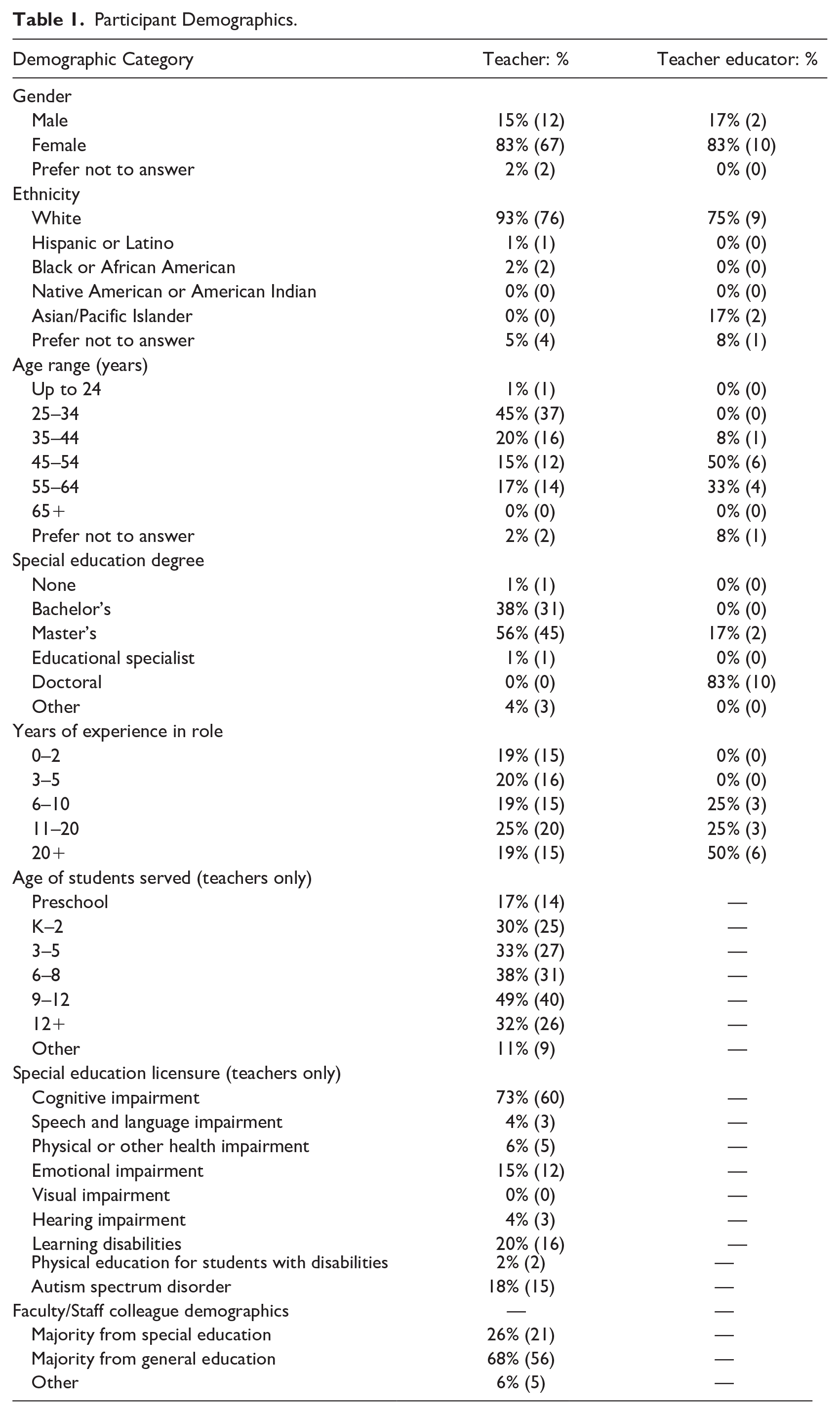
The final responding sample included 107 teachers who worked in some capacity with students with ESN (see Table 1 for demographics). While this sampling procedure cannot provide an exact response rate, a rate of 14.0% can serve as an approximate, based on an assumption that each administrator invited one teacher. The majority of teachers were female (83%) and White (93%); 5% of respondents preferred not to provide their race/ethnicity, 2% indicated Black, and 1% Hispanic. Most of the respondents were between the age of 25 and 34 years (45%), followed by 35 and 44 years (20%), 55 and 64 years (17%), and 45 and 54 years (15%). The highest reported degree attained was a master’s degree (56%), followed by bachelor’s degree (38%). One respondent each reported no special education degree attained (1%) or educational specialist (1%). In terms of teaching experience, about one fourth reported 11 to 20 years (25%), just less than one fifth reported 3 to 5 years (20%), and equal frequency reporting 0 to 2, 6 to 10, and 20+ years of experience (19%). Regarding the age of students taught, the largest frequency was the category ninth to 12th grade (37%), followed by Grades 6 to 8 (29%), Grades 3 to 5 (25%), Grades 12+ (24%), Grades K–2 (23%), and preschool (13%).
Participant Demographics.
Teacher educators
Using a state-managed database, the researchers identified institutions with teacher education preparation programs that included programming in ID (n = 11; excluding the two of the research team). Initially, the invitation to participate in the online survey was sent to one representative per institution, namely a program or department chairperson with a request to distribute the survey to all faculty in the area of ID. Due to the lack of initial response, the pool was expanded to 40 faculty members from the 11 institutions, ranging from one to eight per institution. Faculty members who were explicitly identified on university websites as instructors in the ID teacher education preparation program were chosen first (n = 8), followed by other special education faculty without position expertise listed. Each invitation included a request to share the survey with relevant faculty members.
The final responding sample included 17 faculty members, who indicated they worked in some capacity training preservice or in-service teachers of students with ESN. Of those who responded to demographic questions, 83% were female. All who responded indicated their ethnicity was White or Asian/Pacific Islander. Half of the respondents were between 45 and 55, with the next most frequent response being 55 and 64 (33%). Just less than 10% reported being between 35 and 44 and preferred not to answer. More than four fifths of teacher educator respondents held a doctorate; the others had a master’s degree (17%). The most frequent response to the years of teacher educator experience prompt was 20+ (50% of respondents; see Table 1).
Survey Instrument
To understand the perspectives of stakeholders—teachers, administrators (i.e., not addressed in this article), and teacher educators—on teacher leadership within special education for students with ESN, a researcher-created survey was used (see Appendix A for teacher survey; teacher educator and administrator survey available from the first author upon request). The researchers developed the survey questions based on six core TLCs identified from research and textbooks related to teaching students with ESN (e.g., Browder et al., 2020; Brown et al., 2020; Westling et al., 2015). This survey focused on the perspective and experiences related to teacher leadership in the area of teaching students with ESN. The survey assessed stakeholder importance of the six TLCs: (a) implementing inclusive practices; (b) supervising paraprofessionals; (c) collaborating with interdisciplinary colleagues; (d) adapting and developing individualized curricula; (e) creating and maintaining family relationships; and (f) acting as a school- and/or community-based resource.
The survey, administered electronically using the Qualtrics survey platform, consisted of three parallel surveys—one with language tailored to each of the three initial stakeholder groups (i.e., teacher, administrator, and teacher educator; skip logic was used once a respondent identified themselves by role). Prior to administration, the survey was reviewed by a group of special education administrators (n = 2), teachers, (n = 3) and teacher educators (n = 4). Each reviewer was asked to evaluate the survey instrument for both face and content validity. Based upon the feedback received, the survey instrument received minor edits to improve clarity and ease of use. Researchers conducted no additional pilot of the survey.
Teachers
The teacher strand contained a total of 34 questions. The first two served as gatekeeping questions to ensure respondents were completing the appropriate strand of questions as well as met inclusion criteria (i.e., “Do you work in some capacity with students with moderate or severe cognitive impairment or severe multiple impairments?” and “If so, indicate which populations.”). The next six questions focused on the six TLC areas using a five-option Likert-type scale ranging from “None/not at all” to “Frequently/Highly” as well as a “N/A” option if respondents felt the question was not applicable. Teachers were asked to rate the following: (a) how often they engage in the TLC, (b) level of confidence in their ability and preparedness to implement the TLC, and (c) level of support from their supervisors with implementing the TLC. Prior to each question presenting a TLC, an operational definition of the TLC was provided (see Appendix A). In addition, there were 18 supporting multiple-choice questions (with an open-ended “other” option) for each TLC area that asked teachers to indicate types of PD they participated in that enabled them to implement the specific TLC, and what types of supports they currently receive or would like to receive from supervisors to implement the specific competency. Finally, the last eight were multiple-choice demographic questions specific to the respondent and their teaching experience (e.g., race/ethnicity, age, current level of education, years of teaching experience, students in their classroom, certification).
Teacher educators
The teacher educator strand contained a total of 13 questions. The first two served to confirm respondents completed the appropriate strand of questions and met inclusion criteria (i.e., “Do you work in some capacity training pre- or in-service teachers of students with moderate or severe cognitive impairment or severe multiple impairments?” and “If so, indicate which populations.”). The next six questions focused on the six TLCs using a five-option Likert-type scale ranging from “None/not at all” to “Frequently/Highly” as well as a “N/A” option. This survey was designed similarly to the teacher survey with the central questions framed around the six TLCs. Instead of asking for their perspectives of their own capacity in this area, teacher educators were asked to rate the following: (a) the importance of the competency for teaching students within this population, (b) level of confidence in their program’s ability to address the competency area, and (c) level of confidence in their preservice teacher candidates’ ability to implement the TLC upon program completion. Prior to each question regarding the TLC, an operational definition was provided in the survey. The last were five multiple-choice demographic questions specific to the respondent and their teaching experience (e.g., race/ethnicity, age, current level of education).
Procedure
An initial email was sent to the identified teacher educators and administrators that explained the general nature and purpose of the survey. The administrators were asked to forward the email and/or survey link to appropriate teachers in their school, district, or service area. One week following the initial email, an invitation was resent with an accompanying link to the survey. With the invitation, there was an additional request that the survey be forwarded to any relevant teacher educators or special education teachers, respectively.
Data Analysis
Researchers analyzed the data using the SPSS 26.0 statistical package (SPSS Inc., 2019). Researchers conducted descriptive statistics to obtain frequencies and measures of central tendency. Specifically, researchers ran descriptive statistics on demographics for teachers and teacher educators as well as the teacher respondents’ reported frequency of engagement, confidence in their preservice preparation, and PD for each of the six TLCs. Researchers also conducted descriptive statistics relative to the number of PD opportunities teachers reported receiving for each competency and teacher educators’ report of how often teachers should engage, confidence in their program, and confidence in their former students for each of the six TLCs. To analyze the number of types of PD teachers reported for each of the competencies, researchers summed across the eight variables in which respondents indicated yes or no to receiving.
The researchers also ran correlations between variables using Spearman’s rho. Researchers performed correlations for each of the six competencies between teacher variables (i.e., highest degree attained and number of years teaching), as well as the following four factors related to their perspectives and experience with the TLCs: teacher-reported engagement, confidence in their ability to perform the TLC, preparation by preservice training, and preparation by in-service PD. Furthermore, for teachers, researchers conducted correlations between the number of types of PD received for each competency and teachers reported confidence. Finally, researchers performed correlations on teacher educators’ reports of the confidence in their program and the confidence in their students for each of the six competency areas.
Results
Research Question 1: Teachers’ Views of TLC Engagement and Confidence
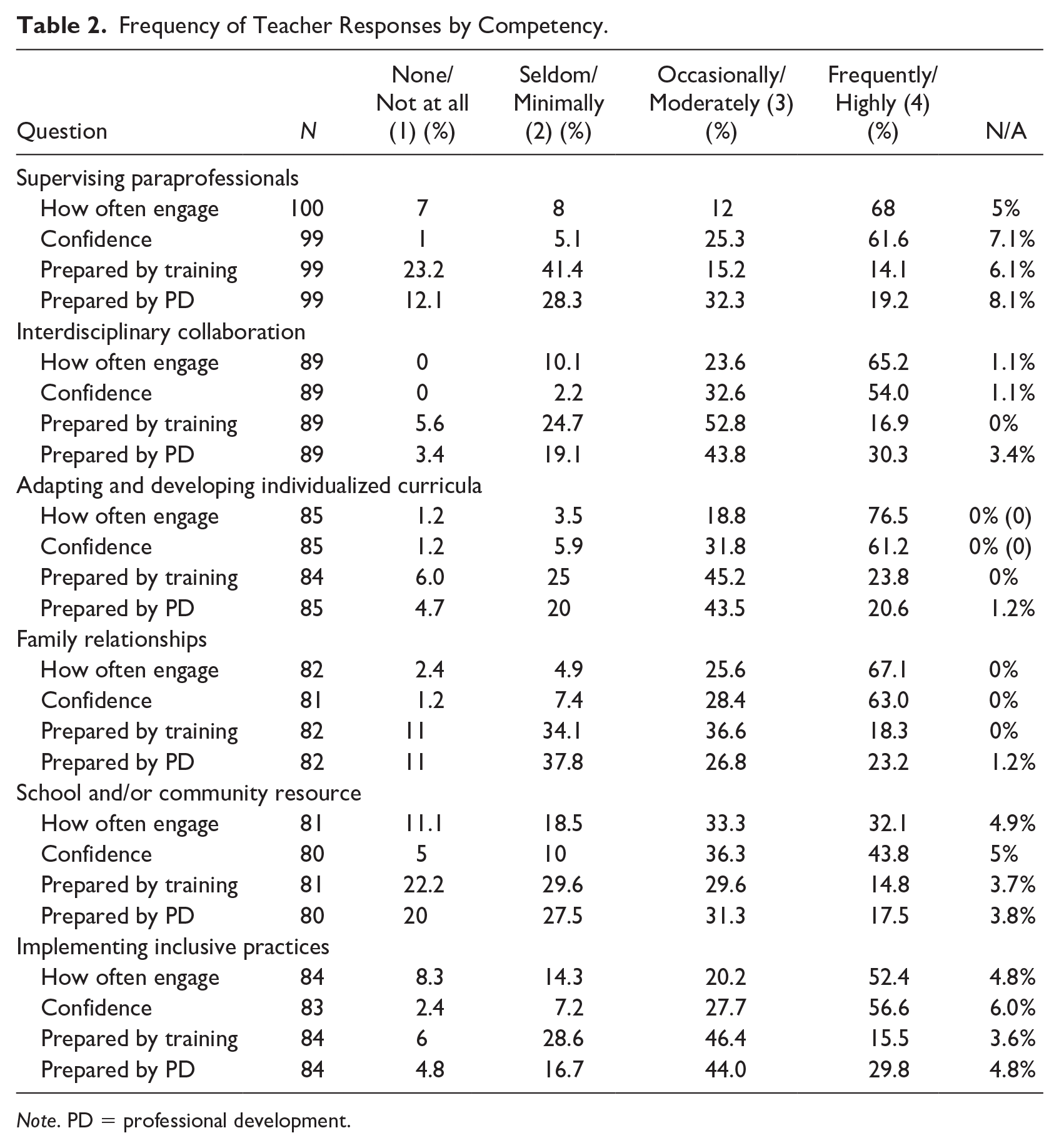
Across the six TLCs, more than 50% of teachers reported frequent engagement in these practices, with the exception of serving as a school and/or community resource (32.1%, see Table 2). For supervising paraprofessionals, interdisciplinary collaboration, adapting and developing individualized curricula, and family relationships, more than two thirds of teacher respondents indicated engaging in this practice frequently; the frequency for implementing inclusive practices was just more than 50%. Across the six TLCs, with the exception of serving as a school and community resource (42.8%), more than 50% of teachers reported being highly confident in their abilities (see Table 2).
Frequency of Teacher Responses by Competency.
Note. PD = professional development.
Research Question 2: Teachers’ Preparation and PD
Of the teacher respondents, less than 25% reported they were highly prepared during teacher preparation for each of the six areas. Of the six TLCs, teachers reported feeling the least prepared from their teacher preparation to supervise paraprofessionals (i.e., reported minimally or not at all prepared), followed by serving as a school and/or community resource. The two most frequently reported areas for having no or minimal preparation based on PD received was serving as a school and/or community resource, followed by supervising paraprofessionals. Teachers reported feeling most prepared in terms of PD to implement inclusive practices, followed by interdisciplinary collaboration, and adapting and developing individualized curricula.
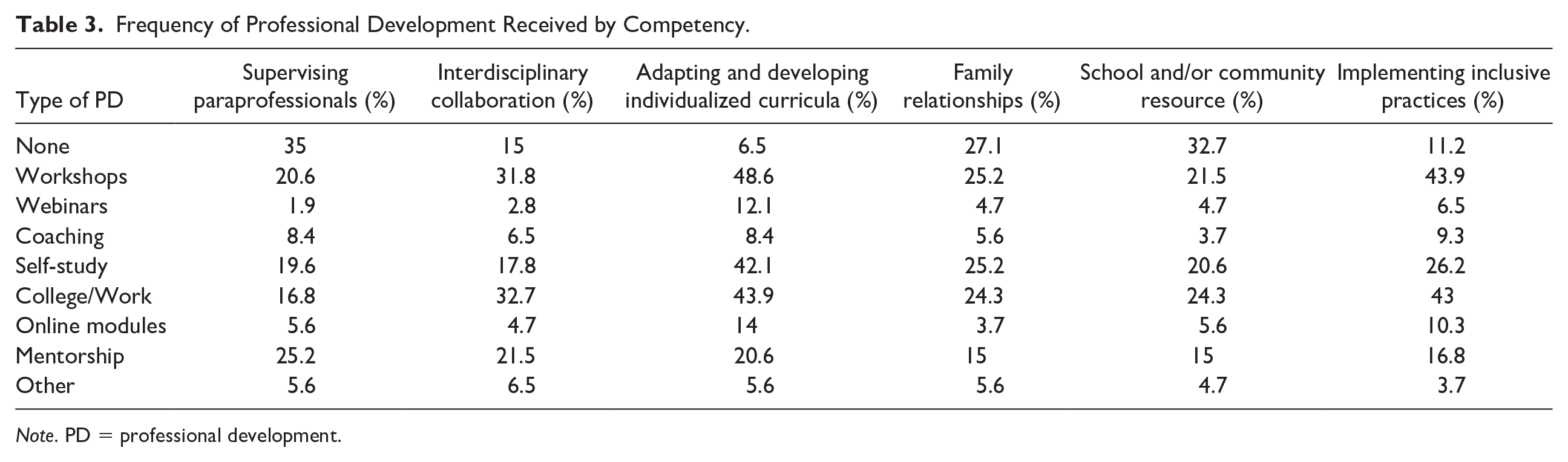
Frequencies for engagement varied in terms of PD across the six TLCs. A range of 6.5% (adapting and developing individualized curricula) to 35% (supervising paraprofessionals) of teachers reported receiving no PD for the TLC (see Table 3). Across the PD types and the six TLCs, the most reported were college/work, self-study, workshops, and mentorship. Compared with the other TLCs, more teachers reported receiving PD overall for adapting and developing individualized curricula and implementing inclusive practices (µ = 2.0 and 1.7, respectively). Adapting and developing individualized curricula also had a mode and median of 2 for types of PD received; the mode and median for the other five TLCs were 1.
Frequency of Professional Development Received by Competency.
Note. PD = professional development.
For supervising paraprofessionals, teachers reported receiving between 0 and 5 PD types; the most frequent response was 1 (61.7%), followed by 2 (13.1%). In terms of collaboration, the range was also 0 to 5, with the most frequent number of PD types received being 1 (45.8%), followed by 0 (20.6%), and then 2 (16.8%). The range for adapting and developing individualized curriculum was 0 to 6, with the most frequent being 2 types of PD (26.2%), followed by 0 types (21.5%), and then 1 type (19.6%). Family relationships had a range from 0 to 7 for the number of types of PD received; the most frequent number of types was 1 (45.8%), followed by 0 (23.4%). In terms of a school and/or community resource, the number of PD types ranged from 0 to 8, with 1 type being the most frequent (45.8%), followed by 0 (24.3%). Finally, the range for implementing inclusive curricula was 0 to 6, with the most frequent number of types of PD received being 1 (29.9%), followed by 0 (22.4%) and 2 (21.5%).
Research Question 3: TLC Correlations
Teacher confidence in the ability to perform the TLC (i.e., T. Confidence) was statistically significantly correlated in each of the TLCs with teacher engagement, preservice training, and PD with the exception of PD preparation for family relationships (p < .05; see Table 4). Years of teaching was statistically significant for degree as well as for confidence in the TLCs: adapting and developing individualized curricula and implementing inclusive practices. In both cases, more years of teaching resulted in greater report of confidence. Degree attainment was statistically significant with confidence for four of the competencies: supervising paraprofessionals, interdisciplinary collaboration, adapting and developing individualized curricula, and school and/or community resource. For each of these four TLCs, having a special education degree was associated with higher rates of confidence. In nearly all cases, the variables engagement, preservice training, and PD were statistically significantly correlated, with the exception of engagement and training in adapting and developing individualized curricula, as well as PD and both engagement and confidence for family relationships.
Correlation Matrix for Variables Among the Six TLCs (Spearman’s Rho).
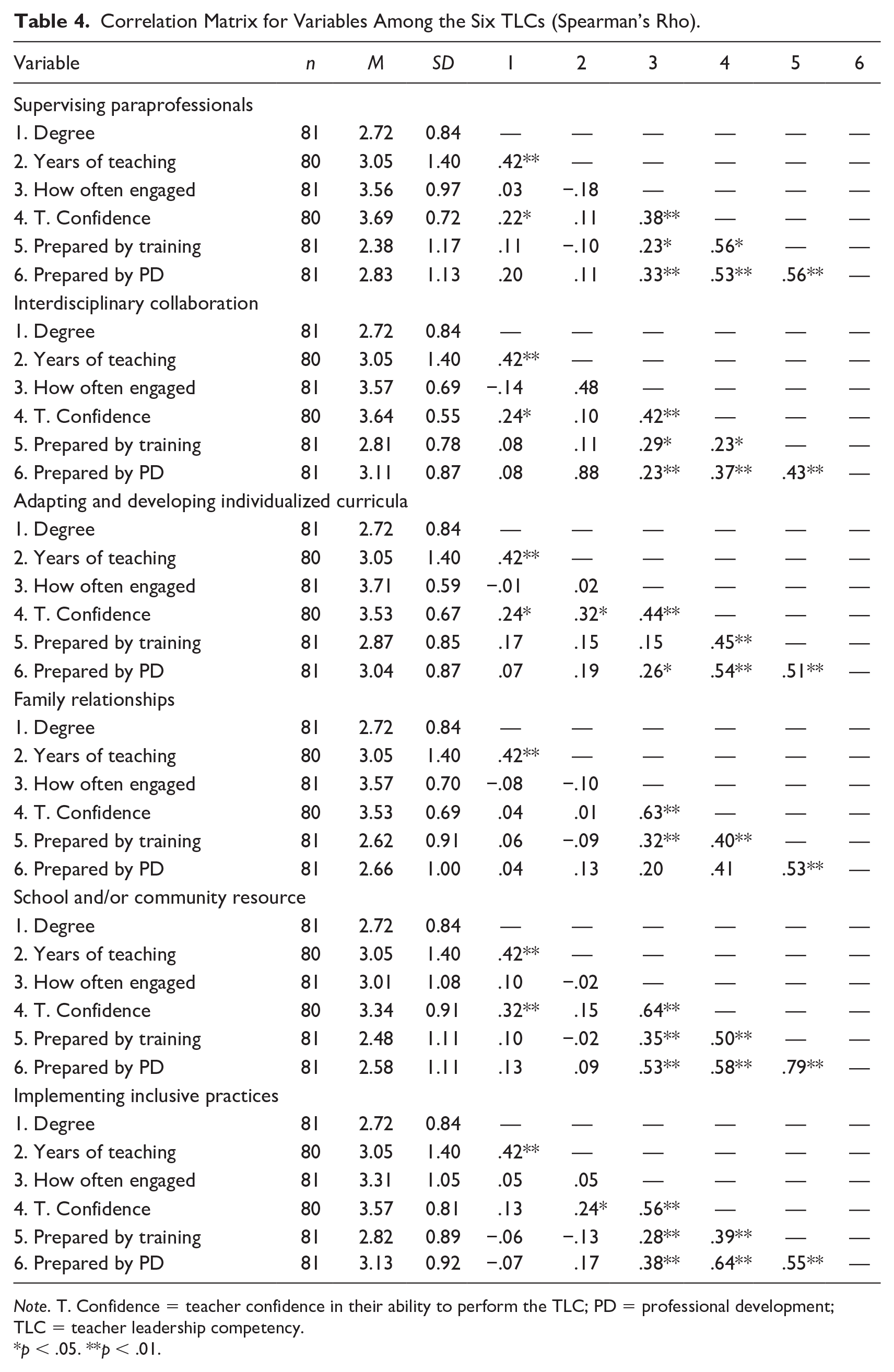
Note. T. Confidence = teacher confidence in their ability to perform the TLC; PD = professional development; TLC = teacher leadership competency.
p < .05. **p < .01.
Between the number of types of PD regarding each TLC and teacher-reported confidence for the TLC, no statistically significant correlation existed for the following: supervising paraprofessionals and collaborations with interdisciplinary colleagues. With the number of types of PD involving adapting and developing individualized curricula and teacher-reported confidence for this competency, a statistically significant correlation existed (rs = .432, p < .000). Likewise, a statistically significant relationship was found for creating and maintaining family relationships (rs = .305, p = .006). The correlation between the number of types of PD involving acting as a school and/or community resource and a teacher’s confidence in doing so was also statistically significant (rs = .231, p = .039). The correlation was also statistically significant for the competency of implementing inclusive practices (rs = .325, p = .003). For these relationships, the greater the number of PDs, the higher the rating of confidence.
Research Question 4: Teacher Educators’ Perspectives
Across five of the six TLCs, more than 75% of teacher educator respondents felt teachers should frequently engage in the practices (see Table 5). The one TLC in which less than 50% of teacher educators indicated teachers should frequently engage is serving as a school and/or community resource. Across the six TLCs, more than 50% of teacher educators expressed high confidence in their program for three: adapting and developing individualized curricula, family relationships, and implementing inclusive practices. Just more than one fourth of respondents reported minimal confidence in their program for supervising paraprofessionals. For each of the six TLCs, fewer teacher educators reported being highly confident in their students than reported being highly confident in their programs. For three TLCs, about one fourth of teacher educators reported being minimally confident in their students: supervising paraprofessionals, interdisciplinary collaboration, and adapting and developing individualized curricula.
Frequency of Teacher Educator Responses by Competency.
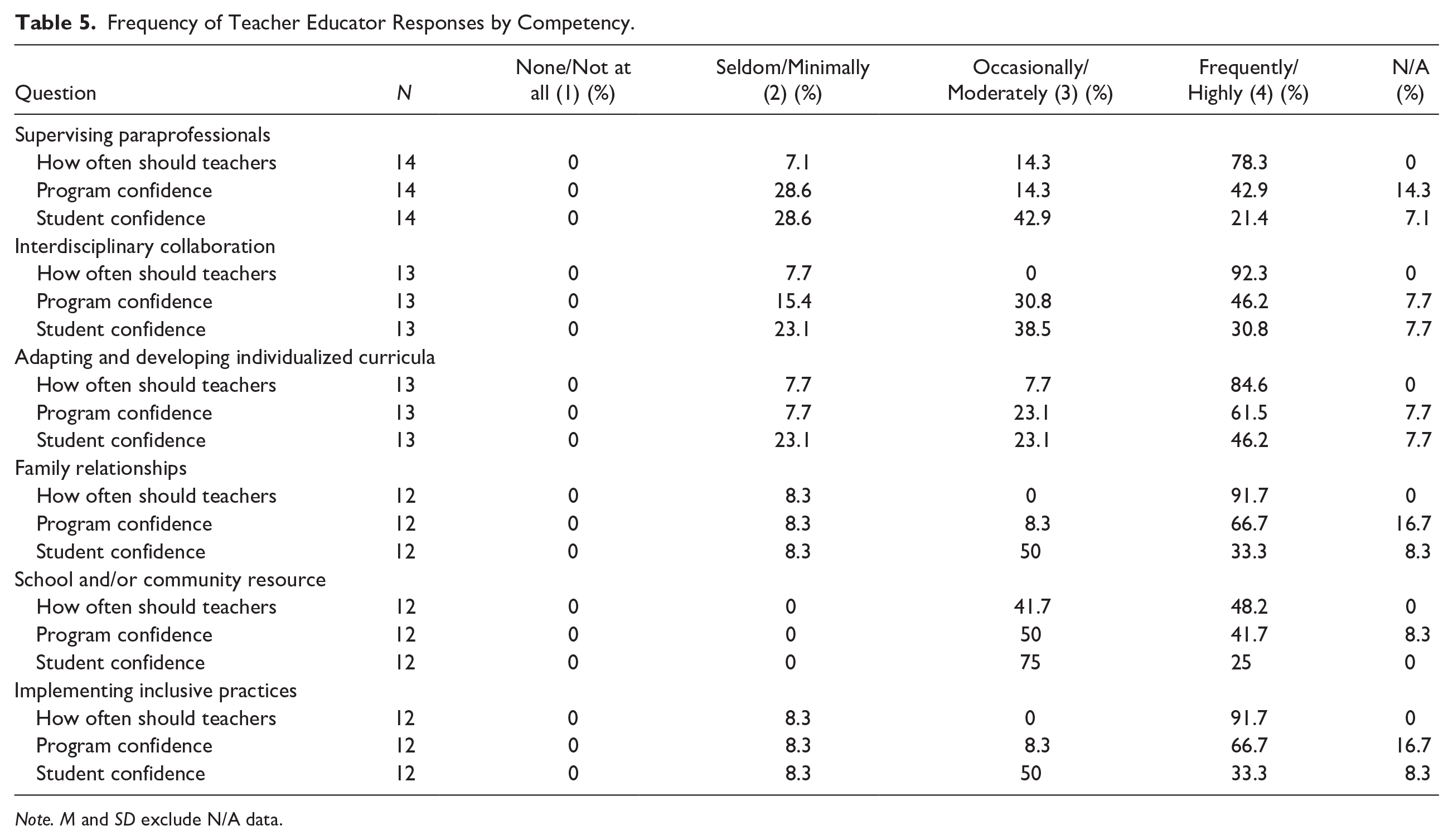
Note. M and SD exclude N/A data.
For four of the six TLCs, statistically significant correlations existed between teacher educators’ reports of confidence in their program and students: supervising paraprofessionals, interdisciplinary collaboration, adapting and developing individualized curricula, and family relationships (p < .05). Acting as a school and/or community resource and implementing inclusive practices were not correlated.
Discussion
In this study, researchers examined the perspectives of ESN teachers and teacher educators regarding teacher leadership. Teachers were asked about their engagement, confidence, and training. Teacher educators were asked about their expectations of teacher engagement, as well as their confidence in their respective teacher training programs and their former students’ ability to perform the six TLCs for working with students with ESN. The majority of teachers reported moderate to frequent engagement in all the six TLCs. The overwhelming majority of teacher educators echoed this expectation, albeit to a higher degree, than teachers. The majority of teachers reported high confidence in their abilities to perform each of the TLCs, despite a noted lack of preparation. Researchers found confidence expressed by teachers correlated with both their reported engagement and preparation—in terms of teacher training programs and in-service PD. While teacher educators reported mainly moderate and high levels of confidence in both their program coverage of each TLC as well as their graduates’ ability to perform the competencies, programs were generally rated with higher levels of confidence than students’ abilities.
Engagement and Confidence
The results appear to confirm the six TLCs as important to the profession as both teachers engaged and teacher educators reported expected regular engagement by teachers in the six identified TLCs. Teachers rated the topics of adapting and developing individualized curricula and family relationships the highest, whereas rating acting as a school or community resource and implementing inclusive practices the lowest. While the highest rated activities are of little surprise, given previous research noting the importance of these activities (e.g., Lee et al., 2010; Ruppar et al., 2011, 2015, 2017), it was unexpected to see nearly 30% of teachers describe their engagement in the latter two as minimal or nonexistent.
With regard to inclusive practices, the 30% response of minimal or nonexistent engagement could be attributed to the survey population characteristics, as 26% of teacher respondents worked in specialized settings for students with disabilities. The authors argue, however, that such practices could still be extended in these contexts via school partnerships, extracurricular activities, community-based instruction, or other related endeavors. This response finding could also be related to one limited interpretation of the term inclusive practice as referring only to educating students with and without disabilities side-by-side in a typical classroom. With regard to serving as a school and/or community resource, nearly one third of teachers reported minimal or no activity in this area, despite research establishing the important school-wide role of ESN teachers (Ruppar et al., 2015, 2018). The authors hypothesize the data regarding school or community resource may reflect an understated view of individual teachers’ perspectives of their unique contributions. Another hypothesis suggests teachers, while recognizing school climate as an essential component for inclusive education and other opportunities for their students, feel a lack of opportunity to extend their role in this way (Brunsting et al., 2014). Finally, the low engagement may reflect semantics. Other studies used the term advocacy to describe the school-wide role of special education teachers (Ruppar et al., 2015, 2018); it is possible the authors reframing this TLC as a resource resulted in lower reporting.
In addition to reporting engagement, the majority of teachers reported high levels of confidence in their ability to perform each of the TLCs. Confidence was a significant factor—over degrees held and years of teaching experience—in teachers’ reported engagement, with a few exceptions. While reported engagement is only an approximation of behavior occurrence, previous researchers have linked perceived confidence to such action as pedagogical behavior (e.g., Chao et al., 2017; Reupert & Woodcock, 2010). Therefore, high confidence ratings could indicate respondents were familiar with and comfortable performing the associated leadership activities. Similar to engagement, confidence was highest for adapting and developing individualized curricula and family relationships. This makes sense as the former is directly related to the key element of the position (i.e., specialized instruction) and the latter is an essential component embedded in the law and daily practices of special education (e.g., IEP, transition planning).
Training and PD
While teacher educators largely expressed confidence in their programs’ coverage of each TLC, many teachers reported feeling underprepared. One quarter to one half of teachers described their professional training in each of the six TLCs as minimal to none. This finding may reflect existing research suggesting that teacher education graduates feel dissatisfaction with the extent of their teacher training (Flower et al., 2017; Ruppar et al., 2016). However, additional research is warranted. The findings in this study appear to imply, when comparing perspectives, that teacher educators view teacher training programs in a more positive light than do practicing teachers. One explanation for this difference between teachers and teacher educators in regard to content covered in teacher preparation is the difficulty many preservice teachers experience in absorbing the myriad of information (e.g., theory) presented in training programs before having the experience and context to more deeply understand the multifaceted roles teachers fill (Cochran-Smith, 2003). Of note, the difference between the two groups was the smallest for supervising paraprofessionals. The agreement among the two participant groups suggests supervising paraprofessionals as an area in need of targeted improvement for teacher education programs and PD (Biggs et al., 2016, 2019). This aligns with reports that managing paraprofessionals is both a persistent and unsupported stress related to the job (Douglas et al., 2016).
Less than 50% of teachers reported receiving any one category of PD for a TLC. Adapting and developing individualized curricula and implementing inclusive practices were two areas in which teachers reported receiving the most PD. These findings are not all that surprising, given the primary role of teaching—preparing and delivering curriculum—as well as the increased attention on inclusive education for students with ESN (Hagiwara et al., 2019; Morningstar et al., 2016). However, nearly 25% of teachers surveyed indicated a lack of substantial PD received in these areas.
The data reveal low variability in the type of development received. Teachers indicated workshops, self-study, and college coursework were the most common forms of in-service PD. This contrasts current evidence on best practice, which suggests opportunities for sustained, accessible, practice-connected, and guided learning as opposed to passive and traditional activities such as attending a workshop (Rock et al., 2016; Sindelar et al., 2010; Wood et al., 2016). With regard to self-study, the question of content and fidelity exists. Researchers suggest most principals display limited expertise in teaching students with ESN (Roberts et al., 2018). Teachers who rely on self-study could easily be caught in an expertise gap with little sufficient supervision and guidance. Increased opportunities through coaching and mentorship could help improve teacher confidence and engagement in TLCs. Furthermore, activities making use of technology such as webinars or online modules may help to mediate some of the issues related to accessibility (e.g., time, distance) of traditional PD delivery.
Implications for Practice
One implication for practice is the need to critically examine preservice and in-service programs for teachers of students with ESN with regard to these six TLCs. Across the TLCs, the range for not at all or seldomly reported in their preparation was 30.3% (interdisciplinary collaboration) to 64.6% (supervising paraprofessionals). This is in contrast to the confidence teacher educators reported of their program in these six areas (range of 0% for serving as a school and community resource to 28.6% for supervising paraprofessionals). On a whole, teacher preparation programs need to reconsider their attention to preparing teachers of students with ESN more closely to the reality of the teacher leadership–oriented role. Specifically, it is clear from the perspectives of both teachers and teacher educators that preparation programs need to do more with regard to supervising paraprofessionals. Furthermore, the data suggest a need to revisit issues of PD provided to practicing teachers. Given high engagement and low PD, administrators should consider ways to increase ESN teacher access to PD related to all six areas of teacher leadership. As noted, it is more difficult for teachers to absorb information when presented in the abstract (i.e., teacher training programs; Cochran-Smith, 2003). Teachers may be in a better place to continue to learn about the six key areas of the profession—subsequently tied to leadership—when received as PD so they can consider and apply it more immediately in their settings.
Implications for Research
While frequently examined and described in the literature, the activities of teachers working with students who have ESN are seldom framed as teacher leadership (Billingsley, 2007). Based on the working definitions of teacher leadership and the embedded responsibilities of the profession, the authors find merit in this framing for subsequent research. Such association has the effect of linking research on the activities, support, and preparation of ESN teachers to the extensive research on teacher leadership—including barriers, supports, and preparation. The findings of this study can both serve as an initial connection and, in so, further contribute to the knowledge base on teacher preparation and support for teachers of students with ESN.
Limitations and Future Directions
In consideration of the findings of this study, limitations effecting the generalization and application of the data should be noted. First, the teacher sample is from only one state, which limits the generality of conclusions across U.S. states and regions. And while the number of responding teacher educators seems be to a fair representation of the available programming and faculty in the state, further extension to other locales could aid in understanding the national picture and provide a larger sample. In this study, the authors only captured the perspectives of 14 teacher educators. Although there was considerable consistency among the responses, a larger sample would enable deeper analysis of the data, such as correlation, to identify any variables related to responses. As for teachers, of the limited available data, one could also question the representativeness of the 107 teacher respondents. For example, based on 2016 data, our survey had a lower frequency of White teachers completing it than are representative of the teacher workforce in the state (92%; Stackhouse, 2018). However, additional comparisons of the survey participants to teachers of students with ESN in the state were not possible. Furthermore, researchers were unable to compare respondents with nonrespondents. It is possible that both teachers and teacher educators who responded were more interested in teacher leadership than those who did not respond.
Second, the populations—teachers and teacher educators—were not matched. In other words, teacher educators may not represent the programs attended by the responding teachers. Teachers could have been trained in another state or at a time not reflective of the current description of these programs. Therefore, direct contrast or comparison between the groups should be done with caution. Future researchers should match responses between participants for a deeper understanding of any similarities or differences of perspective between and across participant groups. Another limitation is the low response rate from teachers. Due to the lack of a direct contact list, requests for participation were funneled through school administrators. Direct recruitment of teachers, as oppossed to recruitment by way of administrators, could have increased the response rate subsequent representation of the population. Future researchers should explore more direct means for recruitment of teachers. Finally, a major limitation is the lack of a pilot study for the survey instrument. A pilot study could have potentially identified misinterpretations of terms or items prior to the final delivery and analysis. If these surveys are used in future data collection, researchers should further evaluate the validity of the questions through the use of pilot data.
In this study, the authors relied on teacher report to approximate activity, training, and PD. While the measure of self-report provides a good start in understanding the context, it is not always an exact replication of the realities. In the future, researchers should include more in-depth data collection of occurrences related to TLCs in classrooms, schools, and communities such as teacher interviews, in-school observations, or focus groups. As one example, the focus of PD was on quantity, rather than dosage or other characteristics. In addition, in this study, the authors measured participant confidence with one sole question per topic (i.e., “how confident are you . . .”). While this measure yielded valuable information in this study, confidence is an abstract and complex construct (Griffin & Tversky, 1992; Oney & Oksuzoglu-Guven, 2015). Interpretation of the findings based on this one measure of confidence should be made with caution. Subsequent research could more accurately measure participant confidence through a series of questions on the construct to illuminate more depth on teachers’ self-confidence in regard to the TLCs.
Supplemental Material
sj-docx-1-tes-10.1177_08884064211001455 – Supplemental material for Examining Teacher and Teacher Educator Perspectives of Teacher Leadership in Extensive Support Needs
Supplemental material, sj-docx-1-tes-10.1177_08884064211001455 for Examining Teacher and Teacher Educator Perspectives of Teacher Leadership in Extensive Support Needs by Jordan Shurr, Emily C. Bouck and Meaghan McCollow in Teacher Education and Special Education
Footnotes
Declaration of Conflicting Interests
The author(s) declared no potential conflicts of interest with respect to the research, authorship, and/or publication of this article.
Funding
The author(s) received no financial support for the research, authorship, and/or publication of this article.

Supplemental Material
Supplemental material for this article is available online.
Author Biographies
References
Supplementary Material
Please find the following supplemental material available below.
For Open Access articles published under a Creative Commons License, all supplemental material carries the same license as the article it is associated with.
For non-Open Access articles published, all supplemental material carries a non-exclusive license, and permission requests for re-use of supplemental material or any part of supplemental material shall be sent directly to the copyright owner as specified in the copyright notice associated with the article.
