




Abstract
This study explores gender differences in public issue salience—the relative importance that men and women place on various public issues—focusing on how assets like wealth, education, and marketable skills shape these priorities within the Czech social context. This study is rooted in Iversen and Soskice’s theory of assets as well as in the Iversen and Rosenbluth’s theory of political preferences, which help to explain gender differences in the issue salience among subgroups of women who negotiate their positions in the labor market. When data from the Czech Public Opinion Research Center (CVVM) were analyzed with binary logistic regression and predictive margins, the findings revealed that assets affect the salience that men and women assign to social protection issues. Women are more likely than men to view social protection issues as the most important issue domains. This is explained by the potential of social protection policies to enable women to invest in their marketable skills, use their skills in the labor market, and emancipate themselves. Health issues are highly gendered, with men consistently assigning low importance to health concerns, irrespective of their background. This study contributes to the understanding of gender differences in issue salience, political attitudes, and agenda-setting.
Keywords
Introduction
The gender gap in public issue salience—differences in the relative importance that men and women attach to various public issues—has significant implications for political discussions, policy, and social outcomes. Research has consistently shown that gender-based differences in public opinion and policy attitudes are influenced by social, economic, political, and biological factors. 1 Women are generally more progressive and left-leaning than men: they tend to prioritize issues such as education, environment, sociocultural, and labor-related topics, whereas men often focus on economic, financial, and defense-related topics. 2 These patterns, evident also in legislative agendas, highlight the persistent gender gap in issue ownership and salience. 3 Introducing evidence of gender differences in issue salience helps to shed light on deeper systemic inequalities, including barriers to economic participation and social mobility and offers critical insights into the relationship between gender and public policy.
Issue salience affects what we say and what we think, and its impact extends to policy stability and politically motivated changes. The daily bombardment of information from the media can have an impact on society’s views and consequently on the way in which public policy is made. The media is responsive to consumer preferences by providing content that aligns with their interests and preferences. 4 Political actors consider public opinion in their decision-making, which is why public opinion influences political decision-making and policy outcomes. 5 We can therefore argue that public opinion and public issue salience serve as navigators of politics by thematizing political debates and producing policy outcomes. This research examines how gender shapes political attitudes, public opinion, and the prioritization of societal issues and identifies the key factors that influence these dynamics. Understanding these patterns is essential for analyzing individual and group political behavior, with significant implications for democratic governance, policymaking, and the pursuit of social justice.
This study highlights gender differences and similarities in issue salience between Czech women and men and emphasizes the attachment to issues in socioeconomic subgroups. It focuses on the gender gap in public issue salience in the Czech population from January 2017 to February 2020 and examines the influence of social factors such as education, employment, cohabitation, and parenthood on gender disparities in the salience of public issues. Using Iversen and Soskice’s theory of assets and Iversen and Rosenbluth’s theory of political preferences, this study examines how assets like education, marketable skills, and social connections influence men’s and women’s attachment to various issue domains. 6 I ask the following research questions: What are the gender similarities and differences in public issue salience in Czechia? Does the acquisition or lack of assets increase or decrease men’s and women’s issue salience? Which assets determine men’s and women’s higher and lower issue salience?
I found significant and consistent gender disparities in public issue salience across various social strata, when controlling for sociodemographic and political factors. The issues concerned with social protection are of particular interest to subgroups of women who are at a greater risk of not being able to apply their marketable skills in the labor market, women with children living without a partner, women without paid-work positions, and women in nonmanagerial positions. Women are more likely than men to view social protection issues such as health, education, family, and social security as the most important domains. The theory of assets explains these differences in terms of the potential of social protection policies to enable women to invest in their marketable skills, use their skills in the labor market, and emancipate themselves from the male breadwinner. These social protection issue domains can promote social status and directly improve women’s living conditions. This research underscores and extends prior findings that health is a highly gendered issue, disproportionately prioritized by women. The findings reveal that women’s concern with health extends beyond private spheres—where they often assume the role of caretaker—to a broader recognition of health as a critical public concern. This study provides further insights into the gendered distribution of public issue importance, demonstrating how societal roles and gendered patterns shape the way individuals engage with and prioritize public issues.
Czechia’s performance in gender equality further underscores the significance of these findings. The country ranks 23rd in the Gender Equality Index of the European Union (EU), with its lowest scores in the “power” domain, which describes gender equality in decision-making. 7 Like many post-communist countries, Czechia lags behind the EU average, reflecting its historical underpinnings. Women’s contribution in the workforce and public life has been a topic of political and social interest in Czechoslovakia until its downfall during the protectorate era (1939–45). 8 The communist regime viewed gender inequality primarily as a class issue, and while some progress has been made in women’s labor force participation, broader societal attitudes, especially in terms of availability of childcare and part-time contacts, remain less supportive of gender equality than in other European countries. 9
To test whether the presence or absence of assets (education, training, employment status, and seniority level in the workplace) determine men’s and women’s higher and lower issue salience, I selected the following variables: gender, economic activity, cohabitation, holding an executive position, number of children, years of education, age, net household income, and identification on the left-right political divide. To find out which of these variables correlate to domains of social importance, I tested the hypotheses using binary logistic regression analysis and predictive margins.
For the first two hypotheses, I focused on the gender gap in issue salience. The first hypothesis, “Czech women attach more salience to the social protection issue domains than Czech men,” predicts a gender gap in public issue salience, with a particular focus on social protection issues such as health care, education, and social security. It suggests that women are more likely than men to emphasize these issues due to gender-specific experiences in both professional and personal spheres, such as caregiving responsibilities and greater reliance on public welfare systems. The second hypothesis, “Highly educated women attach more salience to the social protection issue domains than do highly educated men,” is based on the idea that women who are competent and have already acquired skills are more aware than men of how their ability to use these skills in the labor market depends on the availability of social welfare resources and their access to these benefits.
In this research, I also examine how Czech women form their issue preferences, especially in the broader social welfare state, which is partly inherited from the socialist regime and positioned in an emancipated society with a higher proportion of women with paid work, in comparison to other Western European countries. 10 The third hypothesis states that “Women with paid work attach more salience to the social protection issue domains than women without paid work,” positing that employment status affects women’s attachment to social protection issues. Women in paid employment may place greater importance on policies such as childcare, education, health care, and labor protection, which directly affect their ability to use their skills in the labor market while balancing work and personal responsibilities.
While Czech parental leave policies offer a generous period of paid leave, limited access to affordable childcare services, especially for children under 3 years of age, creates a barrier for women to return to the labor market and therefore represents a risk of asset losses. 11 Women’s inability to outsource childcare limits them from applying their marketable skills and entering paid work positions. I focus on the situation of single mothers and test the fourth hypothesis: “Women with children living without a partner attach more salience to the social protection issue domains than women with children living with a partner.” Single mothers often face more economic and social challenges than mothers living in the same household with their partners, making social protection policies more critical for their well-being. This hypothesis tests whether these heightened vulnerabilities translate into greater salience for social protection issues.
The last hypothesis, “Women in nonmanagerial positions attach more salience to the social protection issue domains than women in managerial positions,” focuses on women in nonmanagerial roles, who face greater economic insecurity and fewer workplace benefits than their counterparts in managerial positions, leading them to prioritize social protection policies. Managerial positions often offer greater job security and resources, potentially reducing reliance on public welfare systems and allowing women to outsource some of their private responsibilities. To test these hypotheses, I use data collected by the Czech Public Opinion Research Center (CVVM) from January 2017 to February 2020, which I analyze using binary logistic regression and predictive margins. 12
The Gender Gap in Public Opinion
Previous research has shown evidence of a gender gap in public opinion and identified agendas that women are more likely to prioritize, many of which play a significant role in advancing their societal status. Women are more likely than men to advocate for policies that promote the rights of women, children, and other disadvantaged groups. 13 They tend to prioritize early childhood care and education initiatives, as well as social protection measures, particularly active labor market policies designed to improve employment opportunities and better align job seekers with available roles. Women demonstrate stronger support for redistributive policies and egalitarian tax structures aimed at reducing social and economic inequalities. 14 They exhibit greater concern about health risks, both for themselves and for the well-being of their family and friends. During the COVID-19 pandemic, women were more likely than men to support stricter measures aimed at controlling the spread of the disease. 15 Women also consistently report greater environmental concerns than men, while men tend to engage more actively in formal environmental activism. In contrast, women are more involved in environmentally oriented behaviors within the private sphere, with household-based pro-environmental activities often reflecting highly gendered patterns. 16
Research on post-communist societies shows a gender gap in the perception of social issues. Social attitudes differ significantly by gender, even after accounting for age, education, marital status, children, rural or urban residence, and church attendance. Women in the region are more likely than men to support women in their wage-earning activities outside of the household. 17 East German women exhibit stronger support for nontraditional social roles compared to West German women. 18 In Czechia, perceptions of gender-related issues display notable patterns. 19 Eliška Rendlová identifies no fundamental differences between men’s and women’s opinions on civic policy issues or life values, with both genders showing consensus on their importance. 20 However, men were more likely to adopt extreme positions on political and civic values, whereas women tended to be more non-committal. Furthermore, men and women differed in the urgency they assigned to addressing these issues. Rendlová notes that “gender as an ascribed social status modifies values [of the Czech public] directly through acquired elements of social status, a typical example of this being education.” 21
The Asset Theory of Social Policy Preferences
The asset theory of social policy preferences developed by Torben Iversen and David Soskice emphasizes that social policy preferences are influenced by an individual’s position in society, and their acquisition of assets. 22 The theory suggests that people with assets, meaning education, competences and skills, are more likely to favor policies that promote market-based competition and individual responsibility. Those who lack assets or are concerned about losing them are more likely to prefer policies that provide social protection and an equal distribution of resources. The theory is based on the idea that asset ownership is an important determinant of social status and individual interests, thus shape social policy preferences. I apply this theory because it provides an optimal outline for understanding the issue salience tendencies observed among Czech men and women.
Inglehart and Norris identify a gender gap in social policy preferences and describe the consequences of economic changes and female emancipation on the political preferences of women. 23 Until the 1980s, women in rich democracies were more likely to vote to the right and support traditional family values. At that time, marriage provided a livelihood, and support for family values tied men to the obligations of a breadwinner. The erosion of traditional values, the waves of feminist emancipation, liberation, and war, and the postwar demands of the labor market enabled women to enter the paid work sphere. Since the 1980s, women have voted more left than men and women in rich democracies are more supportive of redistributive social policies than men. 24 In the Czech context, women’s emancipation in the workforce began notably earlier than in many other western countries, taking root in the 1940s and 1950s. This period marked a transformative shift, driven by state policies under socialism that actively promoted women’s integration into paid labor.
Iversen and Rosenbluth propose that contemporary women’s political preferences are significantly influenced by their roles, with those remaining at home tending to favor right-leaning policies. 25 This preference stems from the financial dynamics of traditional households, where policies that benefit the male breadwinner directly improve the household’s overall economic situation. For such women, the burden of additional taxation to fund social protection policies can outweigh the perceived benefits, leading them to prioritize policies that support their husband’s economic well-being and, by extension, their own. 26 As a result of such dynamics, women on the whole tend to favor left-oriented policies and advocate for government spending, as these measures enhance their bargaining position within the household, particularly when they seek to compete in the labor market. By supporting such policies, women aim at strengthening their economic independence and ensuring they have greater opportunities and resources to participate in the workforce effectively. Government spending allows for the outsourcing of family work in the form of child and elderly care. For married women, supporting leftist policies can also provide insurance in the case of divorce, which can negatively affect their living standard. “[. . .] With some of her family burden lifted by the public purse, a woman is better able to invest in her marketable skills.” 27 Working women with family responsibilities in rich democracies rely on social protection policies that enable them to socialize family work and compete with men on the labor market.
Emancipatory waves have facilitated a more equitable division of both paid and unpaid work between Czech men and women. Notwithstanding these advancements, Czech women continue to be disproportionally burdened with unpaid labor. They exhibit a lower participation rate in the labor market compared to their male counterparts, and they remain primarily responsible for the majority of unpaid domestic work and childcare. In 2021, only 1.8 percent of men were direct recipients of parental benefits. 28 About 33 percent of women and 20 percent of men reported taking care of children, grandchildren, elderly, or disabled family members on a daily basis. Among couples with children, 70 percent of women and 48 percent of men reported having daily care responsibilities in 2016. In 2019, the full-time employment rate was 49 percent for women and 67 percent for men. 29 In this context, the well-being of women “is disproportionately affected by the availability of high-quality, low-cost day care.” 30
The preference for social protection policies may also be shaped by the gender gap in vertical labor diversification, as the emphasis on social protection issues increases attention and resources for sectors where women are typically employed. In Central Europe, women represent 81 percent of workers in the healthcare and social work sector, 64 percent in the public and education sector, and 61 percent in the finance and insurance sector. 31 Thus, political endorsement of social protection policies can help women to outsource family care responsibilities to publicly subsidized institutions and increase women’s work opportunities in the sectors where they dominate the labor force. Women are incentivized to support social protection policies requiring substantial welfare investment, as these policies enhance job security and mitigate the risk of their skills being underutilized. 32
Theoretical Determinants of Gender Differences in Issue Salience
The assets that I included in the analysis, which may influence the preference for promoting market-based competition and individual responsibility, or higher salience of the social protection issue domain, are paid work or independent income, living with a partner, labor market skills, leadership, or management responsibility, and education, training, or apprenticeship. Paid work indicates a position in the labor market, and education is viewed as an investment in time and resources for marketable skills. The attainment of a managerial position provides evidence of the successful use of marketable skills. Living with a partner in the same household is also considered an asset. The limited or lack of opportunity to share childcare responsibilities could be an additional factor favoring the social protection issue domain. Given these theoretical assumptions, I argue that the drive to increase women’s autonomy and empowerment in both the private and public spheres explains why women attach more salience to social protection issue domains than men do.
Conceptualization
In this article, “public issue salience” describes the issue domains that the respondents elaborated on when answering the question “What are the most important issues (MIIs) in our society at the moment? Name them in order of how important they are to you.” Issue salience is operationalized as “the relative importance and significance that an actor ascribes to a given issue on the political agenda.” 33 It represents an attitude or attachment to the issue domain and refers to the extent to which people engage with a political issue, cognitively or behaviorally. 34
There are two ways of looking at issue salience. First, from a supply side perspective of politicians and political parties, often associated with the issue ownership of political parties and political actors. Research on ownership of political parties’ issues has confirmed the difference between fulfilling the party’s salient pledges in a minority or majority government. 35 The second approach is from the perspective of the public and the voters.This article focuses on public opinion and public issue salience and the demand side of issue salience. Here, it refers to the extent to which respondents explicitly name particular issues in society as important. Following David Weaver: “Increased issue salience is accompanied by increased knowledge of its possible causes and solutions, stronger opinions, less likelihood of taking a neutral position, and more likelihood of participating in politics through behavior such as signing petitions, voting, attending meetings, and writing letters.” 36 The importance attached to issues by respondents tells us which issues they recognize, have strong opinions about, and are potentially willing to act on. Public opinion, issue salience, and political preferences are linked. Policy preferences are conditioned by issue salience and the impact of public opinion on public policy is substantial. 37
Data and Method
I used publicly available representative data from the CVVM from January 2017 to February 2020 and examined the open-ended interview question: What are the most important issues (MIIs) in our society at the moment?’ Name them in order of how important they are to you (N = 16,579). 38 The territorial representativeness of the dataset was determined by the construction of the interview network, where the quota signs represent the size of the residence place. The sample’s parameters correspond to the structure of the Czech population based on the sociodemographic characteristics of gender, education, age, and region. Trained interviewers collected data using a standard interview format. The datasets were cross-sectional and not weighted. 39 The dataset is heterogenous and representative for the Czech population but due to data measurement deficiencies, we are unable to distinguish and analyze in detail the issues of public salience of cultural, ethnic, or national minorities in Czechia. There was no question that would allow us to account for differences among these minorities included in the survey design.
The open-ended data format required considerable coding of responses to identify public issue salience. These cases were first manually recoded by the researcher, according to the Züll, Scholz, and Schmitt’s categorization scheme for coding public opinion surveys. 40 Second, the same data were coded by two independent student assistants to ensure unbiased results. The two datasets were then compared and re-evaluated. Opting for open-ended data, we can prevent some potential biases of the respondents since open-ended questions allowed them to create free associations and spontaneously answer the questions. Respondents may answer questions in a socially acceptable manner when interacting with interviewers.
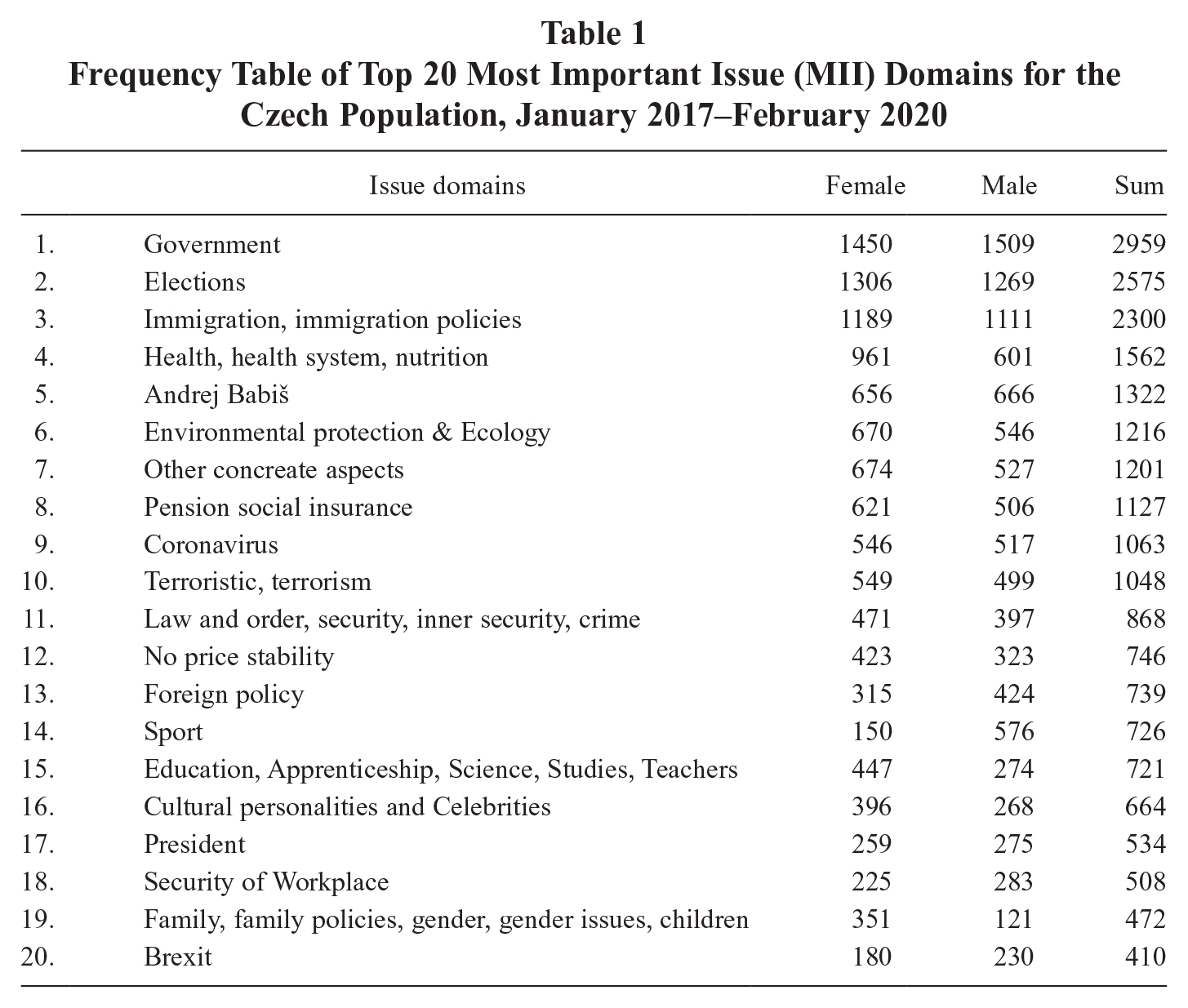
The categorization scheme of Züll, Scholz, and Schmitt allowed us to generalize the respondents’ answers while providing sufficient entries that fell under each category. 41 For example, family was coded as a category in cases where the respondents mentioned raising children, family friendliness, family orientation, family support, childcare, and support for single parents. Education as a category covered cases in which the respondent elaborated on the topics of education, training, scholarships, vocational training, apprenticeships, number of students, and tuition fees. This categorization was initially created by scholars using German samples but was converted for this study to a Czech setting. Under the subcategory of “other concrete aspects,” I classified the issue domain of health and health policy as it was prominently mentioned by respondents. Tables 1 and 2 overview the 20 most and second most frequently mentioned issue domains listed in descending order. A separate bivariate logistic regression was performed for each of the 20 categories.
Frequency Table of Top 20 Most Important Issue (MII) Domains for the Czech Population, January 2017–February 2020
Frequency Table of Top 20 of the Second Most Important Issue (MII) Domains of the Czech Population, January 2017–February 2020

In the analysis, the dependent variable is a dummy variable that measures the issue salience. I assigned each category its own dummy variable. The independent variable is gender, a binary indicator, with men coded as 0 and women coded as 1. For each category, a person is assigned 1 if they mention in their answer any issue related to that category as the most or the second MII in society (between January 2017 to February 2020), and 0 if they do not mention that category. Therefore, the MIIs refers to the first or the second MII. This system of coding the dependent variable was possible because I ran separate regressions for all issue domains (Tables 1 and 2). For example, if a respondent mentioned any issue related to family as the first or the second MIIs, the answer is coded 1. If they named any other issue category, then the answer is coded 0.
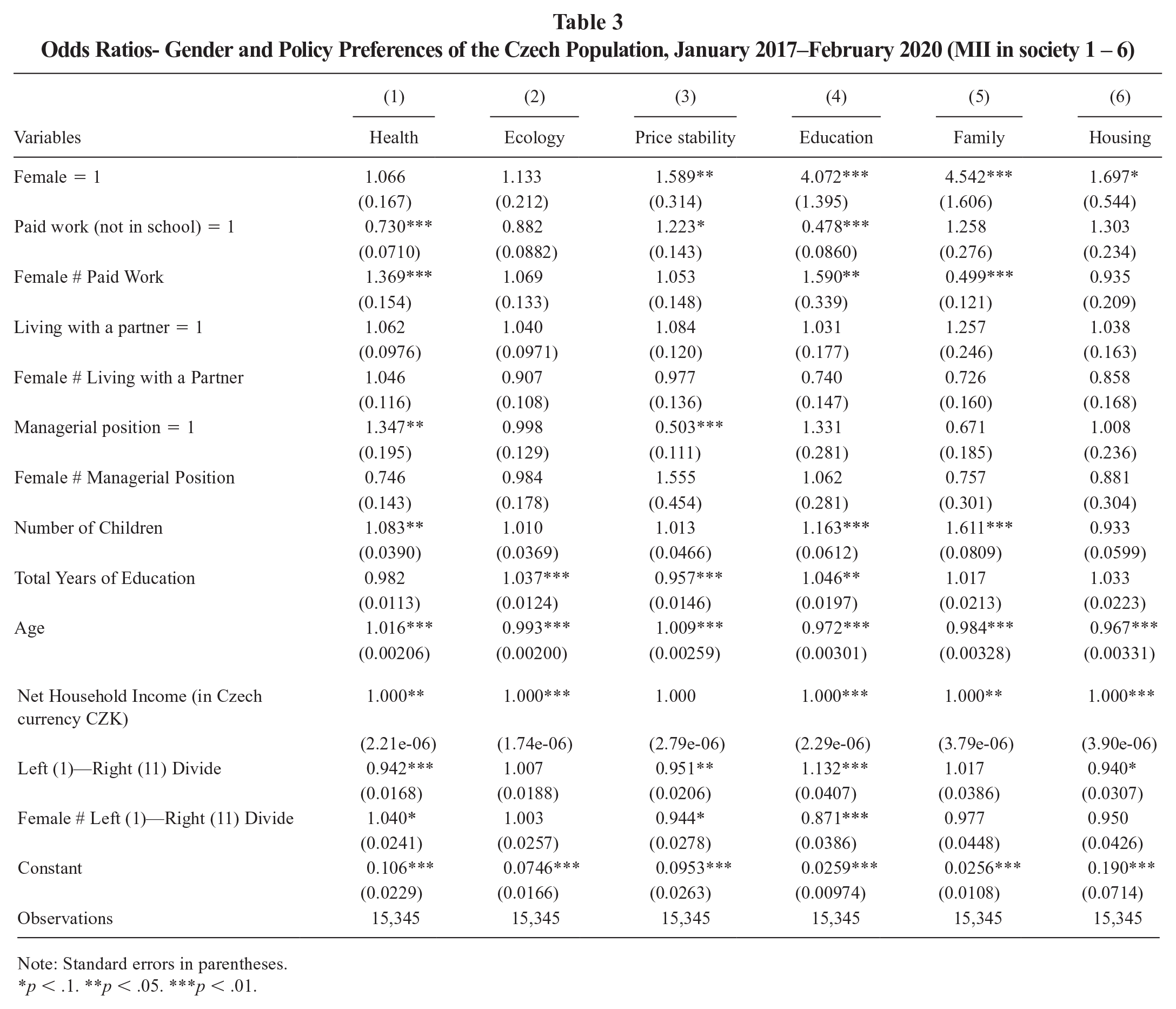
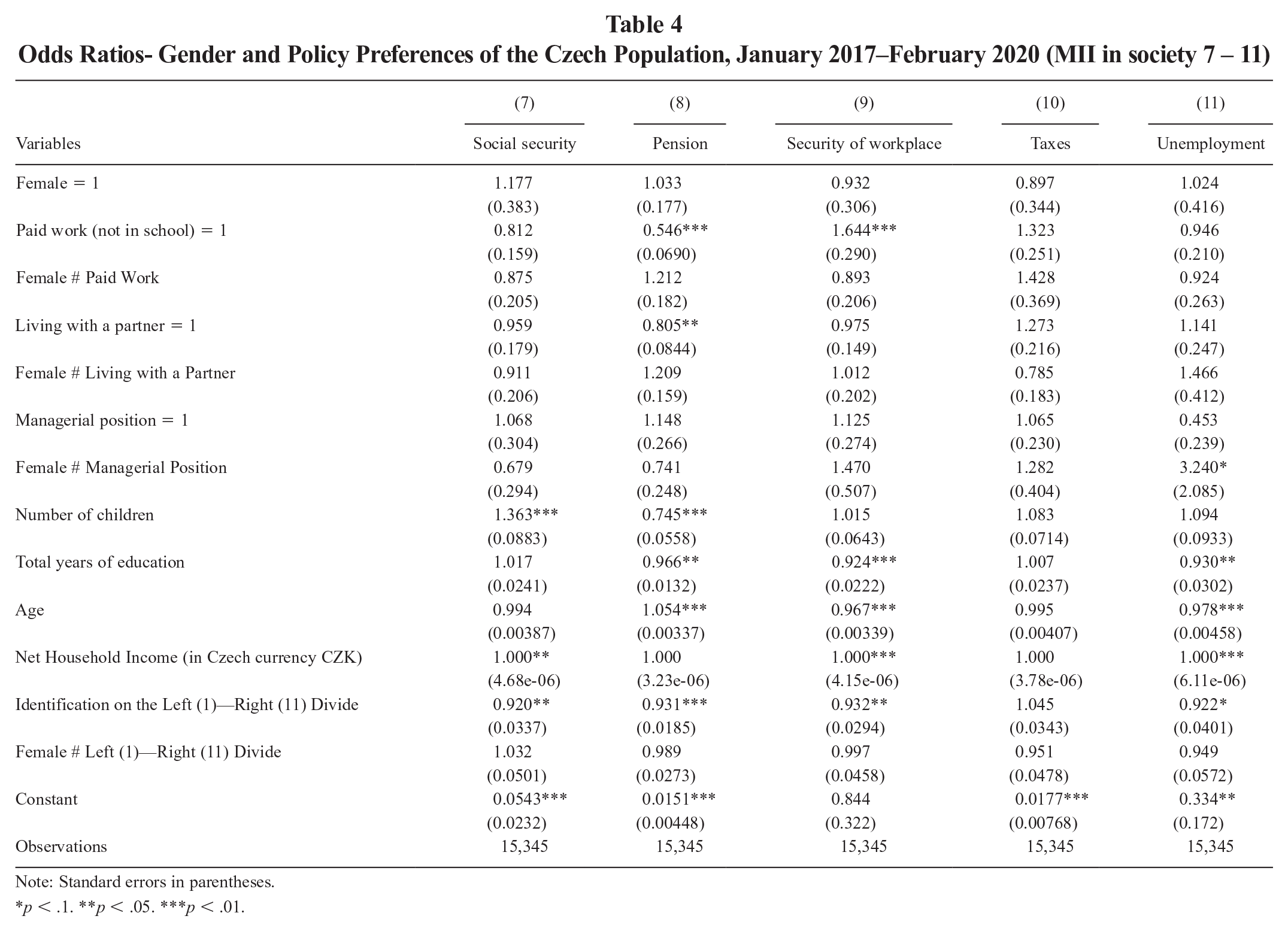
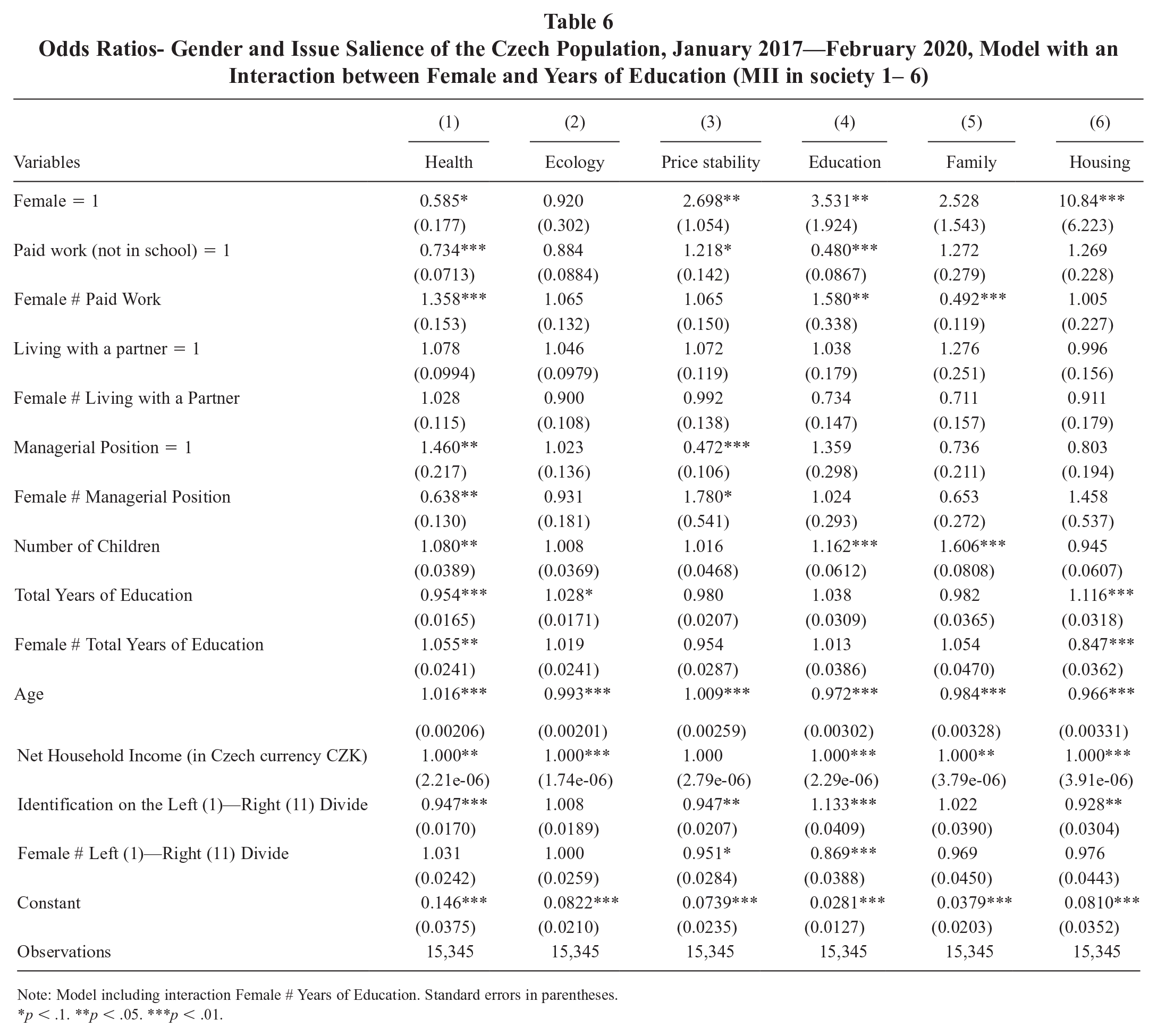
To isolate the effect of gender on issue attachment, I controlled for economic activity; living with a partner in the same household; holding a managerial or executive position; number of children; years of education; age; net household income; and identification on the left-right political divide. Years of education, age, net household income, number of children, and political identification are treated as continuous variables. The issue salience, gender, paid work, living with a partner, and managerial position are dummy variables. The interaction terms are included in the model. Interaction terms between women and working individuals, women and partners, women and managerial positions, women, and identification on the left-right ideological divide are in all models (Tables 3–5). To test Hypothesis 2, I included in addition an interaction term between the female and the total years of education in another model (Tables 6 and 7). To test Hypothesis 4, I created another model in which I used a three-way interaction term between the female, the partner, and the number of children (Table 8). Binary logistic regression and predictive margins were used to analyze the relationship between variables. I conducted a separate binary logistic regression analysis for each issue domain.
Odds Ratios- Gender and Policy Preferences of the Czech Population, January 2017–February 2020 (MII in society 1 – 6)
Note: Standard errors in parentheses.
p < .1. **p < .05. ***p < .01.
Odds Ratios- Gender and Policy Preferences of the Czech Population, January 2017–February 2020 (MII in society 7 – 11)
Note: Standard errors in parentheses.
p < .1. **p < .05. ***p < .01.
Odds Ratios—Gender and Issue Salience of the Czech Population, January 2017—February 2020 (MII in society 12 – 14)

Note: Standard errors in parentheses.
p < .1. **p < .05. ***p < .01.
Odds Ratios- Gender and Issue Salience of the Czech Population, January 2017—February 2020, Model with an Interaction between Female and Years of Education (MII in society 1– 6)
Note: Model including interaction Female # Years of Education. Standard errors in parentheses.
p < .1. **p < .05. ***p < .01.
Odds Ratios- Gender and Issue Salience of the Czech Population, January 2017—February 2020, Model with an Interaction between Female and Years of Education (MII in society 7– 11)
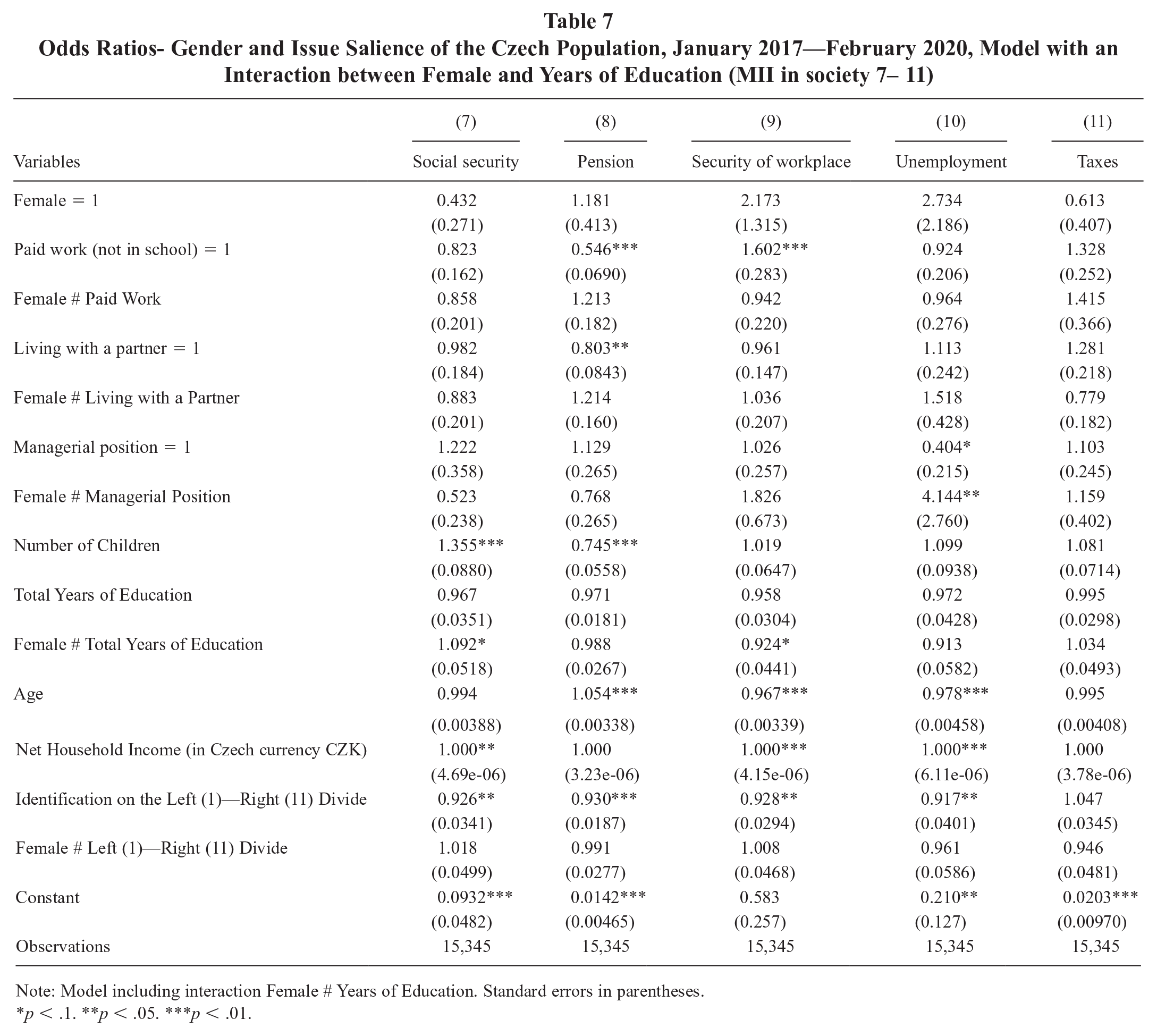
Note: Model including interaction Female # Years of Education. Standard errors in parentheses.
p < .1. **p < .05. ***p < .01.
Odds Ratios- Gender and Issue Salience of the Czech Population January 2017—February 2020—Model with a Three-Way Interaction between Number of Children, Living with or without a Partner and Gender

Note: Standard errors in parentheses.
p < .1. **p < .05. ***p < .01.
Results
The Gender Gap in Issue Salience
Understanding gender differences in public issue salience is essential for uncovering how men and women navigate and prioritize their social and economic concerns. These differences are rooted in broader societal structures, including gender roles, systemic workplace inequalities, and varying societal expectations. They provide a lens through which to examine how individual priorities align with, or diverge from, the needs of different social strata. These structural dynamics are reflected in the salience men and women assign to specific public issues, as evidenced by the results supporting Hypothesis 1.
Hypothesis 1: Czech women attach more salience to the social protection issue domains than Czech men.
The results confirm Hypothesis 1, demonstrating that Czech women consistently attach more salience to social protection issues than Czech men. Looking at the odds of finding the most important social protection issue domains, women have 1.59 higher odds of finding price stability (p = 0.019; 95% confidence interval [CI]: 1.08, 2.34), 4.07 higher odds of finding education (p = 0.000; 95% CI: 2.08, 7.9), 4.54 higher odds of finding family (p = 0.000; 95% CI: 2.3, 9.1), and 1.7 higher odds of finding housing (p = 0.099; 95% CI: 0.9, 3.2) than men as a reference category. Men have higher odds of finding military the MII domain (OR = 0.52; p = 0.059; 95% CI: 0.27, 1.03), foreign policy (OR = 0.62; p = 0.057; 95% CI: 0.38, 1.01), and sport (OR = 0.35 p = 0.001; 95% CI: 0.19, 0.66) (Tables 3–5). 42 For health, ecology, price stability, education, family, housing, social security, and pop culture issue domains, women attach more salience than men. Men attach more salience to issue domains related to workplace security, military, growth, taxes, corruption, transport, the EU, foreign policy, and sport (Graph 1). These results reflect a more state-centric view of policy importance among men, often less tied to personal or family needs. No gender difference was detected for government, elections, immigration, Andrej Babiš (the former Czech prime minister), prosperity, law and order, security, and other concrete aspects (Tables 1 and 2).
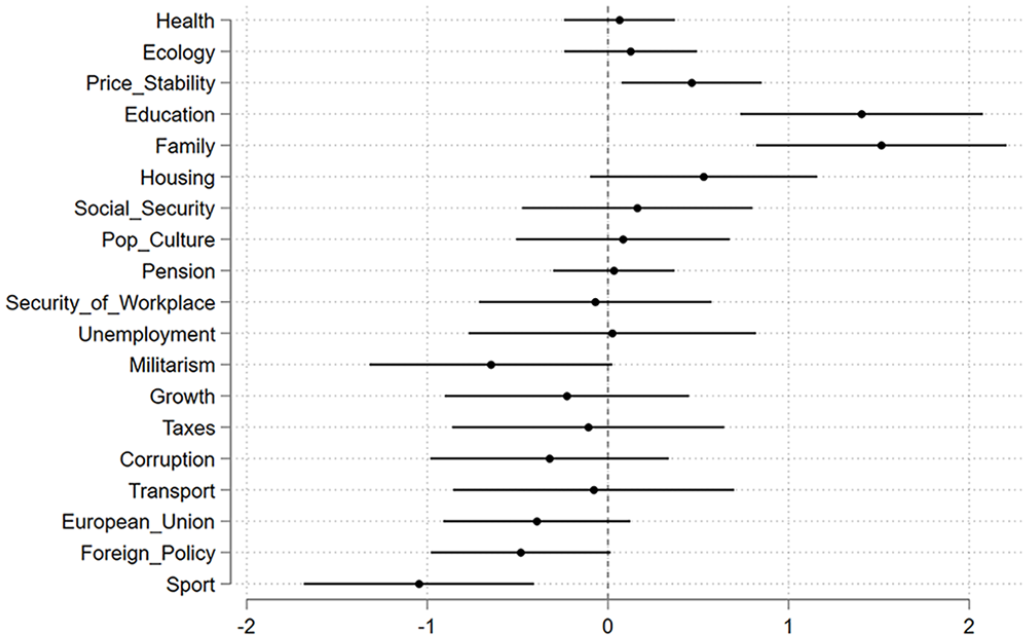
Log odds of “female.”
Given Iversen and Rosenbluth’s explanation of the political preferences of women and men and the topic of gender inequality in the workplace, the analysis shows that women are more likely to prioritize issues that address the challenges they face in balancing paid and unpaid work responsibilities, while men do not perceive these issues as salient to a similar extent. 43 The findings confirm that women are cognizant of the influence of family- and education-focused policies on their negotiating stance when making decisions concerning their professional and personal lives and emphasize issues related to family and education more than men do. This underscores a gender-specific approach to political preferences, where women’s priorities are shaped by their experiences and societal roles.
Hypothesis 2: Highly educated women attach more salience to the social protection issue domains than highly educated men.
The analysis confirms Hypothesis 2, revealing significant gender differences in how highly educated individuals prioritize social protection issues (Tables 6 – 7). Highly educated women have a higher predicted probability of finding health, ecology, education, family, and social security the MII domain than highly educated men. Highly educated men have a higher predicted probability of finding housing the MII domain than highly educated women (Graph 2). 44
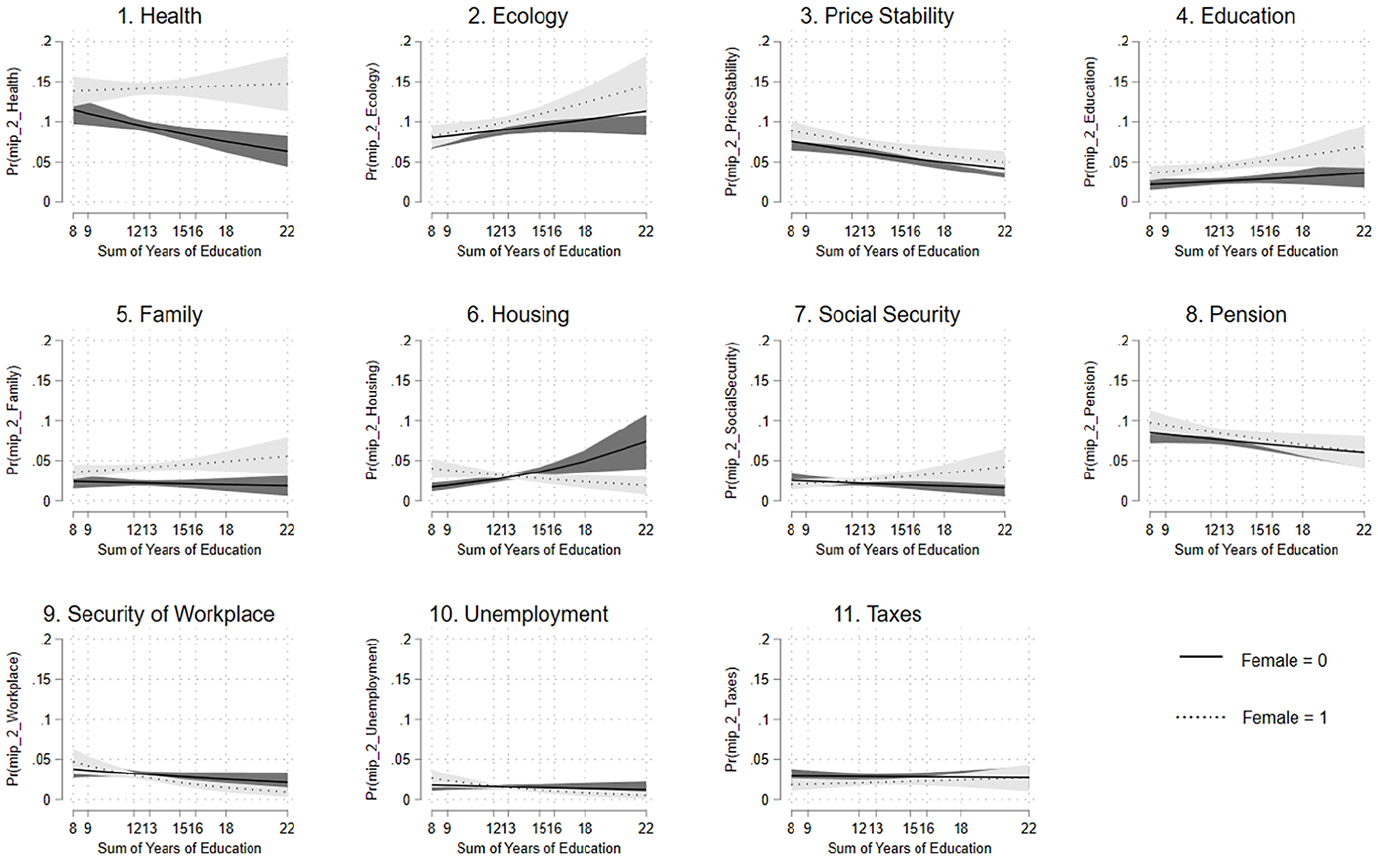
Predictive margins of “female” with 95% confidence interval
Remarkably, the predicted probability of finding health the MII domain decreased for men with higher education. A notable trend is the divergent salience of health between genders as education levels rise. Women are more concerned about their own health and the health of those close to them than men. While highly educated women’s salience for health increases slightly, the salience of health diminishes for highly educated men. This discrepancy is not arbitrary but deeply rooted in gendered health outcomes. For instance, in 2019, Czech men died on average 5.8 years earlier than Czech women, while the average duration of work incapacity was 40 days for women and 30 days for men. In 2020, Czech men suffered more than twice as many serious occupational injuries than women (1,026.3 compared to 460.4 per 100,000 inhabitants). Also 79.7 percent of suicides are committed by men. 45 Despite these strong health disparities, men exhibit lower concern for health-related issues, underscoring a critical gender gap in health awareness and salience. Men’s lower salience for the health issue remains gendered as their declining salience for health—despite adverse health statistics—reveals a troubling disconnect that may reflect societal norms discouraging male health advocacy. In this regard, we can confirm previous findings about differences in health-related attitudes between men and women. 46
Whereas the predicted probability of finding health the MIIs slightly increased for women with higher education, the issue salience of ecology and education increases with men’s and women’s higher education. An issue salience of family and social security also slightly increases with women’s higher education but remains stable across the educational groups of men. These findings substantiate Hypothesis 2 and provide insights into how education amplifies gendered differences in issue salience. Women’s emphasis on health, family, education, and social security underscores their proactive engagement with social protection policies that directly impact their lives and social surroundings. The data also highlight that higher education sharpens women’s focus on systemic social protection issues, reinforcing the argument that education not only empowers women but also broadens their political engagement.
Positions of Different Groups of Women
Hypothesis 3: Women with paid work attach more salience to the social protection issue domains than women without paid work.
Contrary to Hypothesis 3, the analysis reveals that women without paid work have a higher predicted probability of prioritizing education and family as their MII domains compared to women with paid work. Meanwhile, women with paid work exhibit a stronger salience for price stability. These findings compel us to reject Hypothesis 3 and instead highlight the nuanced ways in which women’s labor market participation and economic roles shape their social protection preferences. When comparing men and women across employment statuses, the analysis shows that women consistently attach higher salience to health, education, and family issue domains than men, regardless of employment. Thus, gender exerts a stronger influence on social protection preferences than labor market participation alone. Even unemployed men, who exhibit slightly higher salience for health and education compared to employed men, prioritize these domains less than women overall (Graph 3).
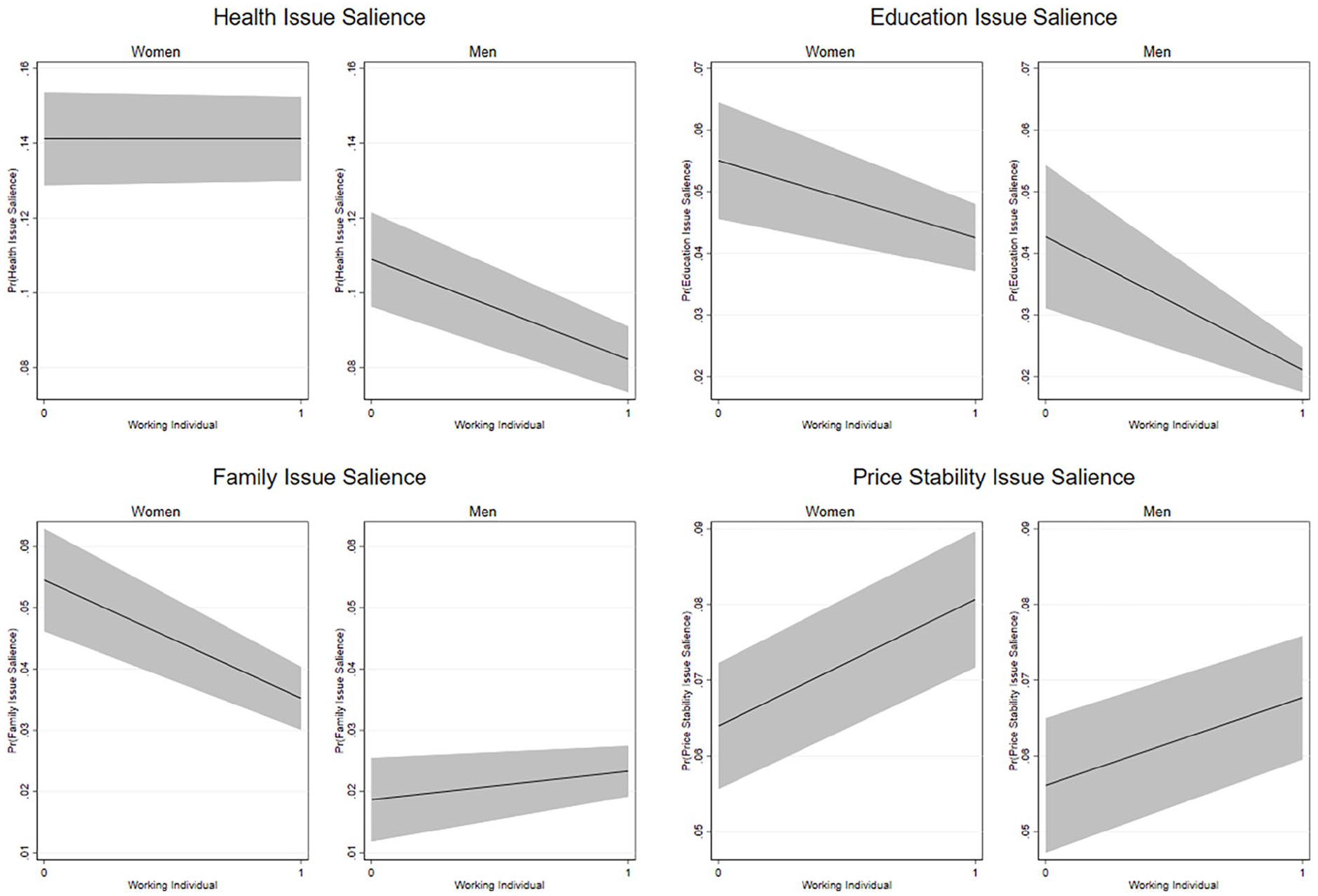
Predictive margins with 95% confidence interval
The findings reveal that women’s economic roles, particularly the presence or absence of paid work, mediate their salience for specific social protection issues. Women without paid work, lacking the economic asset of employment, emphasize family and education more than both their employed counterparts and men. This highlights how the absence of economic assets strengthens the importance of social protection policies as a safety net for economically inactive women.
Hypothesis 4: Women with children living without a partner attach more salience to the social protection issue domains than women with children living with a partner.
The results provide a nuanced understanding of how parenthood and partnership status shape issue salience among men and women, particularly in the context of social protection domains. While the fourth hypothesis is rejected due to inconsistency across issue domains, the analysis reveals critical patterns that underscore the complex interplay between gender, parenthood, and partnership status in shaping policy preferences.
Women without a partner have a higher predicted probability of finding education and housing the MII domains than women with a partner (Graph 4 and Tables 3–5). They also have the highest predicted probability of prioritizing family as their MII domain across all tested groups, suggesting that single mothers place greater importance on family-related issues than partnered mothers, men, or single fathers (Graph 5). This underscores how the absence of a partner increases the reliance on family-oriented social protection policies to manage the dual demands of caregiving and household management.
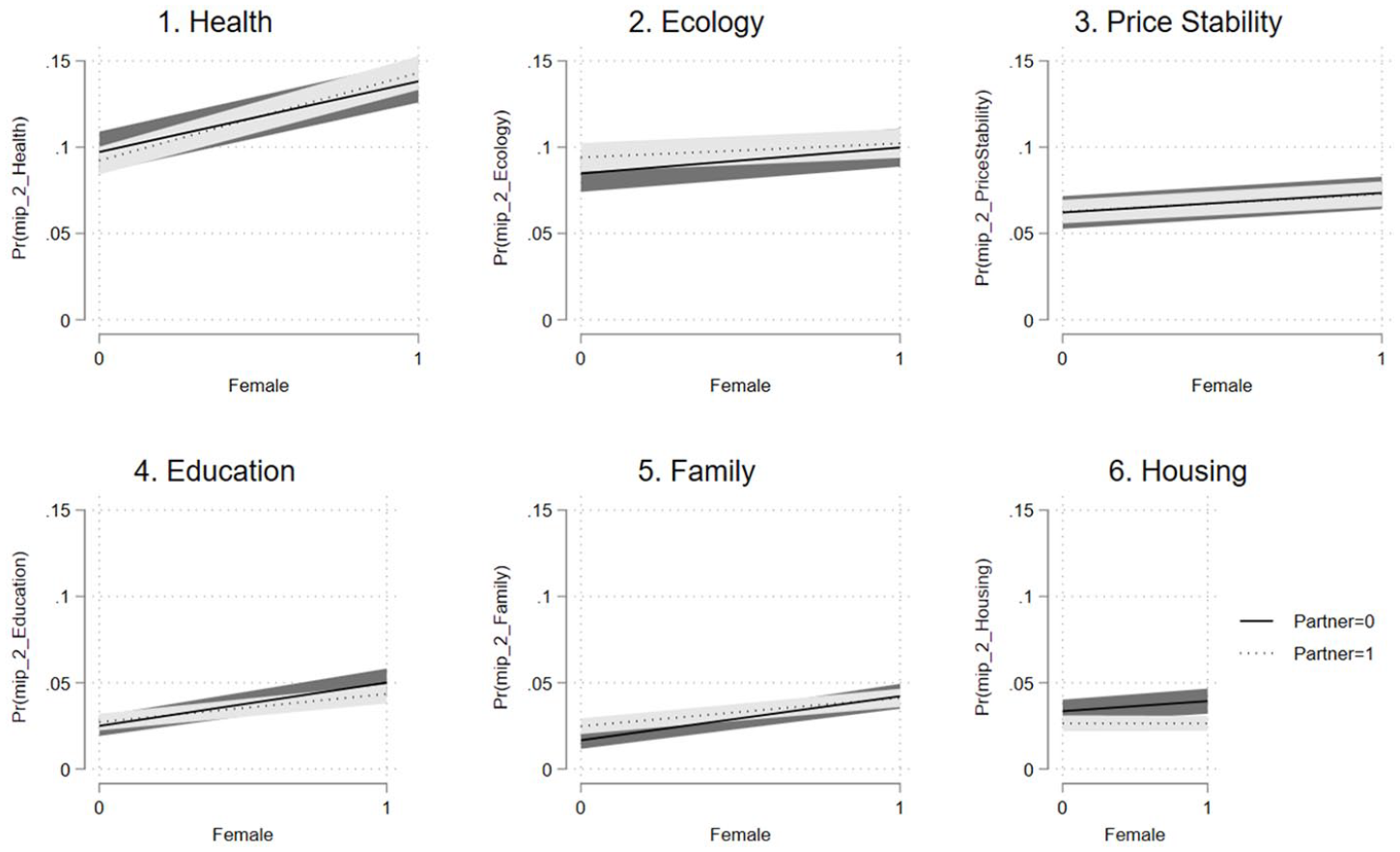
Predictive margins of “female” with 95% confidence interval
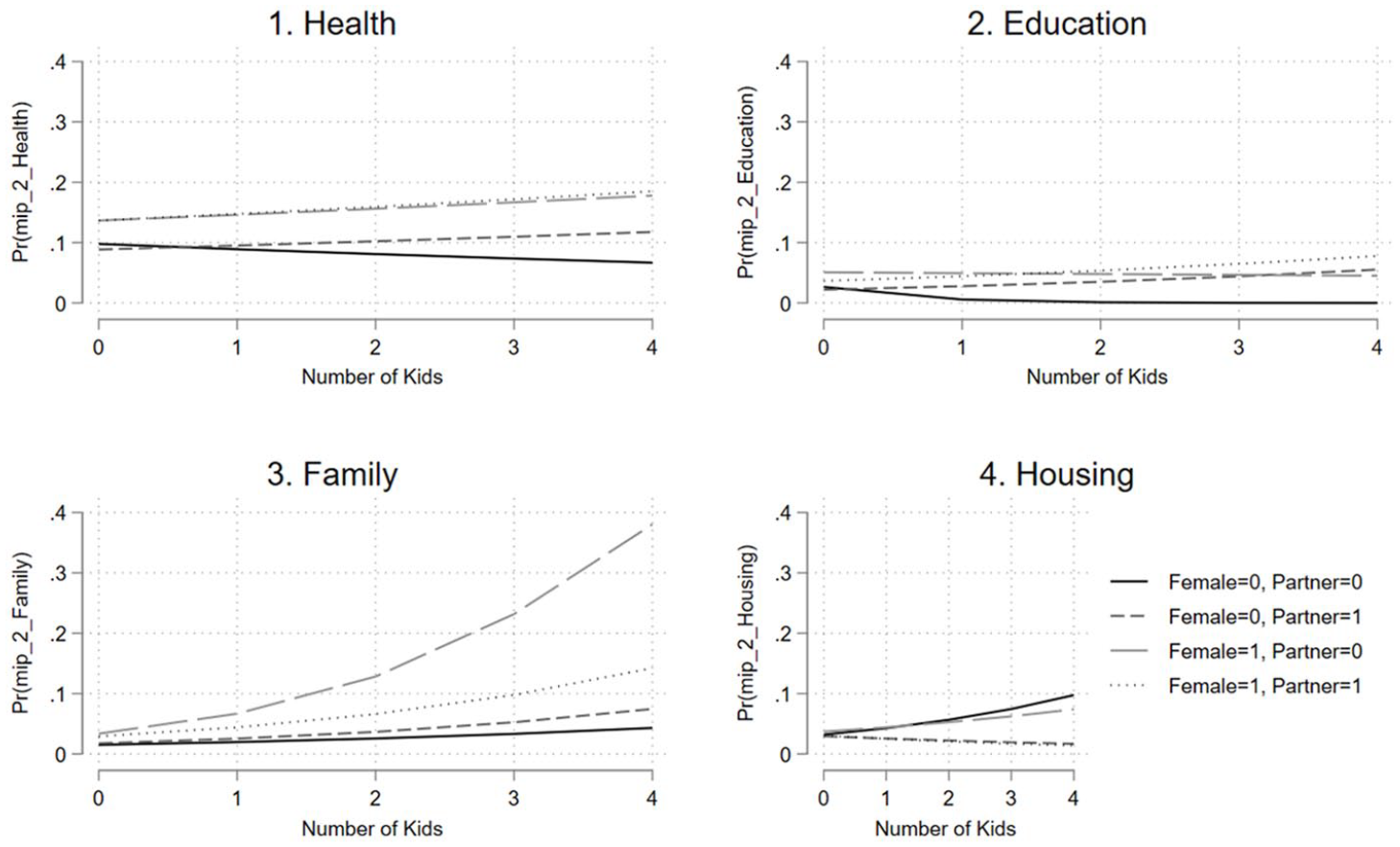
Predictive margins of “female.”
Women and men with children but without a partner have a higher predicted probability of identifying housing (Graph 5) as their MII compared to partnered mothers. These findings are consistent with the unique challenges single parents face in securing stable housing without the support of a partner. It highlights the role of economic and caregiving vulnerabilities in shaping single parents’ social protection priorities. To conclude, women, particularly single mothers, emerge as a group with pronounced concerns for health, education, family, and housing policies, driven by their heightened caregiving and economic responsibilities. Single parents’ greater focus on housing underscores the structural challenges they face.
Table 8 presents the results of the logistic regression analysis in the form of odds ratios with a three-way interaction term between the number of children, living with a partner in the same household, and the gender of the respondent. In contrast to the previous model, it includes an interaction term of being a woman, living with a partner in the same household, and the respondent’s number of children.
Hypothesis 5: Women in nonmanagerial positions attach more salience to the social protection issue domains than do women in managerial positions.
Although the analysis reveals significant differences in the issue salience attached by women based on their labor market positions, we still have to reject Hypothesis 5 because the differences between the predicted probabilities of attaching salience to social protection issue domains by women with and without managerial positions are not conclusive. Women in nonmanagerial positions have a higher predicted probability of finding health, price stability, family, social security, and pension the MII domains than women in managerial positions (Graph 6).
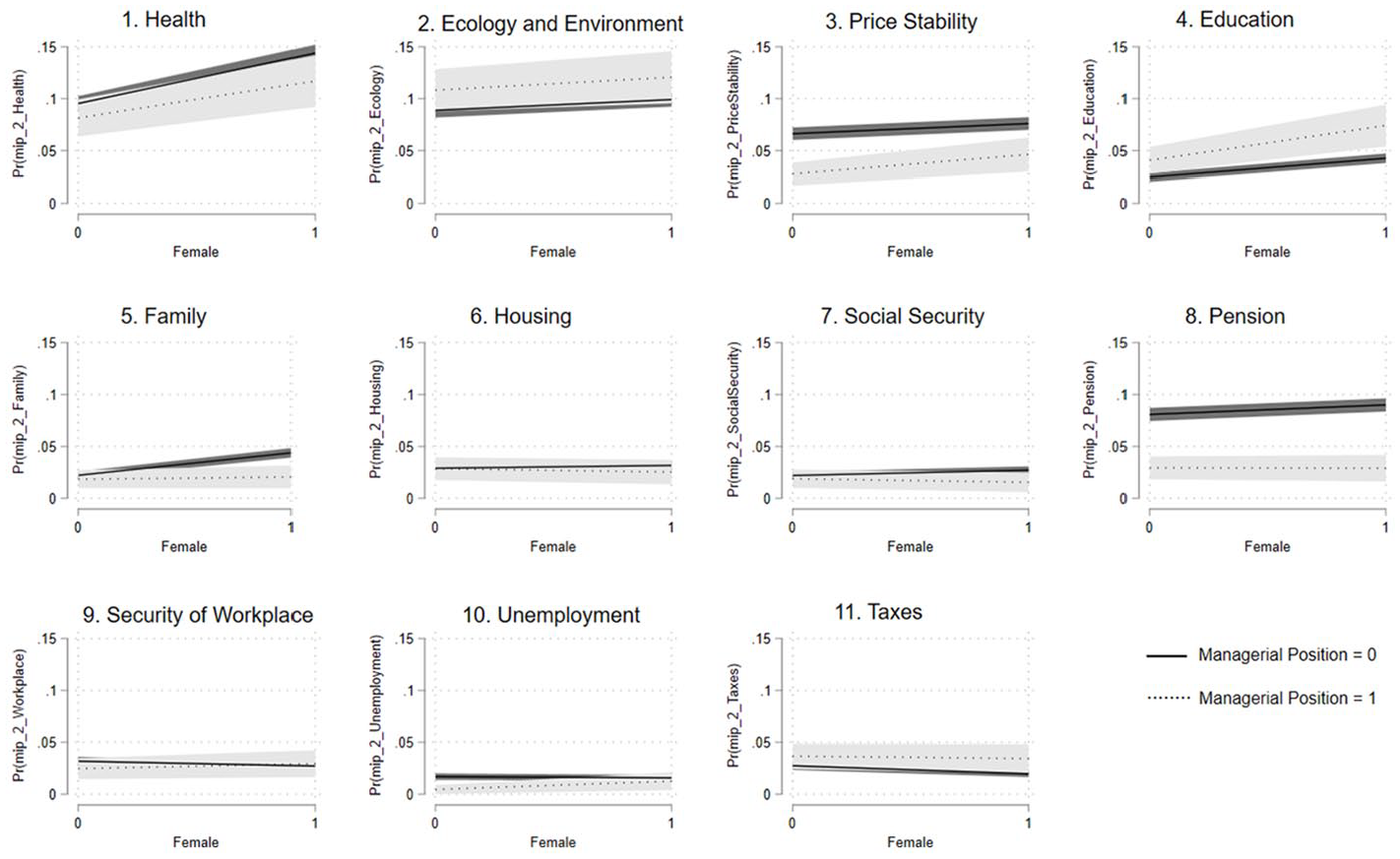
Predictive margins of “female” with 95% confidence interval
Women in managerial positions have a higher predicted probability of finding ecology and environment, education, and taxes on the MII domains than women who do not hold managerial positions. This aligns with the argument that women with greater economic security and assets, which are often associated with managerial roles, are less dependent on state-guaranteed social protection mechanisms. As noted by Iversen and Rosenbluth, such women have more resources to outsource services like childcare or elderly care, diminishing their reliance on government policies. 47 This shift in priorities suggests a focus on stabilizing and enhancing their assets, reflecting concerns that are more aligned with wealth preservation and long-term investment. Their higher interest in education also indicates a recognition of its value in maintaining or advancing socioeconomic status for themselves or their families. However, they still have a higher predicted probability of finding health, ecology, environment, price stability, and education the MII domains than men in managerial positions. This underscores a persistent gendered lens in issue salience, where caregiving responsibilities and social roles continue to influence women’s concerns, even as they ascend into greater professional positions. Therefore, we can conclude that while economic status modifies issue salience, it does not fully erase gendered expectations and priorities rooted in caregiving and family roles.
Discussion and Conclusion
This study examines gender differences in the issue salience between Czech men and women, and their relationship to economic and social assets. It underscores the complexity of the salience that women and men associate with specific issue domains, which is influenced by the acquisition of assets, family dynamics, and employment status. The findings reveal significant and consistent gender differences in the public issue salience in various social strata after controlling for sociodemographic and political factors.
What are the gender similarities and differences in public issue salience in Czechia? Czech women are more likely than Czech men to view social protection as the MII domains. These domains include health, price stability, education, family, housing, and social security. Women are also more likely than men to find the issue domains of ecology and pop culture as more important. Asset theory suggests that women find important those issues that can improve their position in the labor market, especially if they acquire marketable assets. The saliency of social protection issue domains in public debate and in the political arena helps women to secure and support the ability to use assets in the labor market and emancipate themselves from the male breadwinner. These issue domains can promote social status and have the potential to directly improve living conditions, especially those with lack of assets.
In contrast, Czech men attach greater importance to domains related to workplace security, military or militarism, growth, taxes, corruption, transportation, the EU, foreign policy, and sports, usually associated with the role of the state, such as defense, economics, and international relations. Across all groups, men consistently attach low salience to health issues compared to women, despite health disparities such as men’s shorter life expectancy and higher rates of occupational injuries. The neglect of health by men, even among less educated groups where health risks are higher, highlights a gendered disconnect between objective needs and subjective prioritization.
Does the presence or absence of assets increase or decrease men’s and women’s issue salience? Women who are economically inactive tend to find important issue domains that can provide social protection and are more likely than women with paid jobs to focus on the private issue domain of family. The lacking asset of paid work determines individual interests and directs attention to private life. Family was identified as the MII domain by women with children who live without a partner. This group has the highest predicted probability of finding family and social security the MII domain among the social groups studied. These preferences underscore the critical role of affordable childcare and housing in enabling labor market participation. Interestingly, women without paid work are also more likely to pay attention to education than women with paid work positions. The key factor contributing to this is the recognition among women of the significance of education and its role in the labor market. Women with paid work still attach salience to education and family but are more likely to prioritize issues like price stability, reflecting their dual role as caregivers and economic contributors.
Women without managerial or executive positions attach significant importance to the family issue domain, whereas women in managerial positions have lower odds of finding family the MII domain than those in nonmanagerial positions. Gender is a more important determinant of the family issue salience than education level, marketable skills, parenthood, or ideology of the respondents in all tested groups, except the group of women with a managerial position. Women in managerial positions have also higher odds of being interested in issue domains related to job security and taxation compared to women in nonmanagerial positions. They often have the resources to outsource caregiving responsibilities, reducing their reliance on state-funded support, and shifting focus to policies that stabilize or enhance their assets. Despite these differences, women in managerial roles still attach greater salience to health and ecology than their male counterparts, suggesting enduring gendered priorities.
Which assets determine men’s and women’s higher and lower issue salience? The relationship between the social protection issue domains and education among men and women is notable. Education amplifies the gender divide in issue salience. Highly educated women are more likely to find important health, ecology, education, and social security, while highly educated men focus slightly more on housing, workplace security, and unemployment. This divergence highlights how education reinforces women’s focus on social protection as a pathway to equality and empowerment.
These findings contribute to the literature on the gender gap in public opinion, political attitudes, and agenda setting by shedding light on the diversity and complexity of the public issue salience among Czech men and women. Gender differences in the relative importance attached to different issues can have implications for both descriptive and substantive representation, as well as for political communication. The dominance of men in politics risks marginalizing issue domains that women prioritize, such as health, education, and family. This imbalance could lead to underfunded or neglected policies in these areas, perpetuating structural inequalities. The mismatch between women’s issue salience and the political agenda may alienate women from political participation, reducing their sense of being addressed or recognized in public discourse. Politicians and policymakers must consider the gendered nuances in issue salience when shaping political agendas and communications. A failure to reflect women’s priorities risks reinforcing their political disengagement. The potential gender difference in the perception of feeling addressed, recognized, or overlooked in political discourse is a matter worth pursuing in future research.
Footnotes
Acknowledgements
For insightful and valuable feedback, the author thanks Prof. Thomas Saalfeld, Prof. Sabrina Mayer, doc. Andrew Lawrence Roberts, Ph.D., the anonymous reviewers and editors of the journal East European Politics & Societies and Cultures - James Krapfl and Lavinia Stan. She also thanks to the student assistants whose help was crucial in coding the data, the colleagues of the doctoral colloquium at the Bamberg Graduate School of Social Sciences, and the family and friends for their encouragement and patience throughout this process.
This publication is based on the data collection “Our Society” of the Czech Public Opinion Research Centre (CVVM). The data were acquired through the data services of the Czech Social Science Data Archive (ČSDA). The CSDA/ESS-CZ research infrastructure project is supported by the Ministry of Education, Youth and Sports within the framework of grant LM2023046.
The author acknowledges the use of HAWK-KI, DeepL Write, Paperpal and Writefull software to enhance the quality of academic language and accuracy, as well as to proofread and edit the work. The software provided recommendations on wording, syntax, grammar, style, punctuation, spelling and consistency, and assisted her to edit and improve the academic tone. To ensure that the final output accurately reflected her writing style, she made additional modifications to the software’s suggestions.
Funding
This research was supported by the German Academic Exchange Service (DAAD-Deutscher Akademischer Austauschdienst) under the Graduate School Scholarship Programme (GSSP) and by the Bamberg Graduate School of Social Sciences at the University of Bamberg.
Data Availability Statement
Notes
 .
.