




Abstract
This study examined the effectiveness of post-9/11 U.S. counterterrorism policies in preventing terror attacks and reducing casualties against American targets within and outside the United States. Monthly data on terrorism incidents from July 1981 through December 2020 were obtained from the Global Terrorism Database (N = 462). The results of monthly interrupted time-series analyses showed that within the United States, after the 9/11 attacks, the number of attacks, the number of successful attacks, and the successful attack rate statistically significantly decreased in the first month following 9/11; then, no significant increase was observed in the trend of those outcomes. Outside the United States, after the 9/11 attacks, the trend of the number of successful attacks, the number of victims, the number of nonfatal victims, and the victim rate statistically significantly decreased. The results suggest that post-9/11 U.S. counterterrorism policies are effective both domestically and internationally. These findings and their policy implications are discussed.
Introduction
On September 11, 2001, Al-Qaeda-affiliated terrorists committed suicide attacks using hijacked planes against prominent targets in the United States. These unexpected and brutal attacks killed nearly 3,000 innocent individuals and injured nearly 6,000 people (Kean & Hamilton, 2004). The 9/11 terrorist attacks, defined as a “watershed moment” in the history of transnational terrorism, prompted major changes in the realm of U.S. counterterrorism policy (Enders & Sandler, 2005; Grennan & Toros, 2021; Oliver, 2009; Sandler, 2003).
The U.S. government has employed several counterterrorism strategies to combat international terrorism, ranging from hard power to soft power strategies such as diplomacy, international cooperation, international conventions, economic inducements, economic sanctions, law enforcement cooperation, extradition, covert action, and military force (Nye, 2009). From the 1970s to the 1990s, the U.S. government’s efforts to fight against terrorism could be framed as an antiterrorism policy that mainly focused on defensive measures to reduce the vulnerabilities of the U.S. citizens and properties to terrorist attacks. However, this policy shifted to a counterterrorism approach after the 9/11 terrorist attacks, aiming to provide better means and ways to take more offensive measures in preventing, deterring, and responding to terrorism. In this respect, several federal agencies and departments have specifically undertaken active roles in efforts toward minimizing the risks of domestic and foreign terrorist threats (Rasmussen, 2016). However, these counterterrorism efforts have received criticism, and their effectiveness has been questioned by some scholars and counterterrorism experts (Crenshaw, 2010; English, 2019; Perl, 2005; Stewart & Mueller, 2008).
Although the 9/11 terrorist attacks increased a general interest in the studies of terrorism and in applying empirical research toward policy-making (Silke, 2006), more quantitative studies are still needed to examine the effectiveness of the U.S. post-9/11 counterterrorism policies (Phillips, 2023). While some researchers have studied the effects of 9/11 terrorist attacks on several aspects of global terrorism (Davies, 2018; Demir & Guler, 2023; Enders & Sandler, 2006; Santifort-Jordan & Sandler, 2014; M. Smith & Zeigler, 2017), more empirical research is needed to assess the impact of counterterrorism policy changes after 9/11 specifically on the success of countering terrorist attacks within and outside the United States. These empirical research efforts can help evaluate the effectiveness of counterterrorism efforts and develop optimally effective evidence-based counterterrorism policies (Lum & Kennedy, 2012).
Literature Review
The U.S. Counterterrorism Policy
Counterterrorism is a complex and multifaceted term that includes domestic and foreign policy efforts to limit the activities of terrorist organizations and their affiliates at home and abroad.
The Department of Homeland Security (DHS, 2024) defines counterterrorism as the efforts, both proactive and reactive, to prevent, deter, and respond to terrorist activities and threats, thereby ensuring the security and safety of the United States and its citizens. This involves various strategies such as intelligence gathering, law enforcement operations, border security measures, emergency response planning, and public awareness initiatives, aimed at disrupting terrorist plots, dismantling terrorist networks, and protecting critical infrastructure and key assets from potential attacks. Moreover, according to the U.S. Department of Defense (2020), counterterrorism efforts include “activities and operations taken to neutralize terrorists, their organizations and networks in order to render them incapable of using violence to instill fear and coerce governments or societies to achieve their goals.”
There are three primary categories of counterterrorism measures: defensive, proactive, and conciliatory strategies (Sandler, 2023). Defensive efforts focus on deterring terrorist attacks by either raising their cost or diminishing the likelihood of logistical success, with examples including airport metal detectors and intelligence gathering. Proactive initiatives encompass offensive actions aimed at weakening terrorist groups, such as capturing operatives, disrupting financial networks, and retaliating against state sponsors. The objective is to alleviate, and ideally eliminate, the terrorist threat, thus reducing the necessity for defensive interventions. Conciliatory measures involve incentivizing peaceful actions by terrorist groups to decrease the comparative cost of nonviolent activities, with the aim of discouraging terrorism by elevating its relative price compared with legitimate political engagement or nonviolent protest (Sandler, 2023).
The 9/11 terrorist attacks triggered significant U.S. initiatives to combat terrorism, leading to major policy changes and administrative reforms aimed at creating a better counterterrorism system in the United States. These policy changes sought to increase the effectiveness of both offensive and defensive counterterrorism measures, both at home and abroad. One of the primary changes in domestic counterterrorism was the establishment of the Office of Homeland Security by President Bush through an executive order issued a month after the 9/11 attacks (Deflem, 2010). Within a year, this office evolved into the DHS within the federal government to address both domestic and international threats across a wide spectrum of security domains, including aviation and border security, maritime security, cybersecurity, and emergency response systems to keep the country safe from potential future attacks. Another critical change in the U.S. counterterrorism policy after 9/11 was the USA PARTIOT ACT (Uniting and Strengthening America by Providing Appropriate Tools Required to Intercept and Obstruct Terrorism) that included various provisions to deter and prosecute terrorists, strengthen law enforcement efforts against terrorism, and increase the capability of law enforcement in counterterrorism investigations. Even though civil liberties advocates criticized the Act due to its violation of the Constitution and the potential abuse by the federal law enforcement agencies, the sweeping counterterrorism measures were swiftly passed in the atmosphere of 9/11 terrorist attacks (Smith & Hung, 2010).
Beside these domestic policy changes in counterterrorism after 9/11, the U.S. government also intensified its counterterrorism efforts at the international level, often accompanied by the term of “the war on terror” (Owens & Dumbrell, 2008). A week after the 9/11 terrorist attacks, the U.S. Congress passed a resolution to authorize using military force against countries, organizations, or individuals involved in the occurrence of the attacks. First, the 9/11 attacks prompted the United States to retaliate by invading Afghanistan due to its support to Al-Qaeda and provision of safe havens to other radical terrorist groups. On October 7, 2001, the U.S.-led international military response, known as Operation Enduring Freedom, began with the aim of ousting the Taliban regime in Afghanistan and dismantling Osama bin Laden’s terrorist network based there. Within 2 months, U.S. forces removed the Taliban from operational power. Despite the Taliban’s official downfall, leaders of Al-Qaeda continue to hide out in the mountains. After a decade of counterterrorism operations, U.S. forces killed Osama bin Laden, the mastermind behind the September 11th attacks, at a hideout in Abbottabad, Pakistan, on May 2, 2011. Subsequently, in June 2011, the U.S. troop withdrawals began from Afghanistan and the complete withdrawal of U.S. forces were finalized in August 2021 (Council on Foreign Relations, 2024). During the two-decade-long counterterrorism efforts, the United States aimed to prevent Afghanistan from once again becoming a safe haven for terrorists, necessitating strong counterterrorism operations, prolonged efforts against insurgency, nation-building initiatives, security assistance, and attempts to establish a stable government in Kabul. Despite achieving some successes, the overall endeavor failed after two decades. Upon withdrawal, Afghanistan encountered challenges such as the presence of Islamic State Khorasan (ISIS-K), alignment of some Al-Qaeda members with the Taliban, economic hardships, a tense environment, possession of advanced military equipment, and severe human rights and women’s rights issues (Collins, 2023).
According to Gaibulloev and Sandler (2023), there is a significant imbalance between domestic and international terrorist attacks following the events of 9/11. Domestic terrorist incidents surpass transnational ones due to intensified counterterrorism measures within the country, such as enhanced border and airport security, along with stricter international travel measures. Consequently, terrorists have shifted their focus toward domestic targets, especially as foreign targets strengthened their security measures in the aftermath of 9/11. In fact, the Global Terrorism Index (Institute for Economics & Peace, 2024) reported a 22% reduction in global terrorist incidents to 3,350, but the attacks became deadlier. In 2023, deaths from terrorism rose to 8,352, a 22% increase and the highest since 2017. Furthermore, the number of countries reporting terrorist incidents declined to 50 globally. However, despite the overall decline in global terrorist attacks, there is a growing threat of domestic terrorism in the United States. Jones et al. (2020) reported that there were 893 terrorist attacks and plots between 1994 and 2020 within the United States. The majority of these incidents, 57%, were carried out by right-wing groups, while 25% were attributed to left-wing groups, 15% to jihadist terrorists, and 3% to ethnonational groups.
Piazza (2017) defined domestic right-wing terrorism as driven by extremist ideologies such as extreme nationalism, racism, white supremacy, Christian religious radicalism, and antigovernment beliefs that presents a significant and growing threat, frequently without international motivations. According to the Anti-Defamation League (2024), over the past five decades, right-wing extremism has shown recurring cycles in the United States. It began with a resurgence in the early-to-mid 1980s, influenced by economic downturns, leading to increased numbers and violence among white supremacists and antigovernment extremists, which declined by the end of the decade. Another peak occurred in the mid-to-late 1990s, exacerbated by incidents such as Ruby Ridge and Waco, resulting in a downturn in the early 2000s, particularly within antigovernment militias. A third surge emerged in the late 2000s, driven by factors such as Barack Obama’s election, economic crises, and the impact of social media, initially affecting antigovernment extremists and later contributing to a significant resurgence in the white supremacist movement by 2015. It reached its peak with the January 6th attack on the U.S. Capitol in 2021 (Dugan & Fisher, 2023).
In fact, the U.S. law enforcement and intelligence community can leverage their experience in international terrorism to deal with domestic terrorist groups. However, there is no clear baseline for evaluating the domestic terrorism threats in the United States as there is a international terrorist threat. First, federal agencies use different terminologies to describe the domestic threat. Second, there is no official method for designating a specific domestic group as a terrorist organization as there is for foreign terrorist organizations. Finally, there are no official statistics available that report the number of domestic terrorism plots and attacks investigated by law enforcement agencies in the United States (Bjelopera, 2017).
Measuring Effectiveness in Counterterrorism
Measuring the effectiveness of counterterrorism efforts is a challenging task (Van Um & Pisoiu, 2013). Crenshaw and LaFree (2017) underscored the difficulties in crafting effective counterterrorism policies, emphasizing the diverse and elusive nature of adversaries, disagreements in defining and studying the terrorism field, and concluding that straightforward solutions to this complex threat are not possible. They also discuss the added challenge of an exacting standard, where counterterrorism efforts must consistently succeed, in contrast to terrorists who need only succeed once. Given that terrorism is a complex, multidimensional phenomenon, measuring the results of any counterterrorism policy requires a multifaceted approach (Perl, 2005).
Abrahms (2006, p. 46) suggested two criteria for evaluating the effectiveness of terrorist groups: combat effectiveness, which focuses on the group’s capacity to inflict damage and attract attention, and strategic effectiveness, which evaluates the group’s accomplishment of its goals and objectives. In fact, terrorist organizations have multiple and shifting goals and objectives that are dynamically (re)defined according to their ideology, propaganda, negotiations, and peace talks with governments (Lutz & Lutz, 2009). Terrorist organizations employ a variety of strategies, tactics, and operations to reach their goals and objectives (Marsden, 2012). However, counterterrorism experts and researchers have differing opinions about the success of a terrorist movement and their achievements. While some scholars and experts believe that disgruntled individuals adopt violence since it helps them to reach their goals (Harmon, 2001; Kydd & Walter, 2006), others underline the poor success rate of terrorist campaigns and the infrequency of terrorist groups achieving their ultimate goals and objectives (Abrahms, 2006). Moreover, another group of scholars views terrorism as a counterproductive strategy due to its failure in solving problems and its boomerang effect (Byman, 1998; Freedman, 2007). While the effectiveness of terrorist groups is still a debated issue, accumulating evidence indicates that these groups occasionally succeed in attaining some of their objectives, especially when those goals are not excessively ambitious (Gaibulloev & Sandler, 2019). Although terrorism may provide tactical advantages, its ability to achieve strategic success is doubted. It can be useful in smaller conflicts or for less powerful groups unable to conduct full-scale warfare. Yet, empirical evidence indicates that terrorism frequently does not produce desired results. Terrorist organizations seldom achieve outright victory or substantial concessions through negotiation. In general, the consensus is that terrorism more often results in negative consequences rather than success (Fortna, 2015).
There are different approaches to defining “success” in counterterrorism since the success of terrorism mainly depends on how success is defined and measured by counterterrorism researchers and experts (Merari, 1993). Perl (2005) proposed considering three major categories of incidents, attitudes, and trends to measure effectiveness of anti-terror efforts. Considering incidents as a measurement, the number of terrorist attacks is reported, detailing the geographic distribution of incidents and their severity in terms of casualties. Attitudes as a measurement typically involve public opinion regarding counterterrorism policies, the adverse psychological or behavioral effects of terrorism on society, diminished public trust in governments or their security measures, the extent to which terrorists can radicalize and polarize Islam against the West and vice versa, the prevalence of anti-American or anti-Western sentiments, and the level of religious intolerance in countries that serve as breeding grounds for terrorists. Finally, trends encompass changes in incidents, attitudes, and various factors over time, particularly relevant for assessing shifts in terrorist infrastructure such as leadership strength, recruitment base, network expansion, target focus, tactical and strategic goals, radicalization levels, capabilities for inflicting damage, and additional metrics such as government policies, defector rates, online activity, media visibility, and supporter recruitment. Van Dongen (2011) also discussed the difficulties in measuring success in counterterrorism and emphasized the importance of a holistic approach that considers both direct and indirect indicators of terrorism. While direct indicators of terrorism include statistics about the number of terrorist attacks, the number of casualties, and material damage, indirect indicators of terrorism focus on domestic and international support for counterterrorism policies and economic indicators such as gross domestic product (GDP) growth and stock market performance (Van Dongen, 2011).
The 9/11 terrorist attacks have exponentially increased spending on counterterrorism in the United States, and trends in homeland security spending have been consistently upward over the last two decades. However, there has been not enough rigorous research to evaluate the effectiveness of these counterterrorism policies and few assessments on the cost-effectiveness of those expenditures (Lum & Kennedy, 2012). One of the earliest efforts to evaluate the effectiveness of counterterrorism policies was a Campbell Collaboration systematic review conducted by Lum et al. (2006). This study reviewed previous research on counterterrorism strategies and tactics to determine “what works?” in counterterrorism policy. The results of the review indicated that out of thousands of research articles, only seven evaluation studies were scientifically rigorous enough to draw scientific conclusions. These studies, conducted by a few scholars, focused on specific counterterrorism measures such as airport security and metal detectors (Lum et al., 2006).
In a seminal study, Enders and Sandler (1993) analyzed the attack modes of transnational terrorist organizations to examine how terrorist organizations responded to U.S. counterterrorism interventions. The results of the vector autoregression and intervention analysis of six counterterrorism policies indicated that terrorist organizations, acting as rational actors constrained by resources, adjust their attack modes by adopting substitute or complement strategies and tactics in response to new counterterrorism measures and policy changes. Enders and Sandler (2005) also examined the effectiveness of the U.S. counterterrorism policy after 9/11 to understand the impact of the U.S.-led offensive counterterrorism efforts against Al-Qaeda, its leadership, and finances. Their findings indicated that the counterterrorism efforts slowed down the increase in terror incidents and reduced hostage-taking incidents. However, deadly bombing incidents have increased, and terrorists shifted from hard targets to soft targets to increase their success. Moreover, Gaibulloev and Sandler (2019) critically examined the effectiveness of post-9/11 counterterrorism policies by applying a game theoretic analysis approach. Their analysis suggested that global terrorist attacks shifted from Western countries to Africa, Asia, and the Middle East due to enormous defensive counterterrorism spending efforts implemented in the West after the 9/11 attacks. Similarly, other researchers (Enders & Sandler, 2006; Guler & Demir, 2021) found that terrorist organizations strategically shifted their target choices from homeland to abroad to find softer targets in response to the target hardening and increased security measures in the homeland. Moreover, Demir and colleagues (2022) analyzed the frequency of global terrorism incidents to identify the predictors of successful terrorism incidents utilizing the Global Terrorism Database (GTD) between 1970 and 2019. The results of their study indicated that successful terrorism incidents are less likely to occur in the United States compared with other regions in the world.
Several studies have explored the theoretical and practical significance of the situational terrorism prevention approach in counterterrorism prevention measures implemented after 9/11(Freilich et al., 2019). For instance, Hsu and Apel (2015) investigated the impact of implementing airport metal detectors as a preventive measure for aviation security, and their findings indicated the effectiveness of metal detectors in averting terrorist attacks at airports. Even though displacement of a terrorist attack is not inevitable and is probably limited to the most capable terrorist organizations. In addition, Hsu and McDowall (2017) examined the potential negative unintended consequences of target-hardening interventions in aviation and U.S. diplomatic targets, revealing that attacks against hardened targets did not increase post-intervention. Similarly, Perry et al. (2017) also conducted a study on the effectiveness of barriers erected along the Israel-Palestine border in the West Bank. They found that these barriers not only reduced suicide terrorism but also generated some diffusion of benefits in areas without barriers.
As discussed above, the U.S. counterterrorism policy underwent a major shift after the 9/11 terrorist attacks, and previous studies have analyzed their impact and effectiveness in preventing future terrorist attacks against U.S. targets. However, more empirical studies are needed to evaluate the impact of counterterrorism policy changes after 9/11 on the success of terrorist attacks. To address this gap in the literature, this study examined the effect of the post-9/11 counterterrorism policies on terror incidents against American targets within and outside the United States, utilizing the GTD (University of Maryland, 2019).
Hypotheses
This study examined the effectiveness of the U.S. post-9/11 counterterrorism policies. Specifically, the study tested the following three main hypotheses:
Method
Data
The data were obtained from the GTD, which was collected by the National Consortium for the Study of Terrorism and Responses to Terrorism (START, 2021a) at the University of Maryland from publicly available sources.
The GTD defines terrorism as “the threatened or actual use of illegal force and violence to attain a political, economic, religious, or social goal through fear, coercion, or intimidation” (LaFree & Dugan, 2007, p. 184). According to the GTD (START, 2021b, p. 12), for an incident to be included in the GTD, it must meet all three criteria: (a) “The incident must be intentional”; (b) “The incident must entail some level of violence or immediate threat of violence”; and (c) “The perpetrators of the incidents must be sub-national actors.” In addition, at least two of the three criteria must be met: (a) “The act must be aimed at attaining a political, economic, religious, or social goal”; (b) “There must be evidence of an intention to coerce, intimidate, or convey some other message to a larger audience (or audiences) than the immediate victims”; and (c) “The action must be outside the context of legitimate warfare activities.” It is important to note that the definition of terrorism was modified for the post-2007 data. However, in this study, the newly developed inclusion criteria were used and applied throughout to the data covering the entire period of 1970 to 2007 (University of Maryland, 2019).
This study specifically utilized GTD terrorism incidents that occurred in the United States and abroad against the American targets from July 1981 through December 2020. Due to the missing data for 1993 in the GTD, the year 1993 was excluded from the analyses. Terrorism incidents that occurred within the United States (N = 1,529) and abroad against the U.S. targets (N = 1,772) during that period were filtered from the entire data set. Doubtful incidents 1 (n = 296 within the United States and n = 697 outside the United States) were excluded from the database to ensure the most accurate measure of terrorist activities possible (see Forst, 2017). The final total number of terrorism incidents used in this study was 1,233 for within the United States and 1,075 for outside the United States. Note that, as will be explained below, the analyses included both undoubtful terrorism incidents and all terrorism incidents, which were recorded at the incident level. The unit of analysis was “month,” and therefore, the data were aggregated into monthly counts for each dependent variable for terrorism incidents within the United States and terrorism incidents against the U.S. targets outside the United States separately, then combined.
It is crucial to clearly define the commencement of the intervention when conducting an interrupted time-series analysis (ITSA) (see Bernal et al., 2017). This study used October 2001 as the intervention starting point for the intervention (hereafter 9/11 attacks) (see Demir & Guler, 2021; Hsu et al., 2018, 2020) because it was the first month after September 11, 2001, and all necessary measures in counterterrorism were already in place to respond to the 9/11 attacks. To ensure equal numbers of months before and after the 9/11 attacks (n = 231 for each period), the monthly aggregated data set covered the period from July 1981 through December 2020 (N = 462).
The equal distribution of the data points before and after 9/11 attacks enables a robust comparison of outcomes before and after 9/11 attacks (see Madero-Hernandez et al., 2017) and increases the statistical power and the robustness of results (see Bernal et al., 2017; Zhang et al., 2011). In addition, the inclusion of pre-9/11 attack months in the analyses helps to account for any historical effects on the dependent variables. Furthermore, using monthly data is appropriate for increasing the sample size and statistical power of the study and for minimizing the data volatility (Bernal et al., 2017; Liu et al., 2020; Zhang et al., 2011; see also Bhaskaran et al., 2013).
Variables and Measures
Independent Variable
The main independent variable was the post-9/11 U.S. counterterrorism policies (where 1 = Post-9/11 U.S. counterterrorism policies after October 1, 2001; 0 = Pre-9/11 U.S. counterterrorism policies before October 1, 2001).
Dependent Variable
The dependent variable in this study was the effectiveness of the counterterrorism policy. Van Dongen (2011) outlined various methods for measuring the effectiveness in counterterrorism, which include the number of terrorist attacks, the number of victims, material damage, numbers of arrests, international cooperation, and domestic support. Due to the limitations in the data, this study applied two of these measures, including the number of terrorist attacks and the number of victims, and included five more measures for assessing the effectiveness of counterterrorism policy. In total, seven different metrics were used to measure the effectiveness of the U.S. counterterrorism policies after 9/11. These metrics comprised the number of attacks, the number of successful attacks, the successful attack rate (percentage), the victim rate (percentage), the number of victims, the number of fatal victims, and the number of nonfatal victims. Each variable was measured as follows:
The number of attacks was measured as the total number of attacks that occurred in each month within a given year.
A successful attack was defined as one that had tangible effects (START, 2021b, p. 26). Thus, an attack was considered successful if it was carried out. The number of successful attacks was measured as the total number of successful attacks that occurred in each month within a given year.
Successful attack rate 2 (percentage) was measured as follows: The number of monthly successful attacks was divided by the number of monthly attacks and multiplied by 100. This rate represents the percentage of successful attacks relative to all attacks.
Victim rate was measured by dividing the monthly number of victims by the monthly number of attacks and multiplying by 100.
The number of victims was measured as the total number of casualties that occurred each month in a given year.
The number of fatal victims refers to the total number of confirmed fatalities as a direct result of the incident (START, 2021b, p. 49). The number of fatalities was measured as the total number of fatalities occurring each month within a given year.
The number of nonfatal victims refers to the total number of confirmed injuries from the incident (START, 2021b, p. 50). The number of nonfatal injuries was measured as the total number of fatalities that occurring each month within a given year.
Control variables. The two control variables were the data collection period (1 = post-2012; 0 = pre-2012) (see Jensen, 2013; LaFree et al., 2014, p. 33, for discussion about the possible effect of the data collection methodology change in 2012 on increasing the number of terrorism incidents in the GTD but not necessarily because of the increase in the actual number of terrorist events) and season. Season was measured as follows: 1 = Winter, 2 = Spring, 3 = Summer, and 4 = Fall.
Analytic Strategy
All analyses were conducted in three steps using the Stata 18.0 statistical software program. First, the descriptive statistics were computed. Second, the independent samples t-test was performed for bivariate analysis because the dependent variables were continuous, and the independent variable was dummy. Finally, the “itsa” command in Stata was used to run a monthly ITSA to statistically assess the immediate and long-term effectiveness of post-9/11 counterterrorism policies (see Linden, 2015). ITSA was deemed appropriate because it offers one of the strongest quasi-experimental research designs (see Campbell & Stanley, 1966; Linden, 2015; Shadish et al., 2002). In addition, unlike a pre–posttest analysis (i.e., independent samples t-test), ITSA controls for preintervention trends (Bernal et al., 2017; Cook & Campbell, 1979; Wagner et al., 2002) and produces more robust results (Campbell & Stanley, 1966; Shadish et al., 2002).
In a time-series analysis, there are methodological issues that need to be addressed to obtain robust results. These include autocorrelation, overdispersion, nonstationarity, seasonality, and time-varying confounders (Bernal et al., 2017; Wagner et al., 2002).
Autocorrelation is a common issue in ITSA (Linden, 2015). To address autocorrelation, the Prais–Winsten estimator with the prais 3 option in ITSA was utilized (Prais & Winsten, 1954), and rhotype (tscorr) was specified (for details, see Linden, 2015). The results of the rho (iteratively generated autoregressive order AR (1) coefficients) values for the models indicated that the rho values were fairly small, ranging from 0.00 to 0.23 for domestic terrorism incidents and from 0.01 to 0.32 for terrorism incidents abroad. In addition, to check whether there was autocorrelation at lag 1 and the autocorrelation was adjusted, the Durbin–Watson statistic 4 was estimated (Durbin & Watson, 1950; Penfold & Zhang, 2013; Wagner et al., 2002). The value of the Durbin–Watson d statistic was 2 for each model for both data sets (indicating no serial autocorrelation) (see Linden, 2015; Wagner et al., 2002). To address possible overdispersion (i.e., heteroskedasticity), the Prais–Winsten estimator was used (Bernal et al., 2017; Linden, 2015) and robust standard errors were estimated (for details, see Linden, 2015). To address seasonality, the current analysis used an equal distribution of data before and after 9/11 attacks (see Bernal et al., 2017) and incorporated season as a covariate in the models (see Wagner et al., 2002). To control for time-varying factor, the variable “data collection period” was included in the models. To detect the presence of a nonstationary state, the augmented Dickey–Fuller test for stationarity was used (Dickey & Fuller, 1979). This test examines whether the series has a UNIT ROOT (more than one trend in the series). Results indicated that the Augmented Dickey–Fuller test statistic was statistically significant for all outcomes, suggesting that the data for the outcomes were stationary.
Note that the analyses included both undoubtful terrorism incidents and all terrorism incidents in the United States. The results of undoubtful terrorism incidents were reported in the text, while the results of all terrorism incidents were included in Tables 4 to 6 for interested readers.
Results
Descriptive Statistics
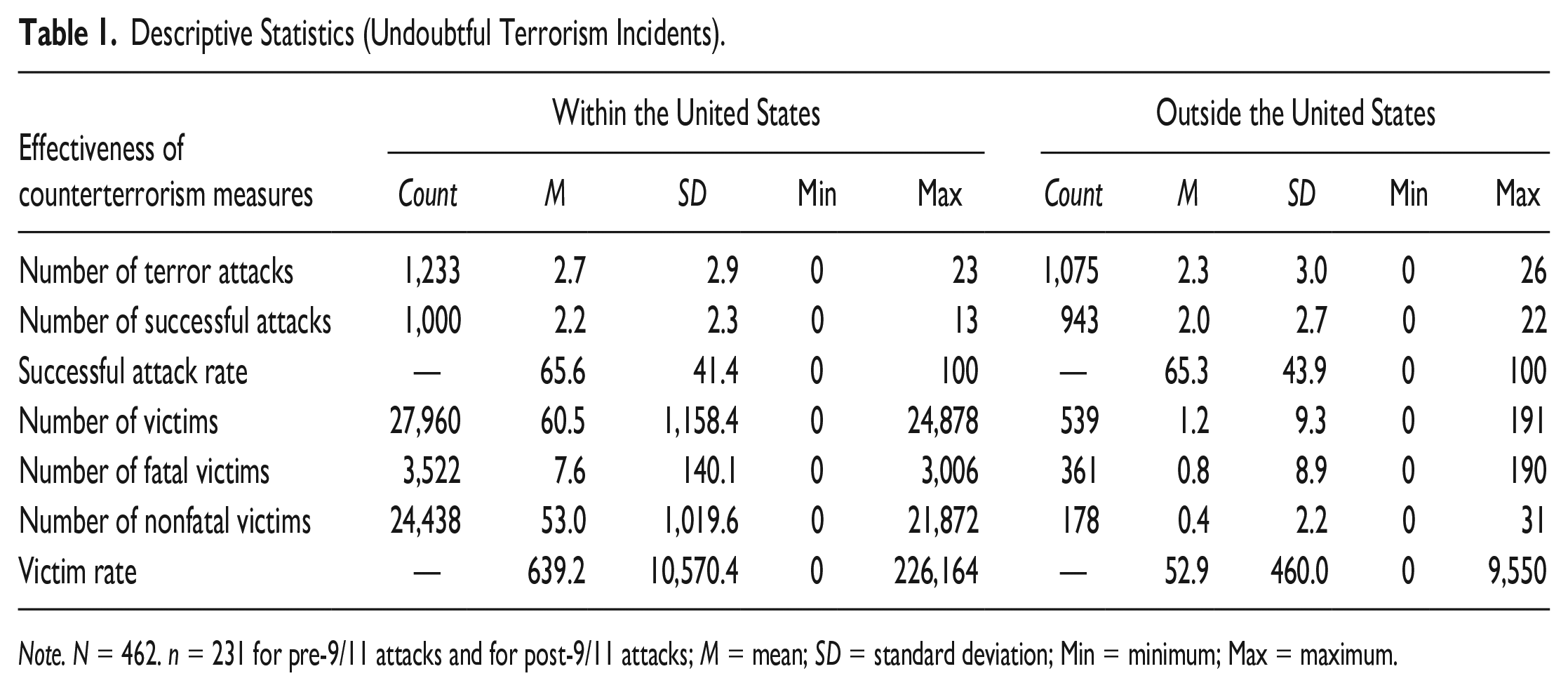
Table 1 shows the results of the descriptive statistics. From July 1981 through December 2020, a total of 1,233 terror attacks occurred in the United States, of which 1,000 were successful. These attacks resulted in approximately 28,000 victims, with around 3,500 fatalities and 24,450 injuries. On average, there were about three attacks (M = 2.7; SD = 2.9) and two successful attacks per month (M = 2.2; SD = 2.3). The monthly rate of successful terror attacks was approximately 66% (M = 65.6; SD = 41.4). In addition, the monthly average showed that 61 individuals were victims of terror attacks (M = 60.5; SD = 1,158.4), eight individuals were killed (M = 7.6; SD = 140.1), and 53 individuals were injured (M = 53.0; SD = 1,019.6). Finally, on average, the monthly victim rate was around 639 (M = 639.2; SD = 10,570.4).
Descriptive Statistics (Undoubtful Terrorism Incidents).
Note. N = 462. n = 231 for pre-9/11 attacks and for post-9/11 attacks; M = mean; SD = standard deviation; Min = minimum; Max = maximum.
The descriptive statistics also showed that outside the United States, there were 1,075 terror attacks, of which approximately 940 were successful. These attacks resulted in the deaths of 360 U.S. citizens and injuries to about 180, making about 540 U.S. citizens victims. On average, the results were approximately two attacks per month (M = 2.3; SD = 3.0) and two successful attacks per month (M = 2.0; SD = 2.7). The monthly rate of successful terror attacks was around 65% (M = 65.3; SD = 43.9). In addition, the monthly data showed that, on average, about one U.S. citizen was victim of terror attacks (M = 1.2; SD = 9.3), while 0.8 U.S. citizens were killed (M = 0.8; SD = 8.9), and 0.4 U.S. citizens were injured (M = 0.4; SD = 2.2). Finally, on average, the monthly victim rate was around 53 (M = 52.9; SD = 460.0).
Bivariate Analyses
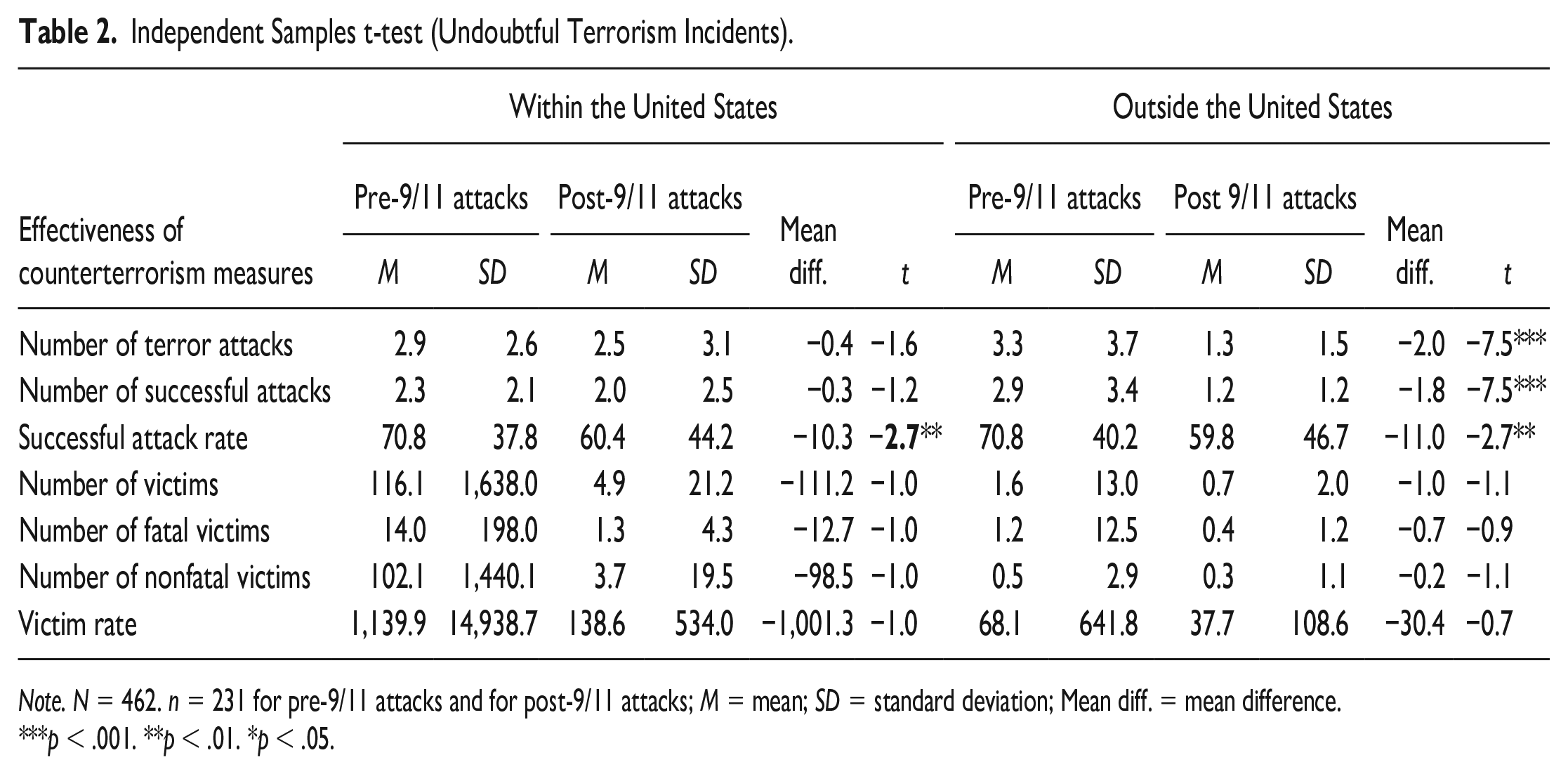
The results of the independent samples t-test for the bivariate analyses of terror incidents within and outside the United States are presented in Table 2. Specifically, the results for terror incidents within the United States revealed that all outcomes after 9/11 attacks were lower than those before 9/11 attacks. However, there was only statistically significant difference in successful attack rate (Mean diff. = −10.3, p < .01) between the periods before and after 9/11 attacks. This indicates that the rate of successful terror attacks after 9/11 attacks was significantly lower than before 9/11 attacks.
Independent Samples t-test (Undoubtful Terrorism Incidents).
Note. N = 462. n = 231 for pre-9/11 attacks and for post-9/11 attacks; M = mean; SD = standard deviation; Mean diff. = mean difference.
p < .001. **p < .01. *p < .05.
The results for terror incidents outside the United States showed that compared with before 9/11 attacks and after 9/11 attacks, the number of attacks (Mean diff. = −2.0, p < .0001), the number of successful attacks (Mean diff. = −1.8, p < .0001), and the successful terror attack rate (Mean diff. = −11.0, p < .01) against U.S. targets were statistically significantly lower. However, there was no statistically significantly difference in the other outcomes between before and after 9/11 attacks, although there was a decline after 9/11 attacks.
Results of Monthly ITSA
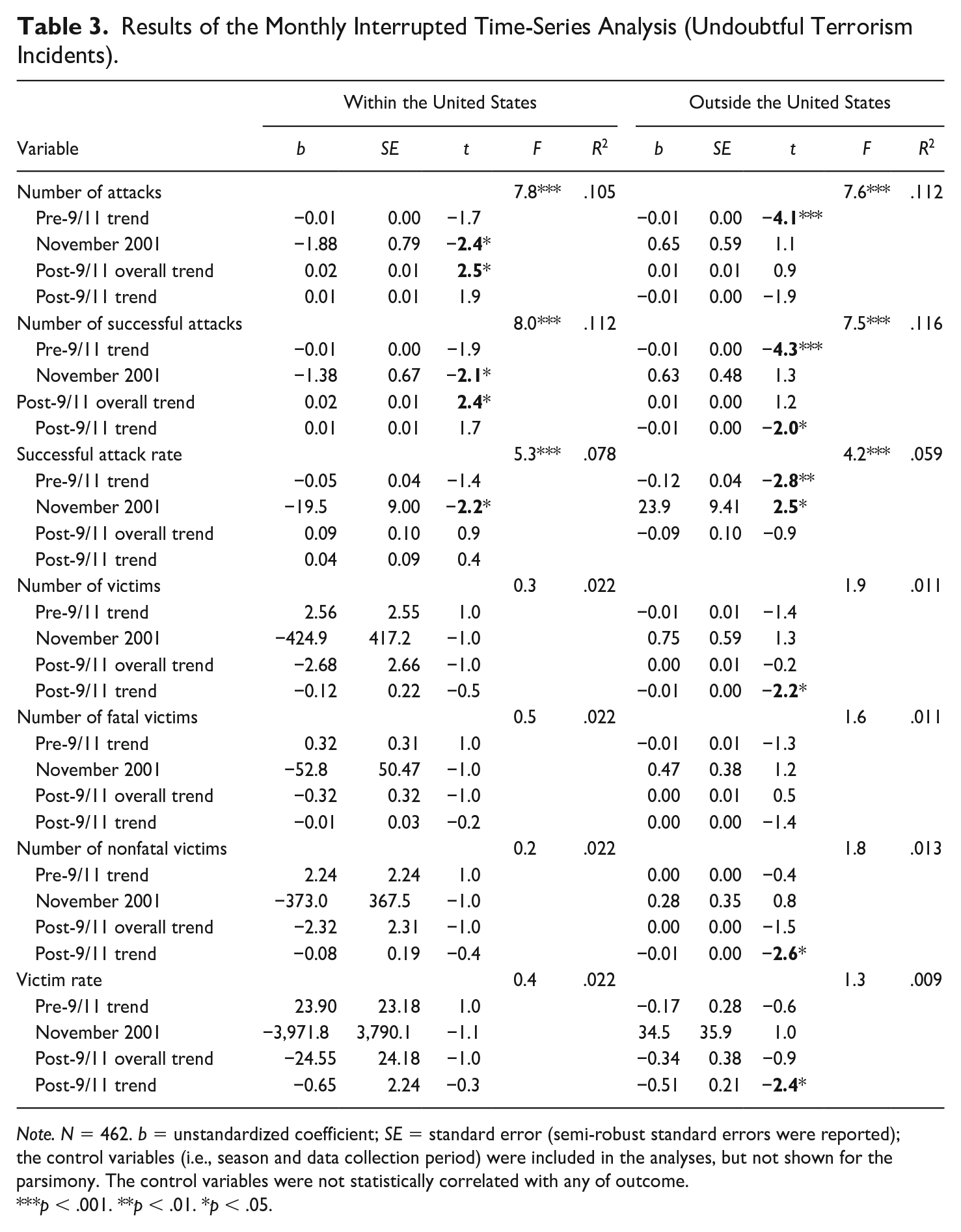
The results of the monthly ITSA for undoubtful terror incidents within and outside the United States are shown in Table 3 and Figure 1. Note that the results for the control variables were not included in Table 3 for the sake of parsimony and brevity but reported in the text. 5
Results of the Monthly Interrupted Time-Series Analysis (Undoubtful Terrorism Incidents).
Note. N = 462. b = unstandardized coefficient; SE = standard error (semi-robust standard errors were reported); the control variables (i.e., season and data collection period) were included in the analyses, but not shown for the parsimony. The control variables were not statistically correlated with any of outcome.
p < .001. **p < .01. *p < .05.
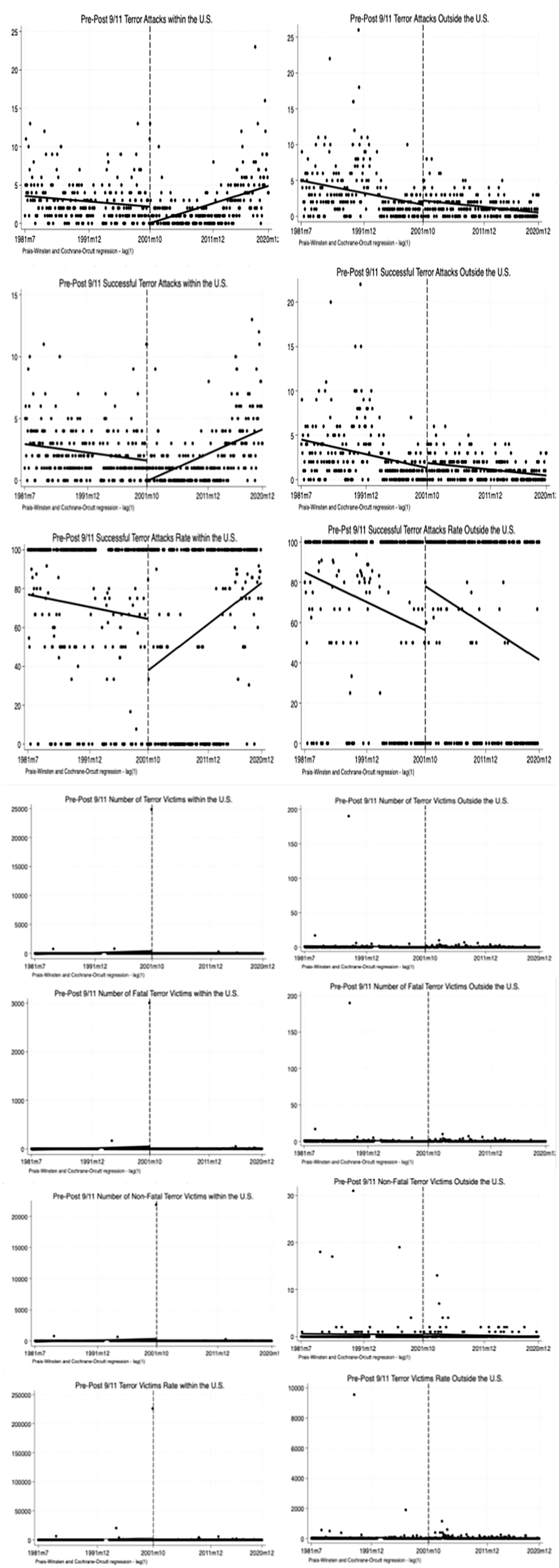
Effectiveness of Post 9/11 Counterterrorism Measures Within and Outside the United States (July 1981 to December 2020).
Regarding terrorism incidents within the United States, Figure 1 depicts a slight downward trend in the number of terror attacks, successful terror attacks, and the successful terror attack rate before the 9/11 attacks. Although there was an immediate sharp drop in these metrics following the 9/11 attacks, there has been a strong positive trend afterward. However, the trends in terror victims, fatal terror victims, nonfatal terror victims, and victim rates remained steady before and after the 9/11 attacks, except for the victims during the 9/11 attacks.
Regarding terrorism incidents against American targets outside the United States, Figure 1 illustrates a sharp decreasing trend in the number of terror attacks, successful terror attacks, and the successful terror attack rate before the 9/11 attacks. Following the 9/11 attacks, there was an increase in these outcomes, followed by a continuation of the decreasing trend, but in a steady way. However, the trends in terror victims, fatal terror victims, nonfatal terror victims, and victim rates exhibited a slight downward trajectory before and after the 9/11 attacks.
The results of the monthly ITSA for terror incidents within the United States showed that, all else being equal, the number of terror attacks (b = −1.88, p < .05), the number of successful terror attacks (b = −1.38, p < .05), and the successful attack rate (b = −19.51, p < .05), statistically significantly decreased in the first month of the 9/11 attacks, but the overall trend in the number of terror attacks (b = 0.02, p < .05) and the number of successful terror attacks (b = 0.02, p < .05) after the 9/11 attacks was statistically significantly higher than the overall trend before the 9/11 attacks. However, no statistically significant change occurred in the trends of the number of terror attacks, the number of successful attacks, and the successful attack rate before and after the 9/11 attack period. In addition, no statistically significant change was observed in the other outcomes.
The results of the analysis for terror incidents against American targets outside the United States indicated that, all else being equal, there was a statistically significant decreasing trend before the 9/11/attack period in the number of terror attacks (b = −0.01, p < .001), number of successful attacks (b = −0.01, p < .001), and the successful terror attack rate (b = −0.12, p < .01). Conversely, there was a statistically significant decreasing trend after the 9/11 attack period in the number of successful terror attacks (b = −0.01, p < .05), the number of victims (b = −0.01, p < .05), the number of nonfatal victims (b = −0.01, p < .05), and the victim rate (b = −0.51, p < .05). However, the successful attack rate (b = 23.93, p < .05) statistically significantly increased in the first month of the 9/11 attacks. The other results were not statistically significant.
In addition, all else being equal, the control variables (i.e., season and data collection period) were not statistically significantly correlated with the outcomes for both terror incidents within and outside the United States.
Sensitivity Analysis
The results of the sensitivity analyses, which included all terrorism incidents (i.e., both doubtful and undoubtful), are presented in Table 4 for the descriptive statistics, Table 5 for the bivariate analysis, and Table 6 for ITSA. For terrorism incidents within the United States, the only significant difference was observed in the number of terror attacks between the results of the bivariate analyses involving undoubtful terrorism incidents (see Table 2) and all terrorism incidents (see Table 5). Unlike the results obtained from undoubtful terrorism incidents, the results obtained from all terrorism incidents indicated that a statistically significant decrease in the number of terror attacks after the 9/11 attacks compared with before (Mean diff. = −0.8, p < .01). However, for terror incidents outside the United States, there was no significant difference between the results of the independent samples t-test obtained from the data involving undoubtful terrorism incidents (see Table 2) and all terrorism incidents (see Table 5).
Descriptive Statistics (Doubtful and Undoubtful Terrorism Incidents).
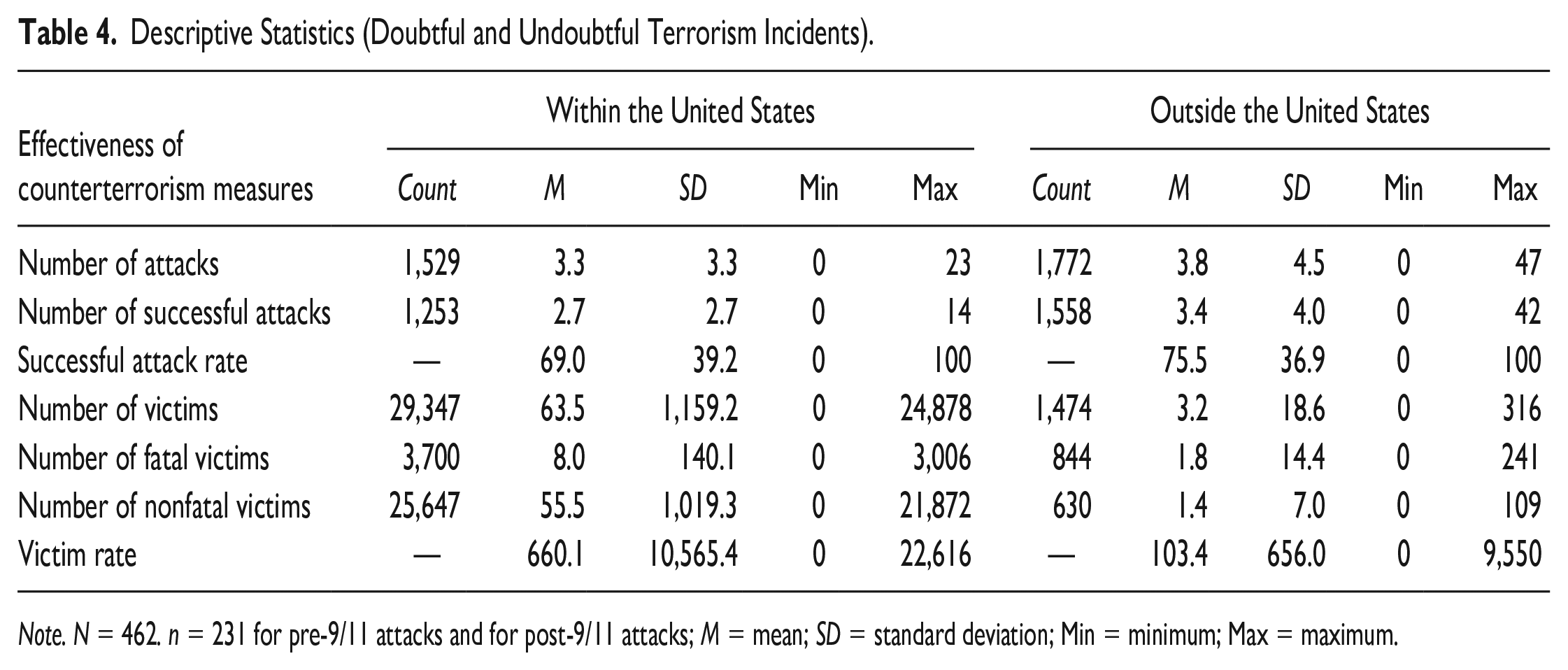
Note. N = 462. n = 231 for pre-9/11 attacks and for post-9/11 attacks; M = mean; SD = standard deviation; Min = minimum; Max = maximum.
Independent Samples t-test (Doubtful and Undoubtful Terrorism Incidents).
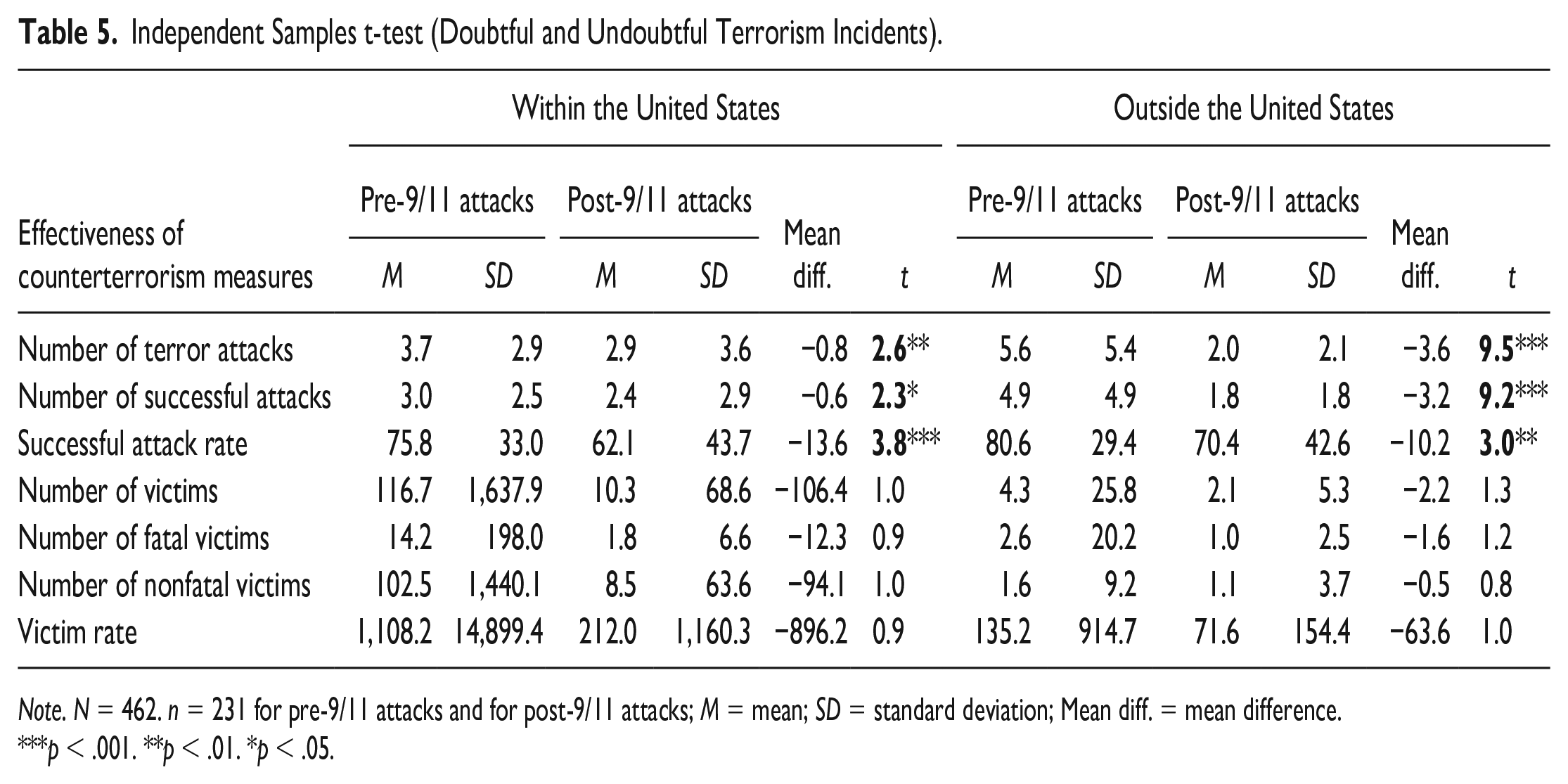
Note. N = 462. n = 231 for pre-9/11 attacks and for post-9/11 attacks; M = mean; SD = standard deviation; Mean diff. = mean difference.
p < .001. **p < .01. *p < .05.
Results of the Monthly ITSA (Doubtful and Undoubtful Terrorism Incidents).
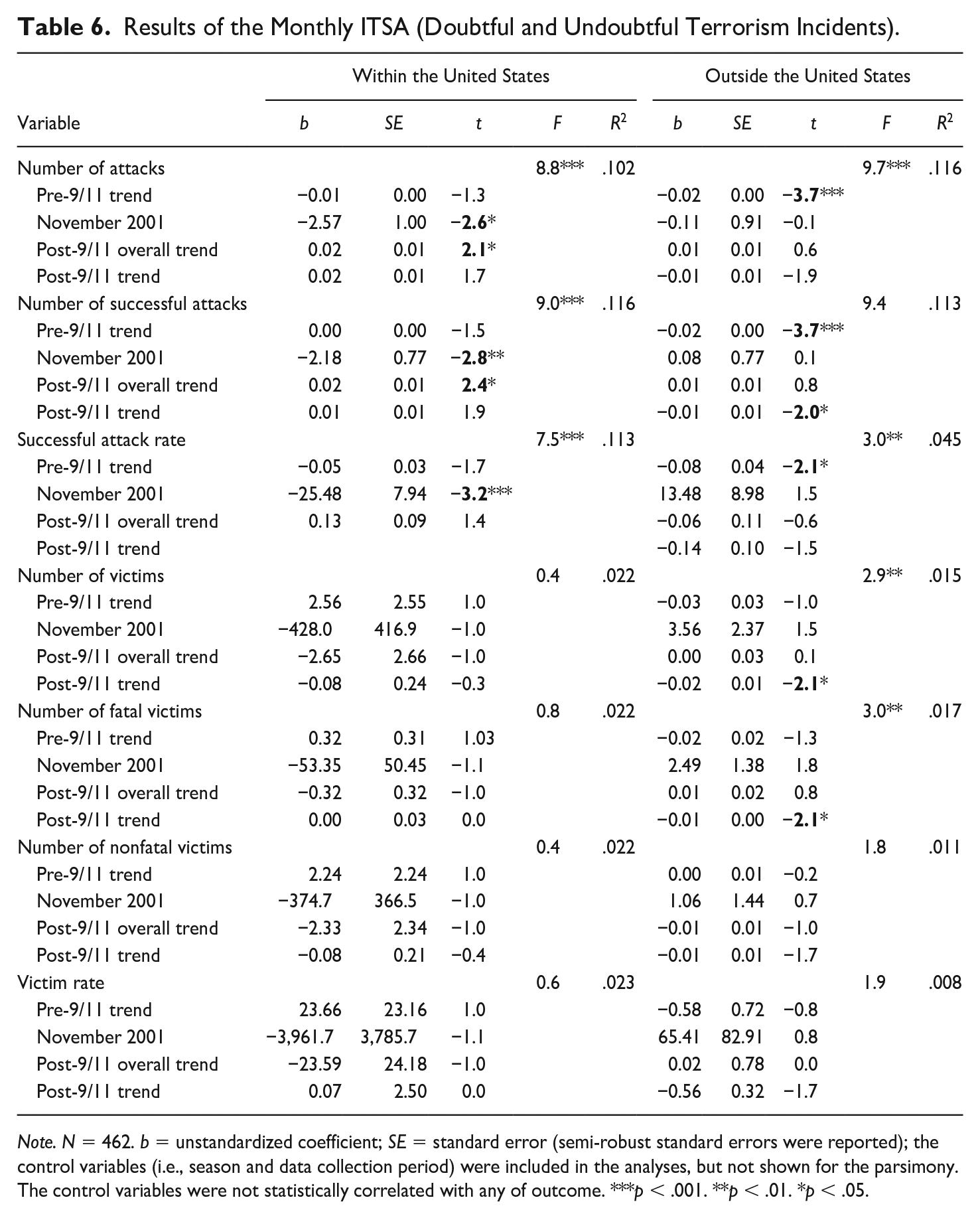
Note. N = 462. b = unstandardized coefficient; SE = standard error (semi-robust standard errors were reported); the control variables (i.e., season and data collection period) were included in the analyses, but not shown for the parsimony. The control variables were not statistically correlated with any of outcome. ***p < .001. **p < .01. *p < .05.
In addition, for terror incidents within the United States, in terms of significance level, the results were identical in the outcomes between the results of the ITSA obtained from the data involving undoubtful terrorism incidents (see Table 3) and all terrorism incidents (see Table 4). However, regarding terror incidents outside the United States, there were differences in significance levels. The results obtained from undoubtful terrorism incidents, which indicated a statistically significant increase in the successful attack rate in the first month after the 9/11 attacks, and a statistically significant decrease in the trends of the number of nonfatal victims and victim rate after the 9/11 attacks, were no longer statistically significant in the results obtained from doubtful terrorism incidents. Moreover, the results obtained from all terrorism incidents indicated that there was a statistically significant decrease in the trend of the number of fatal victims (b = 0.00, p < .05) after 9/11 attacks; however, that was not the case for the results obtained from the data that involved undoubtful terrorism incidents (see Table 3). The rest of the results were the same in terms of significance level.
Discussion and Conclusion
This study examined the effectiveness of U.S. counterterrorism policies within and outside the United States against the American targets after the 9/11 attacks using seven different measures, including the number of terror attacks, the number of successful attacks, successful attack rate, the number of victims, the number of fatal victims, the number of nonfatal victims (injuries), and victim rate. The result of monthly interrupted time-series analyses revealed a statistically significant decrease in the number of attacks, the number of successful attacks, and the successful attack rate within the United States in the first month of the following 9/11 attacks. However, no statistically significant change was observed in the trends of them after the 9/11 attack period, although the overall trend of the number of attacks and the number of successful attacks after 9/11 attacks was greater than before 9/11 attacks. In addition, although there was decline in the other outcomes within the United States after 9/11 attacks, the results were not statistically significant.
Regarding the terror incidents against the U.S. targets abroad, the results of ITSA showed a statistically significant decreasing trend in the number of successful attacks, the number of the victims, the number of the nonfatal victims, and the victim rate after 9/11 attacks. In addition, regarding the U.S. targets abroad, there was a decreasing trend in successful attack rate and the number of fatal victims after 9/11 attacks; they were, however, not statistically significant.
This study employed seven different criteria to measure the effectiveness of the post-9/11 counterterrorism efforts within and outside the United States. Overall, the findings suggest that post-9/11 U.S. counterterrorism policies could be considered as effective and successful within the United States. The number of attacks, the number of successful attacks, and the successful attack rate significantly decreased in the first month following 9/11 attacks. Subsequently, no significant increase was observed in the trend of those outcomes. However, while the mean scores may not show a significant difference, there is a strong positive trend after the post 9-11 attacks. In addition, although the trend of other outcomes decreased after the 9/11 attack period, it was not statistically significant. That is, post-9/11 U.S. counterterrorism policies showed both immediate and long-term effects (Crenshaw, 2010). The results also suggest that post-9/11 U.S. counterterrorism policies have been even more successful outside the United States. The trend of the number of successful attacks, the number of victims, the number of nonfatal victims, and the victim rate significantly decreased after the 9/11 attacks and although the trend of the other outcomes also decreased, it was not statistically significant. Similar to our findings, Drakos and Giannakopoulos (2009) investigated the effectiveness of counterterrorism measures, utilizing data from the ITERATE database spanning 1968 to 2003. Their empirical results suggested an increasing likelihood of authorities preventing terrorist incidents over time, leading to the conclusion that the overall relative effectiveness of counterterrorism has enhanced overtime. This may explain the success in counterterrorism policies in our study since our data periods before and after 9/11 cover more recent incidents. It appears that the U.S. government and its counterterrorism efforts benefit from experience in the long run.
McConnell (2010) asserted that the concept of success in policymaking is interpreted in various ways, with different paradigms highlighting either factual determination or interpretation and significance. While certain perspectives perceive success as the accomplishment of objective goals, others regard it as subjective and contingent upon individual values and beliefs. While our results indicate measurable success in the U.S. counterterrorism policies both domestically and internationally, critics highlight their significant costs for the public (Brands & O’Hanlon, 2021; Davidson, 2021) and adverse consequences on civil and human rights (Guiora & Joliet, 2019). The “global war on terror” policy has resulted in widespread human rights violations in Afghanistan and Iraq during wars starting in 2001 and 2003, respectively, as well as in U.S.-controlled territory like Guantanamo Bay, Cuba (Guler, 2009; Sanders, 2022). Some also argue that preventing a major terrorist attack, such as 9/11, justifies a high level of spending and violations in counterterrorism (Mueller & Stewart, 2014).
These encouraging findings regarding the effectiveness of counterterrorism policies, both domestically and abroad, contribute to discussions on the substitution effect of counterterrorism measures (Enders & Sandler, 1993, 2006; Hsu & Apel, 2015; Hsu & McDowall; 2017; Perry et al., 2017). Our study suggests that counterterrorism after 9/11 attacks did not lead to a displacement of attacks from domestic to international American targets. Following the 9/11 attacks, we observed a significant reduction in the number of attacks, successful attacks, and the success rate within the United States. In addition, significant declines were observed outside the United States in terms of the number of successful attacks, the number of victims, the number of nonfatal victims, and the victim rate post-9/11. As discussed by Hsu and Apel (2015), terrorists may refrain from attacks if the rewards no longer outweigh the associated costs. Since not all terrorist attacks have equal value, blocking opportunities for a specific high-reward attack type could discourage terrorists from pursuing alternative behaviors that provide insufficient compensation. Moreover, carrying out a terrorist attack depends on situational factors related to the capabilities and resources of the terrorists (Clarke & Newman, 2006). In the context of displacement, a lack of knowledge about a new attack or unfamiliarity with alternative opportunities may pose significant costs and obstacles that are challenging for most terrorists to overcome (Hsu & Apel, 2015). In fact, Lehrke and Schomaker (2016) found that there was no indication of terrorists moving between countries as circumstances changed on the ground, countering the notion of a transnational presence of global jihadist terrorism.
As highlighted by Lum and colleagues (2008, p. 36), counterterrorism strategies should be based on evidence-based policies that are subjected to scientific evaluations of effectiveness. Evidence-based policy approach argues in favor of the priority and necessity of having an extensive data collection, a robust data analysis, and a set of rigorous research findings in the context of policy evaluation (Haskins, 2018). The Campbell Review (Lum et al., 2006) also highlighted the urgent necessity to comprehensively assess the efficacy of post-9/11 counterterrorism policies and called for increased funding and support for scientific evaluations of counterterrorism programs to ensure informed decision-making in this crucial policy area.
The results of this research have critical implications for policymakers and practitioners. The counterterrorism policies developed after the 9/11 terrorist attacks should continue, but their effectiveness should be evaluated periodically. Therefore, an evidence-based counterterrorism approach should be supported to develop and implement counterterrorism measures that are based on robust research findings.
The current research has some limitations due to its data source. Since the GTD collects terrorist incident data from open sources such as print and online newspapers, these collected data may not represent the actual number of terrorist incidents (Cubukcu & Forst, 2018; Perry et al., 2017). Furthermore, as discussed above, the GTD has temporal and spatial property issues that may weaken the accuracy and completeness of data (Ritchie et al., 2020). In addition, editorial policies of the media companies and the freedom of press in a specific country influence the inclusion and exclusion of terrorist incidents in news outlets (Behlendorf et al., 2016; Kearns et al., 2019). Finally, the GTD covers incidents up until the end of 2020. Including more recent data on terrorist attacks against American targets within and outside the United States would provide a more thorough overview of the effectiveness of the counterterrorism policies because the trend in outcomes, such as the number of attacks, the number of successful attacks, and the successful attack rate, has been upward, though not significantly. However, as this is the most comprehensive terrorism database, the GTD provides valuable source data for researchers (LaFree et al., 2014).
Despite the limitations in the data, this study contributes to the literature by examining the effectiveness of the counterterrorism policies in the United States against past terror incidents using seven different measures. Overall, the results suggest that the post-9/11 counterterrorism policies are effective against terror incidents within and outside the United States.
Footnotes
Declaration of Conflicting Interests
The author(s) declared no potential conflicts of interest with respect to the research, authorship, and/or publication of this article.
Funding
The author(s) received no financial support for the research, authorship, and/or publication of this article.

Data Availability Statement
Data sharing is not applicable to this article as no data sets were generated or analyzed during this study.