




Abstract
While the difficulties in appealing a guilty plea conviction are widely acknowledged, little research has investigated how appellate courts handle guilty plea convictions. This study addresses this gap by examining Australian appellate court judgments in which a guilty plea conviction was contested, comparing successful appeals where a guilty plea conviction was overturned (n = 193) against unsuccessful appeals where a guilty plea conviction remained (n = 375). Hierarchical multiple logistic regression analysis revealed that, independent of other case characteristics, legal representation on appeal and support from legal actors significantly predicted a successful appeal, while significant predictors of an unsuccessful appeal included male defendants, defendants who received a term of imprisonment, and those who argued they were pressured to plead guilty. The findings highlight the significant influence of legal and extra-legal factors on appellate decision-making beyond the grounds of appeal raised by the defendant, raising important policy implications for the post-conviction process.
While the popular notion of an adversarial criminal justice system is a contested trial, trials have become increasingly rare, and most cases are resolved by the defendant pleading guilty. Guilty pleas account for more than 98% of all U.S. federal criminal convictions (United States Sentencing Commission, 2022), 68% of all Crown Court cases in the United Kingdom (Ministry of Justice, 2022), and more than 80% of criminal cases adjudicated in Australian higher courts (Australian Bureau of Statistics, 2012). The main justification for the high number of guilty pleas is to improve court efficiency and reduce court delays, with many claiming that the court system simply could not function if all cases proceeded to trial (Blume & Helm, 2014; Helm et al., 2022). As a result, there has been a global spread of plea bargaining and other trial waiver systems, with a growing number of countries offering criminal defendants direct incentives to plead guilty to avoid the costs and time associated with a trial (Fair Trials, 2017; Langer, 2021). Such incentives can put substantial pressures on criminal defendants to plead guilty and have been argued to undermine the “safety” of a guilty plea conviction (Nobles & Schiff, 2020), diminishing the traditional account of a guilty plea as a voluntary and informed choice (Helm, 2019; Horne, 2016).
With most defendants pleading guilty, it is important to ensure that appellate courts can provide an effective mechanism to recognize and respond to miscarriages of justice stemming from a guilty plea. However, while it is widely acknowledged that defendants who plead guilty can face considerable challenges in having their conviction reviewed and corrected on appeal (Alschuler, 2016; King, 2014; Wilford & Khairalla, 2019), little empirical research has examined how appellate courts respond to convictions resulting from a guilty plea and the reasons why such convictions may be overturned. Although scholars in the United Kingdom have begun to consider how appellate caselaw justifies a guilty plea conviction (Horne, 2016; Nobles & Schiff, 2020), few studies, if any, have quantitatively analyzed appellate court judgments in which a guilty plea conviction is contested. Such an approach can provide a more objective and systematic analysis of how appellate courts handle a guilty plea conviction and the reasons why they may be either upheld or overturned on appeal.
Using Australia as a case study, this study analyzed Australian appellate court judgments in which a guilty plea conviction was contested, quantitatively comparing “successful” appeals where the guilty plea conviction was overturned against “unsuccessful” appeals where the conviction remained. By exploring the differences between successful and unsuccessful appeals, the study aimed to examine the reasons why a guilty plea conviction is overturned and other salient factors influencing judicial decision-making in the appeal process. While this can provide insight into the types of cases appellate courts may be more likely to identify and perceive as a “miscarriage of justice” (the successful appeals), it can also reveal the challenges and difficulties applicants may face in having their guilty plea conviction overturned (the unsuccessful appeals).
Challenges in Appealing a Guilty Plea Conviction
As defendants who plead guilty waive their right to a trial and many of the associated procedural protections, it might be thought that appellate courts would be more open to reviewing a guilty plea conviction “because the case has not previously been subjected to a comprehensive review by the courts” (Horne, 2013, p. 6). However, this is not the case, and it is widely acknowledged that defendants who plead guilty can face numerous legal and practical barriers in having their conviction reviewed and overturned on appeal (see Alschuler, 2016, pp. 930–931). As a guilty plea is an acceptance of all elements of the offense, it essentially represents a “judicial confession” (Horne, 2013, p. 3). This provides compelling evidence in support of the prosecution case and can be difficult to later withdraw, particularly if the defendant had the benefit of legal advice at the time of pleading guilty. Defendants who plead guilty can also waive many of their rights to appeal or challenge their conviction, which can limit their avenues for post-conviction relief (Hoyle & Sato, 2019; Reimelt, 2010). They are also less likely to have forms of evidence necessary for exoneration (Wilford & Khairalla, 2019), and without a detailed trial record, the strength of the prosecution’s case and the evidence they may have presented at trial remains untested and unknown (Alschuler, 2016).
While the difficulties in appealing a guilty plea conviction are widely recognized, little empirical research has examined how appellate courts approach guilty plea convictions. In the United Kingdom, Horne (2016) conducted a doctrinal analysis of appellate caselaw that examined how appellate courts responded to challenges to guilty plea convictions and the accounts of the guilty plea they provided to justify these responses. She found that, despite the risk of injustice, appellate courts resisted challenges to guilty plea convictions and instead relied upon unsupportable accounts of the guilty plea as a confession and viewed defense lawyers as providing adequate protection against pleading pressures (Horne, 2016). Nobles and Schiff (2020) have also explored “judicial reluctance” toward undoing guilty plea convictions, considering the justifications provided for restricting the right to appeal a guilty plea conviction in England and Wales (p. 514). They argued that the Court of Appeal is unable to provide a remedy for miscarriages of justice following a guilty plea, instead justifying guilty plea convictions as being “so safe that there is little or no need for review” (p. 513). While this prior scholarship in the United Kingdom has considered the justifications provided in the appellate caselaw, the extant literature does not provide an empirical understanding as to how appellate courts handle guilty plea convictions and the reasons why such convictions may be overturned.
Overturning a Guilty Plea Conviction in Australia
In Australia, there is no automatic right for an appeal against a conviction for defendants who plead guilty. Instead, defendants who plead guilty must request for their conviction to be reviewed by a higher court. Persons who plead guilty in the Magistrate Court apply for an appeal against their conviction to be heard in the District or Supreme Court, 1 while persons who plead guilty in the District or Supreme Court apply to have their appeal heard in the Court of Appeal. Defendants are only given a limited time to appeal their case; A notice to appeal must generally be made within one month from the date of conviction, with defendants who fail to appeal within the time limit required to show substantial reasons why an extension to appeal should be granted.
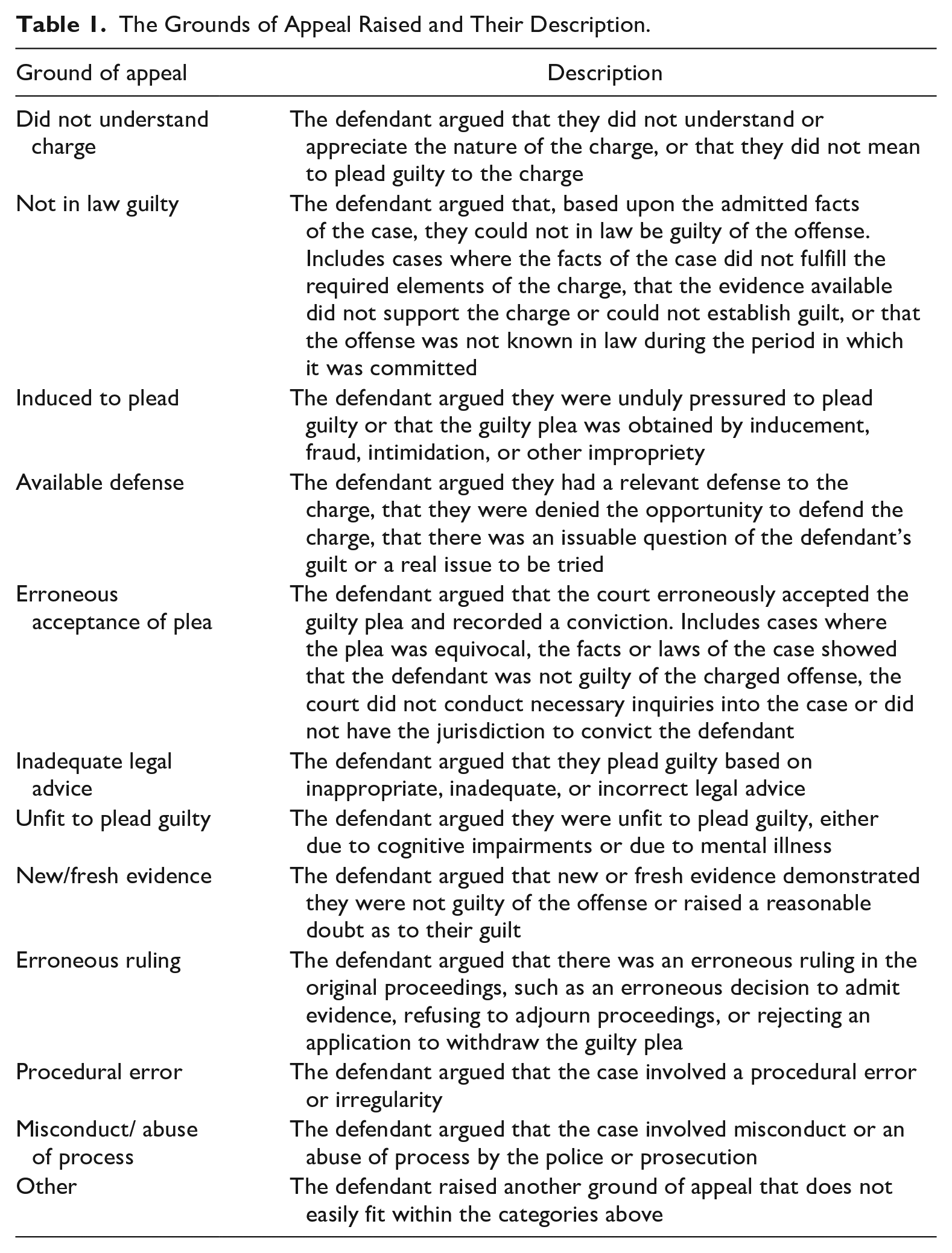
As a guilty plea is taken to be an admission of all the elements of the offense, the court’s approach to overturning a guilty plea conviction is said to be “one of caution bordering upon circumspection” due to the “high public interest in the finality of legal proceedings” (R v Liberti, 1991, para. 122). The opportunities to appeal a guilty plea conviction are therefore limited, and a guilty plea conviction can only be overturned if the appellate court is satisfied that a “miscarriage of justice” has occurred (Meissner v R, 1995). While the categories of a miscarriage of justice are not closed, there are three well-recognized grounds for allowing a change of plea: (a) where the applicant did not understand the charge or did not intend to plead guilty; (b) where on the admitted facts the applicant could not in law be guilty of the offense; and (c) where the plea of guilty has been obtained by inducement, fraud or intimidation (Vella v The State of Western Australia, 2006).
However, legal authorities have established that persons are allowed to plead guilty for reasons that extend beyond their belief in their guilt. As noted by Dawson J in Meissner v R (1995), a person may plead guilty “to avoid worry, inconvenience or expense; to avoid publicity; to protect his family or friends; or in the hope of obtaining a more lenient sentence than he would if convicted after a plea of not guilty” (para. 157). As long as the plea is entered in the exercise of a free choice by a person in possession of all relevant facts, it “nevertheless constitutes an admission of all the elements of the offense” (Meissner v R, 1995, para. 157). This restrictive requirement for appealing a guilty plea conviction could potentially create significant hurdles for defendants to have their guilty plea conviction set aside.
Factors Influencing Appeal Outcomes
While appellate courts hear the grounds of appeal raised by defendants arguing why their conviction should be overturned, the outcome of a criminal appeal can also be influenced by a range of factors extrinsic to the legal arguments raised. This has been demonstrated in several studies, conducted mostly in the United States, which have empirically examined factors that may be correlated with a successful appeal, finding that judicial decision-making can be influenced by a range of legal and extra-legal factors (e.g., see Chapper & Hanson, 1989; Heise et al., 2017; King & Heise, 2019; Kuang & Liang, 2015). For instance, research suggests that defendant characteristics may influence the outcome of an appeal, with the race of the appellant (Williams, 1995a) and criminal history (Ruddell & Kmiech, 2000) being found to be significantly associated with the outcome of an appeal. Examining the influence of defendant characteristics may be particularly relevant for appeals involving guilty plea convictions, as prior literature suggests that certain vulnerable populations may be at risk of pleading guilty inappropriately, such as juvenile defendants (Redlich & Shteynberg, 2016), Indigenous defendants (Carling, 2017), and those with mental health issues (Redlich et al., 2011). Due to their vulnerabilities, these accused persons are suggested to face greater pressures to plead guilty without being sufficiently aware of the implications of a guilty plea (Peay & Player, 2018), and appellate courts may be more willing to set aside their convictions.
Having legal representation at the time of pleading guilty may also present an important factor in appeals against a guilty plea conviction, as defense lawyers are generally considered adequate protection against pleading pressures or inappropriate guilty pleas (Flynn & Freiberg, 2018, p. 134). Given the complexities of laws and legal systems, defense lawyers play a pivotal role in ensuring defendants are making principled, informed, and appropriate plea decisions. Without access to legal advice, self-represented defendants can be disadvantaged within the legal system, and research suggests they are at an increased risk of pleading guilty without fully appreciating the nature of the charges, the availability of potential defenses, or the consequences of pleading guilty (Flynn & Freiberg, 2018; Gibbs, 2016; Nash et al., 2021). As such, it may be expected that appellate courts are more likely to set aside a guilty plea conviction from someone who lacked this important safeguard and appeared self-represented at the time of pleading guilty.
The presence of legal representation on appeal is also suggested to increase the likelihood that a case will succeed, as lawyers can play an important role in advising their clients on how to raise appeal grounds (Kuang & Liang, 2015, see also Heise et al., 2017; Hodgson & Horne, 2009). However, there are inconsistent findings regarding the type of legal representation on appeal and case outcome. While it is often assumed that a privately retained lawyer may have greater success than public defenders, given their increased resources and incentives (Chapper & Hanson, 1989; King & Heise, 2019), only one study in New York City provides support for this contention (Wasserman, 1990). Other studies in the United States have found no significant differences between the type of counsel and appeal outcome (Buller, 2015; King & Heise, 2019; Williams, 1995b), while Heise et al. (2017) found that publicly funded defense lawyers consistently achieved more favorable results on appeal than private defense lawyers.
Existing literature also suggests a relationship between the type of offense and the outcome of an appeal, with research finding that more serious offenses that entail more severe sentences are generally less likely to win on appeal (Chapper & Hanson, 1989; Davies, 1982; Heise et al., 2017; King & Heise, 2019; Neubauer, 1991; Ruddell & Kmiech, 2000). Based on interviews with the intermediate court of appeal judges in the United States, Davies (1982) suggests that appellate judges may be reluctant to overturn more serious offenses due to a fear of adverse public reaction, while Chapper and Hanson (1989) suggest that such findings may reflect greater care and attention paid by trial judges in more serious cases.
The Present Study
This study empirically examines how appellate courts handle guilty plea convictions and the reasons why such convictions may be either upheld or overturned on appeal. Using Australian appellate court judgments in which a guilty plea conviction was contested, we quantitatively compared “successful” appeals where a guilty plea conviction was set aside against “unsuccessful” appeals that were dismissed and the conviction remained. The primary objective was to examine the grounds of appeal more or less likely to result in a successful appeal and the extent to which other legal and extra-legal factors may influence judicial decision-making in the appeal process.
Method
Sample
The study used 548 Australian court judgments in which a defendant appealed a guilty plea conviction, involving a total of 568 applicants. The individual applicant represented the unit of analysis. Of the 568 applicants, 193 (34%) successfully had their guilty plea conviction set aside on appeal, while 375 (66%) were unsuccessful and the guilty plea conviction remained. Of the 193 successful applicants, 32 (16%) received an acquittal, 65 (34%) had the conviction quashed, and 96 (50%) were set to a retrial or remitted back to court. All Australian states and territories were represented in the data. The majority of appeals were heard in Queensland (28%), followed by Western Australian (24%), New South Wales (20%), Victoria (12%), South Australia (11%), Australian Capital Territory (2%), Northern Territory (2%) and Tasmania (1%). The year of the appellate court judgment ranged from 1916 to 2021, 2 with the majority (81%, n = 458) occurring after 2000 (M = 2007, SD = 10.76).
Data Collection
Cases were located from the legal databases LexisNexis and AustLII by using the search string (“guilty plea” or “plead guilty” or “plea of guilty”) and (“miscarriage of justice”), limiting the search to cases heard in the District/County Court, the Supreme Court, the Court of Appeal, and the Criminal Court of Appeal. After removing duplicates, this returned a search result of 4,538 cases. Each case was quickly reviewed to determine relevance, excluding all cases that did not involve a person contesting a guilty plea conviction. This excluded cases where the defendant appealed only the sentence received, not the conviction (n = 1,199), cases where the defendant applied to have their guilty plea withdrawn prior to conviction (n = 113), and appeals that were initiated by the Crown and not the defendant (n = 57). It also excluded legal judgments that were not direct appeals against a conviction, excluding appeals against a previous judgment (n = 21), judicial reviews (n = 6), inquiries into a conviction (n = 8), and cases referred to the Court of Appeal following a petition to the Attorney-General (n = 4). 3 Data were gathered mainly from the appellate court judgments, although any gaps regarding defendant or case characteristics were filled with information from media articles or other court documents, where available.
Case Coding
Dependent Variable
The dependent variable was case outcome, coded dichotomously: a successful appeal (1) or an unsuccessful appeal (0). For this study, a successful appeal captured all cases in which a guilty plea conviction was set aside. This included cases where the appellate court set aside the conviction and entered an acquittal, where the conviction was set aside and the case was remitted back to court or set to a trial, or where the conviction was quashed without an acquittal or retrial entered. An unsuccessful appeal included cases where the appeal was dismissed, and the guilty plea conviction remained.
Independent Variables
Grounds of Appeal
To examine the reasons why a guilty plea conviction may be overturned, the study coded the grounds of appeal raised by the defendant. As mentioned, there are three well-recognized grounds for allowing an appeal against a guilty plea conviction: (a) the applicant did not understand the charge or did not intend to plead guilty; (b) the applicant could not in law be guilty of the offense; and (c) the plea of guilty was obtained by inducement, fraud, or intimidation. Therefore, to code the grounds of appeal, the first author initially approached the data with these three recognized grounds. Additional codes were then developed during the analysis based on the primary data, resulting in a total of 12 grounds of appeal (see Table 1). Each case was then coded as to whether or not the defendant raised the ground of appeal (raised vs. not raised).
The Grounds of Appeal Raised and Their Description.
Defendant Characteristics
To examine whether appellants who successfully appeal a guilty plea conviction differ from those who are unsuccessful, several demographic characteristics were also compared. This included gender, age at the time of the plea, Indigenous status, being born overseas, a history of mental illness, an intellectual or cognitive impairment, and criminal history. 4 Being born overseas was considered a proxy variable for defendants who may lack a linguistic or legal understanding of the Australian criminal justice system. All defendant variables were dichotomized (male vs. female/yes vs. no), including age, which was measured as an adult (≥18) versus minor. 5
Case Characteristics
Several characteristics associated with the case and original proceedings were also coded. This included the year the defendant was convicted and the Australian state or territory in which the appeal was heard. This also compared the type of offense contested on appeal (summary vs. indictable), the primary offense contested 6 (homicide, violent offense, sexual offense, property offense, drug offense, traffic offense, and offense against government), and the severity of the sentence the defendant originally received (imprisonment, community sentence, fine, and not yet sentenced). We also measured whether the defendant was held in remand at the time of pleading guilty (yes vs. no) as well as the type of legal representation provided to the defendant at the time of pleading guilty (private, duty lawyer/legal aid, and self-represented).
Appeal Characteristics
Characteristics associated with the appeal were also coded to examine the impact that procedural differences during the appeal process may have on case outcomes. This included the year of the appellate court judgment, the type of legal representation the defendant had on appeal (private, legal aid/pro bono, and self-represented), whether the prosecution conceded the appeal (yes vs. no), whether there was a dissenting judgment among the judges 7 (yes, no, and single judge), whether the defendant appealed out of time (yes vs. no), and whether the defendant had previously attempted to withdraw their guilty plea prior to conviction (yes vs. no). We also examined the type of innocence argued in the appeal, coding whether the defendant argued they were factually innocent and did not commit the crime (factual), legally innocent and not legally culpable for the offense (legal), or that the case involved a procedural error (procedural).
We also wanted to examine whether the defendant introduced any evidence to support their argument on appeal and whether this influenced the outcome of the appeal. This coded whether the appeal involved “new” or “fresh” evidence not available or discovered in the original proceedings but was claimed to demonstrate the defendant’s innocence or raise a reasonable doubt as to their guilt (accepted by the court, rejected by the court, and no new/fresh evidence). 8 We also coded whether the defendant adduced “additional” evidence that was not new or fresh, but instead was relevant to the original proceeding in which the appeal arose, explaining the circumstances in which the guilty plea was entered (introduced vs. not introduced). If the case involved new, fresh, or additional evidence, the type of evidence introduced was also coded.
Analytic Strategy
Bivariate analyses were first conducted to examine significant associations between the outcome (“successful” or “unsuccessful”) of the appeal by the grounds of appeal raised, defendant, case, and appeal characteristics. Chi-square analyses were primarily employed to examine these associations, with Fisher’s exact test used to test for significance when expected frequencies were less than five (Fisher et al., 2011). Adjusted standardized residuals (ASR) were examined to identify the cells contributing to significance (residuals exceeding ±1.96). Where variables were continuous, independent samples t tests were employed to test for differences between the successful and unsuccessful appeals.
Following the bivariate analyses, statistically significant (p < .05) variables were then included in a series of multiple logistic regression models to further examine which factors may predict a successful (compared to an unsuccessful) appeal. The first model included the grounds of appeal raised, considering which arguments presented by the defendant may predict the case outcome. The second model then added defendant characteristics, the third model added case characteristics, and the fourth and final model added appeal characteristics. Multiple regression was chosen because including several variables simultaneously allows testing of the effects of each variable while accounting, or controlling, for the other variables in the model. Furthermore, entering the variables progressively in a series of models enabled the examination first of the effects of grounds of appeal on case outcome and then whether these relationships still hold while accounting for defendant, case, and appeal characteristics. By entering the different types of factors incrementally in the models, their contribution to explaining the outcome can be discerned. This, therefore, examines the extent to which various legal and extra-legal factors may influence the outcome of an appeal in addition to the actual grounds of appeal presented. The benefit of this approach is that it can quantify the magnitude of each variable’s influence on the appeal outcome, revealing which factors significantly predict a “successful” or “unsuccessful” appeal while holding all other predictive variables constant (Cioci et al., 2021). As per the accepted conventional standard, a p value of <.05 was considered statistically significant. SPSS 27 was employed to conduct all analyses.
Findings
Bivariate Analysis
Grounds of Appeal
Table 2 shows that the most common grounds of appeal raised included defendants who argued they were not in law guilty of the offense charged (34%), that they were pressured or induced to plead guilty (28%), that they had an arguable defense (23%), that they did not understand the charge against them or did not mean to plead guilty (22%), or that they received inadequate or incorrect legal advice (20%). Chi-square analyses revealed that defendants who successfully appealed their guilty plea conviction were significantly more likely to argue that they were not in law guilty of the offense charged and that the court erroneously accepted the guilty plea. In contrast, defendants who unsuccessfully appealed their guilty plea conviction were significantly more likely to argue that they were induced to plead guilty, that they received inadequate legal advice, that a judicial officer made an erroneous ruling, that they had new or fresh evidence demonstrating innocence, or that the case involved misconduct or an abuse of process.
Bivariate Analysis Examining the Differences in the Ground of Appeal Raised by Case Outcome.
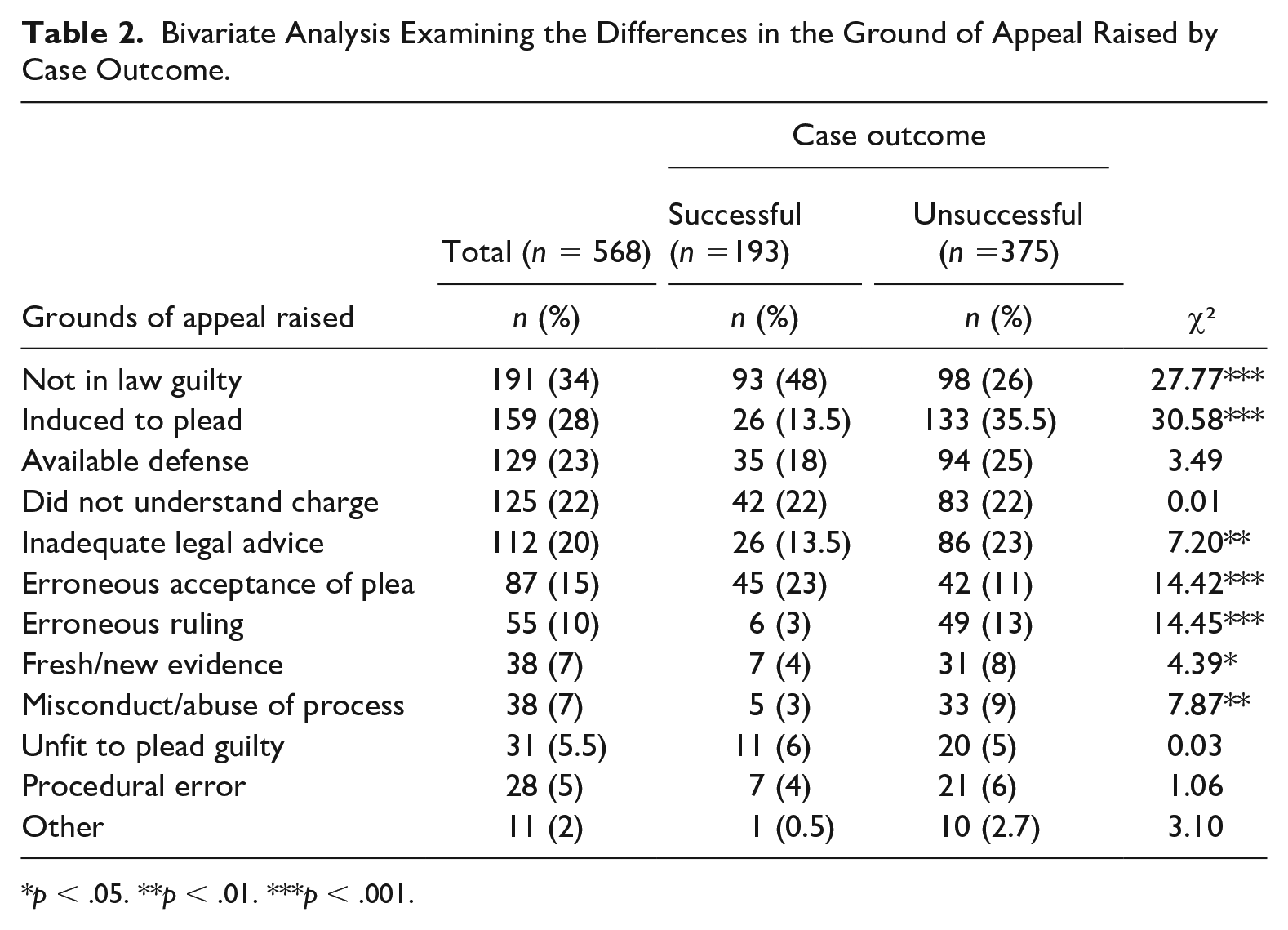
p < .05. **p < .01. ***p < .001.
Defendant Characteristics
Table 3 reveals that female defendants and defendants with cognitive or intellectual impairment were significantly more likely to have their guilty plea conviction set aside on appeal, while defendants with a history of mental health issues were significantly more likely to unsuccessfully appeal their guilty plea conviction. No significant differences between the defendant’s age, Indigenous status, or place of birth were identified.
Bivariate Analysis Examining the Differences in Defendant Characteristics by Case Outcome.
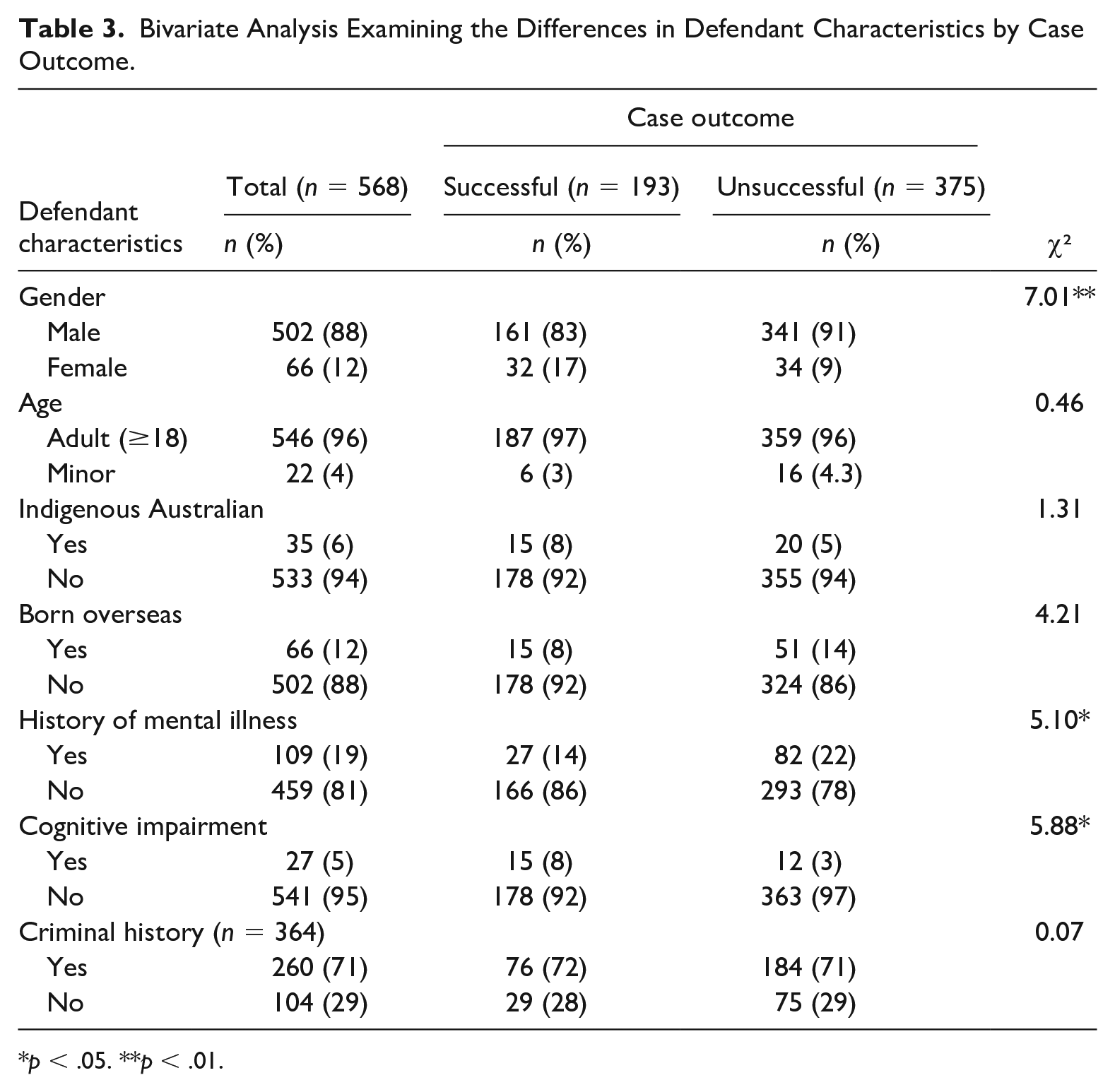
p < .05. **p < .01.
Case Characteristics
Table 4 shows the comparisons between case characteristics and case outcome. Significant differences were identified between case outcome and Australian jurisdiction, with an examination of the ASR showing that cases heard in Western Australia were more likely to result in a successful appeal (ASR 3.8) as were cases in the Australian Capital Territory (ASR 2.1), while cases heard in Queensland were more likely to be unsuccessful (ASR 4.4).
Bivariate Analysis Examining the Differences in Case Characteristics by Case Outcome.
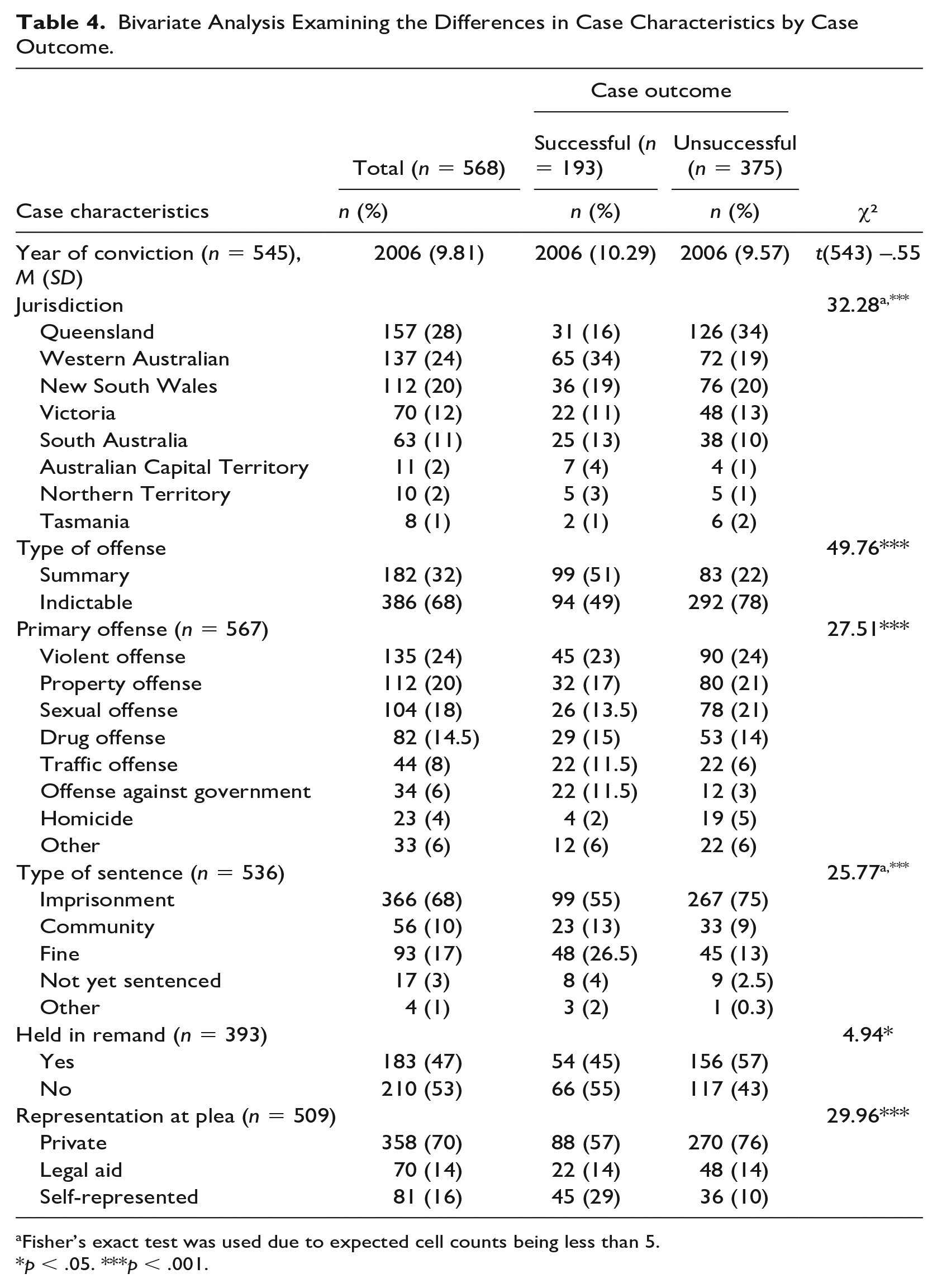
Fisher’s exact test was used due to expected cell counts being less than 5.
p < .05. ***p < .001.
There were also significant differences between the type of offense contested on appeal and case outcome, with defendants who appealed less serious summary offenses being more likely to have their guilty plea conviction successfully set aside on appeal. An examination of the ASR also revealed that defendants who appealed traffic offenses (ASR 2.4) and offenses against the government (ASR 2.4) were significantly overrepresented in successful appeals, while defendants who appealed a sexual offense were significantly overrepresented in unsuccessful appeals (ASR 2.1). There were also significant differences in the severity of the sentence received, with an examination of the ASR revealing that defendants who received a term of imprisonment were more likely to be unsuccessful in their appeal (ASR 4.8), while defendants who received a fine were more likely to be successful (ASR 4.0).
Remand status also emerged as significant. Of the 393 (65%) cases in which remand status was known, defendants who were held in pre-trial detention at the time of pleading guilty were significantly more likely to be unsuccessful. Legal representation at the time of pleading guilty was also significant, with an examination of the ASR revealing that self-represented defendants were significantly overrepresented in successful appeals (ASR 5.4), while defendants with private representation were overrepresented in unsuccessful appeals (ASR 4.4).
Appeal Characteristics
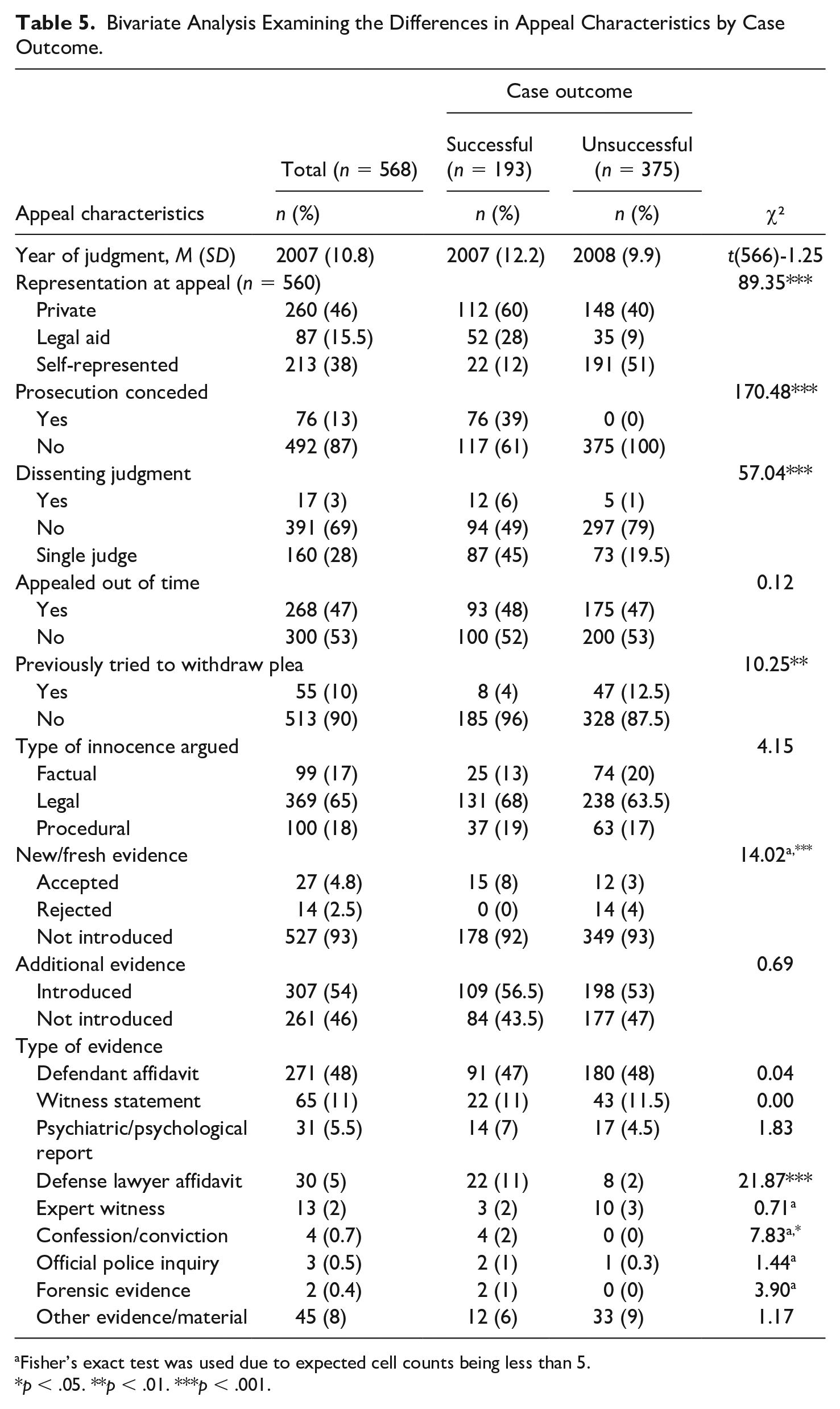
Table 5 shows the comparisons between the appeal characteristics and case outcome. Legal representation at the time of appeal was significantly associated with case outcome, with an examination of ASR showing that defendants represented by a private law firm were significantly overrepresented in successful appeals (ASR 4.6), as were those represented by legal aid (ASR 5.7), while self-represented defendants were overrepresented in unsuccessful appeals (ASR 9.0). Unsurprisingly, there were significant differences in whether the prosecution conceded the appeal, with the prosecution accepting that a miscarriage of justice occurred in more than a third (39%) of all successful appeals. There were also significant differences between dissenting judgments and case outcome, with an examination of the ASR revealing that successful appeals were more likely to involve a single judge (ASR 6.4) or have a judge disagree with the majority verdict (ASR 3.2), while unsuccessful appeals were more likely to have no dissenting judgment (ASR 7.4). Defendants who unsuccessfully appealed their conviction were also significantly more likely to have previously attempted to withdraw their guilty plea prior to conviction.
Bivariate Analysis Examining the Differences in Appeal Characteristics by Case Outcome.
Fisher’s exact test was used due to expected cell counts being less than 5.
p < .05. **p < .01. ***p < .001.
Significant differences were also identified between new or fresh evidence and case outcome, with an examination of the ASR showing successful appeals were more likely to have new or fresh evidence accepted by the court (ASR 2.4), while defendants who had new or fresh evidence rejected by the court were significantly more likely to be unsuccessful (ASR 2.7). While there were no significant differences between cases that introduced additional evidence that was not new or fresh, two different types of evidence introduced to support the appeal emerged as statistically significant. This included an affidavit from the original defense lawyer supporting the appeal, as well as a confession or conviction of the real perpetrator that committed the crime, with both being significantly overrepresented in successful appeals. No significant differences between other types of evidence were identified. There were also no significant differences between case outcome and the year of an appellate court judgment, appealing out of time, and the type of innocence argued.
Multivariate Analysis
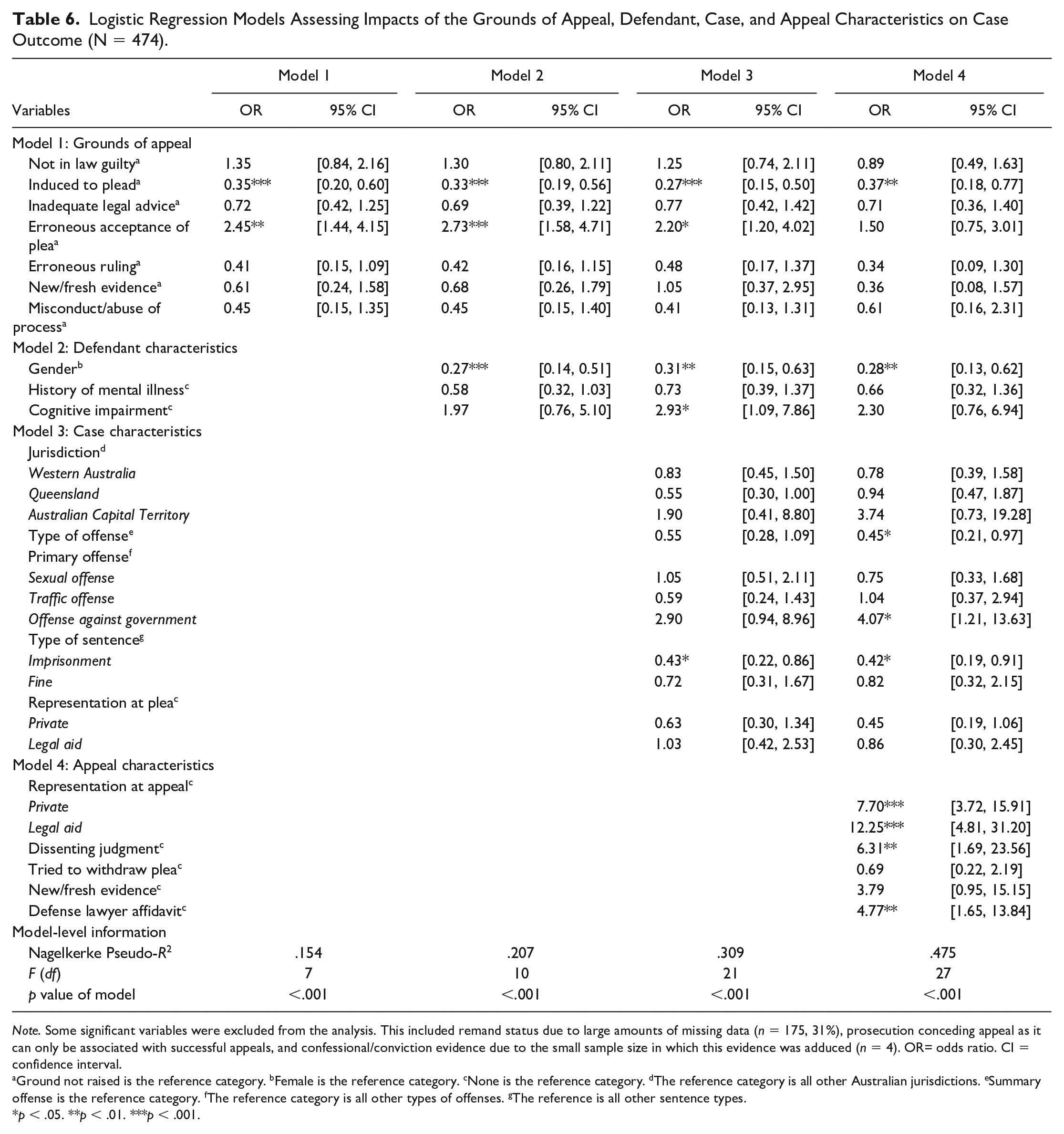
Statistically significant variables from the bivariate analyses were then included in a series of multiple logistic regression models to further examine which of these factors may predict a “successful” or “unsuccessful” guilty plea conviction appeal (see Table 6). Model 1 included only the grounds of appeal raised by the defendant and was statistically significant, χ2(7) = 54.351, p < .001. This model explained 15.4% of the variance and correctly classified 71.9% of cases. Two grounds of appeal emerged as statistically significant in this model, with defendants who argued that the court erroneously accepted the guilty plea being 2.45 times more likely to successfully appeal their conviction, while the odds of a successful appeal were 65% less likely when the defendant argued they were unfairly pressured or induced to plead guilty.
Logistic Regression Models Assessing Impacts of the Grounds of Appeal, Defendant, Case, and Appeal Characteristics on Case Outcome (N = 474).
Note. Some significant variables were excluded from the analysis. This included remand status due to large amounts of missing data (n = 175, 31%), prosecution conceding appeal as it can only be associated with successful appeals, and confessional/conviction evidence due to the small sample size in which this evidence was adduced (n = 4). OR= odds ratio. CI = confidence interval.
Ground not raised is the reference category. bFemale is the reference category. cNone is the reference category. dThe reference category is all other Australian jurisdictions. eSummary offense is the reference category. fThe reference category is all other types of offenses. gThe reference is all other sentence types.
p < .05. **p < .01. ***p < .001.
Defendant characteristics were then added to Model 2, χ2(10) = 74.350, p < .001. The additional factors increased the explanatory value of the model to 20.7% and correctly classified 73.6% of cases. In addition to the grounds of appeal remaining significant from Model 1, gender emerged as significant in the second model, with the odds of successfully appealing a guilty plea conviction being 73% less likely for male defendants. Having a history of mental illness or cognitive impairment did not emerge as significant.
Case characteristics were then added in Model 3, χ2(21) = 116.102, p < .001. To correspond with the variables identified by the ASR to have significant differences by case outcome, jurisdiction was reduced to four categories (1=Western Australia, 2=Queensland, 3=Australian Capital Territory, 0=other), the offense contested on appeal was reduced to four categories (1=sexual offense, 2=traffic offense, 3=offense against government, 0=all other offenses), and the type of sentence to three categories (1= imprisonment, 2=fine, 0=other). The addition of the case characteristics increased the explanatory value of the model further to 31% and correctly classified 77.2% of cases. In addition to the variables that were significant in Model 2, the defendant characteristic cognitive impairment emerged as significant in this model, with defendants with a cognitive or intellectual impairment being 2.93 times more likely to have their guilty plea conviction set aside than those without. Only one case characteristic emerged as significant, with the odds of a successful appeal being 57% less likely for defendants that received a term of imprisonment compared with other sentences.
Appeal characteristics were then added to Model 4, with the final model being statistically significant, χ2(27) = 192.455, p < .001. Dummy variables were created for dissenting judgment and new/fresh evidence, collapsing no dissenting judgment and single judge together (1=dissenting judgment, 0=no dissenting judgment/single judge), and collapsing new/fresh evidence rejected by the court and no new/fresh evidence together (1=new/fresh evidence accepted, 0=new/fresh evidence rejected/no new/fresh evidence). The final model explained 48% of the variance, and correctly classified 81% of cases. While the ground of appeal erroneous acceptance of a plea significantly predicted case outcome when controlling for the defendant and case characteristics, it was no longer significant when controlling for appeal characteristics. Only one ground of appeal had a consistent impact on case outcome, with the odds of a successful appeal being 63% less likely for defendants who argued they were induced to plead guilty. Gender also consistently remained significant, with the odds of a successful appeal being 72% less likely for male defendants. Although the defendant characteristic cognitive impairment emerged as significant in Model 3, it was no longer significant when controlling for appeal characteristics.
Two case characteristics not significant in Model 3 emerged as significant in the complete model. This included the type of offense contested on appeal, with the odds of a successful appeal being 55% less likely for defendants who contested indictable offenses, while defendants who contested offenses against the government were 4.07 times more likely to successfully appeal their conviction compared with other offenses. The sentence received also remained significant, with the odds of a successful appeal being 58% less likely for defendants who received a term of imprisonment.
Four appeal characteristics emerged as significant in the final model. While legal representation at the time of pleading guilty was not significant in the model, legal representation at the time of appeal was significant, with defendants who were represented at appeal by private law firms being 7.70 times more likely to successfully appeal their conviction compared to self-represented defendants, while defendants represented on appeal by legal aid were 12.25 times more likely to successfully appeal their conviction. Appeals that had a dissenting judgment were 6.31 times more likely to result in a successful appeal, while defendants who supported their appeal with an affidavit from their original lawyer were 4.77 times more likely to successfully appeal their guilty plea conviction.
Discussion
While the difficulties of appealing a guilty plea are widely acknowledged, limited research has examined how appellate courts handle guilty plea convictions. By systematically collecting and comparing Australian appellate court judgments in which a defendant contested a guilty plea conviction, this study provides important insight into the reasons why a guilty plea conviction may be overturned on appeal and the salient factors influencing judicial decision-making in the appeal process. Utilizing logistic regression models, we found only one ground of appeal to significantly predict case outcome, with defendants arguing they were pressured to plead guilty being significantly more likely to result in an unsuccessful appeal. Instead, the findings reveal the significant influence of other legal and extra-legal factors on appellate decision-making, demonstrating the importance of having legal representation of appeal, support from other legal actors as well as the gender of the applicant and offense contested. The study underscores the restrictive access to appeal for defendants who plead guilty, raising important policy implications for the post-conviction process.
Why Are Guilty Plea Convictions Overturned on Appeal?
This study found that the three well-recognized grounds of appeal were frequently raised in the appellate court judgments, with many defendants arguing that they were not in law guilty of the offense, that they did not understand the charges against them, or that they were induced to plead guilty. However, additional grounds of appeal were also frequently raised, including defendants who argued that they had an arguable defense to the charge, that they received inadequate or incorrect legal advice, or that the original court erroneously accepted the guilty plea. While arguing that the original court erroneously accepted a guilty plea emerged as a significant predictor of a successful appeal when controlling for gender and case characteristics, it was not significant when controlling for appeal characteristics. As such, no grounds of appeal significantly predicted a guilty plea conviction successfully being set aside.
According to the bivariate analysis, only two grounds of appeal were significantly overrepresented among the successful appeals: (a) applicants who argued they were not in law guilty of the offense and (b) that the original court erroneously accepted the guilty plea. As such errors are documented and easily identifiable, this may support criticisms that appellate courts are more effective in recognizing and correcting legal or procedural errors rather than factual issues or cases with limited evidence to support their argument (Hamer, 2014). For instance, appellate courts can refer to relevant legislation and case law to determine whether the actions of the defendant constituted the offense or they can review transcripts from the original court proceedings to determine whether the court made an error. This can present a particular barrier for defendants who plead guilty, as pleading guilty is a largely hidden process, and errors or misconduct are more likely to go undocumented.
In contrast, defendants arguing they were induced or pressured to plead guilty was a significant predictor of an unsuccessful appeal, even when controlling for defendant, case, and appeal characteristics. In cases where this ground was unsuccessfully raised, defendants often referred to the inherent pressures of the system. This included pleading guilty to receive a lesser punishment, to get out of jail, from strongly worded legal advice, or to avoid financial and emotional costs. While these pressures are often cited in the literature to put innocent persons at risk of pleading guilty (e.g., see Sherrin, 2011), the appellate court consistently found such pressures do not constitute a miscarriage of justice, and that the defendant made a free and informed decision to plead guilty.
As mentioned in the introduction, the appellate caselaw established in Meissner v R (1995) explicitly stated such inherent pressures to plead guilty do not give rise to a miscarriage of justice and that a guilty plea only needs to be a free and informed decision. While this authority ensured consistency across the appellate court judgments, the resulting decisions likely overlook the context in which many false guilty pleas are being made, where many defendants face numerous pressures and incentives to plead guilty that can undermine their voluntary and consensual nature (Helm, 2019). It also shows a disconnect between what criminal defendants view as potential coercion compared with what is considered undue pressure by the legal system, with appellate courts not viewing such pressures as an error needing to be corrected. This demonstrates the high legal threshold established by Meissner, with Australian appellate courts likely not providing an effective mechanism to identify miscarriages of justice resulting from a guilty plea. Consistent with the findings by Horne (2016) in the United Kingdom, this suggests that Australian appellate courts prioritize finality and efficiency over fairness and accuracy in their treatment of guilty pleas and continue to rely on guilty pleas as a confession.
The Role of Legal Representation
Having legal representation during the appeal process emerged as the most significant predictor of having a guilty plea conviction set aside, with applicants represented by legal aid having the highest likelihood of success. While scholars often assume that privately retained lawyers would have greater success on appeal than public defenders (Chapper & Hanson, 1989; King & Heise, 2019), these findings support prior literature that shows publicly funded defense lawyers can provide more effective representation on appeal (Heise et al., 2017). Although the bivariate analyses supported our assumption that self-represented defendants at the time of pleading guilty would be more likely to successfully appeal their conviction, this did not emerge as significant when controlling for other factors in the multivariate analysis. This may suggest that appellate courts do not rely upon defendant lawyers as providing strong protection against erroneous guilty pleas.
While the statistical analysis does not explain why legal representation on appeal significantly predicts a successful outcome, appeals with legal representation are likely of better quality, with lawyers being able to identify and articulate grounds of appeal more likely to result in a successful appeal (Hodgson & Horne, 2009). However, it may also reflect the strength of the defendant’s case, as lawyers may also divert away unmeritorious applications. For instance, legal aid will only assist with an appeal if the case passes a “merits test” that demonstrates a reasonable prospect of success. However, such a requirement can represent a high threshold for applicants to meet, and it is acknowledged that denial of legal aid for an appeal is not conclusive of the absence of merit (Malcolm, 2000). This may explain why legal aid representation produced a higher likelihood of success on appeal than private representation, as legal aid may be using strict requirements that limit access to legal support on appeal. With legal representation being the most significant predictor of a successful appeal, this study demonstrates a need for greater access to legal support post-conviction.
Support From Legal Actors
Successful appeals against guilty plea convictions were also significantly more likely to involve support from other legal actors, such as the prosecution conceding that a miscarriage of justice occurred or the original defense lawyer supporting the appeal, either by providing evidence that supported the defendant’s version of events or by acknowledging their advice was incorrect or inadequate. While such concessions can provide strong support for the defendant, it may be a relatively rare occurrence, as it generally involves the prosecution or defense admitting they made an error in the original proceedings. Such support would likely not be available for the majority of defendants who plead guilty, with the legal profession often criticized for being closed to criticism and reluctant to acknowledge error (Hamer, 2015; Levenson, 2015). Indeed, while many of the appellate court judgments involved evidence from the original defense lawyer, this was most often presented by the prosecution to contest the defendant’s version of events, rather than in support of the defendant. These findings may suggest a potential bias in favor of cases where legal professionals are supportive of the appeal. Such support can be seen as giving the appeal legitimacy and may influence the appeal decision beyond the actual merits of the case.
Extra-Legal Factors Influencing Case Outcome
The findings also reveal several extra-legal factors influenced case outcome, with the odds of a successful appeal being dependent on both who appeals their conviction and which offense is contested, suggesting the presence of bias or judicial heuristics in the appeal process. In particular, the study suggests the presence of gender bias, with male defendants being 70% less likely to have their guilty plea conviction set aside on appeal even when controlling for other factors. Sentencing literature suggests that female defendants tend to receive more lenient treatment than male defendants (Doerner & Demuth, 2014), and this leniency may also be reflected in the appellate court judgments.
Consistent with previous research (Davies, 1982; Neubauer, 1991; Ruddell & Kmiech, 2000), this study also found that appellate courts were less likely to overturn convictions involving more serious indictable offenses and those that involved a term of imprisonment. This may support the contention that appellate courts can fear community backlash for overturning convictions of serious crimes (Davies, 1982), particularly for those who have previously admitted guilt. However, it may also reflect the increased scrutiny more serious offenses tend to undergo during the original court proceedings, and it may be assumed that errors or mistakes are more likely to be identified and corrected in this process (Chapper & Hanson, 1989).
Limitations and Future Research
This study provides an important first step in understanding how appellate courts may handle guilty plea convictions and the reasons why they may be overturned on appeal. However, there are limitations to acknowledge. First, the analysis was limited in its reliance on the information available in the appellate court judgments. While attempts were made to use supplementary materials to provide more complete information, this was only possible in a small number of cases. Furthermore, as there is no way to determine whether a defendant is guilty or not, it is unknown whether there were undetected miscarriages of justice in the “unsuccessful” appeals or whether the system was working as it should. Finally, while a quantitative approach allowed for a systematic and objective comparison between “successful” and “unsuccessful” appeals, this does not provide insight into the justifications or rationalizations underpinning judicial decision-making. To provide a more comprehensive understanding of how appellate courts handle guilty plea convictions, future research could conduct a qualitative, in-depth analysis of the reasoning provided by the appellate courts as to why the guilty plea conviction was set aside or upheld on appeal. Future research could also explore the salient factors identified to influence judicial decision-making in further depth, including the impact of legal representation on appeal, the role of legal actors supporting the appeal, and the differential treatment by gender and offense.
Conclusion
This study provided a comparative analysis of Australian appellate court judgments in which a guilty plea conviction was contested on appeal, providing important insights into the reasons why a guilty plea conviction may be upheld or overturned on appeal. This confirmed the restrictive access to appeal for defendants who plead guilty, with Australian appellate courts failing to address inherent pressures that can put innocent persons at risk of pleading guilty. It also revealed the importance of having legal representation on appeal and the support of legal actors in having a guilty plea conviction set aside, with such support likely not being available to many defendants who plead guilty. This has important implications for the post-conviction process and highlights a need for greater access to appellate courts for defendants who plead guilty. This could include reviewing the Meissner decision and recognizing that it may unduly restrict access to appellate courts for defendants who plead guilty. There could also be increased funding toward legal assistance services to allow for expanded access to legal representation during the post-conviction process, with legal aid found to be most effective in assisting defendants contest guilty plea convictions. The findings also provide support for a Criminal Cases Review Commission like the one established in the United Kingdom, in which an independent body has the power to investigate claims of miscarriages of justice. While the Criminal Cases Review Commission has been criticized for its reluctance in referring guilty plea cases back to the Court of Appeal (Hoyle & Sato, 2019), such a body would allow for increased appellate access and ensure claims of wrongful convictions are systemically investigated. Overall, with the pressures criminal defendants can be under to plead guilty and the high threshold for appealing such convictions, the current appellate process may perpetuate rather than rectify many miscarriages of justice resulting from a guilty plea.
Footnotes
Declaration of Conflicting Interests
The author(s) declared no potential conflicts of interest with respect to the research, authorship, and/or publication of this article.
Funding
The author(s) received no financial support for the research, authorship, and/or publication of this article.
