




Abstract
This article proposes an approach to intervening in harms that is based on the integration of positive psychology and restorative justice. We begin by reviewing the importance of interpersonal relationships to restorative justice. Next, we discuss harms as viewed in restorative justice. We then explore the concept and language of happiness through models of satisfaction with life (SWL) from positive psychology. We end the article by proposing the integration of models of SWL into the practices of restorative dialogue and the development of restoration plans.
We all assess our lives in terms of happiness (Veenhoven, 2010). Happiness cuts across culture, race, class, and circumstances (Cloutier & Pfeiffer, 2017; Myers & Diener, 1995). Happiness also cuts across systems, agencies, disciplines, and clients. Individual happiness and community happiness are mutually reinforcing; improving one improves the other (Cloutier & Pfeiffer, 2017; Myers, 1999), especially where there are strong interpersonal connections and mutual reliance between members of the community (Yazzie, 1996). The strength of the relationships within the community produces shared norms and increased communication. A happy, well-connected community with shared norms is more likely to be sustainable and benefit from decreased threats to the community, such as criminal behavior (Cloutier & Pfeiffer, 2017).
The American criminal justice system has long recognized the importance of happiness in decreasing criminal threats. One of its strongest underlying theories is that of Rational Choice. Rational Choice Theory (RCT) suggests that people will weigh the risks (pain) and benefits (happiness) associated with an action and take the course of action that is most likely to result in more happiness than pain (Akers & Sellers, 2009; Bernard et al., 2015). Research has supported the contention that applying this calculus can reduce offending (Paternoster & Pogarsky, 2009). The calculus can be effective whether the pain is a formal sanction imposed by the system or an informal sanction like the shunning of behavior by members of one’s community (Bachman et al., 1992). Despite its underlying theory and knowledge about the potential to reduce crime by increasing happiness, the system has remained punitive in nature. Historically, the criminal justice system’s main response to crime has been to threaten or inflict pain on (potential) offenders.
More recently, criminologists have been turning their attention to happiness. Leaders in criminology have begun to call for research and practices that focus on the development of positive skills and traits within offenders and potential offenders (Nikolic-Ristanovic, 2014; Ronel & Elisha, 2011). Writers have begun to debate the inclusion of a happiness perspective in risk–needs–responsivity assessments (Andrews et al., 2011; Birgden, 2009; Ward et al., 2012; Wormith et al., 2012) and in restorative justice (Walgrave et al., 2021). In addition, researchers are finding associations between happiness and crime (MacDonald et al., 2005; Olson et al., 2020; Suldo & Huebner, 2004). The present article continues the discussion about integrating happiness into one of the areas of interest to American criminal justice, restorative justice. Specifically, we call for teaching the language of the models of satisfaction with life (SWL) and incorporating the domains of these models into restorative dialogue and the development of restoration plans. We believe that this approach complements and strengthens restorative efforts to build strong interpersonal relationships and transform harms. We also believe this approach will result in more personalized restoration plans. Because they are more personalized, we believe that essential people are more likely to follow through with those plans and repair harms. We begin the discussion with relationships.
The Web of Relationships
Strong interpersonal relationships are the core of restorative justice and restorative practices (Vaandering, 2013; Zehr, 2015a, 2015b). Restorative justice acknowledges that we are all interconnected in a broad context that includes family and community (Davis, 2019; Zehr, 2015b). This interconnectedness forms a web of relationships and connections such that events that happen to any one person in the web will have some level of effect or impact on everyone in the web (Yazzie, 1996; Zehr, 2015a). Figure 1 demonstrates our vision of this web.
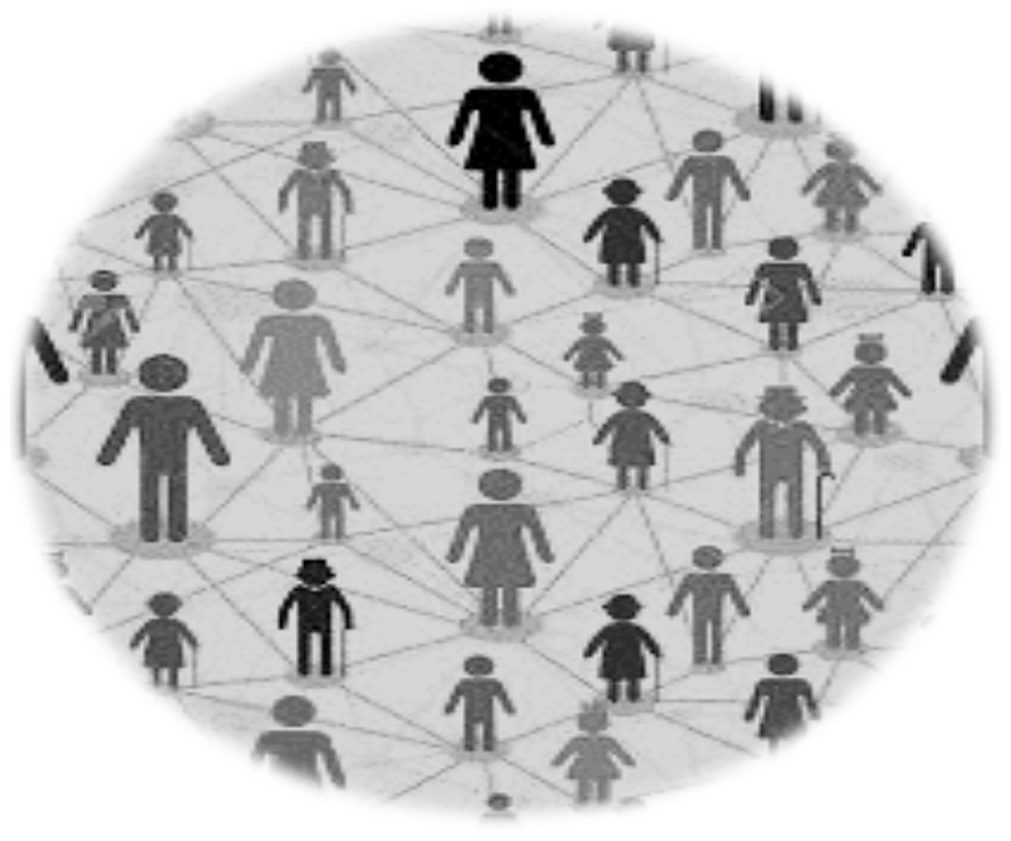
The web of relationships.
The roots of interconnectedness in restorative justice are found in many Indigenous cultures and religions (Davis, 2019). In some African countries, the word ubuntu is used to describe the collective embodiment of compassion and respect for humanity and the centrality of relationships (Davis, 2019; Elechi et al., 2010; Omale, 2006). The Lakota Sioux term mitakuye oyasin means we are all here to take care of one another (Davis, 2019), similar to the concept of harmony in hozho nasadhlii among the Navajo people (Yazzie, 1996). The word shalom from Hebrew scriptures speaks to a sense of interconnectedness, peace, and tranquility among all (VanNess, 2004; VanNess & Strong, 2015; Zehr, 2002, 2015a).
A strong web of relationships promotes trust, mutual understanding, and respect for differences (Muhammad, 2019). In an ideal restorative web, everyone has equal value and worth, everyone has the right to a meaningful life, and everyone holds equal access to power (Toews, 2006). Everyone in the web also has a voice in discussions and decisions, shared values and norms are collectively established via consensus, and justice is co-created among members in the web (Hooker, 2016; Toews, 2006). The common good arising from the bonds formed in the web is stronger than arguments or disagreements among individuals (Davis, 2019; Yazzie, 1996). A strong web produces a “currency of connection” (Muhammad, 2019, p. 48), which enables individuals to see the perspective of others and understand what is important to them and the community as a whole. Mutual trust forms and enables people to challenge thinking and produce change within each other and within the community. Individuals living in a strong web of connections are less likely to cause harm to others in the web (Muhammad, 2019; Toews, 2006). When a harm does occur, the causes and consequences of the harm can be better understood by the people in the web because of the currency of connections (Muhammad, 2019), and the harm is more likely to be repaired or transformed (Elechi, 1999; Elechi et al., 2010; Omale, 2006; Yazzie, 1994, 1996).
Transformation Through Restorative Justice
In addition to building a web of relationships, restorative justice (RJ) also seeks to address and remove harmful social interactions by transforming institutions (e.g., police, schools, governments), communities, and people (Sullivan & Tifft, 2005). Zehr (2015b) suggests RJ can do this by identifying and moving toward a new vision of communities where members can help to rebuild old relationships while also forging new relationships that transcend and begin to eliminate power imbalances brought by harmful beliefs and behaviors such as racial prejudice and discrimination. By employing practices such as Transformative Community Conferencing (Hooker, 2016) and circles (Davis, 2019), RJ has begun to move beyond individualistic harm repair to community engagement so that people can address systemic and structural sources of harm and work toward systemic sanctions and resolutions. Within transformation, RJ does not focus, at least not exclusively, “on accountability for perceived historic injustices, rather, maintains focus on establishing a preferred future and addressing present impediments” (Hooker, 2016, p. 8). As can be seen in some educational system efforts (cf. Gonzalez et al., 2019), systemic transformation is possible. Still, as Zehr (2015b) acknowledges, restorative justice has many unanswered questions and is a developing practice that must take on its own biases and power imbalances. However, RJ practices are designed to rebuild and establish a web of connections that considers the vantage points of all community members as they envision and work toward peaceful, moral, and just states of existence.
Harms in RJ
Important to the philosophy of RJ is the concept that offending causes harm to established relationships and breaks the web of connections people have with each other (Elechi et al., 2010; Yazzie, 1996; Zehr, 2015a). These harms can be physical and/or emotional, such as where the person harmed suffers tangible loss of money and a lingering sense of fear arising from an armed robbery. As is the case in our armed robbery example, where a harm has already damaged the web, reactive restorative practices aim to repair the relationships and transform the essential people into a future state of peaceful, moral, and just living among themselves while also working to prevent repeat harms (Davis, 2019; Hamer et al., 2013; Kuhlmann & Kury, 2018; Muhammad, 2019). Where potential harms to the web are identified but not yet perpetrated, such as in the proposed implementation of a racially disparate sentencing policy, proactive restorative practices can help keep the web intact by averting the possible harms (Ishiyama & Laoye, 2016; Olson & Sarver, 2021; Zehr, 2015a). Needs are circumstances that, once addressed, help move the essential people to a transformed state and help to prevent future harms. Like harms, the needs of essential people may be physical or emotional. For the person harmed, needs related to our armed robbery example above could include restitution for the money stolen, reimbursement for time lost at work to attend court hearings, and the resolution of psychological fear.
RJ addresses both harms and needs for each essential person in the web. Essential people are those who have been, or could be, touched by the harms. They include the people harmed (victims), the people who harmed (offenders), support people for each of these two groups, and the members of the larger community who may be directly or indirectly touched by the harm or who may influence the community policies and practices that drive interpersonal interactions (Hamer et al., 2013; Pranis, 2004; Toews, 2013). The end goal of reactive restorative justice is to repair the harms and move essential people to their transformed states of existence, to the extent possible, by identifying and addressing harms and needs for all essential people and by strengthening interpersonal relationships. The end goal of proactive restorative justice is to establish and strengthen interpersonal relationships and to help transform institutions and communities by identifying and averting potential harms to those relationships. Both reactive and proactive RJ accomplish their goals by facilitating practices that ensure that all interested parties have the opportunity to interact in a safe and respectful manner. These practices allow essential people to understand and explore each other’s perspectives on the issues at hand and then to arrive at some level of agreement or consensus on how to move forward in addressing the identified harms and needs (VanNess & Strong, 2015; Zehr, 2015a).
RJ encourages all interested essential people to enter into the processes of addressing harms and needs. It does this by seeing crimes as a harm to interpersonal relationships and returns the offense and its consequences to the parties directly impacted by the offense and to members of the surrounding communities (baliga, 2021; Davis, 2019; Hamer et al., 2013; Kuhlmann & Kury, 2018). Thus, as Christie (1977) called for, restorative practices encourage exploration of the harms and needs that are based on the full spectrum of community perspective rather than on rigid evidentiary and testimonial rules, and ensuing punishments, determined by courtroom actors unaffected by the harms. Through this process of exploration, restorative practices dispense of the punishing standards that inform many of the decisions of Western criminal justice systems and, instead, seek to create personalized restoration plans that hold the people who harm accountable, develop individual competencies within affected essential people, and protect the surrounding community (Cripps & McGlade, 2008; Muhammad, 2019; Toews, 2006; Yazzie, 1996).
Giving equal attention to holding the person who caused the harm accountable for their actions, developing competencies in essential people, and protecting members of the community is referred to as Balanced And Restorative Justice, or BARJ (Pranis, 1998). While BARJ is most common in juvenile justice implementations of RJ (e.g., Pennsylvania Justice Act), these three elements are found in the common definitions of RJ (Olson & Sarver, 2021). These elements can be seen in the practices and restoration plans of RJ. Continuing our armed robbery example, the person who harmed (offender) and the person harmed (victim) might attend a restorative conference where they discuss their perspectives, identify harms and needs, and develop a mutually agreeable plan for reparation. That plan might include accountability from the person who harmed in the forms of a written apology that specifically identifies harms caused for all essential people, monetary restitution for the losses of money and missed work hours, and community service work in a center for at-risk youths. Competency development might include completion of a reading comprehension and verbal skills training for the person who harmed, while the person harmed attends individual or group sessions to quell psychological fear. Community protection and safety might be enhanced by agreement that the person who harmed will develop a written schedule for outdoor activities and begin to participate in organized community activities rather than spending time alone on the streets. As the essential people develop and carry out these plans, they will interact with and garner assistance from various other people and agencies in their attempts to attain their transformed existences.
It is within these practices, individualized restoration plans, and their interpersonal interactions that we see the promise of happiness for restoration. The scientific research into happiness reveals a language and domains for the achievement of happiness that are similar across time and cultures. Yet, this common language and the domains that arise from it are varied enough to permit application to individual people, communities, and societies across the globe. Because of these same-but-different findings, we believe that teaching a universal language and approach to happiness to essential people—and the systems that serve them—will help improve the understanding of diverse perspectives, the identification of harms and needs, and the relevance of restoration plans that are so vital to successful restorative practices.
We acknowledge the proactive perspective of RJ, where the focus is on the prevention of harms between people. We believe that the language of happiness also holds promise for efforts within proactive restorative justice. However, we focus our attention here to the reactive approach in RJ. Reactive RJ focuses on instances where harms have occurred. Within such cases, an approach based in happiness can help address the needs of essential people that arise from the harms they have experienced.
Language and Models of Happiness
Within positive criminology and positive psychology, happiness can have different meanings. The happiness we are referring to here is satisfaction wutu life, or SWL. SWL is sometimes also called subjective well-being, life satisfaction, or quality of life. For simplicity, we retain satisfaction with life or SWL hereafter. Olson et al. (2020 p. 3) described SWL as the extent to which a person feels satisfaction with the conditions of their life. It is determined by reflection on the social, historical, and collective experiences that each person has had in life (Argyle, 1987; Martikainen, 2009; Tang & Chan, 2017). In determining how one perceives the conditions of their life, they make comparisons between fulfilled and desired wants and needs, judge their circumstances against some standard they have developed over the course of life, and often weigh these against a comparable group of similarly situated peers (Baumeister, 1991; Kasser, 2002; Layard, 2005). Perceptions of SWL rise as one’s needs are met and their desires are fulfilled, relative to similarly situated peers.
Because people determine their own level of SWL based on reflection of experiences, perceptions of life conditions, their own filled or unfulfilled wants and needs, and their observations of comparable peers, SWL is considered the cognitive component of happiness (Argyle, 1987; Baumgardner & Crothers, 2009). This cognitive aspect makes SWL susceptible to improvement based on people’s ability to plan, organize, and reflect on their life circumstances. Improving SWL can be important, as higher SWL has been associated with prosocial behaviors such as problem-solving, asset building, and work performance (Fredrickson, 2001; Fredrickson & Joiner, 2002; Park et al., 2004; Tugade & Fredrickson, 2004). It has also been associated with avoidance or recovery from antisocial behaviors such as delinquency, drug use, and bullying (Estevez et al., 2009; Laudet et al., 2009; Maccagnan et al., 2019; MacDonald et al., 2005; Moore et al., 2012; Olson et al., 2020; Suldo & Huebner, 2004).
Research into what people consider when reflecting on their individual experiences, circumstances, and wants and needs suggests that SWL seems to be free from influence by demographic characteristics like age, race, sex, and income (Argyle, 1987; King & Napa, 1998; Myers & Diener, 1995, 1997). Research also suggests that, throughout time and place, people tend to classify a rather similar set of life domains toward which they strive, but that they seek achievement of these domains in truly unique ways (Diener, 1984; Diener & Diener, 1996; Grouzet et al., 2005; Kahneman, 1999; Martikainen, 2009; Pavot & Diener, 2008; Schwartz, 1992). These similar sets of life domains are often called primary goods, while the unique ways people seek to achieve them are referred to as secondary goods.
Work is one example of a primary good (Campbell et al., 1976; Ramm & Czetli, 2004; Sears, 1977). In general, Work is the paid means of productive involvement within the community where the payment for services or time is the primary source of a person’s sustenance. Enjoying work tasks, self-perception of being good at the tasks, and recognition from others as being good at the tasks are important to greater satisfaction in Work. The types of Work vary as greatly as culture and people. Some people strive to become lawyers or doctors. Some learn to drive trucks or train animals. Still others want to be village elders or city council members. Work can also include spiritual adviser, shaman or clergy, police officer, humanitarian aid worker, teacher or professor, and whatever else people strive to be recognized and/or paid for when they do it well. Other primary goods that emerge include those related to leisure time, personal relationships and social connectedness, autonomy, mental and physical health, and education or competency. Table 1 reviews primary goods, or life domains, within four models of SWL.
Life Domains by Author.
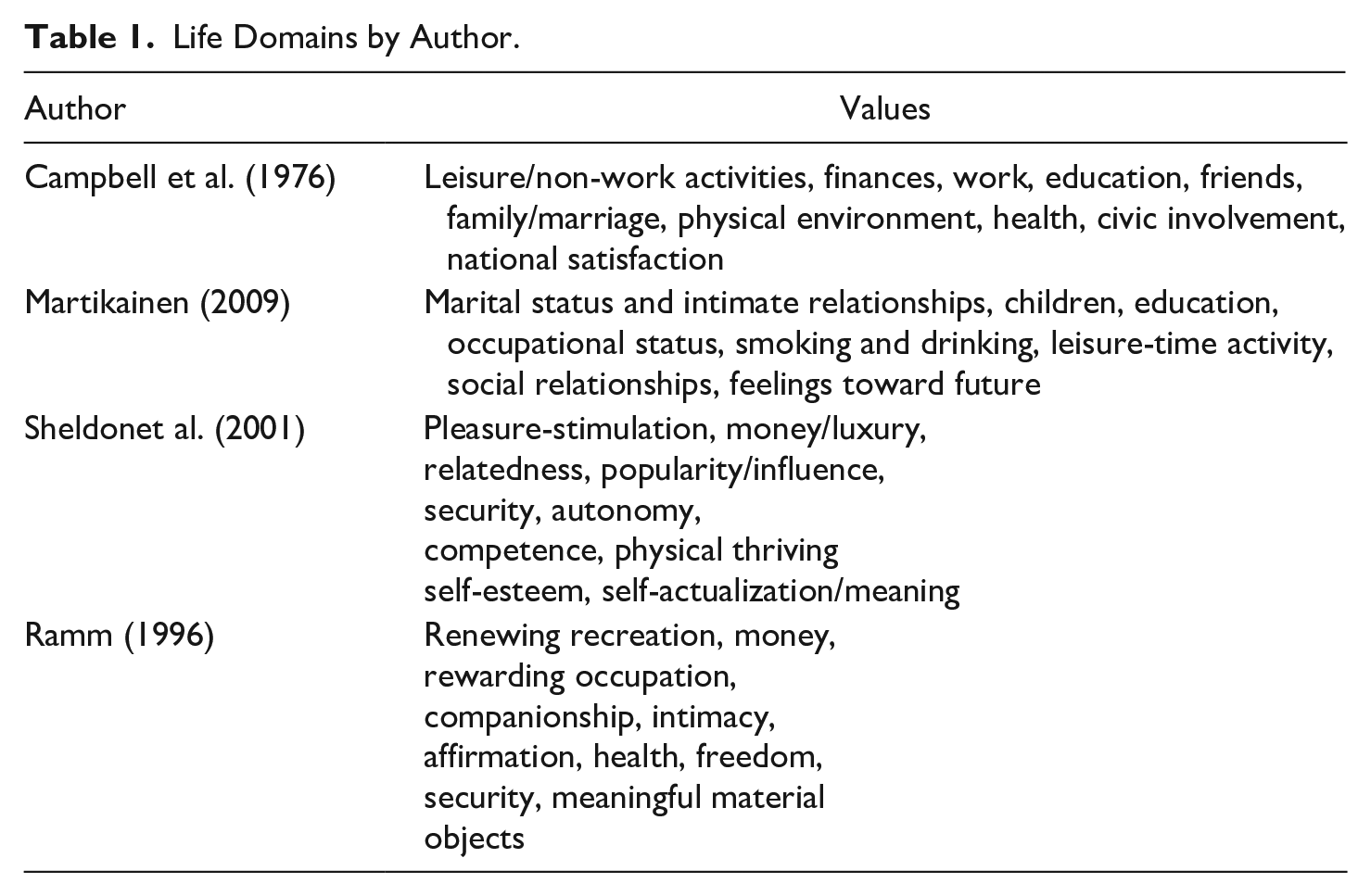
Among the models of SWL is one developed for offenders within the criminal justice system that has been implemented in several countries around the world, including Australia, Belgium, Canada, the United Kingdom, the United States, Singapore, and New Zealand. The Good Lives Model (GLM) was introduced by Ward (2002). Ward and others have translated the concepts of the GLM into interventions for adult sexual offenders (Yates et al., 2010; Yates & Prescott, 2011) and generally at-risk youths (Olson et al., 2016). The GLM has also seen at least one systematic review of its assumption and interventions (Mallion et al., 2020). For these reasons, we focus the remainder of our discussion on the Good Lives Model. However, we do not limit our suggestions here to the GLM. We believe the use of any happiness program carefully developed from a well-defined model of satisfaction with life could enhance harm repair as we propose.
The Good Lives Model identifies 11 life domains important to people. These are shown graphically in Figure 2. We define each and give some examples of possible secondary goods to achieving them in Table 2.
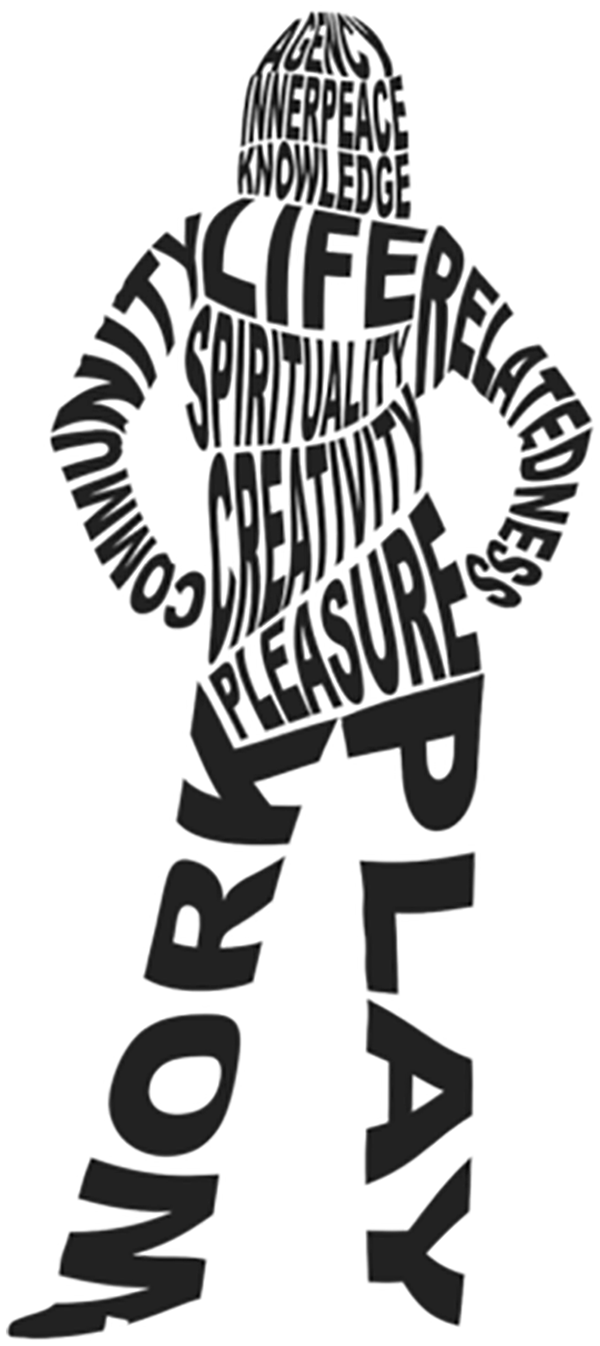
Domains of the Good Lives Model.
Primary Domains of the Good Lives Model and Examples of Secondary Goods.
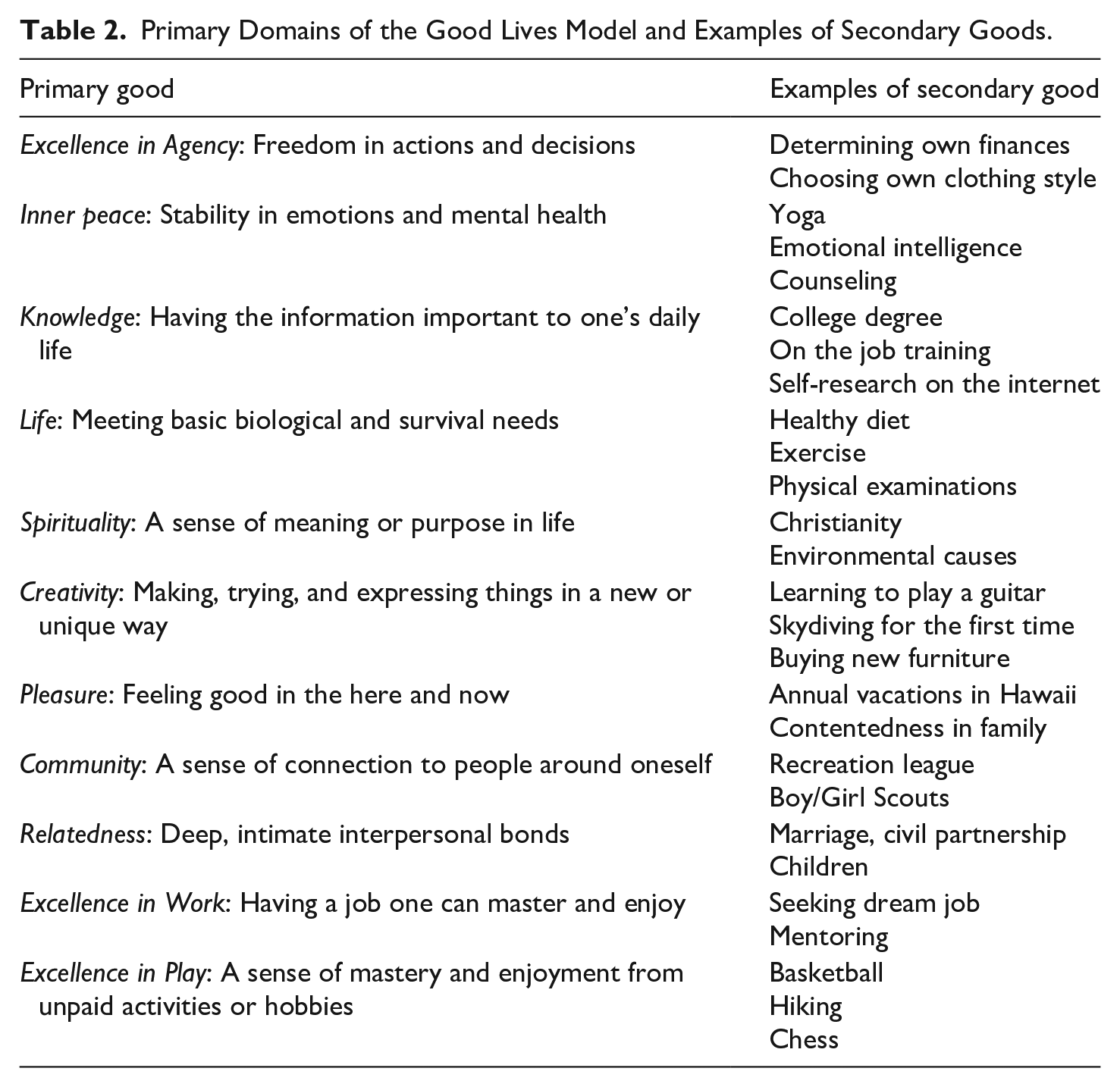
Although similar primary domains emerge in models of SWL as relevant to nearly all people, it is important to note that the models do not suggest that all people need to achieve all primary domains at all times in their lives to be happy. We can see how the importance of domains may differ across any two or more people, or across the lifetime of any one person, using Community, Relatedness, Work, and Play from the GLM in fictional examples. When Sitora was 14, she wanted to be a good cheerleader (Play) so that she could fit in well with the other girls on the cheerleading team (Community). Sitora made the decision to dedicate much of her time and energy to cheerleading to accomplish these goals. However, now that she has completed college, she has decided her priorities are strengthening the relationship she has with her husband and being a responsive and caring parent for her infant (both Relatedness) while she also strives to become better at her career as a public defender (Work).
We can also see how victimization can impact a domain and how harm to any one of them can impact other domains important to people’s satisfaction with life using another fictional example. Broen was driving home from his second shift work as a forklift driver at a manufacturing plant when a drunk driver ran a red light and collided with his car. As a result of the impact, one of his legs was broken and he sustained a traumatic brain injury (Life). His injuries meant he could not walk and navigate the steps in his home freely (Agency) nor perform his work functions for at least 8 weeks (Work). Because he was a new employee and had not yet accrued sick time or union benefits, Broen was not paid for his missed time and did not have benefits like medical coverage. He began to miss payments on his current bills and acquire new medical bills, which caused him stress (Inner Peace).
Because the common primary domains identified are common to most people, they are common to most people who are attempting to increase their SWL, to those who are trying to maintain their current levels of SWL, and to those who are trying to recover their SWL after some insult or injury to previously attained SWL. They are also common to the practitioners and professionals who are intervening in the lives of those people through social and human services, and criminal justice. Learning the language could improve those services.
Happiness in Service Provision
The domains of SWL and models like the GLM can provide a framework for a common language supporting interagency collaboration in communities. This framework can be used with essential people as they come to the attention of one or more agencies as offenders, victims of crime, persons with substance use issues, and/or those impacted by mental health issues, and so forth. By framing client needs through the domains of happiness, the community—as a whole—is speaking the same language. This shared language reflects shared values and norms of restorative justice practices. The building of universal happiness includes the building of a strong web of connections that may help to combat threats to the community, such as substance abuse and crime (Cloutier & Pfeiffer, 2017). A focus on individual happiness fosters an increased level of functioning that includes increased relationship building, prosocial behavior, engagement in work and leisure activities, and creativity (Fredrickson, 2004).
The use of models of SWL like the Good Lives Model (GLM) as a common language and service provision framework enables a holistic treatment for clients. Services and treatment can focus on improving satisfaction in the important domains of happiness. The comprehensive assessment of clients’ lives, needs, and strengths using the GLM domains enables all agencies to see the clients from the same holistic framework. The goals of the client move beyond attainment of individual agency goals to the attainment of client and community goals that address client needs and strengthen the web of connections (Rivard & Morrissey, 2003), thereby helping to protect the community from harm.
In this framework, SWL through models like the GLM becomes the umbrella for addressing client needs. Clients rarely have only one need and rarely can any single agency meet all the client’s needs (Hasenfeld, 2010). In our example above, Broen may be working with a medical doctor, a physical therapist, an occupational therapist, a cognitive retraining therapist, his bank and financial lenders, an individual counselor, and the human resource specialist at his work site as he attempts to recover from the vehicle accident and its impacts to his SWL. Communication between different service providers about client needs can be difficult, particularly when each agency uses its own language. Often clients do not understand the differences between agencies’ language and processes, and they may not recall all the services that they are receiving. Lack of communication and use of a shared service framework often lead to agencies working at cross purposes or duplication of services when they serve the same clients (Altschuler & Armstrong, 2002; Spencer & Jones-Walker, 2004). These concerns are amplified when a single essential person is referred to one agency because of her identification as a victim, to a different agency because of her identification as an offender, and to yet another agency because she is identified as a young, single mother. The domains of happiness can provide an umbrella for the client’s issues and goals, thus enabling multiple providers to work under the same umbrella and use the same language that encompasses the multiple, complex needs of clients.
Rather than expanding the systemization or professionalization of either RJ or SWL, our vision of this umbrella reflects the calls of writers such as Christie (1977), Braithwaite (2002), and baliga (2021) who argue that governmental assumption of responsibility for punishing criminals reduces essential people to passive witnesses to their own harms and offenses. While under this umbrella, we see victims, offenders, their support groups, and the greater community having the primary obligations for identifying harms and needs and for creating restoration plans that seek to achieve maximum SWL for all. We believe the appropriate role for the systems and their practitioners is to help essential people in understanding the language of SWL, work alongside them in developing attainable SWL goals, and assist in overcoming obstacles that may arise during goal achievement. In short, essential people, systems, and service providers will all be speaking the same language and can more easily collaborate toward the same client-identified goals, regardless of the identified role in the referral. Reaching such a state can also increase collaboration when multiple agencies are intervening in any person’s life.
Interagency collaboration benefits both clients and community agencies. The use of SWL models like the GLM also provides a measure of accountability for both clients and service providers as it serves as the roadmap for clients and communities. The benefits to clients include reduced fragmentation of services, increased access to services, increased continuity of services, and improved client outcomes (Hasenfeld, 2010; Rivard & Morrissey, 2003). This framework enables the rebuilding of the broken web of connections within the community. Agencies and communities benefit from interagency collaboration through increased program effectiveness, more efficient use of limited resources and decreased competition for the same resources, increased continuity of service provision, and increased success of client outcomes (Hasenfeld, 2010; Rivard & Morrissey, 2003). Where client needs are not met, accountability of problem areas can be achieved by noting which agencies were responsible for assisting in the development of the unachieved domains. Clients and agencies can then look for obstacles to success and work to overcome those obstacles, thereby improving the chances for restoration and prevention of harms.
Restoration Through Happiness
We believe the models of SWL can be effectively incorporated into the processes of restorative dialogue and the development of restoration plans arising from that dialogue. We also believe that incorporation of SWL into these processes is likely to have a positive impact on the follow-through of those plans. To demonstrate how, let us look at these processes in their chronological order beginning with restorative dialogue.
Happiness in Restorative Dialogue
Because essential people cross the boundaries of race, class, gender, culture, and ethnicities, any individual participant’s narrative may not be understood by others because of cultural differences and biases (Albrecht, 2010). For instance, during communication, language and symbols are used that are specific to particular cultures and these are not familiar to people outside of those cultures. When essential people, especially young offenders, do not feel heard or understood, they have difficulty making connections between offenses and reparation (Riley & Hayes, 2018). To counter this, the language of happiness can be taught to and used by all essential people, producing dialogue that is familiar and understood by all members. Where essential people see commonalities among each other and among their individual needs, their willingness to participate in restorative processes can increase (Walgrave, 2019). Thus, similar to transformative community conferencing proposed by Hooker (2016), individual narratives are better understood and participants can see harms and needs through the lens of the other.
For example, Chandra is a fictional 16-year-old whose reckless driving resulted in an accident that took Kierra’s life. Being inexperienced in marriage, Chandra has a difficult time understanding how Kierra’s death has resulted in posttraumatic stress symptoms to Kierra’s husband, Tyler. However, being familiar with how her own anxiety impacts her inner peace, Chandra is clear that Tyler’s emotional and mental stability has suffered. Tyler may also better understand how Chandra’s time in juvenile detention has harmed the autonomy and access to work that she needs to help repay the funeral expenses. Because of these clearer understandings of harms, Chandra and Tyler can move more effectively through the other components of restorative dialogue. Thus, Chandra can have a better sense of her full accountability in the harm and Tyler can have a better sense of what obligations Chandra is able to meet in the short and longer terms. The same common SWL language could help students in a classroom circle better understand how a new assignment relates to their knowledge or how bullying impacts their sense of community. It could also help neighbors in a community talking circle understand how a new residency restriction against people convicted of drug offenses harms some families’ relatedness or the how racially motivated closing of a basketball court will impact some people’s sense of play. With clearer understanding of each other’s needs, the essential people are better equipped to implement relevant restoration plans.
Restoration Plans and Follow-Through
Restoration plans detail the specific steps each essential person agrees to complete to repair the harm and strengthen their web of relationships. While governmental agencies such as corrections and probation departments can facilitate the processes and determine their own willingness to enforce them, it is important to RJ that the essential people develop and agree to content and goals in their restoration plans. Across human and social services, researchers find that people who are prescribed interventions by agencies often feel they have no say in the services or treatment (Naert et al., 2019; Riley & Hayes, 2018; Signorini et al., 2018) and that the treatments do not relate to the needs they see in their daily lives (Altschuler & Armstrong, 2002; Altschuler et al., 1999). Such perceptions can demotivate commitment and adherence to treatment plans. There are several reasons for this, including disconnects between providers and clients’ lives (Altschuler & Armstrong, 2002; Altschuler et al., 1999), lack of coordination of care among providers themselves (Naert et al., 2019; Psaila et al., 2014; Signorini et al., 2018), unavailability of services or inconvenient available times for services (Liao & White, 2014), and a belief from professionals that they are the ones best suited to oversee clients’ treatments and lives (Psaila et al., 2014). Focusing efforts on holistic, strengths-based interventions developed through direct, active engagement of the essential people can improve acceptance, support for, and achievement of interventions (Naert et al., 2019; Signorini et al., 2018), including the steps to repair harm identified in restoration plans.
We believe that framing restoration plans in the same model of SWL that framed restorative dialogue will help build individualized restoration plans that essential people are likely to complete. The plans would address domains of SWL that are identified as important to each essential person, by each essential person. To this end, each party will understand how completing each goal in the restoration plan would increase their own SWL. For the essential people, this perspective can help transform the experience of harm from something that garnered punishment—perhaps undeserved—to something that helped improve their life or the life of someone else. For example, writing a letter of apology may no longer be seen as a condition of probation or suspension that is punishable for noncompletion. The apology letter can now be seen as a way to help the person harmed restore their inner peace by understanding why they were chosen for victimization and for the person who harmed to restore their own inner peace by alleviating some of the guilt they feel for hurting someone else.
Restoration plans that clearly identify which goals relate to specific SWL domains can also help essential people receive consistent services from the agencies that assist in plan completion, especially when those agencies are also well-versed in the model of SWL. As we noted above, clients often do not understand the language and purpose of the agencies they interact with to get the help they need. Those agencies sometimes work at cross purposes, offer services that are irrelevant to the clients they serve, and compete with each other for limited resources (Altschuler & Armstrong, 2002; Altschuler et al., 1999; Hasenfeld, 2010; Rivard & Morrissey, 2003). Rather than not understanding who is helping her with what, Chandra can understand that Melody from Kids United is helping her with her Inner Peace goals, Jodi from Kids Union is helping her develop her Knowledge goals, and Alton from Kids Town is helping her attain her Work goals. Likewise, Broen can see that his medical doctor is assisting in his Life goals, his physical therapist and financial advisers are helping in his Agency goals, his cognitive retraining therapist is helping restore his Inner Peace, and his occupational therapist and human resource specialist are assisting toward his Work goals. Both Chandra and Broen can also more clearly see the coherence between these services and each of their own domains, which can create a navigable roadmap to SWL attainment. Having comprehensive and portable plans that are framed in a common language and developed by clients themselves to address their own identified needs can also help reduce or eliminate service disparities, improve interagency collaborative efforts, and reduce harms.
Guidance and Cautions for the Integration of Happiness and RJ
Our vision for integrating happiness with RJ is based on Zehr’s (2015a) call to shift the perspectives of criminal justice policy away from primarily inflicting punishment and move them toward primarily repairing and transforming harms. We believe that happiness can help achieve that perspective shift by integrating a common language as people, communities, and institutions move to meeting the needs of all essential people. Achieving and measuring the success of this integration requires guidance and caution for assessing the universality of SWL domains among non-Western cultures, co-option and weaponization of SWL and restorative justice, and evaluating efforts for both fidelity and outcomes.
We indicated above that the research into demographic association with SWL has demonstrated that demographic factors do not consistently associate with reported global SWL (Diener et al., 2003; Olson et al., 2020). Perhaps with the exception of income, there are no consistent results for an association between demographics and satisfaction in life domains (Huebner et al., 2000; Martikainen, 2009; Paiva et al., 2009). We also noted the similarity in domains of SWL. While these samples have included a variety of participants from across cultures, times, and places, they have not intentionally compared samples comprised solely of cross-cultural members against each other. It will be important to capture samples of Indigenous, First Nations, collectivist, individual, emerging, and so on cultures and compare reports of SWL achievement and important SWL domains across those samples. For instance, it is plausible that some Indigenous and First Nations cultures may not view Work as we did above, “the paid means of productive involvement within the community where the payment for services or time is the primary source of a person’s sustenance.” However, it is likely that members of some Indigenous and First Nations cultures engage in important activities that promote the economies of their cultures. Undertaking qualitative and quantitative research to confirm SWL domains within and between those cultures could guide any needed refinement of SWL language so that we are confident that it is truly inclusive of all people.
Our caution against co-option and weaponization of SWL arises from concerns and findings within restorative justice. Several restorative writers have suggested that punitive systems could co-opt RJ and begin to use restorative language while remaining largely punitive (Gavrielides, 2008; O’Brien & Nygreen, 2020; Walgrave, 2019; Wood & Suzuki, 2016). This could lead essential people to believe they are entering restorative processes but find themselves punished or even re-victimized by those putative RJ processes. An example of this can be deduced from the evaluations of a school-based RJ intervention (Carroll, 2017; Gattuso, 2016). In this instance, students were referred for restorative sanctions in some cases where there was no direct victim or identified harm. Rather than being suspended, students spent time in an in-school classroom where they were to complete a form that asked restorative-style questions. There was no interaction with other essential people and the intended recipients of the completed forms, the classroom teacher where the infractions happened, often never saw or responded to the forms. Rather than being restorative, this putative RJ practice simply moved out of school suspensions to (still punitive) in-school suspension by adopting an RJ theme. If SWL were to be co-opted in the same manner, it is possible that essential people may believe they are learning the language of happiness, only to find themselves uninformed or misinformed on SWL concepts. In this case, it is foreseeable that essential people, especially offenders, could then be scrutinized or punished for not caring about the needs and happiness of others. As SWL and RJ are integrated, we advise caution to insure avoiding such co-option and weaponization.
Fidelity and outcomes research can help detect co-option and measure the success of efforts to integrate RJ and SWL. We see three main foci of such research. First, program manuals, activity plans, and other documentation can be reviewed to assure that programs include the main concepts and elements of both SWL and RJ. Program developers should draw clear connections between program activities and the domains of the chosen SWL model. For instance, educational materials for a program based on the GLM should explain the domains of the GLM, and those explanations should be indistinct from the GLM language, even after adaptations for the participants’ developmental levels. Similarly, developers should be clear on which RJ elements their programs will address. Second, developers should engage in fidelity evaluations to insure that the program’s planned activities fully reach the participants (Mallicoat & Gardiner, 2014; Mears, 2010). Measuring whether participants receive the planned activities for the planned lengths of time and in the planned order are all important to gauging whether any outcomes can be attributed to the program itself. Finally, outcomes evaluations should assure that measured outcomes match both the program objectives (Mallicoat & Gardiner, 2014; Mears, 2010) and that those objectives are founded in the values, concepts, and elements of RJ and SWL (Presser & Voorhis, 2002). For instance, qualitative research can help determine which domains participants in a GLM program perceive as most important to them, whether they perceive improvement in any of those important domains of their lives, and whether they feel their harms have been restored or transformed. At the same time, quantitative research can help determine if those domain improvements are statistically significant and whether we can generalize expectations for improvement to other essential people. All together these three steps of evaluation would allow us to know whether participants can expect to learn about good lives, whether they did learn about good lives, whether they experienced good lives, and whether we can expect future participants of the same program to experience good lives. The same steps would apply in research evaluations that assess the restorativeness of programs.
Conclusion
Taken together, the ideas we discussed above suggest a different perspective for the criminal justice system, one where it can reduce crime and improve public safety by integrating ideas of satisfaction with life from positive psychology into the practices of restorative justice. Criminal justice already has an interest and history in promoting strong webs of interpersonal relationships, providing procedural justice, offering a path for direct investment by the community into systemic actions, and attempting to reduce dissonance in its services. Adding a personalized, positive psychology-based approach to some restorative interventions can nurture affective commitment.
We believe this approach would effectively create within the criminal justice system an atmosphere where people learn and understand each other’s perspectives as they become integral parts of creating interventions that directly reflect their needs and where the agencies they rely on for assistance in meeting those needs work toward those same client-developed goals. All involved parties are more likely to want to see these kinds of interventions succeed. With this universal approach, all parties are also more likely to invest in the plan and to achieve their outcomes.
Footnotes
Declaration of Conflicting Interests
The author(s) declared no potential conflicts of interest with respect to the research, authorship, and/or publication of this article.
Funding
The author(s) received no financial support for the research, authorship, and/or publication of this article.
Author Biographies
