




Abstract
This paper evaluates the use of third-party environmental, social, and governance (ESG) ratings as key performance metrics within executive and management compensation plans. Despite a widespread increase in ESG-linked compensation practices, there remains a paucity of research critically evaluating the use of third-party ESG ratings as meaningful performance metrics in this context. The paper utilises case-studies from the airline and banking industries to identify this emerging trend of ESG ratings-linked compensation. It goes on to synthesise extant research on ESG ratings to evaluate their suitability as performance metrics within the context of the broader executive compensation literature. We argue that the substantial evidence on the shortcomings of current ESG ratings, including divergence across rating agencies, opaque rating methodologies, and inadequate reflection of actual impact metrics, combine to present a material risk to the credibility and reviewability of such sustainability-linked compensation plans. Our critique highlights the ready potential and incentive for manipulation, where executives may influence the selection of ratings or utilise strategic disclosure tactics to achieve improved rating targets. We advise that companies and their boards prioritise objective measures of impact over existing third-party ratings when designing executive compensation criteria. We offer actionable recommendations for firms to adopt verifiable metrics aligned with their strategic objectives, drawing on frameworks provided by legislation such as the Corporate Sustainability Reporting Directive (CSRD) and voluntary standards including the Global Reporting Initiative (GRI). By doing so, companies can foster transparency and maintain shareholder trust and confidence while effectively incentivising management to deliver on key sustainability challenges.
Keywords
Introduction
The past two decades have seen a rapid expansion in the reported levels of action and disclosure by large companies on environmental, social, and governance (ESG) issues (Harris, 2023). Driven by the demands of investors, regulators, consumers, and other stakeholder groups, companies now report on a range of environmental and social matters, from greenhouse gas emissions to board diversity, often setting targets in relation to these issues to drive improved performance. Many large companies now further incentivise key executives and managers to improve ‘non-financial’ performance by incorporating ESG goals and metrics into their respective remuneration criteria. However, as the broader literature on executive compensation has clearly demonstrated, where performance metrics are vague or otherwise shielded from external scrutiny and review, they may be both ineffective and susceptible to manipulation, such that executives and managers may be able to increase their compensation without necessarily delivering meaningful improvements in underlying performance (Frydman & Jenter, 2010). The lack of standardisation in ESG reporting practices, alongside the potential lack of investor and stakeholder expertise on ESG issues, suggest that ESG performance metrics may be particularly vulnerable to such problems. Third-party ESG ratings ostensibly offer the prospect of independent, expertly constructed, and easily understood metrics of sustainability performance in this context. However, critical shortcomings in existing ratings data, rating methodologies, and ratings industry regulation may render current ratings unreliable and open to manipulation when employed as performance metrics in sustainability-linked compensation plans. Despite this apparent risk, researchers have not yet directed significant attention to the use of ESG ratings as performance metrics in corporate compensation schemes. This represents a substantial gap in the literature in this area and a particular issue for incentivising meaningful corporate impact on ESG-related goals now and into the future.
This paper presents case study analyses of the aviation and banking sectors, conducting a content analysis on key public disclosures from large companies to explore the use of third-party ratings in sustainability-linked compensation mechanisms. Our findings highlight the emerging practice of including third-party ESG ratings as performance metrics in this context. We offer novel evidence from the airline and banking industries, two industries for which sustainability risks are highly significant and in which companies frequently include such ratings in public disclosures as signals of sustainability performance. Our findings point to an emerging trend of companies incorporating ratings targets into executive remuneration criteria. We then consider this within the context of broader best practice recommendations in executive compensation literature and synthesise with extant critiques of ESG ratings to delineate the specific shortcomings of existing ratings as performance metrics in this context.
We conclude that companies should not use current ESG ratings as performance metrics if they want to align with best practice in setting executive compensation and should focus instead on meaningful objective metrics of impact which complement strategic goals. If corporate practice moves towards a reliance on existing ESG ratings as performance metrics for executives, this may undermine corporate sustainability efforts, potentially incentivising executives and managers to pursue actions which will improve ratings, rather than actions which will genuinely ‘move the needle’ on key metrics of impact and risk. There is a clear risk associated with emerging strategies of using third-party ratings in this manner, and it is important that pathways of best practice are highlighted to compensation committees and similar stakeholders. This paper offers timely and actionable guidance for companies, their boards, and shareholders involved in setting and monitoring sustainability-linked compensation plans.
The remainder of the paper is structured as follows: The following section provides a brief outline of the broader executive compensation literature, specifically the need for performance-linked compensation to mitigate agency problems, and the potential for manipulation of performance metrics by executives and managers. Following this, the recent growth of ESG-linked compensation practices is detailed, along with existing best practice recommendations available in the literature on sustainability-linked pay. We then outline the apparent promise and appeal of ESG ratings as performance metrics in this context. After this, we identify examples of large companies linking executive pay to ESG ratings, and then critically analyse the shortcomings in the existing ratings market which render them unsuitable as performance metrics. The final section concludes and offers guidance for companies, their boards, and shareholders regarding the incorporation of ESG factors into executive compensation.
Executive Compensation Literature: Performance Metrics and Manipulation
The practice of linking executive compensation to company performance has grown enormously since the seminal work of Jensen and Murphy (1990), which highlighted the disconnect between CEO pay and the financial performance in US firms at the time. In the decades since, companies have increasingly incorporated financial performance, growth, revenue, and share price targets into executive compensation contracts so as to directly incentivise managerial behaviour which delivers on those goals and consequently shareholder value (Cohen et al., 2023). Such performance-linked compensation aims to align executives’ interests with those of shareholders, thereby, in theory, addressing agency problems which may arise due to shareholders not having the resources or ability to monitor the behaviour and decision-making of self-interested executives (Jensen & Murphy, 1990; Petrou & Procopiou, 2016). Principal-agent problems in this context may include excessive risk aversion, ‘empire building’, and high levels of perquisite consumption by the CEO (Frydman & Jenter, 2010). The rapid increase in executive compensation in large public companies in the past three decades has primarily been driven by growth in stock and option grants, which have substantially strengthened the link between executive wealth and firm value (Faulkender et al., 2010; Frydman & Jenter, 2010).
CEO pay typically consists of five core components: base salary; annual bonus; payouts from long-term incentive plans; option grants; and stock grants (Frydman & Jenter, 2010). The literature shows that executives may manipulate performance metrics in order to increase their own compensation, to the possible detriment of shareholder value and in contravention of ethical standards. Frydman and Jenter (2010, p. 9) note that ‘any form of incentive compensation entails the danger than managers may manipulate the performance measure’. Researchers have identified multiple methods by which executives and managers may manipulate performance metrics to increase their compensation, typically by strategically influencing earnings metrics or share price. This can include executives, particularly CEOs, manipulating or ‘managing’ reported earnings by accelerating revenue or postponing certain expenditures (Gopalan et al., 2017), or by manipulating depreciation and amortisation accounting for certain assets (Beneish, 1999). Executives may also manipulate performance metrics by engaging in aggressive capital expenditures. For example, Return on Assets (ROA) and Return on Equity (ROE) metrics may be inflated by engaging in share buybacks (Ringlee et al., 2023).
Executives may also be able to manipulate the date upon which shares are officially granted, in order to increase or otherwise manage the value of share options awarded as part of performance-linked compensation (Avci et al., 2016; Petrou & Procopiou, 2016). They may also influence share price by carefully timing the release of certain information. For example, CEOs may accelerate the release of negative news about the company prior to an award date, as this will reduce the share price and thus increase the number of shares awarded under a set value share option; conversely, they may delay the release of positive information until after the date of the award so they benefit from a subsequent share price increase (Avci et al., 2016; Faulkender et al., 2010; Peng & Röell, 2008). In short, the broader literature on executive pay shows that linking pay to performance is crucial to drive certain outcomes and reduce agency problems, but also that executives may be incentivised to manipulate performance metrics to boost their overall compensation. These practices are not just hypothetical acts suggested by academics; indeed, it is probably more accurate to say that researchers typically identify and formulate methods of accounting manipulation after they are brought to light by real-world corporate accounting scandals – for example, a substantial body of highly cited academic research emerged in response to the Enron scandal and the accounting practices that caused it (e.g. Benston & Hartgraves, 2002). The conceptual ambiguity of ESG performance as compared to financial performance, along with the lack of standardisation and transparency in ESG reporting practices, suggests that the scope for manipulation of ESG-related performance metrics is likely to be substantial. Nonetheless, many large companies now include ESG metrics in remuneration criteria for executives and senior managers. Evidence of the growth of this practice is provided in the following section.
ESG-Linked Compensation: Growth, Critiques, and Best Practice Recommendations in Literature
The growth of ESG-linked compensation is in evidence within academic and business literature. Cremona and Passador (2019) listed companies from Spain, France, Germany, and the United Kingdom in the period 2005–2015, and found that 46% had some ESG-linked compensation policies. More recently, Lu (2023) finds that 212 of the 350 top listed firms in the United Kingdom use some ESG-linked remuneration criteria. In 2024, Dell’Erba and Ferrarini (2024) report that 60% of the 300 largest firms in Europe link executive pay to ESG metrics on some level. Cohen et al. (2023) studied a sample of more than 4000 listed firms from 21 countries from 2011 to 20, and note that the practice of linking executive pay to ESG metrics is ‘rapidly increasing’ (Cohen et al., 2023, p. 805). In the United States, PwC (2022) have reported that 92% of senior leaders in US companies have ESG targets included in the determination of their pay. Consulting firm Semler Brossy (2024) also report in 2024 that 74% of S&P 500 companies incorporate ESG metrics into executive compensation, up from 57% in 2020. ESG factors now represent an increasingly prevalent consideration in executive compensation among larger listed companies in the United States and EU, though the proportion of total compensation driven by ESG metrics remains moderate (Cohen et al., 2023; Dell’Erba & Gomtsyan, 2024a). Bebchuk and Tallarita (2022) note that, in most cases, ESG metrics only account for between 1.5% and 3% of total executive pay, though in some cases this figure is as high as 12.5%. Increasing pressure for environmental action and regulation in the medium term may see this figure continue to grow across the board, especially within businesses that may face increasing market or regulatory pressures (e.g. CSRD) to act.
Activism by institutional investors and large asset managers has been particularly impactful in driving this growth. Bebchuk and Tallarita (2022) find that this has been a key impetus in the expansion of ESG-linked compensation practices. This is echoed by Cohen et al. (2023) who show that companies with higher institutional ownership levels are more likely to include ESG in executive compensation criteria. Georgeson’s 2022 survey of the world’s largest institutional investors found that 90% endorse the inclusion of ESG metrics in executive compensation (Georgeson, 2022). Specific examples of investors being influenced by ESG issues include Institutional Shareholder Services (ISS) recommending the rejection of Boeing’s compensation package for David Calhoun, in part due to high-profile failures relating to aircraft safety (Diaz, 2024), and ISS advising against the re-election of five Berkshire Hathaway directors due to concerns about the company’s underdeveloped climate disclosure and risk management (Stempel, 2024). Allianz Global Investors issued a public statement in February 2022 stating that ‘AllianzGI will vote against European large caps that do not include ESG KPIs in executive remuneration policies’ (Allianz Global Investors, 2022). Cohen et al. (2023) showed that firms are more likely to adopt ESG metrics into executive pay after engagement with the ‘Big Three’ asset managers (BlackRock, Vanguard, and State Street Global Advisers), further underlining the role of institutional investors in this regard.
However, although ESG-linked pay mechanisms are now widespread, researchers and large asset managers have been highly critical of existing corporate practice in this area. Bebchuk and Tallarita (2022) state that it is unclear whether ESG incentives among S&P 100 firms are actually effective, or simply serve to mask excess executive compensation. Dell’Erba and Ferrarini (2024) arrive at similar conclusions regarding European firms, stating that ‘ESG targets and metrics are generally not easily reviewable and comparable’ when assessing the compensation practices of Europe’s 300 largest companies (Dell’Erba & Ferrarini, 2024, p. 32). These views are also evident in the investment and asset management industries – the head of stewardship for State Street Global Advisers was quoted in Financial Times in 2023 as saying that the ESG metrics included in executive compensation are typically ‘very subjective, fluffy, and easily gamed’ (Temple-West and Xiao, 2023), while a publication by Vanguard in 2023 warned that ‘Poorly constructed ESG metrics could result in inflated pay relative to performance’ (Vanguard, 2023, p. 2). Executive compensation consulting firm Semler Brossy (2024, p. 2) reported in 2024 that large companies are now moving ‘from adoption to refinement of ESG metrics’. Whilst the reported prevalence of ESG-linked compensation contracts is high, it is clear that companies are still refining their practices and in search of more objective and transparent performance metrics.
A small number of recent studies offer guidance for companies and their boards seeking to include ESG performance in executive remuneration criteria. The work of Bebchuk & Tallarita, 2022; Dell’Erba & Gomtsyan, 2024a offer a notable set of recommendations in this respect. Bebchuk and Tallarita (2022) study firms in the S&P 100 for the year 2021 and make several recommendations to help companies ensure that ESG targets are reviewable by shareholders and external actors, which is necessary to mitigate potential agency problems. They recommend that companies set clear objective goals, disclose outcome data against these goals, and provide meaningful context to enable observers understand the level of ambition in the performance targets. Dell’Erba & Gomtsyan, 2024a consider pay practices among S&P 500 firms and suggest a narrow set of conditions within which ESG-linked pay can be effective. They state that firms should include ESG factors in compensation criteria when the aim is to improve performance on one major ESG aspect, rather than many disparate aspects. They also advise that the performance metrics selected should be complementary to shareholder value so as not to conflict with broader financial performance incentives in the compensation plan, which are typically weighted far more heavily than ESG factors. Both studies emphasise the importance of using transparent and objective performance metrics which can be understood and monitored by shareholders and other external actors. This is deemed essential to address agency concerns, and highly relevant in the context of the ratings-linked compensation practices we identify and critique in this paper. As discussed in the subsequent sections, ESG ratings may appear to satisfy these criteria, and to address the concerns of investors relating to vagueness and subjectivity, and thus appeal to boards setting ESG-linked compensation policies. However, the ratings industry is beset by critical shortcomings at present, such that boards should be extremely wary of employing them as performance metrics for executives.
The Appeal of ESG Ratings as Performance Metrics
It can be difficult for companies and their boards to identify and select appropriate ESG performance metrics through which to evaluate executive performance. In the midst of a large number of voluntary and regulatory reporting frameworks, substantial variations in how different companies measure performance on ESG issues (Kotsantonis & Serafeim, 2019), and broader concerns about manipulation and incentive compatibility, boards may face considerable confusion when trying to select or specify ESG performance metrics. ESG ratings offer the apparent prospect of objective, independent, easily understood, and expertly constructed performance indicators in this context.
Compared to financial performance and shareholder value metrics, ESG factors are comparatively new considerations for companies and investors, and many boards and shareholders may be unfamiliar with many of the ESG issues which are rapidly becoming material for their company. Evaluating environmental and social risks and impacts may also require technically complex approaches and judgements, for which boards, investors, and other stakeholder groups may lack sufficient expertise. Third-party ESG ratings may therefore be attractive as prospective performance metrics, as they are ‘ready to go’ and carry the credibility of globally recognised brand names (Morgan Stanley, Bloomberg, etc.). ESG ratings may also appear, on the surface, to be easily reviewable and objective, thus addressing investor concerns and satisfying the key best practice criteria presented in section 3. Shareholders can check a company’s rating from a major agency with as little as a Google search in many cases. Ratings are constructed by third-party specialist companies, and thus, in theory, should be largely objective, independent, and free from any direct influence by managers and executives. Thus, such ratings appear to offer easy ‘go-to’ metrics for boards to include in executive compensation plans. A further advantage is that companies can potentially benefit from obtaining better ratings scores in a number of other ways, including improving terms of debt finance and increasing access to equity capital by achieving inclusion in sustainability-themed investment products and index funds (Eliwa et al., 2019; S&P, 2024; MSCI, 2024).
Despite the apparent promise that such ratings hold, there is a paucity of research investigating and critically evaluating the inclusion of ESG ratings targets in executive compensation criteria. While a small number of studies mention instances of companies linking compensation to ESG ratings (Bebchuk & Tallarita, 2022; Cohen et al., 2023), none explicitly explore the potential problems that may arise where companies link executives’ and managers’ compensation to ratings performance. In the following sections, we present detailed evidence of an emerging, though not yet widespread, practice of linking compensation to ESG ratings, and detail the possible shortcomings of ratings as performance metrics in this regard.
Ratings-Linked Compensation: Case Study Analyses
Case Study Sample and Method
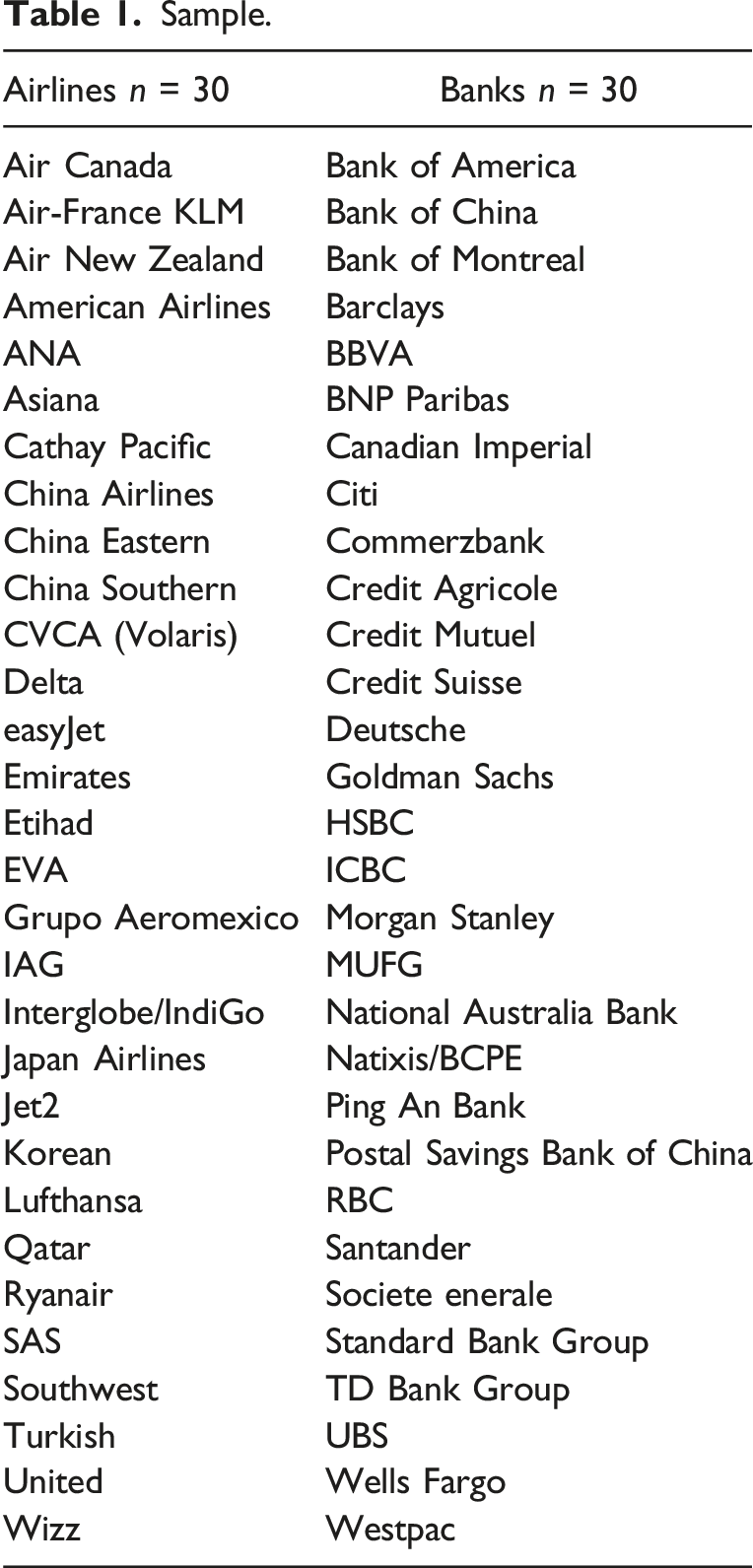
We analyse 60 large multinational firms, 30 each from the airline and banking industries, which provide evidence that companies have begun incorporating ESG ratings targets into executive compensation contracts. The aviation and banking industries are selected due to the salience of their sustainability risks and impacts, widespread sustainability reporting, and the likely prominence of ESG-linked compensation as a result.
Sample.
Case Study Findings
Mitsubishi UFJ Financial Group (MUFG) reports in its 2023 Sustainability Report that ‘the degree of improvement in external ratings granted by the five major ESG rating agencies (MSCI, FTSE, Russell, Sustainalytics, S&P Dow Jones, and CDP)’ is considered when determining executive pay (MUFG, 2023, p. 63). The earliest mention of this practice we can find in MUFG’s corporate publications is in its 2021 Integrated Report, in which it states that ‘ESG-related external ratings’ are ‘a new Key Performance Indicator for all executive officers, tied to their remuneration’ (MUFG, 2021, p. 10). MUFG is the only bank in our sample for which we find evidence of ratings-linked compensation. Cohen et al. (2023) find that Standard Bank Group (SBG) included MSCI ESG ratings in executive pay determination in 2020, but we find no reference to this in SBG’s 2023 disclosures.
Three of the thirty airlines we study report that ratings are employed as performance metrics when determining compensation for executives and/or senior managers. Japan Airlines include ‘Rating based on the number of selected representative ESG issues (DJSI World Index, FTSE Blossom Japan Index, APEX WORLD CLASS, CDP A-, and MSCI WIN)’ in their environmental performance metrics which determine executive pay (Japan Airlines, 2024, p. 105). The earliest mention of ratings-linked compensation by Japan Airlines appears in its 2023 Integrated Report, suggesting this is a recent addition to the company’s compensation plan (Japan Airlines, 2023, p. 36). easyJet also refer to ratings-linked compensation in its 2023 Annual Report, disclosing that ‘Improved ESG performance evidenced through ratings scores and external assessment’ is considered when determining the variable pay awarded to its CEO and CFO, though the specific rating agencies included are not reported (easyJet, 2023, p. 122/123). To our knowledge, the 2023 Annual Report is the first in which easyJet report this practice, suggesting easyJet likewise first included ratings in executive pay in 2022 or 2023. Neither Japan Airlines nor easyJet provide in-depth detail on how ratings performance is weighted in the overall determination of executive pay.
Ryanair provide an example of more detailed disclosure on ratings-linked compensation. Ryanair’s 2024 Sustainability Report includes the disclosure that ‘Senior management’s short and long-term variable pay is linked to the Group’s ESG performance. The current KPIs include key environmental targets (such as the achievement of a CDP “A” rating)’ (Ryanair, 2024, p. 57). Ryanair appear to have instigated this practice in 2021, and greater detail is reported in Ryanair’s (2021) Annual Report. The target of improving the CDP grade from a B- in 2021 to an A- or better over the subsequent 3 years accounts for 20% of conditional share options granted for senior managers in April 2021. The market value of these grants was estimated in the Report as ‘between 20% and 100% of base salary for participants’ (Ryanair, 2021, p. 153), so the incentive here is substantial. Ryanair’s reporting practices here deserve praise, as it is very clear what metric is being used to monitor executive performance and what proportion of variable compensation is accounted for by this metric. As such, this aligns with the transparency and reviewability criteria included in best practice recommendations. However, broader literature on ESG ratings in general, and CDP grades in particular, suggests that the CDP grade may not be an accurate indicator of environmental or climate-related performance. These shortcomings are detailed as part of our broader critique in section 6 below.
Four of the companies in this sample explicitly report that they include ratings targets in remuneration plans. While the practice is not yet widespread, all of the companies which use ratings in compensation criteria have only begun doing so since 2021, if not more recently. 47 of the 60 firms in the sample (22 of 30 airlines and 25 of 30 banks) make some reference to ESG ratings in their reporting, with many including multiple ratings scores to highlight their ESG performance. Thus, while the proportion of our sample linking executive pay to ESG ratings is yet relatively small, all of the companies which do so have only very recently introduced this practice, and the vast majority of firms in the sample clearly engage with and report on third-party ESG ratings. Coupled with the pressure on companies to deliver more objective and transparent metrics in this context, as described in sections 3 and 4, it is possible that this trend will grow further and boards may increasingly turn to ESG ratings for performance metrics when tying executive pay to environmental and social goals. It is, therefore, crucial that boards, shareholders, researchers, and other stakeholders establish a full critical understanding of ratings as performance metrics in this context, and that shareholders and broader stakeholder groups monitor any increasing use of ratings in compensation contracts. The examples of ratings-linked compensation we identify in this sample are detailed below.
Problems With Current ESG Ratings as Performance Metrics
While third-party ESG ratings offer the prospect of transparent, easily monitored metrics, and thus appear to meet the reviewability criteria prescribed by Bebchuk and Tallarita (2022), there are a number of critical shortcomings in existing ratings data and the current ratings market which undermine the suitability of available ratings as performance metrics for executive compensation plans. We detail these below, illustrating in several cases using the examples identified in section 5. The critical issues we identify from the ESG ratings literature, and their relevance for compensation plans, are: the divergence of ratings across providers, coupled with the opacity of many rating methodologies, which fundamentally limit the external reviewability of ratings as performance metrics; the failure of ratings to reflect impact and investment data, and thus their misalignment with actual sustainability performance as understood by investors and stakeholders; and the susceptibility of ratings to manipulation by executives and managers, which may also divorce ratings assessments from underlying performance and enable the achievement of incentive targets without actual improvements in impact or risk metrics.
Ratings Divergence
It is widely acknowledged that scores assigned to a company by different rating agencies often differ substantially, both at the level of aggregate ESG scores and scores relating to specific issues, such as GHG emissions or employee engagement (e.g. Berg et al., 2022; Capizzi et al., 2021; Cregan et al., 2024a). As available rating methodologies are, in most cases, quite opaque or generic, it is often unlikely to be possible for investors or other stakeholders to evaluate whether the specific rating included in an executive pay plan is the most suitable. Furthermore, where companies include multiple ratings in the determination of executive pay, it is possible that the ratings will conflict. We can illustrate this problem by reference to the use of multiple ratings by MUFG. MUFG reports that it considers multiple ESG ratings when determining executive pay, including scores from MSCI, CDP, and FTSE Russell. Exploring each rating agency’s assessment of MUFG’s climate performance can help demonstrate the confusion which may be created by ratings divergence in this context. At the time of writing, the most recent CDP climate change grade for MUFG was an A- (awarded for the year 2024), which places MUFG in the ‘leadership’ category of corporate climate disclosure and performance. FTSE Russell includes MUFG in its ‘ESG Low Carbon Select’ index as of November 2024 (LSEG, 2024), again suggesting it is a leading bank in this context. The evaluation by MSCI as of November 2024, on the other hand, states that MUFG is ‘misaligned’ with a 2050 net-zero pathway – the second worst descriptive rating for net-zero alignment from MSCI – and is only ‘average’ in its performance on ‘financing environmental impact’ (MSCI, 2024). While ESG performance for banks goes beyond climate issues alone, the differences in these climate-related assessments exemplifies the variation across rating agencies in their evaluation of firm-level performance on key issues. Including all three ratings in the determination of executive compensation criteria will surely introduce considerable noise and confusion into the process. Even if MUFG were to select a single rating for inclusion, publicly available documentation on rating methodologies are (in general) quite generic and similar in their contents. As such, the ability of even sophisticated investors to evaluate the suitability of the rating selected is quite limited, unless they have recourse to more detailed underlying data from the rated company. The combined effects of ratings divergence and a lack of methodological clarity can therefore undermine the reviewability and credibility of ratings as performance metrics in executive compensation schemes.
Ratings’ Failure to Reflect Impact and Investment Metrics
It has been demonstrated in several studies that key scores within ESG ratings fail in many contexts to reflect objective impact and investment data. For example, it has been shown that climate-themed and emissions-themed scores from prominent rating agencies bear very little relationship with total GHG emissions and GHG intensities for firms in the airline and steel industries (Cregan et al., 2024a, 2024b), and that environmental and climate-themed scores for financial institutions do not consistently reflect lending and underwriting activity in fossil fuel industries, or levels of sustainable finance (Cregan et al., 2024c). Kalesnik et al. (2022) likewise show in a large sample of listed companies that emissions scores from prominent rating agencies do not predict future changes in firm-level GHG emissions.
We showed in section 5 that major international airlines Ryanair, EasyJet, and Japan Airlines link executive pay to third-party ratings performance – the CDP grade in the case of Ryanair, scores from MSCI, CDP, DJSI, and FTSE in the case of Japan Airlines, and multiple unnamed ratings in the case of easyJet. However, it has been shown that climate-themed scores from leading providers, including CDP and MSCI, fail to reflect firm-level GHG emissions and GHG intensity data for airlines (Cregan et al., 2024a). While it is reasonable for companies, investors, consumers, and other stakeholders to expect that corporate climate ratings will, at least to some extent, reflect actual emissions and emissions intensity data, there is considerable evidence that this is not the case. A cynic would note that it is likely to be far easier to improve a rating than it is to achieve reductions in more objective metrics of, for example, emissions intensity (though Ryanair and easyJet are already among the least carbon-intensive airlines per passenger-km in the world). Some ratings, in theory, may reflect the quality and robustness of a company’s emissions reduction strategy and, thus, its future performance in this regard, thereby justifying inclusion as performance metrics. However, here again, the divergence of ratings across providers and the opaqueness of rating methodologies become problematic. The variation in rankings and scores from different rating agencies, and a lack of detail in most available methodology documents, mean that it is extremely difficult for shareholders and other stakeholders to evaluate whether a rating included as a performance metric is a valid and accurate forward-looking indicator of performance. This again undermines the fundamental criterion of reviewability which is widely considered a necessary feature of robust executive compensation mechanisms (Bebchuk & Tallarita, 2022).
The Susceptibility of Ratings to Manipulation
A further potential problem with ratings-linked compensation is that managers may be able to manipulate ratings evaluations, potentially improving scores and thus increasing their income without improving actual performance on the environmental or social issues being targeted. This maps directly on to the broader CEO compensation literature, outlined briefly in section 2, which identifies a range of methods by which managers may influence performance metrics in order to increase their own income without necessarily improving performance. In the context of ESG ratings, there are two methods by which executives may manipulate a ratings-based performance measure. The first form this may take is influencing the choice of rating included in the compensation criteria. As discussed above, it is well-established that a company’s ratings can vary substantially across providers, with scores and rankings often changing significantly from one provider to the next (Berg et al., 2022; Capizzi et al., 2021; Cregan et al., 2024a). Executives may be able to influence the selection of the rating included in remuneration criteria to choose a rating in which the firm is more likely to perform well, which is easier for the firm to improve, or which is more open to direct influence by executives themselves.
Second, and flowing closely from this first point, some ratings may be open to manipulation by executives and managers, particularly those ratings which rely on information provided directly by firms. It has been shown that certain ESG ratings (specifically the CDP) may be manipulated via strategic disclosure practices (Callery, 2023; Callery & Perkins, 2021). This could subject the Ryanair case detailed in section 5 to scrutiny as it included CDP grade improvement as the key environmental performance indicator in a conditional share option grant for senior managers. Concerns have also been raised about conflicts of interest in the rating industry, and the potential for firms to obtain better ratings as a result of maintaining broader business relationships with rating providers (European Commission, 2024; Securities & Exchange Commission, 2022). Furthermore, it has been noted that ratings may reward disclosure volume in itself (e.g. Drempetic et al., 2020). As such, it may be possible for executives and managers to achieve better ratings by directing resources towards particular disclosure activities, or by simply increasing the volume of sustainability disclosure, thus achieving rating improvement targets without actually improving underlying performance on key sustainability issues.
Conclusion and Recommendations
This paper identifies an emerging practice of including third-party ESG ratings targets in executive and management compensation criteria, and synthesises extant literature to detail critical shortcomings in existing ratings as performance metrics in this regard. Whilst ESG-linked compensation plans are increasingly common among large companies, existing schemes are strongly criticised by researchers and asset managers due the vagueness and subjectivity of the many ESG targets and performance criteria, with pressure now mounting on companies to identify more objective and reviewable performance metrics in this regard. We study the disclosures of large multinational firms in the airline and banking industries, identifying a number of companies that have recently adopted ESG ratings as performance metrics for executives and senior managers. Though it may appear that ratings offer ostensibly independent and objective indicators in this context, we posit that key findings in the literature, namely, ratings divergence, the opacity of most rating methodologies, and the failure of ratings to reflect key impact and investment metrics, may undermine the reviewability and thus credibility of ratings-based compensation for shareholders and other stakeholder groups. Furthermore, existing ratings may be susceptible to manipulation by managers and executives. As such, relying on ratings such as ESG performance metrics for sustainability issues may be ineffective and could even incentivise manipulation such that executives and managers can achieve compensation targets without improving underlying performance.
We recommend that companies focus on objective measures of impact and investment when incorporating ESG factors into compensation criteria, rather than third-party rating assessments. For example, airlines may include measures of GHG emissions and intensity (as many do), or metrics oriented towards future emissions reduction, such as the amount of sustainable aviation fuel (SAF) secured under contract. In the social and governance pillar, airlines may prioritise health and safety metrics or employee training and progression metrics. Banks likewise may focus on objective measures such as the amount of lending and underwriting in particular sectors, either as a % of the bank’s total or in absolute $ amounts, or on governance metrics such as the number of data security breaches or the monetary costs of legal action associated with corruption or fraud.
EU legislation, such as the Corporate Sustainability Reporting Directive (CSRD) and the associated European Sustainability Reporting Standards (ESRS), offers a range of metrics which boards can consider in this regard and can be expected to drive an uptick in related reporting. Internationally recognised frameworks such as the Global Reporting Initiative (GRI), Sustainability Accounting Standards Board (SASB), and International Sustainability Standards Board (ISSB) all likewise offer (often overlapping) sets of metrics which boards can adopt. If companies do decide to include rating targets in compensation criteria, we recommend that they clearly disclose the rationale for selecting a particular rating, acknowledging the potential shortcomings and conflicts inherent in the ratings industry at present, and detailing why the specific rating included is considered to be particularly relevant or accurate in the company’s own context.
Ultimately, if material ESG factors, particularly those related to climate, are to be effectively incorporated into incentive packages for executives and managers, it is essential that this is done in a manner which is transparent and, ultimately, effective. If performance metrics are selected which are difficult to monitor and review, then shareholder support for, and trust in, sustainability-linked compensation policies will diminish. Furthermore, if performance metrics are open to manipulation, or are simply not accurate indicators of actual impact and risk, then managers may be able to achieve targets without improving underlying performance on critical sustainability issues. This can potentially weaken a company’s strategic position and heighten its exposure to future ESG risks, while simultaneously reducing shareholder value and investor confidence in the company’s corporate governance. Relying on third-party ratings, as they are presently constituted, could fundamentally undermine and damage the credibility and effectiveness of sustainability-linked compensation practices.
Footnotes
Author Contributions
Charlie Cregan: conceptualisation, investigation, formal analysis, methodology, writing – layout, original full draft, and review and editing. J. Andrew Kelly: supervision and writing – review and editing. J. Peter Clinch: conceptualisation, supervision, writing – review and editing, and funding acquisition.
Declaration of Conflicting Interests
The author(s) declared no potential conflicts of interest with respect to the research, authorship, and/or publication of this article.
Funding
The author(s) disclosed receipt of the following financial support for the research, authorship, and/or publication of this article: This research was funded by the Environmental Protection Agency of Ireland and University College Dublin.

Data Availability Statement
All corporate reports analysed in this paper are publicly available.