




Abstract
When accidents occur, employees rely on the workers' compensation system to provide continuing wages and medical benefits. This study addresses a fundamental workers’ compensation gap—the lack of an Employee Workers’ Compensation Experience (EWCE) scale. While current metrics monitor direct costs, they often overlook the psycho-social impacts on employees. The study introduces a structured EWCE scale that encompasses dimensions of claim communication, psychological and emotional impacts, and uncertainty regarding the claim outcome. The EWCE scales relevance is emphasized by its ability to predict turnover intentions, burnout, and obligations to come to work sick outcomes. Discriminate, convergent, and predictive validity tests corroborate the scales' effectiveness. These findings allow employers, policymakers, and researchers to create a safer, more inclusive work environment by measuring and monitoring workers' compensation claim outcomes. This scale bridges the critical knowledge gap and offers an analytical tool to enhance workers' compensation policies and outcomes.
Keywords
Today’s economy depends mainly on the labor force. Without employees, there is no societal advancement, no innovation, and, worst of all, no progress. However, the nature of the workplace is complex, with many challenging aspects, such as worker well-being compared to productivity (Wright & Cropanzano, 2000), psychological safety and innovation (Clark, 2020), and burnout to turnover intentions (Kim & Stoner, 2008). However, workers' compensation is one essential law that safeguards employees’ self-interest (Kyung et al., 2023). Workers' compensation provides financial support and medical benefits to injured workers while in the scope of their employment (Strunin & Boden, 2004). While it may differ amongst the states, there are common elements to reduce the financial consequences and uncertainty in the workplace (Fishback & Kantor, 1998).
Notwithstanding all the metrics available from the National Council of Compensation Insurance (NCCI) and the steady advancement of safety practices from the Occupational Safety & Health Administration (OSHA), a constant and significant gap emanates from within these data sources—the absence of an employee’s workers’ compensation experiences (EWCE). There is no standard framework to establish an employee workers' compensation experience score. While several metrics exist to evaluate the efficacy of workers' compensation policies from a macroeconomic perspective, such as claim frequency and cost analysis, these metrics largely overlook the experience of injured employees and their interactions with the compensation process. This paper asserts that an EWCE scale is imperative for a more holistic understanding of the impacts of employee injuries and diseases within the scope of their employment.
Most workers’ compensation tracking systems focus on quantitative measurements, such as medical costs, employee wages, and general claim expenses (OSHA, n.d.). While these metrics help monitor direct costs to the system, they don’t adequately measure the indirect or intangible costs—the employee’s psycho-social perspective. There is a need to recognize workplace accidents' emotional, psychological, and social impacts on employees (Singer, 2023). Being capable of measuring employees’ workers' compensation experiences may be beneficial in reducing employee turnover after an accident.
Employees who feel unsafe being themselves and pressured to perform in hazardous work conditions will likely leave their organization (Probst & Graso, 2013; Vaida & Ardelean, 2019). Workplace accidents are significant costs to employers—on average, USD 1,080 per working employee (Work Injury Costs, 2023). The direct and indirect costs of losing employees may be much higher. Workplace accidents in 2021 were 2.3 cases per 100 full-time employees (Bureau of Labor Statistics, 2022). Whether or not your employee remains after a workplace accident is worth exploring (Tei-Tominaga & Nakanishi, 2020).
We introduce an employee workers’ compensation experience scale intending to fill the void by providing a structured hierarchical framework. This structured framework will allow users to assess the subjective dimensions of the employees’ experience within the confines of the workers’ compensation system. The scale accounts for factors such as clarity of communication during the claims process, the psychological and emotional impacts of the claim, and the uncertainty and concern associated with the claim.
This paper contributes to the limited literature on workers' compensation by highlighting the significance of employee experience within the workers' compensation system. We also advocate for creating and adopting a standardized scale for measuring employee experiences. The proposed scale is a multi-dimensional tool for evaluating the qualitative and quantitative aspects of injured workers' interactions with the workers' compensation system. This scale development facilitates a new opportunity for researchers, policymakers, legal experts, and stakeholders to re-evaluate their effectiveness in managing the workers' compensation program. This scale has universal implications as it is not centered around any specific industry, nationality, or jurisdictional variations. Any national employer or insurer could use the posited scale to measure workers’ compensation claimant’s experience to target improvement of services rendered to injured employees.
In summary, this paper reasons that a comprehensive evaluation of the employee experience within the workers’ compensation system is necessary for advancing the effectiveness and fairness of the system. We advocate for developing and using an employee workers' compensation experience scale. This development aims to contribute to a more empathetic and holistic perspective of employees' challenges in the workers’ compensation system. Empowered with this knowledge, policymakers and business owners may foster better outcomes and promote a safer and more supportive environment for everyone.
Theoretical Justification
Workers’ compensation systems globally provide financial and medical support to employees who suffer from work-related injuries or illnesses. Now, employers are primarily responsible for paying for these injuries (Sengupta et al., 2012), often through an insurance company or third-party administrator (TPA). Workers' compensation is often viewed negatively because of the financial burdens placed on employers (Fishback & Kantor, 1998). While much data is generated from the workers' compensation system, most of that information centers around quantitative metrics like claims costs, accident rates, and litigation rates (Utterback & Schnorr, 2010). The employee—that is, the injured worker—is the one who is often marginalized from the system, due to their voice not being heard. This literature review aims to expound upon the limited research in this area, as well as to justify the workers’ compensation experience scale. It is our intention to shed light on this topic and explore the factors that might influence employees’ workers’ compensation experience.
Numerous studies have expanded upon the impact of psychological and emotional harm produced by work-related injuries (Barling & Frone, 2004; Christian et al., 2009; Hilton & Whiteford, 2010). After talking with injured employees, several common themes emerged centered around the concern, frustration with communications, and stress from the impact of the injury. Since no scale exists to measure these dimensions, we constructed a list of factors to consider when creating a new scale.
Employee concern focuses on the intricate and overwhelming uncertainty around filing a claim, navigating the complexity of the claim, and compensation. The workers' compensation process is rather complex, regardless of geographical origins (Holley et al., 2015). Not all accidents involve workers' compensation claims ( Kyung et al., 2023); they identified that underreporting often occurs within the system. Understanding why this happens is beyond the scope of this paper, but understanding who files claims is necessary for promoting fairness and transparency. There are also challenges with navigating the claims process to return to work (MacEachen et al., 2010). Employees are also afraid of being looked at differently from others (Strunin & Boden, 2004) and whether their job will be safe (Lippel, 2012). These elements are present in the overall posited scale.
The second component of the scale is claim’s communication. Communication shortcomings often affect employees (Barrett, 2002; Feeley & Barnett, 1997; Lee, 2021). Knowing who to talk to is challenging in the workers' compensation process (Holley et al., 2015). However, involving the employee seems obvious in improving this dimension (Ariss, 2002). Workers’ compensation communication could be another study by itself. The dimension proposed places the employee at the center of the communication network. The items include how employees perceive communication from their employer, the claim’s adjuster, coworkers, and healthcare providers.
The final component of the prescribed scale is impact. These items focus on elements of fear based on Lippel’s (2012) dignity perspective. Employee perception of how they are viewed in the compensation system, social support, and by their employer is essential to consider when examining overall well-being. There will likely be significant impacts if employees feel afraid during recovery or returning to work. This scale provides insights into how employee perceptions influence their experience.
As stated earlier, no established framework exists for an employee workers’ compensation experience scale. Many studies do not consider this perspective. Instead, they focus on legal or financial outcomes. Incorporating the voice of the injured workers will provide a deeper understanding of their needs, challenges, and, hopefully, suggestions on how to improve the system for everyone. Claim concerns are focused on the process, paperwork, and pay of the employee. Claim communication measures effective communication from all stakeholders during the claims process, ensuring employee expectations and understanding are met. Finally, claim impact measures the mental well-being caused by the injury or illness, with an employee’s focused perspective.
By addressing the complexity of the workers' compensation system and the employee's needs, it is possible to improve the outcomes for others. The EWCE scale is bridging a known gap in the workers' compensation arena. This paper established three dimensions of investigation within the EWCE scale. These dimensions could improve employee well-being, recommend policy changes to improve outcomes, and contribute to the overall effectiveness of a complex system. Researchers will also have an opportunity to open new areas of exploration within the field of workplace accidents, occupational injuries, and workers' compensation systems.
Methods
Participants
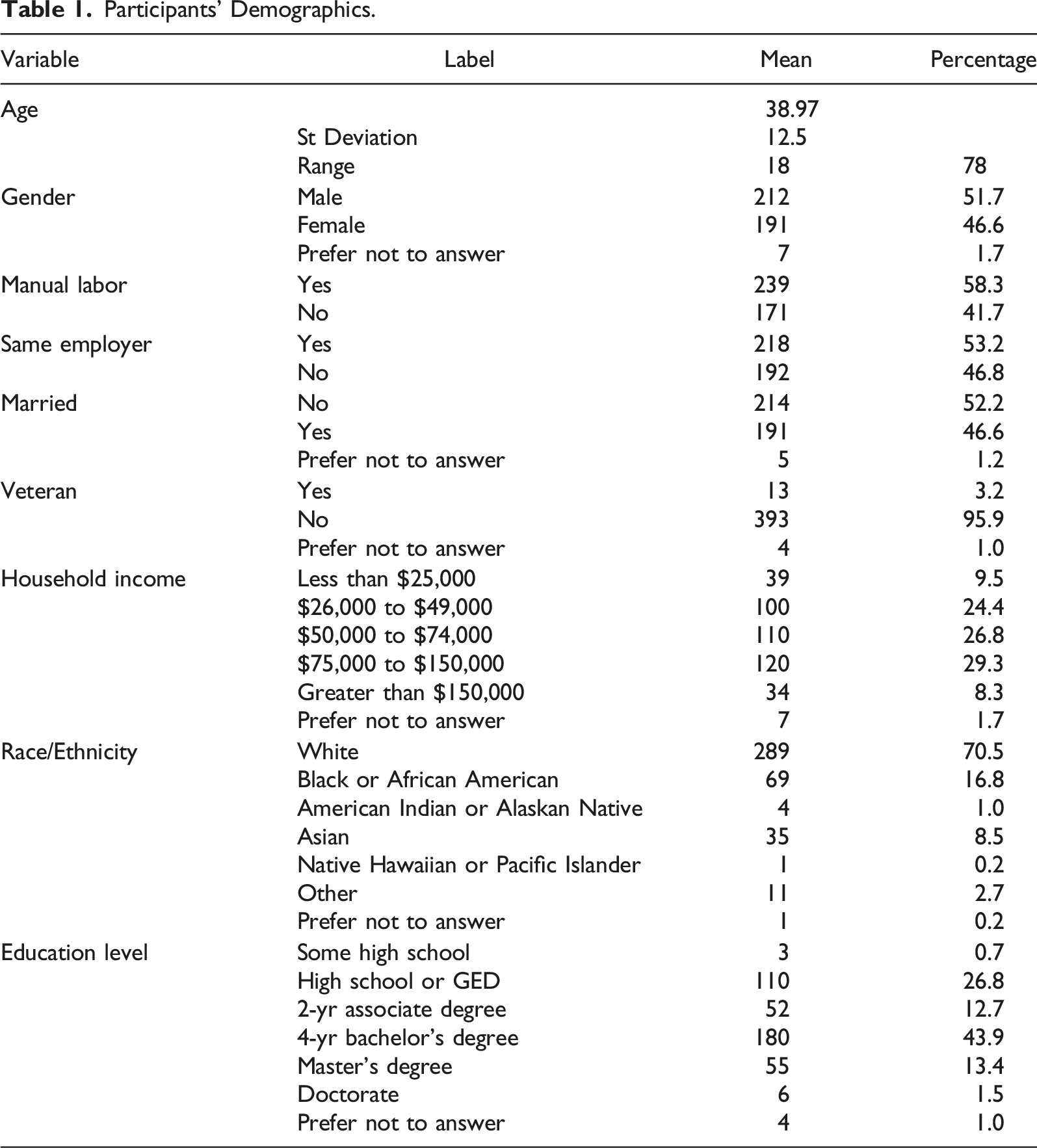
Participants’ Demographics.
Instrument
The employee workers’ compensation experience scales was created using DeVellis's (2017) established theory and process. To ensure the content validity for an EWCE scale, we surveyed and captured over 200 unique responses to two questions. 1. What do you wish your employer knew about your workers’ compensation claim? 2. What do you wish you had understood before your workers' compensation claim?
From these questions, five common themes emerged from the text. These five common themes supported our scale items for testing. The five themes are process, prestige, pay, paperwork, and protection. From this qualitative feedback, we could confidently establish the content validity of the scale items.
Results of the Exploratory Factor Analysis and Item Analysis.
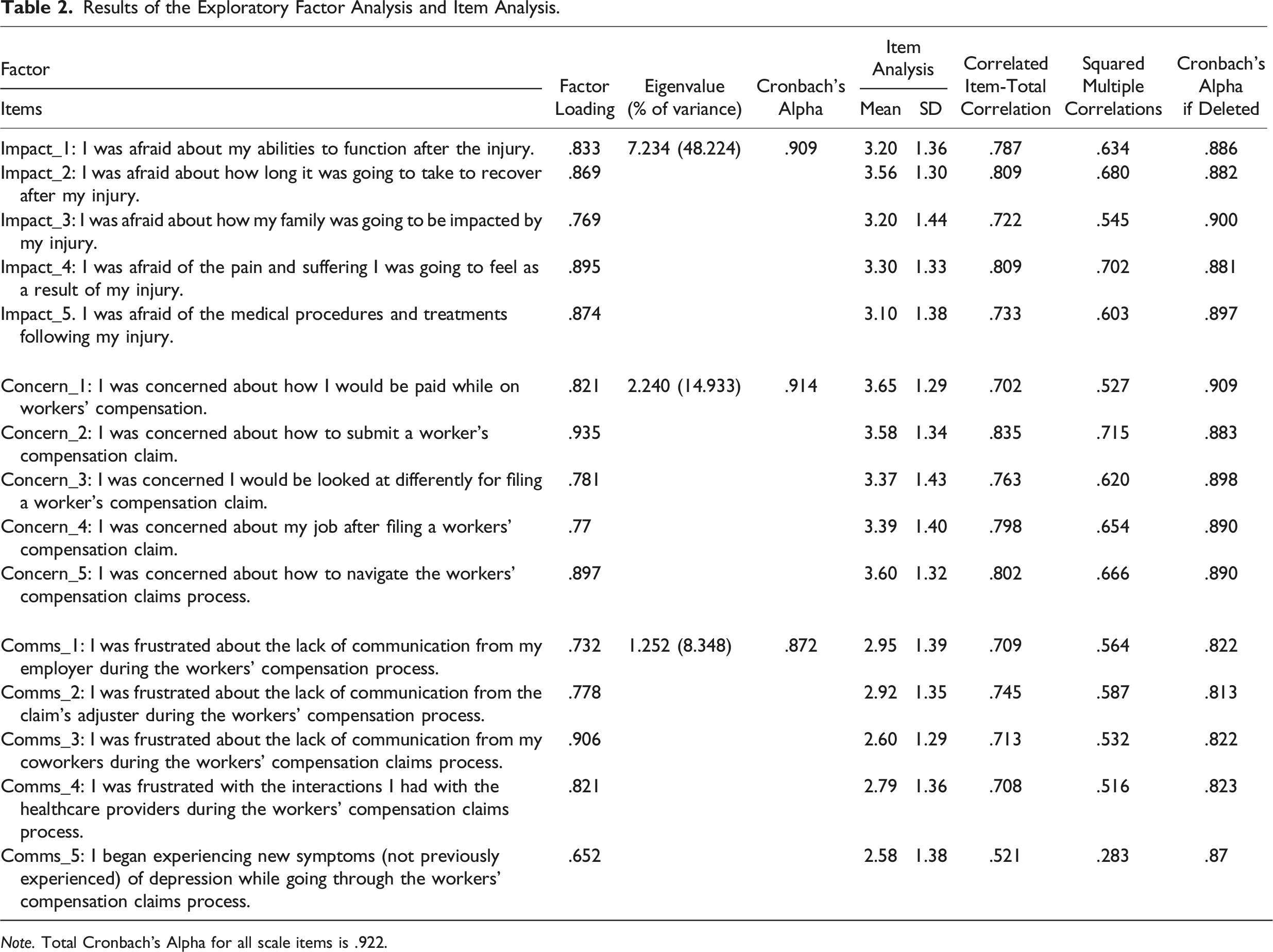
Note. Total Cronbach's Alpha for all scale items is .922.
Results
Exploratory Factor Analysis
First, we conducted an exploratory factor analysis (EFA) compared to a principal component analysis because of the shared variance among the variables (Carpenter, 2018). Using SPSS 29.0, we ran the exploratory factor analysis with an oblique rotation method (Promax). Promax rotation is preferred for this type of analysis since it begins as an orthogonal solution and then transforms into an oblique solution (Hendrickson & White, 1964; Thompson, 2004). The overall model is significant (Kaiser–Meyer–Olkin = .917; Bartlett’s Test of Sphericity = 4155.420, p < .001) (Costello & Osborne, 2005). The cut-off criterion was .32, as recommended by Carpenter (2018). The scree test elbow indicated a cutoff at three factors, which Preacher and MacCallum (2003) indicate is as reliable as an eigenvalue rule.
Factor Correlation Matrix.
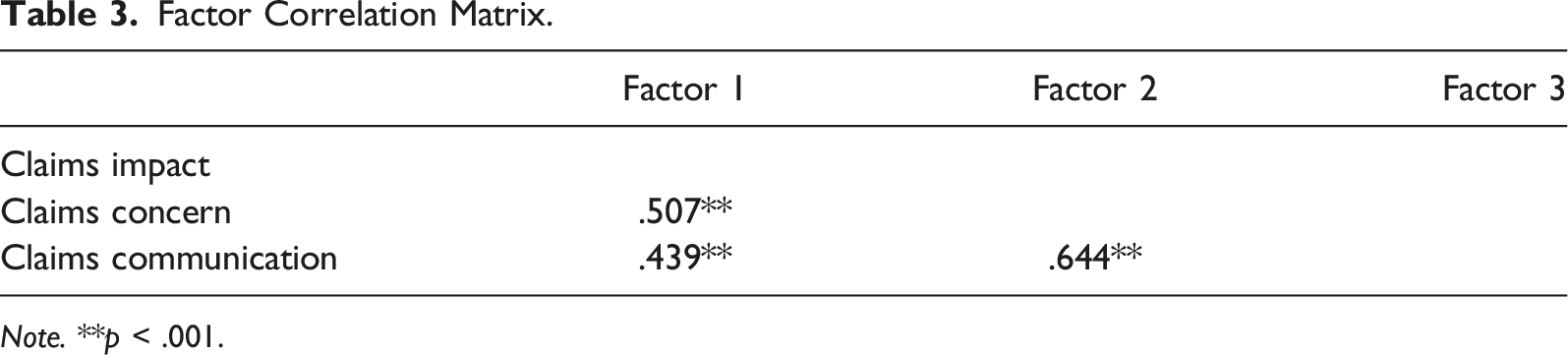
Note. **p < .001.
Confirmatory Factor Analysis
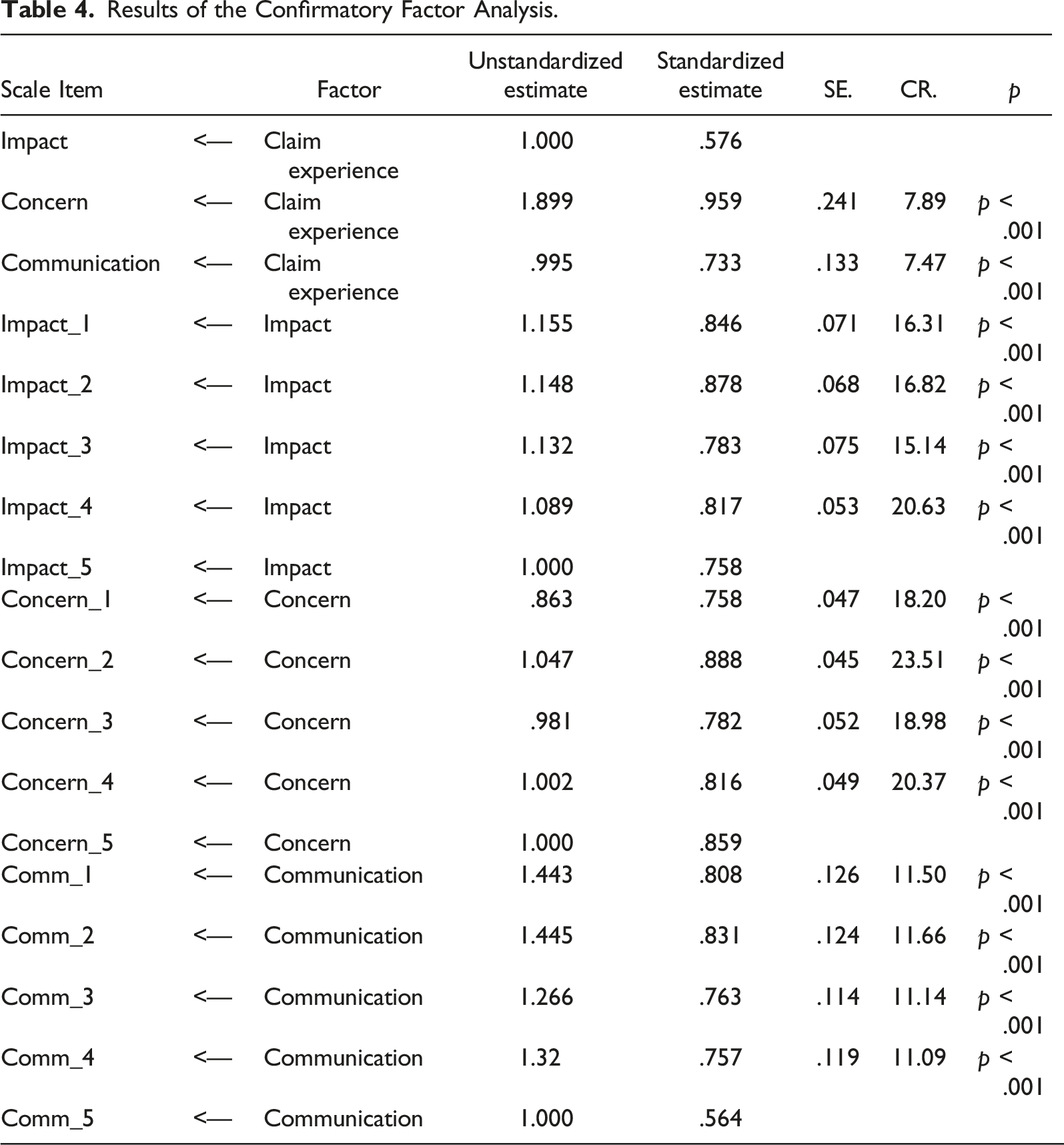
To establish the workers' compensation experience scale, we conducted a second-order Confirmatory Factor Analysis (CFA). The initial results had a chi-square/degree of freedom result over 5.0, and the chosen fit indexes were below .90, which indicated a poor model fit. The modification index was compared to the required values of TLI and CFI. Two items had covariance loadings on the error term above 4.0, so we covaried items 4 & 5 on claims impact and items 3 & 4 on the concern construct, which improved the overall model. Figure 1 includes the covaried loadings on the items. Results of the hierarchical confirmatory factor analysis.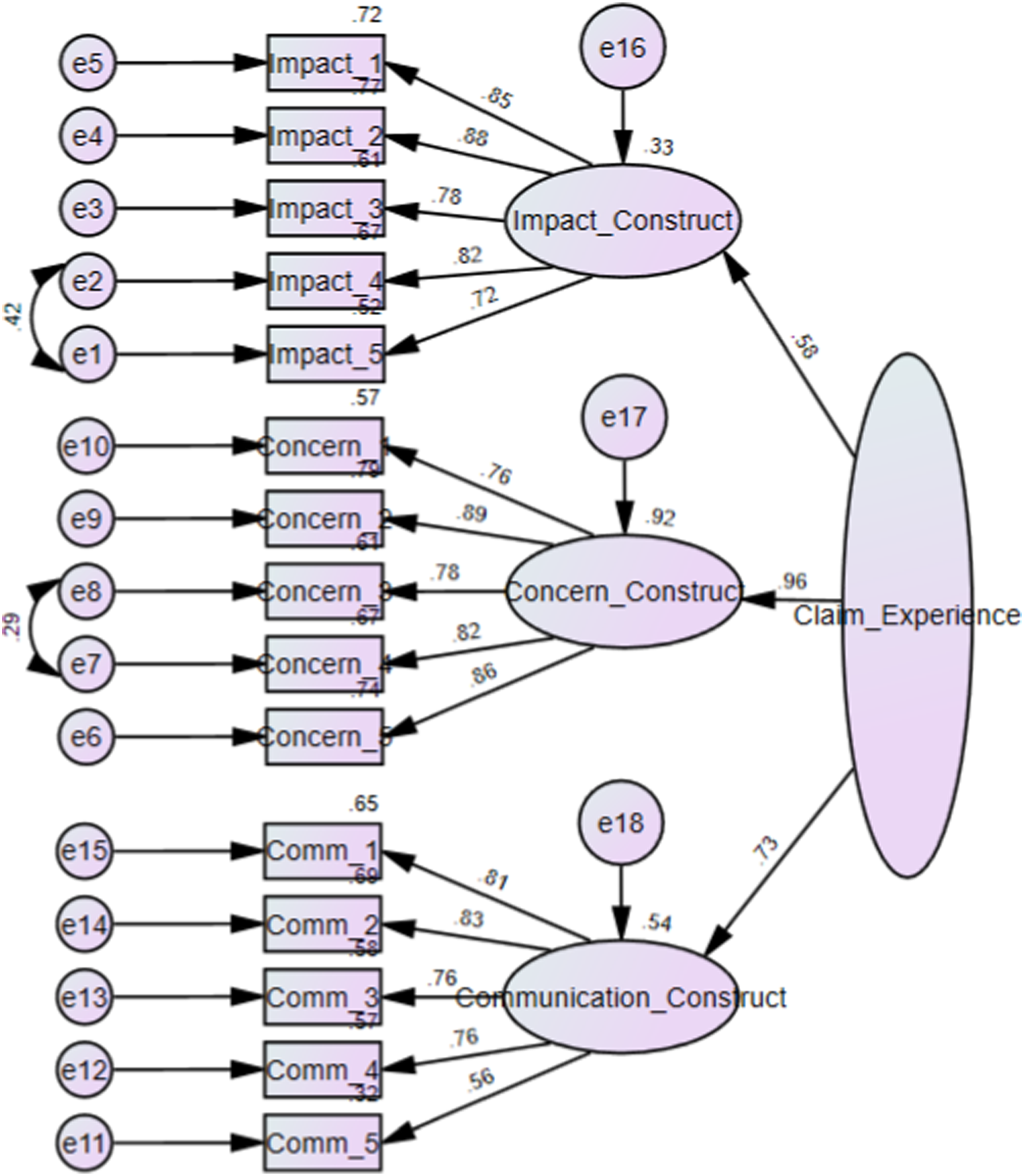
Figure 1 shows the CFA structure and standardized estimates. The overall goodness of the fit scale was good (x 2 (85) = 212.719, p < .001, x 2 /df = 2.503, GFI = .935, CFI = .969, TLI = .962, RMSEA = .061). The chi-square/degree of freedom is acceptable at 2.503, as anything less than 3 is acceptable (Kline, 2011). The goodness of fit (GFI) index is acceptable (<.90) (Kline, 2011). The comparative fit index (CFI) is excellent when the index is above .95 (Hu & Bentler, 1999; West et al., 2012). The Tucker–Lewis Index (TLI) is acceptable when the index is above .90 (Tucker & Lewis, 1973). The root means square error of approximation (RMSEA) is an acceptable fit when below .08 (Hu & Bentler, 1999). The standardized root means square error of approximation (SRMR) IS .0442, which was also acceptable by Hu and Bentler (1999).
Results of the Confirmatory Factor Analysis.
Item Analysis
Table 2 displays the fifteen items used in the EFA. The fifteen items were examined for “correlated item-total correlation” and “squared multiple correlations.” The correlated item-total correlation indicator measures the correlation between items and the sum of the remaining items. The score should be greater than .20 (Murphy & Davidshofer, 2005). The squared multiple correlations measure association between an item and the remaining items. A perfected correlation is 1.0. Thus, there is no difference or uniqueness between the items. The range of scores between correlated item-total correlations is .52–.84. The squared multiple correlation results range from .28 to .72.
Reliability of the Scale
Cronbach’s α was used to measure internal consistency. The alpha scores were good for the three constructs: concern (α = .914), communication (α = .872), and impact (α = .909). The overall scale with all items included is .922. These findings support good internal consistency with the established scale.
Validity of the Scale
Heterotrait–Monotrait Ratio of Correlations.

Convergent Validity
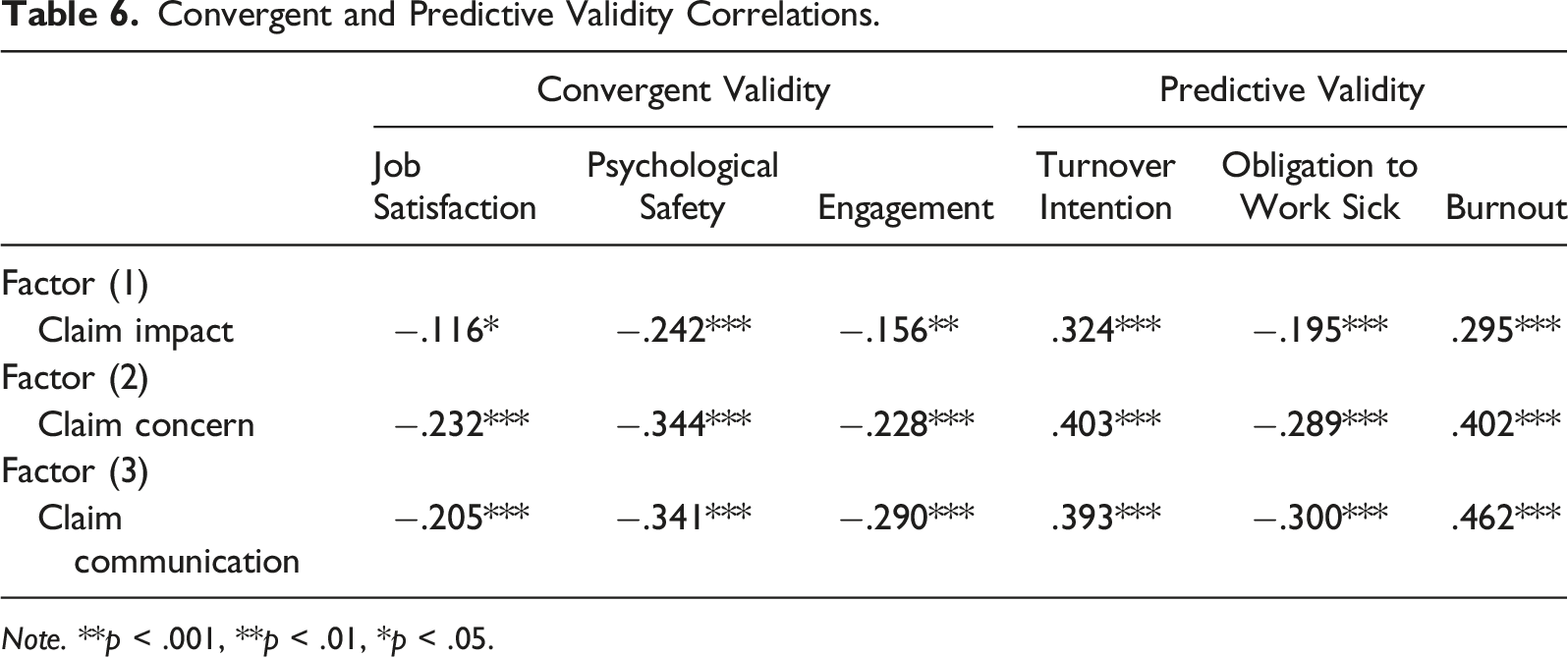
Convergent and Predictive Validity Correlations.
Note. **p < .001, **p < .01, *p < .05.
Consistent with theoretical expectations, the results display statistically significant associations between the factors and outcome variables. Claim impact is negatively associated with job satisfaction (r = −.116, p < .05), psychological safety (r = −.242, p < .001), and engagement (r = −.156, p < .001). Claim concern is negatively associated with job satisfaction (r = −.232, p < .001), psychological safety (r = −.344, p < .001), and engagement (r = −.228, p < .001). Claim communication is negatively associated with job satisfaction (r = −.205, p < .001), psychological safety (r = −.341, p < .001), and engagement (r = −.290, p < .001). These findings suggest that higher claim experience outcomes are associated with lower job satisfaction, psychological safety, and employee engagement. The consistent negative relationships support the convergent validity of the posited scale.
Predictive Validity
Predictive validity, also known as nomological validity (Morgado et al., 2017), is more of a practical consideration versus a scientific one, according to DeVellis (2017, p. 92). Predictive validity evaluates the extent to which a measurement item can accurately predict future outcomes that are expected to be related. This study aimed to assess the predictive validity of the employee workers’ compensation experience scale (EWCES) by examining its ability to predict employee-related outcomes, including turnover intention, obligation to work sick, and burnout.
To assess predictive validity, three established employee-related outcome variables were introduced into the model—turnover intentions (Dwivedi, 2015), obligation to work sick (Demerouti et al., 2009), and burnout (Rutherford et al., 2015). The correlation results of predictive validity are found in Table 6. The correlation analysis reports a statistically significant relationship between the posited constructs and the outcome variables. Claim impact is positively associated with turnover intention (r = .324, p < .001) and Burnout (r = .295, p < .001). Claim concern is positively associated with turnover intention (r = .403, p < .001) and Burnout (r = .402, p < .001). Claim communication is positively associated with turnover intention (r = .393, p < .001) and Burnout (r = .462, p < .001). Obligation to work sick is negatively associated with claim impact (r = −.195, p < .001), claim concern (r = −.289, p < .001), and claim communication (r = −.300, p < .001).
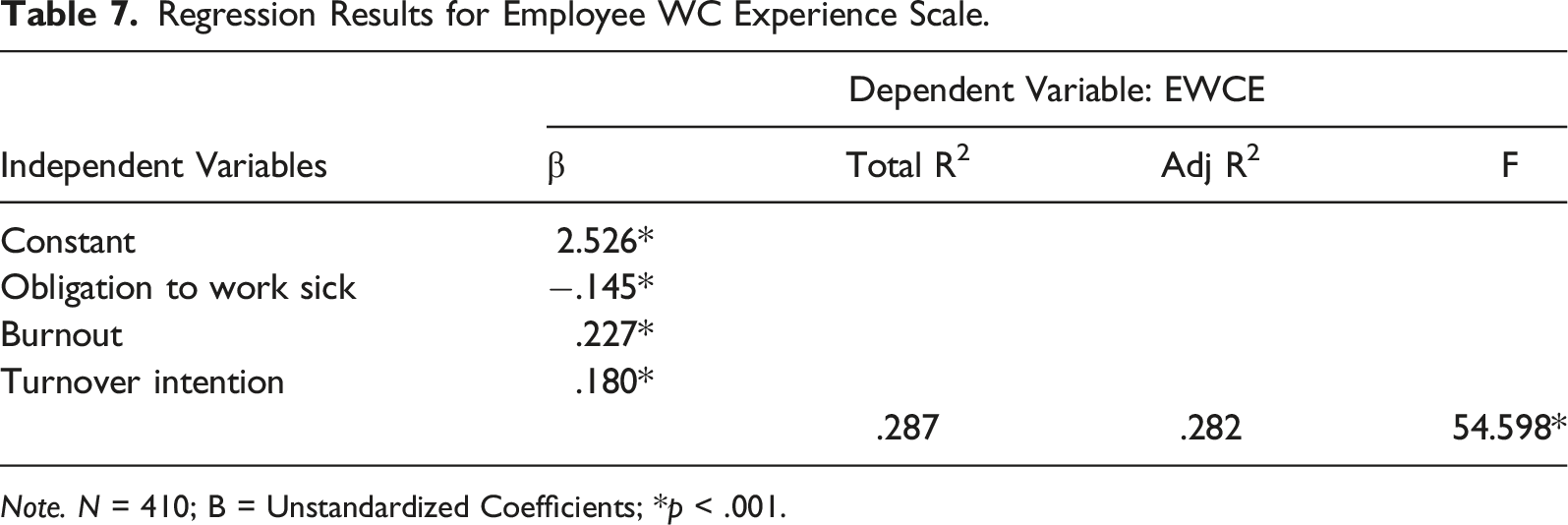
To extend these results (See Table 6), we conducted a multiple regression analysis that examined the relationship of the predictors (turnover intention, obligation to work sick, and burnout) to the dependent variable (EWCE). The model’s R-squared is .287, implying that the predictors explain approximately 28.7% of the dependent variable's variance.
The overall model is significant (F (3,406) = 54.598, p < .001). The Durbin–Watson statistic is 2.00, suggesting no significant autocorrelation between residuals. The regression model accounts for a significant portion of the total variance in the dependent variable EWCES. Obligation to work sick is significant (β = −.145 (p < .001), indicating for every one-unit increase in OCWS, EWCE decreases by .145 units. The burnout coefficient is .227 (p < .001), which suggests that every one-unit increase in burnout is associated with a .227 unit increase in ECWE. Turnover intention is also significant (β = .180, p < .001), which means for every one-unit increase in turnover intentions, a .180 increase in ECWE occurs.
Regression Results for Employee WC Experience Scale.
Note. N = 410; B = Unstandardized Coefficients; *p < .001.
Discussion
The present study aimed to develop and validate the employee workers' compensation experience scale. This scale measures the employee’s perceptions and experiences regarding their compensation claim. Through exploratory factor analysis (EFA), we identified a three-factor structure for EWCE, which presents a distinct dimension within the workers' compensation system. Those three factors are the claim’s concern, claim communication, and claim impact. The hierarchical structure of EWCE effectively captures the complexity of the workers' compensation system from the employee's perspective. The internal consistency demonstrated in the EWCE factors, as indicated by high Cronbach’s alpha values, suggests that the items within each factor consistently measure the intended underlying construct. The robust reliability of the scale enhances credibility. (Taber, 2018) There is confidence that this scale can be operationally deployed in future research projects.
The study examined the validity of the EWCE scale through various tests. To begin with, we established content validity through qualitative testing. This step helps ensure we consider all workers’ compensation system aspects. Next, we tested for discriminate validity by employing the Heterotrait–Monotrait ratio of correlations (Henseler et al., 2015). The results of the HTMT test supported the discriminate validity of the scale. We found significant relationships between the EWCE components and outcome variables (job satisfaction, psychological safety, and engagement). These significant findings support convergent validity, which suggests the construct measurements are theoretically behaving as expected within the known management research.
Predictive or nomological validity was demonstrated through correlation and multiple regression analysis. The EWCE effectively predicted the outcomes of turnover intention, the obligation to come to work sick, and burnout. The results are significant and are supported by previous findings. Employees who experience a workers' compensation claim are likelier to leave an organization (Hope & Mackin, 2007). Employees are not expected to be at work during the claim unless a modified duty assignment is made available (Bible et al., 2014). Burnout and workers' compensation have established connections (Shirom, 2003). The observed significant predictive factors suggest that the scale has theoretical and conceptual utility in forecasting employee behaviors and experiences while closely bound to the workers' compensation system.
The EWCES also provides practitioners and organizations with a novel opportunity to enhance and improve their workers' compensation processes. On average, 2 out of 100 full-time employees are injured annually (Bureau of Labor Statistics, 2022). The employer may have experience with workers’ compensation claims and expectation, but it is likely the employee is new to the claims process. Fear, because of inexperience, can certainly impact an employee’s perceptions. So, improving employees’ perception of the workers' compensation process could improve conditions within the workforce, especially following a workplace accident. Employers can also identify areas of concern through the scale, which could target intervention to address shortcomings and improve the overall well-being of their employees. The EWCES, as a predictive tool, provides evidence for anticipating employee behavior throughout the workers' compensation process. This tool could help foster a healthier and safer workplace for everyone.
This study has several limitations worth considering such as geography matters but not in this study. Where a workers' compensation claim occurs has some distinct advantages and disadvantages. The advantages are many states have similar structures and laws governing workers' compensation with some exceptions, such as North Dakota, Ohio, Wyoming, and Washington state, which are monopolistic workers' compensation states. A monopolistic workers’ compensation state is where a single state-run entity has exclusive control over the workers compensation system, thereby eliminating competition among private insurers. Regardless of who administers the workers' compensation program, employees still have the same federal statutes that govern a safe and retaliation-free workplace. For instance, the Occupational Safety and Health Administration’s worker rights and protection safeguards against any form of retaliation, while ensuring the workplace is free of any known hazards. The American with Disabilities Act requires employers to consider reasonable accommodations when engaging with an employee or perspective employee. The federal component helps strengthen this study, even though workers' compensation is a state law.
This study did not assess the industry or job classification of participants. Some jobs are more dangerous than others, such as sanitation waste technicians, construction workers, and nurses (Fasbender et al., 2019; Guo et al., 2016; Nagle, 2013). Some industries, such as oil-and-gas production, maritime, aviation, and public safety, are more dangerous than others (Hudson, 2003; Huntsman et al., 2021; Størkersen et al., 2017). Utilizing the EWCE scale in these professions or industries would provide a unique and exciting perspective of why and what these employees experience compared to safer industries.
The study was conducted with self-reported participants located throughout the United States. Self-reporting introduces the possibility of response bias and recall bias. This condition is evident in any investigation, not just this one, but it still should be addressed. The participants were presented with questions asking them to consider when they had the workers' compensation claim. The focus was on that period, not their overall employment perspective. This hopefully reduced the bias, and as noted from the analysis section, the scale is significant with each of the tests performed.
Future research should continue to explore and validate the EWCE across industries, organizations, and employers. Another study could explore a longitudinal study investigating the effects of workers' compensation experiences over time with different corrective or improvement actions. Finally, a study would examine organizational culture's moderating or mediating effects on workers' compensation outcomes as this would provide a deeper understanding of the indirect effects of workplace accidents.
Conclusion
In conclusion, the Employee Workers' Compensation Experience Scale demonstrated promising psychometric properties in capturing employees’ perspectives on the workers’ compensation process. EWCES development, validation, and regression analysis supported using the scale for future research endeavors. Through this contribution, new opportunities can be explored in measuring workers' vulnerabilities following workplace accidents.
By addressing the gap in research, the posited scale fills an immediate need to understand the employee’s perspective during the workers’ compensation claims process. The EWCES directly benefits various stakeholders, such as employers looking to retain injured employees, workers' compensation underwriters looking to improve their policyholder’s performance, and the state for addressing retaliation in the workplace because of workers’ compensation harassment. To accomplish this, it is suggested the results of the EWCES be reviewed by the respective agency for follow-up and/or further action.
Footnotes
Declaration of Conflicting Interests
The author(s) declared no potential conflicts of interest with respect to the research, authorship, and/or publication of this article.
Funding
The author(s) received no financial support for the research, authorship, and/or publication of this article.
