



Abstract
Bystander intervention has become a popular violence prevention strategy for various types of violence, from bullying to gun violence, but may also carry with it bystander burden. The purpose of this manuscript is to understand the impact of being a bystander (we use the term gun violence intervener) who takes action in situations of gun violence and risky gun use, both in terms of a bystander’s own reported emotional reaction and their perceptions of the impact of their actions. The current cross-sectional study used a sub-sample (n = 2,653) of adolescents and young adults, ages 10 to 34, recruited through the AmeriSpeak panel, who reported being exposed to a gun violence incident where they tried to help. The current sample reporting these bystander experiences comprised three-quarters of the full nationally representative sample. Important contextual factors, including their relationship with the person with access to the firearm, how they found out about it, how long ago it happened, and whether anyone got hurt were explored. Nearly half of interveners felt positively about helping, and emotional benefits were associated with specific helping actions. Findings suggest tailored supports may bolster intervener resilience in gun-related situations. Better understanding the impact of trying to take helpful action will help show ways to better support gun violence interveners and ensure that intervention efforts are both encouraged, suitable and safe.
Introduction
Gun violence is an urgent and pressing public health crisis in the United States, with violence disproportionately affecting marginalized and underserved communities (Abbasi & Hswen, 2024). Studies often define gun violence in terms of victimization experiences of participants (directly being threatened by a gun, injury or death by gunfire in communities; Johnson et al., 2021; Semenza et al., 2023). Research also estimates rates and correlates of gun carrying and use, including attitudes toward gun carrying (Comer & Connolly, 2023; Wamser-Nanney, 2021). Other studies include gun violence within composite variables of community violence that may include hearing gunfire, knowing about shootings, or use of guns in one’s community as part of a collection of concerns about threats to individuals or their properties (Ceballo et al., 2022). Prevention programs are increasingly enlisting community members as active bystanders or violence interrupters who can diffuse or mediate conflicts before gun violence occurs or report threats or concerns (Phalen et al., 2020). Bystanders (sometimes also called upstanders) are witnesses to a range of gun violence exposures across the categories described above and have the potential to help (Mitchell et al., 2025). In this study, we refer to these individuals as gun violence interveners. Interveners may act in a wide range of contexts, including situations involving interpersonal threats, risky gun access, hearing gunshots, witnessing gun use, or concerns about self-directed harm. However, while bystander intervention is widely promoted as a key strategy for violence prevention, much of the existing research focuses on whether bystanders intervene and what factors influence that decision (Banyard, 2015). There is far less attention on how intervening affects bystanders in the short and long terms, and how they process their experiences (Levine et al., 2025; Mitchell et al., 2022). Studies suggest that while some bystanders report a sense of empowerment after helping, others describe distress, regret, or even trauma, particularly when their actions do not lead to a positive resolution or when they are exposed to physical danger (Moschella et al., 2018). Importantly, much of this research has focused on bullying, and sexual and relationship violence, with less attention to gun violence interveners witnessing different forms of gun violence.
The five-step process of bystander intervention theory, proposed by Latané and Darley (1970), provides a broad framework for understanding bystander interventions. Their model was designed to predict inaction versus action and does not specifically explore how bystanders feel after they get involved. The model may also not fully capture the complexity of intervening in firearm-related incidents, which present unique challenges and higher stakes in terms of bystander perceptions and actions. Unlike physical altercations or medical emergencies, introducing guns into a situation suggests an immediate and lethal threat that can make bystanders more hesitant to act or, conversely, push them to intervene under heightened stress and urgency (Fischer et al., 2011; Philpot et al., 2020; Trinka et al., 2023) with implications for how they feel about themselves and the situation afterward. Furthermore, the choice to intervene is further complicated when the threat of gun violence is about self-harm, rather than harming others (Haasz et al., 2023; Mitchell et al., 2025). The current study contributes to the field of bystander behavior and violence prevention by asking about bystanders to a range of risky gun use and focusing on individuals’ perceptions of their intervening.
Classic bystander intervention models highlight the importance of individual responsibility, perceived risk, and group dynamics in shaping intervention behaviors (Fischer et al., 2011; Latané & Darley, 1970). However, these models do not account for the unique risks associated with gun-related situations, where the presence of a weapon introduces an immediate and often unpredictable threat (Mitchell et al., 2025). Intervening in gun-related incidents is not only a moral and social decision but also a high-stakes, split-second judgment that could have life-or-death consequences. Existing frameworks for understanding bystander behavior in emergencies may not fully apply to gun violence, requiring a more nuanced examination of situational and psychological factors related to intervening. The current study aims to examine one set of questions, the emotional consequences of bystander intervention in gun violence incidents for the gun violence interveners. Specifically, the researchers sought to understand a set of key questions: (1) How do gun violence interveners feel about their decision to help? (2) How do different intervention strategies shape gun violence interveners’ perceptions of success, and (3) How do situational factors, such as reactions from those involved, and personal resources (prevention training, social support, low mental health symptoms) affect a bystander’s perceptions of their actions.
Bystanders’ Perceptions of Intervening
The studies we identified that addressed perceptions of intervening in the context of gun violence primarily evaluated prevention programs and captured participants’ views of programming that engaged community members in prevention behaviors (Butts et al., 2015; Hardiman et al., 2019). This is not the same, however, as understanding perceptions of individual bystanders about their own intervening, an understudied topic in relation to gun violence. More broadly, there is a growing recognition that bystander intervention can have psychological effects on bystanders themselves, one form of bystander consequences. There are individuals who report feeling a sense of pride or purpose after helping, while others struggle with lingering stress, guilt, or trauma (Mitchell et al., 2022). Research on secondary trauma suggests that people who witness violence, especially those who intervene, often internalize distressing aspects of the event, even without experiencing physical harm (Figley, 1995; Kleespies, 2017). The extent to which bystanders feel positively or negatively about their intervention may also depend on situational outcomes. If the bystander’s actions are met with gratitude or lead to a successful de-escalation, they are more likely to report feeling validated (Moschella et al., 2018), at least in the context of sexual assault. Conversely, if their intervention is rejected, ignored, or results in harm to themselves or others, they may experience regret or distress (Kleespies, 2017). Social reinforcement plays a key role; bystanders are more likely to help when community norms are supportive (Banyard et al., 2021). Those who receive community support after intervening are more likely to feel that they did the right thing, while those who face criticism or threats may struggle with feelings that make intervening less likely in the future (Moschella & Banyard, 2020, 2021). These studies come from research on sexual assault and suicide prevention, and we know less about whether they extend to situations of gun violence.
Understanding the factors that shape a bystander’s reaction after acting is crucial for developing effective intervention strategies as these variables may protect against negative self-perceptions after intervening and may boost future intervening (Moschella & Banyard, 2021). To date, these factors are understudied though they may be categorized into aspects of the situation itself (the type of violence situation), the type of intervening action taken (direct, self-protective, engaging others), and person-centered resource variables like a bystander’s access to a social support network, prevention training, and a bystander’s own mental health concerns. In the sexual and relationship violence context, for example, feeling unsure and feeling negatively was more prevalent among active bystanders to dating violence compared to situations involving sexual harassment (Moschella & Banyard, 2021). In this same study, bystanders’ reports of positive reactions from others involved in the situation were correlated with greater intent to help again in the future. A similar wide range of emotional reactions to having helped, and bystander-reported reactions of others were also documented in relation to self-directed violence (Mitchell et al., 2022), though in this case there were similar levels of negative emotions reported across different types of self-directed violence. Mitchell et al. (2022) also documented significant variability across types of interventions and their relation to bystander emotions and bystanders’ feelings that they were helpful. A greater number of types of intervening was related to feeling more helpful as a bystander. Given the high-risk environment of gun violence, more research is needed about bystanders’ reactions and perceptions of helpfulness of their actions.
Current Study
Promoting bystander intervention as a strategy to prevent someone from self-harming or harming others with a gun may be a useful component of prevention given how often peers may have knowledge of risky situations (Mitchell et al., 2025). To date we know little about the emotional impact of intervening in the context of gun violence. The current study examined how individuals who self-reported bystander behavior to address a gun violence situation processed their experiences after intervening and how various factors shaped their emotional responses. The study has implications for designing bystander support systems to protect gun violence interveners’ well-being.
Aim 1: The first aim was to document gun violence interveners’ perceptions of helpfulness and emotional reactions to intervening among a sample of adolescents and young adults who have been exposed to a continuum gun violence and risky of gun use incidents. Descriptive analyses examined whether perceptions of intervening differed across specific types of gun violence and risky gun use categories.
Aim 2: The second aim was also descriptive and focused on assessing associations between the types of potentially helpful actions interveners reported using and their overall emotional reactions to intervening across different gun violence contexts. This Aim characterized how commonly used intervening strategies co-occured with positive or negative perceptions of intervening.
Aim 3: Finally, we examined correlates of having a positive emotional reaction to intervening. Specifically, we analyzed the extent to which the positive and negative reactions from one other person involved in the incident and bystander’s resources (prevention training and social support and lower mental health symptoms) explained variance in overall positive views of intervening. For this aim, we hypothesized that bystanders who on balance reported greater positive emotions and who had a history of prevention training, more social supports, and fewer mental health symptoms (all indicators of a bystander’s own intrapersonal resources) would report an overall greater sense that they were helpful and felt good about their actions.
Methods
Participants and Procedure
Participants were from the baseline Growing Up With Guns (GWG) study data, a nationally representative survey of 5,311 youth and young adults conducted in the United States between September 2023 and January 2024. The survey focused on adolescents and young adults aged 10 to 34 years to capture a broad age range of young people and document the prevalence of their exposure to different forms of gun violence (including direct victimization and use of guns as well as exposure to risky gun use and dimensions of bystander intervention) (Taylor et al., 2025). The survey was administered via NORC’s AmeriSpeak® Panel, which employs probability-based sampling methods to ensure broad demographic and geographic representation (NORC at the University of Chicago, 2020). Participants completed the survey online or by phone, in either English or Spanish, and received a $20 digital incentive for their participation. Informed consent was obtained from all participants prior to data collection. For minors, parental consent and youth assent were required. Study procedures were approved by the Institutional Review Boards at the participating institutions.
For the present analyses, the analytic sample consisted of 2,653 adolescents and young adults (ages 10–34) from the GWG study who reported witnessing or being aware of at least one gun-related incident and who also indicated that they had attempted to help in some way (49.9% of the full sample; 74.5% of those with awareness/exposure). Participants responded to a series of gun violence exposure items and were asked follow-up questions about one randomly selected incident in which they had intervened. Table 1 presents sample demographics. The majority identified as cisgender female (48.0%) or cisgender male (45.7%), with 23.3% identifying as a sexual minority. Participants were racially and ethnically diverse, with 58.2% identifying as White, 17.7% as Black or African American, and 23.3% as Hispanic/Latino. Socioeconomic indicators showed that 51.4% reported household incomes under $60,000, and 31.6% lived in areas characterized by high neighborhood disorder. Urban and suburban residents constituted the majority (38.7% and 48.0%, respectively).
Participant Characteristics of Gun Violence Bystanders Who Did Something to Try and Help (n = 2,653).

Measures
Exposure to Gun Violence
Participants were asked about 10 types of gun-related incidents from the Gun Violence Exposure (Gun-X) Scale wherein another person had (or threatens to have) a gun. These were organized into five broader categories reflecting other people’s (1) self-directed gun violence (e.g., suicidal ideation or suicide attempts), (2) risky gun access or possession (e.g., knowledge of someone bringing a gun to school or possessing a gun when not permitted), (3) interpersonal threats involving a gun, as well as the study participant having, (4) heard gunshots in public spaces, or (5) witnessed someone discharge a gun in a public setting. The Gun-X has a unidimensional structure with excellent stability and no redundant items; reliability is strong (α = .778) with both convergent and discriminant validity (Mitchell et al., 2026).
At the incident level, participants were first asked if they tried to help (survey text reminded participants that it was not always possible to help) and could respond yes or no. Participants who responded yes to any of these were then presented with a series of follow-up questions related to one incident. A hierarchy of incidents was programmed into the survey to ensure an adequate number of different types of incidents were represented when participants were asked about the experience. Full details on psychometric analyses of this measure are presented elsewhere (Mitchell et al., 2026).
Bystander Intervening Behaviors
At the incident level, intervening behaviors were assessed using 11 dichotomous items (0 = No, 1 = Yes) that asked whether participants had engaged in actions such as seeking advice from others, calling emergency services, discussing alternatives with the person at risk, or taking steps to ensure their own safety. These items were modeled after prior bystander intervention frameworks in youth populations (Mitchell et al., 2022). A count variable was created to reflect the total number of intervening behaviors endorsed, with higher scores indicating greater types of bystander engagement (Banyard et al., 2025) for more in-depth analysis of types of intervening by types of incidents and correlates of bystander intervening) (Banyard et al., 2025).
Emotional and Perceived Impact of Intervening
Two outcome variables were used to assess the participant’s perceived impact of their actions as a bystander and their own emotional response to intervening. First, participants were asked how trying to help made them feel, with response options ranging from 1 (Really good) to 4 (Really bad). For analysis, responses were dichotomized as positive (somewhat or really good) versus negative (somewhat or really bad). Second, participants were asked how much they felt their actions helped the situation. Responses included 1 (Not at all), 2 (Somewhat), and 3 (A lot), and were dichotomized for analysis as “a lot” versus all other responses. Each of these items had a notable percentage of missing data (36.6% for how trying to help made you feel and 11.0% for how much you felt what you did helped). Items and scoring were consistent with previous work establishing reliability and validity (Mitchell et al., 2022).
Reactions From Others Involved in the Incident
Participants also selected from a list of possible emotional reactions the most recent person involved in this type of situation displayed in response to their intervention (e.g., thankful, angry, embarrassed, relieved). These reactions were recoded into four mutually exclusive categories: positive only, negative only, both positive and negative, or neither (including “don’t know” [38.7% of incidents] or “they did not know I went for help” [5.8%] or “felt something else” [3.3%], following procedures outlined in Mitchell et al. [2022]).
Person-Level Demographic and Structural Covariates
Demographic variables included age, gender identity, sexual orientation, race, ethnicity, household income, and community type (urban, suburban, or rural). Structural vulnerability was assessed using indicators of food insecurity, poor housing conditions, and high neighborhood disorder, with items adapted from the American Academy of Family Physicians’ Social Needs Screening Tool (American Academy of Family Physicians, 2019) and prior youth-focused community research (Perkins et al., 1990). Mental health symptoms were assessed using the five-item Mental Health Inventory (MHI-5), which measures symptoms of anxiety and depression over the past month (Berwick et al., 1991). Participants also completed items assessing perceived social support using a brief scale adapted from the Multidimensional Scale of Perceived Social Support (Zimet et al., 1988). Participants were also asked about their exposure to gun safety/gun violence prevention programs or conversations before age 18.
Analytic Strategy
Descriptive statistics were calculated to describe the sample, intervening behaviors, exposure types, and key outcome variables (Aim 1). Cross-tabulations and chi-square tests were used to examine bivariate associations between type of gun exposure and emotional or perceived impact of intervening (Aim 1). Logistic regression was used to examine two outcomes (likelihood of participants reporting that intervening made them feel somewhat or really good and modeled the odds of participants believing that their actions had helped “a lot”), and the set of intervening behaviors (Aim 2). For multivariable analyses, missing responses on the two outcome measures were conservatively coded as “no” (i.e., not feeling somewhat or really good about intervening and not feeling that actions helped a lot). This decision was made to avoid overstating positive perceptions of intervening in the presence of substantial item nonresponse. Coding missing outcomes as “no” biases estimates toward the null by classifying uncertain or unreported positive outcomes as negative, thereby reducing the likelihood of detecting spurious positive associations. Consequently, statistically significant findings should be interpreted as robust associations that persist under conservative assumptions about missing outcome data.
Each model included as predictors the specific intervening behaviors. Two additional multivariate logistic regression analyses (Aim 3) modeled the bystander person-level resource factors (e.g., mental health symptoms, social support, prevention exposure) in relation to the two outcomes (felt good about intervening, felt actions were helpful). The total number of types of interventions and the type of reaction received from the person involved were also included in these analyses. Social determinants of health (e.g., financial instability, food insecurity, non-victimization adversity, community violence) and demographics (i.e., participant sexual identity, gender identity, age, race, ethnicity, household income, and type of community lived in) were included as covariates in all multivariate models. All covariates were chosen based on prior literature connecting these constructs with violence exposure (Armstead et al., 2021). Additional models stratified the analyses by gun exposure type to explore context-specific variations in outcomes when possible (Tables note analyses that were underpowered and not computed.). Adjusted odds ratios (aORs) and 95% confidence intervals (CIs) were reported. Analyses were conducted using Stata 18.
The analyses were weighted to align with population benchmarks based on the 2023 U.S. Census Current Population Survey estimates at the time of data collection. The post-stratification weighting process included adjusting for selection probabilities and nonresponse using a response propensity weighting method, ensuring demographic factors were balanced. Unless noted in the measures, missing data were minimal (5% or less) and conservatively coded as “no exposure” for dichotomous variables and the question mean for continuous variables.
Results
Aim 1: Description of Emotional and Perceived Impact of Intervening Across Types of Incidents
Table 1 presents sample demographics. Table 2 presents descriptive findings related to specific questions about feelings of the bystander and their perceptions of the other person involved in the situation. Overall, nearly half of respondents (47.7%) reported that intervening made them feel somewhat or really good, while 15.6% reported feeling somewhat or really bad. Just over 1 in 10 (10.8%) felt that their actions helped “a lot,” whereas 43.5% believed their actions did not help at all. Overall, the gun violence interveners’ own feelings varied significantly by incident type. Participants perceived a range of reactions from people involved in the incident (Table 2 and Supplemental Figure 1). Across all incidents, 24.6% of respondents received at least one positive reaction, while 27.7% reported at least one negative reaction. These reactions also varied by type of incident with self-directed violence situations and interpersonal violence situations associated with the highest percentage of only negative reactions, while seeing a shooting and exposure to risky possession of a gun were associated with the highest percentages of reporting positive only reactions. Importantly, participants (all of whom had intervened) often reported a mixture of positive and negative responses across different risky situations.
Impact of Being a Bystander by Type of Gun Violence Exposure Incident.
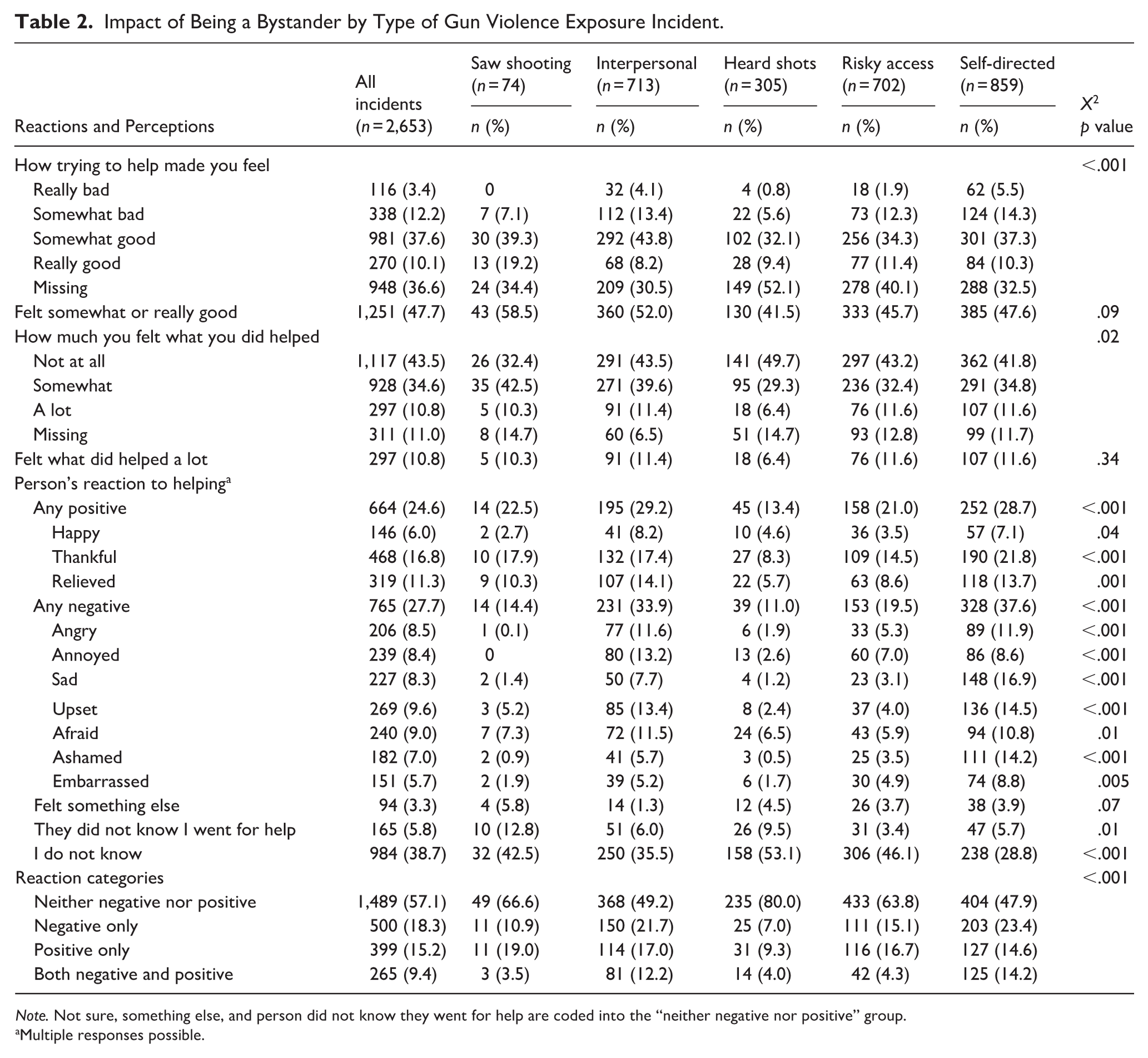
Note. Not sure, something else, and person did not know they went for help are coded into the “neither negative nor positive” group.
Multiple responses possible.
Aim 2: Associations Between Types of Interventions and Positive Outcomes
Table 3 presents adjusted odds ratios for the outcome of feeling “somewhat or really good” about intervening given different types of intervening behaviors. Analyses were performed for all incidents and then separately for four types of risky situations (the sample size for seeing a shooting was too small to run multivariate analyses). Seeking advice about intervening was related to more positive feelings across incidents, but also specifically for interpersonal and self-directed violence, two of the higher-risk situations sampled. Talking about worries about the situation was related to greater odds of feeling positive about intervening in situations of risky gun access and carrying, a lower-risk situation. Telling the person at risk of harming themselves or others that one was worried showed consistently greater odds of feeling good about intervening across incident types, as was trying to increase safety by getting people out of the situation. Talking to the person about alternatives and ensuring one’s own safety were also significantly related to positive feelings in several contexts.
Logistic Regression Showing Adjusted Odds of Feeling Somewhat or Really Good About Helping Actions Across Different Types of Gun Violence Exposures.

Note. The model for seeing a shooting was not run due to the small sample size. Models were adjusted for sexual identity, gender identity, age, race, ethnicity, household income, type of community, and social and structural determinants of health.
p < .001. **p < .01. *p < .05. tp < .10.
Table 4 presents logistic regression analyses of how a bystander’s perceptions of how helpful their actions were varied by different interventions. This was done overall and by incident type, again excepting the “saw shooting” incident due to low sample size. Overall, there were fewer significant relationships for these analyses than for gun violence interveners’ emotions about intervening. Talking to the person about other ways to handle the situation was related to greater likelihood of perceiving intervening as impactful for risky access and suicidal thoughts and behaviors. Trying to make the situation safer by getting people out of the situation elevated sense of positive impact on interpersonal and risky access situations. Gun violence interveners getting outside resources by talking with someone about what to do was associated with higher odds of perceiving a positive impact of intervening for self-directed violence. Though only marginally significant, contacting a crisis center lowered the odds of perceiving helpfulness for interpersonal violence situations.
Adjusted Odds of Feeling Like What They Did Helped a Lot Across Different Types of Gun Violence Exposures.

Note. The model for seeing a shooting was not run due to the small sample size. Models were adjusted for sexual identity, gender identity, age, race, ethnicity, household income, type of community, and social and structural determinants of health.
p < .001. **p < .01. *p < .05. tp < .10.
Aim 3: Broader Correlates of Positive Outcomes
Finally, logistic regression analyses examined two outcomes: feeling somewhat/really good about intervening and feeling like what they did really helped both overall and in relation to the five specific incident types (all outcomes reported in Table 5). Correlates included the emotional reaction of person involved, number of types of intervening tried, as well as bystander resources like social support and prevention access while also controlling for a bystander’s own mental health. The odds of a bystander feeling somewhat or really good about their actions were strongly increased for all incident types except self-directed violence when the person involved gave positive only or a mixture of positive and negative responses. Intervening in a greater number of different ways also increased the odds of a positive view of intervening. Being part of a gun violence prevention program only increased positive bystander feelings about intervening in relation to self-directed violence, and social support elevated positive feelings only in relation to hearing shots fired. Participants’ own depression and anxiety symptoms were significantly inversely related to lower positive feelings about intervening in relation to interpersonal gun violence incidents, but not other types of incidents. Similar patterns of findings were obtained for participants’ perceptions of helpfulness of their intervention. The odds of a positive perception of impact increased significantly when the bystander received exclusively positive reactions from another person in the situation, with negative responses not having a significant impact across incident types. Trying to help in more ways was also associated significantly with greater odds of feeling that actions were helpful. High social support increased participant perceptions of positive impact only for risky gun access or carrying.
Two Logistic Regressions of the Associations Between the Person’s Reaction to the Helping and Other Correlates With Feeling Somewhat/Really Good About Helping (Outcome) and Feeling Like What They Did Really Helped (Outcome) by Type of Exposure.

Note. The model for seeing a shooting was not run due to the small sample size; the same was true for heard shots in the second model (felt like what they did really helped). Models adjust for sexual identity, gender identity, age, race, ethnicity, household income, type of community, and social and structural determinants of health.
p < .001. **p < .01. *p < .05. tp < .10.
Discussion
The current study is one of a few studies to quantitatively explore gun violence interveners’ perceptions of their actions in situations of risky firearm use and gun violence. The study is a nationally representative sample of young Americans and uniquely examined a range of gun-related risks, including both threats of self-harm and harm to others, and examined the perceptions of those who took some action to try to mitigate or prevent the risk of gun violence. While there are a range of aftereffects relevant to gun-related incidents including injuries, criminal justice, and healthcare engagement, the consequences of intervening as perceived by individuals who take some action as bystanders/interveners are important to expanding bystander intervention programs to include post-intervention support and trauma-informed mental health resources for interveners. Overall, the majority of participants reported feeling at least somewhat good about their intervening. This is consistent with research on bystanders to sexual and dating violence (Moschella & Banyard, 2020) and self-harm (Mitchell et al., 2022). These findings support prevention efforts that involve community members as bystanders to reduce violence, and with the contribution of the current study, gun violence specifically.
In terms of perceived impact, however, participants in the current study were more mixed and split between feeling like what they did helped or did not help. These findings were often consistent across different types of risky gun use situations. Compared with bystanders to other risky behaviors, such as self-directed violence within social networks (Mitchell et al., 2022), interveners in gun violence in the current study were less likely to view their actions as helpful. To date, bystander prevention models are often predicated on the notion that bystanders can be helpful and should be engaged as prevention partners. The current study suggests that the role of bystander in gun violence is more complicated than intervening in other situations and preventionists may need to be more circumspect about this type of prevention strategy. These findings suggest that gun-related contexts may produce more uncertainty or even negative feelings about whether intervening “worked.” Prevention programs may need to address this perceived impact gap by clarifying safe roles for interveners and offering post-incident support when outcomes are unclear.
There was quite a bit of variation in how gun violence interveners perceived that others responded to the intervening, with the largest group of participants perceiving neither a positive nor a negative response. This stands in contrast to a previous study of perceptions specific to self-directed violence, which found that only a minority of situations were associated with perceptions that others felt neutral (neither positive nor negative) about the intervening (Mitchell et al., 2022). This suggests that in the context of gun violence, it may be difficult for bystanders to discern how others are reacting to a bystander’s actions, or perhaps due to high stress and threats to a bystander’s own safety in gun violence situations, they may have a narrower attention focus. In the current study, 10% to 23% of participants reported an exclusively positive response to intervening behaviors, and this positive response was generally associated with positive emotional outcomes and increased perceptions of impact, particularly when accompanied by supportive reactions from someone else involved in the situation. Having and using a larger toolkit (i.e., a greater number of intervening strategies used as one measure of bystander engagement) had a positive impact on the gun violence interveners’ own reactions, consistent with a previous study focused on self-directed violence prevention (Mitchell et al., 2022) and work on interpersonal violence (Moschella & Banyard, 2021). This fits with models of bystander action that stress promoting skills to intervene in many different ways.
Consistent with previous models and research on bystander action related to self-directed and interpersonal violence, specific behaviors were associated with different patterns of bystander emotional reactions. In the current study, expressing concern was consistently associated with more positive feelings about intervening across all types of situations. Getting people out of the situation was related to feelings that intervening made a difference but specific only to incidents involving guns (interpersonal gun violence, hearing shots, risky gun access). For risky gun carrying/access, talking to the person about other ways to handle problems was associated with a greater sense that intervening made a difference. This is consistent with work showing that creating a distraction, helping the person to get out of the situation, or encouraging help seeking and conveying caring were most associated with positive feelings about intervening (Mitchell et al., 2022; Moschella & Banyard, 2020). Prevention approaches may want to first connect with bystanders as support givers before moving on to forms of intervening that are more direct in the situation and that might trigger safety and other concerns. Involving first responders/public safety were not significantly associated with intervener perceptions of feeling positive about intervening across all incident types, though engaging others in general was associated with positive feelings for interpersonal and self-directed gun violence situations. This suggests that bystander intervention work for gun violence needs to stress connecting with others and community approaches (Storer et al., 2017), a perspective that is included in models of bystander action but not always in how training takes place. The association of different interventions with positive perceptions in varied situations aligns with the finding that using a variety of intervening types was related to more positive perceptions. This is a similarity between bystanders to risky gun use and bystanders to other forms of interpersonal and self-directed violence. Just as gun violence and risk for gun violence span many specific situations, gun violence interveners seem sensitive to differences in helpful and safe bystander roles that may differ by context. Revisions to broader models of bystander intervention may need to move away from one model of intervention to an umbrella theory with sub-models related to different types of situations (Banyard et al., 2025).
Interestingly, there were many fewer significant associations between specific interventions and perceptions that intervening made a difference then the outcome of emotional reaction. This may indicate that more research is needed to identify what communities see as effective bystander actions that are possible to take and may also suggest that links between bystander action and gun violence prevention are less direct and clear. Bystander intervention in gun-related incidents is best understood as a context-sensitive, emotionally charged decision-making process. Expanding prevention efforts to validate and support gun violence interveners emotionally—especially when interventions are unsuccessful—could improve long-term willingness to help and reduce secondary trauma.
Practice and Research Implications
Despite the widespread promotion of bystander intervention as a violence prevention strategy, most existing programs have focused primarily on sexual assault, dating violence, or bullying, with minimal attention to gun-related violence. This represents a significant gap in prevention science. The findings of the current study support growing evidence about how training bystanders can be one prong of effective bystander intervention to prevent different types of violence and suggest the importance of addressing bystanders’ perceptions of intervening as part of those efforts. To date, school-based programs often emphasize interpersonal harm in dating or peer relationships, equipping students to intervene in emotionally charged yet typically non-lethal scenarios (Storer et al., 2017). Even widely implemented and evidence-based programs that often focus on schools such as Green Dot have historically centered on sexual and dating violence, omitting direct references to firearm threats despite the growing prevalence of gun exposure in young people’s lives and in school settings (Coker et al., 2019). While these interventions offer valuable models for shifting school-level social norms and empowering peer action, their limited focus on gun-specific contexts represents a missed opportunity. The current study shows how the context of gun violence introduces uniquely high-stakes decisions and immediate safety concerns that alter the calculus of bystander intervention. More research is needed to continue to describe bystander actions to prevent gun violence that communities see as effective and safe and to engage communities in discussions of what happens after they try to help.
In terms of prevention practices, there is also an urgent need to adapt existing bystander training frameworks to account for the emotional burden, threat level, and potential legal consequences that shape whether and how young people choose to intervene in gun-related situations and with what impact. Given the increasing number of adolescents and young adults exposed to gun-related harm, prevention programs could be revised to incorporate explicit gun scenarios to address a pressing gap in community-based violence prevention efforts. Efforts to develop enhanced bystander training should prioritize the creation of gun-specific intervention components that are trauma-informed, contextually relevant, and accessible to young people in high-risk environments. Revised programs should make space to acknowledge varied feelings about taking action and to help bystanders engage in strategies for their own self-care. Doing so would not only enhance the relevance of bystander training but also expand its potential to reduce harm in some of the most dangerous and consequential forms of community violence as well as situations of self-directed violence (Banyard et al., 2025).
One example of this work is violence interrupter programs including Ceasefire, SafeStreets, and Cure Violence programs (Phalen et al., 2020). These programs engage community members and train them in conflict mediation and de-escalation skills and present alternates to criminal justice and carceral system responses to community and gun violence specifically. Trusted community influencers work with at-risk individuals and groups to diffuse conflicts and reduce gun use. Some versions also use public health education to change attitudes about gun use or to position helpful bystanders in hotspots like along routes children take to get to schools (Lau, 2024; Matthay et al., 2019; McMillen et al., 2019; Phalen et al., 2020). While these programs involve trained gun violence interveners rather than inadvertent witnesses, they underscore the promise of community approaches as many show reductions in general violence as well as gun use and attitudes related to violence. However, not all studies show strong effects or measure a spectrum of risky gun use and gun violence specifically, and more evaluation research is needed (Chwalisz, 2025).
The current study provides information about intervening strategies and situations where gun violence interveners felt positive about their actions. The current findings may fit into public education messages about gun violence. Furthermore, current findings suggest that having a bigger intervener toolkit (a range of approaches to try to help) was associated with more positive perceptions. Findings fit with training models that seek to build a multi-pronged set of things that interveners can do rather than recommend one best strategy. Trying more ways to help fits with current findings that different forms of intervening were associated with positivity across different types of incidents. Interestingly, it was the positive reactions from others that boosted positive perceptions. Negative reactions from others were not significant. This suggests the opportunity for more positive public health messaging and social norms to highlight approval of bystander intervening. Public messaging efforts should emphasize that intervening—especially expressing concern or de-escalating safely—is valued and effective, even when outcomes are uncertain. These messages could be delivered through peer-led campaigns or integrated into school and community-based violence prevention curricula. Training naturally occurring networks of potential bystanders with a component about strengthening how interveners support other interveners would also strengthen effectiveness. Engaging professional helpers as an action was not significantly associated with positive views of intervening or impact across all types of incidents. We need to study this further as this finding suggests decreased confidence in what such resources have to offer or perhaps lack of access or knowledge of these.
Furthermore, more research is needed on factors that encourage intervention. Individuals with training in conflict resolution or violence prevention tend to report greater confidence in their ability to help, and the presence of social norms that support intervention can increase the likelihood that bystanders will act (Banyard, 2021). However, little research exists on how these dynamics function specifically in gun-related incidents, where the risks and required interventions may differ from other forms of violence. Future studies should explore whether the same protective factors apply or whether gun violence requires a separate set of intervention strategies altogether.
Limitations
The current study was exploratory as we could not identify a body of work to date that addresses reactions and perceptions of safety and impact of bystander actions across a range of gun violence scenarios. Measures of helping/intervening and of reactions that were used in the current analyses were developed for this project. These need more testing as they may not have captured the full range of potential helping behaviors. These items require further validation (content coverage, reliability, and construct validity) before being treated as a complete inventory of helping strategies. For example, participants were asked generally about how a person involved in the situation reacted rather than specific follow-ups about the person with the gun or other gun violence interveners. Next, this study relied on self-reported data, which may be subject to recall or social desirability bias. Importantly, only the views of gun violence interveners, not the person at whom action was directed were measured in the current study. Future research incorporating the perspectives of other participants in gun violence situations is needed. Our cross-sectional design limits causal inference. For example, emotional responses may influence memories of the event or reported helping behavior. Finally, we did not examine developmental differences as the goal of the study was to examine patterns in a wide age range. Adolescents and young adults likely differ in their emotional processing, personal resources, and risk perception. Future research should explore bystander views and reactions separately among different age groups.
Conclusion
This study provides one of the first national surveys of youth and young adult bystander perceptions of actions taken when exposed to a range of gun violence situations. The sample was large and diverse. While nearly half of gun violence interveners felt positive about intervening, fewer believed their actions made a substantial difference, highlighting a critical gap between emotional reward and perceived impact. Specific helping strategies, particularly those involving interpersonal engagement and situational safety, were associated with more favorable outcomes, while professional intervention did not consistently yield emotional or perceived benefits. These findings underscore the importance of equipping young people with a diverse set of context-appropriate helping strategies and offering post-intervention supports that recognize the emotional complexity of these experiences. As gun exposure increasingly shapes the environment of our nation’s youth, expanding bystander-focused violence prevention efforts to explicitly address gun-related situations will be essential for supporting community safety. Future research should examine how to better support gun violence interveners across different gun contexts and mitigate potential emotional fallout, particularly to inform the design of trauma-informed prevention efforts.
Supplemental Material
sj-docx-1-jiv-10.1177_08862605261443243 – Supplemental material for Original ArticleGun Violence Interveners: Exploring Perceptions of Impact and Reactions to Helping Behaviors in a National Sample of Adolescents and Young Adults
Supplemental material, sj-docx-1-jiv-10.1177_08862605261443243 for Original ArticleGun Violence Interveners: Exploring Perceptions of Impact and Reactions to Helping Behaviors in a National Sample of Adolescents and Young Adults by V. Banyard, K. J. Mitchell, L. Engels, E. A. Mumford and B. G. Taylor in Journal of Interpersonal Violence
Footnotes

Ethical Considerations
This research was conducted in accordance with relevant ethical principles and under the approval of the NORC University of Chicago IRB. As noted in the manuscript, procedures for informed consent (and assent of minors following parental consent) were followed and indicated in the online survey format.
Author Contributions
All the authors participated in initial study conceptualization and design. Taylor and Mitchell were PIs on the project and oversaw all aspects of data collection and management. Banyard and Mitchell conducted data analyses and wrote the initial draft of the paper including theory conceptualization. All the authors had input in data interpretation and editing drafts of the manuscript.
Funding
The authors disclosed receipt of the following financial support for the research and/or authorship of this article: The study was funded by the Centers for Disease Control and Prevention (Award R01CE003434-01-00). The study sponsor had no role in any of the following: study design; collection, analysis, and interpretation of data; writing of the report; and the decision to submit the report for publication. The views expressed in this paper are from the authors alone and do not represent the views of any other organization.
Declaration of Conflicting Interests
The authors declared no potential conflicts of interest with respect to the authorship and/or publication of this article.
Data Availability Statement
Data is not publicly available, but the authors will consider reasonable direct requests for access.
Supplemental Material
Supplemental material for this article is available online.
Author Biographies
References
Supplementary Material
Please find the following supplemental material available below.
For Open Access articles published under a Creative Commons License, all supplemental material carries the same license as the article it is associated with.
For non-Open Access articles published, all supplemental material carries a non-exclusive license, and permission requests for re-use of supplemental material or any part of supplemental material shall be sent directly to the copyright owner as specified in the copyright notice associated with the article.
