




Abstract
This study examines recidivism differences between Domestic Violence Court participants and court-convicted domestic abusers prior to the advent of the Domestic Violence Court. Unlike previous short-term evaluations of Domestic Violence Courts, the current study addresses a key gap in the literature by using a longer, 8-year follow-up period to assess the sustained impact of the Domestic Violence Court program on reoffending. Court participants were tracked over an eight-period following an initial, short-term evaluation of the Domestic Violence Court program. Statistical adjustments for age and prior criminal history revealed that domestic violence court participants were more likely than non-program participants to be re-convicted for a domestic violence offense. No group differences were observed for non-domestic violence-related offenses. Failure to implement the Risk-Need-Responsivity framework may have implications for the negative findings. And unlike Drug Courts, this Domestic Violence Court fails to apply a rewards-sanction strategy to induce offender compliance. Study limitations and directions for future research are discussed.
Introduction
Intimate Partner Violence (IPV) or Domestic Violence (DV) is defined as any abuse or aggression that occurs in a romantic relationship (Centers for Disease Control and Prevention [CDC], 2024). Intimate partners refer to current spouses, former spouses, and dating partners (Redding et al, 2023). IPV can occur within same-sex and heterosexual relationships and may include any of the following types of behavior: physical violence, sexual violence, stalking, and psychological aggression (Case, 2023; Richards et al., 2013). According to the CDC (2024), 41% of women and 26% of men experienced contact sexual violence, physical violence, or stalking by an intimate partner. IPV victims can suffer from depression, anxiety, Post-Traumatic Stress Disorder, eating disorders, disruptive sleep patterns, gastrointestinal disorders, self-harming behaviors, unsafe sexual behaviors, substance abuse, migraines, stroke, and multiple incidents that can lead to death (Case, 2023; Redding et al., 2023).
Up until the 1980s, law enforcement officers were reluctant to become involved in IPV cases (Iyengar, 2009). Arrests were relatively rare because IPV was considered a private, family matter (Gover et al., 2021). However, since the enactment of the Violence Against Women Act in 1994, which granted further funds for communities and police departments to coordinate a response to DV, police officers became more active in making IPV arrests (Bell & Goodman, 2001; Gover et al., 2021). Other IPV reforms include mandatory arrest laws, no-drop prosecution, and funding for victim services (Gover et al., 2003; Gutierrez et al., 2016).
All of these changes led to a massive influx of cases into the criminal court system. This increase in IPV cases has caused serious backlogs for courts, leading policy-makers to seek more effective and efficient remedies to address IPV (Gover et al., 2003; Gutierrez et al., 2016). One such development was the implementation of specialized courts, specifically DV Courts.
DV Courts attempt to improve the judiciary’s response to IPV by increasing coordination among criminal justice and social service agencies, expediting the trial process, holding defendants accountable, and addressing the needs of victims (Gover et al., 2003; Gutierrez et al., 2016). Despite the growing use of DV Courts nationwide, research on their effectiveness remains inconclusive. Some evaluations showed participation in DV Courts lower recidivism among courts participants (Eckberg & Podkopacz, 2002; Gover et al., 2003; Thompson & Swenson, 2014), while other evaluations have found no effect on recidivism (Newmark et al., 2001; Quann, 2006; Rempel et al., 2008). It should be noted that most evaluations of DV Courts have employed a short-term follow-up period of 2 years or less, which restricts the ability to assess the sustained impact of these courts.
This study addresses this gap by examining the effectiveness of a DV Court over an 8-year period. By using an extended follow-up period, this study provides a more comprehensive evaluation of DV Courts’ sustained effects over time. This study updates the preliminary evaluation by Thompson and Swenson (2014), which included a treatment group of 204 offenders who participated in the DV Court from 2011 to 2013 and a comparison group of 193 offenders who were convicted of a DV offense in 2009 and 2010 through traditional court processing prior to the implementation of the DV Court. The original study used a follow-up period of 6 months and 1 year. The present study extends the original database and tracks traditional court (N = 235) and DV Court participants (N = 191) over a longer period (8 years).
Overview of Domestic Violence Courts
Some DV Courts hear only cases related to IPV, whereas others include violence between non-intimate family or household members (Cissner et al., 2015). DV Courts adopt a therapeutic approach focusing on offender accountability and victim safety (Gover et al., 2021). These courts typically hear all or most of a jurisdiction’s DV cases on a separate calendar, presided over by a specially assigned judge (Gover et al., 2021). The judge acts as an interdisciplinary team leader and meets weekly with a diverse team of prosecutors, defense attorneys, social service providers, batterer intervention program (BIP) providers, mental health providers, and probation officers (Gover et al., 2021).
The main characteristic of DV Courts is the use of judicial oversight and court-mandated BIPs (Gover et al., 2021; Labriola et al., 2008; Petrucci, 2010; Tutty & Babins-Wagner, 2019). As part of their sentence, offenders are required to attend post-sentence review hearings before a judge (weekly or biweekly), depending on their progress. Offenders may also be required to attend substance abuse treatment (Cissner et al., 2015). A system of rewards for compliance and sanctions for failure is used in some DV Courts (Gutierrez et al., 2016). Sanctions can range from verbal warnings to jail time. If an offender fails to meet the requirements set out by the court, their original charges may be reinstated, and a suspended sentence will be imposed (Gutierrez et al., 2016).
Defendants who are found guilty of a DV offense are required to attend a BIP (Gover et al., 2021). There are several strategies adopted by BIPs that are common in the treatment of DV. One of these uses a feminist psychoeducational approach and is known as the Duluth model (Cotti et al., 2020). The Duluth model is rooted in a feminist psychoeducational approach that frames IPV as a by-product of a patriarchal society, which facilitates the control and domination of women (Cotti et al., 2020). The Duluth model focuses on altering dominant and controlling behaviors and fostering more egalitarian relationships. A second approach used is Cognitive Behavioral Therapy (CBT). The CBT model focuses on violence and abuse as learned behaviors that have developed over time through observation and reinforcement (Cotti et al., 2020). CBT-based programs adopt the perspective that DV is caused by cognitive distortions about self and partner and a lack of skills to appropriately manage emotions and communicate respectfully (Zarling et al., 2019). Some programs couple the Duluth model with CBT (Zarling et al., 2020). Achieving Change through Value-Based Behavior (ACTV) constitutes another approach. This program attempts to alter how individuals relate to difficult thoughts by building tolerance for uncomfortable emotions, urges, and experiences (Lawrence et al., 2021).
Domestic Violence Courts and Recidivism
The literature on the impact of DV Courts on recidivism reveals mixed results (Cissner et al., 2015; Eckberg & Podkopacz, 2002; Gover et al., 2003; Newmark et al., 2001; Quann, 2006; Rempel et al., 2008). Gover et al. (2003) compared the recidivism rates of defendants arrested before the implementation of a DV Court in South Carolina and defendants processed after the implementation of the DV Court. Controlling for relevant covariates, they found that those processed by the DV Court were less likely to be rearrested for a DV offense over an 18-month follow-up period. Similarly, Eckberg and Podkopacz (2002) evaluated the impact of a misdemeanor DV Court in Minneapolis. They found that defendants processed by the DV Court were less likely to be charged with a new offense within 9 months of disposition.
Other studies have found that DV Courts did not prevent or reduce recidivism (Newmark et al., 2001; Quann, 2006; Rempel et al., 2008). Newmark et al. (2001) compared felony DV cases processed before and after the establishment of a new DV Court, controlling for prior criminal history, age, and employment status. They found that rearrests during the first 12 and 18 months of the post-disposition period or post-release were higher for the samples processed by the DV Court than for the pre-DV Court sample. Quann (2006) compared the recidivism of offenders who were convicted of a DV offense by an Ontario DV Court with a sample of offenders convicted in other Ontario courts. Controls for a variety of covariates revealed that the DV Court did not reduce the overall likelihood of recidivism.
Similarly, Rempel et al. (2008) analyzed the effectiveness of a DV Court in reducing the odds of re-arrest for any offense, for DV, and DV with the same victim and concluded that the DV Court did not reduce the re-arrest rate for any of these offenses. Other studies have reported ambiguous findings (Cissner et al., 2015). Cissner et al. (2015) examined the impact of 24 DV Courts on recidivism in New York state. They controlled for age, gender, prior arrests, number of prior DV arrests, number of prior warrants, and jurisdiction location. The DV Courts reduced the likelihood of recidivism only among convicted offenders who were the target of key court policies, including final orders of protection, program mandates, judicial supervision, and sanctions for noncompliance.
One of the murky issues with examining the recidivism patterns of DV Courts is that they are generally coupled with BIPs. The fact that there exist two interventions makes it difficult to identify treatment effects, with the possibility that one treatment could be canceling out the other. Indeed, studies that analyzed the impact of BIPs on recidivism, independent of DV Courts, also reveal mixed results (Babcock et al., 2004; Bennett et al., 2007; Gordon & Moriarty, 2003). Cox and Rivolta (2021) argued that after controlling for age at arrest, race, prior criminal history, and court location, participants in the BIP (EVOLVE) were less likely to be rearrested for non-DV offenses but not family violence offenses within 12 months of program discharge. Cheng et al. (2021) conducted a meta-analysis and concluded that BIPs effectively reduced DV and general offense recidivism. Studies that focused on DV program completers versus non-completers found that those who completed the court-mandated BIP were less likely to recidivate for DV offenses and other crimes compared to program non-completers (Bennett et al., 2007; Petrucci, 2010; Rosenbaum et al., 2001).
Other studies have found that BIPs either did not have any impact on recidivism or the effect sizes were not substantial (Babcock et al., 2004; Gordon & Moriarty, 2003; Labriola et al., 2008; Rahman & Poynton, 2018). Babcock et al. (2004) conducted a meta-analytic review of batterer treatment and found a small effect size of the BIP on subsequent DV reoffending. They also found no differences in effect sizes across treatment modalities (CBT, Duluth model). Gordon and Moriarty (2003) assessed IPV treatment on 248 convicted males. They found no significant recidivism differences between those who attended a batterer program and those who did not.
The inconsistencies in DV Court findings may be attributable to variations in program design or population characteristics. Some studies employ control or comparison groups comprised of pre and post DV Court groups (Gover et al., 2003; Thompson & Swenson, 2014). Others compare DV Court completers with non-completers (Bennett et al., 2007; Petrucci, 2010). Studies also employ different recidivism metrics, with some using re-arrest (Bennett et al., 2007; Gover et al., 2003; Labriola et al., 2008; Petrucci, 2010; Rempel et al., 2008) and others using convictions (Thompson & Swenson, 2014). Studies also employed different follow up periods, with a range between 6 months and 2 years (Cissner et al., 2015; Eckberg & Podkopacz, 2002; Gover et al., 2003; Labriola et al., 2008; Petrucci, 2010; Quann, 2006; Rempel et al., 2008).
Clouding these study findings further is the notion that treatment providers sometimes take a “one size fits all” approach, instead of assessing domestic abusers on the basis of their risk of reoffending, their criminogenic needs, and their responsivity to treatment (Hilton & Radatz, 2021). Research shows that when DV Courts adhered to the Risk, Needs, Responsivity principles (RNR), court participants had lower odds of recidivism compared to programs that did not adhere to RNR principles (Connors et al., 2013; Gutierrez et al., 2016). Therefore, recent research has called for the integration of the RNR principles into DV Courts and BIPs as a way to increase effectiveness and reduce recidivism (Claxton & Richards, 2021; Radatz et al., 2021).
Current Study
The current research builds on previous knowledge concerning the impact of DV Courts on recidivism. This study seeks to determine whether DV Court participants and offenders processed by traditional courts prior to the implementation of the DV Court differ in terms of recidivism. Most examinations of DV Courts have employed a follow-up period of 2 years or less. The current study advances the literature by using a more extended follow-up period of 8 years. The following two research questions are addressed: First, are there any differences in terms of DV related recidivism between DV Court participants and traditional court participants? Second, are DV Court participants less likely to be reconvicted for non-DV offenses than traditional court participants?
Methods
Study Setting
The current study evaluates a Domestic Violence Court in a Midwestern State. This study is a follow-up evaluation of a prior outcome evaluation of this DV Court completed in 2014 (Thompson & Swenson, 2014). The DV Court commenced operation in October 2011 after receiving a federal grant dedicated to the implementation of a DV Court. The DV Court program manual lists the following objectives: to ensure victim safety, enhance offender accountability, facilitate coordination of services across agencies and community partners, and reduce DV recidivism.
The first appearance is handled through the criminal court regular docket. Following the first appearance, the Attorney’s Office identifies the cases eligible for DV Court. The DV Court accepts all cases involving DV or related crimes occurring between intimate partners. These cases remain in the DV Court docket for their second (pretrial) appearance and throughout the entire case. The following misdemeanor, gross misdemeanor, or felony charges are eligible for the DV Court: assault, domestic assault, domestic assault by strangulation, Violation of a No Contact Order (NCO), Violation of a Domestic Abuse No Contact Order (DANCO), violation of a harassment restraining order, violation of an order prohibiting contact, threats of violence, interference with an emergency call, stalking/harassment, 5th degree criminal sexual misconduct, and neglect/endangerment of a child.
Participation in the DV Court is not voluntary. Following the initial appearance in traditional criminal court, DV cases are automatically flagged for arraignment in the specialized court, where they remain through disposition and probation. The DV Court team includes four judges, the County Attorney’s Office, the County Victim/Witness program, the County Social Services, Community Health Service, and other agencies in the community. If the defendant is found guilty, the sentence is usually supervised probation, and he or she is required to attend a batterer treatment program and any other program the judge deems appropriate. Convicted offenders must attend twenty-six weeks of a batterer treatment program provided by one of the three outside agencies working with the DV Court. They start over if they miss up to five classes.
Judicial monitoring is a key principle of the DV Court as distinguished from traditional criminal courts. Convicted offenders are scheduled for their post-sentence review hearings 6 weeks after sentencing. They are required to attend the post-sentence review hearings at least three times, depending on their progress. During the post-sentence hearings, the judge reviews the convicted offender’s progress on program completion and monitors rule compliance. If the convicted offender complies with the court rules, he or she will still have to complete the probation time. Compliance with the court rules and graduation from the program does not enable charges to be dismissed.
Data and Sample
Data for this study come from a prior outcome evaluation of the DV Court (Thompson & Swenson, 2014). The original database included records of date of birth, gender, case location, charges, convictions, and offense level (felony, misdemeanor, gross misdemeanor). The original study included a treatment group of offenders who were convicted by the DV Court from 2011 to 2013 and a comparison group of offenders who were convicted of a DV offense in 2009 and 2010 through traditional court processing prior to the implementation of the DV Court. Both groups of participants were required to attend a batterer treatment program. The original study tracked participants from both courts until 2014. That study found that DV Court participants recorded lower recidivism rates at 6 months and 1 year, although neither difference was statistically significant. DV Court participants did offend at a less serious level than the comparison group, and time to recidivism was delayed for the DV Court group.
The present study extends the original database and tracks traditional court (N = 235) and DV Court participants (N = 191) from 2015 to 2023. Women are removed from the sample due to the small number of women in the treatment (12) and the comparison groups (27). Official court databases from two states are employed for tracking purposes since the court of origination borders two states. While previous evaluations of DV Courts have used relatively short follow-up periods, the present study distinguishes itself by utilizing an extended 8-year follow-up to assess the long-term impact of DV Court participation on recidivism outcomes. Due to the nature of this quasi-comparison group sample, covariates involving age, prior convictions for DV offenses, and non-DV offenses will be controlled in the analysis.
Dependent Variable
Two recidivism measures are employed. DV-related recidivism includes any reconviction for the following DV offenses: assault, domestic assault, domestic assault by strangulation, Violation of a NCO, Violation of a DANCO, violation of a harassment restraining order, violation of an order prohibiting contact, threats of violence, interference with an emergency call, stalking/harassment, 5th degree criminal sexual misconduct, and neglect/endangerment of a child over 8 years (January 1, 2015–December 31, 2023). The second outcome of interest is any new reconviction for a non-DV offense over the same period. The recidivism start date is the same for both groups. We chose the January 1, 2015 start date since this date functioned as the terminal date for the initial evaluation study (Thompson & Swenson, 2014). Recidivism data are drawn from online public record criminal databases in two states.
Independent and Control Variables
Participation in the DV Court is the primary exogenous variable examined in the current study, coded as either participating in the DV Court (1 = DV Court participant) or participating in the traditional court system (2 = Comparison group). Several background covariates are controlled in the analysis. These variables include whether the offender had prior convictions for DV (no = 1, yes = 2), whether the offender had prior convictions for non-DV offenses (no = 1, yes = 2), and the offender’s age at the time of court conviction. This study was constrained by the lack of access to some variables known to influence recidivism outcomes, such as race, risk level, program completion, substance use treatment participation, and mental health diagnoses. As a result, the study could not control for these potentially confounding variables.
Statistical Analysis
The first stage of the analysis uses descriptive statistics to describe the two groups. Bivariate tests are then utilized to determine whether recidivism differs across groups. Binary logistic regression is used to determine if the two groups differ in terms of recidivism, independent of control variables. Finally, we analyzed Cox Regression Survival Curves to assess when domestic and general recidivism occurred.
Results
Table 1 displays descriptive statistics for the variables in the analysis. The sample for this study includes 426 offenders. The comparison group’s mean age (33.1) is slightly lower than the treatment group’s age (34.2), but these differences do not depart from zero. None of the other comparison differences depart significantly from zero, but controls for covariates will still be conducted in the multiple regression analysis.
Treatment and Comparison Group Demographic Information (N = 426).
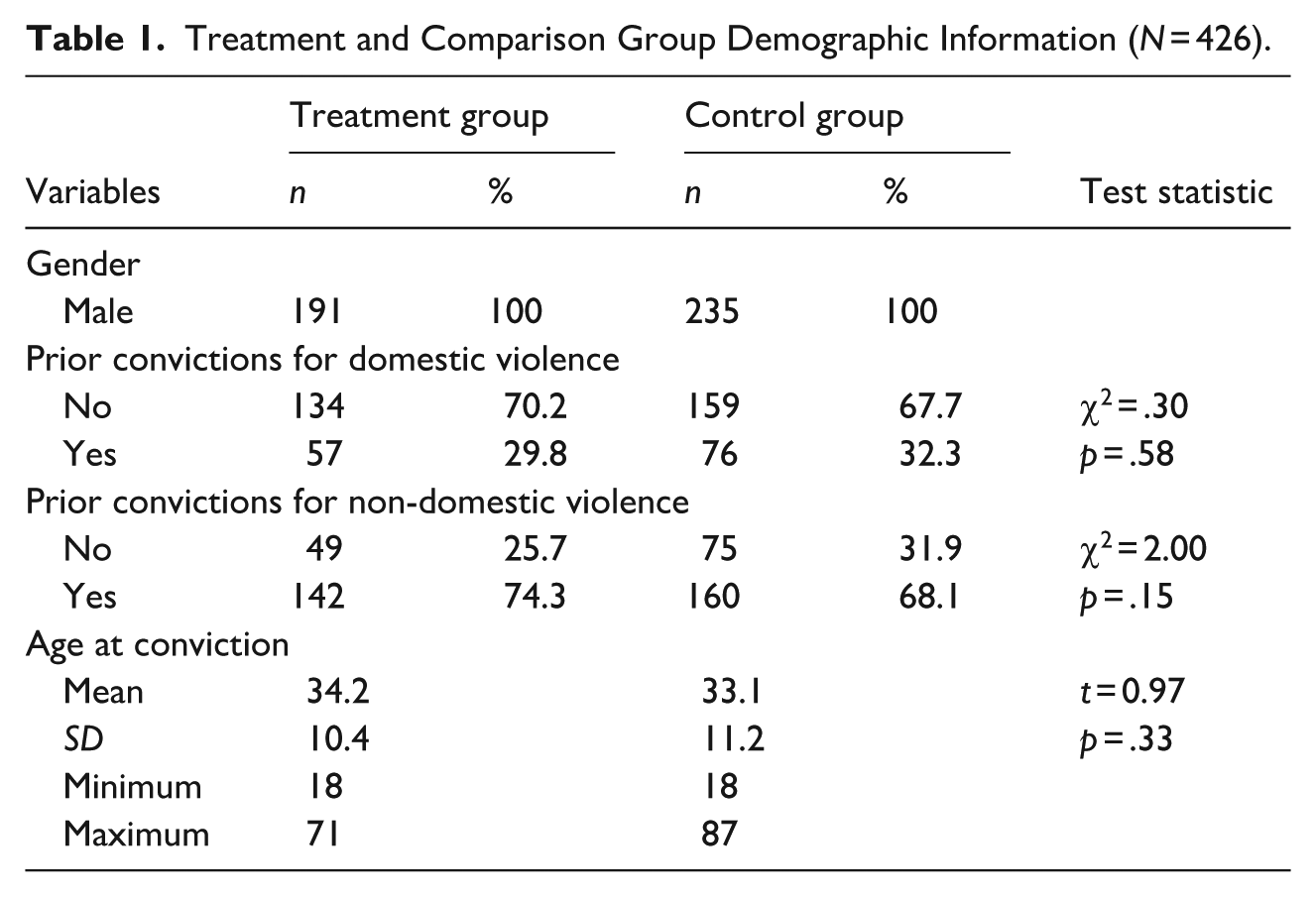
Table 2 presents the bivariate tests examining the two recidivism measures over the 8-year period for the treatment and comparison groups. The results indicate that participants in the Domestic Violence Court recorded significantly more reconvictions for DV charges than the comparison group (29.8% vs. 19.6%). Expressed as an unadjusted odds ratio, DV Court participants were almost twice as likely to report another DV reconviction as the comparison group. A similar, but nonsignificant trend is noted for general recidivism, with DV Court participants recording more reconvictions for non-DV offenses than the comparison group (48.7% vs. 43.4%).
Domestic Violence and General Recidivism for Treatment and Comparison Groups (N = 426).
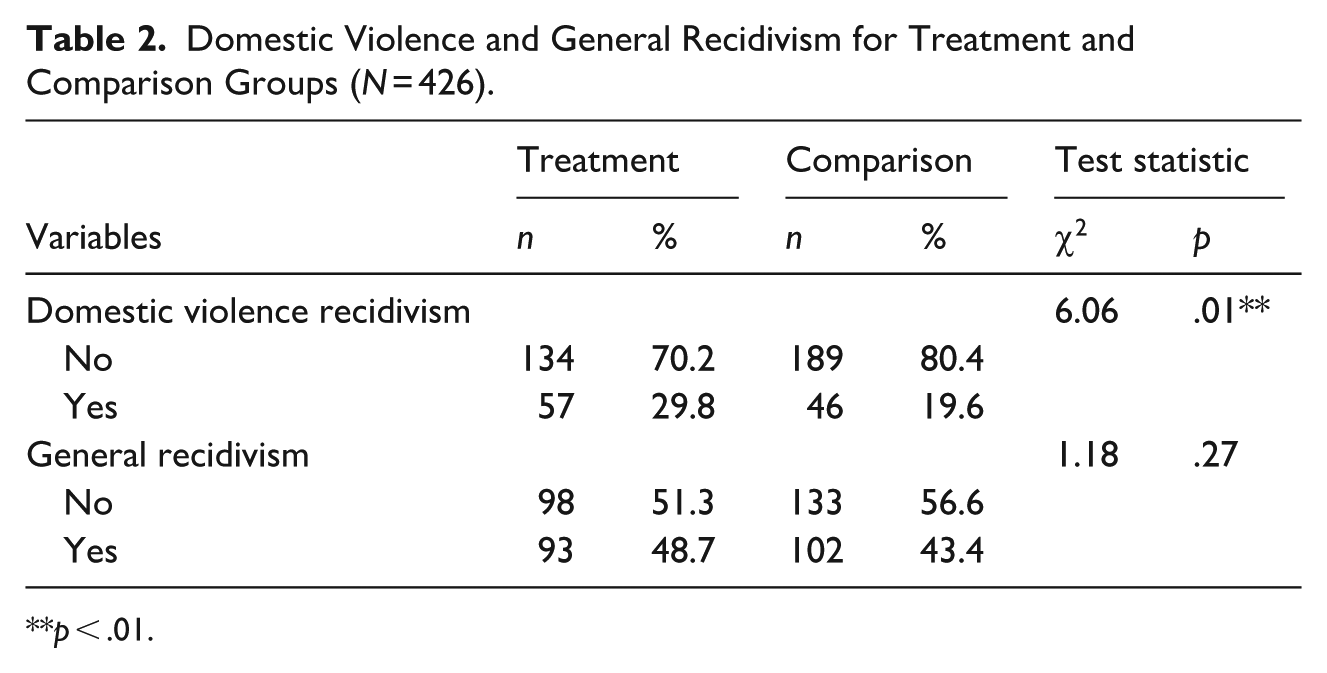
p < .01.
Table 3 displays the logistic regression models for both recidivism measures. The first model examines the impact of the DV Court on domestic-related recidivism, and the second assesses the impact of the DV Court on general recidivism. The model predicting DV recidivism indicates statistically significant differences involving group court assignment, prior criminal convictions, and age. The results do not support the first research question since DV Court participants were more likely to recidivate for DV offenses than the comparison group. Specifically, DV Court participants were 46% (b = 0.54) more likely to record another DV conviction within the 8-year period, relative to the comparison group. Less surprising were patterns indicating that defendants who were previously convicted of DV or non-DV offenses had higher odds of DV recidivism. Having a previous DV conviction raised the odds of DV recidivism by 71%.
Logistic Regression Analysis of Domestic Violence Recidivism and General Recidivism (N = 426).
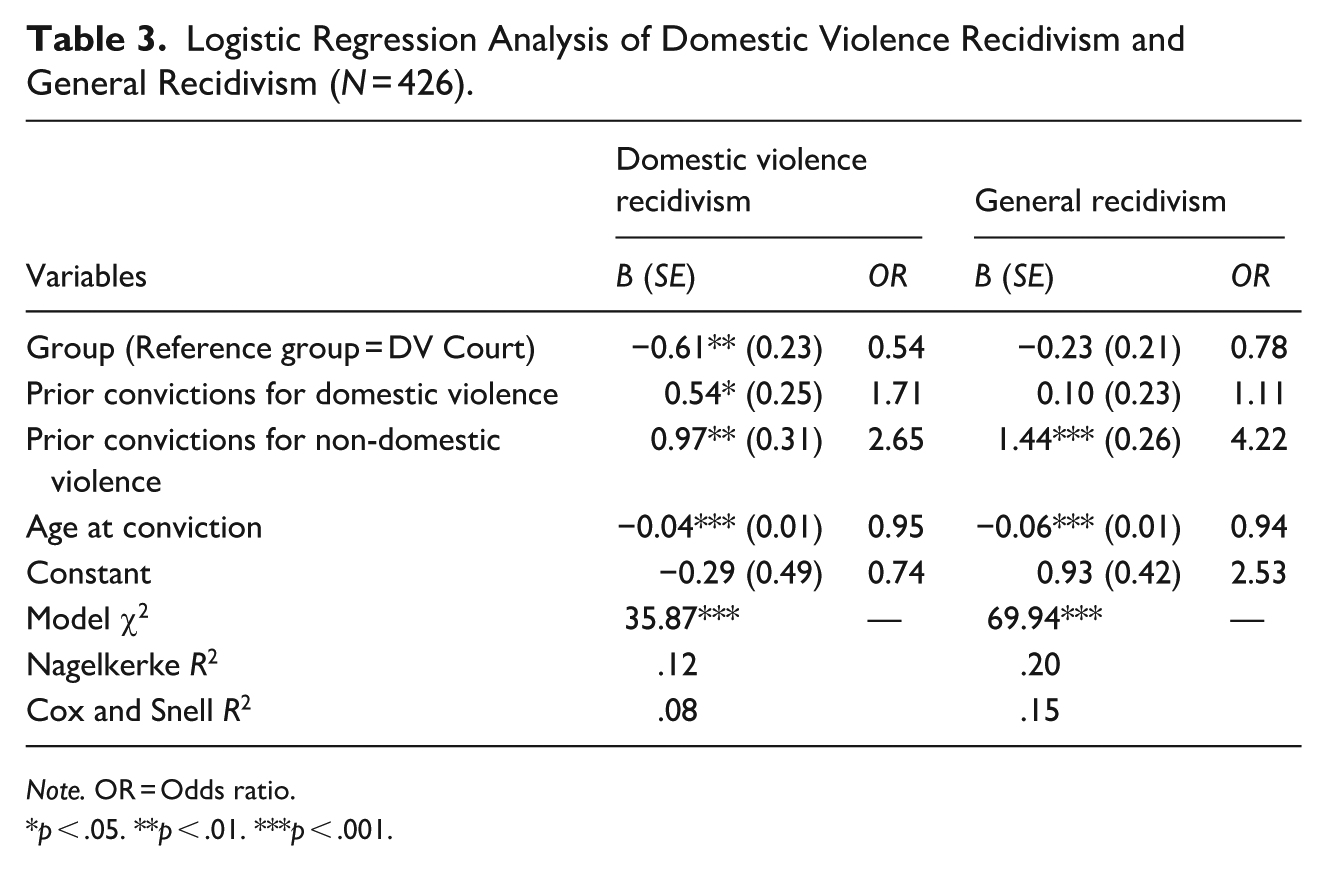
Note. OR = Odds ratio.
p < .05. **p < .01. ***p < .001.
A previous non-DV conviction increased these odds by 165%. Overall, the model fits the data fairly well. The Nagelkerke R-square value was .12. The Cox and Snell R-square was .08. Tests for autocorrelation using the Durbin-Watson statistic indicated a value in the acceptable range at 2.08. A check for multicollinearity indicated that none of the Variance Inflation Factor (VIF) scores were above 3.
The results of the second model (general recidivism) do not support the second research question. The findings reveal that the two groups do not differ regarding general recidivism after controlling for gender, age, and prior criminal history. The only two significant coefficients were those for age (younger participants recidivated at a higher level) and prior convictions for non-DV offenses. Overall, this model fits the data. The Nagelkerke R-square value was .20. The Cox and Snell R-square was .15. The Durbin-Watson value was 1.95 in the acceptable range below 2.0, and none of the VIF scores were above 3.
To assess the timing of recidivism over the 8-year period, we employed t-tests and Cox Regression Survival Curves. At the bivariate level, the data reveal that the average DV Court recidivist (N = 61) recorded another domestic-related offense at 883 days (2.42 years) post January 1, 2015. In contrast, the average among comparison group recidivists (N = 46) was 1,097 days (3.0 years). This difference was significant at the .10 level (t = −1.28). For recidivism outside of domestic charges, the DV Court group lasted 652 days (1.78 years) until their next offense, compared to the comparison group mean of 1,044 days (2.86 years). This difference was significant at the alpha .001 level (t = −3.49). The survival curve function for domestic-related recidivism presented in Figure 1 controls for the contribution of covariates and clearly demonstrates that the DV Court group recidivated much more quickly over the 8-year period than the comparison group.
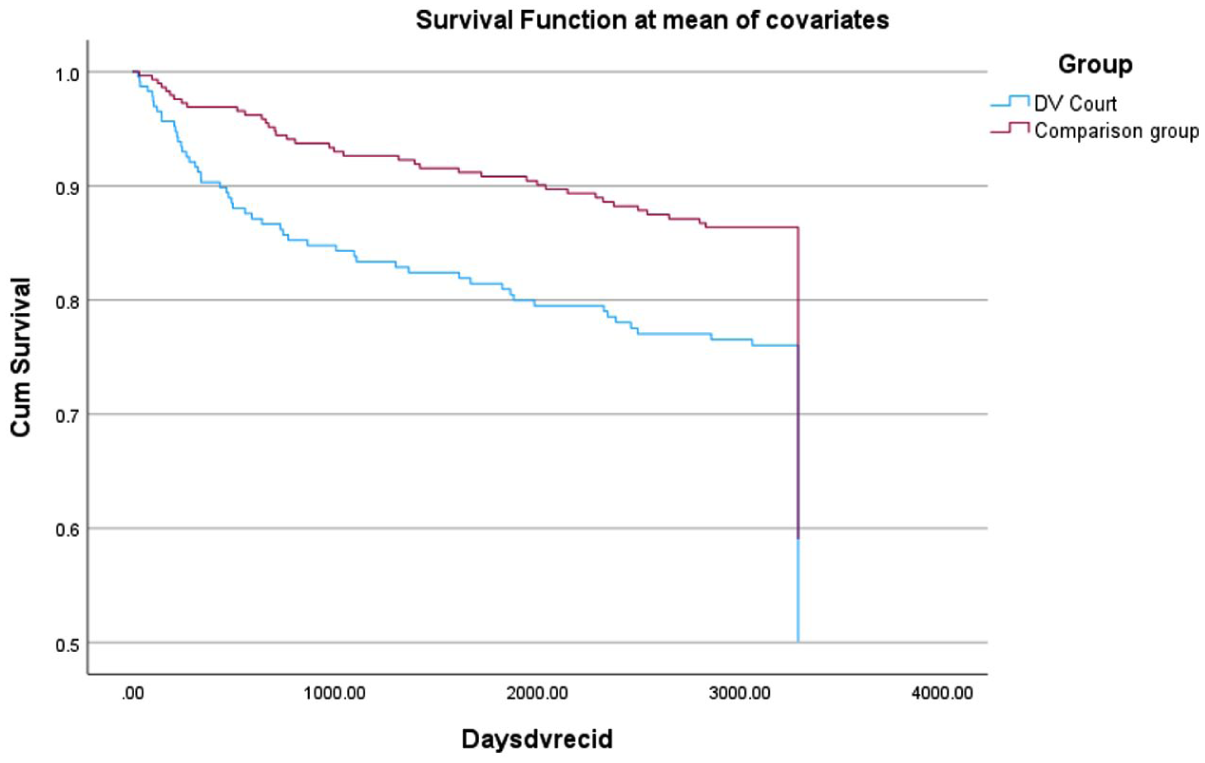
Cox regression survival curves for domestic-related conviction.
Discussion and Policy Implications
Research has demonstrated mixed results regarding the impact of DV Courts on recidivism (Eckberg & Podkopacz, 2002; Gover et al., 2003; Newmark et al., 2001; Quann, 2006; Rempel et al., 2008). Several studies have found that DV Courts reduce the odds of recidivism (Eckberg & Podkopacz, 2002; Gover et al., 2003; Thompson & Swenson, 2014), while others have found either negative or mixed results (Cissner et al., 2015; Newmark et al., 2001; Quann, 2006). The bulk of studies employed a short follow-up period of 6 months to 2 years (Eckberg & Podkopacz, 2002; Gover et al., 2003; Newmark et al., 2001). This study sought to assess whether DV Courts had enduring recidivism benefits over an 8-year period relative to a group of domestic offenders who were convicted prior to the advent of the DV Court. This study contributes to the existing literature by employing a follow-up period of 8 years, longer than the timeframes used in virtually all prior evaluations of DV Courts.
Over an 8-year follow-up period, DV Court participants revealed higher odds of acquiring another DV-related conviction. There were no significant group differences for general recidivism. When assessing the timing of recidivism, both measures revealed much more abbreviated recidivism timelines for the DV Court group compared to the traditional court group. Thus, these findings are at odds with several short-term follow-up studies that indicate that DV Courts are effective in reducing recidivism (Eckberg & Podkopacz, 2002; Gover et al., 2003; Thompson & Swenson, 2014).
So, why might participating in a specialized court, devoted to deterring further reoffending, actually raise the odds of recidivism? Unlike drug courts, this particular DV Court elected not to employ a series of behavioral strategies such as the use of reinforcements and punishments to induce offender compliance with court rules. A system of reinforcements and punishments is generally employed in most specialized courts as a mechanism to reward positive behavior and sanction negative behavior. In drug courts, for example, rewards can include praise from the drug court team, promotion into a new program phase, and early release from drug court (Wodahl et al., 2011). Research shows that the more consistently participants are awarded for accomplishments and sanctioned immediately for infractions, the more effective the program will be (Wodahl et al., 2011). This DV Court also lacked an incentive with the promise of expunging the existing record upon successful completion of the program. Record expungement can potentially serve as an incentive for participants to adhere to program guidelines.
Another potential explanation for the findings may be the court’s non-adherence to the Risk-Need-Responsivity (RNR) framework. The literature suggests that DV Courts adhering to the RNR framework are associated with positive outcomes (Gover et al., 2021; Gutierrez et al., 2016). Based on an assessment of the offender’s risk, the risk level is matched to the frequency and intensity of treatment (Gover et al., 2021). The DV Court examined in this study did not have a risk assessment tool to assess the participants’ risk level. Within this DV Court, low, medium, and high-risk offenders were all required to simultaneously attend court and batterer treatment sessions. Low- and possibly medium-risk offenders may resent the more intensive judicial monitoring required by the DV Court. Indeed, Latessa and Lowenkamp (2006) have contended that providing low-risk offenders with intensive supervision and treatment may actually increase the likelihood of recidivism.
The lack of assessment of criminogenic needs is also problematic. Domestic abusers might be wrestling with substance use, family, and psychosocial issues that then go unaddressed (Latessa & Lowenkamp, 2006; Radatz & Hilton, 2025). Finally, the general responsivity principle calls for evidence-based models of intervention, namely behavioral and cognitive strategies targeting dynamic criminogenic needs of high-risk offenders (Salisbury & Van Voorhis, 2022). Research suggests that interventions based on CBT reduce recidivism (Salisbury & Van Voorhis, 2022). The treatment provided by the outside referral agencies working with this DV Court employed the Duluth model. Some studies indicate that BIPs based on the Duluth model are unsuccessful because they do not focus specifically on antisocial attitudes, which is one of the big four dynamic criminogenic needs (Babcock et al., 2024; Radatz & Wright, 2016).
Besides CBT as an effective approach, research has shown that Acceptance and Commitment Therapy (ACT)-based programs can also reduce recidivism (Lawrence et al., 2021; Zarling et al., 2019, 2020, 2025). The goal of ACT is to alter the function of challenging thoughts and to increase participants’ tolerance for experiencing unwanted thoughts, emotions, and urges while recognizing that these thoughts do not have to influence subsequent behavior (Lawrence et al., 2021). Zarling et al. (2019) compared ACT participants with Duluth/CBT participants, and they found that ACT participants were less likely to record new charges, domestic assault charges, or violent charges compared with Duluth/CBT participants.
Finally, the DV Court may wish to focus more attention on the defendant’s need for substance use services as a result of the link between IPV and substance use (Lila et al., 2020; Stover, Meshberg-Cohen, et al., 2025). In addition, the DV Court may benefit from referring the participants to programs that specifically target fathers who have used IPV, as research suggests that fatherhood can serve as a powerful motivator for behavior change among men who perpetrate IPV (Stover, 2013). One program that has received empirical support is Fathers for Change (F4C) (Beebe et al., 2023; Stover, 2013, 2015; Stover et al., 2022; Stover, Meshberg-Cohen, et al., 2025; Stover, Shayani, et al., 2025).
F4C is an individual therapy model designed for fathers of children aged 13 and under who have used IPV to decrease violence, aggression, substance abuse, negative parenting behaviors, increase positive parenting behaviors, and family interactions (Stover, 2013, 2015; Stover, Shayani, et al., 2025). Beebe et al. (2023) evaluated the impact of F4C on Child Protective Services (CPS) reports and found that fathers who completed F4C were less likely to have new CPS reports over 12 months compared to the fathers not referred to the program. Similarly, Stover et al. (2022) reported that the fathers who completed F4C experienced reductions in their emotion dysregulation, reflective functioning issues, and abusive behaviors. Their results also showed that children were exposed to less violence and conflict as reported by their mothers (Stover et al., 2022).
Whether the implementation of these principles would have created better 8-year outcomes is not clear. But, most of the best practices literature leads to the conclusion that all courts can benefit from adherence to these principles (Bonta & Andrews, 2017). The data and study design raise several limitations. Because the data were derived from official court records and DV court records, covariates of recidivism were minimally accessible. We were only able to access demographics and court history, but lacked covariates on income, education, employment, marital status, race, substance abuse, mental health history, and risk level. As previously stated, the lack of an evidence-based, risk/needs assessment would have allowed us to place offenders into categories and possibly identify where the higher recidivism rates were situated within the DV Court group. While these findings are somewhat distressing, they at least give us a snapshot of what DV Court outcomes might look like over time. We encourage other stewards of DV Courts to examine their recidivism outcomes over a lengthy period of time so that we can possibly implement modifications to these court dynamics.
Footnotes

Ethical Considerations
Ethical approval was not required. Our research did not require IRB submission or approval because it involves the use of secondary data from publicly available criminal justice records, such as arrest records, sentencing outcomes, and incarceration dates, which are legally accessible to the public. Moreover, we are not interacting with individuals or collecting any new data directly from people.
Funding
The authors received no financial support for the research and/or authorship of this article.
Declaration of Conflicting Interests
The authors declared no potential conflicts of interests with respect to the authorship and/or publication of this article.