




Abstract
Local interpersonal violence service agencies are increasingly turning to digital crisis hotline platforms to enhance their reach. However, limited data describes the impact of digital approaches on survivors’ help-seeking experiences, or the role of digital hotline in survivor safety planning. The study employs a concurrent mixed-methods evaluation design drawing on four streams of data: (a) qualitative and (b) quantitative review of digital hotline transcripts (n = 328), (c) semi-structure staff interviews (n = 17), and (d) quantitative fidelity assessments completed by program staff after digital hotline service interactions (n = 99). Thematic analysis and descriptive statistics were used to analyze data separately, before mixed methods data integration procedures were employed to synthesize data across streams and draw conclusions. Transcript data revealed a predictable phased process employed by digital hotline advocates, which begins with the identification of immediate safety risks and continues with an assessment of participant safety needs and goals via open-ended questions and building a supportive connection, and a joint effort to pursue individualized safety planning strategies based on participant expressed wishes. Together, these data demonstrate that digital hotlines are a viable method for survivors of violence to begin to include formal services in their safety planning processes. Ensuring that hotline advocates have access to key safety supports can facilitate digital hotline as a venue for increasing survivor and family safety and well-being.
Keywords
Introduction
Interpersonal violence, such as domestic violence and sexual assault, represents a widespread public health challenge with severe and long-lasting consequences (Centers for Disease Control and Prevention, 2023). Over 40% of Americans have experienced contact sexual, physical, or stalking violence by an intimate partner in their lifetime, while over 44% of women and 23% of men have experienced sexual violence (Breiding et al., 2014; Smith et al., 2023). Interpersonal violence survivors frequently experience physical harm, financial insecurity, social isolation, and psychological trauma (Breiding et al., 2014), underscoring the critical importance of timely access to support services to interrupt cycles of abuse, promote safety, and enhance survivors’ overall well-being (Davies & Lyon, 2014).
Traditionally offered over the phone, crisis hotlines are often the first service accessed by survivors of interpersonal violence seeking support (National Domestic Violence Hotline [NDVH], 2023). Hotlines serve as a critical access pathway for survivors seeking support and connection to community-based services and to provide safety planning and guidance on protective resources. Both national and local hotlines play a central role in the broader network of interpersonal violence services by offering crisis intervention, emotional support, safety planning, and referrals to legal, housing, and mental health resources (Wood et al., 2022). According to the National Domestic Violence Hotline (NDVH) in 2022, approximately 450,000 contacts were received, with the majority of help-seekers identifying as survivors aged 19 to 45 (NDVH, 2023). Other national resources, such as the National Sexual Assault Hotline and the National Human Trafficking Hotline, also report substantial annual engagement (Polaris, 2023; RAINN, n.d.). Complementing these services are nearly 2,000 community-based agencies that provide residential and non-residential intimate partner violence (IPV) services across the United States. On a typical day, these agencies respond to over 23,000 hotline contacts (National Network to End Domestic Violence, 2024), emphasizing the critical function of hotline services within the broader service delivery system. State-level analyses from Texas illustrate this demand as non-residential service providers reported an average of 194 hotline contacts per month in 2022 and 2023, with notable seasonal fluctuations that spike during the summer months (Voth Schrag, McGiffert, & Wood, 2023).
Historically, interpersonal violence hotlines have relied on telephone-based communication. However, digital advancements such as computer-based chat and SMS text messaging have increasingly been adopted by victim service agencies (Moylan et al., 2022; Roth & Szlyk, 2021). Technology-based interventions for survivors of IPV, including digital safety support in the form of phone or computer applications (e.g., MyPlan, USafeUS) have proliferated in the past 15 years (Glass et al., 2017; Potter et al., 2020). More recently, technological developments accelerated by the COVID-19 pandemic have expanded hotline services to include real-time online or text-based chat, and other platforms to complement voice-based support (Moylan et al., 2022; Wood et al., 2022). Added benefits of digital platforms, such as increased accessibility, confidentiality, perceived anonymity, and real-time responsiveness, enhance the ability of service providers to reach survivors who might otherwise face substantial barriers to help-seeking (Wood et al., 2023). These advantages underscore the potential of digital hotlines to expand the reach and responsiveness of IPV services, particularly among underserved or high-risk populations. The work of Storer et al (2024), and Moylan et al. (2022) highlight the need for thoughtful translation of IPV services into digital spaces, emphasizing both the opportunity to empower survivors through lowered barriers to service access and the risk of unintended consequences in such translation. Despite this promise, relatively limited empirical research has assessed how digital formats shape survivors’ help-seeking experiences or the efficacy of digital hotlines in providing core interpersonal violence intervention strategies.
Digital Safety Planning
Safety planning is an iterative process of risk assessment and response, with a focus on concrete steps to reduce current and future violence risk and impact (Davies & Lyon, 2014; Messing et al, 2015). Safety Planning aims to ameliorate short- and long-term risks through individualized attention to the survivors’ unique constellation of partner (e.g., physical & psychological violence) and life-generated (e.g., housing shortages, employment loss) risks, both within and in the aftermath of an abusive relationship (Davies, 2009; Davies & Lyon, 2014). As an intervention within IPV service agencies, safety plans are developed collaboratively between an advocate and survivor, and frequently revisited over time as survivor needs, circumstances, and preferences change (Messing et al., 2015). Data demonstrate that the practice of safety planning can enhance survivors’ sense of safety and support them in increasing their safety-related behaviors (Davies & Lyon, 2014; Glass et al., 2017; Messing et al, 2015). Traditionally carried out through in-person or telephone-based interactions, safety planning allows for real-time conversation and the use of verbal cues to assess risk, identify survivor preferences and options, and build rapport (Davies & Lyon, 2014). Safety planning strategies include supporting survivors in choosing to interact (or not) with the criminal justice system, and connecting with friends and family for support (Ford-Gilboe et al., 2020; Hanson et al., 2021). However, in the context of digital service delivery, these strategies must be thoughtfully adapted to the specific features and limitations of online communication. These include real-time text exchanges, the absence of visual and auditory cues, asynchronous communication delays, and limitations on message length—all of which can affect the delivery and effectiveness of safety planning interventions (Roth & Szlyk, 2021; Voth Schrag, Leat, et al., 2023; Wood et al., 2022).
While these digital formats present logistical and communicative challenges, they also offer meaningful advantages that can enhance survivor engagement. For example, text- and chat-based interactions can lower emotional and logistical barriers to disclosure, particularly when survivors are fearful of being overheard or monitored (Wood et al., 2022). These benefits have expanded access to services for populations who may otherwise remain disconnected. However, these formats also complicate critical aspects of crisis intervention, including accurate risk assessment and timely decision-making. Hotline advocates must therefore engage in rapid, informed judgment within compressed timeframes, often without full contextual information (Wood et al., 2023). These demands require the use of clear, concise language, heightened attentiveness to distress indicators embedded in textual cues, and a high degree of technological literacy on the part of both the advocate and the survivor (Wood et al., 2022).
Theoretical Framework
The application of the Conservation of Resources (COR) theory (Hobfoll, 2001) and crisis intervention theory (Sullivan, 2018) offers a valuable framework for conceptualizing the role of digital hotlines in safety planning for survivors of IPV. COR, a stress and crisis theory, suggests that individuals strive to obtain, retain, and protect resources defined broadly to include tangible assets (e.g., housing, financial security), personal characteristics (e.g., self-efficacy), and social supports (Hobfoll et al., 2018). Traumatic events, such as IPV, are conceptualized as threats to these resources, often resulting in significant loss of resources. This depletion increases survivors’ psychological distress, diminishes coping capacity, and contributes to a downward spiral of vulnerability (Hobfoll, 2001; Sullivan, 2018). COR emphasizes that resource gain, particularly through timely and accessible interventions, can buffer against further loss and facilitate recovery. Further, crisis intervention theory offers insight into how advocates support survivors with resource gain. According to Roberts and Ottens (2005) seven-stage model, crisis intervention involves establishing rapport, identifying major problems, ensuring safety, and linking clients to resources. Safety planning in the context of violence involves identifying and addressing safety concerns in the community context. Digital platforms can be adapted to these functions by facilitating rapid response, validating survivors’ experiences, and delivering targeted information and support during critical windows of vulnerability (Sullivan, 2018). When implemented effectively, digital interactions can interrupt the cycle of violence, stabilize the immediate crisis, and lay the groundwork for longer-term recovery (Glass et al., 2017).
Study Purpose
Despite the expansion of digital hotlines in IPV service delivery, there remains a lack of empirical research examining how advocates conduct safety planning in real-time, chat- and text-based environments. This study addresses this gap by exploring the strategies that digital hotline staff use to assess risk and co-develop safety plans with survivors. The research question is: How do interpersonal violence hotline staff address survivor safety needs in digital hotline sessions?
Methods
Study Procedure
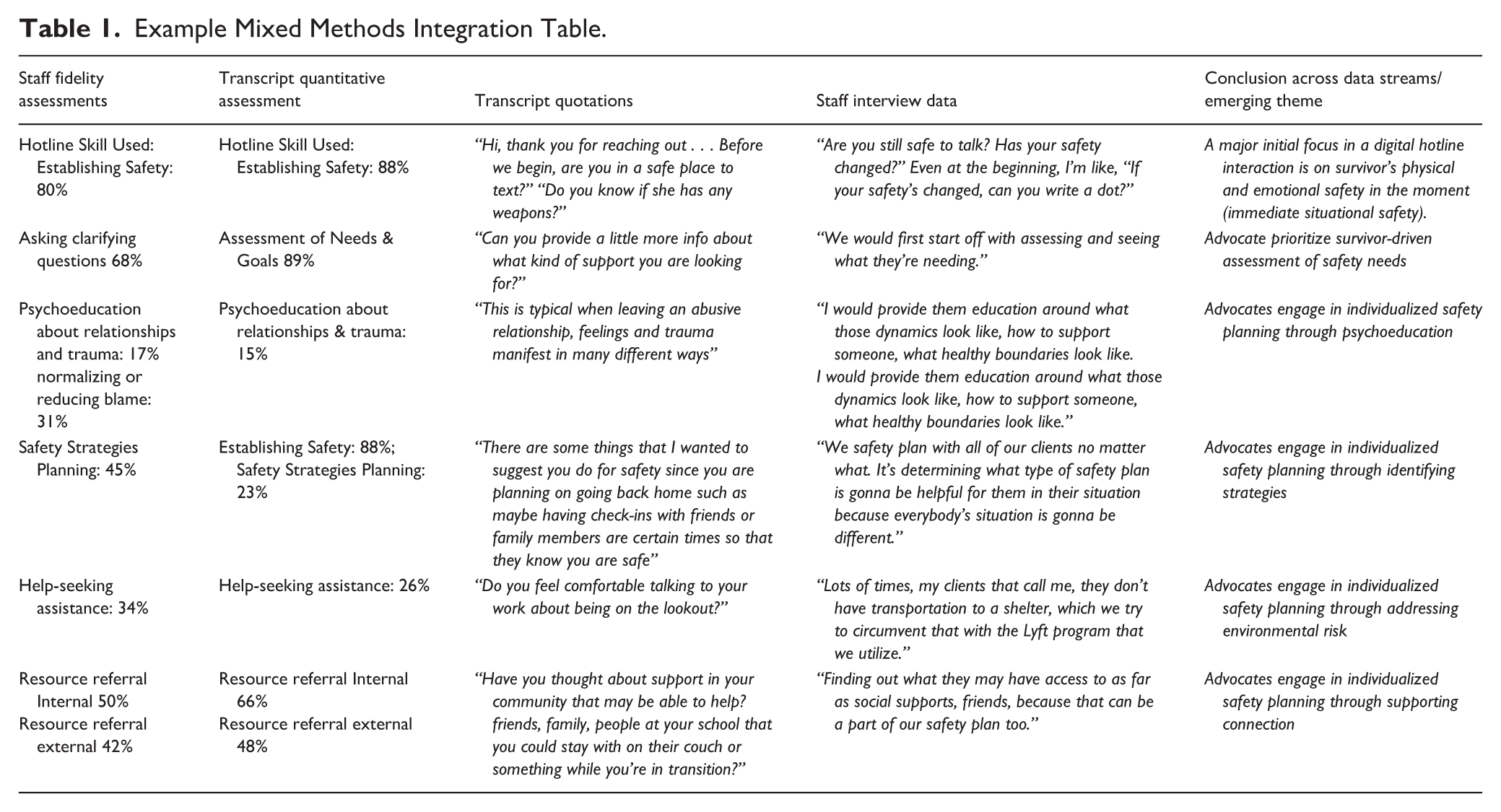
The study is part of a larger exploratory longitudinal mixed methods evaluation of the impact of digital hotline services for survivors of violence. For this study, we employed a concurrent mixed methods QUAL+quan approach, combining four data streams- (a) qualitative and (b) quantitative review of digital hotline service interaction transcripts, (c) semi-structure staff interviews, and (d) quantitative fidelity assessments completed by program staff after digital hotline service interactions. Data were first analyzed separately, and study team members then compared qualitative data from hotline transcripts and staff interviews with findings from quantitative assessments of the service model and key session indicators to integrate data streams to build deeper understandings of how survivors and staff together identify and address immediate and long-term safety needs (Creswell & Plano-Clark, 2018). A data integration table used to connect data across streams to develop findings and themes for the project is provided in Table 1.
Example Mixed Methods Integration Table.
Study Data
Transcripts
Transcripts of digital hotline interactions (n = 328) were provided by two partner interpersonal violence service agencies located in two large cities in one state in the southern United States. Both agencies provide a full spectrum of services to survivors of IPV, sexual assault, and human trafficking, including counseling, shelter, legal, and advocacy services. Transcripts were taken from service interactions that occurred in 2022 and 2023 and were de-identified by agency staff before analysis. Most interactions (44%) ranged between 6 and 20 min, with nearly a quarter (24%) lasting 30 min or more.
Staff Interviews
Staff at both agencies were invited via email to a confidential, semi-structured interview conducted by the study team via phone or video conferencing platform. Eligible participants were staff that had worked in the hotline program for at least 6 months. Questions included “What are the most important skills you use at as a Hotline staff?” and “What strategies did you use to help clients address violence, threats, stalking, or abuse?” A total of 17 staff were interviewed by research team members. In line with established qualitative research standards, data collection continued until thematic saturation was achieved, with no new themes emerging in the final interviews (Guest et al., 2006). Participants were all female-identified, ranged from ages 24 to 64, and were racially and ethnically diverse.
Staff Assessments
Hotline advocates at the partner agencies participated in the study by completing online quantitative fidelity assessments (n = 99) of randomly selected hotline sessions during the spring of 2024. Shortly after a service interaction ended, hotline staff took a brief online survey that captured key skills and approaches used during the service interaction, as well as any stated participant demographic information. The fidelity assessment tool was developed by the study team and hotline staff advisers based on previous phases of research (see Wood et al., 2022). The fidelity assessment tool included 12 potential types of interpersonal violence (e.g., IPV, human trafficking), 11 potential service user needs (e.g., shelter, child care, emotional support), and 24 potential advocate skills that might have been used in session (e.g., crisis de-escalation, psychoeducation, normalization & validation).
Data Analysis
Qualitative analysis of transcript data and staff interviews used content analysis and followed a deductive-inductive process (Braun & Clarke, 2020). The team was composed of advanced qualitative practitioners with classroom and real world training in qualitative methods as well as personal experiences working in the interpersonal violence intervention and response field. The team (RVS, AJ, RM, LW) began by reviewing transcripts in their entirety and adapting a codebook developed in a previous phase of the study (see Wood et al., 2022) to establish a new coding structure for the current transcripts. A process of comparison and negotiation to reach consensus was employed. Three team members then met to discuss the needed adaptations and updated the coding structure to reflect the current data; The final codebook of transcripts included 42 codes reflecting advocate strategies in session (e.g., psychoeducation, referrals, expressing empathy), participant stated needs (e.g., housing, crisis stabilization, children’s needs), and digital hotline specific skills (use of emoticons, minimal encouragers). Approximately 20% of codes were directly applicable to the process of safety planning. After the codebook was established, three team members (RVS, AJ, RM) coded all 328 transcripts, with double coding applied to 10% of transcripts as a form of verification. A second round of coding developed relationships and connections between key categories, and initial findings were shared with agency partners as a form of member checking to refine the findings. Staff interviews were analyzed using content analysis strategies by two team members and integrated with transcript data for enhanced understanding of safety planning. Data for the current study come particularly from codes reflecting needs related to safety, assessment of survivor needs, and establishment of safety and stabilization. Direct quotations from transcript data are presented in the “Results” section.
Quantitative analysis of transcripts and staff assessments includes descriptive statistics of the percentage of transcripts or assessments in which a particular domain appears. Included domains are: establishing safety, assessment of needs and goals, asking clarifying questions, psychoeducation about relationships and trauma, crisis intervention and de-escalation, safety planning, and providing referrals for support. The study team also applied a similar quantitative assessment tool to the 328 de-identified transcripts to establish the extent to which these transcripts reflect the larger population of digital hotline interactions within the two agencies. Quantitative data are presented integrated with qualitative data to provide support and additional evidence to study findings.
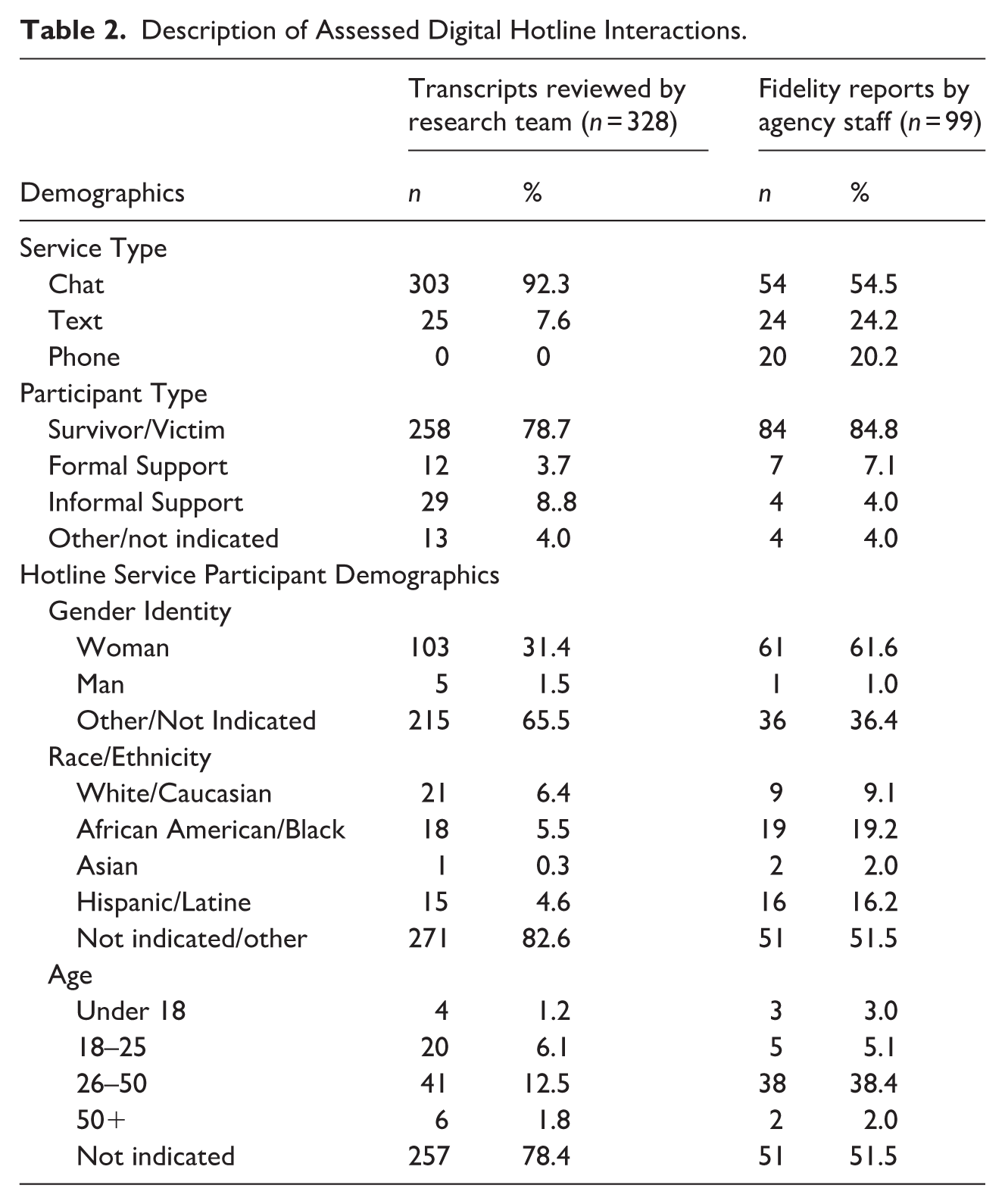
Transcript and staff session assessment data were collected from both agencies. Most data reflect computer chat sessions (92%) and others are from SMS text sessions (7.6%). For both transcripts and staff assessments, most participants identified as a victim of violence. Due to the anonymous nature of hotlines, the majority of sessions were with participants of unknown gender, age, and racial/ethnic identities (see Table 2 for details).
Description of Assessed Digital Hotline Interactions.
Results
This study uses transcripts from digital hotline sessions, staff interviews, and staff assessments of digital hotline interactions to answer the following question: How do interpersonal violence hotline staff address survivor safety needs in digital hotline sessions? Transcript data reveal a phased process in which advocates (a) identify immediate safety risks, (b) assess participant safety needs and goals via open-ended questions and building a supportive connection, and (c) pursue individualized safety planning strategies based on participant expressed wishes. Methods of individual safety planning included: providing psychoeducation to enhance current and future safety; exploring specific methods of safety support and strategies; addressing environmental risks to safety; and enhancing social and community connections. This process is illustrated in Figure 1.
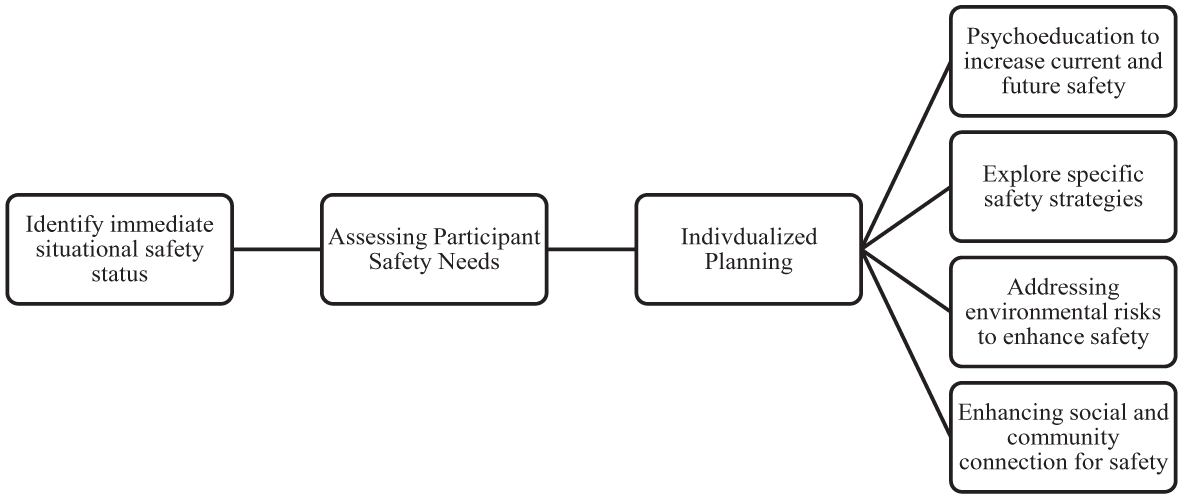
Safety planning processes on digital hotline.
Identifying Situational Safety Status
When we start off a chat or start off a hotline call, we always ask the client are they safe right now? If they’re not in a safe place, then we don’t wanna continue having the conversation with the client because that could put their safety at risk. [Staff Interview 4]
Virtually all staff interviewed begin digital hotline interactions by establishing current safety concerns with participants. This approach has two primary functions. The first is to more clearly ensure that the participant will be able to engage in hotline services without safety risks that may cause more harm (both physically and emotionally). The second is to provide advocates with a sense of what the participant considers safety. Staff reported that people accessing digital hotline are frequently in unsafe situations, including being in the same room or space with their abusive partner. Staff described asking a routine question, such as “Are you safe to chat/text?,” often followed by additional questions like “Has your safety changed?” and “Who is with you right now?” Underscoring the ubiquity of this aspect of digital hotline services, 80% of transcripts reviewed and 88% of staff assessments indicated that the interaction included “establishing safety.” Staff interviews confirmed findings from transcripts and staff assessment, with services routinely beginning with advocates asking about the situational safety of the participant. Most frequently, advocates start with questions like: “Are you in a safe place to chat?” [transcript] “Are you safe to talk right now?” [transcript] or “Before we begin, is it safe for you to chat right now?” [transcript]. When participants refer to potentially harmful people in the vicinity, or other immediate safety risks (e.g., homelessness, presence of a weapon), advocates follow up with specific information to mitigate immediate safety risks that might compromise service engagement. Examples include: “I’m glad to hear that you are safe. If that should change at any time, please disconnect immediately and delete this chat” [transcript], “We don’t want to cause any additional harm so please feel free to stop texting when you are in danger” [transcript]. In one transcript, an advocate used identifying situational safety as an educational opportunity.
We definitely do not want you to put yourself in a dangerous situation. I would encourage you to continue to reach out by chat if you want to communicate with us . . . I do not encourage you to call if you are at the home with him or the family present. You never know when someone is listening. As your calling the shelters they will all be asking you questions in regards to what’s happening. Therefore, you want to make sure you’re somewhere safe to make these calls.
When participants identify risks related to being monitored or observed in person, such as a participant who noted that their partner was in the room with them, staff also provided guidance on strategies for reaching out in the future; for example: “In the past, survivors have had to coordinate with doctor’s office staff or used times they ran into the grocery store, etc. as a planned time to make a call or chat” [transcript]. The availability of digital approaches has created opportunities for survivors to reach out inaudibly, increasing access to safety resources.
Recognizing the risk of technology surveillance on digital hotline, advocates focus immediate guidance on digital safety and mitigating the risk that technology-facilitated abuse may play to a survivor seeking digital services. Examples of such in-the-moment technology focused guidance includes: “Make sure that there are no ways for him to be able to track you via your phone device location and make sure that your family/friends do not accidentally give him any information about your specific location” [transcript].
Assessing Participant Safety Needs
Once immediate safety issues facilitating service engagement have been identified and managed, project data (interviews, transcripts, staff assessments) indicated that advocates typically follow up with additional questions to clarify the situation, gain deeper context, and build a relationship with the hotline participant. One interviewed staff member highlighted the importance of dwelling in the assessment task: I would just say being patient, taking my time, not rushing it, but kinda meeting them where they’re at, but first, make sure they’re somewhere safe first off, but just not rushing through it, just really listening. Active listening is very important, and just supporting them where they are at . . . Sometimes you have survivors who may not be ready to go to shelter. They just want to see what’s available as far as resources, so
As evidenced by the quote above, active listening to understand needs and goals around safety is crucial to this assessment work. Across transcripts reviewed, 68% were identified as including a section in which the advocate used these techniques to assess the needs and goals of the survivor, while staff assessments endorsed assessment of needs and goals as a feature of 89% of interactions. In some situations, participants begin to share their focal needs related to safety, and then advocates tailor their response and tone to meet those needs. When the participant’s focus is unclear, advocates use open-ended questions to capture a range of survivor perspectives and potential needs. Simple questions like “Can you tell me a little bit about what's going on?” [transcript] or “Can you explain what is going on? When was the last incident of abuse and what occurred?” [transcript] help advocates build a picture of the situation and begin to identify safety needs and potential tools that might be appropriate for the participant. Open ended question and discussion, are frequently used, as one interviewed staff noted: As far as safety planning, we would ask them, “Do you have anyone in your circle who can provide you support?” . . .“Do your children know the proper contact information, who to call? What if the abuser breaks your phone? You’ve shared that he has very controlling tendencies and stops you from leaving. Do you have a paper where you are writing important numbers, whether that’s <hotline>, whether that’s people in your circle, just anything?” That’s also something that I go through with them. [Interview with Staff 6]
In this initial information gathering, the staff member seeks to understand participant comfort with criminal legal systems, cultural needs, and communication preferences. “Not everyone feels comfortable calling the police for a lotta different reasons. Maybe they’re afraid of retaliation or further, more extreme abuse or just wondering how the police will respond” [Interview Staff 15].
As staff learn more about the individual’s unique situation and perspectives, assessment questions become more specific. For example, an advocate wondering about risks for a survivor at work asked: “Do you feel comfortable talking to your work about being on the look out to see if he tries to show up there, or warn them in case he chooses to call your work?” [transcript]. Advocates may seek clarity about a participant’s plans for the future, with questions like: “Are you planning to go back home with him? or are you trying to leave to go stay with someone else?” [transcript] in order to tailor specific safety strategies.
They basically guide the conversation, although we do ask safety questions. We would conduct a danger assessment, in some cases if there’s enough time provide knowledge to the client on what their danger level is and what statistics say about their—with what they’ve answered yes to on a danger assessment. It depends. If they’re calling in the middle of a crisis, we may address the crisis first, talk to them and get them to a point where they’re a little bit more stable in a way to where we can get more information as far as what their situation is. [Interview with Staff 11]
The centrality of this approach is illustrated in the fact that 50% of staff-assessed interactions included the staff member helping the participant to identify options.
As advocates gain deeper insight into the specific perspectives and goals of a digital hotline participant, they use this assessment process as an opportunity to build trust and rapport. As participants share information, advocates respond with education, resources, and with encouragement in an effort to relay that the advocate welcomes the disclosure and is able to handle the difficult content. For example, a staff chatted “I’m here for you, and want you to feel comfortable sharing” [transcript]. Or, when a participant shared that it feels challenging to disclose such personal information, saying: “That’s okay, we know it can be very scary to write to a stranger and be so vulnerable” [transcript]. Advocates encourage participant help-seeking: “The fact that you are looking for a safe option shows that you are wanting to move forward for yourself and your children” [transcript] and “you took the first step though and reaching out for support, I am thankful that you were comfortable enough to reach out” [transcript].
Incorporating Individualized Safety Support Strategies
Digital hotline advocates use the assessment information and rapport they build in the first two phases to engage a range of individualized safety planning approaches with chat and text hotline service participants. Frequently used forms of safety support include (a) advocates providing psychoeducation to address current and future safety; (b) exploring specific safety strategies, (c) addressing environmental safety concerns through resource building, and (d) supporting participants in building social and community support to address safety.
Psychoeducation to Enhance Current and Future Safety
Advocates provided education about interpersonal violence, helping to identify potential indicators of future risks, as well as providing information that participants can use to make assessments of their safety moving forward, as illustrated by this advocate: For instance, “Oh, I have to do chat because he broke my phone again,” and then using that as an opportunity to say like, “Wow, that’s really frustrating. It’s actually quite common for abusive partners to damage the property of—to one, damage the property of the person that they’re abusing, but also the phone is significant to me because that is your connection to the outside world. I’m so sorry that you’re without a phone right now, but I’m grateful that you chose to reach out regardless” [Interview with Staff 2]
Some of this work includes a specific attention to emotional safety related to trauma impacts of violence. While this is a more specialized approach, with 17% of transcripts and 15% of staff assessments including psychoeducation about relationships or trauma reactions; it is noteworthy that it was named as important in every staff interview, highlighting how crucial it is in certain situations. In one such instance, an advocate shared: “what may help would be identifying when you know they might try an assault on you, looking of cues, like do they drink when they are going to try or do they go out with friends” [transcript]. In other cases, advocates frequently discussed the potential danger of leaving an abusive relationship, highlighting the need for careful planning, and underscoring the importance of the survivor listening to their own instinct: “Leaving the relationship is one of the most dangerous times because you never know how the person will react to you leaving. We encourage survivors to leave at a time when the other is not present, in order to leave safely” [transcript]. While in another, they highlighted the importance of the participant trusting their own instinct, stating: “If you are not certain that he will react in a supportive way, then it might not be safe to tell him. Emotional safety is just as important” [transcript]. Along with sharing crucial information about violence risk, advocates shared about what healthy relationships look like in order to help participants identify them in the future: “An essential part of a relationship is autonomy, respect and consent” [transcript]. Staff on digital hotline helped to normalize the dynamics of abusive relationships in order to support survivors in taking advantage of safety strategies. One advocate reassured a service participant that their situation was not unusual, and that they deserved safety, sharing: I promise you are not an idiot for going back. Love changes how we view risk, and reward, especially if the abuse is verbal, and affects how we view ourselves. I will say most people go back to a harmful individual at least once. It is ok to recognize that what you are doing is hard.
Exploring Specific Safety Strategies
Advocates work with survivors on specific strategies that are temporal in nature, and focused on harm reduction—as one staff member referred to it, the “ethics of survival”: My priority as an advocate is your safety, your whole being in the long term. If telling him tonight means you’re out on the street and the kids are with him and you’re fucked, no, you can do a long con and get yourself out of there without him knowing. That doesn’t make you a bad person.” Yeah, definitely speaking more
This advocate highlighted that building a safer life often involves short-term tradeoffs, and that perfect safety is not something that can be guaranteed. In her work, she is exploring supporting survivors through that process of identifying strategies from among a range of less-than-perfect options. Advocates buttressed educational skills by collaboratively identifying specific strategies that could be of use, often either directed at plans related to leaving a partner, or putting in place strategies for improved safety while cohabitating with a person who uses violence and control. Transcripts revealed such safety planning in 45% of transcripts, with staff assessments identifying this strategy in 23% of assessed interactions. When a service participant was thinking about leaving their partner, advocates often provided feedback on what they might consider bringing with them, what resources might be available elsewhere, and ways to ensure their safety in the process. One advocate who shared: Typically in regards to packing a bag would be important legal documents (birth certificates, IDs, Social Security of you and the children), a change of clothing, medications in case you need to grab that packed bag quickly . . . Typically the shelter offers toiletries, baby wipes, pampers and clothing if needed [transcript].
Advocates frequently use the digital space to reinforce service recipients’ own expertise and on-going safety planning even as they offer specific options. One advocate noted that as they were navigating shelter and transportation options, saying “You know him and the situation better than anybody else, so we are here and we will take it step by step [another IPV agency in the community] has potential space, please try to call them, and once space is secure, then we figure out the transportation” [transcript].
Along with planning for leaving or shelter admission, advocates provided concrete suggestions and strategies for survivors navigating either staying with a partner or avoiding a partner with whom they were no longer living with. When chatting with a survivor who had recently broken up with an abusive partner, an advocate suggested: “avoid traveling alone, use the buddy system as much as possible, change routine (different bank, grocery stores, etc.), stay in public areas, and call emergency services if needed. If you have any questions please contact the hotline or chatline” [transcript]. Advocates also help digital hotline participants think through how to stay safe while living with an abusive partner. For example, when talking to a survivor who was building a legal case against their partner, an advocate suggested “if you have recordings, be careful where you store them and make sure they are somewhere he would not look” [transcript], while another told a participant: “there are some things that I wanted to suggest you do for safety since you are planning on going back home such as maybe having check ins with friends or family members are certain times” [transcript].
Addressing Environmental Risks to Enhance Safety
Environmental and structural issues, such as economic and housing insecurity, legal issues, and physical and mental health care access challenges are factors that increase survivor instability and increase their risk of continued violence exposure. Thus, digital hotline advocates provide resources and support to address environmental impacts (sometimes referred to as life-generated risks) affecting safety (Davies & Lyon, 2014). Referrals to address housing stability and mental health care were particularly frequent, with 37% of transcripts and 21% of staff assessments including a shelter referral, and 7% of transcripts and 5% of staff assessments including a referral to other types of housing support. Further, 22% of transcripts and 26% of staff assessments included referrals for counseling support within the agency. Many interactions included the advocate sharing information about local resources, for example: Here are some resources in [city] that are sometimes able to provide financial assistance. Name of Resource: [Redacted] Financial Assistance Program What it offers: Limited help for rent, utilities, bus passes, eye exams, eyeglasses, birth certificates, and prescription co-pays. Eligible for assistance once every six months. [transcript]
Digital hotline also provides a venue for stabilizing housing safety by accessing violence-specific resources and support related to housing and economic stability, including serving as a “front door” to shelter access and legal remedies for housing needs. One transcript included an advocate providing lease termination advice to a survivor in order to ensure that their experience of violence did not further destabilize their living situation. That advocate stated: I will send it to your email so that you are able to provide to the apartment complex, and it would only be pertaining to that information, that are seeking to end your lease due to sexual assault and that you reached out to our agency for assistance . . . give me a few more moments and I will email you the forms. [transcript]
Enhancing Social and Community Connection to Increase Safety
Advocates frequently use digital hotline interactions as an opportunity to support participants in building their social networks, breaking down isolation and increasing safety from current and future violence. When one service participant reflected on the support their parents were providing in the context of her abusive relationship, the digital hotline advocate took the opportunity to underscore the quality of that support, stating: “they definitely sound like supportive parents, I am so sorry to hear that he took rights away from you. I am thankful that they are in good hands with your parents and you have the support” [transcript]. Another advocate asked a service participant about their family and friends. The service participant shared that they felt they had harmed those relationships in the course of navigating their safety with their abusive partner. The digital hotline advocate both validated that feeling, while encouraging the service user to reach out to their network, stating: I understand that having burnt bridges can make it hard to reach out and that it’s hard to put yourself in a vulnerable position and ask for help. But it could be worth it, they may surprise you, if you are honest and let them know what is going too. That being said only do what you are comfortable with, it’s okay to do whatever you have to keep yourself and your children safe. [transcript]
The approach of this advocate, to normalize the experience of the hotline participant and seek to reduce their experience of self-blame for previous actions, was identified in 31% of transcripts. This focus on normalization is part of an overarching sense from hotline advocates that their ultimate goal in safety planning—and working the hotline in general—is to facilitate hope and connection in order to improve safety and increase the supports available for survivors. These two comments from advocates sum up this overarching perspective: We’re human, but to be able to pick up the phone or chat or text someone 24/7, if you need to talk or if you’re not feeling safe, I think that’s important for community. It’s important for people and humans to feel safe. It’s part of our right. It’s a human right. That’s the lens I see the work, which is why I continue. [Interview with Staff 5] I think it’s just being very transparent with survivors, but then also giving them a lot of hope and validation that you're going through a really rough patch, but this patch is also gonna pass. And that I believe in you, and I’m rooting for you. I feel that that’s something that I offer. [Interview with Staff 7]
Discussion
Effective and responsive pathways for accessing support, services, and information are a crucial component of our public health response to interpersonal violence. One critical support for violence survivors is safety planning, which is documented to reduce subsequent violence and decrease negative mental health in some situations, especially in samples at high risk for severe violence (Ford-Gilboe et al., 2020; Sabuncu et al., 2024). This study is the first known to explore the use of digital hotline platforms for safety planning support in the context of local interpersonal violence services agencies. It asks, “how do interpersonal violence hotline staff address survivor safety needs in digital hotline sessions?”
Using triangulated data from survivor service interactions, staff interviews, and staff assessments, the study builds a rich description of advocate and survivor experiences with safety assessment and planning strategies. It demonstrates that advocates employ a scaffolded approach to safety, with initial attention on immediate physical, technological, and psychological safety followed by a process of collaboratively identifying survivor safety needs related to abusive individuals and larger environmental/contextual factors, and culminating in joint actions to build psychological, physical, environmental, and social safety. Similar to Ford-Gilboe et al. (2020), we found that general and tailored safety planning is critical to meeting survivors complex and evolving needs. Tailored interventions are especially helpful for survivors with children, those not currently living with a partner and those in larger urban centers, largely related to housing and environmental needs (Ford-Gilboe et al., 2020).
As digital and voice-to-text intervention modalities proliferate, researchers have an opportunity to gain a deeper understanding of the components of effective digital safety planning, and to monitor interventions for fidelity and quality over time. Scholars can utilize these opportunities to support the development of effective interventions for survivors, as well as to understand differences in impact, experience, or need across populations of survivors. Future research should assess how survivors implement safety plans developed via digital hotline, and the ultimate safety outcomes of survivors who seek such help. Further, work should seek to understand, via quantitative and mixed methods, the experiences and outcomes of digital hotline service recipients over time—particularly focused on their connection to future services, access to support, and safety from violence. Such work could build the foundation for establishing digital hotline as an evidence-based practice in interpersonal violence prevention and intervention.
Limitations
The current study benefits from triangulation across several streams of data, including access to digital hotline transcripts, providing an in-the-moment account of the intervention under study, something often missing in IPV-focused intervention research. However, scholars should maintain an understanding of the limitations of even such rich data, including an inability to fully capture the intended tone or experience of either advocate or survivor. These data also don’t speak to the efficacy of the safety plans developed, as they were implemented by the survivors seeking digital support. Further, the highly anonymous nature of the intervention provides clear benefits to the survivor and dramatically reduces barriers to entry for those reaching out digitally; however, it also reduces our ability to consider potential differences in experience or interaction based on survivor demographic differences. In this research, staff were also asked to self-assess a set of digital hotline sessions, and, while they were given a short set of definitions, each staff member was allowed to identify for themselves the tasks and needs within the session, likely leading to some within-group variation in understanding of what constitutes actions such as assessing for safety or crisis de-escalation. Both participating hotlines were located in urban areas of the same southern state, and thus represent the dynamics of those localities, as well as the context of a local agency hotline tied to other types of services, rather than a national hotline without accompanying shelter, counseling, legal, and other forms of aid available. Thus, these findings should not be considered generalizable to national digital hotline support, and future work should explore dynamics in rural and suburban contexts as well as other geographies.
Implications for Digital Advocacy
Digital hotline safety planning includes a dual attention to what scholars have termed life- and partner-generated risks (Davies & Lyon, 2014). While partner-generated risks, such as the risk of physical violence, coercion related to children, or economic abuse, may be easy to focus on the impact of life-generated risks, like a job loss or children’s health needs, survivors’ overall personal risk assessments and safety picture are crucial to the effectiveness of digital safety planning. Advocates’ attention to environmental, social and temporal factors in their safety planning process highlights their understanding and integration of a holistic view of safety. In this view, hotline advocates must span beyond the confines of a specific IPV situation to assess and intervene across the domains of a survivor’s and family’s lives to be effective.
In line with COR theory, these findings underscore the importance of advocates having access to accurate, accessible, and desirable referral information for a wide range of life-generated challenges, which may be playing a part in a survivor’s safety journey. Housing, food, and child-related needs were all frequent aspects of the complex safety situations addressed in digital hotline transcripts, and an advocates’ ability not only to identify relevant resources, but for those resources to have availability to help was often crucial. Advocates also highlighted the importance of matching resources to survivor preferences, such as limiting interactions with civil and criminal legal systems. In these transcripts, particularly the general housing shortage of available housing in the areas covered by the partner agencies was a frequent issue, creating safety vulnerability for survivors and leading to advocates being unable to match survivors with needed resources, thus preventing them from fully stemming the tide of resource loss facing a survivor and their family. In line with the advocate who highlighted the importance of helping survivors navigate in less than ideal circumstances (the “ethics of survival”), a strong social safety net would provide a more robust range of services and support from which advocates and survivors could jointly identify the best options as they assess survivors’ specific needs. In the current interactions, challenges were often related to needs that were clear to both advocate and survivor, but which were generally missing across the community.
These data streams demonstrate that digital hotlines are a viable method for survivors of violence to dip their toes in safety planning services in a brief and low-barrier manner. This provides an opportunity for a greater percentage of survivors to make contact with formal services, and opens the door to long-term relationships and connections to supports, including shelter, counseling, advocacy, children’s and legal assistance. Safety planning is often defined as an iterative or on-going process between a survivor and an advocate, and while survivors can use digital hotline in an on-going manner, it can also be a portal through which they access others who will be part of the survivors’ safety journey over time, such as a therapist or housing counselor (NDVH, 2023).
Both advocate interviews and transcript review highlighted the challenging nature of this kind of trauma focused work, with frequent exposure to individuals and families in crisis without many of the normal tools that an advocate may have on hand (e.g., shelter beds, or even offering a hug or a sympathetic look). Working conditions and pay for hotline advocates should reflect the important role they play in the overall ecosystem of our survivor response. Hotline advocacy is a complex role that can be vital in improving public safety and health. Rather than an “entry level” victims service job, hotline advocacy is an intensive, high stakes job requiring expertise and experience, which frequently exposes workers to repeated and intensive traumatic material, without the ability to follow up or be assured of a safe conclusion to a crisis situation.
Implications for Future Research
The study approach allowed us to explore digital hotline as an intervention from multiple vantage points. This triangulated mixed methods approach can serve as a model for other research seeking to understand overlapping issues of survivor experience, advocate skill, and intervention fidelity in community-based service contexts. There are also important future directions for work focused on safety planning on digital hotline. Research which compares safety outcomes for service users and non-users would further establish the efficacy of this service model and provide additional support for implementation.
This study was unable to deeply unpack differences in experiences or preferences for digital hotline support across diverse communities and populations, as transcripts often did not include or reflect information on the cultural communities of either advocates or survivors. Capturing both advocate skills and survivor needs for culturally competent digital hotline services is an important area for emerging work. These data could help inform advocate training, implementation decisions, and improve the acceptability of the intervention.
Data point to digital hotline as a promising practice for supporting survivor engagement with community-based service agencies, and for providing in-the-moment safety support. As such, future work documenting the process of first-time implementation and scale up of digital hotline services could support local agencies increasingly looking for guidance on initial implementation and scale up. Attention to issues including staff training, workflow, and well-being, as well as indicators of user-friendly platform for both advocates and survivors could support agencies in making this leap.
Conclusion
Digital hotline is a growing, promising practice for providing safety planning support in a low-barrier and confidential manner to survivors of interpersonal violence. As an avenue for safety planning approaches, it allows advocates move with survivors through the process of identifying immediate safety risks, assessing the life- and partner-generated risks at play, and building a plan to collaboratively address both. These transcripts, interviews, and staff reports highlight the ubiquity of specific safety planning tasks like assessing needs and goals and building a survivor-driven list of actions and options within the digital hotline format, but also the pressing need for more specific strategies that are temporally bound. Future work to understand the efficacy of these interactions in support of survivor safety behaviors and ultimately reducing exposure to violence can help to build the evidence base for this emerging service modality.
Footnotes
Acknowledgements
The authors would like to acknowledge the staff and service recipients who participated in this study, and the partner agencies who contributed time, insight, and support.

Ethical Considerations
Ethical Approval was secured from the Institutional Review Boards of the University of Texas Medical Branch and the University of Texas at Arlington prior to the outset of data collection.
Funding
The authors disclosed receipt of the following financial support for the research and/or authorship of this article: This project was supported by Award No. 15PNIJ-21-GG-00993-NONF, awarded by the National Institute of Justice, Office of Justice Programs, U.S. Department of Justice. The opinions, findings, and conclusions or recommendations expressed in this publication/program/exhibition are those of the author(s) and do not necessarily reflect those of the Department of Justice.
Declaration of Conflicting Interests
The authors declared a potential conflict of interest (e.g., a financial relationship with the commercial organizations or products discussed in this article) as follows: Theoretical Framework.
Data Availability Statement
Data are archived publicly in line with grant requirements.